
Obama’s War
Posted: June 18, 2011 Filed under: Foreign Affairs, Libya | Tags: Congressional War powers, US response to Libya, War Powers Resolution 10 Comments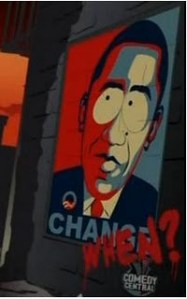 For a candidate that basically ran on the brag that he was the only candidate who genuinely opposed the Iraq War Resolution, Barack Obama sure turned into a President that is relying on similar Bushian war logic. The NYT’s Charlie Savage has a must read article up on the behind-the-scene maneuvers this President made on the way to joining the NATO operations in Libya. It seems that Obama rejected the views of top lawyers at the Pentagon who questioned the legal authority of the President to approve the operation without Congressional consent. Glenn Greenwald has some analysis of the article at Salon.
The growing controversy over President Obama’s illegal waging of war in Libya got much bigger last night with Charlie Savage’s New York Times scoop. He reveals that top administration lawyers — Attorney General Eric Holder, OLC Chief Caroline Krass, and DoD General Counsel Jeh Johnson — all told Obama that his latest, widely panned excuse for waging war without Congressional approval (that it does not rise to the level of “hostilities” under the War Powers Resolution (WPR)) was invalid and that such authorization was legally required after 60 days: itself a generous intepretation of the President’s war powers. But Obama rejected those views and (with the support of administration lawyers in lesser positions: his White House counsel and long-time political operative Robert Bauer and State Department “legal adviser” Harold Koh) publicly claimed that the WPR does not apply to Libya.
As Savage notes, it is, in particular, “extraordinarily rare” for a President “to override the legal conclusions of the Office of Legal Counsel and to act in a manner that is contrary to its advice.” Just imagine if George Bush had waged a war that his own Attorney General, OLC Chief, and DoD General Counsel all insisted was illegal (and did so by pointing to the fact that his White House counsel Alberto Gonzales and a legal adviser at State agreed with him). One need not imagine this, though, because there is very telling actual parallel to this lawless episode …
Obama is holding to the idea that the Libya operations fall short of the definition of “hostilities” and that the campaign does not fall under provisions of the War Powers Resolution which states that any “unauthorized hostilities” must be halted after 90 days. This is explained in more detail in the NY Times article itself.
“It should come as no surprise that there would be some disagreements, even within an administration, regarding the application of a statute that is nearly 40 years old to a unique and evolving conflict,” Mr. Schultz said. “Those disagreements are ordinary and healthy.”
Still, the disclosure that key figures on the administration’s legal team disagreed with Mr. Obama’s legal view could fuel restiveness in Congress, where lawmakers from both parties this week strongly criticized the White House’s contention that the president could continue the Libya campaign without their authorization because the campaign was not “hostilities.”
The White House unveiled its interpretation of the War Powers Resolution in a package about Libya it sent to Congress late Wednesday. On Thursday, the House speaker, John A. Boehner, Republican of Ohio, demanded to know whether the Office of Legal Counsel had agreed.
“The administration gave its opinion on the War Powers Resolution, but it didn’t answer the questions in my letter as to whether the Office of Legal Counsel agrees with them,” he said. “The White House says there are no hostilities taking place. Yet we’ve got drone attacks under way. We’re spending $10 million a day. We’re part of an effort to drop bombs on Qaddafi’s compounds. It just doesn’t pass the straight-face test, in my view, that we’re not in the midst of hostilities.”
The logical follow-up question is, of course, is Boehner acting in the interest of Republican politics or the rule of law? I’ll avoid that one and instead rely on other liberal writers to take the argument that even if Boehner is wrongly motivated, he’s got the action right. James Fallows writing for The Atlantic states that “Obama Is Wrong About Congress and Libya”. Fallows does not have Republican gamesmanship in mind.
But after three months of combat, and after several decades of drift toward unilateral Executive Branch action on matters of war and peace, Obama is doing a disservice to the nation, history, and himself by insisting that the decision should be left strictly to him. If the Libyan campaign ultimately “goes well,” he will not in any way lessen his own political and historic credit by having involved the Congress. If it goes poorly, he will be politically safer if this is not just his own judgment-call war. More important, in either case he will have helped the country if his conduct restores rather than further weakens the concept that a multi-branch Constitutional republic must share the responsibility to commit force. We can only imagine the eloquence with which a Candidate Obama would be making this exact case were he not in the White House now.
Additional analysis can be found at The New Yorker where Amy Davidson argues that bombing Tripoli is the very definition of hostilities.
But the War Powers Resolution doesn’t say anything about wars in which we have allies not counting, or ones the U.N. likes; it isn’t about lonely wars or bad wars, just wars. The Administration adds a second set of rationalizations, which make even less sense:
U.S. operations do not involve sustained fighting or active exchanges of fire with hostile forces, nor do they involve the presence of U.S. ground troops, U.S. casualties or a serious threat thereof, or any significant chance of escalation into a conflict characterized by those factors.
Is the point that, while we are bombing Libya, we are doing it from a distance, out of Qaddafi’s forces’ range, so there aren’t “exchanges” of fire, just one-way barrages—hostility, rather than hostilities? By the same reasoning, it wouldn’t count as war if any overwhelming force attacked anyone who couldn’t effectively hit back; that exemption could apply not only to cruise missiles and drones but to a column of tanks rolling into a village. Is the only concern of the War Powers Act—is our only concern about war—whether our own soldiers can be shot? Aren’t we also interested in making sure there is some accountability when our government decides to shoot? (Would, someday, Congress have a say when it came to human troops, but not robot soldiers?) A war is not simply a short-term public-health issue; it can inveigle our country diplomatically, financially, and morally for decades.
The other question is whether the Administration’s summary even describes the reality on the ground in Libya. (No “sustained fighting”?) And given reports of covert operatives, the pressure to end a stalemate, and the continuing threat to civilians, the assertion that there is no “significant chance of escalation” is mysterious—does it just mean that we promise we won’t go in too deep? Wishful words don’t dispel legal obligations.
So, why is Obama afraid of facing congress at this point in time? Senator Dick Durban–an Obama ally–is currently calling for Congressional authorization of the Libyan actions and his done the paper work.
U.S. Sen. Dick Durbin is backing many of his colleagues in the Senate as in believing that an act of Congress is needed to justify the U.S. military action in Libya.
While the U.S. has gone only so far as launching air strikes, Durbin says a joint resolution authorizing force, barring ground troops and setting an end date should be approved by Congress. Military operations involving Libya have been going on for three months.
“Congress alone has the constitutional authority and responsibility to declare war,” Durbin said. “The founding fathers were very clear that before we commit troops in an offensive situation, that the government can only do that with the approval of Congress. Now the Libyan situation is not as clear as some others but I think it’s clear enough that we should pass an authorizing resolution.”
Durbin says he would vote for it and says what President Obama is doing in Libya is the right thing.
Durbin is posed to do the authorization. It’s obvious that many Republicans and Democrats would probably support the measure. So, the question remains, why isn’t the President seeking congressional approval at this point?
TGIFriday Reads
Posted: April 1, 2011 Filed under: commercial banking, morning reads, We are so F'd, Women's Rights | Tags: Bank credit card fees, Bronx Zoo Egyptian Cobra, Congressional War powers, don't say uterus in florida's state legislature, Walmart's inflation woes, Walmart's supply chain workers maltreatment 61 CommentsGood Morning!!
Well, I’m hoping that this Friday goes smoother than my last one when what I thought was an innocuous zit turned into MRSA and sent me to the emergency room. I’m home now and waiting for groceries to be delivered. My face was all swollen and I’m finishing off my steriods and antibiotics. I certainly don’t want to be exposed to anything else for awhile and I availed myself of an internet-based delivery service. What I really need at the moment is a cook and nurse, but no such luck or fortune. So, I’m going to start out with some good news.
If you follow twitter much, you may have noticed that the New York Bronx Zoo’s Egyptian Cobra went missing and was “tweeting” it’s adventures. It seems the snake had hid out in its home–the reptile building–and was lured out with the smell of rodent-infested wood shavings.
An Egyptian cobra that drew thousands of Twitter fans has been found alive after it went missing for days from a New York City zoo. “As you can imagine, we are delighted to report that the snake has been found alive and well,” Bronx Zoo Director Jim Breheny said Thursday. Zoo officials conducted around-the-clock searches for the 3-ounce, 20-inch long reptile, he said.
Breheny said the cobra had sought a secure hiding spot within the holding areas of the zoo’s reptile house — a complex environment with pumps, motors and other mechanical systems. But it was lured out after zoo officials sprinkled wood shavings from exhibit beds across areas where they guessed the cobra was hiding. “It was the scent of rodents (on the wood clippings) that we hoped would bring her out,” Breheny added. “The key strategy here was patience,” he said in a prepared statement. The snake went missing Saturday from an off-exhibit enclosure, prompting the zoo to close the reptile house.
The cobra’s twitter ego was a blast to read. There were various comments about Samuel Jackson and Sex and the City’s Samantha. Anyway, I’m glad the little asp is back in his nest and that’s no April Fool’s day joke. I wish this next item was a bad April Fool’s day joke, but it’s not. A Democrat in Florida’s legislature was rebuked for using the word uterus on the floor. I guess a few people think girl parts are dirty words. (h/t to pdgrey)
During last week’s discussion about a bill that would prohibit governments from deducting union dues from a worker’s paycheck, state Rep. Scott Randolph, D-Orlando, used his time during floor debate to argue that Republicans are against regulations — except when it comes to the little guys, or serves their specific interests. At one point Randolph suggested that his wife “incorporate her uterus” to stop Republicans from pushing measures that would restrict abortions. Republicans, after all, wouldn’t want to further regulate a Florida business.
Apparently the GOP leadership of the House didn’t like the one-liner. They told Democrats that Randolph is not to discuss body parts on the House floor. “The point was that Republicans are always talking about deregulation and big government,” Randolph said Thursday. “And I always say their philosophy is small government for the big guy and big government for the little guy. And so, if my wife’s uterus was incorporated or my friend’s bedroom was incorporated, maybe they (Republicans) would be talking about deregulating. “It’s not like I used slang,” said Randolph, who actually got the line from his wife. He said Republicans voiced concern about young pages hearing the word uterus. “I think it’s a sad commentary about what we think about sex education in the state,” he said.
I’m having a difficult time associated Hillary Clinton with John Yoo but Adam Serwer at American Prospect does just that in calling Obama’s presidency imperial. Wow, have times changed! There’s a raging debate right now on congressional war powers again. Considering the adventures we’ve been on from Korea, to Vietnam, to Iraq, and forward, it seems like an odd time for this issue to pop up yet again.
Look, there’s no other way to describe this other than lawless. The Obama administration and its defenders in the civil-libertarian community have always maintained that, because it derives its authority from Congress, that authority can ultimately be undone by a legislative branch that asserts itself. If this portrayal of events accurately reflects the administration’s view, then this is no longer the case. Moreover, the Obama administration has explained its failure to fulfill certain promises — such as closing Gitmo — on having to obey limits set by Congress. If the administration’s view is that Congress cannot constrain the president’s actions in wartime because he is commander in chief, then those restrictions are ones the administration acquiesces to willingly in order to avoid making good on politically risky commitments. If Congress can’t tell the administration it can’t wage war, it sure as hell can’t tell the president where to keep alleged enemy prisoners.
I wanted to put this Dean Baker link up earlier so here it is: How Credit Card Companies want to Debit You. One of the provisions of Dodd Frank that banks would like to remove is a provision that no longer let’s them take their bad debt out of your backside. Right now, banks charge retailers incredibly high fees that get passed on to consumers on many items. The deal is that even if you use cash, you still can feel the sting of the fee.
This fee is, in effect, a sales tax. Since the credit companies generally do not allow retailers to offer cash discounts, they must mark up the sales price for all customers by enough to cover the cost of the fee. This seems especially unfair to the cash customers, since they must pay a higher price for the items they buy – even though they are not getting the convenience of paying with a debit or credit card. Those paying in cash also tend to be poorer than customers with debit or credit cards, which means that this is a transfer from low- and moderate-income customers to the banks. This is where financial reform comes in. One of the provisions of the Dodd-Frank bill passed last year instructed the Federal Reserve Board to determine the actual cost of carrying through a debit card transfer and to regulate fees accordingly. The Fed determined that a fee of 10-12 cents per transaction should be sufficient to cover the industry’s costs and provide a normal profit.
The Fed plans to limit the amount that the credit card companies can charge retailers to this level. This would save retailers approximately $12bn a year, at the expense of the credit card companies and the banks that are part of their networks. The prospect of losing $12bn in annual profits has sent the industry lobbyists into high gear. They have developed a range of bad things that will happen if the regulated fee structure takes effect and also argued that big retailers would be the only ones benefiting.
I really liked Mark Thoma’s latest at CBS’s MoneyWatch. It’s called “What’s Good for Wal-Mart Isn’t Necessarily for America”. It’s in response to WalMart executives who are in a dither about potential future inflation. Thoma makes three quick points to show you why your interests and there’s are probably not aligned.
1. Labor costs are 70% of production costs. Until we see wage inflation, and we aren’t seeing this yet, there’s little likelihood that prices will be forced upward rapidly.
2. Wal-Mart has an interest in a strong dollar (i.e. anything but inflation). They import most of what they sell, so labor costs here aren’t an issue – but the exchange rate is. However, the road to recovery is not through maximizing what we bring in from other countries, but rather what we export. Increasing net exports requires a falling exchange rate, the opposite of what Wal-mart wants. Thus, in this regard, what’s good for Wal-Mart isn’t what’s good for America.
3. The other thing to note as that to the extent that this is being driven by a change in the world demand for commodities (and almost all the credible analyses I’ve seen places the blame for rising commodity prices on this), there’s very little the Fed can do about it. For example, one of the concerns of Wal-Mart is rising labor costs in China, but the Fed has no control over labor costs in there, so the Fed cannot fix the problem for Wal-mart. However, this could help businesses here who cannot compete with low labor costs and a manipulated exchange rate, and that would help the US generally, but that is not what Wal-Mart wants.
Here’s more to think on when considering Walmart. This time it’s about the kinds of people that work so that cheapie goods are available to Walmart shoppers and they don’t have to deal with the United Ladies’ Garment workers.
The largest retailer in the United States is making an aggressive push into urban areas such as Chicago, Philadelphia, New York while the United Food and Commercial Workers union plays an underdog role in garnering public attention of Walmart’s abuse of workers from garment factories to employees in their Supercenters. UFCW is trying to highlight these abuses in a Worker Truth Tour featuring people who have or currently work for the massive corporation or a subsidiary.
The tour reached Chicago earlier this week featuring two women from Bangladesh who work in garment factories. The youngest of the two, Aleya Akter, continues to work 208 hours a month for a mere $80. It comes out to 38.5 cents an hour. She started working in the factories at the age of nine in 1994. She claimed there are lots of violations, long hours, and forced overtime. Additionally, she said through a translator, “Enough is enough. We need to change the working conditions in the factories.” Almost as an afterthought Aleya alleged that the workplace in these garment factories are unsafe and some of the women are physically abused by managers.
Anyway, that’s what I’ve got today. I’m still sort’ve reeling from the drugs, so hopefully you can add some more things from your reading and blogging list for us!!

 peej
peej Carissa
 bostonboomer
 dakinikat
 ecocatwoman
 mablue2
 Mama Lopez
 peggysue22
 quixote
 skydancingguestblogger
 Mona (aka Wonk the Vote)



 Sky Dancing
Recent Comments