We are getting some snow here in Greater Boston. It doesn’t look like it will amount to much, but it’s pretty to look at. I miss having big snowstorms. It seems as if climate change has destroyed us New Englanders’ identity as tough people who handle deep snow and frigid cold with aplomb.
In the winter of 2014-2015, Boston got an unbelievable snow total of 110 inches, with 64.8 inches coming in February. On January 26-27, a blizzard dropped more than 34 inches of snow. Now we’ve gone through several mild winters with very little snow. Personally, I miss the old days of giant snowstorms. And I know I’m not alone.
Ben Popp, executive director of the American Birkebeiner Ski Foundation….
MEGHNA CHAKRABARTI: This is On Point. I’m Meghna Chakrabarti, and sure snow can be a pain in the butt, I know. But for folks who grew up with long winters, snow also carries memory with it of ethereal beauty, hard slogs, and hard times overcome of crystalline joy. I grew up in a place with a pretty temperate, very rainy winter.
So when I moved to New England and experienced my first big blanket of snow, I was left with only one feeling: pure magic. Now though, for listeners who shared those stories with us that you just heard, they were from upstate New York, Utah, Colorado, Wisconsin, New Hampshire, Washington State, Maine, Iowa, Ohio, the Dakotas and more.
For all of them, winter is very different. Because the magic feels like it’s fading away….
(LISTENER MONTAGE)
I’m standing in my front yard and there is a tiny bit of ice that used to be snow that’s melted in the shade, and we’ve had almost no snow.
It’s February 2nd and I live in Western New York and there is no snow today. The ground is bare. I can see grass. This is completely different from what I experienced when I was growing up.
I have a four-year-old golden, who’s only ever played in a few inches of snow. Has no idea what it’s like to run and fly and bound through endless puffy snow.
This year’s snow amount is quite depressing.
I think our snow drought is contributing to our overall drought that we’ve been experiencing in eastern Iowa over the last five years or so.
This year for the very first time, when I go outside, sometimes I occasionally find flies or mosquitoes or bees, and so to me, seeing insects that are typically not around during the winter months. It tells me there’s clear change happening.
I miss the snow. I miss watching it fall. I miss how it muffles the noise and just makes things so peaceful and quiet.
I really miss having snow for Christmas and for the kids to play sled and built snow forts.
When my kids were growing up, they were outside all the time. Now our young grandchildren can’t really go outside so much and all the time. Because it’s a mud pit instead of a snow mound. So it’s hard.
The roads in town are as oddly bare as the trails here and one local businesses’ electronics door front sign captures our community’s collective sentiment. It keeps flashing “Pray for snow.”
CHAKRABARTI: It is true. Snowfall is becoming less reliable and snowpacks are shrinking. Winter snowpack in many parts of the continental U.S. have shrunk by 10% to 20% per decade over the last 40 years. That’s according to a study published last month in Nature. There is some annual variation, but overall winter and its signature precipitation are changing.
Snow has a way of creating a shared identity, a sense of wonder, a sense of fun for people who live in those cold places. It binds communities together. So what do we lose when that snow melts away?
Climate change is not only changing the way we live; it is change how we see ourselves. Read the discussion at the WBUR link. If you live in a place that used to get lots of snow, I think you’ll find it interesting.
It was the hottest year ever recorded for the world’s lands and oceans in 2024, US government scientists have confirmed, providing yet another measure of how the climate crisis is pushing humanity into temperatures we have previously never experienced.
Last year was the hottest in global temperature records stretching back to 1850, the National Oceanic and Atmospheric Administration (Noaa announced, with the worldwide average 1.46C (2.6F) warmer than the era prior to humans burning huge volumes of planet-heating fossil fuels.
This new record, 0.1C (0.18F) hotter than the previous high mark set in 2023, means that all of the 10 hottest years since 1850 have occurred in the past decade. The data supports separate figures released by European Union scientists this week that also show a record 2024, albeit those figures showed 2024 was 1.6C (2.8F) hotter than pre-industrial times, the first measure beyond the internationally-agreed threshold of keeping long-term temperatures below a 1.5C (2.7F) rise.
Nasa, which also released its temperature data on Friday, concurs that 2024 was a record year, being 1.47C (2.6F) hotter than the pre-industrial era. “All the groups agree, regardless of how they put the data together, there’s no question,” said Gavin Schmidt, a senior climate scientist at Nasa. “The long-term trends are very clear.”
Schmidt said the levels of global heating are pushing humanity beyond its historical experience of the Earth’s climate. “To put that in perspective, temperatures during the warm periods on Earth three million years ago – when sea levels were dozens of feet higher than today – were only around 3C warmer than pre-industrial levels,” he said. “We are halfway to Pliocene-level warmth in just 150 years.”
Last year saw a record hot year for the United States, Europe and Africa, as well as another record year for the Arctic, which is warming up at three times the rate of the global average.
The year was marked by severe events worsened by the climate crisis, with temperatures so hot in Mexico that howler monkeys fell from trees, a double-whammy of hurricanes that flattened swathes of the US south-east, devastating floods in Spain and record low water levels in the Amazon river. Southern Africa got just half of its normal rain levels.
Now in 2025 we are seeing an unbelievable climate disaster in Los Angeles. I heard this morning that the burned area in LA is now larger than the city of Boston.
California’s Palisades Fire, the largest of the deadly wildfires that ignited this week in the Los Angeles area, has devastated communities and upended thousands of lives, forcing people to flee homes that were lost to the blaze. The inferno has scorched dozens of square miles, and maps from CBS News show how its size compares to those of major U.S. cities.
Here’s a look at how the Palisades Fire compares to the size of 13 cities across the U.S.
The maps show comparisons to Baltimore, Boston, Chicago, Dallas, Denver, Detroit, Miami, Minneapolis, New York City, Philadelphia, Pittsburgh, Sacramento, and San Francisco.
Check out the comparisons to cities you are familiar with.
An exceptional mix of environmental conditions has created an ongoing firestorm without known historical precedent across southern California this week.
The ingredients for these infernos in the Los Angeles area, near-hurricane strength winds and drought, foretell an emerging era of compound events – simultaneous types of historic weather conditions, happening at unusual times of the year, resulting in situations that overwhelm our ability to respond.
On Wednesday, Joe Biden pledged the assistance of the Department of Defense to reinforce state and local firefighting capabilities, a rare step that highlighted the extent to which the fast-moving fires have taxed response efforts.
As of Wednesday evening, the Palisades and Eaton fires have each burned more than 10,000 acres and remain completely uncontained. About one in three homes and businesses across the vast southern California megacity were deliberately without power in a coordinated effort by the region’s major utilities to contain the risk of new fire starts due to downed power lines.
The Palisades fire now ranks as the most destructive in Los Angeles history with hundredsof homes and other structures destroyed and damage so extensive that it exhausted municipal water supplies. In Pacific Palisades, wealthy homeowners fled by foot after abandoning their cars in gridlocked neighborhoods. In Pasadena, quickly advancing fire prompted evacuations as far into the urban grid as the famous Rose Parade route.
Early estimates of the wildfires’ combined economic impact are in the tens of billions of dollars and could place the fires as the most damaging in US history – exceeding the 2018 Camp fire in Paradise, California.
Fire crews have been facing a second night of fierce winds in rugged terrain amid drought and atmospheric conditions that are exceedingly rare for southern California at any time of the year, let alone January, in what is typically the middle of the rainy season – weeks later (or earlier) in the calendar year than other historical major wildfires have occurred.
Analysis:
The next few days will be a harrowing test. Lingering bursts of strong, dry winds into early next week will maintain the potential for additional fires of similar magnitude to form. In a worst-case scenario, the uncontained Palisades and Eaton fires will continue to spread further into the urban Los Angeles metro, while new fires simultaneously and rapidly grow out of control – overtaking additional neighborhoods and limiting evacuation routes more quickly than firefighters can react. In conditions like these, containing a wind-driven blaze is nearly impossible.
These fires are a watershed moment, not just for residents of LA, but emblematic of a new era of complex, compound climate disaster. Conditions for a January firestorm in Los Angeles have never existed in all of known history, until they now do.
The short answer is that the greenhouse gases humans continue to emit are fueling the climate crisis and making big fires more common in California.
As the atmosphere warms, hotter air evaporates water and can intensify drought more quickly.
Melting Arctic ice creates changes in the jet stream’s behavior that make wind-driven large wildfires in California more likely. Recent studies have found that Santa Ana wind events could get less frequent but perhaps more intense in the winter months due to the climate crisis.
The more complicated answer is that these fires are an especially acute example of something climate scientists have been warning about for decades: compound climate disasters that, when they occur simultaneously, produce much more damage than they would individually. As the climate crisis escalates, the interdependent atmospheric, oceanic and ecological systems that constrain human civilization will lead to compounding and regime-shifting changes that are difficult to predict in advance. That idea formed a guiding theme of the Biden administration’s 2023 national climate assessment.
Apocalyptic flames and smoke are raging through southern California in the worst fire in Los Angeles county’s history. At least seven people have died. Thousands of structures have been destroyed. Hundreds of thousands of people have fled their homes. The private forecaster AccuWeather estimates initial damage and economic loss at more than $50bn and has the potential to be the costliest wildfire disaster in American history. The impacts of the disruption and loss faced by community members is incalculable.
These powerful interests are ignoring what is fanning wildfire flames – fossil fuel-driven climate change – and trying to deflect attention elsewhere. This is not surprising. Denying science and promoting false narratives squarely falls within the playbook of the fossil fuel industry and its proponents. Take for example, Trump calling the climate crisis a hoax and once again threatening to withdraw the US from the Paris agreement.
Oil, gas and coal companies have been lying to us for decades. A 2015 investigation by Inside Climate News revealed that ExxonMobil’s own scientists knew as early as the 1970s that burning fossil fuels would cause global warming and increase the likelihood of extreme weather events. Instead of pivoting toward cleaner energy solutions, Exxon and other major players funded misinformation campaigns to sow doubt about climate science, delaying action and worsening the crisis.
California is part of a growing number of states and local governments challenging these lies through litigation. The legal suits against six oil companies and the American Petroleum Institute accuse them of deceiving the public regarding the connection between fossil fuels and climate crisis and profiting from that deception. The aim of the litigation is to redirect those profits into funds to address the damage of climate crisis on California. The litigation is still underway.
The science is clear. Wildfires are getting worse due to climate crisis as a result of increased temperatures and drier conditions in southern California. While more work needs to be done to determine the specific role fossil fuels played in the Los Angeles fires, we do know that emissions from the world’s 88 largest fossil fuel companies are responsible for 37% of the cumulative area burned by forest fires in the western US and south-western Canada between 1986 and 2021.
Ethically, the responsibility is undeniable. By continuing to expand production, fossil fuel companies are prioritizing shortterm profits over longterm planetary survival. As academic Naomi Oreskes points out in her book Merchants of Doubt, this is not mere negligence – it is a calculated decision to disregard human and environmental well-being.
As Los Angeles burned for days on end, horrifying the nation, scientists made an announcement on Friday that could help explain the deadly conflagration: 2024 was the hottest year in recorded history.
With temperatures rising around the globe and the oceans unusually warm, scientists are warning that the world has entered a dangerous new era of chaotic floods, storms and fires made worse by human-caused climate change.
The firestorms ravaging the country’s second-largest city are just the latest spasm of extreme weather that is growing more furious as well as more unpredictable. Wildfires are highly unusual in Southern California in January, which is supposed to be the rainy season. The same is true for cyclones in Appalachia, where Hurricanes Helene and Milton shocked the country when they tore through mountain communities in October.
Wildfires are burning hotter and moving faster. Storms are getting bigger and carrying more moisture. And soaring temperatures worldwide are leading to heat waves and drought, which can be devastating on their own and leave communities vulnerable to dangers like mudslides when heavy rains return.
“We’re in a new era now,” said former Vice President Al Gore, who has warned of the threats of global warming for decades. “These climate related extreme events are increasing, both in frequency and intensity, quite rapidly.”
The fires currently raging in greater Los Angeles are already among the most destructive in U.S. history. By Friday, the blazes had consumed more than 36,000 acres and destroyed thousands of buildings. As of Saturday, at least 11 people were dead, and losses could top $100 billion, according to AccuWeather.
Yesterday the press again focused on the Hur report that found no crimes in President Biden’s inadvertent possession of classified documents from his time as Vice President. But reporters only cared about one tiny portion of the report, in which Hur said Biden would be sympathetic to a jury because he comes across as a “well meaning elderly man with a poor memory.”
The gossip columnists at the NYT and WaPo were out in force. I’m not going to dignify these yellow journalists by excerpting their articles. It’s James Comey in 2016 all over again, except that the Hur report didn’t come out less than 2 weeks before the November election.
Meanwhile, the mainstream media overlooks Trump’s confusion, verbal flubs, and inability to form coherent sentences. Just last night he gave a speech full of examples of his cognitive issues.
The former president slurred when saying the word “subsidies,” said “dino-dollars” instead of “dollars,” and even said he doesn’t like being frontpage news every time he “said one word a little bit mispronunciation.” He also said that three years ago things were great, despite that being when Joe Biden became president, and he claimed twice there were no terror attacks during his tenure as president. He also said that Biden hasn’t spoken in months despite him addressing the press last night.
The flubs drew wide criticism from online onlookers.
Democratic youth activist Harry Sisson, in response to the ex-president’s “subsidies” flub, said, “Yikes.”
“Trump is slurring his speech again claiming that ‘Rich people are given $7,000 subsies.’ Uh…subsies?” he asked. “I’m not sure what that is and I don’t think anyone else does either. He can’t say subsidies properly so he must have dementia. Right, Republicans?”
Regarding the “subsies,” former prosecutor Ron Filipkowski said, “Dementia Trump is staring at the teleprompter, pauses to think about it, and still can’t say it.”
In yet another instance pointed out by the Biden-Harris HQ account on social media, Trump “gets distracted with bizarre story.”
“I know all about the marbles. I can tell you every marble,” Trump said.
Trump also appeared to mistake what day it was, saying, “If I wasn’t here, I’d be having a nice Saturday afternoon.” He said that, of course, on a Friday. This one was also picked up by Biden-Harris HQ.
Imagine if Biden were that befuddled? The press would have a field day.
The Biden campaign and the White House have landed on an initial strategy for responding to special counsel Robert Hur’s report that has spurred questions about the president’s fitness to hold office: Attack Hur and the media covering the report.
Woman Holding Black Cat, by TAkehisa Yumeji, 1919
The morning after Biden flashed anger at Hur for what he and other senior advisers argue was an inappropriate and excessive focus on his age, Ian Sams, a spokesperson for the White House counsel, sparred with the press corps for cherry-picking findings in the report, which he suggested was written in a way to shield Hur from political pressure from Republicans.
“I know it’s hard to wade through 400 full pages,” he said. “The report lays out example after example of how the president did not willfully take classified documents.”
Behind the scenes, Biden advisers in both the White House and his campaign were more scathing. One Biden ally said the report angered some of his supporters and, as a result, it was rallying them to his defense.
“People who are supporters of Biden are looking at that thinking that’s a cheap shot and he was playing politics,” the ally said.
The White House’s simmering animosity toward the media also burst into the public. One Biden aide said the media was “shameful” in its handling of the highly sensitive political moment.
“Hur couldn’t make his case and he takes partisan, personal and untrue swipes at Joe Biden,” one aide, who requested anonymity to speak frankly about internal views of the president’s team, said. “[He] did it so the media would take the bait, and none of you have learned a damn thing since 2016.”
The aide was referring to another fraught episode when then-FBI Director James Comey determined that while Democratic presidential nominee Hillary Clinton had been “extremely careless” in handling classified information, she would not face charges for using a private email server.
On Sunday, Speaker of the House Mike Johnson went on television and mixed up Iran and Israel. “We passed the support for Iran many months ago,” he toldMeet the Press, erroneously referring to an aid package for the Jewish state. Last night, the Fox News prime-time host Jesse Watters introduced South Dakota Governor Kristi Noem as hailing from South Carolina. I once joined a cable-news panel where one of the participants kept confusing then–Attorney General Jeff Sessions with Representative Pete Sessions of Texas. I don’t hold these errors against anyone, as they are some of the most common miscues made by people who talk for a living—and I’m sure my time will come.
Yesterday, President Joe Biden added another example to this list. In response to a question about Gaza, he referred to the Egyptian leader Abdel Fattah al-Sisi as the president of Mexico. The substance of Biden’s answer was perfectly cogent. The off-the-cuff response included geographic and policy details not just about Egypt, but about multiple Middle Eastern players that most Americans probably couldn’t even name. The president clearly knew whom and what he was talking about; he just slipped up the same way Johnson and so many others have. But the flub could not have come at a worse time. Because the press conference had been called to respond to Special Counsel Robert Hur’s report on Biden’s handling of classified documents, which dubbed the president an “elderly man with a poor memory,” the Mexico gaffe was immediately cast by critics as confirmation of Biden’s cognitive collapse.
Tama the Cat by Hiroaki Takahashi
But the truth is, mistakes like these are nothing new for Biden, who has been mixing up names and places for his entire political career. Back in 2008, he infamously introduced his running mate as “the next president of the United States, Barack America.” At the time, Biden’s well-known propensity for bizarre tangents, ahistorical riffs, and malapropisms compelled Slate to publish an entire column explaining “why Joe Biden’s gaffes don’t hurt him much.” The article included such gems as the time that then-Senator Biden told the journalist Katie Couric that “when the markets crashed in 1929, ‘Franklin Roosevelt got on the television and didn’t just talk about the princes of greed. He said, “Look, here’s what happened.”’” The only problem with this story, Slate laconically noted, was that “FDR wasn’t president then, nor did television exist.”
In other words, even a cursory history of Biden’s bungling shows that he is the same person he has always been, just older and slower—a gaffe-prone, middling public speaker with above-average emotional intelligence and an instinct for legislative horse-trading. This is why Biden’s signature moments as a politician have been not set-piece speeches, but off-the-cuff encounters, such as when he kneltto engage elderly Holocaust survivors in Israel so they would not have to stand, and when he befriended a security guard in an elevator at The New York Times on his way to a meeting with the paper’s editorial board, which declined to endorse him. And it’s why Biden’s key accomplishments—such as the landmark climate-change provisions of the Inflation Reduction Act, the country’s first gun-control bill in decades, and the expected expansion of the child tax credit—have come through Congress. The president’s strength is not orating, but legislating; not inspiring a crowd, but connecting with individuals.
As part of his Don Quixote-like quest to avoid criticism, Attorney General Merrick Garland has binged on special counsel appointments throughout his tenure at the U.S. Department of Justice.
Now, following a string of debacles, including allowing Special Counsel John Durham to continue his useless four-year probe of the Mueller investigation—elevating the Hunter Biden prosecutor, David Weiss, to special counsel status after a half-decade of investigation—Garland’s hand-picked Special Counsel Robert Hur has produced a report on President Joe Biden’s handling of classified information that rivals former FBI Director James Comey’s infamous political hatchet-job on Hillary Clinton’s campaign.
Hur concludes what everybody already knew—namely that no criminal charges are warranted in Biden’s handling of classified materials—but gratuitously slams Biden’s fitness for office by describing him as a “sympathetic, well-meaning elderly man with a poor memory.” By allowing this unprofessional, partisan dig to be published, Garland plays right into the hands of former President Donald Trump and the extreme right’s ageist attacks on the president.
by Ayako Ishiguro
To be fair, maybe Hur was only trying to exercise what he thought was proper prosecutorial discretion in not bringing a weak case. Or perhaps, he may just be an inept, clumsy writer/editor.
But it was Garland’s responsibility to ensure that Hur’s report did not stray from proper Justice Department standards. Garland should have known the risks when he picked Hur—who had clerked for conservative Chief Justice William Rehnquist, served as the top aide to Deputy Attorney General Rod Rosenstein, who assisted Bill Barr’s distortion of the Mueller Report, and who was a Trump-appointed U.S. Attorney.
The bottom line is that Hur has produced a report that should have reassured the American people that President Biden did nothing wrong, but instead supplies Biden’s political rivals with ammunition for baseless attacks on Biden’s fitness for office.
Hur opens his report in a way that invites misinterpretation, by stating he “uncovered evidence that President Biden willfully retained and disclosed classified materials.” But Hur waits until the next paragraph to state that the evidence does not establish Biden’s guilt beyond a reasonable doubt.
The verb “uncovered” suggests evidence was hidden and only Hur’s skillful investigation discovered it. Nothing could be further from the truth, as the rest of the report demonstrates that President Biden hid nothing from the investigation and was entirely forthcoming. Hur’s wording also makes it sound like he believes Biden committed a crime, but he just can’t prove it when his report actually concludes there is a lack of evidence of Biden possessing criminal intent to commit a crime.
A report explaining the reasons for declination should be written in a very factual, non-pejorative way. Hur should have simply said that the evidence found in the investigation did not support a recommendation of criminal prosecution, and then gone on to explain what evidence had been evaluated.
Joe Biden has told aides and outside advisers that Attorney General Merrick Garland did not do enough to rein in a special counsel report stating that the president had diminished mental faculties, according to two people close to the president, as White House frustration with the head of the Justice Department grows.
Cats practicing their music, Utagawa Kuniyoshi
The report from special counsel Robert Hur ultimately cleared Biden of any charges stemming from his handling of classified documents that were found at Biden’s think tank and his home. But Hur’s explanation for not bringing charges — that Biden would have persuaded the jury that he was a forgetful old man — upended the presidential campaign and infuriated the White House.
Biden and his closest advisers believe Hur went well beyond his purview and was gratuitous and misleading in his descriptions, according to those two people, who were granted anonymity to speak freely. And they put part of the blame on Garland, who they say should have demanded edits to Hur’s report, including around the descriptions of Biden’s faltering memory.
In White House meetings, aides have questioned why Garland felt the need to appoint a special counsel in the first place, though Biden has publicly said he supported the decision.
While Biden himself has not weighed in on Garland’s future, most of the president’s senior advisers do not believe that the attorney general would remain in his post for a possible second term, according to the two people.
A bit more:
“This has been building for a while,” said one of those people. “No one is happy”
Frustration within the White House at Garland has been growing steadily.
Last year, Biden privately denounced how long the probe into his son was taking, telling aides and outside allies that he believed the stress could send Hunter Biden spiraling back into addiction, according to the same two people. And the elder Biden, the people said, told those confidants that Garland should not have eventually empowered a special counsel to look into his son, believing that he again was caving to outside pressure.
Garland moved sooner in his investigation into former President Donald Trump’s election interference, a trial may already be underway or even have concluded, according to two people granted anonymity to discuss private matters. That trial still could take place before the election and much of the delay is owed not to Garland but to deliberate resistance put up by the former president and his team.
A plea to my Democratic friends: It’s time to start calling Joe Biden a great president. Not a good one. Not a better choice than Donald Trump. Joe Biden is a historically great president. Say it with passion backed by the conviction that it’s true.
Because it is.
Yes, the desire to see the 2024 election as a choice between a normal, stable president versus an erratic thug under indictment in multiple states is seductive. But don’t base a campaign on that contrast. Don’t go into 2024 with the game plan to win because Donald Trump is an existential threat to democracy. That’s true, he is, but that’s only making the case that Donald Trump shouldn’t be president. It’s not the reason Joe Biden should be reelected.
Joe Biden should remain president because of his historic level of achievement here at home while standing on the side of freedom versus tyranny in the largest land war in Europe since World War II, a role no American president has played since the Roosevelt-Truman era. Be bold. Walk into this campaign with swagger and confidence and pride.
It’s become a 2024 trope that Donald Trump is the only Republican whom President Biden could beat, and that Biden is the only Democrat whom Trump could defeat. Like a lot of things in politics, it’s true if you accept it. But that acceptance is voluntary. Reject that framing for the industrial political complex bullshit that it is, brought to you by the same class of experts who knew without question that Bill Clinton was dead in June 1992, when he was running third to Ross Perot and George Bush, with 24 percent of the vote.
Stop the nonsense that only a weak opponent gives Joe Biden a chance to win. It’s more than wrong—it’s dangerous, completely misjudging Donald Trump’s strength. Trump is dominating a contest for a presidential nomination like no candidate in modern history because he’s the weakest candidate?
No. Donald Trump is going to win the Republican nomination easily, be endorsed by all his opponents not named Christie or Hutchinson, and emerge from the primaries better positioned to face an incumbent president than any candidate since Ronald Reagan in 1980. If you don’t want to wake up with Trump as your president a year from now, stop fantasying that Trump might not be the Republican nominee. End the whining about a Trump-Biden choice that only helps Trump and get about the business of uniting behind a great president.
A bit more:
As someone who worked in Republican campaigns for almost 30 years, I say without hesitation that the Democratic Party is the only pro-democracy party in America. But guys, why do so many of you have this need to act like ungrateful children of wealthy parents—impossible to please and always demanding more? Name a president who accomplished as much in his first term.
A shapeshifting cat, by Utagawa Kuniyoshi
The stock market is hitting record highs. Unemployment is at a record low, with 14 million new jobs. Talk to small-business owners, and the biggest problem they are facing is finding workers. A child born in the first Republican “infrastructure week” would have been entering grade school by the time President Biden passed the largest public spending initiative in American history. As a Republican media consultant, I made hundreds of ads about the high cost of prescription drugs. But it took President Biden to give Medicare the power to directly negotiate with Big Pharma to lower prices and cap the cost of insulin for Medicare beneficiaries at $35. For all the bitching about gas prices, the United States is now producing more oil than any country in history. Yes, more than Russia or Saudi Arabia, and that’s one of the reasons gas prices are now lower in inflation-adjusted prices than in 1974. Yeah, I know, fossil fuels suck, and the world should run on solar power. But the Biden administration also launched a $7 billion solar power investment project.
What is most amazing is that Biden got this done in a world in which the majority of Republicans believe he is not a legal president. Ponder that for a minute. You are a White House staffer working to help pass Biden initiatives, and you are dealing with members of Congress and senators who don’t just disagree with your boss—they think he’s an illegitimate president.
Wake up and show some gratitude. You wanted student loan forgiveness. You got it, for three million borrowers. You wanted a president who would finally pass gun safety legislation. You got the most comprehensive bill in nearly 30 years, the Bipartisan Safer Communities Act, which passed with the support of 15 Republican senators and 14 Republican House members, opening the door to some hope that laws on gun violence might finally start to reflect the wishes of the majority of the country. Maybe you’re a Democrat who actually cares about the federal deficit, unlike the Republicans who fake concern. Since Biden took office, the deficit has decreased by $1.7 trillion.
Yesterday, Dakinikat wrote about Jack Smith’s arguments to Judge Aileen Cannon that secret grand jury information from government witnesses should not be made public or given to Trump and his co-defendants. Yesterday Cannon ordered Smith to hand over the files today. It’s not clear yet what will happen, but Smith could appeal this to the 11th Circuit. One reason Smith wants to keep the documents sealed is because there is an active investigation of witness intimidation involved.
Federal authorities are currently investigating a series of threats made online to a potential witness related to special counsel Jack Smith’s classified documents case against former President Donald Trump, according to a new court filing from Smith’s team.
In the filing late Wednesday in federal court in Florida, Smith’s team asked U.S. District Judge Aileen Cannon, the judge overseeing the case, to let them file an exhibit under seal because, they wrote, “The exhibit describes in some detail threats that have been made over social media to a prospective Government witness and the surrounding circumstances, and the fact that those threats are the subject of an ongoing federal investigation being handled by a United States Attorney’s Office.”
“Disclosure of the details and circumstances of the threats risks disrupting the investigation,” the filing said.
The targeted witness was not identified.
The three-page filing discussing the probe was submitted as part of a dispute between Smith’s team and Trump’s lawyers over how much information should be redacted — or totally withheld from public view — in certain court filings.
In their filing Wednesday, Smith’s team urged Judge Cannon to let them file the exhibit completely under seal because, they said, simply redacting names or other parts of the document could still “provide information to the suspect to which he/she may not otherwise be entitled.”
Donald Trump and his legal team will receive unredacted FBI witnesses’ reports as part of the classified documents case after Special Counsel Jack Smith failed in his bid to withhold the information.
Beauty and the Cat , by Kunisada Utagawa
Judge Aileen Cannon, who is overseeing the trial against the former president, ordered federal prosecutors to hand over unredacted materials sought by Trump’s legal team in discovery, as well as the two other co-defendants in the case, Walt Nauta and Carlos De Oliveira….
On Thursday, Smith accused Cannon of making a “clear error” when she allowed that the documents be handed over. He said in filings that the move would reveal the identities of numerous potential witnesses, as well as potentially exposing them to “significant and immediate risks of threats, intimidation, and harassment.” Newsweek contacted the Department of Justice on Saturday via email.
Cannon had originally paused deadlines for Smith’s team to hand over the documents while she considered the special counsel’s motion. However, the stay lasted only a few hours, and later she ruled on Friday that the information must be delivered to Trump and the other defendants by Saturday, February 10.
The judge ruled that the information, including the names of potential witnesses, will be sealed from the public until a later court order.
Cannon, who was nominated to the bench by Trump, has long faced calls to recuse herself from the case after she made a number of decisions that favored the former president; these include ones that could potentially delay the start of the trial, scheduled for May.
Twitter lawyers are still suggesting that Jack Smith may take his case to the 11th Circuit. I’ll post in the comments if anything happens.
A crucial system of ocean currents may already be on course to collapse, according to a new report, with alarming implications for sea level rise and global weather — leading temperatures to plunge dramatically in some regions and rise in others.
Using exceptionally complex and expensive computing systems, scientists found a new way to detect an early warning signal for the collapse of these currents, according to the study published Friday in the journal Science Advances. And as the planet warms, there are already indications it is heading in this direction.
The Atlantic Meridional Overturning Circulation (the AMOC) — of which the Gulf Stream is part — works like a giant global conveyor belt, taking warm water from the tropics toward the far North Atlantic, where the water cools, becomes saltier and sinks deep into the ocean, before spreading southward.
The currents carry heat and nutrients to different areas of the globe and play a vital role in keeping the climate of large parts of the Northern Hemisphere relatively mild.
For decades, scientists have been sounding the alarm on the circulation’s stability as climate change warms the ocean and melts ice, disrupting the balance of heat and salt that determines the currents’ strength.
While many scientists believe the AMOC will slow under climate change, and could even grind to a halt, there remains huge uncertainty over when and how fast this could happen. The AMOC has only been monitored continuously since 2004.
Scientists do know — from building a picture of the past using things like ice cores and ocean sediments — the AMOC shut down more than 12,000 years ago following rapid glacier melt.
Now they are scrambling to work out if it could happen again.
This new study provides an “important breakthrough,” said René van Westen, a marine and atmospheric researcher at the University of Utrecht in the Netherlands and study co-author.
Read the rest at CNN. Maybe Quixote will comment on this story if she comes by.
I hope everyone is having a great weekend!
Did you like this post? Please share it with your friends:
Last year in Massachusetts we had a winter with almost no snow. Weather people quite often predicted it, but it never came. It really bothered me. I realized how much I love snowstorms and how much I miss snow when it doesn’t arrive. It looks like this year will be another mild winter with very little snow. We got a few inches recently, but mostly we’re getting rain.
I’m far from alone in missing snow. A few days ago, I came across two articles about what climate change is doing to our winters.
In January 1995, when The Atlantic published “In Praise of Snow,” Cullen Murphy’s opus to frozen precipitation, snow was still a mysterious substance, coming and going enigmatically, confounding forecasters’ attempts to make long-term predictions. Climate change registered to snow hydrologists as a future problem, but for the most part their job remained squarely hydrology: working out the ticktock of a highly variable yet presumably coherent water cycle. “We still don’t know many fundamental things about snow,” Murphy wrote. “Nor do we understand its relation to weather and to climate—the dynamics of climate being one of the perennials on the ‘must figure out’ list of science.”
In January 2024, at long last, someone has figured out a formula of sorts for how snow reacts to climate change, and the answer is: It reacts nonlinearly. Which is to say, if we think snow is getting scarce now, we ought to buckle up.
Nonlinear relationships indicate accelerated change; shifts are small for a while but then, past a certain threshold, escalate quickly. In a paper published Wednesday in the journal Nature, two Dartmouth researchers report finding a distinctly nonlinear relationship between increasing winter temperatures and declining snowpacks. And they identify a “snow loss cliff”—an average winter-temperature threshold below which snowpack is largely unaffected, but above which things begin to change fast.
That threshold is 17 degrees Fahrenheit. Remarkably, 80 percent of the Northern Hemisphere’s snowpack exists in far-northern, high-altitude places that, for now, on average, stay colder than that. There, the snowpack seems to be healthy and stable, or even increasing. But as a general rule, when the average winter temperature exceeds 17 degrees (–8 degrees Celsius), snowpack loss begins, and accelerates dramatically with each additional degree of warming.
Already, millions of people who rely on the snowpack for water live in places that have crossed that threshold and will only get hotter. “A degree beyond that might take away 5 to 10 percent of the snowpack, then the next degree might cut away 10 to 15 percent, then 15 to 20 percent,” Alexander Gottlieb, the first author on the paper, told me over the phone as I looked out my window in New York City, where it has rained several times over the past few days. “Once you get around the freezing point”—32 degrees Fahrenheit—“you can lose almost half of your snow from just an additional degree of warming,” he said. New York City, which was recently reclassified as a “humid subtropical” climate, has clocked nearly 700 consecutive days with less than an inch of snowfall. It’s definitely over the snow-loss cliff, and as global temperatures increase, more places will follow.
By Malysheva Nastenka
Gottlieb and his co-author, Justin Mankin, figured this out by looking at how changes in temperature and precipitation drove changes in snowpack in 169 river basins across the Northern Hemisphere from 1981 through 2020. Using machine learning, they found a clear signal that human-induced climate change was indeed forcing changes in the snowpack in the places where most people live. The sharpest declines were in the watersheds of the southwestern and northeastern United States, and in Central and Eastern Europe. “In places where we are able to identify this really clear signal that climate change has reduced spring snowpack, we expect that to really only accelerate in the near term,” he said. “Those are places where the train has already kind of left the station.” Indeed, the Hudson River watershed, in which New York City sits, experienced among the steepest declines over that period. In the Northeast, which is not as reliant on spring snowmelt for water, that loss is felt most keenly as a loss of recreation; whole economies in the Northeast are based on skiing.
In the Mountain West, the stakes are even higher. Hydrologists already worry about the future reliability of the region’s snow-fed water supply: Previous research found snowless winters in the Mountain West are likely to be a regular occurrence by mid-century. But crucially, Gottlieb doesn’t see any room for cheerfulness about individual years with off-the-charts snowfall, such as last year’s record snowpack in the Colorado River basin. “This work really shows that we can definitely still get these one-off anomaly years that are incredibly wet, incredibly snowy, but the long-term signal is incredibly clear,” he said. Once you’re over the cliff, there’s no going back. The snow will keep disappearing.
In this piece, Lora Kelley interviews Zoë Schlanger (author of the previous article) on “the sense of loss when climate change transforms winter”: The Feeling of Losing Snow. Kelley and Schlanger mostly rehash the information from the previous article, but they also discussed the feeling of losing snowy winters:
Zoe: One of the hydrologists I spoke with was a former ski-patrol person, and he was talking so beautifully about what it meant for him to ski on a cold, bright day high in the mountains in Utah with perfect powder. It was just so vital to his enjoyment of life. For future generations, snow could just become slush, or not be there at all.
I don’t ski. I don’t live in the mountains. But even for me, there’s a sense of loss. It makes me think of a word that an Australian philosopher coined a number of years ago: solastalgia, which is essentially the sense of homesickness for an environment that you never left, but is leaving without you in some way. I feel like we’re all experiencing that when there are these touchstones of the year that seem to not be there anymore. It’s a strange sense of in-place homesickness.
Lora: This strikes me as a really stark example of climate change affecting how people experience nature. How do you think about these more obvious losses versus less visible, more incremental changes to the environment?
Zoë: Snow is a reminder that, actually, a lot of the changes we’re dealing with aren’t that incremental. We may not be able to see rising temperatures in quite the same way. But in many cases, those changes are just as sudden and dramatic and are happening faster than people thought they were. The wildfires we saw last year, for example, were wildly out of proportion from anything we’ve seen before. Records aren’t getting broken by small degrees now. They’re getting broken by leaps and bounds.
Climate change is real, it’s happening quickly, and it affects our lives in so many ways.
The Supreme Court will decide this term whether states can force doctors to turn away patients suffering serious, life-threatening medical complications, or if doctors will be allowed to provide standard medical care to those patients: abortions. The court announced last week it will hear arguments over the Emergency Medical Treatment and Active Labor Act, or EMTALA, in April.
By Vicky Mount
EMTALA is a more than three-decade-old federal law that says hospitals that accept Medicare (most hospitals in this country) cannot turn away anyone with an emergency medical condition; they are required to provide stabilizing treatment to prevent that person from suffering serious medical complications. After Roe v. Wade was overruled in 2022, the Biden administration issued guidance clarifying that if a pregnant patient arrives at a hospital with an emergency condition that could only be stabilized with an abortion, the hospital is required to provide that care — regardless of state law.
To the Supreme Court, Idaho has argued that states — not doctors, and not the federal government — should be permitted to decide what kind of emergency medical care women can receive. “The federal government cannot use EMTALA to override in the emergency room state laws about abortion any more than it can use it to override state law on organ transplants or marijuana use,” the state’s attorney general wrote in its petition to the high court.
Lawyers for the Department of Justice sued the state of Idaho last year over the criminal abortion ban passed by the GOP-controlled legislature, which only allows for abortions to prevent a patient’s death — language one Idaho doctor said “is not useful to medical providers because this is not a dichotomous variable.”
The Biden administration argued the Idaho law violates care requirements mandated by EMTALA, and a lower court agreed, blocking the law as it applied to medical emergencies. But on Jan. 5, the Supreme Court lifted the lower court injunction, reinstating the ban and sending the chilling message to Idaho doctors that they cannot offer the care they have been trained to provide to pregnant patients without fear of criminal prosecution.
Nancy Northup, president of the Center for Reproductive Rights, called the Supreme Court’s intervention in the case “deeply troubling.”
“EMTALA is currently the only federal protection for patients who need emergency abortions. If the Supreme Court eviscerates that, there is no doubt that people will die,” Northup said in a statement.
The Supreme Court said Friday it will consider whether state and local officials can punish homeless individuals for camping and sleeping in public spaces when shelter beds are unavailable.
The justices will review a lower court decision that declared it unconstitutional to enforce anti-camping laws against homeless individuals when they have nowhere else to sleep.
Photo by Frank Herfort
The U.S. Court of Appeals for the 9th Circuit, which covers Western states, including California, Oregon and Washington, first held in 2018 that the Eighth Amendment’s protection against cruel and unusual punishment prohibits cities from criminalizing public camping when shelter is unavailable.
The city of Grants Pass, Ore., asked the justices to overturn a similar recent decision involving civil fines and warned that the ruling would paralyze cities across the West from addressing safety and public health risks created by tents and makeshift structures. The 9th Circuit’s decision, the officials said, is standing in the way of a comprehensive response to the growth of public encampments.
“The consequences of inaction are dire for those living both in and near encampments: crime, fires, the reemergence of medieval diseases, environmental harm and record levels of drug overdoses and deaths on public streets,” lawyers for the city told the high court.
The Supreme Court agreed Friday to hear Starbucks’s appeal of a decision ordering the coffee chain to reinstate seven terminated employees, who were part of a high-profile union drive and became known as the “Memphis Seven.”
With implications for labor organizing more broadly, the justices will take up the case to decide the proper standard for court injunctions requested by the National Labor Relations Board (NLRB) as they battle against employers in administrative proceedings.
The injunctions, aimed at keeping the status quo, have forced companies to reinstate employees, keep facilities open and pause corporate policy changes as the NLRB adjudicates alleged unfair labor practices.
Federal appeals courts have been split on what test the NLRB must clear to receive such an order, however.
Starbucks, backed by the U.S. Chamber of Commerce and other business interests, argues that some courts — like the one that ordered the Memphis Seven be reinstated — have been too lenient, emboldening the NLRB to interfere with employers without due cause.
“That split carries enormous consequences for employers nationwide and unacceptably threatens the uniformity of federal labor law,” Starbucks’s attorneys wrote to the justices.
Hunter Biden offered on Friday to comply with any new subpoena and testify in private before House Republicans seeking to impeach his father over alleged but unproven corruption, an attorney for Joe Biden’s son said.
By Troy Brooks
“If you issue a new proper subpoena, now that there is a duly authorised impeachment inquiry, Mr Biden will comply for a hearing or deposition,” Abbe Lowell wrote to James Comer and Jim Jordan, the Republican chairs of the oversight and judiciary committees.
“We will accept such a subpoena on Mr Biden’s behalf.”
Republicans are interested in Hunter Biden’s business dealings and struggles with addiction. Outside Congress, he faces criminal charges over a gun purchase and his tax affairs that carry maximum prison sentences of 25 and 17 years. In Los Angeles on Thursday, he added a not guilty plea in the tax case to the same plea in the gun case.
Biden previously refused to comply with a congressional subpoena for testimony in private, giving a press conference on Capitol Hill to say he would talk if the session were public.
On Wednesday, Comer held a hearing to consider a resolution to hold Biden in contempt of Congress, a charge that can result in a fine and jail time.
The hearing descended into chaos with Biden and Lowell making a surprise appearance, sitting in the audience while Republicans and Democrats traded partisan barbs. The resolution was sent to the full House for a vote. The White House said Joe Biden had not been told of his son’s plan to attend the oversight hearing.
The Internal Revenue Service said Friday that it has collected more than $500 million from wealthy tax dodgers since 2022, thanks to a funding boost that is now in jeopardy as Republican lawmakers work to claw back tens of billions of dollars from the agency.
The IRS has used a budget increase approved under the Inflation Reduction Act to ramp up enforcement efforts, targeting millionaires over significant sums of unpaid taxes. The agency announced Friday that it has retrieved $520 million through its new initiatives.
“This is why we fought for a fully funded IRS, and why it’s so reckless for Republicans to try to slash its budget again,” Rep. Gerry Connolly (D-Va.) wrote in response to the agency’s announcement.
The congressional GOP, which has long worked to starve the IRS of funding in service to rich tax cheats, is aiming to more quickly implement $20 billion in cuts that they secured as part of last year’s bipartisan deal to raise the debt ceiling, potentially compromising tax enforcement. The $20 billion represents a quarter of the $80 billion IRS funding boost in the Inflation Reduction Act, which Republicans unanimously opposed.
Under a spending tentative agreement that congressional leaders announced this past weekend, the $20 billion in IRS cuts would be frontloaded to 2024 instead of being spread out over two years. The deal still must pass Congress—hardly a forgone conclusion as far-right Republicans push House Speaker Mike Johnson (R-La.) to back out of the agreement, complaining that government spending is too high overall.
Even as the Biden reelection campaign forges ahead with preparations for another potential general election match-up between Biden and his predecessor, it is grappling with a stubborn reality: The majority of undecided voters simply do not seem to believe – at least not yet – that Donald Trump is likely to be the Republican presidential nominee.
According to the campaign’s internal research, this is the case for most of the undecided voters that the campaign is targeting – nearly three-in-four of them, senior Biden campaign officials told CNN. Those officials said one of the biggest reasons driving this is the simple fact that many voters are not paying close attention to the election, including the ins and outs of the GOP nomination process.
“You can’t conceive of how tuned out these folks are,” one senior campaign official said.
To that end, Biden campaign officials see the task of helping voters recognize that Trump is a strong frontrunner as one of their most important and urgent challenges, with the first GOP caucus in Iowa now just days away. A key part of that work is painting a vivid picture of what a second term of a Trump White House would look like.
At some point in the near future, Biden campaign officials say they expect that a switch will turn on for many of these voters who are not yet convinced that Trump is likely to be on the ballot in the fall. As one senior official put it, a realization will hit: “Oh s—, it is an election between that guy and that guy.”
But what’s impossible for the campaign to predict at this point in the election cycle is when exactly it will click for voters that “that guy” – Trump – is poised to be the GOP presidential nominee. Just 20% of the public has been paying a lot of attention to the 2024 presidential campaign, according to an AP-NORC poll from the end of last year; meanwhile, 47% said they have paid little or no attention.
Across Iowa, as the first nominating contest approaches on Monday, voters plow through snowy streets to hear from candidates, mingle at campaign events and casually talk of the prospect of World War III, civil unrest and a nation coming apart at the seams.
Four years ago, voters worried about a spiraling pandemic, economic uncertainty and national protests. Now, in the first presidential election since the siege on the Capitol on Jan. 6, 2021, those anxieties have metastasized into a grimmer, more existential dread about the very foundations of the American experiment.
“You get the feeling in Iowa right now that we’re sleepwalking into a nightmare and there’s nothing we can do about it,” said Doug Gross, a Republican lawyer who has been involved in Iowa politics for nearly four decades, ran for governor in 2002 and plans to support Nikki Haley in the state’s caucuses on Monday. “In Iowa, life isn’t lived in extremes, except the weather, and yet they still feel this dramatic sense of inevitable doom.”
Donald J. Trump, the dominant front-runner in the Republican primary race, bounces from courtroom to campaign trail, lacing his rhetoric with ominous threats of retribution and suggestions of dictatorial tendencies. President Biden condemns political violence and argues that if he loses, democracy itself could falter.
Bill Bradley, 80, who served for 18 years as a New Jersey senator, remembered when he ran for the Democratic presidential nomination in 2000, spending more than 75 days in Iowa during his bid. “We debated health care and taxes, which is reasonable,” he said, adding, “Civil war? No. World War III? No, no, no.”
This presidential race, he said, is “a moment that is different than any election in my lifetime.”
Read more at the NYT.
Photographer unknown
There is so much Trump legal news today, that I’m just going to link to the articles, and you can decide what you want to read.
We in the Boston area are finally getting a taste of the extreme heat that much of the rest of the country has been experiencing. Yesterday and today, there were heat emergencies declared, and many schools sent kids home early because of the heat and no air conditioning. Obviously, we aren’t used to 100 degree heat indexes in September in this part of the country. I don’t know how Dakinikat has survived months of this heat. Republicans need to wake up and realize that their children and grandchildren are going to suffer from climate change, whether their ancestors believed in it or not.
It has been a grueling summer, with relentless heat breaking multiple records in many places around the world. In fact, June through August was the planet’s hottest documented three-month period, with July ranking as the hottest month ever recorded. A new analysis by the nonprofit organization Climate Central finds that more than 3.8 billion people were exposed to extreme heat that was worsened by human-caused climate change from June through August, and at least 1.5 billion experienced such heat every day of that period. Nearly every person on Earth saw high temperatures that were made at least twice as likely by global warming.
People cool off in fountains in Rome to deal with the heat.
It has been a grueling summer, with relentless heat breaking multiple records in many places around the world. In fact, June through August was the planet’s hottest documented three-month period, with July ranking as the hottest month ever recorded. A new analysis by the nonprofit organization Climate Central finds that more than 3.8 billion people were exposed to extreme heat that was worsened by human-caused climate change from June through August, and at least 1.5 billion experienced such heat every day of that period. Nearly every person on Earth saw high temperatures that were made at least twice as likely by global warming.
“It really is everywhere,” says Andrew Pershing, Climate Central’s vice president for science. “On a single day, the fact that more than half the people on the planet were experiencing climate-altered heat—that’s just really, really remarkable to me.”
More frequent, longer-lasting and more intense heat waves are among the clearest outcomes of rising global temperatures driven by the burning of fossil fuels. Numerous studies have found the fingerprints of climate change in heat waves from the Pacific Northwest to Europe. A study released by the World Weather Attribution (WWA) research group in July had already found that the heat waves in North America, Europe and China that month were made hotter—and many times more likely—by climate change. In fact, the North American and European events likely would not have occurred without climate change.
The new analysis was produced using Climate Central’s Climate Shift Index (CSI) attribution system, which estimates how much climate change has shifted the local odds of events such as extreme heat. The system, which is based on peer-reviewed science, scores global warming’s influence using the ratio of how often a given temperature occurs in the current climate, compared with a world without climate change. A CSI of 1 means there is a discernable influence from climate change, and CSIs between 2 and 5 mean it made those conditions two to five times more likely.
The organization’s worldwide temperature analysis during this year’s Northern Hemisphere summer found 48 percent of the world’s population experienced at least 30 days of extreme heat that was made at least three times more likely by climate change, and at least 1.5 billion people experienced heat at that level or higher for the entire summer. Many of those people were in areas closer to the equator, such as the Caribbean, northern Africa and Southeast Asia.
The 5th US Circuit Court of Appeals issued a temporary stay Thursday night allowing the state of Texas to keep floating barriers in the Rio Grande.
A lower court judge had ordered Texas to take down the barriers by September 15 at its own expense. The panel’s decision Thursday puts that order on hold while the appeals court considers the case. It means that Texas does not have to start the process of removing the barriers, for now.
A worker helps deploy a string of large buoys to be used as a border barrier at the center of the Rio Grande near Eagle Pass, Texas. (AP Photo/Eric Gay)
The swift ruling by the 5th Circuit comes a day after US District Judge David Ezra wrote that Republican Gov. Greg Abbott needed permission to install the barriers, as dictated by law – a win for the Biden administration.
“Governor Abbott announced that he was not ‘asking for permission’ for Operation Lone Star, the anti-immigration program under which Texas constructed the floating barrier. Unfortunately for Texas, permission is exactly what federal law requires before installing obstructions in the nation’s navigable waters,” Ezra wrote in his ruling. The judge also found Texas’ self-defense argument – that the barriers have been placed in the face of invasion – “unconvincing.”
The controversial border buoys were deployed in the Rio Grande as part Operation Lone Star, Abbott’s border security initiative. In July, the Justice Department sued the state of Texas claiming that the buoys were installed unlawfully and asking the judge to force the state to remove them.
Let’s hope the stay is just so the judges can get up to speed on the issues. Those barriers are utterly monstrous and inhumane.
The report from the Fulton County, Georgia special grand jury has been released. This was the jury that was just investigative. They recommended people who should be charged, and the official grand jury issued final indictments.
The special grand jury in Fulton County investigating the 2020 presidential election in Georgia recommended charges against Republican Sen. Lindsey Graham of South Carolina and former GOP Sens. David Perdue and Kelly Loeffler of Georgia, according to the special counsel grand jury report released Friday.
Fulton County District Attorney Fani Willis did not charge the lawmakers when she returned an indictment last month against former President Donald Trump and 18 co-defendants in the sprawling racketeering case. It was up to the district attorney to decide how closely to stick to the special grand jury’s recommendations….
Graham, who appeared before the special grand jury last year after a court battle over his testimony, spoke with Georgia election officials after the 2020 election. His phone calls with Georgia Secretary of State Brad Raffensperger and his staff related to the possibility of finding enough fraud in the state that it could’ve tipped the election to Trump.
Raffensperger testified to the House January 6 committee thahis phone call with Graham made him “uncomfortable” because some of Graham’s suggestions could have led to “disenfranchising voters.”
Graham repeatedly prodded Raffensperger and his colleagues on the phone about the signature-matching of ballots in the Atlanta area. Raffensperger told CNN in November 2020 that he believed Graham “implied” that he should try to “throw out” some ballots in the heavily Democratic county….
Perdue, who lost his Senate run-off election in January 2021 while Trump was pushing his false claims of fraud, personally urged Georgia Gov. Brian Kemp to convene a special session of the legislature to help Trump’s quest to overturn the election. Loeffler, who also lost her runoff election in January 2021, was also at the meeting….
Special grand juries in Georgia cannot issue indictments and instead serve as an investigative tool. This special grand jury began hearing evidence in June 2022, and Willis used it to investigate efforts to overturn the 2020 election, an investigation sparked by Trump’s January 2021 phone call with Raffensperger where Trump asked him to “find” the votes he needed to win the state. The panel ultimately heard from 75 witnesses.
News has broken about Elon Musk’s interference in Ukraine, based on a new biography by Walter Isaacson.
Elon Musk secretly ordered his engineers to turn off his company’s Starlink satellite communications network near the Crimean coast last year to disrupt a Ukrainian sneak attack on the Russian naval fleet, according to an excerpt adapted from Walter Isaacson’s new biography of the eccentric billionaire titled “Elon Musk.”
As Ukrainian submarine drones strapped with explosives approached the Russian fleet, they “lost connectivity and washed ashore harmlessly,” Isaacson writes.
Musk’s decision, which left Ukrainian officials begging him to turn the satellites back on, was driven by an acute fear that Russia would respond to a Ukrainian attack on Crimea with nuclear weapons, a fear driven home by Musk’s conversations with senior Russian officials, according to Isaacson, whose new book is set to be released by Simon & Schuster on September 12.
Musk’s concerns over a “mini-Pearl Harbor” as he put it, did not come to pass in Crimea. But the episode reveals the unique position Musk found himself in as the war in Ukraine unfolded. Whether intended or not, he had become a power broker US officials couldn’t ignore.
Why is this monster still getting government money?
“There was an emergency request from government authorities to activate Starlink all the way to Sevastopol,” Musk posted on X, the platform formally known as Twitter that he owns. Sevastopol is a port city in Crimea. “The obvious intent being to sink most of the Russian fleet at anchor. If I had agreed to their request, then SpaceX would be explicitly complicit in a major act of war and conflict escalation.” [….]
A Ukrainian soldier disconnects a Starlink satellite dish near Kreminna, Ukraine. Credit…Clodagh KilcoyneReuters
After Russia disrupted Ukraine’s communications systems just before its full-scale invasion in February 2022, Musk agreed to provide Ukraine with millions of dollars of SpaceX-made Starlink satellite terminals, which became crucial to Ukraine’s military operations. Even as cellular phone and internet networks had been destroyed, the Starlink terminals allowed Ukraine to fight and stay connected.
But once Ukraine began to use Starlink terminals for offensive attacks against Russia, Musk started to second-guess that decision.
“How am I in this war?” Musk asks Isaacson. “Starlink was not meant to be involved in wars. It was so people can watch Netflix and chill and get online for school and do good peaceful things, not drone strikes.”
Musk was soon on the phone with President Joe Biden’s national security adviser, Jake Sullivan, the chairman of the joint chiefs, Gen. Mark Milley, and the Russian ambassador to the US to address anxieties from Washington, DC, to Moscow, writes Isaacson.
Meanwhile, Mykhailo Fedorov, a deputy prime minister of Ukraine, was pleading with Musk to restore connectivity for the submarine drones by telling Musk about their capabilities in a text message, according to Isaacson. “I just want you—the person who is changing the world through technology—to know this,” Fedorov told Musk.
A top adviser to Ukraine’s president accused Elon Musk of enabling Russian aggression, after the billionaire entrepreneur acknowledged denying satellite internet service in order to prevent a Ukrainian drone attack on a Russian naval fleet last year.
The Starlink satellite internet service, which is operated by Mr. Musk’s rocket company SpaceX, has been a digital lifeline in Ukraine since the early days of the war for both civilians and soldiers in areas where digital infrastructure has been wiped out.
On Thursday, CNN reported on an excerpt from Walter Isaacson’s upcoming biography “Elon Musk,” later published by The Washington Post, that said the billionaire had ordered the deactivation of Starlink satellite service near the coast of Crimea last September to thwart the Ukrainian attack. The excerpt said that Mr. Musk had conversations with a Russian official that led him to worry that an attack on Crimea could spiral into a nuclear conflict.
I remember when Musk claimed he had spoken directly with Putin.
Later on Thursday, Mr. Musk responded on his social media platform to say that he hadn’t disabled the service but had rather refused to comply with an emergency request from Ukrainian officials to enable Starlink connections to Sevastopol on the occupied Crimean peninsula. That was in effect an acknowledgment that he had made the decision to prevent a Ukrainian attack.
“The obvious intent being to sink most of the Russian fleet at anchor,” he wrote on X, formerly known as Twitter. “If I had agreed to their request, then SpaceX would be explicitly complicit in a major act of war and conflict escalation.”
That drew an angry response from Mykhailo Podolyak, a senior adviser to President Volodymyr Zelensky of Ukraine. Mr. Musk’s “interference,” he said, had allowed Russia’s naval fleet to continue firing cruise missiles at Ukrainian cities.
“As a result, civilians, children are being killed. This is the price of a cocktail of ignorance and big ego,” he wrote on X.
Elon Musk and Walter Isaacson
The account in the biography further confirms the ways in which Mr. Musk’s control over Starlink appears to be affecting Ukraine’s military. In July, The New York Times reported on Mr. Musk’s refusal to allow the service to work near Crimea, and the broader challenges Ukrainian officials were facing because of the country’s huge dependence on Starlink.
The more than 42,000 Starlink terminals are also in use by hospitals, businesses and aid organizations across Ukraine.
But Mr. Musk has repeatedly stoked controversy around access to Starlink, saying last October that he could not “indefinitely” finance Ukraine’s use of Starlink, then abruptly reversing course. The near-total control that he wields over connectivity in the war zone has prompted concern about his influence.
In February, Ukrainian officials were angered after a SpaceX executive said that Starlink had taken steps to curtail the Ukrainian military’s use of the technology to control drones, a week after Mr. Musk said the company was “not allowing Starlink to be used for long-range drone strikes.” SpaceX has also used a process called geofencing to restrict where Starlink is available on the front lines.
Because Starlink is a commercial product rather than a traditional defense contractor, Mr. Musk is able to make decisions that may not be aligned with U.S. interests, analysts have said.
One more and then I’ll wrap this up. It appears that the IRS is actually going after superrich people.
The Internal Revenue Service has started using artificial intelligence to investigate tax evasion at multibillion-dollar partnerships as it looks for ways to better police hedge funds, private equity groups, real estate investors and large law firms.
The announcement on Friday demonstrated how a more muscular I.R.S. is using some of the $80 billion allocated through last year’s Inflation Reduction Act to target the wealthiest Americans and tackle the kinds of cases that had become too complex and cumbersome for the beleaguered agency to handle.
The agency’s new funding is intended to help the I.R.S. raise more federal revenue by cracking down on tax cheats and others who use sophisticated accounting maneuvers to avoid paying what they owe. But the allocation has been politically contentious, with Republicans claiming that the I.R.S. will use the funding to harass small businesses and middle-class taxpayers. Earlier this year, Republicans succeeded in clawing back $20 billion as part of an agreement to raise the nation’s borrowing cap.
That political fight has put the onus on Democrats and the Biden administration to show that the funding is primarily enabling the I.R.S. to target the rich.
“These are complex cases for I.R.S. teams to unpack,” Daniel Werfel, the I.R.S. commissioner, said in a briefing with reporters. “The I.R.S. has simply not had enough resources or staffing to address partnerships; in a real sense, we’ve been overwhelmed in this area for years.”
Mr. Werfel explained that artificial intelligence is helping the I.R.S. identify patterns and trends, giving the agency greater confidence that it can find where larger partnerships are shielding income. That is leading to the kinds of major audits that the I.R.S. might not have previously tackled.
The agency said it would open examinations of 75 of the nation’s largest partnerships, which were identified with the help of artificial intelligence, by the end of the month. The partnerships all have more than $10 billion in assets and will receive audit notices in the coming weeks.
Sounds good to me.
That’s all I have today. Have a great weekend everyone!!
Did you like this post? Please share it with your friends:
Hurricane Hilary swirls near Baja California, Mexico, on Friday. (National Oceanic and Atmospheric Administration)
Good Day, Sky Dancers!
The stress from extreme weather should be sending a huge wake-up call to the community of humans sharing the planet. Relentless heat here is setting records week after week. Now we’re staring down a map of disturbances in the Atlantic and the Gulf that reminds me of Multiball mode in pinball. We’re still receiving unsettling news from Maui after fires destroyed a historic town. Now, we’re watching a Hurricane threatening a good portion of the west coast. I’m still worried about the koala population decimated by fires in Australia in 2020.
As the federal government prepares its response to the tropical storm expected to hit parts of Southern California on Sunday afternoon, FEMA is bracing for potentially devastating flooding.“Hurricane Hilary is going to produce some really significant impacts to Southern California,” FEMA Administrator Deanne Criswell said Sunday during an interview on CBS’ “Face the Nation.”
Though the total amount of rain appears unlikely to exceed that of similar storms that more frequently make landfall on the East Coast, people should not downplay this threat, Criswell said.
“People really need to take this storm in California serious,” she said on ABC’s “This Week.” “I think it’s interesting that the total rain amounts aren’t like what we see in some of our Atlantic storms and Gulf storms, but it’s going to really be potentially devastating for them in these desert areas.
The emergency management agency already has a team embedded in California, and is moving additional resources into the state, Criswell said, as the storm moves north toward Mexico and the southwest United States, where it’s expected to cause “catastrophic” flooding.
“They’re a very capable state as well and they have a lot of resources,” Criswell said of California Sunday. But if it does exceed what their capability is, “we’re going to have additional search-and-rescue teams, commodities on hand to be able to go in and support anything that they might ask for.”
The storm is the latest in a series of natural disasters and extreme weather that left communities in need of federal assistance. Wildfires in Hawaii recently raged across a historic Maui town, leaving more than 100 dead and even more without shelter. President Joe Biden will visit Lahaina on Monday to see the devastation first-hand and “reassure” residents “that the federal government is there,” Criswell said.
Volunteers from the West Orange County Community Emergency Response Team load sandbags for local residents as the hurricane approaches. Allen J. Schaben/Los Angeles Times/Getty Images
The obscure federal agency that oversees the nation’s immense tangle of pipelines, power lines, and transfer stations is unfamiliar to most Americans. But it has very much been on Sen. Joe Manchin III’s mind.
By the end of last year, the West Virginia Democrat had become deeply displeased with how the Federal Energy Regulatory Commission was helping the Biden administration advance its aggressive climate goals. Manchin, a staunch ally of fossil fuel interests, was particularly critical of the agency’s efforts to write regulations that more fully consider climate impact when it reviews new natural gas infrastructure.
So he kneecapped the agency. The chairman of the Senate Energy and Natural Resources Committee, Manchin refused to hold a confirmation hearing for the reappointment of Richard Glick, the agency’s chair and a key ally of President Biden, after Glick’s term expired at the end of the year. That has effectively stripped the board of its Democratic majority, leaving it deadlocked and limiting its ability to advance renewable energy projects.
Manchin isn’t the essential tiebreaking vote for Democrats in the Senate anymore, but a year after the enactment of the Inflation Reduction Act — which wouldn’t have passed without his support — he’s irate at the way Biden is implementing the law. And he’s fighting back: Besides his pressure on FERC, Manchin has vowed to oppose appointments to the Environmental Protection Agency and the Interior Department. He is even publicly flirting with running for president in 2024, an unlikely prospect but one that could be devastating for Biden — and a situation that senior White House officials are closely monitoring.
In this photo provided by Tiffany Kidder Winn, burned-out cars sit after a wildfire raged through Lahaina, Hawaii, on Wednesday, Aug. 9, 2023. The scene at one of Maui’s tourist hubs on Thursday looked like a wasteland, with homes and entire blocks reduced to ashes as firefighters as firefighters battled the deadliest blaze in the U.S. in recent years. (Tiffany Kidder Winn via AP)
The cause of Maui’s wildfires has been attributed to multiple factors. When the blazes first began raging, experts pointed to drought conditions, dry vegetation, and strong winds caused by Hurricane Dora, which was several hundred miles away from Hawaii at the time. Media reports suggested the island’s first fire was likely caused by a power line in the woods of the Maui Bird Conservation Center. Hawaiian Electric, which services 95% of Hawaii’s residents, is facing several negligence lawsuits from residents alleging failure to maintain their equipment and clear vegetation located near utility poles. However, the power company told Forbes this week a cause for the fire had yet to be determined.
Believe me, it’s odd to live in a tropical zone, experiencing basically desert conditions week after week after week. It’s not normal. I haven’t opened my curtains in days, and I judge the heat by how many cold baths I take. Early in the morning, Temples panting worried me, and I put her in a cold bath. The relentless heat has been the most significant weather topic we’ve had since Hurricane Katrina. The biggest question is, “Will this be the new normal?
The summer of extremes continues. July was the hottest month ever recorded. The high-impact weather is continuing through August.
“This is the new normal and does not come as a surprise,” said Alvaro Silva, a climate expert with WMO. “The frequency and intensity of many extremes, such as heatwaves and heavy precipitation, have increased in recent decades. There is high confidence that human induced climate change from greenhouse emissions is the main driver,” he told a regular media briefing in Geneva.
WMO stresses the need to follow authoritative warnings from national meteorological and hydrological services to stay safe.
During the weekend of 19-20 August, maximum temperatures may reach up to 40 °C in parts of southern France, according to Meteo-France. It said it would be the most intense heatwave of the summer of 2023. This situation is due to a strong high pressure and subtropical warm air from North Africa. Meteo-Suisse has issued level 3 amber alerts for most of the country, with maximum daytime temperatures between 33 and 35 °C and high nighttime temperatures.
Spain, including Canary Islands and Portugal, also experienced extreme heat, fuelling an extremely severe fire risk. As of 17 August, the Tenerife wildfire continued out of control, with more than 2600 ha burnt area and people evacuated in some sites. Dry conditions, maximum temperatures above 30 °C, night temperatures above 20 °C, peak wind gusts above 50 km/h were observed on 16 and 17 in some AEMET weather stations of Tenerife.
Japan has also suffered a prolonged heatwave, with many station records broken, according to the Japanese Meteorological Agency, which issued concurrent warnings for torrential rain and typhoon-related floods.
While climate change is controversial to interests aligned with the oil, coal, and gas industries, data shows that America’s voters aren’t as skeptical as some would have you believe. “Climate change issues have a reputation for being divisive. Data show it’s not quite true. The majority of the country believes climate change is happening and is worried for the future. But experts say real change won’t happen until the beliefs are more personal.” This is reported by Grace Manthey.
Climate perspectives vary across the country, but by smaller margins than political leanings.
Yale’s program produces Climate Opinion Maps based on a large national survey dataset with more than 28,000 respondents collected between 2008 and 2021. And, the strong majorities nationwide don’t just apply to believing climate change is impacting the weather and might harm people. The data show widespread support for government intervention:
77% of Americans support funding research into renewable energy sources and tax credits for electric vehicles and solar panels
72% believe the government should regulate CO2 as a pollutant
66% support imposing strict limits on coal power plants and taxing fossil fuel companies
For context, the largest popular vote percentage in a presidential election in American history was in 1964, when President Lyndon B. Johnson won 61% of the popular vote.
President Ronald Reagan’s 1984 win was considered a landslide when he nearly swept electoral votes. But Reagan only won about 59% of the popular vote.
These climate change opinions vary by geography with some resemblance to political trends, and democrats are more likely to have pro-climate leanings, a recent Pew survey found.
But the issue isn’t black and white: republicans are not completely against climate-friendly changes and geographic trends on climate opinions aren’t as extreme as political ones.
Here’s something that seems contradictory.
In 92% of counties in the country, more than half of residents are worried about global warming.
That includes Mobile County, AL – the county surrounding the city of Mobile – where 58% of residents are worried about global warming and 59% believe it will harm people.
Meanwhile, Donald Trump received 55% of the 2020 presidential vote in Mobile County.
Lipsky is a contributor to the Rolling Stone. “How Sun Myung Moon ‘Digested the Scientists’ and Fueled Climate-Change Denial. In an excerpt from his new book The Parrot and Igloo, Rolling Stone contributor David Lipsky reveals a forgotten chapter in the climate crisis — when two once-respected scientists became merchants of doubt and mouthpieces for the Unification Church’s controversial leader.
IF THERE WERE A DENIAL Mt. Rushmore the two biggest heads would be S. Fred Singer and Frederick Seitz. Dishonesty’s Lincoln, lying’s Washington. Together, the two graybeard prophets launched a movement.
Frederick Seitz’s slab would be the larger and more solemn. Most decorated scientist ever to slip over to the dark side, the non-truth side. With just about the grandest possible resume entry: former President of the National Academy of Sciences.
He did it for the old man reasons. Because the new politics made him nervous. Because the new generation made him feel vulnerable and defensive, rickety. (Seitz called students “the youth.”) There are accomplished people who fear any change to the order that once promoted them is really a portent of chaos and doomsday. When Seitz was a university president, one student said hello — and he coolly explained college presidents are not people you say hello to. Fifty years later, climate denial’s most coveted honor is the Frederick Seitz Memorial Award. Its first statuette was delivered by Dr. S. Fred Singer.
Singer’s Rushmore head would smaller, sneakier, giving visible side-eye. He is the man responsible for all of it. There was a big denier convention a decade ago. (Held in Las Vegas; because denial is classy.) The president of a denial think tank raked his eyes across the denial ballroom, took in the denial faces at the denial tables making up his denial audience. “Fred Singer is the most amazing and wonderful person participating in the global warming debate today,” this president explained. “If there’s any person in the world responsible for the development of a skeptics movement on global warming, it’s Dr. S. Fred Singer… Fred is a giant. He is a hero.” Singer is the origin of denial. And here is his origin as a denier.
At this stage of the denial story — end of the eighties, that John Hughes decade — Frederick Seitz is already a denier. This is a story about how and where S. Fred Singer joined him. Singer began as a straight scientist — an environmentalist. Did not attain promotion at the EPA. (HR Departments: be careful who you disappoint.) So he quit. And came back changed. Served briefly in Washington as the Department of Transportation’s chief scientist. And then the surprising part, the historical part of Fred Singer’s journey — his real travels and adventures — began.
The thing this story shows about deniers: they will accept money from . . . anyone. (And once you deny — once your lips break that truth barrier — the succeeding denials become easier and easier. In a sense, you become deaf to the sound made by your own life. As you must.) That openness is what this story is also about. And about how everybody, even people with the most powerful friends, can eventually require the services of a professional denier.
Our friend @repeat1968 (John Buss) gets the last word.
What’s on your reading and blogging list today? And please stay safe wherever you are!
I had the pleasure of meeting, setting up her microphone, and listening close up to Etta James at Jazz Fest. Believe me, it’s one of the performances I’ve witnessed that I will never forget.
Did you like this post? Please share it with your friends:
The Sky Dancing banner headline uses a snippet from a work by artist Tashi Mannox called 'Rainbow Study'. The work is described as a" study of typical Tibetan rainbow clouds, that feature in Thanka painting, temple decoration and silk brocades". dakinikat was immediately drawn to the image when trying to find stylized Tibetan Clouds to represent Sky Dancing. It is probably because Tashi's practice is similar to her own. His updated take on the clouds that fill the collection of traditional thankas is quite special.
You can find his work at his website by clicking on his logo below. He is also a calligraphy artist that uses important vajrayana syllables. We encourage you to visit his on line studio.


















 According to the campaign’s internal research, this is the case for most of the undecided voters that the campaign is targeting – nearly three-in-four of them, senior Biden campaign officials told CNN. Those officials said one of the biggest reasons driving this is the simple fact that many voters are not paying close attention to the election, including the ins and outs of the GOP nomination process.
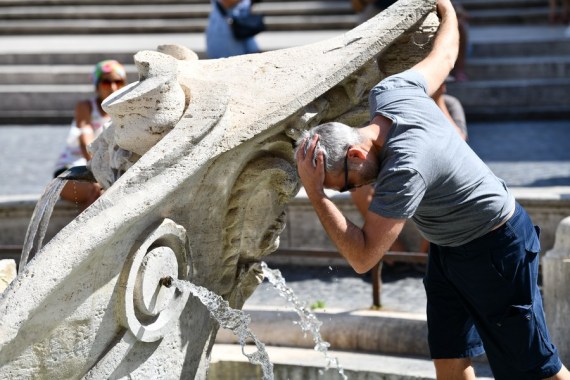
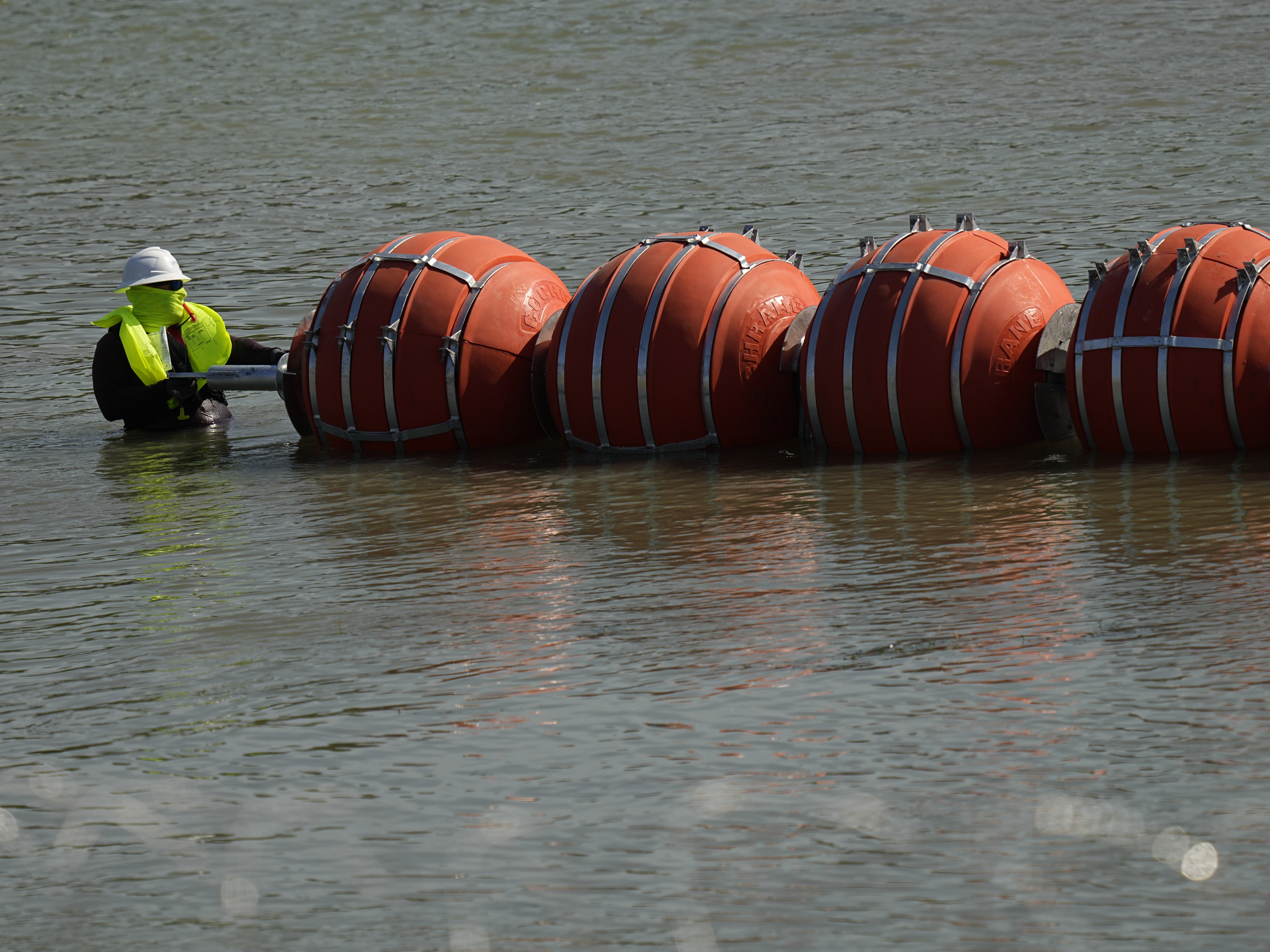
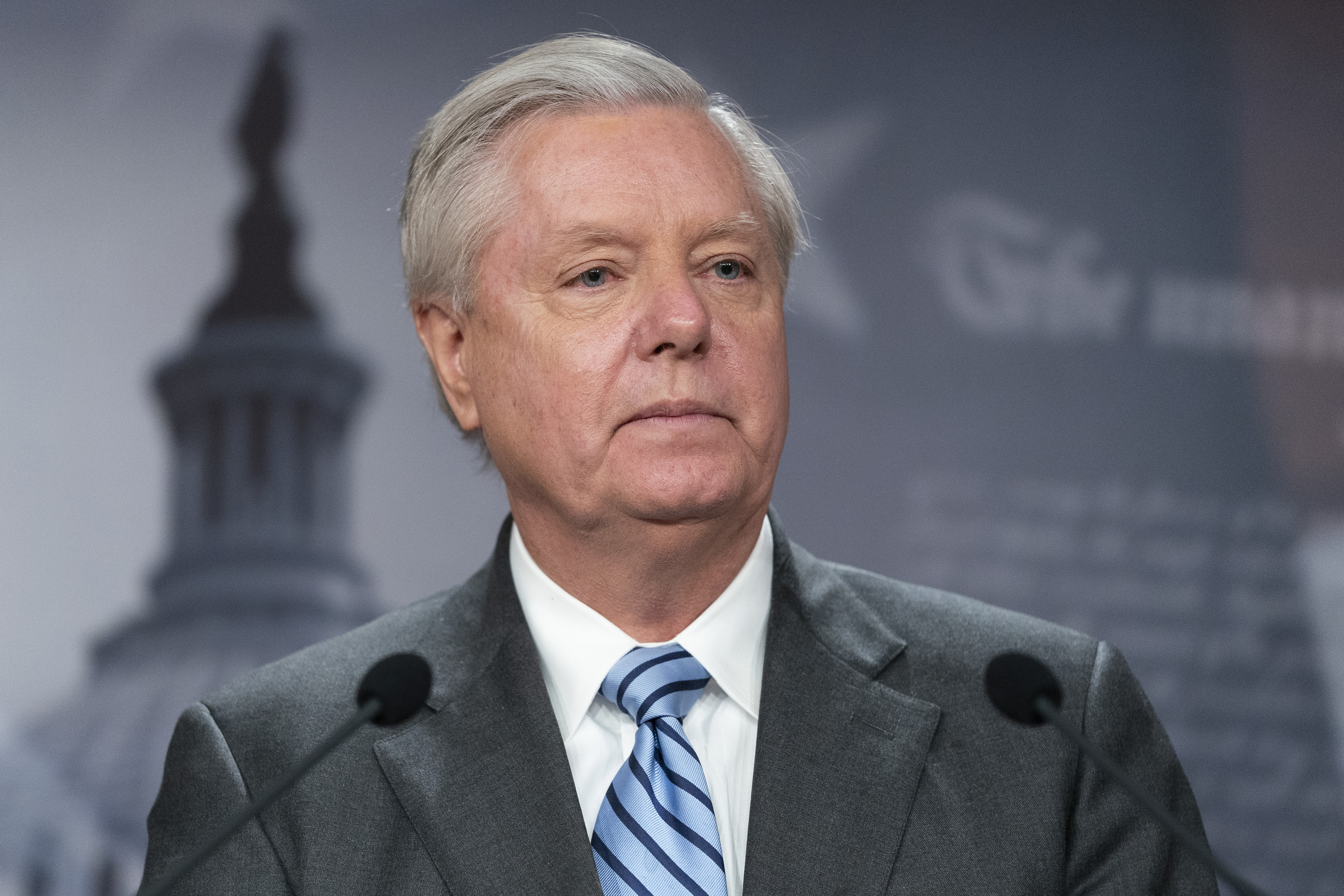
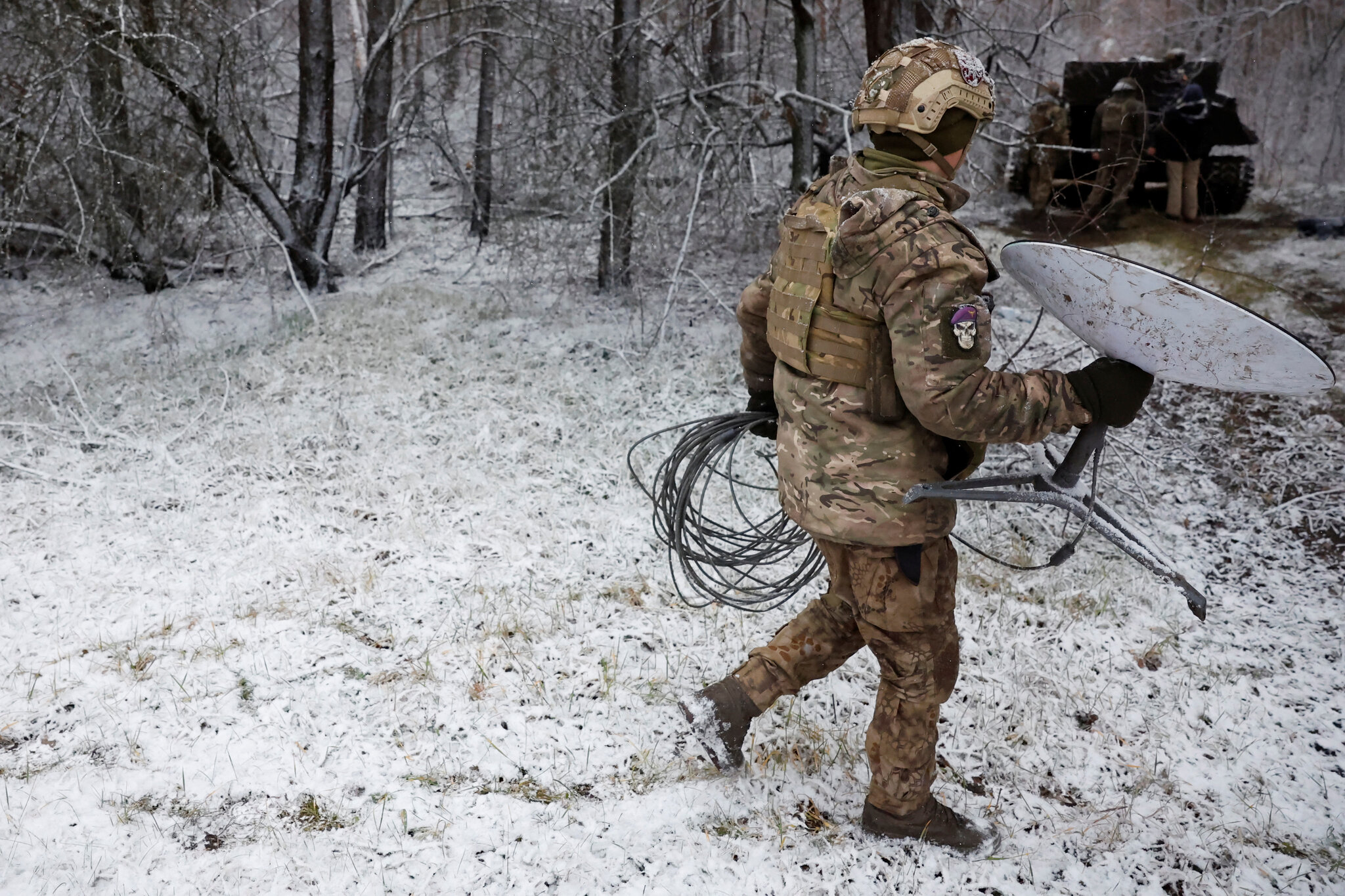
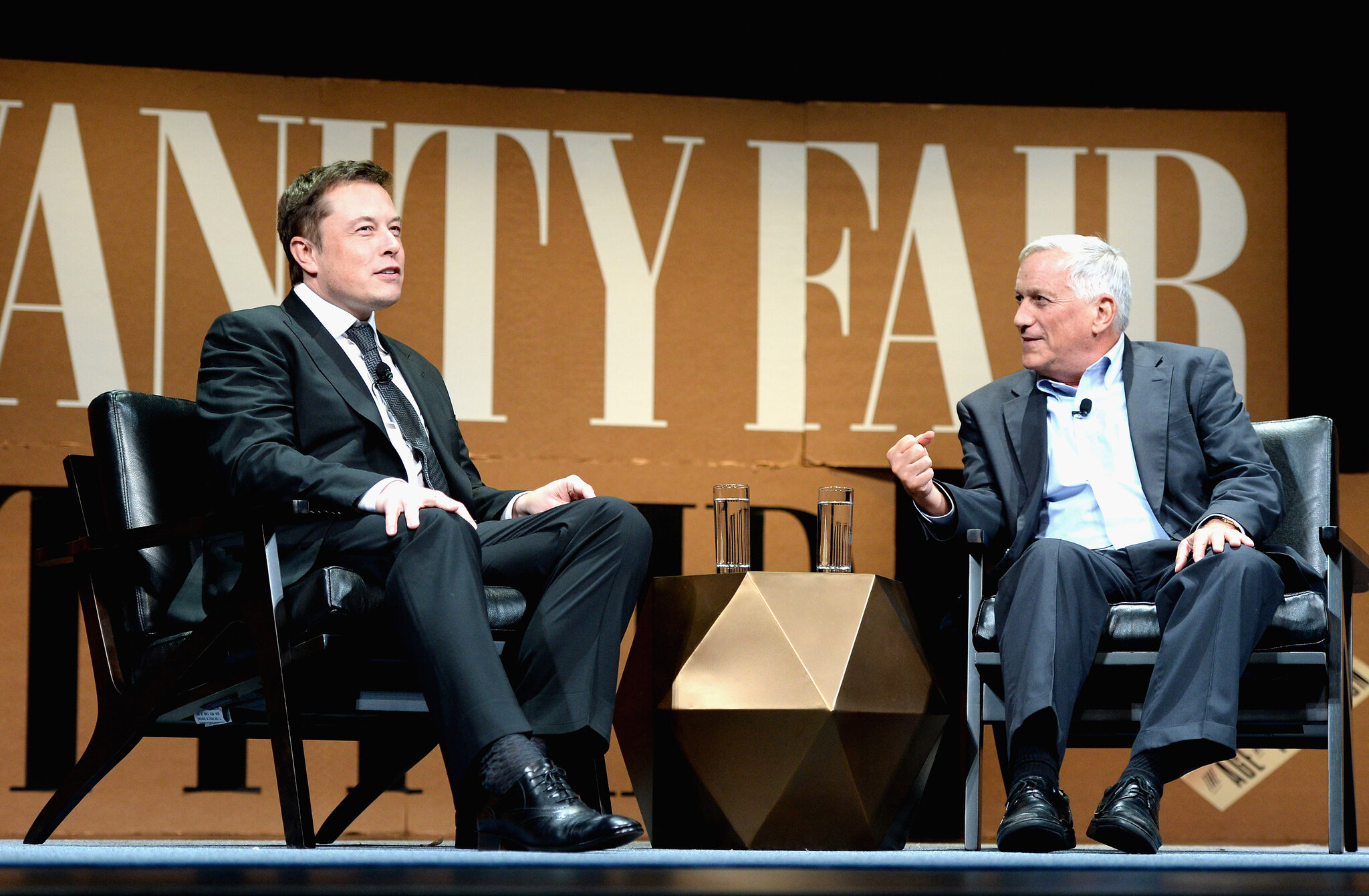
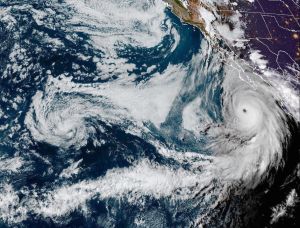


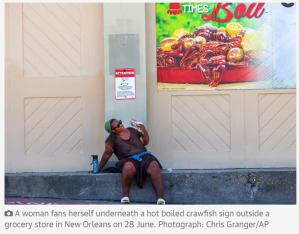

 peej
peej Carissa
 bostonboomer
 dakinikat
 ecocatwoman
 mablue2
 Mama Lopez
 peggysue22
 quixote
 skydancingguestblogger
 Mona (aka Wonk the Vote)



 Sky Dancing
Recent Comments