Posted: September 6, 2025 | Author: bostonboomer | Filed under: just because | Tags: cat art, caturday, Department of War, Donald Trump, Kazuaki Horitomo Kitamura, North Korea, Pentagon, Pete Hegseth, Seal Team 6, Venezuela |
Good Afternoon!!
NOTE: The images in this post are examples of Monmon cats by contemporary Japanese artist Kazuaki Horitomo Kitamura. You can read about him at The Great Cat.
On to today’s reads.
Trump at War

By Kazuaki Horitomo Kitamura
Trump is demanding that he receive the Nobel Peace Prize, while at the same time trying to rebrand the U.S. Department of Defense as the Department of War. He doesn’t have the power to change the name of the DOD or any other Department without the approval of Congress, but he’s doing it anyway.
Jason Breslow at NPR: President Trump signs order to rename the Defense Department as the Department of War.
President Trump signed an executive order on Friday to give the Department of Defense a new name: the Department of War.
Speaking from the Oval Office, Trump said the rebranding reflected a new tone for the country and its military.
A White House fact sheet explains that under the executive order, the name “Department of War” will serve as a “secondary title” for the Department of Defense.
According to the fact sheet, the order will also authorize Defense Department officials to substitute the word “war” into their titles. For example, the Secretary of Defense could use the title Secretary of War.
Secretary of Defense Pete Hegseth appeared to acknowledge the change in a post on social media on Thursday, writing simply, “DEPARTMENT OF WAR.”
President Trump had previously signaled that a change was in the works. During an appearance in the Oval Office last month, Trump said that War Department “just sounded to me better.”
Trump does not have the authority to change the department’s name without congressional action. The legal name was established by Congress in 1949, when it renamed the newly unified military service branches under a new “Department of Defense” following World War II.
In a statement to NPR, constitutional scholar Steve Vladeck confirmed that, while the president is free to refer to the Pentagon by whatever name he chooses, its “legal name can’t change without Congress.” After signing the order on Friday, Trump indicated that the administration would ask Congress to codify the change into law but also said, “I’m not sure they have to.”
I hate him so much. Why do we have to have a “president” who speaks and behaves like an 8-year-old child?
Erica L. Green at The New York Times: Trump Says U.S. Military Has ‘Never Fought to Win’ Since World War II.
President Trump signed an executive order on Friday that ceremonially recognized the Defense Department as the “Department of War,” a name that was dropped after World War II and that the president claimed had caused the country to enter wars it “never fought to win.”
“We won World War II. We won everything before, and as I said, we won everything in between,” Mr. Trump said at an event in the Oval Office, where he signed the order. “And we were very strong, but we never fought to win. We just didn’t fight to win.”
 Mr. Trump argued that the name, which was changed by President Harry S. Truman to combine all of branches of the military, had been changed because the country “decided to go woke.”
“I think the Department of War sends a signal,” Mr. Trump said. The change, he argued, was a “much more appropriate name, especially in light of where the world is right now.”
He added: “We could have won every war, but we really chose to be very politically correct, or wokey, and we just fight forever.” [….]
Mr. Trump said that he anticipated pushing to codify the name change into law. He added that in the meantime, “we’re going with it, and we’re going with it very strongly.” The Defense Department, he said, would be moving ahead with the name as a “secondary title,” including by using it on stationery.
This is the same guy who dodged the draft during the Vietnam War by claiming to have bone spurs.
This change is going to be annoying and expensive for the military. Politico: Pentagon officials fume over Trump’s Department of War rebrand.
Pentagon officials grappled Friday with the Herculean task of fulfilling President Donald Trump’s executive order to remold the enormous, global agency into the Department of War.
Many expressed frustration, anger and downright confusion at the effort, which could cost billions of dollars for a cosmetic change that would do little to tackle the military’s most pressing challenges — such as countering a more aggressive alliance of authoritarian nations.
The details of the order Trump signed Friday are still vague, but officials may need to change Defense Department seals on more than 700,000 facilities in 40 countries and all 50 states. This includes everything from letterhead for six military branches and dozens more agencies down to embossed napkins in chow halls, embroidered jackets for Senate-confirmed officials and the keychains and tchotchkes in the Pentagon store.
“This is purely for domestic political audiences,” said a former defense official. “Not only will this cost millions of dollars, it will have absolutely zero impact on Chinese or Russian calculations. Worse, it will be used by our enemies to portray the United States as warmongering and a threat to international stability.” [….]
More on the internal response:
…[T]he seemingly ad hoc rollout of the name change has caused confusion within the building. One Pentagon official, who independently decided to squat on the Department of War LinkedIn page to prevent a foreign adversary or Trump administration critic from taking it over, openly asked on the social network to whom he should hand the page.
The Pentagon rebranded its X account as the “Department of War,” replete with a different seal for the avatar, but the page’s banner still had the old DOD logo. The Pentagon on Friday afternoon redirected users from defense.gov to war.gov, which was temporarily down.
 It took the Defense Department weeks to scrub agency websites that contained references to diversity, equity and inclusion after the Trump administration demanded it be removed, said another defense official. Officials are imagining a longer-term headache this time around.
“That was just taking down photos,” the person said. “The seal will have to change and thus anything with it.”
The change is bound to flummox the many universities, nonprofits and contractors that rely on the Defense Department for funding — and potentially pose a huge messaging challenge.
“On a tactical level, it would mean having to rebrand a mountain of contracting, marketing, business development materials, you name it, both digital and otherwise, that specifically cite the Department of Defense or DOD,” said a defense industry consultant.
“More strategically, even philosophically, it could raise new questions about what it means to be supporting the Department of War, which likely sends a more belligerent message to our allies and adversaries alike.”
The whole thing is o childish. But so are Donald Trump and Pete Hegseth.
Meanwhile Trump is acting pretty warlike toward Venezuela. First he blew up a speedboat with a drone strike and killed everyone onboard, while offering no evidence the boat was carrying either drugs or gang members. Now he’s talking about target people inside Venezuela. CNN: Trump weighs strikes targeting cartels inside Venezuela, part of wider pressure campaign on Maduro, sources say.
President Donald Trump is weighing a multitude of options for carrying out military strikes against drug cartels operating in Venezuela, including potentially hitting targets inside the country as part of a broader strategy aimed at weakening leader Nicolas Maduro, according to multiple sources briefed on the administration’s plans.
Tuesday’s deadly strike on an alleged drug boat departing Venezuela was a direct reflection of those options, sources said, and marked a significant escalation in the Trump administration’s campaign against drug cartels, many of which it’s designated as terrorist groups. Multiple sources told CNN Tuesday’s strike was just the beginning of a much larger effort to rid the region of narcotics trafficking and potentially dislodge Maduro from power.
Asked by a reporter on Friday if he would like to see regime change in Venezuela, Trump said, “We’re not talking about that.”
“But we are talking about the fact that [Venezuela] had an election, which was a very strange election, to put it mildly,” Trump said, referring to last year’s presidential race in Venezuela marred by accusations of electoral fraud.
The US has moved substantial military firepower into the Caribbean in recent weeks, a move meant in part to be a signal to Maduro, according to multiple White House officials.
Eric Schmitt at The New York Times (gift article): What to Know About a Rapid U.S. Military Buildup in the Caribbean.
The rapid U.S. military buildup in the southern Caribbean Sea culminated this week with a deadly strike against a drug vessel that the Trump administration said had departed from Venezuela.
U.S. officials said the attack on a speedboat on Tuesday killed 11 drug traffickers. Defense Secretary Pete Hegseth and Secretary of State Marco Rubio both said the military would carry out more strikes in the coming weeks as part of a counternarcotics and counterterrorism campaign.
 But on Thursday, two armed Venezuelan F-16 fighter jets buzzed a Navy guided-missile destroyer in the region in a show of force, dialing up tensions between Washington and the government of President Nicolás Maduro of Venezuela.
In response, the Pentagon dispatched 10 F-35 stealth fighters to Puerto Rico on Friday to deter more Venezuelan flyovers and to be positioned should Mr. Trump order airstrikes against targets in Venezuela itself.
President Trump signed a still-secret directive in July ordering the Pentagon to use military force against some Latin American drug cartels that his administration has labeled “terrorist” organizations.
Around the same time, the administration declared that a Venezuelan criminal group was a terrorist organization and that Mr. Maduro was its leader.
Soon after, the Pentagon began amassing a small armada of ships and planes to monitor the supposed drug traffickers and to pick targets to attack.
The U.S. Navy has long intercepted and boarded ships suspected of smuggling drugs in international waters, typically assigning a Coast Guard officer temporarily in charge to invoke law enforcement authority. Tuesday’s direct attack in the Caribbean was a marked departure from that decades-long approach.
No kidding. It very likely was a war crime. Use the gift link to read the whole article.
More warlike talk from Trump, according to Danai Nesta Kupemba at BBC News: Trump says Venezuelan jets will be shot down if they endanger US ships.
Donald Trump has warned that, if Venezuelan jets fly over US naval ships and “put us in a dangerous position, they’ll be shot down”.
The president’s warning comes after Venezuela flew military aircraft near a US vessel off South America for the second time in two days, US officials told the BBC’s US partner CBS News….
Venezuelan President Nicolás Maduro has said that the US allegations about his country are not true, and that differences between the nations do not justify a “military conflict”.
“Venezuela has always been willing to talk, to engage in dialogue, but we demand respect,” he added.
When asked by reporters in the Oval Office on Friday what would happen if Venezuelan jets flew over US vessels again, Trump said Venezuela would be in “trouble”.
Trump told his general, standing beside him, that he could do anything he wanted if the situation escalated.
Since his return to office in January, Trump has steadily intensified his anti-drug-trafficking efforts in Latin America.
Maduro has accused the US of seeking “regime change through military threat”.
We also learned yesterday that Trump authorized a dangerous failed mission in North Korea during his first term and didn’t notify Congress. Dave Philipps and Matthew Cole at The New York Times (gift link): How a Top Secret SEAL Team 6 Mission Into North Korea Fell Apart.
A group of Navy SEALs emerged from the ink-black ocean on a winter night in early 2019 and crept to a rocky shore in North Korea. They were on a top secret mission so complex and consequential that everything had to go exactly right.
The objective was to plant an electronic device that would let the United States intercept the communications of North Korea’s reclusive leader, Kim Jong-un, amid high-level nuclear talks with President Trump.
The mission had the potential to provide the United States with a stream of valuable intelligence. But it meant putting American commandos on North Korean soil — a move that, if detected, not only could sink negotiations but also could lead to a hostage crisis or an escalating conflict with a nuclear-armed foe.
 It was so risky that it required the president’s direct approval.
For the operation, the military chose SEAL Team 6’s Red Squadron — the same unit that killed Osama bin Laden. The SEALs rehearsed for months, aware that every move needed to be perfect. But when they reached what they thought was a deserted shore that night, wearing black wet suits and night-vision goggles, the mission swiftly unraveled.
A North Korean boat appeared out of the dark. Flashlights from the bow swept over the water. Fearing that they had been spotted, the SEALs opened fire. Within seconds, everyone on the North Korean boat was dead.
The SEALs retreated into the sea without planting the listening device.
The 2019 operation has never been publicly acknowledged, or even hinted at, by the United States or North Korea. The details remain classified and are being reported here for the first time. The Trump administration did not notify key members of Congress who oversee intelligence operations, before or after the mission. The lack of notification may have violated the law.
I’d love to know who talked to the NYT about this. The author claims to have have 2 dozen sources:
This account is based on interviews with two dozen people, including civilian government officials, members of the first Trump administration and current and former military personnel with knowledge of the mission. All of them spoke on the condition of anonymity because of the mission’s classified status.
Several of those people said they were discussing details about the mission because they were concerned that Special Operations failures are often hidden by government secrecy. If the public and policymakers become aware only of high-profile successes, such as the raid that killed bin Laden in Pakistan, they may underestimate the extreme risks that American forces undertake.
The military operation on North Korean soil, close to American military bases in South Korea and the Pacific region, also risked setting off a broader conflict with a hostile, nuclear-armed and highly militarized adversary.
Use the gift link to read the whole thing.
According to ABC News, Trump claims he knows nothing about the Seal Team 6 debacle: Trump says he doesn’t know ‘anything’ about reported violent, failed SEAL Team 6 mission in North Korea.
President Donald Trump said Friday he didn’t know “anything” about what the New York Times reported was a classified 2019 SEAL Team 6 mission in North Korea in which unarmed North Korean civilians were killed during an aborted operation.
 The Pentagon and U.S. Special Operations Command declined to comment to ABC News about The New York Times report.
Speaking to reporters from the Oval Office on Friday, Trump was asked by a reporter: “Can you confirm that it happened?”
“I don’t know anything about it. I’m hearing it now for the first time,” he responded.
The account, citing “two dozen people, including civilian government officials, members of the first Trump administration and current and former military personnel with knowledge of the mission” who spoke to the Times anonymously, said Trump had approved the mission.
Either Trump is lying or the memory is lost to dementia.
This story by Paul McCleary and Daniel Lippman suggests that Trump is more focused on attacking Americans and nearby allies than foreign enemies: Pentagon plan prioritizes homeland over China threat.
Pentagon officials are proposing the department prioritize protecting the homeland and Western Hemisphere, a striking reversal from the military’s yearslong mandate to focus on the threat from China.
A draft of the newest National Defense Strategy, which landed on Defense Secretary Pete Hegseth’s desk last week, places domestic and regional missions above countering adversaries such as Beijing and Moscow, according to three people briefed on early versions of the report.
The move would mark a major shift from recent Democrat and Republican administrations, including President Donald Trump’s first term in office, when he referred to Beijing as America’s greatest rival. And it would likely inflame China hawks in both parties who view the country’s leadership as a danger to U.S. security.
“This is going to be a major shift for the U.S. and its allies on multiple continents,” said one of the people briefed on the draft document. “The old, trusted U.S. promises are being questioned.”
The report usually comes out at the start of each administration, and Hegseth could still make changes to the plan. But in many ways, the shift is already occurring. The Pentagon has activated thousands of National Guard troops to support law enforcement in Los Angeles and Washington, and dispatched multiple warships and F-35 fighter planes to the Caribbean to interdict the flow of drugs to the U.S.
A U.S. military strike this week allegedly killed 11 suspected members of the Venezuelan Tren de Aragua gang in international waters, a major step in using the military to kill noncombatants.
The Pentagon also has established a militarized zone across the southern border with Mexico that allows troops to detain civilians, a job normally reserved for law enforcement.
The authors note that this doesn’t seem to reflect Trump’s rhetoric.
The shift “doesn’t seem aligned with President Trump’s hawkish views on China at all,” said a Republican foreign policy expert briefed on the report, who like others was granted anonymity to discuss sensitive issues.
 The president has continued to express tough rhetoric toward China, including imposing staggering tariffs on Beijing and accusing Chinese President Xi Jinping of “conspiring against” the U.S. after he met with North Korean leader Kim Jong Un and Russian President Vladimir Putin at a military parade in the country’s capital.
Elbridge Colby, the Pentagon’s policy chief, is leading the strategy. He played a key role in writing the 2018 version during Trump’s first term and has been a staunch supporter of a more isolationist American policy. Despite his long track record as a China hawk, Colby aligns with Vice President JD Vance on the desire to disentangle the U.S. from foreign commitments.
That’s interesting. I wonder if this is coming more from the Project 2025 group than Trump himself.
A few more stories to check out:
Politico: Trump seeking ways to take over 9/11 memorial in NYC.
The Guardian: Kennedy Center ticket sales take a nosedive after Trump takeover.
Ann Applebaum at The Atlantic (gift link): America Surrenders in the Global Information Wars.
Jonathan J. Cooper at AP: How Donald Trump is weaponizing the government in his second term to settle personal scores.
Ariana Baio at The Independent: ‘Chipocalypse Now’: Trump threatens Chicago with ‘Department of War’ and suggests ICE raids imminent.
Those are my offerings for today. What’s on your mind?
Did you like this post? Please share it with your friends:
Posted: August 23, 2025 | Author: bostonboomer | Filed under: just because | Tags: cat art, caturday, Donald Trump, Fascist crackdown on Washington DC, Jeanine Pirro, John Bolton, Kilmar Abrego Garcia, mortgage fraud, National Guard troops in cities, Pete Hegseth, Pulse nighclub, rainbow crosswalk, sanctuary cities, Space Cat Visits Venus |

Book Cover
Good Afternoon!!
I think I’ve hit a wall this morning. I’m feeling so exhausted and overwhelmed with what Trump is doing to the country, that I just want to lie down and give up. I hope I can raise my spirts somehow as the day goes on.
Anyway, it is Caturday, and I have a new installment of Space Cat to share today. It’s the second book in the space cat series, Space Cat Visits Venus. Here is the synopsis from Amazon:
Flyball the Space Cat is back, and this time he’s living in Luna Port, the first city on the Moon. Workers at the lunar station are building a rocket to transport him and his pilot buddy, Colonel Fred Stone, to Venus. The two friends take a long voyage to the planet, where they encounter violet skies, torrential ammonia rains, and strange plants that can communicate without speaking.
This new edition of a charmingly illustrated storybook from 1955 is the second of a four-book series starring the intrepid feline known as Space Cat. Young readers will delight in taking a look at space exploration from Flyball’s point of view and following his escapades across the solar system.
It’s hard to believe these books are still in print after all this time, but I think they are really cute. See some of the illustrations scattered through this post.
As you know, John Bolton’s home and office were searched by the FBI yesterday. Below are some articles that analyze and comment on Trump’s retribution project.
The Wall Street Journal Editorial Board: Trump’s Vendetta Campaign Targets John Bolton.
President Trump promised voters during his campaign for a second term that he had bigger things on his mind than retribution against opponents. But it is increasingly clear that vengeance is a large part, maybe the largest part, of how he will define success in his second term.
His revenge campaign took an ominous turn Friday as FBI agents raided the home and office of Mr. Trump’s first-term national security adviser John Bolton. They brought two broad warrants to search the “premises.” Agents showed up unannounced at his Bethesda, Md., home at 7 a.m. They confiscated his wife Gretchen’s phone because it was visible and not on her person. Mr. Bolton had already left for his office, which is where FBI agents greeted him….

Cat with Venus rocket
It’s hard to see the raid as anything other than vindictive. Mr. Bolton fell out of Mr. Trump’s favor in the first term and then wrote a book about his experience in the White House while Mr. Trump was still President. Mr. Trump tried and failed to block publication. The President then claimed Mr. Bolton had exposed classified information, though the book had gone through an extensive pre-publication scrub at the White House for classified material.
The book investigation faded away under President Biden, but now it looks as if Mr. Patel is reviving it. Whether Mr. Trump ordered the FBI probe or not doesn’t matter. Mr. Patel knows what the President thinks about Mr. Bolton, and the President’s minions in Trump II don’t serve as the check on his worst impulses the way grown-ups did in his first term. The presidential id is now unchained.
Mr. Trump made clear that he was out for blood against Mr. Bolton when he pulled the former adviser’s protective detail after his re-election. Mr. Bolton is widely known as a defense hawk, and in 2022 the Justice Department charged an Iranian national it said planned to murder him.
A bit more:
It’s unlikely that Mr. Bolton broke any laws on national secrets, and he certainly didn’t share any with us over our long association with him. But perhaps Mr. Trump intends for the process itself to be the punishment even if there is ultimately no criminal charge. Mr. Bolton has to pay for legal counsel, and his family has to endure the anxiety of being under federal government siege.
Mr. Bolton has continued to speak candidly about Mr. Trump’s second-term decisions, pro and con, including in these pages this week. The President may also hope the FBI raid will cause Mr. Bolton to shut up, though knowing him we can’t imagine that working.
The real offender here is a President who seems to think he can use the powers of his office to run vendettas. We said this was one of the risks of a second Trump term, and it’s turning out to be worse than we imagined.
Shane Harris at The Atlantic (gift link): The Bolton Raid Feels Like a Warning.
FBI directors don’t customarily announce raids in progress. But early this morning, Kash Patel celebrated the search of former National Security Adviser John Bolton’s home as agents were rolling into his suburban-Maryland driveway: “NO ONE is above the law … @FBI agents on mission,” Patel wrote on X. Agents also executed a search warrant at Bolton’s office in Washington, D.C. President Donald Trump later told reporters that he had learned about the raid on one of his most voluble critics from TV news, but he took the opportunity to call Bolton a “lowlife” and “not a smart guy.” Then he added: “Could be a very unpatriotic guy. We’re going to find out.”

Flyball dreams of mice
The FBI’s actions were hard not to read as payback for Bolton’s years of criticism of the president, even as the facts that persuaded a judge to approve a search warrant remain unknown. That’s the problem with a politicized legal system—even if an investigation is legitimate, it’s easy to assume that its motives are corrupt. Trump has spent years vowing retribution against Bolton, particularly after Bolton published a 2020 memoir that portrayed the president as incompetent and out of his depth on foreign policy.
If this was revenge, it wasn’t an isolated act. As agents were still packing up boxes of Bolton’s effects, The Washington Post reported that Defense Secretary Pete Hegseth had pushed out yet another senior military officer, firing Lieutenant General Jeffrey Kruse, director of the Defense Intelligence Agency. In June, its analysts delivered a preliminary assessment that U.S. bombers had caused relatively limited damage to Iranian nuclear facilities, undercutting Trump’s pronouncements that the sites were “obliterated.” And just three days ago, Director of National Intelligence Tulsi Gabbard revoked the security clearances of more than three dozen current and former national-security officials. Several played key roles in efforts to counter or expose Russia’s 2016 election interference, what Trump calls the “Russia Hoax” and Gabbard has described as part of a “years-long coup” against the president.
Put it all together, and this may be remembered as the week Trump’s campaign against the “deep state” kicked into high gear. To some intelligence professionals I spoke with, it felt as though something fundamental had shifted in their historically apolitical line of work.
“Given the dystopian nature of it all—clearance revocations of former officials who did no wrong, forced retirements of long-standing intelligence officials, reductions in force that include junior officers who were just hired, and a wildly politicized leadership in the intelligence community—I no longer recommend young Americans to pursue careers in intelligence,” Marc Polymeropoulos, a veteran CIA officer who had his own security clearance yanked earlier this year, told me.
Purge doesn’t adequately capture what national-security experts see happening here. Chilling effect is too mild, though revoking the security clearances of two senior intelligence officers, as Gabbard did, effectively ending their government careers, will indeed send a message. Terrorizing the workforce is a phrase I heard a lot this week. And that may indeed be the point.
“Instead of being honest about what we think, now people will just keep their mouths shut or tell Trump what he wants to hear,” said one former official, who would only speak anonymously. The administration publicly identified this person as part of the “Russia Hoax,” and they’ve hired personal security for outside their home, fearing that Trump’s most fevered supporters might pay a visit.
Forget about calling out misbehavior or wrongdoing by administration officials, the person added: “Where would we go to file a grievance, or to report misconduct? Who’s going to do that?”
You can use the gift link to read rest. I wonder if they will target Hillary Clinton? I’m sure Trump would like to do that.
The Trump DOJ seems to have hit on mortgage fraud as their go to accusation against critics.

Flyball and Fred look out at Venus.
The Wall Street Journal: Mortgage-Fraud Accusations Are Trump’s New Political Weapon.
The Trump administration has a new weapon at its disposal in its efforts to take down Democrats and their appointees: mortgage records.
Members of the administration have now alleged three public officials have committed mortgage fraud, referring each to the Justice Department. The administration has signaled that it has just gotten started: U.S. Pardon Attorney Ed Martin was recently tapped “to investigate fraud by public officials in mortgages,” according to a letter Martin sent.
The targets have denied wrongdoing, but the probes represent an aggressive new spin on opposition research that has long dug into tax records and financial disclosures public officeholders have to make. Mortgage applications go beyond the typical disclosure requirements.
Another twist is the allegations are coming from a government official overseeing an agency able to access massive amounts of mortgage data.
At the forefront of the campaign is Bill Pulte, a homebuilder heir Trump tapped to lead the government agency that oversees Fannie Mae and Freddie Mac, the largest players in the mortgage market.
At the historically quiet but powerful Federal Housing Finance Agency, Pulte has turned himself into a Trump attack ally, probing mortgages of prominent Democrats and a Biden-appointed official at the Federal Reserve.
So far, DOJ has announced investigations of Federal Reserve governor Lisa Cook, Senator Adam Schiff, andNew York Attorney General Letitia James.
Heading into an election season, mortgage documents could become even more a source of contention across the country, for both sides of the aisle. Mortgage fraud allegations have also emerged against Texas Attorney General Ken Paxton, a Republican who is campaigning for a Senate seat. (Paxton’s campaign has declined to comment on his properties.)
Mick Mulvaney, a former chief of staff for Trump who had faced questions about taxes on his nanny when he was facing Senate confirmation, says the attacks are going to be part of the new normal for Republicans to use versus Democrats now.
“Right now it’s classified documents and mortgage applications,” Mulvaney said of the new opposition research. “Whether or not you pretend to need a wheelchair at an airport to get on the plane faster, that may be used next if that’s illegal.”
In other news, the troops (and FBI agents and ICE thugs) are still occupying Washington DC. Here’s the latest on that story.
CNN: Hegseth orders National Guard troops in DC to carry weapons.
Defense Secretary Pete Hegseth has ordered National Guard members patrolling the streets of Washington, DC, to begin carrying their service weapons as they fulfill President Donald Trump’s crime crackdown in the nation’s capital, according to a US defense official.

Taking off their helmets
The directive from Hegseth represents a notable shift in guidance from the Pentagon, which had previously indicated that National Guard members could be armed if the circumstances warranted, and suggests hundreds of guard troops deployed in DC will soon be carrying weapons despite serving in a support role.
“At the direction of the Secretary of Defense, (Joint Task Force) JTF-DC members supporting the mission to lower the crime rate in our Nation’s capital will soon be on mission with their service-issued weapons, consistent with their mission and training,” the official said….
It comes as other states’ National Guard members have begun arriving in Washington, DC, to be in-processed to assist the DC National Guard.
More than 1,900 troops from multiple states have been called up as part of the mission including from West Virginia, South Carolina, Mississippi, Ohio, Louisiana, and Tennessee National Guards, according to a release from Joint Task Force – DC on Thursday.
What could possibly go wrong? I wonder if Hegseth has heard about Kent State?
ABC News reports that National Guard troops will now be permitted to act as law enforcement: National Guard in DC to carry M17 pistols, conduct law enforcement duties, task force says.
National Guard troops deployed on the streets of Washington, D.C., will now carry weapons for personal protection and are allowed to carry out law enforcement duties, defense officials announced Friday.
The decision is an escalation in President Donald Trump’s use of military troops to address what he insists is “out of control” crime in the nation’s capital. Since his announcement, Trump has mobilized nearly 2,300 National Guard troops from Washington, D.C., and six states with Republican governors. But troops had remained unarmed until now.
ABC News first reported Friday that Defense Secretary Pete Hegseth had officially authorized the troops to carry weapons if their mission required it. On Friday, the joint task force overseeing the troops confirmed the move, noting that Guard personnel sent on missions would carry M17 pistols, “which are intended for person protection.” The task force said Guard members would receive proper training on how to use the weapons before being allowed to carry them.
“This decision is not something taken lightly,” said Army Brig. Gen. Leland D. Blanchard, III, the Commanding General of the D.C. National Guard, in a statement.

Flyball and the Venus Mouse.
Really? I think it is taken very lightly, considering there’s not as serious crime problem in DC and it’s illegal for the military to perform law enforcement functions in the U.S.
The task force also noted in its statement late Friday that Guard troops can carry out law enforcement duties because they are operating under Title 32 status, a law that exempts troops from restrictions under the 1878 Posse Comitatus Act, because they are still technically under a state governor’s command.
Legal experts have long warned about how presidents might use Title 32 as a kind of legal loophole to Posse Comitatus, which is supposed to prevent the president from using the military as a domestic police force. Under Title 32, a president pays for a Guard mission while keeping troops under control of the governors; in this case, Trump asked red-state governors to send their troops to D.C.
While those governors technically retain control of the troops, their missions are being decided by the White House, according to several administration officials.
Reuters: Trump crime crackdown deploys troops in Washington’s safest sites.
Hundreds of National Guard soldiers in military fatigues and combat boots mingled with tourists, posed for selfies, and treated themselves to ice cream from food trucks on Thursday along Washington’s National Mall, one of the safest parts of America’s capital.
On occasion an angry local would hurl verbal abuse at them, but the soldiers simply shrugged and carried on what appeared to be an undemanding assignment.
Outside the National Museum of African American History and Culture, five members of the West Virginia National Guard were standing on the street corner far away from the city’s crime hot spots.

A grateful rescued mouse.
“It’s boring. We’re not really doing much,” said Sergeant Fox, who declined to give his first name.
Fox is among almost 2,000 troops, including 1,200 from six Republican-led states, who are being deployed in Washington as part of an extraordinary militarization inside the Democratic-led city.
The soldiers, some of whom told Reuters they did not get involved in arrests, are officially in Washington to support a federal crackdown on what President Donald Trump calls a crime epidemic. But that depiction appears to run counter to the fact that crime rates overall have shrunk in recent years.
That disconnect, combined with the troop concentration near the Washington Monument, the Lincoln Memorial and in view of the U.S. Capitol, highlights criticism by the city’s Democratic leaders that this massive deployment is more a show of power by Trump, rather than a serious effort to fight crime.
No kidding.
This is something I hadn’t heard about before. Trump is also mobilizing National Guard troops in other parts of the country. The Independent: Trump mobilizing up to 1,700 National Guardsman in 19 states to widen crime and immigration crackdown.
The Trump administration reportedly plans to mobilize up to 1,700 National Guard troops across 19 states in the coming weeks to support its immigration and anti-crime crackdowns, a dramatic expansion of the controversial operation that’s seen federal agents and Guard troops carrying out activities across Washington, D.C.
The troops, who will largely be activated across Republican-controlled states, will serve in support of the administration’s Immigration and Customs Enforcement operations, as well as other law enforcement priorities, according to comment from unnamed Pentagon officials and documents obtained by Fox News.

Taking photos of the plants
The Guardsmen assisting ICE will be carrying out tasks that may include “personal data collection, fingerprinting, DNA swabbing and photographing of personnel in ICE custody,” an official told outlet.
The deployments will take place across the following states: Alabama, Arkansas, Florida, Georgia, Idaho, Indiana, Iowa, Louisiana, Nebraska, Nevada, New Mexico, Ohio, South Carolina, South Dakota, Tennessee, Texas, Utah, Virginia, Wyoming, per Fox.
Texas is reportedly slated to have the largest deployment.
The Guardsmen will be serving under Title 32 Section 502F authority, in which they technically remain under state command and control, but can assist with federal missions and are paid with federal funds. The status allows them to avoid running afoul of a federal law limiting military involvement in domestic law enforcement.
Read more at the link.
Trump is also fantasizing about occupying Democratic cities like Chicago and New York. The Guardian: Trump targets Chicago and New York as Hegseth orders weapons for DC troops.
Donald Trump has threatened to take his federal crackdown on crime and city cleanliness to New York and Chicago, as the defense secretary, Pete Hegseth, ordered that national guard troops patrolling the streets of Washington DC under federal control will now be armed.
The US president talked to reporters in the Oval Office and said: “When ready, we will start in Chicago … Chicago is a mess.” He added that then the administration “will help with New York”, amid the controversial and aggressive federal efforts to control leading Democratic-voting cities, each of which has a Black mayor….

Touching the telepathic moss.
On the issue of suddenly announcing that it would now arm the federalized troops in DC, the defense department did not immediately offer any other details about the new development or why it was needed.
The step is an escalation in the federal government’s rare intervention into policing in the nation’s capital and came as nearly 2,000 national guard members are stationed in the city.
Earlier this week hundreds of troops from several Republican-led states arrived to bolster the DC national guard.
The Pentagon and the US army had said last week that troops would not carry weapons.
There’s more information about the DC occupation in the Guardian article.
Hegseth’s orders come just a day after Jeanine Pirro, the District of Columbia’s top federal prosecutor, instructed prosecutors to pursue the most serious charges possible in cases stemming from recent arrests, limiting their discretion as the Trump administration intensifies its law enforcement presence in the capital.
That directive, first reported by the New York Times, was issued this week and narrows the ability of line prosecutors to decide how cases are charged and prioritized. By pushing for the maximum charges allowed, the new policy could lead to longer prison terms for convicted defendants….
According to the White House, federal agents have made more than 630 arrests as of Thursday, though the justice department has not clarified how that figure compares with typical city police numbers.
While Pirro has committed to filing the toughest charges possible in most cases, she has also relaxed enforcement of one local gun law. This week she directed prosecutors not to pursue felony charges against people for possessing rifles or shotguns in the city, despite a DC law prohibiting them.
Finally:
On Thursday, Trump declared his takeover of the Metropolitan police department to be a success.
He
had previously signaled that he would target other cities, such as Baltimore, Oakland and another mission in Los Angeles, as well as New York and Chicago, which are all strongly Democratic-voting and run by Black mayors. The Maryland governor, Wes Moore, said to CNN that crime was
dropping in Baltimore as a result of community violence prevention efforts and he would never activate the national guard “for theatrics”.
Yeah, right.
A few more interesting stories to check out today:
NBC News: Kilmar Abrego Garcia notified by ICE that he may be deported to Uganda.
Kilmar Abrego Garcia, the man who was wrongfully deported to a high-security prison in El Salvador, was notified by immigration authorities that he may be deported to Uganda, less than 24 hours after his release from federal custody.
Abrego was released Friday from a jail near Nashville, Tennessee, where he had been held since his return to the U.S. in June after being mistakenly deported to El Salvador’s CECOT prison.

Flyball’s first vegetarian meal.
Immigration authorities were expected to attempt to deport Abrego upon his release. Abrego “may be removed to Uganda no less than 72 hours absent weekends,” a source familiar with the case told NBC News on Saturday.
That is in line with standard procedure that ICE must give immigrants 72 hours notice before removing them to third countries.
Abrego, originally from El Salvador, had a withholding of removal order from 2019 that prevents his deportation to his home country due to concerns that he would be persecuted by violent gangs.
The removal order was violated when the Trump administration accidentally deported Abrego to the El Salvador’s CECOT prison, notorious for its harsh conditions, in March. However, the 2019 protective order does not bar Abrego from being deported to another country.
Abrego’s lawyers have now notified the judge in the Middle District of Tennessee that ICE has informed Abrego of its intent to deport him to Uganda. Abrego could not face the criminal charges of human smuggling brought against him by DOJ in that case if he is out of the country.
They are never going to leave this poor man alone.
AP: Judge blocks Trump from cutting money to Chicago, LA and other cities over ‘sanctuary’ policies.
A judge ruled late Friday the Trump administration cannot deny funding to Boston, Chicago, Denver, Los Angeles and 30 other cities and counties because of policies that limit cooperation with federal immigration efforts.
U.S. District Judge William Orrick in San Francisco extended a preliminary injunction blocking the administration from cutting off or conditioning the use of federal funds for so-called “sanctuary” jurisdictions. His earlier order protected more than a dozen other cities and counties, including San Francisco, Portland and Seattle.
An email to the White House late Friday was not immediately returned. In his ruling, Orrick said the administration had offered no opposition to an extended injunction except to say the first injunction was wrong. It has appealed the first order.
Orrick also blocked the administration from imposing immigration-related conditions on two particular grant programs.
More at the link.
Newsweek: Florida Locals Defy Ron DeSantis By Restoring Pulse Rainbow Crosswalk.
People in Orlando have defied Republican Governor Ron DeSantis and reinstated a rainbow crosswalk outside the Pulse nightclub, after Florida officials removed the painted crossing installed in memory of the 49 people killed at the site in 2016.

Fleeing the ammonia storm.
The restoration was led by local community members and LGBTQ+ advocates who gathered at the intersection following the overnight state-directed repainting. In a video shared to social media by the account @jeremy_rodrigue, people can be seen DIY-ing the rainbow crosswalk and drawing the colors back onto the ground.
“While this attack was meant to demoralize us and push us back in the closet, Orlando refused to be erased,” Democratic state Senator Carlos Guillermo Smith, who became the first openly gay Latino elected to the Florida legislature in 2016, told Newsweek. “It was inspiring to see so many local residents spring into action in response to the Governor’s cowardly abuse of power.” [….]
The removal of the rainbow crosswalk— painted in 2017 and approved during the administration of former Republican Governor Rick Scott—has sparked fierce backlash from city officials, survivors, and LGBTQ+ organizations who say it was eliminated in the dead of night with no warning.
The crosswalk was painted over following a directive from the Trump administration. In a letter to governors last month, Transportation Secretary Sean Duffy instructed states to “eliminate” distractions on public roads. He wrote on X at the time: “Taxpayers expect their dollars to fund safe streets, not rainbow crosswalks.”
That’s it for me today. I’m going to try to ignore the news for awhile. Please take care of yourselves, everyone.
Did you like this post? Please share it with your friends:
Posted: August 9, 2025 | Author: bostonboomer | Filed under: just because | Tags: Alaska, cat art, caturday, Covid-19, Donald Trump, Harvard University, measles, RFK Jr, Russia, Space Cat, Steve Witkoff, UCLA, Ukraine, vaccines, Vladimir Putin, Volodymyr Zelensky |
Good Afternoon!!

Book cover
A couple of Caturdays ago, I posted illustrations from a 1950s children’s book called Space Cat and the Kittens. My brother had shared them with me after he bought the book at a used bookstore. This week, he came across the first book in the four-part series, and I’m going to post some of the illustrations from that book today. I think they are really cute. The story:
A little gray kitten with a taste for adventure stows away on an airplane, and the daring stunt turns out to be his first step toward becoming … Space Cat! The plane’s pilot, Captain Fred Stone, names his fuzzy new friend Flyball and welcomes him to an experimental station set up in the middle of the desert. Flyball enjoys supervising the station’s workers and takes particular interest in the big rocket ship that he’s not allowed to explore. Regardless of the rules, the kitty is determined to hitch another ride, and before you know it, Flyball’s wearing a custom-made pressurized suit and headed for the Moon.
As for the news, everything is awful as usual today. We’re dealing with a “president” who is well on the way of becoming a dictator. He plans to meet with fellow dictator Vladimir Putin to hand over territory in Ukraine; He is allowing his HHS secretary RFK Jr. to endanger Americans with anti-vaccine policies; and he is deliberately damaging American higher education.
Ukraine and Russia
Tyler Pager and David E. Sanger at The New York Times: Trump Says He Will Meet With Putin in Alaska Next Week.
President Trump said he would meet with President Vladimir V. Putin of Russia next Friday in Alaska, as he tries to secure a deal to end the war between Russia and Ukraine.
Mr. Trump announced the meeting Friday shortly after he suggested that a peace deal between the two countries could include “some swapping of territories,” signaling that the United States may join Russia in trying to compel Ukraine to permanently cede some of its land.
“We’re going to get some back, and we’re going to get some switched,” Mr. Trump said while hosting the leaders of Armenia and Azerbaijan for a peace summit at the White House. “There’ll be some swapping of territories to the betterment of both, but we’ll be talking about that either later, or tomorrow.”
The meeting, the first in-person summit between an American and Russian president since President Joseph R. Biden Jr. met with Mr. Putin in June 2021, reflects Mr. Trump’s confidence in his ability to persuade Mr. Putin in a face-to-face encounter, a goal that has eluded Mr. Trump and his predecessors. For Mr. Putin, the meeting itself is a victory after he spent the past several months largely isolated from the international community, with NATO leaders — other than Mr. Trump — refusing to communicate directly with him.

Carrying cat to the rocket
At least he didn’t invite Putin to the White House, but will Putin try to get him to give Alaska back to Russia while they are swapping land in Ukraine?
The meeting also presents a host of challenges. Ukrainian leaders have adamantly opposed relinquishing any of their land to Russia, and the country’s constitution bars President Volodymyr Zelensky of Ukraine from ceding any territory.
There would also be numerous political and military hurdles for Ukraine in turning over land to Russia, as well as questions including security guarantees for Ukraine and the future of frozen Russian assets. And many diplomats have suggested that Mr. Putin may be more interested in dragging out diplomacy to give him time to pummel Ukraine than in securing a peace deal.
White House officials declined to say exactly where in Alaska the two leaders would meet or why Mr. Trump decided to hold the meeting there, though it is the closest U.S. state to Russia. In 2021, the Biden administration held talks with China in Anchorage, Alaska.
Mr. Trump also provided little additional detail about the meeting, what territory could be swapped or the broader contours of a peace deal, saying earlier Friday that he did not want to overshadow the peace pledge between Armenia and Azerbaijan. But he told European leaders earlier this week that he planned to follow up his session with Mr. Putin with a meeting with Mr. Putin and Mr. Zelensky.
The New York Times: Zelensky Rejects Ceding Territory to Russia After Trump Suggests a Land Swap.
President Volodymyr Zelensky of Ukraine on Saturday flatly rejected the idea that Ukraine could cede land to Russia after President Trump suggested that a peace deal between Ukraine and Russia could include “some swapping of territories.”
“Ukrainians will not gift their land to the occupier,” Mr. Zelensky said in a video address from his office in Kyiv, several hours after Mr. Trump’s remarks, which appeared to overlook Ukraine’s role in the negotiations.
“Any decisions made against us, any decisions made without Ukraine, are at the same time decisions against peace,” Mr. Zelensky said. “They will bring nothing. These are dead decisions; they will never work.”
His blunt rejection risks angering Mr. Trump, who has made a peace deal between Ukraine and Russia one of his signature foreign policy goals, even if it means accepting terms that are unfavorable to Kyiv. In the past, Mr. Trump has criticized Ukraine for clinging to what he suggested were stubborn cease-fire demands and for being “not ready for peace.”

Cat in a hammock on spacecraft
What doesn’t anger Trump? Anything except blind loyalty and obedience.
A recent poll by the Kyiv International Institute of Sociology found that more than three-quarters of Ukrainians are against transferring Ukrainian-controlled territory to Russia. When it comes to ceding land that includes territory already under Russian control, opposition drops slightly, with a little more than half of Ukrainians against it, “even if this makes the war last longer and threatens the preservation of independence,” the poll says.
But support for land concessions has grown since Ukraine’s failed 2023 counteroffensive, which underscored its inability to retake substantial territory. About 38 percent of the population thinks ceding land is acceptable now, according to the poll, up from only 10 percent about two years ago.
Russia has long demanded that Ukraine give up four regions in the east and south that Moscow claims to have annexed in late 2022, even though some of that territory remains under Ukrainian control. The Kremlin is particularly intent on seizing full control of the eastern regions of Luhansk and Donetsk, which it has long sought to capture with relentless assaults.
But ceding Luhansk and Donetsk, which are part of an area commonly known as the Donbas region, would create a host of issues for Ukraine. It would mean giving up a region rich in cities and industrial centers that Russia could use as a launchpad to reignite the war.
And Ukraine would have to abandon its main fortified defensive line in northern Donetsk, stretching between the cities of Sloviansk and Kostiantynivka, which has so far withstood Russian assaults.
Nick Paton Walsh at CNN: Trump-Putin summit in Alaska resembles a slow defeat for Ukraine.
Location matters, former real estate mogul US President Donald Trump said. Moments later he announced Alaska, a place sold by Russia to the United States 158 years ago for $7.2 million, would be where Russian President Vladimir Putin tries to sell his land deal of the century, getting Kyiv to hand over chunks of land he’s not yet been able to occupy.
The conditions around Friday’s summit so wildly favor Moscow, it is obvious why Putin leapt at the chance, after months of fake negotiation, and it is hard to see how a deal emerges from the bilateral that does not eviscerate Ukraine. Kyiv and its European allies have reacted with understandable horror at the early ideas of Trump’s envoy, Steve Witkoff, that Ukraine cede the remainders of the Donetsk and Luhansk regions in exchange for a ceasefire.
Naturally, the Kremlin head has promoted the idea of taking ground without a fight, and found a willing recipient in the form of Witkoff, who has in the past exhibited a relaxed grasp of Ukrainian sovereignty and the complexity of asking a country, in the fourth year of its invasion, to simply walk out of towns it’s lost thousands of men defending.

Space cat in freefall
It is worth pausing and reflecting on what Witkoff’s proposal would look like. Russia is close to encircling two key Donetsk towns, Pokrovsk and Kostiantynivka, and may effectively put Ukrainian troops defending these two hubs under siege in the coming weeks. Ceding these two towns might be something Kyiv does anyway to conserve manpower in the months ahead.
The rest of Donetsk – principally the towns of Kramatorsk and Sloviansk – is a much nastier prospect. Thousands of civilians live there now, and Moscow would delight at scenes where the towns evacuate, and Russian troops walk in without a shot fired.
Ukrainian President Volodymyr Zelensky’s rejection of ceding land early Saturday reflects the real dilemma of a commander in chief trying to manage the anger of his military and the deep-seated distrust of the Ukrainian people towards their neighbor, who continues to bombard their cities nightly.
What could Ukraine get back in the “swapping” Trump referred to? Perhaps the tiny slivers of border areas occupied by Russia in Sumy and Kharkiv regions – part of Putin’s purported “buffer zone” – but not much else, realistically.
The main goal is a ceasefire, and that itself is a stretch. Putin has long held that the immediate ceasefire demanded by the United States, Europe and Ukraine for months, is impossible as technical work about monitoring and logistics must take place first. He is unlikely to have changed his mind now his troops are in the ascendancy across the eastern frontline.
Read more analysis at the CNN link.
RFK Jr. is doing untold damage to the health of Americans.
The New York Times: Trump Just Shrugs as Kennedy Undermines His Vaccine Legacy.
During the early days of the coronavirus pandemic in the spring of 2020, President Trump was warned by medical officials that the development of a vaccine that could turn the tide against Covid could be over a year away.
For Mr. Trump, that timeline was not good enough.
He demanded a faster program. The creation of that program, Operation Warp Speed, led to lifesaving vaccines that contained messenger RNA, or mRNA, a synthetic form of a genetic molecule that helps stimulate the immune system. Those vaccines are widely regarded in the scientific community as the quickest way to protect Americans against future threats, including viruses that could mushroom into a pandemic, or man-made menaces, like a bioweapons attack.
Time has marched on and, apparently, so has Mr. Trump in his second term.
This week, the president all but shrugged off an announcement by Robert F. Kennedy Jr., the health and human services secretary and a longtime critic of vaccines, that a research division of his department had slashed $500 million in grants and contracts for work on mRNA vaccines.
“That was now a long time ago, and we’re onto other things,” the president told reporters on Wednesday. Mr. Trump added that his administration is now “looking for other answers to other problems, to other sicknesses and diseases.” He said he was planning to meet with Mr. Kennedy on Thursday to discuss the decision, but by Friday, White House officials did not say whether that meeting took place.

Space cat is first to land on the Moon.
A bit more:
Mr. Trump’s willingness to give Mr. Kennedy the space to impose his views is notable, given that the vaccines were once seen as legacy achievement during Mr. Trump’s first term. But his laissez-faire posture also leaves room for Mr. Trump to position himself in line with the portion of his base that has grown deeply skeptical about the safety and efficacy of vaccines.
In recent months, Mr. Trump has offered little to no public input as Mr. Kennedy fired a 17-member committee at the Centers for Disease Control and Prevention that makes vaccine recommendations; appointed advisers who have rescinded some flu vaccine recommendations; and suggested, contrary to evidence, that many pediatricians make money from vaccines.
Mr. Trump has also said there is nobody better than Mr. Kennedy to explore the debunked theory that vaccines cause autism. Mr. Kennedy is expected to release a report airing those findings in September….
Adm. Brett Giroir, an assistant health secretary in the first Trump administration who was involved in the development of the Covid vaccines, recalled that the president had been “very pro-vaccine,” particularly on matters involving flu preparedness. In 2019, Mr. Trump signed an executive order calling for the modernization of flu vaccines, because “he knew we weren’t as well prepared as we should be.”
Now it’s different. Trump would rather sacrifice millions more American lives than confront his conspiracy-minded followers.
RFK and Trump apparently aren’t concerned about a measles epidemic either. The Wall Street Journal: The Race to Find a Measles Treatment as Infections Surge.
As a record number of people in the U.S. are sickened with measles, researchers are resurrecting the search for something long-deemed redundant: treatments for the viral disease.
After the measles vaccine was introduced in the 1960s, cases of the disease plummeted. By 2000, federal officials had declared measles eliminated from the U.S. This success led to little interest in the development of treatments. But now, as vaccination rates fall and infections rise, scientists are racing to develop drugs they say could prevent or treat the disease in vulnerable and unvaccinated people.
“In America, we don’t like being told what to do, but we like to have options for our medicine chest,” said Marc Elia, chairman of the board of Invivyd, a Massachusetts-based drugmaker that started working on a monoclonal antibody for measles this spring.
Scientists across the country including at biotechs Invivyd and Saravir Biopharma—and institutions such as Vanderbilt University Medical Center and Georgia State University—are in the early stages of measles-treatment development. The drugs are still a ways from becoming available to patients but could offer alternatives to people who are immunocompromised, don’t respond to the measles vaccine or are vaccine skeptics.

Space cat saves astronaut’s life by plugging a hole in his helmet.
Some doctors and researchers warn that measles treatments could further drive the drop in vaccination. Nationally, 92.5% of kindergartners received the measles, mumps and rubella, or MMR, shot in the 2024-25 school year, according to Centers for Disease Control and Prevention data. In 2019-20, the vaccination rate was over 95%, which is the rate encouraged by health authorities to prevent community transmission of measles.
More than 1,300 people, most of them unvaccinated, have been diagnosed with measles this year—a 33-year high.
“One of the motivations of getting the vaccine right now is that there are no treatments,” said Dr. Joel Warsh, a pediatrician who says more research is needed into immunization safety.
Still, Invivyd is betting its measles monoclonal antibody could help curb infections and outbreaks. Unlike the MMR vaccine, which is designed to train the body to make its own antibodies—proteins that help defeat specific pathogens—monoclonal antibodies are lab-made versions that can be delivered intravenously or as an injection and boost immunity immediately.
Antibody treatments could treat someone who is sick or help prevent measles in people recently exposed to the virus. They could benefit newborns and immunocompromised people who can’t be vaccinated, as well as the minority of people who don’t respond to the vaccine or whose immunity has waned. The treatments could offer weeks or months of protection against measles, researchers said.
“Think of it like antivenom after a snake bite,” said Erica Ollmann Saphire, chief executive of the La Jolla Institute for Immunology, whose lab is developing its own monoclonal antibodies for measles. “Even people unsure about vaccines, if they are already sick with measles, getting an antibody treatment could be palatable.”
There’s much more at the link. I got past the paywall by clicking the link at Memeorandum.
Jake Scott, infectious disease physician, at MSNBC: RFK Jr. is attacking the very science that saved millions.
Health and Human Services Secretary Robert F. Kennedy Jr.’s decision to terminate $500 million in federal funding for mRNA vaccine development threatens to unravel one of medicine’s greatest recent achievements. His claim that these vaccines “fail to protect effectively against upper respiratory infections like Covid and flu“ represents a fundamental misunderstanding of vaccinology that could cost lives in future pandemics.
As an infectious disease physician who cared for dozens of critically ill Covid patients in December 2020, I witnessed a remarkable shift in the months that followed. As mRNA vaccines became available in early 2021, severe cases among vaccinated individuals became extremely rare. Deaths were almost exclusively among those who declined vaccination, which was tragic given how preventable these outcomes had become.

Space cat in the moon cave
No vaccine for respiratory viruses has ever provided complete, lasting protection against all infections. Not the flu vaccine. Not RSV vaccines. That never should have been the expectation. Some vaccines, like those for measles or polio, can effectively prevent infection and transmission, but these target fundamentally different viruses that don’t constantly mutate and reinfect the respiratory tract. The purpose of respiratory virus vaccines is to prevent severe disease, hospitalization and death. By that measure, mRNA vaccines have been revolutionary.
The data confirms what I witnessed firsthand. According to research by the Centers for Disease Control and Prevention, unvaccinated individuals had 53 times the risk of death compared to those who had been fully vaccinated during the Delta wave in 2021. A New England Journal of Medicine study analyzing over 6 million Covid cases found that protection against death remained above 90% and remarkably durable, even as protection against infection declined.
In winter 2020, my hospital’s ICU overflowed with COVID patients. Like many colleagues worldwide, I watched patient after patient die despite our best efforts. It was unlike anything any of us had ever seen. By summer 2021, after vaccines rolled out widely, the change was undeniable. Far fewer patients arrived with respiratory failure. Nursing homes saw deaths plummet.
As vaccine expert Paul Offit stated in December 2020: “All you want to do is keep people out of the hospital and keep them out of the morgue and I think this vaccine can certainly do that.” Even then, before vaccines were widely available, experts understood the real goal.
There’s more at the link.
Trump vs. higher education
AP: Trump administration seeks $1 billion settlement from UCLA, a White House official says.
The Trump administration is seeking a $1 billion settlement from the University of California, Los Angeles, a White House official said Friday, after the Department of Justice accused the school of antisemitism and other civil rights violations.
UCLA is the first public university to be targeted by a widespread funding freeze over allegations of civil rights violations related to antisemitism and affirmative action.
President Donald Trump’s administration has frozen or paused federal funding over similar allegations against elite private colleges. In recent weeks, the administration has struck deals with Brown University for $50 million and Columbia University for $221 million but has explored larger settlements, such as in its ongoing battle with Harvard University.
The White House official did not detail any additional demands the administration has made to UCLA or elaborate on the settlement amount. The person was not authorized to speak publicly about the request and spoke on condition of anonymity.
The university had drawn widespread criticism for how it handled dispersing an encampment of Israel-Hamas war protesters in 2024. One night, counterprotesters attacked the encampment, throwing traffic cones and firing pepper spray, with fighting that continued for hours, injuring more than a dozen people, before police stepped in. The next day, after hundreds defied orders to leave, more than 200 people were arrested. Later, Jewish students said demonstrators in encampments blocked them from getting to class.
Read the rest at the link.
The Wall Street Journal: Trump Administration Threatens to Take Over Harvard’s Patents.
The Trump administration is warning Harvard University that it could take over its patents, worth hundreds of millions of dollars, if a review finds the university hasn’t complied with federal law, an escalation of the continuing negotiations between the White House and America’s oldest university.
Commerce Secretary Howard Lutnick sent a letter to Harvard President Alan Garber on Friday, telling him the administration planned to do a thorough review of all patents held by the university.
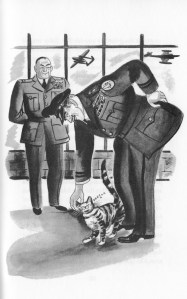
General likes Space Cat.
“We believe that Harvard has failed to live up to its obligations to the American taxpayer and is in breach of the statutory, regulatory, and contractual requirements tied to Harvard’s federally funded research programs and intellectual property arising therefrom, including patents,” the letter says.
A Harvard spokesperson called the move “yet another retaliatory effort targeting Harvard for defending its rights and freedom.” The university’s technology and patents help save lives and redefine industries, and Harvard is committed to complying with all federal laws around the patenting of work from federally funded research, the spokesperson said.
The letter is another point of leverage for the Trump administration in its effort to punish the university for allegedly failing to stop antisemitism on campus. The administration has frozen billions of dollars in Harvard’s federal research money and cut the university off from future grants.
Lutnick told Garber that he had until Sept. 5 to respond with a list of all patents that have stemmed from federally funded research grants and to provide information showing it complied with federal regulations, including a 1980 act by Congress known as Bayh-Dole that allowed institutions to retain ownership of a patent even if the innovation used taxpayer dollars.
A bit more, because of the paywall:
Harvard has more than 5,800 patents, according to its website. In its fiscal year ended in June, the university was issued 159 patents. Startups from Harvard range from pharma and biotech companies to manufacturing.
Federal regulations under Bayh-Dole require a litany of disclosures for a patent, including how the American people benefit from an invention. If a patent holder fails to make these disclosures, the government has the right to take ownership of the invention.
Lisa Ouellette, a law professor at Stanford, said the Trump administration’s move appears to be unprecedented in the four and a half decades of the Bayh-Dole Act. “I have never seen the government step in to reclaim control of a university’s patents in any sense,” she said. The Biden administration considered using a provision of the act to try to lower pharmaceutical prices, but the proposal never came to pass, Ouellette said.
The Trump administration has been in talks with several universities, including the University of California, Los Angeles, Cornell and Northwestern, and sees striking a deal with Harvard as an essential mission. The White House has already reached a $200 million settlement with Columbia and a $50 million deal with Brown.
This is breathtaking.
That’s all I have for today. What’s on your mind?
Did you like this post? Please share it with your friends:
Posted: August 2, 2025 | Author: bostonboomer | Filed under: just because | Tags: authoritarianism, Bureau of Labor Statistics, Bureau of Prisons, cat art, caturday, concentration camps, Dmitri Medvedev, Donald Trump, Ghislaine Maxwell, ICE, immigration, Jeffrey Epstein, Jeffrey Epstein files, nuclear submarines, Pete Hegseth, Philip Hegseth, Russia, tent cities, Use of military for immigration enforcement |
Good Day!!

Michael Cox, in the style of Amadeo Modigliani
The top stories today focus on Trump’s failing economy and his firing of Bureau of Labor Statistics commissioner Erika McEntarfer after she released weak job numbers yesterday. Dakinikat provided a deep dive into the economy yesterday and addressed the firing in the comments to her post, so I hope you’ll forgive me if I don’t spend much time on economic issues, which are not my area of expertise, to put it mildly.
I’m still laser focused on the Epstein/Maxwell story. I’m currently reading Julie Brown’s book on the case, Perversion of Justice: The Jeffrey Epstein Story, and it is fascinating and enlightening. Brown is was responsible for keeping the case alive–after Epstein received a only slap on the wrist for his crimes–with her investigative stories in the Miami Herald
I’m also concerned about the news that Trump has moved nuclear submarines closer to Russia, perhaps as a threat to Putin and as another attempt at distraction from Epstein/Maxwell news.
Another important story breaking today is about Trump’s plans to further involve the military in his deportation efforts and build more concentration camps to detain migrants.
Two economic stories of possible interest
The Wall Street Journal Editorial Board: The Trump Economy Stumbles.
President Trump has now imposed his new tariff regime on the world, and the triumphalism is palpable in MAGA land. But maybe hold the euphoria, as this week’s reports on jobs and the economy suggest the new golden age may take a while to appear.
Friday’s labor report arrived with a particular jolt, with a mere 73,000 net new jobs in July. Even more bearish were the downward revisions of 258,000 jobs in May and June. Job gains over the last three months are barely more than 100,000.
The details in the report provide little solace. The jobless rate ticked up only to 4.25% from 4.1%, but that was in part because the labor force continued to shrink. The labor participation rate fell again to 62.2% and is now down half a percentage point in a year.
Employers aren’t laying off workers, but they have all but stopped new hiring. Notably, most of the new jobs are in healthcare and social assistance, which rely heavily on government spending. This continues the Biden-era trend that Trumponomics was supposed to change. Not so far.
The much-advertised rebirth of U.S. manufacturing also hasn’t arrived. The economy shed 11,000 manufacturing jobs in July, following a loss of 26,000 in May and June. The ISM Manufacturing Index fell again in July to 48, the fifth straight month below 50.
A bit more:
One labor market problem may be the crackdown on migrant workers. The foreign-born workforce has fallen by about a million since Mr. Trump took office. The National Foundation for American Policy, a nonpartisan think tank, says immigrants accounted for over half of the labor force increase in each of the last three decades. Fewer workers means fewer new jobs as employers conclude they can’t fill them.
How much of this jobs and growth slowdown owes to Mr. Trump’s tariffs? It’s hard to say for sure. But it has occurred in the wake of Mr. Trump’s April 2 tariff shock, his rapid backtrack from the highest rates, and then his willy-nilly threats and deal-making with the world. The policy uncertainty has surely affected business hiring and investment. How can you hire or invest if you don’t know what your cost of goods will be, or from which supplier you will be able to buy at a competitive price?
On that score, Mr. Trump’s latest tariff blast this week hasn’t put an end to the uncertainty. Much of the world will now pay 15%, if Mr. Trump sticks to his deals. But some of the biggest U.S. trading partners—Mexico, Canada, China and India—remain in tariff limbo. Brazil will pay 50%, though it has a trade surplus with the U.S. And what did Switzerland ever do to Mr. Trump to deserve 39%? Charge too much for a watch?
Don Moynihan at Can We Still Govern?: Trump Shoots the Messenger. Firing the BLS Commissioner moves us into banana republic territory.
One basic character of the politicization necessary to create an authoritarian regime is that public employees are reluctant to share information that displeases their political bosses. When those bosses can fire them, the incentives to suppress uncongenial information, or provide false information, become overwhelming.

Modigliani’s Cat by Eve Riser Roberts
Over time, life in these countries become bifurcated. Statistics become propaganda. There is an official reality, which many proclaim but few believe, and actual reality. And at some point actual reality catches up with the fantasy.
We have seen examples of this dynamic already play out in the Trump administration. Career civil servants have been reluctant to contradict, for example, Musk’s false claims about fraud in government, or Kennedy’s nonsensical claims about vaccines, knowing that doing so would probably cost them their jobs. In certain areas, such as environmental policy, the people that produce factual information that the administration dislikes are being fired.
Trump just took his attack on reality to a different level, by firing the head of the Bureau of Labor Statistics. Why? Because he did not like the job numbers her agency produced.
In related news, we just saw the last credible BLS data for the rest of the Trump administration….
Trump’s claim is that the head of the BLS is somehow “rigged” the data “to make the Republicans, and ME, look bad.” “We need accurate Jobs Numbers” that reflect Trump’s opinion that “The Economy is BOOMING.”
As Trump fires an official because he does not like the job numbers, he proclaims that says that such numbers “can’t be manipulated for political purposes.” But revisions to job numbers are routine, and there is no reason to assume that an official would willingly publish false data knowing the ire that would follow from the White House.
Trump has no evidence for what he claims. He simply does not like reality, and will do what he can to deny it. And as tariffs kick in, and Trump’s layoffs of public employees becomes incorporated into jobs data, that reality will look worse and worse.
Read the rest at the Substack link.
Epstein/Maxwell News
Anna Betts at The Guardian: Epstein confidante Ghislaine Maxwell transferred to lower-security prison in Texas.
Ghislaine Maxwell, the associate of Jeffrey Epstein who is currently serving a 20-year prison sentence for sex-trafficking crimes, has been transferred from a federal prison in Florida, to a lower-security facility in Texas, the US Bureau of Prisons said on Friday.
“We can confirm, Ghislaine Maxwell is in the custody of the Bureau of Prisons (BOP) at the Federal Prison Camp (FPC) Bryan in Bryan, Texas,” a spokesperson for the Bureau of Prisons said in a statement.
Maxwell’s attorney, David Oscar Markus, also confirmed the transfer but declined further comment. FPC Bryan is described as a “minimum security federal prison camp” that houses 635 female inmates.
According to the Bureau of Prisons’ inmate locator, the Texas facility is also home to Elizabeth Holmes, the disgraced former CEO of the California-based blood-testing company Theranos, who is serving a lengthy sentence for fraud. Real Housewives of Salt Lake City TV star Jen Shah is also serving time there for fraud.
Oh good. Maybe they can all hang out.
Maxwell’s move from FCI Tallahassee, a low-security prison, to the federal prison camp in Bryan comes roughly a week after she was interviewed in Florida over two days about the Epstein case by the deputy US attorney general, Todd Blanche, who is also one of Donald Trump’s former lawyers.

Amadeo Modigliani, by Nancy Alari
Blanche had said that he wanted to speak with Maxwell – who was sentenced in 2022 for sex trafficking and other related crimes – to see if she might have “information about anyone who has committed crimes against victims”.
Details of that meeting have not been made public but Maxwell’s lawyer described it as “very productive”, adding that Maxwell answered the questions “honestly, truthfully, to the best of her ability”.
The interview took place amid growing political and public pressure on the Trump administration to release additional federal documents related to the Epstein case – a case which has, for years, been the subject of countless conspiracy theories.
Earlier in July, the justice department drew bipartisan criticism and backlash after announcing that it would not be releasing any more documents from the investigation into the late Epstein, who died in prison in New York in 2019 while awaiting federal trial. This was despite earlier pledges to release more files, by the US president and the US attorney general, Pam Bondi.
Allison Gill notes that this transfer was highly irregular:
The reason for the move is listed as a “lesser security transfer” (code 308) according to a transfer document I reviewed, which is completely inappropriate of for inmates who are in the early stages of serving their sentences, according to another source. “This is such obvious corruption. I have never seen this before,” said another person at BOP familiar with the situation.
The unit that approves waivers for sex offenders to be moved to minimum security camps is the Designation and Sentence Computation Center near Dallas. Currently, the senior deputy assistant director is Rick Stover, a career BOP employee who speaks frequently with White House officials.
I can’t help but wonder whether this is part of a deal struck between Maxwell and Blanche in exchange for her testimony.
It sure looks like it.
CNBC: Jeffrey Epstein victims and family blast Trump for Ghislaine Maxwell prison transfer.
Two sexual abuse victims of Jeffrey Epstein and the family of late Epstein victim Virginia Giuffre on Friday blasted President Donald Trump after learning that Epstein’s accomplice Ghislaine Maxwell had been transferred to a less restrictive prison in Texas from Florida….
“President Trump has sent a clear message today: Pedophiles deserve preferential treatment and their victims do not matter,” the statement said, noting that the two women and Giuffre’s family had not been notified of Maxwell’s transfer before media reports of it….
“It is with horror and outrage that we object to the preferential treatment convicted sex trafficker Ghislaine Maxwell has received,” the statement said.
“Ghislaine Maxwell is a sexual predator who physically assaulted minor children on multiple occasions, and she should never be shown any leniency,” the statement said.
“Yet, without any notification to the Maxwell victims, the government overnight has moved Maxwell to a minimum security luxury prison in Texas,” the statement said.
“This is the justice system failing victims right before our eyes. The American public should be enraged by the preferential treatment being given to a pedophile and a criminally charged child sex offender. The Trump administration should not credit a word Maxwell says, as the government itself sought charges against Maxwell for being a serial liar,” the statement said.
“This move smacks of a cover up. The victims deserve better,” the statement said.
No kidding. And as we all know, the coverup is usually worse than the crime.
This is interesting, from Alison Detzel at MSNBC: Legal expert breaks down the ‘curious’ timeline of Ghislaine Maxwell’s DOJ meeting.
Before Maxwell’s arrival in Texas was reported, MSNBC legal correspondent Lisa Rubin was asked about the interactions between Maxwell and the Trump administration on Thursday’s “Deadline: White House,” and called the timeline “curious.”
Rubin recounted that before that late July meeting between Blanche and Maxwell, the Trump administration, through Solicitor General D. John Sauer, submitted a brief to the Supreme Court arguing Maxwell’s conviction should stand. (Maxwell was sentenced to 20 years in prison in 2022 after being convicted of sex-trafficking-related crimes.) In that July 14 filing, Sauer shot down Maxwell’s claim that she was protected from prosecution due to Epstein’s 2007 plea agreement in Florida.
But the following day, Rubin recalled, on July 15, Trump was contacted by reporters from The Wall Street Journal about an alleged birthday card he had written to Epstein in 2003. Trump has denied the Journal’s reporting, but the president was inundated with questions about the details of his relationship with Epstein.
One week later, Blanche posted to social media that the Justice Department would reach out to Maxwell for an interview, and later that week, he met with her in Florida.
Rubin noted that the government had “two days of conversations with her, not in the federal prison where she’s serving time, but in a U.S. Attorney’s Office, so she theoretically could be more comfortable during those conversations.”
While we know that the meeting took place, Rubin stressed that many of the details are still unknown: “We still don’t know who else from the Department of Justice was there. We don’t know how that conversation was recorded, if at all. And yet, we still don’t know what the resolution is.”
So what changed? Was it just about the birthday note/drawing? Or did Trump learn something else about how he was portrayed in the FBI files?

Cat in a Hat, inspired by Amadeo Modigliani painting, by Olga Koval
One more Epstein story from Newsweek: Donald Trump’s Name in Jeffrey Epstein Files Redacted by FBI: Report.
The FBI redacted Donald Trump‘s name, along with the names of other prominent public figures, from references in the Jeffrey Epstein files, three people familiar with the matter told Bloomberg‘s Jason Leopold.
Internal directives instructed about 1,000 FBI agents to flag any mention of Trump during a March review of roughly 100,000 pages of records, people familiar with the process told Bloomberg.
The Justice Department said the review turned up no “client list” or evidence linking Trump to criminal activity, despite his name appearing in Epstein’s contact book and flight logs….
The president and senior White House officials have repeatedly said in recent weeks that there was no reason to release the remaining Epstein files, and they have sought to move on from the saga despite calls from Trump’s base to release all documents as promised.
The Bloomberg report said that earlier this year, FBI agents were directed to search for all documents associated with the Epstein case and determine which could be released, totaling tens of thousands of pages, following Attorney General Pam Bondi‘s request for them.
During the review, in March, FBI personnel were said to have identified numerous references to Trump and other high-profile people, with the names then redacted by FOIA officers because they were private citizens at the time—a common practice under FOIA case law.
Trump Moves Nuclear Submarines
Brad Lendon at CNN: Trump is moving nuclear submarines following remarks by an ex-Russian president. Here are the subs in the American fleet.
US President Donald Trump said Friday he was ordering two US Navy nuclear submarines to “appropriate regions,” in response to remarks by Dmitry Medvedev, Russia’s former president and current deputy chairman of its Security Council.
In what he called an effort to be “prepared,” Trump said in a Truth Social post that he had “ordered two Nuclear Submarines to be positioned in the appropriate regions, just in case these foolish and inflammatory statements are more than just that.”
The president did not specify what type of submarines were being moved or where to, and the Pentagon usually reveals little about any of its subs’ movements.
The US Navy has three types of submarines, all of which are nuclear-powered, but only one of which carries nuclear weapons.
Ballistic Missile Submarines
The US Navy has 14 Ohio-class ballistic-missile submarines (SSBNs), often referred to as “boomers.”
SSBNs “are designed specifically for stealth and the precise delivery of nuclear warheads,” a Navy fact sheet on them says.
Each can carry 20 Trident ballistic missiles with multiple nuclear warheads. Tridents have a range of up to 4,600 miles (7,400 kilometers), meaning they wouldn’t need to move closer to Russia to hit it – in fact, they could do so from the Atlantic, Pacific, Indian or Arctic oceans….

Olga Koval, Cat is on the chair, inspired by Amadeo Modigliani painting
Guided missile submarines
In the 1990s, the Pentagon determined the Navy didn’t need as many Ohio-class SSBNs in the nuclear deterrent role, converting four of them into guided-missile submarines (SSGNs).
Retaining the same overall specs as the boomers, the SSGNs carry Tomahawk cruise missiles instead of the Trident ballistic missiles.
Each can carry 154 Tomahawks with a high-explosive warhead of up to 1,000 pounds, and a range of about 1,000 miles….
These form the bulk of the US Navy’s submarine fleet and are designed to hunt and destroy enemy subs and surface ships with torpedoes. They can also strike land-based targets with Tomahawk missiles, though they carry the Tomahawks in much smaller numbers than the SSGNs.
Read more details at CNN.
Tom Nichols at The Atlantic (gift link): Not With a Bang, but With a Truth Social Post. The president is rattling a nuclear saber as a distraction.
Donald Trump, beset by a week of bad news, has decided to rattle the most dangerous saber of all. In a post today on his Truth Social site, the president claimed that in response to recent remarks by former Russian President Dmitri Medvedev, he has “ordered two Nuclear Submarines to be positioned in the appropriate regions.” (All American submarines are nuclear-powered; Trump may mean submarines armed with ballistic nuclear weapons.) “Words are very important,” Trump added, “and can often lead to unintended consequences, I hope this will not be one of those instances.”
And then, of course: “Thank you for your attention to this matter!”
Trump’s words may mean nothing. The submarines that carry America’s sea-based nuclear deterrent routinely move around the world’s oceans. Each carries up to 20 nuclear warheads, on missiles with a range of more than 4,000 miles, and so almost anywhere can be an “appropriate region.” And Trump may not even have issued such orders; normally, the Pentagon and the White House do not discuss the movements of America’s ballistic-missile submarines.
Medvedev is a man with little actual power in Russia, but he has become Russia’s top internet troll, regularly threatening America and its allies. No one takes him seriously, even in his own country. He and Trump have been trading public insults on social media for months, with Trump telling Medvedev to “watch his words” and Medvedev—nicknamed “Little Dima” in Russia due to his diminutive stature—warning Trump to remember Russia’s “Dead Hand,” a supposed doomsday system that could launch all of Russia’s nuclear weapons even if Moscow were destroyed and the Kremlin leadership killed.
The problem is not that Trump is going to spark a nuclear crisis with a post about two submarines—at least not this time. The much more worrisome issue is that the president of the United States thinks it is acceptable to use ballistic-missile submarines like toys, objects to be waved around when he wants to distract the public or deflect from bad news, or merely because some Russian official has annoyed him.
Unfortunately, Trump has never understood “nuclear,” as he calls it. In a 2015 Republican primary debate, Trump said: “We have to be extremely vigilant and extremely careful when it comes to nuclear. Nuclear changes the whole ball game.” When the moderator Hugh Hewitt pressed Trump and asked which part of the U.S. triad (land-based missiles, bombers, and submarines) would be his priority, Trump answered: “For me, nuclear, the power, the devastation, is very important to me.”
That power and devastation, however, is apparently not enough to stop the president from making irresponsible statements in response to a Kremlin troll. One would hope that after nearly five years in office—which must have included multiple briefings on nuclear weapons and how to order their use—Trump might be a bit more hesitant to throw such threats around. But he appears to have no sense of the past or the future; he lives in the now, and winning the moment is always the most important thing.
Use the gift link above to read more.
Are More Concentration Camps Like Alligator Alcatraz Coming?
Greg Sargent at The New Republic: Trump’s Domestic Use of Military Set to Get Worse, Leaked Memo Shows.
President Donald Trump has already enmeshed the United States military in domestic law enforcement operations involving immigration to an unprecedented degree. He has authorized a major military buildup at the border. He has maximized the use of military planes for deportations, complete with the White House pumping out imagery of migrants getting frog-marched onto souped-up military aircraft. He sent the National Guard into Los Angeles amid large-scale protests there—and then sent in the Marines.
But an internal memo circulated inside the Department of Homeland Security suggests that Trump’s use of the military for domestic law enforcement on immigration could soon get worse. The memo—obtained by The New Republic—provides a glimpse into the thinking of top officials as they seek to involve the Defense Department more deeply in these domestic operations, and it has unnerved experts who believe it portends a frightening escalation.

Woman red dress grey cat, by Theresa Tanner, based on a painting by Modigliani.
The memo lays out the need to persuade top Pentagon officials to get much more serious about using the military to combat illegal immigration—and not just at the border. It suggests that DHS is anticipating many more uses of the military in urban centers, noting that L.A.-style operations may be needed “for years to come.” And it likens the threat posed by transnational gangs and cartels to having “Al Qaeda or ISIS cells and fighters operating freely inside America,” hinting at a ramped-up militarized posture inside the interior.
“The memo is alarming, because it speaks to the intent to use the military within the United States at a level not seen since Japanese internment,” Carrie Lee, senior fellow at the German Marshall Fund, told me. “The military is the most powerful, coercive tool our country has. We don’t want the military doing law enforcement. It absolutely undermines the rule of law.”
The memo was authored by Philip Hegseth—the younger brother of Defense Secretary Pete Hegseth—who is a senior adviser to Homeland Security secretary Kristi Noem and DHS liaison officer to the Defense Department. As such it also sheds light on Hegseth the Younger’s role, which has been the subject of media speculation labeling him an obscure but influential figure in his brother’s MAGA orbit.
The memo outlines the itinerary for a July 21 meeting between senior DHS and Pentagon officials, with the goal of better coordinating the agencies’ activities in “defense of the homeland.” It details goals that Philip Hegseth hopes to accomplish in the meeting and outlines points he wants DHS officials to impress on Pentagon attendees.
Participants listed comprise the very top levels of both agencies, including Defense Secretary Pete Hegseth and several of his top advisers, Joint Chiefs chairman Dan Caine, and NORTHCOM Commander Gregory Guillot. Staff include Phil Hegseth and acting ICE commissioner Todd Lyons….
Please read the rest if you have time.
Samantha Michaels at Mother Jones: ICE Plans to Build More Tent Jails for Immigrants. What Could Go Wrong?
Immigration and Customs Enforcement (ICE), now the best-funded federal lawenforcement agency in the United States, is embarking on a plan to drastically expand its detention infrastructure. But considering the $45 billion it’s been given for the job, the agency’s vision for its new facilities seems startlingly low-tech.
In July, the Wall Street Journal got its hands on internal government documents revealing that ICE wants to incarcerate more immigrants in tents, or “hardened soft-sided facilities.” The administration hopes to erect thousands of these tents “as quickly as possible to expand detention capacity…at US military bases and adjoining bricks-and-mortar ICE jails,” the Journal reported. Officials say they like this approach, at least for now, because they can quickly set up tons of beds in a few new locations rather than finding space at existing facilities here and there.
But tents raise serious humanitarian and safety issues. “There’s a reason no one wants to live in a tent,” says Eunice Cho, an attorney who challenges unconstitutional conditions in immigrant detention centers with the ACLU’s National Prison Project. “There are many, many logistical problems—with sanitation, getting food. They certainly are not weatherproof. They do not have the setup to make sure people’s medical concerns are addressed.”
Prior to 2025, ICE did not use tents for long-term detention, but soft-sided facilities are not completely new in the incarceration realm. Here are some recent examples, each highlighting problems that are almost sure to repeat themselves as the Trump administration rolls out its plan.
Michaels provides a detailed history of tent cities in the U.S. The article is well worth reading in full.
Those are my offerings for today. What do you think? What else is on your mind?
Did you like this post? Please share it with your friends:
Posted: July 26, 2025 | Author: bostonboomer | Filed under: just because | Tags: cat art, caturday, Donald Trump, Ghislaine Maxwell, Jeffrey Epstein, pardons, Space Cat and the Kittens, the coverup is worse than the crime, Todd Blanche, Watergate |
Good Morning!!
 The Caturday illustrations today come from a children’s book: Space Cat and the Kittens, by Ruthven Todd. The illustrator is Paul Galdone. I know it’s a little incongruous to include cute kitten pictures in a depressing political post, but perhaps they will provide a bit of relief from the ongoing evil deeds of Donald Trump and his gang.
Here is the summary of the book from Amazon:
Flyball, the famous Space Cat, is a father now! He and Moofa, the last of the Martian fishing cats, are the proud parents of a pair of mischievous, fun-loving kittens, Marty and Tailspin. The whole family joins Colonel Fred Stone and a new friend, Bill, on a mission to Alpha Centauri to seek out places where humans can live. Along the way, the crew makes an amazing discovery — a planet abounding in iguanodons, pterodactyls, tyrannosauri, and a host of other prehistoric creatures.
Now for today’s news. I admit it. I’m obsessed with the Jeffrey Epstein/Ghislaine Maxwell story. And so is Donald Trump. He’s living in fear of the gory details of his close relationships with Epstein and Maxwell seeing the light of day. He ran away to play golf and open a new golf course in Scotland yesterday, but he can’t completely escape drip drip drip of revelations. Could this be the scandal that really damages him?
Jeff Zeleny and Adam Liptak at CNN: Trump flees Washington controversies for golf-heavy trip to Scotland.
Fleeing Washington’s oppressive humidity and nonstop questions over heated controversies, President Donald Trump is once again taking weekend refuge at his golf clubs — this time more than 3,000 miles away in Scotland.
While the White House has called his five-day trip a “working visit,” it’s fairly light on the formal itinerary. Trump is poised to hold trade talks Sunday with the chief of the European Union and is scheduled to meet with British Prime Minister Keir Starmer on Monday.
But he’s expected to spend most of his trip out of public view at two of his golf resorts – Trump Turnberry in the west and Trump International about 200 miles away in the north, near his mother’s ancestral homeland….
Even as protesters demonstrated against Trump here on Saturday, the four nights in temperate Scotland come as a summertime respite after six months back in office. His administration is engulfed in a deepening political crisis over its handling of disclosures around the case of Jeffrey Epstein, accused sex trafficker and former friend of the president’s.
Nearly every time Trump has spoken with reporters in recent weeks, he’s been pressed with new questions about the Epstein scandal, many of which are fueled by deep suspicions that he and his followers have been stirring for years. New revelations about his personal ties to the disgraced financier have kept the matter alive.
Scottish folks do not like Trump, to put it mildly.
Authorities in Scotland have spent weeks preparing for Trump’s arrival. Assistant Chief Constable Emma Bond told reporters the security operation would be the largest the country has mounted since the death of Queen Elizabeth II in 2022, including local officers, national security divisions and special constables.
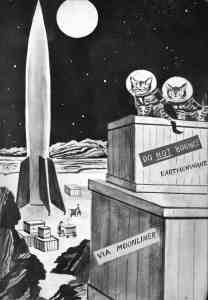 The overall tone toward Trump has been markedly less fond, however. The Friday edition of The National, a liberal-leaning newspaper that supports Scottish independence, rolled out a not-so-welcoming message to Trump with a blaring and bold front-page headline: “Convicted US Felon to Arrive in Scotland.”
A group called Stop Trump Scotland, a coalition of demonstrators, organized protests at Aberdeen and outside the US consulate in Edinburgh as part of a “Festival of Resistance.” A few hundred people turned out Saturday to raise their voices against the visiting American president, waving colorful signs and chanting slogans….
It’s the first visit Trump has made to the country since 2023, when he broke ground on the golf course dedicated to his mother. But returning this weekend as the sitting American president has roused critics, including Green Party leader and member of parliament, Patrick Harvie.
“Donald Trump is a convicted criminal and political extremist,” Harvie told reporters in Scotland this week. “There can be no excuses for trying to cozy up to his increasingly fascist political agenda.”
I hope they make him miserable.
William Kristol at The Bulwark: It’s Starting to Smell Like Trump’s Watergate.
On June 6, 2025, Donald Trump’s FBI Director, Kash Patel, discussed the Jeffrey Epstein files with podcaster Joe Rogan. “We’ve reviewed all the information,” Patel stressed, “and the American public is going to get as much as we can release.”
One month later, on July 6, a joint, unsigned statement from the FBI and the Department of Justice announced that nothing would be released—except for a prison video. The video turned out not to be, in fact, the “raw” video the statement promised. But it was in any case an attempt at misdirection—an effort to get people to focus on the question of Epstein’s death, rather than on the crimes he committed when alive.

Space cats and brontosaurus
For that is where the danger to Trump lies. And, naturally, that is what is now being covered up.
As a story in yesterday’s New York Times makes clear, the documents about Epstein’s crimes were pretty much ready for release three months ago. The FBI and Justice Department had conducted extensive reviews and re-reviews of the files. They had considered what should and shouldn’t be released due to legal and privacy concerns.
The Times explains:
After the F.B.I. finished its review of the files, the materials were handed over to a team of dozens of Justice Department lawyers who were given the job of double-checking the bureau’s redactions to ensure that neither too much nor too little information was disclosed, according to a person familiar with the process. The lawyers, drawn from multiple divisions from within the department, sat at their desks beginning in late March or early April reviewing documents for the better part of two weeks, the person said. . . . By mid-April, the department’s review had been largely completed.
So in mid-April, the Trump administration was, it seems, very close to being ready to go with the oft-promised release of the bulk of the Epstein files.
But then, in May, Attorney General Pam Bondi and her deputy Todd Blanche briefed President Trump on the files. According to the Times, they told the president his name appeared multiple times.
Two months later, a decision: No files would be released….
But it is the safest of safe bets that Bondi and Patel didn’t simply sit and reflect and deliberate and come to a judicious determination not to release the files. We know Trump had been briefed on the files. We don’t know what subsequent conversations he had about them, or with whom. But we can safely conclude that the Justice Department and the FBI don’t make joint determinations on matters of great interest to the president without consulting him—indeed, without taking direction from him.
It is also the safest of safe bets that it was Trump’s determination that no further disclosure would be “appropriate or warranted.” And it is the safest of safe bets that Trump made that determination because he knew that no further disclosure would be in his interest. At this juncture, it’s impossible, indeed irresponsible, not to note that both Bondi and Blanche served as personal lawyers for Trump prior to taking on their government roles.
Epstein is President Trump’s coverup, as surely as Watergate was President Nixon’s.
And as we all know from Watergate, the cover-up is always worse than the crime. And the cover-up is moving in overdrive.
On his way out of town, Trump dangled a pardon for Ghislaine Maxwell, who spent hours Thursday and Friday being interviewed by Trump’s former defense attorney and now second in command at DOJ. It was likely a “queen for a day” interview, in which she was given limited immunity–a guarantee that she can’t be prosecuted for anything she says in the interview, as long as she tells the truth.
NBC News: DOJ granted Ghislaine Maxwell limited immunity during meetings with Deputy Attorney General Todd Blanche.
A senior administration official confirms to NBC News that Ghislaine Maxwell was granted limited immunity by the Justice Department in order to answer questions about the Jeffrey Epstein case.

Astronauts and Pterodactyls
This type of immunity allowed Maxwell to answer questions from Deputy Attorney General Todd Blanche without fear that the information she provided could later be used against her in any future cases or proceedings.
The immunity is “limited” because it only covers Maxwell if she tells the truth; if it’s later determined that she lied during the interviews then the deal is off the table.
An immunity agreement like this one, often called “a queen for a day” deal, is common in criminal cases when a defendant offers to cooperate with prosecutors and provide information on an investigation and potential codefendants.
As part of the agreement, that information generally cannot be used against the defendant down the road.
In exchange, prosecutors will commonly consider the defendant’s cooperation while recommending a lighter sentence for a plea deal, or in some cases outright immunity from prosecution.
Aaron Blake at CNN: Trump just made a problematic Ghislaine Maxwell situation look even worse.
Interviewing Ghislaine Maxwell is the Trump administration’s first big move to allay concerns about its hugely unpopular handling of the Jeffrey Epstein files. Deputy Attorney General Todd Blanche on Friday wrapped up two days of interviews with Epstein’s convicted associate.
But there were already all kinds of reasons to be skeptical of this move and what it could produce, given the motivations of the two sides involved.
And President Donald Trump epitomized all of them in a major way on Friday.
While taking questions on his way to Scotland, Trump repeatedly held open the possibility of pardoning Maxwell for her crimes.
“Well, I don’t want to talk about that,” Trump said initially.
When pressed, he said, “It’s something I haven’t thought about,” while conspicuously adding, “I’m allowed to do it.”
I wonder if the MAGA crowd would be happy if Trump pardoned Maxwell? Anyone who actually cares about the victims would be outraged.
Sarah Ewall-Weiss at The Daily Beast: Ghislaine Handed DOJ 100 Names in Shameless Pardon Quid Pro Quo.
Ghislaine Maxwell, the partner of the late convicted sex offender Jeffrey Epstein, completed a second day of questioning Friday, sharing information on about 100 different people with the Department of Justice.
Maxwell, who was convicted of child sex trafficking in connection with the disgraced financier in 2021, met with Deputy Attorney General Todd Blanche for about three hours on Friday at a courthouse in Tallahassee, Florida.

Escaping by helicopter
She also sat down with Blanche to answer questions for about six hours on Thursday as the DOJ tries to control the fallout from its handling of the Epstein files….
The meeting between the top Trump official and Maxwell was announced by the Justice Department amid mounting pressure for the administration to release more information on the case after it said there was no Epstein client list and indicated there would be no further prosecutions in a recent memo….
A bombshell report this week by the Wall Street Journal alleged that Attorney General Pam Bondi briefed Trump in May that his name was in the files multiple times, as were other names.
On Friday, the president would not rule out pardoning Maxwell, who was sentenced to 20 years in prison in 2022 for facilitating and participating in the sex trafficking of teenage girls….
Maxwell’s lawyer said in Florida on Friday that his team has not spoken to Trump about a potential pardon but indicated they will push for one.
“We hope he exercises that power in a right and just way,” Markus said.
No kidding.
Sarah K. Burris at Raw Story: DOJ’s new move raises ‘huge red flags’ — and ‘could blow up in their face’: Legal expert.
Deputy Attorney General Todd Blanche met for a second day with Jeffrey Epstein’s accomplice, Ghislaine Maxwell, and a long-time prosecutor and former general counsel at the FBI is warning it could all “blow up in their face.”
MSNBC’s Nicolle Wallace noted on her Friday show that she can’t understand why Blanche would ignore the career prosecutors who have been steeped in the case for years and are aware of the details.
New York University Law School Professor Andrew Weissmann connected the dots from the cases involving Epstein and Maxwell to other Justice Department scandals, such as the one involving Mayor Eric Adams.
“Mayor Eric Adams, where this administration learned to shut out the career people,” said Weissmann. “If you are trying to get the defendant or in this case, Ghislaine Maxwell, to say something that will help Donald Trump, if that’s your goal and it’s not about sort of justice writ large, it is a continuation of your work for the president. In other words, you were his personal attorney, and you are still essentially operating as his personal attorney. If that’s your goal, you do not want the career prosecutors and agents in the room for the same reason you didn’t want them in the room for Eric Adams.” [….]
“You’re not engaging in what’s in the public interest. You’re engaging in what is in Donald Trump’s interest, and whether that is to exonerate Donald Trump, as Tim [Miller] suggested, or whether it’s to implicate other people. So, it’s sort of a distraction. Those are things that Todd Blanche can do and can do better when he doesn’t have career people in the room,” Weissmann clarified.
And, of course, Pam Bondi fired the lead prosecutor in the Epstein and Maxwell cases, Maurene Comey.

Kittens and T Rex
Glenn Thrush and Valerie Crowder at The New York Times: After Ghislaine Maxwell Interview, Concerns Mount Over Possibility of Pardon.
Ms. Maxwell has made it clear she wants her 20-year sentence thrown out or reduced or a pardon. President Trump, asked whether he would consider pardoning her, said, “I’m allowed to do it, but it’s something I haven’t thought about.” He made the remarks before he headed off to Scotland, wishing her well….
Mr. Blanche has described his trip as a neutral fact-finding mission, saying he would share details of the discussion “at the appropriate time” — yet he has also declared that the federal criminal investigation into targets beyond Ms. Maxwell and Mr. Epstein remains closed. By that standard, new interviews would appear to serve a function beyond the purposes of traditional law enforcement, unless new evidence of criminality has been discovered, current and former officials said….
Teresa Helm, who was abused by Mr. Epstein and testified against Ms. Maxwell, was blunt about the consequences of such a deal in an interview with MSNBC on Friday. “It would mean the complete crumbling of this justice system that should first and foremost stand for, fight for and protect survivors,” she said, adding that the government had accused Ms. Maxwell of perjury on top of other charges.
“She should stay in prison,” said Lisa Lloyd, 65, the lone protester at the courthouse. “This is wrong. Anyone who is concerned with justice should be appalled by this.” [….]
Some conservative news outlets friendly to Mr. Trump have begun to soften their tone about Ms. Maxwell — whom they previously described as a child sex predator — suggesting she might now be trusted to tell the truth about the case. This week, a host on Newsmax who has praised Mr. Trump went so far as to suggest that Ms. Maxwell “just might be a victim” who was not given a fair legal hearing.
That is outrageous. Maxwell is far from being a victim. She lured young girls and brought them to Epstein to be abused. He couldn’t have had access to as many victims without her help. She also participated in the abuse.
Former federal prosecutor Ankush Khardori at Politico Magazine: The Epstein Files Timeline Raises Real Questions for Trump.
The revelation this week from The Wall Street Journal about Donald Trump and the so-called Epstein files was shocking — and, for those following the administration closely in recent weeks, not shocking at all.
According to the Journal, Attorney General Pam Bondi and Deputy Attorney General Todd Blanche told Trump during a White House meeting in May that his name appeared multiple times in the Epstein files. The fallout continues as we speak, with the White House and Republicans in Congress facing that age-old Washington question: What did they know, and when did they know it?
We have gathered below some of the most significant statements that Trump and his senior officials have made on the topic, focusing in particular on what they have said since Trump returned to office.
Several key themes emerge. Head straight to the timeline here.
For starters, there is a conspicuous rhetorical shift that occurs after May, when Bondi and Blanche reportedly briefed Trump. The administration’s statements became more terse, and Trump in particular began pointing the finger at people — the Democratic Party and the mainstream media — that had little to nothing to do with the Epstein frenzy.
Even before May, Trump himself tended to add qualifiers to his statements that he does not typically use when he talks about investigations — like the probe into the origins of the Trump-Russia investigation by special counsel John Durham — that are of interest to him.
In an interview with Fox News last June during the heat of the 2024 presidential campaign, Trump said that he would release more information if reelected but hastened to add that he was concerned about the impact of revealing more material on third parties and the possibility that there might be “phony stuff” in the government’s investigative files. More recently, Trump has said that he supports the release of “credible” information and “pertinent” grand jury testimony while accusing the media of focusing on old news.
These are concerns that Trump does not typically invoke in other settings. Taken together, Trump’s comments suggest the possibility that he suspected that there may be politically damaging information about him in the files and wanted to preemptively discredit revelations about him. Following the reported briefing in May, Trump appears to have sought to narrow the government’s public disclosures to avoid releasing information. Trump has not been accused of any wrongdoing linked to Epstein.
I’m sure he did. Read the rest at the Politico link.

Space kittens and small horse
One more from Arwa Mahdawi at The Guardian: Will the ghost of Epstein finally bring down King Trump?
Brrrr. Brrrr. Brrrrrrr. That’s the sound of Donald’s Trump’s distraction machine, which has been running at full power as the president tries his best to stop us all from talking about Jeffrey Epstein. Or, to be more specific, from talking about just how chummy he was with the dead paedophile.
Though he’s usually a master of controlling the narrative, none of Trump’s normal distraction techniques seem to be working now. Indeed, at this point we should probably rename the Streisand effect the Trump-Epstein effect because the president’s repeated insistence that there is NOTHING TO SEE HERE EXCEPT A VERY NASTY WITCH-HUNT only has people scrutinizing his dealings with Epstein more carefully. From South Park to Scotland to billboards in Times Square, Trump can’t escape his past association with Epstein.
Over the past couple of weeks, a lot of new information has come out about just how close Epstein and the president were. On 17 July, for example, the Wall Street Journal reported Trump allegedly sent Epstein a 50th birthday card in 2003 with a drawing of a naked woman and a message which said, in part, “may every day be another wonderful secret.” Trump denied writing the card and filed a $10bn lawsuit against the rightwing paper and its owner, Rupert Murdoch, a day after the outlet published the story.
Trump’s lawsuit clearly didn’t scare off the Journal because, on Wednesday, it published a new report stating Trump’s name appears “multiple times” in justice department files about Epstein. On Wednesday CNN also published newly uncovered photos and video footage of the two men together, including one of Epstein at Trump’s wedding to Marla Maples at the Plaza hotel in New York in 1993 and footage from a 1999 Victoria’s Secret fashion event. Then, on Thursday, the New York Times confirmed that Trump’s name appeared on a contributor list for a book celebrating Epstein’s 50th birthday, as the Journal first reported, along with a number of other well-known Epstein associates including Leslie Wexner, then the owner of Victoria’s Secret. The Times further reported that in 1997 the president had written a note calling Epstein “the greatest!” in a copy of Trump: The Art of the Comeback.
While none of these new bits of information are evidence of criminal conduct on Trump’s part, the president’s furious reaction to anything Epstein-related, along with his administration’s sudden U-turn on its promise to release damning evidence related to possible Epstein clients, certainly makes Trump look like he’s got something to hide. And it’s not just Trump, of course. The sudden flurry of reporting about Epstein means that a lot of powerful men, including Bill Clinton, who the Journal says also sent a birthday letter to the disgraced financier, have been having a bad couple of weeks.
The big question now is this: will the renewed interest in Epstein blow over in a few more weeks or could this deal a serious political blow to Trump and his lackeys? Trump is nicknamed the “comeback kid” for good reason: the man has an uncanny ability to shake off scandal. Still, nobody is completely untouchable; could the ghost of Epstein be the thing that finally topples King Trump from his throne? While that’s obviously an impossible question to answer, there are a few ways this could all play out.
Again, read the rest at the link.
That’s it for me today. As I said, I can’t stop thinking about the Epstein story. What’s on your mind today?
Did you like this post? Please share it with your friends:


 peej
peej Carissa
 bostonboomer
 dakinikat
 ecocatwoman
 mablue2
 Mama Lopez
 peggysue22
 quixote
 skydancingguestblogger
 Mona (aka Wonk the Vote)



 Sky Dancing
Recent Comments