
Wednesday Reads
Posted: January 3, 2024 Filed under: 2024 Elections, 2024 presidential Campaign, just because, Media, polling, The Media SUCKS | Tags: Autocracy, big media, Claudine Gay, democracy, diversity, Greg Sargent, Harvard, journalism, Joyce Vance, Racism, Rick Perlstein, The Washington Post 13 CommentsGood Morning!!
It’s 2024, and the media and the Republicans are gearing up for the presidential election in November. What are the Democrats doing? I’m sure they are raising plenty of money, but when will they wake up and start fighting back against the Republicans and the media? Make no mistake, big media is hoping for another Trump presidency, because it will mean chaos and gobs of money for those who cover the chaos. It will mean riches for the media bosses and reporters alike–think of all the new books they can sell as Trump destroys democracy and attempts to gain dictatorial power?
You’ve probably heard that The Washington Post recently got rid of 240 employees through buyouts. They chose to keep right wing columnists like Hugh Hewitt and dumped liberals like Greg Sargent. Fortunately, Sargent has been hired by The New Republic.
This post by Tom Jones is from Poynter, a site that reports on and critiques the media: Opinion | Washington Post reaches buyout goals to, for now, avert layoffs.
The good news is that the Post has been able to meet its goal of trimming staff through buyouts instead of layoffs. The bad news is the Post will enter the new year with fewer employees — perhaps a couple of hundred.
Greg Sargent
Back in October, the Post announced that it was offering buyouts with the hopes of reducing staff by 240. (At the time, the Post had approximately 2,500 employees.)
Then late last month, Post interim CEO Patty Stonesifer told staff only half of the desired number of staffers — about 120 or so — had accepted the buyouts and that there would be layoffs if not enough employees took the buyouts. At the same time, The Daily Beast’s Corbin Bolies reported that Post executive editor Sally Buzbee told staff in an email that about 36 of the 120 who accepted the buyouts were from the newsroom. She said that was “about 30 percent of our goal across the News department.”
Then came Tuesday’s news that the Post had enough buyouts to avoid layoffs — for now (my words, not the Post’s). The exact number of buyouts isn’t known publicly.
In an email to staff, Stonesifer said the company “will enter the new year with a smaller organization but a better financial position.” Stonesifer also wrote, “I am very aware of how difficult this process has been for everyone involved and I want to thank you for the grace and respect you have shown at every step.”
In July, The New York Times Benjamin Mullin and Katie Robertson reported the Post was on track to lose about $100 million this year.

For the gossip columnists at the WaPo, President Biden is boring. Imagine how much better the paper’s “financial position” will be when Trump gets back in the White House and consolidates his power. The same will be true of The New York Times. Maggie Haberman will be cleaning up, along with her co-writers.
In another positive development, historian and political observer Rick Perlstein will be writing for The American Prospect. I’m seriously thinking about dumping my Washington Post subscription and giving that money to one of these liberal publications.
Perlstein has published his first column. In it, he addresses three issues I worry about: the media focus on polls, the failure of journalists to address real issues, while tending to favor right wing narratives, and the failure of Democratic politicians to fight back hard against those narratives.
Rick Perlstein at The American Prospect: You are Entering the Infernal Triangle: Authoritarian Republicans, ineffectual Democrats, and a clueless media.
Perlstein on Polling:
As a historian who also writes about the present, there are certain well-worn grooves in the way elections get written about by pundits and political journalists from which I instinctively recoil. The obsession with polling, for one. Polls have value when approached with due humility, though you wonder how politicians and the public managed to make do without them before their modern invention in the 1930s. But given how often pollsters blow their most confident—and consequential—calls, their work is as likely to be of use to historians as object lessons in hubris as for the objective data they mean to provide.
Pollsters themselves are often the more useful data to study, especially when their models encode mistaken presumptions frozen in place from the past. In 1980, for instance, Ronald Reagan’s landslide was preceded by a near-universal consensus that the election was tied. The pollster who called it correctly, Lou Harris, was the only one who thought to factor into his models a variable that hadn’t been accounted for in previous elections, because it did not yet really exist: the Christian right.
Polling is systematically biased in just that way: toward variables that were evident in the last election, which may or may not be salient for this election. And the more polls dominate discussions of campaigns and elections, the more they crowd out intellectual energy that could be devoted to figuring out those salient, deeper, structural changes conditioning political reality: the kind of knowledge that doesn’t obediently stand still to be counted, totted up, and reduced to a single number.
On media predictions:
Another waaaaay too well-worn journalistic groove isprediction. I have probably read thousands of newspaper opinion column prognostications going back to the 1950s. Their track record is too embarrassing for me to take the exercise seriously, let alone practice it myself. Like bad polls, pundits’ predictions are most usefulwhen they are wrong. They provide an invaluable record of the unspoken collective assumptions of America’s journalistic elite, one of the most hierarchical, conformist groups of people you’ll ever run across. Unfortunately, they help shape our world nearly as much, and sometimes more, than the politicians they comment about. So their collective mistakes land hard….
Rick Perlstein, author, Reaganland: America’s Right Turn 1976-1980.
And how ritualized? Consider one of elite journalism’s most deeply worn grooves: the morning-after declarations, should any Democrat win a presidential election, that the Republican politics of demagogic hate-mongering has shown itself dead and buried for all time—forgetting how predictably it returns in each new election, often in an increasingly vicious form.
In 1964: When the author of the Civil Rights Act, Lyndon Johnson, defeated a Republican who voted against the Civil Rights Act, Barry Goldwater, one of the most distinguished liberal newspaper editors in the South, Sam Ragan of the Raleigh News & Observer, pronounced that all future American elections would be decided “on issues other than civil rights.” His essay quoted the Los Angeles Times’ Washington bureau chief, who affirmed that conventional wisdom by observing that henceforth, whichever party takes the Black vote would be no more predictable than who would win “freckle-faced redheads and one-armed shortstops.” [There are many more examples of this phenomenon in the essay.]
This particular bias is rooted into elite punditry’s deepest, most dangerous groove of all: a canyon, if you will. On one side of the yawning gulf is the perennial fantasy that America is a nation fundamentally united and at peace with itself, “moderate,” “centrist,” where exceptions are epiphenomena entirely alien to settled American “norms.”

On “Reality”:
On the other side of the gulf is, well, reality.
The media habits that make it so hard to grasp that reality—that made Trump and his merry band of insurrectionists such a surprise to us—are perhaps as systematic as any foisted upon the public by state media in authoritarian nations. A little more innocent than, say, Pravda, however, because one wellspring of this stubborn fantasy, and why audiences are so receptive to it, is simple psychology. To acknowledge the alternative is to stare into a terrifying abyss: the realization that America has never not been part of the way to something like a civil war.But suddenly, in 2024, no one can avoid acknowledging that abyss anymore. And that leaves journalism in a genuine crisis.
Generations of this incumbent, consensus-besotted journalism have produced the very conceptual tools, metaphors, habits, and technologies that we understand as political journalism. But these tools are thoroughly inadequate to understanding what politics now is.
According to polls (which, yes, have their uses, in moderation), something around half of likely voters would like to see as our next president a man who thinks of the law as an extension of his superior will, who talks about race like a Nazi, wants to put journalistic organizations whose coverage he doesn’t like in the dock for “treason,” and who promises that anyone violating standards of good order as he defines them—shoplifters, for instance—will be summarily shot dead by officers of the state who serve only at his pleasure. A fascist, in other words. We find ourselves on the brink of an astonishing watershed, in this 2024 presidential year: a live possibility that government of the people, by the people, and for the people could conceivably perish from these United States, and ordinary people—you, me—may have to make the kind of moral choices about resistance that mid-20th-century existentialist philosophers once wrote about. That’s the case if Trump wins. But it’s just as likely, or even more likely, if he loses, then claims he wins. That’s one prediction I feel comfortable with.
I’ve already quoted too much, but I hope it’s enough so that you’ll want to read the rest at The American Prospect.
Every morning, I read Joyce Vance’s substack, Civil Discourse. Today, she offered “a warning” to all of us who want to save democracy. We have to remember that no everyone is following news and politics closely.
One morning before Christmas, I was working out with a friend who I adore, and workout with regularly. She’s young, smart, and a recent college graduate. In the middle of our session, my phone started going off incessantly and I finally picked it up. It was, of course, breaking news. That day, it was about the Giuliani bankruptcy.
I apologized to her for taking the call. I got off quickly and told her, by way of explanation, “Rudy Giuliani just filed for bankruptcy.”
Joyce Vance
“Who’s Rudy Giuliani?” she asked.
One morning before Christmas, I was working out with a friend who I adore, and workout with regularly. She’s young, smart, and a recent college graduate. In the middle of our session, my phone started going off incessantly and I finally picked it up. It was, of course, breaking news. That day, it was about the Giuliani bankruptcy.
I apologized to her for taking the call. I got off quickly and told her, by way of explanation, “Rudy Giuliani just filed for bankruptcy.”
“Who’s Rudy Giuliani?” she asked.
You know that noise they make in TV sitcoms, the one where the needle scratches across the record, and everything is interrupted? That was what I heard in my head. My mind worked over the implications of her question for the remainder of our time together.
She was born after 9-11. She never knew Giuliani as America’s mayor when the Towers fell and certainly not as the staunch pro-law enforcement mayor in the city in earlier years. But it shocked me that someone of voting age was unaware of Giuliani—didn’t recognize his name and associate it with Trump’s efforts to overturn the 2020 election.
She asked me about the bankruptcy. “Is that a good thing or a bad thing?” I explained that he’d lost a big defamation case in Georgia because he said horrible things about two election workers and disrupted their lives. Still no signs of recognition, but she got the point. “What an a**hole,” she concluded, based on my brief description of what he’d done.

Read the rest at the substack link.
Like Joyce Vance, I grew up in a politically engaged family. It’s always a shock to me when I learn that some people have no idea what’s going on in the government. We need to reach out to the people us and discuss the danger of autocracy.
I’m really troubled by what happened to Claudine Gay, Harvard’s first Black president. She may well have some issues with past plagiarism, but if she had been white, I doubt if the issue would have even come up. The truth is, she was set up by Congressional Republicans who hate diversity in education. Two articles:
At The Atlantic, David Graham expresses the typical liberal media response: it’s a shame and of course she was targeted by right wingers, but Harvard still had to do the “right” thing: An Old-Fashioned Scandal Fells a New Harvard President.
Gay, a political scientist, resigned…, making her the second president of an Ivy League institution to bow out in the past month. University of Pennsylvania President Liz Magill stepped down on December 9, but the cases are not as similar as they might initially seem. Magill’s departure stemmed directly from the shaky December 5 congressional testimony by a panel of college presidents about anti-Semitism and the Israeli-Palestinian conflict, and was viewed as a victory for Elise Stefanik, the Republican representative who led the questioning.
What appear to have doomed Gay were the allegations of plagiarism lodged against her. This is an important distinction. Penn’s board of trustees was spooked by pressure from donors and politicians. The Harvard Corporation, an equivalent body, was not. In a December 12 statement, it acknowledged that Gay’s testimony had gone poorly, but said she would remain in her post, describing its position as a defense of open discourse and academic freedom. Although Stefanik is already claiming credit, what ended Gay’s short tenure were not the hot-button issues of campus speech and anti-Semitism but was instead the kind of scandal that one might expect to fell the president of any educational institution, whether a member of the Ivy League or a community college.
Yes, because Harvard initially supported her remaining president, so the right wingers had to find another reason to get rid of her.
On December 5, Gay, Magill, and MIT’s Sally Kornbluth were hauled before Congress to speak about anti-Semitism on campus, though many GOP members really seemed to be upset about what they saw as inconsistent standards for deciding what speech is and isn’t acceptable on campuses. The hearing was remarkable for, among other things, how little intellectual agility the presidents showed in the face of questioning. A college president has to fulfill a dual role, serving not only as an academic officer but also as a sort of front woman for her institution. The failure of these presidents to represent their universities well in such a public setting was bound to raise questions about their leadership, regardless of the subject matter.
Claudine Gay
Gay survived the initial backlash to her testimony, but since then, the furor around allegations of plagiarism has grown. Many of the examples that have been made public represent extremely lazy rewriting of source material—Gay borrowed sentences or paragraphs, making minor changes to their wording or order of clauses without adding much analysis of her own. Some academics have described this as entirely unacceptable, while others have defended Gay—including some, such as David Canon, from whose work she repeatedly drew. “I am not at all concerned about the passages. This isn’t even close to an example of academic plagiarism,” Canon told The Washington Free Beacon….
The origin of the complaints is still murky. Allegations of academic misconduct against Gay had floated around online message boards for some time, The Wall Street Journal reported. One unnamed individual claims to be the source of the current charges. On October 24, the New York Post contacted the university to ask about allegations against Gay. On December 10, the conservative agitator Christopher Rufo and the journalist Christopher Brunet published claims of plagiarism in Gay’s 1997 Harvard dissertation. The next day, The Washington Free Beacon added more reporting….
Conservatives have long had it out for Gay, Harvard’s first Black president, whose appointment they viewed as a sop to progressive diversity, equity, and inclusion initiatives. The identity of the initial anonymous complainant against Gay is unclear, as is when he or she brought the complaints forward. The appearance of the allegations in conservative outlets and their timing, coming shortly after the war in Gaza thrust Gay into the spotlight, certainly suggest a politically motivated effort.
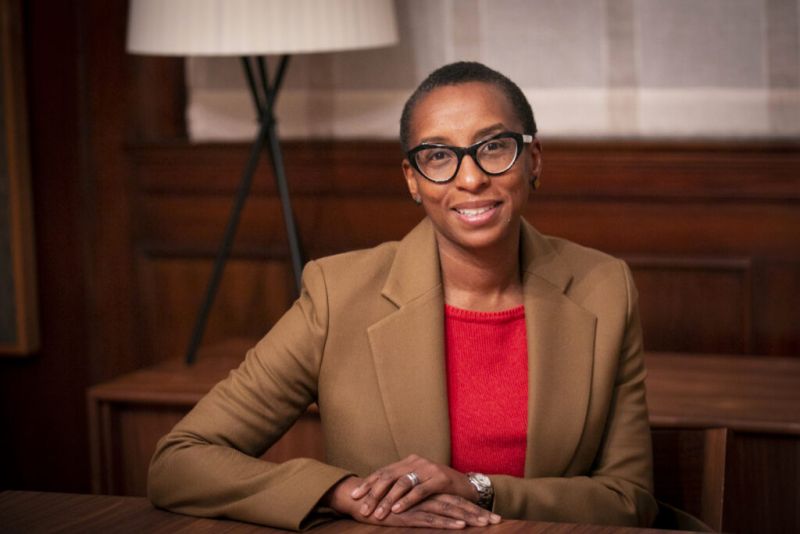
I’ve quoted the parts of Graham’s article that support my point of view. He still thinks she should have been fired.
Nia T. Evans at Mother Jones: What Claudine Gay’s Resignation From Harvard Means for the Rest of Us.
Claudine Gay’s resignation from her post as president of Harvard University is a shocking new twist in the ongoing saga over campus free speech. Gay resigned on Tuesday amid new allegations of plagiarism leveled through an unsigned complaint published in the Washington Free Beacon, a conservative outlet that has long criticized Gay. The news, which was broken by the Crimson, comes after months of attacks on Gay’s response to campus antisemitism and weeks after university leaders reaffirmed their support for her. Gay’s stunning departure is the latest casualty in a growing conservative crusade against “diversity in education” and a chilling reminder of the state of campus free speech amid Israel’s war on Gaza.
“It has become clear that it is in the best interests of Harvard for me to resign,” Gay wrote in a letter to the Harvard community. “It has been distressing to have doubt cast on my commitments to confronting hate and to upholding scholarly rigor—two bedrock values that are fundamental to who I am.”
Gay’s 186-day tenure is the shortest in the school’s 388-year history.
Just six months ago, Gay was heralded as the future of Harvard University. “I stand before you on this stage with the weight and honor of being a first,” she told a rain-soaked crowd during her inauguration ceremony. Her journey to becoming Harvard’s first Black female president felt like the quintessential American dream: she is the daughter of Haitian immigrants, a Stanford graduate with a doctorate from Harvard. An accomplished political scientist with an emphasis on race, democracy, and politics, she was praised by university and political leaders alike after being named Harvard’s 30th president in late 2022. Massachusetts Gov. Maura Healey called her “a leader for our time” driven by the “values to meet the moment” at Gay’s September inauguration ceremony. Harvard’s governing board announced her selection with glee. “We are confident Claudine will be a thoughtful, principled, and inspiring president for all of Harvard,” wrote Harvard Corporation senior fellow Penny Pritzker. “She will be a great Harvard president in no small part because she is such a good person.”
Gay’s brief tenure collided with historic political assaults against diversity and education. In June, the Supreme Court struck down affirmative action in a case in which Harvard was at its center. The October 7 terrorist attack on Israel by Hamas instigated an ongoing war that’s claimed more than 22,000 lives. The war also set off a fierce debate on college campuses across the country over free speech. In one well-documented incident, a conservative group paid for a truck to circle around Harvard Square with a billboard on which the names and photos of opponents of Israel’s actions were displayed. The billboard dubbed them “Harvard’s Leading Antisemites.”
The end result of the controversy and the efforts of right wingers:
Her resignation not only shakes things up at the most prestigious university in the country, it also exposes a larger trend of racial regression that picked up in the years following the 2020 uprisings as Black leaders have been installed in positions of power only to find themselves undermined by the systems they sought to save. Love it or hate it, Harvard sets the tone for national and international debates. To conservative activists celebrating on Twitter, Gay’s ouster is part of a larger project to purge progressive Black leaders from public institutions. Or as Chris Rufo put it, to abolish “DEI ideology from every institution in America.” In the end, Gay’s presidency has created yet another first: Harvard’s first Black female president was also its shortest-serving.
Those are my top stories for today. Lots more is happening, of course. Here are more stories you might find interesting/enraging:
Times of Israel: Israel in talks with Congo and other countries on Gaza ‘voluntary migration’ plan.
The Texas Tribune: Emergency rooms not required to perform life-saving abortions, federal appeals court rules.
Jose Pagliery at The Daily Beast: Jack Smith Keeps Telegraphing Some Seriously Scandalous Trump Crimes.
David Kurtz at TPM’s Morning Memo: The New Argument That Might Save Trump’s March Trial Date.
Newsweek: ‘Storm the Capitol’ Board Game Celebrates Jan. 6 Rioters.
That’s it for me today. What’s on your mind?
Tuesday Reads: Trump’s “Autocratic Attempt”
Posted: November 10, 2020 Filed under: morning reads, U.S. Politics | Tags: Autocracy, autocratic attempt, autocratic breakthrough, Bálint Magyar, democracy, Department of Defense, Donald Trump, famous autocrats, GSA, Joe Biden, Kamala Harris, Mark Esper, NSA, Richard PIlger, U.S. nuclear arsenal, William Barr 18 CommentsGood Morning!!
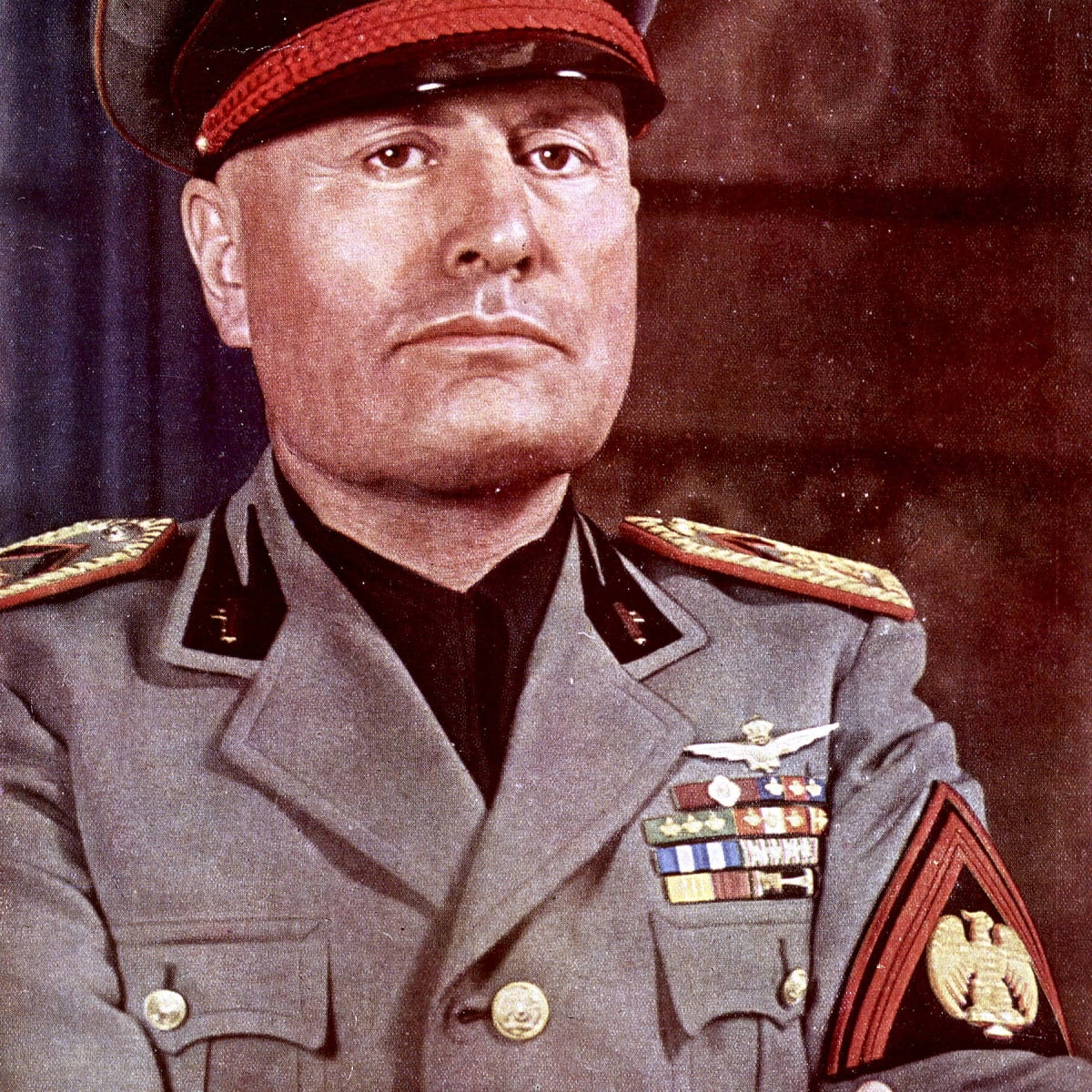
Benito Mussolini
The U.S. is going through a very dangerous time. Joe Biden and Kamala Harris have been elected decisively, but Trump and his GOP cult followers are trying to overthrow the election results. They are, in fact, attempting a coup.
Masha Gessen at The New Yorker, November 5: By Declaring Victory, Donald Trump Is Attempting an Autocratic Breakthrough.
The President of the United States has called the election a fraud. He has declared victory without basis, tweeting on Wednesday, “We have claimed” Pennsylvania, Georgia, North Carolina, and perhaps Michigan—all states that were still counting votes. Donald Trump, who has been engaged in an autocratic attempt for the last four years, is now trying to stage an autocratic breakthrough.
I have borrowed the term “autocratic attempt” from the work of Bálint Magyar, a Hungarian sociologist who set out to develop analytical tools for understanding the turn away from democracy in many Eastern and Central European countries. I have found Magyar’s ideas surprisingly illuminating when applied to the United States.
Magyar divides the autocrat’s journey into three stages: autocratic attempt, autocratic breakthrough, and autocratic consolidation. The attempt is a period when autocracy is still preventable, or reversible, by electoral means. When it is no longer possible to reverse autocracy peacefully, the autocratic breakthrough has occurred, because the very structures of government have been transformed and can no longer protect themselves. These changes usually include packing the constitutional court (the Supreme Court, in the case of the U.S.) with judges loyal to the autocrat; packing and weakening the courts in general; appointing a chief prosecutor (the Attorney General) who is loyal to the autocrat and will enforce the law selectively on his behalf; changing the rules on the appointment of civil servants; weakening local governments; unilaterally changing electoral rules (to accommodate gerrymandering, for instance); and changing the Constitution to expand the powers of the executive.
Josef Stalin
For all the apparent flailing and incompetence of the Trump Administration, his autocratic attempt checks most of the boxes. He has appointed three Supreme Court Justices and a record number of federal judges. The Justice Department, under William Barr, acts like Trump’s pocket law-enforcement agency and personal law firm. Trump’s army of “acting” officials, some of them carrying out their duties in violation of relevant federal regulations, have made mincemeat of the rules and norms of federal appointments. Trump has preëmptively declared the election rigged; has incited voter intimidation and encouraged voter suppression; has mobilized his armed supporters to prevent votes from being counted; and has explicitly stated that he is changing the rules of the election. “We want all voting to stop,” he said on Wednesday morning, and vowed to take his case to the Supreme Court.

Please go read the rest at The New Yorker.
Ezra Klein makes a similar argument at Vox: Trump is attempting a coup in plain sight.
The Trump administration’s current strategy is to go to court to try and get votes for Biden ruled illegitimate, and that strategy explicitly rests on Trump’s appointees honoring a debt the administration, at least, believes they owe. One of his legal advisers said, “We’re waiting for the United States Supreme Court — of which the President has nominated three justices — to step in and do something. And hopefully Amy Coney Barrett will come through.”
If that fails, and it will, Mark Levin, one of the nation’s most popular conservative radio hosts, is explicitly calling on Republican legislatures to reject the election results and seat Donald Trump as president anyway. After Twitter tagged the tweet as contested, Trump’s press secretary weighed in furiously on Levin’s behalf.
That this coup probably will not work — that it is being carried out farcically, erratically, ineffectively — does not mean it is not happening, or that it will not have consequences. Millions will believe Trump, will see the election as stolen. The Trump family’s Twitter feeds, and those of associated outlets and allies, are filled with allegations of fraud and lies about the process (reporter Isaac Saul has been doing yeoman’s work tracking these arguments, and his thread is worth reading). It’s the construction of a confusing, but immersive, alternative reality in which the election has been stolen from Trump and weak-kneed Republicans are letting the thieves escape.
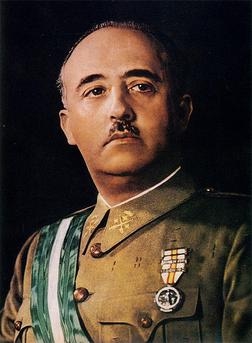
Francisco Franco, Spain
This is, to borrow Hungarian sociologist Bálint Magyar’s framework, “an autocratic attempt.” That’s the stage in the transition toward autocracy in which the would-be autocrat is trying to sever his power from electoral check. If he’s successful, autocratic breakthrough follows, and then autocratic consolidation occurs. In this case, the would-be autocrat stands little chance of being successful. But he will not entirely fail, either. What Trump is trying to form is something akin to an autocracy-in-exile, an alternative America in which he is the rightful leader, and he — and the public he claims to represent — has been robbed of power by corrupt elites.
“Democracy works only when losers recognize that they have lost,” writes political scientist Henry Farrell. That will not happen here.
It won’t happen, because the GOP is going along with Trump’s attempt.
Here’s the grim kicker: The conditions that made Trump and this Republican Party possible are set to worsen. Republicans retained control of enough statehouses to drive the next redistricting effort, too, and their 6-3 majority on the Supreme Court will unleash their map-drawers more fully. The elections analyst G. Elliott Morris estimates that the gap between the popular vote margin and the tipping point state in the Electoral College will be 4 to 5 percentage points, and that the GOP’s control of the redistricting process could push it to 6 to 7 points next time.
To say that America’s institutions did not wholly fail in the Trump era is not the same thing as saying they succeeded. They did not, and in particular, the Republican Party did not. It has failed dangerously, spectacularly. It has made clear that would-be autocrats have a path to power in the United States, and if they can walk far enough down that path, an entire political party will support them, and protect them. And it has been insulated from public fury by a political system that values land over people, and that lets partisan actors set election rules and draw district lines — and despite losing the presidency, the GOP still holds the power to tilt that system further in its direction in the coming years.
What happens when the next would-be autocrat tries this strategy — and what if they are smoother, more strategic, more capable than this one?
How is Trump’s autocratic attempt going so far? He has fired the Secretary of Defense and replaced him with a partisan loyalist.
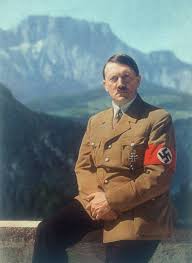
Adolf HItler, Germany
The Independent: ‘God help us’: Fired defence secretary Mark Esper worries about ‘yes men’ under Trump.
In an exclusive interview with Military Times that dropped shortly after his abrupt firing, Mr Esper took exception with critics who have called him a “yes man”, the source of the derogatory nickname “Yesper” used by the president.
“Name another Cabinet secretary that’s pushed back… Have you seen me on a stage saying, ‘Under the exceptional leadership of blah-blah-blah, we have blah-blah-blah-blah?” Mr Esper said.
“At the end of the day, it’s as I said — you’ve got to pick your fights… I could have a fight over anything, and I could make it a big fight, and I could live with that —why? Who’s going to come in behind me? It’s going to be a real ‘yes man.’ And then God help us.”
The interview was conducted on 4 November, before Mr Esper’s replacement would have been known.
Trump also fired the three officials who were in charge of our nuclear weapons. NPR:
The Trump administration abruptly dumped the leaders of three agencies that oversee the nuclear weapons stockpile, electricity and natural gas regulation, and overseas aid during the past two days, drawing a rebuke from a prominent Republican senator for one of the decisions.
The sudden departures included:
- Lisa Gordon-Hagerty, administrator of the National Nuclear Security Administration, the first woman to oversee the agency in charge of the nuclear stockpile. She was required to resign on Friday.
- Bonnie Glick, deputy administrator of the U.S. Agency for International Development. She was replaced by acting Administrator John Barsa, who had run out of time for his more senior role under the Federal Vacancies Reform Act.
- Neil Chatterjee, chairman of the Federal Energy Regulatory Commission and a former aide to Senate Majority Leader Mitch McConnell. He was replaced as chairman, though he will remain at FERC, an independent agency, as a commissioner.
The firings were overshadowed by the prolonged drama of the presidential election.

Hideki Tojo, Japan
Trump is expected to fire CIA director Gina Haspel and FBI director Christopher Wray, according to Axios.
He has named another yes man as general counsel at the NSA. The Washington Post: White House official and former GOP political operative Michael Ellis named as NSA general counsel.
The Pentagon general counsel has named a White House official and former GOP political operative to be the top lawyer at the National Security Agency, the U.S. government’s largest and most technically advanced spy agency, U.S. officials said.
There’s much more at the link.
Bill Barr is also on the case. The New York Times: Barr Hands Prosecutors the Authority to Investigate Voter Fraud Claims.
Attorney General William P. Barr, wading into President Trump’s unfounded accusations of widespread election irregularities, told federal prosecutors on Monday that they were allowed to investigate “specific allegations” of voter fraud before the results of the presidential race are certified.
Augusto Pinochet, Chile
Mr. Barr’s authorization prompted the Justice Department official who oversees investigations of voter fraud, Richard Pilger, to step down from the post within hours, according to an email Mr. Pilger sent to colleagues that was obtained by The New York Times.
Mr. Barr said he had authorized “specific instances” of investigative steps in some cases. He made clear in a carefully worded memo that prosecutors had the authority to investigate, but he warned that “specious, speculative, fanciful or far-fetched claims should not be a basis for initiating federal inquiries.”
Mr. Barr’s directive ignored the Justice Department’s longstanding policies intended to keep law enforcement from affecting the outcome of an election. And it followed a move weeks before the election in which the department lifted a prohibition on voter fraud investigations before an election.

More from NBC News: DOJ’s election crimes chief resigns after Barr allows prosecutors to probe voter fraud claims.
The head of the branch of the Justice Department that prosecutes election crimes resigned Monday hours after Attorney General William Barr issued a memo to federal prosecutors authorizing them to investigate “specific allegations” of voter fraud before the results of the presidential race are certified.
Richard Pilger, who was director of the Election Crimes Branch of the DOJ, sent a memo to colleagues that suggested his resignation was linked to Barr’s memo, which was issued as the president’s legal team mount baseless legal challenges to the election results, alleging widespread voter fraud cost him the race.
“Having familiarized myself with the new policy and its ramifications, and in accord with the best tradition of the John C. Keeney Award for Exceptional Integrity and Professionalism (my most cherished Departmental recognition), I must regretfully resign from my role as Director of the Election Crimes Branch,” Pilger’s letter said, according to a copy obtained by NBC News.
“I have enjoyed very much working with you for over a decade to aggressively and diligently enforce federal criminal election law, policy, and practice without partisan fear or favor. I thank you for your support in that effort.”
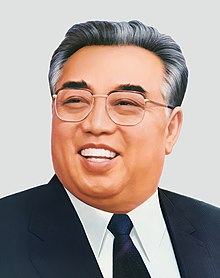
Kim Il-sung, North Korea
Finally, Trump is preventing the Biden transition team from beginning their work. The Washington Post: White House, escalating tensions, orders agencies to rebuff Biden transition team.
The Trump White House on Monday instructed senior government leaders to block cooperation with President-elect Joe Biden’s transition team, escalating a standoff that threatens to impede the transfer of power and prompting the Biden team to consider legal action.
While media outlets on Saturday projected Biden as the winner, President Trump has not conceded the election.
“We have been told: Ignore the media, wait for it to be official from the government,” said a senior administration official, who like others spoke on the condition of anonymity because the person was not authorized to speak publicly.
The GSA, the government’s real estate arm, remained for a third day the proxy in the battle. Administrator Emily Murphy, a Trump political appointee who has lasted a full term in an administration where turnover has been the norm, is refusing to sign paperwork that releases Biden’s $6.3 million share of nearly $10 million in transition resources and gives his team access to agency officials and information.
So that’s where things stand right now, as we battle an out-of-control pandemic with no help from the federal government and the Supreme Court hears arguments that may end the Affordable Care Act and strip 20,000,000 people of health insurance.
Hang in there Sky Dancers! Take care of yourselves in this dangerous time.

 peej
peej Carissa
 bostonboomer
 dakinikat
 ecocatwoman
 mablue2
 Mama Lopez
 peggysue22
 quixote
 skydancingguestblogger
 Mona (aka Wonk the Vote)



 Sky Dancing
Recent Comments