
Super Cat Food Commission may have reached a Deal
Posted: November 15, 2011 Filed under: Catfood Commission, Economy | Tags: austerity, cat food commission, deficit hawks, Super Committee 47 CommentsThere are nine days left until November 23rd and automatic spending cuts that are supposed to punish deadlock. Our economy is weak. Exactly how much recessionary 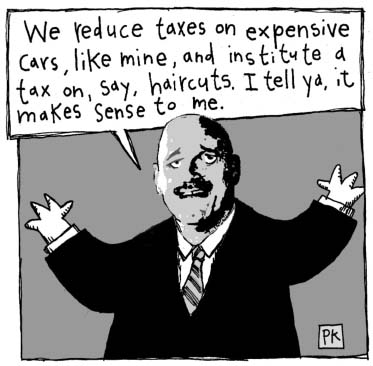 pressure will the austerity pogrom inflict on the country? Exactly how much will the unemployment rate go up and the economic growth go down when we do the exact opposite thing that all accepted and proven economic theory would have us do? Well, there’s hints at a deal. Get ready for a double dipper!
The panel needs seven votes on a deal to force at least $1.2 trillion in deficit reduction over the next 10 years. Sen. Pat Toomey (R) of Pennsylvania last week broke with his party’s anti-tax pledge to propose some $300 billion in new tax revenues. Democrats are said to be on the verge of a counterproposal, as early as today, to include new cuts in entitlement spending likely to offend their party’s base.
Tax increases and entitlement spending cuts = decreases in aggregate demand = decreases in prices and wages and decrease in economic growth/GDP/Income = more unemployment. Exactly who are they pleasing with this policy? Themselves? Their Wall Street Overlords? The Grinch?
There’s a lot of ignorance built in to this group.
Based on what we do know, however, both sides are playing big time budget baseline games. When they talk taxes, Republicans start by assuming the 2001/2003/2010 tax cuts will all be extended indefinitely. From there, they talk about cutting rates across the board and reducing tax preferences (perhaps with some cap on these breaks). All of this, it is reported, would boost revenue by a few hundred billion dollars over 10 years.
Sounds promising. But by starting by extending the Bush era tax cuts, the Rs would reduce revenues by $4 trillion compared to what would happen if Congress simply lets them expire as scheduled a year from now. So, Republicans would add $4 trillion to the deficit before cutting a paltry $200-$300 billion. In anyplace but Washington this would add up to another $3.7 or $3.8 trillion in red ink. Here, it counts as deficit reduction. Worse, even those dollars appear to result from presumed economic growth rather than policy changes. The wonders of dynamic scoring!
Democrats are playing their own games. While Politico reports this morning that they are proposing $400 billion in Medicare and Medicaid cuts (most of which would come out of the hides of doctors, hospitals, nursing homes, and other providers), the Dems also start by assuming a fix to the ongoing battle over Medicare reimbursements to physicians. Straightening out this mess could cost as much as $300 billion over the next 10 years. The Ds do say they’d pay for the fix—but with money from the drawdown of troops from Iraq and Afghanistan. This money is fiscal pixie dust, since the troops are already coming home and those funds were never going to be spent.
If the built-in assumption is indefinite extension of those reckless Bush tax cuts, we might as write the nation off as a banana republic right now. This is especially true when you consider what will be downsized in response to rewarding the rich for moving jobs overseas, gambling in the Wall Street Casino, and not expanding business here because the economic outlook will continue to be glum. There are a few hints on what has to go in order to extend these indefensible tax cuts. What will the Dems trade in order to get some tax revenues placed on the table?
Democrats aren’t offering to simply take the GOP at their word. Their plan is to make any cuts to programs like Medicare and Social Security part of a trigger that would only be pulled if and when Congress passes hundreds of billions of dollars in new revenue.
Multiple Democratic aides confirm their strategy hasn’t changed: Dems will only support this sort of two-step tax reform process if there are serious revenue guarantees and the deal includes a trigger to make sure the revenue materializes.
If that sounds a little Rube Goldbergish to you, it is. But both parties have basically agreed that the Super Committee wouldn’t have enough time between its launch and its deadline to write a full overhaul of the tax code. So Dems are privately insisting that any future promised revenue come with more than a promise. If the GOP can’t deliver the votes for it, then the safety net cuts they want disappear. That’s not to predict that they’ll stick with this demand until the bitter end — for liberal groups, vigilance is key.
Ever heard of out of sight, out of mind? If the Repubs delay the tax details and the Dems still try to eek something out, how will this work? Follow that link to a bunch of other links with this short intro.
As the panel’s Nov. 23 deadline approaches and doubts about its ability for success persist, a new approach is emerging in which the panel may opt to postpone politically difficult decisions by deciding the amount of new revenue their deficit-reduction plan would require, but leaving specifics to Congress’ tax-writing committees to fill in next year.
So is this a deal or a punt?
It seems that K Street isn’t giving up on keeping all the lights lit on the tree for their special interests. This doesn’t bode well. The meat may get thrown out while the fat and grizzle are still on the plate.
And 125 companies and groups made another pitch to the super committee on the importance of setting aside additional unlicensed spectrum for new technologies like ultra-fast Wi-Fi.
Google, Hewlett-Packard, Microsoft and others said they worry that if the panel gives the Federal Communications Commission authority to conduct incentive auctions, that the FCC’s move last year to open up the spaces between television channels for unlicensed use could be derailed.
“We urge Congress to give the FCC the flexibility to preserve TV band spectrum for unlicensed super Wi-Fi devices and deliver innovation to American consumers and economic growth to our nation,” they wrote in the letter to the co-chairs of the super committee, Rep. Jeb Hensarling, R-Texas, and Sen. Patty Murray, D-Wash.
Yup. That’s so much more important than feeding hungry children, creating jobs, and fulfilling our obligations to seniors. It seems that most people will have to search out the bags of dry food while a whole lot of businesses that don’t seem to be able to function without subsidies will still be dining on fancy feast.
Poverty in These United States
Posted: November 15, 2011 Filed under: Austerity, children, Economy, hunger, income inequality, poverty, seniors, unemployment | Tags: austerity, children at risk, Poverty Tour, seniors 10 Comments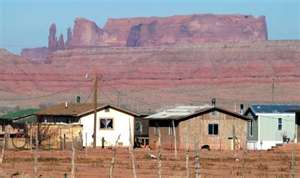
We are not Afghanistan. We are not Haiti or the Democratic Republic of the Congo. We are not any of the 3rd world nations that are sometimes callously referred to as the ‘black holes’ of the world, where national incomes range between $700-900 annually, where human assets in nutrition, education, health and adult literacy are the lowest of the low. Nor do national fluctuations in agriculture production, instability of import/export services or economic smallness define us.
We are decidedly not one of the least developed nations on the planet. Quite the contrary. We are the richest, most powerful and technologically advanced nation the world has ever known.
Yet poverty exists and is rising. American poverty is a fact, a condition defined not by 3rd world standards but by the standards of who and what we are as a premier Nation among all nations.
No sooner had the Census Bureau come out with its findings on poverty–the first report in September, followed by a supplemental report in early November—the naysayers lined up reminding us that the findings were misleading, that many of the so-called poor had cars and TVs, that children of the poor sported Xboxes. And my God, a goodly number actually have air conditioning! I suspect many have heating, too.
The arguments are that unless a family or individual meets a 3rd-world definition of poverty then even the mention of rising American poverty levels falls into the category of gross exaggeration. This in a time when unemployment is the top concern of the American electorate, when unemployment sits ‘officially’ at 9% but, in fact, has reached nearly 20%, when from 2001-2009 42,400 American factories closed their doors to traditional middle-class jobs. This is also in a time of historical corporate profits and obscene CEO salaries in the financial services industry that through casino betting, accounting fraud and governmental bailouts brought this country and the world to its knees. And continues to do so, eg., MF Global headed by former NJ Governor Jon Corzine.
The old canards are being taken for a rerun as well: poverty is a symptom of lazy minds and an entitlement generation or an unwillingness to work hard and save money. Many will recall the Welfare Queen stories of the past, imagined always as a black woman with a dozen children, driving idly around town in her brand new Caddie. Living life high on the hog, the hysterical claims insisted, bilking government largesse [ otherwise known as taxpayer money]. But as Ralph B. noted in an earlier thread, there’s nary a word about corporate/millionaire welfare, where companies and even individuals skate on Federal taxes through loopholes and accounting maneuvers and government handouts
Let’s get real. The fallout of 2007-2008 hit many average families between the eyes, this after wages had been stagnating for three decades with a beginning upswing in the 90s, wage advancements quickly lost since 2000. Prices, however, have continued to rise, commodity prices in particular, those base products— gas, foodstuffs—that we all rely on to survive. Medical costs/premiums have gone through the roof. Is it any wonder seniors, who face a disproportionate share of medical problems and costs, have gotten caught in the old trap of choosing food or drugs? Children are caught up in the economic whirlwind, too, as parents lose jobs and homes, scramble for low-paying, part-time positions, work that frequently is not enough to ensure adequate food and/or nutrition on a consistent basis. Should we be surprised then at the increase of American children now classified as ‘food insecure?’
Here’s what we know:
49.1 million Americans have fallen into poverty, 16% of the population or 1 in 7 Americans.
Nearly 20% of that number are children; nearly 16% of the indigent are 65 years and older.
21.5% of American children have been classified as ‘food insecure.’
1 in 15 Americans are classified as the ‘poorest of the poor, which in 2010 translated to $5570 or less for an individual, $11,157 for a family of four.
The Census Bureau’s Supplemental report issued earlier this month takes into account governmental assistance—food stamps, the earned income tax credit, school lunch programs etc—without which the statistics above would be even worse.
From a Center on Budget and Policy Priorities report:
Six temporary federal initiatives enacted in 2009 and 2010 to bolster the economy by lifting consumers’ incomes and purchases kept nearly 7 million Americans out of poverty in 2010, under an alternative measure of poverty that takes into account the impact of government benefit programs and taxes. These initiatives — three new or expanded tax credits, two enhancements of unemployment insurance, and an expansion of benefits through the Supplemental Nutrition Assistance Program (SNAP, formerly called food stamps) — were part of the 2009 Recovery Act. Congress subsequently extended or expanded some of them.
Hence the total number of persons in poverty would have been even higher last year if not for the six government initiatives.
Btw, the link above gives a rather shocking comparison between the poverty rates in the US and Brazil. Not pretty.
Yet, Michelle Bachmann’s prescription as well as many of her Republican colleagues is based on the old saw: self-reliance, an honest day’s work for an honest day’s pay. This in a time of record unemployment and rising poverty in the general population.
How many statistics, comparisons, articles and images are necessary to convince the disbelieving that American poverty is on the rise, that it is not the result of coddling, laziness or lack of self-reliance? Or perhaps we must admit that there is also a poverty of spirit and reason running rampant through country, blinding those who would blame fellow citizens for the dearth of employment and opportunity without offering any workable solutions to an ever growing, bleak reality.

Friday Reads
Posted: November 11, 2011 Filed under: morning reads | Tags: attack Iran, austerity, child sexual assault, economic growth, Iran nukes, Nouriel Roubini, Penn State, Romney 48 Comments
Good Morning!!
I’ve spent the last few days editing tables, proofreading, and formatting bibliography, cross checking table of contents and lists of tables to make sure page numbers match. It’s the kind of work that makes you want to pull out every last thread of hair on your head. I’m hopefully at the end of the road to chasing down about a dozen signatures for forms too. It’s driving me nuts!! I’m going to be so glad when this stupid dissertation gets published and I don’t have to mess with the thing ever again!
Given that I”m doing this mind numbing frustrating detail work, it’s probably contributing to some things that are making me really mad. I cannot–for one–imagine any one having any reasons to defend a football coach who didn’t report horrible instances of child sexual assault. I don’t understand the riots on campus that occurred the other night. I certainly don’t understand glib tweets defending said coach sent out to millions of fans by celebrities either. How many little boys were assaulted and how many people around them will be hurt as they spend their lives trying to overcome the trauma? How on earth do you defend some who who was covering up and not reporting a series of heinous felonies?
Demonstrators tore down two lampposts, one falling into a crowd. They also threw rocks and fireworks at the police, who responded with pepper spray. The crowd undulated like an accordion, with the students crowding the police and the officers pushing them back.
“We got rowdy, and we got Maced,” said Jeff Heim, 19, rubbing his red, teary eyes. “But make no mistake, the board started this riot by firing our coach. They tarnished a legend.”
An orderly crowd first filled the lawn in front of Old Main when news of Mr. Paterno’s firing came via students’ cellphones. When the crowd took to the downtown streets, its anger and intensity swelled. Students shouted, “We are Penn State.”
Some blew vuvuzelas, others air horns. One young man sounded reveille on a trumpet. Four girls in heels danced on the roof of a parked sport utility vehicle and dented it when they fell after a group of men shook the vehicle. A few, like Justin Muir, 20, a junior studying hotel and restaurant management, threw rolls of toilet paper into the trees.
“It’s not fair,” said Mr. Muir, hurling a white ribbon. “The board is an embarrassment to our school and a disservice to the student population.”
Just before midnight, the police lost control of the crowd. Chanting, “Tip the van,” the students toppled the news vehicle and then brought down a nearby lamppost. When the police opened up with pepper spray, some in the crowd responded by hurling rocks, cans of soda and flares. They also tore down street signs, tipped over trash cans and newspaper vending boxes and shattered car windows.
The irony of all this is that the right wing noise machine has less to say about this violence and mayhem than it ever has about the Occupy Protests. Most disappointing is that Assistant Coach Mike McQueary will not be attending the game because he’s gotten death threats for doing the right thing after witnessing the sodomy of an approximately ten year old boy by then Assistant Coach Sandusky.
Raw Story has an interesting piece up about Romney who seems to have an itchy missile finger trained on Iran. Just what we need; more entanglements in the Middle East.
Accusing President Barack Obama of naivete on Iran, Republican presidential challenger Mitt Romney promised Thursday that if elected president he would “prepare for war” with the Islamic republic.
In a commentary published in the Wall Street Journal, Romney said he would back up US diplomacy “with a very real and very credible military option,” deploying carrier battle groups to the Gulf and boosting military aid to Israel.
“These actions will send an unequivocal signal to Iran that the United States, acting in concert with allies, will never permit Iran to obtain nuclear weapons,” he wrote.
Nouriel Roubini has some interesting choices to lay at the feet of European Community leaders. It’s really worth a read. For some reason leaders here and in the US are obsessed with austerity. They should be obsessed with way promoting economic growth.
First of all, without economic growth, you have a dual problem: a) The socio-political backlash against fiscal austerity and reforms becomes overwhelming as no society can accept year after year of economic contraction to deal with its imbalances; b) more importantly, to attain sustainability, flow deficits (fiscal and current account) and excessive debt stocks (private and public, domestic and foreign) need to be stabilized and reduced, but if output keeps on falling, such deficit and debt ratios keep on rising to unsustainable levels.
Second, restoring growth is also important because, without growth, absolute fiscal deficits become larger rather than smaller (given automatic stabilizers). Third, restoring external competitiveness is key as that loss of competitiveness led—in the first place—to current account deficits and the accumulation of foreign debt and to lower economic growth as the trade balance detracts from GDP growth when it is in a large and growing deficit. So, unless growth and external competitiveness are restored, flow imbalances (fiscal and current account deficits) persist and stabilizing domestic and external deficits becomes “mission impossible.” Finally, note that, unless growth and competitiveness are restored, even dealing with stock problems via debt reduction will not work as flow deficits (fiscal and current account) will continue and, eventually, even reduced debt ratios will rise again if the denominator of the debt ratio (debt to GDP), i.e. GDP, keeps on falling. Growth also matters as credit risk—measured by real interest rates on public, private and external debt, which measures the default risk—will be higher the lower the economic growth rate. So, for any given debt level, a lower GDP growth rate that leads to a higher credit spread makes those debt dynamics more unsustainable (as sustainability depends on the differential between real interest rates and growth rates times the initial debt ratio).
Switching to US problems, Morgan Stanley has its knickers in a knot about potential failure of the super committee. They anticipate more downgrades of US soverign debt.
Now Morgan Stanley is weighing in on this question, as part of a broder note about the impact of the super-committee on the economy.
From MS’ Christine Tan:
S&P reminded market observers in October that the US remains on negative watch due to its unsustainable fiscal outlook, which implies a 1 in 3 chance of further downgrade from its current
AA+ rating. If the Super Committee fails to reach a $1.2trn deficit reduction deal, if such a deal relies more upon accounting changes than real deficit reduction, or if Congressional action lessens the impact of the $1.2trn automatic trigger, we believe this could potentially provide S&P with a pretext to downgrade the US further from AA+ to AA. The initial S&P downgrade of the US’s AAA rating on
August 5, 2011 roiled the markets into severe risk-aversion mode and the GRDI, Morgan Stanley’s proprietary risk appetite indicator fell to an all-time low of -5.13.So it’s important to bear in mind that the consequence of a downgrade would be an economic slowdown, not anything on the cost of borrowing side.
It sure is a crazy mixed-up world. What is on your reading and blogging list today?
Thursday Reads: Power to the People!
Posted: November 3, 2011 Filed under: #Occupy and We are the 99 percent!, Foreign Affairs, France, Germany, Greece, Italy, morning reads, Spain, U.S. Economy, U.S. Politics, unemployment | Tags: Angela Merkel, austerity, democracy, Eurodammerung, George Papandreau, Greece, Nicolas Sarkozy, Oakland general strike, Paul Krugman, Robert Reich 40 Comments
Good Morning!! Over the past couple of days, I’ve become really fascinated with the situation in Greece. It’s a pretty fluid situation at the moment. On Tuesday Robert Reich wrote a pretty good primer on what is happening and expressed his view that letting the Greek people decide their own fate is the best idea. Here’s a bit of it:
Greek Prime Minister George Papandreou decided in favor of democracy yesterday when he announced a national referendum on the draconian budget cuts Europe and the IMF are demanding from Greece in return for bailing it out.
(Or, more accurately, the cuts Europe and the IMF are demanding for bailing out big European banks that have lent Greece lots of money and stand to lose big if Greece defaults on those loans – not to mention Wall Street banks that will also suffer because of their intertwined financial connections with European banks.)
If Greek voters accept the bailout terms, unemployment will rise even further in Greece, public services will be cut more than they have already, the Greek economy will contract, and the standard of living of most Greeks will deteriorate further.
If Greek voters reject the terms and the nation defaults, it will face far higher borrowing costs in the future. This may reduce the standard of living of most Greeks, too. But it doesn’t have to. Without the austerity measures the rest of Europe and the IMF are demanding, the Greek economy has a better chance of growing and more Greeks are likely to find jobs.
Shouldn’t Greek citizens make this decision for themselves?
Reich argues that it would have been better in the long run if the American people had been consulted about the bank bailouts here.
If Americans had been consulted about the 2008-2009 Wall Street bailout, I doubt it would have happened the way it did. At the very least, strict conditions would have been placed on the banks in return for the money. The banks would have had to eat the losses of the predatory mortgages they sold, and help homeowners reduce those mortgages. They’d be required to improve the capitalization of small banks in communities across the country. They’d be forced to accept stringent new regulations, including resurrection of Glass-Steagall
But we weren’t consulted. The wishes of the American people were considered irrelevant by the oligarchs who run this country. And the European oligarchs are hoping to prevent the Greek people from claiming a right to make a democratic decision.
Of course if the Greek people do decide to default on their debts, there will be serious consequences–for them and for the rest of Europe. Krugman calls it “Eurodämmerung.” He argues that
…the euro was an inherently flawed idea that can work only given a strong European economy and a significant degree of inflation, plus open-ended credit to sovereigns facing speculative attack. Yet European elites embraced the notion of economics as morality play, imposing across-the-board austerity, tightening money despite low underlying inflation, and have been too concerned with punishing sinners to notice that everything was going to blow apart without an effective lender of last resort.
The question I’m trying to answer right now is how the final act will be played. At this point I’d guess soaring rates on Italian debt leading to a gigantic bank run, both because of solvency fears about Italian banks given a default and because of fear that Italy will end up leaving the euro. This then leads to emergency bank closing, and once that happens, a decision to drop the euro and install the new lira. Next stop, France.
Yikes! But Fortune also says Italy and France are in trouble if Greece defaults. And Spain could go bust too.
What worries is that Spain and Italy are not in the Greek situation but they could be. Greece is bust and Spain and Italy could be driven bust. They both have a lot of debt and each year some of that debt has to be repaid. Now governments almost never do repay debt, they just borrow some more and use the new money to pay off the old. Bit like swirling what you owe around a few credit cards.
Which is just fine: except, if interest rates rise then they have to pay more interest on this new debt that they’re issuing to pay off the old. And if interest rates rise enough then they do go bust, as the interest payments they have to make take too much money out of the budget. Switching money around on zero interest introductory rate cards is very different from doing it when you’re being charged 30%.
Now, the general agreement is that when the interest rates are above 6% then Italy and Spain are in danger of going bust. When they’re over 7% they will do so. But of course, when people see that Italian interest rates are above 6% then they become more wary of lending Italy any more money and so interest rates keep on rising to possibly above 7% and game over.
It’s still not clear what Greece is going do in their referendum. Dakinikat says they need to ask the people if they want to leave the European Union or not. German Chancellor Angela Merkel and French President Nicolas Sarkozy have said that the referendum must ask the Greek people if they want to opt out of the Euro, but not the EU itself. Meanwhile, the offer of a bailout of Greece has been called off until after the vote on the referendum is taken. From Naked Capitalism:
The Eurocrats have decided to try to push Greece into line, threatening expulsion from the Euro (note, not the EU) if Greece does not back down. From a practical matter, if the Greeks were to turn down the bailout package, it would lead to a banking crisis, making a Eurozone exit a not that much more traumatic incremental move with considerable upside. And under the Maastrict treaty, Greece cannot unilaterally exit (although as various commentors have pointed out, Nato is not going to send in tanks if the Greeks were to do so).
But this may be an appeal to the Greek public, or more likely, an effort to break Greek prime minister’s Papandreou’s thin coalition on the eve of a vote of no confidence.
So that’s another possibility–that Papandreau’s government might fall. More on the European reaction from Bloomberg:
Led by Germany and France, Europe’s economic and political anchors, the euro’s guardians yesterday cut off financial aid for Greece until a vote they said would be on Dec. 4 or Dec. 5 determines whether it deserves a fresh batch of loans needed to stave off default.
“The referendum will revolve around nothing less than the question: does Greece want to stay in the euro, yes or no?” German Chancellor Angela Merkel told reporters after crisis talks hours before a Group of 20 summit set to begin today in Cannes, France. French President Nicolas Sarkozy said Prime Minister George Papandreou’s government won’t get a “single cent” of assistance if voters rejects the plan.
The hardball tactics open the door for a nation to leave the currency bloc that at its setup in 1999 capped Europe’s progression from war to prosperity and was declared “irrevocable” by its founding fathers. Polls show most Greeks object to the austerity required for aid, yet more than seven in 10 favor remaining in the euro, a survey last week of 1,009 people published in To Vima newspaper showed.
They’re going to have to decide between two awful choices, and the rest of Europe will have to deal with the results of the vote–if there is a default, failures of banks that hold Greek debt and getting Italian, French, and German taxpayers to pay for more bank bailouts–unless Papandreau’s government falls. Read the whole article at Bloomberg to get a sense of how serious all this is.
In U.S. news, Occupy Oakland called for a general strike today. That situation is still fluid as of this writing, 11PM Eastern on Wednesday night.
OAKLAND – Protesters blocked streets near City Hall, smashed windows at a bank and gathered by the thousands in an attempt to shut down the nation’s fifth-busiest port Wednesday.
The Occupy Oakland protest was the largest in a series of rallies in several cities as the Occupy Wall Street movement that began Sept. 17 tried to grab national attention.
A group of about 300 protesters, many of them men wearing black, some covering their faces with bandanas and some carrying wooden sticks, smashed windows of a Wells Fargo bank branch while chanting “Banks got bailed out. We got sold out.”
Are you getting the feeling this genie can’t be put back in the bottle either? The Occupy demonstrations have shown us that we pretty much live in a police state at this point. There very little respect for the protesters’ constitutional rights by local governments or law enforcement. From Counterpunch, here is a report of what actually happened when police attacked protesters in Oakland on Oct. 25.
In a heavily armed pre-dawn raid, on Tuesday, Oct. 25, with back up from armored vehicles and helicopters, the Oakland Police Department in conjunction, with over 15 other police departments from Northern and Central California, stormed the sleepy Occupy Oakland Encampment.
Asleep inside tents of the makeshift Occupy encampment, were over a hundred men, women and very young children. The heavily armed police force, dressed in black ninja-like outfits, and special forces helmets, with full face-shields down, and armed with and assortment of latest riot gear, fired tear gas canisters and concussion grenades into the camp, as helicopters circled above.
Police then attacked and ransacked the entire encampment. In a short time, the camps library, soup kitchen, and children’s center were left in ruins, and over a hundred of the inhabitants were roughed up, arrested and held on high bail. The activists suffered many injuries, including broken bones.
Please read the whole thing–it’s an eyewitness account of a horrifying paramilitary action by police. As everyone knows, Iraq war veteran Scott Olson was critically injured in the melee.
Late last night as part of the general strike, Oakland protesters succeeded in shutting down the Port of Oakland.
Several thousand Occupy Wall Street demonstrators forced a halt to operations at the United States’ fifth busiest port Wednesday evening, escalating a movement whose tactics had largely been limited to rallies and tent camps since it began in September.
Police estimated that a crowd of about 3,000 had gathered at the Port of Oakland by early evening. Some had marched from the California city’s downtown, while others had been bused to the port.
Port spokesman Isaac Kos-Read said maritime operations had effectively been shut down. Interim Oakland police chief Howard Jordan warned that protesters who went inside the port’s gates would be committing a federal offense.
In New York, Los Angeles and other cities where the movement against economic inequality has spread, demonstrators planned rallies in solidarity with the Oakland protesters, who called for Wednesday’s “general strike” after an Iraq War veteran was injured in clashes with police last week.
Organizers of the march said they want to stop the “flow of capital.” The port sends goods primarily to Asia, including wine as well as rice, fruits and nuts, and handles imported electronics, apparel and manufacturing equipment, mostly from Asia, as well as cars and parts from Toyota, Honda, Nissan and Hyundai.
We knew there would eventually be civil unrest, and now we’re seeing it all over the world and here at home. What next? I’d say 2012 is going to be an eventful year.
With that, I’m going to wrap this up. I know there’s lots of other news, but these two stories–Greece and the general strike in Oakland–seem to me to symbolize what’s happening in the world today. People are sick and tired of being bilked by the super-rich, and ignored by the politicians. It’s so chaotic, yet I feel that the only hope we have is for the people to keep resisting as best they can. For so long, I was afraid nothing would wake American up, but I’m finally getting the feeling that we won’t go down without a fight. Let’s keep the elites nervous!
Sooooo… what are you reading and blogging about today?
Confronting the Austerity Agenda
Posted: October 28, 2011 Filed under: Economy, Foreign Affairs, Iceland | Tags: austerity, banking crises, economics, iceland 13 Comments Paul Krugman takes on the idea that after we bail out economically destructive banks, we all have to pay with downsized lives and a bad economy in his NYT column today. He continues to fight the idea that austerity–not prosperity–will bring back confidence and the economy. He’s right that the austerity hawks push a ridiculous assertion that denies past history as well as logic.
The doctrine in question amounts to the assertion that, in the aftermath of a financial crisis, banks must be bailed out but the general public must pay the price. So a crisis brought on by deregulation becomes a reason to move even further to the right; a time of mass unemployment, instead of spurring public efforts to create jobs, becomes an era of austerity, in which government spending and social programs are slashed.
This doctrine was sold both with claims that there was no alternative — that both bailouts and spending cuts were necessary to satisfy financial markets — and with claims that fiscal austerity would actually create jobs. The idea was that spending cuts would make consumers and businesses more confident. And this confidence would supposedly stimulate private spending, more than offsetting the depressing effects of government cutbacks.
Some economists weren’t convinced. One caustic critic referred to claims about the expansionary effects of austerity as amounting to belief in the “confidence fairy.” O.K., that was me.
But the doctrine has, nonetheless, been extremely influential. Expansionary austerity, in particular, has been championed both by Republicans in Congress and by the European Central Bank, which last year urged all European governments — not just those in fiscal distress — to engage in “fiscal consolidation.”
And when David Cameron became Britain’s prime minster last year, he immediately embarked on a program of spending cuts in the belief that this would actually boost the economy — a decision that was greeted with fawning praise by many American pundits.
Now, however, the results are in, and the picture isn’t pretty
Example one: The economy of Greece. It has been pushed into an even bigger slump. Example two: The economy of the UK. Austerity has stalled its economy and the confidence fairy is no where to be seen. Example three: Iceland. They did the exact opposite and they’re none the worse for wear. So, which example are we following? Well, it’s not Iceland.
Krugman, Icelanders, and the IMF are taking stock of the Iceland experience this week in a conference. You can read many articles at the IMF on how Iceland is recovering from its 2008 economic catastrophe. You can watch a video explaining what went on there with Dr. Joseph Stiglitz below.
Today, three years later, it is worth reflecting on how far Iceland―a country of just 320,000 people―has come since those dark days back in 2008. Growth has returned to the economy, and new jobs are being created: unemployment, although still unacceptably high for a country used to near-full employment, has dropped below 7 percent of the work force. In June this year, the government successfully issued a $1 billion sovereign bond, marking a return to international financial markets.
And while public debt, currently at around 100 percent of GDP, is much higher than before the crisis, an impressive consolidation program has put the country’s finances back on a sustainable path during the past couple of years. As for the banks, they have been shrunk to about 200 percent of GDP, and are now fully recapitalized.
So, how did they do it? Did they embrace austerity for their citizens after rescuing and enriching their errant banking/financier class?
- First, a team of lawyers was put to work to ensure that losses in the banks were not absorbed by the public sector. In the end, the public sector did of course have to step in and ensure the new banks had adequate capital, but it was insulated from vast private sector losses. This was a major achievement.
- Second, the initial focus of the program was exclusively on stabilizing the exchange rate. Here, we reached for unconventional measures, notably capital controls.
- Third, automatic stabilizers were allowed to operate in full during the first year of the program—effectively delaying fiscal adjustment. This helped support the economy at a time of severe strain.
- Fourth, conditionality was streamlined and focused on the key issue at hand—rebuilding the financial sector. While there are some issues in the broader economy where reforms will eventually be needed, these were not a part of the program.

 peej
peej Carissa
 bostonboomer
 dakinikat
 ecocatwoman
 mablue2
 Mama Lopez
 peggysue22
 quixote
 skydancingguestblogger
 Mona (aka Wonk the Vote)



 Sky Dancing
Recent Comments