
Thursday Reads
Posted: June 20, 2013 Filed under: Barack Obama, FBI, Foreign Affairs, Germany, misogyny, morning reads, religion, Russia, U.S. Economy, U.S. Politics, War on Women, Women's Rights | Tags: Angela Merkel, austerity, Cristina Torre, Dillin Miller, domestic violence, gender stereotypes, Ibragim Todashev, John F. Kennedy, nuclear weapons, Rep. Phil Gingrey, Richard DesLauriers, Spanking for Jesus movement, Vladimir Putin 18 Comments
Good Morning!!
I haven’t really been paying much attention, but I guess President Obama’s trip to Europe didn’t go that well. I accidentally heard part of his Berlin speech, because I fell asleep with the radio on and woke up listening to a rebroadcast of it. I didn’t get much out of it, but it seemed as if Obama was lecturing Angela Merkel about her austerity obsession. The trouble is that Obama has pushed and/or allowed a milder version of austerity here, and he is doing much to lead us out of our own economic doldrums. Here are a couple of reports of the trip.
The National Journal’s Michael Hirsch: Obama’s Turbulent European Vacation
What was it, exactly, about Obama’s controversy-marred trip to Germany and the G8 Summit in Northern Ireland that fell so flat? Ummm, how about … everything?
There were the snarky words from Vladimir Putin, who expressed an almost Soviet-esque distance from Washington in his views about Syria. “Of course our opinions do not coincide,” the Russian leader said bluntly. There was the coded warning from Chancellor Angela Merkel about spying on friends, and her and Obama’s continuing frostiness over the issue of economic stimulus versus austerity. Above all, there was Obama’s vague attempt at the Brandenburg Gate to capture some wisp of his past glory by pledging vague plans to cut nuclear arms and an even vaguer concept of “peace with justice.”
The “peace with justice” line was a quote from John F. Kennedy, Obama’s attempt to steal just a little of JFK’s thunder from 50 years before. He didn’t come away with much, winning just a smattering of applause from a crowd that was one one-hundredth the size of JFK’s. A crowd that, at about 4,500, was also much, much smaller than Obama drew as a candidate in 2008.
Not only is the honeymoon long over, folks. The marriage is becoming deeply troubled and, increasingly, loveless.
The contrast with President John F. Kennedy’s famous “Ich bin ein Berliner” couldn’t have been more stark.
And from Jim Kuhnhenn of the AP: Obama prods, gets share of pushback
In Berlin on Wednesday, Obama warned that the European Union could “lose a generation” if it doesn’t adjust its economic policies to tackle high youth unemployment. German Chancellor Angela Merkel, who has argued for debt-ridden eurozone countries to first deal with their fiscal problems, insisted her government was committed to helping its European partners in the crisis-hit nations. “If we were conducting policies that would harm other countries,” she argued, “we would harm ourselves.”
Wow. Is she in denial or what? All her austerity policies have done his harm other European countries. In any case, she wasn’t thrilled with Obama’s critique.
She countered with her own words of caution over the Obama administration’s secret collection of phone records and surveillance of foreign Internet traffic. “People have concerns, precisely concerns that there may be some kind of blanket, across-the-board gathering of information,” she said. “There needs to be proportionality” between security and freedom, she added, and made clear that her private talks about it with Obama were not the end of the subject.
It was a polite punch-counterpunch between vital allies — an exchange that won’t damage a strong relationship. But it illustrated how in a 21st century world order, Western powers are not beholden to the United States as they once were and Obama’s ability to find agreement or build consensus is often limited and regularly tested.
And there was the talk of peace and reducing nuclear weapons.
The centerpiece of Obama’s visit to Berlin was a speech at the historic Brandenburg Gate, once a symbol of the Cold War, where he called for negotiations with the Russians to reduce U.S. nuclear weapons by one-third and called for cutting the number of tactical warheads in Europe. “Peace with justice means pursuing the security of a world without nuclear weapons, no matter how distant that dream may be,” he said.
The words were barely out of his mouth when a Republican member of the House Armed Services Committee, Ohio Rep. Michael Turner, accused him of appeasement, and Russian officials were playing down Obama’s proposal. A foreign policy aide to President Vladimir Putin said any further arms reduction would have to involve countries other than just Russia and the United States.
All in all, not a very successful trip.
To be honest, I get the feeling that Obama is already a lame duck. He doesn’t seem to be able to focus his attention on an issue long enough to get anything accomplished. I understand that Congress is really the biggest problem, but looking back to past Democratic presidents, Obama seems so passive in comparison. It’s very discouraging. I have to wonder why he worked so hard to get reelected. He seems to enjoy the ceremonial aspects of the job, but not the nuts and bolts.
Please someone, convince me I’m wrong. I do not want to end up with a Republican president and Republican majorities in Congress in 2016. I do not want the government led by troglodytes like Georgia Rep. Phil Gingrey, who wants children to learn stereotypical gender roles “at a very early age.” From Think Progress:
Rep. Phil Gingrey (R-GA) wants American youths to be taught gender stereotypes in grade school classes, so they understand the roles of mothers and fathers — and the importance of allowing only opposite-sex couples to marry.
In a speech Monday on the House floor, Gingrey stressed his continued support for the Defense of Marriage Act — which defines marriage as only union between a man and a woman — and suggested that children need to be carefully taught about the traditional roles of their genders:
GINGREY: You know, maybe part of the problem is we need to go back into the schools at a very early age, maybe at the grade school level, and have a class for the young girls and have a class for the young boys and say, you know, this is what’s important. This is what a father does that is maybe a little different, maybe a little bit better than the talents that a mom has in a certain area. And the same thing for the young girls, that, you know, this is what a mom does, and this is what is important from the standpoint of that union which we call marriage.”
Watch if you dare.
And then there’s the “Spanking for Jesus movement.” Yes, you read that right. From The Daily Beast:
You don’t have to be a Christian to practice domestic discipline, although many of its practitioners say they believe that domestic discipline goes hand in hand with their faith. Specifics of the practice vary by couple, though CDDers all seem to follow a few basic principles. Foremost, that the Bible commands a husband to be the head of the household, and the wife must submit to him, in every way, or face painful chastisement.
When a wife breaks her husband’s rules—rolling her eyes, maybe, or just feeling “meh,” as one blogger put it—that can equal punishments which are often corporal but can also be “corner time”; writing lines (think “I will not disobey my master” 1,000 times); losing a privilege like internet access; or being “humbled” by some sort of nude humiliation. Some practice “maintenance spanking,” wherein good girls are slapped on a schedule to remind them who’s boss; some don’t. Some couples keep the lifestyle from their children; others, like CDD blogger Stormy, don’t. “Not only does he spank me with no questions asked for disrespect or attitude in front of them, but I am also required to make an apology to each of them,” she writes.
Now that should teach those kids some useful gender stereotypes. There’s much more sickening detail at the The Daily Beast link and at Jezebel.
Oh well, here’s a story from the NY Daily News about something a little more cheerful: Joe Torre’s daughter Cristina saves falling baby with perfect catch.
Cristina Torre, 44, said she was sipping coffee outside Little Cupcake Bake Shop on Third Ave. in Bay Ridge when several bystanders spotted little Dillin Miller dangling from the awning of a frozen yogurt shop next door at about 10 a.m.
“He looked like he was balancing on one of the railings,” Torre told the Daily News. “I didn’t really know what was going to happen. . . . You just move into action — you don’t really think about it.”
Torre said she tried to tell the baby, dressed in a white onesie, not to move as another bystander called 911.
“I’m talking to him saying, ‘Don’t come down, stay there.’ . . . He helped himself with his arms. He was dangling. I knew he would be flipping very soon,” she said.
The baby dropped — and Torre made the life-saving grab.
“He literally landed in my arms,” she said. “It was a relief. I’m just glad he was safe.”
Sadly, the child’s parents were discovered asleep in their apartment while their 1-year-old Dillin and his three siblings ages 2, 3, and 5 were on their own. The children were removed from the home and the parents were charged with reckless endangerment. At least those kid are safe for the moment.
There hasn’t been much new on the aftermath of the Boston bombing lately. Every day I check to see if there is any news on the FBI shooting of Ibragim Todashev in Florida. The resignation of Richard DesLauriers, the director of the Boston office of the FBI was probably related to the series of f&ck-ups by the FBI in not informing local officials of the previous investigation of Tamerlan Tsarnaev and then the shooting of Todashev, but other than that, the FBI has been mum.
But on Tuesday, The New York Times published an article on the FBI’s “faultless” history–not a single misstep found in 150 FBI internal investigations over 20 years!
After contradictory stories emerged about an F.B.I. agent’s killing last month of a Chechen man in Orlando, Fla., who was being questioned over ties to the Boston Marathon bombing suspects, the bureau reassured the public that it would clear up the murky episode.
But if such internal investigations are time-tested, their outcomes are also predictable: from 1993 to early 2011, F.B.I. agents fatally shot about 70 “subjects” and wounded about 80 others — and every one of those episodes was deemed justified, according to interviews and internal F.B.I. records obtained by The New York Times through a Freedom of Information Act lawsuit.
The last two years have followed the same pattern: an F.B.I. spokesman said that since 2011, there had been no findings of improper intentional shootings.
In most of the shootings, the F.B.I.’s internal investigation was the only official inquiry. In the Orlando case, for example, there have been conflicting accounts about basic facts like whether the Chechen man, Ibragim Todashev, attacked an agent with a knife, was unarmed or was brandishing a metal pole. But Orlando homicide detectives are not independently investigating what happened.
“We had nothing to do with it,” said Sgt. Jim Young, an Orlando police spokesman. “It’s a federal matter, and we’re deferring everything to the F.B.I.”
Why doesn’t the Justice Department’s civil rights division investigate? Here is something President Obama could lead on without Congress blocking him. He could easily tell Attorney General Holder to appoint an independent investigation. But he probably won’t.
Okay, that’s my contribution for today. Now it’s your turn. What stories have captured your interest today? Please share your links in the comment thread.
Friday Reads and a weird anniversary
Posted: June 7, 2013 Filed under: morning reads | Tags: 2008, 5 years ago, austerity, Bush's 4th term. 32 Comments Good Morning All!
I apologize for my absence but I have a sinus infection that has really impacted my eyes so I am not spending a lot of time looking at screens. They are driving me crazy right now. I am trying to use eye drops but the best thing I have found is just to keep a warm washcloth on them and listening to music or radio instead. I do feel slightly better today so I am hoping that it’s going away.
I had a weird little greeting today on my WordPress bar. It appears that today is my fifth anniversary as a blog owner so it is also this little virtual hamlet’s fifth year in existence. Do you remember what we were doing together five years ago in a blog far far away? Or maybe two blogs far far away?
I was actually looking for some of our comments from back then but decided that I’d just remind you about how most of us met over a brokered convention five years ago and how we were shoved from blog to blog until we’ve found some interesting way places and homes. Do you remember your thoughts five years ago? I was pretty mad as I recall. So, today we’re going to look a little at 2008 and 2013.
So, today I have pulled a post from Politico with this headline: ‘Bush’s 4th term’ by Glenn Thrush.
The outrage over President Barack Obama’s authorization of a nearly limitless federal dive into Americans’ phone records obscures a hiding-in-plain-sight truth about the 44th president many of his supporters have overlooked for years:
For all his campaign-trail talk of running the “most transparent administration” in U.S history, Obama never promised to reverse the 43rd president’s policies on domestic anti-terrorism surveillance — and he’s been good on his word.
Obama’s effort to strike what he’s repeatedly called “a balance” between personal liberty and homeland security has exposed what amounts to a split political personality: Candidate Obama often spoke about personal freedom with the passion of a constitutional lawyer — while Commander-in-Chief Obama has embraced and expanded Bush-era surveillance efforts like the 2011 extension of the Patriot Act, which paved the way for a secret court order allowing the gathering of Verizon phone records.
In an irony now being savored by his conservative critics, Obama administration officials are now relying on Republicans to defend him against charges from liberals and the libertarian right that he’s recklessly prioritized national security over personal liberty.
“Drone strikes. Wiretaps. Gitmo. Renditions. Military commissions. Obama is carrying out Bush’s fourth term, yet he attacked Bush for violating the Constitution,” said Ari Fleischer, George W. Bush’s press secretary.
“He’s helping keep the nation safe, vindicating President Bush, all while putting a bipartisan stamp on how to fight terror,” Fleischer added.
So this makes an interesting backdrop to my previous reflections on five years ago when I was told that Obama was the more liberal candidate 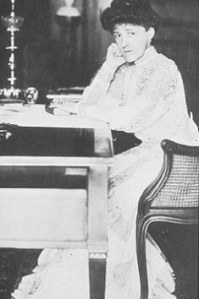 and didn’t support the Iraq war.
Obama in 2007: “No more national security letters to spy on citizens who are not suspected of a crime, no more tracking citizens who do nothing more than protest a misguided war…” While Obama publicly expressed outcry at monitoring of citizens protesting Iraq, his administration’s collection of Verizon phone records was broader. Unlike the Bush White House, which sometimes did not use a warrant, the Obama Administration had a warrant from a FISA judge. Obama goes on to mention that FISA court system, which he used to get his warrant for the broad seizing of Verizon records, works.
We now have Republicans defending Obama based on carrying out Dubya’s National Security pogrome or is it Dick Cheney’s and Donald Rumsfeld’s plan. My memory fails me.
Government officials and the document itself made clear that the NSA regarded the identities of its private partners as PRISM’s most sensitive secret, fearing that the companies would withdraw from the program if exposed. “98 percent of PRISM production is based on Yahoo, Google and Microsoft; we need to make sure we don’t harm these sources,” the briefing’s author wrote in his speaker’s notes.
An internal presentation of 41 briefing slides on PRISM, dated April 2013 and intended for senior analysts in the NSA’s Signals Intelligence Directorate, described the new tool as the most prolific contributor to the President’s Daily Brief, which cited PRISM data in 1,477 items last year. According to the slides and other supporting materials obtained by The Post, “NSA reporting increasingly relies on PRISM” as its leading source of raw material, accounting for nearly 1 in 7 intelligence reports.
That is a remarkable figure in an agency that measures annual intake in the trillions of communications. It is all the more striking because the NSA, whose lawful mission is foreign intelligence, is reaching deep inside the machinery of American companies that host hundreds of millions of American-held accounts on American soil.
The technology companies, whose cooperation is essential to PRISM operations, include most of the dominant global players of Silicon Valley, according to the document. They are listed on a roster that bears their logos in order of entry into the program: “Microsoft, Yahoo, Google, Facebook, PalTalk, AOL, Skype, YouTube, Apple.” PalTalk, although much smaller, has hosted traffic of substantial intelligence interest during the Arab Spring and in the ongoing Syrian civil war.
So, we’ve read and written about the white guy from Shreveport, LA who sent out Ricin-laced letters to a bunch of politicians. There was also a ricin case in 2008.
In 2008, authorities said a man in Las Vegas may have accidentally poisoned himself with ricin that he had made from a backyard castor plant. Roger Bergendorff told The Associated Press at the time that he made the ricin just for the sake of having it, and swore he had no intention of harming anyone. He was sentenced to more than three years in prison.
So, that article shows exactly how many ricin cases we’ve had. But, how come we don’t see these instances labelled act of terrorism? Remember, Is it because some crazy white American guy does it?
In late May, a threatening letter laced with the deadly chemical ricin was sent from Shreveport, Louisiana, to New York City Mayor Michael Bloomberg as a response to the mayor’s outspoken support for stricter gun control laws. Two identical letters, also containing the lethal substance, were addressed to both President Barack Obama and the head of the Washington D.C. lobbying group, Mayors Against Illegal Guns, which is managed and funded by Bloomberg himself.
The contents of the letters are clearly the work of a right-wing gun nut and readas follows: “You will have to kill me and my family before you get my guns. Anyone wants to come to my house will get shot in the face. The right to bear arms is my constitutional, god-given right and I will exercise that right till the day I die. What’s in this letter is nothing compared to what I’ve got planned for you.”
Despite lethally targeting civilians and non-military officials far from any active battlefield, no one is referring to these acts as terrorism. Not the press, not political pundits, not the intended victims. No one.
In fact, Bloomberg himself was nonplussed by the whole ordeal, tellingreporters on May 30, “I’m not angry. There are people who I would argue do things that may be irrational, do things that are wrong, but it’s a very complex world out there and we just have to deal with that.”
Yes, Mike, it is a very complex world. This world is so complex, in fact, that an easily identifiable act of terrorism isn’t considered terrorism for one simple reason: it probably wasn’t committed by a Muslim, but rather by some white guy in the South.
Clearly, while white guys who send murderous mail are merely acting irrationally and doing something wrong, potential violence by members of the Muslim faith present a singular threat to our civilized society. So much so, in fact, that Michael Bloomberg himself believes our own laws and the bedrock of that very society are not good enough to defend against such a scourge to humanity.
 I’ve got yet another great tieback to 2008 before I close and go rest my eyes. Clive Cook writes about why politicians will not give up on austerity even though it is all wrong.
What we know, or think we know, about fiscal policy five years after the global recession started isn’t all that different from what we knew, or thought we knew, back in 2008. It boils down to two points. One, fiscal stimulus is essential when conventional monetary policy is powerless. Two, fiscal stimulus may be impossible even when it’s essential.
Most economists agree that changes in interest rates are usually a better way to regulate demand than discretionary changes in taxes and public spending. But interest rates can’t fall to less than zero. When that limit is reached — as it was in this recession — fiscal policy must carry a bigger load.
In economies with a lot of slack, fiscal multipliers (the change in output that follows from any change in the fiscal balance) are more powerful than usual. This recession, because of its unusual depth, has supplied new evidence to back up this rule, and the U.K.’s attempt to refute the logic with “expansionary austerity” is widely seen as a failure despite some recent tentative signs of recovery.
Moreover, unconventional monetary policy, the other alternative to changes in short-term interest rates, can’t yet be called a success. Only when the Federal Reserve and other central banks end their vast asset-purchase programs will it be possible to render a verdict on quantitative easing as a partial substitute for fiscal stimulus. So far, it looks as though it has helped. Let’s see how the exit goes before we declare it a triumph.
So, I am making this a bit short but I really can feel the eyes strain again. What’s on your reading and blogging list today? And please, join me in our way down memory lane ….
Friday Reads: the long and wonky road
Posted: May 24, 2013 Filed under: Austerity, morning reads, The Media SUCKS, U.S. Economy, Voter Ignorance, We are so F'd | Tags: austerity, Bruce Bartlett, Jim Grant, Mark Thoma, Micheal Kinsley, Paul Krugman, serious issues of fact avoidance 28 Comments Good Morning!
I am grading essays and papers on currency crises (circa 1999-2002) and financial crises (the last one) and basically all those kinds of crises the tend to come from out of control speculation and the government encouraging the wrong kinds of things. This mostly happens because rich people donate to the campaigns of politicians and own newspapers and media outlets. Politicians want to get reelected and get more powerful and more rich. Rich businesses and investors want to get more powerful and rich. It’s kind of the perfect alignment of shared interests based on lust and greed and all the baser instincts. Isn’t it terrible when the facts get in the way? So, they just ignore them or consider them an alternative liberal opinion. It drives me nuts.
So, BB asked to me write something about what I research and teach and usually regurgitate to you. You know that the austerity narrative has theoretically fallen apart. Well, it’s also falling apart via the numbers, data, facts and reality So, let’s start out with some very bad, awful, terrible horrible Dubya Bush Policy 10 years ago and why tax cuts for the rich still don’t do good things for the economy or now, even the investment markets. This is written by economist Bruce Bartlett who was an adviser to the Reagan administration.
Ten years ago this month, Congress enacted the third major tax cut of the George W. Bush administration. Its centerpiece was a huge cut in the tax rate on dividends. Historically, they had been taxed as ordinary income, but the Bush plan, enacted by a Republican Congress, cut that rate to 15 percent. The tax rate on ordinary income went as high as 35 percent.
This initiative originated with the economist R. Glenn Hubbard, who had been chairman of the Council of Economic Advisers when the proposal was sent to Congress. Mr. Hubbard was a strong believer that the double taxation of corporate profits – first at the corporate level and again when paid out as dividends – was a major economic problem.
During the George H.W. Bush administration, Mr. Hubbard had been deputy assistant secretary of the Treasury for tax policy and wrote a Treasury report advocating full integration of the corporate and individual income taxes.
Mr. Hubbard had also spearheaded enactment of big tax cuts in 2001 and 2002 that he said would jump-start the American economy. In an op-ed article in The Washington Post on Nov. 16, 2001, he predicted that the soon-to-be-enacted 2002 tax cut, which President Bush signed on March 9, 2002, would “quickly deliver a boost to move the economy back toward its long-run growth path.”
Mr. Hubbard predicted that it would create 300,000 additional jobs in 2002 and add half a percentage point to the real gross domestic product growth rate.
There is no evidence that the tax cut had any such effect. The unemployment rate remained above 5.7 percent all year, rising to 5.9 percent in November and 6 percent in December. The real G.D.P. growth rate fell each quarter of 2002, and by the fourth quarter growth was at a standstill. Hence the need for yet another big tax cut.
The idea of the 2003 legislation was to raise dividend payouts, thereby bolstering personal income, and raise the prices of common stock, which would improve household balance sheets. As President Bush explained in his signing statement, “This will encourage more companies to pay dividends, which in itself will not only be good for investors but will be a corporate reform measure.” He also said the dividend tax cut would “increase the wealth effect around America and help our markets.”
The Treasury Department issued a fact sheet on July 30 asserting that the decline in dividends had been a cause of the weak stock market and noting that dividend payouts had risen since enactment of the tax cut on May 28.
Subsequent research, however, found that the increase in dividends was a short-term phenomenon and mainly at companies where stock options were a major form of executive compensation. A 2005 Federal Reserve Board study found that the United States stock market did not outperform European stock markets after the dividend cut. Nor did stocks qualifying for lower dividend taxes outperform those, such as real estate investment trusts, that did not qualify for lower dividend taxes. Non-dividend paying stocks slightly outperformed dividend-paying stocks, and many corporations that did pay higher dividends scaled back stock repurchases by a similar amount.
So, this is yet another example where Republican economic policy is totally out of step with outcomes, data, and reality. Yet, they keep repeating that it works the way it doesn’t work just because, remember, the agenda is greed, power, and more wealth to the already greedy, powerful and wealthy. The deal is they get it wrong, got it wrong, and continue to get it wrong but that doesn’t stop them from trying to weasel their way into a narrative that says, hey, this really isn’t wrong. There’s still some validity there and all economists must be liberals like Paul Krugman who are just talking up their philosophical line. Take austerity economics, please. I mean it. Take it and those idiots who push it to hell and leave them there. Still, the very serious people want to take this very seriously even when it is just plain seriously wrong. Take Michael Kinsley, please. He can report from Hell.
I’ve spent a rather alarming portion of this week wading into intellectual pissing matches, so I’m loath to respond to Michael Kinsley’s response to last week’s brouhaha over austerity policies. But one paragraph does merit some pushback. After noting the backlash to his last column, Kinsley writes the following:
There are two possible explanations. First, it might be that I am not just wrong (in saying that the national debt remains a serious problem and we’d be well advised to worry about it) but just so spectacularly and obviously wrong that there is no point in further discussion. Or second, to bring up the national debt at all in such discussions has become politically incorrect. To disagree is not just wrong but offensive. Such views do exist. Racism for example. I just didn’t realize that the national debt was one of them.
Kinsley assumes that it must be the second explanation, and then goes on from there.
I can’t speak for anyone else who pushed back against Kinsley’s column from last week. Speaking for myself, however, I blogged about it because Kinsley was “spectacularly and obviously wrong.” I say this because almost everything I wrote in my response to Kinsley I knew at age 18 after taking Economics 101 in college.
To explain, let me focus on Kinsley’s motivation for thinking that the austerians have a point:
Austerians believe, sincerely, that their path is the quicker one to prosperity in the longer run. This doesn’t mean that they have forgotten the lessons of Keynes and the Great Depression. It means that they remember the lessons of Paul Volcker and the Great Stagflation of the late 1970s. “Stimulus” is strong medicine—an addictive drug—and you don’t give the patient more than you absolutely have to.
This is wrong for three reasons, one pedantic and two substantive. First, to be pedantic, the austerity debate is about the wisdom of using expansionary fiscal policy — i.e., running a significant federal budget deficit — to alleviate downturns. Paul Volcker was the chairman of the Federal Reserve and thereby responsible for setting monetary policy. He had nothing to do with fiscal policy. This is a distinction that I learned in my first few lectures on macroeconomics. So either Kinsley phrased this badly or he’s confused about what this debate is about.
It just keeps coming down to the fact that most journalists and politicians simply do not know what they are talking about when it comes to 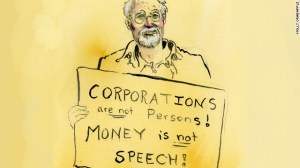 economics. So, they assume an economist like Paul Krugman has a liberal bias on all things–including the color of the sky and the laws of gravity and demand–and they make the worse assumption that those arguing Republican policy these days must have a valid point when the only point is, yes, you know it … to deliver more wealth, power and influence to themselves and their friends that already have it. Some times a lie really is just a lie.
A wonderful example of the myopia of the deficit scolds…
The background is that Michael Kinsley wrote a particularly bad column last week about “austerity,” a key point of which was based on factually incorrect memories of what went wrong in the 1970s; as you can imagine, this earned him plenty of corrections and dismissals from people who used access to accurate economic and government policy statistics.
Kinsley was quite taken aback by this, apparently, and wrote a follow up to defend himself. Dan Drezner has already pointed out that Kinsley is still relying on the same inaccurate memories that got his first column into trouble, but I actually found a different part of Kinsley II more interesting, in which he thinks he’s caught Paul Krugman in a contradiction.
Kinsley writes:
Paul Krugman takes credit for good economic news whenever it happens. On Krugman’s blog site (“The Conscience of a Liberal”) last week were two bits of prose side-by-side. One was an ad for his latest book, End This Depression Now! “How bad have things gotten?” the ad asks rhetorically.” How did we get stuck in what now can only be called a depression?” Right next door is Krugman’s gloat about the recent pretty-good economic news. “So where are the celebrations,” he asks, “now that the debt issue looks, if not solved, at least greatly mitigated?” Greatly mitigated? By what? Certainly not by anyone taking Paul Krugman’s advice. He has been, in his own self-estimate, a lone, ignored voice for reason crying out in an unreasoning universe.What’s the problem? The linked post by Krugman isn’t a gloat about good economic news! It is, to be sure a gloat; it’s a gloat about deficits…Krugman goes so far as to call lower deficits “progress,” although as I read it he’s really just saying that lower deficits should be counted as progress from the point of view of the deficit scolds.
What’s happening here is that Kinsley is projecting onto Krugman a classic deficit scold mistake; Kinsley is conflating the federal budget deficit with the economy. Krugman isn’t doing that; it’s purely Kinsley’s invention.It gets, however, to exactly why Kinsley was buried under a large pile of abuse after his first column. Well, in part; the other part, as Krugman notes elsewhere, is “the existence now of a policy blogosphere…which makes bluffing harder.” Say something factually inaccurate these days, and you’re going to get slammed; it seems that some pundits who preceded that development find it hard to get used to it.
I still have no idea why journalists feel they just know everything about economics compared to say, knowing everything about Brownian motion or performing brain surgery. It’s the same with politicians. They just seem to confuse a really complex subject that most people really struggle with in college and never take beyond that with something like a political science class or a journalism class. You don’t even get real economic stuff until you way up there in school. The introductory stuff is like the ABCs and they don’t even seem to grasp that. Anyway, stop confusing getting facts wrong with just another opinion …
Friday Reads: Bad Boys, Bad Boys …
Posted: April 26, 2013 Filed under: morning reads | Tags: austerity, cheetah extinction, deregulation, nectar robbery, Philly Perry, slut slamming, unemployment in Spain 30 Comments Good Morning!
So, I’ve had a long week of saying “wtf is wrong with these people?” Here’s a link to one story in Arizona that went straight straight to the top of the list.
A student holding a sign that read “You deserve rape” ignited outrage across campus Tuesday, on the same day of a sexual assault awareness event, but administrators declined requests to remove him or his sign.
Dean Saxton — also known as Brother Dean Samuel — regularly preaches on the UA Mall in front of Heritage Hill and the Administration building. On Tuesday, his sermon drew the attention of onlookers, several of whom either personally confronted him or complained to the Dean of Students Office.
The Dean of Students Office received stacks of written complaints, emails and multiple phone calls regarding Saxton’s sermon about women, said Kendal Washington White, interim dean of students.
Saxton has never directly threatened anyone in particular, and his language has been general enough that he isn’t targeting a particular person, White said. However, a university attorney was contacted to discuss the situation.
“We find it to be vulgar and vile,” White said. “However, it is protected speech. He has yet to, at this point, violate the student code of conduct.”
Saxton, a junior studying classics and religious studies, said his sermon was meant to convey that “if you dress like a whore, act like a whore, you’re probably going to get raped.”
“I think that girls that dress and act like it,” Saxton said, “they should realize that they do have partial responsibility, because I believe that they’re pretty much asking for it.”
Saxton’s sermon came ahead of the “Take Back the Night” event held Tuesday night, which aims to unite people against sexual violence. He said his decision to create the sign and display it was tied to the event and to the fact that April is Sexual Assault Awareness Month.
So, I guess every critter on the planet has its share of bad behavior. Ours just seems to be so much worse. For bees, it’s nectar robbery.
TO MOST people, bumblebees are charming, slightly absurd creatures that blunder through garden and meadow with neither the steely determination of the honeybee nor the malevolent intention of the wasp. If you are a plant, though, things look rather different—for from the point of view of some flowering plants many bumblebees are nothing more than thieves. They rob them of their nectar and give nothing in return.
Nectar robbery, in which a bumblebee carves a hole in the side of a flower as a bank robber might cut his way into a vault, was discovered by Charles Darwin. This technique lets bees get at the nectar of flowers whose shapes have evolved to encourage their pollination by insects with long tongues, which can reach down narrow tubes.
Some bumblebees do have such tongues. But some do not. Short-tongued bees are, however, unwilling to deny themselves the bounty of nectar inside these flowers. Hence the hole-cutting. By breaking in in this way, though, a bumblebee nullifies the 100m-year-old pact between flowering plants and insects: that the plant feeds the insect in exchange for the insect pollinating the plant.
The question about nectar robbery that has intrigued biologists from Darwin onwards is whether the behaviour is innate or learnt. Darwin, though he originated the idea that many behaviour patterns are products of evolution by natural selection, suspected that it is learnt. Insects, in other words, can copy what other insects get up to. Only now, though, has somebody proved that this is true.
The observations were made by David Goulson (then at the University of Stirling, now at the University of Sussex), and his colleagues. To test his ideas he had to go from Britain to Switzerland, for only there could he find a flower of the correct shape to conduct the study.
His crucial observation was that when the flowers of an alpine plant called the yellow rattle are robbed, the entry holes—because of the structure of the flower—tend to be unambiguously on either the right-hand side or the left-hand side. Moreover, preliminary observation suggested that the holes in flowers in a single meadow are often all made on the same side. This led him to speculate that bumblebees in a particular area do indeed learn the art of nectar robbery from one another, and then copy the technique with such fidelity that they always attack a flower from the same side.
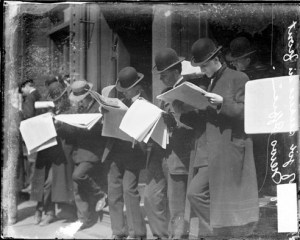
Nectar robbery still doesn’t sound as bad as a slut slamming religious studies student. We all know the evil done by Dick Cheney, but did you watch Chris Hayes and hear about his son-in-law?
MSNBC host Chris Hayes on Thursday night explained the key role Dick Cheney’s son-in-law played in keeping chemical plants free of regulations.
Concerns were raised in 2002 that chemical plants in populated areas — like the one that recently exploded in West, Texas — were vulnerable to terrorist attacks.
The heads of Department of Homeland Security and Environmental Protection Agency had planned to regulate the security of chemical sites, but Dick Cheney’s son-in-law Philip Perry stepped in and informed them they lacked the authority to do so without congressional legislation.
At the time, Perry was serving as the general counsel of the Office of Management and Budget at the White House.
“Basically, the Bush administration from above pulled support for that bill because the chemical industry does not want to be regulated by the EPA,” Hayes said.
“Fast forward to 2007, and Philip Perry — again, Dick Cheney’s son-in-law — is at the Department of Homeland Security as general counsel. What he managed to do in an appropriations rider is slip in industry friendly language into the bill that moves the task of regulating chemical plants from the Environmental Protection Agency to the Department of Homeland Security. But DHS is given none of the tools it would need to do that.”
It looks like wild populations of cheetahs may go extinct because of habitat encroachment. It’s estimated that wild cheetahs may have less than 20 years left. Here’s a heartwarming story about a good dog and a cheetah. We’re ruining their habitat but a few folks are trying to help
It’s hard to fathom, a dog and a cheetah living together in a zoo? But it’s true, and it works. ”It’s a love story of one species helping another species survive,” said Jack Grisham, vice president of animal collections at the St. Louis Zoo. Of the 19 cheetahs at the zoo, 4 have canine companions who play with them, watch out for them, and teach them to be more social.
“It is all about comforting and reassuring the cheetah,” said Janet Rose-Hinostroza, animal training supervisor at the San Diego Zoo Safari Park, where there are also 4 cheetahs with dogs. Cheetahs are not social animals, which makes it difficult for them to mate, and may be their biggest threat in fighting extinction. They are by nature skittish, so having dogs with them, who are by nature social seems to be a comfort.
“In this relationship, the dog is dominant, but we look for dogs that want to be a buddy,” Rose-Hinostroza said. “The dog always has the cat’s back, but it’s never the other way around. Dogs worry about their cats. They protect their cats.” For that reason they are not always together, for example during mealtimes they are separated so the dogs eat kibble and the cats eat steak. ”The dogs are the bosses in these relationships,” Rose-Hinostroza said. “If they ate together there would be one really fat dog and a really skinny cheetah.”
The cheetahs are doing their part to help the dogs too, since most of the companion dogs are rescued from shelters for their new job. They are paired up when the cheetahs are cubs, around 3 months old. This is idea is not a new one, in Africa dogs have been used for decades to protect sheep from cheetahs. This in turn, keeps the cheetahs from being killed by farmers. ”For the first time in 30 years, the cheetah population in the wild is on the rise because ranchers don’t have to shoot them anymore. They don’t need to shoot them. The dog is that effective at keeping the cheetah away from the herd,” Rose-Hinostroza said.
Austerity policies are bringing record high unemployment to Spain while unemployment is going up all over the continent.
Spain’s unemployment rate soared to a new record of 27.2% of the workforce in the first quarter of 2013, according to official figures.
The total number of unemployed people in Spain has now passed the six million figure, although the rate of the increase has slowed.
The figures underline Spain’s struggle to emerge from an economic crisis which began five years ago.
A big demonstration in Madrid is being planned against the austerity measures.
On Friday, Prime Minister Mariano Rajoy will unveil fiscal and policy measures aimed at halting recession in the eurozone’s fourth-largest economy.
“These figures are worse than expected and highlight the serious situation of the Spanish economy as well as the shocking decoupling between the real and the financial economy,” said Jose Luis Martinez, strategist at Citi.
That is basically the same levels of unemployment that this country endured during the peak of its great depression. I really hope that these idiots seen that the lessons we learned during the Great Depression are still valid and stop causing misery through the world.
What’s on your reading and blogging list today?
Tuesday Reads: Margaret Thatcher’s “Dark Legacy,” Death of a Feminist Revolutionary, and Mitch McConnell’s Ugly Plans
Posted: April 9, 2013 Filed under: morning reads, U.S. Politics, War on Women, Women's Rights | Tags: Andrew Sullivan, Ashley Judd, austerity, David Corn, feminist history, Margaret Thatcher, Mitch McConnell, Poverty, Shulamith Firestone, Susan Faludi 33 Comments
Good Morning!!
The death of Margaret Thatcher is still dominating the news this morning. It seems she was one of those public figures that inspired varied but passionate reactions–you either loved her or hated her.
Andrew Sullivan loved her it seems.
I was a teenage Thatcherite, an uber-politics nerd who loved her for her utter lack of apology for who she was. I sensed in her, as others did, a final rebuke to the collectivist, egalitarian oppression of the individual produced by socialism and the stultifying privileges and caste identities of the class system. And part of that identity – the part no one ever truly gave her credit for – was her gender. She came from a small grocer’s shop in a northern town and went on to educate herself in chemistry at Oxford, and then law. To put it mildly, those were not traditional decisions for a young woman with few means in the 1950s. She married a smart businessman, reared two children and forged a political career from scratch in the most male-dominated institution imaginable: the Tory party.
She relished this individualist feminism and wielded it – coining a new and very transitive verb, handbagging, to describe her evisceration of ill-prepared ministers or clueless interviewers. Perhaps in Toynbee’s defense, Thatcher was not a feminist in the left-liberal sense: she never truly reflected on her pioneering role as a female leader; she never appointed a single other woman to her cabinet over eleven years; she was contemptuous toward identity politics; and the only tears she ever deployed (unlike Hillary Clinton) were as she departed from office, ousted by an internal coup, undefeated in any election she had ever run in as party leader.
Her policies “inspired” the revolutionary reactions that created a “cultural transformation.”
Thatcher’s economic liberalization came to culturally transform Britain. Women were empowered by new opportunities; immigrants, especially from South Asia, became engineers of growth; millions owned homes for the first time; the media broke free from union chains and fractured and multiplied in subversive and dynamic ways. Her very draconian posture provoked a punk radicalism in the popular culture that changed a generation. The seeds of today’s multicultural, global London – epitomized by that Olympic ceremony – were sown by Thatcher’s will-power.
And that was why she ultimately failed, as every politician always ultimately does. She wanted to return Britain to the tradition of her thrifty, traditional father; instead she turned it into a country for the likes of her son, a wayward, money-making opportunist. The ripple effect of new money, a new middle class, a new individualism meant that Blair’s re-branded Britain – cool Britannia, with its rave subculture, its fashionistas, its new cuisine, its gay explosion, its street-art, its pop music – was in fact something Blair inherited from Thatcher.
Of course Sullivan no longer lives in Great Britain, and he has the means to avoid the worst effects of the elite’s austerity policies regardless of where he lives. Others aren’t so fortunate.
The Guardian reports: Margaret Thatcher’s death greeted with street parties in Brixton and Glasgow; Crowds shout ‘Maggie Maggie Maggie, dead dead dead’ during impromptu events.
Several hundred people gathered in south London on Monday evening to celebrate Margaret Thatcher‘s death with cans of beer, pints of milk and an impromptu street disco playing the soundtrack to her years in power.
Young and old descended on Brixton, a suburb which weathered two outbreaks of rioting during the Thatcher years. Many expressed jubilation that the leader they loved to hate was no more; others spoke of frustration that her legacy lived on.
To cheers of “Maggie Maggie Maggie, dead dead dead,” posters of Thatcher were held aloft as reggae basslines pounded.
Clive Barger, a 62-year-old adult education tutor, said he had turned out to mark the passing of “one of the vilest abominations of social and economic history”.
He said: “It is a moment to remember. She embodied everything that was so elitist in terms of repressing people who had nothing. She presided over a class war.”
Builder Phil Lewis, 47, a veteran of the 1990 poll tax riots, said he had turned out to recall the political struggles the Thatcher years had embroiled him in. “She ripped the arsehole out of this country and we are still suffering the consequences.”
Just as Ronald Reagan did to the U.S.–and we’re still suffering the consequences.
Here’s a video from Brixton.
Hugo Young, Thatcher biographer, writes in The Guardian: Margaret Thatcher left a dark legacy that has still not disappeared. For Young, a positive was Thatcher’s indifference to her popularity with the public.
I think by far her greatest virtue, in retrospect, is how little she cared if people liked her. She wanted to win, but did not put much faith in the quick smile. She needed followers, as long as they went in her frequently unpopular directions. This is a political style, an aesthetic even, that has disappeared from view. The machinery of modern political management – polls, consulting, focus groups – is deployed mainly to discover what will make a party and politician better liked, or worse, disliked. Though the Thatcher years could also be called the Saatchi years, reaching a new level of presentational sophistication in the annals of British politics, they weren’t about getting the leader liked. Respected, viewed with awe, a conviction politician, but if liking came into it, that was an accident.
But this attitude “didn’t come without a price” and “Thatcher left a dark legacy…”
What happened at the hands of this woman’s indifference to sentiment and good sense in the early 1980s brought unnecessary calamity to the lives of several million people who lost their jobs. It led to riots that nobody needed. More insidiously, it fathered a mood of tolerated harshness. Materialistic individualism was blessed as a virtue, the driver of national success. Everything was justified as long as it made money – and this, too, is still with us.
Thatcherism failed to destroy the welfare state. The lady was too shrewd to try that, and barely succeeded in reducing the share of the national income taken by the public sector. But the sense of community evaporated. There turned out to be no such thing as society, at least in the sense we used to understand it. Whether pushing each other off the road, barging past social rivals, beating up rival soccer fans, or idolising wealth as the only measure of virtue, Brits became more unpleasant to be with. This regrettable transformation was blessed by a leader who probably did not know it was happening because she didn’t care if it happened or not. But it did, and the consequences seem impossible to reverse….
[I]t’s now easier to see the scale of the setback she inflicted on Britain’s idea of its own future. Nations need to know the big picture of where they belong and, coinciding with the Thatcher appearance at the top, clarity had apparently broken through the clouds of historic ambivalence.
At least the British media isn’t trying to canonize Thatcher as the corporate media in the U.S. did to Reagan.
A Less Remarked Upon Death: Shulamith Firestone
At The New Yorker, Susan Faludi pays tribute to a feminist icon of the 1970s, “Death of a Revolutionary: Shulamith Firestone helped to create a new society. But she couldn’t live in it.”
When Shulamith Firestone’s body was found late last August, in her studio apartment on the fifth floor of a tenement walkup on East Tenth Street, she had been dead for some days. She was sixty-seven, and she had battled schizophrenia for decades, surviving on public assistance. There was no food in the apartment, and one theory is that Firestone starved, though no autopsy was conducted, by preference of her Orthodox Jewish family. Such a solitary demise would have been unimaginable to anyone who knew Firestone in the late nineteen-sixties, when she was at the epicenter of the radical-feminist movement, surrounded by some of the same women who, a month after her death, gathered in St. Mark’s Church In-the-Bowery, to pay their respects.
The memorial service verged on radical-feminist revival. Women distributed flyers on consciousness-raising, and displayed copies of texts published by the Redstockings, a New York group that Firestone co-founded. The WBAI radio host Fran Luck called for the Tenth Street studio to be named the Shulamith Firestone Memorial Apartment, and rented “in perpetuity” to “an older and meaningful feminist.” Kathie Sarachild, who had pioneered consciousness-raising and coined the slogan “Sisterhood Is Powerful,” in 1968, proposed convening a Shulamith Firestone Women’s Liberation Memorial Conference on What Is to Be Done. After several calls from the dais to “seize the moment” and “keep it going,” a dozen women decamped to an organizing meeting at Sarachild’s apartment.
I well remember reading Firestone’s book, The Dialectic of Sex: The Case for Feminist Revolution. It was mind-blowing stuff in those days.
In the late nineteen-sixties, Firestone and a small cadre of her “sisters” were at the radical edge of a movement that profoundly changed American society. At the time, women held almost no major elected positions, nearly every prestigious profession was a male preserve, homemaking was women’s highest calling, abortion was virtually illegal, and rape was a stigma to be borne in silence. Feminism had been in the doldrums ever since the first wave of the American women’s movement won the vote, in 1920, and lost the struggle for greater emancipation. Feminist energy was first co-opted by Jazz Age consumerism, then buried in decades of economic depression and war, until the dissatisfactions of postwar women, famously described by Betty Friedan in “The Feminine Mystique” (1963), gave rise to a “second wave” of feminism. The radical feminists emerged alongside a more moderate women’s movement, forged by such groups as the National Organization for Women, founded in 1966 by Friedan, Aileen Hernandez, and others, and championed by such publications as Ms., founded in 1972 by Gloria Steinem and Letty Cottin Pogrebin. That movement sought, as now’s statement of purpose put it, “to bring women into full participation in the mainstream of American society,” largely by means of equal pay and equal representation. The radical feminists, by contrast, wanted to reconceive public life and private life entirely.
What a brilliant tribute by Faludi. It’s well worth the read.
Mother Jones’s David Corn has gotten his hands on a tape of “a private meeting between the Senate GOP leader and campaign aides reveals how far they were willing to go to defeat” Ashley Judd.
On February 2, Mitch McConnell, the Republican leader in the US Senate, opened up his 2014 reelection campaign headquarters in Louisville, Kentucky, and in front of several dozen supporters vowed to “point out” the weaknesses of any opponent fielded by the Democrats. “They want to fight? We’re ready,” he declared. McConnell was serious: Later that day, he was huddling with aides in a private meeting to discuss how to attack his possible Democratic foes, including actor/activist Ashley Judd, who was then contemplating challenging the minority leader. During this strategy session—a recording of which was obtained by Mother Jones—McConnell and his aides considered assaulting Judd for her past struggles with depression and for her religious views….
For much of the Judd discussion, McConnell was silent as aides reviewed the initial oppo research they had collected on Judd and weighed all the ways they could pummel her. The recording was provided to Mother Jones last week by a source who requested anonymity. (The recording can be found here; a transcript is here.) McConnell’s Senate office and his campaign office did not respond to requests for comment.
The aide who led the meeting began his presentation with a touch of glee: “I refer to [Judd] as sort of the oppo research situation where there’s a haystack of needles, just because truly, there’s such a wealth of material.” He ran through the obvious: Judd was a prominent supporter of President Barack Obama, Obamacare, abortion rights, gay marriage, and climate change action. He pointed out that she is “anti-coal.”
But the McConnell gang explored going far beyond Judd’s politics and policy preferences. This included her mental health. The meeting leader noted:
She’s clearly, this sounds extreme, but she is emotionally unbalanced. I mean it’s been documented. Jesse can go in chapter and verse from her autobiography about, you know, she’s suffered some suicidal tendencies. She was hospitalized for 42 days when she had a mental breakdown in the ’90s.
So what? Mitch McConnell is a sick, closeted, hateful old freak who appears to lack any semblance of human feelings.

 peej
peej Carissa
 bostonboomer
 dakinikat
 ecocatwoman
 mablue2
 Mama Lopez
 peggysue22
 quixote
 skydancingguestblogger
 Mona (aka Wonk the Vote)



 Sky Dancing
Recent Comments