We only have eleven days until the midterm elections and–unless the Feds intervene–one more day until Elon Musk starts destroying twitter. I know I should focus on the elections, but I just can’t face it. The press has more or less decided that the Republicans are going to take over control of the House and Senate, and I just can’t face reading beyond the headlines. I’m just going to wait and see what happens on Nov. 8. Instead, I’m going to focus on the more immediate Musk/Twitter situation.
Musk’s idea of humor is to rename his Twitter feed “Chief Twit” and walk into Twitter headquarters carrying a sink.
Can someone please explain why anyone would find that funny? I don’t get it. Here’s the latest on Musk and his determination to ruin Twitter for the rest of us.
Musk has been founding companies since the dawn of the internet age. He’s grown Tesla, SpaceX and PayPal into the blue chips that they are today.
But the financially struggling social media company, which he is expected to buy by Friday, needs something more to become a success story, said Andy Wu, who teaches business strategy at Harvard Business School.
“Musk has no experience in managing organizational change and there’s definitely an embedded culture at Twitter that he’ll have to change in order to achieve some of his goals,” Wu said.
The challenge has only grown since Musk first offered to buy Twitter in the spring for $54.20 a share, or about $44 billion. Tech stocks have struggled along with the broader market. It didn’t help that Musk openly criticized the company, tried to walk away from the deal, and only changed his mind after a high-profile and expensive legal battle neared trial. At one point, Twitter’s stock lost a quarter of its value.
“Myself and other investors are obviously overpaying for Twitter right now,” Musk said on a call with Tesla investors last week.
He acknowledged on Thursday that there was a lot of speculation about why he was buying Twitter after all his wavering.
“It is important to the future of civilization to have a common digital town square, where a wide range of believes can be debated in a healthy manner, without resorting to violence,” he wrote in an open letter to Twitter advertisers.
“That is why I bought Twitter. I didn’t do it because it would be easy. I didn’t do it to make more money,” he added, acknowledging that failure was a “very real possibility.”
Read much more about Musk at the link if you can stomach it.
"Twitter obviously cannot become a free-for-all hellscape," says Musk now. This essentially concedes that "free speech absolutism" is bunk, which is exactly what many of us have been arguing for months, earning nothing but sneering contempt from Musk's following. https://t.co/xW7FigaFrX
A day before Elon Musk’s court-imposed deadline to complete his $44 billion acquisition of Twitter, he posted a message to advertisers in an apparent attempt to soothe nerves as concerns circulate about how he intends to run the platform.
“I wanted to reach out personally to share my motivation in buying Twitter,” he wrote. “There has been much speculation about why I bought Twitter and what I think about advertising. Most of it has been wrong.”
Mr. Musk went on to say that the reason he was buying Twitter was “because it is important to the future of the civilization to have a common digital town square,” where a “wide range of beliefs can be debated in a healthy manner without resorting to violence.” But, he added, “Twitter obviously cannot become a free-for-all hellscape where anything can be said with no consequences!”
Mr. Musk’s olive branch comes as he is in the final stages of completing the deal to buy Twitter, during which he changed his mind about buying the company before recommitting in the face of legal challenges. The billionaire, who also runs Tesla and SpaceX, showed up at Twitter’s headquarters in San Francisco on Wednesday, and he is expected to address the company’s 7,500 employees on Friday when the deal is set to close.
Advertisers, which account for about 90 percent of Twitter’s revenue, have been watching the deal drama, and some have been concerned about how the uncertainty will affect the service as an ad platform. Mr. Musk has said he is a “free speech absolutist” and wants to loosen rules around content moderation on the service, including reversing the ban on former President Donald J. Trump from the platform. Advertisers typically shy away from promotions alongside toxic content and misinformation.
Twitter and other social media platforms are also grappling with a broader slowdown in digital advertising. Meta said on Wednesday that its profit in the most recent quarter was down more than 50 percent from a year earlier. The company, which owns Facebook, Instagram and WhatsApp, warned that it didn’t see any relief on the horizon for the declining ad market.
“Twitter aspires to be the most respected advertising platform in the world that strengthens your brand and grows your enterprise,” Mr. Musk wrote in his note Thursday. “To everyone who has partnered with us, I thank you. Let us build something extraordinary together.”
Elon Musk’s reply to Spotify CEO’s tweet hints at future ‘trouble’ between Twitter and Apple https://t.co/vyWmlDZAhM
Elon Musk hasn’t wrapped up his purchase of Twitter yet, but he seems to be already gearing up for another battle.
In a pair of late-night Tweets, posted just four minutes apart, Musk expressed concerns about Apple’s business practices, specifically those surrounding Spotify and app store guidelines.
The first was a reply to Spotify founder Daniel Ek’s tweet highlighting a New York Times story about Apple’s three-time rejection of Spotify’s new app, as the streaming service adds audiobooks to its offerings. Apple says the new app violates its rules detailing how developers communicate with customers about online purchases.
Ek used the story as a launching pad to decry the policies, saying “I can’t be the only one who sees the absurdity.” Musk seemed to agree, replying “Concerning.”
Moments later, he voiced support for venture capitalist Bill Lee’s criticism of Apple’s 30% fee for in-app purchases, agreeing “30% is a lot.”
Criticisms about Apple and its app store policies are nothing new, of course. Spotify has butted heads with Apple before, when it began offering podcasts. And Epic Games took Apple to court last year over the policies, resulting in a split decision where the judge upheld the app store’s structure as legal.
Musk loves a good fight, though, and this isn’t the first time he’s poked Apple. In May, he tweeted that “Apple’s store is like having a 30% tax on the internet. Definitely not ok,” following that up with “Literally 10 times higher than it should be.”
Meanwhile, Reuters is reporting that Musk’s company Tesla is under criminal investigation by the DOJ
🚨🚨🚨 #BREAKING: Federal prosecutors in DC and San Francisco are considering criminal charges against Elon Musk, Tesla, and their executives for obstructing a criminal investigation from shareholders, related to deaths tied to the Autopilot feature – according to @Reuters. pic.twitter.com/qT2xlmVO7R
— IndictmentTime – @indictmenttime.bsky.social (@IndictmentTime) October 27, 2022
Tesla Inc (TSLA.O) is under criminal investigation in the United States over claims that the company’s electric vehicles can drive themselves, three people familiar with the matter said.
The U.S. Department of Justice launched the previously undisclosed probe last year following more than a dozen crashes, some of them fatal, involving Tesla’s driver assistance system Autopilot, which was activated during the accidents, the people said.
As early as 2016, Tesla’s marketing materials have touted Autopilot’s capabilities. On a conference call that year, Elon Musk, the Silicon Valley automaker’s chief executive, described it as “probably better” than a human driver.
Last week, Musk said on another call Tesla would soon release an upgraded version of “Full Self-Driving” software allowing customers to travel “to your work, your friend’s house, to the grocery store without you touching the wheel.” [….]
However, the company also has explicitly warned drivers that they must keep their hands on the wheel and maintain control of their vehicles while using Autopilot.
The Tesla technology is designed to assist with steering, braking, speed and lane changes but its features “do not make the vehicle autonomous,” the company says on its website.
Such warnings could complicate any case the Justice Department might wish to bring, the sources said.
I can see why Musk likes Trump. He’s just another scam artist. All I want is to keep Twitter as a place where I can go to get the latest news and opinion, but those days may be over after tomorrow night. Sigh . . .
After months of legal wrangling, Elon Musk’s bid to buy Twitter appears to be finally going through. Musk and the right see this as a great thing because it will restore “free speech” to Twitter. Any suggestion that the sort of “free speech” they envision can have highly undesirable consequences is met with howls of “Libs hate free speech” or other accusations of fascism. Similarly, warnings that unfettered free speech results in dangerous misinformation spreading are derided with “Sunlight is the best disinfectant” and the libertarian belief that in the marketplace of ideas, the best will always win out.
These theories will be tested quickly. It is being reported that after the sale is finalized, Musk plans on laying off nearly three-quarters of Twitter’s staff and that one of the first things to go will be any corporate attempt at content moderation and user security. Musk also plans on restoring the accounts of high-profile sources of disinformation and violent messaging who were previously banned, most notably former President Trump.
The pro-Musk arguments are complete nonsense, and there are innumerable historical and modern examples of why social media platforms with nearly unlimited freedom of speech produce horrors. The Supreme Court decided free speech isn’t absolute long ago, when Chief Justice Oliver Wendell Holmes noted that you can’t shout “Fire!” in a crowded theater, for obvious reasons.
First, freedom of speech has caused untold death and suffering when used to disseminate hate or spread disinformation. The Protocols of the Elders of Zion was a fabricated antisemitic text that purported to expose a global baby-murdering Jewish plot bent on world domination. Mein Kampf was Hitler’s autobiography, which blamed Germany’s post–World War I woes on a global Jewish conspiracy. Both were readily available in the Weimar Republic, which had no First Amendment per se but guaranteed freedom of speech. They were key contributors to the fall of German democracy, the rise of the Third Reich, and the Holocaust itself.
In modern times, lack of moderation on social media sites has repeatedly contributed to mass murder. The Christchurch, New Zealand, shooter killed 51 Muslims at two mosques after being radicalized on YouTube, 4Chan, and 8Chan. The shooter who killed 11 Jews at the Tree of Life synagogue in Pittsburgh had been radicalized on the social media site Gab, which advertised itself as the “free speech” alternative to Twitter. Dylann Roof killed nine people at the historically Black Emanuel African Methodist Episcopal Church in Charleston, South Carolina, in 2015, after he self-radicalized online. Investigations revealed that Google searches steered him further and further into extremist propaganda and hate.
The carnage caused by misinformation spread by social media goes far beyond massacres by racists, antisemites, and Islamophobes. Over one million Americans have died of Covid-19, and at least 25 percent of those deaths were preventable if people had gotten vaccinated. Many others could have been prevented if people had worn masks, socially distanced, believed the disease was real, or otherwise behaved in a rational manner.
Read the rest at TNR.
Finally, Musk is a believe in “longtermism,” a philosophical theory about how to save humanity in the long term. It involves making it possible for humans to populate other planets and other crazy, cult-like ideas. Dave Troy, an investigative journalist who studies “threats to democracy,” argues that Musk’s desire to control Twitter as a “public square” is part of his belief in this weird philosophy.
3/Anyone evaluating his moves through the lens of only 'money' or 'profit' will be at a loss to explain his decisionmaking. Start thinking about how his moves maximize (in his eyes) the number of future humans + AI's in the universe; that will prove to be the framework he uses.
When Elon Musk’s text messages were released as part of a court filing over his proposed purchase of Twitter, the world’s richest man was found to be corresponding with tech billionaires, fellow chief executives and bankers.
Tucked incongruously among those business leaders were messages from a Scottish moral philosopher.
The philosopher, William MacAskill, was acting as a go-between for the crypto-billionaire Sam Bankman-Fried, who “has for a while been potentially interested in purchasing it and then making it better for the world,” Mr. MacAskill wrote to Mr. Musk in March, referring to Twitter.
Mr. MacAskill’s appearance in that batch of messages, along with TV appearances and magazine profiles, has contributed to a sense of his sudden ubiquity, improbable considering his usually staid, ivory tower-bound profession. But his latest book, “What We Owe the Future,” became a best seller after it was published in August.
His rising profile parallels the worldwide growth of the giving community he helped found, effective altruism. Once a niche pursuit for earnest vegans and volunteer kidney donors who lived frugally so that they would have more money to give away for cheap medical interventions in developing countries, it has emerged as a significant force in philanthropy, especially in millennial and Gen-Z giving.
As the title of his recent book suggests, Mr. MacAskill argues that people living today have a responsibility not just to people halfway around the world but also those in future generations.
The rise of this kind of thinking, known as longtermism, has meant the Effective Altruists are increasingly associated with causes that have the ring of science fiction to them — like preventing artificial intelligence from running amok or sending people to distant planets to increase our chances of survival as a species.
McCaskill published an op-ed in The New York Times in August: The Case for Longtermism. The idea is that the long-term survival of humans should be our moral focus, not the immediate needs of people who are alive today.
Longtermism is about taking seriously just how big the future could be and how high the stakes are in shaping it. If humanity survives to even a fraction of its potential life span, then, strange as it may seem, we are the ancients: we live at the very beginning of history, in its most distant past. What we do now will affect untold numbers of future people. We need to act wisely.
It took me a long time to come around to longtermism.Over the past 12 years, I’ve been an advocate of effective altruism — the use of evidence and reason to help others as much as possible. In 2009, I co-founded an organization that has raised hundreds of millions of dollars to help pay for bed nets to protect families against malaria and medicine to cure children of intestinal worms, among other causes. These activities had a tangible impact. By contrast, the thought of trying to improve the lives of unknown future people initially left me cold.
But some simple ideas exerted a persistent force on my mind: Future people count. There could be a lot of them. And we can make their lives better. To help others as much as possible, we must think about the long-term impact of our actions….
But society tends to neglect the future in favor of the present. Future people are utterly disenfranchised. They can’t vote or lobby or run for public office, so politicians have scant incentive to think about them. They can’t tweet, or write articles, or march in the streets. They are the true silent majority. And though we can’t give political power to future people, we can at least give them fair consideration. We can renounce the tyranny of the present over the future and act as trustees for all of humanity, helping to create a flourishing world for the generations to come.
Anyway, that’s what’s behind Musk’s space projects–making sure humans survive even if the the planet Earth doesn’t. I’m not sure I understand how that’s related to Twitter and free speech, but I’m not a tech billionaire, so I don’t count.
I know this is a weird post, and if you didn’t read the whole thing, that’s OK. I hope you all have a nice Thursday!
Did you like this post? Please share it with your friends:
As we learn more about Trump’s successful efforts to undermine U.S. democracy, it is becoming evident that Trump and Trumpism will be haunting us for a long time to come. I only hope it isn’t too late for this country to recover.
Yesterday, Dakinikat wrote about the latest Trumpian outrages, and this morning there is much more being reported in the aftermath of yesterday’s revelations about Trump’s corruption of the Department of Justice–specifically about The New York Times’s blockbuster story about the Trump DOJ obtaining phone and email data belonging to members of the House Intelligence Committee.
The Department of Justice sent a broad request in February 2018 to Apple as part of its investigation that collected data on members of Congress, staffers and their families. The department demanded metadata on 73 phone numbers and 36 email addresses from Apple, the company said Friday evening.
Apple received the subpoena from the Justice Department on Feb. 6, 2018, but it contained no information about who the investigation was targeting or why, the company said. Apple also said determining who the targeted accounts belonged to would have required extensive research.
A person familiar with the request said the subpoena requested information on the targeted accounts beginning with the inception of the accounts through the day of the subpoena.
Apple said it limited the information it provided to metadata and account subscriber information and did not provide any content such as emails or pictures. While Apple says it would have normally informed customers, a nondisclosure order prevented it from doing so in this case, the company said.
The nondisclosure order was extended three times, each time for a year, Apple said. When it was not extended for a fourth time, Apple said it informed the affected customers on May 5, 2021.
Apple said they believe that other providers also got subpoenas, and the story reports that Microsoft was ordered to turn over data belonging to a Congressional staffer. This one was also accompanied by a gag order.
According to Reuters, Apple has now “tightened some of its rules for responding to legal requests.”
Former Attorney General Jeff Sessions is telling associates he had no idea his Justice Department seized phone records of two top Democratic congressional critics of then-President Donald Trump.
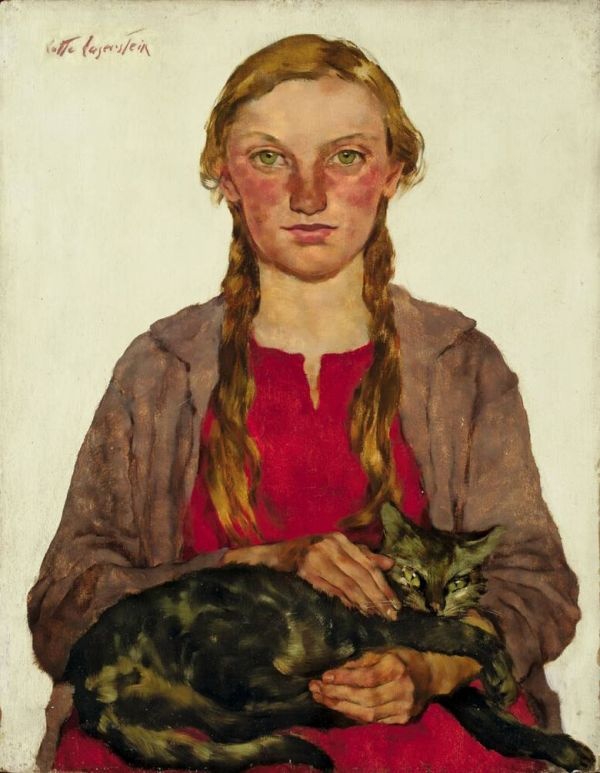
Painting by Lotte Laserstein
In the hours since The New York Times broke the news on Thursday that prosecutors subpoenaed Apple metadata from Reps. Adam Schiff (D-CA) and Eric Swalwell (D-CA), former Attorney General Sessions has privately told people that he wasn’t aware of, nor was he briefed on, the reported data seizures while he led the Trump DOJ. This week’s revelations were a surprise to him, according to a source familiar with the matter, and another person close to Sessions.
“[What’s been reported] is explicitly the kind of thing that Donald Trump would often say he wanted out of his Justice Department,” said the individual familiar with the matter. “But right now, it’s unclear how many top officials [at the time] even knew about this.”
Former Attorney General William Barr on Friday distanced himself from reports that the Trump Justice Department seized communications records belonging to two prominent Democratic lawmakers who were spearheading investigations into then-President Donald Trump.
In a phone interview, Barr said he didn’t recall getting briefed on the moves.
Barr’s comments came after The New York Times reported that in 2017 and 2018, the Justice Department secretly seized the records of at least 12 people connected to the House Intelligence Committee, including its current chair. Barr became attorney general in 2019….
Barr said that while he was attorney general, he was “not aware of any congressman’s records being sought in a leak case.” He added that Trump never encouraged him to zero in on the Democratic lawmakers who reportedly became targets of the former president’s push to unmask leakers of classified information.
Trump “was not aware of who we were looking at in any of the cases,” Barr said. “I never discussed the leak cases with Trump. He didn’t really ask me any of the specifics.”
Yeah, right. I don’t believe a word of that bullshit.
(CNN)The Justice Department’s leak investigation that targeted lawmakers was more than a year old when Attorney General William Barr took office in 2019. Barr had vowed early on to help answer lingering questions from conservatives about the fairness of the Justice Department’s handling of politically sensitive investigations.
Barr pushed for briefings from national security prosecutors and urged them to move quickly to complete investigations, according to people briefed on the matter. In some cases, he sought to bring in outside prosecutors to help reinvigorate investigations he thought weren’t moving quickly enough….
Painting by Giacomo Ceruti
The probe looking into whether lawmakers briefed on classified information leaked information to reporters was among several that were launched early on during the era of Deputy Attorney General Rod Rosenstein, who was overseeing matters related to Russia, since Attorney General Jeff Sessions was recused….
As part of his effort to crack down on leakers, Barr brought in a well-regarded New Jersey prosecutor, Osmar Benvenuto, in early 2020 to help oversee leak investigations, which raised some eyebrows among Washington-based prosecutors because the line prosecutor had not had extensive counterintelligence or leak investigation experience. Like Trump, Barr had suspicions about leaks and believed the department’s credibility was at stake if it couldn’t show it fully investigated them, people briefed on the matter said.
He also found a set of aggressive career prosecutors leading this and other leak cases who were willing to take extraordinary steps to try to complete the probes.
Good old Rod Rosenstein. He turned out to be a loyal Trumpist too.
It was already a matter of record that William Barr abused his power as attorney general under former President Donald Trump. Turns out, it’s even worse than we knew.
There’s no question that Barr was fundamentally dishonest (to put it charitably). Federal judges nominated to the bench by presidents of both political parties have found that Barr “lack(ed) … candor“; that his public and in-court statements were “disingenuous,” “incomplete,” “inconsistent” with truth and “called into question Attorney General Barr’s credibility.” Others, including former special counsel Robert Mueller, thousands of former Justice Department officials (including me), and members of Congress have expressed doubt or worse about Barr’s truthfulness and integrity.
Photo by Brook Hummer
We already knew that Barr politicized the Justice Department. He used it defensively to shield Trump from potential criminal exposure by misleading the public about Mueller’s findings, and by declaring, contrary to the evidence and the law, that Trump had not obstructed justice. (In his report, Mueller detailed extensive evidence of obstruction, but declined to clearly state whether he concluded that Trump had committed a crime). And Barr intervened in unprecedented fashion to undermine his own Justice Department’s prosecutions of Trump’s political allies Michael Flynn and Roger Stone.
But recent revelations — that prosecutors in Trump’s Department of Justice subpoenaed Apple for data from the accounts of Democratic members of Congress, their staffs and families — are different in kind. According to The New York Times, Barr even moved a New Jersey-based attorney to the main Justice Department to work on a case related to Rep. Adam Schiff of California, one of the House Democrats whose data was sought. (Barr, the Justice Department and Apple declined to comment on the story to the Times, though the Justice Department’s inspector general has said it will investigate.)
In taking such action, Barr used the staggering power of his position to selectively pursue Trump’s perceived political rivals. This is eerily similar to former President Richard Nixon’s “enemies list” and his efforts at retributive action.
Read the rest at CNN.
In other news, a number of media outlets recently reported that an IG report exonerated Trump of accusations that he ordered protesters cleared from Lafayette Square last year so he could do his despicable photo-op holding up a bible. Not so fast.
On June 1, 2020, as the Black Lives Matter protests were escalating, President Donald Trump, in an effort to project power and restore a sense of “law and order,” decided to walk across the street from the White House and hold aloft a Bible outside St. John’s Church, which had been damaged during a protest the night before.
He was able to do so because the crowd of protesters in Lafayette Square, which abuts the church, had been forcibly cleared by law enforcement in what some outlets referred to as an “attack” — officers from various law enforcement groups used horses, riot shields, batons, pepper spray, and tear gas to clear the area.
Girl in the red dress with cat and dog, by Ammi Phillips, 1788-1865
Reporters and onlookers understandably linked Trump’s desire to hold a photo op with the operation to forcibly clear protesters. But the new IG report has prompted a reevaluation of that linkage with its conclusion that “the evidence we obtained did not support a finding that the USPP (United States Park Police) cleared the park to allow the President to survey the damage and walk to St. John’s Church.”
“Instead, the evidence we reviewed showed that the USPP cleared the park to allow the contractor to safely install the antiscale fencing in response to destruction of property and injury to officers occurring on May 30 and 31,” it says.
Again, not so fast.
But the report does not clarify everything about what happened on June 1. For example, it does not offer perspective on whether the injury to officers actually necessitated clearing the park — a question raised immediately after protesters were removed. Nor does it definitively state that Trump had nothing to with how the clearing was carried out.
In fact, the report also suggests that other law enforcement agencies that were on the scene that day, such as the Secret Service, may have had reasons for taking aggressive action to clear protesters that went beyond the desire to install new fencing.
But because the IG report is limited to the actions of the USPP and did not include interviews with the Secret Service or the attorney general at the time of the incident, Bill Barr — who spoke with law enforcement before the operation began — important questions about the chain of events that led to protesters being forcibly cleared from the area on that day remain unanswered.
Last night, George Zimmerman, the man who shot unarmed teenager Trayvon Martin and triggered nationwide outrage was booked on second degree murder charges and is now in Seminole County jail. He will appear before a judge this morning.
George Zimmerman arrived at the Seminole County Jail this evening, about two hours after officials announced that he will face a second-degree murder charge in the death of 17-year-old Trayvon Martin.
Special Prosecutor Angela Corey announced the second-degree murder charge at the State Attorney’s Office in Jacksonville tonight, more than six weeks after Trayvon and Zimmerman’s fatal encounter.
If convicted, Zimmerman would face up to life in prison on the first-degree felony charge. He arrived at the Seminole County jail about 8:30 p.m. tonight, greeted by a throng of reporters shouting questions.
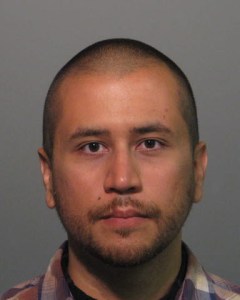
George Zimmerman's booking photo
I’m not a doctor, but I’ve seen broken noses before. Zimmerman’s doesn’t look like the ones I’ve seen, but as I said, I’m not a doctor.
I just have a few more links related to this story. Trayvon Martin’s parents have behaved with dignity and grace during a time that for them can only have been nightmarish. Via Raw Story, yesterday, they reacted to the arrest and charging of the man who killed their son in an interview with the AP. When asked what they would do if they had an opportunity to talk with George Zimmerman.
“I would probably give him the opportunity to apologize,” said Sybrina Fulton, Travyon Martin’s mother. I would probably ask him if there was another way he could have helped settle the confrontation that he had with Trayvon, other than the way it ended, with Trayvon being shot.”
Tracy Martin, the boy’s father, said he would ask Zimmerman what his motive was.
“Why was he patrolling the neighborhood with a 9mm gun?” he said. “What was it about my son that made him suspicious? What made him decide to disobey the dispatcher, who is trained to handle 911 calls? Why does he feel his life is so altered and does he understand that he altered his own life by refusing to stay in his vehicle? Was it really worth it? Was it really worth taking an innocent child’s life?”
George Zimmerman, the Hispanic Floridian who killed black teenager Trayvon Martin on Feb. 26, had a MySpace account whose username was “datniggytb,” The Daily Caller has learned.
According to a family member whose identity The Daily Caller has agreed not to reveal for safety reasons, the “datniggytb” name is not a racial slur, but a friendly nickname that referred to George himself.
“That was an old nickname his black friends gave him,” the Zimmerman family member said. “He didn’t have an issue with the profile name.”
The family member at first denied that George had a My Space account, and later came up with the “black friends” explanation. I hope someone in the Justice Department reads The Daily Caller.
The announcement, made in Washington by Attorney General Eric H. Holder Jr. and Sharis A. Pozen, the acting assistant attorney general of the Justice Department’s antitrust division, capped a long investigation. The inquiry hinged on the question of whether publishers, at the urging of Steven P. Jobs, then Apple’s chief executive, agreed to adopt a new policy in 2010 that in essence coordinated the price of newly released e-books at the price offered in Apple’s iBookstore — typically between $12.99 and $14.99.
At the time, Apple with its blockbuster iPad was trying to challenge Amazon’s hold on the e-book market. Amazon, the online retail giant, had become a kind of Walmart for the e-book business by lowering the price of most new and best-selling e-books to $9.99 — a price meant to stimulate sales of its own e-reading device, the Kindle.
Publishers, looking for leverage against Amazon, saw Apple as their white knight. The Justice Department complaint, using language that could have been inspired by a best-selling white-collar crime novel, describes how executives from the publishing companies met to discuss business matters “in private rooms for dinner in upscale Manhattan restaurants,” tried to hide their communications by issuing instructions to “double-delete” e-mails, all the time complaining of Amazon’s increasing influence over the e-book market.
Ultimately, the Justice Department charges, the publishers and Apple conspired to limit e-book price competition, increasing Amazon’s e-book retail prices and causing “consumers to pay tens of millions of dollars more for e-books than they otherwise would have paid.”
Three publishers have already settled with the Justice Department. As a Kindle owner, I’ve long hoped this would happen. Steve Jobs made me pay more for books, and I strongly resent it.
Yesterday, while promoting “the Buffet rule,” President Obama used the sainted Ronald Reagan as a stick to beat Republicans with. From Raw Story:
He described for the audience the actions of one of his predecessors in the Oval Office, a president who “gave a speech where he talked about a letter he had received from a wealthy executive who paid lower tax rates than his secretary, and wanted to come to Washington and tell Congress why that was wrong. So this president gave another speech where he said it was ‘crazy’—that’s a quote—that certain tax loopholes make it possible for multimillionaires to pay nothing, while a bus driver was paying 10 percent of his salary.”
“That wild-eyed, socialist, tax-hiking class warrior,” he said, “was Ronald Reagan.”
The campaign faced a number of questions in [a] press call as to just how Obama’s supposed “War on Women” worked, none of which produced a direct answer. Asked by TPM on the call to explain how another president taking office in January 2009 might have affected the gender gap in job growth, Romney adviser Lanhee Chen only said that the pattern was unusual compared with other recessions and that he believed a president like Romney would have gotten different results….
Chen was pressed again by another reporter to explain why women were disproportionately affected and what “difference in policy” would have changed the equation.
“The president’s policies in general, whether it’s Obamacare or Dodd-Frank or any of the policies they have pursued have really hurt both men and women,” he said. “This president has demonstrated that he’s doing everything in his power to scare away job creators and that’s had a disproportionate impact on women. That’s just a statistical fact.”
Asked a third time to explain the origins of this gender divide and how Romney would tackle the ratio of job losses specifically, Chen again said “it is a fact” that women have suffered disproportionately but offered no specific answer.
“[Romney] would undo the damage that President Obama has done,” he said. “He would take the economy in a very different direction and, as a result of that, produce very substantial job gains and growth for men and women.”
RNC chairman Reince Priebus announced yesterday that he isn’t backing down on his comparison of the notion of a Republican war on women to a war on caterpillars. Politico:
Reince Priebus said Wednesday he has no intention of taking back his “war on caterpillars” comment that landed him at the center of criticism last week — in fact, the chairman of the Republican National Committee vowed he’d gladly “double down” on the remark.
“I’m not going to walk back — I’ll double down on it,” Priebus said on MSNBC when asked whether he wanted to walk back or clarify his choice of words. “This war of women is a fiction that the Democrats have created, and the real war on women is the war that this president has put forward on the American people by not following through on his promises, by having women disproportionately affected by the Obama economy.”
He continued, “Go read Anita Dunn’s book if you want to go read about a war on women in the workplace — go read that book and you’ll see what the White House’s record is on women.”
Yes, Obama treated women working in the White House like shit. I read Confidence Men. So because Obama is a dick, Priebus wants us to vote for the party of personhood bills, vaginal probes, and birth control bans? A plague on both their houses.
Remember “killer bees?” A beekeeper in East Tennessee was stung 30 times by “partially Africanized bees” AKA “killer bees.”
Africanized bee swarm
A swarm of as many as 100,000 bees attacked a Tennessee beekeeper last month, and genetic testing of the angry critters has now revealed that they were partially Africanized bees. This is the first time that Africanized bees have been found in Tennessee.
Africanized bees, often referred to as “killer bees,” are a hybrid cross between the bee species normally found in America and African honey bees (Apis mellifera scutellata), which were originally introduced to the Americas as a productive source of honey. But the African honey bees take over hives wherever they spread, killing the hives’ original queens and hybridizing with resident populations. The hybridized Africanized bees are significantly more aggressive than other bees and more likely to attack in massive swarms when defending their nests. Their stings are no worse than those of other bees, but the sheer number of them can create more life-threatening situations, especially in anyone who is allergic to bee stings.
According to the Tennessee Department of Agriculture, genetic tests on the recent swarm found that the bees were less than 17 percent Africanized, which is why they are considered “partially Africanized.” The U.S. Department of Agriculture considers truly Africanized bees to have 50 percent African genetics.
Eeeeeek!
In related news, Africanized bees are suspected in a recent Texas swarm that attacked three people and a horse. The horse, which was observed almost completely covered in bees, later died from allergic reactions to the stings.
Finally, Connie from Orlando (AKA ecocatwoman) sent me a link to an interview that Terry Gross conducted yesterday with singer/songwriter Carole King. I grew up listening to Goffin-King songs, so I plan to listen to it ASAP. The occasion for the interview was her memoir A Natural Woman.
King, a member of the Songwriters Hall of Fame, has written for everyone from Little Eva to Aretha Franklin to James Taylor. Her 1971 solo album Tapestry spent 15 weeks at the top of the charts, and stayed on the charts for more than six years.
But King was just 15 when she and three classmates formed a vocal quartet called the Co-Sines at James Madison High School. At night, she attended disc jockey Alan Freed’s concerts — a veritable “who’s who” of rock ‘n’ roll performers — and later set up a meeting with Freed, an internationally known rock promoter she thought could help her break into the songwriting business. Freed told her to look up the names of record companies in the phone book.
She recounts the story in her new memoir, A Natural Woman, explaining that she called Atlantic Records and arranged a meeting. Soon after, she wrote her first big hit — the Shirelles number, “Will You Love Me Tomorrow?” — with Gerry Goffin, who would later become her husband.
So in honor of the woman who helped to create the soundtrack to my pre-teen and teenage years:
Now what’s on your reading and listening list today?
Did you like this post? Please share it with your friends:
The Sky Dancing banner headline uses a snippet from a work by artist Tashi Mannox called 'Rainbow Study'. The work is described as a" study of typical Tibetan rainbow clouds, that feature in Thanka painting, temple decoration and silk brocades". dakinikat was immediately drawn to the image when trying to find stylized Tibetan Clouds to represent Sky Dancing. It is probably because Tashi's practice is similar to her own. His updated take on the clouds that fill the collection of traditional thankas is quite special.
You can find his work at his website by clicking on his logo below. He is also a calligraphy artist that uses important vajrayana syllables. We encourage you to visit his on line studio.






 peej
peej Carissa
 bostonboomer
 dakinikat
 ecocatwoman
 mablue2
 Mama Lopez
 peggysue22
 quixote
 skydancingguestblogger
 Mona (aka Wonk the Vote)



 Sky Dancing
Recent Comments