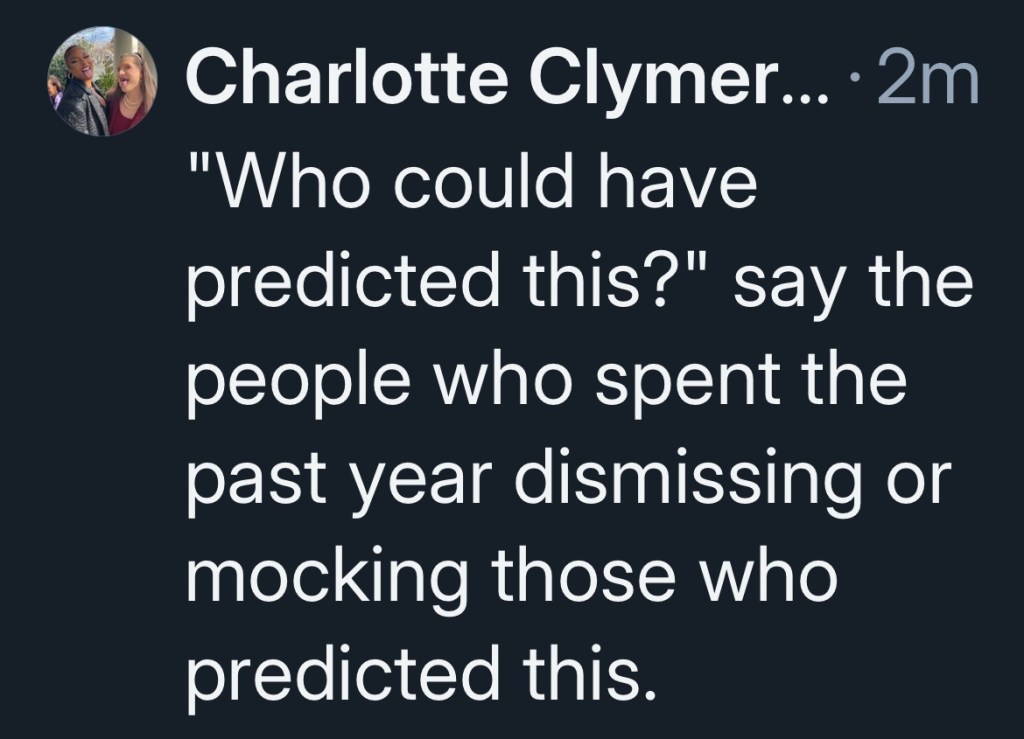
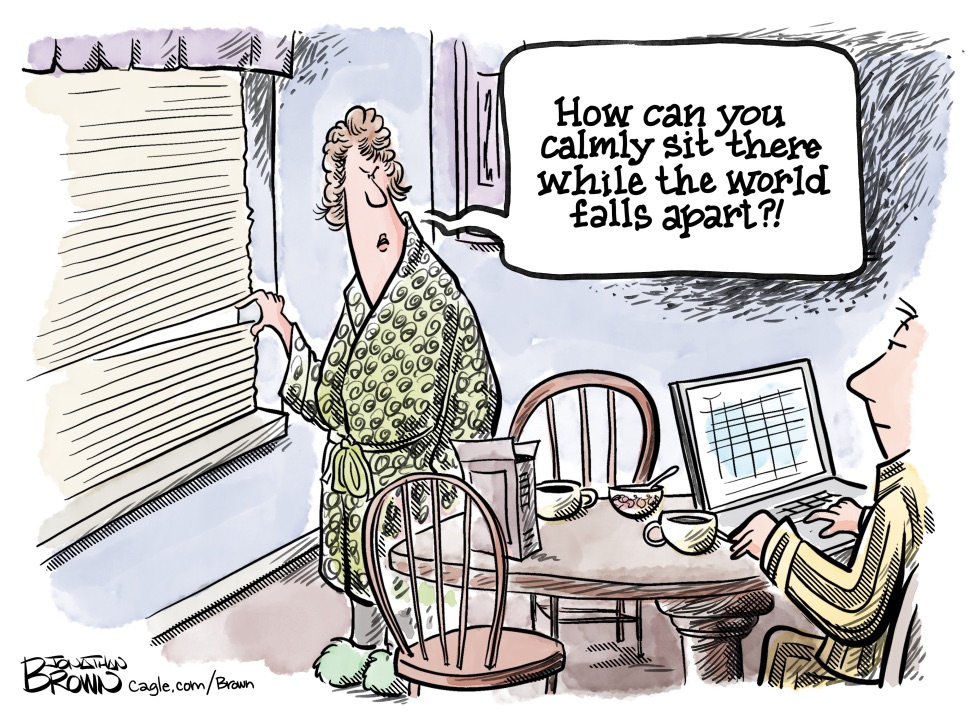
Looking at the headlines today makes me want to just throw up my hands and give up. Events are moving so quickly that no one could possibly keep track of everything. Things that happened just days ago recede into the past as new horrors arise.
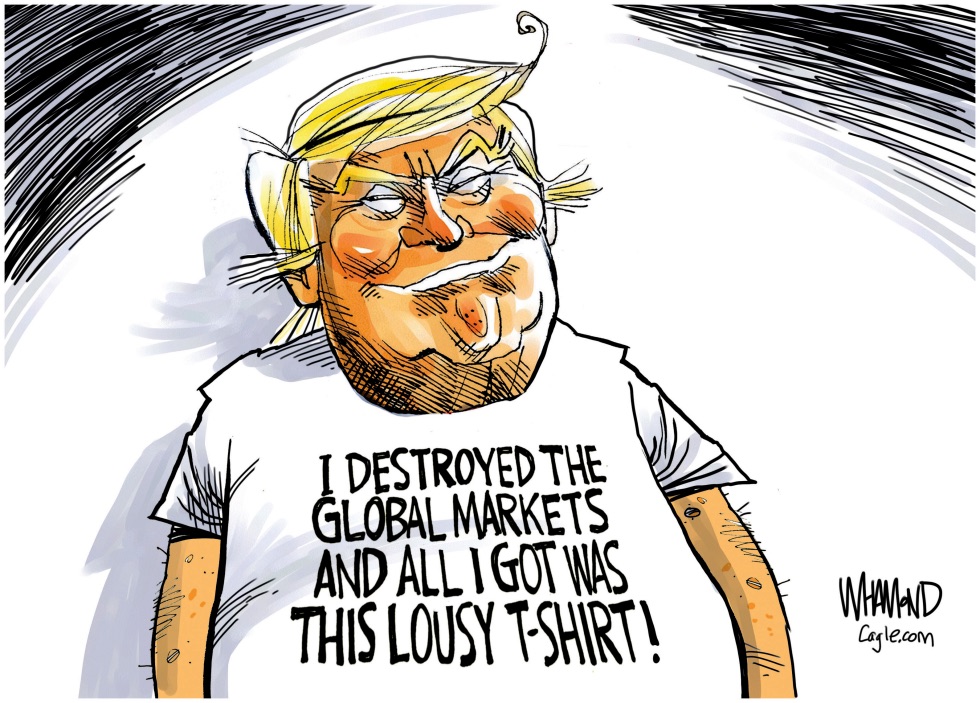
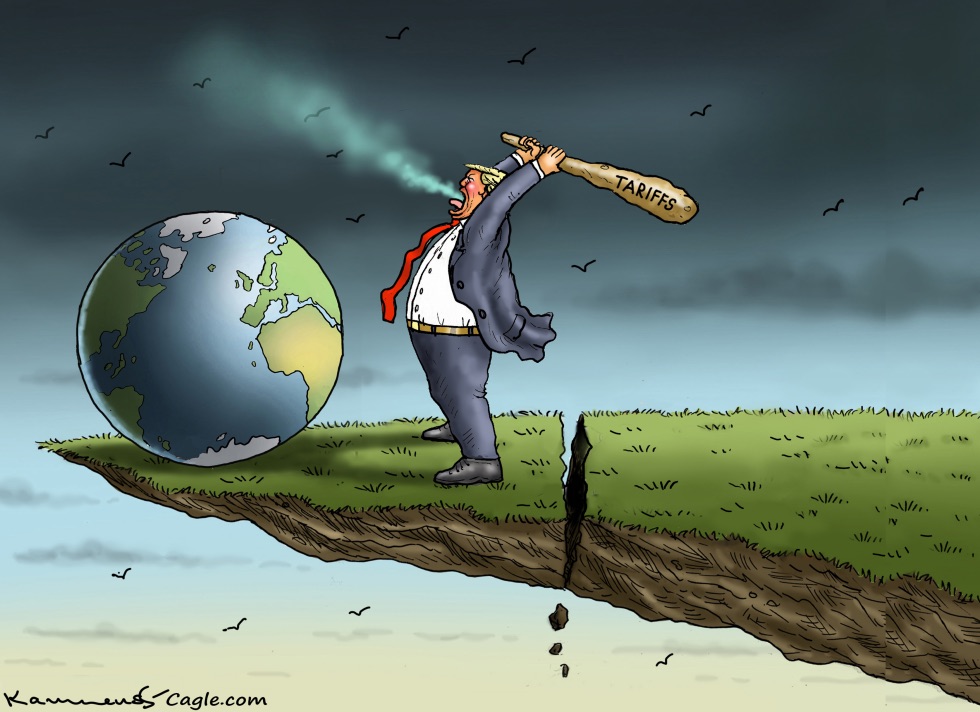
The global economic crisis that Trump has triggered with his insane tariffs is still going on, but the realization that he is going to keep sending innocent people to a torture prison in El Salvador has pushed that into the background for now.
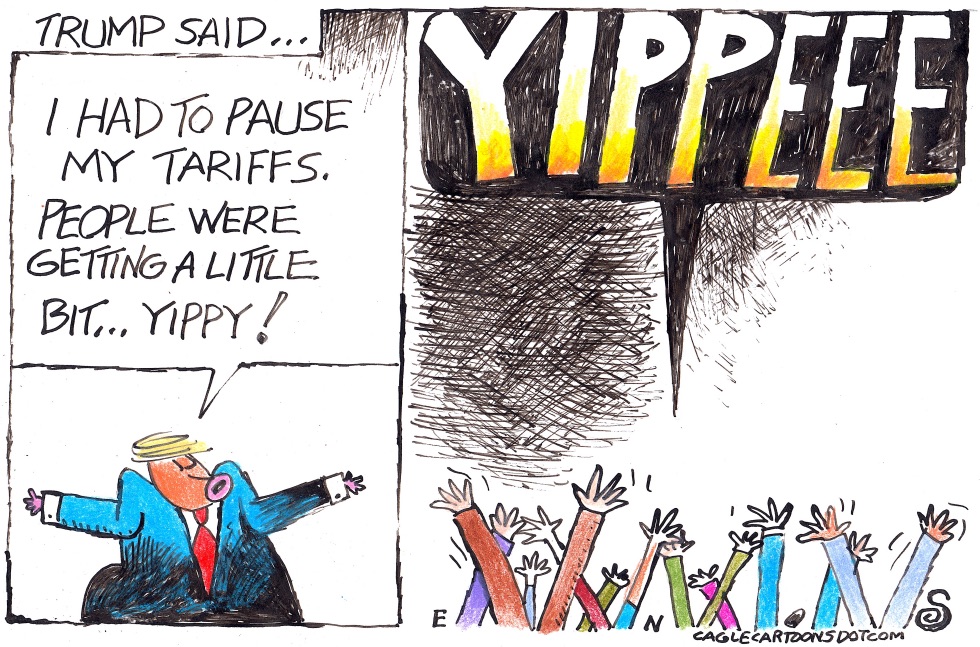
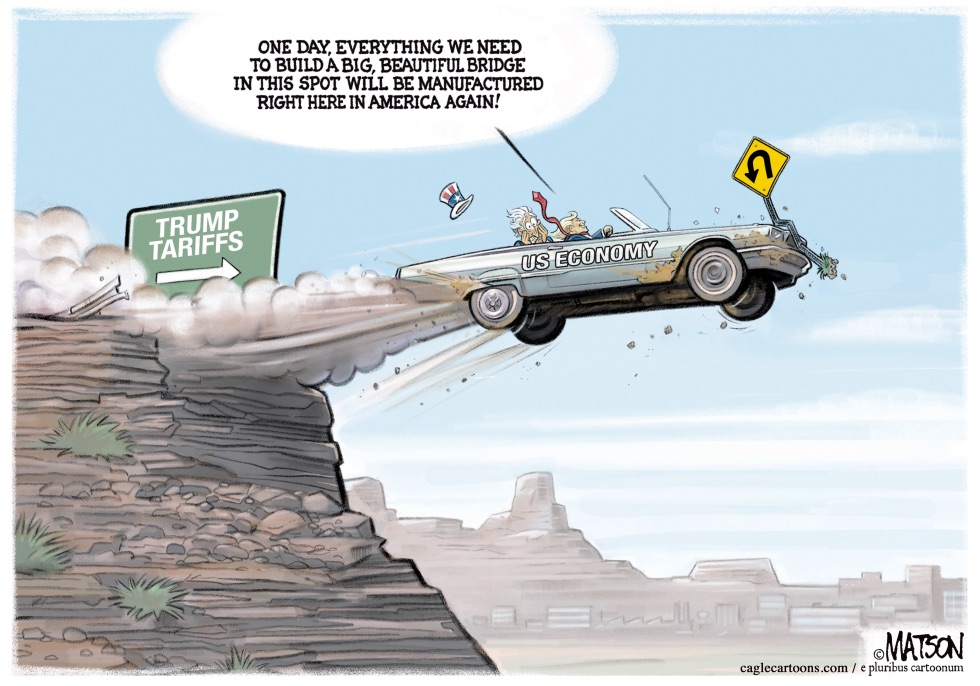
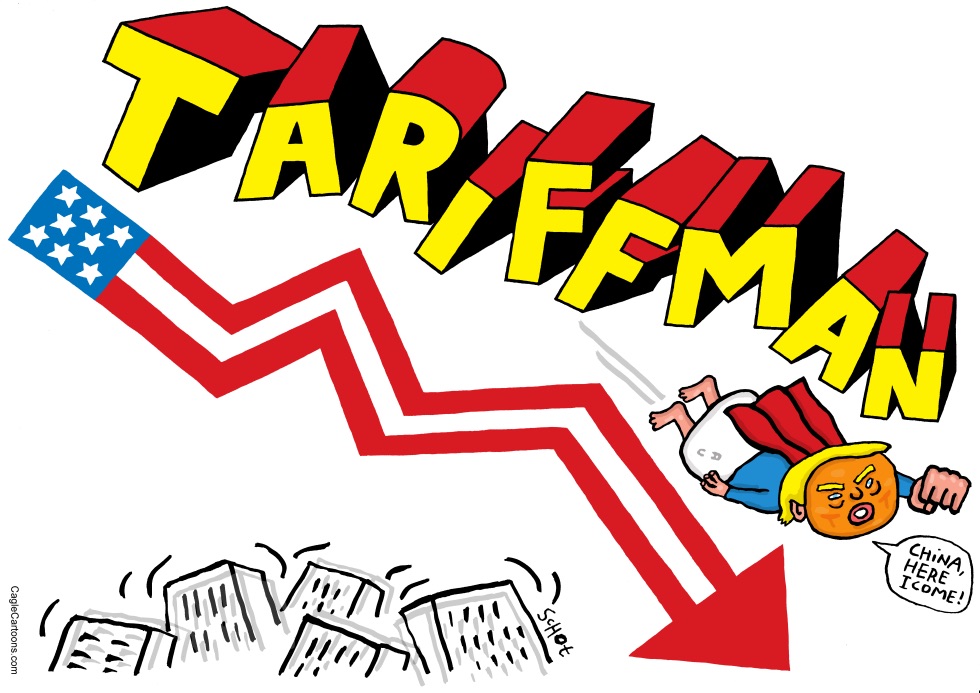
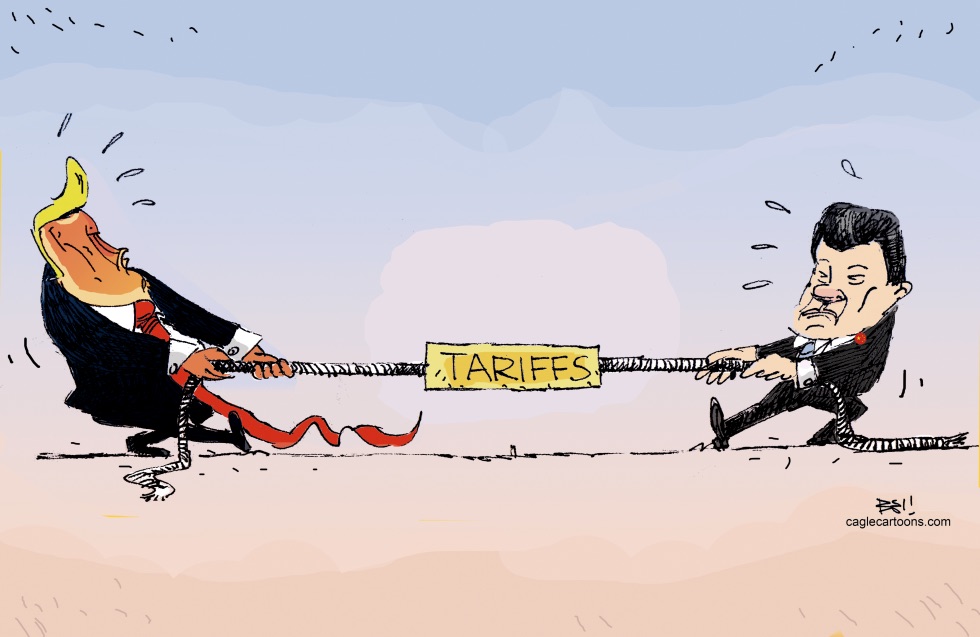
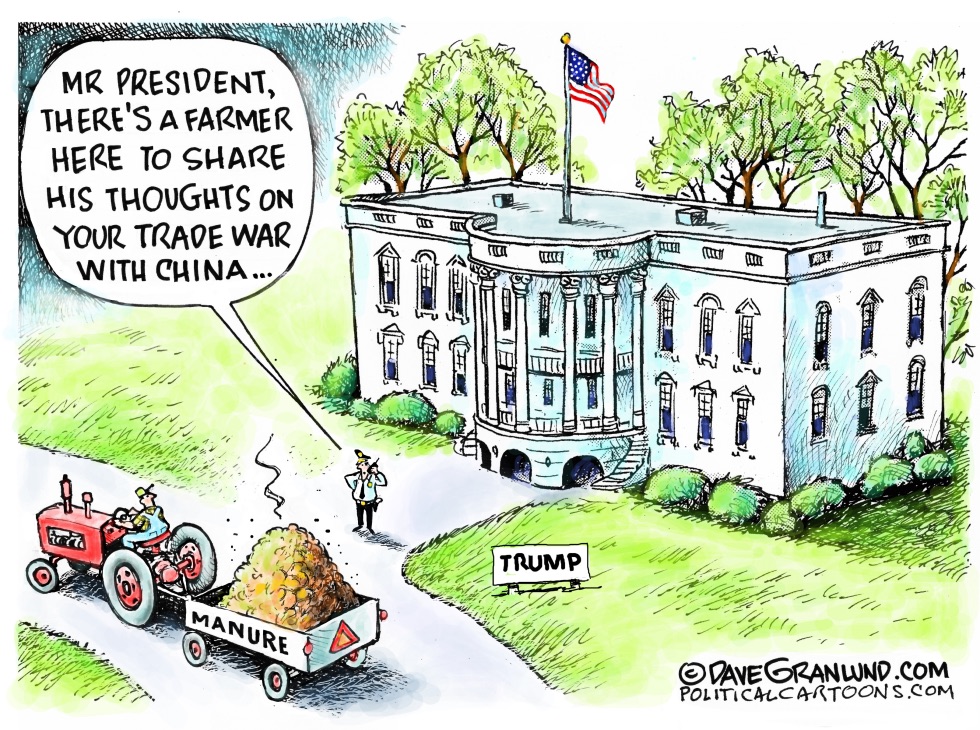
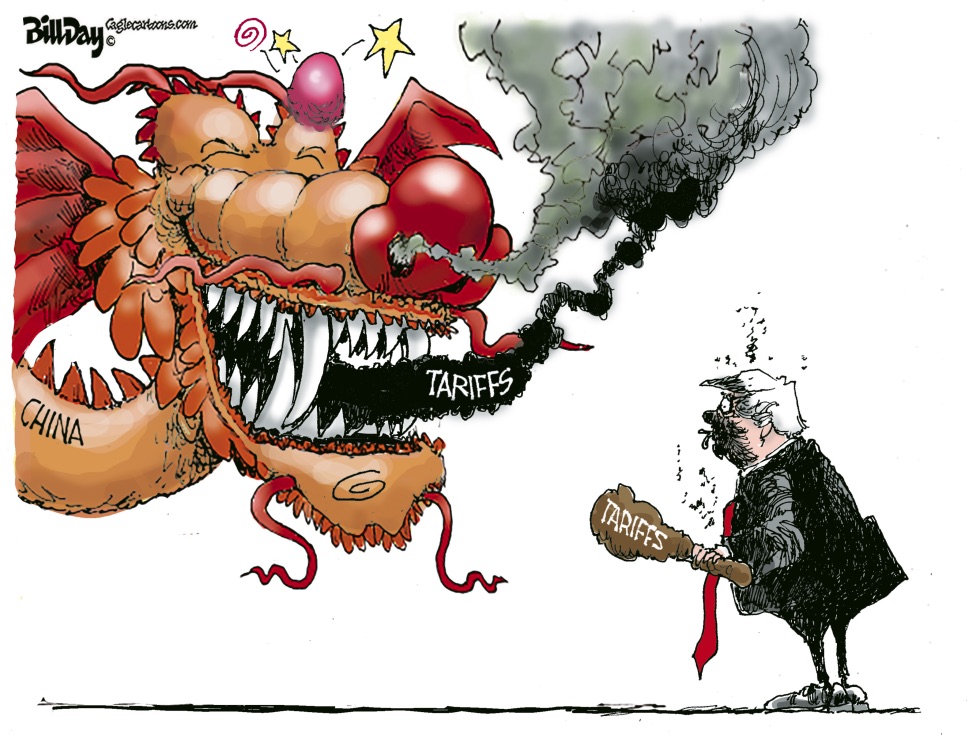
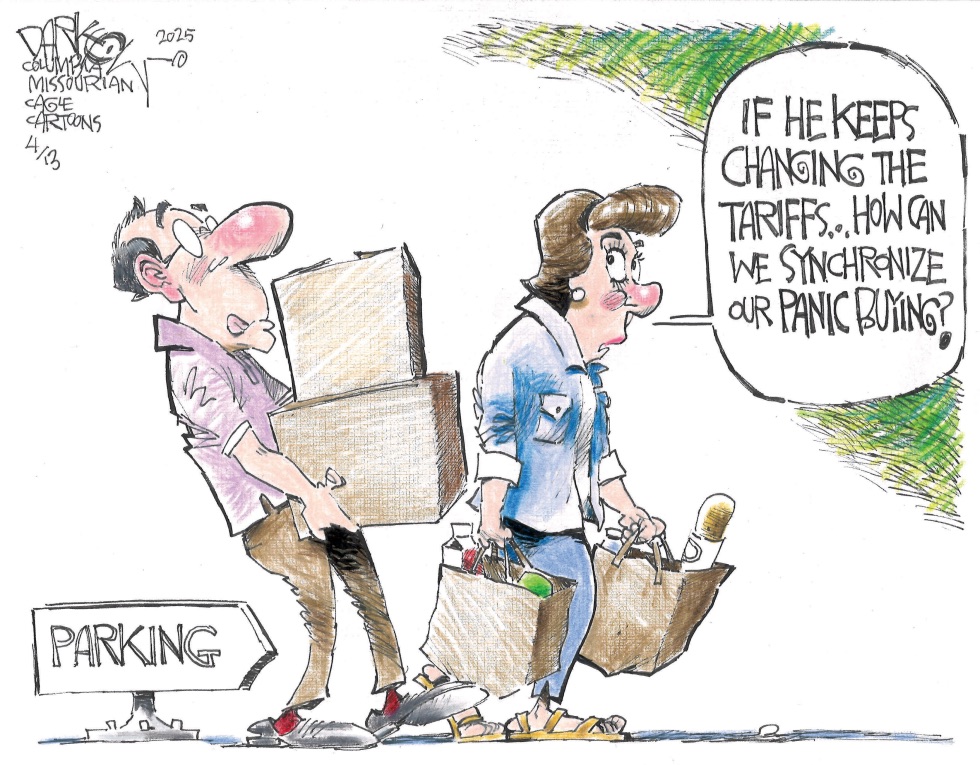
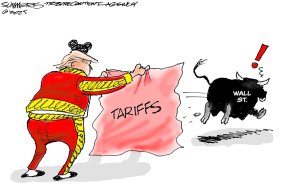
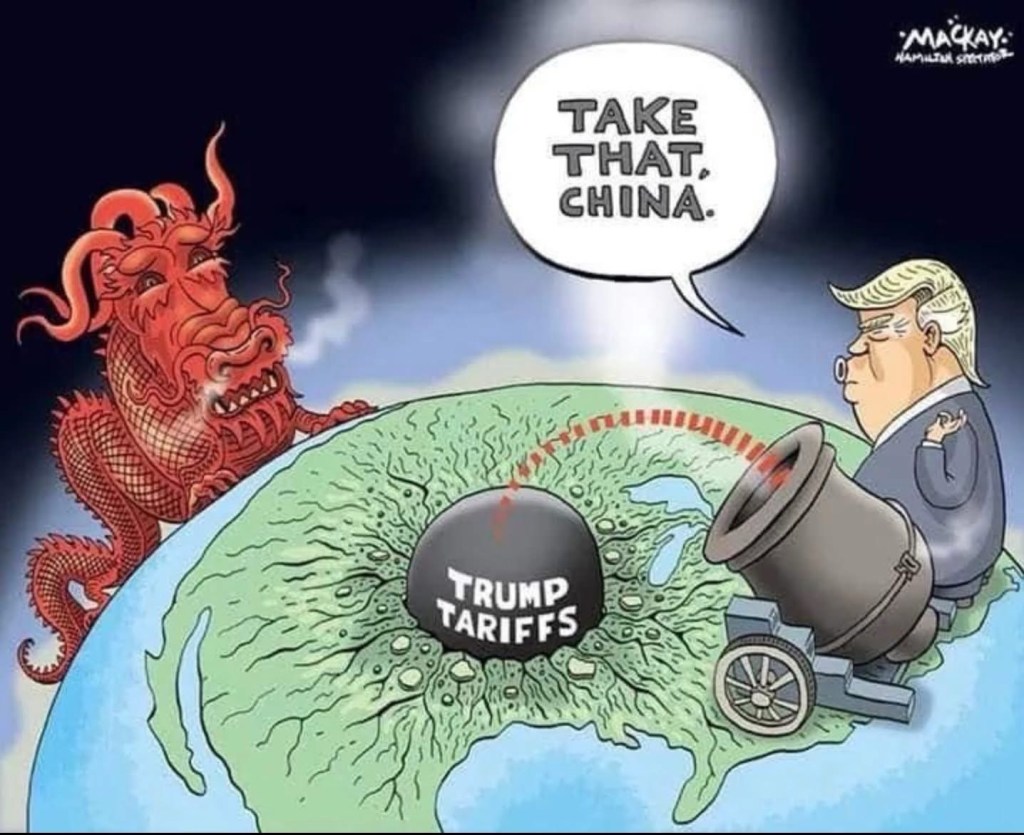
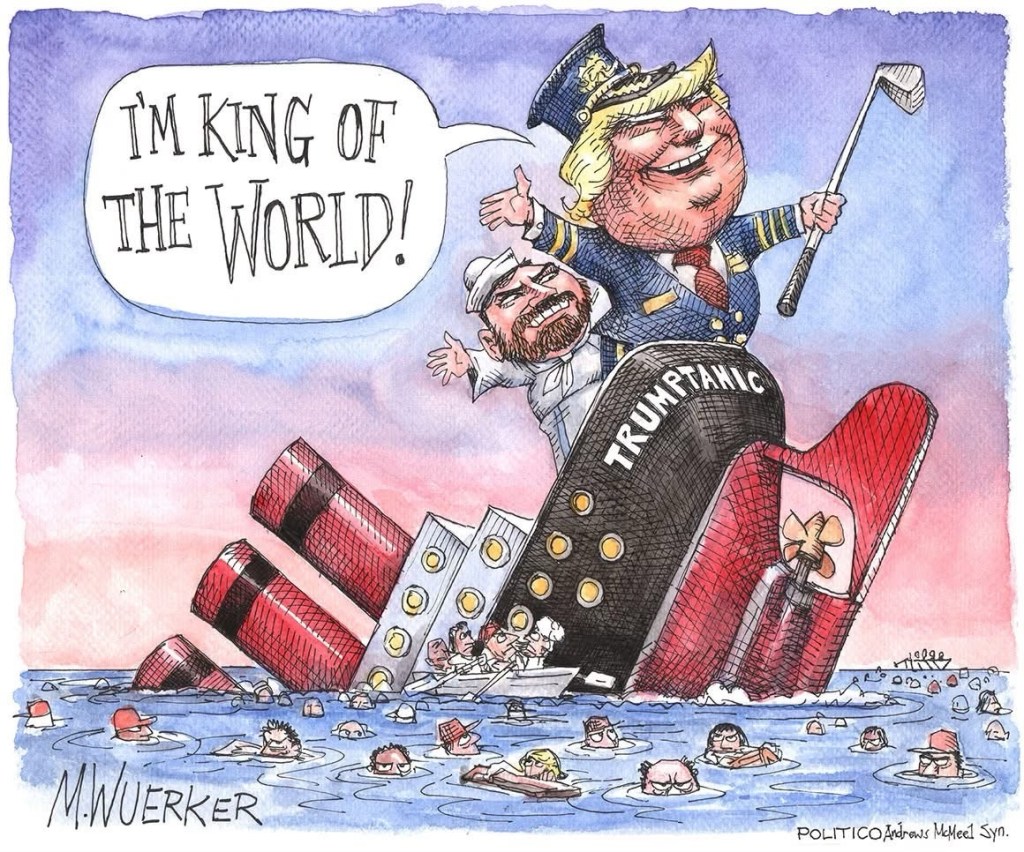
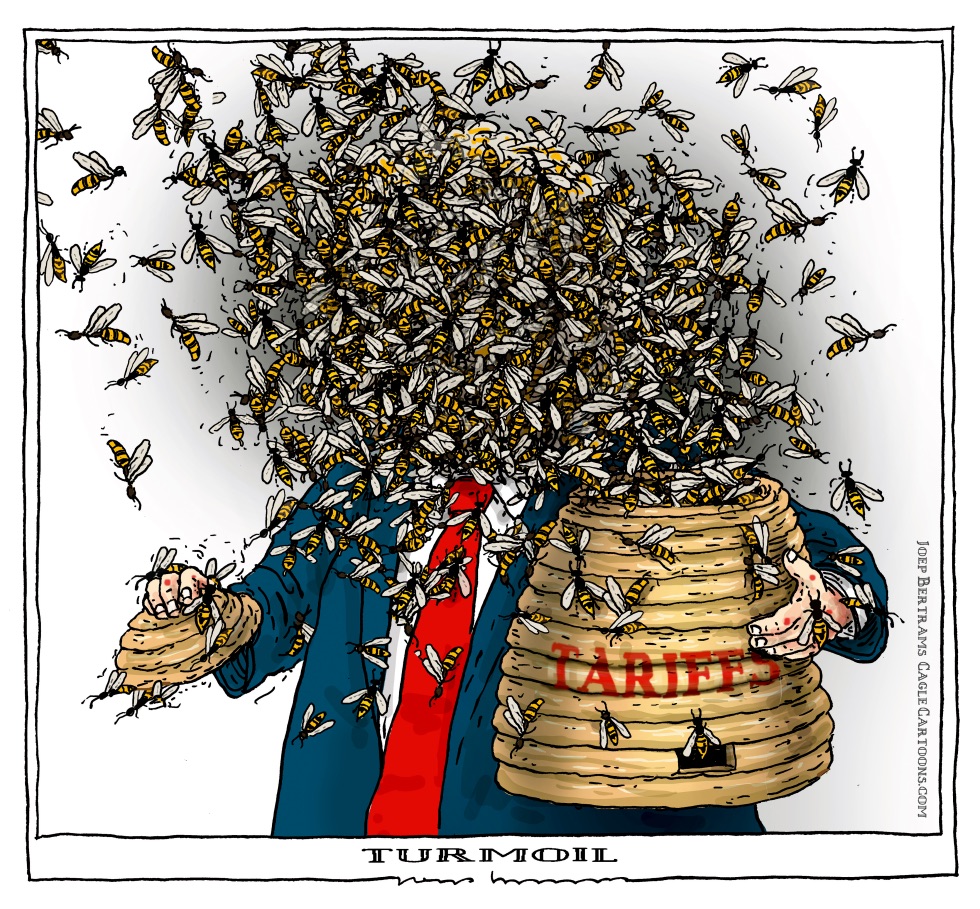
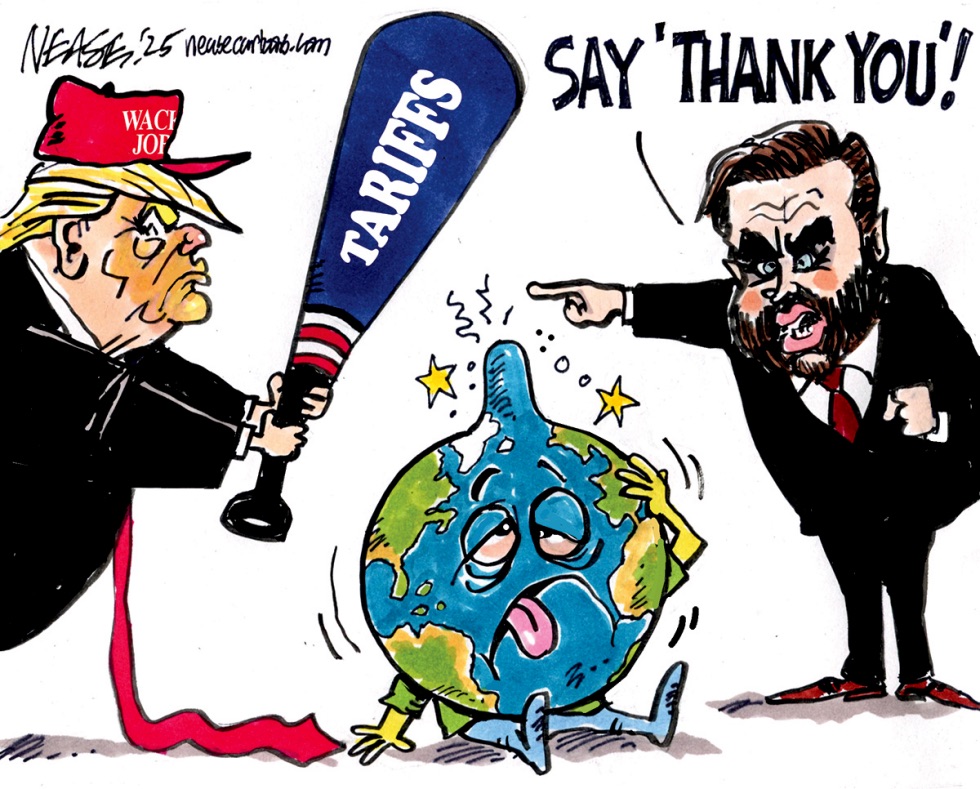
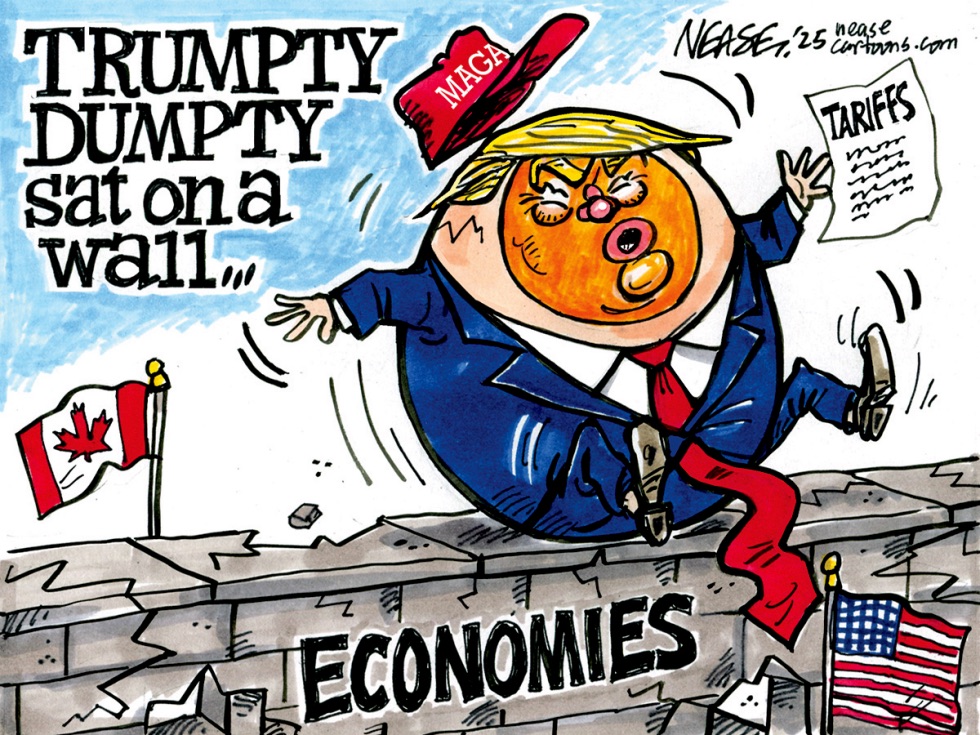
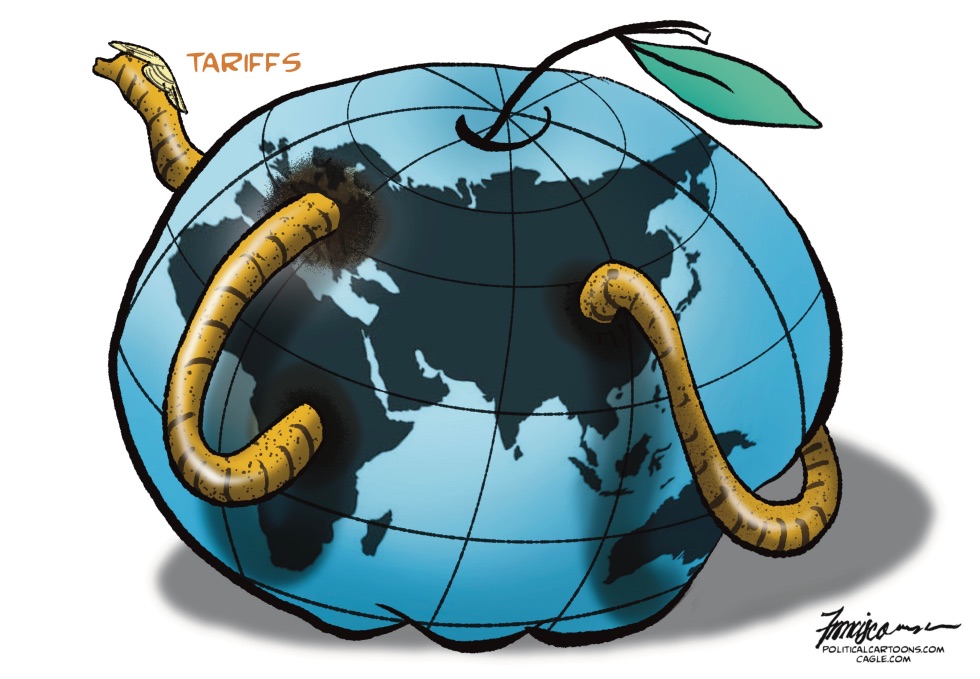
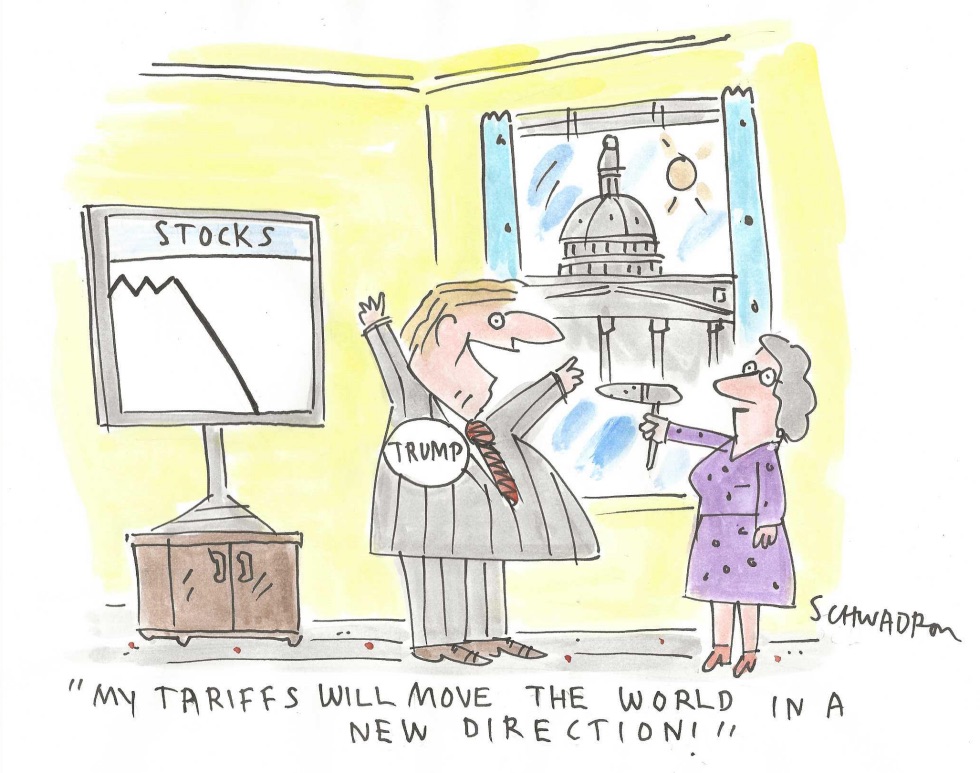
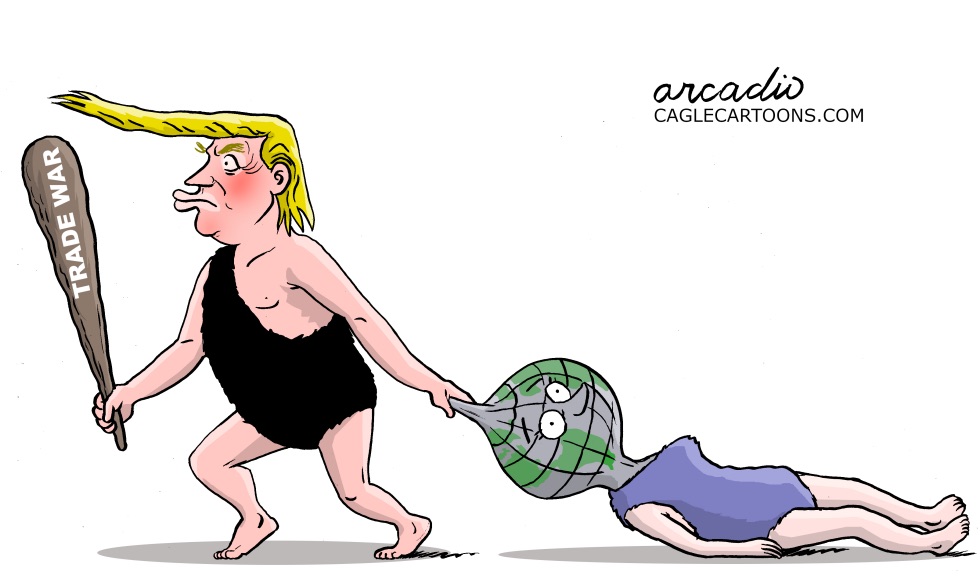
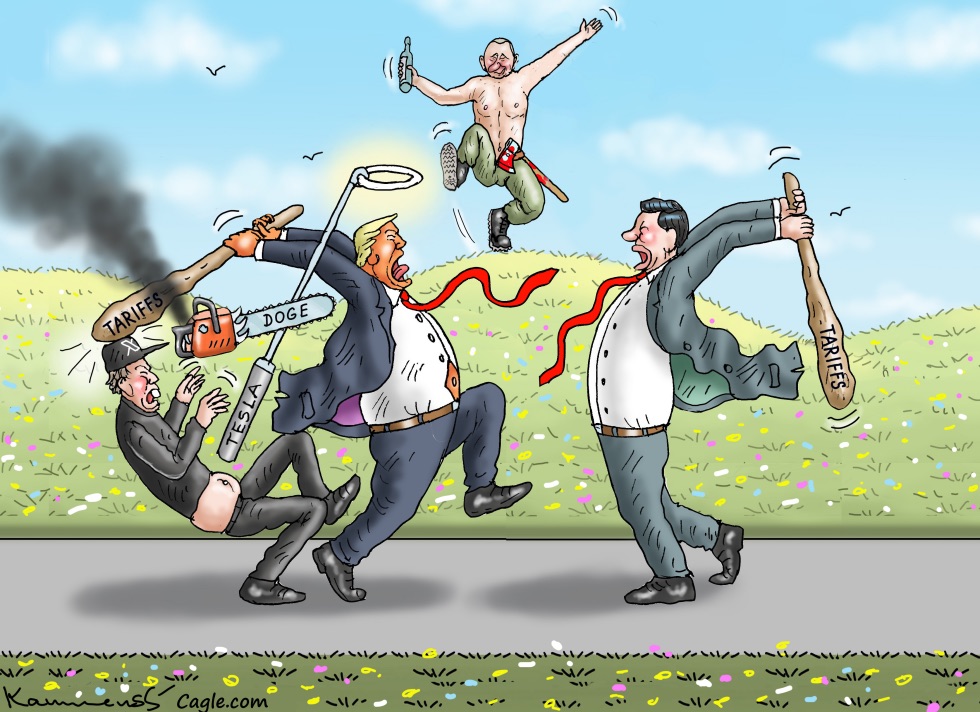
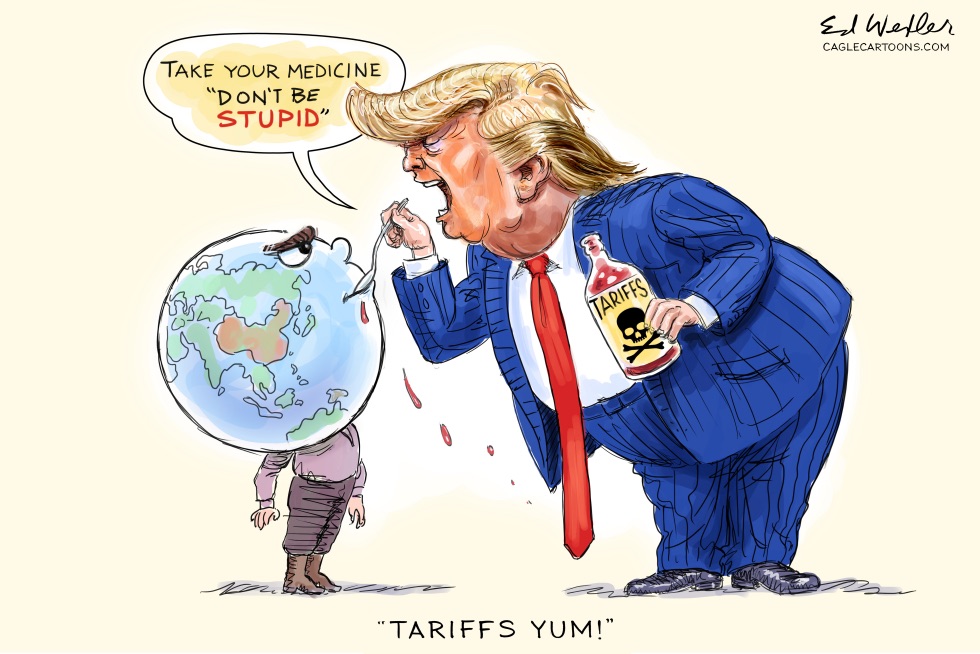
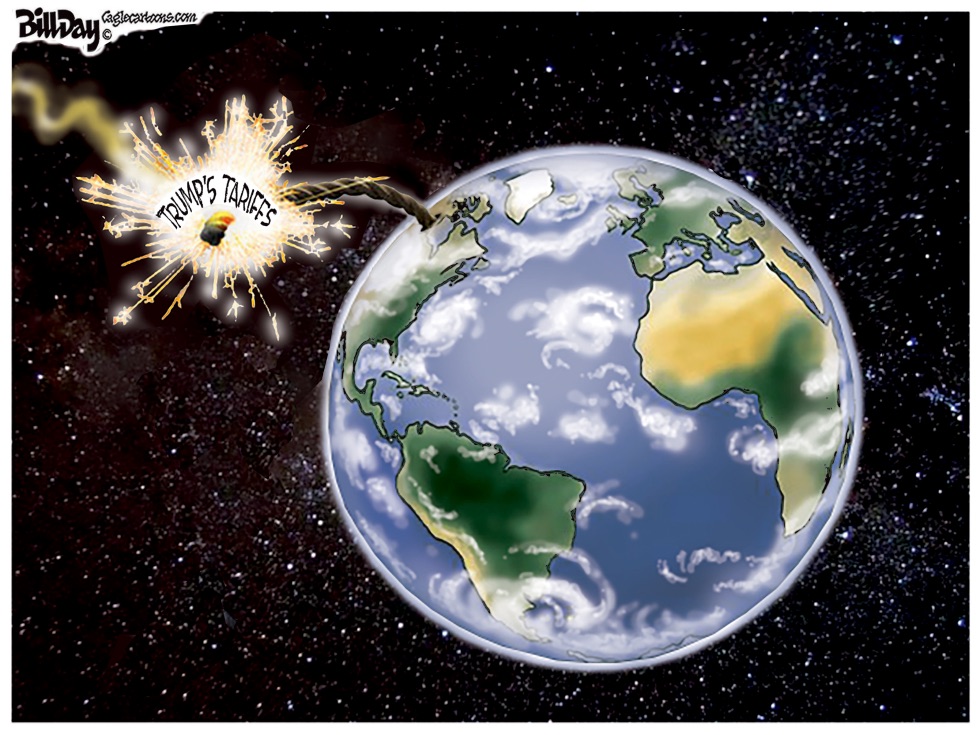
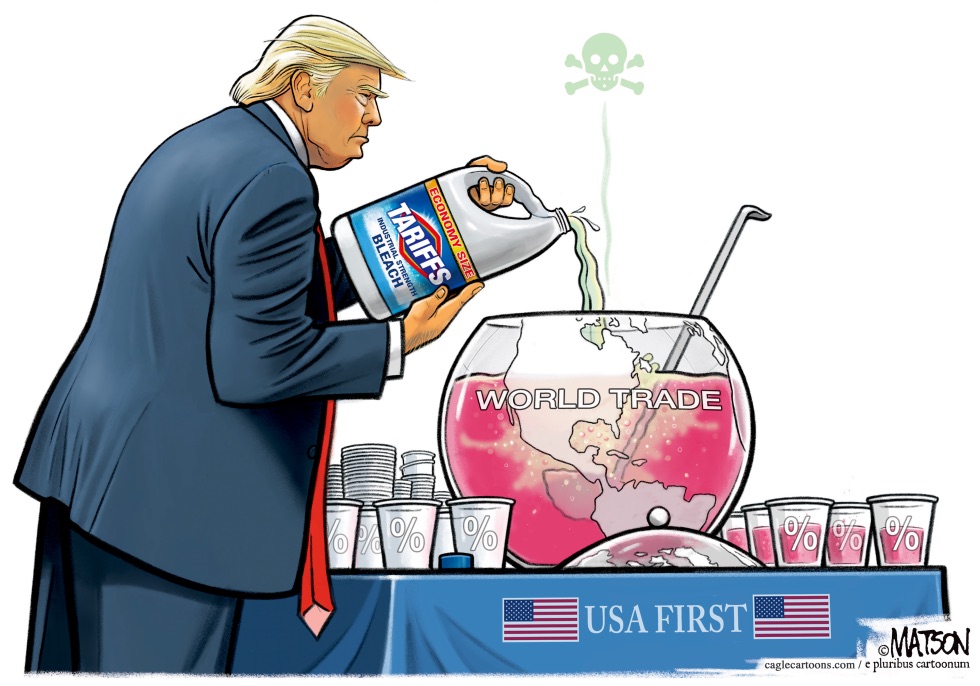
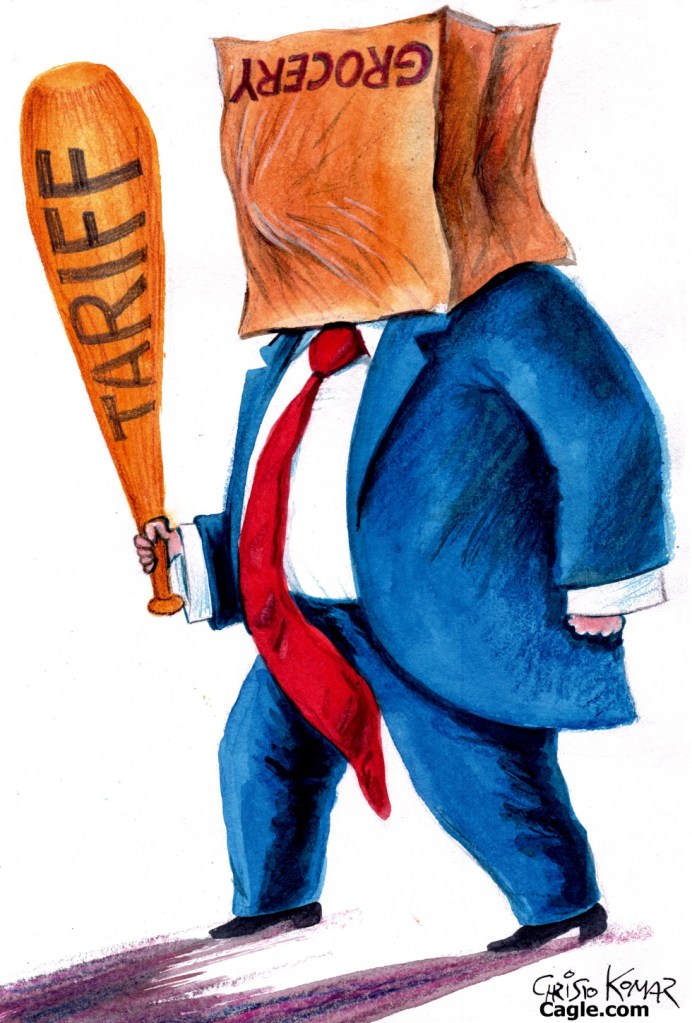
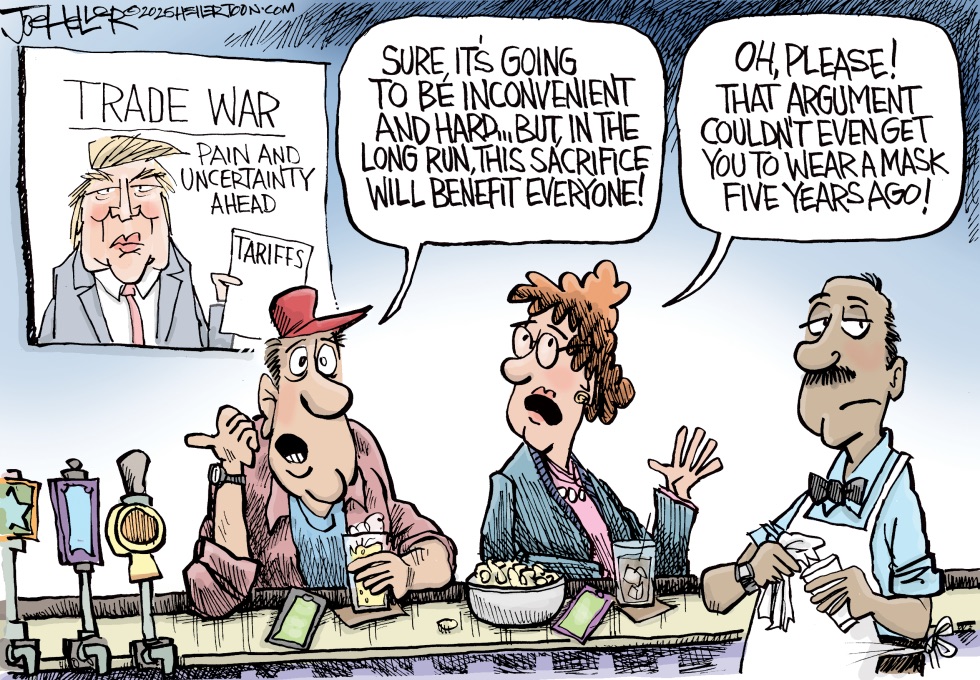
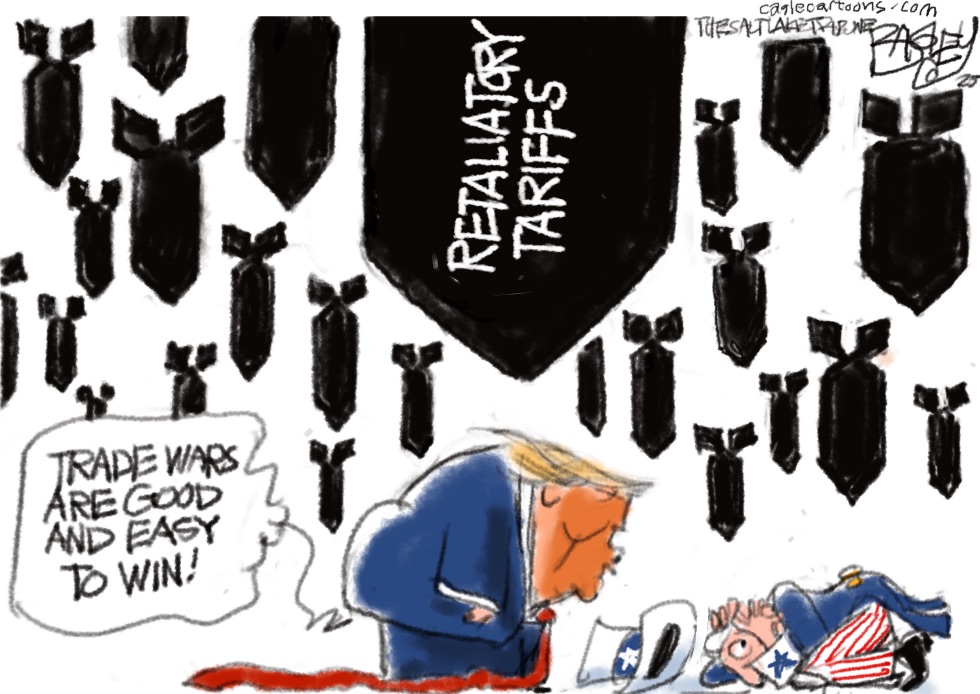
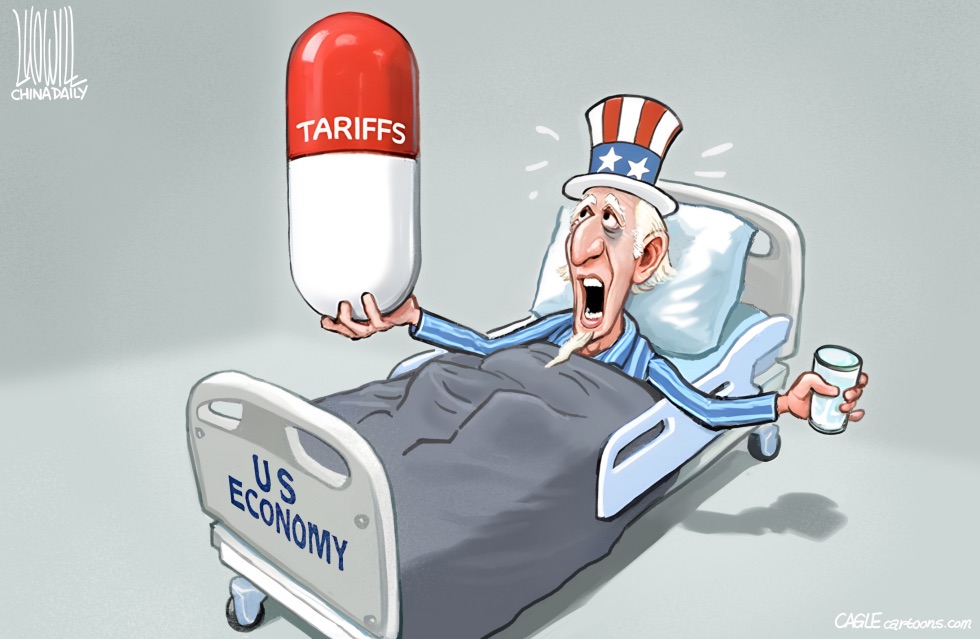
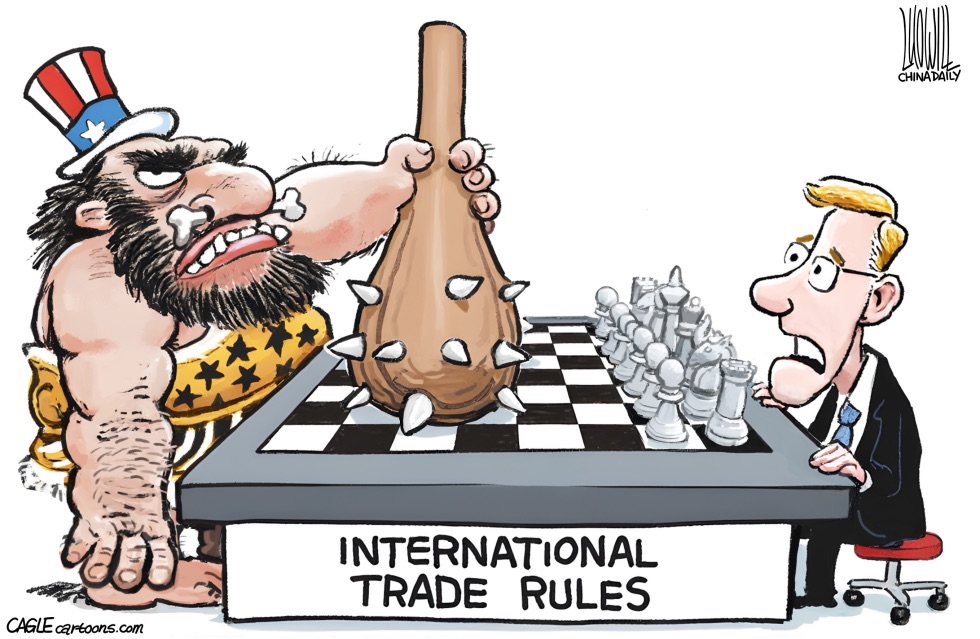
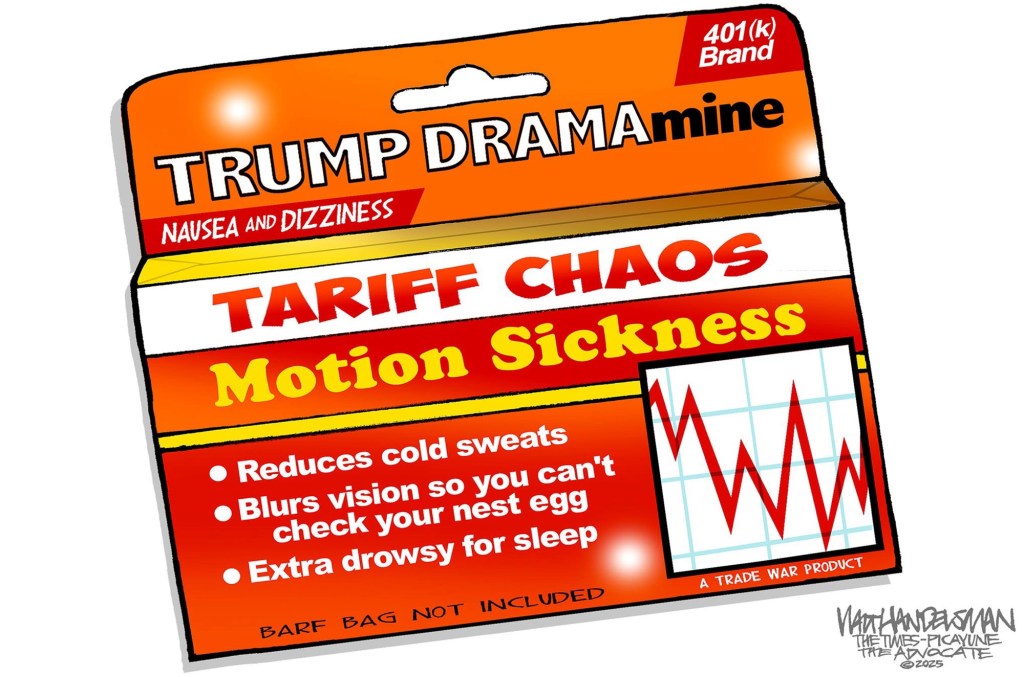
Even though he has “paused” the worst of the tariffs, many still remain in effect and will continue to affect the global economy, as Dakinikat discussed in her post yesterday. Meanwhile, the trade war with China continues, and it’s clear that China won’t back down.
On the immigration front, Trump is involving the military in border enforcement, even though that is illegal, and he is trying to find a way to send American citizens to the El Salvador gulag.
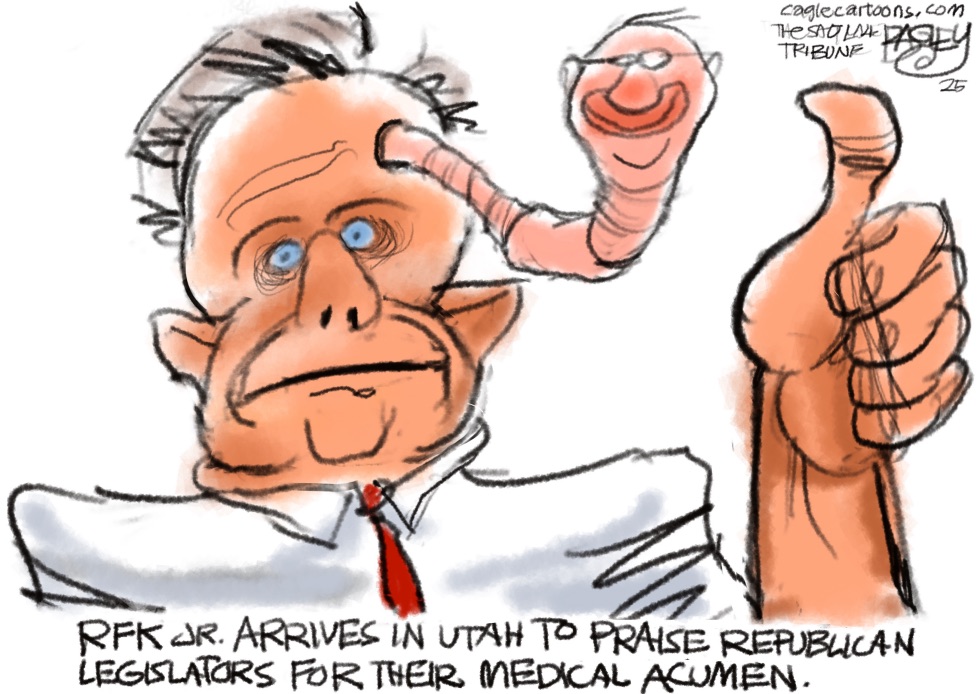
And of course Social Security is being ravaged by DOGE, while RFK, Jr. lays waste to the FDA and the U.S. health care system, and DOGE plans to take over control of all government grants.
According to longtime columnist Holman W. Jenkins Jr., Trump’s on-again, off-again tariff threats almost makes it appear he wants to be impeached, with Jenkins writing, “A future Trump impeachment seemed all but guaranteed by last Wednesday morning. It seems only slightly less likely now. It may even be desirable to restore America’s standing with creditors and trade partners.”
As he sees it, the president’s last great achievement was being re-elected in 2024, and the damage he has been creating since then belies his promise of a “golden age,” so an impeachment is “already in the cards.”
“No consensus or even significant coalition exists for trying to force into existence a new American ‘golden age’ with tariffs, which anyway is like asking a chicken to give birth to a lioness. He invented this mission out of his own confused intuition,” he accused.
Noting that conservative historian Niall Ferguson labeled Trump’s trade policy going “full retard,” he contributed, “I go with ‘neurotic’ for the word’s wider applicability to any leader who, lacking a clear bead on his times, fabricates a gratuitously ambitious mission to meet his misguided sense of importance.”
“Nobody in Mr. Trump’s orbit actually shares his belief in the magical efficacy of tariffs because it makes sense only in a world that doesn’t exist, where other countries don’t retaliate,” he pointed out before concluding, “The founders never anticipated today’s instantly responsive trillion-dollar financial markets. And yet these markets neatly adumbrate the founders’ scheme of checks and balances, also known as feedback. Mr. Trump, still sane enough to appreciate what’s good for Mr. Trump, listened this week to their feedback.”
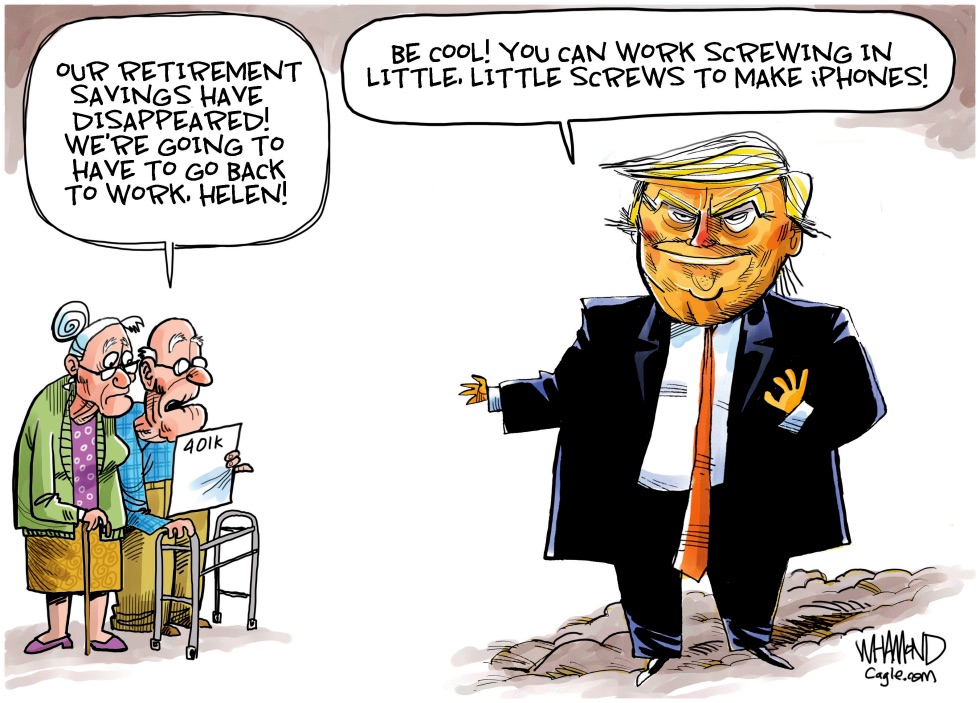
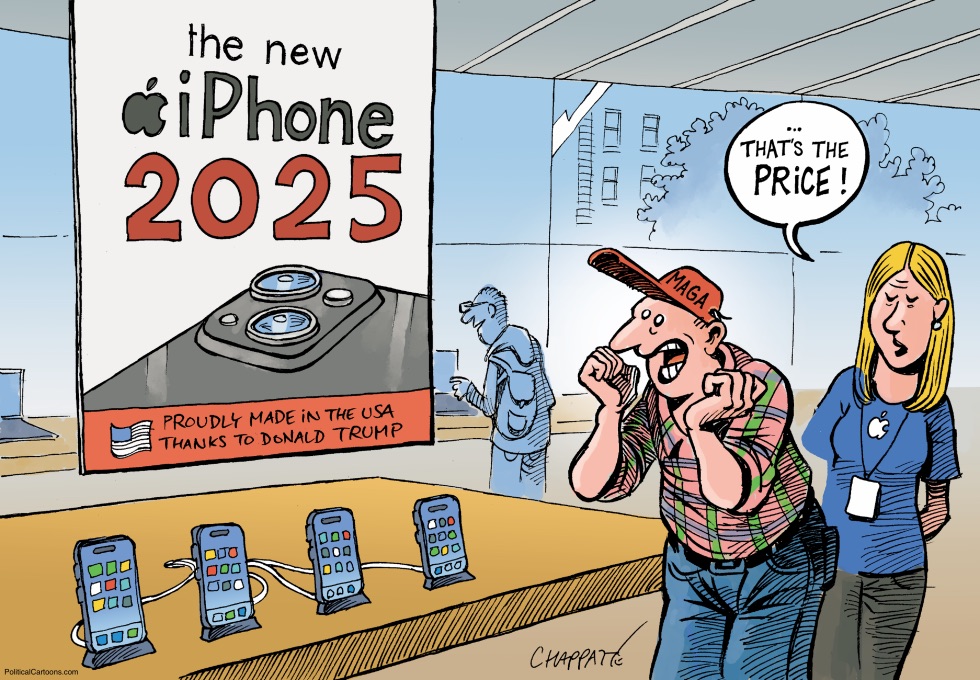
The guidance, issued late Friday evening, comes after Trump earlier this month imposed 145% tariffs on products from China, a move that threatened to take a toll on tech giants like Apple, which makes iPhones and most of its other products in China.
The guidance also includes exclusions for other electronic devices and components, including semiconductors, solar cells, flat panel TV displays, flash drives, and memory cards.
These products could eventually be subject to additional duties, but they are likely to be far lower than the 145% rate that Trump had imposed on goods from China.
The exemptions are a win for tech companies like Apple, which makes the majority of its products in China. The country manufactures 80% of iPads and more than half of Mac computers produced, according to Evercore ISI.
“This is the dream scenario for tech investors,” Dan Ives, global head of technology research at Wedbush Securities, told CNBC. “Smartphones, chips being excluded is a game changer scenario when it comes to China tariffs.”
I wonder what Trump got from the tech companies in return for these exemptions?
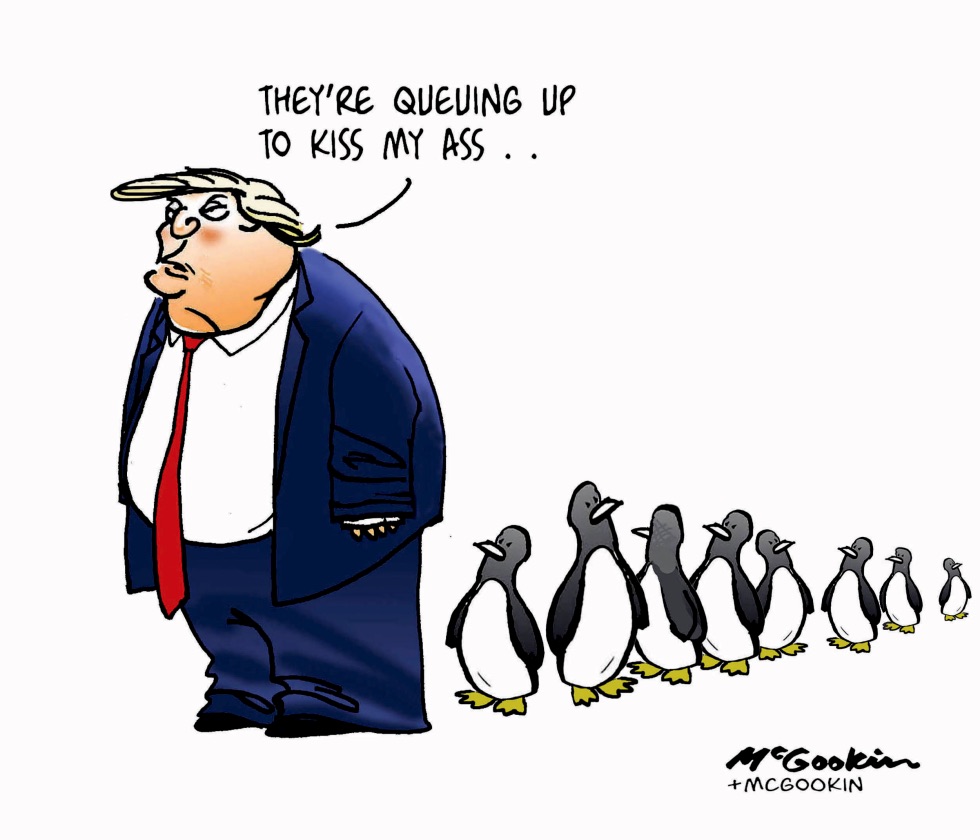
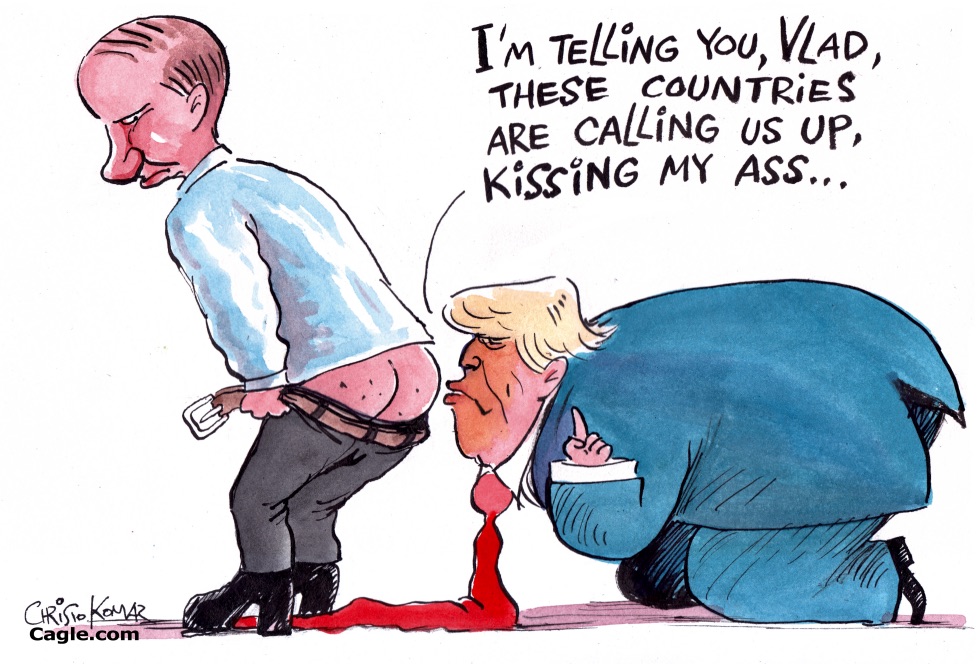
On Tuesday, President Donald Trump bragged that many foreign leaders were “kissing his ass” to avoid the steep tariffs he’d imposed on their countries. But China’s leader, Xi Jinping, was not one of them. “We are waiting for their call,” Trump said of China’s leadership in a social-media post.
He might be waiting for a while. Xi became China’s most powerful political figure in half a century by promoting a new Chinese nationalism—not by kowtowing to anyone, least of all the president of the United States.
“Seeking to negotiate on U.S. terms would be deeply embarrassing for Xi and could potentially weaken his standing and even control over the Communist Party and the country,” Steve Tsang, the director of the SOAS China Institute at the University of London, told me. That’s because the party justifies Xi’s dictatorship by portraying him as the ultimate defender of the Chinese people—the man who will restore China’s past glory and attain the “Chinese dream” of national rejuvenation. He must be seen standing up to foreign oppressors who seek to humiliate China and thwart its rightful rise.
“The Chinese people will never allow foreign forces to bully, oppress, or enslave us,” Xi said in a speech commemorating the centennial of the Communist Party in 2021. “Whoever nurses delusions of doing that will crack their heads and spill blood on the Great Wall of steel.
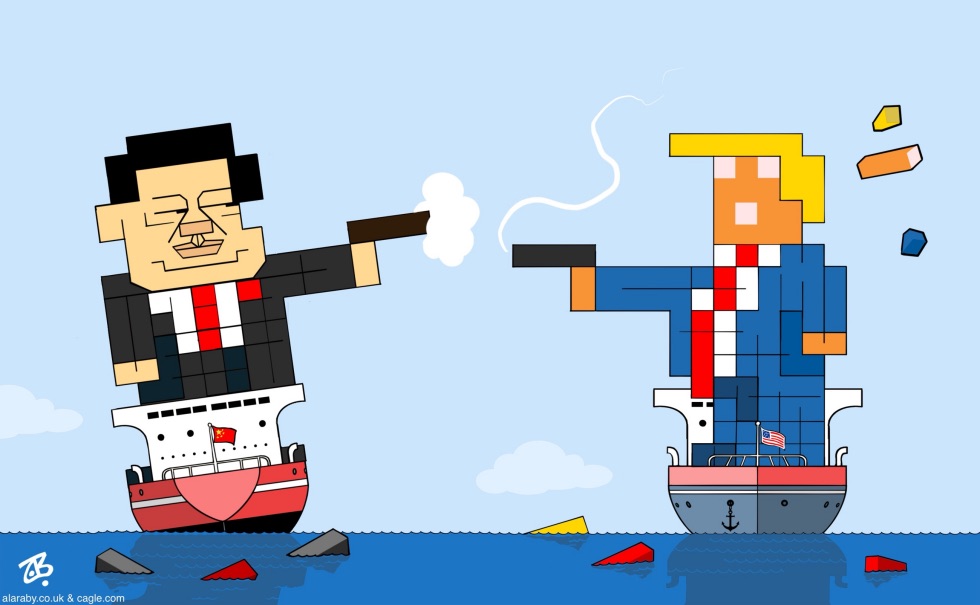
Little wonder, then, that Xi has been quick to retaliate against Trump while other leaders have held back. Trump slapped an additional 34 percent duty on Chinese imports on April 2, and Xi responded two days later with a 34 percent tariff on U.S. imports. Trump then retaliated by imposing another 50 percent duty, which Xi matched the next day. On Wednesday, Trump tried isolating Xi by pausing most tariffs on all countries for 90 days—except for China, on which he increased his duties yet again. On Friday, Beijing raised its duties on American imports once more….
The Chinese Communist Party is characterizing Trump’s trade war as an American effort to contain and suppress China’s economic success—one the government is fully prepared to thwart, according to one commentary in the People’s Daily. This framing commits Beijing to holding out, because the alternative is for a party that predicates its power on the projection of strength to appear to be capitulating to a hostile onslaught.
Trump and his team do not seem to understand Xi’s political realities. They seem to believe that if they keep turning up the pressure, Xi will eventually come to heel. U.S. Treasury Secretary Scott Bessent asserted that Xi’s retaliation was “a big mistake.” Because China exports so much more to the U.S. than it imports, “they’re playing with a pair of twos,” he said.
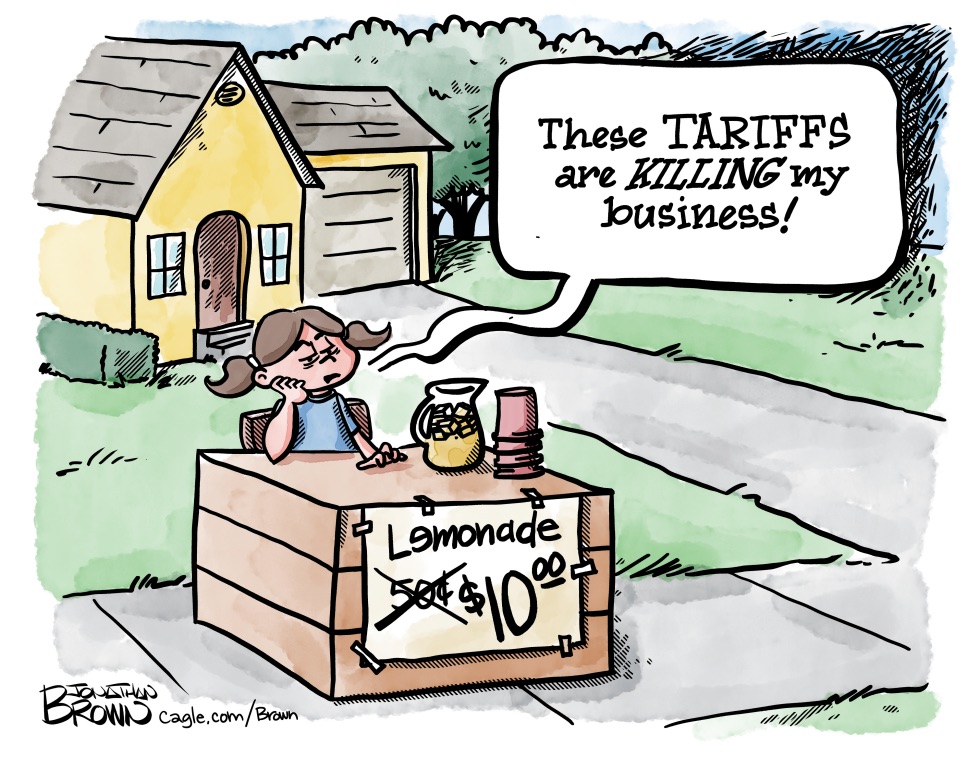
This is going to really hurt small businesses who buy parts and inventory from China and farmers who sell soybeans to China.
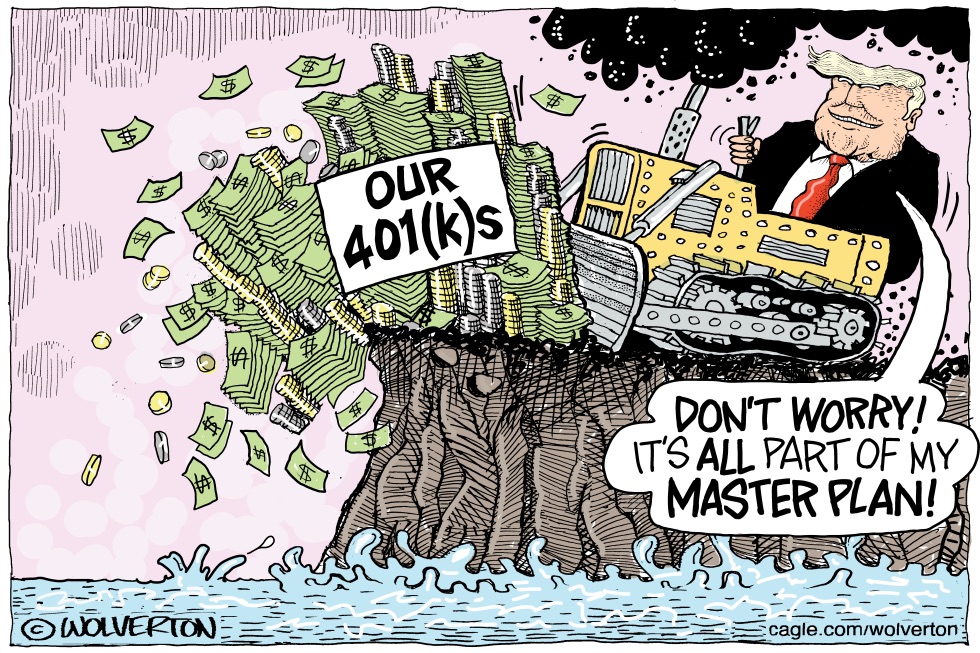
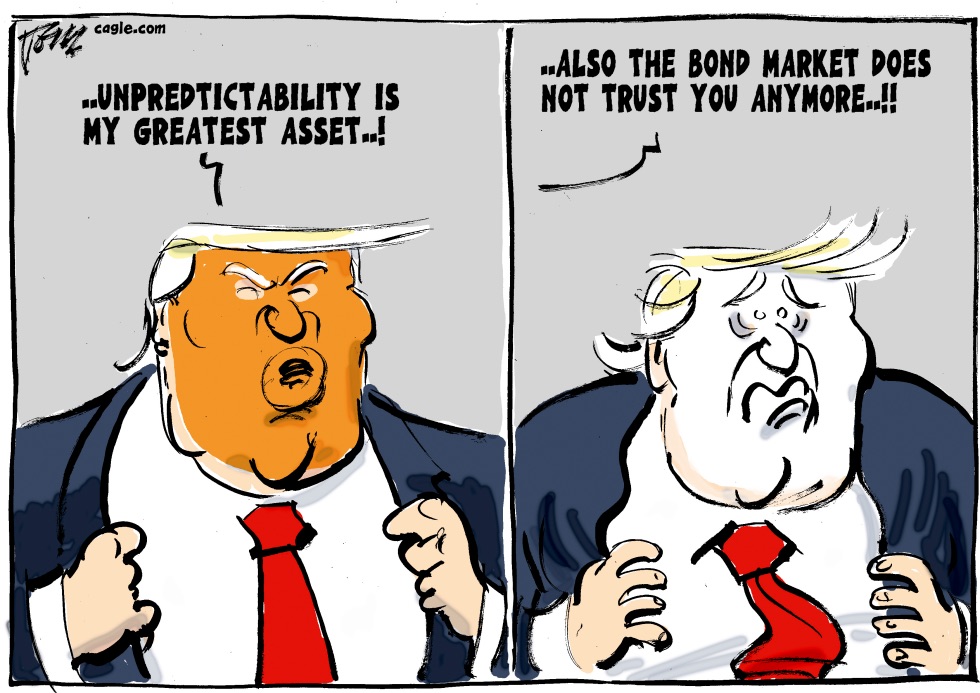
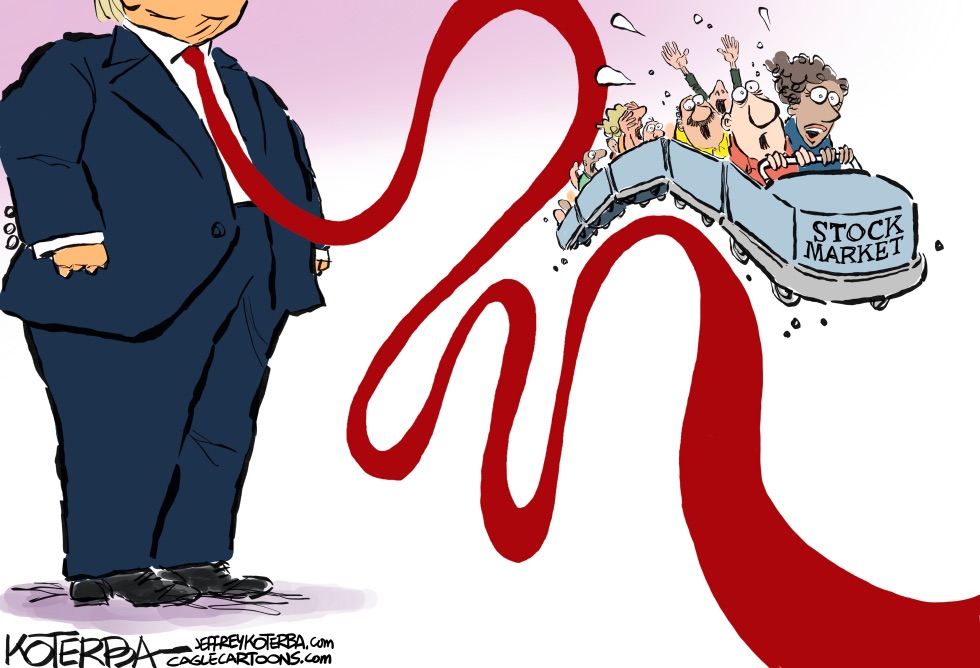
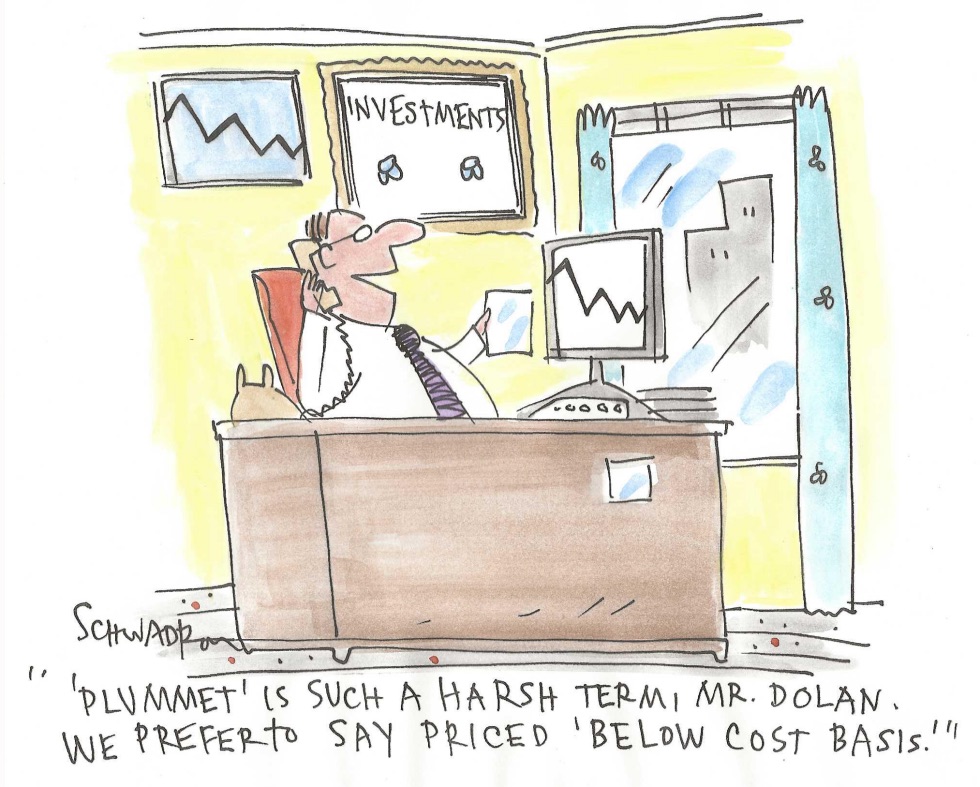
The upheaval in stocks has been grabbing all the headlines, but there is a bigger problem looming in another corner of the financial markets that rarely gets headlines: Investors are dumping U.S. government bonds.
Normally, investors rush into Treasurys at a whiff of economic chaos but now they are selling them as not even the lure of higher interest payments on the bonds is getting them to buy. The freak development has experts worried that big banks, funds and traders are losing faith in America as a stable, predictable, good place to store their money.
“The fear is the U.S. is losing its standing as the safe haven,” said George Cipolloni, a fund manager at Penn Mutual Asset Management. “Our bond market is the biggest and most stable in the world, but when you add instability, bad things can happen.”
That could be bad news for taxpayers paying interest on the ballooning U.S. debt, consumers taking out mortgages or car loans — and for President Donald Trump, who had hoped his tariff pause earlier this week would restore confidence in the markets.
A 60-foot wide strip of land along three southwestern border states will be placed under the jurisdiction of the U.S. military to help deter illegal immigration, the White House said Friday.
President Donald Trump issued a memorandum directing the military to take temporary control over the Roosevelt Reservation, a corridor that runs along the border line in California, Arizona and New Mexico.
The order would empower troops to detain people attempting to illegally enter the U.S. within the stretch of land, which was established by President Theodore Roosevelt for border security in 1907. Trump authorized the military to operate in the same area during his first administration to aid construction of a wall to deter migrant crossings.
The memorandum marks an escalation in the president’s use of the military to facilitate his sweeping crackdown on immigration. And while unclear how far the administration will go, it could be an additional step to militarizing the nation’s southwestern border….
Immigration, military and legal experts have said that Trump’s move to militarize the border could raise legal questions about potential violations to the Posse Comitatus Act, a federal law that generally prohibits active-duty troops from being used in domestic law enforcement.
Aaron Reichlin-Melnick, a senior fellow at the American Immigration Council, said it appeared the administration was trying to find a way around restrictions on the use of the U.S. military for civilian border enforcement.
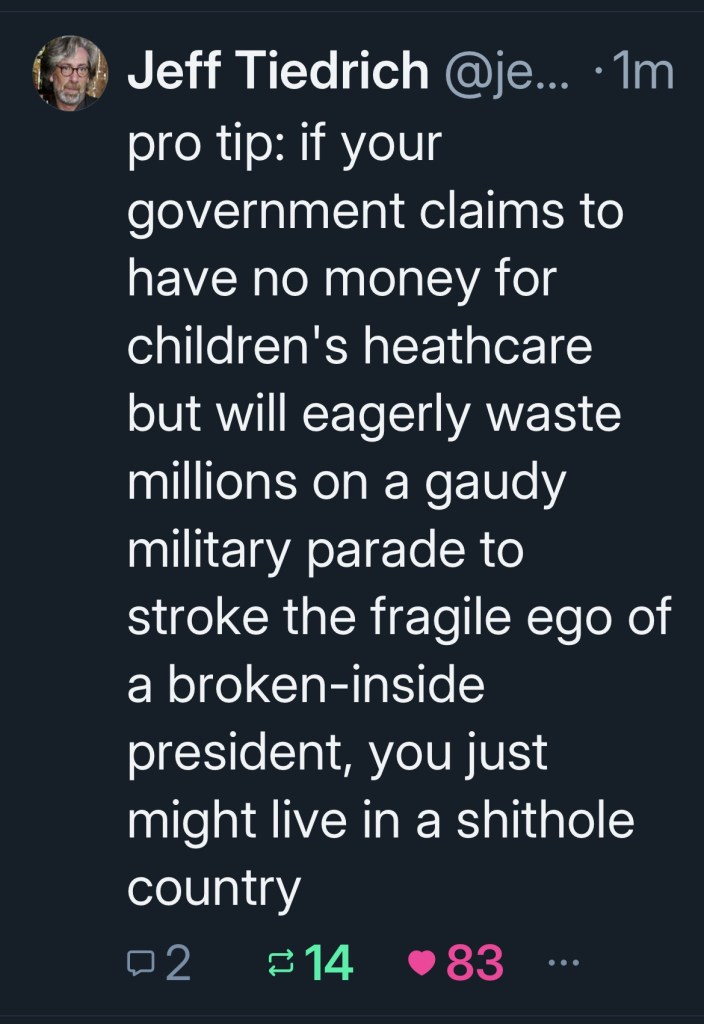
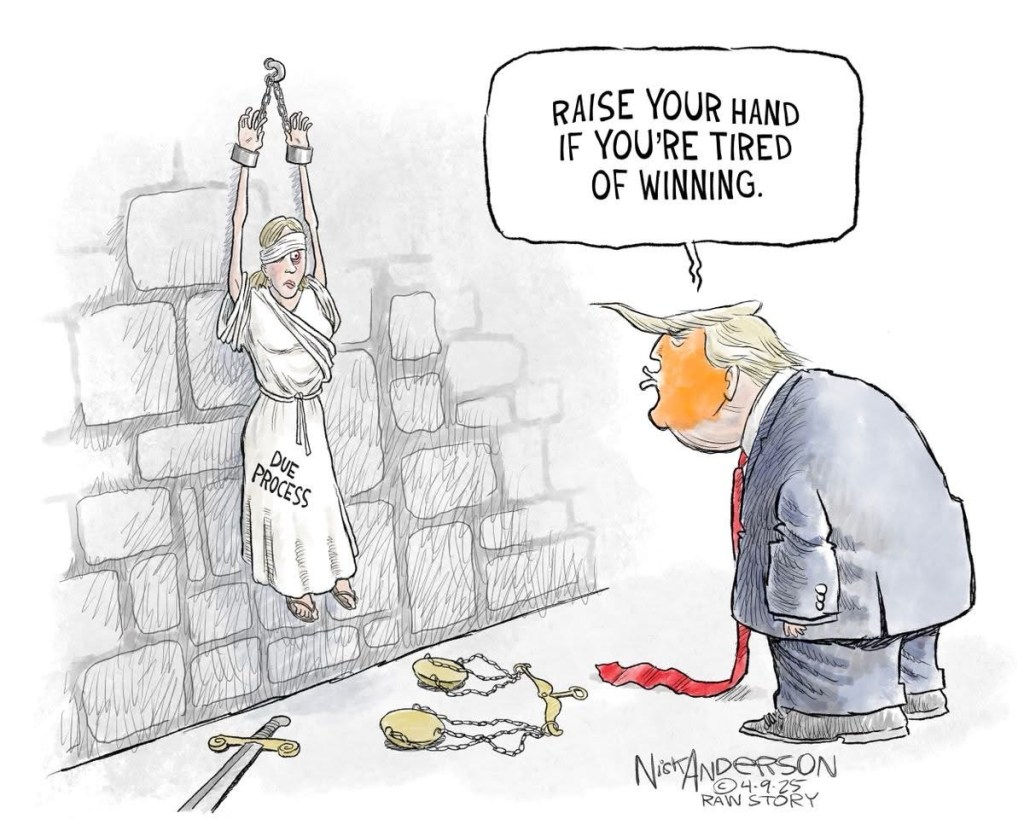
Donald Trump and his White House have moved to deport green-card holders for espousing pro-Palestinian views, shipped hundreds of migrants to a notorious Salvadoran mega-prison without due process (in defiance of a judge’s order), and are now publicly musing about sending United States citizens to prison in El Salvador.
Trump said last weekend he would “love” to send American criminals there — and would even be “honored” to, depending on “what the law says.” White House Press Secretary Karoline Leavitt confirmed this week that the president has discussed this idea privately, too, adding he would only do this “if it’s legal.” El Salvador’s president, Nayib Bukele, has for months been offering to hold U.S. citizens in his country’s prison system, which he has turned into “a judicial black hole” rife with “systematic torture,” as one human rights advocate recently told Rolling Stone.
Consuelo by Olga Sacharoff, 1924
Legal experts agree that sending American citizens to prison in El Salvador would be flagrantly illegal under both U.S. and international law — and that the idea itself is shockingly authoritarian, with few parallels in our nation’s history.
The Trump administration is indeed discussing this idea behind the scenes, two sources familiar with the matter confirmed to Rolling Stone. In their most serious form, these conversations have revolved around attempting to denaturalize American citizens and deport them to other countries, including El Salvador.
“You can’t deport U.S. citizens. There’s no emergency exception, there’s no special wartime authority, there’s no secret clause. You just can’t deport citizens,” says Steve Vladeck, a legal commentator and law professor at Georgetown. “Whatever grounds they try to come up with for denaturalization or expatriation, the one thing that is absolutely undeniable is that people are entitled to individualized processes, before that process can be effectuated.”
In the United States, the grounds to strip a naturalized individual of their citizenship encompass serious material offenses. They include: committing treason or terrorism, enlisting in a foreign military engaged in opposition to the United States, or lying in applications for citizenship or as part of the naturalization process.
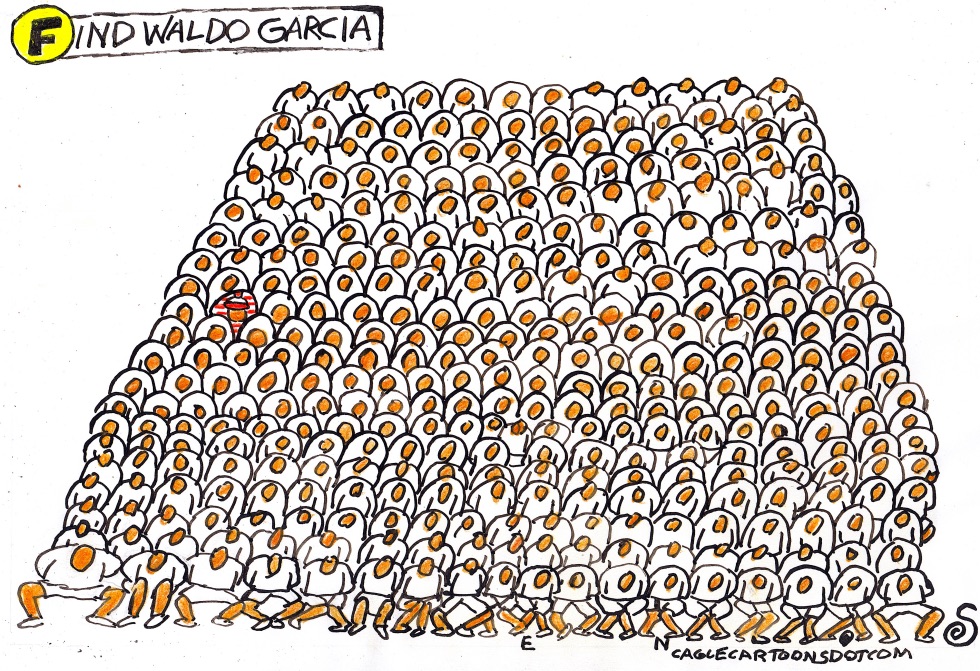
The Trump administration on Friday continued to pursue its stubborn fight against securing the freedom of a Maryland man it inadvertently deported to a Salvadoran prison last month despite a court order that expressly said he could remain in the United States.
Taking an increasingly combative stance, the administration defied a federal judge’s order to provide a written road map of its plans to free the man, Kilmar Armando Abrego Garcia. Trump officials then repeatedly stonewalled her efforts to get the most basic information about him at a court hearing.
During the hearing, in Federal District Court in Maryland, the judge, Paula Xinis, called the administration’s evasions “extremely troubling” and demanded that the Justice Department provide her with daily updates on the White House’s progress in getting Mr. Abrego Garcia back on U.S. soil.
“The court finds that the defendants have failed to comply with this court’s order,” Judge Xinis wrote in a ruling Friday afternoon.
The conflict between the judge and the White House arose just one day after the Supreme Court unanimously ordered the administration to “facilitate” Mr. Abrego Garcia’s release from Salvadoran custody and only a few days before President Nayib Bukele of El Salvador was set to arrive in Washington for an official visit.
Asked about the case on Friday, President Trump appeared in no hurry to take steps to ensure Mr. Abrego Garcia’s return, despite repeated court orders and a Supreme Court intervention.
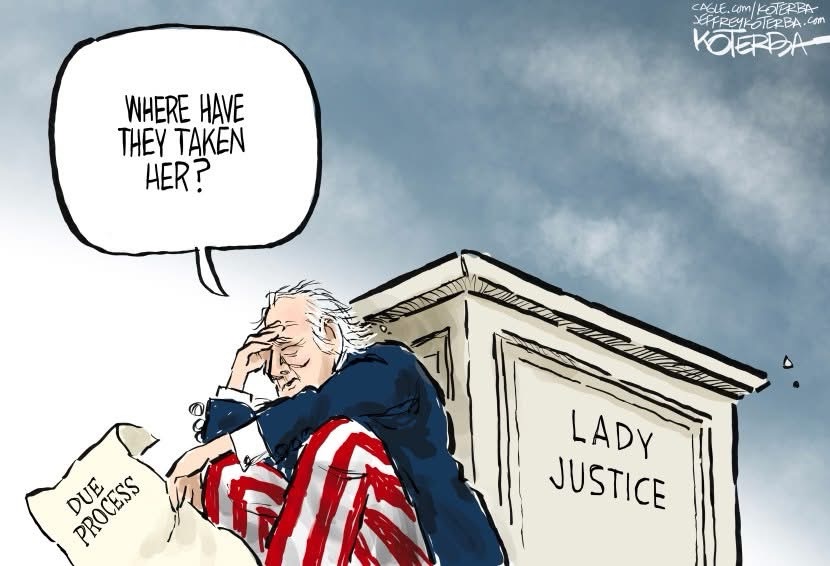
“If the Supreme Court said, ‘Bring somebody back,’ I would do that,” he said, seeming to ignore the court’s order. “I respect the Supreme Court.”
By Hedda Oppenheim
Of course the Supreme Court has already said that.
The public recalcitrance on the part of Mr. Trump and his officials highlighted questions about why they have been so reluctant to follow the orders or leverage the president’s relationship with Mr. Bukele to simply ask for Mr. Abrego Garcia to be freed.
Judge Xinis, by ordering the government to detail its progress in getting Mr. Abrego Garcia out of El Salvador, managed to avoid an immediate showdown with the White House. But the fiery clashes left open the possibility of a future standoff.
The administration has already had friction with judges in other cases — particularly those involving Mr. Trump’s deportation policies — but the conflict with Judge Xinis was one of the most contentious yet. Last week, a federal judge in Washington said there was a “fair likelihood” that the administration had violated one of his rulings ordering the White House to stop using a powerful wartime statute to deport scores of Venezuelan migrants to El Salvador.
The dispute involving Judge Xinis emerged after the Supreme Court late Thursday told Trump officials to take steps to free Mr. Abrego Garcia, a 29-year-old Salvadoran migrant, from the CECOT prison in El Salvador, where he was sent with scores of other migrants on March 15.
DOGE’s bread and butter has been slashing headcounts but it is now wielding its influence deep inside the nation’s immigration system — an initiative led by one of Elon Musk’s closest friends, three Trump administration officials granted anonymity to discuss internal dynamics told POLITICO.
Antonio Gracias, a Musk confidante whose history with the billionaire goes back more than 20 years, is quietly heading up a specialized DOGE immigration task force that’s embedded engineers and staffers across nearly every nook of the Department of Homeland Security, two of the people said. The task force is also working with DOGE operatives stationed at other agencies like the Social Security Administration and the Department of Health and Human Services, which house sensitive data on undocumented immigrants.
With Musk’s trusted friend and fixer at the helm, the task force marks a significant expansion of DOGE’s portfolio — from primarily working on agency-wide layoffs to executing the president’s most hardline immigration policies. It’s also a test for how far DOGE’s reach can extend.
Key DOGE engineers now embedded at DHS include Kyle Schutt, Edward Coristine, (aka “Big Balls”) and Mark Elez, according to their government email addresses. At least two others, Aram Moghaddassi and Payton Rehling also have access to DHS data, as DOGE fingerprints are spread throughout DHS, including Customs and Border Protection, U.S. Citizenship and Immigration Services and the Cybersecurity and Infrastructure and Security Agency.
They are providing the technical infrastructure for a sweeping set of actions aimed at revoking parole, terminating visas, and later on, reengineering the asylum adjudication process, according to the officials.
Their first mission: implement parole terminations for 6,300 undocumented immigrants who either have criminal records or are on the FBI’s terrorist watchlist. That effort required coordinating with the Social Security Administration to have their Social Security numbers effectively canceled by adding them to a database that tracks dead people, the New York Times and the Washington Post first reported. Their theory is that without effective Social Security numbers – needed for bank accounts and loans, among other things – these people would “self deport.”
The Social Security Administration will no longer be communicating with the media and the public through press releases and “dear colleague” letters, as it shifts its public communication exclusively to X, sources tell WIRED. The news comes amid major staffing cuts at the agency.
“We are no longer planning to issue press releases or those dear colleague letters to inform the media and public about programmatic and service changes,” said SSA regional commissioner Linda Kerr-Davis in a meeting with managers earlier this week. “Instead, the agency will be using X to communicate to the press and the public … so this will become our communication mechanism.”
Woman holding cat, by Liang Yi Er
Previously, the agency used dear colleague letters to engage with advocacy groups and third-party organizations that help people access social security benefits. Recent letters covered everything from the agency’s new identity verification procedures to updates on the accuracy of SSA death records (“less than one-third of 1 percent are erroneously reported deaths that need to be corrected,” the agency wrote, in contrast to what Elon Musk claims).
The letters and press releases were also a crucial communications tool for SSA employees, who used them to stay up on agency news. Since SSA staff cannot sign up for social media on government computers without submitting a special security request, the change could have negative consequences on the ability for employees to do their jobs.
It could also impact people receiving social security benefits who rely on the letters for information about access benefits. “Do they really expect senior citizens will join this platform?” asked one current employee. “Most managers aren’t even on it. How isn’t this a conflict of interest?” Another staffer added: “This will ensure that the public does not get the information they need to stay up-to-date.”
The White House response to the Wired story:
“This reporting is misleading. The Social Security Administration is actively communicating with beneficiaries and stakeholders,” says Liz Huston, a White House spokesperson. “There has not been a reduction in workforce. Rather, to improve the delivery of services, staff are being reassigned from regional offices to front-line help – allocating finite resources where they are most needed. President Trump will continue to always protect Social Security.”
I guess we’ll find out eventually. Social security advocates are warning that the system is going to collapse and the 73 million recipients could go months with out payments.
Two days after the Social Security Administration purposely and falselylabeled 6,100 living immigrants as dead, security guards arrived at the office of a well-regarded senior executive in the agency’s Woodlawn, Maryland, headquarters.
Greg Pearre, who oversaw a staff of hundreds of technology experts, had pushed back on the Trump administration’s plan to move the migrants’ names into a Social Security death database, eliminating their ability to legally earn wages and, officials hoped, spurring them to leave the country. In particular, Pearre had clashed with Scott Coulter, the new chief information officer installed by Elon Musk. Pearre told Coulter that the plan was illegal, cruel and risked declaring the wrong people dead, according to three people familiar with the events.
Buthisobjections did not go over well with Trump political appointees. And so on Thursday, the security guards in Pearre’s office told him it was time to leave.
They walked Pearre out of the building, capping a momentous internal battle over the novel strategy — pushed by Musk’s U.S. DOGE Service and the Department of Homeland Security — to add thousands of immigrants ranging in age from teenagers to octogenarians to the agency’s Death Master File. The dataset is used by government agencies, employers, banks and landlords to check the status of employees, residents, clients and others.
The episode also followed earlier warnings from senior Social Security officials that the database was insecure and could be easily edited without proof of death — a vulnerability, staffers say, that the Trump administration has now exploited….
Experts in government, consumer rights and immigration law said the administration’s action is illegal. Labeling people dead strips them of the privacy protections granted to living individuals — and knowingly classifying living people as dead counts as falsifying government records, they said. This is in addition to the harm inflicted on those suddenly declared dead, who become unable to legally earn a living wage or draw benefits they may be eligible for. Social Security itself has acknowledged that an incorrect death declaration is a “devastating” blow….
“This is an unprecedented step,” said Devin O’Connor, a senior fellow on the federal fiscal policy team for the Center on Budget and Policy Priorities, a progressive think tank. “The administration seems to basically be saying they have the right to essentially declare people equivalent to dead who have not died. That’s a hard concept to believe, but it brings enormous risks and consequences.”
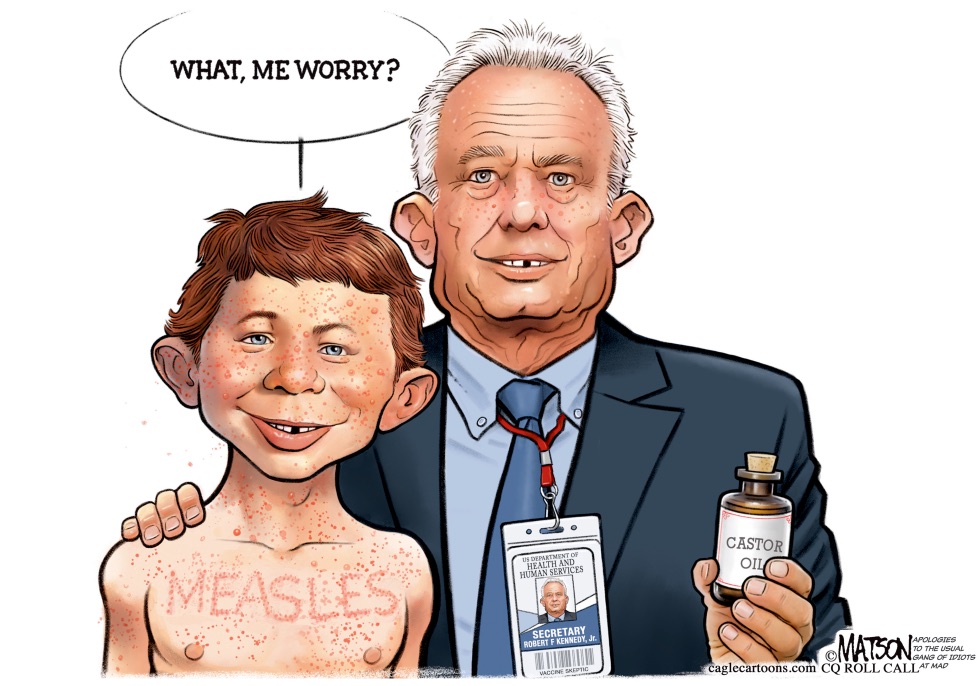
HHS Secretary Robert F. Kennedy Jr.’s visit to the FDA Friday was supposed to introduce him as a trusted leader to agency employees. It did anything but.
Over the course of 40 minutes, Kennedy, in largely off-the-cuff remarks, asserted that the “Deep State” is real, referenced past CIA experiments on human mind control and accused the employees he was speaking to of becoming a “sock puppet” of the industries they regulate.
Little Girl with Cat, by Pierre Bonnard
“Because of my family’s commitment to these issues, I spent 200 hours at Wassaic Home for the Retarded when I was in high school,” Kennedy said, in a reference to the Wassaic State School for the Mentally Retarded in Wassaic, New York. “So I was seeing people with intellectual disabilities all the time. I never saw anybody with autism.”
The remark jolted several FDA employees in the audience, who misheard the reference and thought he was making a derogatory remark about people with intellectual disabilities, according to two employees granted anonymity for fear of retaliation.
By the end of the event, billed as a welcome from the new commissioner, Marty Makary, several FDA staffers had walked out of the rooms where the speech was being broadcast at the agency’s headquarters in White Oak, Maryland, according to two employees granted anonymity for fear of retaliation.
“President Trump always talks about the Deep State, and the media, you know, disparages him and says that he’s paranoid,” Kennedy said, according to a transcript and audio of his remarks obtained by POLITICO. “But the Deep State is real. And it’s not, you know, just George Soros and Bill Gates and a bunch of nefarious individuals sitting together in a room and plotting the, you know, the destruction of humanity.”
He said “every institution that’s created by human beings” is inevitably captured by powerful interests, and urged FDA employees to take advantage of a four-year period under his leadership where he vowed that the Department of Health and Human Services would not be subjected to undue influence and would listen to “dissidents.”
U.S. DOGE Service employees have inserted themselves into the government’s long-established process to alert the public about potential federal grants and allow organizations to apply for funds, according to four people who spoke on the condition of anonymity to describe a sensitive situation.
The changes to the process — which will allow DOGE to review and approve proposed grant opportunities across the federal government — threaten to further delay or even halt billions of dollars that agencies usually make in federal awards, the people said. The moves come amid the Trump administration’s broader push to cut federal spending and crack down on grants that DOGE and other officials say conflict with White House priorities.
DOGE employees have made changes to grants.gov, a federal website that has traditionally served as a clearinghouse for more than $500 billion in annual awards and is used by thousands of outside organizations, the people said. Federal agencies including the Defense, State and Interior departments have historically posted their grant opportunities directly to the site. Nonprofits, universities and local governments respond to these grant opportunities with applications to receive federal funding for activities that include cancer research, cybersecurity, highway construction and wastewater management.
But a DOGE engineer recently deleted many federal officials’ permissions to post grant opportunities, without informing them that their permissions had been removed, the people said. Now the responsibility of posting these grant opportunities is poised to rest with DOGE — and if its employees delay those postings or stop them altogether, “it could effectively shut down federal-grant making,” said one federal official who spoke on the condition of anonymity to describe internal operations.
Agency officials have been told that the grants.gov site has been under systems maintenance. They have been instructed to email their planned grant notices to grantreview@hhs.gov, an inbox at the Department of Health and Human Services that is being monitored by DOGE, the people said.
About 5,000 notices of funding opportunities are typically posted on grants.gov each year, with more than 10 million visitors to the site, according to people with knowledge of its operations. Some federal agencies have been able to post grant opportunities, known as Notice of Funding Opportunities or NOFOs, but the vast majority rely on grants.gov, the people said.
Unbelievable.
I’ll end there. I know this is way too long. Take care, everyone!
Did you like this post? Please share it with your friends:
“Well, I don’t know why I came here tonight I’ve got the feeling that something ain’t right I’m so scared in case I fall off my chair And I’m wondering how I’ll get down the stairs” John Buss, Repeat1968 with h.t t;o Stealers Wheels
Good Day, Sky Dancers!
I took some time today to enjoy a friend from FDL, sushi from Lin’s at St Roch Market, and the Bywater and Marigny right up to the edge of the Quarter. The only way to explore my neighborhood is by foot or by bus. That way, you really get to know us. The stores on LA49 (better known as St. Claude Avenue) are small, locally owned, and full of surprises. I don’t think I can ever emphasize how much I love this city. It’s probably why I stay here and don’t go elsewhere anymore. I first discovered this because when I ventured around the state or country, I had dreams about not being able to find or go home, which ended immediately when I opened the front door. I really wish you this feeling. It’s amazing.
It gave me a breath from reading stuff today. So, here I go, right into the thick of it. This is from Dr. Paul Krugman’s Substack. “The Third-Worlding of America. How to destroy 80 years of credibility in less than 3 months.” Like all excellent economists, he’s got charts and numbers to prove it. I got all these degrees to help people understand financial markets and economic policy. Now, I live with knowledge; I just pray it still empowers people, even if it feels disheartening today.
Remarkably, the sanewashing continues despite the unprecedented craziness of the past 10 days. Many observers assert that Trump has backed down on tariffs and will speedily make a bunch of trade deals. The first assertion is just false, while the second is very unlikely.
In fact, savvy traders have realized that there’s no coherent economic strategy. There’s an old line about military analysis: “Amateurs talk about tactics, but professionals talk about logistics.” Well, when it comes to taking the pulse of financial markets, amateurs talk about stocks, but professionals talk about bond and currency markets. That’s because bond and currency markets are generally less driven by emotion. There’s no “meme gambling investing” in bond and currency markets. And these markets are both signaling major loss of faith in America.
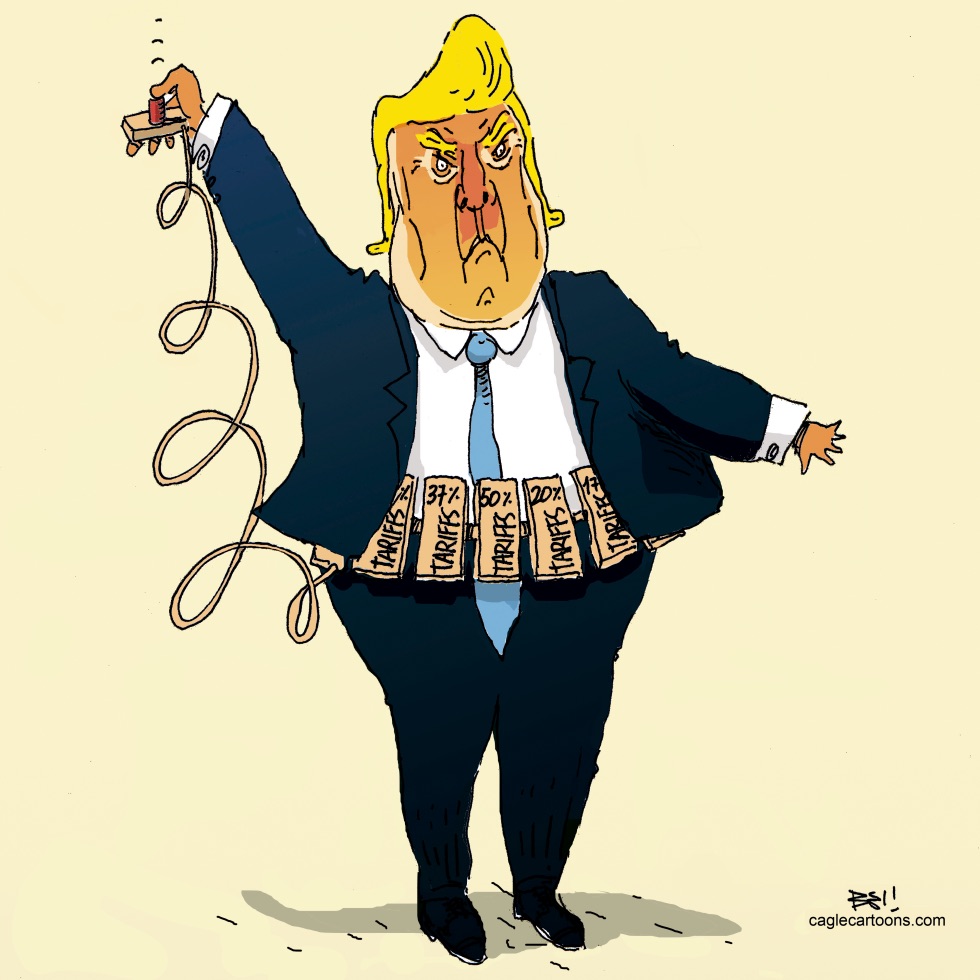
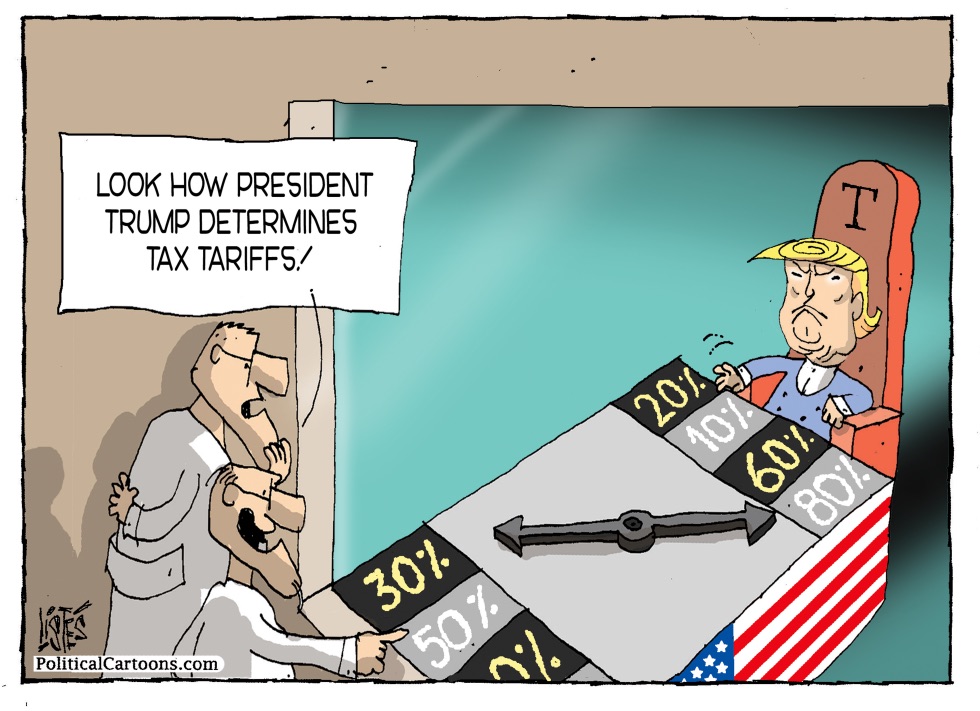
First, about tariffs: It’s true that for the time being Trump has scaled back some of the tariffs displayed on his big piece of cardboard last week. For example, unless we have another policy swerve, the European Union will now face a 10 percent tariff over the next three months rather than a 20 percent tariff. But the tariff on China, our third-biggest trading partner after Canada and Mexico, has gone from 34 percent to more than 130 percent. And we still have high tariffs on steel, aluminum and so on. In effect, observers who claim that tariffs have gone down are missing the biggest part of the story.
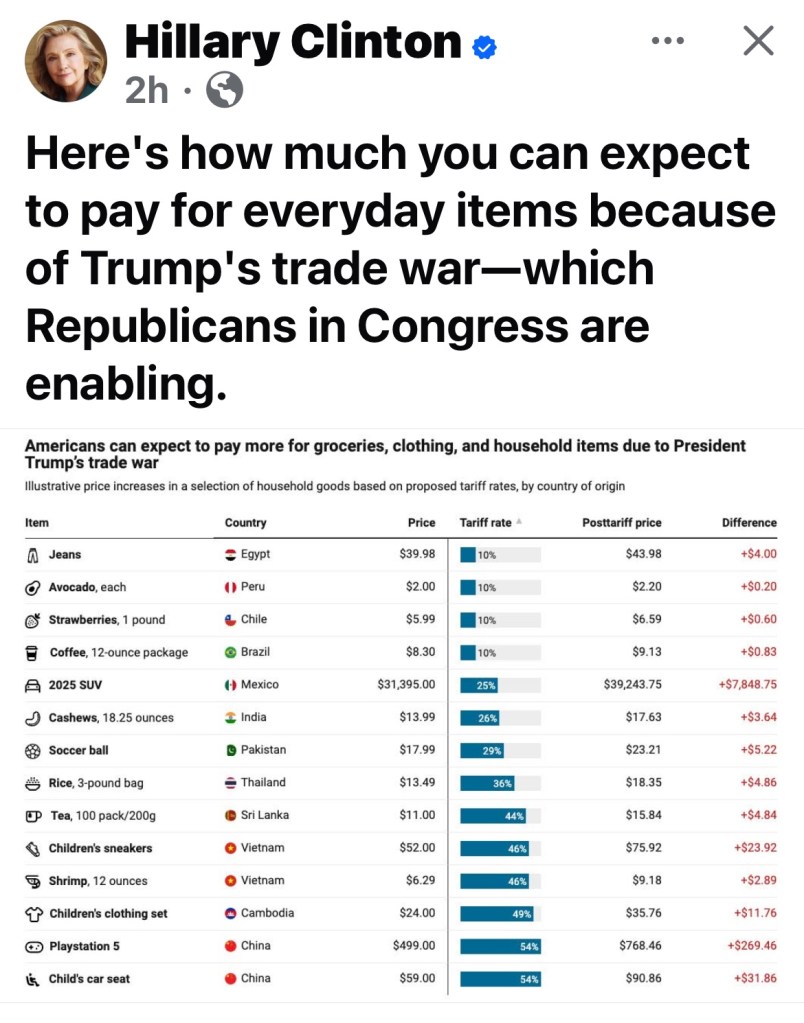
Economists who have actually run the numbers, like those at the Yale Budget Lab, estimate that the April 9 tariff regime will raise consumer prices more than the April 2 regime because of the extraordinarily high tariff rate on Chinese imports. Specifically, the budget lab estimates that the latest version of Trump’s trade war will raise consumer prices by 2.9 percent. This is roughly ten times the probable impact of the infamous Smoot-Hawley tariff of 1930.
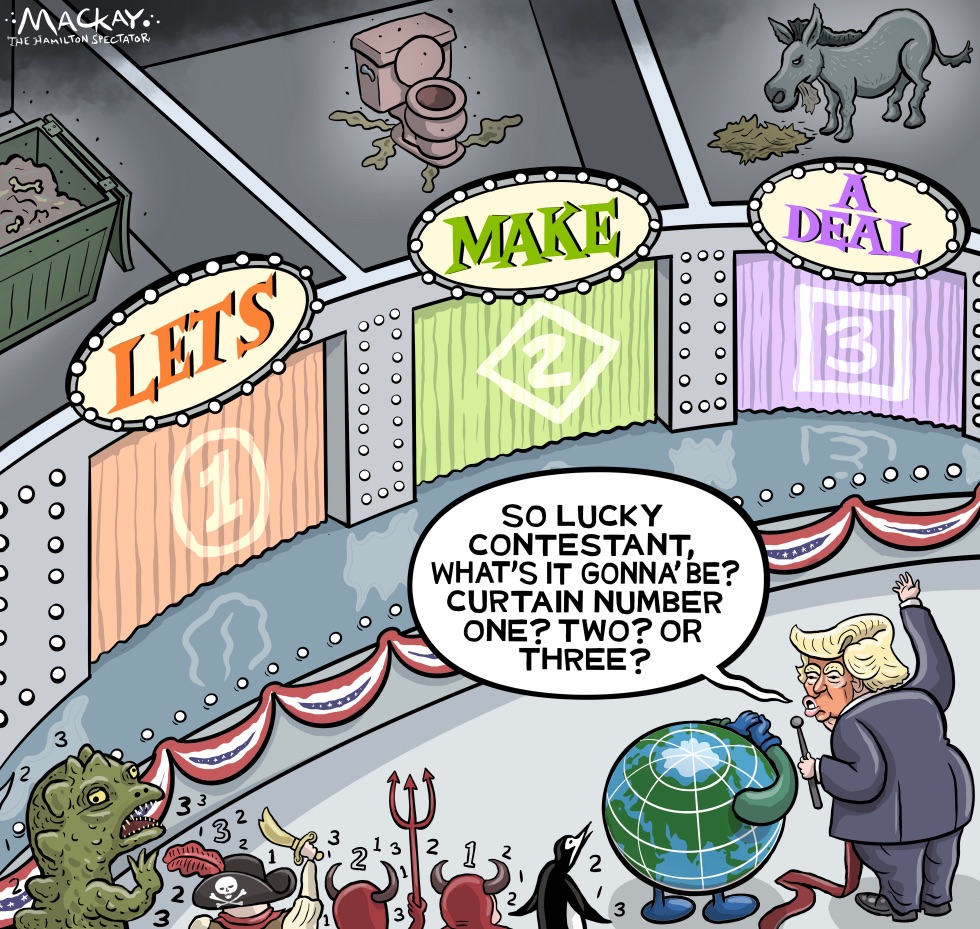
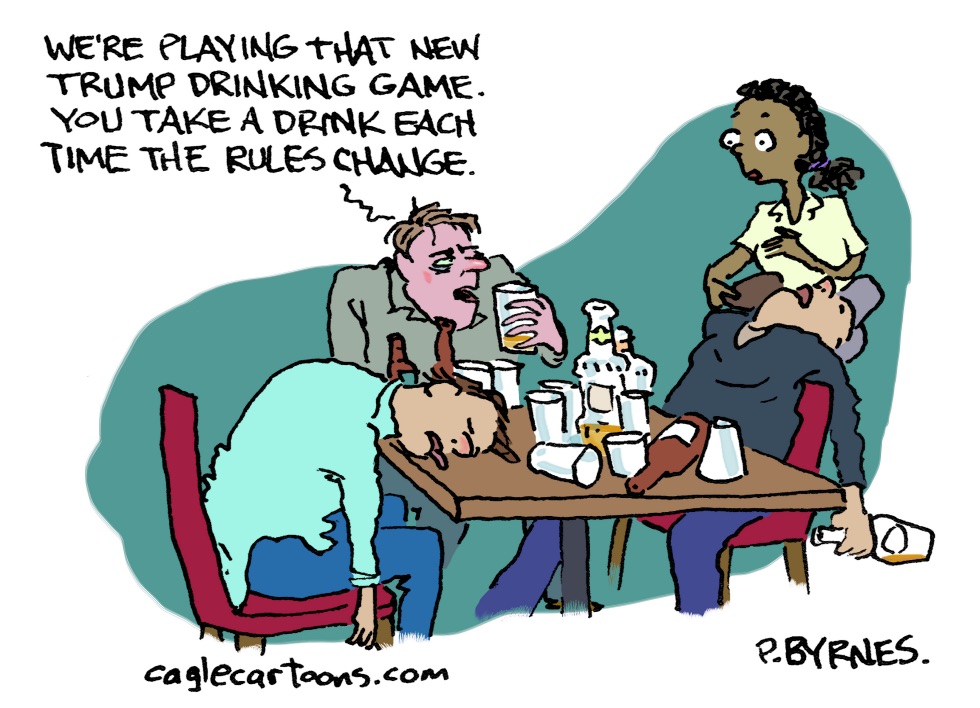
It’s hard to overstate the craziness of announcing a radical tariff plan, then announcing a quite different but equally radical plan just a week later. Furthermore, the claim that the wild zigzags in policy were always part of Trump’s plan just adds to the destruction of the administration’s credibility.
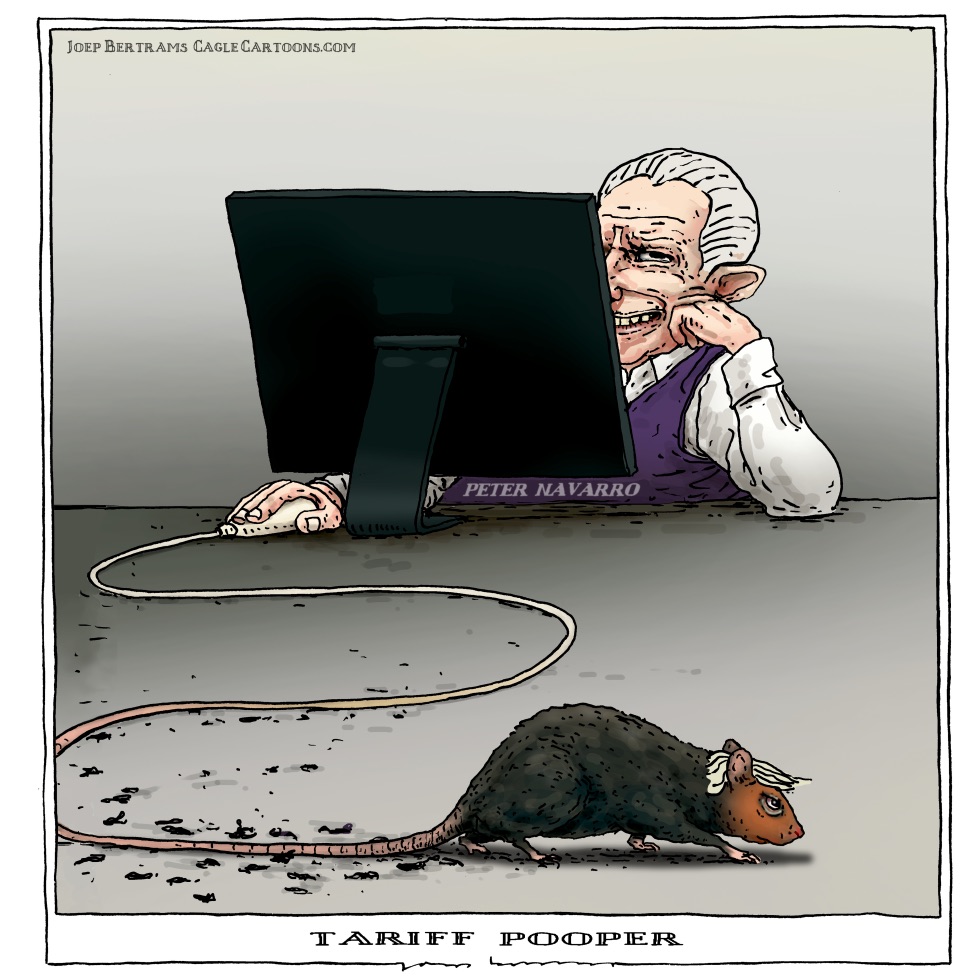
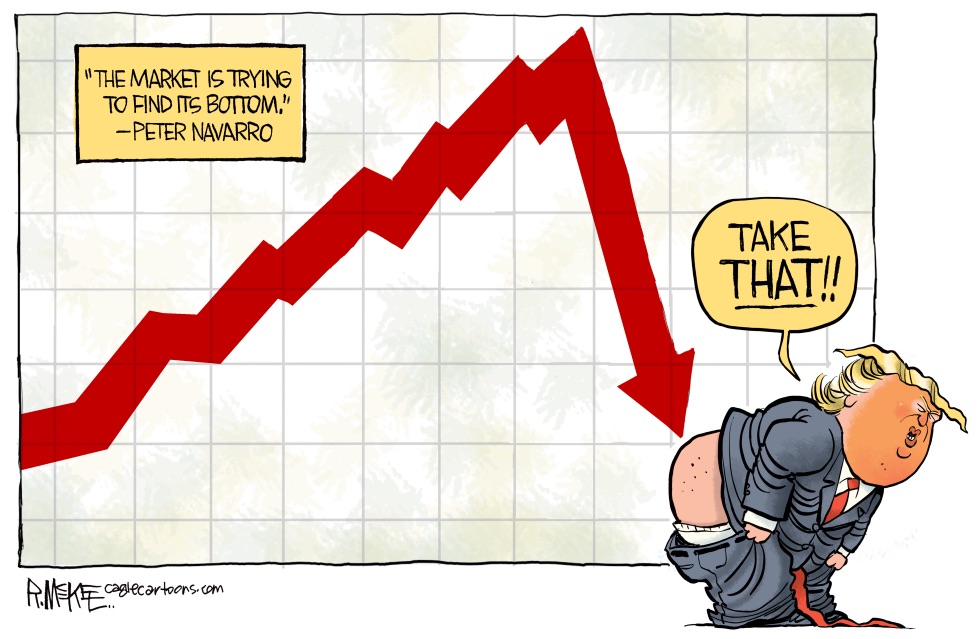
But are these tariffs just an opening gambit for trade negotiations? I doubt it. Bear in mind that Trump and Peter Navarro, his tariff guru, start from the premise that other countries are cheating, that they’re taking advantage of America and treating us unfairly. In fact, however, most of them aren’t. Take the case of the European Union. The EU imposes an average tariff on U.S. goods of just 1.7%, and there aren’t any significant hidden barriers.
So what are we supposed to be negotiating about? Nations can’t promise to lower their trade barriers when there aren’t any barriers. Navarro has been claiming that value-added taxes are de facto tariffs, but they aren’t, and EU nations literally can’t afford to give them up.
I guess other countries might make fake concessions that Trump can claim as fake victories. This is what he did with China during his first term, claiming that it had made significant concessions — claims which were, in the end, false. In fact, American soybean farmers have never fully recovered the loss of market share. And remember too how Trump made minor changes to NAFTA and claimed to have negotiated a whole new trade pact.
However, Trump is now clearly high on his own supply. Even with the April 9 tariff regime, Trump is imposing high tariff rates on our three largest trading partners. Currency and bond market traders — no fools they — are certainly not acting as if we’re on a path to successful deals.
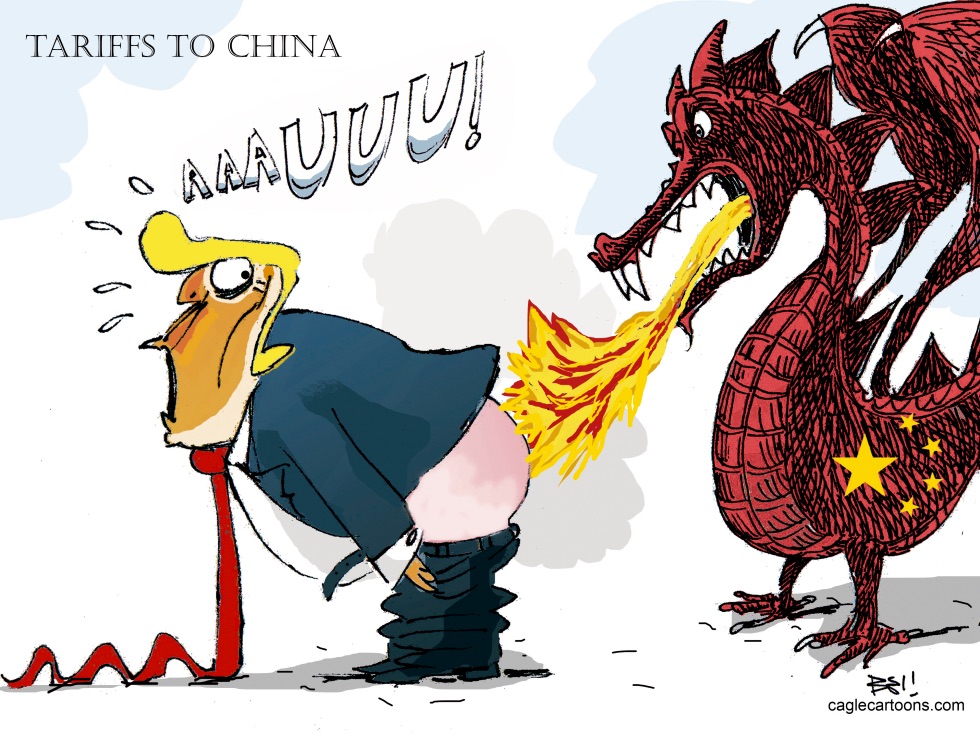
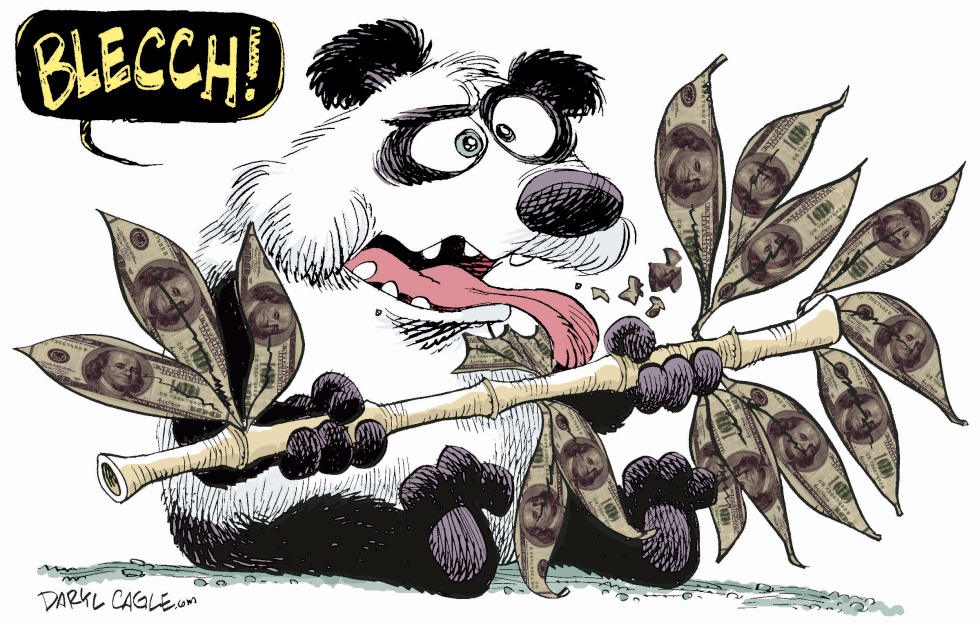
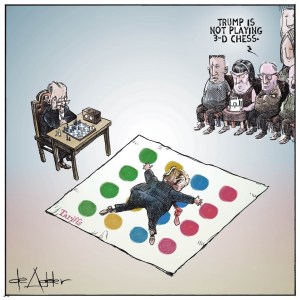
The Chinese are pranking Trump today. This is from the Washington Post. “China raises tariffs on U.S. goods to 125 percent as trade war deepens. Beijing hit back in response to the Trump administration’s move to raise tariffs on Chinese goods to 145 percent, saying it would “fight to the end.” They can afford to. They’re making deals with South Korea and Japan, among other countries. The only group this is hurting is US importers and Exporters. This includes farmers.
The response underscored China’s decision to stand firm in the face of pressure from Washington and deepened the showdown between the world’s two largest economies.
“If the U.S. insists on substantively damaging China’s interests, China will firmly retaliate and fight to the end,” China’sState Council said in a statement.
The move came after Trump increased the levies on Chinese goods to 145 percent on Wednesday, while also announcing that the tariffs he had previously imposed on more than six dozen other countries would be fixed at 10 percent during a 90-day pause.
The State Council derided Trump’s move to continue ratcheting up the levies and said it would ignore further hikes. The tariffs are a “joke” and “no longer have any economic significance,” its statement said, because the current levels make U.S. exports to China not financially viable. The new Chinese tariffs, which increased from 84 percent, are effective Saturday.
Chinese leader Xi Jinping, in a meeting with Spanish Prime Minister Pedro Sánchez on Friday, stressed that trade wars have no winners and called for China and Europe to “jointly oppose unilateral bullying,” according to state media. European leaders also emphasized the damaging effects of uncertainty beyond the 90-day pause.
Experts in Beijing expressed concern about the latest turn in tensions with Washington. “U.S.-China trade will soon be almost nonexistent,” said Shi Yinhong, an international relations professor at China’s Renmin University. “To ease tensions, Trump must first make concessions.”
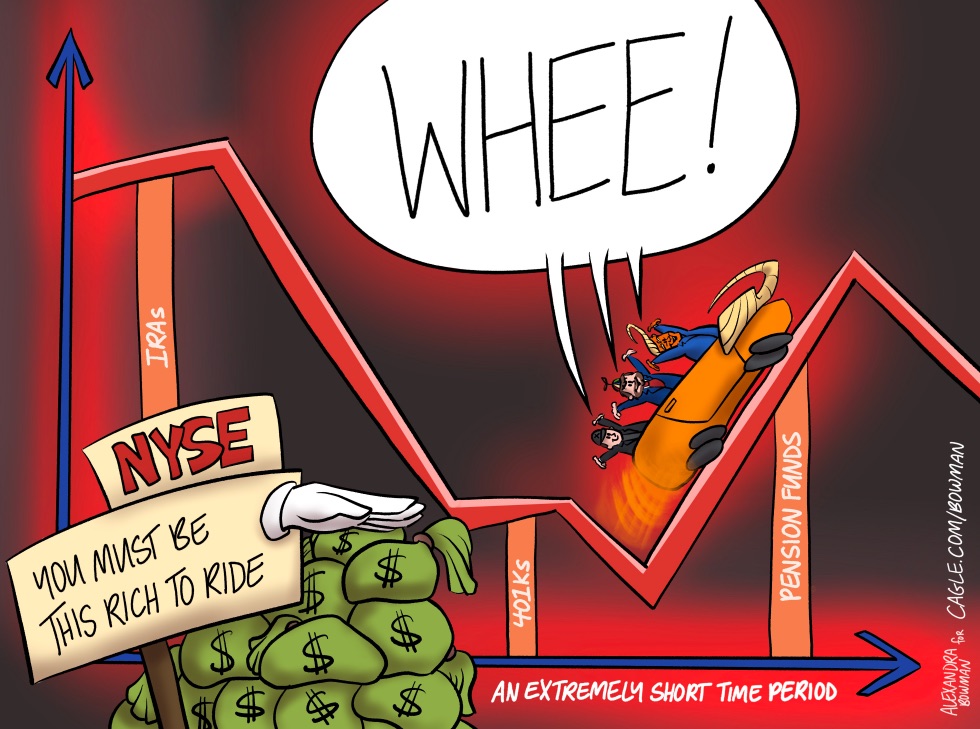
Turmoil over tariffs drove fluctuations in global markets on Friday.
Japan’s Nikkei 225 and Topix indexes dropped by5percent, before trimming their losses to under 3 percent by market close. South Korea’s Kospi and Australia’s ASX 200 fell by less than1 percent, while Taiwan’s bourse kicked off the day with a fall of under 1 percent before logging a 2.5 percent gain. Hong Kong’s Hang Seng Index and China’s Shanghai composite index were mostly flat, with the Hang Seng closing just over 1 per cent higher.
Major European markets fell slightly after opening on Friday, following rebounds the previous day. By 6 a.m. Eastern time, Germany’s DAX was down 1.62 percent, France’s benchmark CAC fell by 1.11 percent and London’s FTSE 100 was down around 0.3 percent.
It’s almost as if… and stay with me now… It’s almost as if Republicans aren’t as good at the economy as they claim to be! 🤷♂️
The Trump administration intends to eliminate the research arm of the National Oceanic and Atmospheric Administration, close all weather and climate labs and eviscerate its budget along with several other NOAA offices, according to internal documents obtained by CNN.
The documents describe the administration’s budget proposal for 2026, but indicate the administration expects the agency to enact the changes immediately.
The cuts would devastate weather and climate research as weather is becoming more erratic, extreme and costly. It would cripple the US industries — including agriculture — that depend on free, accurate weather and climate data and expert analysis. It could also halt research on deadly weather, including severe storms and tornadoes.
The administration intends to make significant cuts to education, grants, research and climate-related programs in NOAA, the plan says, which the administration believes “are misaligned with the … expressed will of the American people.”
While the phrase “climate change” refers to the manmade influence on the global climate system via planet-warming fossil fuel pollution, “climate” in NOAA parlance is simply the weather that has been observed over time.
CNN has reached out to the White House and the Department of Commerce, which houses NOAA, for comment on the plan.
Additionally, NASA is on the chopping block! Does this include all that money going to Elonia? This is from ars TECHICA‘s Eric Berger. “Trump White House budget proposal eviscerates science funding at NASA. “This would decimate American leadership in space.” #FARTUS seems dead set on sending us back to the Gilded Age. Even the best of the Modern Era is about to be erased.
This week, as part of the process to develop a budget for fiscal-year 2026, the Trump White House shared the draft version of its budget request for NASA with the space agency.
This initial version of the administration’s budget request calls for an approximately 20 percent overall cut to the agency’s budget across the board, effectively $5 billion from an overall topline of about $25 billion. However, the majority of the cuts are concentrated within the agency’s Science Mission Directorate, which oversees all planetary science, Earth science, astrophysics research, and more.
According to the “passback” documents given to NASA officials on Thursday, the space agency’s science programs would receive nearly a 50 percent cut in funding. After the agency received $7.5 billion for science in fiscal-year 2025, the Trump administration has proposed a science topline budget of just $3.9 billion for the coming fiscal year.
Among the proposals were: A two-thirds cut to astrophysics, down to $487 million; a greater than two-thirds cut to heliophysics, down to $455 million; a greater than 50 percent cut to Earth science, down to $1.033 billion; and a 30 percent cut to Planetary science, down to $1.929 billion.
Although the budget would continue support for ongoing missions such as the Hubble Space Telescope and the James Webb Space Telescope, it would kill the much-anticipated Nancy Grace Roman Space Telescope, an observatory seen as on par with those two world-class instruments that is already fully assembled and on budget for a launch in two years.
We’re also unlikely to see other countries send their best and brightest to our US Universities with all this craziness. As some with with multiple degrees and ones that aren’t that easy to achieve, I would just like to say that my teachers, my students and grad assistants, and my colleagues and fellow students were consistently the best part of higher education school. I owe so much of my math chops to fellow students from India, Iran, Hong Kong, Turkey, and Taiwan. Both of my Doctorate advisors came here as students. One from India. The other is from Bangladesh. This brain drain will put us on the road to mediocrity.
Columbia University graduate student Mahmoud Khalil can be kicked out of the U.S. as a national security risk, an immigration judge in Louisiana found Friday during a hearing over the legality of deporting the activist who participated in pro-Palestinian demonstrations.
The government’s contention that Khalil’s presence in the United States posed “potentially serious foreign policy consequences” was enough to satisfy requirements for his deportation, Immigration Judge Jamee E. Comans said at the conclusion of a hearing in Jena.
Comans said the government had “established by clear and convincing evidence that he is removable.”
Lawyers for Khalil said they plan to keep fighting. The judge gave them until April 23 to seek a waiver. Meanwhile, a federal judge in New Jersey temporarily barred Khalil’s deportation.
Addressing the judge at the end of the hearing, Khalil mentioned that she said at a hearing earlier in the week that “there’s nothing more important to this court than due process rights and fundamental fairness.”
Let me just say that Jena, Louisiana, is a hell realm.
Is it a Constitutional Crisis Yet, Momma? Brad Reed has that Raw Story headline.
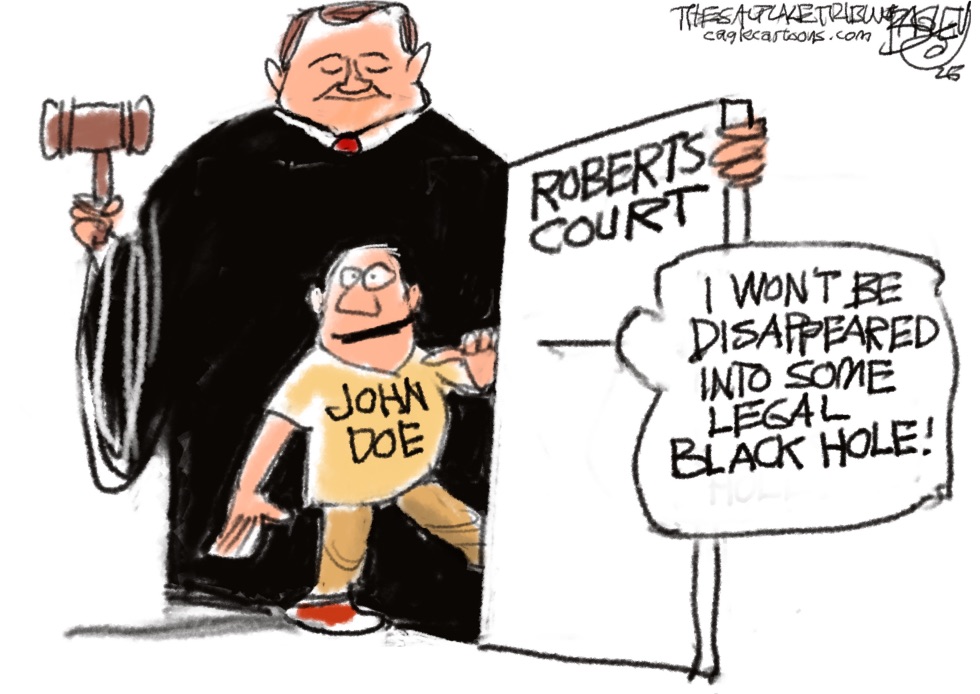
The United States Department of Justice said on Friday that it will not comply with an order from Judge Paula Xinis to reveal information on the whereabouts and status of deported immigrant Kilmar Abrego Garcia.
As reported by Politico’s Kyle Cheney on BlueSky, the DOJ information Judge Xinis that it would not be able to provide the information she requested on Garcia because the court set an “impracticable” deadline to do so.
Judge Xinis had originally demanded that the DOJ provide information about Garcia’s status by 9:30 a.m. on Friday after the United States Supreme Court ruled that the Trump administration needed to facilitate bringing him back from the prison in El Salvador where he had been sent improperly.
The judge extended the deadline to 11:30 a.m. on Friday morning and scheduled a court hearing on the case for 1 p.m.
So, I hope you’re trying to stay positive and calm. I’m going to go walk Temple and feed the kitties. That’s something I can do right now without feeling depressed.
What’s on your reading and blogging list today?
Did you like this post? Please share it with your friends:
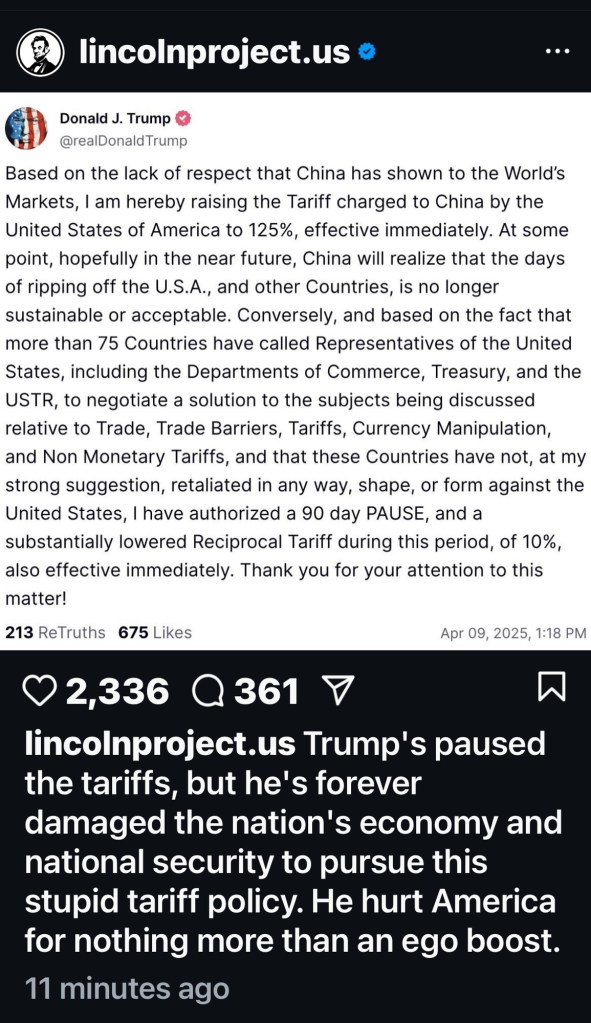
BREAKING: Trump said he will put a 90-day pause on all tariffs and lower reciprocal tariffs to 10% after several days of market selling that threatened to send the US into a recession. The stock market has sharply rebounded on the news, with major averages up more than 6% reut.rs/3Ehv63p
The 90-day pause on tariffs excludes China. President Trump said he would raise the tariff on Chinese imports to 125% from the 104% level that took effect at midnight reut.rs/3Ehv63p
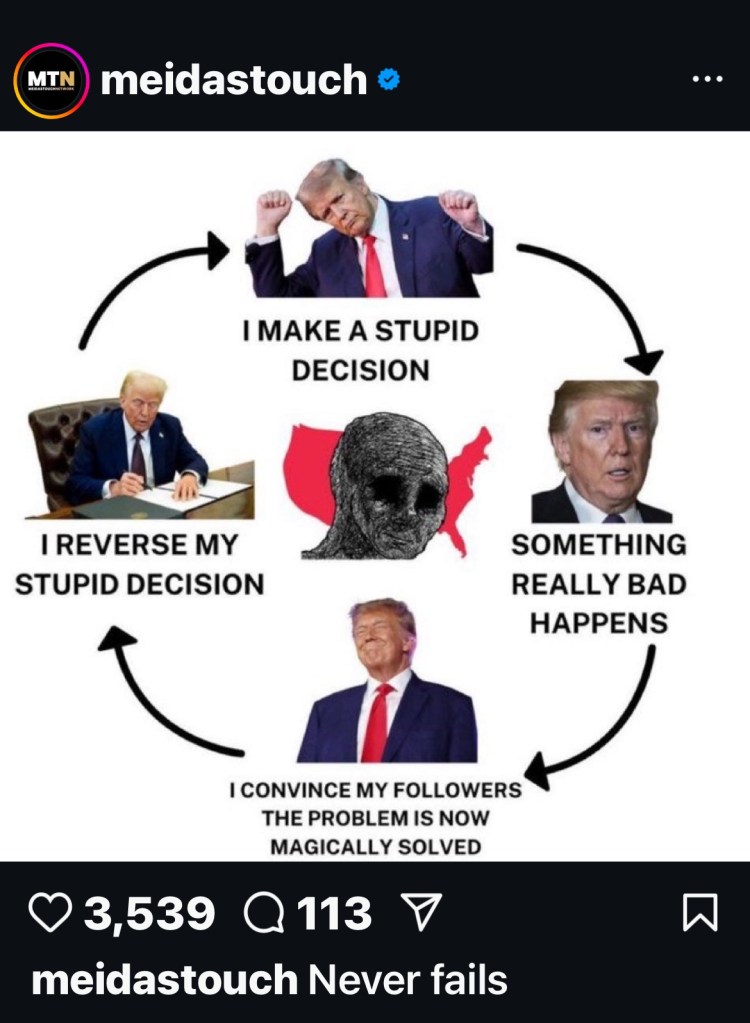
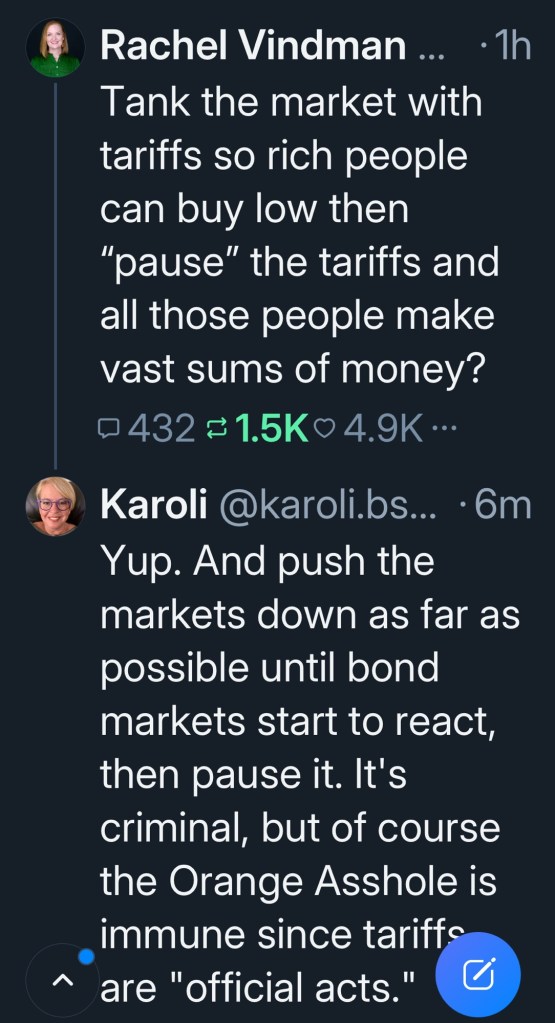
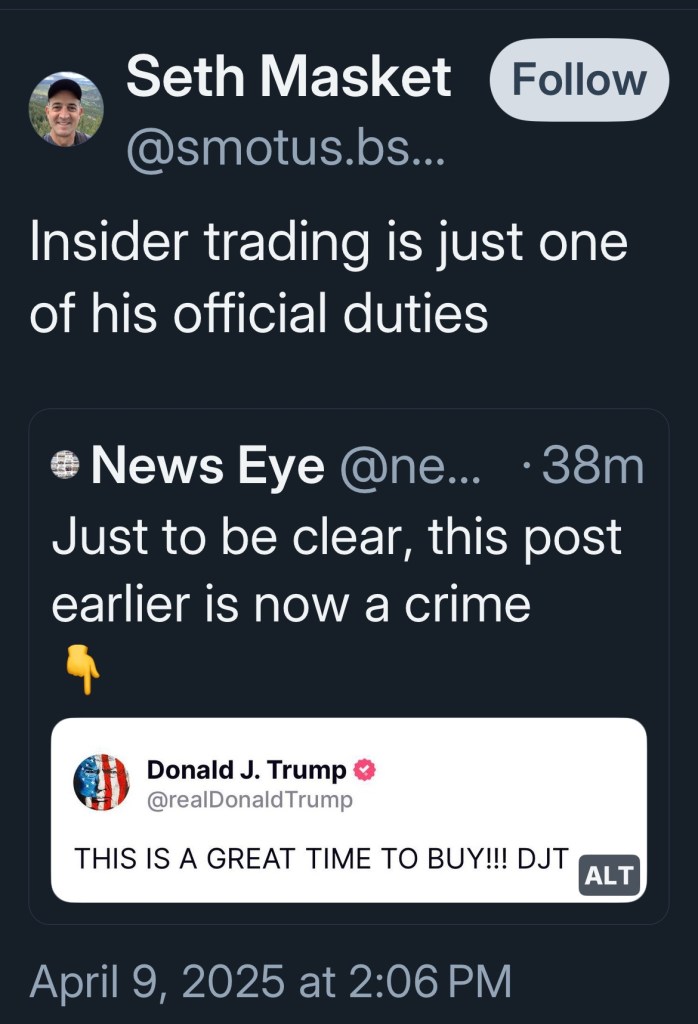
Trump tells his followers to buy stock in the morning, minutes after the market opens, then announces he is pausing tariffs 4 hours later.Nothing to see here.
I posted this yesterday in the comments, but it should be noted:
This is big: House Republicans tucked language into the budget res “rule” that bans the House from voting to terminate Trump’s emergency declaration used to impose tariffs. TL;DR lawmakers who vote for this are officially giving up their power to revoke his tariffs until October.
Here is Trump’s April 2 “liberation day” tariff declaration that would be protected from a vote to terminate until October — if the new House rule passes: http://www.whitehouse.gov/presidential…
Are you a woman who changed your name when you got married? Congress is considering a bill that could make it much harder for you to vote. Call your rep—this is not a drill. indivisible.org/resource/cal…
JUST IN: Trump administration appeals ruling restoring Associated Press to White House press pool after it was banned over 'Gulf of America.' Earlier: http://www.politico.com/news/2025/04…
Trump signed an executive order calling for the DOJ to investigate Chris Krebs, who headed the Cybersecurity and Infrastructure Agency (CISA). All Krebs did was tell the truth about the 2020 election, including that voting machines didn’t flip votes.For that, he was fired and now investigated.
Trump has also signed an executive order calling for Miles Taylor, an official in the first Trump administration who authored an anonymous book that was critical of Trump, to be investigated by the DOJ as well.Authoritarian. Orwellian.
If you watched the Oval Office, Trump targeted two individuals whose only offense was saying the truth. Then he targeted a law firm because it sued FoxNews. It ended with him totaling the money Big Law firms that have capitulated owe him in pro bono.We cannot give up. We must all commit to fight.
Crockett: "My Republican colleagues are here using today to continue pushing this false narrative of sanctuary cities harboring criminals, yet right here in DC we have a 34 count felon being harbored in the White House."
Dakinikat should be writing this post, but you’re stuck with me. I stayed up till about 2:30 last night doom scrolling and trying to understand what Trump’s tariff madness has done to us. The latest disaster last night was that the bond market is collapsing.
I’ll do my best to post relevant stories, and perhaps Dakinikat will chime in later. Thanks to Trump’s insanity, we could end up in another financial crisis comparable to the one in 2008.
What’s happening with tariffs:
There’s even more insane news this morning: China responded to Trump’s 104 percent tariff threat with another 84% tariff on the U.S.
China has pushed back again on U.S. President Donald Trump’s tariff policies by hiking its levies on U.S. imports to more than 80%.
Tariffs on U.S. goods entering China will rise to 84% from 34% starting April 10, according to a translation of a Office of the Tariff Commission of the State Council announcement. The hike comes in response to the latest U.S. tariff increase on Chinese goods to more than 100% that began at midnight.
The tit-for-tat escalation of tariffs threatens to crush trade between the world’s two largest economies. According to the Office of the U.S. Trade Representative, the U.S. exported $143.5 billion of goods to China in 2024, while importing products worth $438.9 billion.
The Trump administration announced a sweeping new tariff policy last week, warning other countries not to retaliate. Some nations, including Japan, have seemed willing to negotiate on tariffs, but China appears to be taking a more hard-line stance and quickly announced a countertariff.
After China’s initial response to the April 2 tariff rollout, Trump announced an additional 50% hike, putting the total level for import taxes on Chinese goods at 104%….
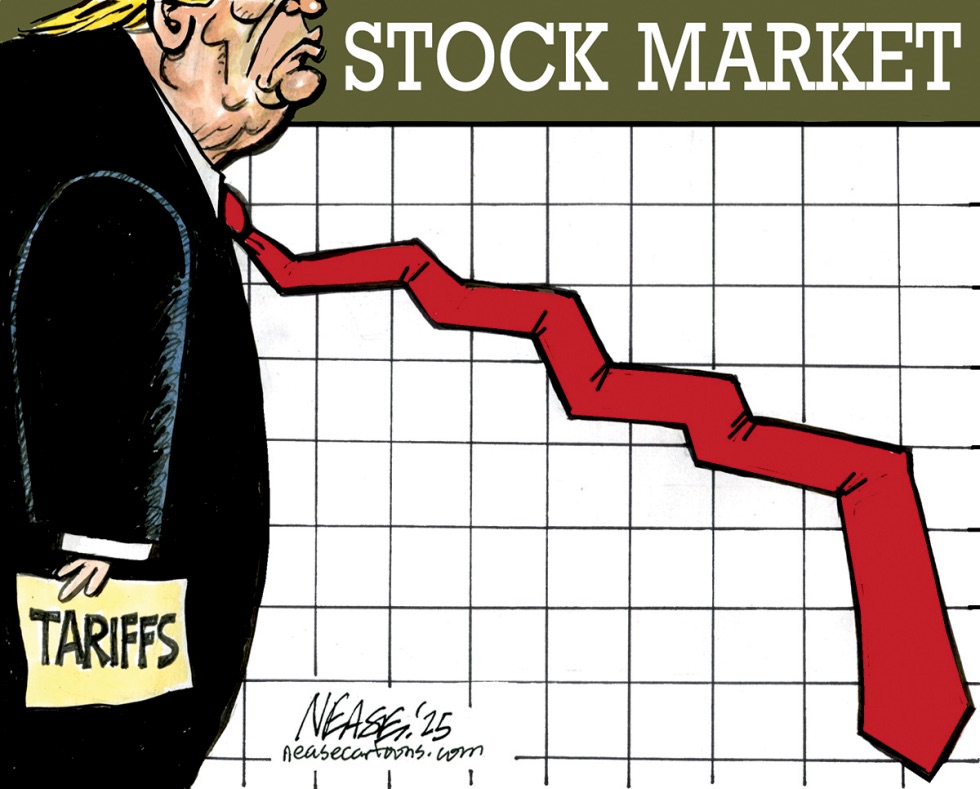
The trade war has spooked investors around the world by increasing the odds of slower economic growth, higher inflation and lower corporate profits, sparking a sharp sell-off in April.
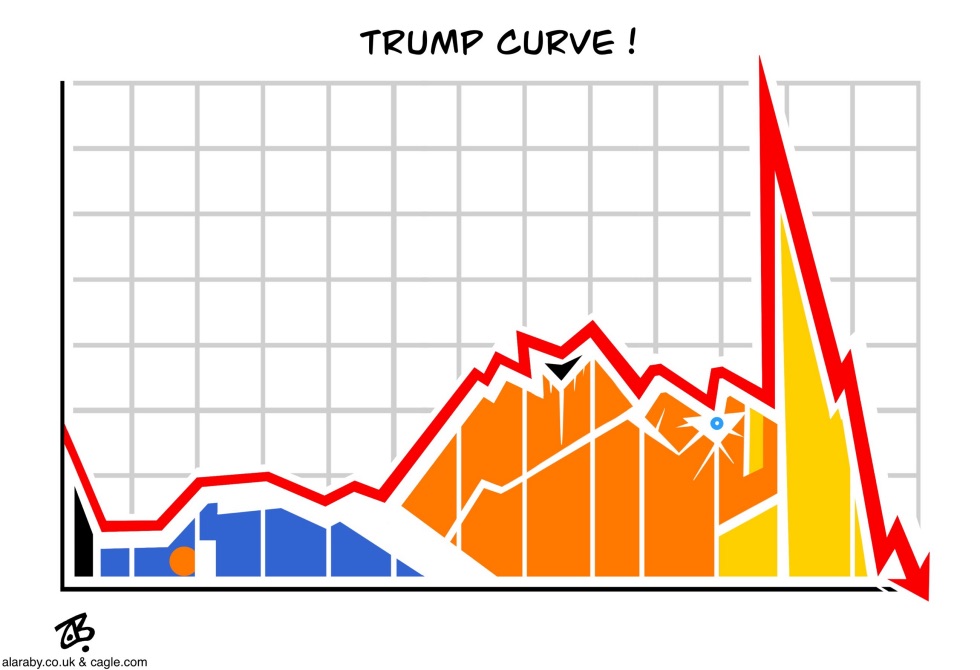
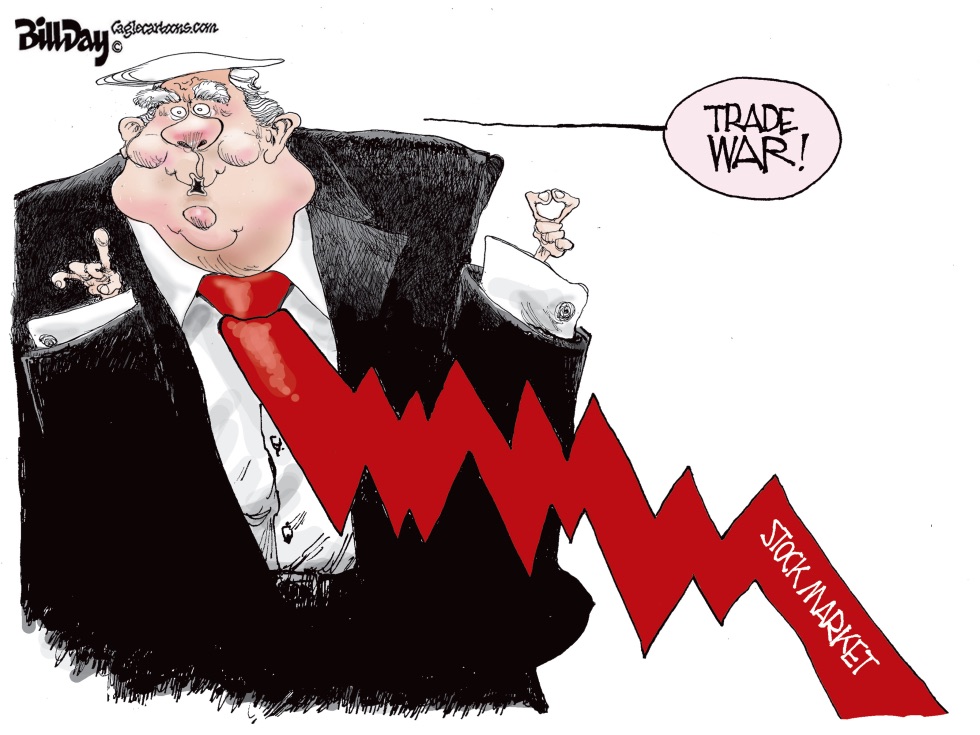
The S&P 500 finished Tuesday down nearly 20% from its peak, putting the U.S. large-cap stock index in a bear market. South Korea’s Kospi Index fell into a bear market of its own on Wednesday. Stocks in Shanghai and Hong Kong are also down sharply since the U.S. tariff announcement on April 2.
A whopping increase in tariffs, followed by a whopping retaliation. Nationalist Chinese bloggers comparing President Trump’s levies to a declaration of war. China’s Foreign Ministry vowing that Beijing will “fight to the end.”
For years, the world’s two biggest powers have flirted with the idea of an economic decoupling as tensions between them have risen. The acceleration this week of their trade relationship’s deterioration has made the prospect of such a divorce seem closer than ever.
That was underscored on Wednesday when China announced an additional 50 percent tariff on U.S. goods, matching new American levies that had taken effect hours earlier. China also struck at American companies, imposing export controls on a dozen of them and adding six others to a list of “unreliable entities,” preventing them from doing business in China.
China’s new tariffs, which will take effect on Thursday, mean all American goods shipped to China will face an additional 85 percent import tax. The minimum U.S. tax on Chinese imports is now 104 percent. Both figures would have been unimaginable a few weeks ago.
With China’s top leader, Xi Jinping, and Mr. Trump locked in a game of chicken — each unwilling to risk looking weak by making a concession — the trade fight could spiral even further out of control, inflaming tensions over other areas of competition like technology and the fate of Taiwan, the self-governing island claimed by Beijing.
Mr. Trump’s bare-knuckle tactics make him a singular force in U.S. politics. But in Mr. Xi, he faces a hardened opponent who survived the turmoil of China’s late-20th-century political purges, and who views the United States’ competitive tactics as ultimately aimed at subverting the ruling Communist Party’s legitimacy.
“Trump has never gone into a back-alley brawl where the other side is willing to brawl and use the same kind of tactics as him,” said Scott Kennedy, a senior adviser at the Center for Strategic and International Studies, a Washington think tank. “For China, this is about their sovereignty. This is about the Communist Party’s hold on power. For Trump, it might just be a political campaign.”
From what I’m hearing and reading, this is going to hit U.S. small businesses hard, drive many of them into bankruptcy, and send their employees to the unemployment lines.
BRUSSELS — The EU can apply retaliatory tariffs on nearly €21 billion of U.S. products like soybeans, motorcycles and orange juice after the bloc’s 27 countries assented to the measures on Wednesday, the European Commission announced.
“The EU considers U.S. tariffs unjustified and damaging, causing economic harm to both sides, as well as the global economy. The EU has stated its clear preference to find negotiated outcomes with the U.S., which would be balanced and mutually beneficial,” the EU executive said in a statement.
Hitting back against U.S. President Donald Trump’s steel and aluminum tariffs, the European Union’s countermeasures will apply in three rounds. Measures covering €3.9 billion in trade will go into force next week, with a further €13.5 billion from mid-May and a final round of €3.5 billion following in December.
Only Hungary opposed the package, according to four EU diplomats with direct knowledge of the vote, while all other 26 countries voted in favor….
The retaliation does not yet respond to Trump’s imposition of 20 percent “reciprocal” tariffs on all EU exports, which came into force on Wednesday, and his latest 25 percent tariff on cars. Trump has also said tariffs on pharmaceuticals are coming soon.
The European Commission is considering putting forward its countermeasures on those tariffs as early as next week. “It will for sure be soon. I expect it could be as early as next week,” trade spokesperson Olof Gill said Tuesday.
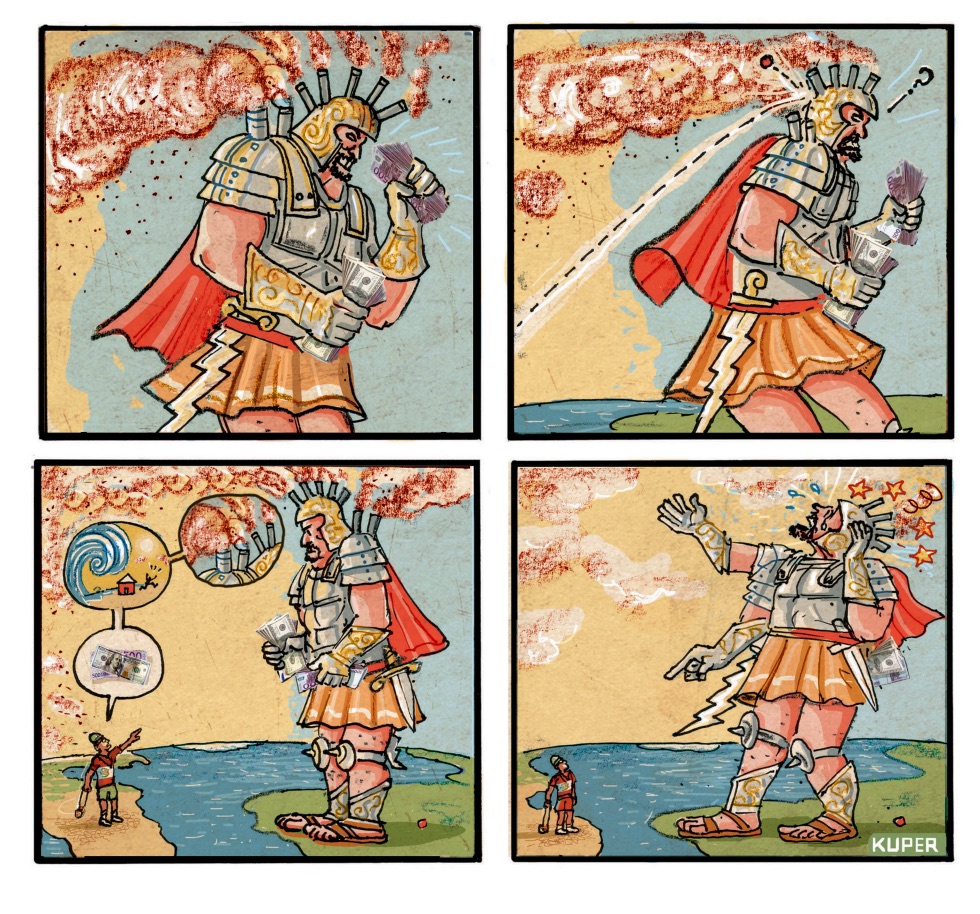
The price of U.S. Treasury bonds is plunging, in what Treasury Secretary Scott Bessent on Wednesday called “deleveraging convulsions.” The effect is to raise borrowing costs just as recession fears spike.
Why it matters: The last thing America needed in the midst of a global trade war and a stock-market meltdown was a debt crisis too. But that now seems to be a real possibility.
What they’re saying: “This is the script for a truly existential financial crisis,” writes Columbia economic historian Adam Tooze, who wrote a whole book on the very similar dynamics that overtook the Treasury market in March 2020.
Driving the news: Bond yields — which move in the opposite direction to prices — are soaring in the wake of protectionist U.S. tariffs.
The amount that the U.S. government needs to pay to borrow money for a decade rose briefly to more than 4.5% Wednesday morning. For a 30-year bond, the yield rose to more than 5%.
Those moves are truly enormous by bond market standards. As recently as Friday, the 10-year yield was less than 4%, and the 30-year was below 4.4%.
The intrigue: In normal times, the most consistent buyer of Treasury bonds is a group of hedge funds that participate in something called the “basis trade.”
They buy the bonds in order to hedge their derivatives exposure to institutional investors, who can lock in slightly higher yields in the futures market.
The profit on any given trade is minuscule, but it’s also very close to risk-free, so the hedge funds can apply as much as 50x or even 100x leverage.
By many accounts, the basis trade is now unwinding, which means the hedge funds are selling their bonds — or, at the very least, not buying new ones.
The big picture: In a move reminiscent of the bond-market tantrum that swept U.K. Prime Minister Liz Truss from office in 2022, the technical factors in the bond market were precipitated by — and also exacerbated — fundamental issues with the country’s finances.
US government bonds, traditionally seen as one of the world’s safest financial assets, are undergoing a dramatic sell-off as Donald Trump’s escalation of his tariff war with China sends panic through all sectors of the financial markets.
The falls suggest that as Trump’s fresh wave of tariffs on dozens of economies came into force, including 104% levies against Chinese goods, investors are beginning to lose confidence in the US as a cornerstone of the global economy.
The yield – or interest rate – on the benchmark 10-year US Treasury bond rose by 0.16 percentage points on Wednesday to 4.42%, its highest since late February – and this week has undergone the three biggest intraday moves since Trump was elected in November. Yields move inversely to prices, so surging yields mean falling prices as demand drops.
The move in the 30-year bond was more dramatic. The 30-year yield briefly jumped above 5% to its highest since late 2023 and was last trading at 4.9157%, or 0.2 percentage points higher than Tuesday.
“This is a fire sale of Treasuries,” said Calvin Yeoh, portfolio manager at the hedge fund Blue Edge Advisors. “I haven’t seen moves or volatility of this size since the chaos of the pandemic in 2020,” he told Bloomberg.
Analysts believe the US Federal Reserve may need to step in. Jim Reid, at Deutsche Bank, said: “Markets are pricing a growing probability of an emergency [interest rate] cut, just as we saw during the Covid turmoil and the height of the GFC [global financial crisis] in 2008.” [….]
UK bonds were also under severe pressure after the US moves. The yield on a 30-year UK gilt hit 5.518% on Wednesday morning, up 16 basis points and surpassing a previous 27-year high of 5.472% set in January.
Shorter-dated 10-year gilt yields were slightly higher at 4.69% while two-year yields ticked down at 3.92%.
Higher yields on gilts – UK government bonds – will make things even more difficult for Downing Street, as it will raise the cost of borrowing to fund investment.
A sharp sell-off in U.S. government bond markets has sparked fears about the growing fallout from President Trump’s sweeping tariffs and retaliation by China, the European Union and others, raising questions about what is typically seen as the safest corner for investors to take cover during times of turmoil.
Yields on 10-year Treasuries — the benchmark for a wide variety of debt — shot 0.2 percentage points higher on Wednesday, to 4.45 percent, a big move in that market. Just a few days ago, it had traded below 4 percent. Yields on the 30-year bond rose significantly as well, at one point on Wednesday topping 5 percent. Borrowing costs globally have also shot higher.
The sell-off comes as investors have fled riskier assets globally in what some fear has parallels to what became known as the “dash for cash” episode during the pandemic, when the Treasury market broke down. The recent moves have upended a longstanding relationship in which the U.S. government bond market serves as a safe harbor during times of stress.
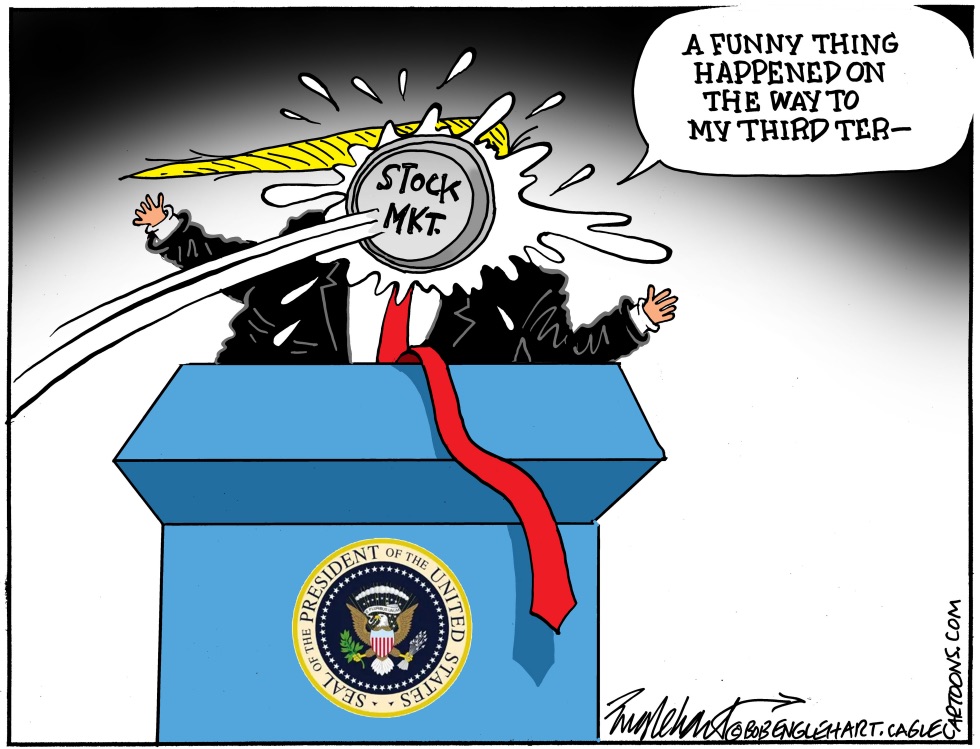
Volatility has surged as stock markets have plummeted amid fears that the U.S. economy is hurtling toward stagflation, in which economic growth contracts while inflation surges. The S&P 500 is now on the verge of entering a bear market, meaning it has dropped 20 percent from its recent high.
The global safe-haven:
“The global safe-haven status is in question,” said Priya Misra, a portfolio manager at JPMorgan Asset Management. “Disorderly moves have happened this week because there is no safe place to hide.”
Scott Bessent, the U.S. Treasury secretary, sought to tamp down concerns on Wednesday, brushing off the sell-off as nothing more than investors who bought assets with borrowed money having to cover their losses.
“I believe that there is nothing systemic about this — I think that it is an uncomfortable but normal deleveraging that’s going on in the bond market,” he said in an interview with Fox Business.
But the moves have been significant enough to raise broader concerns about how foreign investors now perceive the United States, after Mr. Trump decided to slap onerous tariffs on nearly all of its trading partners. Some countries have sought to strike deals with the administration to lower their tariff rates. But China retaliated on Wednesday, announcing an 84 percent levy on U.S. goods after Mr. Trump raised the tariff rate on Chinese goods to 104 percent.
In a social media post on Wednesday, the former U.S. Treasury secretary Lawrence H. Summers said the broader sell-off suggested a “generalized aversion to US assets in global financial markets” and warned about the possibility of a “serious financial crisis wholly induced by US government tariff policy.”
Some analysis and commentary on what’s happening:
Heather Cox Richardson at Letters from an American: April 8, 2025.
Stocks were up early today as traders put their hopes in Treasury Secretary Scott Bessent’s suggestion that the Trump administration was open to negotiations for lowering Trump’s proposed tariffs. But then U.S. Trade Representative Jamieson Greer said there would not be exemptions from the tariffs for individual products or companies, and President Donald J. Trump said he was going forward with 104% tariffs on China, effective at 12:01 am on Wednesday.
Markets fell again. By the end of the day, the Dow Jones Industrial Average had fallen by another 320 points, or 0.8%, a 52-week low. The S&P 500 fell 1.6% and the Nasdaq Composite fell 2.2%.
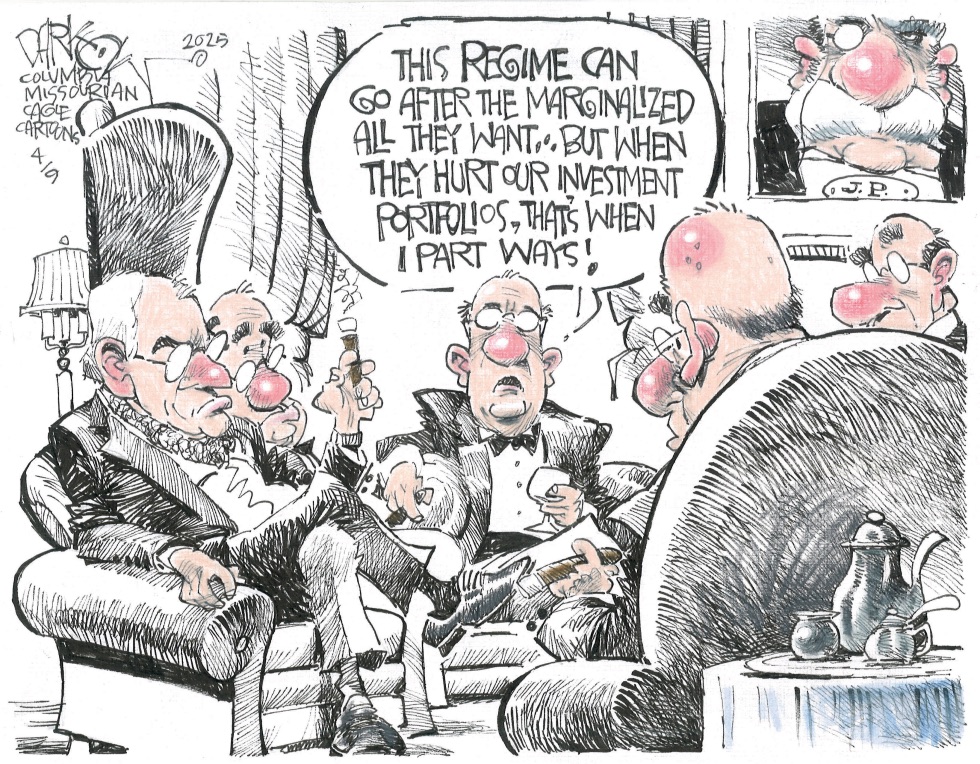
Rob Copeland, Maureen Farrell, and Lauren Hirsch of the New York Times reported today that over the weekend, Wall Street billionaires tried desperately and unsuccessfully to change Trump’s mind on tariffs. This week they have begun to go public, calling out what they call the “stupidity” of the new measures. These industry leaders, the reporters write, did not expect Trump to place such high tariffs on so many products and are shocked to find themselves outside the corridors of power where the tariff decisions have been made.
Elon Musk is one of the people Trump is ignoring to side with Peter Navarro, his senior counselor for trade and manufacturing. Navarro went to prison for refusing to answer a congressional subpoena for information regarding Trump’s attempt to overturn the 2020 presidential election. Since Musk poured $290 million into getting Trump elected in 2024 and then burst into the news with his “Department of Government Efficiency,” he has seemed to be in control of the administration. But he has stolen the limelight from Trump, and it appears Trump’s patience with him might be wearing thin.
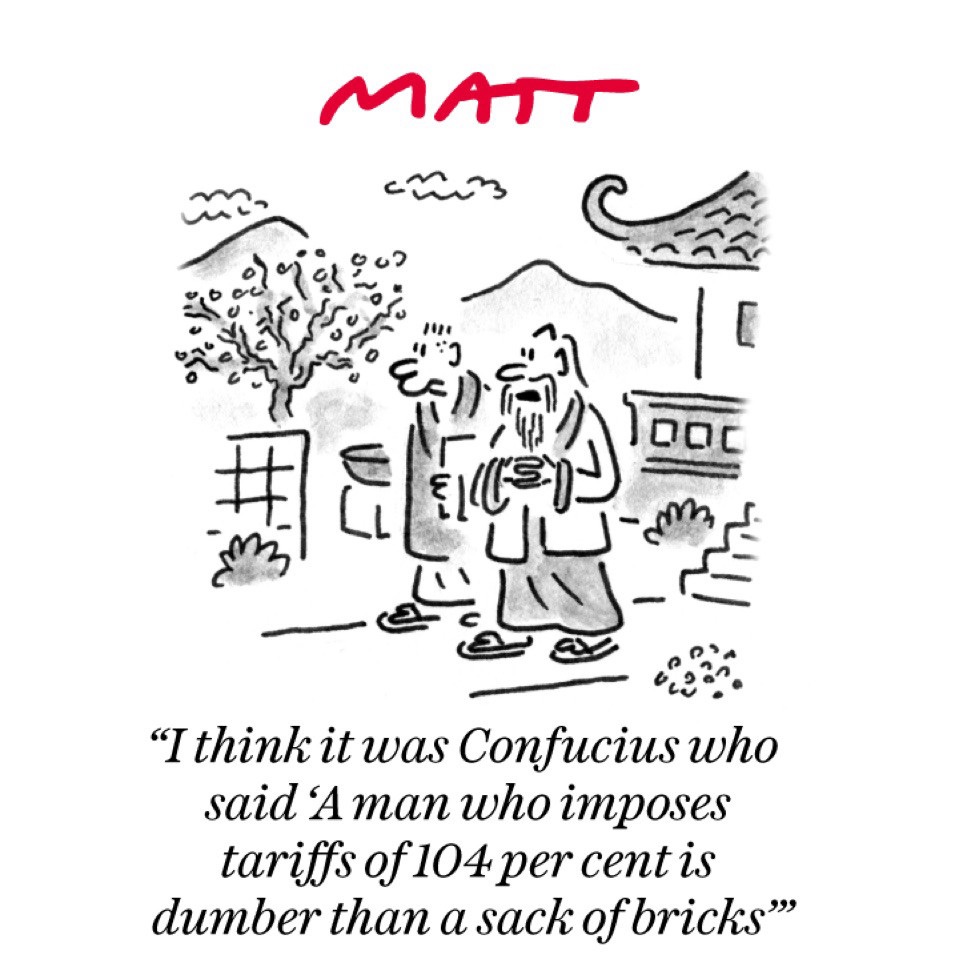
Elizabeth Dwoskin, Faiz Siddiqui, Pranshu Verma, and Trisha Thadani of the Washington Post reported today that Musk was among those who worked over the weekend to get Trump to end his new tariffs. When Musk failed to change the president’s mind, he took to social media to attack Navarro personally, saying the trade advisor is “truly a moron,” and “dumber than a sack of bricks.”
As the breadth of the Trump revolution has spread across Washington in recent weeks, its most defining feature is a burn-it-down-first, figure-out-the-consequences-later recklessness. The costs of that approach are now becoming clear.
Administration officials knew the markets would dive and other nations would retaliate when President Trump announced his long-promised “reciprocal” tariffs. But when pressed, several senior officials conceded that they had spent only a few days considering how the economic earthquake might have second-order effects.
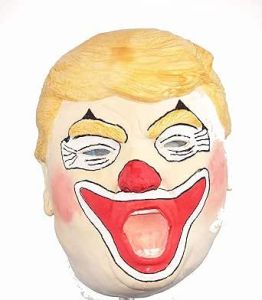
Trump clown mask
And officials have yet to describe the strategy for managing a global system of astounding complexity after the initial shock wears off, other than endless threats and negotiations between the leader of the world’s largest economy and everyone else.
Take the seemingly unmanaged escalation with China, the world’s second largest economy, and the only superpower capable of challenging the United States economically, technologically and militarily. By American and Chinese accounts, there was no substantive conversation between Mr. Trump and China’s top leader, Xi Jinping, or engagement among their senior aides, before the countries plunged toward a trade war.
Last Wednesday, Mr. Trump’s hastily devised formula for figuring out country-by-country tariffs came up with a 34 percent tax on all Chinese goods, everything from car parts to iPhones to much of what is on the shelves at Walmart and on Amazon’s app.
When Mr. Xi, predictably, matched that figure, Mr. Trump issued an ultimatum for him to reverse the decision in 24 hours — waving a red flag in front of a leader who would never want to appear to be backing down to Washington. On Wednesday, the tariff went to 104 percent, with no visible strategy for de-escalation.
If Mr. Trump does get into a trade war with China, he shouldn’t look for much help from America’s traditional allies — Japan, South Korea or the European Union — who together with the United States account for nearly half of the world economy. All of them were equally shocked, and while each is negotiating with Mr. Trump, they seem in no mood to help him manage China.
“Donald Trump has launched a global economic war without any allies,” the economist Josh Lipsky of the Atlantic Council wrote on Tuesday. “That is why — unlike previous economic crises in this century — there is no one coming to save the global economy if the situation starts to unravel.”
The global trading system is only one example of the Trump administration tearing something apart, only to reveal it has no plan for how to replace it.
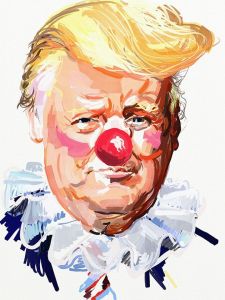
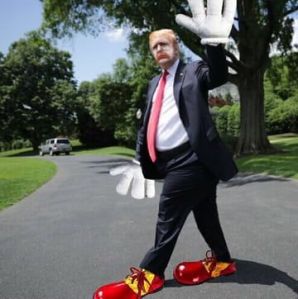
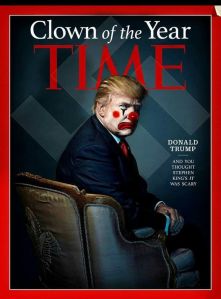
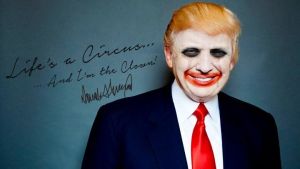
There’s a paradox to covering Donald Trump these days. On the one hand, he’s never out of the news—a wannabe dictator busy remaking the government and the economy so that more and more decisions about our futures answer only to his whim. On the other hand, there’s so much news about what he’s doing that it’s easy to reduce our thinking about Trump to the sum of his actions. There’s Trump the bundle of bad policy ideas, Trump the destroyer of institutions, Trump the fountain of post-truth grievance. It’s hard to take the time to dwell on the man himself—to focus our attention on Donald Trump the clown.
Yesterday afternoon, as markets continued crashing and with the further implementation of backbreaking tariffs just hours away, the clown was on full display. Trump participated in the ceremonial signing of an executive order on “unleashing American energy.” In the East Room event, he was in his element: coal miners in hard hats behind him, an audience crammed with his political flunkies in front. He ended up riffing for about 45 minutes. Let’s listen in, shall we? [….]
The topic du jour, of course, was energy, specifically the “beautiful clean coal” that Trump loves so much. Trump riffed at length on the supposed stupidity of proposals to retrain miners for skilled labor in other industries, reminiscing his 2016 campaign against Hillary Clinton:
“One thing I learned about the coal miners . . . You could give them a penthouse on Fifth Avenue and a different kind of a job and they’d be unhappy. Coal mining is what they love to do,” Trump said. “And she was gonna put them in a high-tech industry, to make little cell phones, I don’t know. Do you think you’d be good at that? I don’t know.”
Anyway, no need for any of that now, the president exulted: “We’re gonna be crushing Biden-era environmental restrictions. . . . And we have clean air and clean water and now we have clean coal. And at the same time we’re gonna do other things and forms of technology and also energy, like our country has never seen before.”
On his tariffs:
Trump didn’t totally avoid talk of the market crash he kicked off last week—a “whole situation,” he noted, that “was somewhat explosive.”
But, Trump added, you should see the response we’re getting! “We have had talks with many, many countries. . . . And our problem is, we can’t see that many that fast. But we don’t have to because, you know, the tariffs are on, and money is pouring in at a level that we’ve never seen before.”
How much money are we talking? “We’re taking in almost $2 billion a day in tariffs,” Trump said. “America is gonna be very rich again very soon.”
Got all that? Yes, markets are tanking because of the tariffs. But not to worry: We’re going to strike great deals to replace them soon. But not too soon, because we don’t have time to deal with all these countries at once. But that’s okay, because look at how much money these tariffs are making us!
That’s it for me. I’ve learned a lot and I plan to continue studying this stuff. I expect Daknikat with have a lot to say on Friday. For now, hang in there everyone and take care of yourselves.
Did you like this post? Please share it with your friends:
The Sky Dancing banner headline uses a snippet from a work by artist Tashi Mannox called 'Rainbow Study'. The work is described as a" study of typical Tibetan rainbow clouds, that feature in Thanka painting, temple decoration and silk brocades". dakinikat was immediately drawn to the image when trying to find stylized Tibetan Clouds to represent Sky Dancing. It is probably because Tashi's practice is similar to her own. His updated take on the clouds that fill the collection of traditional thankas is quite special.
You can find his work at his website by clicking on his logo below. He is also a calligraphy artist that uses important vajrayana syllables. We encourage you to visit his on line studio.













 The Chinese are pranking Trump today. This is from the
 Turmoil over tariffs drove fluctuations in global markets on Friday.
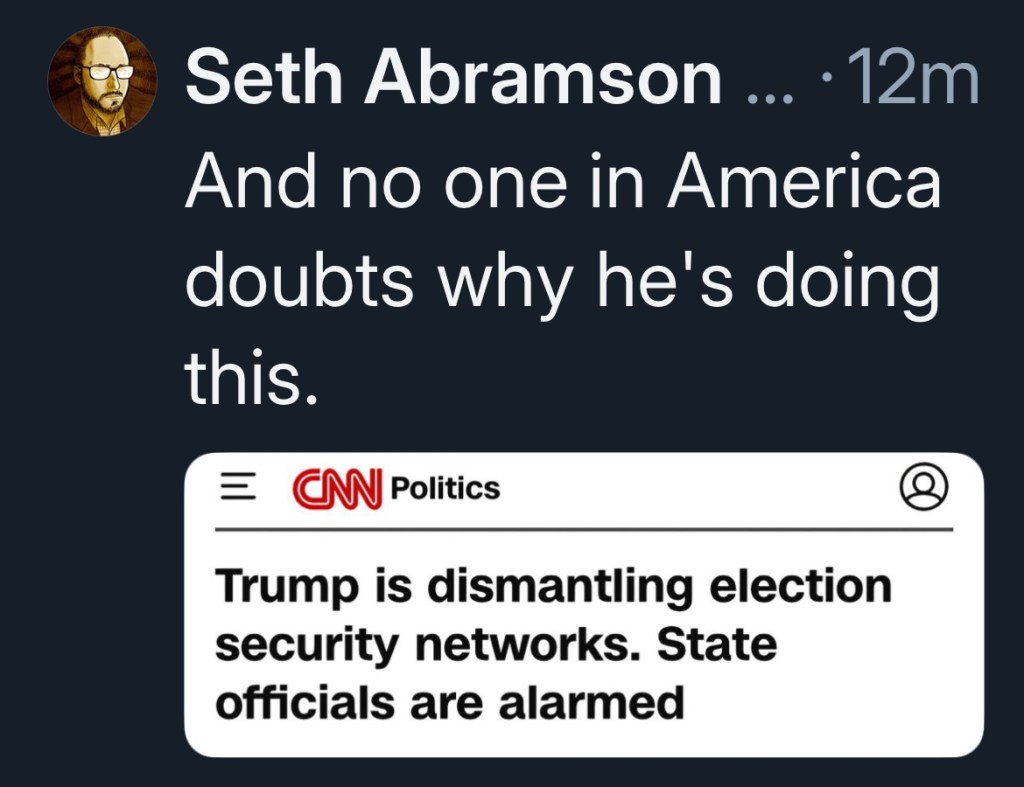
 CNN has this headline today for a story written by Ella Nilsen.
 Additionally, NASA is on the chopping block! Does this include all that money going to Elonia? This is from
 We’re also unlikely to see other countries send their best and brightest to our US Universities with all this craziness. As some with with multiple degrees and ones that aren’t that easy to achieve, I would just like to say that my teachers, my students and grad assistants, and my colleagues and fellow students were consistently the best part of higher education school. I owe so much of my math chops to fellow students from India, Iran, Hong Kong, Turkey, and Taiwan. Both of my Doctorate advisors came here as students. One from India. The other is from Bangladesh. This brain drain will put us on the road to mediocrity.




 peej
peej Carissa
 bostonboomer
 dakinikat
 ecocatwoman
 mablue2
 Mama Lopez
 peggysue22
 quixote
 skydancingguestblogger
 Mona (aka Wonk the Vote)



 Sky Dancing
Recent Comments