
Friday Reads: Rainy Days and Trump Rallies always bring me down
Posted: June 25, 2021 Filed under: morning reads | Tags: DOJ, The Big Lie Tour, voter suppression 18 Comments
Charles Burchfield, The East Wind,1918
Good Day Sky Dancers!
Yes. More rain for New Orleans. It’s keeping the temps in the 70’s and 80’s so I’m not going to complain. Temple, however, hates thunder and has glued herself to my leg for the time being. The weather certainly is wild this summer with a major heatwave on the west coast and even Moscow appears to be setting record temperatures. My Seattle Doctor Daughter who has firmly entered her third trimester with the twins was not happy about the heat. Portland and Seattle are both heading into the 100s. There’s also another disturbance in the Gulf to be investigated so what can I say? Let’s tackle Climate change while we can!!!
That infrastructure bill better start up fast! We’re still living with 1910 sewage systems here and it ain’t pretty. They’re out tearing up Dauphine Street which intersects with my part of Poland Avenue. I’ve been keen to see the old pipes and keep trying to get a peep at them. Saw one brought out today and it was a huge old iron thing that was probably studded with lead by now. Meanwhile, here’s uptown! Thar she blows!!
https://twitter.com/kyle_melancon/status/1408440080461492226
So, speaking of blowhards, prepare yourself to avoid the news coverage of Trump’s Revenge Rallies which are starting up this weekend. This is from The Bulwark and was written by Daniel McGraw. “Brace Yourself: Trump Starts Up His Rallies Again This Weekend. He’s bringing the MAGA circus to Ohio. Here’s why.” I generally take a newsbreak over the weekend and this reinforces that habit for me.
Then former president Donald Trump announced he was relaunching his rally roadshow—with the first stop being in Wellington, Ohio tomorrow—the Elyria Chronicle-Telegram had this reaction in an op-ed: “Why us? . . . It’s enough to inspire both anticipation and dread.”
While Trump supporters will dismiss such expressions with their usual disdain for the media, his appearance in Ohio should, indeed, inspire some dread. It is very much a singular act, focused on targeting one GOP member of Congress.
Rep. Anthony Gonzalez was one of ten Republicans to vote for Trump’s second impeachment, and his district runs close to this part of Ohio. For that reason, Trump is going to take over the Lorain County Fairgrounds tomorrow to blast a sitting congressman who won his district in 2020 by more than 25 percent, and even ran ahead of Trump by 15,000 votes.
“No, I just don’t think Gonzalez is good. I don’t think he represents the people. I think he’s not somebody that thinks the way I do and others do,” Trump said in a recent podcast, explaining his rationale for the rally.
With a stage set up in the fairgrounds of a small town that is little more than an intersection in farm country, what should we expect?
“Of course, he’s going to talk about some of the Republicans he thinks stabbed him in the back, starting with Anthony Gonzalez in Ohio, Liz Cheney [of Wyoming], Adam Kinzinger [of Illinois], and the people who voted against him in the House during the impeachment,” predicted David B. Cohen, a political scientist at the University of Akron in a recent interview. “I think it’s mostly going to be a Donald Trump pity party.”
https://twitter.com/HellOrBywater/status/1408447491431862272

Lee Krasner, The Seasons (1957). Whitney Museum of American Art, New York. Photograph by Sheldan C. Collins. © 2015 Pollock-Krasner Foundation/Artists Rights Society (ARS), New York.
The Big Lie Tour happens as the DOJ takes aim at the Georgia Voter Suppression Law aimed at letting state government overturn the elections threatens this year’s elections. This is from WAPO: “Justice Dept. to file lawsuit against state of Georgia over new voting restrictions” It’s authored by David Nakamura.
The Justice Department will file a federal lawsuit Friday against the state of Georgia for its efforts to enact new voting restrictions that federal authorities allege discriminate against Black Americans, according to people familiar with the matter.
The legal challenge takes aim at Georgia’s Election Integrity Act, which was passed in March by the Republican-led state legislature and signed into law by Gov. Brian Kemp (R). The law imposes new limits on the use of absentee ballots, makes it a crime for outside groups to provide food and water to voters waiting at polling stations, and hands greater control over election administration to the state legislature.
This is from ABC News covering the announcement of the action: “Justice Department to sue Georgia over voting rights law. AG Merrick Garland said the law seeks to disenfranchise Black voters.”
Attorney General Merrick Garland announced on Friday that the Justice Department is filing suit against the state of Georgia over its sweeping election law recently passed by Republicans, alleging it violates the federal Voting Rights Act by seeking to disenfranchise Black voters.
“Our complaint alleges that recent changes to Georgia’s election laws were enacted with the purpose of denying or abridging the right of Black Georgians to vote on account of their race or color, in violation of Section Two of the Voting Rights Act,” Garland said.
Garland said the bill signed into law earlier this year by Gov. Brian Kemp includes provisions that “make it harder for people to vote,” and the complaint being filed by the department alleges the restrictions were passed “with the purpose of denying or abridging the right to vote on account of race or color.”
For months, President Joe Biden and other Democrats have been heavily critical of Georgia Republicans and Kemp for signing Georgia’s voting bill into law, equating it to “Jim Crow-era” segregation laws while arguing it’s premised on the lie that widespread fraud tainted the 2020 election.
The department’s lawsuit will be separate from seven other lawsuits that have been filed against the state of Georgia since the election bill was signed into law in March.

Vasily Kandinsky Landscape with rain Guggenheim
Republican-biased media outlets are howling about the bi-partisan section of the infrastructure bill. I’m not going to quote the crazy but Politico is close enough with pearl-clutching Lady Lindsey chasing her skirt around the room. “POLITICO Playbook: Graham: Biden made GOP look like ‘f—ing idiots’” Really, they don’t need President Biden to point that reality out.
The gist is this: If Biden’s proposal for “family infrastructure” and climate change doesn’t pass, then neither will the bipartisan infrastructure deal that senators just struck. Think of this as a Plan B after Sens. JOE MANCHIN (D-W.Va.) and KYRSTEN SINEMA (D-Ariz.) refused to promise they’ll support Part 2, Democrats’ multitrillion-dollar reconciliation package.
But the Biden-Schumer-Pelosi playbook also has the makings of a serious legislative cluster — and high drama over whether Democrats can actually pull this off — this summer and possibly into the fall.
Here’s your new timeline, according to Hill sources, and bear with us for a bit of procedural wonkery:
1) The Senate will turn the bipartisan agreement into legislative text in the coming days so it can pass it out of the chamber in July. The House will likely have its own version. But instead of conferencing and approving a combined bill for Biden’s signature before the August recess, leaders will put infrastructure on ice until the Democrats-only bill catches up.
2) Schumer and Pelosi plan to have both their chambers pass their respective budget resolutions before the August recess, enabling Democrats to unlock the fast-tracking reconciliation tool.
3) That budget will include instructions for each committee to tackle everything from corporate tax hikes to climate change, education, paid family leave and the like — in other words, everything Democrats want that’s not included in the bipartisan infrastructure package. The panels will work over the August recess to draft the massive reconciliation bill, which Sen. BERNIE SANDERS (I-Vt.) hopes will top $6 trillion.
4) When lawmakers return in September from the August recess, they’ll have a few weeks to clear both bills at the same time. The new deadline for getting both to Biden’s desk, per Democratic leaders, is Sept. 30, when a bunch of surface transportation programs expire.
Now, the pitfalls: First off, getting all Democrats to agree on a budget resolution in July is going to be hellish for Schumer and Pelosi. They have virtually no wiggle room due to their slim majorities, and their conferences are divided over how big this Democrats-only bill should be. Expect more Manchin and Sinema flexing.

Going to church in the rain, Wasdale Head (1937) Chiang Lee
Stock up on popcorn.
I was really happy to read this from HuffPo. It’s written by Jennifer Bendry. “Joe Biden Is Confirming Judges Faster Than Decades Of Past Presidents. Five months in, the president has quietly hit a milestone in filling lifetime seats on federal courts.”. Go Joe Go!
President Joe Biden quietly hit a milestone on Thursday: With the help of Senate Democrats, he has confirmed more lifetime federal judges than any president has done in more than 50 years by this point in their first six months in office.
With the Senate’s latest confirmation of Candace Jackson-Akiwumi to the U.S. Court of Appeals for the 7th Circuit, Biden has confirmed a total of seven judges. These are specifically Article III judges, who hold lifetime appointments on federal district courts, appeals courts and on the Supreme Court.
Broken down, Biden has confirmed five district court judges and two appeals court judges so far.
By this point in their presidencies, Donald Trump had confirmed two lifetime federal judges (one of whom was a Supreme Court justice, Neil Gorsuch), Barack Obama had confirmed zero, George W. Bush had confirmed zero, Bill Clinton had confirmed zero, George H.W. Bush had confirmed four, Ronald Reagan had confirmed zero, and Jimmy Carter had confirmed four.
Going back even further, the comparison isn’t really applicable to President Gerald Ford, who took over for Richard Nixon in 1974 along with his pending judicial nominees.
The last time a president moved this quickly to confirm judges was in 1969, more than 50 years ago, when Nixon had confirmed seven judges by this point in his first year in the White House.
It’s still early in Biden’s presidency. A rapid start to confirming judges doesn’t necessarily mean he will surpass the massive number of judges that Trump ultimately confirmed, for example. Senate Republican Leader Mitch McConnell (Ky.) helped Trump confirm more than 230 lifetime federal judges during his four years in the White House.

illustration by Fruszy
Hope he can keep this up!
This Pro Publica piece has me worried about the Revenge Rallies. “New Details Suggest Senior Trump Aides Knew Jan. 6 Rally Could Get Chaotic. Text messages and interviews show that Stop the Steal leaders fooled the Capitol police and welcomed racists to increase their crowd sizes, while White House officials worked to both contain and appease them.”
On Dec. 19, President Donald Trump blasted out a tweet to his 88 million followers, inviting supporters to Washington for a “wild” protest.
Earlier that week, one of his senior advisers had released a 36-page report alleging significant evidence of election fraud that could reverse Joe Biden’s victory. “A great report,” Trump wrote. “Statistically impossible to have lost the 2020 Election. Big protest in D.C. on January 6th. Be there, will be wild!”
The tweet worked like a starter’s pistol, with two pro-Trump factions competing to take control of the “big protest.”
On one side stood Women for America First, led by Amy Kremer, a Republican operative who helped found the tea party movement. The group initially wanted to hold a kind of extended oral argument, with multiple speakers making their case for how the election had been stolen.
On the other was Stop the Steal, a new, more radical group that had recruited avowed racists to swell its ranks and wanted the President to share the podium with Alex Jones, the radio host banned from the world’s major social media platforms for hate speech, misinformation and glorifying violence. Stop the Steal organizers say their plan was to march on the Capitol and demand that lawmakers give Trump a second term.
ProPublica has obtained new details about the Trump White House’s knowledge of the gathering storm, after interviewing more than 50 people involved in the events of Jan. 6 and reviewing months of private correspondence. Taken together, these accounts suggest that senior Trump aides had been warned the Jan. 6 events could turn chaotic, with tens of thousands of people potentially overwhelming ill-prepared law enforcement officials.
Rather than trying to halt the march, Trump and his allies accommodated its leaders, according to text messages and interviews with Republican operatives and officials.
Katrina Pierson, a former Trump campaign official assigned by the White House to take charge of the rally planning, helped arrange a deal where those organizers deemed too extreme to speak at the Ellipse could do so on the night of Jan. 5. That event ended up including incendiary speeches from Jones and Ali Alexander, the leader of Stop the Steal, who fired up his followers with a chant of “Victory or death!”
Read more at the link. That’s enough for me. Have a good weekend!
What’s on your reading and blogging list today?
Thursday Reads
Posted: June 24, 2021 Filed under: morning reads | Tags: Covid-19 coronavirus pandemic, Delta Plus variant, Delta variant, Donald Trump, Michigan, Q-Anon, Trump Justice Department, vaccinations 20 Comments
Laurette’s head with a coffee cup, by Henri Matisse
Good Morning!!
I live in a 10th floor apartment that looks out at a busy street. Over the last year, I’ve looked out to see very little traffic, even in the rush hour. Now that Massachusetts has opened up again, the view of the street is nearly back to normal, with cars slowly moving slowly bumper to bumper in the hours when people are commuting to and from work. But is the pandemic really over? How much of a threat is the Delta variant of Covid-19? And what about the new variant, Delta Plus?
Dhruv Khullar at The New Yorker: The Delta Variant Is a Grave Danger to the Unvaccinated.
Lineage B.1.617.2, now known as the Delta variant, was first detected in India, in December, 2020. An evolved version of sars-CoV-2, Delta has at least a dozen mutations, including several on its spike protein that make it vastly more contagious and possibly more lethal and vaccine-resistant than other strains. In India, the Delta variant contributed to the most devastating coronavirus wave the world has seen so far; now, it has been detected in dozens of countries, including the United States. In the U.S., it accounts for a minority of cases—but it is rapidly outcompeting other variants, and will likely soon become our dominant lineage.
Much of what we know about Delta is preliminary, and based on reports from India and, more recently, the U.K., where it now accounts for more than ninety per cent of new cases. Four-fifths of British adults have received at least one shot of a covid-19 vaccine, and more than half are fully vaccinated—but the variant has spread widely enough among those who remain vulnerable to fuel a quadrupling of cases and a doubling of hospitalizations in the past month. The vast majority of Delta-variant cases seem to have occurred in adults under fifty, whose rates of vaccination remain lower than those of older people. Last week, Prime Minister Boris Johnson announced that the U.K.’s full reopening, originally scheduled for June 21st, would be postponed.
Earlier this year, scientists estimated that lineage B.1.1.7—the Alpha variant, first isolated in England—could be some sixty per cent more transmissible than the original version of sars-CoV-2. Now, experts believe that the Delta variant is sixty per cent more transmissible than Alpha—making it far more contagious than the virus that tore through the world in 2020. It hasn’t yet been conclusively shown that Delta is more lethal, but early evidence from the U.K. suggests that, compared to Alpha, it doubles the risk of a person’s being hospitalized. Even if the variant turns out to be no deadlier within any one person, its greater transmissibility means that it can inflict far more damage across a population, depending on how many people remain unvaccinated when it strikes.
It’s a long article, so check it out if you’re interested. Here’s the conclusion:
In a sense, Delta is the first post-vaccination variant. Pockets of the human race—perhaps five hundred million people out of 7.6 billion—are protected against it, despite its transmissibility; for them, the pandemic’s newest chapter is something of an epilogue, since the main story has, in effect, already concluded. But, for those who remain unvaccinated, by choice or by chance, Delta represents the latest installment in an ongoing series of horrors. It’s a threat more sinister than any other—one that imperils whatever precarious equilibrium has taken root. In a partially vaccinated world, Delta exposes the duality in which we now live and die.
From the BBC article:
India’s health ministry says studies showed that the so-called Delta plus variant – also known as AY.1 – spreads more easily, binds more easily to lung cells and is potentially resistant to monoclonal antibody therapy, a potent intravenous infusion of antibodies to neutralise the virus.
The variant is related to the Delta, an existing variant of concern, which was first identified in India last year and is thought to have driven the deadly second wave of infections this summer in India.\The health ministry says the Delta plus variant, first found in India in April, has been detected in around 40 samples from six districts in three states – Maharashtra, Kerala and Madhya Pradesh. At least 16 of these samples were found in Maharashtra, one of the states hardest hit by the pandemic.
Delta plus has also been found in nine other countries – USA, UK, Portugal, Switzerland, Japan, Poland, Nepal, Russia and China – compared to the original highly contagious Delta strain, which has now spread to 80 countries.

The Cup of Tea, Mary Cassatt
It’s still not clear how serious the thread of Delta Plus is.
“You need biological and clinical information in order to consider whether it is truly a variant of concern.”
This means India needs more data to determine whether the variant is neutralised by antibodies generated by available vaccines or infection by another variant of the coronavirus.
Also, extensive data is needed about the increase in transmissibility, diagnostic failures – routine tests not picking up the variant – and whether the variant is causing more severe disease.
“You need to study a few hundred patients who are sick with this condition and variant and find out whether they are at greater risk of greater disease than the ancestral variant,” Dr Kang said.
Still, in places in the U.S. where many people are unvaccinated, it seems that these variants are nothing to fool around with. There’s much more information at the BBC link.
This is from Science Magazine: Delta variant triggers dangerous new phase in the pandemic.
When the coronavirus variant now called Delta first appeared in December 2020, in the Indian state of Maharashtra, it did not seem all that remarkable. But when it descended on New Delhi a few months later, its impact was devastating, with almost 30,000 cases reported daily in late April. “Suddenly … it is dominant and completely sweeps away Alpha,” which until then was most prevalent in the city, says Anurag Agrawal, who leads the Institute of Genomics and Integrative Biology in New Delhi.
New Delhi seemed unlikely to suffer a big new outbreak because so many of its residents had already been infected or vaccinated, Agrawal says. But those protections seemed to barely slow Delta, which is more transmissible and may evade immunity, he says: “It went from a 10-foot wall around the city to a 2-foot wall you could just walk over.”
From New Delhi, the variant has quickly spread, and it now looks set to sweep the globe in what could be a devastating new wave. In the United Kingdom, Delta already makes up more than 90% of all infections; it has driven COVID-19 case numbers up again after a dramatic decline and led the government last week to postpone the final stage of its reopening plan. A Delta-driven resurgence in Lisbon prompted the Portuguese government to enact a 3-day travel ban between the city and the rest of the country. The variant may account for 90% of all COVID-19 cases in the European Union by the end of August, Andrea Ammon, the head of the European Centre for Disease
Prevention and Control, warned today. “It is very likely that the Delta variant will circulate extensively during the summer, particularly among younger individuals that are not targeted for vaccination,” she said. “This could cause a risk for the more vulnerable individuals to be infected and experience severe illness and death if they are not fully vaccinated.“
Melinda L. Cootsona, Black Coffee Ode to RD
Delta also appears also to be causing surges in Russia, Indonesia, and many other countries. In the United States, where its prevalence is now estimated to be at least 14%, the Centers for Disease Control and Prevention declared Delta a “variant of concern” on 15 June.

Read the rest at the link.
One more lengthy story to check out at CNBC: Covid is already deadlier this year than all of 2020. So why do many in U.S. think the problem’s over?
As the U.S. pushes ahead with its reopening, easing mask mandates and lifting public health restrictions, much of the rest of the world is seeing an alarming surge in the number of Covid-19 infections and deaths.
The stark contrast underscores how unevenly the coronavirus pandemic has spread, now hitting low-income nations harder as they struggle with access to vaccines, the rapid spread of new variants and heavily burdened health-care systems.
It also shows why, even with nations such as the U.S., China and the U.K. recording relatively low Covid infections and fatalities thanks to a mass vaccination drive, the global health crisis is still far from over.
To be sure, more people have died from Covid this year than in all of 2020, according to data compiled by the World Health Organization. The official global death toll stood at 1,813,188 at the end of 2020. More than 2 million people have died as a result of Covid so far this year.
There’s much more at the link. I’m very glad I’m fully vaccinated, but I’m still not going to keep taking precautions.
In other news, we’re learning more about the Trump gang’s efforts to use the justice department to attack their political enemies.
The Guardian: House investigates possible shadow operation in Trump justice department.
Top Democrats in the House are investigating whether Trump justice department officials ran an unlawful shadow operation to target political enemies of the former president to hunt down leaks of classified information, according to a source familiar with the matter.
The House judiciary committee chairman, Jerry Nadler, is centering his investigation on the apparent violation of internal policies by the justice department, when it issued subpoenas against Democrats Adam Schiff and Eric Swalwell in 2018.
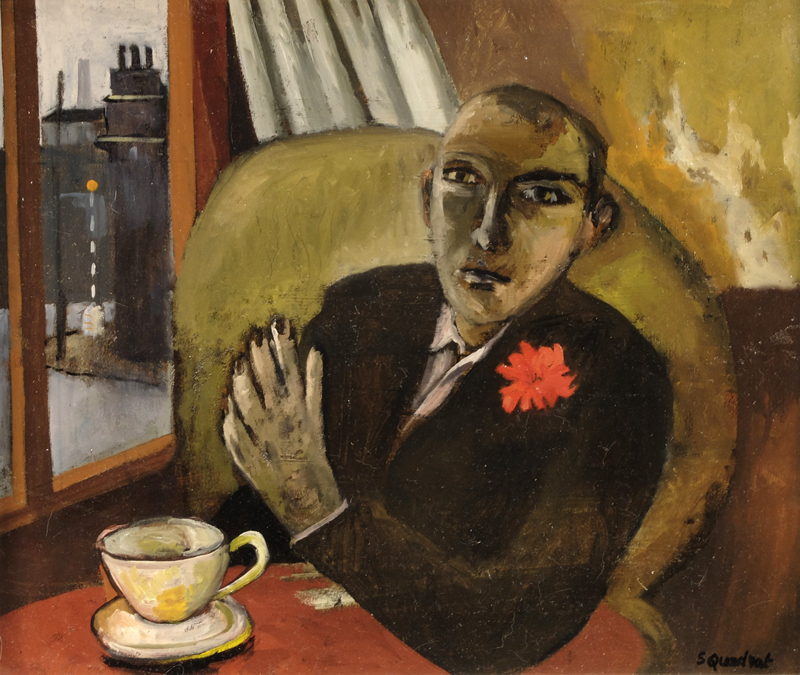
Simon Quadrat, Man Drinking Tea
The use of subpoenas to secretly seize data from the two Democrats on the House intelligence committee – and fierce critics of Donald Trump – would ordinarily require authorization from the highest levels of the justice department and notably, the attorney general.
But with the former Trump attorneys general Bill Barr and Jeff Sessions denying any knowledge of the subpoenas, Democrats are focused on whether rogue officials abused the vast power of the federal government to target Trump’s perceived political opponents, the source said.
That kind of shadow operation – reminiscent of the shadow foreign policy in Ukraine that led to Trump’s first impeachment – would be significant because it could render the subpoenas unlawful, the source said.
And if the subpoenas were issued without proper authorization from the attorney general level, it could also leave the officials involved in the effort open to prosecution for false operating with the imprimatur of law enforcement.
The sharpening contours of the House judiciary committee’s investigation into the Trump justice department reflects Democrats’ determination to uncover potential politicization at the department.
And from Media Matters: “From POTUS”: Trump wanted Justice Department to investigate a QAnon-linked election conspiracy theory.
The ongoing release of materials on former President Donald Trump’s attempts to subvert the 2020 election has shown the extent to which the White House pushed for the Department of Justice to investigate far-out conspiracy theories linked to the QAnon movement. And the latest example might also show that false stories circulated in far-right media made their way to Trump himself.
The Detroit News reported last week on emails recently released by the House oversight committee showing some of the Trump administration’s efforts to overturn the 2020 election. On December 14 — the same day when the members of the Electoral College met across the country to formalize Joe Biden’s victory — White House aide Molly Michael sent an email to acting Attorney General Jeff Rosen with the subject “From POTUS.”
Peasant Girl drinking her coffee, Camille Pissarro
The email contained a PDF file of a report from a right-wing investigator on an election counting error in the small locale of Antrim County, Michigan, and a set of talking points apparently written by the report’s author declaring that “Michigan cannot certify for Biden” due to a “seditious conspiracy to undermine the election process and the will of the American people.”
Two minutes after that email was sent to Rosen, another unnamed person in the attorney general’s office forwarded the documents to the U.S. attorneys in Michigan, asking them to “see attachments per Rich Donoghue,” Trump’s newly appointed deputy attorney general….
According to The New York Times, the private group that conducted this report, Allied Security Operations Group, is a sponsor and financial backer of the website Everylegalvote.com, which had also “posted content from a source with links to” the QAnon conspiracy theory. The author of the report was also a former Republican candidate for Congress from Texas, having lost in a primary in 2016.

Meanwhile, a new poll by the Democracy Fund Voter Study Group shows how deluded Republicans are about the 2020 election: Theft Perception. Examining the Views of Americans Who Believe the 2020 Election was Stolen.
Key Findings
- Republicans widely support Donald Trump and believe his claims about a stolen election. While Republicans support all elements of the ‘Stop the Steal’ narrative in high numbers, the overall electorate largely rejects these claims and propositions.
- Among Republicans, 85 percent believe it was appropriate for Trump to file lawsuits challenging election results in several states, and the same proportion believe that vote-by-mail increases vote fraud; 46 percent of Republicans believe it was appropriate for legislators in states won by Joe Biden to try to assign their state’s electoral votes to Trump.
- Republicans most committed to both Trump and the narrative of election fraud share a few other views in common: extreme antipathy toward Democrats and immigrants, belief that racism is not a problem, support for nationalism, belief in traditional family values and gender roles, and preference for a very limited role for government in the economy.
- While a voter’s willingness to reject an election without evidence of fraud might suggest an embrace of authoritarianism, a key measure of authoritarian leanings — support for a “strong leader who doesn’t have to bother with Congress or elections” — is only weakly correlated to support for Trump and for the stolen election narrative.
More stories to check out today:
The Washington Post: In sentencing regretful Capitol protester, federal judge rebukes Republicans.
CNN: New videos show Capitol rioters attacking police line from officers’ point of view.
The Washington Post: Inside the extraordinary effort to save Trump from covid-19.
The Washington Post: Tension grips Michigan as Trump’s election attacks continue to reverberate.
NBC News: Michigan Republicans eviscerate Trump voter fraud claims in scathing report.
Task and Purpose: The Chairman of the Joint Chiefs is tired of ignorant bullsh*t from people who don’t like to read.
That’s all I have for you today. Have a terrific Thursday everyone!
Tuesday Reads: Misogyny and the Capitol Insurrection
Posted: June 22, 2021 Filed under: Afternoon Reads, just because, misogyny, Violence against women | Tags: Capitol insurrection, Donald Trump, January 6, Larry Rendall Brock, Nancy Pelosi, Richard Barnett, Ryan Samsel, Samuel Fisher 11 CommentsGood Afternoon!!
All of us here are aware that men who commit violent acts such as mass shootings, attacks on Planned Parenthood and abortion clinics tend to have histories of domestic violence. Now we’re learning violence against women is common in men who participated in the January 6 Capitol insurrection. Recently NBC News investigative reporter Scott MacFarlane called attention to this connection.
I went looking for articles on this phenomenon. Here’s what I found.
This piece was published on January 13, 2021 at The Conversation: Misogyny in the Capitol: Among the insurrectionists, a lot of angry men who don’t like women, by Mona Lena Crook
Among the various forms of violence on display during the U.S. Capitol insurrection, one has been largely overlooked: misogyny, or hatred toward women. Yet behaviors and symbols of white male power were striking and persistent features of the riots.
Members of the overwhelmingly male crowds defending a president well-known for his sexist attacks, embraced male supremacist ideologies, wore military gear and bared their chests in shows of masculine bravado. They even destroyed display cabinets holding historical books on women in politics.
Actions targeting House Speaker Nancy Pelosi give the clearest illustration. Members of the mob broke into her office and vandalized it. Items like mail, signs and even her lectern proved to be particularly popular trophies – symbolizing an attack on Democrats and the House Speaker, but also against one of the most powerful women in American politics….
Attacks on Pelosi, while partisan in nature, also contained many elements of misogyny.
Pelosi was in physical danger as pro-Trump rioters roamed the Capitol building hunting down elected officials. News cameras filmed a man carrying zip-tie handcuffs entering and then exiting the speaker’s office, where members of her staff remained barricaded in a room for more than two hours.
Richard Barnett in Nancy Pelosi’s office during the Capitol insurrection.
Acts of vandalism and theft were accompanied by speech disparaging and belittling Pelosi as a woman. In the hallway outside her suite of offices, angry rioters tore the leadership nameplate off the wall as crowds chanted, “Get her out!”
In a video, a woman claimed she helped break down the door to Pelosi’s office. Once inside, “somebody stole her gavel and I took a picture sitting in the chair flipping off the camera.” She proudly announced “and that was for Fox News” – a station notorious not just for its far-right politics, but also for its on- and off-camera sexism.
A photo of Richard “Bigo” Barnett, sitting with his feet up on a desk in Pelosi’s office, solicited perhaps the strongest reaction. One feminist writer asked, “Have you ever seen a clearer photo of arrogant male entitlement? The legs apart, the foot on the desk, the smile … this guy isn’t just happy he’s broken into the Capitol building. He feels like he’s putting a woman in her place by violating and defiling her space.”
Consistent with this interpretation, Barnett later told a reporter: “I wrote her a nasty note, put my feet up on her desk, and scratched my balls.” The message read: “Nancy, Bigo was here you bitch.”

Krook is the author of Violence Against Women in Politics.
Miranda Christou discusses misogyny among women who participated in the Capital attack in her article at Rantt Media, published January 28, 2021: Gender And Misogyny At The Capitol Insurrection.
As Cynthia Miller-Idriss explained, “the individuals who participated in the violence came from a wide range of groups across the far-right spectrum—white supremacists and neo-Nazis, Proud Boys, patriot militias, QAnon conspiracy theorists, and violent MAGA extremists, your neighbors and maybe even your family members.”
The fact that these were mostly white people was no surprise. But the presence of women in the crowd puzzled many, mainly because of assumptions about women’s “instincts” and predispositions. While it is true that women are rarely at the frontlines of violent extremism and they constitute a minority of far-right leaders and far-right voters, this so-called “gender gap” is misleading.
Women’s tangible and often intense investment in organizations that feed on racism and sexism belies their small numerical representation. I argue that women’s role in extremist movements needs to be understood in light of the misogyny that fueled the insurrectionists’ violent behavior, both literally and symbolically.
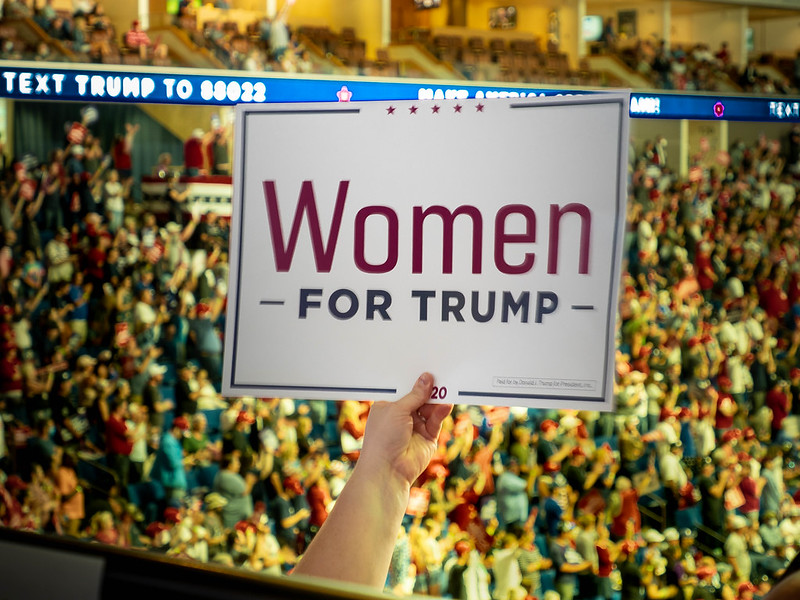 Christou examines the history of white women being used to normalize hate movements.
White women’s role in white supremacy has a long history and it continues to morph into movements and causes that render a familial face to bigotry and hatred. This is why QAnon moms (or QAmoms) is now a mainstream phenomenon. The QAnon conspiracy infiltrated moms’ Facebook groups by tugging on their motherly sentiments and by providing them with likes in the age of mother influencers.
What took off as an obscure conspiracy theory supported by marginal basement dwellers moved into the kitchen and the living room because it artfully whitewashed Nazi ideology into a movement that purported to save trafficked children. No need to invoke the 14 words because QAnon hijacked #savethechildren in order to bestow an air of legitimacy and urgency to an otherwise ludicrous scheme.
Many white women have always been normalizing hate and they will continue to nurture children into hatred, bake cookies for white supremacists and declare innocence when their complicity is exposed. As Mona Eltahawy noted: “the audacity of white womanhood obscures and obfuscates the violence that white women are allowed to get away with.”
Of course women are only tools for the men who participate in hate movements, as Christou goes on to discuss. Head over to Rantt media to read the rest of this interesting piece. Also check out this article at Ms. Magazine, published in February: The Women of the Insurrection.
Two articles at HuffPost report on individual insurrectionists with histories of violence against women.
At Least 9 Far-Right Insurrectionists Have A History Of Violence Against Women.
She was alarmed, but no more so than she had been by all the other messages: “I have better things to do than speak to a whore”; “Nobody loves you”; “Narcissistic whore.” Her ex-husband, Larry Rendall Brock Jr., had been sending them like clockwork for three years. A court had ordered the couple to communicate through a specialized portal while their contentious divorce was finalized. Larry often used it for threats.
“The stuff that he writes to me is brutal. You grow thick skin and try to filter it, but it’s hard,” said Katya, who shares a 6-year-old son with Larry. Katya said her ex-husband views women as “disposable” and has abused her throughout their four years of marriage and additional three years of separation.
Larry Rendall Brock
Larry, a 53-year-old Air Force veteran, is one of the hundreds of insurrectionists who stormed the U.S. Capitol grounds on Jan. 6 and is now facing federal charges. He sported a combat helmet, a bulletproof vest and carried zip-tie handcuffs. His threats to Katya also went beyond those messages ― HuffPost uncovered numerous 911 calls from their home for domestic disputes, including one in 2016 in which Larry was described as making a “terroristic threat of family/household,” according to a police summary of the call.
Larry’s history of abusive behavior is part of an alarmingly common trend among the rioters who have been arrested so far for their roles in the insurrection. After reviewing police reports and court filings, a HuffPost investigation found that at least nine insurrectionists who stormed the Capitol have a history of violence against women ― ranging from domestic abuse accusations to prison time for sexual battery and criminal confinement.
Experts have linked extremism to violent misogyny in recent years, especially in the wake of mass shootings in which the perpetrators had a history of violence against women. These violent behaviors exist on a spectrum ― and, of course, not all abusive men turn into killers ― but violence against women often begets more violence, sometimes deadly. Three people died as a direct result of the violence at the Capitol, and more than 140 law enforcement officers were injured during the riot. Two U.S. Capitol Police officers have died by suicide in the aftermath.
“We still, in this day and age, treat violence against women as a personal or family issue, as opposed to a troubling indicator of someone who could become more violent,” said Bridget Todd, communications director at feminist organization UltraViolet.

Read more examples and more about Brock at the HuffPost link. Here is a follow-up article, published June 11, 2021: Revealed: Even More Insurrectionists Have Histories Of Violence Against Women.
One of the newly listed men, who was charged with attacking a police officer Jan. 6, has been responsible for “many hospital visits for many victims,” according to a charging memo uncovered by HuffPost. Another man being charged in connection with the Capitol riot has been arrested multiple times for domestic violence, but never prosecuted, and is pending trial on felony child abuse charges, HuffPost found.
And a third, who allegedly yelled at Capitol police that they were “protecting pedophiles,” was convicted of statutory rape in 2010, CNN reported last week.
The link between extremism and violent misogyny has become very evident in recent years as more mass shooters have been found to have a history of violent behavior toward women. Though most abusive men do not go on to perpetrate larger acts of violence, the ties between violence against women and extremism are too clear to ignore, experts said.

Ryan Samsel
One of the men mentioned in the above article, Ryan Samsel, has gotten quite bit of media attention. From the HuffPost article:
Ryan Samsel, 38, is charged with assaulting a U.S. Capitol Police officer and giving her a concussion while storming the barricades. According to prosecutors, Samsel “has an extensive criminal history of assaultive and violent behavior” toward women and has been convicted of assaulting women at least three times.
“The facts underlying these other convictions are extremely disturbing,” prosecutors wrote of Samsel in the Pennsylvania man’s detention memo. “They show a pattern of Samsel choking and beating women to the point of loss of consciousness, of many hospital visits for many victims, of chipped and missing teeth, and of Samsel even breaking into one victim’s home multiple times to assault her.”
Samsel’s criminal history includes a 2006 assault in which he attempted to run a woman he knew off the road with his car, punched her windshield and told her he would kill her if he didn’t get back the $60 she owed him, prosecutors stated. In 2009, Samsel was convicted of simple assault and reckless endangerment after he “held a victim against her will for five hours, choking her to the point of unconsciousness, pushing her, beating her, and chipping her teeth,” the detention memo says.
Samsel was again convicted of simple assault, among other charges, in 2011 for choking and beating his pregnant girlfriend. In 2015, he was convicted of simple assault for a third time, involving a different female victim who told police that Samsel had choked her to the point of losing consciousness.
Another woman came forward in 2019 and alleged that Samsel broke into her home, assaulted her and choked her until she lost consciousness multiple times. “The victim also alleged that Samsel raped her multiple times, and that she had often been scared he would kill her,” the detention memo says. The woman told police she got a restraining order against Samsel, but he violated it multiple times.
The Feds are using Samel’s history of violence against women to try to keep him in jail while he awaits trial.
From a February 4 story at The New York Times: The Misogynistic ‘Dating Coach’ Who Was Charged in the Capitol Riot.
For $150, Brad Holiday’s customers could purchase and download a package of dating tips and tricks he called his “Attraction Accelerator.” The batch of files featured advice from Mr. Holiday, a self-styled Manhattan dating coach, about things like the best facial serums and pickup lines, and his thoughts on the viciousness of the opposite sex.
But tucked between videos denigrating women and reviews of height-boosting shoes were other guides: how to defeat Communists, expose what he claimed were government pedophilia cabals, and properly wield a Glock.
On Jan. 20, F.B.I. agents arrested the man, whose real name is Samuel Fisher, outside his apartment on the Upper East Side in connection with his involvement in the Jan. 6 attack on the Capitol. Stashed in his Chevrolet Tahoe, parked on East 88th Street, investigators found a shotgun, machetes and more than a thousand rounds of ammunition, according to court records.
Samuel Fisher AKA Brad Holiday
Like many of the roughly 175 people arrested after the riot, Mr. Fisher left a trail of social media posts about his exploits. “People died,” but it was great, Mr. Fisher wrote online after the attack, according to court records. “Seeing cops literally run … was the coolest thing ive ever seen in my life.” [….]
The composition of the mob that stormed the Capitol last month has come into sharper focus as arrests linked to the incident mount. In New York, the people charged include an accountant, a sanitation worker and a retired firefighter.
Among them were a handful of men like Mr. Fisher, whose large online footprint suggests a fierce devotion to a hypermasculine ethos of chauvinism, grievance and misogyny. His scores of videos, treatises and posts, spread across web pages and social media profiles, reflect a worldview that festers on the far-right fringe.

Read more at the NYT link.
Again, I know that the link between misogyny and other types of hatred is nothing new to Sky Dancers, but I think it’s important that NBC News’ Scott MacFarlane is talking about it. I’d like to see more of this from mainstream media types, though I’m not holding my breath while I wait to see it. Of course the hate–the misogyny, the racism, the anti-Semitism, the embrace of violence among the MAGA faithful all goes back to Trump.
Here’s an interesting piece from The Washington Post Magazine by David Montgomery, published January 14, 2021: 24 Warning Signs of an Insurrection That Should Have Been Obvious. And 11 shameful rationalizations that prevented so many Americans from seeing how bad things were getting.
Donald Trump’s rhetoric had consequences from the beginning of his presidential candidacy. In June 2015, he descended the golden escalator in Trump Tower to the cheers of fans, tourists and, reportedly, paid actors. His announcement speech was a potpourri of Trumpian braggadocio and vanity, with a dash of American optimism, all steeped in resentment — resentment against unnamed political elites, corrupt system-riggers, freeloaders, losers, Democrats and foreigners. He warned of the “rapists” invading from Mexico.
Just two months later, two brothers in Boston pounced on a Latino man sleeping outside a subway stop, viciously beating him. According to the arresting police officers, the brothers explained their attack as inspired by Trump’s demand that “illegals” be kicked out of the country.
That frenzied campaign summer, Trump’s rollicking rallies became safe spaces for his most enthusiastic and embittered supporters to vent unprintable racist, misogynistic and sometimes violent language against Barack Obama, Hillary Clinton and the news media. In coming months, some ralliers were moved to administer the occasional sucker punch to anti-Trump protesters.
It was all egged on by Trump, who smirked at his throngs’ antics. He never quite directed their attacks, but he never quite discouraged them either. Instead — not just at rallies, but continuing through the four years of his presidency — he set an example. He modeled maximal invective against enemies and harnessed it to an intemperate conviction that vast forces were conspiring against him — including, in the end, his own vice president.
Montgomery collected quotes from Trump and his enablers that led up to the violent insurrection on January 6.
I hope you’ll check out some of these articles that I’ve collected and let me know your reactions.
Monday Reads: Strangers in a Strange Land
Posted: June 21, 2021 Filed under: Afternoon Reads | Tags: A Turning Point for our Country 18 Comments
Open Window, Collioure (1905) by Henri Matisse
Good Day Sky Dancers!
It is becoming more apparent every day that both the Trump Regime and the botched response to the pandemic have sent our country on a different trajectory. President Biden may try to return us to a sense of normal but there are factors and barriers–many coming from the Republican Party–that will make our new normal different from the one we had in 2016.
Our country has committed War Crimes. I’m old enough to remember the Mỹ Lai massacre, Henry Kissinger, and then later Bush/Cheney war crimes that came before the World Court at the Hague. There were also the Reagan/Bush atrocities in Southern and Central America. It’s nothing new. The previous guy seemed to find new ways to commit atrocities. There are some new ones that were attempted outlined in a new book that I’d rather not have to read. This is at WAPO: “New book offers fresh details about chaos, conflicts inside Trump’s pandemic response. At one point, the president mused about transferring infected American citizens in Asia to Guantánamo Bay Naval Base in Cuba.”
In the early days of the coronavirus pandemic, as White House officials debated whether to bring infected Americans home for care, President Donald Trump suggested his own plan for where to send them, eager to suppress the numbers on U.S. soil.
“Don’t we have an island that we own?” the president reportedly asked those assembled in the Situation Room in February 2020, before the U.S. outbreak would explode. “What about Guantánamo?”
“We import goods,” Trump specified, lecturing his staff. “We are not going to import a virus.”
Aides were stunned, and when Trump brought it up a second time, they quickly scuttled the idea, worried about a backlash over quarantining American tourists on the same Caribbean base where the United States holds terrorism suspects.
Such insider conversations are among the revelations in “Nightmare Scenario: Inside the Trump Administration’s Response to the Pandemic That Changed History,” a new book by Washington Post journalists Yasmeen Abutaleb and Damian Paletta that captures the dysfunctional response to the unfolding pandemic.

Group X, No. 1 Altarpiece Hilma af Klint, 1915, via Guggenheim Museum, New York
There’s a lot about right now that still feels more like a banana republic than a developed nation. However, Heather Long writes this for WAPO: “The economy isn’t going back to February 2020. Fundamental shifts have occurred. A new era has arrived of greater worker power, higher housing costs and very different ways of doing business.” This change is welcome.
The pandemic disrupted everything, damaging some parts of the economy much more than others. But a mass vaccination effort and the virus’s steady retreat this year has allowed many businesses and communities to reopen.
What Americans are encountering, though, is almost unrecognizable from just 16 months ago. Prices are up. Housing is scarce. It takes months longer than normal to get furniture, appliances and numerous parts delivered. And there is a great dislocation between millions of unemployed workers and millions of vacant jobs.
Federal Reserve Chair Jerome H. Powell acknowledged all the uncertainty this week, saying that policymakers had misjudged parts of the recovery and that they aren’t certain what exactly will happen next.
“This is an extraordinarily unusual time. And we really don’t have a template or any experience of a situation like this,” Powell said Wednesday. “We have to be humble about our ability to understand the data.”
There’s dispute, among other things, about how many of these changes are temporary and how many are true fundamental shifts that will stick around for years and reshape behaviors. But many people agree, at least, the changes are proving very disruptive.
There are obvious changes, like the realization that working from home is possible for a sizable part of the labor force and the widespread adoption of online ordering for daily necessities like groceries. These will remain significant parts of work and commerce going forward. Nearly a quarter of workers are likely to work at least a day or two from home each week, the McKinsey Global Institute predicts. And e-commerce, which grew three times faster last year than in prior years, shows few signs of ebbing
Then there are new dynamics emerging as home prices soar in many parts of the country that are unaccustomed to seeing such extremes. While millions of American homeowners suddenly find themselves “house rich,” the surge in prices is exacerbating the affordability crisis as first-time buyers are getting priced out. Experts fear a rental crisis could be next.

The Chess Game, Marcel Duchamp,1910
Concerns about redistricting/gerrymandering and voter suppression continue. This is from Politico: “How Democrats are ‘unilaterally disarming’ in the redistricting wars. Democrats have greater control of state legislatures than in the last round of redistricting but have turned over map-making powers in some states to independent commissions.”
Oregon Democrats had finally secured total control of redistricting for the first time in decades.
Then, just months before they were set to draw new maps, they gave it away.
In a surprise that left Democrats from Salem to Washington baffled and angry, the state House speaker handed the GOP an effective veto over the districts in exchange for a pledge to stop stymieing her legislative agenda with delay tactics. The reaction from some of Oregon’s Democratic House delegation was unsparing: “That was like shooting yourself in the head,” Rep. Kurt Schrader told POLITICO. Rep. Peter DeFazio seethed: “It was just an abysmally stupid move on her part.”
Yet what happened this spring in Oregon is just one example, though perhaps the most extreme one, of a larger trend vexing Democratic strategists and lawmakers focused on maximizing the party’s gains in redistricting. In key states over the past decade, Democrats have gained control of state legislatures and governorships that have long been in charge of drawing new maps — only to cede that authority, often to independent commissions tasked with drawing political boundaries free of partisan interference.
Supporters of these initiatives say it’s good governance to bar politicians from drawing districts for themselves and their party. But exasperated Democrats counter that it has left them hamstrung in the battle to hold the House, by diluting or negating their ability to gerrymander in the way Republicans plan to do in many red states. And with the House so closely divided, Democrats will need every last advantage to cling to their majority in 2022.
“We Democrats are cursed with this blindness about good government,” said Rep. Gerry Connolly of Virginia, a Democratic state that will nonetheless see its congressional map drawn by a newly created independent commission.
“In rabid partisan states that are controlled by Republicans, they’re carving up left and right. And we’re kind of unilaterally disarming,” Connelly conceded, before adding:“But having said that, I still come down on the side of reforming this process because it’s got to start somewhere.”

Landscape Near Cassis (Pinède à Cassis; 1907) by André Derain
Is the rise in violent crime post-pandemic standing in the way of Justice Reform? This is from TNR and John Pfaff: “Wave of Violent Crime? An uptick in homicides across the country is getting blamed on reforms. That argument gets the data all wrong.”
Last year was a disturbingly violent one for New York City, which suffered nearly 150 more homicides and around 750 more shootings than in 2019. The killings have been heartbreaking: a man on a handball court struck by a stray bullet, a one-year-old shot at a cookout. Meanwhile, the New York Police Department was quick to blame the violence on reform efforts that it has opposed for years. Patrick Lynch, the vitriolic head of the Police Benevolent Association, the union for rank-and-file police officers, called reformers “pro-criminal advocates” who have “hijacked our city and state.” Dermot Shea, the NYPD commissioner, complained that civilian leaders were “literally cowards who won’t stand up for what is right.” Later, he insisted that the state’s recent bail reforms were driving up shootings and homicides—despite clear evidence to the contrary.
The uptick in murders is not unique to New York, nor is the attempt to exploit it to undermine reforms. Even as the pandemic lockdown helped push down many crimes, last year saw an unprecedented spike in homicides nationwide, likely more than twice the largest previous one-year rise. And given the retaliatory nature of lethal violence and the ongoing disruption from the pandemic, we should expect homicides to remain high in 2021 as well. One study in Chicago, for example, found evidence that cycles of retaliation and counterretaliation meant that a single shooting was often the root cause of three, or sometimes 60, or once almost 500 subsequent shootings over the next few years.
How to stop this wave of violence is thus one of the most important policy questions for 2021, but asking it has rarely felt more fraught. The surge in homicide comes at a moment when conventional responses to crime face more intense criticism than any time since the civil rights movements of the 1960s. Reformers and activists across the country have spent the past decade campaigning to reduce our reliance on prisons, jail, probation, and even the police. The changes we’ve seen may be less dramatic than what many advocates have hoped for, and certainly less dramatic than how many of their detractors describe them, but they both reflect and have nurtured a growing shift in popular views on crime control. Just observe how quickly calls to “defund” the police entered mainstream debates in the wake of the murder of George Floyd in Minneapolis.
Considering this trend, it’s unsurprising that those who favor the status quo are trying to use the rise in homicides as grist for rolling back policies they dislike. Some residents in San Francisco, for example, are urging the recall of the city’s progressive district attorney, Chesa Boudin, even though the city’s homicide rate barely budged and remains lower than that of almost any year but 2019. And the police union in Philadelphia had invoked the rise in homicides to try to unseat that city’s progressive prosecutor, Larry Krasner—although that effort fell flat, as Krasner easily won the Democratic primary in May (a victory that all but ensures his reelection in solidly Democratic Philadelphia).
To be clear, the defenders of the status quo are mistaken. Not only have reforms been less extreme than they often claim, but the rise in homicides has occurred more or less equally in places that adopted reforms and those that rejected them. And given how few places have significantly altered their approach to crime, the homicide spike by and large took place on the status quo’s watch. Those who want policy to remain more punitive are thus arguing for more of what has mostly failed us this past year, and they are trying to blame reforms that appear to be uncorrelated with the surge.
This is from E.J Dionne Jr writing for WAPO at the link above.
Concerns about crime cross party lines. In New York City, which holds its mayoral primary on Tuesday, a recent NY1/Ipsos poll of likely Democratic primary voters found that crime/public safety should be the top priority for the next mayor, listed by 46 percent. Reopening the economy and affordable housing followed well behind at 30 percent each; stopping the spread of covid-19 drew 24 percent, and battling racial injustice 20 percent.
When you talk to Democratic politicians searching for a principled path forward, one name pops up again and again. Rep. Hakeem Jeffries of New York, chair of the House Democratic Caucus, has both personal and political reasons to push for police reform as part of a strategy for restoring order.
“In the communities that I represent, no one wants to go back to the days of 2,000-plus homicides, which we all lived through in the midst of the crack-cocaine epidemic,” Jeffries told me. “Nobody that I know in Bedford-Stuyvesant, in East New York . . . into Coney Island, Brownsville and certainly in other traditionally African American neighborhoods across New York City wants to go back to those days or anything close to it.”
The core of his argument: “Public safety and justice in policing are not mutually exclusive. We can do both, and we must do both.”“The fundamental objective of the George Floyd Justice in Policing Act is to try and shift the mind-set of policing from a warrior mentality to a guardian mentality,” said Jeffries, a champion of the bill who has endorsed police reformer Maya Wiley in the New York mayor’s race. “When members of law enforcement engage with communities of color, having adopted a warrior mentality, then some individuals they encounter tend to be viewed as enemy combatants. And when that occurs, things can go wrong, as was the case in the death of George Floyd.”
The guardian vocation that Jeffries preaches stresses community collaboration and would “lift up public safety for the good of everyone involved.”
Even though we saw a glimpse of Post World War 2 and cold war USA at the G-7 Summit, I seriously doubt we’re ever going to return to those days. Those days weren’t even halcyon for women, people of color, and the GLBT community. We were disenfranchised and held back by systemic discrimination built into white patriarchal hegemony. It took decades just to break through some of the barriers only to find that the Republicans want to snatch them all back. Stacking the courts is going to create a new battleground. Right-wing Extremists have already laid down their Maginot line.

Georges Braque, L’Olivier Près De L’Estaque (The Olive Tree near L’Estaque), 1906
Jack Rosen and Denver Riggleman write this Op-Ed at Newsweek: “We Need to Stop Marjorie Taylor Greene’s Online Extremism Before It Gets Violent.”
The American political system is under attack from far-right extremists and white supremacists. This battle for the democracy and diversity that define America has already spilled into violence and insurrection. It begins not in the streets but in the shadows of online chat rooms and social networking sites that spread lies and disinformation, foment anger and hatred, and coordinate dangerous action.
How our country deals with this challenge will have a direct impact on our political process, as divisive politicians like Rep. Marjorie Taylor Greene (R-GA) are actively leveraging these networks to build their political power.
It’s worth remembering that the FBI says that domestic extremism represents a worse terrorist threat to Americans than ISIS and Al Qaeda, which is why the Biden Administration’s decision to join the “Christchurch call” to eliminate terrorist and violent extremist content online is a good first step. Among the first targets should be the far-right social networking site called “Gab.”
Gab grew to notoriety in 2018, when the Pittsburgh synagogue shooter posted antisemitic messages there just before committing the worst killing of Jews in the history of our country. Unchecked, this platform still provides space for users to espouse and consume white nationalist, antisemitic, neo-Nazi and other extreme content.
For example, law enforcement officials have documented that the planning and rhetoric leading up to the January 6th Insurrection at the U.S. Capitol were massive mobilizing efforts and recruitment campaigns for Gab.
Yet instead of taking responsible action to tone down the dangerous content on his platform, Gab leader Andrew Torba revels in it, claiming the Constitutional right to do so.
The Constitution is not a suicide pact for American democracy.
We have the chance to form the current trajectory into something that respects our constitution, our democracy, and the idea that there is justice for all. This is going to be difficult. It will take diligence and activism. We sit on a turning point for climate change and using technology to provide energy and life sustainable for all life forms and the planet. We sit on the turning point of democracy. We must rise to the occasion.
What’s on your reading and blogging list today?
Lazy Caturday Reads
Posted: June 19, 2021 Filed under: Afternoon Reads, just because, U.S. Politics | Tags: Christopher Rufo, communion, Critical Race Theory, Derrick Bell, Donald Trump, Joe Biden, Juneteenth, systemic racism, the Eucharist, U.S. Catholic Bishops 22 CommentsGood Afternoon!!

Two Cats and a Woman, by Peter Harskamp
Today is Juneteenth, and for the first time it is being celebrated as a national holiday and in some states as a state holiday. While this is a victory for anti-racists, it’s obviously a symbolic and cosmetic one. It’s certainly significant that a large majority of Republicans in the house supported the bill. But at the same time Republicans are making a phony issue of an academic approach to systemic racism–“critical race theory.”
At The Atlantic, Kellie Carter Jackson, a Black historian at Wellesley College, writes: What the Push to Celebrate Juneteenth Conceals.
When you are Black in America, how do you celebrate progress? How do you honor the history and memory of emancipation, liberation, and advancement? How do Black people mark a moment when a positive change transformed the trajectory of their lives, their nation? For many Black Americans that moment has been Juneteenth, or June 19, the day in 1865 when enslaved people in Galveston, Texas, received word that they were free, some two and a half years after the Emancipation Proclamation had taken effect. But when I think about Juneteenth, I am mostly stuck on that delay: the time it took for more than 250,000 enslaved Texans to experience what some 3 million other formerly enslaved Americans already had. Though Texan planters had long known the Civil War was over, they had hoped to get one more harvest out of their human property. In this country, hiding history has always been about maintaining control, denying concession, and delaying justice.
This spring, I have been perplexed by anniversaries meant to honor history. Memorial Day, a holiday created by Black people to honor Black veterans in Charleston, South Carolina, seemed this year to focus more on remembering George Floyd and commemorating the 100th anniversary of the Tulsa massacre. This Juneteenth also feels different, as more non-Black Americans are now incorporating it into their summer celebrations and lawmakers have pushed to observe the holiday at a federal level. Yet it seems the memory of Juneteenth is being shaped by symbolic rather than substantive gains. Moreover, the proliferation of Juneteenth events is taking place at the same time as the banning of critical race theory and curricula focused on slavery’s lasting effects. It is impossible to celebrate Juneteenth and simultaneously deny the teaching of America’s foundational legacy….
Holidays, like memories, are chosen. They are collective social agreements employed to acknowledge an event or a person. Often composed of parades, barbecues, and corporate sponsorships, the observation of a holiday is relatively low-stakes and usually distanced from the full history that compelled it. Though Black folks have honored their ancestors in meaningful ways on Juneteenth for more than a century, to many non-Black citizens it marks a day off from work and little else. But holidays cannot be divorced from history. Americans cannot discuss freedom and the Fourth of July without invoking slavery. Americans cannot celebrate Memorial Day without paying homage to those who died in service of their country. Americans cannot recognize Martin Luther King Jr. Day without confronting the violence of white supremacy. Choosing to remember palatable histories over painful histories serves no one—it merely fosters fantasy.
Critical race theory, an examination of the social, political, and economic impact of racism and white supremacy in America, counters that fantasy. This is the charge of historians and educators: to make sense of the past and grapple with its implications.
Read more about the significance of critical race theory at the link.

La robe Verte, Jean Metzinger
I have to admit, I had never heard of critical race theory until Republicans started obsessing about it. Here’s a brief definition from Education Week:
Critical race theory is an academic concept that is more than 40 years old. The core idea is that racism is a social construct, and that it is not merely the product of individual bias or prejudice, but also something embedded in legal systems and policies.
The basic tenets of critical race theory, or CRT, emerged out of a framework for legal analysis in the late 1970s and early 1980s created by legal scholars Derrick Bell, Kimberlé Crenshaw, and Richard Delgado, among others.
A good example is when, in the 1930s, government officials literally drew lines around areas deemed poor financial risks, often explicitly due to the racial composition of inhabitants. Banks subsequently refused to offer mortgages to Black people in those areas.
This article at The Atlantic that explains the history and development of CRT: The GOP’s ‘Critical Race Theory’ Obsession.
The late harvard law professor Derrick Bell is credited as the father of critical race theory. He began conceptualizing the idea in the 1970s as a way to understand how race and American law interact, and developed a course on the subject. In 1980, Bell resigned his position at Harvard because of what he viewed as the institution’s discriminatory hiring practices, especially its failure to hire an Asian American woman he’d recommended.
Black students—including the future legal scholar Kimberlé Crenshaw, who enrolled at Harvard Law in 1981—felt the void created by his departure. Bell had been the only Black law professor among the faculty, and in his absence, the school no longer offered a course explicitly addressing race. When students asked administrators what could be done, Crenshaw says they received a terse response. “What is it that is so special about race and law that you have to have a course that examines it?” Crenshaw has recalled administrators asking. The administration’s inability to see the importance of understanding race and the law, she says, “got us thinking about how do we articulate that this is important and that law schools should include” the subject in their curricula.
Crenshaw and her classmates asked 12 scholars of color to come to campus and lead discussions about Bell’s book Race, Racism, and American Law. With that, critical race theory began in earnest. The approach “is often disruptive because its commitment to anti-racism goes well beyond civil rights, integration, affirmative action, and other liberal measures,” Bell explained in 1995. The theory’s proponents argue that the nation’s sordid history of slavery, segregation, and discrimination is embedded in our laws, and continues to play a central role in preventing Black Americans and other marginalized groups from living lives untouched by racism.
Now Republicans have suddenly decided to attack this 40-year-old academic theory even though they likely have no idea what it is all about. The same Republicans who voted for the largely symbolic Juneteenth national holiday are spending lots of energy trying to prevent children from learning about America’s ugly history of slavery, Jim Crow, and systemic racism.

Cat Behind a Tree, by Franz Marc
The Washington Post: Republicans, spurred by an unlikely figure, see political promise in critical race theory.
 The decision, made public on Friday afternoon, is aimed at the nation’s second Catholic president, perhaps the

 peej
peej Carissa
 bostonboomer
 dakinikat
 ecocatwoman
 mablue2
 Mama Lopez
 peggysue22
 quixote
 skydancingguestblogger
 Mona (aka Wonk the Vote)



 Sky Dancing
Recent Comments