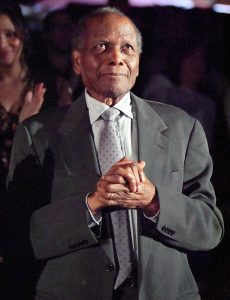
In the last few years, we’ve seen the loss of the cultural and historical icons of the twentieth century. I’m pretty convinced that we’ve seen the end of American dominance since the World Wars, so this just seals the deal. We’re losing the last of heroes of the American Century. Sidney Poitier was a fixture in the Civil Rights Movement and one of the stars of the Golden Age of Cinema and TV. He passed quietly yesterday at the age of 94.
I loved many of his movies, but my most vivid memory of him was watching ‘In the Heat of the Night’ in a small downtown theatre in Estes Park, Colorado, with my parents and sister. It was probably the first serious adult movie I’d ever seen with its themes of violence and racism. Here is an excerpt from his New York Times Obit.
In 1967 Mr. Poitier appeared in three of Hollywood’s top-grossing films, elevating him to the peak of his popularity. “In the Heat of Night” placed him opposite Rod Steiger, as an indolent, bigoted sheriff, with whom Virgil Tibbs, the Philadelphia detective played by Mr. Poitier, must work on a murder investigation in Mississippi. (In an indelible line, the detective insists on the sheriff’s respect when he declares, “They call me Mr. Tibbs!”) In “To Sir, With Love,” he was a concerned teacher in a tough London high school, and in “Guess Who’s Coming to Dinner,” a taboo-breaking film about an interracial couple, he played a doctor whose race tests the liberal principles of his prospective in-laws, played by Spencer Tracy and Katharine Hepburn.
Throughout his career, a heavyweight of racial significance bore down on Mr. Poitier and the characters he played. “I felt very much as if I were representing 15, 18 million people with every move I made,” he once wrote.
Mr. Poitier grew up in the Bahamas, but he was born on Feb. 20, 1927, in Miami, where his parents regularly traveled to sell their tomato crop. The youngest of nine children, he wore clothes made from flour sacks and never saw a car, looked in a mirror, or tasted ice cream until his father, Reginald, moved the family from Cat Island to Nassau in 1937 after Florida banned the import of Bahamian tomatoes.
When he was 12, Mr. Poitier quit school and became a water boy for a crew of pick-and-shovel laborers. He also began getting into mischief, and his parents, worried that he was becoming a juvenile delinquent, sent him to Miami when he was 14 to live with a married brother, Cyril.
Mr. Poitier had known nothing of segregation growing up on Cat Island, so the rules governing American Black people in the South came as a shock. “It was all over the place like barbed wire,” he later said of American racism. “And I kept running into it and lacerating myself.”
In less than a year he fled Miami for New York, arriving with $3 and change in his pocket. He took jobs washing dishes and working as a ditch digger, waterfront laborer and delivery man in the garment district. Life was grim. During a race riot in Harlem, he was shot in the leg. He saved his nickels so that on cold nights he could sleep in pay toilets.
US President Barack Obama awards American actor Sidney Poitier the 2009 Presidential Medal of Freedom, America’s highest civilian honor, during a ceremony in the East Room of the White House in Washington, DC, USA, on 12 August 2009.
Born February 20, 1927, Sidney Poitier’s pioneering career has had a tremendous impact on American culture. In the early ’50s, he was the top and virtually sole African-American film star—the first black actor to become a hero to both black and white audiences. Poitier was also the first black actor to win a prestigious international film award. With his unique career, Sidney Poitier helped change many stubborn racial attitudes that had persisted in this country for centuries. He has built the bridges and opened the doors for countless artists in succeeding generations. He is an actor who stood for hope, for excellence, and who has given happiness to millions of people around the world. Paying tribute to Sidney Poitier in 1967, Dr. Martin Luther King, Jr. said, “He is a man of great depth, a man of great social concern, a man who is dedicated to human rights and freedom.”
Many things are going on in our country’s governance today. There are discussions about expanding the number of judges on the Supreme Court, reforming the filibuster, the economic boom with the accompanying price increases, and the incredible amount of information the January 6 Committee has received from a variety of former staffers to all levels of Republican Insurrectionists. Let me highlight some of them.
There are many big lies told by Trumperz and Trumpists.
Fact Checker: No, Trump did not order 10,000 troops to secure the Capitol on Jan. 6 https://t.co/CaSbTBDnGS
Just one month after the attack, Meadows appeared on Fox News’s “Sunday Morning Futures” and made this claim: “As many as 10,000 National Guard troops were told to be on the ready by the secretary of defense. That was a direct order from President Trump.”
Fact Checkers at the Washington Post fact checked reporting by a Vanity Fair reporter who was there at the time of the discussion. Fox and Meadows are caught in another big lie. It never went anywhere.
It’s always dismaying when false claims that were previously debunked turn up as accepted facts months later. Yet, increasingly, Fox News hosts and their guests appear to live in a world untethered by the truth.
As we have documented before, President Donald Trump never requested 10,000 National Guard troops to secure the Capitol that day. He threw out a number, in casual conversation, that is now regarded by his supporters as a lifeline to excuse his inaction when a mob inspired by his rhetoric invaded the Capitol.
People often overestimate the depth of the filibuster’s roots. When the Senate voted in 2013 to invoke the “nuclear option” to approve presidential nominees, then-Sen. Lamar Alexander (R-Tenn.) wrote in The Washington Post that sidestepping the filibuster was “the most dangerous restructuring of Senate rules since Thomas Jefferson wrote them.” More recently, Sen. Joe Manchin (D-W.Va.) defended the filibuster in the Charleston Gazette-Mail by saying, “Our founders were wise to see the temptation of absolute power and built in specific checks and balances to force compromise that serves to preserve our fragile democracy.”
True — but the filibuster was not one of these checks and balances. The Senate did not have any provision for a supermajority on legislation for its first 17 years. Like the House, its rules allowed a “motion for the previous question,” where a majority could move directly to vote. That provision was taken out in 1806, when Vice President Aaron Burr cleaned up what he regarded as extraneous provisions in the Senate’s cluttered rule book. For decades after the change, the status quo largely prevailed — until the 1840s, when John C. Calhoun exploited the motion’s absence to stall anti-slavery action by talking at length on the floor, joined by allies. His adversaries had no ability to stop the talk. From the 20th century on, the rules changed multiple times, always to make it easier for the majority to overcome a filibuster and move to action.
President Joe Biden will deliver his first State of the Union address on March 1 after House Speaker Nancy Pelosi sent the president a formal invitation to speak to Congress and the American public one year into his term. https://t.co/c5CumTsQpv
Biden will have some great information on the economy to share but will it really convince those of us that are experiences the challenges of the Covid-19 economy? Economist Noah Smith calls this the “Biden Boom”.
The official numbers aren’t in yet, but In the 4th quarter of 2021, the United States economy is believed to have grown by about 5.5% or 6% (annualized rate). That’s a pretty incredible number, when you consider that the consensus forecast for China is only 3.5% in the same quarter. But things get even more impressive when you look at the employment numbers. The unemployment rate probably fell to 4.1% in December — a number below what we used to think to think of as the “natural rate” of unemployment.
If you told me in April 2020 that unemployment would be 4.1% by December 2021, I’d have laughed in your face. And yet here we are.
Of course, after the Great Recession, we all got very used to looking past headline unemployment numbers, to see who is actually working. But now when we do that, we see that all the other numbers tell the same story. U6, the broadest measure of unemployment plus underemployment, is down to the level of 2018 or 2006. And my personal favorite labor market indicator, the prime-age employment-to-population ratio, is back to the level of late 2017.
Other indicators also show an extremely healthy labor market. While some have interpreted rising quits as a sign of a “Great Resignation”, the truth is that this mostly just reflects job churn; people are quitting in order to get better jobs, because the opportunities are so good. To see that, check out this graph from the Economic Policy Institute, showing that hires are greater than quits pretty much everywhere:
He’s got some wonky FRED graphs to back up the analysis. And, this folks explains why we see some inflation. But, that’s not a problem; the Fed needs to bump the interest rates up to more normal levels and out of historical lows. This is an economy we haven’t seen for a long time, and it’s kind’ve exciting!
The hearing to sentencing for the three murderers of Ahmaud Arbery is in court right now. Read more at the ABC link.
Wanda Cooper-Jones, Ahmaud Arbery's mother, calls for three men convicted of her son's murder to be sentenced to life in prison without parole.
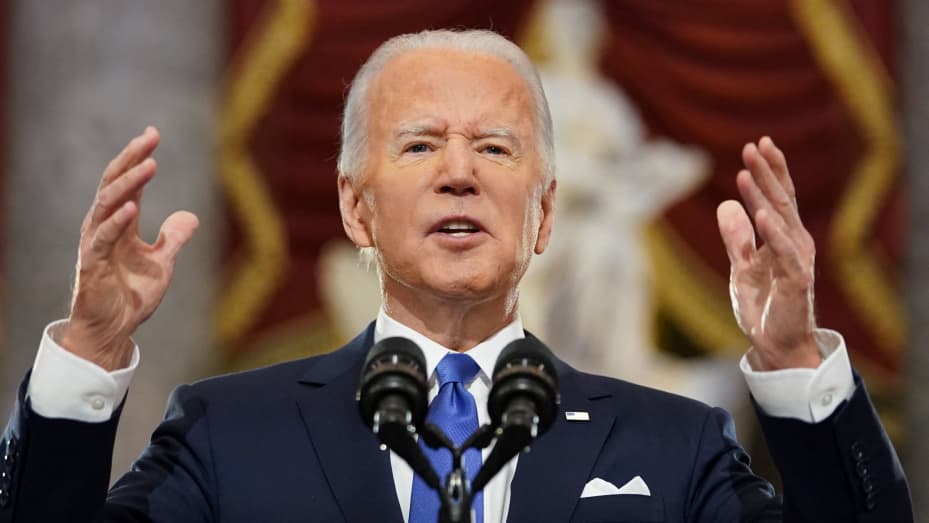
President Joe Biden today specifically held his predecessor responsible for the violent attack on the U.S. Capitol one year ago today. Without naming him, Biden called Trump a liar who cares more about his own “bruised ego” than about our democracy or the Consitution.
In a searing speech, Biden marked the first anniversary of the insurrection at the U.S. Capitol by painting in vivid detail the violence of that day — and, without naming Trump, by squarely blaming the former president for spreading “a web of lies” about the 2020 election.
“One year ago today, in this sacred place, democracy was attacked, simply attacked,” Biden said. “The will of the people was under assault. The Constitution, our Constitution, faced the gravest of threats.”
Throughout the speech, Biden did not mention Trump by name but constantly referred to him as the former president.
“For the first time in our history, a president had not just lost an election: He tried to prevent the peaceful transfer of power as a violent mob breached the Capitol,” Biden said. “But they failed.”
Biden said Americans must ensure such an attack never happens again.
“Here is the truth: The former president of the United States of America has created and spread a web of lies about the 2020 election,” Biden said. “He’s done so because he values power over principle … because he sees his own interest as more important than his country’s interest and America’s interest, and because his bruised ego matters more to him than our democracy or our Constitution. He can’t accept he lost.”
In his remarks at the Capitol Thursday morning, Biden vowed to defend American democracy and said that Jan. 6 represents not its end but rather a rebirth of “liberty and fair play.”
“You can’t love your country only when you win,” Biden said. “You can’t obey the law only when it’s convenient. You can’t be patriotic when you embrace and enable lies.”\Those who stormed the Capitol and those who called on them to do so, Biden said, “held a dagger at the throat of … American democracy.”
“They didn’t come here out of patriotism or principle. They came here in rage — not in service of America, but rather in service of one man,” Biden said.
He added: “I did not seek this fight brought to this Capitol one year ago today. But I will not shrink from it, either. I will stand in this breach. I will defend this nation, and I will allow no one to place a dagger at the throat of democracy.”
One year later, solemn events mark deadly January 6 Capitol insurrection.
President Joe Biden on Thursday delivered what he declared was the “God’s truth” marking the first anniversary of the U.S. Capitol insurrection, the violent attack by Donald Trump’s supporters that has fundamentally changed Congress and raised global concerns about the future of American democracy.
Biden’s criticism was particularly blistering of then-President Trump and his violent supporters.
“For the first time in our history, a president not just lost an election, he tried to prevent the peaceful transfer of power as a violent mob breached the Capitol,” Biden said. “But they failed.”
“I will stand in this breach,” he declared, his voice rising.
“Democracy was attacked,” Biden said at the Capitol. “We the people endure. We the people prevailed.”
The president and congressional Democrats started the day in Statuary Hall, one of several spots where rioters swarmed a year ago and interrupted the electoral count. Biden drew a contrast between the truth of what happened and the false narratives that have sprung up about the Capitol assault, including the continued refusal by many Republicans to affirm that Biden won the 2020 election.
“You and I and the whole world saw with our own eyes,” Biden said.
He asked those listening to close their eyes and recall what they saw that day, as he described the harrowing, violent scene, the mob attacking police, threatening the House speaker, erecting gallows threatening to hang the vice president — all while then-President Trump sat at the White House watching it on TV.
“Here is the God’s truth about Jan. 6, 2021,” Biden said. “They were looking to subvert the Constitution.”
“We must be absolutely clear about what is true and what is a lie. Here’s the truth,” he said. “The former president of the United States of America has spread a web of lies about the 2020 election.”
ANALYSIS: @jonkarl breaks down how attempts by former Pres. Trump and his followers to overturn the 2020 election results—multi-dimensional efforts of which the assault on the Capitol building was only one element—came dangerously close to succeeding. https://t.co/Hl9tVSs7cn
Two weeks after the Jan. 6 insurrection , Donald Trump walked out of the White House and Joe Biden became the 46th president of the United States. Trump had attempted to use the full power of the presidency and his position as the leader of the Republican Party to stay in power, but he failed. Democracy succeeded. Joe Biden became president, on schedule and without incident, at noon on Jan. 20, 2021.
But this was a close call. Attempts by Trump and his followers to overturn the results of the 2020 election — multi-dimensional efforts of which the assault on the Capitol building was only one element — came dangerously close to succeeding.
Consider, for example, Donald Trump’s demand that Vice President Mike Pence act to nullify Biden’s victory on Jan. 6. Trump wanted Pence to use his power as the presiding officer during the joint session of Congress that day to toss out Biden’s electoral votes in states Trump had contested. On its face, the idea of giving one person the power to overturn the votes of millions of Americans was absurd. And outside of a few fringe lawyers advising Trump, constitutional scholars agreed that Pence had no authority to do what Trump was demanding.
But what if Pence had followed Trump’s order? What would have happened if he had brought the gavel down during the joint session on Jan. 6 and thrown out Biden’s electoral votes in the states Trump had contested? What if he had declared Trump the winner of those states?
J. Michael Luttig, a former federal appellate judge popular among conservatives, had advised Pence he would be violating the Constitution if he followed Trump’s order, and Luttig tells ABC News that if Pence had attempted to do it, he would have “plunged the country into a constitutional crisis of the highest order.”
While it may be clear that Pence did not have the authority to unilaterally reject electoral votes, it is unclear who would have had the authority to overrule him. Some have suggested the matter would simply have had to be resolved by the Supreme Court, but it is unclear the justices would have agreed to decide such a case because the Constitution arguably leaves it up to Congress to decide its own rules for counting contested electoral votes.
“It would have presented America, and the three branches of our government in particular, with what each branch would have viewed as seemingly irresolvable constitutional issues,” Luttig said.
Luttig believes the Supreme Court would have ultimately taken up the issue, but, he says, with no explicit constitutional authority to do so, it’s not certain the justices would have agreed to resolve the dispute.
“Had the Supreme Court refused to decide these issues,” Luttig told ABC News, “the country and our democracy would have spiraled into a chaos from which neither would have soon recovered, literally jeopardizing our national security. The legitimacy of our democracy would have been forever drawn into doubt and its luster could never have been restored.”
Read the rest at ABC News.
Yesterday former Trump family insider Stephanie Grisham appeared before the January 6 committee. This morning she was on CNN’s New Day talking about Trump and the gang.
Trump Enjoyed Riot So Much He Rewound TV to Watch It Twice, Ex-Aide Says https://t.co/8OuPu4YOp0 via @thedailybeast (Stephanie Grisham “He was in the dining room gleefully watching on his TV as he often did, ‘Look at all the people fighting for me,’ hitting rewind, watching it)
Donald Trump had such a good time watching the Capitol riot unfold on live TV that he rewound the coverage to watch it twice, according to his former press secretary Stephanie Grisham. Speaking to CNN from Washington, D.C. on the first anniversary of the riot, Grisham recalled that Trump was in the White House dining room as the insurrection unfolded. “He was in the dining room gleefully watching on his TV as he often did, [saying] ‘Look at all the people fighting for me,’ hitting rewind, watching it again, that’s all that I know,” said the former press secretary. Grisham also repeated her claim that former first lady Melania Trump did nothing to persuade her husband to call off his supporters from their attack on the Capitol and lawmakers inside, and announced that a group of unnamed ex-Trump administration officials plan to meet next week to talk about a plan to stop Trump in his quest to “manipulate people and divide our country.”
More from Grishom’s CNN appearance:
Former White House press secretary Stephanie Grisham told CNN that a group of former Trump administration officials plan to meet in the coming weeks to "try and stop" Trump as he continues to “manipulate people and divide our country.”https://t.co/tJBeFi0zKSpic.twitter.com/jJPV4Vuc8s
— CNN This Morning with Kasie Hunt (@CNNThisMorning) January 6, 2022
People in and around former Vice President Mike Pence’s office have been particularly cooperative as the Jan. 6 select committee focuses on what former President Trump was doing during the more than three hours the Capitol was under attack, sources familiar with the testimony tell Axios.
Why it matters: At the one-year mark of the insurrection, the committee is piecing together a definitive timeline of how Trump resisted pleas from his own advisers, allies, family members and lawmakers to halt the violence down Pennsylvania Avenue.
The committee is ramping up its closed-door work with the goal of holding public hearings as early as this spring.
Some Pence-world witnesses have testified without a subpoena, according to one source with direct knowledge of the closed-door hearings.
Both Pence’s former chief of staff Marc Short, and former press secretary Alyssa Farah, who later served as White House communications director, are among those cooperating with the committee.
Keith Kellogg also has given a deposition.
One source familiar with their involvement said Short, who was subpoenaed by the committee, would not have cooperated without the approval of Pence.
What we’re hearing: Some of the most helpful information has come from second- and third-tier administration staff who were not directly involved but were at the White House on Jan. 6 and had access to top administration officials, sources tell Axios.
They’ve been integral to helping piece together exactly what happened that day, one committee aide said.
Many of those officials met solely with the committee’s Republican members, Reps. Liz Cheney (R-Wyo.) and Adam Kinzinger (R-Ill.), two sources with direct knowledge said.
Some also have testified together with their former colleagues.
What they’re saying: Farah, who spoke with the committee on several occasions last year, told Axios:
“From the two I was in, you could see how much information they already had.
“Those who are refusing to cooperate likely are doing so out of complete fealty to Donald Trump and not wanting to piss him off.
“But, secondarily, because they’re realizing the committee has quite a bit more information than they realized. And their involvement is known to a much greater degree than they realized.”
NEW: Former vice president @mike_pence hasn't yet talked to the @January6thCmte, but sources familiar with his inner circle say the ex-Veep may as well be on board with the investigation into what brought rioters calling for his death to the Capitol. https://t.co/FAoU7WIkRs
Rep. Liz Cheney, the vice chairwoman of the House select committee investigating the January 6 insurrection, said Thursday she is looking forward to Vice President Mike Pence‘s cooperation and his team “continuing” their cooperation in the panel’s investigation.
The Wyoming Republican also called him a “hero” for his actions that day.
“Former Vice President Pence was a hero on January 6. He refused the pressure of the former President. He did his duty, and the nation should be very grateful for the actions that he took that day,” Cheney told NBC’s Savannah Guthrie on the “Today” show. “We look forward to continuing the cooperation that we’ve had with members of the former vice president’s team, and I look forward as well to his cooperation.”
Mississippi Rep. Bennie Thompson, chairman of the House select committee, has said he wants to hear directly from Pence, who certified the 2020 presidential election results. The Democrat also said he wants the former vice president to voluntarily speak to the committee about conversations he was privy to in the days leading up to the insurrection and what he witnessed on that day.
Various Pence aides have started engaging with the panel, including his former chief of staff Marc Short. Short’s cooperation is a significant development that gave investigators insight from one of the highest-ranking Trump administration officials and signals a greater openness among Pence’s inner circle.
One source previously told CNN the committee is getting “significant cooperation with Team Pence,” even if the committee has not openly discussed that. Another source also told CNN that Short’s help is an example of the “momentum” the investigation is enjoying behind the scenes.
This could be an interesting day. I haven’t been watching a lot of TV lately, but I may do so today. There is a lot going on.
What are your thoughts on the anniversary of January 6?
Did you like this post? Please share it with your friends:
This Thursday marks one year since the January 6, 2021 attack on the U.S. Capitol, and today’s top news stories reflect the seriousness of the upcoming anniversary. There is also a new book out today that looks interesting.
In their terrific new book, the veteran reporters Mark Bowden and Matthew Teague argue that the mob that invaded the Capitol in Washington almost exactly a year ago “had no more chance of overthrowing the US government than hippies in 1967 had trying to levitate the Pentagon”.
The “real insurrection” was the one “led by Trump and his coterie of sycophants” in Georgia, Wisconsin, Nevada, Michigan, Pennsylvania and Arizona. It “was only slightly better organized than the mob but considerably more calculated and dangerous”.
That real insurrection is the subject of this timely and important volume. The authors have used a stethoscope to examine the minutia of the American election process. The result is a thrilling and suspenseful celebration of the survival of democracy.
The attempted coup was led by Donald Trump. Its intended denouement, in which the vice-president, Mike Pence, would ignore the votes of the six states above plus Washington DC in order to swing the election to Trump, was outlined in an insane memo written by the lawyer John Eastman, described here as “surely the most seditious document to emerge from the White House in American history”.
That final act, of course, never happened. Not even Pence, the most sycophantic vice-president of modern times, could bring himself to violate the constitution so blatantly to keep his boss in the White House.
But the genuine heroes, brought to life here, were the “hundreds of obscure Americans from every walk of life, state and local officials, judges and election workers. Many of them were Republicans, some were Trump supporters. They refused to accept his slander of themselves, their communities and their workers, and they refused to betray their sworn duty to their office and their country. They were the real patriots.”.
The New Republic has a lengthier review that is worth reading: The Next Coup Attempt Will Be More Dangerous. Mark Bowden and Matthew Teague’s book shows how scattershot January 6 was—and why a repeat could be harder to stop.
Poul Friis Nybo (Danish 1868-1929) A young woman reading while enjoying a cup of tea in the sunroom by the sea.
Attorney General Merrick Garland will give a speech Wednesday about the Justice Department’s efforts to investigate and prosecute those responsible for the Jan. 6 riot at the Capitol, stressing the department’s “unwavering commitment to defend Americans and American democracy from violence and threats of violence,” a Justice Department official said.
In the address, scheduled for the day before the anniversary of the attack, Garland will not speak about specific people or charges, said the official, who spoke on the condition of anonymity because the speech had not yet been officially announced.
Rather, Garland, the nation’s top law enforcement officer, will offer broad remarks about “the department’s solemn duty to uphold the Constitution, follow the facts and the law and pursue equal justice under law without fear or favor.”
The remarks will be directed at Justice Department employees and the public, the official said. They come as the agency has been under growing pressure — especially from the political left — to hold former president Donald Trump and others in his orbit criminally responsible for efforts to overturn the results of the 2020 presidential election.
I don’t see why Garland can’t say whether the DOJ plans to prosecute the the people who planned, supported, and planned the January 6 attack. If he doesn’t, the speech is just going stimulate more anger among those of us who are worried about preserving democracy in the U.S.
Former President Trump and fervent allies, including Steve Bannon, plan to go on the offense during Thursday’s anniversary of the Capitol insurrection — in fiery contrast with House and Senate Republican leaders, who plan no events, sources with direct knowledge tell Axios….
Bannon told Axios that on Thursday morning, he’ll host a special edition of his podcast “WarRoom” featuring two of Trump’s most zealous supporters — Reps. Matt Gaetz (R-Fla.) and Marjorie Taylor Greene (R-Ga.)….he’ll also host Darren Beattie. He was a major character in the incendiary documentary Fox News Channel host Tucker Carlson produced about the Capitol riot.
Based on their previous statements, it’s likely Bannon and his allies will portray the arrested Jan. 6 rioters as political prisoners and MAGA martyrs….
The Reader – Nick Botting British, b.1963-
Trump himself will hold a press conference at 5pm Thursday at Mar-a-Lago. He’ll assail the bipartisan select committee that Pelosi formed to investigate the attack.
A source familiar with Trump’s plans said the former president would call Pelosi’s investigation a “witch hunt” and embrace the protests of Jan. 6 as a legitimate reaction to a “stolen” election on Nov. 3, 2020.
Trump has issued statements attacking Pelosi’s committee but hasn’t, until now, held an event designed entirely to defend and legitimize Jan. 6.
Asked whether Trump would claim the riot was not violent and blame it on antifa and the FBI, the source replied, “I’m sure that will be a component.”
On Sunday, January 3, the heads of a half-dozen elite government special operations teams met in Quantico, Virginia, to go over potential threats, contingencies, and plans for the upcoming Joint Session of Congress. The meeting, and the subsequent deployment of these shadowy commandos on January 6, has never before been revealed.
Right after the New Year, Jeffrey A. Rosen, the acting Attorney General on January 6, approved implementation of long-standing contingency plans dealing with the most extreme possibilities: an attack on President Donald Trump or Vice President Mike Pence, a terrorist attack involving a weapon of mass destruction, and a declaration of measures to implement continuity of government, requiring protection and movement of presidential successors.
Rosen made a unilateral decision to take the preparatory steps to deploy Justice Department and so-called “national” forces. There was no formal request from the U.S. Capitol Police, the Secret Service, or the Metropolitan Police Department—in fact, no external request from any agency. The leadership in Justice and the FBI anticipated the worst and decided to act independently, the special operations forces lurking behind the scenes….
The contingency units meeting on January 3 included the FBI’s Hostage Rescue Team, the FBI’s national “Render Safe” team, an FBI SWAT team from the Baltimore Field Office, Special Response Teams from the Bureau of Alcohol, Tobacco, Firearms and Explosives (ATF), and the U.S. Marshals Service Special Operations Group….
By James C. Christensen
On the morning of January 6, most of these forces staged closer to downtown Washington, particularly after intelligence was received indicating a possible threat to FBI headquarters building or the FBI’s Washington Field Office. FBI tactical teams arrived on Capitol Hill early in the day to assist in the collection of evidence at sites—including the Republican and Democratic party national headquarters—where explosive devices were found. FBI SWAT teams and snipers were deployed to secure nearby congressional office buildings. Other FBI agents provided selective security around the U.S. Capitol and protection to congressional members and staff.
A tactical team of the Hostage Rescue Team was one of the first external federal agencies to actually enter the Capitol after protestors breached the building. In addition to augmentation of emergency security assets, one team coordinated with the U.S. Capitol Police and Secret Service to provide additional safeguarding of Vice President Pence, who had been moved to the underground parking structure beneath the Capitol, from where he was supposed to evacuate. But Pence refused to leave the building and stayed underground instead.
Arkin doesn’t say why these teams didn’t do more to protect the police officers who were being beaten and maimed.
As the certification of Joe Biden’s victory in the November 2020 presidential election loomed, former President Donald Trump and his team came up with a plan to stoke anger and seed disinformation in the hope of getting lawmakers to reject the election results.
The plan included recruiting known conspiracy theorist and QAnon influencer Ron Watkins, mobilizing an army of MAGA Twitter trolls, and organizing protests outside lawmakers’ homes.
The plan was to create a 10-day media blitz, beginning on Dec. 27 and ending on Jan. 6, to urge Republican lawmakers to vote against certifying the results of the 2020 election….
The 22-page document outlines a plan to seed the baseless election fraud allegations that had been dreamt up by conspiracy theorists and use them in messaging on TV, radio, and social media.
The document also outlines plans to organize “protests at weak members’ homes,” “protests at local officials homes/offices” and “protests in DC – rally for key House and Senate members.”
The plan called for prewritten tweets to be disseminated to right-wing influencers repeating a range of the most popular election fraud conspiracies, including ones about mail-in ballots, faulty Dominion voting machines, dead people voting, and suitcases full of ballots being brought into processing centers.
The United States today is, once again, headed for civil war, and, once again, it cannot bear to face it. The political problems are both structural and immediate, the crisis both longstanding and accelerating. The American political system has become so overwhelmed by anger that even the most basic tasks of government are increasingly impossible.
The legal system grows less legitimate by the day. Trust in government at all levels is in freefall, or, like Congress, with approval ratings hovering around 20%, cannot fall any lower. Right now, elected sheriffs openly promote resistance to federal authority. Right now, militias train and arm themselves in preparation for the fall of the Republic. Right now, doctrines of a radical, unachievable, messianic freedom spread across the internet, on talk radio, on cable television, in the malls.
Antonio Calderara, La finestra e il libro, 1935
The consequences of the breakdown of the American system is only now beginning to be felt. January 6 wasn’t a wake-up call; it was a rallying cry. The Capitol police have seen threats against members of Congress increase by 107%. Fred Upton, Republican representative from Michigan, recently shared a message he had received: “I hope you die. I hope everybody in your family dies.” And it’s not just politicians but anyone involved in the running of the electoral system. Death threats have become a standard aspect of the work life of election supervisors and school board members. A third of poll workers, in the aftermath of 2020, said they felt unsafe.
Under such conditions, party politics have become mostly a distraction. The parties and the people in the parties no longer matter much, one way or the other. Blaming one side or the other offers a perverse species of hope. “If only more moderate Republicans were in office, if only bipartisanship could be restored to what it was.” Such hopes are not only reckless but irresponsible. The problem is not who is in power, but the structures of power.
The United States has burned before. The Vietnam war, civil rights protests, the assassination of JFK and MLK, Watergate – all were national catastrophes which remain in living memory. But the United States has never faced an institutional crisis quite like the one it is facing now.
Marche is a novelist, and his book “imagines five chilling scenarios that lead to its collapse, based on in-depth interviews with experts of all kinds.”
What are your thought on the upcoming anniversary? What else is on your mind? Please share.
Did you like this post? Please share it with your friends:
It’s the first Monday of the year! The country is stilled mired by Covid-19 and the ongoing insurrection. The Trumps and the pandemic dominate the news so far.
But a year later, a fundamental question remains: Will the Jan. 6 insurrection be swept under the rug, or seen for what it could be — the beginning of the end of American democracy as we know it.
Many of the people who failed to overturn the election are now using the levers of power at the state level to rig future campaigns.
Those who manufactured the crusade to steal the 2020 election know how and why they failed. They are laying the groundwork to overturn the next election successfully. The coup is still underway.
Make no mistake — an aspiring dictator, egged on by his allies in Congress, failed to hold on to power this time. But those very same people haven’t given up — they are analyzing their failures and will continue their brazen attempts to seize power by any means necessary. This is not some academic debate: In future elections, they might succeed in the unthinkable.
Thanks to a somewhat surprising source — the disgraced former New York police commissioner Bernard Kerik, a Team Trump insider — we now know the name of a document with the potential to become a “smoking gun.” Just its title suggests Trump was planning an unprecedented abuse of presidential power — to use the Big Lie of nonexistent 2020 election fraud to undo the results of a free and fair vote.
On the eve of the one-year anniversary of the insurrection that disrupted Congress and left five people dead or dying, the question that looms large over 2022 is whether the American people will ever get to see this proof, or the other evidence of the 45th president’s involvement in election tampering, in inciting those who violently rioted on Capitol Hill — and whether the endgame was an autocoup to seize power and deny Joe Biden the White House.
According to a letter from Kerik’s attorney, the document is called “DRAFT LETTER FROM POTUS TO SEIZE EVIDENCE IN THE INTEREST OF NATIONAL SECURITY FOR THE 2020 ELECTIONS” — and it’s believed to have been written on Dec. 17, 2020. That was a critical time for the Trump insiders who were accelerating their schemes to deny the presidency to Biden, even after the Democrat won 7 million more popular votes and the Electoral College by a 306-232 margin.
Here’s the catch: While Kerik, a longtime close associate of Trump’s personal attorney Rudolph Giuliani, last week turned over some election-related materials to the House Select Committee tasked with getting to the bottom of Jan. 6, the draft letter from Trump is on a list of records that Kerik is refusing to turn over — claiming that the document is shielded as “attorney work product.” While some legal experts are already throwing cold water on that claim, the reality is that Team Trump has been remarkably successful for months in stonewalling — in keeping both key records and important witnesses out of investigators’ reach. In an echo of Richard Nixon’s Watergate scandal, the future of democracy may hinge on Trump’s ability to thwart the probe.
Understanding why the 12/17/20 document could be a “smoking gun” means understanding where the concept of a national emergency and “seizing evidence,” which could include paper ballots or voting machines from the 2020 election, fits into the growing body of data showing both that an attempted Trump coup was afoot — and why it failed.
Fewer than half of Republicans say they are willing to accept the results of the 2020 election — a number that has remained virtually unchanged since a NPR/Ipsos poll asked the same question last January. https://t.co/Vs131Ilz32
Many Republicans still believe the ‘big lie’, disregard the nature of the insurrection, as well as cling angrily to a huge set of lies about Covid-19. What can you do when so many people live in alternative reality? This is from the NPR Tweet above.
Fewer than half of Republicans say they are willing to accept the results of the 2020 election — a number that has remained virtually unchanged since we asked the same question last January.
“There is really a sort of dual reality through which partisans are approaching not only what happened a year ago on Jan. 6, but also generally with our presidential election and our democracy,” said Mallory Newall, a vice president at Ipsos, which conducted the poll.
“It is Republicans that are driving this belief that there was major fraudulent voting and it changed the results in the election,” Newall said.
Nearly two-thirds of poll respondents agree that U.S. democracy is “more at risk” now than it was a year ago. Among Republicans, that number climbs to 4 in 5.
Overall, 70% of poll respondents agree that the country is in crisis and at risk of failing.
The country can’t even decide what to call the assault on the Capitol. Only 6% of poll respondents say it was “a reasonable protest” — but there is little agreement on a better description. More than half of Democrats say the Jan. 6 assault was an “attempted coup or insurrection,” while Republicans are more likely to describe it as a “riot that got out of control.”
Americans are bitterly divided over the events that led to Jan. 6, as well.
But the political blight that contributed to the attack has only worsened, inside and outside the Capitol. So while leaders feel readier today than they did on Jan. 5, no one is rushing to declare the threat has passed.
“The last thing that I want to do is say, ‘this could never happen again’ and have it sound like a challenge to those people,” said Capitol Police Chief Thomas Manger, who took over the department in August after his predecessor’s ouster following the siege. “I’m not trying to be overconfident. We are much better prepared.”
The story of that preparation is only partially written, though. Capitol Police officers remain overtaxed and exhausted, logging crushing amounts of overtime as they grapple with a depleted force. Threats against members of Congress are still spiking. A Sept. 18 rally to support certain insurrectionists drew an overwhelming police presence that dwarfed the smattering of demonstrators, raising questions about an overcorrection and quality of intelligence.
And with the atmosphere under the dome as personally corrosive as ever, it’s tough to say the Capitol has moved forward from Jan. 6. Many of those who fled from or responded to the violence are indelibly scarred.
“My concern about the Capitol Police is that we’re making them work too hard and too long,” Missouri Sen. Roy Blunt, the top Republican on the Senate committee that oversees Capitol security, told reporters recently. “And we need to figure out a way to shift some of those responsibilities … or to figure out a way to recruit more people.”
The involvement of the children, Donald Trump Jr. and Ivanka Trump, was disclosed in a court document filed on Monday as the Trump Organization sought to block lawyers for the attorney general, Letitia James, from questioning the former president and his children.
The subpoenas for the former president and two of his children were served on Dec. 1, according to a person with knowledge of the matter. Eric Trump, another of Mr. Trump’s sons, was already questioned by Ms. James’s office in October 2020.
The attorney general’s effort to interview Mr. Trump under oath became public last month, but it was not previously known that her office, which has been conducting a civil investigation into the former president’s business practices for almost three years, was also looking to question Donald Trump Jr. and Ivanka Trump.
Days before the anniversary of the Jan. 6 attack on the Capitol, Majority Leader Chuck Schumer announced the Senate will vote on filibuster rules changes to advance stalled voting legislation that Democrats say is needed to protect democracy.
In a letter Monday to colleagues, Schumer, D-N.Y., said the Senate “must evolve” and will “debate and consider” the rules changes by Jan. 17, on or before Martin Luther King Jr. Day, as the Democrats seek to overcome Republican opposition to their elections law package.
“Let me be clear: January 6th was a symptom of a broader illness — an effort to delegitimize our election process,” Schumer wrote, “and the Senate must advance systemic democracy reforms to repair our republic or else the events of that day will not be an aberration — they will be the new norm.”
The election and voting rights package has been stalled in the evenly-split 50-50 Senate, blocked by a Republican-led filibuster and leaving Democrats unable to mount the 60-vote threshold needed to advance it toward passage.
Democrats have been unable to agree among themselves over potential changes to the Senate rules to reduce the 60-vote hurdle, despite months of private negotiations.
Schumer tees up vote on rules change if voting rights legislation is blocked https://t.co/ttz7tvORfU
“Much like the violent insurrectionists who stormed the U.S. Capitol nearly one year ago, Republican officials in states across the country have seized on the former president’s ‘Big Lie’ about widespread voter fraud to enact anti-democratic legislation and seize control of typically non-partisan election administration functions,” Schumer wrote in the letter.
Democrats say last year’s insurrection was propelled by former President Trump’s false claims that the election was stolen from him and that election fraud was rampant, allegations that spurred Republican state legislatures to implement new voting restrictions.
Democrats argue passing The Freedom to Vote Act and the John Lewis Voting Rights Act, which would, among other things, ensure that states have early voting, make Election Day a public holiday and secure the availability of mail-in voting, are necessary measures to combat the actions taken by somestate legislatures.
The GOP is expected to once again reject the bills, arguing they’re a form of federal overreach. In a 50-50 Senate, Democrats need 10 Republicans to join them to advance the legislation because of the 60-vote threshold required under Senate rules. But uniform Republican oppositionhas led voting rights advocates to urge Senate Democrats to abolish the filibuster, or carve out an exception for voting rights legislation.
In order for that to happen, all Democrats need to be on board. Sen. Joe Manchin of West Virginia and Sen. Kyrsten Sinema of Arizona have repeatedly defended the filibuster and may not be open toamending it, despite supporting the voting legislation itself.
Manchintook part in a series of meetings on potential rules changes with other Democratic senators during December, which continued through the holidays.
Senators have been discussing two different approaches to altering Senate rules: either setting up a “talking filibuster” that would give the minority the ability to block action on legislation or creating a carve out that would provide a path for Democrats to pass voting rights legislation with a simple majority, according to a source familiar with the discussions.
I’ll try to post updates as we get them. Meanwhile, what’s your reading and blogging list?
Did you like this post? Please share it with your friends:
Well, 2021 is in the rearview mirror and 2022 lies ahead. Will this year be better than the last two? We can only hope. Every year, we look back at the notable people who have left us, and there were many of those last year. To cap a terrible year, the last living member of the Mary Tyler Moore Show and Golden Girls–Betty White–died yesterday.
Betty White, who created two of the most memorable characters in sitcom history, the nymphomaniacal Sue Ann Nivens on “The Mary Tyler Moore Show” and the sweet but dim Rose Nylund on “The Golden Girls” — and who capped her long career with a comeback that included a triumphant appearance as the host of “Saturday Night Live” at the age of 88 — died on Friday at her home in Los Angeles. She was 99.
Her death, less than three weeks before her 100th birthday, was confirmed by Jeff Witjas, her longtime friend and agent.
Ms. White won five Primetime Emmys and one competitive Daytime Emmy — as well as a lifetime achievement Daytime Emmy in 2015 and a Los Angeles regional Emmy in 1952 — in a television career that spanned seven decades and that the 2014 edition of “Guinness World Records” certified as the longest ever for a female entertainer.
But her breakthrough came relatively late in life, with her work on “The Mary Tyler Moore Show” from 1973 to 1977, for which she won two of her Emmys.
As Sue Ann, the host of a household-hints show on the television station where Ms. Moore’s character worked, the bedimpled Ms. White was annoyingly positive and upbeat, but also manipulative and bawdy — the sexpot next door, who would have you believe she slept with entire Army brigades during World War II.
Once, when someone asked her how she was feeling, Sue Ann replied cheerfully: “I didn’t sleep a wink all night. I feel wonderful.”
She won another Emmy in 1986 for an entirely different kind of character: the naïve, scatterbrained Rose on “The Golden Girls,” which revolved around the lives of four older women sharing a house in Miami. Whereas Sue Ann knew everything there was to know about getting a man into bed, Rose got to the same place innocently, and by being just a wee bit off center.
In 2021, we also lost Cloris Leachman (January 27, Gavin MacLeod (May 29), Ed Asner (August 29).
THE MARY TYLER MOORE SHOW “The Last Show” (CBS, 1977) starring Mary Tyler Moore, Ed Asner, Gavin MacLeod, Ted Knight, Georgia Engel, Betty White, Valerie Harper and Cloris Leachman
The world rang in 2022 with muted celebrations for another year, as the coronavirus pandemic — now fueled by the fast-spreading Omicron variant — continues to upset daily life across the globe. The new variant, which is now driving record case numbers in the U.S., forced many cities to tone down celebrations or cancel them altogether.
New York City’s Times Square still held an event, but it only allowed a small fraction of the typical crowd, and all attendees over the age of 5 who do not qualify for an exemption were required to be fully vaccinated and wear face masks. Cities such as Atlanta and San Francisco canceled typical celebrations.
In New Zealand, one of the first cities to kick off the new year, a light display replaced the traditional fireworks show. Australia proceeded with its seven-minute fireworks display over the Sydney Harbor Bridge and Sydney Opera House, but limited access to downtown Sydney, the Associated Press reported.
Earlier this week, Dr. Anthony Fauci urged Americans not to attend large gatherings on New Year’s Eve.
“What I would suggest people do not do, is to go to very large 50-to-60-person parties where people are blowing whistles and all that sort of thing, and celebrating, and you don’t know the vaccination status of the people in that environment,” Fauci said.
WILMINGTON, Del. — President Biden said Friday that he warned Russian President Vladimir Putin in a call that there would be “a heavy price to pay” if Russia invades Ukraine again.
Biden said he “made it clear” that any further military action by the Kremlin would result in “severe sanctions” but did not go as far as to say that Washington would respond to Russia’s continued military presence near the border with Ukraine.
“I’m not going to negotiate here in public,” Biden told reporters in Wilmington, Del., where he is spending New Year’s Eve. “But we made it clear he cannot, I’ll emphasize, cannot invade Ukraine.”
Following his call on Thursday with Putin, Biden plans to speak by phone with Ukrainian President Volodymyr Zelensky on Sunday amid growing alarm over Russia’s military buildup near its border with Ukraine.
Biden will “reaffirm U.S. support for Ukraine’s sovereignty and territorial integrity,” according to a White House official, previewing the call to reporters on the condition of anonymity under ground rules set by the White House. Biden is also expected to review preparations with Zelensky for the upcoming diplomatic talks.
Senior U.S. and Russian officials will meet in Geneva on Jan. 9 and 10, before a meeting of the Russia-NATO Council on Jan. 12 and negotiations at the Organization for Security and Co-operation in Europe in Vienna on Jan. 13.
Biden told reporters Friday that ahead of those conferences, Putin “laid out some of his concerns about NATO and the United States and Europe, and we laid out ours. And we said we’d begin to negotiate some of those issues. But I made it clear that they only could work if, in fact, he de-escalated, not escalated, the situation there.”
“The judiciary’s power to manage its internal affairs insulates courts from inappropriate political influence and is crucial to preserving public trust in its work as a separate and coequal branch of government,” he wrote.
The report comes less than a month after a bipartisan commission appointed by President Biden finished its work studying changes to the federal judiciary. While that panel analyzed proposals like imposing 18-year term limits on justices and expanding, or “packing,” the court with additional justices, much of the chief justice’s report was focused on thwarting less contentious efforts by Congress to address financial conflicts and workplace misconduct in the judicial system. Both issues are the subject of proposed legislation that has drawn bipartisan support.
Gabe Roth, the executive director of Fix the Court, a nonprofit group that has called for stricter ethics rules for the Supreme Court, said the chief justice faced an uphill battle.
“Chief Justice Roberts is taking a page from his old playbook: acknowledging institutional challenges in the judiciary but telling the public that only we judges can fix them,” Mr. Roth said. “Yet the problems of overlooked financial conflicts and sexual harassment are serious and endemic, and there’s no indication they’re going away. So Congress has every right to step in and, via legislation, hold the third branch to account, which I expect to happen in 2022.”
Chief Justice Roberts addressed at some length a recent series of articles in The Wall Street Journal that found that 131 federal judges had violated a federal law by hearing 685 lawsuits between 2010 and 2018 that involved companies in which they or their families owned shares of stock.
“Let me be crystal clear: The judiciary takes this matter seriously,” the chief justice wrote. “We expect judges to adhere to the highest standards, and those judges violated an ethics rule. But I do want to put these lapses in context.”
Hahahahaha! I’ll take him seriously when he address the many conflicts of interest on the Supreme Court, beginning with Clarence Thomas and his wife.
We are approaching the anniversary of the January 6 Capitol insurrection. In the news today:
A key adviser to Donald Trump’s legal team in their post-election quest to unearth evidence of fraud has delivered a trove of documents to Jan. 6 investigators describing those efforts.
Bernard Kerik, the former New York City Police commissioner and ally of Trump attorney Rudy Giuliani, also provided a “privilege log” describing materials he declined to provide to the committee.
Teatime Cats, A Celebration! by Isabelle Brent
Among the withheld documents is one titled “DRAFT LETTER FROM POTUS TO SEIZE EVIDENCE IN THE INTEREST OF NATIONAL SECURITY FOR THE 2020 ELECTIONS.” Kerik’s attorney Timothy Parlatore provided the privilege log to the panel, which said the file originated on Dec. 17, a day before Trump huddled in the Oval Office with advisers including former Lt. Gen. Michael Flynn, where they discussed the option of seizing election equipment in states whose results Trump was attempting to overturn.
Trump ultimately opted against that strategy, but his consideration of the option is one of the key questions the panel is probing as part of its broader investigation into attempts to overturn the election.
It’s unclear whether the letter is related to the same plan and if Trump knew of its existence. Kerik withheld it, describing it as privileged because of its classification as “attorney work product.”
Anotherdocument provided by Kerik to the panel included emails between Kerik and associates about paying for rooms at the Willard Hotel. Kerik had been subpoenaed by the panel on Nov. 8 as part of its investigation into the so-called war room at the Willard Hotel, where Trump allies met to strategize about preventing Congress from certifying Joe Biden’s victory. The panel had originally sent a letter accompanying the subpoena that had incorrectly suggested Kerik was in the war room on Jan. 5, leading Kerik to demand an apology.
Read more at Politico.
More on Kerik from Raw Story: Trump’s Twitter and the Freedom Caucus were key to overturning the election: Bernie Kerik documents.
The House Select Committee to Investigate the January 6th Attack on the U.S. Capitol has obtained new documents showing how Donald Trump’s Twitter account and the far-right House Freedom Caucus could be used to help overturn the 2020 election.
“A key adviser to Donald Trump’s legal team in their post-election quest to unearth evidence of fraud has delivered a trove of documents to Jan. 6 investigators describing those efforts,” Politico reported Friday. “Bernard Kerik, the former New York City Police commissioner and ally of Trump attorney Rudy Giuliani, also provided a “privilege log” describing materials he declined to provide to the committee.”
Kerik — who was pardoned by Trump 11 months before the insurrection — is not an attorney but has claimed his work under Giuliani was covered by attorney-client privilege. Giuliani has had his law license suspended in New York and Washington, D.C.
“Another 22-page document, titled “STRATEGIC COMMUNICATIONS PLAN – GIULIANI PRESIDENTIAL LEGAL DEFENSE TEAM,” describes a 10-day blitz aimed at Republican House and Senate members to pressure them to vote against certifying the 2020 election results,” Politico reported. “The document says its primary channels to disseminate messaging on these efforts included ‘presidential tweets’ as well as talk radio, conservative bloggers, social media influencers, Trump campaign volunteers and other media allies. A list of ‘key team members’ supporting the effort included ‘Freedom Caucus Members’ — a reference to the group of hardline House conservatives, some of whom backed Trump’s effort to overturn the election.”
Days after neo-Nazi James Fields Jr. murdered antiracist activist Heather Heyer in a horrific car-ramming attack in Charlottesville, Va., the Daily Caller, a website founded by Tucker Carlson, quietly removed articles by contributor Jason Kessler.
Kessler was the primary organizer of the Unite the Right rally, which saw neo-Nazis chant, “Jews will not replace us,” as they carried torches to the Rotunda at the University of Virginia on Aug. 11, 2017 and again the following day as they marched through Charlottesville.
More than four years later, the ideas that galvanized the Unite the Right rally are no longer considered too radioactive for mainstream conservative media. Carlson himself embraced the Great Replacement theory — responsible for fueling massacres in Pittsburgh; Christchurch, New Zealand; Poway, Calif.; and El Paso, Texas — on his Fox News show in April 2021. He accused Democrats of “trying to replace the current electorate” in the United States “with new people, more obedient voters from the Third World.”
There are distinct differences in messaging between Unite the Right, in which white supremacists used Confederate symbols and neo-Nazi aesthetics to nakedly promote white nationalism, and the Jan. 6 insurrection, in which Trump supporters filtered similar aims through QAnon, paranoid anticommunism, and a perverted version of patriotism.
“The four years in between have shown us how much of this extremism has moved into the mainstream,” she said. “If you look at the tools and tactics, there are many, many parallels, from the use of social media to plan the violence to explicit discussion of the use of free speech instruments like flagpoles as weapons, to the immediate finger-pointing to ‘antifa, blaming them for the violence that far-right extremists were responsible for to even some of the ideology.
“While Charlottesville was explicitly white nationalist with holocaust imagery, and with KKK and Nazi paraphernalia like the tiki torches that are meant to evoke dark periods of our history, on January 6th when you think about ‘stopping the steal,’ it also speaks at its core to this same idea: There’s a plot to steal the country from largely white Christians,” Spitalnick continued. “That idea that Jews will not replace us is at the core of Unite the Right, but it’s also at the core of Jan. 6. We’ve seen how these ideas have been mainstreamed, from Tucker Carlson giving replacement theory a home on Fox News every night to Republican politicians talking about it.”
The real question is does everybody understand who the duly elected president is? If that is not a clear-cut understanding, that can infect the rank and file or at any level in the U.S. military.
And we saw it when 124 retired generals and admirals signed a letter contesting the 2020 election. We’re concerned about that. And we’re interested in seeing mitigating measures applied to make sure that our military is better prepared for a contested election, should that happen in 2024.
How worried is he on a scale of 1 to 10?
I see it as low probability, high impact. I hesitate to put a number on it, but it’s an eventuality that we need to prepare for. In the military, we do a lot of war-gaming to ferret out what might happen. You may have heard of the Transition Integrity Project that occurred about six months before the last election. We played four scenarios. And what we did not play is a U.S. military compromised — not to the degree that the United States is compromised today, as far as 39% of the Republican Party refusing to accept President Biden as president — but a compromise nonetheless. So, we advocate that that particular scenario needs to be addressed in a future war game held well in advance of 2024….
What should the military do?
I had a conversation with somebody about my age, and we were talking about civics lessons, liberal arts education and the development of the philosophical underpinnings of the U.S. Constitution. And I believe that bears a reteach to make sure that each and every 18-year-old American truly understands the Constitution of the United States, how we got there, how we developed it and what our forefathers wanted us to understand years down the road. That’s an important bit of education that I think that we need to readdress.
I believe that we need to war-game the possibility of a problem and what we are going to do. The fact that we were caught completely unprepared — militarily, and from a policing function — on Jan. 6 is incomprehensible to me. Civilian control of the military is sacrosanct in the U.S. and that is a position that we need to reinforce.
Sorry this post is so long and so late. I hope you all have a nice, relaxing weekend.
Did you like this post? Please share it with your friends:
The Sky Dancing banner headline uses a snippet from a work by artist Tashi Mannox called 'Rainbow Study'. The work is described as a" study of typical Tibetan rainbow clouds, that feature in Thanka painting, temple decoration and silk brocades". dakinikat was immediately drawn to the image when trying to find stylized Tibetan Clouds to represent Sky Dancing. It is probably because Tashi's practice is similar to her own. His updated take on the clouds that fill the collection of traditional thankas is quite special.
You can find his work at his website by clicking on his logo below. He is also a calligraphy artist that uses important vajrayana syllables. We encourage you to visit his on line studio.

 Good Day Sky Dancers!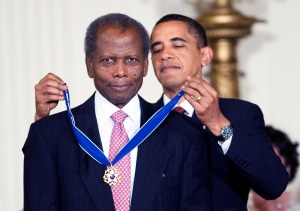
 President Joe Biden today specifically held his predecessor responsible for the violent attack on the U.S. Capitol one year ago today. Without naming him, Biden called Trump a liar who cares more about his own “bruised ego” than about our democracy or the Consitution.










 Well, 2021 is in the rearview mirror and 2022 lies ahead. Will this year be better than the last two? We can only hope. Every year, we look back at the notable people who have left us, and there were many of those last year. To cap a terrible year, the last living member of the Mary Tyler Moore Show and Golden Girls–Betty White–died yesterday.
 In New Zealand, one of the first cities to kick off the new year, a light display replaced the traditional fireworks show. Australia proceeded with its


 Major General Paul Eaton issued a chilling warning in an interview with NPR’s Mary Louise Kelly:
 peej
peej Carissa
 bostonboomer
 dakinikat
 ecocatwoman
 mablue2
 Mama Lopez
 peggysue22
 quixote
 skydancingguestblogger
 Mona (aka Wonk the Vote)



 Sky Dancing
Recent Comments