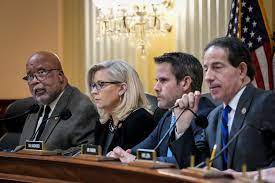
It’s going to be an interesting week as we start the January 6 committee’s public hearings on the insurrection on Thursday evening. The times are listed in EDT to the left of the headline. NBC asks the big questions: “The Jan. 6 committee begins hearings with a big challenge: Capture public attention. Whether the public hearings will be considered a success for Democrats largely depends on what comes after and whether legislation or prosecutions follow.”
Seldom has a set of congressional hearings opened amid so much anticipation and, at the same time, so little guarantee of success.
The House committee investigating the Jan. 6 attack on the Capitolwill hold the first of at least a half-dozen public hearings this week, having already promised stunning revelations that would lay bare just how dangerously close the U.S. came to losing its democracy.
“It’s all about democratic resiliency. Can we fortify our institutions and our people against insurrection, coups and violence?” Rep. Jamie Raskin, D-Md., a committee member, told NBC News. “I hope we will be able to spur the country to make the necessary reforms to solidify democracy.”
Thursday is when the suspense lifts and the nine-member committee gets to tell all.
But what will success look like? The question has weighed on committee members and congressional Democrats who have invited the panel to present both a definitive accounting of the riot and tangible solutions to prevent another.
What comes later is likely to determine whether the committee’s work is judged a success or a failure, according to interviews with more than 20 committee members, other lawmakers, witnesses, congressional aides and political strategists.
As the panel sees it, the hearings can’t just come and go. Members are looking for accountability. The committee isn’t a law enforcement body, so it can’t prosecute anyone. Yet if members lay out a compelling story about the far-flung effort to deny Joe Biden his rightful victory, it could pressure the Justice Department to ramp up its own inquiry.
“I am really very hopeful that what [the committee] will produce will be a road map — not just for Congress, but for the Department of Justice and for the American people who want to preserve our democracy,” Rep. Veronica Escobar, D-Texas, who was trapped in the gallery of the House chamber during the riot on Jan. 6, 2021, said in an interview.
This is Kristal. She was three weeks old and riddled with fleas when we cleaned her up and started bottle feeding her. Temple adores her. She’s healthy and active now!
The founder of the People of Praise, a secretive charismatic Christian group that counts supreme court justice Amy Coney Barrett as a member, was described in a sworn affidavit filed in the 1990s as exerting almost total control over one of the group’s female members, including making all decisions about her finances and dating relationships.
The court documents also described alleged instances of a sexualized atmosphere in the home of the founder, Kevin Ranaghan, and his wife, Dorothy Ranaghan.
The description of the Ranaghans and accusations involving their intimate behavior were contained in a 1993 proceeding in which a woman, Cynthia Carnick, said that she did not want her five minor children to have visitations with their father, John Roger Carnick, who was then a member of the People of Praise, in the Ranaghan household or in their presence, because she believed it was not in her children’s “best interest”. Cynthia Carnick also described inappropriate incidents involving the couple and the Ranaghan children. The matter was eventually settled between the parties.
Barrett, 50, lived with Dorothy and Kevin Ranaghan in their nine-bedroom South Bend, Indiana, home while she attended law school, according to public records. The justice – who was then known as Amy Coney – graduated from Notre Dame Law School in 1997 and two years later married her husband, Jesse Barrett, who also appears to have lived in the Ranaghan household. There is no indication that Amy Coney Barrett lived in the house at the time when the Carnick children were visiting or witnessed any of the alleged behavior described in the court documents.
The examination of the People of Praise’s history and attitude towards women comes as a majority of the supreme court – including Barrett – appear poised to reverse Roe v Wade, the landmark 1973 ruling that made abortion legal across the US.
Cynthia Carnick stated in the documents that she had witnessed Dorothy Ranaghan tie the arms and legs of two of the Ranaghans’ daughters – who were three and five at the time the incidents were allegedly witnessed – to their crib with a necktie. She also said that the Ranaghans allegedly practiced “sexual displays” in front of their children and other adults, such as Dorothy Ranaghan lying with her clothes on and “rocking” on top of Kevin Ranaghan in their TV room.
Cynthia Carnick – who no longer uses Carnick as her last name – declined to comment but said that she stood by the statement she made at the time.
This is horrifying. We have too many sick, sick individuals on the Supreme Court right now appointed by Republicans appeasing these types of cults. One piece of good news on the SCOTUS front did come out today. This is from USA Today. “Supreme Court declines appeal over law licenses from St. Louis couple who waved guns at protest. Mark and Patricia McCloskey drew national attention for walking onto their front yard with guns during a 2020 protest of the police killing of George Floyd.”
The protesters were walking to the home of the St. Louis mayor at the time.
Mark McCloskey pleaded guilty to a misdemeanor assault charge and Patricia McCloskey pleaded guilty to misdemeanor harassment. Missouri Gov. Michael Parson pardoned the McCloskeys in 2021 but the state office responsible for investigating allegations of misconduct by lawyers sought to suspend their law licenses.
Feinstein is now both the definition of the American political Establishment and the personification of the inroads women have made over the past 50 years. Her career, launched in a moment of optimism about what women leaders could do for this country, offers a study in what the Democratic Party’s has not been able to do. As Feinstein consolidated her power at the top of the Senate, the party’s losses steadily mounted. It has lost control of the Supreme Court; it is likely about to lose control of Congress. Children are being gunned down by the assault weapons Feinstein has fought to ban, while the Senate — a legislative body she reveres — can only stand by idly, ultimately complicit. States around the nation are banning books about racism as Black people are being shot and killed in supermarkets. Having gutted the Voting Rights Act, conservatives are leveraging every form of voter suppression they can, while the Senate cannot pass a bill to protect the franchise. The expected overturning of Roe v. Wade this summer will mark a profound step backward, a signal that other rights won during Feinstein’s adulthood, including marriage equality and full access to contraception, are just as vulnerable.
As the storied career of one of the nation’s longest-serving Democrats approaches its end, it’s easy to wonder how the generation whose entry into politics was enabled by progressive reforms has allowed those victories to be taken away. And how a woman who began her career with the support of conservationist communities in San Francisco, and who staked her political identity on advancing women’s rights, is now best known to young people as the senator who scolded environmental-activist kids in her office in 2019 and embraced Lindsey Graham after the 2020 confirmation hearings of Amy Coney Barrett, a Supreme Court justice who appears to be the fifth and final vote to end the constitutional right to an abortion. As Feinstein told Graham, “This is one of the best set of hearings that I’ve participated in.”
For many from a younger and more pugilistic left bucking with angry exasperation at the unwillingness of Feinstein’s generation to make room for new tactics and leadership before everything is lost, the senator is more than simply representative of a failed political generation — she is herself the problem. After she expressed her unwillingness to consider filibuster reform last year, noting that “if democracy were in jeopardy, I would want to protect it, but I don’t see it being in jeopardy right now,” The Nation ran a piece headlined “Dianne Feinstein Is an Embarrassment.”
Feinstein, who turns 89 in June, is older than any other sitting member of Congress. Her declining cognitive health has been the subject of recent reporting in both her hometown San Francisco Chronicle and the New York Times. It seems clear that Feinstein is mentally compromised, even if she’s not all gone. “It’s definitely happening,” said one person who works in California politics. “And it’s definitely not happening all the time.”
Reached by phone two days after 19 children were murdered in an elementary school in Uvalde, Texas, in late May, Feinstein spoke in halting tones, sometimes trailing off mid-sentence or offering a non sequitur before suddenly alighting upon the right string of words. She would forget a recently posed question, or the date of a certain piece of legislation, but recall with perfect lucidity events from San Francisco in the 1960s. Nothing she said suggested a deterioration beyond what would be normal for a person her age, but neither did it demonstrate any urgent engagement with the various crises facing the nation.
“Oh, we’ll get it done, trust me,” she assured me in reference to meaningful gun reform. Every question I asked — about the radicalization of the GOP, the end of Roe, the failures of Congress — was met with a similar sunny imperviousness, evincing an undiminished belief in institutional power that may in fact explain a lot about where Feinstein and other Democratic leaders have gone wrong. “Some things take longer than others, and you can only do what you can do at a given time,” she said. “That doesn’t mean you can’t do it at another time. And so one of the things that you develop is a certain kind of memory for progress: when you can do something in terms of legislation and have a chance of getting it through, and when the odds are against it, meaning the votes and that kind of thing. So I’m very optimistic about the future of our country.”
Krystal bonded with Temple pretty quickly while the other cats are still getting adjusted to her.
It’s a long read but well worth it if you remember the year of the woman that brought a few more women senators to the District. There are also two features on some of the worst of the worst Republicans if you want to check them out. Steve Bannon is the Focus of “American Rasputin” at The Atlantic. Blind justice is still chasing that one. Hot Air follows the latest Elon Musk Drama with the headline “BREAKING:Musk threatens to dump deal in letter to Twitter, SEC.” The last one doesn’t surprise me at all. It’s from The Bulwark. “The Long History of Glenn Greenwald’s Kissing Up to the Kremlin. In his world, it seems America can do nothing right and Vladimir Putin can do nothing wrong.” I really don’t want to quote them but you may want to skim them and see if anything interests you. I’ll give you a taste of Cathy Young’s piece on Greenwald.
But Greenwald has been baffling and disappointing legions of his progressive admirers for years with his cozy relationship with the MAGA right. And a look at his career shows that his pro-Kremlin affinity goes way back—as part of a more general tendency to sympathize with foes of the U.S.-led “neoliberal” (or “neoconservative”) international order.
A CBS poll shows how out of step a lot of Republicans are with the rest of the county. “In a new @CBSNewsPoll , 72% of the nation believes mass shootings are preventable, however, there is a partisan split with 44% of Republicans saying mass shootings are something we have to accept.” That’s like basically saying we can’t cure all cancers so just give up on it. Or maybe, what you have is cancer, so we’ll just inject more cancer in there.
I just really have trouble understanding this viewpoint. It seems so irrational.
In a new @CBSNewsPoll, 72% of the nation believes mass shootings are preventable, however, there is a partisan split with 44% of Republicans saying mass shootings are something we have to accept. @SalvantoCBS breaks down these numbers. pic.twitter.com/JE9B39wHdM
The big picture: Most of the deadliest shootings in the U.S. since 2018 were committed by men who were 21 or younger.
Between the 2012 Sandy Hook Elementary School shooting, committed by a 20-year-old, and late 2017, killers were between the ages of 26 and 64. All of them were men.
When looking at school shootings specifically, killers tend to be younger, PolitiFact reports.
Nearly half of homicides in 2020 were committed by people 29 and under, according to the most recent FBI data on the matter.
The problem seems to be getting worse. Per the New York Times, only two of the deadliest mass shootings from 1949 to 2017 were committed by gunmen under 21. The two were the Columbine High School shooting in 1999 and the Sandy Hook Elementary School shooting in 2012.
“We see two clusters when it comes to mass shooters, people in their 40s who commit workplace type shootings, and a very big cluster of young people — 18, 19, 20, 21 — who seem to get caught up in the social contagion of killing,” Jillian Peterson, a criminal justice professor who helped found the Violence Project, told the New York Times.
State of play: Under federal law, a person has to be 18 or older to buy a shotgun or a rifle, though some states have a higher limit of 21. Additionally, there is no law preventing teens or even kids from being given a rifle as a gift.
Something could be done to lessen the ability of the under 21 crowd to access guns.
Oh to be able to sleep like a kitten!
So I hope my sweet fluffy kitten brightens your day even if the situation in our country is dire. Even local Republicans are bracing for the impact of Trump on their next round of primaries. This is from Natasha Korecki at NBC News. “Republicans brace for next round of Trump primary chaos. State party officials and other members of the GOP in Nevada, Wisconsin and Missouri say they’re concerned about coming contests and the effects of Trump’s 2020 fixation.”
“I wish Trump would sit down and keep quiet. I think the country’s had enough of him,” said Perry DiLoreto, a prominent Nevada businessman and longtime GOP donor who backed Trump in 2016 and 2020.
In the state’s upcoming GOP primary for Senate, he ignored Trump’s endorsement of former Nevada attorney general Adam Laxalt and instead supported retired Army Capt. Sam Brown.
“Donald Trump was a great example of somebody that had some good ideas and had good common sense. But to move any of those ideas forward, you have to know how to have civil dialogue with people,” DiLoreto said.
Republicans in states like Nevada, Missouri and Wisconsin are airing their frustrations as they brace for primaries that could play a heavy hand in the fate of governor races or ultimately Senate control in November. Republicans in these states say they are increasingly turned off by Trump’s fixation on the unfounded contention that the 2020 presidential election was stolen, particularly since changes in voting laws have already played out in many states.
Their grumbling comes on the heels of a blowout loss of Trump-backed gubernatorial candidate David Perdue in Georgia — he lost by 50 points – only for Trump to push voter fraud conspiracy claims afterward. And it comes after the messy results in the Pennsylvania Senate primary, where Mehmet Oz and David McCormick went into overtime amid the narrowest of Oz leads. This again had Trump, who endorsed Oz, crying foul over ballot counting. (McCormick conceded on Friday.) Trump also backed far-right state Sen. Doug Mastriano in the governor’s contest, who went on to win, prompting an eruption within the state’s GOP that now fears it could lose a once competitive governor’s mansion in the fall.
The seesaw of emotions Republicans are expressing comes as more of the party rank and file members — who still adoringly back Trump and his politics — show signs that they’re open to new faces in the party to run for president in 2024.
I think expecting Orange Caligula to sit down and be quiet is a tall order. Hope springs eternal they say!
Anyway, enough for me today! What’s on your reading and blogging list?
And the sourdough boule is done!!!
Did you like this post? Please share it with your friends:
It seems as if mass shootings are contagious. Whenever there is a high profile case, more gun violence follows. There have been so many cases of gunmen shooting multiple people lately that the massacre of ten people in Buffalo seems to have receded into the past. But it happened only three weeks ago. It’s difficult not to feel helpless and despairing when these massacres keep happening and one political party stands in the way of the federal government doing anything to prevent them.
In the early hours after the shooting at a Tulsa medical center on Wednesday, the details were murky. Soon, it became clear that the death toll there was not going to be as nearly as high as the tolls from the recent shootings in Uvalde and Buffalo.
Four people were killed in Tulsa (in addition to the gunman), compared with 21 in Uvalde and 10 in Buffalo. But the Tulsa shooting is nonetheless horrific in its own way — not only for its victims and their families but also for what it says about gun violence in the United States.
Shootings that kill multiple people are so common in this country that they often do not even make national news. They are a regular feature of American life. Tulsa has become the latest example — yet another gun crime that seems almost ordinary here and yet would be extremely rare in any other country as wealthy as the U.S.
To give you a sense of how common these shootings are, we’re devoting the rest of the lead item of today’s newsletter to a list of every documented mass shooting in which a gunman has killed at least three people in the U.S. so far this year. (The Gun Violence Archive defines a mass shooting as any in which at least four people are shot, including survivors.)
Among the patterns we noticed: Family disputes are a common motivation, and gang disputes are another. Every identified suspect has been a man, many under 25. Baltimore and Sacramento have experienced multiple such mass shootings this year.
Read the list of incidents at the NYT link. On May 25, NPR counted 213 mass shootings in 2022.
When Vanderbilt University psychiatrist Jonathan Metzl learned that the perpetrator of the Uvalde, Tex., school massacre was a young man barely out of adolescence, it was hard not to think about the peculiarities of the maturing male brain.
Salvador Rolando Ramos had just turned 18, eerily close in age to Nikolas Cruz, who had been 19 when he shot up a school in Parkland, Fla. And to Adam Lanza, 20, when he did the same in Newtown, Conn. To Seung-Hui Cho, 23, at Virginia Tech. And to Eric Harris, 18, and Dylan Klebold, 17, in Columbine, Colo.
Teen and young adult males have long stood out from other subgroups for their impulsive behavior. They are far more reckless and prone to violence than their counterparts in other age groups, and their leading causes of death include fights, accidents, driving too fast, or, as Metzl put it, “other impulsive kinds of acts.”
“There’s a lot of research about how their brains are not fully developed in terms of regulation,” he said.
Perhaps most significantly, studies show, the prefrontal cortex, which is critical to understanding the consequences of one’s actions and controlling impulses, does not fully develop until about age 25. In that context, Metzl said, a shooting “certainly feels like another kind of performance of young masculinity.”
In coming weeks and months, investigators will dissect Ramos’s life to try to figure out what led him to that horrific moment at 11:40 a.m. Tuesday, May 24 when he opened fire on a classroom full of 9- and-10-year-olds at Robb Elementary School. Although clear answers are unlikely, the patterns that have emerged about mass shooters in the growing databases, school reports, medical notes and interview transcripts show a disturbing confluence between angry young men, easy access to weapons and reinforcement of violence by social media….
“Age is the untold story of all this stuff,” said Metzl, who is also a sociologist. “I feel very strongly we should not have people 18 to 21 with guns.”
Read the rest at the WaPo.
Summer Morning, Sleeping Cat, by Yuanchi Qiao
There’s still a lot of discussion in the media about the disastrous response of law enforcement in the Uvalde school massacre.
Ten days after a gunman slaughtered 19 students and their two teachers in their classrooms at Robb Elementary School in Uvalde, Texas, there are still significant gaps in the information officials have released about law enforcement’s response.
“My point as a policymaker, which is the third function of my job, is to make sure this doesn’t happen again,” said state Sen. Roland Gutierrez, a Democrat who represents Uvalde.
“How in the world are we going to be able to do anything if we can’t figure out what happened in that building in those 40 minutes?”
The shifting police narratives, unanswered questions and the horror of knowing 21 victims were trapped with a gunman for more than an hour — despite repeated 911 calls for help from inside the classrooms — is tormenting this small Texas city.
Gutierrez has questioned whether the responding officers on scene were aware of those calls as they stood outside the classrooms. It’s also unclear whether the incident commander, who made the call for the officers not to confront the shooter immediately, was on scene as the shooting unfolded.
Victims’ families and other local residents are angry. At a school board meeting last night, Superintendent Hall Harrell said that Robb Elementary would not reopen. After that, the board went into a “lengthy closed-door session.
Angela Turner, a mother of five who lost her niece in the shooting, expressed outrage. “We want answers to where the security is going to take place. This was all a joke,” she told reporters, referring to the meeting. “I’m so disappointed in our school district.”
Turner insisted that she will not send her children to school unless they feel safe, adding that her 6-year-old child told her, “I don’t want to go to school. Why? To be shot?”
“These people will not have a job if we stand together, and we do not let our kids go here,” she said as she pointed to a vacant school board podium.
Dawn Poitevent, a mother whose child was slated to attend Robb Elementary as a second-grader, was tearful as she told reporters that she wants the board to consider letting her child stay at his current school, Dalton Elementary.
“I just need to keep my baby safe, and I can’t promise him that. Nobody can promise their children that right now,” Poitevent said. “At least if he goes to Dalton, he’s not going to be scared, and he’s not going to be having the worst first day that I can possibly imagine.”
Poitevent added that her son, Hayes, has been telling her that he’s scared to go to school because a “bad man” will shoot him.
“We’re just trying so hard to get past everything,” she said. “We’re trying to bury our babies and say goodbye to people that really mattered.”
It took more than an hour for police officers to enter and stop the gunman who killed 19 children and two teachers at Uvalde’s Robb elementary school last Tuesday in Texas.
In that time, 18-year-old Salvador Ramos fired more than 100 shots while as many as 19 police officers stood outside waiting and desperate parents tried to break victims out of the school windows. It has been reported that one teacher and several children placed 911 calls while the gunman was inside the building….
The officers on duty had received active shooter training just two months before the massacre, prompting questions from parents, politicians and public safety officials about exactly what officers should have done and casting doubt on how effective such training is in reality.
What does the training manual say about dealing with school shooters?
“A first responder unwilling to place the lives of the innocent above their own safety should consider another career field.” Those are the words, from an active shooter training manual used to train Uvalde’s school police on 21 March 2022, that have been repeated again and again since the shooting on Tuesday.
The Summer – Cat On A Balustrade, Theophile Steinlen
They refer to the lessons post-Columbine, the high school shooting in 1999 that led to the deaths of 15 people (including the suicides of both shooters). Before Columbine – which was the most deadly US mass shooting in history at the time – officers had been taught to form a perimeter around the school and wait for backup in the event of a school shooting, not unlike what allegedly happened at Uvalde on Tuesday. But after Columbine, law enforcement officials learned that not going in and directly confronting the shooter costs precious minutes and possibly lives.
The training materials encourage officers to confront the attacker in an active shooter situation, driving them away from victims, isolating and distracting them, even when it means putting themselves in harm’s way: “If they are engaged with the officer(s) they will be less capable of hurting innocents,” the manual says.
If officers are at the scene alone, they must go in alone, it says. “Time is the number one enemy during active shooter response … The best hope that innocent victims have is that officers immediately move into action to isolate, distract or neutralize the threat, even if that means one officer acting alone.”
The manual makes clear that not doing so will cost lives. “The number of deaths in an active shooter event is primarily affected by two factors: How quickly the police or other armed response arrives and engages them; How quickly the shooter can find victims,” it states.
Frankly, I don’t see why what happened is still being treated as a mystery. Let’s face it: those police officers are cowards. And Pete Arrendondo should be fired. Instead, he is now on the city council.
Everyone in town is waiting to hear from Pete Arredondo.
As chief of the Uvalde Consolidated Independent School District Police Department, it was his call to wait more than an hour for backup instead of ordering officers on scene to immediately charge the shooter who killed 19 students and two teachers at Robb Elementary School. The chief of the state police later said this was the “wrong decision, period.”
Now, Arredondo is a man in hiding, as calls for answers and accountability grow louder each day.
In the week since state police singled him out for blame, Arredondo has hardly been seen.
By Vladimir A Abat Cherkasov
Police officers stand guard outside his home. He has declined to explain his actions, telling a television crew that staked out his office he would not do so until after the victims’ funerals. City officials, too, have assisted in the vanishing act. They canceled a previously scheduled public ceremony Tuesday and instead swore in Arredondo in secret for his latest role on the City Council.
Even state police complained this week that Arredondo has remained elusive to them, accusing him of not cooperating with a Texas Department of Public Safety investigation into the shooting, a claim Arredondo refuted. The New York Times reported Friday that the chief arrived on scene without a radio, hampering his ability to organize the response.
Residents here remain in mourning. Each day repeats a cycle of at least two funerals followed by processions to the cemetery on the west edge of town. Their grief, however, is giving way to frustration about how local officials have responded to the tragedy and conversations about how to hold them accountable.
For many, this starts with firing Arredondo and overhauling his department, which they believe failed the students it was supposed to keep safe.
That’s all I have for you today. Please post comments and links on any subject that interests you. This is an open thread.
Did you like this post? Please share it with your friends:
It should be an interesting June as we head towards public, televised hearings on the January 6th investigation and begin to see mentions of big fish testimony and big fish criminal indictments.
Nearly 11 months into its inquiry, the House Select Committee to Investigate the January 6th Attack on the United States Capitol already represents among the most complex and sprawling investigations in congressional history. In light of the volume and complexity of information, this resource is intended to organize and distill key prongs of the multifaceted campaign to overturn the 2020 election. Particularly in advance of this month’s public hearings, it also highlights key facts and findings that are already known, as well as important unanswered questions.
The resource is structured around the key prongs of the investigation itself — how the Select Committee has organized its investigative work — which mirror the key prongs of the campaign to overturn the election. The Committee’s investigative teams are color-coded in name (Gold, Blue, Purple, Red, and Green); this primer has in turn highlighted key facts and findings according to that same organizational structure.
Critically, “January 6th” has, like “Watergate,” become a useful shorthand. But as with Watergate, January 6th represents neither a single nor isolated event, but instead a much broader and more multifaceted effort to stop the transfer of power. We hope this resource is useful in distilling those components and what we critically know — and don’t yet know — about each. This resource was produced as a collaboration between Just Security and Protect Democracy.
The Primer is available in Scribd format below and also as a PDF.
It is worth downloading and reviewing this to get a sense of what each team has to date. The first page dedicated to the gold team’s findings is a really good reminder of what we know at the topmost levels. I can’t reproduce any of it here but the PDF is free to view and download. I intend to keep it handy as the hearings progress.
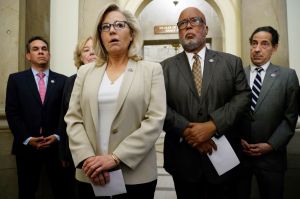
U.S. Representative Liz Cheney (R-WY), with Chairman Bennie Thompson (D-MS) and members of the Select Committee to Investigate the January 6th Attack on the U.S. Capitol speak to reporters after meeting with House Speaker Nancy Pelosi (D-CA) at the Capitol in Washington, U.S. July 1, 2021. Jonathan Ernst | Reuters
The House select committee investigating the Jan. 6 attack on the Capitol released an official notice that it will hold the first hearing on what it has found so far about the deadly siege on Thursday, June 9 in prime time at 8 p.m. ET.
In the notice made late on Thursday, the panel also said witnesses for the hearing would be announced next week.
At the hearing, the panel will “present previously unseen material documenting January 6th, receive witness testimony, preview additional hearings, and provide the American people a summary of its findings about the coordinated, multi-step effort to overturn the results of the 2020 presidential election and prevent the transfer of power,” it said.
This will be the first public hearing held by the committee in nearly a year. During the last hearing, in July, four police officers gave graphic accounts of the physical and verbal assaults they endured while protecting the Capitol and the lawmakers who had gathered on Jan. 6, 2021, to count and certify states’ electoral votes from the 2020 election. Over 100 law enforcement officers were injured and several people died after pro-Trump rioters stormed the Capitol to overturn the election results.
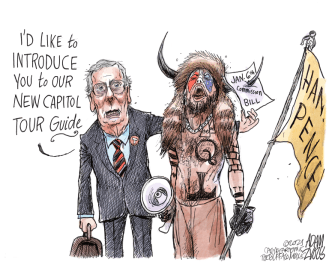
From Charlotte Klein at Vanity Fair: “CAN THE JAN. 6 COMMITTEE BREAKTHROUGH IN PRIME TIME?
Some panel members have hyped the upcoming public hearings as a Watergate-style moment, a chance to make their case in the court of public opinion. Yet one week out, the schedule—in Congress and on TV—is still being hashed out. ”
Ahead of the hearings, Axios on Wednesday revealed one “blockbuster” witness expected to testify: J. Michael Luttig, a former federal judge and lawyer who advised Vice President Mike Pence in the leadup to Jan. 6, as Donald Trump was pressuring Pence to use his traditionally ceremonial role as president of the Senate to overturn the 2020 election results. Luttig gave Pence the legal argument he used to defy Trump’s anti-democratic demand; the vice president quoted Luttig in a statement released moments before the joint session of Congress.
While official invitations to testify have not been sent to Luttig, according to Axios, the conservative legal scholar is “expected to describe his view of the stakes of Jan. 6 and his argument that American democracy is at a crossroads” before answering questions—including, presumably, ones about the constitutional defense he armed Pence with. Luttig referenced such legal technicalities in April while warning in a CNN Op-Ed that “the last presidential election was a dry run for the next” for Trump and Republicans, who “began readying their failed 2020 plan to overturn the 2024 presidential election” hours after the insurrection and “have been unabashedly readying that plan ever since, in plain view to the American public.” GOP efforts to elect election-denying candidates to state legislative offices in battleground states, as well as Trump supporters to Congress, are among Luttig’s examples.
The Luttig news comes as House committee members have promised fireworks at the public hearings, which, according to Rep. Jamie Raskin, “will tell a story that will really blow the roof off the House” and “will be compared to the Watergate hearings.” (Perhaps, but Washington Post’s Margaret Sullivanwrote in her latest column why a Watergate moment is unlikely, thanks in part to the right-wing media ecosystem that didn’t exist in the Nixon era.) Back in January—when the select committee was discussing potential hearing formats, including holding them in prime time, to build a maximum audience for testimony—Rep. Bennie Thompson, the committee’s chairman, told Bloomberg, “The public needs to know, needs to hear from people under oath about what led up to January 6, and to some degree, what has continued after January 6.” Since then, Thompson has said that some of the hearings spread throughout June will be a “mixture of some prime time and some regular,” but aside from a draft recently reported by the Guardian, the schedule remains unclear. (The Jan. 6 committee did not respond to a request for comment.
NEW: With the first January 6th Select Committee hearings approaching, we've answered some questions about the committee's work and what to expect: https://t.co/zLOB5rdf1V
The January 6th attack on the U.S. Capitol was the product of a months-long effort, led by former-President Donald Trump and enabled by members of Congress, state representatives, and political allies, to undermine the results of the 2020 presidential election. Since that deadly attack, the House of Representatives’ Select Committee to Investigate the January 6th Attacks on the United States Capitol has engaged in a deliberate and largely quiet effort to investigate the facts, circumstances, and causes that led to the attack. As the Committee prepares to hold its first public hearings beginning on June 9, CREW is proud to be one of the leading voices for accountability. Below we provide answers to some of the common questions about the Committee’s work, authority, and quest for accountability.
There are lots of questions with lots of answers. It’s a very good read.
Former Trump adviser Peter Navarro on Thursday spoke at length to MSNBC host Ari Melber about a lawsuit he has filed against the Justice Department and the House Jan. 6 committee after the DOJ subpoenaed him for documents and testimony. Navarro has indicated he will refuse, saying the subpoena demanded “fruit of the poisonous tree.”
Navarro was found to be in contempt of Congress last month for ducking a subpoena from the House Jan. 6 committee, with the House referring him – as well as Trump’s social media handler Dan Scavino – to the Justice Department for potential prosecution. When the Jan. 6 committee voted to move along the contempt charge, Navarro abruptly bailed on a scheduled appearance that night on Melber’s show.
Thursday’s appearance was yet another edition of the pair sparring over Navarro’s role in the events of Jan. 6, his refusal to cooperate with Congress, and yet his willingness to write a book and talk with the press. (Navarro told The Daily Beast in December about the “Green Bay Sweep” plan that he and Steve Bannon ginned up to try to thwart the 2020 election results and keep Trump in power.)
“You’re waging this legal battle not to talk to the committee, not to talk potentially to DOJ, although as you said, TBD,” Melber said. “So you’re risking going potentially to jail not to talk to them, but you’re out here talking in public. You do realize these investigators can hear you when you talk on TV?”
“What we’re talking about now, Ari, is the case law itself and the constitutionality of executive privilege, testimony, immunity. A second key issue in the case is the separation of powers,” Navarro replied. “This kangaroo committee has clearly violated the separation of powers. They’re not supposed to act as judge, jury, and executioner. They’re only supposed to pursue a legislative function.”
Melber said he’d take Navarro’s premise seriously, and Navarro replied: “You should. This is why I’m fighting. This is why I’m willing to go to jail for this.”
The pair went back and forth for 20 minutes, with Navarro offering no shortage of blustery opinions about what he believes should be done to congressional Democrats and the Biden administration.
Melber quoted Navarro’s lawsuit: “‘If an incumbent can strip a predecessor of privilege…just imagine what will happen to Biden and his advisers if Republicans win in 2024.’” Melber continued, “Quote, ‘If I’m not dead or in prison, I will lead the charge.’ What are you threatening? And are you suggesting that you would be in a Republican White House? And what will you do?”
BREAKING: Former Trump White House official Peter Navarro has been indicted on contempt of Congress charges for defying Jan. 6 committee subpoenas. https://t.co/fVASZPeGpb
Navarro is former President Donald Trump’s second aide to be charged with contempt of Congress for refusing to cooperate with the Jan. 6, 2021, investigation, His arrest comes months after the indictment of former White House adviser Steve Bannon.
Navarro, 72, was charged with one contempt count for failing to appear for a deposition before the House committee. The second charge is for failing to produce documents the committee requested. He was taken into federal custody Friday morning and was expected to appear in federal court in Washington later in the afternoon.
The indictment underscores that the Justice Department is continuing to pursue criminal charges against Trump associates who have attempted to impede or stonewall the work of congressional investigators examining the most significant attack on U.S. democracy in decades.
Guess it’s not his day!
As you can see, the month has already started out blustery. It includes the first invest of the hurricane season. This is from Yale Climate Connections (and yes, I’m still being a nice little volunteer weather tracker for the NWS). “Disturbance 91L in the southeastern Gulf of Mexico likely to become the Atlantic’s first tropical cyclone of 2022. Hurricane Agatha’s remnants are invigorating the well-organized disturbance centered near the northeastern tip of Mexico’s Yucatan Peninsula.”
Though 91L has strong model support for development, wind shear is predicted to remain high this week, and any storm that does form in the Gulf would likely be incapable of rapid intensification. The odds of development appear to be greater after the system crosses over the Florida Peninsula and enters the waters off the Southeast U.S. coast on Sunday (Figure 1).
The track of 91L will bring it to the coast of southwestern Florida on Saturday; at the time of landfall, 91L is likely to be no stronger than a 60-mph tropical storm, with a weaker storm more likely. Heavy rains from 91L will be its main threat, with seven-day rainfall amounts of five-plus inches expected over portions of Mexico, Cuba, South Florida, and the western Bahamas by Thursday, June 9 (Figure 2). Because of dry air to the northwest of the system, a sharp cutoff point for the heavy rains is expected over central Florida.
So, get ready for a June to remember!!
What’s on your reading and blogging list today?
Did you like this post? Please share it with your friends:
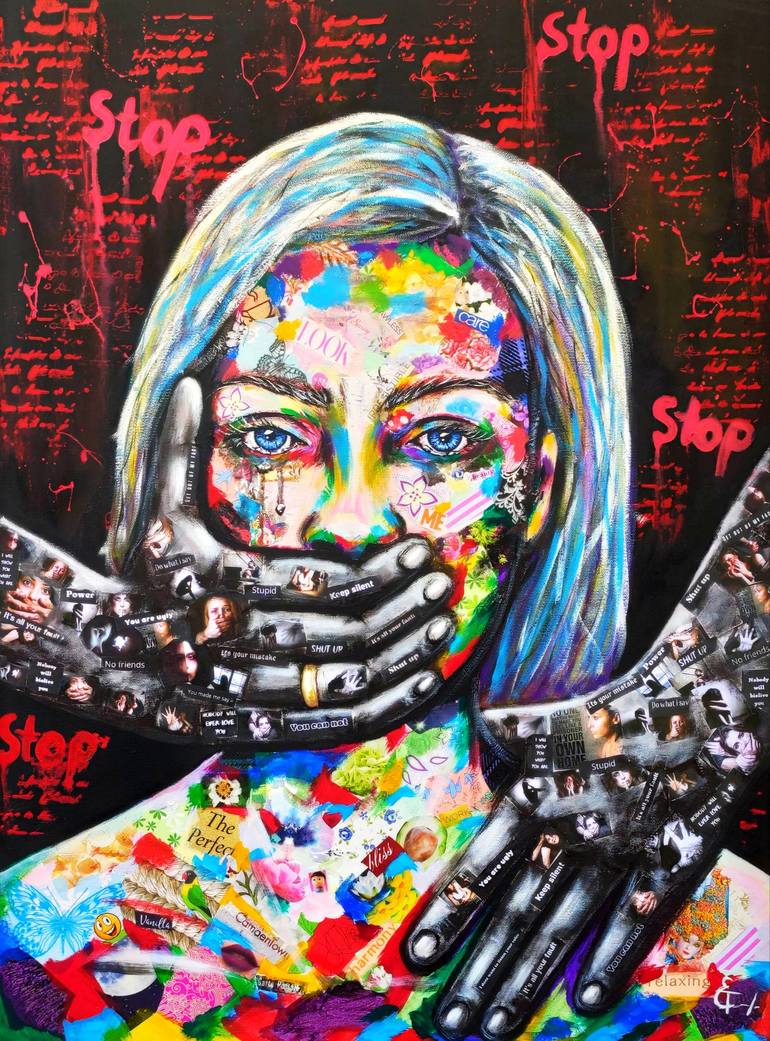
I didn’t follow the Amber Heard/Johnny Depp trial, but it was difficult not to hear anything about it. It was clear to me from what I happened to see on Twitter and a couple of pieces I read about it that Depp physically and psychologically abused Heard though. I read in The New York Times about the social media campaign attacking Heard and about the thousands of death threats she received during the trial.
Predictably, the jury decided in favor of Depp, despite the mountain of evidence showing him to be an abuser. However you feel about celebrity dramas, this verdict is bad news for women. The court battle was about a 2018 op-ed that was published under Heard’s name in The Washington Post. Depp was never mentioned in the article, and Heard didn’t actually write it; the ACLU did. She was even found liable for the headline, which was written by a Post editor.
Predictably, the jury decided in favor of Depp, despite the mountain of evidence showing him to be an abuser. However you feel about celebrity dramas, this verdict is bad news for women.
The court battle was about a 2018 op-ed that was published under Heard’s name in The Washington Post. Depp was never mentioned in the article, and Heard didn’t actually write it; the ACLU did. She was even found liable for the headline, which was written by a Post editor.
At the time the op-ed was published, in December 21018, the ACLU was touting Heard as an “Ambassador for women’s rights, with a focus on gender-based violence.” In an email to Heard sent a month earlier, Robin Shulman, a member of the organization’s communications team, said she tried to shape Heard’s “fire and rage” in a draft. Terence Dougherty, the ACLU’s general counsel and chief operating officer, testified that the organization’s executive director, Anthony Romero, and legal director, David Cole, also weighed in.
Heard was found liable for defaming Depp through two of the passages in the op-ed’s final draft, as well as its headline: “I spoke up against sexual violence — and faced our culture’s wrath. That has to change.”
Heard didn’t write that headline either. Heard and an ACLU representative testified in the trial that a Washington Post editor chose the headline for the op-ed, as is typical for media organizations. Depp’s lawyers nonetheless argued that Heard “republished” the op-ed by tweeting a link to it.
Emails shown to jurors indicate that Heard made modifications to the ACLU’s draft. She also had an attorney vet it in a failed effort to ward off a lawsuit from Depp. On the stand, Heard argued that if she truly wanted to defame Depp, she would have used his name, which does not once appear in the published version.
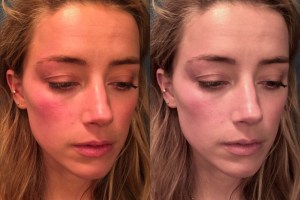
“There was one severe incident in December 2015 when I truly feared for my life,” Heard wrote in her documents, arriving in court with bruises on her face. (People published photos of the injuries too.) Depp allegedly threw an iPhone at her head during an argument days before, and Heard wanted a restraining order against him, having already filed a police report.And so began a very nasty, very public divorce….
According to Heard, Depp routinely became explosively angry and physically violent throughout their relationship, particularly when substances were involved. Her filings framed the iPhone incident as a repeat event, alleging that Depp subjected her to “excessive emotional, verbal and physical abuse” as well as “angry, hostile, humiliating and threatening assaults.” Heard said she had photos and video to support her statements — and breaking from its apparent support of Depp, TMZ eventually leaked footagefrom Heard’s cell phone showing the Pirates of the Caribbean star raging at his wife. Text messages came out, too, in which Depp’s assistant — Stephen Deuters — apologizes on the actor’s behalf for having kicked Heard the night before. “He’s done this many times before,” she wrote back. “Tokyo, the island, London (remember that?!), and I always stay. Always believe he’s going to get better …
And then every 3 or so month [sic], I’m in the exact same position.”Heard also declined spousal support from Depp, emphasizing that, contrary to what his lawyers suggested in the media, the case wasn’t about money for her. And while certain tabloid reports (TMZ’s, for example) seemed to suggest Heard had faked her facial injuries, her friend, photographer and writer iO Tillett Wright, came out with an emphatic defense. “BULLS–T,” he wrote in a lengthy Twitter thread. “I’ve had enough. I saw the bruises. Many times. And the fat lip. And the cut head.” Further, Tillett Wright said he’d experienced and witnessed Depp’s rage firsthand, asking: “How much evidence does a woman need to present?! She has photos, texts, witnesses, and filed a restraining order.” And regarding the photos: Oh, boy.
Depp had already lost a defamation case against News Group Newspapers, Ltd. in the UK. From The Cut article:
In 2018, Depp sued News Group Newspapers, Ltd., after one of its titles — The Sun — referred to him as a “wife beater.” As the BBC notes, U.K. law obligates the party accused of committing defamation to prove their claims, which arguably should’ve made the case easier for Depp to win. The trial once again turned the spotlight on 14 instances of abuse Heard says occurred between 2013 and 2016. Depp denied all of it, turning the accusations back on his ex-wife: He said that she, or possibly one of her friends, defecated in his bed. He said that she would regularly fly into violent rages, once cutting off his finger tip when she threw a liquor bottle at him. He said that she was “a calculating, diagnosed borderline personality; she is sociopathic; she is a narcissist; and she is completely emotionally dishonest.” He enlisted his former partner Paradis and ex Winona Ryder as character witnesses. But, ultimately, he lost the case in July 2020.
In his ruling, the judge agreed that on multiple occasions, Depp seemed to have placed Heard in “fear for her life.” That decision also highlighted some depraved texts from the actor to other members of the industry. To Heard’s former agent, he once wrote that she was “begging for total global humiliation. She’s gonna get it … I have no mercy, no fear and not an ounce of emotion or what I once thought was love for this gold digging, low level, dime a dozen, mushy, pointless dangling overused flappy fish market … I’m so fucking happy she wants to fight this out!!! She will hit the wall hard!!! And I cannot wait to have this waste of a cum guzzler out of my life!!!” To another actor, he wrote: “Let’s drown her before we burn her!!! I will fuck her burnt corpse afterwards to make sure she’s dead.”
He sounds nice. By the way, Depp is more than 20 years older than Heard and much more powerful in the entertainment industry.
A few weeks ago, images from the courtroom began to saturate my social media feeds. Platforms that fed me soothing cake decoration tutorials and “Sopranos”-themed therapy memes now served up regular dispatches from the proceedings, all filtered through the glorification of Depp and mockery of Heard. Heard blows her nose during her testimony, and a TikTok appears accusing her of snorting cocaine on the stand. Depp adjusts a phone cord near Camille Vasquez, his attorney, and the gesture is replayed in slow motion and exalted as a chivalrous deed. Heard’s attorneys introduce a series of violent text messages between the couple, and a TikToker films herself absorbing Depp’s words with panting, orgiastic reverence….
You might expect a defamation trial pitting one movie star against another to unleash a fire hose of debased memes in both directions, but that’s not what’s happening here. The online commentary about the trial quickly advanced from a he-said she-said drama script to an internet-wide smear campaign against Heard. As one of Hollywood’s most legendary heartthrobs, Depp enjoys a large and besotted fan base. But his campaign has since attracted the support of men’s rights activists, right-wing media figures, #BoycottDisney campaigners eager to capitalize off Depp’s status as a fallen Disney franchise star, sex abuse conspiracists, armchair true-crime detectives, anyone wary of “the mainstream media” and plenty of opportunists eager to draft off the trial traffic. Seemingly harmless YouTube channels and TikTok accounts dedicated to legal commentary or body-language analysis have pivoted to pro-Depp content en masse. A husband-and-wife team of personal injury lawyers now spends its days posting trial-themed dance breaks and humoring Depp fans; a TikToker who previously ranted almost exclusively about anime has racked up millions of views with videos of fake Heard text messages he splashes over a looming Disney logo.
All this misogyny is shocking but not at all surprising. Now I want to share some commentary on this story and what it means for women.
In text messages to friends, Johnny Depp fantasized about murdering his then-wife, the actress Amber Heard. “I will fuck her burnt corpse afterwards to make sure she’s dead,” Depp wrote. In other texts, he disparaged his wife’s body in luridly misogynist terms. “Mushy pointless dangling overused floppy fish market,” he called her….
Over the past six weeks, as the trial was live-streamed online, many of those who have tuned in to watch have treated Heard with the same contempt that Depp did in his texts. A broad consensus has emerged online that Heard must be lying about her abuse. She has been accused of faking the photos of her injuries from Depp’s alleged beatings, painting bruises on with makeup. She’s been accused of convincing the multiple witnesses who say Depp abused her to lie – repeatedly and under oath – for years. These conspiracy theories are unsupported by the facts of the case, but that has not stopped them from spreading. Online, the case has taken on a heady mythology, and belief in Depp’s righteousness persists independent of the evidence.
In the service of this myth, any cruelty can be justified. When Heard took the stand, she became emotional as she recounted how Depp allegedly hit her, manipulated and controlled her, surveilled her and sexually assaulted her. Afterwards, ordinary people, along with a few celebrities and even brands like Duolingo and Milani, took to social media to mock or undermine Heard. They took screenshots of her weeping face and made it a meme. Many performed mocking re-enactments of her testimony, lip-syncing along as she recounted the alleged abuse. The audio of her crying became a TikTok trend. This cruelty has now been joined in and compounded by the jury, who have gone beyond mocking her for telling her story, and now declared that she actually broke the law by doing so.
Read the rest if you have time. It’s a very good piece.
If the mistreatment of a wealthy blonde haired, blue-eyed white actress is ridiculed by the world, what does that mean for Black women?
For six weeks, Heard testified how Depp not only sexually abused her but also physically assaulted her throughout their relationship. She claimed that he head-butted her as well as punched her and dragged her around by her hair. Heard maintains that everything she wrote in the op-ed, entitled “I spoke up against sexual violence—and faced our culture’s wrath. That has to change,” was true. Depp denied all allegations of abuse.
For Black women, who do not have whiteness or fame or money to protect them, Heard’s words of the verdict as a setback ring especially true. Whether you believe her or not, the way the world treated Heard was downright cruel and uncalled for. Not only were her bruises placed under a microscope by forensic experts during the trial, social media joined in on the skepticism.
Heard was turned in everything from memes to murals mocking the validity of her abuse. Some even believed Depp when he said that she was the aggressor in the relationship. If all of Heard’s privilege couldn’t protect her from such viciousness, Black women—like always—remain even more vulnerable.
As we’ve seen from Tina Turner to Rihanna, from Megan Thee Stallion to the dozens of young Black women R.Kelly abused, our pain becomes punchlines and our humanity is invalidated.
Over the past few weeks, Meghan has been watching the Johnny Depp–Amber Heardtrial with a sinking feeling. A few years ago, she had been involved in a contentious breakup with her then-husband following years of physical and emotional abuse, which led to her calling the police repeatedly. Like Heard, Meghan, whose last name Rolling Stone has chosen to withhold, had recorded his outbursts and threats of violence and self-harm, in case, she says, “if he killed me, there would be evidence”; like Heard, when she spoke out about her ex, she received a letter from his lawyer accusing her of defamation; and like Heard, she says her ex’s lawyer also tried to argue she had borderline personality disorder, a form of mental illness, as a means of trying to discredit her.
Meghan initially tried to avoid the Depp-Heard trial as much as she could, as it caused her to experience PTSD flashbacks. But throughout the trial, everything from Heard’s hair and clothing to her tearful testimony became fodder for countless memes, while Depp’s cocksure behavior on the stand inspired innumerable fawning TikTok videos, cryptocurrency, and Etsy merch. The discourse was unavoidable. “It’s been bizarre to see friends I thought were supportive posting disgusting Amber Heard memes,” she says. When she heard that Depp had Heard with “total global humiliation” after she came forward with abuse allegations against him, it was too much for Meghan to handle: Her ex had long threatened her with the same thing.
“This case is my worst fear playing out on a public stage,” she says. “[It] tells me that [my ex] was right. If he chose to, he could destroy and humiliate me beyond repair.” [….]
But in truth, the highly publicized trial was decided in the court of public opinion weeks ago. As it played out over the last few weeks, with people on social media overwhelmingly aligning with the beloved Pirates of the Caribbean star, millions of stans and even brands and celebrities have excoriated Heard and accused her of fabricating the allegations against Depp, causing hashtags like #AmberTurd and #JusticeForJohnnyDepp to trend worldwide.
“This is basically the end of MeToo,” Dr. Jessica Taylor, a psychologist, forensic psychology Ph.D., and author of two books on misogyny and abuse, tells Rolling Stone. “It’s the death of the whole movement.”
For centuries women have been opening our veins and bleeding in the hopes that the rest of society would see us as human beings. People with souls and hearts and lives worth protecting. It’s done little good.
In 2019, in an essay I wrote for Time, I observed, “Women have long been compelled to share their most private moments in order to convince others of their humanity. But in recent years, as we’ve peered into an uncertain future and need only pull out our phones to see highly personal warnings of the stakes, everything seems amplified. The waves of stories, put forth in tweets and speeches, testimony and essays, have felt incessant, each crashing down upon us with little chance to breathe before the next one.”
And still after hearing every story, trauma, missed opportunity, hospital visit, and pillow knife, the response is always, “But what about the men?” [….]
In 2018, Amber Heard wrote in the Washington Post, “Then two years ago, I became a public figure representing domestic abuse, and I felt the full force of our culture’s wrath for women who speak out.”
Johnny Depp, Heard’s ex-husband and alleged abuser, is suing Heard for defamation for writing those words. Depp already lost a defamation case in England after trying to sue The Sun for calling him a wifebeater. Heard was right. She is feeling the entirety of the culture’s wrath—social media is filled with nasty TikToks mocking her, tweets accusing her of lying and faking. Lance Bass made a now-deleted video making fun of Amber Heard, and SNL got in on the pile-on with a sketch that made Depp look like the hero and Heard like a whiner….
It’s the backlash to Heard that shows so clearly how much America hates a woman. How much America wants to redeem a man.
This is the paragraph where I am supposed to acknowledge that Heard isn’t a “perfect” victim. She has admitted to hitting Depp and there is testimony of her erratic behavior in the marriage. As if a woman has to be perfect to be a victim. As if any woman can ever be perfect enough to be seen as something other than complicit in her abuse.
This, of course, is backlash to a movement that sought to reckon with abuse of power in the workplace and in our lives. It was always coming. It happened before this. It will keep happening.
Have a nice Thursday, Sky Dancers.
Did you like this post? Please share it with your friends:
In the summer of 2015, America caught a glimpse of how its future could unfold. The US military conducted a routine exercise in the south that triggered a cascade of conspiracy theories, particularly in Texas. Some believed the manoeuvre was the precursor to a Chinese invasion; others thought it would coincide with a massive asteroid strike. The exercise, called Jade Helm 15, stood for “homeland eradication of local militants”, according to one of the right’s dark fantasy sites. Greg Abbot, Texas’s Republican governor, took these ravings seriously. He ensured that the 1,200 federal troops were closely monitored by the armed Texas National Guard. In that bizarre episode, which took place a year before Donald Trump became the Republican nominee for president, we see the germs of an American break-up.
As with any warning of impending civil war, the very mention of another American one sounds impossibly alarmist — like persistent warnings from chief Vitalstatistix in the Asterix comic series that the sky was about to fall on Gaulish heads. America’s dissolution has often been mispredicted.
Yet a clutch of recent books make an alarmingly persuasive case that the warning lights are flashing redder than at any point since 1861. The French philosopher Voltaire once said: “Those who can make you believe absurdities can make you commit atrocities.” As the University of California’s Barbara Walter shows in her bracing manual, How Civil Wars Start, US democracy today is checking all the wrong boxes.
Dachshund Puppies by Otto Bache
Even before Trump triumphed in the 2016 presidential election, political analysts were warning about the erosion of democracy and drift towards autocracy. The paralysing divisions caused by Trump’s failed putsch of January 6, 2021, has sent it into dangerous new territory. Polls show that most Republicans believe, without evidence, that the election was stolen by Democrats backed by the so-called “deep state”, the Chinese government, rigged Venezuelan voting machines, or a feverish combination thereof.
In This Will Not Pass, a book by New York Times reporters Jonathan Martin and Alexander Burns, Joe Biden is quoted telling a senior Democrat: “I certainly hope [my presidency] works out. If it doesn’t I’m not sure we’re going to have a country.” That a US president could utter something so apocalyptic without raising too many eyebrows shows how routine such dread has become.
You’ll be hearing a lot about Watergate in the next several weeks, as the 50th anniversary of the infamous June 17, 1972, burglary at the Democratic National Committee headquarters approaches. There will be documentaries, cable-news debates, the finale of that Julia Roberts miniseries (“Gaslit”) based on the popular Watergate podcast (“Slow Burn”). I’ll be moderating a panel discussion at the Library of Congress on the anniversary itself — and you can certainly count on a few retrospectives in this very newspaper.
The scandal has great resonance at The Washington Post, which won a Pulitzer Prize for public service in 1973 for its intrepid reporting and the courage it took to publish it. And it has particular meaning for me, because, like many others of my generation, I was first drawn into journalism by the televised Senate hearings in 1973, and I was enthralled by the 1976 movie “All the President’s Men,” based on the book by Post reporters Bob Woodward and Carl Bernstein.
Young Girl Reading by Joseph W. Gies
Yet thinking about Watergate saddens me these days. The nation that came together to force a corrupt president from office and send many of hisco-conspiratoraides to prison is a nation that no longer exists.
“The national newspapers mattered in a way that is unimaginable to us today, and even the regional newspapers were incredibly strong,” Garrett Graff, author of “Watergate: A New History,” told me last week. I have been immersed in his nearly 800-page history — a “remarkably rich narrative,” former Post executive editor Leonard Downie Jr. called it in a review — which sets out to retell the story.
Americans read about Watergate in their daily papers and watched the dramatic hearings on television. Gradually, public opinion changed and Nixon was forced to resign. Sullivan writes and Graff argues conditions are very different today.
Our media environment is far more fractured, and news organizations are far less trusted.
And, in part, we can blame the rise of a right-wing media system. At its heart is Fox News, which was founded in 1996, nearly a quarter-century after the break-in, with a purported mission to provide a “fair and balanced” counterpoint to the mainstream media. Of course, that message often manifested in relentless and damaging criticism of its news rivals. Meanwhile, Fox News and company have served as a highly effective laundry service for Trump’s lies. With that network’s help, his tens of thousands of false or misleading claims have found fertile ground among his fervent supporters — oblivious to the skillful reporting elsewhere that has called out and debunked those lies.
As Graff sees it, the growth of right-wing media has enabled many Republican members of Congress to turn a blind eye to the malfeasance of Team Trump. Not so during the Watergate investigation; after all, it was Sen. Howard Baker (R-Tenn.) who posed the immortal question: “What did the president know, and when did he know it?” Even the stalwart conservative Sen. Barry Goldwater (Ariz.) was among those who, at the end, managed to convince Nixon that he must resign.
Video obtained by ABC News, taken outside Robb Elementary School in Uvalde, Texas, as last week’s massacre was unfolding inside, appears to capture a 911 dispatcher alerting officers on scene that they were receiving calls from children who were alive inside the classroom that the gunman had entered — as law enforcement continued to wait nearly an hour and a half to enter the room.
Puppies, by Federico Olaria
“Child is advising he is in the room, full of victims,” the dispatcher can be heard saying in the video. “Full of victims at this moment.”
“Is anybody inside of the building at this…?” the dispatcher asked.
Minutes later, the dispatcher says again: “Eight to nine children.”
The video, obtained by ABC News, also shows police rescuing children from inside the school by breaking through a window and pulling them out, and also leading them out the back door to safety….
The video, which appears to show some of what took place outside the school, raises new questions about law enforcement’s response to one of the nation’s deadliest school shootings, which left 19 children and two teachers dead.
The gunman was left inside the classroom for 77 minutes as 19 officers waited in the hallway — and many more waited outside the building — after the incident commander wrongly believed the situation had transitioned from an active shooter to a barricaded subject, law enforcement has said.
Supreme Court officials are escalating their search for the source of the leaked draft opinion that would overturn Roe v. Wade, taking steps to require law clerks to provide cell phone records and sign affidavits, three sources with knowledge of the efforts have told CNN.
Some clerks are apparently so alarmed over the moves, particularly the sudden requests for private cell data, that they have begun exploring whether to hire outside counsel.
Ticket Home, by Christina Ramos
The court’s moves are unprecedented and the most striking development to date in the investigation into who might have provided Politico with the draft opinion it published on May 2. The probe has intensified the already high tensions at the Supreme Court, where the conservative majority is poised to roll back a half-century of abortion rights and privacy protections.
Chief Justice John Roberts met with law clerks as a group after the breach, CNN has learned, but it is not known whether any systematic individual interviews have occurred.
Lawyers outside the court who have become aware of the new inquiries related to cell phone details warn of potential intrusiveness on clerks’ personal activities, irrespective of any disclosure to the news media, and say they may feel the need to obtain independent counsel.
“That’s what similarly situated individuals would do in virtually any other government investigation,” said one appellate lawyer with experience in investigations and knowledge of the new demands on law clerks. “It would be hypocritical for the Supreme Court to prevent its own employees from taking advantage of that fundamental legal protection.”
I’ll end with a story that isn’t completely negative. It’s an interview with First Lady Jill Biden at Bazaar: A First Lady Undeterred.
In November 2020, when Joe Biden was elected president, the win seemed to validate not just his decision to enter this race but his entire career in politics. He has been grieving in public since he was sworn in to the United States Senate in 1973 from the hospital where his two young sons were recovering from the car crash that killed his first wife, Neilia, and their one-year-old daughter, Naomi. He married Jill five years later. Toward the end of his second term as vice president, in 2015, one of those sons, Beau, died of brain cancer. He resolved to launch this bid—his third in three decades—after watching white nationalists march on Charlottesville in 2017. The nation was sick and divided. He wanted to heal it.
Pierre Bonnard, Andree Bonnard with her dogs
When the ballots were tallied, Biden was declared the winner. But in the meantime, America had further deteriorated. It was battling one novel virus and several older ones. The pandemic had exposed long-festering discrimination and hate. Hundreds of thousands of people had died. Biden had the kind of credentials no one envies; few in politics could claim more experience with sorrow.
Pundits wrote that Joe Biden had met his moment. But Jill Biden—a patient educator in an era of rampant misinformation, a woman so determined to be present for her people that she spent one weekend in March straining the limits of the space-time continuum—was there to greet it too.
Now the moment has changed. The pandemic stretches on, with new variants making quick work of the Greek alphabet. Health-care workers are burnt out. Teachers are exhausted. The Russian invasion of Ukraine is devastating—and driving up the cost of fuel amid rampant inflation. Biden’s approval numbers have sunk into the low 40s. Several polls ahead of the midterm elections predict dire losses for Democrats, with both the House and the Senate threatening to slip into Republican control.
It’s not the kind of environment that sets an obvious course for the nation’s most scrutinized political spouse—let alone for one who describes herself as an introvert and was so lukewarm on the rites and rituals of the Washington horse race that she spent her husband’s entire Senate career at their home in Delaware. But perhaps that’s for the best. In the absence of a guidebook, Jill Biden is writing her own.
The Sky Dancing banner headline uses a snippet from a work by artist Tashi Mannox called 'Rainbow Study'. The work is described as a" study of typical Tibetan rainbow clouds, that feature in Thanka painting, temple decoration and silk brocades". dakinikat was immediately drawn to the image when trying to find stylized Tibetan Clouds to represent Sky Dancing. It is probably because Tashi's practice is similar to her own. His updated take on the clouds that fill the collection of traditional thankas is quite special.
You can find his work at his website by clicking on his logo below. He is also a calligraphy artist that uses important vajrayana syllables. We encourage you to visit his on line studio.



 This is horrifying. We have too many sick, sick individuals on the Supreme Court right now appointed by Republicans appeasing these types of cults. One piece of good news on the SCOTUS front did come out today.







Dawn Poitevent, a mother whose child was slated to attend Robb Elementary as a second-grader, was tearful as she told reporters that she wants the board to consider letting her child stay at his current school, Dalton Elementary.


 From Charlotte Klein at Vanity Fair:
 I didn’t follow the Amber Heard/Johnny Depp trial, but it was difficult not to hear anything about it. It was clear to me from what I happened to see on Twitter and a couple of pieces I read about it that Depp physically and psychologically abused Heard though. I read in The New York Times about the
  From The Cut, some of
  Depp had already lost a defamation case against News Group Newspapers, Ltd. in the UK. From The Cut article:
 This is from Amanda Hess in The New York Times last week:
  Read the rest if you have time. It’s a very good piece.
 E.J. Dickson at Rolling Stone:






 peej
peej Carissa
 bostonboomer
 dakinikat
 ecocatwoman
 mablue2
 Mama Lopez
 peggysue22
 quixote
 skydancingguestblogger
 Mona (aka Wonk the Vote)



 Sky Dancing
Recent Comments