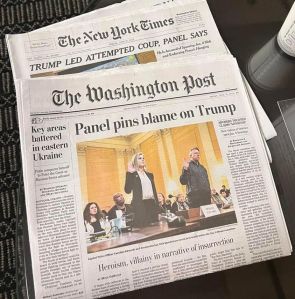
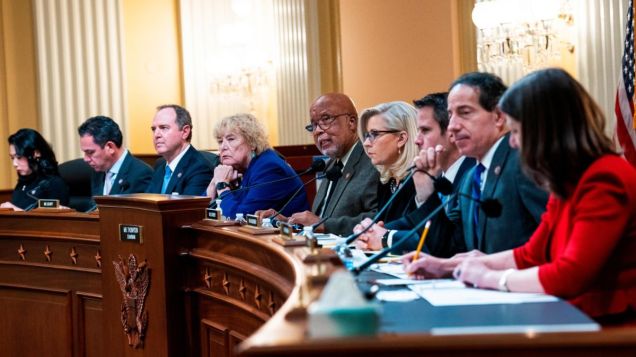
The January 6 committee’s first public hearing on Thursday night was a ratings hit. More than 20 million people watched on the TV networks that carried it. Many others viewed it on streaming platforms, and those numbers haven’t yet been tabulated. To give you an idea how amazing that is, game 3 of the NBA finals had 11.52 million viewers on ABC. The committee should consider hold more of their hearings in prime time.
According to early Nielsen estimates, nine of the channels that carried the hearing averaged a combined 19 million viewers during the two-hour hearing. This data doesn’t count every TV channel, however, or most web streaming, so the true total is larger.
Big live events are sliced and diced in dozens of different ways across radio, TV and the internet, so every attempt to measure total audience is inherently incomplete.
The early numbers are respectable, given the fragmented state of TV, but other widely-carried political events have garnered bigger audiences lately. President Biden’s State of the Union address in March averaged 38 million viewers across sixteen channels….
Between 8 and 10 p.m. Eastern, roughly 5 million people watched the hearing on ABC; 3.6 million on NBC; and 3.4 million on CBS.
On cable, more than 4.3 million watched on MSNBC and more than 2.7 million watched on CNN, between three and four times the typical prime-time audience for the channels.
Former president Donald Trump’s supporters scrambled to defend him online in the hours after the Jan. 6 committee’s hearings began, seeking to sow doubt about his involvement via the same social media channels that had captured clear evidence linking him to the Capitol assault….
Still Life with Green Soup, Fernando Botero
Trump War Room, a Twitter account once run by his reelection campaign, tweeted, “Trump and the rally had nothing to do with the Capitol breach!,” defying the House committee’s effort to pin responsibility for the riot squarely on Trump.
On the message board Patriots.win — a spinoff of TheDonald.win, where members had shared ideas on how to sneak guns into Washington before the riot — a popular thread Friday called Jan. 6 “the most patriotic thing I’ve ever seen” and said anyone who disagrees is “an enemy of the nation.”
And on pro-Trump channels on the chat service Telegram, supporters ridiculed the hearing as overly scripted or a partisan circus, if they mentioned it at all.
The outpouring of Trump support came in response to a hearing that brought together new testimony with previously unreleased footage to document both the gravity of the attack on the Capitol and Trump’s role in spurring it. It also underscored how the social media landscape has shifted in the 17 months since Trump was suspended by the leading online platforms for his role in fanning the violent attempts to overturn Joe Biden’s election as president.
For the most part, Trump and some of his most ardent backers were relegated to smaller platforms as they sought to respond.
The Jan. 6 committee’s riveting televised opening night might not have converted the pro-Trump revisionists, but it has left them without excuses. The evidence is overwhelming that a sitting president gathered a violent mob and charged it with intimidating members of Congress and his own vice president into illegally reversing the outcome of a presidential election on the basis of an obvious lie.
There is only one narrative about Jan. 6 that history will accept: the evidence meticulously gathered and presented by the House select committee.
In some ways, pressing the case against former president Donald Trump is not hard, because he confirms its general outlines. He still seems to regard the riot as the highest expression of MAGA loyalty to his person. He still insists he should be reinstated as president. He still seems to believe then-Vice President Mike Pence was a weak-kneed traitor for refusing to overturn the constitutional order. Because Trump can’t admit error, he often effectively admits guilt.
Cat and woman, Peter Harskamp, Dutch artist
The response of congressional Republican leaders to Thursday’s hearing — that it is more important to focus on inflation than sedition — has demonstrated their vast political and moral shallowness. The juxtaposition of testimony by U.S. Capitol Police officer Caroline Edwards (“I was slipping in people’s blood”) and a tweet from Republicans on the House Judiciary Committee account (“All. Old. News.”) was telling.
One imagines a 20-something GOP staffer straining (and failing) to be clever. The contrast between the police officer’s sacrifice and the tweeter’s infantile partisanship raises some questions: Is anyone teaching young Republicans that public service can be honorable and costly? Why doesn’t some mature public official shake these shills and urge silence in the presence of patriotic virtues they don’t possess?
On the contrast between Trump’s and Pence’s behavior on January 6:
In his rambling, over an hour-long remarks to the “Stop the Steal” crowd, Trump pressured Pence to reverse the election’s outcome more than 10 times — then continued doing the same on Twitter. As the committee revealed, one of those tweets was relayed, via bullhorn, to the rioters, who took up the chant “Hang Mike Pence.” According to the committee’s vice chair, Rep. Liz Cheney (R-Wyo.), Trump was pleased by their stated intention….
For several hours on that fateful day, Trump ceased to be the American president. He was an insurrectionary leader watching his work unfold in coordinated violence. He refused to take the advice of some of his closest advisers, who urged him to recall his forces from their assault on the Capitol. The chairman of the Joint Chiefs of Staff, Gen. Mark A. Milley, noted Trump’s absence in the chain of command. At a key moment, Trump was interested only in serving his wildly implausible mission of retaining power, not protecting the legislators, staff and police officers at the Capitol. In contrast, Pence attempted to take charge and fill the gap of leadership.
It is hard to heap praise on Pence. He was the loyal lieutenant to the worst president in history. But beneath a quivering mass of compromise, there was a core of principle, particularly in defending the Constitution.
In the days before the Electoral College certification, then-Vice President Mike Pence’s legal team laid out that they found most of the Trump campaign’s assertions of election fraud minor or unverifiable, according to a previously unseen memo obtained by POLITICO.
The memo shows Pence’s legal team didn’t just track the barrage of wild legal arguments from former President Donald Trump’s lawyers and allies, but also meticulously monitored the allegations of election fraud and mismanagement. It specifically includes charges leveled by the Trump campaign itself in court.
The National Archives and Records Administration provided the memo to the select committee, according to a person familiar with the document.
Mademoiselle Mink breakfasts, Janet Hill
The 10-page memo, titled “Unlawful Election Conduct in Six States,” is addressed to Pence from his White House legal team. It opens by summarizing that “the GOP and related plaintiffs” alleged procedural violations of election laws and substantive issues of election fraud in six swing states. It then notes that the alleged procedural violations worried Pence’s team, but that the actual accusations of voter fraud were mostly unpersuasive. Later in the memo, it singled out a host of month-old allegations from the Trump campaign itself as unverified.
“In general, there is strong evidence that state and local election officials committed numerous procedural violations that reduced transparency and/or favored Democrat candidates,” the memo reads. “However, most allegations of substantive voter fraud — defined to mean the casting of illegal ballots in violation of prevailing election laws — are either relatively small in number, or cannot be verified.”
Too bad Pence waited until the bitter end to start fact-checking Trump’s lies.
That Donald Trump acted the way he did [on January 6] was hardly a surprise; some of us had been warning about his borderless corruptions and disordered personality since before he became president. It’s hard to imagine that there’s any ethical line this broken, embittered, vindictive man wouldn’t cross, including telling White House staff that Vice President Mike Pence deserved to be hanged by the violent mob that stormed the Capitol, because Pence wouldn’t refuse to certify the election.
The Laughing Cat, Jane Lewis
But the story of the Trump presidency isn’t only about the corruptions and delusions of one man; it’s also about the party he represents. Trump recast the Republican Party, of which I was long a proud member, in his image. His imprint on the GOP is, in important respects, even greater than Ronald Reagan’s, despite Reagan being a successful two-term president.
It was bad enough that many Republicans were complicit in Trump’s wrongdoings when he was president; that they continue to be complicit 17 months after Trump left the presidency is an even more damning indictment. They’ve continued to embrace Trump even though he’s a loser.
Republicans stayed loyal to Richard Nixon far longer than they should have, but at least they abandoned him after the “smoking gun” tape was released that proved his involvement in the Watergate cover-up. What Trump has done is worse even than what Nixon did and yet Republicans—despite the case against Trump being far more comprehensive and detailed than we knew in the immediate aftermath of January 6—continue to propagate his lies and either defend his seditious conduct or act as if it never happened. It’s “old news,” we’re told. Nothing to see here. Time to move on.
Not so fast.
The sheer scale of Donald Trump’s depravity is unmatched in the history of the American presidency, and the Republican Party—the self-described party of law and order and “constitutional conservatives,” of morality and traditional values, of patriotism and Lee Greenwood songs—made it possible. It gave Trump cover when he needed it. It attacked his critics when he demanded it. It embraced his nihilistic ethic. It amplified his lies. When House Republican Leader Kevin McCarthy—a man who for a few fleeting hours after the January 6 insurrection dared to speak critically of Donald Trump—traveled to Mar-a-Lago a few days later to kiss his ring, it was an act of self-abasement that was representative of his party, his morally desolate party.
Make no mistake: Republicans are the co-creators of Trump’s corrupt and unconstitutional enterprise. The great majority of them are still afraid to break fully with him. They consider those who have, like Liz Cheney, to be traitors to the party. They hate Cheney because she continues to hold up a mirror to them. They want to look away. She won’t let them.
Cat on a Man’s Head, Peter Harskamp
I’ll end with this interesting historical article about the speech John F. Kennedy was prepared to deliver on the day he was murdered. Jeff Nussbaum at Politico: The Warning About Trump That JFK Never Got to Deliver.
Shortly before noon local time on Friday, November 22, 1963, John F. Kennedy landed at Dallas’s Love Field as he neared the end of a two-day, five-city tour of Texas.
Kennedy had much he hoped to accomplish on that trip: He hoped to lay the groundwork for his nascent 1964 reelection campaign; he hoped to heal a schism among party leaders in Texas that he feared might jeopardize his success in that key state, and he wanted to road test themes and refrains he felt would define his 1964 campaign, including national security and world peace.
But as he disembarked from his 13-minute flight from Fort Worth, there was something else on his mind: domestic extremism, disinformation, and the corrosive effect it could have on the United States.
In Dallas he was prepared to decry, “voices preaching doctrines wholly unrelated to reality,” which he feared could, “handicap this country’s security.”
He planned to say that “We cannot expect that everyone, to use the phrase of a decade ago, will ‘talk sense to the American people.’ But we can hope that fewer people will listen to nonsense.”
It was to have been a bold statement and a sharp warning, one that might have altered to contours of our national response to today’s violent, disassociated rhetoric — had he lived to deliver it.
Read the rest at the Politico link.
I hope to have a quiet weekend as I wait for the second installment of the January 6 committee hearings on Monday at 10AM. Please share your thoughts and links to stories you’re following in the comment thread and enjoy your weekend!
Did you like this post? Please share it with your friends:
Well, the first public hearing of the January 6 Committee’s investigation of the Trump-led insurrection was broadcasted on all the major TV stations and news stations. It was a searing combination of testimony–both in person and by video–as well as a massive TV providing highlights of violence previously unseen. It was a tribute to the men and women of the Capitol Police as well as the beginning of a suggested indictment of Trump and his enablers.
The so-called Fox “News” station broadcast Tucker Carlson with his spurious version of a false-flag event made to make Republicans look like racists. Phillip Bump analyzed this pathetic attempt to rally the racists, misogynists, fascists, christofascists, and Homophobic riff-raff to rage. I’m not sure he succeeded if you read this account. I was obviously watching the public hearings. From The Washington Post: “Fox News didn’t just ignore the Jan. 6 hearing. It did something worse.”
When 8 p.m. Eastern rolled around, though, it became clear that the network wasn’t simply going to not cover the hearing. Instead, it began more than two hours of commercial-free rebuttal. It didn’t simply cover other things, it focused almost entirely on the hearing as though it was former president Donald Trump’s defense team — without, of course, showing its audience the prosecution’s case.
Part of that was probably timing. The hearing began just as Tucker Carlson’s show kicked off, and few people in America have been more energetically engaged than Carlson in casting the Jan. 6 riot as not worthy of discussion. Or as largely innocuous, save for some vandalism. Or maybe it’s a government false flag aimed at casting Republicans as racists or something. Rhetorical consistency is not Carlson’s strength, but that is happily for him not a limitation for his job.
So Carlson began by crowing about Fox’s decision to stand apart from its competitors.
“The whole thing is insulting. In fact, it’s deranged,” Carlson said. “And we’re not playing along. This is the only hour on an American news channel that will not be carrying their propaganda live. They are lying, and we’re not going to help them do it.”
Yes, God forbid that Fox News should air an hour of propaganda or dishonesty. Carlson didn’t articulate the purported lies, which he couldn’t have, because the hearing hadn’t actually begun by that point. But it didn’t matter, because his audience wasn’t hearing the evidence from the hearing anyway. Was it a lie when the hearing showed William P. Barr, Trump’s ever-loyal attorney general, describing Trump’s voter-fraud claims as nonsense? Doesn’t matter, just wave it all away as untrustworthy without actually explaining what was said and why it couldn’t be trusted.
How did Carlson’s show go? He transitioned quickly into his frustration that the committee wasn’t addressing the real questions, in his estimation.
“What did happen, exactly, on Jan. 6? What’s the truth of that day?” Carlson said. “Well, that’s still unknown. From the extensive video we have of Jan. 6, it’s clear that some in the crowd, more than a few, were encouraging protesters to breach the Capitol. To commit felonies.”
The rest of us saw the committee begin to build its case that Trump planned and was in charge of all of it. We saw Jarred say he was too busy processing Presidential Pardons to really know what was going on which is pretty appalling on all kinds of fronts.
Liz Cheney: Rep. Scott Perry, 'multiple' GOP lawmakers sought pardons from Trump https://t.co/ffIhFrk51N
From The Washington Times article tweeted above as reported by Joseph Clark: “Liz Cheney: Rep. Scott Perry, ‘multiple’ GOP lawmakers sought pardons from Trump.”
Rep. Scott Perry was among “multiple” Republican lawmakers who sought presidential pardons in the weeks following the attack on the Capitol, the House Jan. 6 committee revealed Thursday.
“Representative Perry contacted the White House in the weeks after January 6th to seek a presidential pardon,” Committee Vice Chairwoman Rep. Liz Cheney, Wyoming Republican, said during the panel’s prime-time hearing.
“Multiple other Republican congressmen also sought presidential pardons for their roles in attempting to overturn the 2020 election,” she said.
If you don't think you're guilty of a crime, you don't go fishing for a Presidential Pardon. . . https://t.co/Ec1HY6Ht8A
Cheney’s presentation was worthy of a major case argued before the Supreme Court. This is also from The Washington Post: “Rep. Liz Cheney tells Americans why Jan. 6 should terrify them. After months of preparation, Cheney tries to convince fellow Republicans and Wyoming voters of a chilling conspiracy.”
On Thursday night, at the first in a series of congressional hearings, Cheney narrated that case with a dispassionate but propulsive presentation of facts, often showing evidence from videotaped depositions from the former president’s inner circle admitting his claims of voter fraud had no merit. She teased the investigation’s biggest findings and sharply criticized her fellow Republicans for the roles that they played — including enabling and continuing to support Trump.
“There will come a point when Donald Trump is gone,” Cheney said, “but your dishonor will remain.”
These hearings, which continue Monday, could mark the pinnacle of Cheney’s political career or the end of it.
The former rising star of the GOP has already been alienated by party leaders, abandoned by longtime supporters and consistently attacked by Trump and his allies, who are backing a primary challenger Cheney will face in August. While most of the nine other Republicans who voted to impeach Trump after Jan. 6 have either decided not to run for reelection or mostly avoided discussing the former president, Cheney has made her role as the vice chair of the select committee investigating the insurrection central to her pitch to voters. She is trying to convince them she’s on the right side of history — and that her Trump-free approach to conservatism is the right one.
Fox “News” was directly involved in the January 6 Insurrection and they are terrified for Americans to hear the truth. pic.twitter.com/123tj9hrdO
WASHINGTON, DC – MARCH 28: Rep. Liz Cheney (R-WY) speaks during a Select Committee to Investigate the January 6th Attack on the U.S. Capitol business meeting on Capitol Hill March 28, 2022 in Washington, DC. T (Photo by Drew Angerer/Getty Images)
Still, Liz Cheney is no hero. (This links to a piece in The UK Independent from a while ago.)
The New York Times‘s Peter Baker writes this lede “Trump Is Depicted as a Would-Be Autocrat Seeking to Hang Onto Power at All Costs. As the Jan. 6 committee outlined during its prime-time hearing, Donald J. Trump executed a seven-part conspiracy to overturn a free and fair democratic election.” Baker describes the overall process and the case it will try to prove as presented in Chair Bennie Thompson’s opening statement.
In the entire 246-year history of the United States, there was surely never a more damning indictment presented against an American president than outlined on Thursday night in a cavernous congressional hearing room where the future of democracy felt on the line.
Other presidents have been accused of wrongdoing, even high crimes and misdemeanors, but the case against Donald J. Trump mounted by the bipartisan House committee investigating the Jan. 6, 2021, attack on the Capitol described not just a rogue president but a would-be autocrat willing to shred the Constitution to hang onto power at all costs.
As the committee portrayed it during its prime-time televised hearing, Mr. Trump executed a seven-part conspiracy to overturn a free and fair democratic election. According to the panel, he lied to the American people, ignored all evidence refuting his false fraud claims, pressured state and federal officials to throw out election results favoring his challenger, encouraged a violent mob to storm the Capitol and even signaled support for the execution of his own vice president.
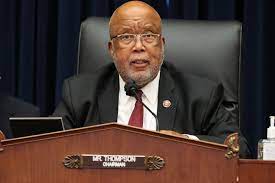
“Jan. 6 was the culmination of an attempted coup, a brazen attempt, as one rioter put it shortly after Jan. 6, to overthrow the government,” said Representative Bennie Thompson, Democrat of Mississippi and the chairman of the select committee. “The violence was no accident. It represents Trump’s last stand, most desperate chance to halt the transfer of power.”
House Homeland Security Committee Chairman Bennie Thompson, D-Miss., sits at a committee hearing on September 17, 2020. Photo by Chip Somodevilla/UPI | License Photo
The Jan. 6 committee aired a closed door video of former Attorney General Bill Barr’s deposition to kick of the prime-time hearing.
Driving the news: “I told the president it was b******t. I didn’t want to be a part of it,” Barr said.
WATCH: Attorney General Barr declares that Donald Trump lost the Presidential election in 2020.
There is no doubt that the American people voted Trump out of office and the Select Committee has found no evidence of election fraud. pic.twitter.com/qa5qNyMXqS
— January 6th Committee (@January6thCmte) June 10, 2022
What they’re saying: CommitteeVice Chair Liz Cheney (R-Wyo.) said that testimony will reveal Trump saying that former Vice President Mike Pence “deserves” to be hanged on Jan. 6, which rioters were shouting.
“Maybe our supporters have the right idea,” Trump said, according to a testimony read by Cheney.
The big picture: Barr, who resigned in December 2020, has said that former President Trump’s false claims about the 2020 presidential election fueled his decision to cut ties with Trump.
Barr said in December 2020 that the Department of Justice had not uncovered evidence of widespread voter fraud that would change the result of the presidential election.
The congressional hearing into the events of January 6 on Thursday night focused attention on a single decisive person. Not the hearing’s powerful chair or the meticulous vice chair. Not the former U.S. president who tried to overthrow the government. Not the former vice president whom the former president said deserved hanging. Not the lawless insurrectionists, not the heroic police officers, not the documentarian who caught history on camera. The single decisive person is: you.
Through the Trump years, weary and defeated observers shrugged that nothing mattered, nothing ever moves the needle. America is two tribes, antagonistic; nothing can budge either one any distance.
This fatalism passed as cleverness, even as wisdom. This fatalism also functioned as an excuse. If nothing can be done, then no one can be blamed for not doing it. If nothing can be done, then we’re all off the hook.
The fatalism was always wrong. The important thing to remember about Donald Trump’s presidency is that he was beaten again, and again, and again. His protective congressional majority was stripped away in 2018. He was twice tainted by impeachment. He was defeated for reelection. His conspiracy to overturn that election defeat was thwarted.
Full justice was not served—not yet, anyway. But the country was saved, because enough people summoned up the nerve to do the right thing. Sometimes, that right thing was a terrifyingly close shave. Sometimes, the people doing the right thing had warmed up with a long spell of doing the wrong thing, as Vice President Mike Pence did a lot of wrong things before he did the right thing on January 6, 2021. But if there is one lesson to take from the Trump years, it’s not the cynical Twitter joke “LOL nothing matters.” The lesson is that everything mattered: every act of conscience, every act of honest reporting, every denial of the Big Lie, every ballot.
There are also those who are as duplicitous as Trump. They need to be held to account also.
Virginia “Ginni” Thomas, the wife of Supreme Court Justice Clarence Thomas, reached out to almost 30 Arizona lawmakers following then-President Trump’s defeat in the state’s 2020 election, urging them to reject President Biden’s victory, The Washington Post reported Friday.
The Post reported last month that Ginni Thomas sent emails to two lawmakers six days after the election to tell them to work on behalf of Trump and “fight back against fraud.” The most recent report, based on emails The Post obtained, raises the number Thomas contacted to 29.
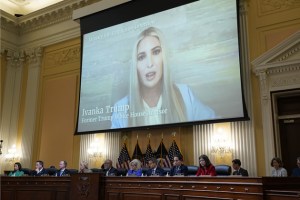
A video showing former White House Advisor Ivanka Trump speaks during an interview with the Jan. 6 Committee. | J. Scott Applewhite/AP Photo
Former President Donald Trump on Friday discounted his own daughter’s testimony that the 2020 presidential election results were not fraudulent.
“Ivanka Trump was not involved in looking at, or studying, Election results. She had long since checked out and was, in my opinion, only trying to be respectful to Bill Barr and his position as Attorney General (he sucked!),” Trump posted on Truth Social, the social media platform he helped found.
…
Barr in his video deposition described Trump’s claims of election fraud as “bullshit.” Ivanka Trump echoed Barr’s comments in her own video testimony.
“I respect Attorney General Barr so I accepted what he was saying,” she said to the committee.
A U.S. Capitol Police officer described the Jan. 6, 2021, attack as a bloodied “war scene” as she watched injured colleagues try to push back rioters from the Capitol building. Caroline Edwards, believed to be the first law enforcement officer injured by the rioters that day, testified Thursday to the House committee investigating the attack.
“What I saw was just a war scene,” she said. “It was something like I had seen out of the movies. I could not believe my eyes. There were officers on the ground. They were bleeding. They were throwing up. I saw friends with blood all over their faces. I was slipping in people’s blood. I was catching people as they fell. It was carnage. It was chaos.”
“Never in my wildest dreams did I think that as a police officer and as a law enforcement officer, I would find myself in the middle of a battle,” she continued. “I am trained to detain a couple of subjects and handle a crowd, but I’m not combat trained. And that day, it was just hours of hand-to-hand combat.”
Caroline Edwards, a U.S. Capitol Police officer who was seriously injured at the Jan. 6 attack, says during the hearing: “I, whose literal blood, sweat and tears were shed that day defending the building that I spent countless holidays and weekends working in." pic.twitter.com/m7Rtd9Fmnw
I’m not sure if I did any justice to this coverage and event last night but I hope you’ll join me in describing your reaction. For me, it seems like I just relived something that I never ever expected to see in my lifetime. It feels personal and creates a level of PTSD in me that cannot even get on the Richter Scale of those officers whose lives were on the line. I have never felt closer to those of us that truly care about the dream of liberty and justice for all among us. I’m not sure what we all did to deserve this.
Take care this weekend. The Jan. 6 committee’s next hearing is Monday at 10 a.m. EDT. I will see you then to live blog our next step in this American Journey.
What’s on your reading and blogging list today?
Did you like this post? Please share it with your friends:
Day one of the January 6 committee hearings has finally arrived. At 8:00 tonight, we’ll begin to learn what the committee has discovered about the conspiracy to overturn the 2020 election and Trump’s culpability for the attack on the Capitol building last year. We’ll be live-blogging the hearings, so please check in tonight and share your reactions. We can use this post or, if necessary, we’ll post another thread tonight.
When the US House select committee investigating the January 6 insurrection opens its hearings on Thursday evening, it will do so in prime time and with primetime production values. The seven Democrats and two Republicans – shunned by their own party – who sit on the panel are pulling out all the stops in an attempt to seize the public’s attention.
They have brought onboard a former president of ABC News, James Goldston, a veteran of Good Morning America and other mass-market TV programmes, to tightly choreograph the six public hearings into movie-length episodes ranging from 90 minutes to two and a half hours. His task: to fulfill the prediction of one of the Democratic committee members, Jamie Raskin, that the hearings “will tell a story that will really blow the roof off the House”….
Reports suggest that one ratings-boosting tactic under consideration would be to show clips from the committee’s interviews with Donald Trump’s daughter Ivanka Trump and her husband, Jared Kushner. They were witness to many of Donald Trump’s rantings in the buildup to January 6, and highlights of their quizzing could command a large audience.
As a counterpoint to the glamorous couple, the committee is also likely to focus during the opening session on the activities of far-right groups including the Proud Boys and Oath Keepers. This week, the justice department charged the national chairman of the Proud Boys, Enrique Tarrio, and four of the group’s other leaders with seditious conspiracy.
The indictments will act as backdrop to two of the committee’s main ambitions for the hearings. First, to show in dramatic and previously unseen footage – edited for maximum effect on TV and social media alike – the harrowing violence and brutal destruction that was unleashed during the storming of the Capitol, in which the vice-president was forced to flee rioters shouting: “Hang Mike Pence.”
The second ambition is to convey to the American people that the maelstrom of rage was not random and unprompted, but rather the opposite – instigated, organised, meticulously planned and conceived by an array of conscious actors.
Committee member Rep. Jamie Raskin (D-Md.) on Monday offered a glimps of what’s to come.
“The select committee has found evidence about a lot more than incitement here,” he said during a Washington Postinterview on Monday after noting that majorities in both the House and Senate found former President Trump guilty of inciting the attack on the Capitol. “We’re gonna be laying out the evidence about all of the actors who were pivotal to what took place on Jan. 6,” he continued.
Raskin added that the committee has evidence of “concerted planning and premeditated activity” — in other words, “a conspiracy to overturn the 2020 presidential election and block the transfer of power.”
When asked whether Trump himself led this effort, Raskin acknowledged that “people are going to have to make judgments themselves about the relative role that different people played.” But, he added, “I think that Donald Trump and the White House were at the center of these events. That’s the only way really of making sense of them all.”
Committee Vice Chairwoman Liz Cheney (R-Wyo.) described efforts to overturn the election similarly, telling CBS on Sunday that the attack on the Capitol was one facet of an “extremely well-organized” conspiracy….
“No president has ever come close to doing what happened here in terms of trying to organize an inside coup to overthrow an election and bypass the constitutional order,” Raskin said at a Georgetown University event in April. “And then also use a violent insurrection made up of domestic violent extremist groups, white nationalist and racist, fascist groups in order to support the coup.”
With public hearings kicking off this week, the House select committee investigating January 6 is zeroing in on former President Donald Trump, and is preparing to use its platform to argue that he was responsible for grave abuses of power that nearly upended US democracy.
The committee’s central mission has been to uncover the full scope of Trump’s unprecedented attempt to stop the transfer of power to President Joe Biden. This includes Trump’s attempts to overturn his 2020 defeat by pressuring state and federal officials, and what committee members say was his “dereliction of duty” on January 6 while his supporters ransacked the US Capitol.
Lawmakers will try to convict Trump in the court of public opinion – which is all they can do, because it’s not within their powers to actually indict Trump. But they have an emerging legal foundation to claim that Trump broke the law, thanks to a landmark court ruling from a federal judge who said it was “more likely than not” that Trump committed crimes regarding January 6.
These highly choreographed hearings will be the panel’s first opportunity to show the public what they’ve learned from more than 1,000 witness interviews and 135,000 documents. An avalanche of new information about January 6 has come to light since Trump’s impeachment trial in February 2021, where he was acquitted of one count of “incitement of insurrection.”
“We are going to tell the story of a conspiracy to overturn the 2020 presidential election and block the transfer of power,” Rep. Jamie Raskin, a Maryland Democrat who serves on the committee, told the Washington Post earlier this week, adding that the committee “has found evidence of concerted planning and premediated activity” related to the events of January 6.
Cohen then wraps up the piece by summarizing what is known so far about “Trump’s leadership role in the anti-democratic scheme, and how it all fits into the ongoing criminal investigations.”
Then-President Donald Trump pressured the Secret Service for two weeks to come up with a plan for him to join his supporters on a march toward the Capitol on January 6, 2021, the Washington Post reported Tuesday. pic.twitter.com/pLvIQzAz4Q
When the House 6 January select committee convenes its first hearing to examine the worst attack on the US Capitol since 1814, the nine-member panel and the two witnesses who will testify Thursday will be the highest-profile occupants of the ornate Cannon House Office Building Caucus Room since the infamous House Un-American Activities Committee used it for hearings in the mid-20th century.
Seventy-four years after Hollywood luminaries like acclaimed screenwriter Dalton Trumbo were blacklisted after failing to answer that committee’s questions about whether they had “now or … ever been” members of the Communist Party, one of the film industry’s finest will once again be a star witness in the exact same room.
The select committee on Tuesday announced that one of the first two witnesses to testify in what is expected to be a series of at least eight hearings will be Nick Quested, the award-winning documentarian who earned an Oscar nomination for his film Restrepo in 2010. The other will be Caroline Edwards, a US Capitol Police officer who was one of the first to be on the receiving end of blows delivered by the pro-Trump mob who stormed the Capitol in hopes of preventing Congress from certifying Joe Biden’s 2020 election victory.
Both witnesses will testify during the second hour of the two-hour hearing, following opening presentations by the select committee’s chairman – Representative Bennie Thompson of Mississippi – and Wyoming Representative Liz Cheney, the panel’s vice-chair.
The Independent has learned that the panel’s aim in putting Ms Edwards and Mr Quested in the spotlight for the first prime time hearing on the 6 January insurrection is to highlight the role played by the pro-Trump extremist groups in starting and escalating the violence.
Mr Quested, who spent the days leading up to the riot embedded with leaders of the Proud Boys gang as part of a documentary project, has already provided US authorities with footage of a 5 January 2021 meeting between then-Proud Boys leader Enrique Tarrio and Elmer Stewart Rhodes, founder and leader of the Oath Keepers.
The footage of Mr Tarrio and Mr Rhodes meeting on the eve of the insurrection appears to have figured prominently in grand jury proceedings which led to last week’s unsealing of an indictment against Mr Tarrio and four other Proud Boys members for seditious conspiracy.
The press has learned so much about what will happen tonight. I hope the committee will still have a few surprises for us.
Two more relevant reads:
The hearings must make it clear beyond a reasonable doubt that there should be a prosecution of Trump and all of the others in his close-knit circle who were involved. Should the hearings provide a roadmap to indictment, Attorney General Merrick Garland must not fail to act.
The House select committee on the Jan. 6 attack is finally beginning its televised hearings, and the Democratic faithful are hoping for a political punch in the nose to detractors — and a wakeup call to those who still don’t understand what actually happened during the insurrection.
“These hearings are important to accelerate awareness,” Norm Eisen, a senior fellow at the Brookings Institution, explained to me. It remains to be seen if they can actually be the “punch in the nose” to Donald Trump that so many hope for.
Trump’s alleged activities on or before Jan. 6 include a conspiracy to obstruct a lawful function of the federal government. These hearings must energize the pursuit of justice, or they will be pointless – just more high wind in the trees.
Face it. Trump was impeached not once, but twice. We know what a grifter he is. We know he doesn’t care. Most of us believe him to be a crook. We have seen it all before. Can the hearings really shock the nation into a zeitgeist that leads us to a newfound respect for each other — and to a settling of accounts that holds Trump responsible for one of the worst days in the modern history of our country? Probably not.
Trump openly led the insurrection. Congress can’t prosecute him, but the DOJ can.
The nation needs indictments. You cannot have closure before you indict and prosecute every single person involved in the insurrection. You cannot stand over the dead corpse of democracy and declare we should move on.
In short, the hearings in Congress must make it clear beyond a reasonable doubt that there should be a prosecution of Trump and all of the others in his close-knit circle who were involved. Should the hearings provide a roadmap to indictment, Attorney General Merrick Garland must not fail to act….
What’s the worst-case scenario for these hearings? No needle movement. No charges. The entire issue fades into the mist like a bad case of COVID: You survive, but the cough persists.
Make no mistake, democracy is still in the balance and it has been since Trump slithered down that golden escalator and began his campaign for president.
We’re still in the moment, as Eisen would say. These are uncertain times and we must act. These hearings are important — easily as important as the hearings that helped bring down Nixon and perhaps even more. Today the entire government hangs in the balance.
Here's one way to view the Jan. 6 Committee and its potential for eventual accountability.
While it’s doubtful the hearings will meet the sky-high expectations of those who believed the committee would expose open-and-shut wrongdoing from some of the nation’s top officials, the prime-time hearings will deliver one thing: evidence for many of the lawsuits seeking to make former President Donald Trump and other election denialists actually pay for the violence.
“What the committee can’t do is hold people accountable. But that’s where criminal prosecutions and civil litigation comes in,” said Edward G. Caspar, an attorney representing injured and traumatized Capitol Police officers who are suing Trump after the violence insurrection….
one of the big challenges for the panel’s investigation—with its contentious lawsuits, secret interviews, and promises to expose the truth—is that it ultimately has no power to punish those who are responsible for last year’s attack on the Capitol.
So far, legal scholars and progressive activists have focused their exasperated calls for action on the Department of Justice. But the real action could come from lawsuits like the one Conrad Smith and seven fellow Capitol Police officers filed in August against Trump, his campaign, Stop the Steal election denial movement organizers like Ali Alexander and Roger Stone, and enforcer gangs like the Proud Boys and the Oath Keepers militia.
“The committee is playing a critical role here for America,” Caspar said. “If you think of the three means of seeking accountability for those responsible for the attack—congressional hearings, criminal prosecution, civil litigation—they’re like a three-legged stool. The committee can shine a very bright light on the evidence and present it to the public. That’s something the others can’t do.”
A lot is riding on the hearing tonight. If the committee can really “blow the roof off,” people who haven’t been paying close attention will continue to tune in upcoming hearings. Here’s hoping they can meet the challenge.
Please share your thoughts on all this, and I hope you’ll also check back tonight to help us live blog.
Did you like this post? Please share it with your friends:
After 26 students and teachers were murdered at Sandy Hook Elementary in 2012, Massachusetts expanded its already far-reaching gun safety law. Following a mass shooting in Las Vegas — the deadliest in US history — it was the first state to ban bump stocks. And when a teenager killed 17 people at a Parkland, Fla., high school, lawmakers here embraced their own “red flag” statute.
Tragedy has regularly proved to be an accelerant for change in Massachusetts, pushing state policymakers to tighten their already strict gun laws at a time when major federal changes have regularly stalled and Republican legislators in other states loosened theirs.
Now, in the wake of horrific gun violence in Buffalo, Uvalde, Texas, and elsewhere, activists and state officials are pointing to Massachusetts as a model, arguing that its rules weaving together background check mandates, far-reaching prohibitions, and local licensing standards should be a guide — if not for Congress, then other states.
“Massachusetts gun laws have been proven to work,” Governor Charlie Baker, a Republican who has backed gun safety measures, said Monday, adding that the firearm death rate in this state “justifies thinking about what has been done here in the larger context of the nation.”
“I’ve talked to governors in other states and basically have said to them that they really ought to take a look at Massachusetts laws and make some decisions of their own,” Baker said. “I think it’s undeniable that the laws we have here have worked pretty well.”
Only Hawaii had a lower firearm mortality rate than Massachusetts in 2020; the year before — and in 2016 and 2015, as well — no state did, according to the Centers for Disease Control. And while gun violence has permeated other urban centers, Boston actually saw a drop in homicides and shootings in 2021 and has experienced even fewer so far this year, according to police data.
David is absolutely right. Massachusetts has proven the NRA's bogus talking points wrong again and again Our strong gun laws—including strict licensing standards, a red flag law, and an assault weapons ban—help save lives. The rest of the country needs to follow suit. https://t.co/CPQHpYfFSh
Yesterday, Massachusetts legislators prepared a letter to encourage leaders in other states to consider using the our state’s gun laws as a model. Some information about Massachusetts gun laws from the Globe article linked above:
Massachusetts passed an assault weapons ban in 1998 and made it permanent in 2004, when the federal ban expired. It also limits ammunition magazines to 10 rounds and requires that any first-time applicant for a six-year firearm license undergo a gun safety course.
All license applicants are also subject to background checks, either for a Firearm Identification Card — which allows people to own and use some rifles or shotguns — or a license to carry, the state’s most popular gun license.
Known as a Class A license, it allows people to own and use handguns and certain other firearms, but also comes with an additional layer of scrutiny. Local police chiefs, who serve as the state’s licensing authority, can deny an applicant they deem to be unsuitable, allowing them the discretion to factor in considerations beyond someone’s criminal record.
That could include whether police have been called to their home, for example, or if they had been the subject of domestic violence incidents that didn’t result in arrests or charges.
Acting after the 2012 school massacre in Newtown, Conn., the Legislature tightened its laws further. That 2014 law now allows police chiefs who want to deny, suspend, or revoke a shotgun or rifle license to file a petition in court.
It also mandated the state join a national database for criminal and mental health background checks and required that Massachusetts create an online portal for conducting the required background checks for private gun transfers.
In Massachusetts, carrying a firearm without a license is punishable by a mandatory minimum sentence of 18 months. You can't buy or carry a firearm if you are under 21. Assault weapons are banned unless they were lawfully owned prior to September 14, 1994. https://t.co/9Ozen4ByZM
I’ve quoted a lot, because the Globe article is behind a paywall. It also discusses some problems that have cropped up, e.g. the red flag law has seldom been used, and the laws have gotten complex and difficult for enforcement officials to navigate. Nevertheless, there has not been a mass shooting here for 22 years and we have fewer gun deaths than every state except Hawaii.
Unfortunately, the Supreme Court may soon make it much more difficult for local lawmakers to keep their states and cities safe.
The NYPD has recovered more than 3,000 guns this year. But authorities are bracing for a ruling, expected from the U.S. Supreme Court this month, that could make it easier to legally carry a handgun in New York. https://t.co/7KzBknoKYw
Already this year, the New York Police Department has recovered more than 3,000 guns, and such arrests have hit a 28-year high. But across the city and state, authorities are bracing for a ruling, expected from the United States Supreme Court this month, which could strike down a century-old New York State law that places strict limits on the carrying of handguns.
Overturning the law could make it far easier to legally carry a handgun in the state, which officials say may have violent consequences for cities already struggling to tamp down a spike in gun crime that began two years ago.
“A lot more people are going to now want to go out and get guns. And for all the wrong reasons,” said Richard Aborn, the president of the nonprofit Citizens Crime Commission. “I have people telling me they decided to get a gun that I never dreamed would go out and get a gun. They’re not going to use it illegally but they’re feeling this need to arm themselves in a way that I’ve not seen before.”
And if more New Yorkers are armed, he said, what would otherwise have been minor confrontations could turn deadly.
When the Supreme Court heard arguments over the law in November, a number of justices appeared predisposed against it, leading experts to believe that the law is likely to be struck down. If that happens, the ramifications could reach beyond New York: A handful of other states, including California, Connecticut, Maryland and Massachusetts, have similar laws that could also be invalidated.
New York State requires anyone who wants to purchase a handgun to apply for a state license. But there is an additional level of scrutiny for people who want a license that allows them to carry their gun outside their home. The two petitioners before the Supreme Court, both upstate New Yorkers, are challenging the laws governing the carrying of handguns, though gun control advocates in the state worry that the rules for acquiring handguns will be next….
In New York, Gov. Kathy Hochul has said that she would consider calling a special session of the State Legislature if the law were overturned. And after a shooting in Buffalo last month in which a teenager motivated by racism killed 10 Black people at a grocery store, she brought up the law unprompted, saying that her administration was “preparing our state for what could be a Supreme Court decision that allows people to carry concealed weapons. We’re ready.”
I imagine Massachusetts lawmakers are also preparing.
With the January 6 hearings coming up on Thursday night, is it possible Trump could eventually get his comeuppance? I sure hope so.
May was a bad month for former President Donald Trump. And there are darkening clouds on his horizon. On June 9, the Jan. 6 House select committee will hold public hearings as part of its ongoing investigation into the storming of the Capitol last year. In short order, the set of six scheduled televised sessions this month are likely to build momentum toward making the case that the president was directly involved in attempts to undermine the peaceful transition of power. And as the steady dropping of shocking findings from the committee over the course of the past months suggests, the sessions will likely have many viewers on the edge of their seats.
June’s hearings follow a series of escalations in Trump’s ongoing legal battles stemming from his attempts to undermine the 2020 election. May’s legal developments and the looming hearings suggest increasing pressures and prospects that Trump will face criminal charges.
Why was May so bad for Trump? It’s not just a matter of investigators closing in. Georgia’s primary on May 24 delivered a blow to Trump. Three men the former president loves to hate—Gov. Brian Kemp, Secretary of State Brad Raffensperger, and Attorney General Chris Carr—all defeated Trump’s candidates in the Republican primary. Trump is already trying to cast doubt on their election results, raising questions about Kemp’s 50-point win over David Perdue. Georgia voters, however, signaled they are ready to move on from the Big Lie.
Meanwhile, two parallel criminal investigations are heating up—one from the Justice Department and another from District Attorney Fani Willis in Atlanta. Willis is independently investigating Trump’s phone call with Raffensperger in which he shamelessly asked Raffensperger “to find 11,780 votes,” one more than needed to reverse Joe Biden’s Georgia victory. She is also looking into Trump’s pre–Jan. 6 conduct for violation of the state’s criminal prohibition on soliciting election fraud. Last week, we learned that she has subpoenaed 50 witnesses, including Raffensperger, who testified on June 2 for five hours before a grand jury. She has also subpoenaed Chris Carr for June 21.
As for the Justice Department, it is reportedly ramping up its inquiry into Trump’s circle and the fake elector scheme that Rudy Giuliani allegedly led for the Trump campaign. On May 31, the Guardian reported that DOJ’s May 26 subpoena to former Trump aide Peter Navarro specifically refers to Trump and seeks communications with him, hinting at tightening scrutiny for the former president. (On June 2, the DOJ indicted Navarro on two counts of contempt for defying the committee’s subpoena to testify and provide documents.)
There’s more at the Slate link.
A couple of previews of what we might learn from Thursday’s hearing:
NEW: Filmmaker Nick Quested, whose crew was embedded with the Proud Boys on and around Jan. 6 and captured some of the most important moments during the riot, will be a witness at the first hearing of the Jan. 6 select committee.
Nick Quested, a British documentarian who was embedded with the Proud Boys in the period around Jan. 6, will be one of the witnesses Thursday when the Jan. 6 select committee presents its findings of the violent attack that threatened the transition of presidential power from Donald Trump to Joe Biden.
Quested captured some of the most harrowing and vivid footage from the front lines of the violence that day, including key moments of confrontation between members of the mob and Capitol Police just before rioters stormed the barricades. His crew was also present for key conversations among Proud Boys leaders, as well as a garage meeting between the group’s national chairman, Enrique Tarrio, and Stewart Rhodes, the founder of the Oath Keepers, whose group also played a central role in the January 2021 attack on the Capitol.
The inclusion of Quested among the witnesses suggests the first hearing will focus substantially on the role of the Proud Boys in the attack. That focus dovetails with a decision by the Justice Department on Monday to escalate its case against the leaders of the group, charging Tarrio and four others with seditious conspiracy for their alleged plans to stop the transition of power by force….
The select committee and DOJ have come to view the Proud Boys as key instigators of the Jan. 6 violence. Though members of the group itself were not charged with assaulting police, the charges against them describe their actions as drivers of the most pivotal moments during the riot. Prosecutors have indicated that the Proud Boys strategy included activating non-Proud-Boys members of the crowd — who they referred to as “normies” — to help push past police. The Justice Department has also described the Proud Boys as “directing” and “mobilizing” the crowd to both march to the Capitol, breach its grounds and enter the building itself.
For example, prosecutors have noted that Proud Boys leader Joe Biggs briefly huddled with Ryan Samsel, another charged defendant, just before Samsel charged at a police barricade. Samsel’s push resulted in the first barricades being toppled, causing the first rush of rioters to the food of the Capitol.
An hour later, Proud Boy Dominic Pezzola, one of the other defendants in the case, used a stolen police riot shield to smash a Senate-wing window, the first breach of the Capitol building itself. A fellow Proud Boy who helped Pezzola carry the shield, Charles Donohoe, recently pleaded guilty to his involvement in the group’s efforts.
A staffer for Donald Trump’s presidential campaign instructed Republicans planning to cast electoral college votes for Trump in Georgia despite Joe Biden’s victory to operate in “complete secrecy,” an email obtained by The Post shows. https://t.co/FuScvNrZau
— The Washington Post (@washingtonpost) June 6, 2022
From the article:
A staffer for Donald Trump’s presidential campaign instructed Republicans planning to cast electoral college votes for Trump in Georgia despite Joe Biden’s victory to operate in “complete secrecy,” an email obtained by The Washington Post shows.
“I must ask for your complete discretion in this process,” wrote Robert Sinners, the campaign’s election operations director for Georgia, the day before the 16 Republicans gathered at the Georgia Capitol to sign certificates declaring themselves duly elected. “Your duties are imperative to ensure the end result — a win in Georgia for President Trump — but will be hampered unless we have complete secrecy and discretion.”
The Dec. 13, 2020, email went on to instruct the electors to tell security guards at the building that they had an appointment with one of two state senators. “Please, at no point should you mention anything to do with Presidential Electors or speak to the media,” Sinners continued in bold.
The admonishments suggest that those who carried out the fake elector planwere concerned that, had the gathering become public before Republicans could follow through on casting their votes, the effort could have been disrupted. Georgia law requires that electors fulfill their duties at the State Capitol. On Dec. 14, 2020, protesters for and against the two presidential candidates had gathered on the Capitol grounds.
The House select committee investigating the Jan. 6, 2021, attack on the U.S. Capitol, which begins public hearings on Thursday, is likely to highlight the scheme to appoint fake electors and explore whether top Trump campaign officials initiated the strategy as part of a larger effort to overturn the democratic election.
I’ve also heard that the committee will play video from testimony by Ivanka and Jared. It should be an interesting night. I can’t wait!
What are your thoughts on all this? What other stories have caught your attention today?
Did you like this post? Please share it with your friends:
It’s going to be an interesting week as we start the January 6 committee’s public hearings on the insurrection on Thursday evening. The times are listed in EDT to the left of the headline. NBC asks the big questions: “The Jan. 6 committee begins hearings with a big challenge: Capture public attention. Whether the public hearings will be considered a success for Democrats largely depends on what comes after and whether legislation or prosecutions follow.”
Seldom has a set of congressional hearings opened amid so much anticipation and, at the same time, so little guarantee of success.
The House committee investigating the Jan. 6 attack on the Capitolwill hold the first of at least a half-dozen public hearings this week, having already promised stunning revelations that would lay bare just how dangerously close the U.S. came to losing its democracy.
“It’s all about democratic resiliency. Can we fortify our institutions and our people against insurrection, coups and violence?” Rep. Jamie Raskin, D-Md., a committee member, told NBC News. “I hope we will be able to spur the country to make the necessary reforms to solidify democracy.”
Thursday is when the suspense lifts and the nine-member committee gets to tell all.
But what will success look like? The question has weighed on committee members and congressional Democrats who have invited the panel to present both a definitive accounting of the riot and tangible solutions to prevent another.
What comes later is likely to determine whether the committee’s work is judged a success or a failure, according to interviews with more than 20 committee members, other lawmakers, witnesses, congressional aides and political strategists.
As the panel sees it, the hearings can’t just come and go. Members are looking for accountability. The committee isn’t a law enforcement body, so it can’t prosecute anyone. Yet if members lay out a compelling story about the far-flung effort to deny Joe Biden his rightful victory, it could pressure the Justice Department to ramp up its own inquiry.
“I am really very hopeful that what [the committee] will produce will be a road map — not just for Congress, but for the Department of Justice and for the American people who want to preserve our democracy,” Rep. Veronica Escobar, D-Texas, who was trapped in the gallery of the House chamber during the riot on Jan. 6, 2021, said in an interview.
This is Kristal. She was three weeks old and riddled with fleas when we cleaned her up and started bottle feeding her. Temple adores her. She’s healthy and active now!
The founder of the People of Praise, a secretive charismatic Christian group that counts supreme court justice Amy Coney Barrett as a member, was described in a sworn affidavit filed in the 1990s as exerting almost total control over one of the group’s female members, including making all decisions about her finances and dating relationships.
The court documents also described alleged instances of a sexualized atmosphere in the home of the founder, Kevin Ranaghan, and his wife, Dorothy Ranaghan.
The description of the Ranaghans and accusations involving their intimate behavior were contained in a 1993 proceeding in which a woman, Cynthia Carnick, said that she did not want her five minor children to have visitations with their father, John Roger Carnick, who was then a member of the People of Praise, in the Ranaghan household or in their presence, because she believed it was not in her children’s “best interest”. Cynthia Carnick also described inappropriate incidents involving the couple and the Ranaghan children. The matter was eventually settled between the parties.
Barrett, 50, lived with Dorothy and Kevin Ranaghan in their nine-bedroom South Bend, Indiana, home while she attended law school, according to public records. The justice – who was then known as Amy Coney – graduated from Notre Dame Law School in 1997 and two years later married her husband, Jesse Barrett, who also appears to have lived in the Ranaghan household. There is no indication that Amy Coney Barrett lived in the house at the time when the Carnick children were visiting or witnessed any of the alleged behavior described in the court documents.
The examination of the People of Praise’s history and attitude towards women comes as a majority of the supreme court – including Barrett – appear poised to reverse Roe v Wade, the landmark 1973 ruling that made abortion legal across the US.
Cynthia Carnick stated in the documents that she had witnessed Dorothy Ranaghan tie the arms and legs of two of the Ranaghans’ daughters – who were three and five at the time the incidents were allegedly witnessed – to their crib with a necktie. She also said that the Ranaghans allegedly practiced “sexual displays” in front of their children and other adults, such as Dorothy Ranaghan lying with her clothes on and “rocking” on top of Kevin Ranaghan in their TV room.
Cynthia Carnick – who no longer uses Carnick as her last name – declined to comment but said that she stood by the statement she made at the time.
This is horrifying. We have too many sick, sick individuals on the Supreme Court right now appointed by Republicans appeasing these types of cults. One piece of good news on the SCOTUS front did come out today. This is from USA Today. “Supreme Court declines appeal over law licenses from St. Louis couple who waved guns at protest. Mark and Patricia McCloskey drew national attention for walking onto their front yard with guns during a 2020 protest of the police killing of George Floyd.”
The protesters were walking to the home of the St. Louis mayor at the time.
Mark McCloskey pleaded guilty to a misdemeanor assault charge and Patricia McCloskey pleaded guilty to misdemeanor harassment. Missouri Gov. Michael Parson pardoned the McCloskeys in 2021 but the state office responsible for investigating allegations of misconduct by lawyers sought to suspend their law licenses.
Feinstein is now both the definition of the American political Establishment and the personification of the inroads women have made over the past 50 years. Her career, launched in a moment of optimism about what women leaders could do for this country, offers a study in what the Democratic Party’s has not been able to do. As Feinstein consolidated her power at the top of the Senate, the party’s losses steadily mounted. It has lost control of the Supreme Court; it is likely about to lose control of Congress. Children are being gunned down by the assault weapons Feinstein has fought to ban, while the Senate — a legislative body she reveres — can only stand by idly, ultimately complicit. States around the nation are banning books about racism as Black people are being shot and killed in supermarkets. Having gutted the Voting Rights Act, conservatives are leveraging every form of voter suppression they can, while the Senate cannot pass a bill to protect the franchise. The expected overturning of Roe v. Wade this summer will mark a profound step backward, a signal that other rights won during Feinstein’s adulthood, including marriage equality and full access to contraception, are just as vulnerable.
As the storied career of one of the nation’s longest-serving Democrats approaches its end, it’s easy to wonder how the generation whose entry into politics was enabled by progressive reforms has allowed those victories to be taken away. And how a woman who began her career with the support of conservationist communities in San Francisco, and who staked her political identity on advancing women’s rights, is now best known to young people as the senator who scolded environmental-activist kids in her office in 2019 and embraced Lindsey Graham after the 2020 confirmation hearings of Amy Coney Barrett, a Supreme Court justice who appears to be the fifth and final vote to end the constitutional right to an abortion. As Feinstein told Graham, “This is one of the best set of hearings that I’ve participated in.”
For many from a younger and more pugilistic left bucking with angry exasperation at the unwillingness of Feinstein’s generation to make room for new tactics and leadership before everything is lost, the senator is more than simply representative of a failed political generation — she is herself the problem. After she expressed her unwillingness to consider filibuster reform last year, noting that “if democracy were in jeopardy, I would want to protect it, but I don’t see it being in jeopardy right now,” The Nation ran a piece headlined “Dianne Feinstein Is an Embarrassment.”
Feinstein, who turns 89 in June, is older than any other sitting member of Congress. Her declining cognitive health has been the subject of recent reporting in both her hometown San Francisco Chronicle and the New York Times. It seems clear that Feinstein is mentally compromised, even if she’s not all gone. “It’s definitely happening,” said one person who works in California politics. “And it’s definitely not happening all the time.”
Reached by phone two days after 19 children were murdered in an elementary school in Uvalde, Texas, in late May, Feinstein spoke in halting tones, sometimes trailing off mid-sentence or offering a non sequitur before suddenly alighting upon the right string of words. She would forget a recently posed question, or the date of a certain piece of legislation, but recall with perfect lucidity events from San Francisco in the 1960s. Nothing she said suggested a deterioration beyond what would be normal for a person her age, but neither did it demonstrate any urgent engagement with the various crises facing the nation.
“Oh, we’ll get it done, trust me,” she assured me in reference to meaningful gun reform. Every question I asked — about the radicalization of the GOP, the end of Roe, the failures of Congress — was met with a similar sunny imperviousness, evincing an undiminished belief in institutional power that may in fact explain a lot about where Feinstein and other Democratic leaders have gone wrong. “Some things take longer than others, and you can only do what you can do at a given time,” she said. “That doesn’t mean you can’t do it at another time. And so one of the things that you develop is a certain kind of memory for progress: when you can do something in terms of legislation and have a chance of getting it through, and when the odds are against it, meaning the votes and that kind of thing. So I’m very optimistic about the future of our country.”
Krystal bonded with Temple pretty quickly while the other cats are still getting adjusted to her.
It’s a long read but well worth it if you remember the year of the woman that brought a few more women senators to the District. There are also two features on some of the worst of the worst Republicans if you want to check them out. Steve Bannon is the Focus of “American Rasputin” at The Atlantic. Blind justice is still chasing that one. Hot Air follows the latest Elon Musk Drama with the headline “BREAKING:Musk threatens to dump deal in letter to Twitter, SEC.” The last one doesn’t surprise me at all. It’s from The Bulwark. “The Long History of Glenn Greenwald’s Kissing Up to the Kremlin. In his world, it seems America can do nothing right and Vladimir Putin can do nothing wrong.” I really don’t want to quote them but you may want to skim them and see if anything interests you. I’ll give you a taste of Cathy Young’s piece on Greenwald.
But Greenwald has been baffling and disappointing legions of his progressive admirers for years with his cozy relationship with the MAGA right. And a look at his career shows that his pro-Kremlin affinity goes way back—as part of a more general tendency to sympathize with foes of the U.S.-led “neoliberal” (or “neoconservative”) international order.
A CBS poll shows how out of step a lot of Republicans are with the rest of the county. “In a new @CBSNewsPoll , 72% of the nation believes mass shootings are preventable, however, there is a partisan split with 44% of Republicans saying mass shootings are something we have to accept.” That’s like basically saying we can’t cure all cancers so just give up on it. Or maybe, what you have is cancer, so we’ll just inject more cancer in there.
I just really have trouble understanding this viewpoint. It seems so irrational.
In a new @CBSNewsPoll, 72% of the nation believes mass shootings are preventable, however, there is a partisan split with 44% of Republicans saying mass shootings are something we have to accept. @SalvantoCBS breaks down these numbers. pic.twitter.com/JE9B39wHdM
The big picture: Most of the deadliest shootings in the U.S. since 2018 were committed by men who were 21 or younger.
Between the 2012 Sandy Hook Elementary School shooting, committed by a 20-year-old, and late 2017, killers were between the ages of 26 and 64. All of them were men.
When looking at school shootings specifically, killers tend to be younger, PolitiFact reports.
Nearly half of homicides in 2020 were committed by people 29 and under, according to the most recent FBI data on the matter.
The problem seems to be getting worse. Per the New York Times, only two of the deadliest mass shootings from 1949 to 2017 were committed by gunmen under 21. The two were the Columbine High School shooting in 1999 and the Sandy Hook Elementary School shooting in 2012.
“We see two clusters when it comes to mass shooters, people in their 40s who commit workplace type shootings, and a very big cluster of young people — 18, 19, 20, 21 — who seem to get caught up in the social contagion of killing,” Jillian Peterson, a criminal justice professor who helped found the Violence Project, told the New York Times.
State of play: Under federal law, a person has to be 18 or older to buy a shotgun or a rifle, though some states have a higher limit of 21. Additionally, there is no law preventing teens or even kids from being given a rifle as a gift.
Something could be done to lessen the ability of the under 21 crowd to access guns.
Oh to be able to sleep like a kitten!
So I hope my sweet fluffy kitten brightens your day even if the situation in our country is dire. Even local Republicans are bracing for the impact of Trump on their next round of primaries. This is from Natasha Korecki at NBC News. “Republicans brace for next round of Trump primary chaos. State party officials and other members of the GOP in Nevada, Wisconsin and Missouri say they’re concerned about coming contests and the effects of Trump’s 2020 fixation.”
“I wish Trump would sit down and keep quiet. I think the country’s had enough of him,” said Perry DiLoreto, a prominent Nevada businessman and longtime GOP donor who backed Trump in 2016 and 2020.
In the state’s upcoming GOP primary for Senate, he ignored Trump’s endorsement of former Nevada attorney general Adam Laxalt and instead supported retired Army Capt. Sam Brown.
“Donald Trump was a great example of somebody that had some good ideas and had good common sense. But to move any of those ideas forward, you have to know how to have civil dialogue with people,” DiLoreto said.
Republicans in states like Nevada, Missouri and Wisconsin are airing their frustrations as they brace for primaries that could play a heavy hand in the fate of governor races or ultimately Senate control in November. Republicans in these states say they are increasingly turned off by Trump’s fixation on the unfounded contention that the 2020 presidential election was stolen, particularly since changes in voting laws have already played out in many states.
Their grumbling comes on the heels of a blowout loss of Trump-backed gubernatorial candidate David Perdue in Georgia — he lost by 50 points – only for Trump to push voter fraud conspiracy claims afterward. And it comes after the messy results in the Pennsylvania Senate primary, where Mehmet Oz and David McCormick went into overtime amid the narrowest of Oz leads. This again had Trump, who endorsed Oz, crying foul over ballot counting. (McCormick conceded on Friday.) Trump also backed far-right state Sen. Doug Mastriano in the governor’s contest, who went on to win, prompting an eruption within the state’s GOP that now fears it could lose a once competitive governor’s mansion in the fall.
The seesaw of emotions Republicans are expressing comes as more of the party rank and file members — who still adoringly back Trump and his politics — show signs that they’re open to new faces in the party to run for president in 2024.
I think expecting Orange Caligula to sit down and be quiet is a tall order. Hope springs eternal they say!
Anyway, enough for me today! What’s on your reading and blogging list?
And the sourdough boule is done!!!
Did you like this post? Please share it with your friends:
The Sky Dancing banner headline uses a snippet from a work by artist Tashi Mannox called 'Rainbow Study'. The work is described as a" study of typical Tibetan rainbow clouds, that feature in Thanka painting, temple decoration and silk brocades". dakinikat was immediately drawn to the image when trying to find stylized Tibetan Clouds to represent Sky Dancing. It is probably because Tashi's practice is similar to her own. His updated take on the clouds that fill the collection of traditional thankas is quite special.
You can find his work at his website by clicking on his logo below. He is also a calligraphy artist that uses important vajrayana syllables. We encourage you to visit his on line studio.







 Good Day Sky Dancers!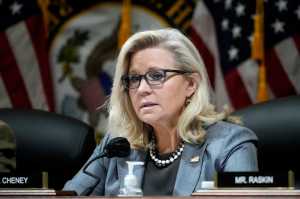


 This is horrifying. We have too many sick, sick individuals on the Supreme Court right now appointed by Republicans appeasing these types of cults. One piece of good news on the SCOTUS front did come out today.





 peej
peej Carissa
 bostonboomer
 dakinikat
 ecocatwoman
 mablue2
 Mama Lopez
 peggysue22
 quixote
 skydancingguestblogger
 Mona (aka Wonk the Vote)



 Sky Dancing
Recent Comments