
The likely final public hearing of the House committee investigating the Jan. 6, 2021, attack on the U.S. Capitol is expected to highlight newly obtained Secret Service records showinghow President Donald Trump was repeatedly alerted to brewing violence that day, and he still sought to stoke the conflict, according to three people briefed on the records.
During Thursday’s hearing, the committee plans to share new video footage and internal Secret Service emails that appear to corroborate parts of the most startling inside accounts of that day, said the people briefed, who, like others who spoke to The Washington Post, spoke on the condition of anonymity to discuss sensitive records and conversations. Former White House aide Cassidy Hutchinson testified in June that Trump was briefed on Jan. 6 that some of his supporters were armed for battle, demanded they be allowed into his rally and insisted he wanted to lead them on their march to the Capitol.
Surveillance footage the committee plans to share was taken near the Ellipse that morning before Trump’s speech and shows throngs of his supporters clustered just outside the corralled area for his “Stop the Steal” rally. Secret Service officers screened those entering who sought to get closer to the stage. Law enforcement officials who were monitoring video that morning spotted Trump supporters with plastic shields, bulletproof vests and other paramilitary gear, and some in the Secret Service concluded they stayed outside the rally area to avoid having their weapons confiscated, according to people familiar with the new records.
Other internal emails likely to be revealed at the hearing further buttress accounts about staff members warning Trump about the risk and then the reality of violence that day, as he continued to press nervous Secret Service agents to take him to the Capitol to join his supporters marching there, the three people said. After being alerted to violence erupting at the Capitol when he returned to the White House, Trump tweeted criticism of Vice President Mike Pence for not blocking the certification of the election, whipping up supporters who had already trampled over security barricades and were battling police to break into the halls of Congress.
The newly obtained Secret Service records are just part of a larger hearing in which the committee hopes to summarize and remind the American public of all the ways Trump is said to have played a central role in fomenting a violent insurrection at the Capitol, one of the most brutal attacks on democracy in U.S. history, according to multiple people briefed on the evidence and committee plan.
Finally Friday Reads: J6 Committee Finale
Posted: October 14, 2022 Filed under: just because | Tags: Capitol insurrection, House January 6 Committee, Republicans are dangerous liars, Trump stolen documents, Trump subpoena 14 Comments Good Day Sky Dancers!
I admit to needing my support dog Temple and her support Kitty Kristal to get through the last of the January 6 Committee’s hearings. Cassiday Hutchinson’s testimony continues to frame the narrative of how Trump planned and carried out his attempted insurrection. Over 30 of Trump’s cronies testified simply by exercising their fifth amendment right. That was one of two clips that really was irritating. The second was a series of statements made by Trump that made his weird cadence so obvious it hurt my ears worse than country music. The scene stealer for the day was Leader Pelosi, whose daughter was filming a documentary and captured the senate and house leadership in their hidey-hole at Fort McNair.
BB pointed out the presence of Republican Louisiana Congressman Steve “Sleazy” Scalise because I was so fixated on watching Senate Minority Leader McConnell’s expression. It’s significant for several reasons. First, he was standing behind McConnell while Leader Pelosi was trying to figure out how to get the Virginian and Maryland National Guard to the Capitol. You could tell it was early in the insurrection because as she spoke to the Governor of Virginia, you could see the mob breaking windows to surge into the Capitol building on a TV screen in the room.
The second reason it’s very important is that Scalise and other Republicans insisted that Pelosi tried to slow down the call to get the Guard a little over a year later. At the same time, we know the only person ignoring that duty was Trump himself.
This is the same guy who once called himself David Duke without the baggage. Steve appears to forget that Italians and Sicilians weren’t considered white in this country for a long time. He even forgets they did field work alongside black Americans in Louisiana. They kept to themselves and spoke their native language for a long time. One of the largest lynchings in New Orleans happened to eleven Italian men who were in the wrong place at the wrong time in 1891. Every time I remember his self-appellation, I remember that not so long ago, the likes of David Duke would’ve been happy to lynch him.

Colored figures of the birds of the British Islands / issued by Lord Lilford.. London :R. H. Porter,1885-1897
Today’s Republicans are genuinely unable to speak the truth. Senator Liz Cheney of Wyoming is now telling everyone who will listen to vote a straight Democratic ticket rather than lose our democracy. She didn’t make it through the republican congressional primary in Wyoming. Cheney and Adam Kinzinger will be out of Congress after the elections. Kinzinger and Cheney will no longer be able to sit on the Committee should it continue after the elections.
Trump had one of those days yesterday after the January 6 Committee unanimously issued a subpoena for his appearance at the end of that hearing. Earlier in the morning, SCOTUS denied “Trump’s request to allow a special master in the Mar-a-Lago case to review classified documents.” This op-ed is written by Jeff Greenfield for Politico.
It was essentially two-and-a-half hours of leadup to the final moment of the Jan. 6 hearing. Donald Trump, in the words of Vice Chair Liz Cheney, had a “premeditated plan to declare the election was fraudulent and stolen before Election Day”; he knew he had lost and fed his base endless lies about it; he welcomed a siege of the Capitol and did nothing to stop it. And because, in Cheney’s words, the “cause of Jan. 6th was one man… his state of mind, his intent, his motivations…,” his testimony was required.
With that, the committee unanimously voted to subpoena the former president, ensuring the day’s headline news.
It is almost surely a symbolic act. The odds that Trump will enthusiastically appear to make his case is roughly equivalent to Herschel Walker’s admittance into Mensa, and the committee’s writ will expire by year’s end, long before a court fight over the subpoena would be resolved. While it may make for full employment for cable news legal experts, it also has the potential to overshadow the most striking revelations from today’s hearing — that the Secret Service had days of advance knowledge about the potential for violence at the Capitol, as well as the steely resolve of Speaker Nancy Pelosi, who reached out for help in combatting the violence as it was happening. (Her conduct also makes a strong case that age is not necessarily a disabling quality in a leader.)
I still believe the actions of Nancy Pelosi were a big deal in the hearing presentation. This is especially true given the events unfolding around her. It truly should put down the old adage that women do not have the “steely resolve” to be leaders under pressure.
 Still, the unsigned SCOTUS decision is likely a bigger blow to Trump in the long run.
… the U.S. Supreme Court turned down Trump’s request to allow a special master in the Mar-a-Lago case to review classified documents. The unsigned order involved a relatively narrow dispute, but the lack of any dissents suggests that the court may not give Trump the protection he will seek from the Justice Department, should it end up indicting Trump for violating one or more federal laws. For all of the legal landmines in Trump’s path — breaking Georgia’s laws on election interference, a possible contempt citation if he refuses to comply with today’s subpoena — the Mar-a-Lago case remains the most damaging to Trump, especially considering that at different times, he has more or less acknowledged breaking one or more of the laws regarding federal documents.
The Republicans are trying to make hay with the bad news on inflation. This inflation is due to the Saudi manipulation of the oil market and the Putin invasion of Ukraine. The worst inflation resides in the core elements of oil, gas, and food. This is a worldwide problem, meaning none came from us or any policy. This was the third thing that Greenfield spoke to if you’re interested.
 Meanwhile, Trump only appears to have one condition to testify before the Committee. This is via The Daily Beast’s Zachary Petrizzo.
After the Jan. 6 committee unanimously voted in favor of subpoenaing former President Donald Trump, he’s been telling those in his orbit he’s not opposed to the idea. “The former president has been telling aides he favors doing so, so long as he gets to do so live, according to a person familiar with his discussions,” The New York Times’ Maggie Haberman reported on Thursday evening. “However, it is unclear whether the committee would accept such a demand.” Not everyone in Trump’s circle is convinced that him testifying would be a wise idea, however. “He should not,” a Trump adviser who speaks regularly with the former president told The Daily Beast on Thursday evening. A Trump spokesperson didn’t immediately return The Daily Beast’s request for comment. Taking to Truth Social, Trump said he will share his response to the subpoena Friday morning, while claiming the committee is “a giant scam, presided over by a group of Radical Left losers, and two failed Republicans.”
Trump did “lash out” this morning. This is from The Hill.
Former President Trump on Thursday dismissed a House committee’s vote to subpoena him for testimony about the events of Jan. 6, 2021, as a publicity stunt.
“Why didn’t the Unselect Committee ask me to testify months ago?” Trump posted on Truth Social shortly after the House panel investigating the Capitol riots on Jan. 6 voted to subpoena him.
“Why did they wait until the very end, the final moments of their last meeting? Because the Committee is a total ‘BUST’ that has only served to further divide our Country which, by the way, is doing very badly – A laughing stock all over the World?” Trump continued.
He’s so predictable!

An illustration of the largest flower in the world. Its name is Rafflesia Arnoldii, and it grows in the rainforests of the Philippines.
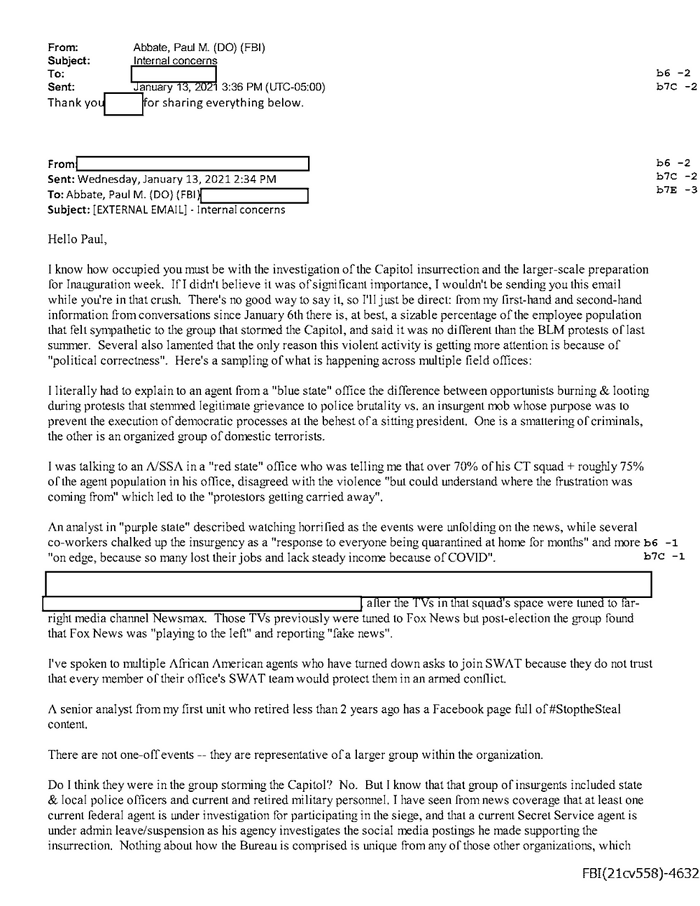
This is the other story that was big news for me. NBC News reports, “FBI official was warned after Jan. 6 that some in the bureau were ‘sympathetic’ to the Capitol rioters. “There are definitely varying degrees of enthusiasm from agents across the country,” a source told NBC News.”
A week after the Jan. 6 attack, an email landed in a top FBI official’s inbox expressing concern that some bureau employees might not be particularly motivated to help bring to justice the rioters who stormed the U.S. Capitol and threatened lawmakers’ lives.
“There’s no good way to say it, so I’ll just be direct: from my first-hand and second-hand information from conversations since January 6th there is, at best, a sizable percentage of the employee population that felt sympathetic to the group that stormed the Capitol,” and that it was no different than the Black Lives Matter protests of the summer of 2020, the person wrote in an email to Paul Abbate, who is now the No. 2 official at the bureau. “Several also lamented that the only reason this violent activity is getting more attention is because of ‘political correctness.’”
The email, recently disclosed publicly in response to a Freedom of Information Act request, reflects an issue that’s been hanging over the Jan. 6 investigation since it began: the notion that there are some in the bureau who weren’t, and aren’t, particularly driven to bring cases against the Capitol rioters.
The content of the full email, which includes a reference to “my first unit,” coupled with the fact that Abbate replied suggests that the sender, whose name is redacted, was likely someone plugged into the bureau or a former agent. The email was labeled external, indicating it was not sent from an active bureau account.
“I literally had to explain to an agent from a ‘blue state’ office the difference between opportunists burning and looting during protests that stemmed legitimate grievance to police brutality vs. an insurgent mob whose purpose was to prevent the execution of democratic processes at the behest of a sitting president,” the person wrote to Abbate. “One is a smattering of criminals, the other is an organized group of domestic terrorists.”
The person also wrote that an official in one FBI office in a “red state” said that more than 70% of that office’s counterterrorism squad and about three-quarters of its agent population disagreed with the violence, “but could understand where the frustration was coming from.”
In his response, Abbate wrote: “Thank you [redacted] for sharing everything below.”

Chrysanthemes Dautomne flower, Charles Antoine Lemaire
Illustrations extracted from Illustration horticole
Published 1854-1896
Christopher Wray has some explaining to do. And so does the Secret Service, according to this article in The Daily Beast. David Rothkopf writes, “ The Jan. 6 Committee Gave Us Some Bad News About the Secret ServiceRather than presiding over an intelligence failure, they actually actively enabled the insurrection to take place, with some among their ranks content to look the other way.”
The Secret Service has too many secrets. The Federal Bureau of Investigation requires a thorough investigation.
These are among the most striking conclusions that emerged Thursday from the last public meeting of Congress’s Jan. 6 committee. Laying out its meticulously crafted case against former President Donald Trump for leading an insurrection against the government he had sworn an oath to protect, the committee made it clear that there were many targets that warranted further investigation. Not least of these were the two law enforcement agencies that had long prided themselves on being among the U.S. government’s most shining examples of integrity and service.
…
The real culmination of the inquiry must be left to the Sphinx-like Department of Justice, whose silence might reveal its commitment to the secrecy that should surround an historically significant investigation. Or that silence might be followed by inaction. We just cannot know at this point, even though the Jan. 6 committee’s revelations made it clear that inaction in the face of the evidence that exists would be one of the greatest miscarriages of justice in U.S. history and would set a dangerous precedent, leaving our entire system at risk.
But there were other disturbing threads that emerged from the congressional inquiry that themselves appeared to require their own independent inquiry. Several of these concern the seeming existence of what might be called the “dark state.” This is not the conspiracy theory fantasy spun by the far right about a “deep state” permanent government that was foiling the will of the people: That was always such a stalking horse, a concept that would enable MAGA officials to root out public servants who placed fealty to the Constitution ahead of loyalty to a political party. Rather it was a real loose alliance among Trump allies in the government who were willing to set aside the rule of law in the service of Trump himself.
At the core of this movement were officials within key government agencies—including the Department of Homeland Security and within it the Secret Service, the FBI, the Department of Defense, the Department of Justice and the intelligence community—who had been placed in positions of responsibility because they could be counted upon to bend the rules for Trump.
That’s a lot to read and think about, so I’ll leave BB to pick up what breaks as the day goes on tomorrow. You can also share articles and thoughts below. I found it a very emotionally exhausting day. What have they done to our democracy based on diversity and rights?
What’s on your reading and blogging list today?
Thursday Reads and Live Blog for Jan. 6 Committee Hearing
Posted: October 13, 2022 Filed under: just because 26 CommentsGood Morning!!
The probable final January 6 Committee Hearing will be held today at 1PM. I hope it will be a blockbuster. I’m disappointed that the committee hasn’t held more televised hearings. I know there will be a final report, but how many people will actually read it? At least we now know that Merrick Garland is actively pursuing investigations of Trump and his crimes. The stolen documents case could more easily lead to an indictment than the case against Trump for inciting the insurrection.
What to Expect from the January 6 Committee Hearing.
The New York Times: House Jan. 6 Panel Plans a Sweeping Summation of Its Case Against Trump.
The House committee investigating the Jan. 6 attack is planning on Thursday to present a sweeping summation of its case against former President Donald J. Trump at what could be its final public hearing, seeking to reveal damning new evidence about Mr. Trump’s state of mind and his central role in the effort to overturn the 2020 election.
Armed with new witness interviews and unreleased footage of the violence of Jan. 6, 2021, the panel is planning to argue that Mr. Trump’s lies about widespread voter fraud inspired far-right extremists and election deniers who present a continuing threat to American democracy.
Unlike previous hearings, which focused on specific aspects of Mr. Trump’s attempts to overturn the election, members will attempt to portray the entire arc of the plan, demonstrating Mr. Trump’s involvement in every step — even before Election Day.
The hearing comes at a pivotal moment, weeks before midterm elections in which control of Congress is at stake and as time is running out for the panel to complete its work, including an extensive report on its findings. Should Republicans succeed in their drive to win the House majority, they would be all but certain to disband the committee in January and shut down any official accounting by Congress for the largest attack on the Capitol in centuries.
On the Secret Service records obtained by the committee:
To bolster its case, the committee has obtained more than 1.5 million pages of documents and communications from the Secret Service that include details of how agents blocked Mr. Trump’s attempts to join his supporters at the Capitol even after they had begun the assault.
The communications lay out how Secret Service personnel attempted to find a route to take Mr. Trump to the Capitol in a presidential S.U.V., and how those plans were ultimately rebuffed amid the chaos.
Secret Service staff initially attempted to accommodate Mr. Trump’s wishes, but supervisors at the agency expressed alarm, and District of Columbia police declined to block off intersections for his motorcade as a mob of his supporters began attacking and injuring dozens of police officers, according to the communications, which were described by two people familiar with their contents.
Robert Engel, Mr. Trump’s lead agent, broke the news to Mr. Trump inside the vehicle, prompting an angry outburst. Afterward, a Secret Service supervisor followed up to ensure Mr. Trump would not be joining the mob at the Capitol, the communications show.
There’s much more at the NYT link.
From The Washington Post’s Carol Leonnig and Jacqueline Alemany: New evidence to show Trump was warned of violence on Jan. 6.
Kyle Cheney at Politico: ‘Clear and present danger’: Jan. 6 committee to describe lingering Trump threat.
Donald Trump’s bid to subvert the 2020 election didn’t end on Jan. 6, 2021, or even when he left office. Since then he’s gone to even further lengths to delegitimize his defeat.
That ongoing effort will be a centerpiece of the Jan. 6 select committee’s next — and perhaps final — televised pitch to Americans on Thursday.
“Tune in for our discussion of Trump’s clear and present danger presented to democracy and freedom in America by a movement that he’s galvanized,” panel member Rep. Jamie Raskin (D-Md.) said this week at a virtual People for the American Way event.
The panel intends to focus on evidence that Trump has “consistently and increasingly” been using rhetoric “that we knew caused violence on Jan. 6,” Rep. Liz Cheney (R-Wyo.) told reporters recently. Cheney cited recent comments by U.S. District Court Judge Amy Berman Jackson in which she upbraided elected Republicans for continuing to indulge “one man, who knows full well that he lost, instead of the Constitution he was trying to subvert.”
The select committee’s closing pitch to Americans will draw on all aspects of its more than yearlong probe. It’s expected to feature evidence that Trump’s allies were pushing him to declare victory on Election Day 2020 even before the votes were counted, and that Trump was warned of the unfolding violence at the Capitol before he tweeted an inflammatory attack on then Vice President Mike Pence.
By contending that even amid the wreckage of Jan. 6, Trump continued to plot ways to remain in power, the hearing will also function as a segue of sorts to the criminal case that federal prosecutors are piecing together — bolstered by the recent issuance of dozens of grand jury subpoenas and court-authorized searches of some of Trump’s top allies.
The committee has long emphasized its distinct mission from prosecutors — to inform the public and develop legislative recommendations to prevent future attacks on the peaceful transfer of power — but has used its platform to press the Justice Department to pursue potential crimes among Trump’s inner circle.
The Latest on the Stolen Documents Investigation
Devlin Barrett and Josh Dawsey at The Washington Post: Trump worker told FBI about moving Mar-a-Lago boxes on ex-president’s orders.
A Trump employee has told federal agents about moving boxes of documents at Mar-a-Lago at the specific direction of the former president, according to people familiar with the investigation, who say the witness account — combined with security-camera footage — offers key evidence of Donald Trump’s behavior as investigators sought the return of classified material.
The witness description and footage described to The Washington Post offer the most direct account to date of Trump’s actions and instructions leading up to the FBI’s Aug. 8 search of the Florida residence and private club, in which agents were looking for evidence ofpotential crimes including obstruction, destruction of government records or mishandling classified information.
The people familiar with the investigation said agents have gathered witness accounts indicatingthat, after Trump advisers received a subpoena in May for any classified documents that remained at Mar-a-Lago, Trump told people to move boxes to his residence at the property. That description of events was corroborated by the security-camera footage, which showed people moving the boxes,said the people, who spoke on the condition of anonymity to discuss an ongoing investigation….
The employee who was working at Mar-a-Lago is cooperating with the Justice Department and has been interviewed multiple times by federal agents, according to the people familiar with the situation, who declined to identify the worker.
In the first interview, these people said, the witness denied handling sensitive documents or the boxes that might contain such documents. As they gathered evidence, agents decided to re-interview the witness, and the witness’s story changed dramatically, these people said. In the second interview, the witness described moving boxes at Trump’s request.
The witness is now considered a key part of the Mar-a-Lago investigation, these people said, offering details about the former president’s alleged actions and instructions to subordinates that could have been an attempt to thwart federal officials’ demands for the return of classified and government documents.
The New York Times has the name of the witness.
Maggie Haberman and Alan Feuer: Trump Aide Was Seen on Security Footage Moving Boxes at Mar-a-Lago.
A long-serving aide to former President Donald J. Trump was captured on security camera footage moving boxes out of a storage room at Mar-a-Lago, Mr. Trump’s residence in Florida, both before and after the Justice Department issued a subpoena in May demanding the return of all classified documents, according to three people familiar with the matter.
The footage showed Walt Nauta, a former military aide who left the White House and then went to work for Mr. Trump at Mar-a-Lago, moving boxes from a storage room that became a focus of the Justice Department’s investigation, according to the people briefed on the matter. The inquiry has centered on whether Mr. Trump improperly kept national security records after he left the White House and obstructed the government’s repeated efforts to get them back.
As part of its investigation, the Justice Department has interviewed Mr. Nauta on several occasions, according to one of the people. Those interviews started before the F.B.I. executed a search warrant at Mar-a-Lago on Aug. 8 and carted off more than 11,000 documents, including about 100 that bore classification markings. Mr. Nauta has answered questions but is not formally cooperating with the investigation of Mr. Trump’s handling of the documents….
A top Justice Department official told Mr. Trump’s lawyers in recent weeks that the department believed he had still not returned all the documents. It is unclear if the boxes that were moved were among the material later retrieved by the F.B.I.
The National Archives, the federal agency that oversees presidential records, spent much of 2021 attempting to retrieve boxes of records that its officials had been told were in the White House residence at the end of the Trump presidency.
One more documents story from Asawin Suebsaeng and Adam Rownsley at Rolling Stone: Trump Threatened to Out Confidential Sources From Russia Investigation.
DONALD TRUMP IN the final days of his presidency repeatedly threatened to out government sources involved in the Trump-Russia investigation, an anti-Deep State revenge fantasy he still obsesses over to this day, according to two former senior Trump aides and another person familiar with the matter.
One of these sources tells Rolling Stone that in the days after the Jan. 6 Capitol riot, the then-president, sometimes while brandishing pieces of paper, would loudly complain that none of the identifying facts in the highly sensitive Russia documents should be blacked-out. Trump would insist, the source says, that it should “all be out there” so that the American people could see the truth of who “did it” to the president.
Ultimately, top intelligence officials and other Trump lieutenants talked him out of publicizing the sources’ identities before he left the White House, the sources say. Instead, Trump’s team bargained him down to vetting a series of heavily redacted reports that they argued would help safeguard the work and safety of Russia-related informants.
But a third source familiar with the situation says that this obsession with outing the confidential sources is ongoing. The former president, the source says, still sporadically talks about the need to get “the names” out into the public record. A Trump spokesperson did not immediately respond to Rolling Stone’s request for comment.
As Trump faces accusations that he hoarded sensitive classified documents at his private residence in Florida, the last-minute battle over redactions highlights how his disregard for security concerns at times has even rattled aides close to him.
Trump’s threats to out sources were part of a broader push during the chaotic end of his presidency. In December of 2020, as the odds against a successful overturning of the election grew longer, Trump and his chief of staff Mark Meadows pushed the Justice Department to declassify a binder full of records related to the FBI’s 2016 Russia investigation. In his memoir, Meadows described himself in the final hours of the Trump presidency going line by line through the “notes, memos and emails” in the binder to ensure it “would not inadvertently disclose sources and methods.”
Trump tried to declassify documents related to the Russia investigation.
With hours left before President Joe Biden took office in Jan. 2021, the White House sent a presidential memo to the Director of National Intelligence, CIA director, and acting Attorney General. The memo ordering the declassification of the binder references concern from the FBI, which stated its “continuing objection to any further declassification” of the binder on the grounds that specific passages “included Intelligence Community equities.” In an apparent nod to the efforts to walk the then-president back from outing “the names,” the memo says his declassification order “does not require the disclosure of certain personally identifiable information.”
The order also exempts from declassification any material that “must be protected from disclosure pursuant to orders of the Foreign Intelligence Surveillance Court,” according to the memo.
At the same time, Trump gave conservative reporter John Solomon access to some of the documents. In a statement to Rolling Stone, Solomon says that on January 19, 2021, Trump allowed him “on two occasions, to briefly review a stack of documents that I was told were the declassified documents” and that he received “a small subset of the declassified documents” from the Justice Department in the mail at the time.
Are you planning to watch the hearing? If so, feel free to post your reactions here. We’d love to hear from you.
Tuesday Reads
Posted: October 11, 2022 Filed under: Afternoon Reads, Crime, Donald Trump, just because | Tags: Elon Musk, impeachment, Merrick Garland, Russia, Secret Service, Trump indictment, Twitter, Ukraine war, Vladimir Putin 21 Comments
The First Animals, by Franz Marc
Good Afternoon!!
We have gone through about 7 years of insanity with Donald Trump, first as a candidate, then as “president,” and now former “president.” At this point, it’s pretty clear that we’ll never be rid of him until he “shuffles off this mortal coil.”
During those years, I always turned to Twitter for the latest news and commentary from journalists and just plain folks. Trump made Twitter occasionally irritating, but now we face what could be an even great threat to the social media platform–a takeover by Elon Musk. And what’s coming could be even worse than I expected.
Musk plans to bring Trump back, and then there this even worse news from Vice: Elon Musk Spoke to Putin Before Tweeting Ukraine Peace Plan: Report.
Elon Musk spoke directly with Russian President Vladimir Putin before tweeting a proposal to end the war in Ukraine that would have seen territory permanently ceded to Russia, it has been claimed.
In a mailout sent to Eurasia Group subscribers, Ian Bremmer wrote that Tesla CEO Musk told him that Putin was “prepared to negotiate,” but only if Crimea remained Russian, if Ukraine accepted a form of permanent neutrality, and Ukraine recognised Russia’s annexation of Luhansk, Donetsk, Kherson and Zaporizhzhia.
According to Bremmer, Musk said Putin told him these goals would be accomplished “no matter what,” including the potential of a nuclear strike if Ukraine invaded Crimea, which Russia annexed in 2014. Bremmer wrote that Musk told him that “everything needed to be done to avoid that outcome.”
Last week, Musk posted essentially the same points on Twitter, although he suggested that the referendums in the annexed territories slammed as sham votes by Ukraine and the West be redone under supervision by the United Nations….
The Ukrainian response to Musk’s Twitter peace proposal was succinct – one diplomat told him to “fuck off,” while Ukrainian President Volodymyr Zelenskyy posted his own Twitter poll.
Meanwhile the Kremlin welcomed Musk’s “positive” proposal to end the war, while his tweets were also cited by Russian state media.
Not only will we never be rid of Trump; The new owner of Twitter apparently be channeling Putin. Terrific.
Yesterday, Russia escalated its attacks on civilians following Ukraine’s damage to a bridge connecting Russia with Crimea. The Kyiv Independent: What’s behind Russia’s unusually big missile attack on Ukraine?
Russia lashed out on Oct. 10, striking many Ukrainian cities with 84 missiles and 24 exploding drones.
The places they hit were all civilian — multiple power plants but also a children’s playground in the center of Kyiv. Most strikes seemed to be timed to the Monday morning rush hour, as if trying to kill as many commuters as possible.
From a human rights point of view, the attacks were inexcusable and will likely be ruled as war crimes. From the battlefield perspective, the Russian armed forces just dropped hundreds of millions of dollars to achieve basically nothing….
Why has Russia chosen to do this? What was it trying to accomplish? And how long can it keep it up?
Edward Landseer’s Monarch of the Glen
The facile answer is that Russia was retaliating for the partial destruction of the Kerch Strait bridge on Oct. 8. But that’s just not true. It’s been hitting civilian targets since Feb. 24. Ukraine’s intelligence said that the missile strikes had been planned since the start of October.
“Strategic and long-range aviation units received orders to prepare for massive missile attacks,” the General Intelligence Directorate said in a statement. “The targets were objects of critical civilian infrastructure and the central regions of densely populated Ukrainian cities.”
The goal was to sow panic among Ukrainians. But that wasn’t the only reason. Putin also needed to appease the angry hardliners who want Russia to win the war. The war hawks demanded a massive strike just like this, in response to Russia’s humiliating losses over the past two months, to which the bridge was the exclamation point. Some of these hardliners are driven more by emotion than sense. And they will want a repeat performance.

Read the rest at the link.
Karen De Young at The Washington Post: Ukraine war at a turning point with rapid escalation of conflict.
In little more than a month, the war in Ukraine has turned abruptly from a grueling, largely static artillery battle expected to last into the winter, to a rapidly escalating, multilevel conflict that has challenged the strategies of the United States, Ukraine and Russia.
Russia’s launch of massive strikes on civilian infrastructure Monday in about a dozen Ukrainian cities far from the front lines brought shock and outrage. The strikes, which Secretary of State Antony Blinken described as “wave after wave of missiles” struck “children’s playgrounds and public parks,” left at least 14 killed and nearly 100 wounded, and cut electricity and water in much of the country….
The attacks were the latest of many head-spinning events — from Ukrainian victories on the ground to Russian President Vladimir Putin’s threat of nuclear weapons use — that have changed the nature and tempo of the war in recent weeks, and raised questions about whether the United States and its partners may have to move beyond the concept of helping Ukraine defend itself, and instead more forcefully facilitate a Ukrainian victory.
So far, the U.S. supply effort has been deliberative and process-oriented in the kinds of weapons it provides, and the speed at which it provides them, so as not to undercut its highest priority of avoiding a direct clash between Russia and the West. That strategy is likely to be part of the agenda at Tuesday’s emergency meeting of G7 leaders, and a gathering of NATO defense ministers later in the week.
U.S. officials continue to express caution about precipitous moves. “Turning points in war are usually points of danger,” said a senior Biden administration official, one of several U.S. and Ukrainian officials who spoke on the condition of anonymity to discuss policy deliberations. “You can’t predict what’s around the corner.”
Russian leaders have cited their own turning point. Viktor Bondarev, head of the foreign affairs committee of Russia’s upper house of parliament wrote in a Telegram post on Monday that the strikes were the beginning of “a new phase” of what the Kremlin calls its“special military operation” in Ukraine, with more “resolute” action to come.

Two Owls by Gustave Doré (1870)
Max Fisher at The New York Times: Bombing Kyiv Into Submission? History Says It Won’t Work.
Kyiv and other Ukrainian cities, follows a long line of wartime leaders who have sought to cow their adversaries by bombing enemy capitals.
Ever since Nazi Germany’s bombardment of London in World War II, enabled by the first long-range missiles and warplanes, nearly every major war has featured similar attacks.
The goal is almost always the same: to coerce the targeted country’s leaders into scaling back their war effort or suing for peace.
It typically aims to achieve this by forcing those leaders to ask whether the capital’s cultural landmarks and economic functioning are worth putting on the line — and also, especially, by terrorizing the country’s population into moderating their support for the war.
But for as long as leaders have pursued this tactic, they have watched it repeatedly fail.
More than that, such strikes tend to backfire, deepening the political and public resolve for war that they are meant to erode — even galvanizing the attacked country into stepping up its war aims.
The victorious allies in World War II did emphasize a strategy of heavily bombing cities, which is part of why countries have come to repeat this so many times since. Cities including Dresden and Tokyo were devastated, killing hundreds of thousands of civilians and forcing millions into homelessness.
Still, historians generally now argue that, even if that did play some role in exhausting those countries, it was largely because of damage to German and Japanese industrial output rather than the terror it caused. Axis countries were also aggressive in bombing enemy cities, casting further doubt on notions that the strategy could be a decisive factor on its own.
Read the rest at the NYT if you’re interested.
With the January 6 Committee hearing coming up on Thursday, this story on the Secret Service phones by NBC’s Julia Ainsley is interesting: Secret Service agents were denied when they tried to learn what Jan. 6 info was seized from their personal cellphones.
Secret Service agents asked the agency for a record of all of the communications seized from their personal cellphones as part of investigations into the events of Jan. 6, 2021, but were rebuffed, according to a document reviewed by NBC News.
The Secret Service’s office that handles such requests, the Freedom of Information Act Program, denied the request, in which agents invoked the Privacy Act to demand more information about what had been shared from their personal devices.
The request was made in early August, just after news came to light that both Congress and the Department of Homeland Security’s inspector general were interested in obtaining text messages of Secret Service agents that had been erased as part of what the agency said was a planned upgrade.
“This letter is the final response to your Privacy Act inquiry submitted on Aug. 4, 2022, for information pertaining to the release of personal cell phone information and/or other personal identifiable information (PII) by the U.S. Secret Service,” said the letter, dated last Wednesday.
“The agency has determined that regulation does not require a records disclosure accounting to be made in connection with your request,” the letter continued.
The agents’ effort to find out through an FOIA request what records were seized and the subsequent denial of the request underscore a tension between rank-and-file Secret Service agents and the agency’s leadership over what communications should be shared with investigators.

Whistlejacket, by George Stubbs
At The Washington Post, Mariana Sotomayor writes about a another new book on the Trump impeachments: New book details how McCarthy came to support Trump after Jan. 6.
In the weeks after the Senate voted to acquit Donald Trump of a charge related to the Jan. 6, 2021, insurrection, House Minority Leader Kevin McCarthy (R-Calif.) was seething.
Frustrated that Trump would not talk to him, stressed that his chance to become House speaker could be in jeopardy and furiousthat a trusted confidante had publicly disclosed a tense call between him and Trump, McCarthy snapped.
“I alone am taking all the heat to protect people from Trump! I alone am holding the party together!” he yelled at Rep. Jaime Herrera Beutler (R-Wash.) during a previously undisclosed meeting in McCarthy’s office on Feb. 25, 2021. “I have been working with Trump to keep him from going after Republicans like you and blowing up the party and destroying all our work!”
Stunned by McCarthy’s anger, Herrera Beutler began to cry. Through tears, she apologized for not telling him ahead of time that she had confirmed to the media details of a call McCarthy made to Trump on Jan. 6, 2021, urging him to tell his supporters to leave the U.S. Capitol.
“You should have come to me!” McCarthy said. “Why did you go to the press? This is no way to thank me!”
“What did you want me to do? Lie?” Herrera Beutler shot back. “I did what I thought was right.”
The tense meeting between Republican lawmakers is detailed in the new book “Unchecked: The Untold Story Behind Congress’s Botched Impeachments of Donald Trump,” by Washington Post reporter Karoun Demirjian and Politico reporter Rachael Bade, a copy of which The Post obtained ahead of its release next week. Several excerpts detail McCarthy’s state of mind from Election Day 2020 to the origination of the select committee investigating the Jan. 6 insurrection.
“McCarthy’s tirade against Herrera Beutler was just the start of what would become a GOP-wide campaign to whitewash the details of what happened on January 6 in the aftermath of the second impeachment,” the authors write.
There are more revelations about McCarthy in the WaPo story. Basically, McCarthy’s dream is to to become Speaker of the House and in pursuit of that goal he will suck up to Trump as much has he has to.
Lastly, at The Atlantic, Franklin Foer writes about why Merrick Garland will indict Trump: The Inevitable Indictment of Donald Trump.
Foer writes that, although Garland is a cautious, methodical person, he (Foer) is convinced that Trump will be indicted. Here’s why he thinks that. You’ll need to read the whole thing, but here’s an introduction to the arguments.
I have been observing Garland closely for months. I’ve talked with his closest friends and most loyal former clerks and deputies. I’ve carefully studied his record. I’ve interviewed Garland himself. And I’ve reached the conclusion that his devotion to procedure, his belief in the rule of law, and in particular his reverence for the duties, responsibilities, and traditions of the U.S. Department of Justice will cause him to make the most monumental decision an attorney general can make….
The Kongouro from New Holland, by _(Kangaroo) George Stubbs
Before I lay out the reasons I believe I am correct in this assessment, I want to discuss why it is entirely possible I am not. The main reason to disbelieve the argument that Garland is preparing to indict is simple: To bring criminal charges against a former president from an opposing political party would be the ultimate test of a system that aspires to impartiality, and Garland, by disposition, is repelled by drama, and doesn’t believe the department should be subjected to unnecessary stress tests. This unprecedented act would inevitably be used to justify a cycle of reprisals, and risks turning the Justice Department into an instrument of never-ending political warfare.
And an indictment, of course, would merely be the first step—a prelude to a trial unlike any this country has ever seen. The defendant wouldn’t just be an ex-president; in all likelihood, he’d be a candidate actively campaigning to return to the White House. Fairness dictates that the system regard Trump as it does every other defendant. But doing so would lead to the impression that he’s being deliberately hamstrung—and humiliated—by his political rivals.
Garland is surely aware that this essential problem would be evident at the first hearing. If the Justice Department is intent on proving that nobody is above the law, it could impose the same constraints on Trump that it would on any criminal defendant accused of serious crimes, including limiting his travel. Such a restriction would deprive Trump of one of his most important political advantages: his ability to whip up his followers at far-flung rallies.
In any event, once the trial began, Trump would be stuck in court, likely in Florida (if he’s charged in connection with the Mar-a-Lago documents matter) or in Washington, D.C. (if he’s charged for his involvement in the events of January 6). The site of a Washington trial would be the Prettyman Courthouse, on Constitution Avenue, just a short walk from the Capitol. This fact terrified the former prosecutors and other experts I talked with about how the trial might play out. Right-wing politicians, including Trump himself, have intimated violence if he is indicted.
Trump would of course attempt to make the proceedings a carnival of grievance, a venue for broadcasting conspiracy theories about his enemies. The trial could thus supply a climactic flash point for an era of political violence. Like the Capitol on January 6, the courthouse could become a magnet for paramilitaries. With protesters and counterprotesters descending on the same locale, the occasion would tempt street warfare.

Head over the Atlantic to read the rest.
What are your thoughts on these stories? What other news are you following today?
Mostly Monday Reads: My Body, My Choice
Posted: October 10, 2022 Filed under: just because | Tags: #riseup4abortion, Abortion Art, Artists for Abortion rights, Just say no to Religious control of health, Women's Moral Agency 31 Comments
Good Day Sky Dancers!
Happy Indigenous Peoples Day!
Many of you know that my oldest daughter is an Ob/Gyn. She’s practicing in a Seattle suburb with the kind of hospitals available to most folks in rich suburbs. She delivers a lot of babies. She’s also in Washington State, which means the state has a Constitution that respects a woman’s right to decide about her health. However, before she landed there, she practiced in a small hospital closer to the Canadian border in Mt Vernon, WA. The hospital was sold. Her partners there had moved from Georgia to Washington because they were appalled by the idea that they had to have a “room” in the hospital where “God can’t see.” It was where medically necessary abortions happened because it was a Catholic hospital. She was glad to escape the coming of that reality.
I had a high-risk pregnancy with her little sister. She was placenta previa. I had a friend who lost a baby and nearly died over complications as they rushed her on a helicopter from North Platte to Omaha. You can bleed to death. I delivered my youngest about a month early. Eleven days before she was born, I started bleeding and drove myself to my nice Methodist hospital with my Jewish Neonatologist and Children’s hospital across the street. We came out of that successfully, but the stress of that pregnancy later had me dealing with inoperable 4th stage leiomyosarcoma of the cervix. I still believe I’m the only one known to be cured of this. My nice Episcopalian doctor in the Med school that my daughter later attended found the right chemo to almost kill me but definitely get rid of cancer.

liberaljane.com ·Artist creating art about bodily autonomy and reproductive justice. Follow me online at @LiberalJane!
My insurance company was determined to send me to the local Catholic hospital to deliver. At that point, my husband was a VIP of that very Catholic-heavy insurance company and went to the claims person with my instructions. I told him we’d pay to go to Methodist if he didn’t get the situation changed. He was a VP, so he carried more weight than most. They decided that my condition required special attention since the only neonatologist in Omaha at the time was at Methodist. As you read this, realize the privilege I had getting through all of this. My oldest daughter would later do her residency under that same neonatologist. I delivered both my kids at Methodist Hospital In Omaha.
Why I was so fussy is a story of me while I was still in grad school and a friend was doing his rotation in Ob/Gyn at the Catholic Med School. He attended a woman whose developing fetus had fetal encephalopathy. Let me explain that condition.
The baby had no higher brain functions. It only had a brain stem and therefore had no sentience, nor would it ever have sentience. It would either die in the womb or after birth within a few horrid days or weeks of suffering. A priest came to guilt trip the woman into carrying to term, delivering, etc., so they could baptize what didn’t even have brain activity. He added that then the baby could be harvested. This horrified me. It was a pure view of a woman as a container with no feelings or moral agency. You can see why I wanted to avoid a Catholic Hospital at all costs.

So, this brings me to this Washington Post article today, which is highly relevant to women in rural areas, poor women, and women of color. My daughter lived close to a reservation up in Washington upstate. She is dedicated to serving all women. She and her doulas spent a lot of time with the indigenous women to ensure they had healthy pregnancies and delivery options. She felt that her ability to practice with the new hospital ownership would severely limit her from fulfilling her duties and oath as a board-certified surgeon and OB/GYN. “Spread of Catholic hospitals limits reproductive care across the U.S.. Religious doctrine restricts access to abortion and birth control and limits treatment options for miscarriages and ectopic pregnancies.”
The Supreme Court decision overturning the constitutional right to abortion is revealing the growing influence of Catholic health systems and their restrictions on reproductive services including birth control and abortion — even in the diminishing number of states where the procedure remains legal.
Catholic systems now control about 1 in 7 U.S. hospital beds, requiring religious doctrine to guide treatment, often to the surprise of patients. Their ascendancy has broad implications for the evolving national battle over reproductive rights beyond abortion, as bans against it take hold in more than a dozen Republican-led states.
The Catholic health-care facilities follow directives from the United States Conference of Catholic Bishops that prohibit treatment it deems “immoral”: sterilization including vasectomies, postpartum tubal ligations and contraception, as well as abortion. Those policies can limit treatment options for obstetric care during miscarriages and ectopic pregnancies, particularly in the presence of a fetal heartbeat.

Liberal Jane Illustration
I should also mention that after my youngest was delivered via Caesarian, I had one of those “immoral” sterilizations. I was okay with two daughters and never wanted to go through that again. That surgery was unnecessary just 9 months later. I had a radical Werthein’s hysterectomy. They took everything plus the surrounding lymph nodes. My cancer, at one point, had spread to the lymph nodes. It was, fortunately, not in my bones. My reproductive organs showed dysplasia. This experience sent my oldest daughter in fifth grade to ask what she needed to do to become a doctor. My two years of challenges brought her to the profession. She never backed off from that goal other than her first goal was to get rid of cancer. I would never wish any of this or the surrounding decisions to be made by anyone but the woman with the support of her healthcare givers, and I mean NO ONE. It was my decision to make and no one else’s. I even asked my Doctor if I might require an abortion at some point but was reassured that it probably wouldn’t be necessary.
Anyone who has seen what the Catholic Bishops think about women and pregnancy should be horrified by this article.
“The directives are not just a collection of dos and don’ts,” said John F. Brehany, executive vice president of the National Catholic Bioethics Center and a longtime consultant to the conference of bishops. “They are a distillation of the moral teachings of the Catholic Church as they apply to modern health care.” As such, he said, any facility that identifies as Catholic must abide by them.
The role of Catholic doctrine in U.S. health care has expanded during a years-long push to acquire smaller institutions — a reflection of consolidation in the hospital industry, as financially challenged community hospitals and independent physicians join bigger systems to gain access to electronic health records and other economies of scale. Acquisition by a Catholic health system has, at times, kept a town’s only hospital from closing.
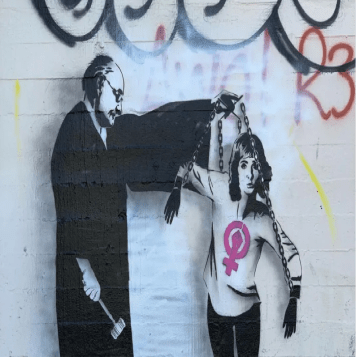
I would never want to live under this regime of “religion,” although I support our religious freedom laws that give everyone there right to practice their beliefs in their life and way. This headline also comes from the Washington Post. “Jewish women sue over Kentucky abortion laws, citing religious freedom.”
Three Jewish women in Kentucky have filed a lawsuit arguing that a set of state laws that ban most abortions violate their religious rights.
The lawsuit, filed in Jefferson Circuit Court in Louisville, is the third such suit brought by Jewish organizations or individuals since the U.S. Supreme Court overturned the right to an abortion in its ruling in Dobbs v. Jackson Women’s Health Organization. In all three suits — the first in Florida, the second in Indiana — the Jewish plaintiffs claim their state is infringing on their religious freedom by imposing a Christian understanding of when life begins.
Under current Kentucky laws, life begins at the moment of fertilization. Another law bans abortion after six weeks when cardiac activity is first detected.
Abortion will be on the ballot next month when Kentuckians decide the fate of a proposed constitutional amendment that would eliminate the right to abortion in the state.
Some Florida clerics also seek court relief from the state’s intrusive abortion laws.
The five separate lawsuits https://tmsnrt.rs/3BBEdIr, filed in Miami-Dade County, claim the state’s ban curtails the clergy members’ ability to counsel congregants about abortion in accordance with their faiths, since Florida law prohibits counseling or encouraging a crime.
The plaintiffs are three rabbis, a United Church of Christ reverend, a Unitarian Universalist minister, an Episcopal Church priest and a Buddhist lama. They asked the court to declare that the state’s abortion law violates Florida and U.S. constitutional protections for freedom of speech and religion.
They also claim the abortion ban violates a Florida religious freedom law that prohibits the government from “substantially burdening” the exercise of religion, unless there is a compelling state interest that cannot be met with fewer restrictions.
We’re even having our own version of “abortion on the ballot” with an uptown State Senate seat in contention.
As New Orleans Democrats, state Reps. Mandie Landry and Royce Duplessis agree on plenty – including the firmly held view that women should have the right to an abortion.
And those views have jumped to the forefront of a closely contested race as the two vie to become the next senator representing Uptown and surrounding neighborhoods.
Landry and Duplessis – whose nearly identical voting records place them among the most progressive members of the conservative-dominated Legislature – are competing in a special election Nov. 8 to fill the seat Karen Carter Peterson vacated in April. Peterson resigned in advance of pleading guilty in federal court to defrauding campaign contributors.
Beginning with her announcement in May, Landry has centered her campaign on abortion rights, attempting to capitalize on anger at the U.S. Supreme Court for ending a woman’s constitutional right to terminate a pregnancy, and the state Legislature’s decision to ban the procedure in Louisiana without exceptions.
Speaking to a group of female students at Tulane Wednesday night, Landry emphasized that she is the only legislator who has defended abortion rights as an attorney and detailed her deep knowledge of abortion law.
“There’s five women in the state Senate, and they’re all anti-choice,” Landry said as the nine students nodded knowingly. “They file a lot of the terrible bills.”

On their Instagram, artist Madeline Horwath’s stickers are being sold to benefit Yellowhammer Fund, funding abortion in Alabama, Mississippi, and the Deep South. (image courtesy the artist)
Yes. Women in Louisiana in the State Senate work hard for the patriarchy in Louisiana. But back to our main article. The expense of maintaining a hospital and providing healthcare to a community increasingly transfers the right to make decisions on reproductive health, making them unavailable.
In Schenectady, N.Y., Ellis Medicine is in talks with the multistate Catholic giant Trinity Health. Last month, in Quad Cities, Iowa, Genesis Health System signed a letter of intent to enter a partnership with MercyOne, also part of Trinity Health. And this semester, Oberlin College had to find a new provider to prescribe contraceptives after outsourcing student health services to a Catholic system that would not provide them.
In rural northeast Connecticut, residents are protesting the prospect of their 128-year-old hospital becoming part of a Catholic system and thepotential impact on reproductive services.
“It would be very troubling to see cutbacks in a state like Connecticut,” said Ian McDonald, a stonemason who opposes the proposed deal between Day Kimball Healthcare in Putnam and Massachusetts-based Covenant Health.
Kyle Kramer, chief executive of Day Kimball Healthcare, said the proposed affiliation with Covenant Health wouldrescue the financially challenged 104-bed hospital.
“Obviously it has connotations,” Kramer said of the proposed move to faith-based ownership. The Catholic directives would “provide guidance,” he said in an interview, while insisting that “theservices that we have provided in the past are the same services that we will continue to provide in the future.”
Kramer did not answer questions in a follow-up email about how contraception and elective sterilizations could continue to be provided under Catholic doctrine if their primary purpose is for birth control. Nor did he specify how emergency obstetric care that could result in terminating a pregnancy might be affected.
Covenant Health spokeswoman Karen Sullivan said in an email that as part of the regulatory process, the Catholic health system is drafting a public response to questions by the state’s Oct. 23 deadline. The system, she said, is committed to “ensuring that the Ethical and Religious Directives are applied thoughtfully and with empathy, compassion and respect for every person we serve.”
Please notice that a woman has been used to Dickwash the patriarchal bullshit. This wonderful piece was written by Frances Stead Sellers and Meena Venkataramanan.
Oh, I have one more something to say before I wrap everything up today.

I haven’t done this for a few years because I’ve been able to cover the $100 annual fee to keep the blog up and running. Social Security thinks I make too much money side-teaching and has pulled my check for two months. So, if you can donate to keep the shop open, please donate to me at Venmo (@dakinikat) or CashAp ($Dakinikat6520, or Zelle (dakinikat). I’d appreciate it!
What’s on your reading or blogging list today?
Lazy Caturday Reads
Posted: October 8, 2022 Filed under: caturday, Donald Trump | Tags: Christopher Kise, Crimea, DOJ, fake heiress, Inna Yashchyshyn, John Solomon, Mar-a-Lago, National Archives, Russia, Russia investigation, special master, Trump stolen documents, Trump Tower, Ukraine, Valeriy Tarasenko 27 Comments
By Emanuele Cavalli (1904-1981)
Happy Caturday!!
Even though we are heading into a 3-day weekend, there is a surprising amount of news today. I’m going to focus on the following stories: Ukraine’s destruction of a bridge that is vital to Russian supply routes; New developments in the Trump stolen documents saga; and someshocking news on that Russian-speaking Ukrainian woman who infiltrated Mar-a-Lago awhile back.
Ukraine War News
CNN: Massive blast cripples parts of Crimea-Russia bridge, in blow to Putin’s war effort.
In a major blow for Russian President Vladimir Putin, a huge explosion has severely damaged the only bridge connecting the annexed Crimean peninsula with the Russian mainland, paralyzing a key supply route for Moscow’s faltering war in Ukraine.
The blast early Saturday caused parts of the Kerch Strait road and rail bridge – opened by Putin himself in 2018 – to collapse, images and video from the scene showed. At least three people were killed in the explosion, Russian officials said, citing preliminary information.
The exact cause of the blast at Europe’s longest bridge is yet to be confirmed. Russian officials said a truck exploded, causing Crimea-bound sections ofthe bridge’s road portion to collapse. A subsequent fire engulfed a train of fuel tanks on a separate, adjacent rail portion of the bridge.
Putin ordered a “government commission” to examine the Kerch bridge “emergency” in Crimea, Russian state media TASS reported.
An official in Crimea blamed “Ukrainian vandals” for the explosion. Some Ukrainian officials gloated over the incident without directly claiming responsibility – even announcing commemorative stamps will be made. Russian Foreign Ministry spokeswoman Maria Zakharova said that “the reaction of the Kyiv regime to the destruction of civilian infrastructure testifies to its terrorist nature.”
On the strategic importance of the bridge:
Kees van Dongen, The Concierge de la Villa Said, 1917
The damage to the road bridge appears to be severe, with the part of the bridge that carries westbound road traffic crippled in at least two places. The damage to the rail link where fuel tanks caught fire is unclear.
The bridge is strategically important because it links Russia’s Krasnodar region with the Crimean peninsula, which was annexed by Russia from Ukraine in 2014 in a move condemned by the international community.
It is a critical artery for supplying Crimea with both its daily needs and supplies for the military. Over the last few months, dozens of Russian military convoys have used the bridge, carrying vehicles, armor and fuel.
If the Russian military can’t use the bridge, its supply lines to forces in southern Ukraine would become more tenuous, especially when combined with Ukrainian advances southwards into Kherson region, north of Crimea.

Trump Stolen Documents News
Rolling Stone: Justice Department Asking if Trump Stashed Documents in Trump Tower.
FEDERAL INVESTIGATORS HAVE asked multiple witnesses if they knew whether Donald Trump had stashed any highly sensitive government documents at Trump Tower in Manhattan or at his private club in Bedminster, New Jersey, a person familiar with the matter and another source briefed on the situation tell Rolling Stone.
The FBI, according to these sources, had also asked in recent months whether the ex-president had a habit of transporting classified documents from his Florida estate Mar-a-Lago to the other Trump properties. The feds specifically discussed both the New York City and Bedminster locations with certain witnesses.
“It was obvious they wanted to know if this went beyond just Mar-a-Lago,” the first source says….
On Thursday, The New York Times reported that the Justice Department informed Trump’s legal team it believes the former president may have taken more documents than the ones the FBI returned to the National Archives after its August Mar-a-Lago search. Trump attorney Christopher Kise reportedly suggested that the former president voluntarily conduct a search for any further missing documents at another unnamed Trump property, according to the Times.
The FBI has been quietly interviewing a number of former Trump associates as part of its inquiry into his retention of classified documents….
The increased law enforcement scrutiny since the FBI search of Mar-a-Lago has prompted Trump to wonder aloud who in his circle could be helping the Justice Department’s investigation. In exchange with associates, Trump has asked whether anyone in MAGA world could be “wearing a wire” or if his phones are “tapped.” In private, associates of the former president told Rolling Stone that Trump remains focused on getting back “all” of the documents — even classified ones — taken by the FBI back, referring to them as “mine.”
Maggie Haberman and Michael Schmidt at The New York Times: How Trump Deflected Demands for Documents, Enmeshing Aides.
Late last year, as the National Archives ratcheted up the pressure on former President Donald J. Trump to return boxes of records he had taken from the White House to his Mar-a-Lago club, he came up with an idea to resolve the looming showdown: cut a deal.
By Li Gui Jun
Mr. Trump, still determined to show he had been wronged by the F.B.I. investigation into his 2016 campaign’s ties to Russia, was angry with the National Archives and Records Administration for its unwillingness to hand over a batch of sensitive documents that he thought proved his claims.
In exchange for those documents, Mr. Trump told advisers, he would return to the National Archives the boxes of material he had taken to Mar-a-Lago, in Palm Beach, Fla.
Mr. Trump’s aides never pursued the idea. But the episode is one in a series that demonstrates how Mr. Trump spent a year and a half deflecting, delaying and sometimes leading aides to dissemble when it came to demands from the National Archives and ultimately the Justice Department to return the material he had taken, interviews and documents show.
That pattern was strikingly similar to how Mr. Trump confronted inquiries into his conduct while in office: entertain or promote outlandish ideas, eschew the advice of lawyers and mislead them, then push lawyers and aides to impede investigators.
In the process, some of his lawyers have increased their own legal exposure and had to hire lawyers themselves. And Mr. Trump has ended up in the middle of an investigation into his handling of the documents that has led the Justice Department to seek evidence of obstruction.

Read the rest at the NYT.
Mike Levine and Kathrine Faulders at ABC News: On Trump’s last day in office, why were sensitive documents allegedly in such disarray?
At the end of Donald Trump’s presidency, his team returned a large batch of classified FBI documents and other government records to the Justice Department in such disarray that a year later — in a letter to lawmakers — the department said it still couldn’t tell which of the documents were the classified ones.
The documents came from the FBI’s controversial probe in 2016 looking at alleged links between Russia and Trump’s presidential campaign. Trump tried to make the documents public the night before he left office, issuing a “declassification” memo and secretly meeting with conservative writer John Solomon, who was allowed to review the documents, Solomon told ABC News this past week.
‘Tiptoes the Mischievous Kitten’, illustrated by P. B. Hickling
But for reasons that are still not clear – and to the great frustration of Trump and his political allies – none of the documents were ever officially released, and the Justice Department said Thursday it’s still working to determine which documents can be disclosed….
Much of what happened with the documents in those last days of the Trump administration — and ever since — remains shrouded in mystery because current and former government officials involved have refused to speak about it, especially now that the FBI is pursuing its investigation into Trump’s alleged mishandling of a separate cache of classified documents.
The story that still emerges, though, from pieces of public statements and Solomon’s own accounts is one that sheds further light on how Trump’s White House treated certain government secrets. And it helps explain how – in the midst of the FBI probe – Solomon became one of Trump’s official “representatives” to the National Archives.

There’s much more at the ABC link.
A rift has opened in Donald Trump’s legal team over how to respond to Mar-a-Lago classified documents case, The New York Times reported.
According to the Times, the rift was prompted by the Department of Justice telling Trump’s team it believes he still possesses government records, even after the FBI raid in August which seized hundreds of files from his home.
Two sources told The Times that attorney Christopher Kise put himself at odds wth Trump by advocating creating a “forensics team” of independent investigators to meticulously inspect whether Trump has any further records.
Per The Times, Trump was initially open to the idea, the report said, but was later persuaded by other attorneys to take a more aggressive approach, leading to Kise being sidelined.
Hugo Lowell at The Guardian: Donald Trump seeks to withhold two folders seized at Mar-a-Lago.
Donald Trump is seeking to withhold from the justice department two folders marked as containing correspondence with the National Archives and signing sheets that the FBI seized from his Mar-a-Lago resort, according to court filings in the special master review of the confiscated documents.
The former US president’s privilege assertions over the folders, which appear to have direct relevance to the criminal investigation into whether he retained national defense information and obstructed justice, are significant as they represent an effort to exclude the items from the inquiry and keep them confidential.
Barbara Perrine Chu, Woman with Two Cats
Most notably, Trump asserted privilege over the contents of one red folder marked as containing “NARA letters and other copies” and a second, manilla folder marked as containing “NARA letters one top sheet + 3 signing sheets”, a review of the court filings indicated.
The former president also asserted privilege over 35 pages of documents titled “The President’s Calls” that included the presidential seal in the upper left corner and contained handwritten names, numbers, notes about messages and four blank pages of miscellaneous notes, the filings showed.
Trump additionally also did the same over an unsigned 2017 letter concerning former special counsel Robert Mueller, pages of an email about election fraud lawsuits in Fulton County, Georgia, and deliberations about clemency to a certain “MB”, Ted Suhl and former Illinois governor Rod Blagojevich.
The documents the former president is attempting to withhold from the criminal investigation by asserting some sort of privilege – it was not clear whether he asserted executive or attorney-client privilege over the two folders, for instance – became clear after a Friday ruling by the special master.

Lowell figured out which documents Trump was claiming privilege on by comparing the document numbers in the latest filing with another filing that was briefly unsealed and obtained by Zoe Tillman of Bloomberg News.
News Related to Mysterious Woman Who Infiltrated Mar-a-Lago
Pittsburgh Post-Gazette: Valeriy Tarasenko, associate of fake heiress who wandered Mar-a-Lago and posed with Donald Trump, shot outside Canadian resort.
A close associate of a woman who posed as a member of a famous banking family and spent days at former President Donald Trump’s Mar-a-Lago home was shot Friday in a brazen attack outside a lakeside resort northwest of Montreal, the Canadian paper LaPresse reported.
Quebec provincial police have launched a search for the shooter and other accomplices behind the midday shooting of Valeriy Tarasenko, 44, in the upscale community of Esterel, according to LaPresse. Police said he suffered “significant injuries” but was expected to survive.
Mr. Tarasenko was a former business partner of Inna Yashchyshyn, a Russian-speaking Ukrainian immigrant who gained recent notoriety after an investigation by the Pittsburgh Post-Gazette and the Organized Crime and Corruption Reporting Project in August revealed that she masqueraded as a member of the Rothschild family and went to Mar-a-Lago, where she made inroads in the former president’s inner circle.
In prior interviews with the Post-Gazette, Mr. Tarasenko said that he met with the FBI and turned over a host of documents and photos tied to an investigation into Ms. Yashchyshyn, her trips to the former president’s estate, and businesses she formed – two with Mr. Tarasenko – over the past seven years.
A bit more:
By Holly Warburton
Quebec police said they were trying to “shed some light on the circumstances that led to the injuries of the victim.” But for now, “to protect the investigation, no other detail can be shared.”
Mr. Tarasenko, who was born in Ukraine and raised in Moscow, told the Post-Gazette and OCCRP that he had hired Ms. Yaschyshyn in 2014 to live in his Midtown Miami condo and watch his two daughters while he traveled on business.
But over the past year, the pair had a falling out, with Mr. Tarasenko accusing Ms. Yashchyshyn of abusing his children — allegations that she has vehemently denied.
The shooting is expected to widen the ongoing FBI investigation that includes several interviews with witnesses about a highly suspicious Miami charity, United Hearts of Mercy.

This seems like a significant story that isn’t getting that much attention in the U.S. media yet. Here are a two Canadian articles–rendered in English by Google Translate–and another at The New York Post.
Le Devoir: A man with a troubled past targeted by an armed attack in Estérel.
Radio Canada: One person injured in shooting at Estérel
The New York Post: Fake Ukrainian heiress: ‘My ex-lover forced me to become Anna de Rothschild’
Could this have anything to do with the stolen documents?
What are your thoughts? What other stories are you following today?

 peej
peej Carissa
 bostonboomer
 dakinikat
 ecocatwoman
 mablue2
 Mama Lopez
 peggysue22
 quixote
 skydancingguestblogger
 Mona (aka Wonk the Vote)



 Sky Dancing
Recent Comments