I’m only on my second cup of coffee while waiting for my Irish Oats to cook. The clock tells me it’s afternoon, but something about me refuses to believe it. Why am I rudely being pushed into a part of the day rather than enjoying my lazy morning and looking forward to my Night Life? The best thing about teaching Grad school is that I no longer teach morning classes. Thanks to Dubya (wrecked the country) Bush, I only have that sacred space with its full glory for about 4 months a year. I’m grading midterms and wading through a seriously unnecessary set of bank failures in a bit of a fog. This is my version of No Exit.
Every time I teach my Grad Derivatives class in the Spring, some unnecessary financial crisis pops up. It’s not a huge one like another thing for which we can thank Dubya (wrecked the economy), Bush, and his cronies. This will not be the next “Great Recession” creator.
The Republicans under Theodore Roosevelt and Ulysses S Grant determined that you cannot trust huge actors in concentrated markets to regulate themselves. They called them trusts back then. They muck things up worse than the regulations while taking advantage of their customers for extraordinary profits until the jig is up. They also lead to substantial negative spillover costs paid for with taxpayer money. Many times, especially with situations like the Norfolk situation, victims of these costs never fully recover their losses. Real economists know this. It’s why Republicans haven’t had one around since Bernanke.
I wrote extensively about why the financial system ran amok and wrecked the economy around 2008. I am again writing about a very similar situation. Much of it’s rooted in the chipping away of protections set up to protect us from a recurrence of the Great Recession removed by Trump, the Republicans, and any elected official that basically gets vast donations from Wall Street and Banks. NBC News Sahil Kapur follows the ties between that and what’s happening now. “Silicon Valley Bank collapse puts new spotlight on a 2018 bank deregulation law. Democratic Sen. Elizabeth Warren, who led the push against that Trump-era law, now wants to restore those rules on financial institutions. Biden is also calling on Congress to act.”
Five years ago, Warren was the most outspoken opponent of the Republican-led Congress’ push to undo regulations imposed under the 2010 Dodd-Frank law for small and midsize banks. The bill, led by Sen. Mike Crapo, R-Idaho, sought to reclassify the “too big to fail” standard, which came with enhanced regulatory scrutiny. By raising the threshold from $50 billion in assets to $250 billion, medium-size banks were exempted from those regulations.
“Had Congress and the Federal Reserve not rolled back the stricter oversight, S.V.B. and Signature would have been subject to stronger liquidity and capital requirements to withstand financial shocks,” Warren wrote Monday. “They would have been required to conduct regular stress tests to expose their vulnerabilities and shore up their businesses. But because those requirements were repealed, when an old-fashioned bank run hit S.V.B., the bank couldn’t withstand the pressure — and Signature’s collapse was close behind.”
Sen. Bernie Sanders, I-Vt., who also opposed the 2018 law, blamed it for Silicon Valley Bank’s collapse.
“Let’s be clear. The failure of Silicon Valley Bank is a direct result of an absurd 2018 bank deregulation bill signed by Donald Trump that I strongly opposed,” he said in a statement. “Five years ago, the Republican Director of the Congressional Budget Office released a report finding that this legislation would ‘increase the likelihood that a large financial firm with assets of between $100 billion and $250 billion would fail.’”
The 2018 battle featured intense lobbying by banks — including Silicon Valley Bank and an array of smaller community banks — that were seeking regulatory relief.
The bill passed the House 258-159, winning 225 Republicans and 33 Democrats. In the Senate, it needed some Democrats to defeat a filibuster and achieve 60 votes. Warren infuriated some colleagues when she called out some Senate Democrats by name for trying to weaken Dodd-Frank rules.
In the end, 17 Democrats joined a unanimous Senate Republican conference to pass it. Trump signed it into law.
Whoa! Here it is. The moment in 2018 when Donald Trump removed the Dodd-Frank regulations that would have prevented the Silicon Valley Bank collapse. Don’t let anyone forget this. pic.twitter.com/3ccLFMWH2o
The entire financial industry plays a role in the economy held by no other. The safekeeping role is why rules for bank deposits, the FDIC insurance mandates exist, and capitalization laws are in place. I think no one teaches about the Bank Holidays and Runs we experienced during the Great Depression. The more you chip away at what used to be legal differences and responsibilities between banks with deposits and fiduciary responsibility and their ability to play around with risky loans and investments, the more these things will reoccur. Also, speculative investors like hedge funds’ special tax treatment lower their risk costs and increase their ability to make investment decisions that have a likelihood of implosion. The rollback of substantial sections of Dodd-Frank was integral to last week’s runs.
The banking regulators said depositors at Signature Bank will have full access to their deposits, a move similar to that which was made to ensure depositors at the failed Silicon Valley Bank will get their money back.
“All depositors of this institution will be made whole. As with the resolution of Silicon Valley Bank, no losses will be borne by the taxpayer,” the regulators said.
The regulators shuttered Silicon Valley Bank on Friday and seized its deposits in the largest U.S. banking failure since the 2008 financial crisis — and the second-largest ever. The dramatic moves come just days after the tech-focused institution reported it was struggling, triggering a run on the bank’s deposits.
Signature is one of the main banks to the cryptocurrency industry, the biggest one next to Silvergate, which announced its impending liquidation last week. It had a market value of $4.4 billion as of Friday after a 40% sell-off this year, according to FactSet.
As of Dec. 31, Signature had $110.4 billion in total assets and $88.6 billion in total deposits, according to a securities filing.
To stem the damage and stave off a bigger crisis, the Fed and Treasury created an emergency program to backstop all deposits at both Signature Bank and Silicon Valley Bank using the Fed’s emergency lending authority.
The FDIC’s deposit insurance fund will be used to cover depositors, many of whom were uninsured due to the $250,000 cap on guaranteed deposits.
While depositors will have access to their money, equity and bondholders at both banks are being wiped out, a senior Treasury official said.
The thing I can't stop thinking about is that these banks lobbied to have the regulatory requirements removed, arguing they wouldn't need bailouts, and now they are demanding bailouts https://t.co/WbM24foSvq
The brightest minds in and around San Francisco Bay had an unadulterated meltdown over the weekend over the failure of Silicon Valley Bank. This was a failure that they themselves caused, mind you, engineering a digital flash bank run that forced SVB to realize heavy losses, mostly from interest rate hikes and the bank’s unbelievable failure to even attempt to manage interest rate risk.
The venture capitalist–led mob quickly moved on to another dire warning: Because over 90 percent of SVB’s depositors exceeded $250,000 in guaranteed FDIC insurance, the government must make them 100 percent whole, immediately, or every regional bank in America will see the same failure. Hedge fund titan Bill Ackman, venture capitalist David Sacks, and angel investor Jason Calacanis led the charge, saying that thousands of startup firms will have trouble making payroll, and other regionals won’t be able to stop a torrent of withdrawals. They essentially took out a match next to a gas pump and demanded that federal regulators not force them to light it.
It worked. Federal officials announced a backstop to “fully protect all depositors” at both Silicon Valley Bank and Signature Bank, which was also closed on Sunday. “Depositors will have access to all of their money starting Monday, March 13,” the joint announcement by Treasury, the Federal Reserve, and the FDIC read. A special bank assessment will offset losses, they say; all shareholders and bondholders “will not be protected,” with senior management fired. A $25 billion fund has been initiated to protect deposits, even though the theory is that no taxpayer funds will be implicated.
Run on San Antonio’s City-Central Bank and Trust Company during the Depression, 1931
Have I ever mentioned how much I’d admire California Representative Katie Porter?
THE FIRST WORDS OUT OF THE MOUTH of Rep. Katie Porter (D-CA) when I talked to her on Sunday were: “Can you believe we have to talk about this shit again?” She was referring to a conversation we had in 2018, when she was still just a financial expert and a candidate for Congress, about S.2155, which I call the Crapo bill, a reference to its co-author (Idaho Republican Sen. Mike Crapo) and its underlying contents.
Silicon Valley Bank failed just 14 days after KPMG LLP gave the lender a clean bill of health. Signature Bank went down 11 days after the accounting firm signed off on its audit.
What KPMG knew about the two banks’ financial situation and what it missed will likely be the subject of regulatory scrutiny and lawsuits.
“Common sense tells you that an auditor issuing a clean report, a clean bill of health, on the 16th-largest bank in the United States that within two weeks fails without any warning, is trouble for the auditor,” said Lynn Turner, who was chief accountant of the Securities and Exchange Commission from 1998 to 2001.
Two crucial facts for determining whether KPMG missed the banks’ problems are when the bank runs began in earnest and when the bank’s management and KPMG’s auditors became aware of the crisis.
This reminds me of Moody’s, which had no idea how to rate tranches of mortgage-based swaps and completely missed the boat on the Mortgage crisis in 2008. You may also remember Moody’s role during the Junk Bond Kings’ rule in the late ’80s. This was also a time of intense deregulation of the industry.
. Moody’s also missed this current one. “Moody’s Failed to Warn About Silicon Valley Bank’s Problems. The prestigious rating agency still gave the bank of startups an A rating until its collapse on March 10, repeating the same errors of the subprime crisis in 2008.” This is from The Street and Luc Olinga.
Fifteen years after the subprime mortgage crisis which devastated the global economy, rating agencies continue to make the same mistakes.
At least, this seems to be the case with the prestigious rating agency Moody’s Investors Service.
Regulators shut down California’s Silicon Valley Bank on March 10, after its US Treasury bets went awry, due to the interest rate hike by the Federal Reserve.
Consequently, the Federal Deposit Insurance Corporation (FDIC) seized its assets and created a new entity, which will begin operating on March 13.
Created in 1983, Silicon Valley Bank, which presented itself as a “partner for the innovation economy,” offered higher interest rates on deposits than its larger rivals, to attract customers. The company then invested the clients’ money in long-dated Treasury bonds and mortgage bonds with strong returns.
Moody’s Gave Silicon Valley Bank an A Rating
This strategy had worked well in recent years. The bank’s deposits doubled to $102 billion at the end of 2020 from $49 billion in 2018. In 2021, deposits increased to $189.2 billion.
But everything turned upside down when the Federal Reserve began to raise interest rates, which made existing bonds held by SVB less valuable. As a result, the bank had to sell the bonds at a discount to cover withdrawals from its customers. In selling these bond positions, SVB had to take a significant loss of $1.8 billion.
Due to this loss, SVB suddenly announced that it needed to raise additional capital of $2.25 billion, by issuing new common and convertible preferred shares. This decision caused panic and a run on the bank.
While investors saw nothing coming, this is also the case with Moody’s Investors Service, whose role is to assess the intrinsic value of a company and its ability to meet its obligations, including its ability to pay lenders back. Rating agencies must flag the financial risks associated with a company.
But everything turned upside down when the Federal Reserve began to raise interest rates, which made existing bonds held by SVB less valuable. As a result, the bank had to sell the bonds at a discount to cover withdrawals from its customers. In selling these bond positions, SVB had to take a significant loss of $1.8 billion.
Due to this loss, SVB suddenly announced that it needed to raise additional capital of $2.25 billion, by issuing new common and convertible preferred shares. This decision caused panic and a run on the bank.
While investors saw nothing coming, this is also the case with Moody’s Investors Service, whose role is to assess the intrinsic value of a company and its ability to meet its obligations, including its ability to pay lenders back. Rating agencies must flag the financial risks associated with a company.
American Union Bank, New York City. April 26, 1932.
I’ve lived through a banking crisis in charge of strategic planning and financial statement forecasting for one of the original too big to fail Savings and Loan Companies in the early 1980s. I was also trying to hedge our loan commitments using GNMA futures which is why Derivatives are real to me. Any time interest rates start moving in the wrong direction and any bank that hasn’t realigned their related risks, like being long on one side of the balance sheet and short on the other, you’ll lose big.
I had to tell the head of Financial Operations there was no way to break even when every rate marks an asset to market with every tick, and you’re mismatched. I was barely 25 at the time. I also saw loan brokers selling mortgages where due diligence was lacking in 2005. A student told me he was being offered a mortgage based on his student loan as income. I can’t imagine any in-house loan officer being that ignorant. That’s what happens when you farm out your core business ou to salespeople earning money by volume. I can’t imagine how Moody’s or major Auditing firms keep missing this. They’re probably as captured by their customers as the politicians are captured by their lobbyists and checks. Right Senator Sinema?
James Stewart and Donna Reed in a scene from the film ‘It’s A Wonderful Life’, 1946. (Photo by RKO Radio Picture/Getty Images)
So, these bank runs don’t exactly look like the ones in those black-and-white photographs from the 1930s. This is a good explanation from Fast Company. What exactly is a Digital Flash Bank Run? It’s not a DC comic. Silicon Valley Bank: An ‘It’s a Wonderful Life’ bank run for the digital age. The downfall of the Valley institution, which has been called “the backbone of the startup economy,” was caused by a good old-fashioned bank run, but one that ran at internet speed.”
The run began on Thursday, after a powerful Silicon Valley VC—Peter Thiel’s Founders Fund—had begun advising its portfolio companies to withdraw their money from SVB, sources told Fast Company. Other VCs soon caught wind of the advisory and began advising their own portfolio companies to withdraw funds from SVB, the people said. As the withdrawals accelerated, the bank began taking steps to stem the tide and preserve its solvency—just like George Bailey did in the 1946 classic It’s a Wonderful Life.
SVB Financial Group CEO Greg Becker seemed to be reading from director Frank Capra’s script when he uttered the fateful words “stay calm” during a Thursday conference call with customers, as fears over the bank’s solvency grew. Those words probably only increased depositors’ anxieties. And the withdrawals likely continued to snowball.
“The whole thing was predicated on a few folks who put out calls to make withdrawals,” Spencer Greene, a general partner at the venture fund TSVC, tells Fast Company. “I think the folks who made those calls weren’t correct on the facts, but once the thing got going it was hard to stop.” In other words, before the run started there was not sufficient evidence to suggest the bank was facing serious solvency issues.
Northern Rock Bank run, September 2007
Just another point, we knew these things could happen. Here’s a 2019 article speculating about a digital bank flash run by Joe McGrath, writing for The Raconteur. “Turmoil, panic and bank runs in a digital future.”
Potentially, cash can now be transferred from accounts in greater amounts, more quickly than before and, even if banks enforce temporary limits on online withdrawals, what effect would the resulting panic have on the banking system as a whole?
“In a world without physical cash, the rules of engagement for situations such as a bank run will require a different framework,” says Simon Fairbairn, director of solution development, western Europe, for Ingenico Group. “The rules and systems of today will need to evolve to accommodate the demands of a run.”
Mr Fairbairn questions whether present digital banking infrastructure is sufficient to cope with sustained pressure of this nature. “Regulation, compliance, technology; processes have all evolved to try and prevent the sins of the past, but until tested, can we really be sure it won’t already be found wanting,” he says.
It may sound like scaremongering, but Mr Fairbairn’s cautious view has broad support from many in the financial services community.
“A digital bank run in a hypothetical future would be much more dangerous as it would happen in seconds and minutes when clients could simply use mobile banking apps to transfer money to another account,” says Susanne Chishti, chief executive of Fintech Circle.
“Such a digital bank run would be much more difficult to contain and an appropriate technical response for such a scenario would have to be coded in at the outset to offer any chance of being effective.”
In 2020, Harvest Finance experienced the first type of digital bank run. “Harvest Finance: $24M Attack Triggers $570M ‘Bank Run’ in Latest DeFi Exploit, Harvest Finance has seen its total value locked drop by more than $500 million in the 12 hours since being hit by a flash loan attack.” DeFi is short for Decentralized Finance, which is based on peer-to-peer finance services on blockchains. Welcome to the Wild West World of cryptocurrency and bitcoins. This should give you pause.
An arbitrage trade exploiting weak points in decentralized finance (DeFi) protocol Harvest Finance led to some $24 million in stablecoins being siphoned away from the project’s pools on Monday, according to CoinGecko.
According to reports, an attacker used a flash loan – a technique that allows a trader to take on massive leverage without any downside – to manipulate DeFi prices for profit. The exploit sent the platform’s native token, FARM, tumbling by 65% in less than an hour, followed by the project’s total value locked (TVL), which dropped from over $1 billion before the exploit to $430 million as of press time.
The funds were eventually swapped for bitcoin (BTC), but not before being swept through Ethereum mixing service Tornado Cash.
The jargon term for this was a “bad harvest.” Stay out of this stuff is the only thing I have to say, which is the advice I would have given to these banks. Unfortunately, Silicon Valley is rife with Elon Musk Clones taking risks for adventure and attention. All traders have their own language. I’m still surprised youngest daughter can keep her department of derivatives traders and products on a leash. They’ve always thought of themselves as Wild West Cowboys. (See Lions of Wall Street.) But then, she and the brokerage firms she’s worked for are licensed and babysat by the SEC to keep the nonsense in check. We both stay out of this market.
No hacker.Just a simple* $24M (0x53f) juicy arb on @harvest_finance
So, a part of this and a bit more will be a lecture for me tomorrow. Last year the Game Stop thing did this to me. You’ll be glad to know billionaire Carl Icahn is happy about that crash. Someone always is because there are two sides to every trade. If you’re head’s spinning, you’re doing just fine. I got a Ph.D. and real-life experience in the stuff, plus a daughter that lives it daily and who I consult for a reality check. It still makes my head spin.
What’s on your reading and blogging list today?
And the SEC is far behind
Down in the swamp with the gators and flamingos
A long way from Liechtenstein
I’m a junk bond king playing Seminole Bingo
And my Wall Street wiles
Don’t help me even slightly
‘Cause I never have the numbers
And I’m losing nightly
I cashed in the last of my Triple B bonds
Got a double-wide on the Tamiami Trail
I parked it right outside the reservation
Fifteen minutes from the Collier County Jail
(Warren Zevon, backed up by Neil Young live)
Did you like this post? Please share it with your friends:
I’m really late getting going today, so I’m going to get right to the latest news. Dakinikat posted in the comments about the collapse of Silicon Valley Bank yesterday. There was a run on the bank by nervous customers, many of whom had huge deposits that wouldn’t be covered by FDIC insurance in case of a bank failure. The limit for FDIC coverage is $250,000.
Silicon Valley Bank collapsed Friday morning after a stunning 48 hours in which a bank run and a capital crisis led to the second-largest failure of a financial institution in US history.
California regulators closed down the tech lender and put it under the control of the US Federal Deposit Insurance Corporation. The FDIC is acting as a receiver, which typically means it will liquidate the bank’s assets to pay back its customers, including depositors and creditors.
The FDIC, an independent government agency that insures bank deposits and oversees financial institutions, said all insured depositors will have full access to their insured deposits by no later than Monday morning. It said it would pay uninsured depositors an “advance dividend within the next week.” [….]
The wheels started to come off on Wednesday, when SVB announced it had sold a bunch of securities at a loss and that it would sell $2.25 billion in new shares to shore up its balance sheet. That triggered a panic among key venture capital firms, who reportedly advised companies to withdraw their money from the bank.
The company’s stock cratered on Thursday, dragging other banks down with it. By Friday morning, SVB’s shares were halted and it had abandoned efforts to quickly raise capital or find a buyer. Several other bank stocks were temporarily halted Friday, including First Republic, PacWest Bancorp, and Signature Bank.
The mid-morning timing of the FDIC’s takeover was noteworthy, as the agency typically waits until the market has closed to intervene.
“SVB’s condition deteriorated so quickly that it couldn’t last just five more hours,” wrote Better Markets CEO Dennis M. Kelleher. “That’s because its depositors were withdrawing their money so fast that the bank was insolvent, and an intraday closure was unavoidable due to a classic bank run.”
Financial regulators have closed Silicon Valley Bank and taken control of its deposits, the Federal Deposit Insurance Corp. announced Friday, in what is the largest U.S. bank failure since the global financial crisis more than a decade ago.
The collapse of SVB, a key player in the tech and venture capital community, leaves companies and wealthy individuals largely unsure of what will happen to their money.
Napping Buddies, Carol Jenkins
According to press releases from regulators, the California Department of Financial Protection and Innovation closed SVB and named the FDIC as the receiver. The FDIC in turn has created the Deposit Insurance National Bank of Santa Clara, which now holds the insured deposits from SVB.
The FDIC said in the announcement that insured depositors will have access to their deposits no later than Monday morning. SVB’s branch offices will also reopen at that time, under the control of the regulator.
According to the press release, SVB’s official checks will continue to clear.
The FDIC’s standard insurance covers up to $250,000 per depositor, per bank, for each account ownership category. The FDIC said uninsured depositors will get receivership certificates for their balances. The regulator said it will pay uninsured depositors an advanced dividend within the next week, with potential additional dividend payments as the regulator sells SVB’s assets.
Whether depositors with more than $250,000 ultimately get all their money back will be determined by the amount of money the regulator gets as it sells Silicon Valley assets or if another bank takes ownership of the remaining assets. There were concerns in the tech community that until that process unfolds, some companies may have issues making payroll.
Why did these individuals and companies put all their eggs in one basket? Would it have been smarter to use more than one bacnk for these huge deposits? Maybe Dakinikat can explain this.
The New York Times broke another story about the Manhattan District Attorney’s investigation of Donald Trump and his $130,000 payment for Stormy Daniels’ silence about their sexual relationship. You’ll recall, this payoff happened in 2016 shortly after the release of the “grab them by the pussy” tape and just before election day. The investigation is exploring whether Trump was deliberately trying to conceal the payment from voters.
Michael D. Cohen, the former fixer who for years did Donald J. Trump’s dirty work, is expected to testify before a Manhattan grand jury next week, a sign that prosecutors are poised to indict the former president for his role in paying hush money to a porn star, according to people with knowledge of the matter.
The Manhattan district attorney’s office has already questioned at least seven other people before the grand jury hearing evidence about the hush money deal, according to several other people with knowledge of the inquiry, potentially making Mr. Cohen the last witness.
Once he has testified, nearly every crucial player in the hush money matter will have appeared before the grand jury — with the exception of the porn star herself, Stormy Daniels, who may not be called to testify.
It would be highly unusual for a prosecutor in a high-profile white-collar case to go through a weekslong presentation of evidence — and question nearly every relevant witness — without intending to seek an indictment.
Mr. Cohen’s testimony is the second strong indication that the district attorney, Alvin L. Bragg, will ask the grand jury to indict the former president, possibly as soon as this month. The first came when Mr. Bragg’s prosecutors informed Mr. Trump’s lawyers that if he wanted to testify before the grand jury, he could do so next week, people with knowledge of the matter said. Such offers almost always indicate an indictment is close.
In New York, potential defendants have the right to answer questions in the grand jury shortly before they are indicted, but they rarely testify, and Mr. Trump is likely to decline the offer.
Painting by Sandra Bierman
There’s also this piece on the multiple investigations of Trump at The Washington Post. I’m not a fan of the top two authors–Ashley Parker and Josh Dawsey–who tend to focus on gossip rather than serious issues, but I guess it’s worth a read. They suggest that Trump may be in trouble with voters.
The Manhattan district attorney has invited former president Donald Trump to testify next week before a grand jury, potentially signaling a significant development in the ongoing investigation into Trump’s business affairs.
An Atlanta-area district attorney investigating whether Trump and his allies broke the law when they sought to overturn Trump’s 2020 election loss in Georgia could announce in coming weeks whether charges will be filed in that case.
Andsome former allies of Trump, as well as some Trump voters, haveexpressed a desire for a different 2024 Republican standard-bearer — most specifically, Florida Gov. Ron DeSantis, who has privately indicated he plans to seek the White House.
Trump — who stoked an insurrection trying to overturn the results of the 2020 election and is running again in 2024 — finds himself in growing peril, both legal and political. Multiple investigations into him and his actions are entering advanced stages, all while many in the Republican Party — in private conservations and public declarations — are increasingly trying to find an alternative to him.
On Friday, former congressman Lou Barletta (R-Pa.), one of Trump’s earliest backers in 2016, took to Twitter to say that he and Tom Marino, another former Republican representative from Pennsylvania, were urging DeSantis to formally enter the presidential fray.
“More than ever our country needs strong leadership, someone that gets things done & isn’t afraid to stand up for what’s right,” Barletta wrote. “So Tom Marino & I are calling on our former colleague @RonDeSantisFL to run for president in 2024. Come on Ron, your country needs you! #NeverBackDown.”
On Thursday, a new pro-DeSantis super PAC, Never Back Down, also disclosed that it will be led by Ken Cuccinelli, a former Trump administration official. In a statement, Cuccinelli touted DeSantis as “a fighter with a winning conservative track record” with the ability to marshal “an unmatched grassroots political army.”
Read more at the WaPo.
Fox News’s problems from the Dominion lawsuit are still in getting plenty of attention and there are some new interesting stories today.
In the Dominion versus Fox News defamation case, Fox is now trapped in an ever-worsening spiral of lies of its own creation. Time and time again, Fox allegedly trafficked in lies and falsehoods. And the result just might be a financial death penalty for the network.
As we’ve seen put forth in the thousands upon thousands of pages of evidence released during the discovery process in this case, people at Fox News allegedly knew the channel was repeatedly peddling lies. But it didn’t care. Because, according to the lawsuit, profits were more important than the truth. Because, as in the words of Fox CEO Rupert Murdoch, Fox did not want to “antagonize [Donald] Trump further,” and he wanted to keep Trump’s supporters as viewers, even as he admitted under oath during his deposition that he “never believed” that Dominion rigged the 2020 presidential election.
In its most recent filing, Dominion alleges that Fox has now conceded that what it put out for its viewers to consume about Dominion was lies. “Fox has produced no evidence — none, zero -supporting those lies.” Dominion goes even further and argues that Fox could have ultimately reported the truth, but it chose not to do so. Fox also could have retracted those lies, but it chose not to do so….
Armed with thousands of pages of texts and internal chats and emails by and between Fox hosts, producers and executives, Dominion now seeks to convince a Delaware judge that a jury no longer needs to hear the case because, as a matter of law, there is no work left to be done to decide whether Fox defamed Dominion. On March 21, both sides will appear in court for oral arguments. As Dominion has argued, “It is the rare case to grant summary judgment of actual malice, but it is also the rare case where direct evidence of actual malice exists, as it does here.”
And some legal experts agree: Dominion doesn’t just have the upper hand, it has the truth on its side. If Dominion is successful, then all that would be left to determine is the amount of damages that Dominion is entitled to receive. That’s where the numbers become astronomical. Dominion is seeking $1.6 billion in lost profits and reputational harm. But it’s also seeking punitive damages, which are not capped under New York state law and could also be in the billions of dollars.
The evidence is overwhelming: There are legitimate reasons to be concerned about a foreign-backed influential media platform undermining faith in America by leveraging its hypnotic hold on its audience to spread misinformation harmful to our social cohesion and democracy.
TikTok, you ask? Nah—Fox News.
Future Tensers aren’t prone to the type of xenophobia peddled on a daily basis by Fox News. But if we were to turn the tables and go all Fox News on Fox News, we could make much of the fact that in order to launch and control the Fox broadcast network that would later beget the cable news channel without running afoul of foreign ownership limits on broadcasting licenses, Rupert Murdoch, the Australian media tycoon, became a naturalized American citizen. Isn’t it interesting, as any number of Fox News hosts might sneer, that this supposedly “American” outlet that goes to such lengths to wrap itself in the flag has made so much money by dividing Americans and sowing mistrust in our institutions?
The extent to which Fox knowingly spreads falsehoods harmful to the country has become abundantly clear (contrary to its claims that it was just reporting one campaign’s allegations) in the treasure trove of evidence coming to light thanks to the $1.6 billion defamation suit brought against the network by Dominion Voting Systems. Network officials and on-air talent, we now know, were variously annoyed and concerned that their since-ousted election data analysts called Arizona for Joe Biden on election night.
Frederick the Literate, by Charles Wysocki
This accurate call, which appeared to seal Trump’s electoral fate, triggered an existential crisis for the network because loyal Fox News viewers were woefully unprepared to accept that Trump could lose the 2020 presidential election fair and square—precisely because they were loyal Fox News viewers. Their sense of reality had been so hopelessly distorted by a news channel whose business model has long been predicated on convincing its aging, conservative audience that disdainful, know-it-all cosmopolitan elites are preying on their decency, credulity, and patriotism to conspire against American greatness. Under Fox’s proven formula (adopted from right-wing talk radio), Hannity, Ingraham, Carlson, and other hosts become America’s last line of defense, decoding the vast conspiracies targeting them—conservative network and audience alike. The cultish hold Fox developed over its viewers was akin to the bond binding besieged combatants who’ve shared a trench or a bunker.
Now, the water hose of incriminating evidence emerging from the lawsuit proves that the disdainful know-it-all conspirators preying on viewers’ anxieties were actually their Fox News trenchmates.
After Kimberly Guilfoyle mysteriously left Fox News in the summer of 2018, she found herself vehemently denying news reports that said her departure was due to allegations of sexually inappropriate behavior.
But her former boss, Fox News Chairman Rupert Murdoch, has apparently confirmed that he wanted her gone because of the allegations, which were detailed in a 2020 report in The New Yorker. Murdoch’s concerns about Guifoyle, a former top campaign aide for Trump, were revealed in a trove of texts and emails that were recently leaked in Dominion Voting Systems’ lawsuit against Fox News.
Murdoch said in an email, sent in the wake of the 2020 election, that he had “insisted” Fox News fire Guilfoyle “for inappropriate behavior.” The 91-year-old executive also ripped into his once-popular Fox News host in other ways, according to the email, which was shared by Semafor media reporter Max Tani.
While Murdoch’s note mistakenly called Guilfoyle “Kimberly Strassel,” an opinion writer for the Wall Street Journal, he clearly was referring to Guilfoyle when he wrote about her association with Newsmax. The rival news network was known for pushing even harder than Fox News to promote debunked conspiracy theories that Donald Trump’s loss to Joe Biden was due to widespread election fraud.
“Newsmax not good people!” Rupert wrote in the email. “Being advised by Don jr’s girlfriend Kimberley Strassel who I insisted we fire for inappropriate behavior. Not one of our people will join her. Newsmax desperate for money. Scoured the world, so far without luck.” [….]
The idea that Murdoch wanted Guilfoyle gone adds weight to the New Yorker report, published a month before the 2020 election. The report suggested that Guilfoyle had to leave Fox News, where she had worked since the mid-2000s, because of sexual harassment allegations made by a former assistant. Before the New Yorker report, the popular explanation for Guilfoyle’s departure from Fox was that she wanted to avoid conflicts of interest posed by her new romance with Trump Jr.
Reporter Jane Mayer detailed allegations in a 42-page draft complaint, which said that Guilfoyle showed lewd photos of male genitalia to colleagues, regularly discussed sexual matters at work, urged the assistant “to submit to a Fox employee’s demands for sexual favors,” and exposed herself to the assistant while asking for a critique of her naked body.
By Adrie Martens
A few days ago, I wrote about how Twitter had a serious outage because Elon Musk has decided to charge outside researchers who want to use Twitter’s Application Programming Interface (API). Now we know the price Musk wants to charge, and it’s sky high.
SINCE TWITTER LAUNCHED in 2006, the company has acted as a kind of heartbeat for social media conversation. That’s partly because it’s where media people go to talk about the media, but also because it’s been willing to open up its backend to researchers. Academics have used free access to Twitter’s API, or application programming interface, in order to access data on the kinds of conversations occurring on the platform, which helps them understand what the online world is talking about.
Twitter’s API is used by vast numbers of researchers. Since 2020, there have been more than 17,500 academic papers based on the platform’s data, giving strength to the argument that Twitter owner Elon Musk has long claimed, that the platform is the “de facto town square.”
But new charges, included in documentation seen by WIRED, suggest that most organizations that have relied on API access to conduct research will now be priced out of using Twitter.
It’s the end of a long, convoluted process. On February 2, Musk announced API access would go behind a paywall in a week. (Those producing “good” content would be exempted.) A week later, he delayed the decision to February 13. Unsurprisingly, that deadline also slipped by, as Twitter suffered a catastrophic outage.
The company is now offering three levels of Enterprise Packages to its developer platform, according to a document sent by a Twitter rep to would-be academic customers in early March and passed on to WIRED. The cheapest, Small Package, gives access to 50 million tweets for $42,000 a month. Higher tiers give researchers or businesses access to larger volumes of tweets—100 million and 200 million tweets respectively—and cost $125,000 and $210,000 a month. WIRED confirmed the figures with other existing free API users, who have received emails saying that the new pricing plans will take effect within months.
“I don’t know if there’s an academic on the planet who could afford $42,000 a month for Twitter,” says Jeremy Blackburn, assistant professor at Binghamton University in New York and a member of the iDRAMA Lab, which analyzes hate speech on social media—including on Twitter.
Read more details at the link.
I’m going to wrap this up, but I’ll probably post a few more links in the comment thread. I hope you’ll also share your thoughts and your recommended reads.
Did you like this post? Please share it with your friends:
I’ve been appalled recently by the number of arrests of sexual predators of children down here and in surrounding states that are attached to churches as either Pastors or Youth Ministers. There has also been appalling news about the social media behavior of the Lt. Governor of Tennessee and the resurrection of a child marriage bill in the West Virginia Senate. You get a pretty clear picture of who the child predators are in this country if you do any research in the area.
As one of the top politicians in deep-red Tennessee, Lt. Gov. Randy McNally (R) has joined the anti-LGBTQ+ wave sweeping the Republican Party. With McNally as the head of the state Senate, Tennessee passed bills earlier this year banning transgender children from receiving gender-affirming care and outlawing drag performances from many public spaces.
But on Instagram, McNally takes a more encouraging tone towards at least one LGBTQ youth—leaving heart emojis and other compliments on raunchy photos of an aspiring 20-year-old Tennessee performer, including one close-up shot of the man’s butt.
McNally’s Instagram comments, which were first reported by digital news site The Tennessee Holler, were left on the page of Knoxville native Franklyn McClur.
In November, for example, McClur posted an entirely nude picture that only narrowly avoided showing his penis.
“Great picture, Finn!” McNally commented, referencing McClur’s nickname. “Best wishes for continued health and happiness.
Tennessee Lt. Gov. Randy McNally, in an exclusive interview Thursday, apologized after the uproar over his interactions with provocative posts on social media, while insisting that his intentions have been misconstrued.
“I’m really, really sorry if I’ve embarrassed my family, embarrassed my friends, embarrassed any of the members of the legislature with the posts,” McNally told NewsChannel 5 Investigates. “It was not my intent to [embarrass them] and not my intent to hurt them.”
The 79-year-old East Tennessee Republican — who has presided over a legislative session defined by bills outlawing drag shows in public places and targeting gender care for the trans community — found himself facing accusations of hypocrisy after a progressive site, the Tennessee Holler, unearthed his social media interactions with a 20-year-old gay model.
Among them: provocative Instagram posts that were liked by McNally from his official account, including one where the young man doesn’t appear to be wearing clothes.
NewsChannel 5 Investigates asked McNally, “When people see these posts, what should they take away from them?”
“Well,” he answered, “I don’t know that they should take away a whole lot.”
In the interview, McNally described how he befriended the young man, first on Facebook, then on Instagram.
Among the posts: a close-up of the young man’s underwear-covered backside.
McNally responded with three red hearts and three “on-fire” emojis, along with the comment: “Finn, you can turn a rainy day into rainbows and sunshine.”
The lieutenant governor’s explanation?
“It’s that, you know, I, you know, try to encourage people with posts and try to, you know, help them if I can,” McNally said.
A bill to prohibit minors from getting married in West Virginia was resurrected in the state Senate on Thursday, a day after its defeat in a committee.
The about-face didn’t necessarily give the bill a clear path to passage. Several senators gave impassioned speeches after the bill was brought back, some of whom defended the right of teenagers in love to marry.
The House of Delegates passed the bill last week. The Senate Judiciary Committee narrowly rejected it Wednesday night without debate. Republican Sen. Charles Trump of Morgan County, a committee member, made a motion that was adopted by the full Senate Thursday to withdraw the bill from the committee and give it a second reading. It will be up for a final reading Friday, and the Senate will have the right to amend the bill.
Currently, children can marry as young as 16 in West Virginia with parental consent. Anyone younger than that also must get a judge’s waiver.
The bill’s main sponsor, Democratic Del. Kayla Young of Kanawha County, has said that since 2000 there have been more than 3,600 marriages in the state involving one or more children.
Cabell County Democratic Sen. Mike Woelfel, an attorney, said he represented a girl who got both married and divorced when she was in the eighth grade. Woelfel said he was concerned about older men who court young girls “and the next thing you know, some young girl has convinced her parents to let her get married.”
Frozen human embryos can legally be considered property, or “chattel,” a Virginia judge has ruled, basing his decision in part on a 19th century law governing the treatment of slaves.
The preliminary opinion by Fairfax County Circuit Court Judge Richard Gardiner – delivered in a long-running dispute between a divorced husband and wife – is being criticized by some for wrongly and unnecessarily delving into a time in Virginia history when it was legally permissible to own human beings.
“It’s repulsive and it’s morally repugnant,” said Susan Crockin, a lawyer and scholar at Georgetown University’s Kennedy Institute of Ethics and an expert in reproductive technology law.
Solomon Ashby, president of the Old Dominion Bar Association, a professional organization made up primarily of African American lawyers, called Gardiner’s ruling troubling.
“I would like to think that the bench and the bar would be seeking more modern precedent,” he said.
Gardiner did not return a call to his chambers Wednesday. His decision, issued last month, is not final: He has not yet ruled on other arguments in the case involving Honeyhline and Jason Heidemann, a divorced couple fighting over two frozen embryos that remain in storage.
Honeyhline Heidemann, 45, wants to use the embryos. Jason Heidemann objects.
Initially, Gardiner sided with Jason Heidemann. The law at the heart of the case governs how to divide “goods and chattels.” The judge ruled that because embryos could not be bought or sold, they couldn’t be considered as such and therefore Honeyhline Heidemann had no recourse under that law to claim custody of them.
But after the ex-wife’s lawyer, Adam Kronfeld, asked the judge to reconsider, Gardiner conducted a deep dive into the history of the law. He found that before the Civil War, it also applied to slaves. The judge then researched old rulings that governed custody disputes involving slaves, and said he found parallels that forced him to reconsider whether the law should apply to embryos.
Country Garden with Crucifix, 1911 by Gustav Klimt
Former President Donald Trump cannot keep E. Jean Carroll from showing a jury the infamous “Access Hollywood” tape that nearly derailed his 2016 campaign in a lawsuit accusing him of rape, a federal judge ruled.
“In this case, a jury reasonably could find, even from the ‘Access Hollywood’ tape alone, that Mr. Trump admitted in the Access Hollywood tape that he in fact has had contact with women’s genitalia in the past without their consent, or that he has attempted to do so,” Senior U.S. District Judge Lewis Kaplan wrote in a 23-page memorandum opinion.
Carroll has filed two lawsuits against the former president: one accusing him of defaming her in responding to her sexual assault allegations by telling reporters “she’s not my type,” and another confronting the sexual battery allegations directly under New York’s recently passed Adult Survivors Act.
In the mid-1990s, Carroll claims, Trump sexually assaulted her in a dressing room of a Bergdorf Goodman. Trial on the allegations is slated for April.
As the parties prepare their cases for a jury, Kaplan issued a ruling hashing out what evidence they can see and hear. Trump has argued that the “Access Hollywood” tape, in which he can be heard boasting to Billy Bush about grabbing women “by the p—-,” is inadmissible propensity evidence.
We should be far enough along in civilization to stop thinking boys will be boys and to stop projecting our bad behavior on others. These things are clearly issues because the patriarchy wants them. The louder a group of white christianist men scream about bad behavior, the more likely they are perpetrators.
Sorry for the Triggering Topic today, but sometimes a dark rabbit hole needs some light.
What’s on your reading and blogging list today?
Did you like this post? Please share it with your friends:
The Fox News-Dominion lawsuit and the Tucker Carlson-Kevin McCarthy effort to paint January 6 as a tourist visit are still getting the most attention in today’s political news. I’ll get to that in a minute. But first, Senate Minority Leader Mitch McConnell has been hospitalized after a fall last night. McConnell is 81.
Senate Minority Leader Mitch McConnell (R-Ky.) has been hospitalized following a fall at a hotel in Washington, his spokesman said late Wednesday.
The 81-year-old senator was attending a private dinner at a local hotel when he tripped, spokesman David Popp said in a statement. “He has been admitted to the hospital where he is receiving treatment,” he added, without providing any further details on his condition.
McConnell, who is serving his seventh six-year term in the Senate, became GOP leader in 2007. He has held the post for longer than any other Republican and for years has been among the most powerful elected officials in Washington.
He previously underwent surgery following a serious fall in August 2019, when he fractured his shoulder after tripping outside his Louisville home. The procedure kept him out of the public eye for weeks as he spent the congressional break recovering at home and undergoing physical therapy.
The senator, who overcame polio as a child, also has a history of heart issues and underwent triple bypass surgery in 2003, just after being promoted to the No. 2 Senate Republican post.
“I think no regular person could read this and look at Fox like a news organization at this point.”
In the wake of bombshell legal filings showing that Fox News executives and stars seemingly sought to pacify their disgruntled MAGA viewers by airing election lies, while punishing and censoring the employees attempting to deliver the actual truth, the above observation has become commonplace within media circles.
Pierre Auguste Renoir, By the Water or Near the Lake 1880
But some of the shots are being fired from within the conservative cable giant.
According to nine Fox News staffers and insiders, the pre-trial filings in Dominion Voting Systems’ $1.6 billion defamation lawsuit against Fox News further impugn and sully the reputation of the network’s “straight news” journalists, especially since they show Fox was “operating out of fear” over losing viewers to smaller right-wing competitors following its Decision Desk’s early (and accurate) Arizona election night call for President Joe Biden.
“We are not happy,” one reporter told The Daily Beast.
At the same time, five sources familiar with the situation say that despite the very public reputational harm resulting from the Dominion documents, the news side has been kept in the dark on the filings, with no communication from Fox’s corporate management or human resources department.
“It’s just a really bad time to be working here,” one news producer said.
The prime time entertainment stars have waged war on the “journalists,” despite the fact that everyone from Rupert Murdoch down knew that Trump’s claims that the 2020 election was stolen were complete nonsence.
More than anything, the tranche of internal messages and texts Dominion obtained from Fox executives, hosts, and producers show a network in full-blown crisis over the fear of losing its relevance within the conservative movement—and a network whose top stars loathed the fact-driven journalists on the “hard news” side.Rupert Murdoch, the head of the Fox empire, privately conceded that Trump’s claims were “really crazy stuff,” and Fox News CEO Suzanne Scott warned shortly after the election that they shouldn’t “give the crazies an inch.”
Even stars like Sean Hannity and Laura Ingraham privately trash-talked Team Trump’s “insane” fraud claims. But despite all that, the Fox hosts were simultaneously boosting them on the network’s airwaves in the days and weeks after the election.
More than anything, the tranche of internal messages and texts Dominion obtained from Fox executives, hosts, and producers show a network in full-blown crisis over the fear of losing its relevance within the conservative movement—and a network whose top stars loathed the fact-driven journalists on the “hard news” side.Rupert Murdoch, the head of the Fox empire, privately conceded that Trump’s claims were “really crazy stuff,” and Fox News CEO Suzanne Scott warned shortly after the election that they shouldn’t “give the crazies an inch.”
Even stars like Sean Hannity and Laura Ingraham privately trash-talked Team Trump’s “insane” fraud claims. But despite all that, the Fox hosts were simultaneously boosting them on the network’s airwaves in the days and weeks after the election.
Other hard news Fox hosts such as Neil Cavuto and Leland Vittert also found themselves in the crosshairs for pushing “anti-Trump” narratives in the days following the election.
There’s much more on the “news” vs. entertainment war at the link above.
Stelter writes that Fox has been holding workshops for its employees on libel law, including the concept of “actual malice.”
Insiders say the workshops have happened for years. Indeed, legal refreshers are routine at major media companies—make sure you ask for comment, choose your adjectives carefully, attribute incendiary claims. But there is nothing routine about this moment in Fox News history. Every new legal filing in Dominion’s $1.6 billion defamation suit sets off a wave of coverage, criticism, and mockery, from the front page of The New York Times to the cold open of Saturday Night Live. More revelations came Tuesday, including Tucker Carlsonsaying of Donald Trump, “I hate him passionately,” and Rupert Murdoch saying “I hate our Decision Desk people”—the ones who accurately projected that Joe Biden had beat Trump.
From a corporate HR standpoint, some of the most destabilizing texts show Fox’s most powerful opinion hosts—Carlson, Sean Hannity and Laura Ingraham—dumping on their colleagues on the “news” side. New court filings show the opinion hosts derided numerous Fox reporters by name. “We thought they hated us,” one correspondent said, “but now we know it in their own words.”
For the people caught up in the case, whose private messages are being exposed and ridiculed, the process is “excruciating,” an on-air personality said. However, they have had months to prepare for this moment, since the discovery procedures and depositions ate up much of last year.
A Fox News spokeswoman declined to comment on Vanity Fair’s reporting about the recent legal training classes—or whether stars like Hannity had to participate. But in a statement Tuesday about the new filings, Fox accused Dominion of distorting the truth “in their PR campaign to smear FOX News and trample on free speech and freedom of the press.”
Such official dismissals aren’t shutting down the chatter inside Fox, though employees are cautious about when and where they gossip about the latest cache of private exchanges made public. “We’re very careful when we’re miked up,” said the on-air personality. “And we’re not texting about it.” Half a dozen Fox employees found other ways to share insights for this story. All were granted anonymity because they would never be allowed to address such a sensitive subject on the record. Even the network’s own media analyst, Howard Kurtz,has been muzzled: He disclosed on February 27 that “the company has decided that as part of the organization being sued, I can’t talk about it or write about it, at least for now.”
Again, you can read much more about the internal war at the network at the Vanity Fair link.
There’s also a battle raging between Fox News and Donald Trump.
Donald Trump got a tip-off on Saturday that the Fox News Channel would be taking his Conservative Political Action Conference speech live, a switch from the network’s largely indifferent posture toward the former president since he helped send it into crisis after the 2020 election.
Piet Mondrian, Amaryllis, 1910
Trump decided he could not pass up the opportunity to send a message.
“I hope Fox doesn’t turn off, but we did much better in 2020 than we did in 2016,” he said in an apparent reference to the false election claims that were at the center of many of the network’s controversies, including a $1.6 billion defamation lawsuit against Fox News that has led to a massive release of internal company documents.
It was just another volley in a low-grade war — some of it public, much of it hidden — that has emerged as one of the defining dynamics in the Republican Party as the 2024 presidential campaign gets underway. Trump’s advisers see in Fox News leadership a clear adversary in their march back to the White House and have sought to foster a divide between executives and “the brave and patriotic” opinion hosts with whom he continues to have relationships.
Trump attacked Fox Chairman Rupert Murdoch by name this month, calling him and his executives a “group of MAGA hating Globalist RINOS” who are “aiding & abetting the destruction of America.” Trump’s son, Donald Trump Jr. — noting that he had not been invited on the network in six months — accused Fox News leaders last week of harboring an “America Last, war forever, garbage, fold-to-the-Democrats agenda.” Other allies, such as Stephen K. Bannon, have shredded the network in public.
Documents uncovered by ongoing litigation have also revealed the extent of the ongoing hostility toward Trump from Murdoch and other top executives, both before and after the Jan. 6, 2021, attack on the U.S. Capitol. The Fox News boss emailed a former company executive in early 2021 that the goal was “to make Trump a non person.” Fox News board member Paul D. Ryan, a former Republican House speaker, told another Fox executive around the same time that he had communicated to both Rupert Murdoch and Fox Corp. CEO Lachlan Murdoch that there was a “huge inflection point to keep Trump down and move on.”
Good luck with that. Trump is never going to stop making trouble for all of us until he finally kicks the bucket.
It was a week after the 2020 elections, and Tucker Carlson — along with Fox News executives and other hosts — had watched with panic as Fox viewers, furious and disbelieving at President Donald J. Trump’s defeat, began to turn against the top-rated network. The viewers believed Mr. Trump’s claims that a widespread conspiracy of voter fraud was behind his loss. And as Mr. Carlson’s nightly 8 p.m. hour approached, the host pushed his producers to give the viewers what they wanted.
He demanded examples of dead people voting in Nevada or Georgia, even offering to call the Trump campaign personally to ask for help. That night, he trumpeted the evidence, borrowed from a Trump campaign news release: Four allegedly dead Georgians had cast ballots. Within days, though, the campaign’s spoon-fed examples began to fall apart. Three of the dead Georgians were actually alive. And Mr. Carlson was forced to partly retract his allegations, while insisting to viewers that “a whole bunch of dead people did vote.”
Alfred_Sisley, The Small Meadows in Spring
Mr. Carlson’s frantic effort to appease angry Fox viewers, revealed in texts and emails released as part of a $1.6 billion defamation suit against Fox News by Dominion Voting Systems, underscore the central quandary faced both by Fox and the Republican Party in the wake of Mr. Trump’s defeat and still today, as the former president mounts another campaign for the White House.
Like the Republican Party more broadly, Fox wants and needs the support of Trump fans, who both dominate party primaries and form the core of Fox’s viewership. And like the party, Fox has found it difficult to quit Mr. Trump even as his manic efforts to relitigate his defeat have hobbled the party in subsequent elections.
Fox News has been the most trusted and watched source of information for conservative America for decades, and its frequent symbiosis with the Republican Party is well established. But the internal documents released in recent days have provided an unprecedented glimpse into network decision-making as its dual imperatives — to keep its base audience of conservatives satisfied and meet its promise to maintain journalistic standards of fairness and factuality — came into conflict as never before.
This is one of those long, gossipy articles, mostly focusing on Tucker Carlson. Read the rest at the NYT.
Mere hours after Tucker Carlson’s latest segment minimizing the Jan. 6 Capitol attack, House Republicans were eager to change the subject from the Fox News host’s riot revisionism.
While Carlson continued to roil Washington, many GOP lawmakers who gathered Wednesday morning were celebrating their unexpected win on a bill rolling back progressive D.C. crime laws and plotting their response to Thursday’s White House budget.
Carlson didn’t come up at all during House Republicans’ meeting, according to four members in the room who spoke on condition of anonymity. And not a single GOP lawmaker asked about it when given the chance to speak. In fact, some members were privately surprised by the amiability of this week’s first closed-door huddle — generally because there is usually some drama, but particularly since the Fox News segment has publicly reopened painful cross-party fissures over Jan. 6, 2021.
Yet Speaker Kevin McCarthy’s decision to let Carlson access thousands of hours of Capitol footage from the riot has left a lingering cloud over his own leadership team, which was repeatedly pressed about the move as Carlson continues to downplay the violence of the siege by supporters of former President Donald Trump. Senate Republicans heaped criticism Tuesday on Carlson’s portrayal of the riot, led by Minority Leader Mitch McConnell (though few directly dinged McCarthy).
“It seems like some in the press want to talk about Jan 6 every day. So do Democrats. They only want to talk about certain parts of it, though,” House Majority Leader Steve Scalise (R-La.) told reporters during a press conference where every question focused on the Fox News footage.
A Republican-controlled House committee launched an inquiry Wednesday into the Democratic-controlled Jan. 6 committee, which a staff member said will review whether pertinent information about the riot was omitted from the high-profile examination of the attack on the U.S. Capitol.
Many House Republicans were vocal critics since the creation of the Jan. 6 committee, and the inquiry seems to make good on lawmaker campaign trail vows to investigate the investigators.
The House Administration’s subcommittee on oversight will be combing through the massive amount of records collected by the Jan. 6 committee, which was dissolved in January, said the staffer, with the goal of analyzing how the panel conducted the investigation….
The subcommittee — made up of four Republicans and two Democrats — will be looking into roughly two million documents and records, the source said, which the House Administration Committee obtained from the House Rules Committee after the Jan. 6 panel was dissolved.
The subcommittee will be led by Rep. Barry Loudermilk, R-Ga., a Trump ally who had his own run-in with the Jan. 6 committee. The panel accused Loudermilk of giving tours of the Capitol in the days leading up to the riot.
Video footage showed Loudermilk guiding a tour of House office buildings during a time when the complex was closed off to visitors because of pandemic restrictions. Loudermilk has strenuously denied that the group he was leading was using the tour to inspect the facility ahead of the riot.
I suspect this “investigation” will be about as successful as Jim Jordan’s “weaponization of government” subcommittee.
Weeks before the 2020 election, a secret 87-page document outlined in matter-of-fact language the threat posed by Donald Trump’s still-to-come campaign of election denial. The private paper — the existence of which has not been reported before — forecast with chilling confidence the likelihood of violence during the presidential handover and proposed a far-reaching set of political reforms to thwart Trumpism in the future.
Americans remember that dark winter well. But the impetus for structural change has faded, even among Democrats who still privately seethe about the country’s broken political system — and fear an uglier meltdown could come in 2024 or beyond.
The report carried a plain title: Plan D. Reading it, I wondered if the D stood for “doomsday.”
Actually, the letter was not a cipher. Plan D was the fourth of several studies organized by an opaque advocacy group, known as the Hub, to prepare for the depredations of the Trump era. The Hub is known in Washington for its sophisticated dark-money interventions in electoral politics. During the 2020 campaign, it also gathered up strategists, lawyers and activists to draft plans for a different kind of conflict.
The document is an artifact from a dangerous time: Warning that Trump would surely not concede defeat to Joe Biden, it advised Trump’s opponents to “assume the worst” would follow. It urged them to gird for a struggle not only with the president but with “institutions controlled or influenced by the GOP, including the courts.” The document forecast “militia and white supremacist activities through the inauguration — and, very likely, accelerated activity in the early months of a Biden administration.”
Plan D is sobering reading even today. It is a catalog of the defects in America’s electoral process and political culture that made it vulnerable to a rampaging demagogue— defects that some Democrats wanted to fix with drastic measures.
Should Biden lose narrowly, the report said, “layers of illegitimate structures and interventions will have contributed to it.” It closed with a warning against complacency even if Trump were to be defeated.
“A Biden win will not prove that our democracy is healthy,” the document argued, continuing: “Win, lose, or draw, we should perceive ourselves not in a singular moment of crisis but rather in what may be an era of existential challenge for American democracy.”
I’ve been reading news for the past few hours, and I’m feeling a sense of unreality–not quite depersonalization, but something similar. Will this country ever return to something resembling sanity? I’m beginning to doubt it. I opened Twitter today to see Elon Musk mocking and defaming a disabled Twitter employee who had been locked out but could not get anyone in the company to tell him whether he had been laid off or fired, and if so, when he would be paid what he was owed.
Twitter CEO Elon Musk sank to a new low on Monday night when he laughed at employee Haraldur Thorleifsson, who tweeted at him to ask whether he had been affected by the company’s recent layoffs. Throughout the course of their conversation on Twitter, Thorleifsson confirmed the worst: His days at Twitter were over.
Thorleifsson, founder of Ueno, a digital agency acquired by Twitter in 2021, found himself caught in a Musk-produced chaos a little more than a week ago, when he suddenly lost access to his work computer. The Ueno founder stated that he asked Twitter’s human resources department whether he still had a job but was told they didn’t know. After emailing Musk himself to no avail, Thorleifsson decided to do the next best thing. He tweeted at the Twitter CEO.
“Dear @elonmusk 👋 9 days ago the access to my work computer was cut, along with about 200 other Twitter employees,” Thorleifsson said on Monday afternoon. “However your head of HR is not able to confirm if I am an employee or not. You’ve ot answered my emails. Maybe if enough people retweet you’ll answer me here?” [….]
Thorleifsson’s tweet received tens of thousands of retweets and likes and succeeded in capturing Musk’s attention, which experience has shown us can lead to either good or bad things. The Platformer newsletter reported that the Twitter CEO was “furious” after an engineer broke links and images on Twitter on Monday morning, so it’s safe to assume that the chief twit was not having a good day.
Musk started by asking Thorleifsson, who is based in Iceland, what kind of work he had been doing. Thorleifsson stated that he couldn’t discuss that publicly on Twitter without prior approval from Musk’s lawyers, which Musk waved off, giving him permission in a tweet. The employee went on to list a number of things he was responsible for at the company, including heading the effort to save $500,000 on a SaaS contract, leading critiques to level up design across the company, serving as the hiring manager for all design roles, and prioritizing design projects to accommodate Twitter’s smaller team.
A notorious micromanager, Musk proceeded to ask for more details and then responded to Thorleifsson with two “🤣 🤣” emojis….
In a follow up tweet, Musk bombarded Thorleifsson with questions and demanded pictures of the employee’s work….
Thorleifsson told Musk that he couldn’t provide pics or docs because Twitter had locked his computer, adding that he could provide documentation if Musk restored his access to the device. After talking to Musk for about an hour, Thorleifsson tweeted that Twitter human resources had “miraculously” replied to confirm that he no longer worked at the company.
Musk, meanwhile, apparently unsatisfied with laughing at a former employee, decided to trash talk Thorleifsson hours after their exchange. The Twitter CEO cast doubt on Thorleifsson’s disability—he suffers from a type of muscular dystrophy called dystrophinopathy—and said he couldn’t have been fired since he didn’t work.
It was pretty clear in the exchange, which you can read on Twitter, that Musk did not even comprehend Halli’s description of his work for Twitter or that Twitter had bought out Halli’s design company and still owed him money.
Just realized Elon Musk doesn’t know Figma is a real company and probably thought the dude was doing a Figma Balls joke. This dude has fried his brain on internet memes https://t.co/lmRs4SGkoV
Thorleifsson responded to Musk’s cruel comments about his performance on Tuesday morning. After pointing out that Musk was revealing confidential health information, he explained the effects muscle dystrophy has on his body. Thorleifsson shared that he started using a wheelchair when he was 25 years old and today needs help to get in and out of bed and use the toilet.
Addressing Musk’s comments about his hands, Thorleifsson said he had told HR that he was unable to do manual work for extended periods of time, but can write for one or two hours at a time.
“This wasn’t a problem in Twitter 1.0 since I was a senior director and my job was mostly to help teams move forward, give them strategic and tactical guidance,” Thorleifsson stated. “I’m typing this on my phone btw. It’s easier for because I only need to use one finger.” [….]
Here’s a photo of Thorleifsson:
Hello new friends!
You don't have to like me but I think you're pretty great.
The Iceland-based entrepreneur had sold his company, Ueno, a creative design agency, to Twitter in early 2021 – after founding the firm in Reykjavik in 2014.
As part of the acquisition he became a full-time employee at Twitter.
“I decided to sell for a few reasons but one of them is that I have muscular dystrophy and my body is slowly but surely failing me,” he told the BBC.
“I have a few good work years left in me so this was a way to wrap up my company, and set up myself and my family for years when I won’t be able to do as much.”
Mr Thorleifsson is worried that Mr Musk will not honour the contract he signed with Twitter when he sold them his company.
“This is extremely stressful. This is my retirement fund, a way to take care of myself and my family as my disease progresses. Having the richest man in the world on the other end of this, potentially refusing to stand by contracts is not easy for me to accept,” he said.
Last month, Elon Musk appeared to fire another 200 Twitter employees. It means that Twitter now has just over 2,000 workers – down from approximately 7,500 in October.“Companies let people go, that’s within their rights,” Mr Thorleifsson said. “They usually tell people about it but that’s seemingly the optional part at Twitter now”.
I’ve probably spent too much time on this story, but I’m really having a hard time dealing with the fact that an ignorant psychopath like Musk has as much power as he does. Fortunately, he’s revealing his psychopathology to the world now, and perhaps that will bring him down a few pegs. On the other hand, it appears his fellow psychopath Donald Trump is never going to go away so maybe I’m just delusional.
And now, more Twitter tales:
For all followers today:
– How a single engineer brought down Twitter on Monday – The high cost of cutting expenses – Good tweet about tax seasonhttps://t.co/5kIDQeTxXO
On Monday morning, Twitter users logged on to find a thicket of connected issues. Clicking on links would no longer open them; instead, users would see a mysterious error message reporting that “your current API plan does not include access to this endpoint.” Images stopped loading as well. Other users reported that they could not access TweetDeck, the Twitter-owned client for professional users.
Chaos took over the timeline, as users tweeted vociferously about the outage — often illustrating their points with images that no one could see, because they wouldn’t load.
In a tweet, the company offered the vaguest of explanations for what was happening.
“Some parts of Twitter may not be working as expected right now,” the company’s support account tweeted. “We made an internal change that had some unintended consequences.”
API stands for “Application Platform Interface.” Twitter has previously allowed researchers, developers, and other applications free access to Twitter’s API. Now they will have to pay for the privilege. From Endgaget:
Of all the once-unthinkable changes Elon Musk had made since taking over Twitter, pulling the rug out from under developers might seem relatively minor. After banning third-party clients without warning, Twitter announced that it would no longer allow any developer to use its APIs for free.
So far, Twitter has communicated very little about the changes, other than confirming a February 9th cut-off date. Musk has suggested Twitter could charge $100 a month “with ID verification,” but hasn’t elaborated. What we do know, is that once free access is shut off, thousands of apps, research projects, bots and other services will stop functioning (or, at the very least, be interrupted). If you’re a Twitter user, chances are this will affect you in some way, and you shouldn’t wait until it’s too late to prepare.
Elon Musk has bodyguards at Twitter HQ who even accompany him to bathroom.
During an investigation by the BBC’s Panorama program, a Twitter staff member told the broadcaster that Musk did not appear to trust employees.
He argued that this is evident in the level of personal security Musk, who is acting Twitter CEO, brings with him to the office.
According to the employee—who still works at Twitter’s headquarters in San Francisco and spoke to the BBC under the condition of anonymity—Musk is always accompanied to work by multiple bodyguards.
“Wherever he goes in the office, there are at least two bodyguards—very bulky, tall, Hollywood movie [style] bodyguards,” he said. “Even when [he goes] to the restroom.” [….]
The same employee—one of many current and former Twitter staffers interviewed by Panorama—also alleged that Tesla engineers were being brought in to evaluate Twitter engineers’ coding. The evaluations, which would take a few days, were being used to decide who to fire, the employee claimed, despite the complex code requiring months before it could be understood.
He said this also gave him the sense that Musk did not trust his workforce at Twitter.
And now on to another powerful psychopath, Tucker Carlson of Fox “News.” On his show last night, Carlson selectively played some of the January 6 footage that Kevin McCarthy gave him, claiming to show that there was no significant violence in the Capitol insurrection.
seeing a traitor like this is pretty infuriating. but honestly half the segment is seriously hilarious. https://t.co/vlkOfwWCzx
Fox News host Tucker Carlson on Monday released security video from the Jan. 6 attack on the U.S. Capitol, using footage provided exclusively to him by Speaker Kevin McCarthy to portray the riot as a peaceful gathering.
Carlson acquired the tapes as part of a pushby McCarthy, R-Calif., to win the speaker’s gavel. When McCarthy was struggling to gather the votes to lead the House, Carlson used his program to list two “concessions” he could make to win over far-right Republicans.
“First, release the January 6 files. Not some of the January 6 files and video — all of it,” Carlson, the most-watched host on cable news, said after McCarthy faced three failed votes. “So that the rest of us can finally know what actually happened on January 6, 2021.”
In the two months since McCarthy won the gavel, he has granted both. Carlson announced in late February that McCarthy had given him exclusive access to 44,000 hours of security video from the deadly riot before he unveiled some clips of the video on his show Monday night.
Carlson focused Monday’s segment on promoting former President Donald Trump’s narrative by showing video of his supporters walking calmly around the U.S. Capitol. He asserted that other media accounts lied about the attack, proclaiming that while there were some bad apples, most of the rioters were peaceful and calling them “sightseers,” not “insurrectionists.”
“The footage does not show an insurrection or a riot in progress,” Carlson told his audience Monday. “Instead it shows police escorting people through the building, including the now-infamous ‘QAnon Shaman.’”
He continued: “More than 44,000 hours of surveillance footage from in and around the Capitol have been withheld from the public, and once you see the video, you’ll understand why. Taken as a whole, the video does not support the claim that Jan. 6 was an insurrection. In fact, it demolishes that claim.”
Video that Carlson didn’t air shows police and rioters engaged in hours of violent combat. Nearly 1,000 people have been charged in connection with the Capitol attack. About 140 officers were assaulted that day, and about 326 people have been charged with assaulting, resisting or impeding officers or employees, including 106 assaults that happened with deadly or dangerous weapons. About 60 people pleaded guilty to assaulting law enforcement. Two pipe bombs were also planted nearby but were not detonated.Carlson also lied about what happened to Brian Sicknick.
Read more at the NBC News link.
Some Twitter commentary on Tucker’s presentation:
TUCKER CARLSON EXCLUSIVE!
Newly released footage PROVES that in 1941 the Nazis were simply tourists in Paris! pic.twitter.com/2BH52BK7Dy
The face of Fox News is doing everything in his power to sanitize the horrific violence the nation saw unfold in real-time at the U.S. Capitol in the aftermath of the 2020 election.
And on Monday night, he had a major assist from Republican House Speaker Kevin McCarthy, who granted him exclusive access to tens of thousands of hours of January 6 security camera footage.
After continuing to sow doubt about the legitimacy of the 2020 presidential election (“it is clear the 2020 election was a grave betrayal of American democracy”), Tucker Carlson used the footage on Monday night to portray those who broke into the U.S. Capitol as mostly peaceful patriots who simply felt wronged by the system. Carlson, who falsely claimed the footage provided “conclusive” evidence proving Democrats “lied” about the events of January 6, aired footage showing some people taking selfies and meandering through the U.S. Capitol.
“Taken as a whole the video record does not support the claim that January 6th was an insurrection,” Carlson claimed. “In fact, it demolishes that claim.”
The whole episode said more about McCarthy than it did Carlson. In effect, McCarthy served as Carlson’s reluctant, but obedient, accomplice, providing Carlson the ink in the Fox News conspiracy theorist’s quest to rewrite the events of the day in which the country’s citadel of democracy was assaulted. Those events were inspired by the very same election denying rhetoric the right-wing talk channel that pays Carlson’s handsome multi-million salary gave platform to in the wake of the 2020 contest.
McCarthy, of course, knew precisely what he was doing when he handed over the footage to Carlson while denying it to actual news organizations.
Read the rest at CNN.
The third psychopath needs no introduction, of course. Trump is the psychopath who gave other psychopaths permission to take their insanity public. Here’s what he is up today.
In the face of all this madness, it shouldn’t be surprising that I’m experiencing some dissociation today. Now I’m going to sit quietly for awhile and try to pull myself together.
Did you like this post? Please share it with your friends:
The Sky Dancing banner headline uses a snippet from a work by artist Tashi Mannox called 'Rainbow Study'. The work is described as a" study of typical Tibetan rainbow clouds, that feature in Thanka painting, temple decoration and silk brocades". dakinikat was immediately drawn to the image when trying to find stylized Tibetan Clouds to represent Sky Dancing. It is probably because Tashi's practice is similar to her own. His updated take on the clouds that fill the collection of traditional thankas is quite special.
You can find his work at his website by clicking on his logo below. He is also a calligraphy artist that uses important vajrayana syllables. We encourage you to visit his on line studio.

 My body still tells me to say Good Morning!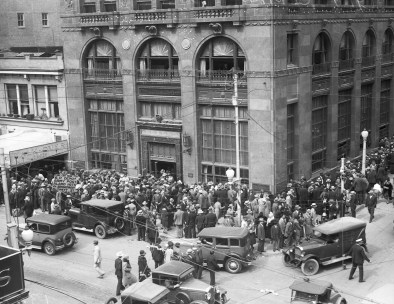
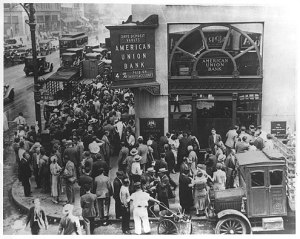

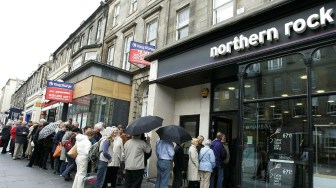



 As we’ve seen put forth in the thousands upon thousands of pages of evidence released during the discovery process in this case, people at Fox News allegedly knew the channel was repeatedly peddling lies. But it didn’t care. Because, according to the lawsuit, profits were more important than the truth. Because, as in the words of Fox CEO Rupert Murdoch, Fox did not want to “antagonize [Donald] Trump further,” and he wanted to keep Trump’s supporters as viewers, even as he admitted under oath during his deposition that he “never believed” that Dominion rigged the 2020 presidential election.












 The report carried a plain title: Plan D. Reading it, I wondered if the D stood for “doomsday.”
 peej
peej Carissa
 bostonboomer
 dakinikat
 ecocatwoman
 mablue2
 Mama Lopez
 peggysue22
 quixote
 skydancingguestblogger
 Mona (aka Wonk the Vote)



 Sky Dancing
Recent Comments