
Monday Reads: Cosby and Crimes Against Women and Children
Posted: July 27, 2015 Filed under: Crime, Criminal Justice System, Media, morning reads, The Media SUCKS, Violence against women, War on Women | Tags: Amy Schumer, Bill Cosby, Camille Cosby, Heather, John Russell Houser, misogyny, Neil Falls, New York Magazine, Sandra Bland, Trainwreck 44 Comments
Good Morning!!
New York Magazine’s latest cover features 35 women who say they were drugged and sexually assaulted by Bill Cosby. At the moment the link to the “13-page photo essay” is unavailable–apparently the site has crashed.
From The Guardian: Bill Cosby accusers detail trauma and betrayal in magazine.
Thirty-five women who have accused Bill Cosby of raping them have spoken out in an explosive photo essay for New York magazine. More than 40 women have so far accused the comedian of sexual assault, but the cover story represents a sea change in how the comedian’s alleged victims have been publicly perceived.
On Sunday, the magazine published excerpts of interviews with each woman for a 13-page photo essay, covering accusations they have made against the comedian and the backlash they have faced.
“Listen, he was America’s favorite dad,” saidBarbara Bowman, who says she was raped as a 17-year-old actress. She made her case public in 2004, when testifying on behalf of Andrea Constand, who said she was also one of Cosby’s victims.
“I went into this thinking he was going to be my dad,” Bowman told the magazine. “To wake up half-dressed and raped by the man that said he was going to love me like a father? That’s pretty sick.
“It was hard for America to digest when this came out. And a lot of backlash and a lot denial and a lot of anger.”
Inside Higher Ed reports: Spelman Discontinues Cosby Professorship.
Spelman College announced Friday that it is discontinuing an endowed professorship named for Bill Cosby and his wife. “The William and Camille Olivia Hanks Cosby Endowed Professorship at Spelman College has been discontinued and related funds have been returned to the Clara Elizabeth Jackson Carter Foundation,” said a statement from the college. A spokeswoman declined to comment further. Bill and Camille Cosby are major donors to Spelman and an academic building is named for Camille Cosby. The Clara Elizabeth Jackson Carter Foundation was created by Bill Cosby to provide grants to historically black colleges.
The hardest thing for many people to understand about this is the way Camille Cosby has stood by her husband through the many years it has taken for this entire ugly business to play out. Was she simply in denial? Was she reluctant to give up the money and fame that came with being the wife of a powerful man? We may never know, but she was apparently an active force in her husband’s defense.
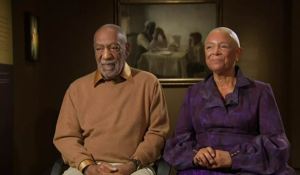
Bill and Camille Cosby
From the July 12 New York Post: Bill Cosby’s wife says accusers ‘consented’ to drugs and sex.
Bill Cosby’s wife knows her husband is a serial philanderer, but believes his scores of accusers consented to drugs and sex, two confidants of the couple say.
Last week’s revelation that Cosby admitted during a deposition that he intended to ply women with Quaaludes before bedding them barely fazed Camille Cosby, the insiders told The Post.
“Camille still doesn’t believe that Bill provided drugs and had sex with women without their consent,” said a source employed by the Cosby family. “She’s well aware of his cheating, but she doesn’t believe that her husband is a rapist.”
Mrs. Cosby is “a proud, dignified but stubborn woman. You can say that she’s standing by her husband, but really, the more people stand against him, the more she perceives it as an affront to her and all that she’s done to make him a star,” said another source who’s done business with the Cosbys and remains close to them.
Camille Cosby, 71, who is also her 78-year-old husband’s business manager, demanded last week at a crisis meeting with advisers that their lawyers and p.r. specialists “get back out in front of this,” the business source said.
“I created him, I knew what I was getting and we’ll fix this,” she told the gathering at a meeting at the couple’s Shelburne Falls, Mass., home Tuesday night.
There’s more disgusting stuff at the link. According to the Post’s sources, Camille was also angered that longtime Cosby defenders have been changing their positions in light of recent revelations.
At Refinery 29, Kelsey Miller argues that women like Dottie Sandusky (wife of convicted child rapist Jerry Sandusky) and Camille Cosby can be simultaneoursly enablers and victims.
The Complicated Case Of Camille Cosby.
It is easy and tempting to make assumptions about Camille Cosby. “That poor woman,” some say. “That idiot,” say others. And, to some, she is “that monster.” Pity or vilification are the textbook responses to spouses in these cases. Watching and waiting for Camille’s next move, I’m reminded of last year’s TODAYinterview with Dottie Sandusky (wife of Penn State assistant football coach Jerry Sandusky, who in 2012 was found guilty of sexually abusing 10 boys)….
Last week, The New York Post shared a widely reported story that Camille (also her husband’s business manager) had held a crisis meeting with Bill’s team to discuss damage control. “I created him. I knew what I was getting, and we’ll fix this,” she was quoted by a source as having said. It was also alleged that she referred to the “infidelities” as an embarrassment she’d long since reconciled herself with, and emphasized them as just that — affairs, and not assaults.
Of course, reports like this should be taken with a hefty handful of salt, but it’s worth noting that Camille’s supposed remarks are certainly in keeping with Cosby’s own in the deposition. Both reveal the kind of psychological gymnastics that allow someone to leap over the evidence at hand — to find acceptable, ordinary dalliances where many would see something much more sinister….
To believe that Camille Cosby is an evil, calculating accomplice to the crimes her husband’s been accused of would be to ignore the possibility that she’s just another victim of those same alleged crimes.
Conversely, to believe that Dottie Sandusky is merely a naive grandma would be to ignore the magnificent power of deliberate denial. We know nothing of the internal lives of these women, nor can we speak to the dynamic of their marriages. Is it likely they knew of their husbands’ actions? Certainly. It is just as likely that they were subject to manipulation and abuse themselves.
The point being: One does not cancel out the other. It’s a cognitive dissonance that neither mainstream media nor its consumers can seem to resolve. We want clear answers and archetypes, and instead we’re stuck with real people, none of whom are entirely good or entirely monstrous.
I suppose Miller has a point, but it’s difficult for me to have much sympathy with either of these enabling wives. Each of these women appear to have actively covered up their husbands’ criminal behavior and allowed these men to damage the lives of so many young men and women.

Sandra Bland
Also in the news . . .
CBS Local 11: History Of Racial Tension Where Bland Died.
Waller County was named for Edwin Waller, a signer of the Texas Declaration of Independence from Mexico in 1836, who four years later became the first elected mayor of Austin. Whites make up 44 percent of the 47,000 residents, Hispanics 29 percent and blacks 25 percent.
First settled in the early 1820s, the area became home to slave-labor cotton plantations. Hempstead was incorporated in 1858 thanks to a railroad terminus.
The plantations were dismantled with the end of the Civil War in 1865. Three years later, historical records report a race riot, followed by unrest in the 1880s, when a White Man’s Party was established to blunt active black political participation in the county where blacks outnumbered whites.
That’s when violence blamed on the Ku Klux Klan and other extremist groups gave it the “Six Shooter” sobriquet.
More recently, voter intimidation and voting-rights complaints have arisen from students at Prairie View A&M University, a college established in 1876 specifically to train black teachers.
The complaints led to a federal lawsuit. The district attorney at the time, in 2004, reached a settlement and apologized. But the issue resurfaced only two years later and again in 2008, when additional early voting sites in the county were established only after federal pressure.
“There’s a lot of prejudice going on,” said Eugene Hood, citing a history of police harassment as he cut hair at Chad’s Barber Shop on University Drive, just south of where Bland was arrested outside the main entrance to the university.
Marie Armstrong of Dallas, a Prairie View senior, remembers being pulled over and ticketed for a broken brake light and being forced to go court. She wished police would exercise some judgment.
More at the link.
A courageous woman who killed a man who was beating and trying to strangle her may have rid the world of a dangerous serial killer. David Lohr at Huffington Post: Neal Falls, Man Killed By Escort, Had Cache Of Weapons And List Of Prostitutes, Police Say.
Neal Falls, the man shot to death by a prostitute after he attacked her on Saturday, had a cache of weapons and a list of online escorts inside his vehicle, police said Wednesday.
The items, as well as statements the woman said Falls made to her, led police to suspect he may have been involved in other unsolved crimes.
“He had a machete, shovel, two axes, a bunch of knives, a double-headed ax, a bulletproof vest, numerous sets of handcuffs, as well as the firearm used to kill him,” Lt. Steve Cooper of the Charleston, West Virginia, police department, told The Huffington Post.
Police also found a list containing the names of an unspecified number of women inside the man’s vehicle.

Photo of Neil Falls surrounded by photos of the “murder kit” police found in his car. (Source: Huffington Post)
More details from a previous report by Lohr:
The man…was shot and killed in Charleston, West Virginia, on Saturday, according to WCHS-TV. The incident reportedly occurred after he met a female escort through Backpage.com, an online classified ad portal that is often used by men seeking prostitutes.
“The details that we’re able to release right now are that there was a struggle … that the man had beaten and strangled the woman and gotten her onto the ground, laid the gun down as he was dragging her back through the house, and she was able to pick the gun up and fire over her shoulder blindly, and the bullet did strike the man, killing him,” Charleston Police Lt. Steve Cooper told the Charleston Gazette on Saturday.
Police in nearby Chillicothe, OH, are looking into the possibility that Falls could be responsible for the disappearances of 6 Ohio women.
“We are in communication with Charleston regarding that situation,” Bud Lytle, a spokesman and crime prevention officer for the Chillicothe Police Department, told The Huffington Post. “Obviously, it’s not a great distance from us and it involved a prostitute and an individual known to pick up prostitutes.”
Falls, who was originally from Oregon, is also be investigated by authorities in Nevada, according to Lohr: Neal Falls Investigation Expands To Las Vegas-Area Dismemberments: EXCLUSIVE
“We received information that caused a conversation to take place between us and law enforcement in Henderson, Nevada,” Lt. Steve Cooper of the Charleston, West Virginia, police department, told The Huffington Post on Thursday.
Cooper said he couldn’t discuss specific cases Nevada authorities are now looking into because the investigation “is ongoing and we don’t want to risk comprising [sic] it.”
The FBI also is investigating, a law enforcement source told The Huffington Post on Friday. A spokesman didn’t immediately answer a request for comment.
CBS News: Woman who killed alleged serial killer recounts final fight.
Falls was answering an online ad for an escort, police said, when he showed up to a Charleston, West Virginia, home.
The woman, who wants only to be known as “Heather,” answered the door.
She said Falls, armed with a gun, asked her: “live or die?” Then he started choking her.
“When he strangled me, I grabbed my rake, and when he laid the gun down to get the rake out of my hands, I shot him,” Heather said. “I grabbed the gun and shot behind me.”
Heather ran out of the house and flagged down a neighbor, who called 911. The neighbor said she “had to defend herself,” and she had “cuts and stuff all over her.” ….
Police are not charging Heather for the shooting, which they say was in self-defense. “I knew he was there to kill me,” Heather said.
See a video of Heather describing her ordeal at WCHS ABC Local 8.
This turned into a post about crime, but–as I have written previously–for me rape and sexual assault are political issues. Crimes against women and children are often ignored and covered up in our society, with the media as enabler.

Movie shooter John Russell Houser
Just take a look at Dakinikat’s post from yesterday. She points out that the media are largely ignoring the fact that Louisiana mass shooter John Russell Houser specifically targeted women who were watching a movie created by a feminist.
So, let me address the mainstream media and police confusion about Houser’s “choices” of victim. These are the same groups of people that rarely address the daily violence against and murder of women by the men in their lives. This is from a blog that tracks and monitors male misogyny called “We Hunted the Mammoth”. The author is David Futrelle.
Police in Lafayette, Louisiana are evidently struggling to understand why the outspokenly misogynistic, racist and anti-Semitic John Russell “Rusty” Houser murdered two women and wounded 9 other moviegoers at a showing of “Trainwreck,” a film written by and starring Amy Schumer, a feminist comedian with a Jewish father, known for joking frankly about sex.
Please check out Dak’s post if you haven’t read it yet.
What else is happening? Please post your thoughts and links in the comment thread and have a nice Monday.
Thursday Reads: Did Nepotism at The Washington Post Contribute to Irresponsible Reporting on the UVA Rape Story?
Posted: December 11, 2014 Filed under: Crime, Criminal Justice System, morning reads, Violence against women, War on Women, Women's Rights | Tags: fraternities, gang rape, nepotism in journalism, rape 40 Comments
Good Morning!!
Have you ever wondered how extremely young men are able to get jobs at elite newspapers like The Washington Post right out of college?
Take for example T. Rees Shapiro, who has led the charge to not only discredit the Rolling Stone story on the problem of rape on the University of Virginia campus but also efforts to dismiss and humiliate Jackie, one of the women interviewed by Rolling Stone writer Sabrina Rubin Erdley .
However flawed the Rolling Stone article may have been, it was about much more than Jackie’s story. It illustrated a culture of minimization of rape that had existed had UVA for at least 30 years, in which women who reported being sexually assaulted were discouraged from going to the police, their complaints were not treated seriously, and accused perpetrators were not seriously investigated or punished.
Shapiro’s career has been greatly enhanced by his dismantling of Jackie’s story about a violent rape that allegedly took place in 2012. As a consequence of his efforts to dismantle Jackie’s story, T. Rees Shapiro has appeared on numerous television programs and received praise from many quarters. Most likely his youth enabled Shapiro to con Jackie into trusting him enough to talk to him “several times.”
Last night, I decided to take a quick look at young Mr. Shapiro and his career development path. How did he get such an elite journalism job at the young age of 27?

In 2009, Shapiro graduated from Virginia Tech, where he wrote for the student newspaper. In 2010, he was hired by the Washington Post as a copy boy. He soon graduated to writing obituaries, and in 2010 became an education reporter for the Post.
Clearly T. Rees (Nicknamed “Trees,” get it?) is a real go-getter, but he also has connections. His father Leonard Shapiro was a sportswriter for The Washington Post for 38 years, and his mother Vicky Moon is a writer and photographer who is apparently a fixture in Virginia society. Would Shapiro have gotten the Washington Post job without those connections? Maybe, but I doubt it.
When he wrote about Jackie, Shapiro emphasized several times that she was using her “real nickname,” thus enabling trolls like Chuck C. Johnson to find her and try to publicly out her. Shapiro was also able to locate Jackie’s so-called “friends” and get their after-the-fact critiques of Jackie’s story. Shapiro doesn’t say whether Jackie told him she still considers these people to be her friends.
In his critiques of the Rolling Stone article and specifically of Jackie’s story, Shapiro chose not to write about the other women who were interviewed by author Sabrina Rubin Erdley or to get input from experts on rape and traumatic memory. Would a more mature reporter have done so, rather than simply picking apart Jackie’s story? Would a female education reporter have thought to do that?

Leonard Shapiro, former WaPo sportswriter and father of T. Rees Shapiro
Despite the Post’s attacks on Jackie, the University of Virginia does in fact have a rape problem. UVA is one of 86 schools being investigated by the Department of Education for mishandling rape complaints. Four Virginia schools are on the DEA list.
From Huffington Post in July: For Years, Students Have Accused Virginia Universities Of Botching Sexual Assault Cases.
Four universities in Virginia are currently being investigated by the U.S. Department of Education’s Office for Civil Rights for possible Title IX violations specifically related to sexual violence — JMU, the University of Virginia, the College of William & Mary and the University of Richmond. Two other schools in the state, the Virginia Military Institute and Virginia Commonwealth University, faced Title IX reviews that concluded this spring….
Each of the investigations at the Virginia schools, like that at JMU, was sparked by federal complaints.
UVA’s investigation is unusual in that it started in 2011, but remains open. The Education Department declined to say why the investigation was so long-running, and noted “that some cases take longer than others due to the nature and complexity of the issues involved.”
(Emphasis added).
In fact, UVA is one of only 12 schools that that the Department of Education has “flagged for a total compliance review.”
Another Washington Post reporter, Nick Anderson, writes that the inconsistencies in Jackie’s story will not end the federal investigation of UVA.
The University of Virginia was under the microscope for its handling of sexual assault cases long before Rolling Stone magazine weighed in with the account of a student who said she was gang-raped at a fraternity house.
The emergence of fresh questions about that account — including the fraternity issuing a rebuttal, doubts voiced by some who know the woman, and a statement from Rolling Stone’s managing editor on Friday acknowledging “discrepancies” in her version of events — will not suddenly cancel that scrutiny.
A federal investigation of U-Va.’s response to sexual violence, begun in June 2011, continues. It is one of the longest-running active probes of its kind in the nation. U-Va. remains one of the most prominent of about 90 colleges and universities facing such investigations by the U.S. Department of Education’s Office for Civil Rights.
Student and faculty activists for sexual assault prevention, given a national platform in recent days, are unlikely to let the issue fade away. Skeptics will still wonder why the university has not expelled anyone for sexual misconduct in the past decade. Parents of prospective applicants, also mindful of the slaying of sophomore Hannah Graham after she disappeared in September, still want assurances that the Charlottesville campus is safe.
Perhaps most important, University President Teresa A. Sullivan laid out a detailed road map this week for a comprehensive review of the campus culture, touching on sexual assault, alcohol, Greek life and university oversight.

Francesca Bessey
Since rape on campus is such a huge issue, shouldn’t education reporters like T. Rees Shapiro be more knowledgeable about sexual assault and its traumatic effects? One journalist, Francesca Bessey thinks so.
From Huffington Post: Thought the Rolling Stone Article Was Bad? Try Other Rape Journalism. Here’s her assessment of the Washington Post coverage:
The actual discrepancies introduced by the Washington Post are few: one, the individual whom Jackie claimed brought her to the fraternity was apparently a member of a different fraternity; and, two, a student who allegedly came to Jackie’s aid claimed she initially gave a different account of what happened that night. The fraternity also released a statement denying knowledge of the assault, or that there was a social function the night Jackie believes she was assaulted.
For someone who knows little to nothing about rape, fraternities, or the contemporary college party scene — which unfortunately seems to characterize a lot of the coverage thus far — these discrepancies might initially seem like gaping holes in Jackie’s story.
However, as any medical professional or victim advocate will tell you, trauma-related memory inconsistencies are extraordinarily common in cases of sexual assault, often manifesting in the survivor describing the incident to first responders as less severe than it actually was. Such plasticity of memory is not unique to rape cases; the FBI, for example, notes that “there can be a wide range of after effects to a trauma,” which can impact on a victim of a violent crime or the victim’s family members. A list of these effects includes confusion, disorientation, memory loss and slowed thinking. Psychological research has long demonstrated that humans reconstruct, rather than recall, memory, which is why eyewitness testimony is considered one of the most dubious forms of evidence in a court of law.
Why have journalists covering this story given more credence to statements by the fraternity and friends who were portrayed very negatively in the Rolling Stone article than to Jackie’s version of events?
…it is important to note that the so-called “inconsistencies” in Jackie’s story don’t necessarily invalidate her version of events. The fraternity’s statement is in no way more credible than Jackie’s own word — in fact, I would argue less so, given the sheer prevalence of fraternity rape. It would be foolish to assume that a fraternity’s formal denial of “knowledge of these alleged acts” means that they did not occur (with or without current leadership’s knowledge), as it would be foolish to rule out that the “date function” Jackie thought she was invited to wasn’t pure pretense in the first place. It is also within the realm of possibility that Jackie was brought to the party by a man who didn’t necessarily belong to the fraternity, even that he misled her about his membership in the frat. It is also possible that the student who gave a different version of how he found Jackie that night, lacks credibility or is himself having trouble recalling events.
Ultimately, these are all details significant to a police or journalistic investigation, upon which the responsibility is on law enforcement and journalists to figure out. For Jackie, however, it doesn’t change much. It doesn’t change her experience of violent assault, or those of countless students like her, many of whose stories are also featured in the article in question. It does not change the majority of the material in the original article: not the debasing lyrics of the UVA fight song; not the person who hurled a bottle at Jackie’s face the first time she tried to speak out; not the 38 students who appeared in Dean Nicole Eramo’s office in just one academic year to discuss incidents of sexual assault, despite the fact that not one student has ever been expelled from UVA for a sexual offense.
In light of these facts, in light of my own rape and the rapes of too many of my friends at the hands of their peers, I do wonder: Whose credibility is really to be doubted here? Jackie’s or the public peanut gallery that has diluted sexual assault down to a number and a date?
Again, I don’t want to personally denigrate T. Rees Shapiro. He writes well, and he has done a fine job of locating sources at the University of Virginia–both in this case and in his previous reporting on in writing on the Hannah Graham murder case–probably because his youth helps him connect with college students only a few years younger than he is. But his analysis of a survivor’s story has suffered from his lack of knowledge and experience about campus sexual assault and rape in general.
I want to share two more articles that offer a more sophisticated take on these subjects–written by women with long journalistic experience.
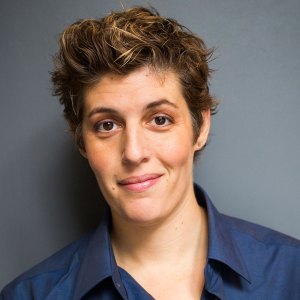
Sally Kohn
From CNN, Rape culture? It’s too real, by Sally Kohn.
We don’t yet know all the facts behind the now-infamous, poorly fact-checked story in Rolling Stone about an alleged gang rape at the University of Virginia. What we do know: Rolling Stone at first blamed the alleged victim, “Jackie” — rather than its own journalistic sloppiness — for so-called “discrepancies” (before changing its callous statement).
And new reporting by the Washington Post does reveal that Jackie’s friends, cited in the story, say they are skeptical about some of the details. Still, they all believe that Jackie experienced something “horrific” that night, in the words of one, and we do know that Jackie stands by her story. Most of the doubts about it were apparently raised by those she’s accusing, including the fraternity and main alleged assailant — whom, I guess, we’re supposed to believe instead. But one other thing we do know is that gang rapes just like what Jackie is alleging do happen — too often, and all over America.
While Rolling Stone’s reporting was clearly shoddy, some writers who initially poked holes in Jackie’s story did so for ideological motives. For instance, even before the reporting lapses were revealed, conservative commentator Jonah Goldberg called Jackie’s story unbelievable. “It is not credible,” Goldberg wrote in the Los Angeles Times. “I don’t believe it.”
Instead, Goldberg insisted, Jackie’s account was “a convenient conversation for an exposé of rape culture,” something, incidentally, Goldberg also doubts to be real. “‘Rape culture’ suggests that there is a large and obvious belief system that condones and enables rape as an end in itself in America,” Goldberg later wrote in National Review. It’s all hogwash, says Goldberg, alleging that the very idea of “rape culture” is just “an elaborate political lie intended to strengthen the hand of activists.”
In other words, whatever the reality of what happened to Jackie, Goldberg and others were skeptical because they simply don’t believe rapes like that happen with the participation of groups of assailants, let alone the complicity of bystanders. This is where they’re mistaken.
Kohn then lists several extreme examples of gang rapes that resemble Jackie’s description–most of which we have covered here.

Also from CNN, In 2014, rape rage drove feminism’s ‘third wave’, by Nina Burleigh.
Historians could look back on this year as the beginning of feminism’s third wave.
The year was momentous for feminism. For the first time, rape victims and their supporters emerged from the shadows in significant numbers and started naming names — to significant effect. Women, their voices amplified by social media and with the support of a small but growing cohort of men, have been exposing and shaming venerable American institutions such as the NFL, Ivy League and non-Ivy League colleges, and the entertainment icon Bill Cosby.
First wave feminists won the right to vote. The second wave got us the right to work. But even with those advances, women have remained fundamentally restricted by the threat and terrible secret of sexual assault.
This year, emboldened and connected by social media, college women formed a powerful grassroots movement that led to universities such as Harvard being publicly named and shamed for not addressing women’s rape reports. They brought the issue of campus sexual assault into the White House, where Barack Obama became the first President to use the words “sexual violence.” The Department of Education released a list of universities under investigation for mishandling sexual violence cases, often letting even repeat predators off with barely a slap on the wrist.
These young women had been silent until social media enabled them to come together, even though thousands of miles apart, share debilitating secrets and then act with the confidence that safety in numbers provided.
I hope you’ll read the rest at the link.
I only hope that irresponsible journalism perpetrated by Rolling Stone and the even more irresponsible reaction to it have not set back the cause of protecting young women on college campuses from sexual violence.
Lazy Saturday Reads: #IStandWithJackie
Posted: December 6, 2014 Filed under: Crime, Criminal Justice System, morning reads, Violence against women, War on Women | Tags: gang rape, rape, Rolling Stone, Sabrina Rubin Erdely, University of Virginia, zombies 62 Comments
Good Morning!!
I’m feeling very overwhelmed this morning, and I’m sure I’m not alone. Between the police killings of civilians and the UVA rape story, I don’t know where to turn for relief.
Last night I escaped for awhile by watching the season finale of “Z Nation,” which is a very violent show about a group of survivors of the zombie apocalypse that almost seems like a metaphor for our sick society.
Why are people so fascinated by zombies at this time in history? Is it because so many of us are dead inside, with no empathy for our fellow humans? Hatred of anyone who is not a white, wealthy, straight “christian” male born in the USA has taken over so many of us and transformed our culture in so many ugly ways.
It’s as if a virus was loosed on the population–in the Reagan years?–and those of us who still care for other people and dream of equal rights and protection for all people are left fighting just to stay conscious–like the survivors in “Invasion of the Body Snatchers.”
Where will it all end?
I was planning to write about the backlash against the Rolling Stone story on rape at the University of Virginia in today’s post, but I don’t think I have my thoughts together enough to do a thorough job of it yet. When I first started thinking about it, the main backlash was about author Sabrina Rubin Erdely’s choice not to locate the accused perpetrators and get their side of the story.
WTF?! As Columbia journalism Prof. Helen Benedict told the NYT, a reporter doing a story on a university refusing to deal with a robbery or mugging on campus wouldn’t be required to hunt down the perpetrators and get their point of view on what actually happened.

The Rape of the Sabine Women, by Ceri Richards
But rape is different. Any woman who reports being raped in the good old USA must be scrutinized in detail, because she probably was asking for it or is lying. She must tell what she was wearing, whether she was drinking, whether she knew the perpetrator, whether she is just claiming rape because she regrets having sex while drunk, and on and on and on.
Then yesterday afternoon Will Dana, managing editor of Rolling Stone basically threw Erdely’s source “Jackie” under the bus, suggesting that she had fabricated her story. Dana apparently took the word of members of the Phi Kappa Psi fraternity that “Jackie’s” story was untrue.
As someone who was traumatized as a child and who has had to deal with posttraumatic stress disorder for much of my life, I took it personally. At first I could not stand to read the accusatory articles, so I went to Twitter first. There I learned that many men and women were pushing back against the media victim-blaming. They had started posting tweets with the hashtag #IStandWithJackie. Reading many of those tweets gave me the strength to read some of yesterday’s backlash articles.

Because I’m really not ready to write a coherent post right now, I’m just going to link to some articles that you may want to check out.
The story that triggered yesterday’s backlash was by T. Rees Shapiro and published at The Washington Post: Key elements of Rolling Stone’s U-Va. gang rape allegations in doubt. Shapiro, like Rolling Stone’s Will Dana, accepts the word of the accused fraternity that there was no party on the date given by “Jackie” and the word of a man she accused that he never met “Jackie.” Jackie’s compelling story is apparently eclipsed for the Post by these unproven assertions by unnamed men who have every reason to lie to protect themselves and their fraternity.
Here are some “key elements” of the WaPo story for me:
Jackie, who spoke to The Washington Post several times during the past week, stood by her account, offering a similar version and details.
“I never asked for this” attention, she said in an interview. “What bothers me is that so many people act like it didn’t happen. It’s my life. I have had to live with the fact that it happened — every day for the last two years.” ….
Jackie describes her interactions with Erdely and Rolling Stone:
Overwhelmed by sitting through interviews with the writer, Jackie said she asked Erdely to be taken out of the article. She said Erdely refused, and Jackie was told that the article would go forward regardless.
Jackie said she finally relented and agreed to participate on the condition that she be able to fact-check her parts in the story, which she said Erdely agreed to.
“I didn’t want the world to read about the worst three hours of my life, the thing I have nightmares about every night,” Jackie said.
About the article itself:
Jackie told The Post that she felt validated that the article encouraged other female students to come forward saying that they, too, had been sexually assaulted in fraternity houses.
“Haven’t enough people come forward at this point?” she said. “How many people do you need to come forward saying they’ve been raped at a fraternity to make it real to you? They need to acknowledge it’s a problem. They need to address it instead of pointing fingers to take the blame off themselves.”

Trauma has powerful effects on the brain, and it’s not at all surprising that survivors’ memories can be confused and inconsistent. In fact, even normal human memory is not designed to recall every detail of events with precision, and expecting that from a rape victim is ridiculous and unfair. But that’s the way it is.
“Jackie” did not even report her rape to the police, because she felt she couldn’t handle the backlash. Now a magazine that didn’t stand by its own story has made her vulnerable to attacks from all over the world.
Where is author Sabrina Rubin Erdely? Why isn’t she defending her story?
Last night on Twitter, Jamison Foser called attention to the fact that the WaPo story originally claimed as fact that Jackie was lying. Then they changed the line in the story without noting they had made a correction. That’s a pretty big “mistake” for a newspaper that has been busily trying to debunk “Jackie’s” story for the past couple of weeks.
Wonkblog (at the WaPo) posted a story on the Twitter response last night: #IStandWithJackie: People on Twitter are criticizing Rolling Stone and supporting UVa student.
Now some important articles that push back against the backlash, yesterday’s WaPo story, and Rolling Stone’s betrayal of “Jackie.” Some of these were published before the RS reversal, but I still think they are relevant.
Mother Jones: Don’t Let the Rolling Stone Controversy Distract You From the Campus Rape Epidemic.
Think Progress: Gang Rapes Happen On College Campuses.
Thank Progress: Actually, The Link Between Sexual Assault And Alcohol Isn’t As Clear As You Think.
Melissa McEwen at Shakesville: Today in Rape Culture.
About Reporting: The backlash to Rolling Stone’s story about rape culture at UVa
Alexandra Brodsky at MSNBC: Rolling Stone scapegoats rape victim, makes matters worse.
Ali Safron at Buzzfeed: Victims’ Memories Are Imperfect, But Still Perfectly Believable.
Libby Nelson at Vox: Rolling Stone didn’t just fail readers — it failed Jackie, too.
Amanda Taub at Vox: The lesson of Rolling Stone and UVA: protecting victims means checking their stories.
Media Matters: Rolling Stone And The Debate Over Sexual Assault Reporting Standards.
Rolling Stone before the sudden reversal: Rape at UVA: Readers Say Jackie Wasn’t Alone.
Katie McDonough at Salon: “It makes me really depressed”: From UVA to Cosby, the rape denial playbook that won’t go away.
That’s about all I can handle writing this morning. I have some links on other stories that I’ll post in the comment thread. I hope you join me there and share your own recommended links.
Tuesday Reads: So Many Racists, A**holes, Morons, and Lunatics; So Little Patience
Posted: December 2, 2014 Filed under: Barack Obama, morning reads, racism, Real Life Horror, Reproductive Rights, Republican politics, Senate, U.S. Economy, U.S. Politics, Voter Ignorance, War on Women, We are so F'd, Women's Healthcare | Tags: a**sholes, abortion, Bill Cassidy, Elizabeth Lauten, Eugene Robinson, John Boehner, Jon Belmar, lunatics, Mary Landrieu, Michael Brown, Morning Joe, morons, Obamacare, Sasha and Malia Obama, St. Louis Rams, Ted Yoho 65 Comments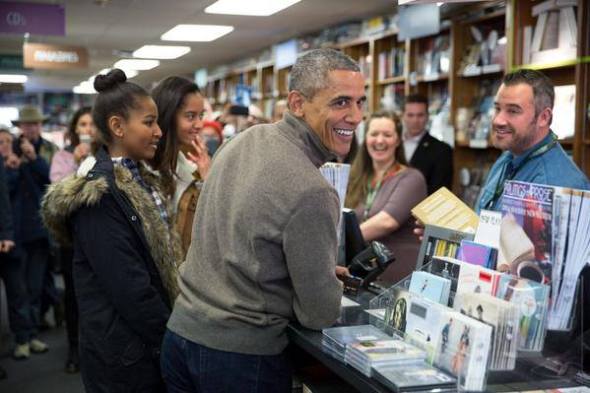
Good Morning!!
Just look at those awful teenage girls wearing coats in a bookstore! How shocking! And the President in jeans and casual jacket! Impeach him immediately!
As everyone knows by now, GOP aide to Rep. Stephen Fincher (R-TN) Elizabeth Lauten learned the hard way that when you attack the President’s family on Facebook, lots of people see it; and then your ugly words go viral on Twitter and other social media sites.
Addressing her comments directly to the Obama girls, Lauten wrote that they should ‘‘respect the part you play,’’ and added: ‘‘Then again your mother and father don’t respect their positions very much, or the nation for that matter, so I’m guessing you’re coming up a little short in the ‘good role model’ department.’’
Lauten also urged the Obama girls to ‘‘dress like you deserve respect, not a spot at a bar.’’
Lauten later apologized for the comments and deleted the original post, which drew harsh criticism across social media.
In her pathetic “apology,” as Eugene Robinson noted on Rachel Maddow’s show last night, Lauten failed to say she was sorry for insulting any of the members of the Obama family.
‘‘When I first posted on Facebook I reacted to an article and I quickly judged the two young ladies in a way that I would never have wanted to be judged myself as a teenager,’’ Lauten told The Commercial Appeal of Memphis in an email. ‘‘Please know, those judgmental feelings truly have no place in my heart. Furthermore, I’d like to apologize to all of those who I have hurt and offended with my words.’’
Whatever, lady. I’m glad you’re out of a job. Instant Karma is so satisfying.
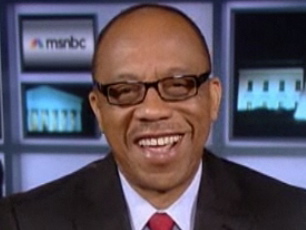
Eugene Robinson
Speaking of f**king a**holes, I’ve managed for a long time now to avoid seeing or hearing anything about MSNBC’s “Morning Joe” or its moronic hosts Joe Scarborough and Mika Brzezinski. Unfortunately, this morning I accidentally clicked on a link to Mediaite and read something about their asinine TV show.
This morning the above-mentioned Eugene Robinson was on the program and dared to say that Michael Brown might have had his hands up when he was shot and killed by Darren Wilson. Robinson’s reasoning? A number of eyewitnesses said so and there’s nothing in the evidence that proves Brown wasn’t surrendering.
According to Mediaite’s Evan McMurry, things “got awkward.”
“I don’t believe there’s anything in the record, certainly not in the forensic evidence, that precludes the possibility that he had his hands up at some point when he was approaching the officer,” Robinson said.
“That’s an awfully low standard,” cohost Joe Scarborough replied. “There’s also no evidence that doesn’t suggest a flying saucer from Venus swooped over all of them. There’s no evidence that it’s precluded, Gene. I’m not being difficult. I’m just saying the truth actually does matter.”
“I think it’s a very uncomfortable question for you, Gene,” Brzezinski said. “Because if you say no, there’s no evidence his hands up, you’re probably insulting a lot of people. Do you feel uncomfortable with the question?”
Now what do you suppose Brzezinski meant by that? Oh yeah, Robinson is black and so Mika thinks he must have to lie in order to pacify other black people. Are you lying to please your puppet master Joe Scarborough and the racist audience to your show, Mika?
You can watch the video at the Mediaite link above.

The racists are also up in arms about the five St. Louis Rams players (all black) who had the nerve to express solidarity with Ferguson protesters by standing with their hands up before their football game on Sunday. St. Louis police officers were enraged by this mild display of support, and complained loudly in the media.
St. Louis police chief Jon Belmar then publicly claimed that the Rams organization had apologized for the players actions. A battle of words followed, in which the Rams denied apologizing and Belmar kept insisting they had. From the NY Daily News:
St. Louis County Police Chief Jon Belmar said the St. Louis Rams apologized to local law enforcement officials Monday after five players walked onto the field Sunday with their arms raised high in solidarity with the Ferguson protesters, a claim the team denied in a bizarre war of words that erupted overnight between the team and cops.
Police immediately cried foul at the act during the Rams’ Week 13 home blowout of the Oakland Raiders, but the NFL sacked the cops’ request and chose not to discipline the players.
There was still fallout to manage and Rams COO Kevin Demoff tried to satisfy the outcry by local cops when he called Belmar on Monday and apologized for the players’ unsanctioned actions, according to the chief.
“Mr. Demoff clearly regretted that any members of the Ram’s (sic) organization would act in a way that minimized the outstanding work that police officers and departments carry out each and every day,” Belmar said in an email to the department, the St. Louis Post-Dispatch reported. “My impression of the call was that it was heartfelt and I assured him that I would share it with my staff.” ….
But CNN’s Rachel Nichols said Rams spokesman Artis Twyman told CNN the team “did not apologize” to St. Louis police.
And Demoff backed up that claim when reached by the Post-Dispatch late Monday. “In none of these conversations did I apologize for our players’ actions,” Demoff told the Post-Dispatch. “I did say in each conversation that I regretted any offense their officers may have taken. We do believe it is possible to both support our players’ First Amendment rights and support the efforts of local law enforcement as our community begins the process of healing.”
My advice to Belmar and police departments all over the country: Get over it and stop killing innocent citizens.
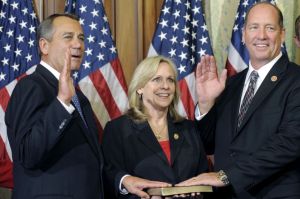
John Boehner swears in Florida’s Ted Yoho.
And speaking of moronic a**holes, John Boehner is set to do battle with the crazy caucus today. Reuters: Boehner to seek support for plan to avoid government shutdown.
House of Representatives Speaker John Boehner will try to sell fellow Republicans this week on a government spending bill that avoids a shutdown fight but allows the party to strike back at President Barack Obama’s immigration order.
Republicans have a lot riding on their handling of must-pass government funding. Having scored huge wins in Nov. 4 voting that handed them a majority in the Senate and gave them a bigger majority in the House, Republican leaders want to demonstrate that they can govern responsibly next year.
But many are still outraged that Obama bypassed Congress and is moving ahead unilaterally on immigration, granting what they claim is “amnesty” to people who came to the United States illegally.
House Republicans will meet on Tuesday after a 10-day Thanksgiving break to discuss their response, including a leading option for Boehner that would fund most government agencies through September 2015, with only a short-term extension for the Department of Homeland Security (DHS).
House Republican lawmakers and aides say this would give them a chance to use their stronger House and Senate majorities next year to pass explicit spending restrictions on some DHS agencies, to try to stop Obama’s immigration overhaul.
More details from Bloomberg Politics:
House Speaker John Boehner and his fellow Republican leaders are turning to large-animal veterinarian and Tea Party darling Ted Yoho to help avoid a second government shutdown in as many years.
The freshman Florida Republican has proposed a bill that aims to remove the president’s executive power when it comes to deportations. It’s a symbolic measure that would have essentially zero chance of passing in the last days of a Democratic-controlled Senate. But Boehner and his crew hope it’s enough to pacify a Republican caucus seething over President Barack Obama’s immigration actions last month.
Boehner and other Republican leaders have vowed to avoid a repeat of the 16-day shutdown last year. Their best shot may be coupling Yoho’s bill with a measure that would temporarily fund immigration agencies and provide longer-term financing for the rest of the federal government. The deadline is Dec. 11, when current funding ends.
Yoho, whose opposition to Obamacare contributed to the last shutdown, was an unlikely star of the 2012 election cycle, knocking off 12-term incumbent Cliff Stearns in a Republican primary for a North Florida district after selling his veterinary practice to run. Since being sworn in, the 59-year-old Republican has voted against Boehner for speaker, said an Obamacare tax on indoor tanning was “racist,” and suggested that a government shutdown could stabilize markets.
Yoho sounds like a lunatic. How on earth do people like this get elected?
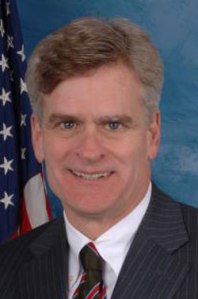
Bill Cassidy tries to smile and fails miserably.
Speaking of lunatics, last night I watched the final debate between Louisiana Senate candidates Bill Cassidy and Mary Landrieu. If the result of the runoff election on Saturday weren’t so important, the “debate” would have been a laugh riot. The main topics were abortion, guns, Obamacare, Cassidy’s double dipping at the expense of taxpayers and Landrieu’s weak support of the hated black President.
It was difficult to listen to what Cassidy was saying, because he is so strange-looking, and when he forces a smile, he looks like something out of a vampire movie. Even though Mary Landrieu is a pretty conservative Democrat, I couldn’t help liking her when I noticed she had a hard time not laughing out loud when Cassidy was talking.
The gloves came off during the testy final U.S. Senate debate Monday night between Democratic incumbent Mary Landrieu and Republican Rep. Bill Cassidy. Controversies dominated the discussion, including assertions that Cassidyfalsified time sheets and Landrieu used taxpayer money to take charter airplane flights to campaign events.
Landrieu worked her main allegation, that Cassidy billed Louisiana State University for work he didn’t perform, into answers throughout the debate. She said it’s an issue that should follow him beyond Saturday’s election.
“If he wins, he will be fighting more than President Obama. He will be fighting subpoenas because he padded his time sheet,” Landrieu said. “He’ll talk about everyone else’s record but his own.”
Cassidy denied the allegations and defended his record. “These charges are absolutely false. The Landrieu campaign takes these charges, and they twist them anyway they can. I’m proud of the work I’ve done at LSU,” Cassidy said.
A physician, Cassidy said his work at LSU hospitals helped people, while Landrieu’s charter flights helped only her. Landrieu countered that she had taken responsibility for the flights, which she attributed to a bookkeeping error, and paid back the Treasury.
Read more at the link.
During their extended argument over abortion, I was surprised to hear Cassidy state as fact that a 20-month fetus is viable and capable of feeling pain. I was also shocked when Landrieu said she is against all abortions and thinks they are immoral, but that the government shouldn’t be making those decisions. At least she’s “pro-choice.”
After watching that debate, I thanked my lucky stars that my Senators are Elizabeth Warren and Ed Markey.
That’s about all the news I could dredge up this morning. I’ll be so glad when the holidays come to an end. What stories are you following today?
Thursday Reads: An Important Story about Sexual Assault on College Campuses
Posted: November 20, 2014 Filed under: education, morning reads, Violence against women, War on Women, Women's Rights | Tags: culture of cover-up, date rape, frat parties, fraternities, gang rape, Nicole Eramo, Phi Kappa Psi fraternity, rape, sexual assault on college campuses, Teresa Sullivan, University of Virginia 62 Comments
Francoise in a round-backed chair reading, Mary Cassatt
Good Morning!!
I stayed up late last night reading the stunning Rolling Stone article on the culture of sexual assault and official cover-up at the University of Virginia. After I finished it, I had quite a bit of difficulty getting to sleep. The story was reported and written by investigative journalist Sabrina Rubin Erdely. The headline is A Rape on Campus: A Brutal Assault and Struggle for Justice at UVA. Before I begin, I want to warn everyone that the article includes explicit descriptions of sexual assault and a shocking culture of indifference to victims. I’m not going to excerpt explicit descriptions of rapes, but I do want to quote some of the reactions to them by students and administrators.
The article opens with a graphic description of a violent gang rape of 18-year-old incoming freshman “Jackie” that took place at the Phi Kappa Psi fraternity house during a party. Hours later, beaten and bloody, Jackie called “friends” for help, but instead of taking her to a hospital they talked her out of reporting the assault because it would ruin her “reputation,” and they as her friends would be ostracized and would no longer be invited to frat parties.
So Jackie hid in her room and sank into a deep depression. She received no support from her “friends” and acquaintances. The man who had taken her to the party and set up her rape by 7 men behaved as if nothing abnormal had happened, and asked her why she was ignoring him. Erdely on the friends’ reactions:
She was having an especially difficult time figuring out how to process that awful night, because her small social circle seemed so underwhelmed. For the first month of school, Jackie had latched onto a crew of lighthearted social strivers, and her pals were now impatient for Jackie to rejoin the merriment. “You’re still upset about that?” Andy asked one Friday night when Jackie was crying. Cindy, a self-declared hookup queen, said she didn’t see why Jackie was so bent out of shape. “Why didn’t you have fun with it?” Cindy asked. “A bunch of hot Phi Psi guys?” One of Jackie’s friends told her, unconcerned, “Andy said you had a bad experience at a frat, and you’ve been a baby ever since.”
That type of response to sexual assaults is apparently common at UVA.
That reaction of dismissal, downgrading and doubt is a common theme UVA rape survivors hear, including from women. “Some of my hallmates were skeptical,” recalls recent grad Emily Renda, who says that weeks into her first year she was raped after a party. “They were silent and avoided me afterwards. It made me doubt myself.” Other students encounter more overt hostility, as when a first-year student confided her assault to a friend. “She said she thought I was just looking for attention,” says the undergrad. Shrugging off a rape or pointing fingers at the victim can be a self-protective maneuver for women, a form of wishful thinking to reassure themselves they could never be so vulnerable to violence. For men, skepticism is a form of self-protection too. For much of their lives, they’ve looked forward to the hedonistic fun of college, bearing every expectation of booze and no-strings sex. A rape heralds the uncomfortable idea that all that harmless mayhem may not be so harmless after all. Easier, then, to assume the girl is lying, even though studies indicate that false rape reports account for, at most, eight percent of reports.
And so at UVA, where social status is paramount, outing oneself as a rape victim can be a form of social suicide. “I don’t know many people who are engrossed in the party scene and have spoken out about their sexual assaults,” says third-year student Sara Surface. After all, no one climbs the social ladder only to cast themselves back down. Emily Renda, for one, quickly figured out that few classmates were sympathetic to her plight, and instead channeled her despair into hard partying. “My drinking didn’t stand out,” says Renda, who often ended her nights passed out on a bathroom floor. “It does make you wonder how many others are doing what I did: drinking to self-medicate.”
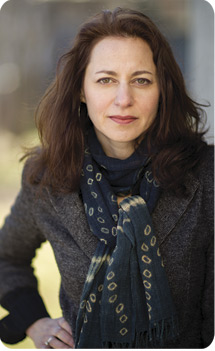
Investigative journalist Sabrina Rubin Erdely of Rolling Stone
Erdely talked to a number of survivors, and she found a history of gang rapes at Phi Kappa Psi fraternity stretching back at least 30 years. She describes a culture in which male upperclassmen target freshmen girls and deliberately take advantage of their lack of sophistication about the danger of sexual violence on college campuses.
A year later, Jackie did report the rape to a UVA administrator. She was sent to Dean Nicole Eramo, who heads the “Sexual Misconduct Board.” Eramo subtly discouraged Jackie from reporting the rape.
When Jackie finished talking, Eramo comforted her, then calmly laid out her options. If Jackie wished, she could file a criminal complaint with police. Or, if Jackie preferred to keep the matter within the university, she had two choices. She could file a complaint with the school’s Sexual Misconduct Board, to be decided in a “formal resolution” with a jury of students and faculty, and a dean as judge. Or Jackie could choose an “informal resolution,” in which Jackie could simply face her attackers in Eramo’s presence and tell them how she felt; Eramo could then issue a directive to the men, such as suggesting counseling. Eramo presented each option to Jackie neutrally, giving each equal weight. She assured Jackie there was no pressure – whatever happened next was entirely her choice.
Like many schools, UVA has taken to emphasizing that in matters of sexual assault, it caters to victim choice. “If students feel that we are forcing them into a criminal or disciplinary process that they don’t want to be part of, frankly, we’d be concerned that we would get fewer reports,” says associate VP for student affairs Susan Davis. Which in theory makes sense: Being forced into an unwanted choice is a sensitive point for the victims. But in practice, that utter lack of guidance can be counterproductive to a 19-year-old so traumatized as Jackie was that she was contemplating suicide. Setting aside for a moment the absurdity of a school offering to handle the investigation and adjudication of a felony sex crime – something Title IX requires, but which no university on Earth is equipped to do – the sheer menu of choices, paired with the reassurance that any choice is the right one, often has the end result of coddling the victim into doing nothing.
“This is an alarming trend that I’m seeing on campuses,” says Laura Dunn of the advocacy group SurvJustice. “Schools are assigning people to victims who are pretending, or even thinking, they’re on the victim’s side, when they’re actually discouraging and silencing them.
The culture of cover-up at UVA is shocking to me, but it is probably typical of many colleges and universities, according to Erdely. However UVA is among a select group of 86 schools that is under investigation by the federal Office of Civil Rights because of their failure to deal with the problem. In September UVA held a two-hour trustees meeting to discuss sexual assault on campus.
Those two hours, however, were devoted entirely to upbeat explanations of UVA’s new prevention and response strategies, and to self-congratulations to UVA for being a “model” among schools in this arena. Only once did the room darken with concern, when a trustee in UVA colors – blue sport coat, orange bow tie – interrupted to ask, “Are we under any federal investigation with regard to sexual assault?”
Dean of students Allen Groves, in a blue suit and orange necktie of his own, swooped in with a smooth answer. He affirmed that while like many of its peers UVA was under investigation, it was merely a “standard compliance review.” He mentioned that a student’s complaint from the 2010-11 academic year had been folded into that “routine compliance review.” Having downplayed the significance of a Title IX compliance review – which is neither routine nor standard – he then elaborated upon the lengths to which UVA has cooperated with the Office of Civil Rights’ investigation, his tone and manner so reassuring that the room relaxed.
Told of the meeting, Office of Civil Rights’ Catherine Lhamon calls Groves’ mischaracterization “deliberate and irresponsible.” “Nothing annoys me more than a school not taking seriously their review from the federal government about their civil rights obligations,” she says.
Jackie eventually became involved with a UVA rape survivors group, but even among these women who were trying to deal with their traumatic experiences and reaching out to recent victims, the culture was one of not reporting their rapes to police.

UVA Dean of Students Nicole Eramo
You’ll recall that it was at UVA that 18-year-old Hannah Graham was abducted and murdered, allegedly by 32-year-old Jesse Matthew, who had been previously accused of rape at two different Virginia colleges in 2002 and 2003. He was not charged in either case, and he apparently went on to become a smoothly professional sexual predator. The news reports say that the victims did not want to press charges, but the truth is that colleges and universities regularly discourage young women from reporting rapes in order to protect their institutional reputations. Erdely addresses this issue at length in her article on UVA.
Matthew’s DNA was found under the fingernails of Virginia Tech student Morgan Harrington, who disappeared after she was locked out of a Metallica concert on the UVA campus in 2009. Harrington’s body was later found a few miles from where Hannah Graham’s body was recovered. Matthew’s DNA has also been connected to a violent rape and attempted murder that took place in Fairfax in 2005.
In her article, Erdely discusses the research done by psychologist David Lisak on campus rapists. He discovered that a small percentage of college men commit rapes, and they tend to be repeat offenders (PDF). That last link is to a peer-reviewed journal article by Lisak, “Repeat Rape and Multiple Offending by Undetected Rapists.” Erdely writes:
Lisak’s 2002 groundbreaking study of more than 1,800 college men found that roughly nine out of 10 rapes are committed by serial offenders, who are responsible for an astonishing average of six rapes each. None of the offenders in Lisak’s study had ever been reported. Lisak’s findings upended general presumptions about campus sexual assault: It implied that most incidents are not bumbling, he-said-she-said miscommunications, but rather deliberate crimes by serial sex offenders.
In his study, Lisak’s subjects described the ways in which they used the camouflage of college as fruitful rape-hunting grounds. They told Lisak they target freshmen for being the most naïve and the least-experienced drinkers. One offender described how his party-hearty friends would help incapacitate his victims: “We always had some kind of punch. . . . We’d make it with a real sweet juice. It was really powerful stuff. The girls wouldn’t know what hit them.” Presumably, the friends mixing the drinks did so without realizing the offender’s plot, just as when they probably high-fived him the next morning, they didn’t realize the behavior they’d just endorsed. That’s because the serial rapist’s behavior can look ordinary at college. “They’re not acting in a vacuum,” observes Lisak of predators. “They’re echoing that message and that culture that’s around them: the objectification and degradation of women.”
I won’t quote any more from the article, but I do recommend reading it if you can handle it.
After the Rolling Stone article came out, UVA’s president suddenly decided maybe she should something about Jackie’s rape. From The Daily Progress, UVa calls for investigation into rape allegation in Rolling Stone article.
UVa President Teresa A. Sullivan released a statement Wednesday night, stating the university’s commitment to preventing sexual assault.
“The University takes seriously the issue of sexual misconduct, a significant problem that colleges and universities are grappling with across the nation,” Sullivan said in the statement. “Our goal is to provide an environment that is as safe as possible for our students and the entire University community.”
Erdely said UVa reinforced one of her major arguments in her article — that UVa administration focuses on prestige and appearance over student safety — with Sullivan’s statement….
“I am writing in response to a Rolling Stone magazine article that negatively depicts the University of Virginia and its handling of sexual misconduct cases,” Sullivan said at the beginning of the statement.
“It goes to show what their priorities are here — the fact that she would go out of her way to say I negatively depicted the university — this is the first thing on their minds,” Erdely said. “They need to be putting student safety first.”

UVA President Teresa Sullivan
Date: Wed, Nov 19, 2014 at 6:17 PM
Subject: An Important Message from President SullivanTo the University community:
I am writing in response to a Rolling Stone magazine article that negatively depicts the University of Virginia and its handling of sexual misconduct cases. Because of federal and state privacy laws, and out of respect for sexual assault survivors, we are very limited in what we can say about any of the cases mentioned in this article.
The article describes an alleged sexual assault of a female student at a fraternity house in September 2012, including many details that were previously not disclosed to University officials. I have asked the Charlottesville Police Department to formally investigate this incident, and the University will cooperate fully with the investigation.
The University takes seriously the issue of sexual misconduct, a significant problem that colleges and universities are grappling with across the nation. Our goal is to provide an environment that is as safe as possible for our students and the entire University community.
We have recently adopted several new initiatives and policies aimed at fostering a culture of reporting and raising awareness of the issues.
We want our students to feel comfortable coming forward with information when there are problems in the community and cooperating with local law enforcement and the student disciplinary process. We also want them to feel empowered to take action and to lead efforts to make our Grounds and our community a better place to live and learn.
We have been taking a leadership role on issues regarding sexual misconduct and violence. U.Va. hosted a national conference on this topic in February 2014. “Dialogue at U.Va.: Sexual Misconduct Among College Students” brought together national experts and professionals from approximately 60 colleges and universities to discuss best practices and strategies for prevention and response.
The HoosGotYourBack initiative, part of the Not On Our Grounds awareness campaign, was developed and launched in collaboration with students and with local Corner Merchants to increase active bystander behavior.
A number of other initiatives are also planned for the spring. Among them are the implementation of a new student sexual misconduct policy and a related training program, a campus climate survey, and an in-depth bystander intervention program that will include students, faculty, and staff.
More information about sexual violence education and resources is available on the University’s website at http://www.virginia.edu/sexualviolence/
Finally, I want to underscore our commitment to marshaling all available resources to assist our students who confront issues related to sexual misconduct. Our dedicated Student Affairs staff devote countless hours to educating and counseling our students on issues regarding their health and safety, and they stand ready to assist whenever students need help.
Teresa A. Sullivan
PresidentPresident Sullivan approved distribution of this message.
I’ll let you judge the sincerity of Sullivan’s statement.
I know there is plenty of other news going on, but this was all I could think about this morning. Please post your links on any topic in the comment thread, and feel free to discuss this post or not. I realize this is a very difficult subject, but it is also a vitally important one.

 peej
peej Carissa
 bostonboomer
 dakinikat
 ecocatwoman
 mablue2
 Mama Lopez
 peggysue22
 quixote
 skydancingguestblogger
 Mona (aka Wonk the Vote)



 Sky Dancing
Recent Comments