
Tuesday Reads: Jeff Sessions Dog Whistles Dixie
Posted: January 10, 2017 Filed under: 2016 elections, Black Lives Matter, Psychopaths in charge, public hangings, Rule of Law, Voting Rights, War on Women, Women's Rights | Tags: Jeff Sessions Hearings 54 Comments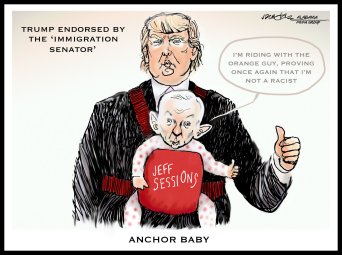 The first of our new theocratic, Putin-loving, grifter overlords is sitting in front of a Senate committee with absolutely no vetting being grilled and testified against by his peers. Neoconfederate radical christianist Senator Jeff Sessions can sure tell some whoppers and he sure does whistle Dixie.
In an unprecedented move, Senator Corey Booker has chosen to testify about Session’s treatment of the law and of black people.
Democratic Sen. Cory Booker is set to testify against Republican Sen. Jeff Sessions Wednesday in an unprecedented move during his attorney general confirmation.
This would be the first time in Senate history that a sitting senator will testify against another sitting senator for a Cabinet post during a confirmation.”I do not take lightly the decision to testify against a Senate colleague,” Booker said. “But the immense powers of the attorney general combined with the deeply troubling views of this nominee is a call to conscience.”
Sessions’ confirmation hearings, which started Tuesday, are expected to raise additional questions on old allegations of racism from his past. When Sessions was a 39-year-old US attorney in Alabama, he was denied a federal judgeship because the Senate Judiciary Committee heard testimony during hearings in March and May 1986 that Sessions had made racist remarks and called the NAACP and ACLU “un-American.”
Booker told CNN on Tuesday morning shortly before Sessions’ hearing started that it was “consequential moment.”
“This is one of the more consequential appointments in American history right now given the state of a lot of our challenges we have with our policing, a lot of challenges we have with race relations, gay and lesbian relations,” Booker said.
LIVE Trump confirmation hearings: Jeff Sessions’ first hearing
Representative John Lewis will also testify against Sessions along with my Congressman Cedric Richmond who will represent the Black Caucus and me for that matter.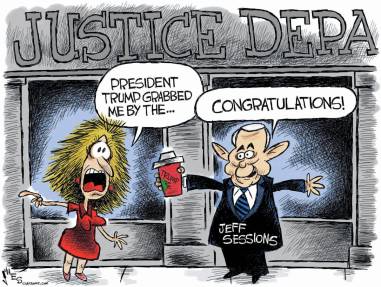
Several other prominent African-American figures in addition to Booker also plan to testify against Sessions, including two members of the House: Rep. John Lewis, D-Georgia, a leader of the civil rights movement of the 1960s; and Rep. Cedric Richmond, D-Louisiana, the chairman of the Congressional Black Caucus.
The NAACP has also strongly opposed Sessions’ nomination, calling him “a threat to desegregation and the Voting Rights Act.”
Sessions is a hodgepodge of bad things. He’s failed to disclose his oil interests and ethnics experts are taking issue.
Attorney general nominee Jeff Sessions did not disclose his ownership of oil interests on land in Alabama as required by federal ethics rules, according to an examination of state records and independent ethics lawyers who reviewed the documents.
The Alabama records show that Sessions owns subsurface rights to oil and other minerals on more than 600 acres in his home state, some of which are adjacent to a federal wildlife preserve.
The holdings are small, producing revenue in the range of $4,700 annually. But the interests were not disclosed on forms sent by Sessions to the Office of Government Ethics, which reviews the assets of Cabinet nominees for potential conflicts of interest.
 He is currently up on the stand doing things like telling Dianne Feinstein that he really thinks Roe v. Wade is unconstitutional and badly decided but it’s established law. He’s explaining his vote against laws to protect women victims of violence as being against the establishment of the rights of Native Americans to hold trials against accused rapists in their own courts. He’s just a big ol’ bug hiding nasty fangs and a poison sac right out there for every one to see.
You may want to read the story of Sessions and his role in prosecuting the Klan to really understand how deep his southern roots go. Sessions has also testified he loathes the clan today. Sessions apologists hold this case up as proof he’s really not all that racist.
letter from 23 former assistant attorney generals cited the fact that he had “worked to obtain the successful capital prosecution of the head of the Alabama Ku Klux Klan” as evidence of his “commitment to the rule of law, and to the even-handed administration of justice.” The Wall Street Journal said that Sessions, “won a death-penalty conviction for the head of the state KKK in a capital murder trial,” a case which “broke the Klan in the heart of dixie,” and The New York Post praised him for having “successfully prosecuted the head of the state Ku Klux Klan for murder.” Grant Bosse wrote in the Manchester, New Hampshire, Union Leaderwrote that “when local police wrote off the murder as a drug deal gone wrong, Sessions brought in the Justice Department’s Civil Rights Division, and brought Hays and the Klan to justice.”
Sessions himself recently listed the case as one of the “ten most significant significant litigated matters” he had “personally handled” on his Senate confirmation questionnaire. And in 2009, Sessions told National Review that there had been a campaign to “smear my record,” whereas in fact, he had “prosecuted the head of the Klan for murdering somebody.”
No one involved in the case disputes that Sessions lent his support to the prosecution. “Not all southern United States attorneys welcomed civil-rights division attorneys into their districts back then,” said Barry Kowalski, a former civil-rights division attorney who was one of the main lawyers on the investigation, and who defended Sessions in his 1986 confirmation hearing. “He did, he cooperated with us completely.”
However, in seeking to defend Sessions from charges of racism, Sessions’s allies, and even Sessions himself, seem to have embellished key details, and to have inflated his actual role in the case, presenting him not merely as a cooperative U.S. attorney who facilitated the prosecution of the two Klansmen, but the driving force behind the prosecution itself. The details of the case don’t support that claim.
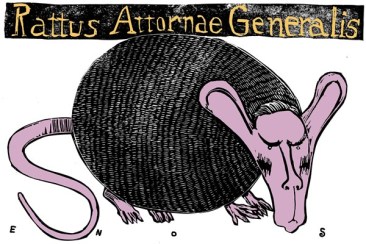 You can read the details in the feature I’ve linked to which came for The Atlantic.
The Sessions hearings are on CSPAN if you want an uninterrupted view of it all. The Hill has a list of five things to watch. This first one is as important as questions on policing and voting rights.
Does he detail Trump’s plans on immigration?
Sessions is known as the foremost immigration hawk in the Senate, so you can bet he’ll be pressed on an issue that has liberals on edge in the age of Trump.
Expect Democrats to come armed with statistics challenging the notion that illegal immigrants are flooding across the southern border; that crime is out of control among illegal immigrants; and that President Obama has not done enough to deport those in the country illegally who have committed other crimes.
In addition, while it won’t necessarily fall under his purview at the Justice Department, Democratic senators will likely look to score political points by challenging Sessions on the complications of building a border wall.
And they’ll likely look to get him to say that he won’t move to deport, en masse, the estimated 10 million illegal immigrants in the country, and in particular the estimated 700,000 young undocumented immigrants protected under the Deferred Action for Childhood Arrivals program.
As president, Trump could do away with that program by executive order.
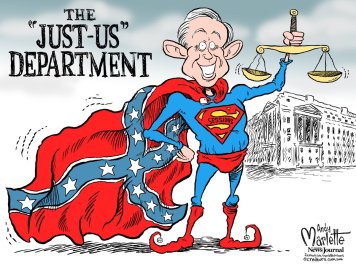 I have to work and grade today but will try to follow comments on Twitter. They are plentiful.
I could use a few donations if you have a few bucks to spare. Our TypeKit subscription is up in January. It’s not a lot, but every little bit you can help me defray would be great. It basically keeps our nice logo up there in its cursive glory
So, anyway, I’ve got to go warp minds and grade papers. BB’s successfully moved to her new apartment too! She’s patiently waiting for the cable guy. JJ is still with her mom in the facility and is having up and down days. We’re just happy to have you all here for breaks in our mundane lives!!!
What’s on your reading and blogging list today?
Monday Reads: It’s a New Day and a New Dawn
Posted: June 27, 2016 Filed under: 2016 elections, Afternoon Reads, Discrimination against women, Donald Trump, Reproductive Rights, social justice, Vagina, War on Women | Tags: domenstic violence, pro choice, SCOTUS, Texas Trap Laws 49 Comments Good Afternoon!
Hope you’re not going to get tired of me posting Nina Simone songs because I just had to do it again. I woke up and feel optimistic for a nice change. I would like to say that my life is on the up and up but this is much less specific than that. I feel better about being a woman in the USA and that’s a big deal.
Two really great SCOTUS decisions came down today that protect women’s right to choose and the victims of domestic abuse who are overwhelmingly women and children. The Supremes have thrown out the Texas Trap Law and refused to water down gun bans for domestic abusers. Then, there was some campaign excitement! Senator Elizabeth Warren tore up the stage with a Donald Burning and an enthusiastic Hillary support speech in Cincinnati. Women on the Supreme Court made a huge difference! Can you imagine the difference a woman President may make?
https://www.youtube.com/watch?v=OfJRX-8SXOs
Dahlia Lithwick–writing for Slate—argued that the women took over and the voices of the three women resound through out the important decisions. Here’s the Lithwick lede: “In oral arguments for the Texas abortion case, the three female justices upend the Supreme Court’s balance of power.” The Texas restrictions were stuck down vehemently.
It felt as if, for the first time in history, the gender playing field at the high court was finally leveled, and as a consequence the court’s female justices were emboldened to just ignore the rules. Time limits were flouted to such a degree that Chief Justice John Roberts pretty much gave up enforcing them. I counted two instances in which Roberts tried to get advocates to wrap up as Justices Ruth Bader Ginsburg and Sonia Sotomayor simply blew past him with more questions. There was something wonderful and symbolic about Roberts losing almost complete control over the court’s indignant women, who are just not inclined to play nice anymore.
The case involves a crucial constitutional challenge to two provisions in Texas’ HB 2, the state’s omnibus abortion bill from 2013. The first requires doctors to obtain admitting privileges from a hospital 30 miles from the clinic where they perform abortions; the second requires abortion clinics to be elaborately retrofitted to comply with building regulations that would make them “ambulatory surgical centers.” If these provisions go into full effect, Texas would see a 75 percent reduction in the number of clinics serving 5.4 million women of childbearing age. The constitutional question is whether having 10 clinics to serve all these women, including many who would live 200 miles away from the nearest facility, represents an “undue burden” on the right to abortion deemed impermissible after the Casey decision. Each of the female justices takes a whacking stick to the very notion that abortion—one of the safest procedures on record—requires rural women to haul ass across land masses larger than the whole state of California in order to take a pill, in the presence of a doctor, in a surgical theater.
The morning starts with an arcane and technical debate that eats up most of Stephanie Toti’s time. Toti, arguing on behalf on the Texas clinics, first has to answer an argument—raised by Ginsburg—that the clinics were precluded from even bringing some of their claims. Between this and factual challenges from Roberts and Justice Samuel Alito as to whether there was any evidence on the record to show that the law itself triggered the closings of Texas clinics, she doesn’t have much time to get to the merits. So frustrated is Justice Elena Kagan by the conservatives’ repeated insistence that perhaps the clinics just coincidentally all closed within days of HB 2’s passage that she finally has to intervene. “Is it right,” she asks Toti, “that in the two-week period that the ASC requirement was in effect, that over a dozen facilities shut their doors, and then when that was stayed, when that was lifted, they reopened again immediately?” Toti agrees. “It’s almost like the perfect controlled experiment,” continues Kagan, “as to the effect of the law, isn’t it? It’s like you put the law into effect, 12 clinics closed. You take the law out of effect, they reopen?”
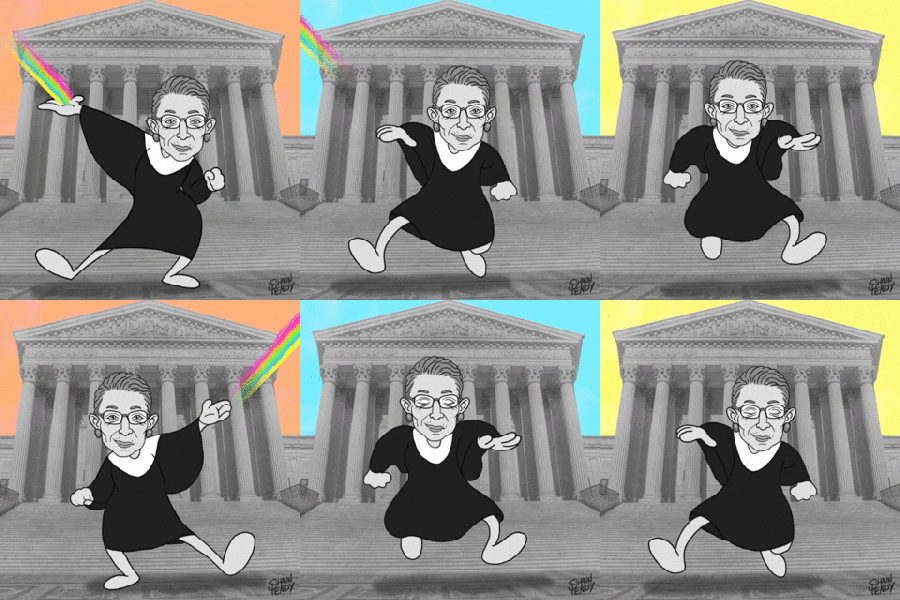 I am so relieved that the Trap Law creep has been put down. Signing such a bill in Louisiana was one of the last things the dread pirate
 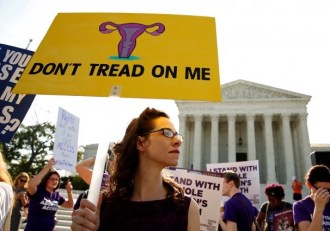 Bobby Jindal did to us. There are women celebrating all over the south. Wendy Davis won in the long run.
The Supreme Court on Monday struck down Texas abortion restrictions that have been widely duplicated in other states, a resounding win for abortion rights advocates in the court’s most important consideration of the controversial issue in 25 years.
Justice Anthony M. Kennedy joined the court’s liberals in the 5 to 3 decision, which said Texas’s arguments that the clinic restrictions were to protect women’s health were cover for making it more difficult to obtain an abortion.
The challenged Texas provisions required doctors who perform abortions at clinics to have admitting privileges at a nearby hospital and said that clinics must meet hospital-like standards of surgical centers.
Similar restrictions have been passed in other states, and officials say they protect patients. But the court’s majority sided with abortion providers and medical associations who said the rules are unnecessary and so expensive or hard to satisfy that they force clinics to close.
As I wrote last week, it was a clear cut case of undue burden and that principle was upheld. The other clear victory was for sensible gun access control. They ruled that Domestic Abusers cannot have guns refusing to open the window to all infractions.
In a 6-2 decision, the Supreme Court on Monday ruled that reckless domestic assaults can be considered misdemeanor crimes to restrict gun ownership. The decision comes as a major victory for women’s rights and domestic violence advocacy groups.
This was an interesting case involving a man in Maine.
The Supreme Court ruled Monday against a Maine resident who argued he should not have been stripped of his ability to possess a firearm despite a prior domestic violence charge in state court.
Stephen Voisine pled guilty to a misdemeanor assault charge in 2004 against a girlfriend. Five years later, he was investigated for shooting a bald eagle and as part of the investigation he turned over a firearm to authorities.
After reviewing his criminal record, Voisine was then charged with unlawful possession of a firearm pursuant to a federal law which makes it unlawful for a person who has been convicted of a “misdemeanor crime of domestic violence” to possess a firearm or ammunition.
Lawyers for Voisine argued that his misdemeanor offense did not rise to the level to trigger the federal law.
The justices agreed to take the case to interpret the reach of a federal statute. But Justice Clarence Thomas during oral arguments was also interested in the 2nd Amendment implications, breaking in to ask a series of questions for the first time in 10 years during oral arguments.
The three-judge panel of the 1st U.S. Circuit Court of Appeals ruled against Voisine and another defendant, holding that the “question before us is a narrow one.”
Congress recognized that “guns and domestic violence are a lethal combination,” the panel said.
Is it really possible that we may see a woman President and Vice President next year? The rally in Cincinnati this morning with Hillary Clinton and Elizabeth Warren held out that tantalizing option.
https://www.youtube.com/watch?v=G54qy1Vu4hI
BB caught me in bed with a cup of coffee this morning. Turn on the TV! There they were and there it was. No more Texas Trap Laws! Two Powerful women thrashing a Republican Bully while the world and Cincinnati cheered them on! It’s a new day! It’s a new dawn! Warren definitely put the B in the Trump Burn. She was amazing and you could see that Hillary loved every minute of it.
Donald Trump is “a small, insecure money-grubber who fights for no one but himself,” Sen. Elizabeth Warren of Massachusetts said Monday morning at the Cincinnati’s Union Terminal, as the possible vice presidential candidate lit up the crowd in her first appearance with Hillary Clinton.
“What kind of a man?” Warren said of the presumptive GOP nominee, with whom she has had drawn out Twitter battles. “A nasty man who will never become president of the United States, because Hillary Clinton will be the next president of the United States.”
Warren, who is popular with many progressives who backed Sen. Bernie Sanders of Vermont in the primary, lobbed attacks at Trump as she stood below the terminal lobby’s large mosaic of of iron-workers, railroad men and farmers. Clinton stood beside her, grinning and clapping.
The joint appearance, and Warren’s enthusiasm for attacking Trump, added to speculation about her likelihood of receiving the nod to join Clinton as the vice presidential candidate on the Democratic ticket. Clinton and her supporters have touted Warren’s endorsement as the former first lady seeks to unite Democrats after a long primary battle with Sanders.
At Union Terminal, Warren punctuated her criticisms of Trump and praise of Clinton by raising her fist and shouting “Yes!” Drawing applause and supportive laughter, Warren turned and clapped wildly for Clinton, then joined the crowd in shouts of “Hillary! Hillary!” and a “Woo!”
“Donald Trump thinks poor, sad little Wall Street brokers need to be free to defraud everyone they want,” said Warren, known for her anti-Wall Street stances. “Hillary fights for us.”
“You know I could do this all day. I really could,” Warren said of attacking Trump. “But I won’t. OK, one more.”
“You just saw why she is considered so terrific, so formidable, because she tells it like it is,” Clinton said of Warren. “I just love how she gets under Donald Trump’s skin.”
These two are a great tag team. I can’t wait to watch the thin, orange-skinned one’s twitter feed. He hates it when women put him in his place.

Hillary Clinton after being introduced by Senator Elizabeth Warren at a campaign rally in Cincinnati, Ohio. REUTERS/Aaron Josefczyk
Warren and Clinton both share a desire to do everything they can to “stop Donald Trump” from becoming president, and, according to a campaign aide, they will both warn of the risks Trump would have on the economy during their event today, according to HASKELL and KREUTZ. “The Republicans underestimated and underestimated and underestimated Donald Trump. Look where that got them. They kept saying, no, no, no, that’s not going to happen, we don’t have to worry about that,” Warren said when she endorsed Clinton. “Donald Trump is a genuine threat to this country. He is a threat economically to this country. But he is a threat to who we are as a people. There is an ugly side to Donald Trump that we all have to stop and think about what’s going on here.” As Clinton and Warren’s relationship continues to evolve and Warren’s stock grows as a possible choice for vice president, it appears the senator is diving head first into helping elect Clinton. She even stopped by Clinton’s Brooklyn presidential campaign headquarters 10 days ago to give staffers a pep talk telling them “Don’t screw this up.”
They didn’t screw it up. It was marvelous, darlin’!
So, there’s some good news!
What’s on your reading and blogging list today?
Monday Reads: The Supremes Speak
Posted: June 20, 2016 Filed under: Afternoon Reads, SCOTUS, U.S. Politics, War on Women, Women's Healthcare, Women's Rights | Tags: Clarence Thomas, SCOTUS, Texas Trap Laws 26 CommentsGood Afternoon!
I’m in an absolute haze from a summer cold that popped up yesterday and sent me directly to bed. I’m trying to write and work right now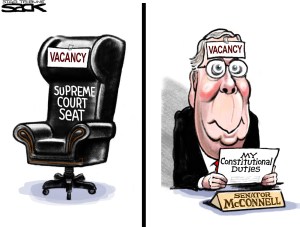 but it’s not easy at all. I want to try to discuss a lot of upcoming things that will be important including the SCOTUS decision on the Texas Trap laws regarding abortion and abortion clinics. These law certainly create an undue burden and they reflect specific religious view rather than medical or biological science. Here’s a few reads to prepare us all because it’s important for all of us to understand this basic constitutional right.
Abortion opponents regularly talk as though no restriction is off the table when it comes to stripping away reproductive rights. And supporters of abortion rights don’t always set them straight. If we don’t know what our established rights are, we can’t defend them. Pro-choicers need to know why abortion is a constitutional right and what boundaries the U.S. Supreme Court has set out to protect it.
1. Abortion is protected by the rights to bodily integrity and to make decisions about family. The Court explained that decades ago.
The 14th Amendment prohibits states from depriving a person of liberty without due process of law. A person has the right to end a pregnancy without undue interference from the government because that right to liberty includes (1) the right to make decisions about family and (2) the right to bodily integrity.
However, in order to portray abortion rights as illegitimate, conservatives like to argue—inaccurately—that the Court legalized abortion in Roe v. Wade by inventing a right to privacy that is not grounded in the Constitution’s actual text.
In the pre-Roe contraception case Griswold v. Connecticut (1965), the Court did hold that “penumbras, formed by emanations” or various interpretations of the First, Third, Fourth, Fifth, and Ninth Amendments protect a right to privacy. But in deciding Roe, the Warren court located the right to privacy in the 14th Amendment’s explicit protection of the right to liberty. Regardless, the Court’s understanding of the rights that protect reproductive freedom expanded beyond just privacy decades ago.
Privacy is barely mentioned in Planned Parenthood v. Casey, which established the current law governing abortion rights more than 20 years ago. “The controlling word in the cases before us is ‘liberty,’” the decision explained. It was settled law prior to Roe that liberty includes “the right to make family decisions and the right to physical autonomy.”
Privacy is also a constitutional right, and it was indeed violated by the laws at issue in Roe and its companion case,Doe v. Bolton. Those laws required a woman seeking an abortion to share her reasons for wanting the procedure with legal or medical authorities to have any hope of receiving legal abortion care. However, the law and discourse around privacy at the time of Roe implied a woman should be permitted to use contraception or end a pregnancy because the state should not interfere in decisions made in secret with the permission of her doctor, husband, father, pastor, or others. Casey instead properly recognized that the 14th Amendment protects a person’s right to control her body and destiny.
So why has the idea persisted that all we’ve got is a privacy right made up out of thin air? A counterintuitive and less textually based right serves abortion opponents, but abortion rights advocates also have a history of telling us abortion restrictions are primarily a threat to privacy. As William Saletan documented in Bearing Right: How Conservatives Won the War on Abortion, in the run-up to Casey, pro-choice leaders emphasized privacy on the advice of pollsters and political consultants to appeal to anti-government, anti-welfare, anti-tax, and anti-integration sentiments. While reproductive rights lawyers argued to the Supreme Court that the Constitution’s protection of autonomy, bodily integrity, and equality protected abortion access, outside of court pro-choice leaders told the public the right at stake was privacy. But, ultimately, the Casey decision provided a much fuller discussion of why abortion is constitutionally protected by rights beyond privacy.
Abortion is protected by the due process clauses of the Fifth Amendment (which restricts the federal government) and the 14th Amendment (which was added to the Constitution to restrict the states). As Casey explained, “It is a promise of the Constitution that there is a realm of personal liberty which the government may not enter.” Using the force of law to compel a person to use her body against her will to bring a pregnancy to term is a violation of her physical autonomy and decisional freedom—which the Constitution does not allow.
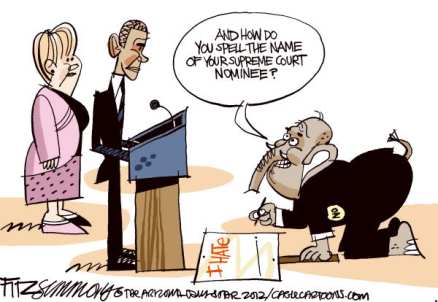 Follow the link to read about the other two basic rights that include:” 2. Any pre-viability ban is unconstitutional. Period.” and “3. Casey‘s “undue burden” standard is a meaningful protection of abortion rights when courts apply it properly.”
There’s no doubt that the Texas Trap Law creates an “undue” burden. Clinic closures have left the few remaining clinics overwhelmed.
The war on abortion access in Texas has already fundamentally shifted the landscape of women’s lives in the state. Now, the fallout continues: The closure of Planned Parenthood (PP) clinics in the state—which once served as primary sources of reproductive health care for women there—has left the few clinics remaining in west Texas underfunded, understaffed, and overwhelmed by demand.
According to new research, 60 percent of women receiving a low salary who were of reproductive age accessed health care through PP before the cuts and defunding which took place in 2013. The majority of those patients have since been directed to Texas Tech University and Midland County Health Services (MCHS) after PP’s clinics in west Texas closed—increasing demand at an overwhelming rate for their capacity to provide services.
“There are women [who] need these services but can’t afford them and we see as many as we can,” Michael Austin, director of MCHS, told Women’s Health Policy Report. “But the state program to help these folks along has basically evaporated. So I’m afraid there are probably a lot of folks flying under the radar who need care and aren’t getting it.” Austin pointed to the challenges of seeking funding in a state that has “eliminated or severely messed up” many of their programs which provide reproductive health care to women.
In 2011, the Texas State Assembly passed legislation which blocked funding to women’s health clinics, including Planned Parenthood, and cut the state’s family planning budget by two-thirds. Two years later, the draconian anti-abortion bill known as HB2 was signed into law by Governor Rick Perry, putting in place numerous obstacles meant to shutter clinics and restrict women’s access to safe and legal abortion. HB2 requires that abortion providers have admitting privileges at a local hospital and clinics are licensed ambulatory centers. It also bans surgical abortion after 20 weeks and medication abortion after seven. (Medication abortion is the most cost- and time-effective abortion procedure.)
HB2’s impact was immediate and drastic. 82 percent of family planning clinics closed. The number of abortion practitioners decreased by over 75 percent. Over half of the clinics performing abortion closed, which in turn drastically increased the time it would take for women to make an appointment to 28 days— essentially rendering the option of medication abortion moot. When it comes to clinics, Texas is in crisis.
The Supreme Court has declined to hear the Connecticut law banning assault weapon as well as the challenge to other state laws. This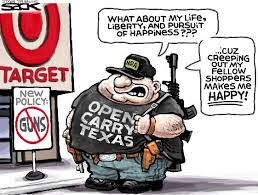 leaves the bans in place.
SCOTUS will look at certain key rights of jailed inmates that have illegal immigration status.
The Supreme Court announced Monday that it will take up a case exploring when immigrants detained solely for immigration violations have the right to be released from jail.
The justices agreed to consider a federal appeals court decision that essentially found detained immigrants were entitled to a bond hearing after six months in custody and every six months thereafter.
The high court’s announcement comes as immigrant rights advocates are awaiting a Supreme Court decision on the legality of President Barack Obama’s executive actions granting quasi-legal status and work permits to millions of immigrants who entered or stayed in the U.S. illegally.
In that case, the Obama administration is aligned with most immigrants rights groups. However, in the case the court said Monday that it would take up, the Obama administration is pressing for fewer rights for detained immigrants. In fact, the administration is asking the justices to overturn the 9th Circuit Court of Appeals ruling that found immigrants have the right to regular review of their detention.
The newly-accepted case, Jennings v. Rodriguez, could also explore when immigrants accused of ties to terrorism have to be released if authorities are having difficulty deporting them.
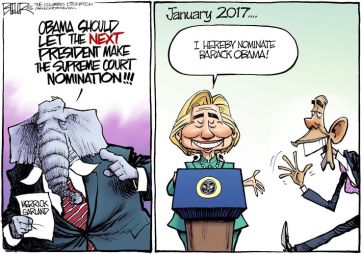 SCOTUS blog has some basic information on the remaining cases in the docket. Here’s a few of the remaining 13.
Between tomorrow morning, when the Justices will take the bench at ten o’clock, and the end of June, the Court is expected to issue thirteen rulings in cases involving everything from tribal-court jurisdiction to abortion, immigration, and the scope of federal laws prohibiting political corruption. Here are summaries of each pending case:
Dollar General Stores v. Mississippi Band of Choctaw Indians (argued December 7, 2015). This case stems from accusations by a thirteen-year-old member of the tribe that a manager at a Dollar General store within the tribe’s reservation had sexually molested him while the boy was interning at the store. The child and his parents filed a lawsuit against the manager and the store in tribal court, arguing that the store was liable for the manager’s conduct. The issue before the Court is whether the tribal court has jurisdiction over tort claims against defendants, like Dollar General, who are not members of the tribe.
Fisher v. University of Texas at Austin (argued December 9, 2015). This case, a challenge to the university’s consideration of race in its undergraduate admissions process, is on its second trip to the Court. In 2013, the Court sent the case back to the lower courts for a more critical look at whether the university really needed to consider race to achieve a diverse student body. After the Fifth Circuit once again upheld the policy, the Court agreed to weigh in. Unlike some of the Court’s other high-profile cases this Term, no one expects the Court to deadlock: Justice Elena Kagan is not participating, which in the wake of Justice Antonin Scalia’s death leaves the Court with just seven Justices to decide the case.
Utah v. Strieff (argued February 22, 2016). When a police officer stops a pedestrian in violation of the law, asks him for identification, discovers that there is a traffic warrant for his arrest, arrests him, and in the process of searching him discovers drug paraphernalia and methamphetamines, can the evidence found in the search of the pedestrian be used against him? Edward Strieff argues that it cannot: because the police officer’s stop was illegal, then anything obtained as a result of the stop is also tainted. The state, on the other hand, contends that the evidence should be admitted because it resulted from the lawful warrant for his arrest, rather than the illegal stop.
Taylor v. United States (argued February 23, 2016). The petitioner in this case, David Taylor, was part of a Virginia gang that robbed drug dealers. The two robberies that led to this case, however, did not yield any drugs – only cellphones, jewelry, and a small amount of money. Taylor was indicted on federal charges that he had violated the Hobbs Act, which punishes robberies and extortion but applies only when the defendant “obstructs, delays, or affects commerce or the movement of any article or commodity in commerce.” The question before the Court is whether the federal government is required to prove facts to show that the defendant’s conduct actually affects commerce.
Voisine v. United States (argued February 29, 2016). Stephen Voisine and William Armstrong, the other petitioner in this case, both pleaded guilty in state court to misdemeanor assaults on their respective domestic partners. Several years later, each man was charged with violating a federal law that prohibits the possession of firearms and ammunition by individuals who have previously been convicted of a misdemeanor crime of domestic violence. Voisine and Armstrong contend their state convictions do not automatically qualify as misdemeanor crimes of domestic violence because the state-law provisions can be violated by conduct that is merely reckless, rather than intentional.
Whole Woman’s Health v. Hellerstedt (argued March 2, 2016). This is a challenge to the constitutionality of two provisions of a Texas law regulating abortion in that state. One provision requires doctors who perform abortions to have privileges to admit patients to a local hospital; the other requires abortion clinics to have facilities that are comparable to outpatient surgical centers. Texas contends that these new laws are constitutional because they were intended to protect women’s health, while the challengers argue that the law was actually intended to close most clinics and therefore limit women’s access to abortions.
RJR Nabisco v. The European Community (argued March 21, 2016). The issue in this case is whether and to what extent the Racketeer Influenced and Corrupt Organizations Act (RICO), a 1970 law that was originally enacted to target organized crime, applies outside the United States. The European Community filed a lawsuit in the United States, seeking to hold RJR liable for what it says is the company’s role in an international money-laundering plot that harmed European countries. RJR counters that nothing in the law suggests that Congress intended it to apply to a situation like this. Justice Samuel Alito is almost certainly writing the Court’s opinion in this case, because he is the only Justice who has not yet written for the Court’s March sitting; based on the oral argument, that could bode well for RJR.
United States v. Texas (argued April 18, 2016). This case is a challenge to an Obama administration policy, announced in November 2014, that would allow some undocumented immigrants to apply to stay in the country and work legally for three years. Before the policy could go into effect, Texas and a large group of other states went to court to block its implementation, arguing that the administration lacks the authority to issue a policy like this. But before the Supreme Court can weigh in on that question, it will also have to agree that the states have the legal right, known as “standing,” to challenge the policy at all; the lower courts ruled that they did, because at least Texas would incur additional costs from the undocumented immigrants who would become eligible for driver’s licenses if the policy goes into effect.
Birchfield v. North Dakota (argued April 20, 2016). Twelve states and the National Park Service impose criminal penalties on suspected drunk drivers who refuse to submit to testing to measure their blood-alcohol levels. The question before the Court is whether those penalties violate the Fourth Amendment, which only allows police to “search” someone if they have a warrant or one of a handful of exceptions to the warrant requirement applies. Three drivers from North Dakota and Minnesota argue that neither of those conditions is met, and so the laws must fall.
Encino Motorcars v. Navarro (argued April 20, 2016). This case requires the Court to weigh in on the interpretation of the Fair Labor Standards Act, which generally requires employers to pay overtime to employees who work for more than forty hours in a week but also contains a variety of exceptions – including for a salesman whose primary job is selling or servicing cars. The respondents in this case are service advisors at a car dealership, who argue that they are not included in the exemption and are therefore entitled to overtime.
You can check out the rest on the link to SCOTUS blog. So, there’s a lot of interesting things coming down the pipe. We’ll definitely be following a lot of them.
There’s one piece of SCOTUS gossip that you might be interested in today. Check out this lede by David Badash: “DC Insider Report SCOTUS Justice Clarence Thomas Thinking of Retiring Throws Twitter Into Frenzy.”
The Washington Examiner Sunday afternoon posted a piece by DC insider columnist Paul Bedard that claims uber-conservative Supreme Court Justice Clarence Thomas “is mulling retirement after the presidential election, according to court watchers.” Those “court watchers” of course are unnamed, so the actual source of the claim is unknown.
It could be true, it could be false, but the implications of course are tremendous. Assuming Republicans in the Senate successfully keeps their vow to not confirm any SCOTUS justice nominated by President Obama, and wait until the next president takes office, this would mean the next president would automatically nominate not one but two justices to the nation’s top court, controlling its destiny for decades.
So naturally, Clarence Thomas began trending on Twitter.
Follow the link for the Twitter Frenzy.
What’s on your reading and blogging list today?
h/t to Delphyne
Monday Reads
Posted: May 16, 2016 Filed under: abortion rights, Affordable Care Act, Affordable Care Act (ACA), birth control, SCOTUS, social justice, Vagina, War on Women 27 Comments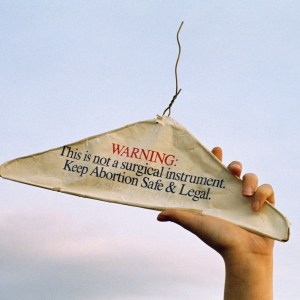 Good Morning!
We have an interesting SCOTUS decision/nondecision just announced on the challenge to the Affordable Health Care’s provision for Birth Control. Basically, they sent the case back to the lower courts. I’ve noticed a lot of women’s groups are beginning to take notice of the assault on our reproductive rights. Remember, Hillary Clinton will appoint the next Supreme Court Justice if President Obama’s selection continues to be the victim of right wing stalling. This coming election means women’s lives are at stake.
In a surprise move Monday, the Supreme Court punted on a major Obamacare case challenging the law’s contraceptive mandate, and specifically, how it accommodates religious nonprofits that object to birth control. The Supreme Court sent the case back to lower courts to examine an alternative accommodation to the mandate that the court had been briefed on by both parties in the case after the oral arguments.
The move — which comes as the Supreme Court is down a justice with Justice Antonin Scalia’s death — allowed the court to avoid what looked like a split decision after March’s oral arguments. The Supreme Court was able to stay away from the thorny trade-offs between health care policy and religious freedom, a legal landscape that got much more complicated after the Supreme Court’s ruling in 2014’s Hobby Lobby case.
The challenge the court weighed in on Monday was Zubik v. Burwell. It was consolidation of cases brought by religious nonprofits, including The Little Sister’s of the Poor, who objected to the work-around set up by the Obama administration to provide contraceptive coverage to employees of organizations opposed to birth control on religious grounds. The non-profits said that even filling out the form or sending a government the letter declaring their objections to covering birth control was a burden on their faith, because it set in motion the process by which their employees received the coverage from their insurers, though that coverage was not paid for or part of the employer plans. Lower courts’ have overwhelmingly rejected the challengers’ argument that the workaround violated 1993’s Religious Freedom Restoration Act (RFRA), though one appeals court ruled in their favor. (That case was not among those consolidated for the Supreme Court).
In sending the case back down to lower courts, the Supreme Court signaled that it believed a compromise could be worked out that didn’t involve weighing the larger issues involved in the RFRA challenge.
“The Court expresses no view on the merits of the cases. In particular, the Court does not decide whether petitioners’ religious exercise has been substantially burdened, whether the Government has a compelling interest, or whether the current regulations are the least restrictive means of serving that interest,” Monday’s opinion said. The opinion also stipulated that whatever was worked out should not affect “the ability of the Government to ensure that women covered by petitioners’ health plans” have access to contraceptive coverage.
RFRA was at the heart of the Supreme Court’s decision in 2014’s Hobby Lobby case — which said that certain for-profit companies that object to birth control could use the nonprofit workaround that was on trial in Zubik.
 Lyle Denniston writing for SCOTUSBLOG called it “A compromise, with real impact, on birth control”.
One reading of Monday’s developments was that the Court, now functioning with eight Justices, was having difficulty composing a majority in support of a definite decision on the legal questions. Thus, what emerged had all of the appearance of a compromise meant to help generate majority support among the Justices. With this approach, the Court both achieved the practical results of letting the government go forward to provide the contraceptive benefits and freeing the non-profits of any risk of penalties, even though neither side has any idea — at present — what the ultimate legal outcome will be and, therefore, what their legal rights actually are under the mandate.
Those uncertainties are now likely to linger through the remainder of President Obama’s term in office, which ends next January. The appeals courts may well order the filing of new legal briefs, and may hold new hearings, before issuing a new round of rulings on the controversy. However, the entire future of the ACA, including its birth-control mandate, may now depend upon who wins the presidential election this year and which party has control of Congress when it reassembles in 2017.
The two issues that the Court had agreed to rule on, and then left hanging at least for now, were whether the ACA mandate violates the federal Religious Freedom Restoration Act by requiring religious non-profits that object to contraceptives to notify the government of that position, and whether the move by the government to go ahead and arrange access to those benefits for those non-profits’ employees and students was the “least restrictive means” to carry out the mandate.
Doing on Monday much the same that it had done in several temporary orders at earlier stages of this controversy, the Court accepted that the non-profits already had given the federal government sufficient notice of their objection to the mandate, and that the government could use that notice as the basis for going ahead to provide actual access, at no cost, to the employees and students of those institutions.
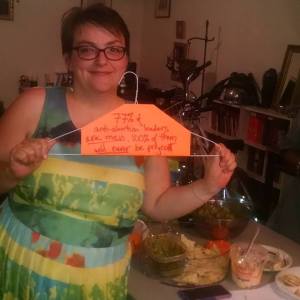
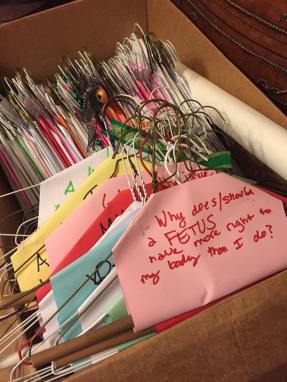
The pictures you’re seeing are from a Friday night event where activists here in New Orleans –including me–assembled and composed Wire Hangergrams for Louisiana Governor John Bel Edwards who is supporting a 72 hour waiting period here in Louisiana. We just can’t seem to keep these dirty old men out of our private parts!!! They don’t think we can make important decisions either. This is really getting disgusting.
The Louisiana legislature on Wednesday passed a bill requiring women to wait three days before receiving an abortion, tripling the state’s existing waiting time in one of the most stringent regulations of its kind nationally.
Governor John Bel Edwards, a Democrat, has said he plans to sign the bill championed by anti-abortion groups. It passed with wide support from the Republican-controlled legislature.
The bill requires a woman to wait at least 72 hours after a state-mandated ultrasound for the procedure. The current waiting time is 24 hours, the same as in most states with waiting periods.
Only five other states require 72-hour waiting periods: Missouri, North Carolina, Oklahoma, South Dakota and Utah.
The measures are among a wave of laws being adopted by states as conservatives seek to chip away at the U.S. Supreme Court’s landmark 1973 Roe v. Wade decision to legalize abortion.
I voted for the man but just couldn’t bring myself to work on his campaign even though he’d promised to not mess with things like  Planned Parenthood. You may recall I was incensed about an ad he ran. I found the ad appalling. He just seems to be another example of a man drenched in patriarchy who can’t keep his personal need to control the women in his life away from the rest of us.
This is another weird tale on fellow New Orleanian Wendall Pierce who actually physically assaulted a woman supporting Bernie Sanders. Pierce has been an outspoken Clinton supporter which is fine. This action is beyond wrong.
Wendell Pierce, the New Orleans-born actor known for his work in the HBO series “The Wire” and “Treme,” was arrested Saturday in Atlanta after he was accused of attacking a Bernie Sanders supporter,according to the website TMZ and online Fulton County police records.
Pierce was at the Loews Hotel in Atlanta about 3:30 a.m. when he began a political discussion with the woman and her boyfriend, according to the celebrity news website.
TMZ said a hotel source reported that Pierce, a supporter of Democratic presidential candidate Hillary Clinton, grabbed the woman’s hair and slapped her in the head after learning she preferred Clinton’s Democratic rival, Bernie Sanders.
On Sunday, the Atlanta Police Department confirmed that Pierce had been arrested at that hotel, where he was staying as a guest.
“The incident did not rise to anything significant, so no special notification was made … it was treated like any other arrest a patrol officer conducts,” police spokesman Donald Hannah told WWL-TV in an email shared with The New Orleans Advocate. “Mr. Pierce made no indication he was famous, nor did the officer inquire.”
Police records show Pierce, 52, was booked and released on Saturday. He was booked on simple battery and posted an online bond of $1,000, the records indicate.
Pierce, who now lives in Pasadena, California, was raised in Pontchartrain Park, the first African-American postwar suburb in New Orleans, and was active in efforts to rebuild it after Hurricane Katrina.
The actor and producer has been in more than 30 films and nearly 50 television shows and has performed in numerous stage productions, including Broadway productions of “The Piano Lesson,” “Serious Money” and “The Boys of Winter.”
He is perhaps best known for his roles as Detective Bunk Moreland in “The Wire,” trombonist Antoine Batiste in “Treme” and Michael Davenport in the movie “Waiting to Exhale.”
 This primary season needs to end. The shenanigans in Nevada have shown how little control the Sanders campaign has over its most zealous supporters. Things are getting way out of control.
Ben Carson is beginning to leak the short list for Trump’s VP and it isn’t a pretty one. Many folks think that it will most likely be Jan Brewer but Sarah Palin’s name is on it. So is Chris Christie’s which is basically no surprise to me. I really doubt either of them would bring anything to the ticket since they’re as nasty and crazy as Trump himself. They also don’t represent any new votes.
Ben Carson, the neurosurgeon turned presidential candidate turned unfiltered pitchman for Donald Trump and now part of the presumptive nominee’s vice presidential search committee, sat in the back of a Town Car with his wife, Candy, on his way to a televised interview. He had just explained to the reporter riding along that he wanted no role in a Trump administration when news arrived of a new poll naming him as the best-liked of a list of potential running mates.
“Who else was on the list?” he asked quietly, maintaining his usual inscrutable calm. The most favorably regarded contenders after himself, he was told, were John Kasich, Marco Rubio, Ted Cruz, Sarah Palin and Chris Christie.
“Those are all people on our list,” he said.
Seriously! Trump/Palin. How much argle bargle could one country stand?
I’m making it short today because I have a long day so what’s on your reading and blogging list? This is an open thread so please share!!!
Friday Reads
Posted: October 2, 2015 Filed under: abortion rights, American Gun Fetish, morning reads, right wing hate grouups, the GOP, U.S. Politics, Voting Rights, War on Women, We are so F'd, Women's Rights | Tags: Domestic Terrorists, gun violence, Violence against Planned Parenthood, voting rights 8 Comments It’s a great autumn weekend down here in New Orleans! I hope your day and weather are splendid too!
There’s a lot of news up today but the first thing I want to cover is the clarification made by the Vatican on the Kentucky Bigot Brigrade and the supposed papal visit. It looks like we have a case of extreme exaggeration or “telling a whopper” as we like to call it in my neck of the woods.
According to the Vatican, Pope Francis did not invite Kim Davis to meet him. There was no secret meeting, and the Pope had no idea who she was when he met her.
In a statement, the Vatican clarified that Pope Francis didn’t even know who Kim Davis was:
The brief meeting between Mrs. Kim Davis and Pope Francis at the Apostolic Nunciature in Washington, DC has continued to provoke comments and discussion. In order to contribute to an objective understanding of what transpired I am able to clarify the following points:
Pope Francis met with several dozen persons who had been invited by the Nunciature to greet him as he prepared to leave Washington for New York City. Such brief greetings occur on all papal visits and are due to the Pope’s characteristic kindness and availability. The only real audience granted by the Pope at the Nunciature was with one of his former students and his family.
The Pope did not enter into the details of the situation of Mrs. Davis and his meeting with her should not be considered a form of support of her position in all of its particular and complex aspects.
The Pope briefly met Kim Davis as part of a group, had no idea who she was, said hello to her, and moved on.
The Vatican’s version of events is the opposite of what Davis’s supporters are claiming happened. The anti-gay marriage crowd claimed that the Pope met with Davis in secret and expressed his support for her bigotry. The right has been using the imaginary meeting as an endorsement of their out of step views.
The extremist conservative movement’s attempt to use Pope Francis for propaganda purposes has fallen apart. Davis’s invitation had been extended by Archbishop Carlo Maria Viganò, the envoy in Washington. Viganò is well known to have gone further than others in the church in his campaign against gay marriage. The Pope did not invite Davis to meet him. In fact, according to the Vatican, Pope Francis had not been briefed on the situation and knew nothing about Davis.
The fact that the Vatican took such pains to distance themselves from Davis could logically be viewed as a rejection of her beliefs.
So, hopefully the Archbishop will be called to the Vatican woodshed and there will be a great big huge discussion on rending unto Caesar that which is Caesar’s. Either way, the Kentucky Bigot Brigade appears to following the usual tradition of lying your way to to what you think gawd wants.
Yet another abortion advocate is the target of death threats from the “pro-life” set. I’ve had all kinds of run ins with these folks over a period of about 30 years and it always ends in threats of violence. Lies and violence are their trademarks.
A few weeks ago, writers Amelia Bonow and Lindy West began the hashtag campaign #ShoutYourAbortion to encourage the one in three women who have had an abortion to speak out about their experience instead of being shamed into silence. Then came the death threats.
Bonow told the New York Times that the idea behind the campaign wasn’t to glorify the procedure, but instead to destigmatize it during a time when people are so angry about the topic they’re setting Planned Parenthood clinics on fire.
“A shout is not a celebration or a value judgment, it’s the opposite of a whisper, of silence,” Bonow told the Times. “Even women who support abortion rights have been silent, and told they were supposed to feel bad about having an abortion.”
In a social-media world that’s this upsetting and dangerous, no wonder some celebrities hire Twitter surrogates.
Increased violence against Planned Parenthood Clinics is on the FBI’s radar and has come about as the result of the intense lying of Congressional Republicans and idiots like Republican Presidential Wannabe Fiorina. Nothing ever good comes from whipping up a bunch of religious fanatics. Check the Middle East region if you need further proof.
As the national conversation on Planned Parenthood has become louder and more heated, politicians have warned that it could ignite acts of violence against clinics and neighborhood facilities.
Late Wednesday, for the second time in weeks, a Planned Parenthood center in Thousand Oaks came under attack, this time by an arsonist or arsonists who authorities believe smashed out a window, splashed gasoline inside the clinic and then ignited it.
Authorities say there’s no evidence the attack was related to the larger debate on Planned Parenthood, but said the West Hillcrest Drive facility was previously attacked by vandals six weeks ago.
No direct theats had been made to the facility or clinic workers before the fire, said Ventura County sheriff’s Capt. John Reilly.
A few plants near the window were blackened, but the small fire had been extinguished quickly because of a sprinkler system, Lohman said.
 A fire in a Washington State Planned Parenthood that happened in early September was already ruled arson. As previously mentioned, the FBI is warning local law enforcement of the possibility of increased domestic terrorist activites aimed at Planned Parenthood.
The U.S. Federal Bureau of Investigation has warned of an increasing number of attacks on reproductive healthcare facilities. “It is likely criminal or suspicious incidents will continue to be directed against reproductive health care providers, their staff and facilities,” an FBI Intelligence Assessment reads,according to a CBS report Friday.
The finding comes after a July video from the pro-life Center for Medical Progress, which releasedsecretly taped footage of Planned Parenthood officials discussing how they use tissues from aborted fetuses for medical research.
Since then, federal investigators have reported nine criminal or suspicious incidents at reproductive health centers across the country, which included cyberattacks, threats and arson. The FBI believes the incidents were “consistent with the actions of lone offenders using tactics of arsons and threats all of which are typical of the pro-life extremist movement,” sources told CBS.
 So, this is in keeping with the latest mass shooting whose perpetrator is a self-confessed NAZI and “conservative Republican” who disliked “organized religion”. Chris Harper Mercer is yet another example of a lone wolf, young white male shooter with mental illness issues.
Mr. Mercer appeared to have sought community on the Internet. A picture of him holding a rifle appeared on a MySpace page with a post expressing a deep interest in the Irish Republican Army. It included footage from the conflict in Northern Ireland set to “The Men Behind the Wire,” an Irish republican song, and several pictures of gunmen in black balaclavas. Another picture showed the front page of An Phoblacht, the party newspaper of Sinn Fein, the former political wing of the I.R.A.
A picture of Mr. Mercer also appeared on a long-dormant dating website profile registered in Los Angeles. On it, he described himself as an “introvert” with a dislike for “organized religion.”
In the offline world, Mr. Mercer’s mother sought to protect him from all manner of neighborhood annoyances, former neighbors in Torrance said, from loud children and barking dogs to household pests. Once, neighbors said, she went door-to-door with a petition to get the landlord to exterminate cockroaches in her apartment, saying they bothered her son.
“She said, ‘My son is dealing with some mental issues, and the roaches are really irritating him,’ ” Julia Winstead, 55, said. “She said they were going to go stay in a motel. Until that time, I didn’t know she had a son.”
We’ve said this before, but American’s gun fetish is causing our country to look like some kind of throwback to the Stone Age. Except,  stone axes can kill one person. Sophisticated guns kill millions of Americans. Here’s “America’s fucking awful, truly unique gun violence problem,visualized” per Ezra Klein.
Whenever a mass shooting occurs, supporters of gun rights often argue that it’s inappropriate to bring up political debates about gun control in the aftermath of a tragedy. For example, Louisiana Gov. Bobby Jindal, a strong supporter of gun rights, criticized President Barack Obama for “trying to score cheap political points” when the president mentioned gun control after a mass shooting in Charleston, South Carolina.
But if this argument is followed to its logical end, then it will never be the right time to discuss mass shootings, as Christopher Ingraham pointed out at the Washington Post. Under the Mass Shooting Tracker’s definition of mass shootings, America has nearly one mass shooting a day. So if lawmakers are forced to wait for a time when there isn’t a mass shooting to talk gun control, they could find themselves waiting for a very long time.
We’ll undoubtedly see more stories blaming mental illness. But is it the real issue in these domestic terrorist situation? Read this great rant by Arthur Chu on Salon.
I get really really tired of hearing the phrase “mental illness” thrown around as a way to avoid saying other terms like “toxic masculinity,” “white supremacy,” “misogyny” or “racism.”
We barely know anything about the suspect in the Charleston, South Carolina, atrocity. We certainly don’t have testimony from a mental health professional responsible for his care that he suffered from any specific mental illness, or that he suffered from a mental illness at all.
We do have statistics showing that the vast majority of people who commit acts of violence do not have a diagnosis of mental illness and, conversely, people who have mental illness are far more likely to be the victims of violence than the perpetrators.We know that the stigma of people who suffer from mental illness as scary, dangerous potential murderers hurts people every single day — it costs people relationships and jobs, it scares people away from seeking help who need it, it brings shame and fear down on the heads of people who already have it bad enough.
But the media insists on trotting out “mental illness” and blaring out that phrase nonstop in the wake of any mass killing. I had to grit my teeth every time I personally debated someone defaulting to the mindless mantra of “The real issue is mental illness” over the Isla Vista shootings.
“The real issue is mental illness” is a goddamn cop-out. I almost never hear it from actual mental health professionals, or advocates working in the mental health sphere, or anyone who actually has any kind of informed opinion on mental health or serious policy proposals for how to improve our treatment of the mentally ill in this country.
There are so many ways to see how our country is marching backwards from modernity that it sometimes makes my head  hurt badly. This is Hillary on Alabama’s attempt to remove DMVs and access to picture IDS in their counties that are majority black. Alabama is trying to reinstate Jim Crow just as every Republican in Congress wants us back to the days before Birth Control and Abortion was legal and acessible.
Hillary Clinton slammed the closure of 31 driver’s license offices in Alabama — many in majority-black counties — as “a blast from the Jim Crow past.”
The closures, announced this week, hit majority-black counties especially hard. Under Alabama’s new tougher version of its voter ID law, voters must have a photo ID, such as a driver’s license, to vote. Every Alabama county with at least 75 percent African American registered voters will lose its DMV office, according to local reports.
“This is only going to make it harder for people to vote,” Clinton said in a statement Friday. “It’s a blast from the Jim Crow past.”
Clinton has made voting rights a major platform of her presidential campaign. Alabama has defended the DMV closures, saying that there are other options for residents to obtain an ID that will enable them to vote.
Read Clinton’s full statement below:
“I strongly oppose Alabama’s decision to close driver’s license offices across the state, especially in counties that have a significant majority of African Americans. Just a few years ago, Alabama passed a law requiring citizens to have a photo ID to vote. Now they’re shutting down places where people get those photo IDs. This is only going to make it harder for people to vote. It’s a blast from the Jim Crow past.
“We’re better than this. We should be encouraging more Americans to vote, not making voting harder. As President, I’ll push for automatic voter registration for every American when they turn 18, and a new national standard of at least 20 days of early in-person voting in every state. And I’ll work with Congress to restore key protections of the Voting Rights Act.“African Americans fought for the right to vote in the face of unthinkable hatred. They stood up and were beaten down, marched and were turned back. Some were even killed. But in the end, the forces of justice overcame. Alabama should do the right thing. It should reverse this decision. And it should start protecting the franchise for every single voter, no matter the color of their skin.”
It may be time to take to the streets again.
The cell phones in the pockets of the dead students were still ringing when we were told that it was wrong to ask why. As the police cleared the bodies from the Virginia Tech engineering building, the cell phones rang, in the eccentric varieties of ring tones, as parents kept trying to see if their children were OK. To imagine the feelings of the police as they carried the bodies and heard the ringing is heartrending; to imagine the feelings of the parents who were calling — dread, desperate hope for a sudden answer and the bliss of reassurance, dawning grief — is unbearable. But the parents, and the rest of us, were told that it was not the right moment to ask how the shooting had happened — specifically, why an obviously disturbed student, with a history of mental illness, was able to buy guns whose essential purpose is to kill people — and why it happens over and over again in America. At a press conference, Virginia’s governor, Tim Kaine, said, “People who want to … make it their political hobby horse to ride, I’ve got nothing but loathing for them. … At this point, what it’s about is comforting family members … and helping this community heal. And so to those who want to try to make this into some little crusade, I say take that elsewhere.”
What’s on your reading and blogging list today?

 peej
peej Carissa
 bostonboomer
 dakinikat
 ecocatwoman
 mablue2
 Mama Lopez
 peggysue22
 quixote
 skydancingguestblogger
 Mona (aka Wonk the Vote)



 Sky Dancing
Recent Comments