
Thursday Reads
Posted: March 24, 2011 Filed under: Barack Obama, education, fundamentalist Christians, morning reads, right wing hate grouups, Social Security, The Media SUCKS, torture, U.S. Economy, U.S. Politics, unemployment, worker rights | Tags: Barack Obama, Barry Bonds, Bart Stupak, Elizabeth Taylor, food stamps, Jason Leopold, Jeff Kaye, Republicans, Social Security, Torture, unions, war on schools 32 Comments
R.I.P, Liz Taylor
Good Morning!!
I’ve got a potpourri of news items for you this morning. I realize I’ve been focusing too heavily on stories from the Middle East and Africa. I’ve just so gotten fascinated with all the rebellions going on. Anyway, this post will be dedicated to stories about events in the U.S.
Yesterday we lost the last great movie star, Elizabeth Taylor. She had been in the hospital for weeks with congestive heart failure. Today she died, at 79. From The New York Times:
By the time Elizabeth Taylor left this mortal coil at 79, she had cheated death with a long line of infirmities that had repeatedly put her in the hospital — and on front pages across the world — and in 1961 left her with a tracheotomy scar on a neck more accustomed to diamonds. The tracheotomy was the result of a bout with pneumonia that left her gasping for air and it returned her to the big, bountiful, hungry life that was one of her greatest roles. It was a minor incision (later, she had surgery to remove the scar), but it’s easy to think of it as some kind of war wound for a life lived so magnificently.
Unlike Marilyn, Liz survived. And it was that survival as much as the movies and fights with the studios, the melodramas and men (so many melodramas, so many men!) that helped separate Ms. Taylor from many other old-Hollywood stars. She rocketed into the stratosphere in the 1950s, the era of the bombshell and the Bomb, when most of the top female box-office draws were blond, pneumatic and classifiable by type: good-time gals (Betty Grable), professional virgins (Doris Day), ice queens (Grace Kelly). Marilyn Monroe was the sacrificial sex goddess with the invitational mouth. Born six years before Ms. Taylor, she entered the movies a poor little girl ready to give it her all, and did.
Ms. Taylor, by contrast, was sui generis, a child star turned ingénue and jet-setting supernova, famous for her loves (Eddie & Liz, Liz & Dick) and finally for just being Liz. “I don’t remember ever not being famous,” she said. For her, fame was part of the job, neither a blessing (though the jewels were nice) nor a curse. Perhaps that’s why she never looked defeated, unlike those who wilt under the spotlight. In film after film she appears extraordinarily at ease: to the camera born. She’s as natural in “National Velvet,” the 1944 hit that made her a star at 12, as she is two decades later roaring through “Who’s Afraid of Virginia Woolf,” proving once again that beauty and talent are not mutually exclusive, even in Hollywood.
I’m sure Liz would not be surprised to learn that the Westboro Baptist Church will picket her funeral. She was close friends with many gay men in Hollywood–Rock Hudson, James Dean, Montgomery Clift among them–and she worked tirelessly for AIDS causes. Meanwhile the pastor and members of the Westboro Baptist Church are mean-spirited, soulless haters.
There’s a nice tribute to Taylor at The Independent UK by Julie Burchill: Farewell then, Liz. You knew your beauty was a fuel worth burning
With the death of Elizabeth Taylor, the last of the Hollywood greats is finally gone. True to form – never a lady, barely ever a girl – this tough broad supreme battled on against ill-health for decades after her contemporaries overdosed on barbiturates, booze and self-loathing. And at a time when professional beauties seem terrified to show any sign of ageing lest they be shunted into character cameos in favour of some fresher flesh, Taylor was fascinating for being far less interested in leaving a good-looking corpse than in wringing every drop of the juice from every inch of the ride.
If that sounds a somewhat lewd metaphor, all the better. Married eight times, she was the anti-Marilyn; rather than combine a child’s face with an adult body and be prey to all the weirdos who might be attracted to such a pervy paradox, Taylor was a woman of the world from the get-go. Child stars are notorious for spending a couple of years on the ugly step while the studios wait for them to outgrow adolescent awkwardness, but she went straight from hugging Lassie to snogging Montgomery Clift, it seemed.
To see the teenage Taylor draw Clift towards her in the masterpiece A Place In The Sun (from the book of Theodore Dreiser’s An American Tragedy) with the words “Tell Mama – tell Mama all” is to witness one of the most extraordinary portrayals of lust ever created. And it didn’t stop when the cameras did; years later, according to her housekeeper, Marilyn Monroe would become obsessed with the apparently gay Montgomery Clift and repeatedly complain; “Liz Taylor has the Oscar, she has children, she even has Monty – she has everything!”
From being denounced by the Vatican in the Sixties as “an erotic vagrant” (I think they meant it as an insult, but it sounds gorgeous to me) to being hailed by the director of the UCLA Aids Institute as the “the Joan of Arc of Aids activism”, Taylor lived her life according to her own rules – more Wife of Bath than untouchable ideal of feminine perfection. Looking at the insipid contemporary film-star likes of Gwyneth Paltrow, for whom eating half a cupcake seems a walk on the wild side, this cursing, drinking, swashbuckling goddess is a reminder of when hell-raisers didn’t automatically have to be as mad, bad and sad as Charlie Sheen and Mel Gibson.
Here’s a nice video tribute I found on YouTube:
Now for the rest of the news, which as usual isn’t very good. The Republicans are trying to increase poverty by attacking food stamps and worker’s rights at the same time! They want to cut of food stamps for an entire family if one member goes on strike.
…[A] group of House Republicans is launching a new stealth attack against union workers. GOP Reps. Jim Jordan (OH), Tim Scott (SC), Scott Garrett (NJ), Dan Burton (IN), and Louie Gohmert (TX) have introduced H.R. 1135, which states that it is designed to “provide information on total spending on means-tested welfare programs, to provide additional work requirements, and to provide an overall spending limit on means-tested welfare programs.”
Much of the bill is based upon verifying that those who receive food stamps benefits are meeting the federal requirements for doing so. However, one section buried deep within the bill adds a startling new requirement. The bill, if passed, would actually cut off all food stamp benefits to any family where one adult member is engaging in a strike against an employer:
The bill also includes a provision that would exempt households from losing eligibility, “if the household was eligible immediately prior to such strike, however, such family unit shall not receive an increased allotment as the result of a decrease in the income of the striking member or members of the household.”
At FDL, Phoenix Woman dissects the latest media attacks on Social Security.
Ho-hum. Another day, another set of Peterson patsies explaining yet again why Grandma must starve so that their billionaire bosses and their buddies can keep their twenty-odd homes in the Hamptons and Hobe Sound:
Writing today on the op-ed page of The Washington Post, Robert Pozen makes the casethat liberals should support changes to Social Security. Mr. Pozen is a Democrat , though not necessarily a liberal one; he is a financial executive who served on President George W. Bush’s Social Security commission and in Mitt Romney’s administration in Massachusetts. But his argument is worth considering, whether you’re liberal or conservative.
So what’s the argument that the Pozen part of the Leonhardt-Pozen Legion of Doom tag team’s presenting? It’s their old favorite, the “Social Security is less progressive than it seems” bit of twaddle. How old is it? Why, it even comes pre-debunked, that’s how old it is.
To learn more, click on the link above.
I highly recommend reading this piece by Jeff Kaye, who has been researching and writing about torture for years now. He and Jason Leopold have been working together on a series at Truthout.
As part of a new investigative story, Truthout has published documents written by the former psychologist for SERE, and later CIA contract interrogator for the Bush torture program, Bruce Jessen. Before going to work for the CIA with his former SERE partner, psychologist James Mitchell, Jessen authored a 2002 “draft exploitation plan” for military use, based on his experiences as a SERE instructor. The newly-discovered documents, provided to Truthout by former SERE Air Force Captain Michael Kearns, were written back in 1989 when Jessen was transferred from his clinical role elsewhere in SERE to help staff a new survival training course for Special Mission Units undertaking dangerous assignments for Special Operations forces abroad.
Jason Leopold and I co-authored the new story, which includes a video interview with Captain Kearns, who helped hire Jessen back in 1989 for his new SERE role helping put together the class titled SV-91. The documents include notes for a portion of that class, known as “Psychological Aspects of Detention.” The other document is a paper by Jessen, “Psychological Advances in Training to Survive Captivity, Interrogation and Torture,” which was prepared for a symposium at that time: “Advances in Clinical Psychological Support of National Security Affairs, Operational Problems in the Behavioral Sciences Course.”
Jessen’s notes, in particular, demonstrate that this course material, which was “reverse-engineered” to provide a blueprint for the interrogation and detention policies of the Bush administration — some of which remain in use today — emphasized not just the ways to coercively interrogate an individual for intelligence purposes, but to “exploit” the detainee for a number of uses.
From Catherine Rampell at the NYT Economix blog: More Americans Dropping Out of the Labor Force. Apparently the drop in participation is not just due to the economic crisis. According to Rampell, more women are choosing not to work than in the past, and the the pending retirements of baby boomers are big contributors to the phenomenon.
This piece at The Daily Beast is a few days old, but still worth reading: Obama’s War on Schools
Over the past year, I have traveled the nation speaking to nearly 100,000 educators, parents, and school-board members. No matter the city, state, or region, those who know schools best are frightened for the future of public education. They see no one in a position of leadership who understands the damage being done to their schools by federal policies.
They feel keenly betrayed by President Obama. Most voted for him, hoping he would reverse the ruinous No Child Left Behind (NCLB) legislation of George W. Bush. But Obama has not sought to turn back NCLB. His own approach, called Race to the Top, is even more punitive than NCLB. And though over the past week the president has repeatedly called on Congress to amend the law, his proposed reforms are largely cosmetic and would leave the worst aspects of NCLB intact.
Read it and weep.
From CNN: Suspect in attempted bombing at MLK Day parade pleads not guilty
Kevin Harpham, 36, of Colville, Washington, made the plea during an arraignment hearing in federal court in Spokane. Harpham faces trial on charges of attempting to use a weapon of mass destruction and for possessing an unregistered explosive device.
Federal authorities arrested Harpham March 9, nearly two months after the January 17 discovery of a backpack containing a bomb along the Martin Luther King Day parade route in Spokane. The explosive device was found and disabled before the event began.
Officials called it an incident “of domestic terrorism” that could have resulted in “mass casualties,” had the bomb gone off.
I haven’t been following the Barry Bonds trial, but I was really angry when I read this: Witness says he knew of Bonds’ steroid use in 1999
Honestly, baseball should strike Bonds’ hitting records. It’s disgrace that he gets credit for passing Hank Aaron in home runs. Anyone who saw Bonds when he was younger had to know he was using steroids to get so big.
Poor Bart Stupak is afraid because of all the hate he got for voting for Obama’s health care bill.
After suffering through a “living hell” during negotiations on the healthcare law, former Rep. Bart Stupak (D-Mich.) finds it hard, a year later, to distance himself from his pivotal role.
“I guess I’m the face of healthcare,” Stupak told The Hill in an interview this week. “It goes with the territory.”
Last March, Stupak became the object of a flood of threats and obscene messages, left at his office and his home, as he helped hammer out a deal between anti-abortion-rights Democrats and the White House that was instrumental in passing healthcare reform through the House by a single-digit-margin.
Cry me a river, Bart.
That’s about all I’ve got for today. What are you reading and blogging about?
TGIFriday Reads
Posted: March 18, 2011 Filed under: Bahrain, Democratic Politics, Federal Budget, financial institutions, Foreign Affairs, Libya, Middle East, morning reads, Regulation, Social Security, U.S. Economy, U.S. Military, U.S. Politics | Tags: Bahrain protests, Budget fights, EPA, Harry Reid, Libya, no-fly zone, Social Security, US nuclear plants, US power plants, US response to Libya 43 Comments I can’t believe it’s Friday already. It just seems like my recent bout with the flu put me in some other time zone. There is so much going on right now my head is spinning from all the news. We have a nuclear melt down, another war with another madman, and congress nitpicking over little line items in the budget when there’s a sustained high rate of unemployment. What’s next?
The shipments—mostly small arms such as assault rifles and ammunition—appear to be the first confirmed case of an outside government arming the rebel fighters. Those fighters have been losing ground for days in the face of a steady westward advance by forces loyal to Libyan leader Moammar Gadhafi.
The Egyptian shipments are the strongest indication to date that some Arab countries are heeding Western calls to take a lead in efforts to intervene on behalf of pro-democracy rebels in their fight against Mr. Gadhafi in Libya. Washington and other Western countries have long voiced frustration with Arab states’ unwillingness to help resolve crises in their own region, even as they criticized Western powers for attempting to do so.
The shipments also follow an unusually robust diplomatic response from Arab states. There have been rare public calls for foreign military intervention in an Arab country, including a vote by the 23-member Arab League last week urging the U.N. to impose a no-fly zone over Libya.
SOS Hillary Clinton believes that the No-fly zone will require bombing. This has been indicated by some retired generals who have done similar actions in other UN actions like Bosnia. Clinton is in Tunisia and has been traveling in the region.
“A no-fly zone requires certain actions taken to protect the planes and the pilots, including bombing targets like the Libyan defense systems,” Clinton said in Tunis, her last stop on a trip that also took her to Cairo and Paris.
In all her stops, Clinton’s done a mix of stressing the need for democracy in post-revolution Tunisia and Egypt, and pushing for international cooperation in responding to the crisis in Libya. On Thursday, her only full day in Tunisia, Clinton promised that the United States “will stand with you as you make the transition to democracy, prosperity and a better future.”
Democrats are finally pushing back on the Republican canard that Social Security is bankrupt. Harry Reid also took on the falsehood that Social Security is some how related to the Federal Deficit. It’s about time.
Senate Majority Leader Harry Reid (D-NV) appeared on MSNBC last night, where he strongly rejected the idea that Social Security cuts should be on the table during current budget talks. “I’ve said clearly and as many times as I can, leave Social Security alone. Social Security has not added a single penny, not a dime, a nickel, a dollar to the budget problems we have. Never has. And for the next 30 years, it won’t do that,” Reid said. “Two decades from now, I am willing to take a look at it. I am not willing to take a look at it now.”
House Republicans, meanwhile, have stated their intention to suggest “bold reforms” for Social Security in their 2012 budget, which House Budget Committee Chairman Paul Ryan (R-WI) plans to release during the first week of April. At Politico’s “Playbook Breakfast” today, which Wonk Room attended, Ryan was asked about Reid’s position. Ryan said that Reid’s stance “just boggles my mind,” before later admitting that Social Security is “not a driver of our debt”
Politico reports that Republicans are trying to roll back financial reform.
Republicans clearly want to strike at the heart of banking reform with legislation attacking new regulations on derivatives, credit rating agencies and private equity firms. But their piecemeal approach suggests they are trying to do so without appearing to favor Wall Street over Main Street.
And for a party so vigilant on its messaging, the GOP doesn’t intend to swing the door wide-open for Democrats to go on the offensive in ways they couldn’t during the repeal debate over the far less popular health care law.
“There’s no question they didn’t like financial reform,” Rep. Barney Frank (D-Mass.), one of the law’s namesakes and top Democrat on the committee said of Republicans. “But they’re more respectful of the public appeal of this and are going about this at the edges.”
Obama held a presser yesterday and announced that he had ordered a review of safety at US nuclear facilities.
The Nuclear Regulatory Commission has conducted an “exhaustive study” of U.S. plants and they have been “declared safe for any number of extreme contingencies,” Obama said at the White House. Still, he said, a review should be conducted based on what is learned from the damage at the Japanese facility.
The president said the administration will keep the public informed about the nuclear crisis and sought to allay any health concerns in the U.S.
“We do not expect harmful levels of radiation to reach the United States,” including Hawaii, Alaska and territories in the Pacific, he said.
Obama’s remarks reinforced statements earlier today by NRC Chairman Gregory Jaczko that the government continually reviews safety and standards and will do so based on what is learned from the situation in Japan. There is no immediate need for special inspections of U.S. nuclear plants, he said.
Meanwhile, the EPA has proposed tougher air pollution standards for US power plants.
Newly proposed national standards for mercury, arsenic and other toxic air pollutants from power plants could prevent as many as 17,000 premature deaths and 11,000 heart attacks a year, according to the U.S. Environmental Protection Agency.
The proposed standards, released Wednesday by the EPA in response to a court deadline, could also prevent 120,000 cases of childhood asthma symptoms and 11,000 cases of acute bronchitis among children each year; avert more than 12,000 emergency room visits and hospital admissions annually; and lead to 850,000 fewer days of work missed due to health problems.
Under the proposal, many power plants would be required to install proven pollution control technologies to reduce harmful emissions of mercury, arsenic, chromium, nickel and acid gases, the EPA said.
Opposition leaders in Bahrain have been arrested following a crackdown on protests.
Several opposition leaders and activists have been arrested in Bahrain following a violent crackdown on anti-government protests in the Gulf kingdom.
State television said “leaders of the civil strife” had been arrested for communicating with foreign countries and inciting murder and destruction of property.
Among those arrested were Hassan Mushaima, who had returned last month from self-imposed exile in the UK after Bahraini authorities dropped charges against him, and Ibrahim Sharif, head of the Waad political society, a secular group comprising mostly Sunni members.
Also taken into custody early on Thursday was Abdul Jalil al-Singace, a leader of the Haq movement, who was jailed last August but was freed in late February as part of concessions by the Khalifa royal family to protesters.
Al Jazeera’s correspondent, reporting from the capital, Manama, said a crackdown on the opposition’s main voices was under way.
“Significant members of the opposition were arrested overnight, including some prominent activists. Soldiers broke into the houses of these figures early in the morning and made these arrests,” he said.
Later in the day, protesters ignored warnings to stay at home and gathered in Dair and Jidhaf just outside Manama.
What a world!
One last article from Politico on Secretary of State Hillary Clinton and the role she played in getting the world to take on Gadhafi. Also, some more hints on her future plans.
Clinton has made similar “I’m not here forever” comments before – but it was the timing of her remarks to CNN on Wednesday that raised eyebrows, coming at a critical moment in her fierce internal battle to push President Barack Obama to join the fight to liberate Libya from Muammar Qadhafi.
Clinton’s position was vindicated early Thursday evening when the United Nations Security Council – at the urging of the United States – approved a resolution authorizing “all necessary measures” to protect Libyan civilians, including a no-fly zone. U.N. Ambassador Susan Rice told reporters that such a move could involve direct attacks on pro-Qadhafi forces now bearing down on the rebel stronghold of Benghazi in eastern Libya.
Clinton’s persistence in the anti-Qadhafi cause has been such a constant in the White House in recent days that Obama, according to reports, joked about Clinton lobbing rocks through his window during his remarks at Saturday night’s Gridiron dinner.
“Stay tuned,” said one Clinton friend when asked if the secretary would ultimately prevail.
Two Clinton friends, who speak with her regularly, told POLITICO she wasn’t trying to send any message to Obama with her interview with Wolf Blitzer Wednesday and she has no plans to leave earlier than the end of the president’s first term.
Whats on your reading and blogging list today?
Are Republicans the new Confederate Holdouts?
Posted: March 8, 2011 Filed under: Democratic Politics, John Birch Society in Charge, Republican presidential politics, U.S. Economy, U.S. Politics | Tags: Blue State-Red State politics and economics, government spending priorities 25 Comments That’s a pretty interesting header for what is essentially a discussion among economics/finance bloggers over the ongoing disconnect between revenues and government spending, isn’t it? There’s no doubt that Nixon’s southern strategy and Reagan’s appeal to social reactionaries ushered in the current mixture that represents the Republican Party. This has basically become the new base of the Republican party since establishment Republicans and their business base couldn’t get a critical mass of voters back in the day. We’ve seen it lead to policy measures that would dismantle everything from civil rights to basic collective bargaining and workplace rights recently.
Economist Karl Smith believes that eventually this Republican coalition will fail. He wrote on this at Modelled Behavior in a post called ‘Starving the Moral Beast’ which is quite worth a read and a discussion. So far, it has elicited responses from Mark Thoma at Economist’s View and Matt Yglesias at Think Progress.
All I keep thinking is the old Keynesian wisdom of “in the long run, we are all dead”. So much for any optimism on my part. Here’s some tidbits from Smith.
If we want to build a model of what the government spends money on we would be best to start this way: ask people what social obligations do they believe “society” has. Look around for the cheapest – though not necessarily most efficient – programs that could credibly – though not necessarily effectively– address those obligations. Sum the cost of those programs. That will be government spending.
Contrary to Jonah Goldberg and others who see Canada and the United States as examples of two clashing ideologies, they are actually examples of two different ethic distributions. The United States is not Canada because there is ethnic strife between Southern Blacks and Southern Whites. That strife reduces the sense of moral obligation on the part of the white majority and so reduces government spending.
I want to be very clear that I don’t say this to paint those against social spending as racists. From where I sit I am betting that most of the intellectuals lined up against expanding the welfare state are naively unaware that their support rests upon racial strife. Otherwise they would realize that as America integrates they are doomed. They are fighting as if they believe they have a chance of winning. Given the strong secular trend in racial harmony, they do not.
I point this out also to show why the major Republican strategy for limiting government was doomed from the start and why I am also not particularly worried about Americas fiscal future per se.
Again, Smith argues that the Republicans will be on the losing end of the argument because they are increasingly outnumbered by the very people they want to suppress. Eventually, they will have to increase taxes and fund the part of the beast they’ve so tried to starve.
In the 1980s some conservatives believed that the might not be able to cut government but they could cut taxes and thereby starve the beast. Rising deficits would force the hand of future governments. Spending would have to be cut in order to bring the budget into balance.
Much of the handwringing about fiscal irresponsibility is a sense of alarm not only on the right, but throughout much of the political center, that these spending cuts are not actually materializing.
But, by what theory of government did you ever believe they would? Governments don’t look at how much money they have and then decide what they want to buy. They decide what they want to buy and then they look for ways to find the revenue.
Divorcing the two – through sustained deficits – was only going to lead to ever increasing levels of debt. This is what we got. At no point was the beast ever starved. The peace dividend lowered government spending growth somewhat, but that was undone by the war on terror. Otherwise spending hummed along, as it always will, with the government buying things the public thinks it ought to buy.
Yet, if this is causing upset stomachs among many of my fellow bloggers it calms mine. Its quite clear how this will end. Racial strife will continue to abate. The public will coalesce around the welfare state and taxes will be raised to meet the cost.
Ygliesias–from which I borrowed the Jesusland graphic–argues the semantics of the Canada-US sociopolitical distributions. For some reason, I don’t think either of them have spent much time in central Canada where there are many fairly moderate to conservative folks.
And on both sides of the border there are differences between the big cities and the rural areas. But Québec is quite different from Anglophone Canada and in the USA “the south is different.” The interesting thing is that not only do Québécois people speak French, they also have unusually left-wing views on economic policy. Meanwhile, white southerners have more rightwing views on economic policy than do other North American white Anglophones. If you redrew the borders, you’d get very different political outcomes.
Thoma takes on the crux of the argument which is the essential problem of funding our government. I’ve always found it odd that Republicans say deficits don’t matter when the spending is for war, tax cuts for business and the wealthy, or distributing grants to religious groups but scream when the spending is used for your basic public goods. I think he has a good point when he discusses how the relatively different political groups place value on various government activities. This turns the entire framework into your basic supply/demand model with price sensitivity being determined by the degree to which you value or shun providing revenues or selecting a program.
I agree with a lot of what is said here, but I am not as sure that the decisions about how much to spend and how to pay for it can be separated in this way. What society wants to do — e.g. the social services it believes it should provide — is partly a function of what we collectively think we can afford. Ultimately, I think, just as price is determined by both supply and demand, decisions about the level of government services and how to pay for those services are made jointly, not sequentially. The decisions cannot be completely separated. Part of the worry about health care, for example, and hence part of the opposition is a worry that we cannot afford it.
However, I probably shouldn’t push this too hard, it’s not a pure joint decision either, and for some social obligations have little to do with their cost. In addition, in many cases those who benefit from social programs and those who pay are not the same which sets up a social conflict and a political dynamic that can lead to deficits. But I do think that the costs matter when we make decisions about what services we think government should provide. The big difference across people, I think, is the assessment of the net benefits of some of these programs, and the differences are on both the cost and benefit sides of the equation. For example, the racial divide affects the assessment of benefits, and libertarians see taxes as an assault on liberty and hence very costly.
I still think that the Clinton/Gore administration provided some of the results that many Americans found palatable. Republicans tend to defund functions they hate, place vapid politicos in charge of the projects they loathe, then point to the miserable results when the inevitable blow ups occur as ‘typical government’. The hated the lean mean working model of Clinton/Gore. Think Heckuva -job-Brownie at FEMA compared to the pared down and efficient Clinton/Gore FEMA. The other main issue that I can see is the large number of Federal contractors that just disrupt the process trying to get no bid contracts to privatize essential government services. The privatization schemes have cost us dearly at many levels. I think this war on Public Workers is part of the effort to grab more lucrative government work as much as it is to starve the beast or shrink government. As every one here as said, we’ve only seen selective ‘shrinking’ .
Having spent my life in that big red blob in the middle, I get a front row seat to some of the craziest of the crazies who scream government overreach or states rights when it affronts their personal practices while applauding government overreach in other things. Think how many Republicans want to stick their noses squarely in people’s sex lives and health because they value a particular religious belief over science. I’m less hopeful than Smith that this will all work itself out in the long run because the fault lines seem pretty large from my vantage point. One of these days the middle class will figure out that they really do get their tax dollars worth. Now they should just make the corporations and the rich pay for theirs too.
There does seem to be a populist contagion afoot in the world. A lot of it is push back from the proposed policies that force big changes on either side of the aisle. There is also this sense that there’s a lot of wealth out there and only a small few seem to be able to grab hold of it. The democracy bug in the MENA area is as inspiring to me as the Wisconsin, Ohio, and Indiana protests. Perhaps, the little guys have had enough of being pushed around.
I guess we will see.
Tuesday Reads
Posted: March 8, 2011 Filed under: Barack Obama, Catfood Commission, collective bargaining, Foreign Affairs, Libya, Middle East, morning reads, Psychopaths in charge, Social Security, Team Obama, U.S. Economy, U.S. Military, U.S. Politics, worker rights | Tags: Alan Simpson, Barack Obama, collective bargaining, Jeb Bush, Karl Rove, Libya, Moammar Gadhafi, NATO, Scott Walker, Social Security, union protests, Wisconsin 18 Comments
Good Morning!! There is a lot of news breaking this morning about Libya. The Guardian just posted this story: Barack Obama raises pressure on Gaddafi as no-fly zone gains support
Barack Obama has stepped up pressure on Colonel Gaddafi, saying the US and Nato allies were considering a military response to violence in Libya, with the list of options including arming the rebels.
Obama’s remarks came as Britain and France made progress in drafting a resolution at the UN calling for a no-fly zone triggered by specific conditions, rather than timelines. Downing Street is hopeful that a resolution with clear triggers such as the bombing of civilians would not be subject to a Russian veto at the security council.
The foreign secretary, William Hague, told the Commons a no-fly zone would have to be supported by north African countries and rebel leaders and would also need an appropriate legal basis.
There is concern by Western governments that Gadhafi may succeed in defeating the opposition forces if they don’t get more international support soon. Obama is getting pressure from Senator John Kerry who has been pushing for the no-fly zone for some time now.
Kerry, chairman of the foreign relations committee, argued at the weekend that a no-fly zone would not amount to military intervention, adding: “One could crater the airports and the runways and leave them incapable of using them for a period of time.” ….Obama is believed to oppose US military intervention in Libya, partly because it could boost Gaddafi’s standing. But if civilian deaths mount and the humanitarian crisis worsens, his hand may be forced.
The New York Times says discord is growing in DC over the Libya situation.
Of most concern to the president himself, one high-level aide said, is the perception that the United States would once again be meddling in the Middle East, where it has overturned many a leader, including Saddam Hussein. Some critics of the United States in the region — as well as some leaders — have already claimed that a Western conspiracy is stoking the revolutions that have overtaken the Middle East.
“He keeps reminding us that the best revolutions are completely organic,” the senior official said, quoting the president.
At the same time, there are persistent voices — in Congress and even inside the administration — arguing that Mr. Obama is moving too slowly. They contend that there is too much concern about perceptions, and that the White House is too squeamish because of Iraq.
Furthermore, they say a military caught up in two difficult wars has exaggerated the risks of imposing a no-fly zone over Libya, the tactic discussed most often.
The American military is also privately skeptical of humanitarian gestures that put the lives of troops at risk for the cause of the moment, while being of only tenuous national interest.
It really makes me angry that our government had no problem going into Iraq to take out Saddam Hussein over weapons that didn’t exist, but now that we have a humanitarian crisis with people being slaughtered by a vicious tyrant, our President is dithering and the military doesn’t want to help because our own selfish interests aren’t involved. What about doing something because it’s the right thing to do? For once we actually have a chance to be the good guy. Yeah, I know that’s crazy talk…
According to Reuters, Gadhafi is “looking for [an] exit deal.”
Two Arab newspapers and al Jazeera television said on Monday Libyan leader Muammar Gaddafi was looking for an agreement allowing him to step down, but there was no official confirmation of the reports.
Al Jazeera said Gaddafi had proposed to Libyan rebels to hold a meeting of parliament to pave the way for him to step down with certain guarantees.
It said Gaddafi made the proposal to the interim council, which speaks for mostly eastern areas controlled by his opponents. It quoted sources in the council as saying Gaddafi wanted guarantees of personal safety for him and his family and a pledge that they not be put on trial.
Al Jazeera said sources from the council told its correspondent in Benghazi that the offer was rejected because it would have amounted to an “honourable” exit for Gaddafi and would offend his victims.
So, while Western leaders argue and Libyan rebels hold out for a better deal with the madman, Gadhafi’s forces continue to attack the ragtag opposition from the air. I think our indecisive President needs to think about how he is going to look if Gaddafi manages to crush the opposition and stay in power.
In other news, Alan Simpson is out in public making a fool of himself again.
Read the rest of this entry »
The Year of Dangerous Rhetoric
Posted: March 7, 2011 Filed under: Federal Budget, U.S. Economy | Tags: John Boehner, Treasuries, US government debt 25 Comments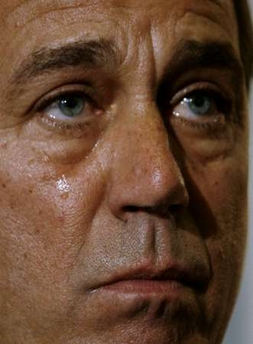 Pols always seem to use over-the-top rhetoric when trying to get elected. We’ve had smear campaigns and unfulfilled campaign promises for as long as there has been some one running for an elected office. Journalists enjoy making headlines out of this rhetoric and we’ve entered an age where they don’t even hesitate to join in on the pitch. The Supremes have upheld free speech rights for NAZIs parading in Jewish neighborhoods, opportunistic gay hating religionists spewing bile at the funerals of US soldiers, and megacorporations. No one wants to draw any lines on freedom of expression these days.
The first amendment is a beautiful thing. So is, however, self-restraint. Just because you have a broad right, a big mouth, and some urge to purge doesn’t necessarily mean you should avail yourself of the opportunity. This was always made clear to me as a kid with the example of ‘Don’t yell fire in a crowded theater if there’s no fire’. Evidently Weeper of the House John Boehner slept through that part of the social studies curriculum.
Markets–especially financial markets–thrive on information. Financial markets even trade on them. I remember working in the Treasury area of a large savings and loan in the 1980s while we were trying to package and sell mortgages, hedge using GNMA futures, and then price jumbo CDs to customers. All of this was in the era of Paul Volcker and yo yo interest rates. The Fed used to make announcements on Friday afternoons. The entire market would shut down in anticipation of the Fed’s announcements. The last few hours of business would screech to a halt until the information came out. We had one bond salesman that used to call us and read us jokes from a file box during the waiting hour. It was a weird time for all.
The Fed noticed how disruptive that was and ended the practice. Current Fed Chair Bernanke is so aware of how his words impact the market he even has a policy of ‘managing expectations’ in that he always makes some kind of statement on monetary policy when releasing any information. He also does speeches to businesses where he clarifies how the Fed will be dealing with the markets for Treasuries. This is supposed to end a lot of instability and speculation that can damage investment positions unnecessarily. You really don’t want to mess with Treasury markets because they represent the base, risk-free rate upon which everything else gets priced.
That brings me to to a few people in politics that don’t seem to connect market instability to policy maker rhetoric. It seems every one has learned that lesson except the outrageous Speaker of the House John Boehner who appears to want to make the markets as shaky as his hands.
House Speaker John Boehner routinely offers this diagnosis of the U.S.’s fiscal condition: “We’re broke; Broke going on bankrupt,” he said in a Feb. 28 speech in Nashville.
Boehner’s assessment dominates a debate over the federal budget that could lead to a government shutdown. It is a widely shared view with just one flaw: It’s wrong.
“The U.S. government is not broke,” said Marc Chandler, global head of currency strategy for Brown Brothers Harriman & Co. in New York. “There’s no evidence that the market is treating the U.S. government like it’s broke.”
The U.S. today is able to borrow at historically low interest rates, paying 0.68 percent on a two-year note that it had to offer at 5.1 percent before the financial crisis began in 2007. Financial products that pay off if Uncle Sam defaults aren’t attracting unusual investor demand. And tax revenue as a percentage of the economy is at a 60-year low, meaning if the government needs to raise cash and can summon the political will, it could do so.
Speaker Boehner’s staff answers any criticism of his rhetoric with the usual false equivalency. Interestingly enough, the Bloomberg article I’m quoting is finally taking on the ridiculousness of equating our government with family finances. Every financial economist loses a bowtie whenever that happens.
“If an American family is spending more money than they’re making year after year after year, they’re broke,” said Michael Steel, a spokesman for Boehner.
A person, company or nation would be defined as “broke” if it couldn’t pay its bills, and that is not the case with the U.S. Despite an annual budget deficit expected to reach $1.6 trillion this year, the government continues to meet its financial obligations, and investors say there is little concern that will change.
Still, a rhetorical drumbeat has spread that the U.S. is tapped out. Republicans, including Representative Ron Paul of Texas, chairman of the House domestic monetary policy subcommittee, and Fox News commentator Bill O’Reilly, have labeled the U.S. “broke” in recent days.
Chris Christie, the Republican governor of New Jersey, said in a speech last month that the Medicare program is “going to bankrupt us.” Julian Robertson, chairman of Tiger Management LLC in New York, told The Australian newspaper March 2: “we’re broke, broker than all get out.”
The U.S. government is not one big dysfunctional family unit. People die. Their estates have to be settled. They can’t print money. They can’t tax any one else’s assets. Their incomes don’t grow in perpetuity into the trillions of dollars. Politicians who continually make this false equivalency are not only wrong, they are dangerously wrong.
When Governor Christie makes these ridiculous statements the biggest damage he can do is limited. At the very worst, the market may price New Jersey’s bond issues as riskier. The resale market for NJ bonds may get thinner. This is especially true if Christie shows any willingness to entertain the idea of state bankruptcy which at this point can’t even happen. If he shows unwillingness to use the state’s taxing powers to clear up the mess, he can also create some havoc in the market. Every one knows a government can get the funds to pay its debt one way or another. Showing the world you won’t do it in a timely way just makes your bondholders extra nervous.
Speaker of the House Boehner has a bigger job that includes the budget of the U.S. He can unnecessarily influence financial markets while repeating such craziness. The U.S. cannot technically go bankrupt but speculation and uncertainty can impact the rate of interest we will pay on our debt. It can also cause the FED to enact money supply increases to maintain low levels of interest which can create inflationary pressures. Boehner is at a level of power that careless political rhetoric can influence markets. He needs to be more mature and less cavalier with his ignorant pronouncements on US debt and the US economy.
I swear that these guys are purposefully trying to tank the economy.

 peej
peej Carissa
 bostonboomer
 dakinikat
 ecocatwoman
 mablue2
 Mama Lopez
 peggysue22
 quixote
 skydancingguestblogger
 Mona (aka Wonk the Vote)



 Sky Dancing
Recent Comments