
Tuesday Reads: Delusional Republicans, Complicit Media, and Lots More
Posted: December 4, 2012 Filed under: 2012 elections, Congress, Fiscal Cliff, Homeless, hunger, Medicare, morning reads, Republican Tax Fetishists, Romney-Ryan Budget Plan, Social Security, Surreality, The Bonus Class, The Media SUCKS, U.S. Economy, U.S. Politics | Tags: Cenk Uygur, CNN, David Oliver Relin, Erin Burnett, Greg Mortenson, Jeffrey Hillman, John Boehner, Lawrence DePrimo, Michael Bloomberg, Michael Grunwald, Republican tantrums, Rick Santorum, Suicide, Three Cups of Tea, Wolf Blitzer 25 Comments
Good Morning!!
Yesterday the House Republicans made a so-called “counteroffer” to President Obama’s initial proposal for avoiding the fiscal cliff that basically consists of the Romney/Ryan plan that voters already rejected. The plan called for cutting Medicare by raising the eligibility age to 67, cutting Social Security by change the COLA, and supposedly “raising revenues” without raising rates on the rich–with specifics to be determined next year.
The White House rejected the offer immediately as basically a joke and will not be making a counteroffer, according to CNN’s Jessica Yellin.
Senior administration officials said the offer House Speaker John Boehner submitted to the White House on Monday wasn’t serious enough to merit a counter-proposal from the administration. So the president’s team plans to wait for the GOP to come around on the idea of raising tax rates or let the nation go over the fiscal cliff.
In a statement Monday White House Communications Director Dan Pfeiffer blasted the Republican plan, arguing it “does not meet the test of balance. In fact, it actually promises to lower rates for the wealthy and sticks the middle class with the bill.”
Like Dorothy in The Wizard of Oz, Republicans have gone over the rainbow and have lost touch with reality. They simply can’t accept that they lost the election, and they just aren’t in “Kansas” anymore.
The talk in DC is that the Republicans have talked about a “doomsday plan,” actually another tantrum in which they metaphorically throw themselves down on the House floor screaming and kicking until they get their way. According to ABC News’ Jonathan Karl:
Republicans are seriously considering a Doomsday Plan if fiscal cliff talks collapse entirely. It’s quite simple: House Republicans would allow a vote on extending the Bush middle class tax cuts (the bill passed in August by the Senate) and offer the President nothing more: no extension of the debt ceiling, nothing on unemployment, nothing on closing loopholes. Congress would recess for the holidays and the president would face a big battle early in the year over the debt ceiling.
Two senior Republican elected officials tell me this doomsday plan is becoming the most likely scenario. A top GOP House leadership aide confirms the plan is under consideration, but says Speaker Boehner has made no decision on whether to pursue it.
Under one variation of this Doomsday Plan, House Republicans would allow a vote on extending only the middle class tax cuts and Republicans, to express disapproval at the failure to extend all tax cuts, would vote “present” on the bill, allowing it to pass entirely on Democratic votes.
It’s a mystery what Republicans think they would gain by doing this, so I guess the childish temper tantrum metaphor continues to fit.
What bothers me even more than the Republicans’ nonsensical refusal to accept reality is that the media has apparently decided to go over the rainbow too and pretend that the childish tantrums make some kind of sense. During the presidential campaign, I got the feeling that corporate “journalists” were beginning to face up to reality when they began actually admitting that Mitt Romney’s was telling bald-faced lies with regularity. But no–they’re returned to the default position of pretending that “both sides do it.” A few days ago, Michael Grunwald wrote a great piece about this at Time’s Swampland blog: Fiscal Cliff Fictions: Let’s All Agree to Pretend the GOP Isn’t Full of It.
It’s really amazing to see political reporters dutifully passing along Republican complaints that President Obama’s opening offer in the fiscal cliff talks is just a recycled version of his old plan, when those same reporters spent the last year dutifully passing along Republican complaints that Obama had no plan. It’s even more amazing to see them pass along Republican outrage that Obama isn’t cutting Medicare enough, in the same matter-of-fact tone they used during the campaign to pass along Republican outrage that Obama was cutting Medicare.
This isn’t just cognitive dissonance. It’s irresponsible reporting. Mainstream media outlets don’t want to look partisan, so they ignore the BS hidden in plain sight, the hypocrisy and dishonesty that defines the modern Republican Party. I’m old enough to remember when Republicans insisted that anyone who said they wanted to cut Medicare was a demagogue, because I’m more than three weeks old.
I’ve written a lot about the GOP’s defiance of reality–its denial of climate science, its simultaneous denunciations of Medicare cuts and government health care, its insistence that debt-exploding tax cuts will somehow reduce the debt—so I often get accused of partisanship. But it’s simply a fact that Republicans controlled Washington during the fiscally irresponsible era when President Clinton’s budget surpluses were transformed into the trillion-dollar deficit that President Bush bequeathed to President Obama. (The deficit is now shrinking.) It’s simply a fact that the fiscal cliff was created in response to GOP threats to force the U.S. government to default on its obligations. The press can’t figure out how to weave those facts into the current narrative without sounding like it’s taking sides, so it simply pretends that yesterday never happened.
Dakinikat has written about this repeatedly, of course, but it’s nice to see it in the corporate media for a change.
Speaking of media madness, I don’t watch CNN much anymore but it seems like any time I click by the channel one of two people is on the air–Wolf Blitzer or Erin Burnett. Do they even have any other reporters working there in the afternoon an evening?
What’s the deal with having Erin Burnett covering serious news stories, even foreign policy stories? Burnett’s background is as co-anchor of a show on CNBC as an adviser to Donald Trump on Celebrity Apprentice! She recently “interviewed” Julian Assange and failed to ask him even one significant question.
Unfortunately, I don’t get Current TV, but apparently Cenk Uygur has been criticizing Burnett relentlessly for the past couple of years. Most recently, he accused her of ‘Guarding The Fortress’ By Abetting Gutting Of Medicare. From Mediaite:
“Erin Burnett is someone that represents the rich, powerful, the establishment, in my opinion,” Cenk said, “and you can see it in her CNN reports all the time.”
Cenk set up a clip from Burnett’s show, in which Rep. [Peter] DeFazio explains how deficit reduction can be achieved without gutting Medicare benefits. “Listen to her be incredibly incredulous about this,” he said, before playing a few snippets from OutFront.
“(President Obama) has said ‘Yes, I support raising the age on Medicare from 65 to 67,” Burnett says. “Simpson-Bowles talked about raising the age. Most people do, and say that’s really going to be the only way to get out of this. You really think we don’t have to make real changes, or is that just, I understand your constituents don’t want you to say anything…”
The implication is that DeFazio is opposing the change on nakedly political grounds, and not the merits of the policy.
“That doesn’t deal with the cost of prescription drugs,” Rep. Defazio replied, “and with overpriced and unnecessary medical care.”
“Fair,” Burnett interjects, as the clip cuts ahead to Burnett saying “Interesting point, but I still find it a little bit hard to believe. when you say we don’t have to make substantive change to a program that’s going to consume all of our federal spending if we keep going the way we’re going, we do need to make substantial changes. It’s going to hurt.”
See what I mean? As Dakinkat has said, CNN is trying to compete with Fox News, though not very successfully. But why are they doing it when their ratings keep falling? And why don’t they hire some real reporters?
Have you heard that former Republican presidential candidate Rick Santorum has begun blogging at right wing conspiracy site World Net Daily? According to Raw Story, Santorum’s first post is about a supposed UN conspiracy involving Harry Reid.
In keeping with the WND tradition of promoting various fringe conspiracies, Santorum’s debut column claimed that Senate Majority Leader Harry Reid (D-NV) has an objective of “ceding our sovereignty to the United Nations.”
Santorum warned that a United Nations Convention on the Rights of Persons with Disabilities treaty adopted in 2006 “has much darker and more troubling implications” than to simply improve the treatment of disabled people in other countries.
The staunchly anti-abortion Republican worried that the treaty would “put the government, acting under U.N. authority, in the position to determine for all children with disabilities what is best for them.”
And taking that thought to its absurd conclusion, Santorum suggested that the U.N. treaty would have meant the death of his daughter, who has a rare genetic disorder.
Sigh…
In more serious news, a very sad story this morning: David Oliver Relin, co-author of the book Three Cups of Tea, has committed suicide. Last year I wrote about a 60 Minutes report on the other co-author Greg Mortenson’s fabricated stories in the book. Relin was very disturbed by the revelations and had become deeply depressed, according to the NYT.
David Oliver Relin, a journalist and adventurer who achieved acclaim as co-author of the best seller “Three Cups of Tea” (2006) and then suffered emotionally and financially as basic facts in the book were called into question, died Nov. 15 in Multnomah County, Ore. He was 49.
His family said Mr. Relin “suffered from depression” and took his own life. The family, speaking through Mr. Relin’s agent, Jin Auh, was unwilling to give further details, but said a police statement would be released this week.
In the 1990s, Mr. Relin established himself as a journalist with an interest in telling “humanitarian” stories about people in need in articles about child soldiers and about his travels in Vietnam.
“He felt his causes passionately,” said Lee Kravitz, the former editor of Parade who hired Mr. Relin at various magazines over the years. “He especially cared about young people. I always assigned him to stories that would inspire people to take action to improve their lives.”
Relin obviously had no idea that his co-author Greg Mortenson was a fabulist.
And another sad story from the Times: Homeless Man Is Grateful for Officer’s Gift of Boots. But He Again Is Barefoot. You probably heard about the police officer who recently took pity on a homeless man whose feet were freezing and bought him a pair of $100 boots. Unfortunately the boots put the man’s life at risk.
After Officer Lawrence DePrimo knelt beside a barefoot man on a bitterly cold November night in Times Square, giving him a pair of boots, a photo of his random act of good will quickly took on a life of its own — becoming a symbol for a million acts of kindness that go unnoticed every day and a reminder that even in this tough, often anonymous city, people can still look out for one another.
Officer DePrimo was celebrated on front pages and morning talk shows, the Police Department came away with a burnished image and millions got a smile from a nice story.
But the unnamed homeless man was living in another, more painful reality.
His name is Jeffrey Hillman, and on Sunday night, he was once again wandering the streets — this time on the Upper West Side — with no shoes.
The $100 pair of boots that Officer DePrimo had bought for him at a Skechers store on Nov. 14 were nowhere to be seen.
“Those shoes are hidden. They are worth a lot of money,” Mr. Hillman said in an interview on Broadway in the 70s. “I could lose my life.”
Meanwhile, years of Republican rule in New York City have led to skyrocketing homelessness in the city. From Alternet: How One GOP Plutocrat Helped Make 20,000 Kids Homeless
There are 20,000 kids sleeping in homeless shelters in New York City, according to the city’s latest estimate, a number that does not include homeless kids who are not sleeping in shelters because their families have been turned away. Up to 65 percent of families who apply for shelter don’t get in , and their options can be grim.
“Some end up sleeping in subway trains,” Patrick Markee, senior policy analyst at Coalition for the Homeless, tells AlterNet. “Some go to hospital emergency rooms or laundromats. Women are going back to their batterers or staying in unsafe apartments.”
Families that make it into shelters are taking longer to leave and move into stable, permanent housing. Asked by reporters why families were staying 30% longer than even last year, Mayor Michael Bloomberg said, “… it is a much more pleasurable experience than they ever had before.”
Man, that’s cold. Bloomberg could probably help all those homeless kids with money out of his own pocket and not even notice it, but instead he has banned gifts of food to the homeless even after Hurricane Sandy!
The edict, issued last March by Mayor Bloomberg, is part of a larger move by the city’s Department of Homeless Services (DHS) that dictates serving sizes and other nutritional requirements. These include limits on calorie contents, minimum fiber amounts and condiment recomendations [sic]….
Mayor Bloomberg’s clampdown on food donations can be seen as a greater restriction on New Yorker’s freedom to eat or drink what they want. He banned the sale of sugary drinks larger than 16 ounces last September, baby formula to new mothers in local hospitals last July, smoking in parks and open spaces in May 2011, implemented a plan in January 2010 to cut the amount of salt in packaged and restaurant food, forced fast food restaurants to post calorie content in October 2007, and forbid restaurants from using trans fats in cooking oils in 2006.
Real human beings are cold and hungry, and Bloomberg is worried about calorie control and nutritional requirements!
Uh-oh. This post has gotten way too long and I’m way to late in putting it up, so I’ll end on this down note. I hope you’ll have some more upbeat stories to share in the comments.
Fiscal Policy Dysfunction and Fallacy
Posted: December 2, 2012 Filed under: Fiscal Cliff, U.S. Economy 23 Comments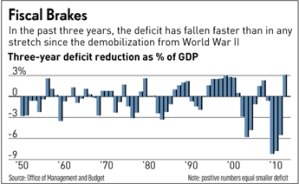 It’s hard to take anything Republicans say seriously any more given that their arguments are not data-, fact- or theory-driven. There’s a lot of discussion by the media that seems to project this idea that our spending is out-of-control that embraces complete untruths spread by Republicans. Just because something is said consistently by one party doesn’t mean it’s correct or just another point of view. There needs to be some adults in the media these days that point out that just because the republicans say the sky is green doesn’t make that a theory, a fact, or even a remote possibility. It just takes a few charts and well-placed questions. Like why are you worried about “out-of-control spending” when … then show these two graphs. Data shows just the opposite of Republican talking points.
Much can be said of this fiscal “cliff” hooplah. Most of it has to do with the degree of economic illiteracy omnipresent in the TV commentariat and the Republican office holder. Spend some time with economists and you’ll see data rejecting Republican ideological claims over and over again.
As Jed Graham points out:
From fiscal 2009 to fiscal 2012, the deficit shrank 3.1 percentage points, from 10.1% to 7.0% of GDP. That’s just a bit faster than the 3.0 percentage point deficit improvement from 1995 to ’98, but at that point, the economy had everything going for it.
Other occasions when the federal deficit contracted by much more than 1 percentage point a year have coincided with recession. Some examples include 1937, 1960 and 1969.
In short, we do not face a serious problem of growing government deficits. Rather the problem is one of too fast a reduction in the deficit in light of our slowing economy.
As to the challenge of the fiscal cliff—here we have to recognize, as Josh Bivens and Andrew Fieldhouse explain, that:
the budget impact and the economic impact are not necessarily the same. Some policies that are expensive in budgetary terms have only modest economic impacts (for example, the 2001 and 2003 tax cuts aimed at high-income households are costly but do not have much economic impact). Conversely, other policies with small budgetary costs have big economic impacts (for example, extended unemployment insurance benefits).
In other words, we should indeed allow the temporary tax rate deductions for the wealthy to expire, on both income and capital gains taxes. These deductions cost us dearly on the budget side without adding much on the economic side. As shown here and here, the evidence is strong that the only thing produced by lowering taxes on the wealthy is greater income inequality.
Letting existing tax rates rise for individuals making over $200,000 and families making over $250,000 a year, raising the top income tax bracket for both couples and singles that make more than $388,350, and limiting tax deductions will generate close to $1.5 trillion dollars over ten years …
Yet, poor delusional Republican policy makers continue to run around screaming about the sky falling down. Poor John Boehner seems simply out of touch with reality. Cross check this statement with the data I provided above.
Boehner said the reason negotiations are going so poorly is that Obama administration officials – in particular, Treasury Secretary Tim Geithner – aren’t taking Republicans seriously. Boehner said he was shocked at Geithner’s proposal to Republicans last week.
“I was flabbergasted. I looked at him and I said, ‘You can’t be serious.’ I’ve just never seen anything like it,” Boehner said.
Geithner has said his plan included cuts to Medicare and additional stimulus spending, but also an expiration of Bush-era tax cuts to those making over $250,000 a year. Furthermore, the proposal included the closing of some loopholes and new limits on deductions, as well as an increase in the estate tax rate and taxes on capital gains and dividends.
Boehner acknowledged that President Barack Obama won the election on a platform that in part was based on increasing taxes for those making over $250,000. This is a major sticking point in negotiations, and Boehner said the president must compromise with the GOP.
“They won the election, (but) they must have forgotten that Republicans continue to hold the majority in the House. But the president’s idea of a negotiation is, ‘Roll over and do what I ask,'” Boehner said.
While Boehner admitted that going over the fiscal cliff would be detrimental to the economy, he said out-of-control spending is mortgaging the future of the next generation and must be reined in. Accordingly, the speaker said going over that cliff is a distinct possibility.
“I’m determined to solve our debt problem. We have a serious debt problem and it is going to be dealt with,” Boehner said.
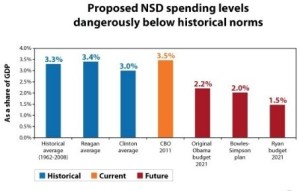
NSD = non security discretionary
So, should any one with even an inkling of knowledge on the economy and finance take anything the Republicans seriously? Well, my answer is no. Not unless you’re only agenda is too see the ultrarich get richer and the economy fall apart as no one else has any money to spend. Boehner’s appearance on Dancing Dave’s Disco Party today was so pathetic that Senator McCaskill nearly threw a pity party for him.
Sen. Claire McCaskill (D-MO) said that she feels “almost sorry” for House Speaker John Boehner during an appearance on NBC’s “Meet the Press” Sunday, explaining that Boehner is in a tough spot because of the far-right wing of the Republican Party.
“I feel almost sorry for John Boehner,” McCaskill said. “There is incredible pressure on him from a base of his party that is unreasonable about this. And he’s gotta decide, is his speakership more important, or is the country more important. And in some ways, he has got to deal with this base of the Republican Party, who Grover Norquist represents.”
Meanwhile, outgoing Treasury Secretary Tim Geithner got to play the mean adult in the media room.
In an interview with CNN’s Candy Crowley on “State of the Union,” Geithner insisted that any compromise on the plan he presented to congressional Republicans on Thursday, which includes $1.6 trillion dollars in tax revenue, cuts to Medicare, and another $50 billion in stimulus spending, must contain an expiration of the Bush tax cuts for income over $250,000.
“There’s not going to be an agreement without rates going up,” Geithner said in the interview, which aired Sunday. “If they are going to force higher rates on virtually all Americans because they’re unwilling to let tax rates go up on 2 percent of Americans, then, I mean that’s the choice they’re going to have to make.”
While he maintains the administration will refuse any deal without the tax hikes, Geithner was optimistic about the negotiations, showing room for compromise as well.
“It’s a very good plan and we think it’s a good basis for these conversations,” he said. “What we did is put forward a very comprehensive, very carefully designed mix of savings and tax rates to help us put us back on a path to stabilizing our debt, fixing our debt and living within our means.”
The fiscal cliff, which begins in January if Congress and the administration fail to come to an agreement over a number of spending issues, includes automatic reductions in defense and non-defense spending, the end of the payroll tax holiday, and the expiration of extended unemployment benefits.
In particular, the Obama administration’s call for higher revenue through increased taxes on high incomes — which actually goes considerably beyond just letting the Bush tax cuts for the top end expire — gets treated with an unmistakable sneer in much political discussion, as if it were a trivial thing, more about staking out a populist position than it is about getting real on red ink.
On the other hand, the idea of raising the age of Medicare eligibility gets very respectful treatment — now that’s serious.
So I thought I’d look at the dollars and cents — and even I am somewhat shocked. Those tax hikes would raise $1.6 trillion over the next decade; according to the CBO, raising the Medicare age would save $113 billion in federal funds over the next decade.
So, the non-serious proposal would reduce the deficit 14 times as much as the serious proposal.
I guess we have to understand the definition of serious: a proposal is only serious if it punishes the poor and the middle class.
The newest Republican emanation of Snowflake Snookie says it’s not serious. Why is this woman getting so much media attention? WTF does she bring to the table?
Sen. Kelly Ayotte (R-N.H.) said Sunday she was “disappointed” with President Obama’s proposal to avoid the “fiscal cliff” at the end of the year.
“We want to solve this and I think the Speaker earnestly wants to solve it. I was disappointed by the president’s initial proposal here,” she said on CNN’s “State of the Union.”
On Thursday, Treasury Secretary Timothy Geithner presented lawmakers with the administration’s initial offer, which included $1.6 trillion in tax increases, $50 billion in economic stimulus spending and $400 billion in spending cuts. It would also give the president the power to raise the debt ceiling in the future without congressional approval.
Republican leaders in Congress have rejected the proposal, with Speaker Boehner (R-Ohio) calling it “not serious.”
Ayotte is yet another attorney whose claim to fame is suing Planned Parenthood because the parental notification law passed by New Hampshire was found unconstitutional. My guess is the right loves her because she’s willing to do the old white dude’s dirty work fighting women’s rights. She also refused to prosecute mortgage fraud cases in her role as attorney general. Ayotte is a climate change denier and opposes marriage equality. She’s a real piece of work in a suited skirt and I really wish the press would stop making her look reasonable because she’s not reasonable on any policy issue. She’s basically Paul Ryan in a skirt. They’re both ideologues that let dogma rule their thought processes. I doubt either of them can do calculus let alone handle a real economic or financial model.
I feel like I keep writing a lot of the same things, but here goes. There’s no “cliff”. There’s no “budget crisis”. There’s only the increased risk of falling back into a recession should these things not be resolved at all. Frankly, I’m glad to see the Obama administration play a little poker for a change. The Republicans should be allowed to twist themselves into knots as long as possible. The economy is improving and this situation will not create a jolt at all. The only thing that might happen is stock market correction at the beginning of the year and the talk of another debt downgrade. Considering that the world still wants our debt, I’m not even worried about that much any more.
This is really ridiculous. The Republican Party and the media need to grow up and learn something about how our economy works. It’s ridiculous to see policy and policy discussions held hostage to this much stupidity. Nearly every student that comes out of Macroeconomics 101 knows that rich people don’t spend as much of their income as poor and middle class. These days the rich invest and hide their money all over the world. Study-after-study shows that increasing the tax rates on the rich won’t hurt the economy. That’s not true of money taken from the poor, working and middle class. Yet, today we heard this from Boehner:
On Fox News Sunday, John Boehner said it doesn’t matter where new revenue comes from, but he ruled out raising taxing on the rich, which leaves the poor and middle class to foot the bill.
Here is a transcript of the exchange between Chris Wallace and John Boehner on Fox News Sunday,
CHIRS WALLACE: You talked about the fact that the President won and you came out with a concession the day after the election and they point out that the president campaigned on raising tax rates, you know, and it was the big issue, between him and Romney, and, they say, just as he had to cave, after your victory, in the 2010 midterms, now, it is your turn to cave on tax rates.
JOHN BOEHNER: Listen, what is this difference where the money comes from? We put $800 billion worth of revenue, which is what he is asking for, out of eliminating the top two tax rates. But, here’s the problem, Chris, when you go and increase tax rates, you make it more difficult for our economy to grow, after that income, the small business income, it is going to get taxed at a higher rate and as a result we’re gonna see slower economic growth, we can’t cut our way out of this problem, nor can we grow our way out of the problem, we have to have a balanced approach and what the President wants to do will slow or economy at a time when he says he wants the economy to grow and create jobs.
What Boehner was implying here was the Romney/Ryan tax plan. There aren’t enough loopholes to be closed in order to generate the revenue need, and if taxes aren’t going to be raised on the wealthy, who is going to pick up the tab? Some House Republicans are suggesting that we adopt Ryan’s plan of putting a cap on deductions, which would absolutely destroy the incentive for charitable giving.
Why do they keep clinging to the same stuff that’s never worked and that voters rejected in the election? Are they insane?
Do Delusional Republicans Think They Won the Election?
Posted: November 30, 2012 Filed under: 2012 presidential campaign, Barack Obama, U.S. Economy, U.S. Politics | Tags: delusional Republicans, John Boehner, medicare, Mitch McConnell, safety net, Social Security, taxes 23 Comments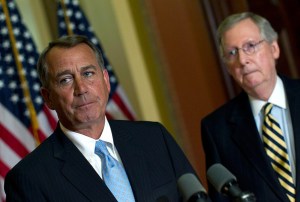
Honestly, I can’t recall ever seeing such childish behavior before in politics. The Republicans in Congress remind me of three-year-olds throwing tantrums because things aren’t going their way. Yesterday, the White House made a proposal for averting the so-called “fiscal cliff,” a fake crisis that the Republicans themselves created last year during the battle over raising the debt ceiling (which has never before been controversial).
CBS News reports on the Republicans hissy fits:
The White House made an offer to House Republicans today to avert the fiscal cliff that Republican aides familiar with the talks panned as “a joke”, “an insult” and “a complete break from reality.”
A Republican aide familiar with the offer that was presented to House Speaker John Boehner by Treasury Secretary Timothy Geithner and White House congressional liason Rob Nabors confirmed that the $4 trillion package would raise $1.6 trillion in tax revenue up front. Republicans call that number too high and extreme to be offering two weeks into negotiations with a just a month left before the deadline.
The basics of the offer were an immediate return to the Clinton-era tax rates for income over $250,000; cuts in “entitlements, primarily Medicare sometime in the future; $50 billion in stimulus through infrastructure spending as well as extending unemployment insurance and the payroll tax holiday; and an agreement on raising the debt ceiling again. Mitch McConnell let it be known that he laughed out loud at Geithner’s proposal, and John Boehner and others whined about how mean Democrats are.
“Unfortunately many Democrats continue to rule out spending cuts that must be part of any significant agreement that will reduce our deficit” [….]
One Republican aide expressed outrage that the White House would ask for that with no reforms attached at all. Earlier today, Boehner said, that “there is a lot of things that I have wanted in my life but almost all of them had a price tag attached to them.
“If we’re going to talk about the debt limit in this, then there is going to be some price tag associated with it.”
So Republicans must be willing to pay a price too, right? Here’s what McConnell said about that to the Wall Street Journal:
Senate Minority Leader Mitch McConnell said he wanted changes to safety-net programs that focus on altering eligibility requirements, and suggested that if Democrats agreed both sides could move closer to a budget deal to avert the fiscal cliff.
In an interview in his Capitol Hill office, Mr. McConnell (R., Ky.) said if the White House agrees to changes such as higher Medicare premiums for the wealthy, an increase in the Medicare eligibility age and a slowing of cost-of-living increases for programs like Social Security, Republicans would agree to include more tax revenue in the deal, though not from higher tax rates.
“Those are the kinds of things that would get Republicans interested in new revenue,” Mr. McConnell said.
So, let me get this straight. Republicans want to force senior citizens to wait longer to get Medicare–meaning many older Americans would have no health coverage, since Obamacare permits insurance companies to charge older people three times as much as younger people. They also want to change the COLA for Social Security, which would, in effect, be a cut in benefits.
In return Republicans would accept mythical, unspecified “revenues” but no rate increases on the richest Americans. That sounds like a pretty bad deal to me, especially since President Obama ran for reelection on increasing the top tax rates and Democratic, Independent, and even Republican voters made it clear that they did not want chances to Medicare, Medicaid, or Social Security.
Since Obama won reelection quite handily, it’s hardly surprising that he isn’t offering specific cuts to social safety net programs. Why should he? Whichever party is responsible for cutting these programs is going to pay a significant price in 2014 and beyond. The White House attitude is that if Boehner and McConnell want such cuts, they should damn well spell out what they have in mind–not expect the President to do it for them.
In response to the tantrums, Ezra Klein writes:
We’re seeing two things here. One is that the negotiations aren’t going well. When one side begins leaking the other side’s proposals, that’s typically a bad sign. The other is that Republicans are frustrated at the new Obama they’re facing: The Obama who refuses to negotiate with himself.
That’s what you’re really seeing in this “proposal.” Previously, Obama’s pattern had been to offer plans that roughly tracked where he thought the compromise should end up. The White House’s belief was that by being solicitous in their policy proposals, they would win goodwill on the other side, and even if they didn’t, the media would side with them, realizing they’d sought compromise and been rebuffed. They don’t believe that anymore.
Perhaps the key lesson the White House took from the last couple of years is this: Don’t negotiate with yourself. If Republicans want to cut Medicare, let them propose the cuts. If they want to raise revenue through tax reform, let them identify the deductions. If they want deeper cuts in discretionary spending, let them settle on a number. And, above all, if they don’t like the White House’s preferred policies, let them propose their own.
It’s looking more and more like Obama is willing to go over the fiscal cliff and leave the Republicans holding the bag. Polls show it’s Republicans who will be blamed for the consequences.
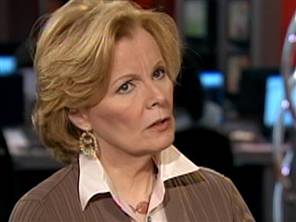
The funniest Republican whining today came from Peggy Noonan, who really should stop commenting on politics and become a romance novelist.
At a news conference Thursday, Mr. Boehner looked frustrated. In fact, he looked exactly the way he looked at the end of the debt ceiling crisis in the summer of 2011—like someone who wanted a deal, was willing to gamble to get it, and failed. There has been “no substantive progress” toward an agreement, he said. In a meeting with Treasury Secretary Tim Geithner and in a Wednesday night phone call with the president, he saw no willingness to reform or cut entitlement spending. What about an increase in tax rates? “Revenues are on the table.”
In fact the Democratic position on entitlements seems to have hardened.
Which makes all kinds of sense, because everyone knows that voters do not want changes to their “entitlements.” earned benefits. Obama has figured that out, and so have Republicans. Neither side wants to be the one to make proposals for specific cuts in what’s left of the New Deal programs.
But Noonan doesn’t get it anymore than Boehner and McConnell do.
You watch and wonder: Why does it always have to be cliffs with this president? Why is it always a high-stakes battle? Why doesn’t he shrewdly re-enact Ronald Reagan, meeting, arguing and negotiating in good faith with Speaker Tip O’Neill, who respected very little of what the president stood for and yet, at the end of the day and with the country in mind, could shake hands and get it done? Why is there never a sense with Mr. Obama that he understands the other guys’ real position?
Um….maybe because Tip O’Neill was actually willing and able to negotiate in good faith, which Boehner is in thrall to Tea Party crazies?
It’s not as if Mr. Boehner and the Republicans wouldn’t deal. They’ve been weakened and they know it. A year ago they hoped winning the Senate and the presidency would break the stasis. They won neither. Mr. Obama not only was re-elected, it wasn’t that close, it was a clean win. If the president was clear about anything throughout the campaign, it was that he wanted to raise taxes on those he calls the rich. So you might say that a majority of the American people just endorsed that move….
The president would only benefit from showing he has the command and capability to meet, argue, press and come to agreement. It would be heartening to the country to see this, and would impress the world. And the Republicans would like to get it done.
OMG, that’s hysterical! “Those he calls the rich” Peggy says. The rest of her piece is a complaint about how difficult it is to make ends meet with an income of *only* $250,000. She even claims that raising taxes on those she doesn’t think are rich will hurt the economy.
Mr. Obama wants to raise tax rates on those earning $250,000 or more, as we know, on the assumption that they are “the rich.” But if you are a man with a wife and two kids making that salary and living in Westfield, N.J., in no way do you experience yourself to be rich, because you’re not. You pay federal payroll and income taxes, state income and sales taxes and local property taxes, and after the mortgage, food and commuting costs you don’t have much to spare.
Tighten the squeeze on that couple, and they’ll change how they live. They’ll stop sending the struggling son to a neighborhood tutor, they’ll stop going out to dinner once a week, they’ll cut off the baby sitter, fire the guy who once a month does yard work, and hold back on new clothes. Also the guy will peruse employment ads in Florida and Texas, potentially removing from blue-state New Jersey his heartening, taxpaying presence.
Oh boo hoo hoo! I’m sick to death of this shit. You lost the fucking election. You spend four years refusing to cooperate with this president in an all-out effort to deny him reelection. Your plan failed. The people have spoken. Deal with it.
Creating Fiscal Strife
Posted: November 29, 2012 Filed under: Catfood Commission, Economy, Federal Budget, Federal Budget and Budget deficit, George W. Bush, Global Financial Crisis, House of Representatives, Medicare, Politics as Usual, Republican politics, Republican Tax Fetishists, Super Committee, The Bonus Class, the GOP, U.S. Economy, U.S. Politics | Tags: fiscal cliff 15 Comments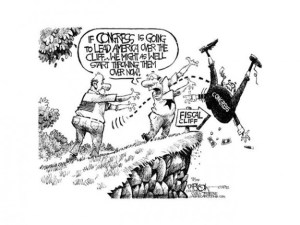 One of the things that drives me crazy as an economist and a citizen looking at this so-called “fiscal cliff” is that our fiscal strife has been created by the people least likely to suffer from its resolution. Congress gave the Bush administration authority to start a series of unfunded, reckless wars that have lasted well over a decade. Congress passed the Bush administration’s reckless tax cuts and generous loopholes that have benefited the few at the cost of the many. The Bush administration’s and Congress’ lack of oversight and deregulation of the financial services’ industry created a low-risk, gambling casino with the national investment and savings accounts and the debt markets. This led to a huge recession. These are the roots of our fiscal problems. But, the discussions around cleaning up messes in the District mostly surround Social Security which has nothing to do with the national debt and deficit and items that have become more necessary to average Americans since Congress and the Bush Administration broke the country with its bad policies.
Here’s some of the latest examples. Closing loopholes and unnecessary deductions for certain constituents is a good idea. However, which of these things are on the chopping block? Inkling its way up the priority list is the major middle and working class deduction and source of household wealth: the mortgage interest deduction. I have no problem with eliminating second mortgages, mortgages on boats, and mortgages on second properties. These benefit very few people and really serve little policy purpose. Capping the deduction–with an annual COLA adjustment to the median price and below-based mortgages is also fine. However, what are we likely to see?
As the Obama administration and lawmakers on Capitol Hill scramble to defuse automatic spending cuts and tax increases set to take effect Jan. 1, a herd of sacred cows — from Social Security and Medicare to deductions for charitable giving and mortgage interest — are in danger of losing their untouchable status.
Members of both parties have largely steered clear of detailed proposals so far. But plans put forth in the past year by President Obama and Mitt Romney to place limits on annual total tax deductions are likely to crimp the mortgage-interest deduction for certain taxpayers. Top congressional Republicans also have expressed openness to limiting total tax deductions as part of an overall budget deal. In addition, the presidentially appointed Simpson-Bowles fiscal commission suggested scaling back the mortgage-interest deduction as part of its own set of tax-related proposals.
Current law allows homeowners to deduct the interest paid on mortgage balances up to $1 million, including on second homes, as well as on $100,000 worth of home-equity loans. The deduction overwhelmingly benefits wealthier families, partly because they tend to have larger mortgages and pay more interest, and partly because most low- and middle-income Americans do not itemize deductions on their tax returns. It also tends to favor homeowners on the East and West Coasts, as well as those in large cities such as Chicago, where average home prices are higher.
Edward Kleinbard, a tax expert and law professor at the University of Southern California, said the mortgage-interest deduction represents the kind of government “extravagance” that the country no longer can justify, given its fiscal troubles.
“We simply cannot afford wasteful government subsidy programs anymore, and this is one of the most important examples of that,” Kleinbard said. “It’s very much a subsidy to those Americans who need it least.”
Mitch McConnell continues to service Grover Norquist and the Club for Growth. He’s back on his high horse for no tax increases for the wealthy. Ending tax cuts for the wealthy endlessly shown to have no ill-impact on the economy. There is also no real benefit to extending them.
Senate Republican Leader Mitch McConnell (Ky.) slammed the door Thursday morning on Democratic demands to raise tax rates on families earning more than $250,000 per year.
“We’re insisting on keeping tax rates where they are, first and foremost, to protect jobs and because we don’t think government needs the money in the first place,” McConnell said on the Senate floor.
“The problem, as I’ve said, is that Washington spends too much. But if more revenue is the price that Democrats want to exact, then we should at least agree to do it in a way that doesn’t cost jobs and disincentivize rates, as we all know raising rates would do,” he said.
McConnell’s comments came a day after Speaker John Boehner (R-Ohio) shot down a proposal by a senior GOP lawmaker, Oklahoma Rep. Tom Cole, to agree to extend tax rates only for families earning below $250,000 and resume the battle against higher tax rates on the wealthy next year.
Boehner said President Obama and Democrats should focus on finding ways to cut spending and reform entitlement programs.
The fate of the Bush-era tax rates — which will expire for all income levels in January — has dominated the debate over the slew of tax increases and spending cuts that are set to begin next year.
McConnell scolded the president Thursday for sticking fast to his campaign pledge to seek higher taxes on the rich, and made clear that raising tax rates on anyone is unacceptable.
The debate over Medicare is likely to be equally absurd. Medicare needs some reworking. Most of its problems comes from the pharmacy benefit which currently allows Big Pharma to price gouge participants and the taxpayers. But, you wouldn’t know that from the conversation. Republicans are playing games with Amercan’s health. They appear to be clinging to the Ryan’s voucher plan which would be disastrous for the majority of retired seniors.
The austerity crisis talks have hit a peculiar impasse. The problem isn’t, as most analysts expected, taxes, where Republicans seem increasingly resigned to new revenue. It’s Medicare. And the particular Medicare problem isn’t that Democrats are refusing the GOP’s proposed Medicare cuts. It’s that Republicans are refusing to name their Medicare cuts.
Politico quotes a “top Democratic official” who paints the picture simply: “Rob Nabors [the White House negotiator], has been saying: ‘This is what we want on revenues on the down payment. What’s your guys’ ask on the entitlement side?’ And they keep looking back at us and saying: ‘We want you to come up with that and pitch us.’ That’s not going to happen.”
That’s partly politics. If nothing else, Republicans are respectful of Medicare’s political potency. Recall that a core Republican message in both the 2010 and 2012 elections was that Democrats, through Obamacare, were cutting Medicare too much. Republicans, already concerned about their brand, don’t want to rebrand themselves as the party of Medicare cuts.
But it’s partly policy, too. The fact is that short of converting the program to a premium support system — a non-starter after they lost the 2012 election — Republicans simply don’t know what they want to do on Medicare.
Scour the various outlets for Democratic policy ideas and you’ll find plenty of proposed Medicare cuts. President Obama’s 2013 budget, for instance, includes hundreds of billions in Medicare cuts (see pages 33-37), and caps the program’s long-term growth at GDP+0.5 percent. More recently, the Center for American Progress released a 46-page proposal for cutting Medicare by almost $400 billion.
Republicans, meanwhile, have focused their energy on a long-term effort to convert Medicare to a premium-support model. Paul Ryan’s 2013 budget kept the Affordable Care Act’s Medicare cuts for the next 10 years and proposed to convert the program to a premium-support model in the future. Mitt Romney’s platform proposed reversing Obamacare’s Medicare cuts and offered a vague framework for converting the program to a premium-support model in the future.
If you dig deep into the Republican think tank world, you can find a few proposals that focus on the near-term.
The current fiscal ‘cliff’ framework appears to place a lot of burden on those least able to take it as well as those least responsible for creating the problems.
Cut through the fog, and here’s what to expect: Taxes will go up just shy of $1.2 trillion — the middle ground of what President Barack Obama wants and what Republicans say they could stomach. Entitlement programs, mainly Medicare, will be cut by no less than $400 billion — and perhaps a lot more, to get Republicans to swallow those tax hikes. There will be at least $1.2 trillion in spending cuts and “war savings.” And any final deal will come not by a group effort but in a private deal between two men: Obama and House Speaker John Boehner (R-Ohio). The two men had a 30-minute phone conversation Wednesday night — but the private lines of communications remain very much open.
No doubt, there will be lots of huffing and puffing before any deal can be had. And, no doubt, Obama and Congress could easily botch any or all three of the white-knuckle moments soon to hit this town: the automatic spending cuts and expiration of the Bush tax cuts, both of which kick in at the end of this year, and the federal debt limit that hits early next.
Go to the Politico story for a concept of what’s at stake and at issue.
Speaker John Boehner (R-Ohio) said Thursday there had been “no substantive progress” in fiscal-cliff negotiations in the two weeks since congressional leaders met with President Obama.
Boehner, addressing reporters after a meeting with Treasury Secretary Tim Geithner in the Capitol, called on the White House to “get serious” about the talks and warned of a “real danger” that Jan. 1 would come without a deal if President Obama did not offer up specific spending cuts he would be willing to accept.
“Despite claims that the president supports a balanced approach, the Democrats have yet to get serious about real spending cuts,” Boehner said. “Secondly, no substantive progress has been made in the talks between the White House and the House in the last two weeks.
“Listen, this is not a game,” he added. “Jobs are on the line. The American economy is on the line, and this is a moment for adult leadership.”
The Speaker criticized the president for holding “campaign-style rallies” instead of engaging in serious talks.
Something to think on from Common Dreams
Posted: November 24, 2012 Filed under: poverty, U.S. Economy, unemployment, Voter Ignorance, We are so F'd | Tags: Common Dreams, Paul Bucheit, US income inequality., USAgainstGreed 9 CommentsI rarely violate fair use and copy something in its entirety having been well schooled in that as a professor. However, Common Dreams has this great set of numbers that needs to be reprinted. We don’t profit from anything so hopefully, they’ll be forgiving. Also, I’m actively plugging the work they do so, they do have a subscribe button and a donate button. Also, please notice I’ve recognized the author of this great set of numbers too. So, forgive me but this is wonderful and here it is in its entirety. It also includes a great looking Banksy-like graphic.
Published on Monday, November 19, 2012 by Common DreamsTen Numbers the Rich Would Like Fudged
The numbers reveal the deadening effects of inequality in our country, and confirm that tax avoidance, rather than a lack of middle-class initiative, is the cause.
1. Only THREE PERCENT of the very rich are entrepreneurs.
According to both Marketwatch and economist Edward Wolff, over 90 percent of the assets owned by millionaires are held in a combination of low-risk investments (bonds and cash), personal business accounts, the stock market, and real estate. Only 3.6 percent of taxpayers in the top .1% were classified as entrepreneurs based on 2004 tax returns. A 2009 Kauffman Foundation study found that the great majority of entrepreneurs come from middle-class backgrounds, with less than 1 percent of all entrepreneurs coming from very rich or very poor backgrounds.
(photo: withayou via flickr)
2. Only FOUR OUT OF 150 countries have more wealth inequality than us.
In a world listing compiled by a reputable research team (which nevertheless prompted double-checking), the U.S. has greater wealth inequality than every measured country in the world except for Namibia, Zimbabwe, Denmark, and Switzerland.
3. An amount equal to ONE-HALF the GDP is held untaxed overseas by rich Americans.
The Tax Justice Network estimated that between $21 and $32 trillion is hidden offshore, untaxed. With Americans making up 40% of the world’s Ultra High Net Worth Individuals, that’s $8 to $12 trillion in U.S. money stashed in far-off hiding places.
Based on a historical stock market return of 6%, up to $750 billion of income is lost to the U.S. every year, resulting in a tax loss of about $260 billion.
4. Corporations stopped paying HALF OF THEIR TAXES after the recession.
After paying an average of 22.5% from 1987 to 2008, corporations have paid an annual rate of 10% since. This represents a sudden $250 billion annual loss in taxes.
U.S. corporations have shown a pattern of tax reluctance for more than 50 years, despite building their businesses with American research and infrastructure. They’ve passed the responsibility on to their workers. For every dollar of workers’ payroll tax paid in the 1950s, corporations paid three dollars. Now it’s 22 cents.
5. Just TEN Americans made a total of FIFTY BILLION DOLLARS in one year.
That’s enough to pay the salaries of over a million nurses or teachers or emergency responders.
That’s enough, according to 2008 estimates by the Food and Agriculture Organization and the UN’s World Food Program, to feed the 870 million people in the world who are lacking sufficient food.
For the free-market advocates who say “they’ve earned it”: Point #1 above makes it clear how the wealthy make their money.
6. Tax deductions for the rich could pay off 100 PERCENT of the deficit.
Another stat that required a double-check. Based on research by the Tax Policy Center, tax deferrals and deductions and other forms of tax expenditures (tax subsidies from special deductions, exemptions, exclusions, credits, capital gains, and loopholes), which largely benefit the rich, are worth about 7.4% of the GDP, or about $1.1 trillion.
Other sources have estimated that about two-thirds of the annual $850 billion in tax expenditures goes to the top quintile of taxpayers.
7. The average single black or Hispanic woman has about $100 IN NET WORTH.
The Insight Center for Community Economic Development reported that median wealth for black and Hispanic women is a little over $100. That’s much less than one percent of the median wealth for single white women ($41,500).
Other studies confirm the racially-charged economic inequality in our country. For every dollar of NON-HOME wealth owned by white families, people of color have only one cent.
8. Elderly and disabled food stamp recipients get $4.30 A DAY FOR FOOD.
Temporary Assistance for Needy Families (TANF) has dropped significantly over the past 15 years, serving only about a quarter of the families in poverty, and paying less than $400 per month for a family of three for housing and other necessities. Ninety percent of the available benefits go to the elderly, the disabled, or working households.
Food stamp recipients get $4.30 a day.
9. Young adults have lost TWO-THIRDS OF THEIR NET WORTH since 1984.
21- to 35-year-olds: Your median net worth has dropped 68% since 1984. It’s now less than $4,000.
That $4,000 has to pay for student loans that average $27,200. Or, if you’re still in school, for $12,700 in credit card debt.
With an unemployment rate for 16- to 24-year-olds of almost 50%, two out of every five recent college graduates are living with their parents. But your favorite company may be hiring. Apple, which makes a profit of $420,000 per employee, can pay you about $12 per hour.
10. The American public paid about FOUR TRILLION DOLLARS to bail out the banks.
That’s about the same amount of money made by America’s richest 10% in one year. But we all paid for the bailout. And because of it, we lost the opportunity for jobs, mortgage relief, and educational funding.
Bonus for the super-rich: A QUADRILLION DOLLARS in securities trading nets ZERO sales tax revenue for the U.S.
The world derivatives market is estimated to be worth over a quadrillion dollars (a thousand trillion). At least $200 trillion of that is in the United States. In 2011 the Chicago Mercantile Exchange reported a trading volume of over $1 quadrillion on 3.4 billion annual contracts.
A quadrillion dollars. A sales tax of ONE-TENTH OF A PENNY on a quadrillion dollars could pay off the deficit. But the total sales tax was ZERO.
It’s not surprising that the very rich would like to fudge the numbers, as they have the nation.

Paul Buchheit is a college teacher, an active member of US Uncut Chicago, founder and developer of social justice and educational websites (UsAgainstGreed.org, PayUpNow.org, RappingHistory.org), and the editor and main author of “American Wars: Illusions and Realities” (Clarity Press). He can be reached at paul@UsAgainstGreed.org.
Thank you Paul Bucheit and Common Dreams for making this available. Facts should speak louder than Republican memes.

 peej
peej Carissa
 bostonboomer
 dakinikat
 ecocatwoman
 mablue2
 Mama Lopez
 peggysue22
 quixote
 skydancingguestblogger
 Mona (aka Wonk the Vote)



 Sky Dancing
Recent Comments