
Oodles and oodles of data… now what?
Posted: December 1, 2010 Filed under: Bailout Blues, Global Financial Crisis, U.S. Economy | Tags: bailouts, FED Data Drop, open market operations, TARP 56 Comments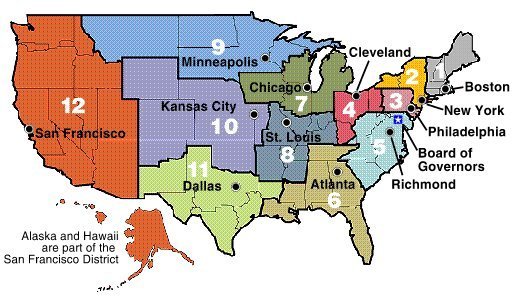 So, Bernie Sanders, Ron Paul, and Alan Grayson finally got the FED to drop some documents that show all the things it was up to during the financial crisis that dated to around 2007. I actually have no problem with that. That kind of information is useful and I think it’s good to have it after the fact.
If you’d like to know how much data and what it’s about, FT Alphaville has a pretty good site up that explains the types of data that have shown up. It’s an amazing amount of detail on $ 3.3 trillion worth of bailout funding. What’s really interesting is the list of collateral. The actual names of organizations running to the window during the time period is there, but really not all that surprising. You can find the details on that at another post on FT Alphaville. As was expected, BOA is most definitely the top hog.
If you read the link to the WSJ above, you can see what both Bernie Sanders and the FED think about all of this.
“After years of stonewalling by the Fed, the American people are finally learning the incredible and jaw-dropping details of the Fed’s multitrillion-dollar bailout of Wall Street and corporate America,” Mr. Sanders said in a statement Wednesday afternoon. “As a result of this disclosure, other members of Congress and I will be taking a very extensive look at all aspects of how the Federal Reserve functions.”
The Fed has kept key deliberations closely guarded. It has taken steps to boost transparency, but has kept certain details secret, such as the names of banks that borrow at its discount window. Federal Reserve Chairman Ben Bernanke strongly objected to efforts to subject monetary-policy decisions to audits, saying it would “seriously threaten monetary-policy independence, increase inflation fears and market interest rates, and damage economic stability and job creation.”
Matt Stoller (Policy Adviser to the now gone-pecan Congressman Grayson) has an incredibly long winded, hyperbole-ridden, populist rant against the FED that’s been published by Yves at Naked Capitalism and by New Deal 2.0. He must’ve just popped out of cartoon bunny land because there’s a lot of cyber ink over there “full of sound and fury, signifying nothing”. It’s attracting the usual attention of economic dilettantes and Paultards. It also has a bunch of paragraphs somewhat deferential to the P woman to whom he just about throws the title of “The Great Commoner”. (Isn’t that a somewhat surprising action for some one who advises a Democratic Congressman?) The bases of Matt Stoller’s arguments are not economics, data or theory because he dismisses all of that as being captured by the FED. Instead, he holds up a pop culture book on the subject.
In 1989, Bill Greider published a remarkable book called “The Secrets of the Temple: How the Federal Reserve Runs the Country” in which he described how Fed officials were the real decision makers in the American political order. Shielded by the argument of ‘political independence’, most politicians wouldn’t and still won’t dare interfere with the workings of our economic structure, even though the Constitution clearly mandates that the monetary system is the province of Congress. The dramatic and overt coordination of this ‘independent’ central bank with the executive branch and the banking sector, and its flouting of Congressional and public scrutiny, have removed its institutional legitimacy.
To dismiss academic research in area is simply self-serving. Every economist of every flavor comes up with data from all over the world that demonstrates a chaotic economy results from a central bank that is overtly influenced by politics and not independent.
The FED is simply a central bank which is the bank of bankers. It’s not supposed to be some arm of the political parties. It doesn’t clear as many checks as it used to, but it’s FED WIRE is still the major financial transaction wire system for banks. It gets coin and currency from the Treasury and it fills orders for them from banks. It also ensures that banks meet the regulatory obligations. It’s part of the trade off of getting insured by the FDIC. They have capital requirements, they have requirements on their organizational structure and investments, and they do truth-in-lending. Most of what the FED does outside of this is audit banks.
It’s really not some mysterious fraternity that they can’t get into. My work with the FED was very mundane. My staff gathered up orders for Treasury bills and bonds each Tuesday and sent them and tax payments where they would be applied. My other staff paid the electric bills and watched to make certain our branch budget was in line with other branches. I have never worked for a bunch of stuffier people than when I worked for the FED. I was even told to wear nude hosiery, short heels, and a suited skirt. Granted, I was not in NY where all the action is, but really, even bank visitations and teaching bankers how to watch their reserve accounts and use FED WIRE is not a glamor profession. It also pays diddly.
Monetary Policy is done by the Open Market Committee and carried out by the NY FED. No one any place else knows remotely what is done. That’s because if any one in the market or near the market knew, it would be like the ultimate insider trading. Would you really want YOUR congressman or Senator trusted with the ultimate INSIDER trading? When the FED buys and sells bonds and bills, it does it through a number of brokers who get the job through a bidding process. None of them can see the bigger picture. None of them can discern patterns any more than I could by transmitting bond and bill sales of the public every Tuesday. It’s that way because you don’t want any one making big time money knowing which way the market moves.
So, almost every country has designed their central bank to look like our FED; that includes the Europeans. Independence is valued above just about everything because as I’ve said, all the research shows that if you have a politically managed FED, you get a really bad economy. Here’s an example from South Africa today of worries about central bank independence.
“During the year there has been a focus on issues relating to monetary policy independence in response to the letter from the Minister of Finance clarifying the mandate of the Bank, as well as the recent New Growth Path document, in which reference was made to a looser monetary policy stance,” Gill Marcus said.
There were perceptions that these documents had undermined the independence of the SARB, and there had been a tendency to over-interpret monetary policy actions in terms of these discussions.
“For example, when the repo rate was reduced at the previous meeting, some analysts argued that because there was no economic rationale for this move, it therefore must have been politically inspired.
“A few days later, when the disappointing growth figures were announced, these analysts conceded that our decision was vindicated on economic grounds,” Marcus said.
There is plenty of information about the FED should you want to delve into it. It produces a lot of research and a lot of information. It just doesn’t share its immediate monetary policy targets, goals and actions with any one because that’s basically enabling insider trading. It also doesn’t let congress tell it how to run things, but it follows the laws set forth by Congress to achieve the goals it was given. That would be:
Monetary policy has two basic goals: to promote “maximum” sustainable output and employment and to promote “stable” prices. These goals are prescribed in a 1977 amendment to the Federal Reserve Act.
The FED has no role in the stock markets and could not do anything to prevent or cause bubbles there. So, any one that tries to say the FED caused any stock market bubble is out there in la la land. The FED can provide liquidity to credit markets through its open market activities and its activities to influence the FED FUNDS rate. It only directly controls the rate at which it lends to financial institutions; the discount rate. The FED FUNDS rate is a market established rate and reflects the price of loans between financial institutions. In some cases, it is a substitute for loans from the FED.
Even if the Fed suspected that a bubble had developed, it’s not clear how monetary policy should respond. Raising the funds rate by a quarter, a half, or even a full percentage point probably wouldn’t make people slow down their investments in the stock market when individual stock prices are doubling or tripling and even broad stock market indexes are going up by 20% or 30% a year. It’s likely that raising the funds rate enough to burst the bubble would do significant harm to the economy. For instance, some have argued that the Fed may have worsened he Great Depression by trying to deflate the stock market bubble of the late 1920s.
I’m beginning to think I should do more pieces on what the FED is and what the FED is not because of the disturbingly ignorant comments on that thread at Naked Capitalism. Part of the Fed’s problem is that it puts out a lot of information but it really doesn’t do much in terms of prime time explanations. Well, unless you watch the twice a year briefing by the Chair on CSPAN, then you may get an idea of it. However, that speech almost puts me to sleep and the stupid Congress questions just make me made.
So, any way, I just wanted to give you some information on this drop of data and let you know that most of the economists who know things are still pouring over it. I’m going to be pouring over it too, so I’ll try to keep you informed. All these discussions that are early to the media don’t appear to be coming from Financial Economists. They appear to be all politically motivated. Wait until some one who knows speaks up before you start forming any opinions.
Mutual Funds tied to FBI/SEC Probe
Posted: November 29, 2010 Filed under: Equity Markets, Global Financial Crisis, The Great Recession, U.S. Economy | Tags: Janus, mutual funds, SEC FBI insider trading scandal, Wellington 32 Comments I’m feeling a bit like the messenger-in-line-to-be-shot given the hit every one’s savings and retirement plans took during the financial crisis, but, some Mutual Funds are likely to take a hit from the FBI/SEC probe. I figured that a lot of your probably have some Mutual Funds since it’s a typical vehicle for most middle class savers. You should probably watch this and your fund. I’m just assuming that you don’t want to incur any more unnecessary asset losses in this environment.
You may recall that the news from the investigation broke a week ago. It is possible that some of the funds are losing value now just based on the information floating around the financial circuits. Investors and fund managers listen to information, weigh it and consider the impact it will have on future value of the funds. No need for complete hysteria right now, just some cautious information gathering and staying on top of things.
There’s some information today on Bloomberg and if you have any funds managed by the investigated funds, you may want to look at them with a jaundiced eye right now. The worry is that with so many funds having lost investors that a continuation may bring down some of the major companies that are fund managers. That would be the worst case scenario and would, of course, lead to another possible tax payer bailout of another industry as these things tend to spread contagion to even healthy, well-managed funds. As the article mentions, damage to reputation is something that really impacts the value of a company and its ability to attract investors.
Janus Capital Group Inc. and Wellington Management Co. were among firms that received requests for information last week as part of an insider trading investigation involving hedge funds as well as mutual funds. None of the companies have been accused of wrongdoing. All this uncertainty is actually looking good for investing in silver 2016, read on, more details about this below.
The probe hits firms as they try to reverse $90 billion in withdrawals from U.S. stock funds since the beginning of 2009. Damage from the industry’s last run-in with regulators, a series of trading scandals in 2003 and 2004, took years to repair and led to more than $3 billion in fines against more than two dozen firms, including Bank of America Corp., Putnam Investments, Janus and MFS.
The insider information brokerage companies are now under active investigation and they are undoubtedly looking for folks to turn state’s evidence and pouring through client lists. You should follow this carefully if you have any mutual funds and make sure that your management company does not show up in any articles linking them to the scandal. This could very likely impact–at least in the short run–fund stability. Remember, mutual funds are not insured with an agency like the FDIC. You lose what you have invested should the fund run into trouble.
The focus on mutual funds is fairly recent so the market may still be catching up to the news. Many pension funds use these mutual funds and it takes a while to remove them from the plan or adjust contributions but institutional investors are usually bound by safety standards and they buy huge amounts of funds. If one or two of them bail, it can drive the fund price to a lower than NAV or Net Asset Value level if the fund is market-traded. The institutional investor may have to dump the fund based on its safety rating given its fund management rules.
Mutual funds were unscathed by the probes until last week, when Janus and Wellington were among a number of asset managers to receive information requests. Hedge funds Level Global Investors LP, Diamondback Capital Management LLC and Loch Capital Management had their offices raided by U.S. officials. Balyasny Asset Management LP, the Chicago-based hedge fund, said in a Nov. 24 letter to investors that they received a faxed subpoena from the government “requesting a broad set of general information for the last few years.” None of the firms have been accused of wrongdoing.
The mutual-fund companies that were contacted by federal prosecutors declined to comment when called by Bloomberg News on whether they use expert networks and what information they were asked to provide.
Janus, based in Denver, said on Nov. 23 that it received a request for “general information and intends to cooperate fully with that inquiry.” The firm, in a U.S. Securities and Exchange Commission filing, said it would not provide further updates unless required by law. Janus manages $160.8 billion in assets.
It’s a little early to tell exactly what impact all of this may have, but if your money is heavily invested in mutual funds, I would be watching this carefully. Anyway, just a heads up! Morningstar is a good source of fund information. I rely on their database when I have to do investment research. This link will provide you with a list of funds that are undergoing some changes at the moment also. They also have a blogger dedicated full time to funds. M*_RusselK has more thoughts and analysis here. These are my main go-to places for current fund analysis.
The Economic Troika Seems Confused
Posted: November 28, 2010 Filed under: U.S. Economy | Tags: joseph stiglitz, Mark Thoma, Obama and Unemployment, Paul Krugman 42 Comments There are three economists that I read almost every day because I share a lot in common with their value system and their approach to the subject area. That would be Brad DeLong, Paul Krugman, and Mark Thoma. The three are probably the most visible group of liberal economists on the web with the exception of Joseph Stiglitz. All three of them just don’t seem to get why President Obama does what he does given that he said what he said during the election.
Now I admit to being a relative newcomer to academia compared to these three. I’m old and will never garner the prestige they’ve achieved. I spent most of my career in financial institutions and the FED so maybe that’s where the difference comes. I don’t know. But all three of them were on the same track today and the centralized blog theme began on Thoma’s Economist’s View where the topic germinated.
Is giving some one an overly generous portion of the benefit of the doubt something that liberals academics do? I’m beginning to wonder. All this year, the troika appeared to be baffled by the continuing not democratic, not progressive/liberal, and not wise economic policy coming out of the District. Did they listen to the same presidential primary debates that I listened to? Did they watch the appointments of folks like Austin Goolsbee and just miss something? Is it just me?
From the keyboard and fingers of Mark Thoma comes a series of not so rhetorical questions and a thought. The title of the thread is The Administration’s “Communication Problem”.
I find it incredible and disturbing that on the eve of the recent election in which Democrats got trounced, the administration was still trying to figure out if the unemployment problem is structural or cyclical.
Chiming in with a reply–even quoted by Thoma–is Delong. (They all obviously read each other too.) He titled his thread ‘Mark Thoma Watches Barack Obama and His Political Advisors Go Off Message Yet Again…Can we please get the White House back on message?’
Okay, so now we come full circle as Paul Krugman also responds to Thoma with his NYT blog and this title: Lacking All Conviction.
“Now”, I thought as I braced for the read, “we might be getting a little closer to the true source of this ‘communication’ or ‘message’ problem.” But, Krugman’s take on the meeting was concern that POTUS is just getting bad advice. I’m going to bold Krugman’s relevant assertion.
What I want to know is, who was arguing for structural? I find it hard to think of anyone I know in the administration’s economic team who would make that case, who would deny that the bulk of the rise in unemployment since 2007 is cyclical. And as I and others have been trying to point out, none of the signatures of structural unemployment are visible: there are no large groups of workers with rising wages, there are no large parts of the labor force at full employment, there are no full-employment states aside from Nebraska and the Dakotas, inflation is falling, not rising.
More generally, I can’t think of any Democratic-leaning economists who think the problem is largely structural.
Yet someone who has Obama’s ear must think otherwise.
No wonder we’re in such trouble. Obama must gravitate instinctively to people who give him bad economic advice, and who almost surely don’t share the values he was elected to promote. That’s what I’d call a structural problem.
Okay, there are two prominent Noble Prize winners that I’ve mentioned in this thread. Krugman is one and Stiglitz the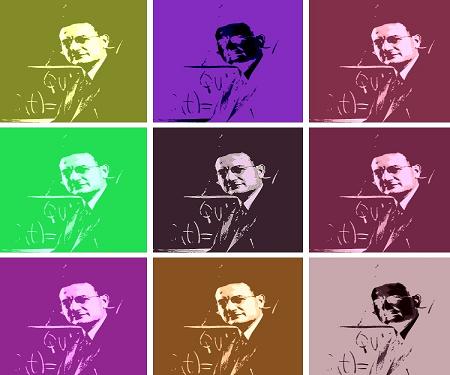 other. Any truly Democratic President seeking a Roosevelt/Kennedy Style economic program would call on Stiglitz in a minute’s notice. Krugman’s the obvious choice for trade and international economics under similar policy goals. There is a rich legacy of Paul Samuelson acolytes out there. Heck, Samuelson only died a year ago, so he was even available for some time; especially during the historic ‘transition’ presidency when we even got that new fangled seal. Samuelson even went to the University of Chicago and Harvard. Samuelson was the consummate neoKeynesian. He was the yang to the Milton Friedman yin. He was friggin’ brilliant.
Now, I’m feeling a bit like Inigo Montoya here except that it’s not the word inconceivable that’s confusing me. What’s confusing me is that I keep reading these guys. These guys work with models and data. They also–of course–make assumptions. I think the models are okay, but they keep using the wrong assumptions. After two years, you have to question the assumptions when the data results keep confusing you, guys!!
Let’s start with some fresh assumptions that don’t start with he said this, yet he’s doing this, it must be the message, the adviser, or the communication style. Let’s try, he said what it took to get elected. Now, he’s doing what he believes in. If he was all that interested in being the next FDR, at least one of you and Joseph Stiglitz would be on the CEA right now. He’s just not that into you, Keynes, or unemployment unless he thinks it’s going to help in 2012.
M’kay?
Susie at Suburban Guerilla had a slightly different take but with a somewhat similar line of thought.
Obama would rather preside over a graduate seminar than make hardnosed political decisions, and that continues to be a major flaw.
I think it runs even deeper than that. I think the ‘graduate seminar’ was a public relations exercise.
Digby at Hullabaloo has a little stronger sentiment than that.
If anyone’s wondering why the administration hasn’t been able to get on message about jobs and unemployment, it might be because they just don’t know what the hell they are doing.
Well, that too.
Sunday Reads
Posted: November 28, 2010 Filed under: Breaking News, Democratic Politics, Diplomacy Nightmares, Elections, Global Financial Crisis, Gulf Oil Spill, morning reads, The Great Recession, The Media SUCKS, U.S. Economy | Tags: Bobby Jindal, euro problems, Fed loathing, Irish bankruptcy, Korea, Mortgage defaults, North Korea attacks South Korea, Pigou Tax banking risk, QE2, Rahm Emanuel eligibility, Republican presidential wannabes, Right wing feminotexactlyism 59 Commentsgood morning!!!

Here’s an interesting piece in the Christian Science Monitor about an attempt to knock Rahm Emanuel off the ballot for the Chicago Mayoral election. Emanuel’s eligibility is in question because of his residency in the District as Obama’s Chief of Staff. Does that duty deserve similar treatment to active duty soldiers?
Chicago area election lawyer Burt Odelson filed his challenge to the Chicago Board of Elections, saying that Emanuel does not meet a state law that requires all candidates to be residents of the municipality in which they seek office for at least one year. He filed on behalf of two Chicago residents; on Wednesday, five other challenges were filed separately. Tuesday is the last day objections can be filed to the election board.
Central to Mr. Odelson’s argument is that Emanuel was removed from voter rolls twice during his two-year tenure in Washington, when he served as White House chief of staff to President Obama. During that time, Emanuel rented out his home. His campaign says he maintained ties to the city by paying property taxes, maintaining a driver’s license, and voting in the February primary.
Economists Olivier Jeanne and Anton Korinek at VOX are suggesting Pigou taxes (i.e. sin taxes) on financial corporations that would vary with credit booms and busts. Rules would change depending on the state of the economy. Suggestions include requiring higher capital levels or placing some kind of penalty on an organization when they take on large amounts of credit during an asset price boom. The purpose is to impose the social cost of bailing the organization out on them to prevent from doing so and causing havoc in the financial markets. The idea is that they’d be less able to profit from the leverage so they’d be less likely to go for the risk. Suggestions specifically target mortgages with balloons or “teaser rates” since they are more risky and more likely to blow up in the face of market troubles. The tax would then be used to fund any required bailout.
The optimal tax should also be adapted to the maturity of debt. Long-term debt makes the economy less vulnerable to busts than short-term debt, because lenders cannot immediately recall their loans when the value of collateral assets declines. For example, 30-year mortgages make the economy less prone to busts than mortgages with teaser rates that are meant to be refinanced after a short period of time.
An important benefit of ex-ante prudential taxation during booms is that it avoids the moral hazard problems associated with bailouts. When borrowers expect to receive bailouts in the event of systemic crises, they have additional incentives to take on debt. If the financial regulators accumulate a bailout fund, borrowers may increase their indebtedness in equal measure, leading to a form of “bailout neutrality”
Real Time Economics over at the WSJ has some interesting numbers up on Mortgage defaults. The ever increasing backlog of defaults is worrisome.
492: The number of days since the average borrower in foreclosure last made a mortgage payment.
Banks can’t foreclose fast enough to keep up with all the people defaulting on their mortgage loans. That’s a problem, because it could make stiffing the bank even more attractive to struggling borrowers.
In recent months, the number of borrowers entering severe delinquency — meaning they missed their third monthly mortgage payment — has been on the decline, falling to about 700,000 in October, according to mortgage-data provider LPS Applied Analytics. But it’s still more than double the number of foreclosure processes started.

I personally enjoyed reading this Michelle Goldberg take-down on the Daily Beast of certain right wing women politicians who are trying to campaign as the ‘real’ feminists while throwing out their rewrites of herstory. The Right Wing always rewrites history with the worst revisions. I’m calling what they adhere to feminotexactlyism. Here’s a few tidbits.
The historical revisionism here recalls that of Christian conservatives who try to paint our deistic Founding Fathers as devout evangelicals. At one point, Palin refers to Elizabeth Cady Stanton’s “Declaration of Sentiments,” which came out of the historic 1848 women’s rights convention at Seneca Falls, New York. Stanton deliberately echoed the language of the Declaration of Independence, referring to the rights that women are entitled to “by the laws of nature and of nature’s God.” To Palin, this mention of God proves that Stanton shared her faith: “Can you imagine a contemporary feminist invoking ‘the laws of nature and of nature’s God?’ These courageous women spoke of our God-given rights because they believed they were given equally, by God, to men and women.”
Not really. Stanton was a famous freethinker, eventually shunned by more conservative elements of the women’s movement for her attacks on religion. In one 1885 speech, she declared, “You may go over the world and you will find that every form of religion which has breathed upon this earth has degraded women.” Ten years later, she published the first volume of The Woman’s Bible, her mammoth dissection of biblical misogyny. Stanton was particularly scathing on the notion of the virgin birth: “Out of this doctrine, and that which is akin to it, have sprung all the monasteries and nunneries of the world, which have disgraced and distorted and demoralized manhood and womanhood for a thousand years.”
For more debunking, including that silly one about Susan B Anthony being some how against abortion, go read the article. Facts are such tractable things to Republicans that I wonder why any sane person would quote one without fact checking them first. I just can’t take any more presidential candidates needing basic re-education; let alone presidents that require it.
Speaking of another one in that category, the national spotlight isn’t doing much good for my governor either. I’ve got two sources I’ll quote here. The first one is The American Thinker which you may recall is conservative. They’ve even got his number. It seems that just writing books about yourself is not going to be the path to Presidency any more.
Louisiana Governor Bobby Jindal is busy promoting his new tome Leadership and Crisis with book tour stops all over the country. This latest tour comes on top of his previous speaking tours to raise campaign cash for himself and various Republican candidates around the country. The only place Governor Jindal has trouble visiting is his home state of Louisiana. The joke in Louisiana is that Bobby is known as a governor in 49 states.
The oil spill was a huge scare, but instead of being honest about it, Jindal used it as an opportunity to advance his own political celebrity and perpetuate ridiculously disconcerting and almost masochistic myths about the effects of a deepwater drilling moratorium, none of which turned out to be true. He spent more time posing for the cameras and tagging along with CNN than practically anyone else, yet, in his “memoir,” it’s the Obama Administration who cared about media perception, not him. As an example, he cites a letter he delivered requesting an increase for federally-subsidized food stamps, suggesting that the Obama Administration delayed on their response. According to White House officials, Jindal’s formal request was delivered on the same day that Jindal called a press conference decrying the delays. Pure political theater.
But most importantly, when Jindal says Congressmen should spend more time at home, he should probably listen to his own advice. During the last couple of years, Jindal’s become more known for the things he has done outside of Louisiana than for anything he has done here in Louisiana. Before the November elections, he spent weeks touring the country to support fellow Republican candidates, and only two weeks after the election, he embarked on yet another nationwide tour, this time promoting his memoir.
I have to admit that this next Republican presidential primary is going to have me chewing my finger nails off. If this is the best they have to offer, we are SO sunk.
Both the Koreas are upping the stakes in the Yellow Sea. North Korea is sending veiled threats to the U.S about sending its air carrier–USS George Washington–into the area for joint ‘war games’. SOS Clinton is in talks with the Chinese. This is from The Guardian.
The world’s diplomatic corps is working feverishly to contain the crisis and make sure there is no further conflict. China, which is widely seen as having influence over the North, has held talks with the US between its foreign minister, Yang Jiechi, and the secretary of state, Hillary Clinton. “The pressing task now is to put the situation under control,” the Chinese foreign ministry quoted Yang as telling Clinton.
Meanwhile the US stressed that its military operation with the South – which includes deployment of a nuclear-armed aircraft carrier – was not intended to provoke the North. Yet the North’s news agency addressed that issue: “If the US brings its carrier to the West Sea of Korea [Yellow Sea] at last, no one can predict the ensuing consequences.”
The the joint US-South Korea exercises started late last night. Here’s the report on them from English Al Jazeera.
South Korea’s military later said that explosions – possibly the sound of artillery fire – were heard on Yeonpyeong Island.
South Korea’s Joint Chiefs of Staff said that what is believed to have been a round of artillery was heard on Sunday from a North Korean military base north of the sea border dividing the two Koreas. It was not immediately clear where the round landed.
Residents of the island were ordered to take shelter in underground bunkers, but that order was later withdrawn, according to Yonhap.
Dozens of reporters, along with soldiers and police and a few residents, headed for the bunkers, where they remained for 40 minutes.
I’ve been watching the euro crisis again as the problems with Ireland seem to be creating problems with Spain now. My print copy of The Economist didn’t come this morning so I’ve been having to read the cyber ink here. My Saturday night soak in a hot bath was just not the same without it. So,here’s my idea of a chiller thriller.
Europe’s rescue plan is based on the idea that Ireland and the rest just need to borrow a bit of cash to tide them over while they sort out their difficulties. But investors increasingly worry that such places cannot, in fact, afford to service their debts—each in a slightly different way. In Ireland the problem is dodgy banks and the government’s hasty decision in September 2008 to guarantee all their liabilities. Some investors think this may end up costing even more than the promised EU/IMF loans of some €85 billion ($115 billion)—especially if bank deposits continue to flee the country (see Buttonwood). Ireland’s failing government adds to the doubt, because it could find it hard to push through an austerity budget before a new election (see article). In Greece the fear is that the government cannot raise enough in taxes or grow fast enough to finance its vast borrowing. Likewise in Portugal, which though less severely troubled than Greece nevertheless seems likely to follow Ireland to the bail-out window.
If the panic were confined to these three, the euro zone could cope. But Europe’s bail-out fund is not big enough to handle the country next in line: Spain, the euro’s fourth-biggest economy, with a GDP bigger than Greece, Ireland and Portugal combined.
One has to ask how much the Germans are going to pony up the cross country fiscal policy this will take. I’m still not ready to call the eminent demise of the EURO since every study that I’ve read–and I’ve read lots over the last three years–points to how much trade and foreign direct investment has come from integration. This will test a lot of wills; good an otherwise. Meanwhile, the Irish are rebelling over their deal. They don’t want austerity measures any more than the Greeks do or we do for that matter.
The Economist also weighed in on the “Republican Backlash” to the QE2 calling it perplexing which I believe is equal to me being baffled by the whole thing. It’s still either they don’t know a damn thing (e.g. Republican presidential wannabe candidate number 1 on the link up top) or they just want the power so they don’t really care (e.g Republican presidential wannabe candidate number 2 on the link up top there). Has to be. What is still the weirdest thing to me is how many of them seem to hate Bernanke who is–afterall–a fellow Republican and a Dubya appointee. What a strange, strange world this has turn out to be. I mean Ron Paul is going to be in charge of the House subcommittee on Monetary Policy next year. That’s like putting a representative of Astronauts for a flat earth society in charge of NASA.
Yet the fight is not ultimately over numbers, but ideology. To be sure, the Fed’s reputation has suffered among Americans of all political stripes over its failure to prevent the crisis and its bail-outs of banks. But the tea-party movement holds it in particularly low regard, seeing it as the monetary bedfellow of the hated stimulus and bail-outs. Some 60% of tea-party activists want the Fed abolished or overhauled, according to a Bloomberg poll. One of the movement’s heroes is Ron Paul, a congressman from Texas who wants to scrap the Fed outright and bring back the gold standard. His son Rand, newly elected as a senator from Kentucky, has also been stridently critical. QE can be made to seem sinister: an animated video on YouTube that portrays it as a conspiracy between Goldman Sachs and the Fed to fleece the taxpayer has been viewed over 2m times.
The ideological content of the backlash should not be overestimated. In 1892 William Jennings Bryan, later the Democratic presidential candidate, declared: “The people of Nebraska are for free silver and I am for free silver. I will look up the arguments later.” Liberals accuse the Republican leadership of likewise concocting an excuse to rally their base against Barack Obama. Indeed, the letter to Mr Bernanke criticises QE2 in much the same language used to oppose fiscal stimulus: as a dampener of business confidence and stability.
Well, I’ve just about had it with the print news today. Do you suppose the Sunday News Programs will have anything on more meaningful?
Ah, probably not.
What’s on your reading and blogging list today?
If the Turkey didn’t put you to sleep …
Posted: November 26, 2010 Filed under: The Great Recession, U.S. Economy | Tags: Bruce Bartlett, Bush tax cuts, deflation, FOREX, inflation, Martin Feldstein, QE2, supply side fairy tales, voodoo economics 9 CommentsEconomics doesn’t take holidays. It’s probably why we economists are so grim. Just in case you need a good nap, here’s some of my pointy head friends with 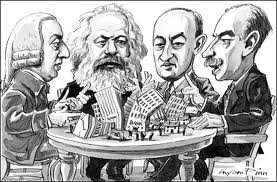 bow ties discussing things economic. I was going to try to spare you out of holiday cheer, but Mark Thoma reeled me in and now I must share.
I’ve mentioned recently how absolutely baffled I am by the number of “conservative” (i.e. radical) Republicans who keep buying into economic fallacies that even conservative (i.e. authentically conservative) economists can’t support. I mentioned Nobel Prize winning and father of the Monetarists Milton Friedman’s huge study on the Great Depression. His thesis was that very poor Fed policy made the Great Depression. In 2002, Bernake even agreed and apologized to him for the FED’s errant ways. Friedman was a consummate free marketer and wrote pop books and pop Newsweek columns during his heyday as a conservative icon. I’m sure he would not be suffering these fools were he alive today.
Thoma points to two recent columns by two former Reagan Team economists. One article is from Martin Feldstein who is probably the closest thing remaining to Milton Friedman in terms of conservative, free market, economic thought. The other is from Bruce Bartlett who was one of the fathers of Supply Side economics during the Reagan years but has since repented. He’s really adapted the Friedman statement “We’re all Keynesians now”. Both economists are intent on stopping this current batch of policy nincompoops from recreating The Great Depression.
The first Thoma thread references Feldstein who writes on the QE2 at Project Syndicate. Feldstein was Chair of Reagan’s Council of Economic Advisors and was President of the NBER. You may recall that NBER dates business cycles for the country. I want to hit his bottom line first so those of you that are using this for nap material can see that it’s ludicrous to think the QE2 is wild-eyed and out-there policy experimentation.
In short, the Fed’s policy of quantitative easing is likely to accelerate the rise of the renminbi – an outcome that is in China’s interest no less than it is in America’s. But don’t expect US officials to proclaim that goal openly, or Chinese officials to express their gratitude.
China is experiencing inflation. We are experiencing deflation. The reason this is good for both countries is that it will offset each of these pressures. Feldstein explains the goal of the QE2 in terms of US policy first. I’ll cover that quote. You’ll need to go read the explanation for the China side of the equation too.
The United States Federal Reserve’s policy of “quantitative easing” is reducing the value of the dollar relative to other currencies that have floating exchange rates. But what does the new Fed policy mean for one of the most important exchange rates of all – that of the renminbi relative to the dollar and to other currencies?
The effect of quantitative easing on exchange rates between the dollar and the floating-rate currencies is a predictable result of the Fed’s plan to increase the supply of dollars. The rise in the volume of dollars is causing the value of each dollar to fall relative to these currencies, whose volume has remained constant or risen more slowly.
The Fed’s goal may be to stimulate domestic activity in the US and to reduce the risk of deflation. But, intended or not, the increased supply of dollars also affects the international value of the dollar. American investors who sell bonds to the Fed will want to diversify the dollars that they receive from it. One form of that diversification is to buy foreign bonds and stocks, driving up the value of those currencies.
The result of this move will be to make our exports more competitive abroad and to make every one else’s exports–including those countries that have pegged their currencies to the dollar in an unfair manner–less competitive. We are simply turning the tables on the beggar-thy-neighbor growth policy China and others have adopted. The Fed is doing this because there is no will on the part of domestic policy makers to stimulate the demand in our country for consumers or government. There are 4 major parts of GDP. If fiscal policy doesn’t stimulate Consumption or Government demand, then there remain Investment and Exports. Investment is the least reliable form of demand and is rather small compared to the rest of the economy. The Fed is trying to tackle the aggregate demand shortage as best it can in response to the laws that compel it to act when unemployment is high.
Which brings me to the Bruce Bartlett thread. Bartlett has a piece today up at The Fiscal Times called ‘Starve the Beast: Just Bull, not Good Economics’. As some one who is currently suffering from a governor who has selectively adopted the policy as a path to the White House, I personally can tell you that it is very much Bull and causes a lot of undue suffering. It is ideology chosen over fact, logic, and above all, compassion. Bartlett goes straight to the heart of Voodoo Economics by using data to show that Dubya Bush’s embrace of of tax cuts in his first term as president did nothing to further economic growth and did everything to drive us in to unnecessary deficit spending.
It ought to be obvious from the experience of the George W. Bush administration that cutting taxes has no effect whatsoever even on restraining spending, let alone actually bringing it down. Just to remind people, Bush inherited a budget surplus of 1.3 percent of the gross domestic product from Bill Clinton in fiscal year 2001. The previous year, revenues had been 20.6 percent of GDP, spending had been 18.2 percent, and there had been a budget surplus of 2.4 percent.
When Bush took office in January 2001, we were already well into fiscal year 2001, which began on Oct. 1, 2000. He immediately pushed for a huge tax cut, which Congress enacted. In 2002 and 2003, Bush demanded still more tax cuts, even as the economy showed no signs of having been stimulated by his previous tax cuts. The tax cuts and the slow economy caused revenues to evaporate. By 2004, they were down to 16.1 percent of GDP. The postwar average is about 18.5 percent of GDP.
Spending did not fall in response to the STB decimation of federal revenues; in fact, spending rose from 18.2 percent of GDP in 2001 to 19.6 percent in 2004, and would continue to rise to 20.7 percent of GDP in 2008. Insofar as the Bush administration was a test of STB, the evidence clearly shows not only that the theory doesn’t work at all, but is in fact perverse.
There is nothing better than an addict who has fought their demons and comes out the other side to explain exactly why the demon should die. Bartlett succinctly explains why the Republicans continue to support the ideology and the drivel despite evidence that everything they believe is quite false.
Nor was Bush’s budgetary profligacy limited to programs that could be justified, however loosely, on national security grounds. As I detailed last week, he and a Republican Congress created a massive new entitlement program, Medicare Part D, to buy the votes of seniors and buy themselves reelection in 2004. Among those voting for this monstrosity were many Republicans still in Congress today who are unjustly considered to be staunch fiscal conservatives, including incoming Speaker of the House John Boehner, House Majority Leader Eric Cantor, and House Budget Committee chairman Paul Ryan.
Because of its obvious ridiculousness, one seldom hears conservatives say openly that tax cuts automatically reduce spending. But it still underpins the entire Republican budget strategy — tax cuts never have to be paid for, no meaningful spending cuts are ever put forward, earmarks and foreign aid are said to be the primary sources of budget deficits, and similar absurdities.
Both of these men have written tractable–albeit, tough–reads on policy decisions that people really need to understand. I know there is a tendency this time of year to wallow in football games, shopping binges, and short term feel good embrace of childhood memories, but really, there is a lame duck congress in session and an incoming group of Congressional morons with a President in office who wants to play Let’s Make a Deal with them.
If you can awake from tryptophan dreams long enough to read these two articles thoroughly, please do so. We can’t afford any more Voodoo policy mistakes.

 peej
peej Carissa
 bostonboomer
 dakinikat
 ecocatwoman
 mablue2
 Mama Lopez
 peggysue22
 quixote
 skydancingguestblogger
 Mona (aka Wonk the Vote)



 Sky Dancing
Recent Comments