
The Voodoo They All do so well
Posted: December 31, 2010 Filed under: Barack Obama, Democratic Politics, Surreality, U.S. Economy, U.S. Politics, We are so F'd | Tags: budget rule, Cutgo rules, Paul Krugman, Paul Ryan crazy, voodoo economics 21 Comments I’m not sure what exact delusional or fugue state describes Paul Ryan’s psyche. Dammit Jim, I’m an economist not a psychologist! I do, however, recognize b$gf$ck crazy when I see and hear it. It makes me want to avoid whatever part of Wisconsin that votes him into office because there must be something in their water or air. It amazes me that one small section of our country can wreck so much havoc on the rest of us by sending a loony tune to Washington, D.C. I’m beginning to think that Miami University should ask him to turn his degree back in and issue him a refund. I certainly would be ashamed if he were the product of any of my economics classes.
Paul Ryan is an outstanding example of everything that is wrong within that damnable beltway. He’s Daddy knows best on Acid. He wants to usher in the Republican Big Daddy state. In January, his type of crazy will dominate the House Budget committee. As a mater of fact, it’s already starting and it’s alarming.
RYAN’S RADICAL RULE?…. House Republicans quietly advanced procedural budget rules last week, which would be funny if they weren’t so ridiculous. But there’s a second part of this that shouldn’t go overlooked.
We talked the other day about Republicans’ “Cutgo” rules. The policy allows the GOP to try to keep slashing taxes, without having to pay for them, while requiring spending cuts to pay for new or expanded programs.
As Paul Krugman explained this morning, “Spending increases will have to be offset, but revenue losses from tax cuts won’t. Oh, and revenue increases, even if they come from the elimination of tax loopholes, won’t count either: any spending increase must be offset by spending cuts elsewhere; it can’t be paid for with additional taxes.” The Nobel laureate labeled this “the new voodoo.”
And then there’s the other part of House Republicans’ new budget rules.
A little-noticed detail in the new rules proposed by House GOP leaders would greatly increase the power of Rep. Paul Ryan, R-Wis., the incoming chairman of the House Budget Committee. As National Journal’s Katy O’Donnell reports, the new rules say that, for fiscal 2011, the chairman will set spending limits without needing a vote.
If that sounds insane, that’s because it is. Under the proposed rules, Ryan would be empowered to single-handedly establish spending levels if the House and Senate struggle to agree on a budget resolution. Just as important, Ryan’s levels would be binding on the chamber, without even be subjected to a vote.
Fascism doesn’t creep with Ryan in charge of things. It sprints. It’s typical of the radical right/Bircher mentality to think that when one can’t get to where they want with reasoned thought and plurality, it’s okay to lie about it and sneak things in under the radar. Thankfully, Paul Krugman has a bully pulpit at the NYT. Krugman’s description of the entire thing is right on. There’s only one problem. Krugman consistently ignores just how much Obama has been enabling the voodoo. It is, afterall, the Obama-McConnell Tax Cuts for Billionaires (TM) law. In fact, I’m willing to go out there on limb and say Obama believes the voodoo and that other Democrats perpetually cut-and-run rather than hold ground on it. Krugman seems to set on pointing out the sin on one side of the aisle and ignoring the same behavior on the other side. Let’s ignore that for a moment and concentrate on the good stuff Krugman offers.
But the tone changed during the summer, as B-day — the day when the Bush tax breaks for the wealthy were scheduled to expire — began to approach. My nomination for headline of the year comes from the newspaper Roll Call, on July 18: “McConnell Blasts Deficit Spending, Urges Extension of Tax Cuts.”
How did Republican leaders reconcile their purported deep concern about budget deficits with their advocacy of large tax cuts? Was it that old voodoo economics — the belief, refuted by study after study, that tax cuts pay for themselves — making a comeback? No, it was something new and worse.
To be sure, there were renewed claims that tax cuts lead to higher revenue. But 2010 marked the emergence of a new, even more profound level of magical thinking: the belief that deficits created by tax cuts just don’t matter. For example, Senator Jon Kyl of Arizona — who had denounced President Obama for running deficits — declared that “you should never have to offset the cost of a deliberate decision to reduce tax rates on Americans.”
It’s an easy position to ridicule. After all, if you never have to offset the cost of tax cuts, why not just eliminate taxes altogether? But the joke’s on us because while this kind of magical thinking may not yet be the law of the land, it’s about to become part of the rules governing legislation in the House of Representatives.
It’s one thing to say “That’s just crazy talk” to Republicans but to turn around and excuse or ignore the enabling and facilitating role that the President and Democratic members play is to commit a big sin of omission. That troubles me when you’re one of the few economists with a very public bully pulpit.
There’s obfuscation on all sides of this stupidity however. BostonBoomer asked me about a response to Krugman’s  criticism here that’s grounded in something wonky at JustOneMinute. The writer of that post tries to call out Krugman by screaming “deception and misdirection”, then referring to Ricardian economics. You must use the Wayback Machine for this one. The article is like reading a critique of modern democracy based on what they did in Athens around 500 BC.
David Ricardo was born in 1772 and made a fortune as a stockbroker and loan broker.[1] At the age of 27, he read An Inquiry into the Nature and Causes of Wealth of Nations by Adam Smith and was energized by the theories of economics. His main economic ideas are contained in Principles of Political Economy and Taxation (1817). This set out a series of theories which would later become theoretical underpinnings of both Marx’s Das Kapital and Marshallian economics, including the theory of rent, the labour theory of value and above all the theory of comparative advantage.
Ricardo wrote his first economic article ten years after reading Adam Smith and ultimately, the “bullion controversy” gave him fame in the economic community for his theory on inflation in 19th century England. This theory became known as monetarism, the theory that excess currency leads to inflation.[2] He was also a factor in creating classical economics,[3] which meant he fought for Free trade[4] and free competition without government interference by enforcing laws or restrictions.[5]
Yes, that’s right. Ricardo is an early 19th century economist philosopher writing during the time when the main sector of all economies was agriculture using technology like horses and slaves under a system called Mercantilism. That’s the reason to criticize Krugman. Yes, we academic economists teach Ricardian concepts, models, and principles still. However, it’s just because it’s an easy entry for people that do not have good calculus skills and are unfamiliar with the most basic economic concepts. These simple models weird enough people out as it is. Also, it’s the original, early attempt at theory that under pins classical economics. Tons of empirical data and computer models plus advances in mathematics have pushed us beyond all that. Most of the Ricardian stuff has been reformulated–as has a lot of the Keynesian stuff and that’s only from about 100 years ago–and tested empirically. To put it in blunt terms, some of the impacts have the right sign and do exist, but they show up as so trivial that no one takes them seriously when you’re dealing with real world economic policy. A really good example of this is the ‘crowding out effect’. Another is what Tom Maguire points out at JustOneMinute. Let me refer to a thing via new school on Barro who is one of the reformulaters.
Almost immediately, Barro turned on his Keynesian roots and joined the Rational Expectations revolution with two central pieces: his celebrated “Ricardian Equivalence Hypothesis” (1974) and his famous money neutrality paper (1976). Under a particular set of assumptions (e.g. intergenerational altruism or immortality, perfect capital markets, lump sum taxation, and the condition that debt not grow faster than the economy), Barro’s (1974) “Ricardian Equivalence Hypothesis” argues that every bond-financed deficit must be met by a future tax increase, that this tax increase would be forseen by living agents and that these agents would care enough about posterity to adjust their present consumption accordingly. In short, this implies that agents do not take a bond-financed fiscal expansion as a lucky windfall but rather will save the entire proceeds in anticipation of the future tax burden – and thus not raise their demand for goods and services. Thus income received by agents from government deficit-spending is all saved – and hence has no effect on consumption (thus no multiplier) – and that these savings go into the demand for the very same bonds that were supplied to finance that government spending (so bond demand rises exactly to meet higher bond supply, and money demand is unchanged) and thus there is no effect on interest rates either.
Barro’s “Ricardian Equivalence Hypothesis” has spawned a virtual research industry of its own as a whole generation of economists have climbed over each other tortuously examining, assailing, and verifying the validity and implications of Barro’s theorem (his 1974 paper is among the most-referenced papers in economics today). Barro’s 1976 paper on the neutrality of monetary policy (i.e. that changing money supply growth would not affect output or interest or any real variables) followed up on the work of Lucas and Sargent and although less unique, it was no less controversial.
This stuff is at the root of the conflict between the freshwater (Neoclassical) and the saltwater economists (NeoKeynsian) economists. I highlighted the most germane thing in all of this above and that is the phrase “under a particular set of assumptions”. It takes just as many unrealistic assumptions to make a free market economy work as it does to create a Marxist Utopia. The most suspect assumption of all is that of perfect capital markets.
Joseph Stiglitz earned his Nobel Prize for a career spent outlining all the ‘frictions’ in markets. That would be all the stuff in reality that make markets so damned imperfect. Stiglitz’s big thing is asymmetries of information which is something I talk about a lot when it comes to financial markets. The capital markets are loaded with them; especially now. Then, there’s the little friction involved with basic market structures. Back in the Ricardian days it was possible to point to the market for wheat and label it a somewhat ‘perfect market’. We’re way past that. We’ve got so many monopolies and oligopolies and so much government regulation and rules, that what Ricardo and Smith describe is as arcane as Marxism. Greg Mankiw is probably the closest ‘real economist’ source I can name that still ambles along those lines. However, he does so with a huge amount of caution. No one serious denies the role of frictions in markets.
The most silly thing about the JustOneMinute commentary is it ignores the source of Krugman’s Nobel–international trade–which starts with the Ricardian ‘comparative advantage’ framework. It also ignores Krugman’s writings outside of the NYT. Here’s an example from MIT that’s still standing called ‘Ricardo’s difficult idea’. Krugman writes this in the 1990s. Now, why was that so difficult to Google?
And so one is prepared to be sympathetic after reading a passage like the following, on the first page of Sir James Goldsmith’s The Trap: “The principal theoretician of free trade was David Ricardo, a British economist of the early nineteenth century. He believed in two interrelated concepts: specialization and comparative advantage. According to Ricardo, each nation should specialize in those activities in which it excels, so that it can have the greatest advantage relative to other countries. Thus, a nation should narrow its focus of activity, abandoning certain industries and developing those in which it has the largest comparative advantage. As a result, international trade would grow as nations export their surpluses and import the products that they no longer manufacture, efficiency and productivity would increase in line with economies of scale and prosperity would be enhanced. But these ideas are not valid in today’s world.” (Goldsmith 1994:1). On close reading, the passage seems a bit garbled; but maybe he is just a careless writer (or the translation from the original French is imperfect). One expects him to follow with a discussion of some of the valid reasons why one might want to qualify Ricardo’s idea — for example, by referring to the importance of external economies in a high-technology world.
But this expectation is utterly disappointed. What is different, according to Goldsmith, is that there are all these countries out there that pay wages that are much lower than those in the West — and that, he claims, makes Ricardo’s idea invalid. That’s all there is to his argument; there is no hint of any more subtle content. In short, he offers us no more than the classic “pauper labor” fallacy, the fallacy that Ricardo dealt with when he first stated the idea, and which is a staple of even first-year courses in economics. In fact, one never teaches the Ricardian model without emphasizing precisely the way that model refutes the claim that competition from low-wage countries is necessarily a bad thing, that it shows how trade can be mutually beneficial regardless of differences in wage rates. The point is not that low-wage competition never poses a problem. Rather, what is significant is that despite ostentatiously citing Ricardo, Goldsmith completely misses one of the essential lessons of his argument.
It’s really obvious that Krugman–indeed, most of us–don’t see the Ricardian model as anything but an early attempt to take economics out of the realm of philosophy and apply the scientific method and models. It’s like yelling at a learned Psychologist for not continually citing Freud as a modern authority or a learned Molecular Biologist for not continually citing Darwin as the be all and end all on evolutionary theory. These guys started modernizing their fields, but a lot of new evidence, tools, and data have arisen since then.
So, my bigger question is why do we have Republicans pushing a 19th century world view when it comes to economics? I then would also like to know why Democrats–especially a Democratic POTUS–enable them? Well, according to The Hill, Democrats are ripping the proposed rule. Democrats always seem really skilled at shaking their tiny fists before anything really happens.
Democrats argue the provision would give unilateral power to Ryan and flies in the face of GOP promises of transparency.
“Allowing incoming Chairman Ryan to have unilateral power to set spending limits — instead of subjecting those limits to a vote on the floor of the House — flies in the face of promises by House Republicans to have the most transparent and honest Congress in history,” said Doug Thornell, spokesman for incoming House Budget Committee ranking member Chris Van Hollen (D-Md.), in an e-mailed statement.
“Unfortunately, the House GOP is reverting back to the same arrogant governing style they implemented when they last held the majority and turned a surplus into a huge deficit,” he added.
Drew Hammill, spokesman for incoming Minority Leader Nancy Pelosi (D-Calif.), also criticized the rule change. He said the decision to cede power to Ryan “runs counter to the Republicans’ promises of transparency and accountability.”
The deal is will they actively FIGHT it and stop it? Then the bigger question is will Krugman talk about the complicity of the Democratic congress critterz and the President in enabling their stupidity?
Forehead, meet palm.
New Year’s Eve Reads
Posted: December 31, 2010 Filed under: Global Financial Crisis, Gulf Oil Spill, health hazard, morning reads, the blogosphere, The Little Blog that could, The Media SUCKS, U.S. Economy, U.S. Politics, Wikileaks, Women's Rights | Tags: Brazil's first woman president, Consumer Financial Protection Bureau, Dilma Rousseff, Elizabeth Warren, Filibuster, Marine mammals struggle with oil, New Media Report, oil spill, oiled marshes, Oily beaches, Pew Research, Reform, Senate, Tom Udall, Transocean 28 Comments
Good morning!
Today we begin to say good bye to 2010 and the first decade of the millennium and century! What a decade and what a year it has been! I don’t know about you, but just the last five years alone have turned my life upside down. (Think Hurricane Katrina, BP Oil Tsunami, and the financial crisis that has empowered thugs like Governexorcist Jindal to enforce absolute budget austerity on Louisiana and higher education.) Despite all that, we’re going to have an Airing of the Gratitude thread as part of the-Little-Blog-That-Could’s New Year’s Celebration. I’ve bought my black eyed peas and cabbage. Now, I’m making my list of things that I resolve to appreciate for the thread. I’d like to invite you to think about yours too and join in. A lot of my gratitude comes under the heading of my daughters, dad and sister, and my friends. That includes you ! We’re a blogging community that was forged from some really tough political times.
Meanwhile, here are some headlines to gear you up for the coming year and decade. May things improve for the better!! May peace and sanity prevail!! May every one’s health and circumstances improve tremendously! Many, many blessings to each and every one of you!
Are you pessimistic or optimistic about the coming year? A CNN poll shows a lot of people are optimistic about the the world outlook, but less so about their personal situation. Men are much more optimistic than women. Where do you fit in?
The Senate appears to have reached its limit on perpetually trying to find 60 votes for cloture and taking every ‘threat’ of a filibuster seriously. Brian Beutler at TPM is following the reform movement and the possible hurdles it faces.
The consensus package will aim to put an end to “secret holds” (anonymous filibuster threats) and disallow the minority from blocking debate on an issue altogether. Those two reforms are fairly straightforward. The third is a bit more complex. Udall, along with Sen. Jeff Merkley (D-OR), say there’s broad agreement on the idea to force old-school filibusters. If members want to keep debating a bill, they’ll have to actually talk. No more lazy filibusters.
But how would that actually work? In an interview Wednesday, Udall explained the ins and outs of that particular proposal.
“What we seem to have the most consensus on, is what I would call… a talking filibuster,” Udall told me. “Rather than a filibuster which is about obstruction.”
As things currently stand, the onus is on the majority to put together 60 votes to break a filibuster. Until that happens, it’s a “filibuster,” but it’s little more than a series of quorum calls, votes on procedural motions, and floor speeches. The people who oppose the underlying issue don’t have to do much of anything if they don’t want to.
Here’s how they propose to change that. Under this plan, if 41 or more senators voted against the cloture motion to end debate, “then you would go into a period of extended debate, and dilatory motions would not be allowed,” Udall explained.
As long as a member is on hand to keep talking, that period of debate continues. But if they lapse, it’s over — cloture is invoked and, eventually, the issue gets an up-or-down majority vote.
DDay at FDL has a thread up that offers a more detailed explanation. This includes a bit on what is being called ‘continuous debate’ which sounds a lot like that Jimmy Stewart movie “Mr. Smith goes to Washington” or what every one was hoping for when Bernie Sanders started talking a few weeks ago.
After 41 Senators or more successfully maintain a filibuster by voting against cloture, they would have to hold the floor and go into a period of extended debate. Without someone filibustering holding the floor, cloture is automatically invoked, and the legislation moves to an eventual up-or-down vote, under this rule change.
This would institute the actual filibuster. The Majority Leader would have the capacity, which Harry Reid says he doesn’t have now, to force the minority to keep talking to block legislation. It becomes a test of wills at this point – whether the minority wants to hold out for days, or whether the majority wants to move to other legislation.
Here’s hoping we can fix our broken government that is driven by corporate cash and interests and railroaded by imperious Senators. I’m not very hopeful that congress can actually fix itself, but I guess we’ll see. I will say that I do think Tom Udall is a good man. He’s one of the people that is fighting for an improved process.
I still have Louisiana and New Orleans on my mind right now. We have a new headline in our ongoing BP Oil Gusher Saga. This is from Raw Story. It appears the company that owns the rig–Transocean–is refusing to co-operate with the federal oil spill probe. I just want to find out what went wrong so we don’t ever repeat it. I’m sure all they are thinking about is the upcoming lawsuits.
Transocean said the U.S. Chemical Safety Board does not have jurisdiction in the probe, so it doesn’t have a right to the documents and other items it seeks. The board told The Associated Press late Wednesday that it does have jurisdiction and it has asked the Justice Department to intervene to enforce the subpoenas.
Last week, the board demanded that the testing of the failed blowout preventer stop until Transocean and Cameron International are removed from any hands-on role in the examination. It said it’s a conflict of interest. The request is pending.
Our economy is in sad shape down here and a good part of it is due to Transocean’s role in destroying livelihoods and life around the Gulf of Mexico. Human lives aren’t the only thing still struggling from the gulf gusher. Here’s some local news on that.
Scientists at the institute of Marine Mammal Studies in Gulfport are studying why two endangered manatees died near the Gulf Coast in the past two weeks.
According to the Institute’s Executive Director Dr. Moby Solangi, cold water killed the manatees, but they should have migrated to warmer water.
Scientists are finding an unusually large number of Gulf of Mexico animals out of place since the BP oil spill began.
“It is no different than having a forest fire,” Dr. Solangi said Thursday. “The oil spill expanded, it went thousands of square miles and as their habitat shrunk, these animals moved to areas that were not affected.”
The problem, according to Dr. Solangi, is those unaffected areas were also unfamiliar to the animals.
Too many turtles, for instance, wound up in waters off the Mississippi coast, where they didn’t understand the food supply.
300 turtles died in Mississippi.
Many more were caught by fishermen.
“In the past years, we would get one or two or maybe three animals, this year we had 57,” Dr. Solangi said.
He and his staff at the Institute for Marine Mammal Studies are now caring for dozens of sea turtles.
Of course, turtles in distress have to be swimming through some pretty nasty stuff in their environment. The shores along the Gulf are still oiled. Here’s a story about 168 miles of coast in Louisiana alone. This is from New Orleans own Times Picayune. Yes, folks, every single story I’m linking to on this is no more than a day old. We’re still living this nightmare down here.
Louisiana’s coastline continues to be smeared with significant amounts of oil and oiled material from the BP Deepwater Horizon disaster, with cleanup teams struggling to remove as much as possible of the toxic material by the time migratory birds arrive at the end of February, said the program manager of the Shoreline Cleanup and Assessment Teams, which are working for BP and the federal government.
There are 113 miles of Louisiana coastline under active cleanup, with another 55 miles awaiting approval to start the cleanup process, according to SCAT statistics. Teams have finished cleaning almost 72 miles to levels where oil is no longer observable or where no further treatment is necessary.
But that’s not the whole story for the state’s coastline. According to SCAT statistics, there’s another 2,846 miles of beach and wetland areas where oil was once found but is no longer observable or is not treatable.
Gary Hayward, the Newfields Environmental Planning and Compliance contractor who oversees the SCAT program, said that large area will be placed into a new “monitor and maintenance” category, once Louisiana state and local officials agree to the procedures to be used for that category.
“With rare exceptions, most of the marshes still have a bathtub ring that we have all collectively decided we aren’t going to clean any more than we already have because we’d be doing more harm to the marshes than the oil is going to be doing to them,” Hayward said.
Raise your hand if you heard any thing about any of this on your local newspaper or the national TV stations. We’re so out of sight and out of mind down here that some times I wonder if we’re even considered part of the country. You do realize that a majority of water-related commerce and a majority of oil comes through our state, don’t you?
The South American country of Brazil is looking forward to incoming-President Dilma Rousseff. The Nation has an article that spotlights the country’s first female elected head of state. I only hope to see a day like that for our country. I’d also like to end the Reagan legacy and get a real Democrat back in the White House. Yes, I’m clapping for Tinkerbelle.
When the confetti was still falling after her victory at the polls on October 31, Dilma Rousseff, Brazil’s first female president-elect, said, “I want to state my first commitment after the elections: to honor Brazil’s women so that today’s unprecedented result becomes a normal event and may be repeated and enlarged in companies, civil institutions and representative entities of our entire society.”
In a country where women have typically played a limited role in politics, the election of a woman to Brazil’s highest office signals a major break from the past. But Rousseff’s term will likely be marked by continuity with her predecessor, Luiz Inácio Lula da Silva. Lula, a member of the Workers’ Party (PT), is leaving office with 87 percent support in the polls. An economist, PT bureaucrat, chief of staff under Lula and former guerrilla in the anti-dictatorship movements of the 1960s and ’70s, Rousseff was handpicked by Lula to follow his lead as president. When she is sworn in on January 1, she will inherit Lula’s popular legacy and will be further empowered by the fact that her party and allied parties won a majority of seats in the Senate and Congress. Not even Lula counted on this much support.
Well, at least somewhere, women are getting their due. I’m getting tired of living through stories where women in the U.S. watch jobs they should have go to less qualified people. Then, they get to do all the work without the title. What’s worse is when the boyz club in power make you participate in the charade of celebration and finding the royal heir. Like that legitimizes their malfeasance! Here’s yet another example in a WSJ story about Elizabeth Warren searching for a person for the job she would hold if the world weren’t so upside down. It seems less and less about qualifications and knowledge these days and more and more about appearances and appeasing the old boyz. Money screams!
White House adviser Elizabeth Warren and a top lieutenant are quietly asking business and consumer groups for names of people who might run the new Consumer Financial Protection Bureau, people familiar with the matter said.
The hunt suggests that Ms. Warren, a lightning rod for some bankers, might not be selected to lead the bureau, a centerpiece of the Dodd-Frank financial overhaul bill that passed this summer. Still, many liberal groups will push to get her in the post.
President Barack Obama’s choice could signal how he intends to deal with resurgent Republicans in Congress. The feelers to business groups serve as a reminder that any nominee would likely need support from at least seven Republicans in the Senate to win confirmation.
Among the names being discussed are Iowa’s attorney general, Tom Miller; New York state bank regulator Richard Neiman; and former Office of Thrift Supervision director Ellen Seidman.
The reality is Obama fights for nothing but Obama. I know there are other Obama appointments coming up shortly and I’m trying to get a grasp on what I want to discuss with you on the proposed replacements for Larry Summers. Well, I know what I want to discuss but it’s more like trying to figure out how to describe what I see as the problem. As some one who rides both sides of the finance and economics line, I have some insight that many don’t have. Finance is where you make the money and it’s really based on chimera. I know the details and the proofs behind asset pricing models and it’s simply smoke and mirrors. Economics is where the brains and the real insight exists. There is going to most likely be a bland, uninspired replacement for Larry Summers. A finance person will undoubtedly win that appointment. Hence, we will get smoke and mirrors and meaningless numbers.
Once again, it’s the vision thing. All these appointments seem to reek of employing micromanaging corporate bureaucrats that are part of the problem. They can crank through the data but they can’t put it into perspective. As old President Bush used to say, no one seems to be good at the “vision thing”. No one is crafting a blue print that incorporates a better big picture based on what we already know. The Great Depression and the inflationary 70s–and definitely the failures of Reagan’s voodoo economics–are full of lessons that every one seems to be ignoring. We’re seeing the appointment of types that just muck around in the already mucked up bureaucracy decimated by Dubya Bush whose only inspiration appeared to be blowing things up like a psychopathic third grade with a bunch of firecrackers and a pond full of frogs.
Finance people have tons of numbers in search of a theory. They crunch that data until they come up with a hypothesis that fits their storyline. Macroeconomists have a broader sense of what the system needs to look like in order to really change things. Economics has theory proved endlessly by empiricists. Finance people have run amok since the 1980s and really, it’s time to end overt data mining and look to bigger principles.
This White House seems really short on values, vision, and a blueprint to carry our country forward into this new decade. We need an economic strategy that includes real job creation; not imaginary ‘saved’ jobs. We need to unwind any thing that’s too big too fail and empower small, facile, and agile companies. Our money needs to be concentrated on developing strategies and resources that we can nurture and renew. (No, corn ethanol is not the answer. Making higher education more expensive and less accessible to all is not the answer either.) We need to find a way to fulfill our promises to the weakest among us. Current income inequality is not only immoral but it’s at levels approaching the powder keg of revolutions. (Have you listened to a Teabot recently?) We can no longer be railroaded by the interests of the few just because they can afford to fund political campaigns. No government law should incent a business to leave its community in need to search out obscene profits elsewhere because government policy encourages it. We should not accommodate any country that buggers growth from us by proffering trinkets on credit. Vision is not a difficult thing. Fighting for what’s right should not be a difficult thing either unless you’re in the fight with the wrong motivation.
Compromise seems to come so easy these days because there’s nothing proffered but compromise. The original positions are badly compromised from the get-go. Law making is based on political victory and not victory for the country. No one is shifting real strategies due to midterm elections because there’s never been an overarching plan to begin with. Moving pieces around a chess board is not playing chess. Government at the highest levels has just gotten to be a muddled process with no guiding principles. The White House is intently putting mid-level bureaucrats from corporations and the Clinton administration in charge of making tasteless sausage. It’s just making things even more muddled and more muddled is not the type of change people want. No bold vision could ever include the likes Timothy Geithner, Joe Biden, or Bill Richardson in positions that require vision. Instead, we have people of vision–like Elizabeth Warren–hunting for acceptable seat warmers.
Meh.
I would just like to say that the last two months of being more than a file cabinet has brought a lot of intriguing things to Sky Dancing. We have a growing number of readers and front pagers and I find that all very exciting. So, must other parts of the blogosphere. WonktheVote’ s excellent piece ‘What if this is as good as the Obama administration gets? ‘ made Mike’s Blog Round up at Crooks and Liars. Another surprise showed up last night from Pew Research Center and the Pew Research Center’s Project for Excellence in Journalism. This time a reference and quote come from BostonBoomer on Julian Assange and the Wikileaks. Here’s their story and how we fit in.
Espousing a unique mix of politics, technology, free speech and transparency, WikiLeaks has captured the attention from bloggers in a way few stories ever do. It has been a focus of social media conversation for three weeks this month alone, with a discussion that moved from one dimension to the next. After centering on political blame, the value of exposing government secrets, and the importance of a free press, the debate took on yet a new angle last week.For the week of December 20-24, more than a third (35%) of the news links on blogs were about the controversy, making it the No. 1 subject, according to the New Media Index from the Pew Research Center’s Project for Excellence in Journalism.
…
“It should go without saying that I do not approve of Assange’s behavior if the allegations against him are true. Nevertheless, I still believe the allegations are very convenient for the powers that be,” declared Sky Dancing.
The Center produces something that’s called the New Media Report. Here’s the description.
The New Media Index is a weekly report that captures the leading commentary of blogs and social media sites focused on news and compares those subjects to that of the mainstream press.
PEJ’s New Media Index is a companion to its weekly News Coverage Index. Blogs and other new media are an important part of creating today’s news information narrative and in shaping the way Americans interact with the news. The expansion of online blogs and other social media sites has allowed news-consumers and others outside the mainstream press to have more of a role in agenda setting, dissemination and interpretation. PEJ aims to find out what subjects in the national news the online sites focus on, and how that compared with the narrative in the traditional press.
In similar news, Technorati just gave us a new badge early this morning. It’s a nice little green rectangle that says TOP 100 US POLITICS. We’re currently 95. Not so bad for a blog that was just a file cabinet 2 months ago.
Our goals here include becoming part of the bigger conversation as well as providing more links and information to news items than we get via traditional main stream media outlets dominated by the concerns of advertisers and sources. We complement that with our commentary and explanations and yours. Yes. They hear us now.
So what’s on your reading, blogging and celebration lists today?
Corporate Money, Corporate Press, Corporate Congress
Posted: December 29, 2010 Filed under: Barack Obama, Corporate Crime, Democratic Politics, Main Stream Media, president teleprompter jesus, Team Obama, the villagers, U.S. Economy, U.S. Politics, Voter Ignorance, We are so F'd, Wikileaks, Women's Rights | Tags: Citizen's United, Congressman John Hall, corporate congress, corporate interests, corporate press, Facism 40 CommentsSome astute and somewhat outrageous comments by outgoing Congressman John Hall in The New York Observer  should cause pause and some good discussions. That is, if any one pays attention to them.
Speaking about the Citizen’s United decision, which allowed unregulated flow of cash into campaign coffers, Hall said, “I learned when I was in social studies class in school that corporate ownership or corporate control of government is called Fascism. So that’s really the question— is that the destination if this court decision goes unchecked?”
That’s the astute part. The outrageous part is “the flow of corporate dollars is why he and the Democrats lost control of Congress”. Well, imho, there’s some yes and no in that. Here’s a CNN corporate sponsored poll that may shine some light on that.
President Barack Obama enters the new year with a growing number of Americans pessimistic about his policies and a growing number rooting for him to fail, according to a new national poll.
But a CNN/Opinion Research Corporation survey released Wednesday also indicates that while a majority of the public says Republican control of the House of Representatives is good for the country, only one in four say the GOP will do a better job running things than the Democrats did when they controlled the chamber.
Sixty-one percent of people questioned in the poll say they hope the president’s policies will succeed.
“That’s a fairly robust number but it’s down 10 points since last December,” says CNN Polling Director Keating Holland. “Twelve months ago a majority of the public said that they thought Obama’s policies would succeed; now that number has dropped to 44 percent, with a plurality predicting that his policies will likely fail.”
There’s a large number of people out there that seem to see no real difference between the Republicans, INC. and Democrats Inc. in terms of outcomes. They hope the explicitly stated goals of Obama policy succeed. They doubt the laws passed support those goals. They believe they will fail. I think people see the disconnect between the rhetoric and the product delivered now. I honestly don’t believe that voters put the Republicans in charge of the house because they love Republican policy, if these polls mean anything. That poll and many others show voters support the outcomes of authentically Democratic policy. I believe this election was more a play for gridlock simply because they don’t see what’s been passed as achieving the ends of what they want. They believe it will fail.
How many people really want the kinds of things pushed by John Bohener who–as an example–just met with culture thug Randall Terry and other monsters of the Republican base after their mid-November victory lap? There’s only so far you can get by pushing a repeal to DADT on the basis of gays and straights showering together. This is especially true when the vast majority of people support repeal. Remember Terry Schiavo? Played well with the base but horrified the country? What would happen if we saw more reporting of this kind of thing on CNN? I bet you never saw that before I pointed it out to you via Salon.
Let’s get back to Hall’s comments.
The extra money floating around, he said, compounded the Democrats’ weaknesses on the economy, unemployment and the mortgage crisis. And he said that for of the accomplishments of the lame duck Congress, their failure to pass the Disclose Act—which would have at least forced corporations to reveal who they were donating to—stood out a as a black mark on the session.
“We are talking about supposedly wholesome names like Revere America, American Crossroads, Americans for Apple Pie and Motherhood—if somebody hasn’t trademarked that one I probably should. The fact is you can call it anything and the money could be coming from BP or Aramco or any corporation domestic or foreign,” Congressman Hall said.
Well, that’s a good point. I’m still pushing for congress critterz to be forced to wear NASCR-like jackets listing their top corporate contributors as long as they’re in office. That would include the ones hiding behind their advocacy ad creating subsidiaries okayed by SCOTUS, INC. I’m still not certain that the extra money floating around was the reason for The Big Shellac. I’m still guessing that every one was hoping to stop the Washington DC Pork Train and laws so long and complex that no one can really figure out what they really do. These are the laws that people think will fail them. If anything, we should see a slow down of that process. I think the American people want to slow the process down so they can figure out if it’s good or bad for them and if it will achieve what they support.
BUT, The Big Shellac came at the high cost of forwarding Republican laws and agendas that please the Republican Bircher Base. Plus, there’s more possible SCOTUS fights and appointments that only please the Bircher and Religionist Base. Hence, the nice get together with Randall Terry whom Salon described as:
Randall Terry is a psychopath, an antiabortion zealot who endorses domestic terror and compares coldblooded murderers to heroic abolitionists. He’s also a ridiculous character whose true calling is self-promotion, by any means necessary.
He long ago went from prominent figure in the raging abortion debate to desperate self-parody. He renounced his gay son, left his wife for a campaign volunteer, and sought a reality television show. If it weren’t for YouTube, no one would’ve even noticed his inflammatory statements about the murder of Dr. George Tiller. In short, Randall Terry’s not only an extremist nutcase, he’s also old news.
But now that the Republicans are back, this faded celebrity is mounting a comeback. Terry’s most recent e-mail blast featured a photo of the radical Catholic cleric sitting down with incoming Speaker John Boehner himself. “With Boehner’s chief of staff, after the election,” the caption read. (Terry also presented the incoming speaker with a fetus doll resting on some sort of “decree.”)
A Speaker of the House Boehner does not return to Congress to any degree of sanity. I won’t even go in to the incredible problems some one must have to cry that much and drink that hard. A Republican congress just increases the show factor, imho. It also brings us back to the idea that we not only need to get corporate money out of politics,we need it out of the press. The CNN indicates that the President is likable enough, he’s just not focused on the right things. That’s where the money comes in. If congressional leaders and the White House continue to go back and forth between corporate and state interests and the only folks with real access are either groups that can deliver zealous voters and big bucks, we’re in trouble. We’re especially in trouble of the press continues on in its route of “sins of omission” that appear to play into the hands of their advertisers and the interests of government. The Village does not want to run off their advertisers and the few readers/viewers left standing.
This is the importance of Wikileaks and independent media organizations like Democracy Now. They produce things of Public Interest that are not censored, swayed, or bullied by corporate and state interests. As we’ve seen in one after another of the dribbles of diplomatic cables coming from European press, there appears to be a lot of melding of corporate and state interests. This is not good for any one but corporate and authoritarian state interests. European press is filtering the leaked diplomatic cables right now. The majority of them remain out of the public domain. The European papers are less corporate than their U.S. counterparts which is better. We may still not actually see all of the material. Press, government and corporate interests are way too cozy in this country. If you go back to what Congressman Hall said, it’s the classic definition of fascism.
update: I wanted to add the link above on the “classic definition of fascism” because I just read some posts from right wing sources linked to this article at Mememorandum that are obviously trying to rewrite history. I’ve linked to the writings of Mussolini. This is part of the definition of fascism as put forward by Mussolini. Socialism and Marxism are NOT fascism in Mussolini’s definition. The right frequently tries to shove them into the same package. It was a post war trick used to focus hate of Nazis/Facism over to our former allies, the Soviets. Mussolini wrote this in 1932 as part of his definition.
…Fascism [is] the complete opposite of…Marxian Socialism, the materialist conception of history of human civilization can be explained simply through the conflict of interests among the various social groups and by the change and development in the means and instruments of production…. Fascism, now and always, believes in holiness and in heroism; that is to say, in actions influenced by no economic motive, direct or indirect. And if the economic conception of history be denied, according to which theory men are no more than puppets, carried to and fro by the waves of chance, while the real directing forces are quite out of their control, it follows that the existence of an unchangeable and unchanging class-war is also denied – the natural progeny of the economic conception of history. And above all Fascism denies that class-war can be the preponderant force in the transformation of society.
I think if you go read it much of it sounds like the Republican manifesto.
“Given that the nineteenth century was the century of Socialism, of Liberalism, and of Democracy, it does not necessarily follow that the twentieth century must also be a century of Socialism, Liberalism and Democracy …”
Mussolini spit out the world socialism, liberalism, and democracy in the same way the Bircher wing of the Republican party spits those words out.
Wednesday Reads II
Posted: December 29, 2010 Filed under: Democratic Politics, Feminists, Gitmo, Human Rights, morning reads, POTUS, U.S. Economy, Women's Rights | Tags: "necessary and proper", 2010 in review, Between Barack and a Rand Place, DADT, healthcare, Juneteenth, mona eltahawy, Natalya Estemirova, Native Americans, obama derangement, Oleg Orlov, Texas history, Tillie Brackenridge, vast right wing rumor mill, Wall Street WATBs, Wikileaks, wingnuts have huge issues 30 CommentsGood morning, Sky Dancers!
Minkoff Minx is under the weather and needs to rest up, so I’m filling in for her on today’s roundup. Here’s hoping things ease up for her soon!
I’ll start us off with some historical trivia for today.

Tillie Brackenridge on the porch of Mrs. William Vance's residence at Navarro and Travis Streets in San Antonio, where she was employed, c. 1900—Tillie formerly was a slave in James Vance's elegant home on East Nueva Street and told of seeing Robert E. Lee, a frequent visitor to the house. (from texancultures.com)
On December 29th, 1845, Texas enters the Union and becomes the 28th state (link goes to the History Channel site):
The citizens of the independent Republic of Texas elected Sam Houston president but also endorsed the entrance of Texas into the Union. The likelihood of Texas joining the Union as a slave state delayed any formal action by the U.S. Congress for more than a decade. In 1844, Congress finally agreed to annex the territory of Texas. On December 29, 1845, Texas entered the United States as a slave state, broadening the irrepressible differences in the United States over the issue of slavery and setting off the Mexican-American War.
Reminds me of this indelible photo of Juneteenth (Emancipation Day), taken in the year 1900, at what I believe used to be called Wheeler’s Grove in Austin (today it is known as Eastwoods Park). Here’s another poignant photo of the first official Juneteenth Committee, from the same place and same day as the first photo.
While I was digging around for decent links to these two iconic images, I stumbled across this post back in June 2009 about the holiday, from the Smithsonian’s “Around the Mall” blog — it’s fairly brief and there’s a neat and concise Q&A at the end if you have the time.
Just a little Juneteenth in December from your Texan on the frontpage.
Also a reminder of the countless unsung and ordinary heroes and heroines throughout the course of human history who have played a role in that most painstaking and arduous of endeavors–fighting the good fight to secure, maintain, protect, and strengthen all human and civil rights.
Texas became a state on December 29, 1845, but it did not become a free state until two decades later on June 18/19, 1865.
I’m just waiting for us to turn into a blue state again…I like picturing my mayor Annise Parker leading the way to defeat Guv Goodhair one of these days. Hey, a lefty wonk-gal in Texas can dream!
Speaking of human rights, I recommend checking out Clifford Levy’s piece yesterday from the NYT‘s “Above the Law” series. It’s called “An Accuser Becomes the Accused.” That’s the video version, but there’s also a text article in case that’s more convenient — “In Russia, an Advocate Is Killed, and an Accuser Tried.”
From the text:
MOSCOW — In a small courtroom in Moscow, friends of Natalya K. Estemirova crowded onto wooden benches, clasping photographs of her. It was 16 months after the murder of Ms. Estemirova, a renowned human rights advocate in the tumultuous region of Chechnya, and now the legal system was taking action.
A defendant was on trial, and his interrogators were demanding answers about special operations and assassination plots.
But the defendant was not Ms. Estemirova’s suspected killer. It was her colleague Oleg P. Orlov, chairman of Memorial, one of Russia’s foremost human rights organizations.
The authorities had charged Mr. Orlov with defamation because he had publicly pointed the finger at the man he believed was responsible for the murder: the Kremlin-installed leader of Chechnya. If convicted, Mr. Orlov could face as many as three years in prison.
The shooting of Ms. Estemirova, 51, in July 2009 has so far produced only an incomplete investigation, and no charges have been filed against anyone involved. Her case has instead turned into an example of what often happens in Russia when high-ranking officials fall under scrutiny. Retaliation follows, and the accuser becomes the accused.
Be it Wikileaks or the shooting of Estemirova, distracting far away from the original story under investigation seems to be the name of the game.
Now I’m not saying the Wikileaks circumstance is equal in nature or degree to the situation surrounding Estemirova’s murder. Justice is clearly being denied in the latter, whereas the former is far more complex. But either way, the detours from the initial topic of investigation do nothing but breed more suspicion and doubt at a time when trust in public and private institutions is on the decline.
Speaking of distractions, file this next one under Obama Derangement. From TPM — “Latest Right-Wing Freak-Out: Obama Wants To Give Manhattan Back To Native Americans“:
Read the rest of this entry »
Derivatives – The Dark Market
Posted: December 28, 2010 Filed under: Barack Obama, commercial banking, Corporate Crime, Equity Markets, financial institutions, Global Financial Crisis, investment banking, Stock Market, The Bonus Class, The Great Recession, U.S. Economy, U.S. Politics | Tags: AIG, Andrew Ross Sorkin, CFMA, CFTC, Commodity Futures Modernization Act, Credit Default swaps, derivatives, Dodd Frank, Gary Gensler, Glass Steagall, Graham Leach Bliley, Mary Schapiro, SEC, securitization 35 Comments[Dakinikat here: We at Sky Dancing would like welcome fiscalliberal to the Front page!!!]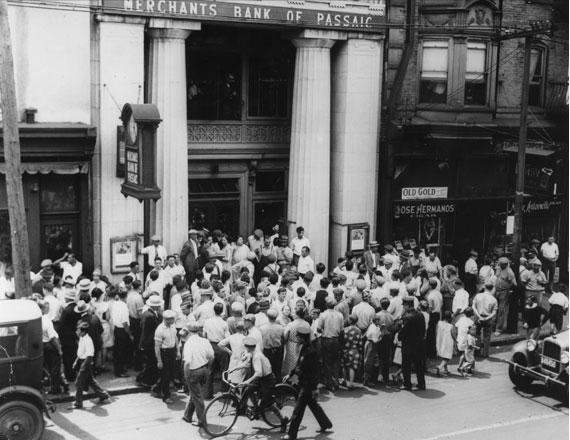
The major objective of this article is to begin the process of understanding the financial market to enable intelligent discussion on the blog.
One of the major pillars of financial collapse was Derivatives. They are very complex financial instruments with a wide diversity. They are described by a gaggle of terminology used by the high priests of finance. Because of complexity most of the books on the collapse skirt the detail of the Derivative Market. After we get through some basic definitions, we will focus on Credit Default Swaps (CDS); a subset of the Derivatives offerings. We will see how the government created a non regulated environment where fraud, compromised regulators and incompetent people ran the Investment Financial community in a very high risk mode.
Derivatives Defined
A Derivative is a financial instrument whose value is dependent on the value of another entity at a future time. Its primary function is to mitigate risk. A simple analogy would be your Home insurance. These policies guarantee that you will be remunerated if the value of your home falls due to fire, wind, or accident. A relatively small premium of money can mitigate a large potential financial catastrophe. State regulators are in charge of most regular Insurance products and solvency is less of an issue as adequate capital reserves are defined.
We need to think of Derivatives as a “risk tool” meant to stabilize the financial businesses (markets). The wide variety of Derivatives creates confusion, so we are going to restrict our discussion to Credit Default Swaps (CDS). Anticipating problems with Sub Prime mortgages, Securities were insured by investors. It was the Credit Default Swaps inability to perform that was a party to the financial collapse after the Lehman bankruptcy. They did not have the financial reserves to back up the policies they wrote How did that happen?
Deregulation
For our discussion today, three government deregulation actions are relevant.
- 1999 Graham Leach Bliley Act repealed the 1933 Glass Steagall act. The Glass-Steagall Act prohibited any one institution from acting as any combination of an investment bank, a commercial bank, and an insurance company.
- 2000 Commodity Futures Modernization Act deregulated Derivatives creating a Wild West environment for “Derivatives financial innovation”. See this link for a excellent Brooksley Born interview
- April 28, 2004 SEC drastically relaxed leverage standards for the Big Five Investment Banks: Goldman, Merrill, Bear, Lehman and Morgan Stanly. This created a very high risk environment. The session can be viewed here.
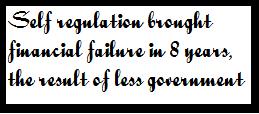
Financial self regulation brought the system down in 8 years. Bush de-funded Federal regulation. Greed, incompetence and corruption reigned supreme. Enron people went to jail. As of 2010, under Obama only bit players have been jailed. Civil fines are a joke.
Securitization Market
We need to understand the environment created by the above regulation changes to understand the role of CDS Derivative failure. We will concentrate on the Real Estate Industry
Traditionally, according to HBSwiss, the real estate industry was handled by local banks who retained the loans. Their exposure to losses resulted in more careful origination of loans. For a long time, Fannie, Freddie and FHA were packaging (securitizing) mortgages and selling them to Investors. They enjoyed a good reputation because they had good loan origination standards. These were categorized as Prime mortgages. Generally these securities obtained a AAA rating which rarely changed. Good consistent returns were recorded with these products.
Early in the 2000 decade the Investment banks adopted the securitization model called Private Label Securities. They purchased their mortgages from unregulated brokers (Country Wide, Ameriquest etc) who had little or no standards regarding underwriting of loans. The private label market latched on to the fact that high risk “Sub Prime” loans carried higher interest rates, hence higher profits. They had no exposure to the failure of the loan as risk was passed on to the Investors. They simply collected the lucrative fee’s.
Investment Banks packaged the loans (millions and billion level). They paid the rating agencies (S&P. Moody and Fitch) for ratings structuring the packages to get AAA ratings. It is clear the rating agencies did not do their job as traditionally solid AAA ratings were changed as the packages started to fail. These packages were sold to the domestic and world markets. Trillions of dollars were involved. The banks simply passed the risk on to the investors and collected the origination and servicing fee’s
CDS Market
Risk could be mitigated by purchasing a CDS against the failure of the security. So if the security failed the investor was held harmless. Remember that as of 2000 the CDS market was unregulated. AIG – London Financial Services is the poster child of the CDS industry. AIG wrote most of the CDS contracts cheaply as they held inadequate reserves (in the event of a default) and had a good company rating based on the parent insurance company whose operations were regulated. Office of Thrift Supervision was the responsible regulator, but their presence was effectively non existent, Goldman Sachs (Hank Paulson as CEO) was one of their major clients.
However, late 2006 / 2007 AIG FP realized they were over exposed and got out of the market retaining the previous contracts. Recall in the unregulated market anyone could write CDS and the big banks did. As the Mortgage Backed Securities began to fail, the banks started writing CDS between the banks to mitigate risk always falsely believing the market would recover. This was necessary because When Bear and Lehman started to fail the banks were joined at the hip, guaranteeing each others toxic securities. Based on the 2004 SEC relaxing reserve requirements, that banks were leveraged up and things were starting to fail. In a leveraged market things get serious to critical in a matter of hours.
The daily, weekly and monthly credit markets froze up because nobody trusted anybody. Even GE was having trouble borrowing for daily operations. Andrew Ross Sorkin’s book—‘Too Big to Fail’— gives a good account of the scenario in 2008. Fannie and Freddie were in conservator ship, near bankruptcy Bear was bought on a fire sale by JP Morgan, Lehman was bankrupt, Merrill near bankruptcy was bought by Bank Of America and AIG had to be rescued by the Federal Government. Morgan Stanly and Goldman were within days of bankruptcy, but got bailed out by Warren Buffet and a Korean financial entity.
The AIG story is discussed in this newspaper article ‘Behind Insurer’s Crisis, Blind Eye to a Web of Risk’.
It is interesting to know that just before the 2008 collapse, the rating agencies down graded AIG forcing them to hold more reserves. They were forced to raise cash in a collapsing market. In a high leverage industry, when it rains it pours.
Naked CDS
Investors can buy CDS on securities even though they do not own the security. This is equivalent to a neighbor buying insurance on your house. So if you know that a Mortgage Backed Security has a lot of high risk loans in it and is headed to failure, you buy a CDS anticipating the default. Michael Lewis’ book—‘The Big Short’–is all about the people who anticipated the failures and bought CDS products. A Bloomberg video interviews Lewis and it provides a lot of insight into the mess that evolved.
I look to Dakinkat, Gillian Tett, Yves Smith, and Janet Tavakoli on technical issues of Derivatives. Lewis’ forte is being able to write to the general public. His book gives a lot of insight to the CDS market nuances. It is interesting that Smith and Tavakoli consider Lewis to be a light weight. Yet, his book sales exceed theirs.
To get a notion of the size of the CDS market we need to look at these numbers. The size of our national economy this year is roughly $15 trillion. The whole world GDP is about $56 trillion. At the time of the 2008 failure, the size of the Credit Default Swaps (CDS) market was $64 trillion. The exposure at the time of the collapse was huge. The magnitude of the Naked CDS is not known, but is understood to be huge.
Given that the unregulated CDS underwriters were prone to not provide adequate capital reserves for defaults, there was a massive liquidity problem, hence the government had to step in and bail out the likes of AIG and banks who wrote these products.
The whole CDS market is described as being part of the Casino Gambling image in the financial markets
Current Status
The Dodd Frank Bill has a moderate approach for Derivatives Regulation. However it is up to the regulators for implementation and the banks are attempting to minimize the impact of regulation. This is documented by two recent NYT articles.
It’s Not Over Until It’s in the Rules
A Secretive Banking Elite Rules Trading in Derivatives
A short summary of the above articles is that the big banks are attempting to save their Oligopoly through the Risk Committees of the Clearing Houses. This is being done by imposing high capital reserve requirements for participants. This has the effect of limiting competition which limits price competition and transparency. The elephant in the room is the risk committee’s saying certain derivatives are to complex to be cleared. This gets us right back to where we were in the financial crisis. Over the Counter non clearing house products are the most profitable and open to risk.
In the spirit of Brooksly Born regulation, It has been proposed that Derivatives be run using a Clearing House or a Exchange Trading Requirement.
From The Economist:
Clearing House: A clearing requirement is a requirement that all eligible derivatives be cleared on a central clearinghouse (also known as a central counterparty, or CCP). A clearinghouse provides critical counterparty risk mitigation by mutualizing the losses from a clearing member’s failure, netting clearing members’ trades out every day, and requiring that parties post collateral every day. Clearinghouses also centralize trade reporting, and can provide any level of post-trade transparency to the OTC derivatives markets that your heart desires — same-day trade reporting, including prices, aggregate and counterparty-level position data, etc. Virtually all of the harmful opacity and murkiness of the current OTC derivatives markets can be ended with just a clearing requirement — that is, a clearing requirement is a prerequisite for getting rid of the harmful opacity in OTC derivatives
Exchange Trading: An exchange-trading requirement, on the other hand, is simply a requirement that all eligible derivatives use a particular type of trade execution venue: exchanges (also known as “boards of trade”)..The exchange is just the trade execution venue (think NYSE vs. Nasdaq). The only thing that an exchange-trading requirement adds to the clearing requirement is “pre-trade price transparency.”
The clearing house is obviously the better because it brings a degree of financial integrity and transparency. It certainly is the more expensive of the options, but its cost is minuscule when we think of the financial collapse.
However based on the articles above, it is clear that the big bankers are attempting to preserve their oligopoly in terms of the CDS market. They also want to preserve the option to take the market back to the opaque high risk environment because of profit opportunities. The Opaque Over the Counter market is the biggest threat to the stability of the market
In Dodd – Frank, the CFTC and SEC have co-jurisdiction The CFTC commission seems to be moving to the bankers view. SEC has been relatively quiet on this subject
We need to remember that Mary Schapiro (SEC) and Gary Gensler (CFTC) were part of the problem before the 2008 Financial Crisis. It remains to be seen how well they address the problem. Will they do the right thing or are they financial industry moles?

 peej
peej Carissa
 bostonboomer
 dakinikat
 ecocatwoman
 mablue2
 Mama Lopez
 peggysue22
 quixote
 skydancingguestblogger
 Mona (aka Wonk the Vote)



 Sky Dancing

Recent Comments