How can such a stupid person do so much damage so quickly?
I’ve finally begun to accept that what is happening to our country will not be reversed in my lifetime. When I think about it, I feel so despairing that I can’t bear to focus on it for long. But I know it’s true. How can such a stupid person do so much damage so quickly?
Trump has already done so much damage and he is likely to do much more before we can get rid of him–if we succeed in doing that. He has destroyed the Department of Justice, the Department of Education, and has likely done irreparable damage to the Department of Defense, the CIA, and the office of DNI (Director of National Intelligence). He has also damaged Social Security, Medicaid, Medicare, and Obamacare.
His insane tariffs are wrecking the economy, and he may soon be able to do even more damage by naming a new Fed chairman who will carry out his orders. Guess who Trump is likely to appoint? According to Bloomberg, it will be Kevin Hassett! The story is behind a paywall. I read the headline on Memeorandum.
He has begun weaponizing the military and with the new funding for ICE in the big ugly bill, he will control a vast private army. He has begun to establish a system of concentration camps.
Have I forgotten anything? Probably.
I can’t cover all of these issues today, but here’s some commentary on Trump’s ongoing destruction of our economy.
Remember back in 2024 when Americans had to vote for the insurrectionist felon because there had been 14 months of inflation in 2021–22?
Yeah, well inflation is back now.
US inflation climbed to 2.7 per cent in June, surpassing expectations and signalling that Donald Trump’s tariffs are hitting prices. Tuesday’s annual consumer price index figure was up from 2.4 per cent in May and above expectations of 2.6 per cent among analysts surveyed by Bloomberg.
How upset are voters about this? They are a solid “Meh.” Trump remains at only -7 net approval, which is a huge improvement from where he was in late April.
Why am I feeling nihilistic today? It’s not just the voters; it’s the markets. We got a bad inflation report this morning and then the markets reacted by . . . betting that the Fed is going to cut rates in September.
Which is, you know, the opposite of what you’d expect in an environment where tariffs are pushing prices higher. Are the markets betting on TACO? Or preparing for Fed Chairman Kevin Hassett? Or going full-nihilist, too?
Trump embracing socialism?
Here is another thing that doesn’t seem to matter: Democrats are freaked out because their nominee for mayor in New York City wants to run a pilot program with five municipal-owned grocery stores, which is “socialism” or something.
Meanwhile, last week the U.S. government became the largest shareholder in the mining company MP Materials. Which is, you know, kind of like socialism? […]
On May 27, MP began a sudden climb. After months of sitting around $25 a share, it moved consistently upward for a month, to almost $40. On June 20 a selloff started and the share price lost a quarter of its value over three weeks. The government announced its purchase on the morning of July 10 and MP went to the moon.
Any of this look to you like someone knew the score?
But that’s just the first layer of corruption.
This morning, Apple announced that it would also contribute invest $500 million in MP stock.
That’s right: Apple, which is currently negotiating with Trump on the 25 percent tariffs the president wants to put on iPhones made in China, decided to do the government a solid and throw some cash behind Uncle Sam’s MP position, thus driving the price higher and forming a shareholder bloc that will, along with the government, be enough to control MP.
And since Apple’s business now depends on what the U.S. government allows it to do, I suspect Apple’s share will be a pure proxy for whatever the Trump administration’s wishes are.
Yesterday’s CPI report looked fairly tame on the surface, but if you look at the details it showed clear signs that Trump’s tariffs are starting to drive up prices. And private surveys suggest that there’s a lot more inflation in the pipeline. For example, look at S&P Global’s Purchasing Managers’ Index for manufacturing, which shows the percentage of firms reporting higher prices. A higher number almost always points to higher official inflation ahead, and right now it’s definitely telling us that tariffs are about to hit hard (see figure at the link)….
The next Fed chair?
Why aren’t we seeing the full effects of the tariffs in official statistics? For the record, I don’t believe Trump officials are cooking the books — yet.
That’s not to say that they won’t at some point, and there’s a good chance that they will. But so far what we’re probably seeing is a combination of ordinary lags and the temporary effects of the TACO (Trump always chickens out) narrative. Buyers get pissed off at sellers when prices rise, so sellers who don’t want to lose market share have an incentive to hold prices down despite higher costs if they think the Trump tariffs will come back down in a few weeks.
I, however, am a TACO skeptic. I think Trump really is a Tariff Man who will keep us at Smoot-Hawley-level tariffs indefinitely, and businesses will eventually realize that and raise prices accordingly.
And then what? Clearly, we shouldn’t expect Trump to admit that his tariffs are raising prices, or even to admit that prices are rising. What we can expect is that he will keep putting pressure on the Fed to cut interest rates. I don’t think he’ll manage to push Jerome Powell out before next May, but as I wrote last week, whoever he picks after that will do his bidding.
Bloomberg has an interesting article about Kevin Warsh, one likely choice — although a newer article suggests that Kevin Hassett, whom nobody suspects of having any independent principles, may be in first place. The article expresses puzzlement over Warsh’s support for rate cuts now, despite above-target inflation, when he was a big advocate of higher rates in the aftermath of the global financial crisis. How did such a monetary hawk suddenly become a monetary dove? But one of the people the article quotes hits the nail on the head.
Read the Bloomberg excerpts at the link.
We are so screwed.
Right now the only hopeful signs I see is that Trump’s policies are very unpopular with Americans, and his association with Jeffrey Epstein could possibly damage him before the midterm elections. I’m probably wrong and Trump is clearly trying to fix the midterms. Anyway, I’ve gathered some stories on the Epstein scandal.
White House officials were left scrambling after a reporter straight-up asked whether Donald Trump knew if his name appeared in files connected to Jeffrey Epstein, according to Axios.
The media inquiry was posed after reports that FBI Deputy Director Dan Bongino had a screaming match with Attorney General Pam Bondi over the Department of Justice’s handling of the files on the pedophile who died in 2019.
Jeffrey Epstein and Donald Trump, best buds
The question helped the administration figure out how badly holding back any release of the Epstein files was playing in MAGA world.
In a memo, the DOJ and FBI denied the existence of any so-called “client list” belonging to Epstein featuring potential high-profile names, and said they will not be releasing any more information regarding Epstein. The agencies also stated that the billionaire financier took his own life in his New York City jail cell, rather than being murdered, a conspiracy theory pushed for years by Trump loyalists, including Bongino.
In the wake of the Bongino-Bondi blow-up, one reporter asked if Bondi had told Trump that his name was in the Epstein files. For the first time, White House and DOJ personnel realized how bad the optics were of refusing to release more information on Epstein after multiple MAGA figures, including Trump himself, vowed to do exactly that. Officials feared it suddenly looked like they might be shielding Trump from potentially damning revelations.
“It put people in a tizzy,” an unnamed source familiar with the matter told Axios. An administration source added, “It didn’t look like a coincidence at that point” that the Trump administration had stopped releasing Epstein files.
Read more at the link. It’s weird that the White House was taken by surprise by this question, since Trump and Epstein were close friends for years.
One of the leading Republicans on Capitol Hill broke with the Trump administration’s decision not to release the files of deceased sex offender Jeffrey Epstein as the controversy deepened over the handling of an issue that has caused unprecedented division among the GOP base.
House Speaker Mike Johnson (R-Louisiana) told right-wing podcaster Benny Johnson that he supported the release of the Epstein files, days after President Donald Trump’s Justice Department said the matter was effectively closed. Johnson is a close Trump ally and has never broken so publicly with the president on an issue.
“I’m for transparency,” Johnson told Benny Johnson. “It’s a very delicate subject, but we should put everything out there and let the people decide it.”
Even as Johnson publicly called for the files to be released, he opposed a procedural motion advanced Tuesday by Democrats that would have set up a House vote to release them.
On the podcast, Speaker Johnson said that Attorney General Pam Bondi “needs to come forward and explain” the confusion she has brewed after she said in interviews earlier this year that the purported Epstein “client list” was sitting on her desk for review, suggesting it would be released. Bondi and other Justice Department officials now say the client list — which some claim would reveal the names of powerful figures who allegedly participated in Epstein’s crimes — does not exist.
“I like Pam. I think she’s done a good job, but we need the DOJ focusing on the major priorities,” he said. “I’m anxious to put this behind us.”
Trump will have to have a stern talk with Speaker Johnson.
Oliver Holmes at The Guardian: Donald Trump says those interested in Jeffrey Epstein inquiry are ‘bad people.’
Donald Trump has dismissed a secretive inquiry into the sex offender Jeffrey Epstein as “boring” and of interest only to “bad people”, but said he backed the release of any “credible” files, as he sought to stamp out a conspiracy-fuelled uproar among his supporters.
One of the most dramatic theories circulating among supporters is that Epstein – who killed himself in 2019 while in federal custody – was murdered by powerful figures to cover up their roles in his sex crimes against children.
“I don’t understand why the Jeffrey Epstein case would be of interest to anybody,” Trump told reporters on Tuesday night when asked why his supporters are so interested in the case. “It’s pretty boring stuff. It’s sordid, but it’s boring, and I don’t understand why it keeps going.
“I think really only pretty bad people, including fake news, want to keep something like that going,” he added. “But credible information, let them give it. Anything that is credible, I would say, let them have it.”
Sex trafficking, pedophilia, and prison suicide are boring stuff?
Frankly, I have no doubt that Epstein committed suicide. He was looking at years in prison, loss of his status, his fortune, and his fabulous lifestyle. As a narcissistic sociopath, he couldn’t tolerate that. But Wired has found new evidence that the surveillance tape outside Epstein’s cell was manipulated. It may be perfectly innocent, but the MAGA crowd won’t see it that way. The magazine had previously found 1 minute missing from the tape; now it’s 3 minutes. Rich Friedman writes: The FBI’s Jeffrey Epstein Prison Video Had Nearly 3 Minutes Cut Out.
Newly uncovered metadata reveals that nearly three minutes of footage were cut from what the US Department of Justice and Federal Bureau of Investigation described as “full raw” surveillance video from the only functioning camera near Jeffrey Epstein’s prison cell the night before he was found dead. The video was released last week as part of the Trump administration’s commitment to fully investigate Epstein’s 2019 death but instead has raised new questions about how the footage was edited and assembled.
WIRED previously reported that the video had been stitched together in Adobe Premiere Pro from two video files, contradicting the Justice Department’s claim that it was “raw” footage. Now, further analysis shows that one of the source clips was approximately 2 minutes and 53 seconds longer than the segment included in the final video, indicating that footage appears to have been trimmed before release. It’s unclear what, if anything, the minutes cut from the first clip showed.
The nearly three-minute discrepancy may be related to the widely reported one-minute gap—between 11:58:58 pm and 12:00:00 am—that attorney general Pam Bondi has attributed to a nightly system reset. The metadata confirms that the first video file, which showed footage from August 9, 2019, continued for several minutes beyond what appears in the final version of the video and was trimmed to the 11:58:58 pm mark, right before the jump to midnight. The cut to the first clip doesn’t necessarily mean that there is additional time unaccounted for—the second clip picks up at midnight, which suggests the two would overlap—nor does it prove that the missing minute was cut from the video.
The footage was released at a moment of political tension. Trump allies had spent months speculating about the disclosure of explosive new evidence about Epstein’s death. But last week, the DOJ and FBI issued a memo stating that no “incriminating ‘client list’” exists and reaffirmed the government’s long-standing conclusion that Epstein—whom the US government accused of committing conspiracy to sex traffic minors and sex trafficking minors—died by suicide. That announcement triggered immediate backlash from pro-Trump influencers and media figures, who essentially accused the administration of a cover-up.
In response to detailed questions about how the video was assembled, WIRED sent a request for comment to the Department of Justice at 7:40 am on Tuesday morning. Just two minutes later, Natalie Baldassarre, a public affairs officer for the DOJ, replied tersely: “Refer you to the FBI.” The FBI declined WIRED’s request for comment.
Read more at Wired.
It’s possible that Ghislaine Maxwell, who procured young girls for Epstein to rape, could reveal whether Trump was involved in Epstein’s crimes. Unfortunately that’s unlikely, since she hopes to win a pardon or commutation from Trump. Janna Brancolini at The Daily Beast: Epstein Pimp’s Family Kiss Up to Trump: ‘Ultimate Dealmaker.’
Ghislaine Maxwell’s family is turning to the tried-and-true method of flattering President Donald Trump in a bid to get the convicted sex trafficker sprung from prison.
Trump with Ghislaine Maxwell
Maxwell, 63, is serving a 20-year jail sentence after being convicted in 2021 of luring and grooming young girls for the late financier Jeffrey Epstein’s sex-trafficking ring.
Earlier this year, her lawyers filed a petition with the Supreme Court arguing her conviction was invalid, saying her prosecution in New York was barred by a 2007 non-prosecution agreement the government made with Epstein in Florida that also covered his co-conspirators.
A federal appeals court and the Department of Justice have both smacked down that argument, leading the family to now co-sign a flattering statement about the president.
Her siblings shared a statement from Maxwell’s attorney David Oscar Markus that said, “I’d be surprised if President Trump knew his lawyers were asking the Supreme Court to let the government break a deal. He’s the ultimate dealmaker—and I’m sure he’d agree that when the United States gives its word, it should keep it.”
“These are sentiments with which we profoundly concur,” the family added.
The family members didn’t sign the statement individually—perhaps because the family has long been associated with scandal.
Read more details at the link.
Two more interesting articles about the Epstein controversy and the MAGA faithful:
Opening up two decades of government files related to sex trafficker Jeffrey Epstein isn’t going to be as simple as inserting them into three-ring binders or putting them on the internet.
After hyping the release of Epstein documents as “breaking news” on Fox News, U.S. Attorney General Pam Bondi on Thursday distributed binders filled with material to a group of conservative social media pundits. But the big reveal, designed to promote President Donald Trump’s new culture of transparency, fell flat.
When the group opened the binders, they discovered 200 pages of dated material, most of which had long ago been made public. To make matters worse, some of the material was overly redacted — the same material had already been available on the internet in unredacted form.
Bondi, a former prosecutor and Florida attorney general, said she had been misled by the FBI into believing she had all the documents. She then accused federal agents of withholding thousands of pages, and ordered the agency to turn over the rest by Friday morning. But the 8 a.m. deadline came and went without any word on the files.
FBI sources told the Miami Herald Friday that they worried releasing the documents without a careful review — one that would likely take weeks or months — would jeopardize the hard-won 2021 conviction of Epstein accomplice Ghislaine Maxwell. Maxwell is appealing her conviction and 20-year sentence for child sex trafficking.
Sources also said that the files are voluminous. There are 22 files containing over 500 pages in the FBI vault, a portal on the FBI’s website accessible to the public. The bulk of those 11,000-plus pages are heavily redacted, and Justice Department prosecutors have fought their release for years. While Bondi pointed fingers at the FBI in New York, many more files exist in other jurisdictions. One critical source of evidence against Epstein was in the discovery for a Florida civil case brought by Epstein’s victims against the FBI in 2008. That case spanned a decade and included tens of thousands of pages of material that sheds light on how federal prosecutors
mishandled that early case. Not all the FBI documents connected to that case — or the federal criminal case — in Florida have been made public.
“Going through those files would be an enormous, enormous effort. They contain the names of victims, witnesses and other personal information,” said Paul Pelletier, a former federal prosecutor now in private practice. “There was tons of discovery in the New York case alone. There’s no prosecutor in their right mind who would be able to corral all the evidence in the Epstein case over 20 years in a week and be able to release it carefully and accurately.”
Read the rest at The Miami Herald. For anyone who’s interested in the truth, Brown is the one to trust.
I don’t know if I’ve enlightened anyone with this collection of reads, but I hope I’ve helped some.
What’s on your mind today?
Did you like this post? Please share it with your friends:
Representative Gerald E. Connolly of Virginia, a nine-term congressman who was the top Democrat on the House oversight committee, died on Wednesday, his family said in a statement. He was 75.
Mr. Connolly died at his home surrounded by his family, the statement said. It did not give a cause of death. Mr. Connolly had announced in 2024 that he was being treated for cancer of the esophagus.
In April, he announced that his cancer had returned and that he would not seek re-election in 2026. He also said he would soon relinquish his spot on the Committee on Oversight and Government Reform.
U.S. Rep. Gerald “Gerry” Connolly, an outspoken Democrat who sought key reforms in the federal government while bringing transformational development to his populous Virginia district, died Wednesday. He was 75….
The spirited and at times bullheaded Fairfax Democrat became known for his voluble nature and willingness to engage in spirited debates. In one hearing, he accused Republicans of engaging in a witch hunt against the IRS, asking a witness if they ever read Arthur Miller’s “The Crucible.”
“I am heartbroken over the loss of my dear friend,” said Democratic Sen. Mark Warner of Virginia. “To me, he exemplified the very best of public service.” He said Connolly “met every challenge with tenacity and purpose, including his final battle with cancer, which he faced with courage, grace, and quiet dignity.”
A fixture of Virginia politics for three decades, Connolly was first elected to the Fairfax County Board of Supervisors in 1995. On the county board, he steered the transition of northern Virginia’s Tysons Corner from a traffic-heavy mall area to a downtown business hub.
In 2003, Connolly was elected board chairman, and he continued pushing for transportation investment that had been debated among officials for decades. Connolly sought billions in state and federal dollars to develop the regional rail system’s Silver Line connecting the national capital region to Tysons Corner.
Connolly’s dream was realized with the Silver Line’s opening in 2014, and eight years later, the rail line was extended an extra 11 miles (18 kilometers) to reach Dulles International Airport.
What’s happening in politics today:
The news getting the most attention today is the so-called “big beautiful bill” that Trump and House Republicans are trying to pass and send to the Senate. Yesterday, we got some shocking news about this nightmare bill. Not only does it cut nearly a trillion dollars from Medicaid. It also cuts Medicare by more than $500 billion from Medicare. If you watched Lawrence O’Donnell’s show last night, you heard all about it. In case you missed it, here is O’Donnell’s interview with Rep. Brendan Boyle:
Rep. Boyle: The one thing I would point out, though, is this bill is actually significantly worse [than the GOP’s ACA repeal attempt in 2017], because this piece of legislation will throw 13.5 million, almost 14 million Americans off their healthcare.
First, you’re cutting people off Medicaid. But second, this does include very deep cuts to Obamacare as well. And finally, I have breaking news for you tonight, that literally just came out in the last few minutes as I’ve been sitting here: The nonpartisan Congressional Budget Office, the official authority on these figures, has now confirmed that this bill, in addition to Medicaid cuts, in addition to Obamacare cuts, includes $500 BILLION WORTH OF CUTS TO MEDICARE that is now in this bill as well.
Lawrence O’Donnell: That is breaking news…$500 billion in cuts to Medicare. That’s the biggest cut to Medicare ever contemplated by the Congress. There have been, over the years, trims to Medicare for budget reasons, but nothing on this order has ever been done to Medicare. What happened? Talk more about that, about that breaking news piece that the CBO has projected in here. Is that because of interactions that Medicare has with the Medicaid program?
Rep. Boyle: Yeah, and forgive me this…given your great experience on the Senate Finance Committee, you’ll understand this, but it does get a bit wonky for normal folks. Basically it’s because of those interactions and specifically because of a provision called “Paygo” that will force a certain amount of Medicare sequestration, again, to the tune–and these aren’t my figures, these are the Congressional Budget Office official figures–$500 billion.
So they take the biggest cuts to Medicaid in American history. They take massive cuts to Obamacare. And then, add on top of that, the impact of all their policies mean a result of the biggest cuts to Medicare in American history on top of all of it.
House Republicans are pushing to slash nearly $1 trillion from two of the nation’s bedrock safety net programs, Medicaid and food stamps, as part of their sweeping package aimed at enacting President Donald Trump’s agenda. If the legislation is approved, millions of Americans could lose access to these benefits as a result of a historic pullback in federal support.
Trump has repeatedly vowed not to touch Medicaid, while GOP lawmakers insist that their proposals would largely affect adults who could – and should, in their view – be employed. But the actual impact would likely hit a far broader range of Americans, including some of the most vulnerable people the GOP has promised repeatedly to protect, experts say. They include children, people with disabilities and senior citizens.
A sizeable share of the US population depends on these programs. More than 71 million people are enrolled in Medicaid, and roughly 42 million Americans receive food stamps, according to the federal agencies that oversee them.
Hospitals would also feel the financial fallout of the Medicaid cutbacks, which could prompt some to raise their rates for those with job-based insurance and others to close their doors.
States would have to shoulder more of the costs of operating these programs, which could force them to make some tough decisions. Among their options could be slashing enrollment, benefits and provider rates in Medicaid or pulling back on residents’ access to food stamps. They might also shift spending from other state-supported programs such as education and infrastructure or hike taxes.
In addition, grocery store owners are warning that cuts to the Supplemental Nutrition Assistance Program, or SNAP, as food stamps are formally known, could harm local economies and cost jobs.
Read the details at the CNN link.
The House Rules Committee met under cover of darkness beginning at 1:oo this morning.
House Republicans on Wednesday are set to try to push President Donald Trump’s massive tax and immigration package across the finish line, hoping to conquer internal divisions and tee up a vote that would send Trump’s sprawling agenda to the Senate.
The House Rules Committee worked through the night on the legislation, trying to push the bill past a procedural test that would allow for a final vote. Lawmakers were still debating its provisions early Wednesday after a committee session that began at 1 a.m.
But the GOP’s narrow majority is far from unified around the proposal. And although Trump visited the U.S. Capitol for a conservative pep rally Tuesday, warring Republican factions on both sides dug in to oppose what is now officially called the One Big Beautiful Bill Act. The House GOP’s narrow majority means leaders can afford to lose only a handful of votes — and for now, they don’t have the support they need to pass the measure.
The bill would extend tax cuts that Trump signed into law in 2017 that are otherwise due to expire at the end of this year, along with new changes to reflect Trump’s campaign promises — such as no taxes on tips and overtime wages — and spend hundreds of billions of dollars on border security, the White House’s mass deportation campaign and funding for defense priorities and a “Golden Dome” continental missile defense system.
The Congressional Budget Office, lawmakers’ nonpartisan scorekeeper, projects that it will add $2.3 trillion to the deficit over 10 years. The national debt already exceeds $36.2 trillion.
Hard-line conservatives said Tuesday that the legislation did not sufficiently cut spending to pair with trillions of dollars of new tax cuts or extensions of current rates, and they angled for deeper budget reductions to Medicaid and federal benefits programs.
Blue-state Republicans demanded a higher cap on how much people can deduct from their federal taxes to offset what they pay to state and local tax authorities, and they warned that any cuts to the social safety net could cost them their political futures — and hand control of the House to Democrats after the 2026 midterm elections.
The big legislation Republicans are trying to pass this week would shrink economic resources for the poorest Americans while boosting the richest, according to a new analysis by Capitol Hill’s official budget scorekeeper.
The Congressional Budget Office said Tuesday the One Big Beautiful Bill Act, as it’s officially known, would shrink household resources for the lowest-income households by 2% in 2027 and 4% in 2033, mainly because of cuts to health and nutrition programs.
Food Stamps are on the chopping block
”By contrast, resources would increase by an amount equal to 4 percent for households in the highest decile in 2027 and 2 percent in 2033, mainly because of reductions in… taxes they owe,” CBO director Phillip Swagel wrote in a letter to Democrats.
Democratic leader Hakeem Jeffries (D-N.Y.) and Rep. Brendan Boyle (D-Pa.), the top Democrat on the House Budget Committee, requested the CBO analysis of the bill’s distributional effects for the top and bottom 10% of households by annual income.
“This is what Republicans are fighting for – lining the pockets of their billionaire donors while children go hungry and families get kicked off their health care,” Boyle said in a statement. “CBO’s nonpartisan analysis makes it crystal clear: Donald Trump and House Republicans are selling out the middle class to make the ultra-rich even richer.”
The legislation uses about $1 trillion in cuts to Medicaid and the Supplemental Nutrition Assistance Program to help pay for $3.8 trillion in tax cuts that benefit all income groups, but especially wealthier Americans. The CBO has previously estimated the legislation would shrink Medicaid enrollment by more than 7 million, including through increased eligibility checks and limits on benefits for people without jobs.
What will happen to the U.S. debt if the bill passes the Senate in it’s current form?
The United States hit its record debt level at the end of 1945, after a world war and the Great Depression.
That record, in which the debt was briefly larger than the size of the entire economy, is almost certain to be broken in the next several years. Estimates from the Congressional Budget Office published in January showed that the country was on track to overtake it in 2032 — and that was before the Republicans’ large tax and spending bill was taken into account.
Under the G.O.P. megabill being considered in the House, budget experts now say, the U.S. debt would blow past the record even sooner and climb significantly higher in coming decades.
America has had periods of high debt before, but they have tended to occur during wars, recessions or other major shocks. Generally, federal deficits have been lower during periods of low unemployment. Today, there is no war or recession to easily explain the rapidly increasing pace of borrowing.
Because the government has been spending more than it collects in taxes over the past two decades, the debt has been growing. Without any changes to existing law, the Congressional Budget Office predicts the debt will rise to about 117 percent of the economy’s size by 2034, higher than the 1945 record.
The Republicans’ bill would widen the gap further by extending and expanding tax cuts and increasing military spending, partly offset by spending cuts in other areas. The Committee for a Responsible Federal Budget, a nonpartisan group that favors debt reduction, estimates that the nation’s debt could be as high as 129 percent of the economy by 2034 under those plans.
More details at the NYT. I’ve run out of gift links for this month, unfortunately.
The president went to Capitol Hill to urge Republicans to unite behind a budget-busting budget bill, and Axios reported that his strong-arm tactics were putting conservatives into a precarious position.
“Trump’s ‘big, beautiful bill‘ is projected to add trillions to the deficit over the next decade — rattling conservatives who have long warned that the U.S. is barreling toward fiscal catastrophe,” Axios reported. “Some Republicans now find themselves trapped between two of the party’s most animating principles: Deficit reduction vs. absolute loyalty to Trump.”
The White House is hoping the budget bill will receive a vote on the House floor this week, and the president and his aides have brushed off warnings that the tax cuts embedded in the measure would explode the national debt without politically toxic cuts to Social Security and Medicare.
“This tax bill’s enormity is being underplayed … [It] will cost more than the 2017 tax cuts, the pandemic CARES Act, Biden’s stimulus, and the Inflation Reduction Act combined,” Jessica Riedl, a budget specialist at the conservative Manhattan Institute, told Yahoo Finance.
The Trump administration claims Biden created the deficits and Trump policies will lower the debt.
“[Those projections] assume consistent economic growth,” Jim Millstein, a former chief restructuring officer at the Treasury Department, told Bloomberg. “Just imagine the Trump tariffs … cause a recession. They are risking a fiscal disaster.”
For decades, budget hawks warned that America’s debt load was unsustainable and that runaway spending financed with borrowed money was eventually going to scare investors away from lending to the United States. Those fears are now taking hold more strongly in the bond market, and are at risk of spreading further.
Tax cuts pushed by the Trump administration are amplifying debt and deficit concerns among bond investors, a powerful group of market players who strongly influence how much it costs for the government to finance its budget. The buying and selling of government debt, known as Treasuries, also influences interest rates on a wide variety of debt extended to American households and businesses, including mortgages, credit cards and car loans.
Those investors were already on edge over President Trump’s whipsawing tariff policy. Then this week’s attempt to push through sweeping tax cuts without significantly slashing spending — in what the president has called a “big, beautiful bill” — set off a fresh bout of bond market turmoil. Mr. Trump put more pressure on Republican lawmakers on Tuesday, visiting Capitol Hill and warning that failing to advance the bill would lead to higher taxes.
Since dropping below 4 percent in early April, the 10-year Treasury yield has risen back above 4.5 percent, a large move reflecting deficit worries. The moves for the 30-year yield this year have also been stark: It has jumped above 5 percent, its highest level in about a year and a half.
As you probably know, that’s how much we have to pay the bondholders.
Speaking with reporters on Tuesday, Raphael Bostic, president of the Federal Reserve Bank of Atlanta, warned that volatility in the Treasury market could add to already heightened uncertainty about the economic outlook.
That risks making people “even more cautious about how they engage,” he said. “If that happens, then I’ll have to assess the extent to which that should change my outlook on how the economy is going to perform.”
House Republicans’ internal negotiations on the “One Big, Beautiful Bill” went south Tuesday night and early Wednesday morning, with GOP hardliners publicly digging in their heels against the legislation.
Why it matters: Some of the anger centers on a deal House Speaker Mike Johnson (R-La.) is nearing with blue-state Republicans to raise the State and Local Tax Deduction cap.
“I think, actually, we’re further away from a deal because that SALT cap increase upset a lot of conservatives,” House Freedom Caucus chair Andy Harris (R-Md.) said in a Newsmax interview.
Rep. Ralph Norman (R-S.C.), another GOP holdout, told Axios in a text message: “THINGS ARE NOT LOOKING GOOD!!”
State of play: Johnson and a group of House Republicans from New York, California and New Jersey were close to a deal on SALT as of Tuesday night, Axios’ Hans Nichols reported.
The deal would have raised the SALT cap to $40,000 a year for those making up to $500,000.
The income phaseout would grow by 1% for 10 years, and then the deduction would become permanent.
Yes, but: Johnson’s right flank has long been skeptical of the SALT cap, which would increase the deficit and disproportionately benefit taxpayers in high-tax Democratic states.
Some conservative hardliners also feel the bill doesn’t go far enough in cutting Medicaid and nutrition assistance spending.
I don’t buy it. My guess is the right-wingers will vote for it in the end. But if they don’t go with the SALT increase, blue state Republicans are going to lose their seats. In fact, if this bill passes, I think that will guarantee Democrats take the House in 2026.
I’m going to end there. All this talk about tax cuts, cuts to social programs, and the exploding U.S. debt are making me very tired and depressed. Take care, everyone!
Did you like this post? Please share it with your friends:
“Wow, eye-opening interview!” John Buss, @repeat1968
Good Day, Sky Dancers!
I’m a little late on this because I’ve finally reached the end of all these tests to figure out why I keep having to sing Feet Don’t Fail Me Now. I’m finally getting a bit of information on my poor polyneuropathic feet. It seems they likely came from the intense rounds of chemotherapy I had for the cancer I developed after my youngest was born. Anyway, I’m back from the EMG which involves a lot of needle poking and shocking your nerves. It wasn’t a pleasant experience, much like Yam Tits’ reign of terror, but now I know. I guess the best thing I can do is take a couple more supplements, so I will keep on Truckin’ here in New Orleans. Anyway, the Polycrisis continues on all fronts.
So, now is the time for all good citizens to come to the defense of Big Bird, Elmo, Cookie Monster, and all the Sesame Street gang. The AP reports that “Trump signs executive order directing federal funding cuts to PBS and NPR.”
President Donald Trump on Thursday signed an executive order aiming to slash public subsidies to PBS and NPR as he alleged “bias” in the broadcasters’ reporting.
The order instructs the Corporation for Public Broadcasting and other federal agencies “to cease Federal funding for NPR and PBS” and further requires that that they work to root out indirect sources of public financing for the news organizations. The White House, in a social media posting announcing the signing, said the outlets “receive millions from taxpayers to spread radical, woke propaganda disguised as ‘news.’”
It’s the latest move by Trump and his administration to utilize federal powers to control or hamstring institutions whose actions or viewpoints he disagrees with. Since taking office, Trump has ousted leaders, placed staff on administrative leave and cut off hundreds of millions of dollars in funding to artists, libraries, museums, theaters and others, through takeovers of the John F. Kennedy Center for the Performing Arts and the National Endowment for the Humanities. Trump has also pushed to withhold federal research and education funds from universities and punish law firms unless they agreed to eliminate diversity programs and other measures Trump has found objectionable.
The broadcasters get roughly half a billion dollars in public money through the Corporation for Public Broadcasting, and have been preparing for the possibility of stiff cuts since Trump’s election, as Republicans have long complained about them.
March 20, 2017
I have to say that PBS is a mainstay of the small amount of TV viewing I actually do. Master Piece Theater has been a staple of my viewing since University, and my daughters grew up with Mr Rodgers, Sesame Street, and my youngest was addicted to Barney and Friends. My mother always watched all the Detective Shows they ever showed, including Mystery Theater. It’s where I learned to love Dr. Who and Monty Python. I can’t even imagine #FARTUS has even seen any of those shows. The actual Federal Spending on the public networks is very small. They get most of their money from corporate sponsorship and their viewers. The amount going to Elon Musk’s enterprises is huge. You can view the funding numbers for PBS at this link: “Frequently Asked Questions about Support.”
The Corporation for Public Broadcasting (CPB) receives a congressional appropriation each year of about $500M. CPB allocates the appropriation mostly to public television and radio stations, with some assigned to NPR and PBS to support national programming.
CPB funding to stations covers a portion of each’s annual operating budget (the percentage varies from station to station but as a general rule the percentage is smaller for larger market stations). Stations rely on generous donations from viewers like you, corporate sponsorships, and foundation grants to cover the rest of their operating budget.
Part of each station’s operating budget is programming dues which it pays to PBS (and NPR) for National programming like PBS News Hour.
The News Hour receives about 35% of its annual funding/budget from CPB and PBS via national programming funds – a combination of CPB appropriation funds and annual programming dues paid to PBS by stations re-allocated to programs like ours. The remaining 65% is generated from individual donations, foundation grants and corporate sponsorships.
Elon Musk and his cost-cutting U.S. DOGE Service team have been on a mission to trim government largesse. Yet Musk is one of the greatest beneficiaries of the taxpayers’ coffers.
Over the years, Musk and his businesses have received at least $38 billion in government contracts, loans, subsidies and tax credits, often at critical moments, a Washington Post analysis has found, helping seed the growth that has made him the world’s richest person.
The payments stretch back more than 20 years. Shortly after becoming CEO of a cash-strapped Tesla in 2008, Musk fought hard to secure a low-interest loan from the Energy Department, according to two people directly involved with the process,holding daily briefings with company executives about the paperwork and spending hours with a government loan officer.
When Tesla soon after realized it was missing a crucial Environmental Protection Agency certification it needed to qualify for the loan days before Christmas, Musk went straight to the top, urging then-EPA Administrator Lisa Jackson to intervene, according to one of thepeople. Both people spoke on the condition of anonymity for fear of retribution.
Nearly two-thirds of the $38 billion in funds have been promised to Musk’s businesses in the past five years.
In 2024 alone, federal and local governments committed at least $6.3 billion to Musk’s companies, the highest total to date.
The total amount is probably larger: This analysis includes only publicly available contracts, omitting classified defense and intelligence work for the federal government.SpaceX has been developing spy satellites for the National Reconnaissance Office, the Pentagon’s spy satellite division, according to the Reuters news agency. The Wall Street Journal reported that contract was worth $1.8 billion, citing company documents.
The Post found nearly a dozen other local grants, reimbursements and tax credits where the specific amount of money is not public.
An additional 52 ongoing contracts with seven government agencies — including NASA, the Defense Department and the General Services Administration — are on track to potentially pay Musk’s companies an additional $11.8 billion over the next few years, according to The Post’s analysis.
Well, isn’t that special? Here’s a read from Politico about the pushback from NPR to Trump. “Public media executives push back against Trump targeting NPR and PBS: ‘Blatantly unlawful’. The president issued an executive order late Thursday trying to cut federal funding.”
Public media executives are pushing back against President Donald Trump’s late Thursday executive order seeking to strike federal funding for NPR and PBS, arguing it is unlawful.
Trump’s Thursday order directed the Corporation for Public Broadcasting, a private nonprofit that Congress awards more than $500 million annually to fund public media, to “cancel existing direct funding to the maximum extent allowed by law” to NPR and PBS.
“Congress directly authorized and funded CPB to be a private nonprofit corporation wholly independent of the federal government,” she wrote.
Trump and his allies in Congress have repeatedly targeted NPR and PBS, arguing that the two outlets have a liberal bias and seeking to strip their funds.
The leaders of both organizations were hauled in front of Congress for a hearing in front of the House Oversight Subcommittee on Delivering on Government Efficiency — a companion to Elon Musk’s Department of Government Efficiency — and the FCC has launched an investigation of both’s underwriting messages.
The White House is expected to ask Congress to cancel already approved funding for public broadcasting, in what is known as a rescission request, POLITICO previously reported.
PBS Chief Executive Paula Kerger released a statement Friday in response to the president’s order, calling it “blatantly unlawful” and said the broadcaster is “exploring all options” to ensure it can continue programming across the country.
In a press release from NPR, the organization said it would “vigorously defend our right to provide essential news, information and life-saving services to the American public” and challenge the executive order “using all means available.”
The order explicitly called on the CPB Board of Directors to end direct, indirect and future funding to the two public broadcasters. Federal funds make up about 15 percent of PBS’ annual revenue and about 1 percent of NPR’s budget every year.
Well, kids, the President says you have to scale back holiday gifts, and he doesn’t want you to access Blue’s Clues. Work it out, Wombat, Milo, and Carl the Collector. Lawrence O’Donnell is now calling him Donny Two Dolls. Martine Powers–writing for the Washington Post–has this to say. “Is Trump waging a war on dolls? The president’s call for American children to own fewer dolls sounded to some like an implicit rebuke of U.S. consumerism. It’s not his usual message.”
Call it the Great Barbie Belt-Tightening — as if that were even possible with her waistline.
President Donald Trump and his deputy chief of staff, Stephen Miller, might have a new target in their trade war crosshairs: dolls.
Or, more specifically, excessive numbers of dolls. Or, dolls that are not of the superior manufacturing quality befitting America’s children.
On Wednesday, Trump predicted during a Cabinet meeting that higher prices caused by tariffs will mean “children will have two dolls instead of 30 dolls.” The next morning, Miller doubled down in a White House briefing, suggesting that American parents agree that fewer dolls would be better.
People of all ideological stripes, from liberals to conservatives to the late Pope Francis, have cautioned against American overconsumption — and suggested that the world’s richest nation should make do with less. But Trump has never come close to espousing such a philosophy, not even in his messaging around his tariff policies, which threaten to raise prices on myriad consumer products, including dolls. In his second term, the president has decorated the Oval Office with gilded accents — and has promised repeatedly, as he did Tuesday at a political rally in Warren, Michigan, to “make America wealthy again.”
History shows that there is great political peril in asking Americans to do more with less. Just ask Jimmy Carter, the late president whom Republicans have pilloried for nearly 50 years for scolding the country to make sacrifices during the energy crisis of the late 1970s.
Plus, there are few more uniquely American icons than toy dolls. Barbie was the runaway bestseller for decades before it became a blockbuster movie in 2023. One of the most popular brands of dolls is literally called American Girl. And among the best-selling dolls are action figures marketed to boys, such as the U.S.-military-inspired G.I. Joe.
Some Democrats have suggested that Trump’s comments are an act of political self-sabotage — a bridge too far for American consumers, who don’t want to be told by a rich politician that their children should expect a smaller-than-usual stack of toys on Christmas morning.
So, you intrepid reporter wants to know if Yam Tit’s has just started an official war on Christmas? This surely looks like it. Good thing Sky Dancing Blog doesn’t rely on any federal or state funding.
Why it matters: Miller — the deputy chief of staff and the brain behind Trump’s controversial immigration crackdown — is one of the president’s longest-serving and most-trusted aides.
Miller’s name surfaced shortly after Trump removed Mike Waltz as national security adviser on Thursday and nominated Waltz to become the next United Nations ambassador.
Secretary of State Marco Rubio is temporarily taking over Waltz’s responsibilities, but sources familiar with his thinking say he’s busy enough running the State Department.
Zoom in: Miller already is the administration’s Homeland Security adviser, and is an aggressive defender of the administration’s legal push for immediate deportations of unauthorized immigrants without court hearings.
One White House source told Axios via text that Miller has made the Homeland Security Council run “like clockwork,” and that it’s “infinitely more effective than the NSC [National Security Council] with a tiny fraction” of the staff.
Zoom out: Trump has a penchant for putting his faith in a small number of advisers and piling responsibilities on their plate, so insiders say it wouldn’t be unusual for Miller hold multiple titles, just as Rubio does.
“Marco and Stephen have worked really closely on immigration and it might be a perfect match,” said another White House source.
“Given how well he’s worked with Marco, many see him as the perfect person to restore the role of the NSA to a staff-level policy role that reports to the chief of staff, instead of some inflated Cabinet position,” said another insider.
A fourth source said Miller signaled interest in the job Thursday, but Miller couldn’t be reached for comment to confirm.
A fifth source said Miller might not want the job “if it takes him away from his true love: immigration policy.”
What’s next: Those who understand the president’s thinking say it’s unclear how long he wants to keep Rubio as national security adviser.
But one of the administration sources said that “if Stephen wants the job, it’s hard to see why Trump wouldn’t say yes.”
Judges that have made decisions against Trump continue to be under threat of violence and death as are their families. This headline is from Reuters. “These judges ruled against Trump. Then their families came under attack. As federal judges rule against the Trump administration in dozens of politically charged cases, the families of at least 11 of the jurists have been targeted with threats and harassment. The intimidation campaign has strained judges and their relatives – and legal scholars fear it could have a chilling effect on the judiciary. Multiple reporters have contributed to this very jarring story.
When U.S. District Judge James Boasberg ruled in April that Trump administration officials could face criminal contempt charges for deporting migrants in defiance of a court order, the blowback was When Elon Musk shared an online post that mischaracterized the work of Judge Boasberg’s daughter, some of his followers responded on X with calls “to lock her up.”
The president’s supporters unleashed a wave of threats and menacing posts. And they didn’t just target the judge. Some attacked Boasberg’s brother. Others blasted his daughter. Some demanded the family’s arrest – or execution.v
U.S. District Judge John McConnell’s family endured similar threats after he ruled that President Donald Trump overstepped his authority in freezing grants for education and other services. Far-right provocateur Laura Loomer tweeted a photo of the judge’s daughter, who had worked at the U.S. Education Department as a policy advisor, and accused McConnell of protecting her paycheck. Billionaire Elon Musk amplified the post to his 219 million X followers. Neither mentioned the daughter had left her job before Trump’s inauguration.
When Elon Musk shared an online post that mischaracterized the work of Judge Boasberg’s daughter, some of his followers responded on X with calls “to lock her up.”
Loomer continued her attacks with nine more posts in the ensuing days – and more than 600 calls and emails flooded McConnell’s Rhode Island courthouse, including death threats and menacing messages taunting his family, according to a court clerk and another person familiar with the communications.
Trying to fly anywhere? Are you willing to take this hits to your time and the risk to your safety?
“Newark Liberty Airport posted a statement to X advising, “Flights at @EWRairport continue to be disrupted due to @FAA staffing shortages, with delays and cancellations expected to continue throughout the day.”😱 How many more “Newark’s” are there?#DemVoice1 http://www.rawstory.com/newark-airpo…
Jennifer Bowers Bahney–writing for Raw Story— has the scary details. “Insider issues ‘incredible’ warning to avoid critical air hub ‘at all costs’ over safety.” Is this another shot across the bow of America’s Christmas celebrations? Well, Mister and Misus American and all the ships at sea, you let me know.
MSNBC correspondent Tom Costello claimed Friday that an air traffic controller who “handles airspace” at the Newark, NJ, airport gave him some “rather concerning and startling information” about public safety.
“He said, It is not safe. ‘It is not a safe situation right now for the flying public,” Costello said. “Really an incredible statement, unsolicited. He just said that to me, and separately, ‘Don’t fly into Newark. Avoid Newark at all costs.”
Costello said that there were about two-hour delays for planes coming into Newark on Friday following a week of major delays due to staffing issues.
“We’ve got a lot of problems going on,” Costello said, including “equipment failures.”
“They have lost both radios and radars this week,” Costellos said. “And because of the stress, some controllers have walked off the job.”
Costello said that Transportation Secretary Sean Duffy was touring the Newark facility, along with the president of the air traffic controllers union, “trying to reassure the public and reassure controllers that they’re working on this.”
“But,” Costello added, “this is not going to be an easy fix by any means.”
CNN reports that “Trump says the government will revoke Harvard’s tax-exempt status.”
President Donald Trump says Harvard University will be stripped of its tax-exempt status, redoubling an extraordinary threat amid a broader chess match over free speech, political ideology and federal funding at the Ivy League school and across American academia.
“We are going to be taking away Harvard’s Tax Exempt Status. It’s what they deserve!” Trump posted Friday morning on Truth Social.
Trump floated a trial balloon April 15 for the notion of removing Harvard’s tax-exempt status, and the Internal Revenue Service had been making plans to carry out the idea.
“There is no legal basis to rescind Harvard’s tax-exempt status,” a university spokesperson told CNN. “Such an unprecedented action would endanger our ability to carry out our educational mission.”
Money for federal taxes would have to be taken away from other priorities and “would result in diminished financial aid for students, abandonment of critical medical research programs, and lost opportunities for innovation,” the spokesperson said Friday.
US law specifically prohibits presidents from directing the IRS to investigate anyone. If it found Harvard’s tax-exempt status should be revoked, the agency would have to formally notify and give the school a chance to challenge the decision. The IRS did not immediately respond to CNN’s questions about how Trump’s announcement might be implemented.
Democratic Sen. Ed Markey of Massachusetts said Friday that Trump’s actions are an attempt to force Harvard to comply with his ideology and described the move as unconstitutional. He added the disruption caused by Trump’s threats has had a negative impact on life-saving research and people’s livelihoods.
The trouble is, if you give in just a little bit on a Mafia shake-down, they always return for more. “It’s not personal, Sonny. It’s strictly business.”
I’m not sure it was the pokes or the shocks this morning, but I seem to be floating back somewhere to the 70s where Nixon was making trouble for every one. That seems picayune now. I was planning to do some work around the garden and the backyard but for some reason, I just want to hug the furbabies, make so lunch, and find something distracting. I certainly hope you’re upcoming weekend will be joyful and peaceful. I’m wondering how much tea I’m going to have to stock up on.
What’s on your reading and blogging list today?
Did you like this post? Please share it with your friends:
Talk about grandiosity! These remarks have been characterized in the media as “joking,” but Trump doesn’t really have a sense of humor.
From The Atlantic: The article is mostly gossip; it’s written by Ashley Parker and Michael Scherer, who used to write gossipy stories for The Washington Post. Here’s the context of the quote:
“Tell the people at The Atlantic, if they’d write good stories and truthful stories, the magazine would be hot,” he said. Perhaps the magazine can risk forgoing hotness, he suggested, because it is owned by Laurene Powell Jobs, which buffers it, he implied, from commercial imperatives. But that doesn’t guarantee anything, he warned. “You know at some point, they give up,” he said, referring to media owners generally and—we suspected—Bezos specifically. “At some point they say, No más, no más.” He laughed quietly.
Media owners weren’t the only ones on his mind. He also seemed to be referring to law firms, universities, broadcast networks, tech titans, artists, research scientists, military commanders, civil servants, moderate Republicans—all the people and institutions he expected to eventually, inevitably, submit to his will.
We asked the president if his second term felt different from his first. He said it did. “The first time, I had two things to do—run the country and survive; I had all these crooked guys,” he said. “And the second time, I run the country and the world.”
It’s barely 100 days into Donald Trump’s second term in office, and already, he’s suggesting he wants another job.
After a reporter asked Trump who he thought should follow Pope Francis as the next pope, the non-Catholic president offered a response that was entirely in character.
“I’d like to be pope,” Trump said. “That’d be my No. 1 choice.”
Graham then dialed it up a notch in a post on X, saying he was “excited” to hear that Trump was open to the role.
“This would truly be a dark horse candidate, but I would ask the papal conclave and Catholic faithful to keep an open mind about this possibility!” wrote Graham, who is a Southern Baptist. “The first Pope-U.S. President combination has many upsides. Watching for white smoke…. Trump MMXXVIII!”
That last bit is the Roman numeral for 2028.
Graham was likely joking as well, but his critics weren’t ready to offer any grace on this one.
Trump’s 100 days rally
I still say Trump is drunk with power and thinks he’s King. Last night he held a rally to mark his first 100 days in office. Prominent signs at the rally read, “The Golden Age.” and “100 Days of Greatness.”
Crossing the symbolic barrier between the first 100 days of his presidency and the 1,361 that remain, Trump basked in adulation from a supportive crowd and declared that he had just completed the “the most successful first 100 days of any administration in the history of our country.” He waxed nostalgic about his last act with familiar grievances and hyperbolic claims, and seized the moment to set a course for the next one.
Yet the events of the day only illustrated that for all the action he’s taken so far, difficult tasks remain ahead.
Even before he arrived in Michigan, Trump had taken steps to pull back from the auto tariffs he’d put in place weeks earlier, heeding warnings from auto executives and analysts who said the duties could add thousands of dollars to the price of a new car.
And he’d spent the morning fuming about a report Amazon might list tariff price hikes on its popular marketplace, issuing a warning to founder Jeff Bezos and declaring the move hostile (Amazon said after Trump’s call the plan was only an idea and wouldn’t be implemented).
The president is presiding over an increasingly skeptical public. His 41% approval rating in CNN’s latest poll is the worst for any modern president at the 100-day mark. His 39% approval for his handling of the economy marks a career low.
But surrounded by signs that declared this “THE GOLDEN AGE” at Macomb Community College in Warren, Michigan, Trump – and his supporters – were ebullient.
This man is delusional.
As the White House begins turning its full attention to the president’s legislative agenda, with a July deadline looming for his budget and tax plan, Trump spent very little time dwelling on the next 100 days that could play a large role in defining his presidency. He barely mentioned the economic anxieties that have weighed down his public approval, though his visit to Michigan highlighted his roller-coaster approach to tariffs, which are rooted in his long-held belief for how to revive American manufacturing.
The next chapter of this challenge is yet to play out as Trump balances the demands of automakers, who argue his tariffs could inflict deep economic pain, with the interests of the working class, whom he has sought to champion. But in his telling, his evolving tax and tariff moves had convinced automakers “to come back to Michigan and build cars again.”
“You finally have a champion for workers in the White House,” Trump said. “Instead of putting China first, I’m putting Michigan first and I’m putting America first.”
Trump hailed his hardline immigration policies as a signature accomplishment – one of the biggest “promises kept” from his campaign – and in an interview that aired later on ABC, he cast doubt on the idea that those alleged to be in the country illegally deserve due process.
“If people come into our country illegally, there’s a different standard. … They get a process where we have to get them out,” he continued. “They get whatever my lawyers say.”
In his speech, he added that gas prices had “just hit $1.98 in a lot of states”.
This is a claim he has made several times but we cannot find evidence of prices this low.
As of 29 April, no state had an average gas price lower than $2.67 (£1.99), according to the AAA.
Are egg prices down 87%?
The US president also spoke about the cost of eggs – a concern for many US consumers due to an ongoing bird flu outbreak – and said: “Since I took office, the cost of eggs is down 87%.”
This claim is false.
The average national price for consumers of a dozen large Grade A eggs when Trump entered office in January was about $4.95 (£3.70).
The White House has pointed to wholesale egg prices as evidence of improvement.
Wholesale prices have gone down since Trump took office – but by about 52% – from $6.55 (£4.89) for a dozen large white eggs in January to $3.15 (£2.34) in the past week, according to the US Department of Agriculture.
Read more lies and corrections at the BBC link.
Let’s take a reality-based look at Trump’s “accomplishments.”
The US economy just had its worst quarter since 2022 as President Donald Trump’s significant policy changes unnerved consumers and businesses.
Gross domestic product, which measures all the goods and services produced in the economy, registered at an annualized rate of -0.3% in the first quarter, the Commerce Department said Wednesday.
That’s a sharp slowdown from the fourth quarter’s 2.4% rate, and much worse than the 0.8% rate economists projected. GDP is adjusted for seasonal swings and inflation.
US stocks dropped after the GDP report was released.
The Trump administration has been on a chaotic tariff spree over the past several months, escalating trade tensions with China and unsettling Americans. Most economists say Trump’s monumental bid to reshape global trade is likely to send inflation climbing in the United States and even trigger a recession.
The president, however, deflected blame from the weak figures reflected in the first economic report card of his second term.
“Our Country will boom, but we have to get rid of the Biden ‘Overhang.’” he wrote Wednesday in a post on social media. “This will take a while, has NOTHING TO DO WITH TARIFFS, only that he left us with bad numbers, but when the boom begins, it will be like no other. BE PATIENT!!!”
Cutting federal funding for scientific research could cause long-run economic damage equivalent to a major recession, according to a new study from researchers at American University.
In recent months, the Trump administration has sought to cancel or freeze billions of dollars in grants to scientists at Columbia, Harvard and other universities, and has moved to sharply curtail funding for academic medical centers and other institutions. Deeper cuts could be on the way. As soon as this week, the White House is expected to propose sharp reductions in discretionary spending, including on research and development, as part of the annual budget process.
Economists have warned that such cuts could undermine American competitiveness in areas like vaccine development, artificial intelligence and quantum computing, and could slow growth in income and productivity in the long term. The private sector can’t fully replace government dollars, they argue, because basic research is too risky and takes too long to pay off to attract sufficient private investment.
The study, by a team of economists at American University’s Institute for Macroeconomic and Policy Analysis, is among the first efforts to quantify the risks posed by Mr. Trump’s cuts. Because the full extent of the administration’s plans is not yet clear, the researchers studied a range of scenarios.
Even the mildest approach — a 25 percent reduction in public support for research and development — would correlate to a drop in economic output.
U.S. gross domestic product, adjusted for inflation, would be 3.8 percent smaller in the long term — a decline similar in magnitude to that in the Great Recession, which ended in 2009. The drop in output would be much more gradual than that downturn, taking place over years rather than months. But it would also be more lasting. Cuts to scientific research would sap innovation, leading to slower productivity growth and, as a result, permanently lower economic output.
“It is going to be a decline forever,” said Ignacio González, one of the study’s authors. “The U.S. economy is going to be smaller.”
Savior. Ungodly. Patriotic. Un-American. Great. Sad.
A hundred days into his presidency, all are words Americans used to describe President Donald Trump’s performance in office.
Responses run the full spectrum of possible assessments. On the positive side of the ledger in this ABC News/Washington Post/Ipsos poll: “Excellent.” “Awesome.” “Outstanding.” “Strong.” “Best president ever.”
And among the more negative comments: “Disaster.” “Chaotic.” “Appalling.” “Horrible.” “Atrocious.” “Catastrophic.”
As reported Sunday, Trump has a 39% job approval rating in this poll, produced for ABC by Langer Research Associates with fieldwork by Ipsos. That’s the lowest job approval rating at or near 100 days in office of any president dating back to 1945 (as far back as data are available).
Invited to use one word to express their personal reaction to Trump’s performance as president so far, some focused on their feelings: “Frightened.” “Excited.” “Horrified.” “Relieved.” “Worried.” “Angry.” “Confused.” “Happy.” “Devastated.”
“He’s doing a fantastic job of accomplishing all that we want him to and voted for him to do!”
“He’s a convicted criminal, he’s a horrible con man who thinks he’s a great businessman and he’s tanking the economy for some ‘give it to the libs’ reason. I did not vote for this.”
“Someone needs to step in and rein him in. He is overstepping his authority. What is really frightening is that the Republican leadership knows he is wrong and will not stop him. Fear of losing their own power.”
There is an established playbook for turning a democracy into an authoritarian state, used in countries ranging from India to Hungary. It requires a leader to:
Remove formal limits on their own powers.
Compromise independent power centers such as the press and courts.
Win compliance with the new regime from social elites and the mass public.
Yet in each arena, Trump is facing effective and mounting pushback. He is routinely losing in court. He is failing to silence the media. And he is losing support among the elite as his poll numbers plummet.
This failure is, in large part, a result of his team’s errors. While their approach broadly resembled foreign authoritarians’, it was a poor copy at every level — a strategically unsound campaign, with poorly thought-out tactics that were executed incompetently.
“We should thank [our] lucky stars that Trump chose to do this in the most stupid way possible,” says Lucan Way, a political scientist at the University of Toronto who studies democratic backsliding.
None of this is to say that American democracy is safe. Never before has a president been so committed to breaking the constitutional order and seizing power. We do not know whether America’s democratic institutions will hold when the pressure has been mounting for years rather than months. But the events of the first 100 days give us reason to hope.
There is no question that Donald Trump’s ambition in the first 100 days of his return to the Oval Office was to set a new standard for presidential accomplishment. To rival, even surpass, the scope of Franklin Roosevelt’s efforts nearly a century ago, when he moved so quickly — and so decisively — that he established the first 100 days as a yardstick for executive action.
But as consequential as they have been, and as exhausting as they’ve felt to many Americans, these first months of Trump’s second term fall far short of what Roosevelt accomplished. Yes, Trump has wreaked havoc throughout the federal government and destroyed our relationships abroad, but his main goal — the total subordination of American democracy to his will — remains unfulfilled. You could even say it is slipping away, as he sabotages his administration with a ruinous trade war, deals with the stiff opposition of a large part of civil society and plummets in his standing with most Americans.
If measured by his ultimate aims, Trump’s first 100 days are a failure. To understand why he failed, we must do a bit of compare-and-contrast. First, let’s look at the details of Trump’s opening gambit. And second, let’s measure his efforts against the man who set the terms in the first place: Franklin Delano Roosevelt. To do so is to see that the first 100 days of Trump’s second term aren’t what we think they are. More important, it is to see that the ends of a political project cannot be separated from the means that are used to bring it into this world.
Trump began his second term with a shock-and-awe campaign of executive actions. He, or rather the people around him, devised more than 100 executive orders, all part of a program to repeal the better part of the 20th century — from the New Deal onward — as well as fundamentally transform the relationship between the federal government and the American people.
His ultimate aim is to turn a constitutional republic centered on limited government and the rule of law into a personalist autocracy centered on the rule of one man, Donald J. Trump, and his unlimited authority. Trump’s vision for the United States, put differently, has more in common with foreign dictatorships than it does with almost anything you might find in America’s tradition of republican self-government.
To that end, the president’s executive orders are meant to act as royal decrees — demands that the country bend to his will. In one, among the more than four dozen issued in his first weeks in office, Trump purports to purge the nation’s primary and secondary schools of supposed “radical indoctrination” and promote a program of “patriotic education” instead. In another, signed in the flurry of executive activity that marked his first afternoon back in the Oval Office, Trump asserts the power to define “biological” sex and “gender identity” themselves, in an attempt to end official recognition of trans and other gender nonconforming people….
Trump claims sovereign authority. He claims the right to dismantle entire federal agencies, regardless of the law. He claims the right to spend taxpayer dollars as he sees fit, regardless of what Congress has appropriated. He even claims the right to banish American citizens from the country and send them to rot in a foreign prison.
Trump has deployed autocratic means toward authoritarian ends. And the results, while sweeping, rest on a shaky foundation of unlawful actions and potentially illegal executive actions.
Read how Trump’s 100 days contrast with FDR at the gift link above.
Looking at the headlines today makes me want to just throw up my hands and give up. Events are moving so quickly that no one could possibly keep track of everything. Things that happened just days ago recede into the past as new horrors arise.
The global economic crisis that Trump has triggered with his insane tariffs is still going on, but the realization that he is going to keep sending innocent people to a torture prison in El Salvador has pushed that into the background for now.
Even though he has “paused” the worst of the tariffs, many still remain in effect and will continue to affect the global economy, as Dakinikat discussed in her post yesterday. Meanwhile, the trade war with China continues, and it’s clear that China won’t back down.
On the immigration front, Trump is involving the military in border enforcement, even though that is illegal, and he is trying to find a way to send American citizens to the El Salvador gulag.
And of course Social Security is being ravaged by DOGE, while RFK, Jr. lays waste to the FDA and the U.S. health care system, and DOGE plans to take over control of all government grants.
According to longtime columnist Holman W. Jenkins Jr., Trump’s on-again, off-again tariff threats almost makes it appear he wants to be impeached, with Jenkins writing, “A future Trump impeachment seemed all but guaranteed by last Wednesday morning. It seems only slightly less likely now. It may even be desirable to restore America’s standing with creditors and trade partners.”
As he sees it, the president’s last great achievement was being re-elected in 2024, and the damage he has been creating since then belies his promise of a “golden age,” so an impeachment is “already in the cards.”
“No consensus or even significant coalition exists for trying to force into existence a new American ‘golden age’ with tariffs, which anyway is like asking a chicken to give birth to a lioness. He invented this mission out of his own confused intuition,” he accused.
Noting that conservative historian Niall Ferguson labeled Trump’s trade policy going “full retard,” he contributed, “I go with ‘neurotic’ for the word’s wider applicability to any leader who, lacking a clear bead on his times, fabricates a gratuitously ambitious mission to meet his misguided sense of importance.”
“Nobody in Mr. Trump’s orbit actually shares his belief in the magical efficacy of tariffs because it makes sense only in a world that doesn’t exist, where other countries don’t retaliate,” he pointed out before concluding, “The founders never anticipated today’s instantly responsive trillion-dollar financial markets. And yet these markets neatly adumbrate the founders’ scheme of checks and balances, also known as feedback. Mr. Trump, still sane enough to appreciate what’s good for Mr. Trump, listened this week to their feedback.”
The guidance, issued late Friday evening, comes after Trump earlier this month imposed 145% tariffs on products from China, a move that threatened to take a toll on tech giants like Apple, which makes iPhones and most of its other products in China.
The guidance also includes exclusions for other electronic devices and components, including semiconductors, solar cells, flat panel TV displays, flash drives, and memory cards.
These products could eventually be subject to additional duties, but they are likely to be far lower than the 145% rate that Trump had imposed on goods from China.
The exemptions are a win for tech companies like Apple, which makes the majority of its products in China. The country manufactures 80% of iPads and more than half of Mac computers produced, according to Evercore ISI.
“This is the dream scenario for tech investors,” Dan Ives, global head of technology research at Wedbush Securities, told CNBC. “Smartphones, chips being excluded is a game changer scenario when it comes to China tariffs.”
I wonder what Trump got from the tech companies in return for these exemptions?
On Tuesday, President Donald Trump bragged that many foreign leaders were “kissing his ass” to avoid the steep tariffs he’d imposed on their countries. But China’s leader, Xi Jinping, was not one of them. “We are waiting for their call,” Trump said of China’s leadership in a social-media post.
He might be waiting for a while. Xi became China’s most powerful political figure in half a century by promoting a new Chinese nationalism—not by kowtowing to anyone, least of all the president of the United States.
“Seeking to negotiate on U.S. terms would be deeply embarrassing for Xi and could potentially weaken his standing and even control over the Communist Party and the country,” Steve Tsang, the director of the SOAS China Institute at the University of London, told me. That’s because the party justifies Xi’s dictatorship by portraying him as the ultimate defender of the Chinese people—the man who will restore China’s past glory and attain the “Chinese dream” of national rejuvenation. He must be seen standing up to foreign oppressors who seek to humiliate China and thwart its rightful rise.
“The Chinese people will never allow foreign forces to bully, oppress, or enslave us,” Xi said in a speech commemorating the centennial of the Communist Party in 2021. “Whoever nurses delusions of doing that will crack their heads and spill blood on the Great Wall of steel.
Little wonder, then, that Xi has been quick to retaliate against Trump while other leaders have held back. Trump slapped an additional 34 percent duty on Chinese imports on April 2, and Xi responded two days later with a 34 percent tariff on U.S. imports. Trump then retaliated by imposing another 50 percent duty, which Xi matched the next day. On Wednesday, Trump tried isolating Xi by pausing most tariffs on all countries for 90 days—except for China, on which he increased his duties yet again. On Friday, Beijing raised its duties on American imports once more….
The Chinese Communist Party is characterizing Trump’s trade war as an American effort to contain and suppress China’s economic success—one the government is fully prepared to thwart, according to one commentary in the People’s Daily. This framing commits Beijing to holding out, because the alternative is for a party that predicates its power on the projection of strength to appear to be capitulating to a hostile onslaught.
Trump and his team do not seem to understand Xi’s political realities. They seem to believe that if they keep turning up the pressure, Xi will eventually come to heel. U.S. Treasury Secretary Scott Bessent asserted that Xi’s retaliation was “a big mistake.” Because China exports so much more to the U.S. than it imports, “they’re playing with a pair of twos,” he said.
This is going to really hurt small businesses who buy parts and inventory from China and farmers who sell soybeans to China.
The upheaval in stocks has been grabbing all the headlines, but there is a bigger problem looming in another corner of the financial markets that rarely gets headlines: Investors are dumping U.S. government bonds.
Normally, investors rush into Treasurys at a whiff of economic chaos but now they are selling them as not even the lure of higher interest payments on the bonds is getting them to buy. The freak development has experts worried that big banks, funds and traders are losing faith in America as a stable, predictable, good place to store their money.
“The fear is the U.S. is losing its standing as the safe haven,” said George Cipolloni, a fund manager at Penn Mutual Asset Management. “Our bond market is the biggest and most stable in the world, but when you add instability, bad things can happen.”
That could be bad news for taxpayers paying interest on the ballooning U.S. debt, consumers taking out mortgages or car loans — and for President Donald Trump, who had hoped his tariff pause earlier this week would restore confidence in the markets.
A 60-foot wide strip of land along three southwestern border states will be placed under the jurisdiction of the U.S. military to help deter illegal immigration, the White House said Friday.
President Donald Trump issued a memorandum directing the military to take temporary control over the Roosevelt Reservation, a corridor that runs along the border line in California, Arizona and New Mexico.
The order would empower troops to detain people attempting to illegally enter the U.S. within the stretch of land, which was established by President Theodore Roosevelt for border security in 1907. Trump authorized the military to operate in the same area during his first administration to aid construction of a wall to deter migrant crossings.
The memorandum marks an escalation in the president’s use of the military to facilitate his sweeping crackdown on immigration. And while unclear how far the administration will go, it could be an additional step to militarizing the nation’s southwestern border….
Immigration, military and legal experts have said that Trump’s move to militarize the border could raise legal questions about potential violations to the Posse Comitatus Act, a federal law that generally prohibits active-duty troops from being used in domestic law enforcement.
Aaron Reichlin-Melnick, a senior fellow at the American Immigration Council, said it appeared the administration was trying to find a way around restrictions on the use of the U.S. military for civilian border enforcement.
Donald Trump and his White House have moved to deport green-card holders for espousing pro-Palestinian views, shipped hundreds of migrants to a notorious Salvadoran mega-prison without due process (in defiance of a judge’s order), and are now publicly musing about sending United States citizens to prison in El Salvador.
Trump said last weekend he would “love” to send American criminals there — and would even be “honored” to, depending on “what the law says.” White House Press Secretary Karoline Leavitt confirmed this week that the president has discussed this idea privately, too, adding he would only do this “if it’s legal.” El Salvador’s president, Nayib Bukele, has for months been offering to hold U.S. citizens in his country’s prison system, which he has turned into “a judicial black hole” rife with “systematic torture,” as one human rights advocate recently told Rolling Stone.
Consuelo by Olga Sacharoff, 1924
Legal experts agree that sending American citizens to prison in El Salvador would be flagrantly illegal under both U.S. and international law — and that the idea itself is shockingly authoritarian, with few parallels in our nation’s history.
The Trump administration is indeed discussing this idea behind the scenes, two sources familiar with the matter confirmed to Rolling Stone. In their most serious form, these conversations have revolved around attempting to denaturalize American citizens and deport them to other countries, including El Salvador.
“You can’t deport U.S. citizens. There’s no emergency exception, there’s no special wartime authority, there’s no secret clause. You just can’t deport citizens,” says Steve Vladeck, a legal commentator and law professor at Georgetown. “Whatever grounds they try to come up with for denaturalization or expatriation, the one thing that is absolutely undeniable is that people are entitled to individualized processes, before that process can be effectuated.”
In the United States, the grounds to strip a naturalized individual of their citizenship encompass serious material offenses. They include: committing treason or terrorism, enlisting in a foreign military engaged in opposition to the United States, or lying in applications for citizenship or as part of the naturalization process.
The Trump administration on Friday continued to pursue its stubborn fight against securing the freedom of a Maryland man it inadvertently deported to a Salvadoran prison last month despite a court order that expressly said he could remain in the United States.
Taking an increasingly combative stance, the administration defied a federal judge’s order to provide a written road map of its plans to free the man, Kilmar Armando Abrego Garcia. Trump officials then repeatedly stonewalled her efforts to get the most basic information about him at a court hearing.
During the hearing, in Federal District Court in Maryland, the judge, Paula Xinis, called the administration’s evasions “extremely troubling” and demanded that the Justice Department provide her with daily updates on the White House’s progress in getting Mr. Abrego Garcia back on U.S. soil.
“The court finds that the defendants have failed to comply with this court’s order,” Judge Xinis wrote in a ruling Friday afternoon.
The conflict between the judge and the White House arose just one day after the Supreme Court unanimously ordered the administration to “facilitate” Mr. Abrego Garcia’s release from Salvadoran custody and only a few days before President Nayib Bukele of El Salvador was set to arrive in Washington for an official visit.
Asked about the case on Friday, President Trump appeared in no hurry to take steps to ensure Mr. Abrego Garcia’s return, despite repeated court orders and a Supreme Court intervention.
“If the Supreme Court said, ‘Bring somebody back,’ I would do that,” he said, seeming to ignore the court’s order. “I respect the Supreme Court.”
By Hedda Oppenheim
Of course the Supreme Court has already said that.
The public recalcitrance on the part of Mr. Trump and his officials highlighted questions about why they have been so reluctant to follow the orders or leverage the president’s relationship with Mr. Bukele to simply ask for Mr. Abrego Garcia to be freed.
Judge Xinis, by ordering the government to detail its progress in getting Mr. Abrego Garcia out of El Salvador, managed to avoid an immediate showdown with the White House. But the fiery clashes left open the possibility of a future standoff.
The administration has already had friction with judges in other cases — particularly those involving Mr. Trump’s deportation policies — but the conflict with Judge Xinis was one of the most contentious yet. Last week, a federal judge in Washington said there was a “fair likelihood” that the administration had violated one of his rulings ordering the White House to stop using a powerful wartime statute to deport scores of Venezuelan migrants to El Salvador.
The dispute involving Judge Xinis emerged after the Supreme Court late Thursday told Trump officials to take steps to free Mr. Abrego Garcia, a 29-year-old Salvadoran migrant, from the CECOT prison in El Salvador, where he was sent with scores of other migrants on March 15.
DOGE’s bread and butter has been slashing headcounts but it is now wielding its influence deep inside the nation’s immigration system — an initiative led by one of Elon Musk’s closest friends, three Trump administration officials granted anonymity to discuss internal dynamics told POLITICO.
Antonio Gracias, a Musk confidante whose history with the billionaire goes back more than 20 years, is quietly heading up a specialized DOGE immigration task force that’s embedded engineers and staffers across nearly every nook of the Department of Homeland Security, two of the people said. The task force is also working with DOGE operatives stationed at other agencies like the Social Security Administration and the Department of Health and Human Services, which house sensitive data on undocumented immigrants.
With Musk’s trusted friend and fixer at the helm, the task force marks a significant expansion of DOGE’s portfolio — from primarily working on agency-wide layoffs to executing the president’s most hardline immigration policies. It’s also a test for how far DOGE’s reach can extend.
Key DOGE engineers now embedded at DHS include Kyle Schutt, Edward Coristine, (aka “Big Balls”) and Mark Elez, according to their government email addresses. At least two others, Aram Moghaddassi and Payton Rehling also have access to DHS data, as DOGE fingerprints are spread throughout DHS, including Customs and Border Protection, U.S. Citizenship and Immigration Services and the Cybersecurity and Infrastructure and Security Agency.
They are providing the technical infrastructure for a sweeping set of actions aimed at revoking parole, terminating visas, and later on, reengineering the asylum adjudication process, according to the officials.
Their first mission: implement parole terminations for 6,300 undocumented immigrants who either have criminal records or are on the FBI’s terrorist watchlist. That effort required coordinating with the Social Security Administration to have their Social Security numbers effectively canceled by adding them to a database that tracks dead people, the New York Times and the Washington Post first reported. Their theory is that without effective Social Security numbers – needed for bank accounts and loans, among other things – these people would “self deport.”
The Social Security Administration will no longer be communicating with the media and the public through press releases and “dear colleague” letters, as it shifts its public communication exclusively to X, sources tell WIRED. The news comes amid major staffing cuts at the agency.
“We are no longer planning to issue press releases or those dear colleague letters to inform the media and public about programmatic and service changes,” said SSA regional commissioner Linda Kerr-Davis in a meeting with managers earlier this week. “Instead, the agency will be using X to communicate to the press and the public … so this will become our communication mechanism.”
Woman holding cat, by Liang Yi Er
Previously, the agency used dear colleague letters to engage with advocacy groups and third-party organizations that help people access social security benefits. Recent letters covered everything from the agency’s new identity verification procedures to updates on the accuracy of SSA death records (“less than one-third of 1 percent are erroneously reported deaths that need to be corrected,” the agency wrote, in contrast to what Elon Musk claims).
The letters and press releases were also a crucial communications tool for SSA employees, who used them to stay up on agency news. Since SSA staff cannot sign up for social media on government computers without submitting a special security request, the change could have negative consequences on the ability for employees to do their jobs.
It could also impact people receiving social security benefits who rely on the letters for information about access benefits. “Do they really expect senior citizens will join this platform?” asked one current employee. “Most managers aren’t even on it. How isn’t this a conflict of interest?” Another staffer added: “This will ensure that the public does not get the information they need to stay up-to-date.”
The White House response to the Wired story:
“This reporting is misleading. The Social Security Administration is actively communicating with beneficiaries and stakeholders,” says Liz Huston, a White House spokesperson. “There has not been a reduction in workforce. Rather, to improve the delivery of services, staff are being reassigned from regional offices to front-line help – allocating finite resources where they are most needed. President Trump will continue to always protect Social Security.”
I guess we’ll find out eventually. Social security advocates are warning that the system is going to collapse and the 73 million recipients could go months with out payments.
Two days after the Social Security Administration purposely and falselylabeled 6,100 living immigrants as dead, security guards arrived at the office of a well-regarded senior executive in the agency’s Woodlawn, Maryland, headquarters.
Greg Pearre, who oversaw a staff of hundreds of technology experts, had pushed back on the Trump administration’s plan to move the migrants’ names into a Social Security death database, eliminating their ability to legally earn wages and, officials hoped, spurring them to leave the country. In particular, Pearre had clashed with Scott Coulter, the new chief information officer installed by Elon Musk. Pearre told Coulter that the plan was illegal, cruel and risked declaring the wrong people dead, according to three people familiar with the events.
Buthisobjections did not go over well with Trump political appointees. And so on Thursday, the security guards in Pearre’s office told him it was time to leave.
They walked Pearre out of the building, capping a momentous internal battle over the novel strategy — pushed by Musk’s U.S. DOGE Service and the Department of Homeland Security — to add thousands of immigrants ranging in age from teenagers to octogenarians to the agency’s Death Master File. The dataset is used by government agencies, employers, banks and landlords to check the status of employees, residents, clients and others.
The episode also followed earlier warnings from senior Social Security officials that the database was insecure and could be easily edited without proof of death — a vulnerability, staffers say, that the Trump administration has now exploited….
Experts in government, consumer rights and immigration law said the administration’s action is illegal. Labeling people dead strips them of the privacy protections granted to living individuals — and knowingly classifying living people as dead counts as falsifying government records, they said. This is in addition to the harm inflicted on those suddenly declared dead, who become unable to legally earn a living wage or draw benefits they may be eligible for. Social Security itself has acknowledged that an incorrect death declaration is a “devastating” blow….
“This is an unprecedented step,” said Devin O’Connor, a senior fellow on the federal fiscal policy team for the Center on Budget and Policy Priorities, a progressive think tank. “The administration seems to basically be saying they have the right to essentially declare people equivalent to dead who have not died. That’s a hard concept to believe, but it brings enormous risks and consequences.”
HHS Secretary Robert F. Kennedy Jr.’s visit to the FDA Friday was supposed to introduce him as a trusted leader to agency employees. It did anything but.
Over the course of 40 minutes, Kennedy, in largely off-the-cuff remarks, asserted that the “Deep State” is real, referenced past CIA experiments on human mind control and accused the employees he was speaking to of becoming a “sock puppet” of the industries they regulate.
Little Girl with Cat, by Pierre Bonnard
“Because of my family’s commitment to these issues, I spent 200 hours at Wassaic Home for the Retarded when I was in high school,” Kennedy said, in a reference to the Wassaic State School for the Mentally Retarded in Wassaic, New York. “So I was seeing people with intellectual disabilities all the time. I never saw anybody with autism.”
The remark jolted several FDA employees in the audience, who misheard the reference and thought he was making a derogatory remark about people with intellectual disabilities, according to two employees granted anonymity for fear of retaliation.
By the end of the event, billed as a welcome from the new commissioner, Marty Makary, several FDA staffers had walked out of the rooms where the speech was being broadcast at the agency’s headquarters in White Oak, Maryland, according to two employees granted anonymity for fear of retaliation.
“President Trump always talks about the Deep State, and the media, you know, disparages him and says that he’s paranoid,” Kennedy said, according to a transcript and audio of his remarks obtained by POLITICO. “But the Deep State is real. And it’s not, you know, just George Soros and Bill Gates and a bunch of nefarious individuals sitting together in a room and plotting the, you know, the destruction of humanity.”
He said “every institution that’s created by human beings” is inevitably captured by powerful interests, and urged FDA employees to take advantage of a four-year period under his leadership where he vowed that the Department of Health and Human Services would not be subjected to undue influence and would listen to “dissidents.”
U.S. DOGE Service employees have inserted themselves into the government’s long-established process to alert the public about potential federal grants and allow organizations to apply for funds, according to four people who spoke on the condition of anonymity to describe a sensitive situation.
The changes to the process — which will allow DOGE to review and approve proposed grant opportunities across the federal government — threaten to further delay or even halt billions of dollars that agencies usually make in federal awards, the people said. The moves come amid the Trump administration’s broader push to cut federal spending and crack down on grants that DOGE and other officials say conflict with White House priorities.
DOGE employees have made changes to grants.gov, a federal website that has traditionally served as a clearinghouse for more than $500 billion in annual awards and is used by thousands of outside organizations, the people said. Federal agencies including the Defense, State and Interior departments have historically posted their grant opportunities directly to the site. Nonprofits, universities and local governments respond to these grant opportunities with applications to receive federal funding for activities that include cancer research, cybersecurity, highway construction and wastewater management.
But a DOGE engineer recently deleted many federal officials’ permissions to post grant opportunities, without informing them that their permissions had been removed, the people said. Now the responsibility of posting these grant opportunities is poised to rest with DOGE — and if its employees delay those postings or stop them altogether, “it could effectively shut down federal-grant making,” said one federal official who spoke on the condition of anonymity to describe internal operations.
Agency officials have been told that the grants.gov site has been under systems maintenance. They have been instructed to email their planned grant notices to grantreview@hhs.gov, an inbox at the Department of Health and Human Services that is being monitored by DOGE, the people said.
About 5,000 notices of funding opportunities are typically posted on grants.gov each year, with more than 10 million visitors to the site, according to people with knowledge of its operations. Some federal agencies have been able to post grant opportunities, known as Notice of Funding Opportunities or NOFOs, but the vast majority rely on grants.gov, the people said.
Unbelievable.
I’ll end there. I know this is way too long. Take care, everyone!
Did you like this post? Please share it with your friends:
The Sky Dancing banner headline uses a snippet from a work by artist Tashi Mannox called 'Rainbow Study'. The work is described as a" study of typical Tibetan rainbow clouds, that feature in Thanka painting, temple decoration and silk brocades". dakinikat was immediately drawn to the image when trying to find stylized Tibetan Clouds to represent Sky Dancing. It is probably because Tashi's practice is similar to her own. His updated take on the clouds that fill the collection of traditional thankas is quite special.
You can find his work at his website by clicking on his logo below. He is also a calligraphy artist that uses important vajrayana syllables. We encourage you to visit his on line studio.

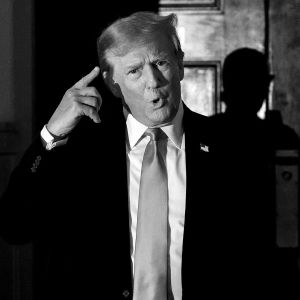

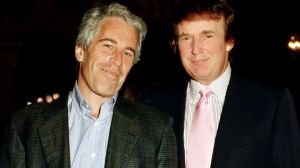
The US president is facing a political crisis within his usually loyal Republican Make America Great Again (Maga) base over suspicion that the administration is hiding details of Epstein’s crimes to protect the rich elite he associated with, which included Trump.





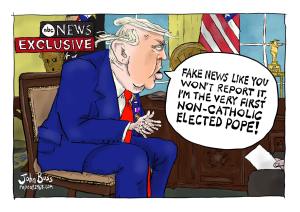
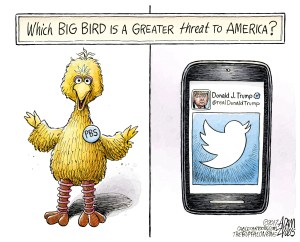
 Here’s a recent article from WAPO on the amount of Federal Funding received by Musks’ businesses. “
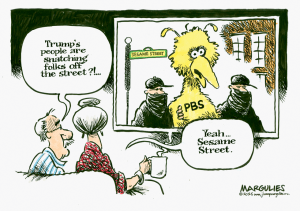 Well, isn’t that special? Here’s a read from
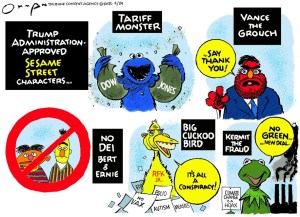 Well, kids, the President says you have to scale back holiday gifts, and he doesn’t want you to access
 Judges that have made decisions against Trump continue to be under threat of violence and death as are their families. This headline is from
 Jennifer Bowers Bahney–
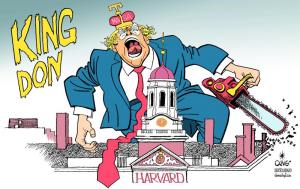 CNN reports that “Trump says the government will revoke Harvard’s tax-exempt status.”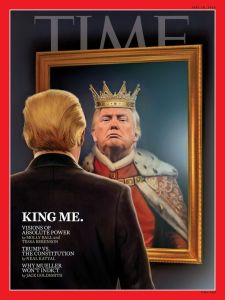

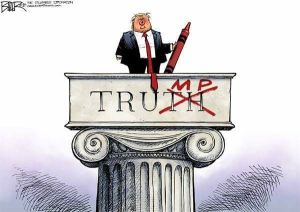

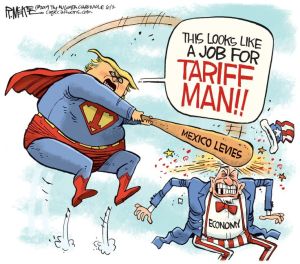








 peej
peej Carissa
 bostonboomer
 dakinikat
 ecocatwoman
 mablue2
 Mama Lopez
 peggysue22
 quixote
 skydancingguestblogger
 Mona (aka Wonk the Vote)



 Sky Dancing
Recent Comments