Dakinikat should be writing this post, but you’re stuck with me. I stayed up till about 2:30 last night doom scrolling and trying to understand what Trump’s tariff madness has done to us. The latest disaster last night was that the bond market is collapsing.
I’ll do my best to post relevant stories, and perhaps Dakinikat will chime in later. Thanks to Trump’s insanity, we could end up in another financial crisis comparable to the one in 2008.
What’s happening with tariffs:
There’s even more insane news this morning: China responded to Trump’s 104 percent tariff threat with another 84% tariff on the U.S.
China has pushed back again on U.S. President Donald Trump’s tariff policies by hiking its levies on U.S. imports to more than 80%.
Tariffs on U.S. goods entering China will rise to 84% from 34% starting April 10, according to a translation of a Office of the Tariff Commission of the State Council announcement. The hike comes in response to the latest U.S. tariff increase on Chinese goods to more than 100% that began at midnight.
The tit-for-tat escalation of tariffs threatens to crush trade between the world’s two largest economies. According to the Office of the U.S. Trade Representative, the U.S. exported $143.5 billion of goods to China in 2024, while importing products worth $438.9 billion.
The Trump administration announced a sweeping new tariff policy last week, warning other countries not to retaliate. Some nations, including Japan, have seemed willing to negotiate on tariffs, but China appears to be taking a more hard-line stance and quickly announced a countertariff.
After China’s initial response to the April 2 tariff rollout, Trump announced an additional 50% hike, putting the total level for import taxes on Chinese goods at 104%….
The trade war has spooked investors around the world by increasing the odds of slower economic growth, higher inflation and lower corporate profits, sparking a sharp sell-off in April.
The S&P 500 finished Tuesday down nearly 20% from its peak, putting the U.S. large-cap stock index in a bear market. South Korea’s Kospi Index fell into a bear market of its own on Wednesday. Stocks in Shanghai and Hong Kong are also down sharply since the U.S. tariff announcement on April 2.
A whopping increase in tariffs, followed by a whopping retaliation. Nationalist Chinese bloggers comparing President Trump’s levies to a declaration of war. China’s Foreign Ministry vowing that Beijing will “fight to the end.”
For years, the world’s two biggest powers have flirted with the idea of an economic decoupling as tensions between them have risen. The acceleration this week of their trade relationship’s deterioration has made the prospect of such a divorce seem closer than ever.
That was underscored on Wednesday when China announced an additional 50 percent tariff on U.S. goods, matching new American levies that had taken effect hours earlier. China also struck at American companies, imposing export controls on a dozen of them and adding six others to a list of “unreliable entities,” preventing them from doing business in China.
China’s new tariffs, which will take effect on Thursday, mean all American goods shipped to China will face an additional 85 percent import tax. The minimum U.S. tax on Chinese imports is now 104 percent. Both figures would have been unimaginable a few weeks ago.
With China’s top leader, Xi Jinping, and Mr. Trump locked in a game of chicken — each unwilling to risk looking weak by making a concession — the trade fight could spiral even further out of control, inflaming tensions over other areas of competition like technology and the fate of Taiwan, the self-governing island claimed by Beijing.
Mr. Trump’s bare-knuckle tactics make him a singular force in U.S. politics. But in Mr. Xi, he faces a hardened opponent who survived the turmoil of China’s late-20th-century political purges, and who views the United States’ competitive tactics as ultimately aimed at subverting the ruling Communist Party’s legitimacy.
“Trump has never gone into a back-alley brawl where the other side is willing to brawl and use the same kind of tactics as him,” said Scott Kennedy, a senior adviser at the Center for Strategic and International Studies, a Washington think tank. “For China, this is about their sovereignty. This is about the Communist Party’s hold on power. For Trump, it might just be a political campaign.”
From what I’m hearing and reading, this is going to hit U.S. small businesses hard, drive many of them into bankruptcy, and send their employees to the unemployment lines.
BRUSSELS — The EU can apply retaliatory tariffs on nearly €21 billion of U.S. products like soybeans, motorcycles and orange juice after the bloc’s 27 countries assented to the measures on Wednesday, the European Commission announced.
“The EU considers U.S. tariffs unjustified and damaging, causing economic harm to both sides, as well as the global economy. The EU has stated its clear preference to find negotiated outcomes with the U.S., which would be balanced and mutually beneficial,” the EU executive said in a statement.
Hitting back against U.S. President Donald Trump’s steel and aluminum tariffs, the European Union’s countermeasures will apply in three rounds. Measures covering €3.9 billion in trade will go into force next week, with a further €13.5 billion from mid-May and a final round of €3.5 billion following in December.
Only Hungary opposed the package, according to four EU diplomats with direct knowledge of the vote, while all other 26 countries voted in favor….
The retaliation does not yet respond to Trump’s imposition of 20 percent “reciprocal” tariffs on all EU exports, which came into force on Wednesday, and his latest 25 percent tariff on cars. Trump has also said tariffs on pharmaceuticals are coming soon.
The European Commission is considering putting forward its countermeasures on those tariffs as early as next week. “It will for sure be soon. I expect it could be as early as next week,” trade spokesperson Olof Gill said Tuesday.
The price of U.S. Treasury bonds is plunging, in what Treasury Secretary Scott Bessent on Wednesday called “deleveraging convulsions.” The effect is to raise borrowing costs just as recession fears spike.
Why it matters: The last thing America needed in the midst of a global trade war and a stock-market meltdown was a debt crisis too. But that now seems to be a real possibility.
What they’re saying: “This is the script for a truly existential financial crisis,” writes Columbia economic historian Adam Tooze, who wrote a whole book on the very similar dynamics that overtook the Treasury market in March 2020.
Driving the news: Bond yields — which move in the opposite direction to prices — are soaring in the wake of protectionist U.S. tariffs.
The amount that the U.S. government needs to pay to borrow money for a decade rose briefly to more than 4.5% Wednesday morning. For a 30-year bond, the yield rose to more than 5%.
Those moves are truly enormous by bond market standards. As recently as Friday, the 10-year yield was less than 4%, and the 30-year was below 4.4%.
The intrigue: In normal times, the most consistent buyer of Treasury bonds is a group of hedge funds that participate in something called the “basis trade.”
They buy the bonds in order to hedge their derivatives exposure to institutional investors, who can lock in slightly higher yields in the futures market.
The profit on any given trade is minuscule, but it’s also very close to risk-free, so the hedge funds can apply as much as 50x or even 100x leverage.
By many accounts, the basis trade is now unwinding, which means the hedge funds are selling their bonds — or, at the very least, not buying new ones.
The big picture: In a move reminiscent of the bond-market tantrum that swept U.K. Prime Minister Liz Truss from office in 2022, the technical factors in the bond market were precipitated by — and also exacerbated — fundamental issues with the country’s finances.
US government bonds, traditionally seen as one of the world’s safest financial assets, are undergoing a dramatic sell-off as Donald Trump’s escalation of his tariff war with China sends panic through all sectors of the financial markets.
The falls suggest that as Trump’s fresh wave of tariffs on dozens of economies came into force, including 104% levies against Chinese goods, investors are beginning to lose confidence in the US as a cornerstone of the global economy.
The yield – or interest rate – on the benchmark 10-year US Treasury bond rose by 0.16 percentage points on Wednesday to 4.42%, its highest since late February – and this week has undergone the three biggest intraday moves since Trump was elected in November. Yields move inversely to prices, so surging yields mean falling prices as demand drops.
The move in the 30-year bond was more dramatic. The 30-year yield briefly jumped above 5% to its highest since late 2023 and was last trading at 4.9157%, or 0.2 percentage points higher than Tuesday.
“This is a fire sale of Treasuries,” said Calvin Yeoh, portfolio manager at the hedge fund Blue Edge Advisors. “I haven’t seen moves or volatility of this size since the chaos of the pandemic in 2020,” he told Bloomberg.
Analysts believe the US Federal Reserve may need to step in. Jim Reid, at Deutsche Bank, said: “Markets are pricing a growing probability of an emergency [interest rate] cut, just as we saw during the Covid turmoil and the height of the GFC [global financial crisis] in 2008.” [….]
UK bonds were also under severe pressure after the US moves. The yield on a 30-year UK gilt hit 5.518% on Wednesday morning, up 16 basis points and surpassing a previous 27-year high of 5.472% set in January.
Shorter-dated 10-year gilt yields were slightly higher at 4.69% while two-year yields ticked down at 3.92%.
Higher yields on gilts – UK government bonds – will make things even more difficult for Downing Street, as it will raise the cost of borrowing to fund investment.
A sharp sell-off in U.S. government bond markets has sparked fears about the growing fallout from President Trump’s sweeping tariffs and retaliation by China, the European Union and others, raising questions about what is typically seen as the safest corner for investors to take cover during times of turmoil.
Yields on 10-year Treasuries — the benchmark for a wide variety of debt — shot 0.2 percentage points higher on Wednesday, to 4.45 percent, a big move in that market. Just a few days ago, it had traded below 4 percent. Yields on the 30-year bond rose significantly as well, at one point on Wednesday topping 5 percent. Borrowing costs globally have also shot higher.
The sell-off comes as investors have fled riskier assets globally in what some fear has parallels to what became known as the “dash for cash” episode during the pandemic, when the Treasury market broke down. The recent moves have upended a longstanding relationship in which the U.S. government bond market serves as a safe harbor during times of stress.
Volatility has surged as stock markets have plummeted amid fears that the U.S. economy is hurtling toward stagflation, in which economic growth contracts while inflation surges. The S&P 500 is now on the verge of entering a bear market, meaning it has dropped 20 percent from its recent high.
The global safe-haven:
“The global safe-haven status is in question,” said Priya Misra, a portfolio manager at JPMorgan Asset Management. “Disorderly moves have happened this week because there is no safe place to hide.”
Scott Bessent, the U.S. Treasury secretary, sought to tamp down concerns on Wednesday, brushing off the sell-off as nothing more than investors who bought assets with borrowed money having to cover their losses.
“I believe that there is nothing systemic about this — I think that it is an uncomfortable but normal deleveraging that’s going on in the bond market,” he said in an interview with Fox Business.
But the moves have been significant enough to raise broader concerns about how foreign investors now perceive the United States, after Mr. Trump decided to slap onerous tariffs on nearly all of its trading partners. Some countries have sought to strike deals with the administration to lower their tariff rates. But China retaliated on Wednesday, announcing an 84 percent levy on U.S. goods after Mr. Trump raised the tariff rate on Chinese goods to 104 percent.
In a social media post on Wednesday, the former U.S. Treasury secretary Lawrence H. Summers said the broader sell-off suggested a “generalized aversion to US assets in global financial markets” and warned about the possibility of a “serious financial crisis wholly induced by US government tariff policy.”
Some analysis and commentary on what’s happening:
Heather Cox Richardson at Letters from an American: April 8, 2025.
Stocks were up early today as traders put their hopes in Treasury Secretary Scott Bessent’s suggestion that the Trump administration was open to negotiations for lowering Trump’s proposed tariffs. But then U.S. Trade Representative Jamieson Greer said there would not be exemptions from the tariffs for individual products or companies, and President Donald J. Trump said he was going forward with 104% tariffs on China, effective at 12:01 am on Wednesday.
Markets fell again. By the end of the day, the Dow Jones Industrial Average had fallen by another 320 points, or 0.8%, a 52-week low. The S&P 500 fell 1.6% and the Nasdaq Composite fell 2.2%.
Rob Copeland, Maureen Farrell, and Lauren Hirsch of the New York Times reported today that over the weekend, Wall Street billionaires tried desperately and unsuccessfully to change Trump’s mind on tariffs. This week they have begun to go public, calling out what they call the “stupidity” of the new measures. These industry leaders, the reporters write, did not expect Trump to place such high tariffs on so many products and are shocked to find themselves outside the corridors of power where the tariff decisions have been made.
Elon Musk is one of the people Trump is ignoring to side with Peter Navarro, his senior counselor for trade and manufacturing. Navarro went to prison for refusing to answer a congressional subpoena for information regarding Trump’s attempt to overturn the 2020 presidential election. Since Musk poured $290 million into getting Trump elected in 2024 and then burst into the news with his “Department of Government Efficiency,” he has seemed to be in control of the administration. But he has stolen the limelight from Trump, and it appears Trump’s patience with him might be wearing thin.
Elizabeth Dwoskin, Faiz Siddiqui, Pranshu Verma, and Trisha Thadani of the Washington Post reported today that Musk was among those who worked over the weekend to get Trump to end his new tariffs. When Musk failed to change the president’s mind, he took to social media to attack Navarro personally, saying the trade advisor is “truly a moron,” and “dumber than a sack of bricks.”
As the breadth of the Trump revolution has spread across Washington in recent weeks, its most defining feature is a burn-it-down-first, figure-out-the-consequences-later recklessness. The costs of that approach are now becoming clear.
Administration officials knew the markets would dive and other nations would retaliate when President Trump announced his long-promised “reciprocal” tariffs. But when pressed, several senior officials conceded that they had spent only a few days considering how the economic earthquake might have second-order effects.
Trump clown mask
And officials have yet to describe the strategy for managing a global system of astounding complexity after the initial shock wears off, other than endless threats and negotiations between the leader of the world’s largest economy and everyone else.
Take the seemingly unmanaged escalation with China, the world’s second largest economy, and the only superpower capable of challenging the United States economically, technologically and militarily. By American and Chinese accounts, there was no substantive conversation between Mr. Trump and China’s top leader, Xi Jinping, or engagement among their senior aides, before the countries plunged toward a trade war.
Last Wednesday, Mr. Trump’s hastily devised formula for figuring out country-by-country tariffs came up with a 34 percent tax on all Chinese goods, everything from car parts to iPhones to much of what is on the shelves at Walmart and on Amazon’s app.
When Mr. Xi, predictably, matched that figure, Mr. Trump issued an ultimatum for him to reverse the decision in 24 hours — waving a red flag in front of a leader who would never want to appear to be backing down to Washington. On Wednesday, the tariff went to 104 percent, with no visible strategy for de-escalation.
If Mr. Trump does get into a trade war with China, he shouldn’t look for much help from America’s traditional allies — Japan, South Korea or the European Union — who together with the United States account for nearly half of the world economy. All of them were equally shocked, and while each is negotiating with Mr. Trump, they seem in no mood to help him manage China.
“Donald Trump has launched a global economic war without any allies,” the economist Josh Lipsky of the Atlantic Council wrote on Tuesday. “That is why — unlike previous economic crises in this century — there is no one coming to save the global economy if the situation starts to unravel.”
The global trading system is only one example of the Trump administration tearing something apart, only to reveal it has no plan for how to replace it.
There’s a paradox to covering Donald Trump these days. On the one hand, he’s never out of the news—a wannabe dictator busy remaking the government and the economy so that more and more decisions about our futures answer only to his whim. On the other hand, there’s so much news about what he’s doing that it’s easy to reduce our thinking about Trump to the sum of his actions. There’s Trump the bundle of bad policy ideas, Trump the destroyer of institutions, Trump the fountain of post-truth grievance. It’s hard to take the time to dwell on the man himself—to focus our attention on Donald Trump the clown.
Yesterday afternoon, as markets continued crashing and with the further implementation of backbreaking tariffs just hours away, the clown was on full display. Trump participated in the ceremonial signing of an executive order on “unleashing American energy.” In the East Room event, he was in his element: coal miners in hard hats behind him, an audience crammed with his political flunkies in front. He ended up riffing for about 45 minutes. Let’s listen in, shall we? [….]
The topic du jour, of course, was energy, specifically the “beautiful clean coal” that Trump loves so much. Trump riffed at length on the supposed stupidity of proposals to retrain miners for skilled labor in other industries, reminiscing his 2016 campaign against Hillary Clinton:
“One thing I learned about the coal miners . . . You could give them a penthouse on Fifth Avenue and a different kind of a job and they’d be unhappy. Coal mining is what they love to do,” Trump said. “And she was gonna put them in a high-tech industry, to make little cell phones, I don’t know. Do you think you’d be good at that? I don’t know.”
Anyway, no need for any of that now, the president exulted: “We’re gonna be crushing Biden-era environmental restrictions. . . . And we have clean air and clean water and now we have clean coal. And at the same time we’re gonna do other things and forms of technology and also energy, like our country has never seen before.”
On his tariffs:
Trump didn’t totally avoid talk of the market crash he kicked off last week—a “whole situation,” he noted, that “was somewhat explosive.”
But, Trump added, you should see the response we’re getting! “We have had talks with many, many countries. . . . And our problem is, we can’t see that many that fast. But we don’t have to because, you know, the tariffs are on, and money is pouring in at a level that we’ve never seen before.”
How much money are we talking? “We’re taking in almost $2 billion a day in tariffs,” Trump said. “America is gonna be very rich again very soon.”
Got all that? Yes, markets are tanking because of the tariffs. But not to worry: We’re going to strike great deals to replace them soon. But not too soon, because we don’t have time to deal with all these countries at once. But that’s okay, because look at how much money these tariffs are making us!
That’s it for me. I’ve learned a lot and I plan to continue studying this stuff. I expect Daknikat with have a lot to say on Friday. For now, hang in there everyone and take care of yourselves.
Did you like this post? Please share it with your friends:
Sadhbh (aka JJ) suggested I look into medieval Irish cats for today’s post, and she shared a website to get me started. It turns out that cats were highly valued in medieval Ireland–both for their rat and mouse hunting abilities and for companionship. There’s a beautiful poem from the 9th century about a cat named Pangur Ban. Here’s the poem, in modern translation:
Members of Elon Musk’s Department of Government Efficiency (DOGE) team have had access to the US Treasury Department’s payment systems for over a week. On Thursday, the threat intelligence team at one of the department’s agencies recommended that DOGE members be monitored as an “insider threat.”
Sources say members of the Bureau of the Fiscal Service’s IT division and others received an email detailing these concerns.
“There is ongoing litigation, congressional legislation, and widespread protests relating to DOGE’s access to Treasury and the Bureau of the Fiscal Service,” reads a section of the email titled “Recommendations,” reviewed by WIRED. “If DOGE members have any access to payment systems, we recommend suspending that access immediately and conducting a comprehensive review of all actions they may have taken on these systems.”
Although Treasury and White House officials have repeatedly denied it, WIRED has reported that DOGE technologists had the ability to not only read the code of sensitive payment systems but also rewrite it. Marko Elez, one of a number of young men identified by WIRED who have little to no government experience but are associated with DOGE, was granted read and write privileges on two of the most sensitive systems in the US government: the Payment Automation Manager and Secure Payment System at the BFS, an agency that according to Treasury records paid out $5.45 trillion in fiscal year 2024.
“There is reporting at other federal agencies indicating that DOGE members have performed unauthorized changes and locked civil servants out of the sensitive systems they gained access to,” the “Recommendations” portion of the email continues. “We further recommend that DOGE members be placed under insider threat monitoring and alerting after their access to payment systems is revoked. Continued access to any payment systems by DOGE members, even ‘read only,’ likely poses the single greatest insider threat risk the Bureau of the Fiscal Service has ever faced.”
The recommendations were part of a weekly report sent out by the BFS threat intelligence team to hundreds of staffers. “Insider threat risks are something [the threat intelligence team] usually covers,” a source told WIRED. “But they have never identified something inside the bureau as an insider threat risk that I know of.”
NEW YORK — A federal judge issued an emergency order early Saturday prohibiting Elon Musk’s U.S. DOGE Service from accessing personal and financial data on millions of Americans kept at the Treasury Department, noting the possibility for irreparable harm.
U.S. District Judge Paul A. Engelmayer’s decision also ordered Musk and his team to “immediately destroy any and all copies of material downloaded from the Treasury Department’s records and systems, if any.”
The conditions are in place until another judge hears arguments on the matter on Feb. 14.
The ruling came hours after attorneys general from 19 states sued to stop Musk’s team from dealing with sensitive files during its review of federal payment systems — an unprecedented effort that skirted firm security measures that permitted access to systems only to trained Treasury employees.
In a four-page order, Engelmayer said the states that sued the Trump administration “will face irreparable harm in the absence of injunctive relief.”
“That is both because of the risk that the new policy presents of the disclosure of sensitive and confidential information and the heightened risk that the systems in question will be more vulnerable than before to hacking,” Engelmayer wrote.
He adopted arguments by the states that Treasury records from the agency’s Bureau of Fiscal Services can only legally be accessed by specialized civil servants “with a need for access to perform their job duties.”
Under the order, the Trump administration is prohibited from giving access to political appointees, special government employees or government employees that are not assigned to the Treasury Department. The White House has said that Musk has been designated a special government employee.
The lawsuit, led by New York Attorney General Letitia James (D), says DOGE, a group operating under the direction of President Donald Trump, had no authority to access the Treasury Department’s systems and that doing so was a potentially massive cybersecurity and privacy risk.
U.S. District Judge Carl Nichols issued a pause on efforts to place 2,200 staff on administrative leave and to expedite evacuations for personnel abroad until next Friday at 11:59 p.m
He also rescinded leave for 500 workers already put on leave.
“All USAID employees currently on administrative leave shall be reinstated until that date, and shall be given complete access to email, payment, and security notification systems until that date, and no additional employees shall be placed on administrative leave before that date,” Nichols wrote.
Nichols also paused the administration’s plans to impose a 30-day deadline for USAID personnel abroad to return the the United States, saying “such short notice disrupts long-settled expectations and makes it nearly impossible for evacuated employees to adequately plan for their return to the United States.”
Nichols said he would not impose a pause on the funding freeze and scheduled an in-person preliminary injunction hearing for Wednesday.
A spokesperson for Democracy Forward, a progressive nonprofit group that filed a lawsuit against the Office of Management and Budget that resulted in a judge temporarily halting the Trump administration’s freeze on most federal grants and loans, said the organization is confident it will demonstrate standing.
“We are confident our clients will be able to demonstrate standing with more fulsome briefing and are committed to continuing to use the legal process to protect the privacy of the American people and to uphold the rule of law,” the spokesperson said.
Efficiency (DOGE) was given access to sensitive US government systems even though his past association with cybercrime communities should have precluded him from gaining the necessary security clearances to do so. As today’s story explores, the DOGE teen is a former denizen of ‘The Com,’ an archipelago of Discord and Telegram chat channels that function as a kind of distributed cybercriminal social network for facilitating instant collaboration.
Since President Trump’s second inauguration, Musk’s DOGE team has gained access to a truly staggering amount of personal and sensitive data on American citizens, moving quickly to seize control over databases at the U.S. Treasury, the Office of Personnel Management, the Department of Education, and the Department of Health and Human Resources, among others.
Wired first reported on Feb. 2 that one of the technologists on Musk’s crew is a 19-year-old high school graduate named Edward Coristine, who reportedly goes by the nickname “Big Balls” online. One of the companies Coristine founded, Tesla.Sexy LLC, was set up in 2021, when he would have been around 16 years old.
“Tesla.Sexy LLC controls dozens of web domains, including at least two Russian-registered domains,” Wired reported. “One of those domains, which is still active, offers a service called Helfie, which is an AI bot for Discord servers targeting the Russian market. While the operation of a Russian website would not violate US sanctions preventing Americans doing business with Russian companies, it could potentially be a factor in a security clearance review.”
Mr. Coristine has not responded to requests for comment. In a follow-up story this week, Wired found that someone using a Telegram handle tied to Coristine solicited a DDoS-for-hire service in 2022, and that he worked for a short time at a company that specializes in protecting customers from DDoS attacks.
Internet routing records show that Coristine runs an Internet service provider called Packetware (AS400495). Also known as “DiamondCDN,” Packetware currently hosts tesla[.]sexy and diamondcdn[.]com, among other domains.
DiamondCDN was advertised and claimed by someone who used the nickname “Rivage” on several Com-based Discord channels over the years. A review of chat logs from some of those channels show other members frequently referred to Rivage as “Edward.”
From late 2020 to late 2024, Rivage’s conversations would show up in multiple Com chat servers that are closely monitored by security companies. In November 2022, Rivage could be seen requesting recommendations for a reliable and powerful DDoS-for-hire service.
Read more complex stuff at the link. Basically this kid is a cybercriminal and he could have access to our social security numbers.
There’s lots of creepy news about creepy Elon Musk today.
In December, more than a month before Donald Trump took the presidential oath of office, The New York Times reported a blockbuster scoop: Elon Musk and his SpaceX company had repeatedly failed to meet federal reporting requirements designed to safeguard national security despite being deeply entangled with the military and intelligence bureaucracy. These included a failure to provide details to the government of Musk’s meetings with foreign leaders, the Times reported.
Those lapses had triggered a number of internal federal reviews, according to the Times. Perhaps most interestingly, the Defense Department’s inspector general had opened a probe of the matter sometime during 2024. The Air Force and the Pentagon Office of the Undersecretary of Defense for Intelligence and Security also launched reviews in November.
Now that Trump is president and controls the executive branch—including the Defense Department—it’s time to raise what appears to be a forgotten question: What exactly is going on with these government reviews into Musk? Have they continued? Or are they effectively dead?
When Trump fired over a dozen independent inspectors general last month, one of them was the Defense Department IG, Robert Storch. We don’t know whether the Musk probe was a reason for this firing, but it now seems awfully convenient for the SpaceX billionaire, who is known to be enraged about having to face regulations and oversight while enjoying immensely lucrative contracts with the federal government.
Now Democrats fear that Trump’s firing of the Defense Department IG has had the effect of closing down the IG’s investigation into Musk. And they’re demanding that the Pentagon clarify its status.
“I want to know, where is this investigation?” said Representative Adam Smith of Washington State, the ranking Democrat on the House Armed Services Committee (HASC), in an interview with me. “My deep concern is that it’s just basically been shut down and buried—and will not be pursued.”
Smith told me that Democrats on the HASC are asking the Defense Department for an update on the IG investigation. It will certainly be interesting to see if the agency clarifies this point, though Smith said there’s “no reason to expect a response anytime soon.”
Constituents have flooded the phone lines at the U.S. Capitol this week, many of them asking questions about billionaire Elon Musk “feeding USAID into the wood chipper”and his access to government systems.
Senators’ phone systems have been overloaded, lawmakers said, with some voters unable to get through to leave a message. The outpouring of complaints and confusion has put pressure on lawmakers to find out more about Musk’s project, heightening tensions between the billionaire tech mogul and the government.
Sen. Lisa Murkowski (R-Alaska) said the Senate’s phones were receiving 1,600 calls each minute, compared with the usual 40 calls per minute. Many of the calls she’s been receiving are from people concerned about U.S. DOGE Service employees having broad access to government systems and sensitive information. The callers are asking whether their information is compromised and about why there isn’t more transparency about what is happening, she said.
“It’s asking for a lot of clarification,” Murkowski said, noting that Alaska has a high concentration of federal workers.
“It is a deluge on DOGE,” said Sen. Tina Smith (D-Minnesota). “Truly our office has gotten more phone calls on Elon Musk and what the heck he’s doing mucking around in federal government than I think anything we’ve gotten in years. … People are really angry.”
Sen. Angus King (I-Maine) said he’s been hearing from constituents “constantly” on DOGE and Musk. “We can hardly answer the phones fast enough. It’s a combination of fear, confusion and heartbreak, because of the importance of some of these programs.”
During Donald Trump’s transition, it appeared that Elon Musk wouldn’t survive in Trumpworld much after the inauguration. Multiple leaks left the impression that Musk, the SpaceX and Tesla CEO and X owner who staked a fortune on reelecting the president, had already outlasted his welcome at Mar-a-Lago, like a houseguest who comes for the weekend, stays for a month, and decides to rearrange the furniture. Musk dropped in on one of Trump’s calls with a world leader; publicly lobbied to install billionaire Howard Lutnick as Treasury secretary; and feuded with Trump ally Steve Bannon over H-1B visas, later writing to critics of the program, “Take a big step back and FUCK YOURSELF in the face. I will go to war on this issue the likes of which you cannot possibly comprehend.” Republicans I spoke to at the time said it was inevitable that Musk’s meddling and outbursts would cause a blowup with Trump.
That still may happen. But since Trump was officially sworn in back on January 20, Musk has increased his influence in the White House to unfathomable levels, even as his behavior has at times been erratic. Musk is now leading the so-called Department of Government Efficiency as if there are no limits to his power. His band of teenage and 20-something programmers is burrowing into federal computer systems at breakneck speed, and it’s unclear if Trump has a full grasp on what Musk is doing. For instance, there were conflictingreports this week about whether DOGE staffers had read-write access to the Treasury Department’s vast payment system, which would allow Musk to potentially cancel disbursements he didn’t like. Musk has since plugged into the FAA, the Department of Education, and the Office of Personnel Management. According to one Trump ally, Musk is not fully briefing White House chief of staff Susie Wiles about his plans and the White House is effectively in the dark. A White House official disputed this: “The chief of staff is very much involved, and there is no daylight between Elon Musk and anyone in the administration about executing the president’s agenda.” (Musk did not immediately reply to a request for comment for this article.)
Meanwhile, Musk is using his X account like a personal White House pressroom podium to dominate the news cycle. In recent days, Musk has claimed to have “deleted” a division of the General Services Administration and to have fed USAID “into the wood chipper.” He’s also spread conspiracy theories, such as one falsely alleging that DOGE staffers discovered $84 million given to Chelsea Clinton by USAID. (Musk later deleted his tweet that promoted the claim.) Musk has even criticized his ostensible boss. On January 20, Musk undercut Trump’s announcement that the White House had secured a commitment from OpenAI, Oracle, and SoftBank for an investment of up to $500 billion to build data centers and AI infrastructure. “They don’t actually have the money,” Musk wrote on X a few hours after Trump revealed the plan. “SoftBank has well under $10B secured. I have that on good authority.”
The president did not look amused. He was meeting the Japanese prime minister for the first time on Friday when a reporter shouted out to ask if he had a “reaction” to the new cover of Time magazine. The cover, the reporter told Mr. Trump, depicts “Elon Musk sitting behind your Resolute Desk.”
“No,” Mr. Trump answered pointedly. He looked down at the floor. The next few seconds stretched like an eternity as a translator related the exchange to the prime minister, Shigeru Ishiba, in Japanese.
Just in case any of the sauciness of the moment had been lost in translation, Mr. Trump waited until the interpreter had finished and then cracked: “Is Time magazine still in business? I didn’t even know that.” Everyone around him laughed gamely, if a bit nervously.
It is unlikely that Mr. Trump didn’t know whether Time magazine was still in business. His own face had, after all, stared out from its cover only two months ago, when the magazine anointed him its “Person of the Year.” As part of the rollout of that issue, Mr. Trump rang the bell at the New York Stock Exchange in front of a blown-up version of the cover….
The last time he was president, a Time cover in 2017 featuring his adviser Stephen K. Bannon at the height of his powers — “The Great Manipulator,” it read — was believed to have annoyed Mr. Trump. Mr. Bannon left the White House later that year.
I have no doubt that Trump is pissed off about this.
As members of Elon Musk’s Department of Government Efficiency have fanned out across the government in recent days, attention has focused on the young Silicon Valley engineers who are wielding immense power in the new administration.
But ProPublica has identified three lawyers with elite establishment credentials who have also joined the DOGE effort.
Two are former Supreme Court clerks — one clerked for Chief Justice John Roberts, another for Justice Neil Gorsuch — and the third has been selected to be a Gorsuch clerk for the 2025-2026 term.
Two of the lawyers’ names have not been previously reported as working for DOGE.
All three — Keenan Kmiec, James Burnham and Jacob Altik — have DOGE email addresses at the Executive Office of the President, according to records reviewed by ProPublica. Altik was recently an attorney at the firm Weil, Gotshal & Manges, but his bio page is now offline. Neither the White House nor any of the three lawyers immediately responded to requests for comment about their roles.
Referring to DOGE work, the White House told ProPublica in a statement earlier this week that, “Those leading this mission with Elon Musk are doing so in full compliance with federal law.”
However, DOGE’s aggressive actions across the government have already drawn lawsuits contending that the group has broken the law.
The legal challenges brought by several groups could ultimately reach the Supreme Court. This week, for example, more than a dozen Democratic attorneys general said they would sue to block DOGE’s access to the Treasury Department’s payment systems, and federal employee unions sued to challenge the DOGE-led dismantling of the U.S. Agency for International Development.
“What’s striking is how contemptuous the administration seems to be of traditional administrative law limitations — in ways that might get them into trouble,” said Noah Rosenblum, a law professor at New York University. “When this stuff goes to the courts, one important question is going to be: How well-lawyered was it?”
Your response to that column was incredible, both from Americans who feel like they’re being gaslit by the tepid headlines and couched language most mainstream US news outlets are still using to describe grave assaults on our Constitution and legal system and also from readers overseas (including foreign correspondents who are writing about the collapse of our constitutional order) who agreed in dismay that my satirical portrayal was precisely how they were viewing the events in Washington from afar.
I thought — for now at least — I’d offer this as a weekly Saturday column, one that helps both to round up the firehose of news and events on multiple fronts that we’re living through each day as well provide some larger, clear-eyed context about the effects of these events. Without further ado, I give you William Boot’s latest dispatch from our troubled country:
I thought — for now at least — I’d offer this as a weekly Saturday column, one that helps both to round up the firehose of news and events on multiple fronts that we’re living through each day as well provide some larger, clear-eyed context about the effects of these events. Without further ado, I give you William Boot’s latest dispatch from our troubled country:
NEWS ANALYSIS: White Nationalist Forces Consolidate Power Alongside Musk’s Junta
By William Boot
Two weeks into a fast-moving coup by a South African tech oligarch, the United States — which was already deep into planning for its 250th birthday next year — hangs suspended this weekend in a liminal state somewhere between the constitutional republic it has been for 249 years and an authoritarian regime akin to Europe’s infamous fallen democracy, Hungary.
Following the alarming purges of the security services last week and the successful capture of the national treasury and other federal agencies by technical junta forces loyal to centibillionaire Elon Musk, the country’s constitutional system seemed to awaken from slumber this week.
Although by Monday Musk reigned unquestioned as head of the government, he appears content to allow the country’s elected president, Donald Trump, to remain the ceremonial head of state, and overall the political situation seemed to stabilize as the week progressed. Amid widening protests by opposition leaders and the public, damning mediareports, and a flurry of courtorders that blocked or slowed some of the most controversial power grabs, the country even appeared — at least temporarily — to pull back from the abyss.
The capital’s limbo status was reflected in a bizarre power sharing arrangement—some agencies were directly controlled by Musk, while others remained led by ideologically aligned ministers appointed by the figurehead Trump. Many of those officials who support Musk’s white nationalist agenda went out of their way to pay homage to the oligarch. The transportation minister bragged publicly about inviting a Musk takeover of his ministry’s work on aviation safety, and the capital’s federal prosecutor posted a letter to social media putting his supposedly independent force at Musk’s disposal.
The small handful of correspondents whose news organizations have not been cowed into compliance by regime threats spent much of the week in the embattled capital trying to even identify the mysterious Musk-backed figures taking control of government systems. Many of the junta gang members, who would only identify themselves by first-names and were known locally as DOGE, adopted a standard uniform of t-shirts under blazers and appeared to be youths, some even in their teens — one went online by the moniker BigBalls.
Many of these child foot soldiers were apparently mercenaries pulled from the sprawling business empire run by Musk, himself a notoriously immature and boyish oligarch raised amid wealth and privilege in apartheid-era South Africa who has steadily built deep ties to far-right political movements around the globe in recent years.
Regime spokespeople refused to clarify for much of the week whether the DOGE operators deployed across Washington were officially employed by the government or just acting at the personal order of Musk.
Throughout the week, reports and rumors of surprise DOGE appearances at one government office or another spread like wildfire on social media and over text-messaging chains filled with nervous government employees. Members of the parliament’s opposition party tried to investigate some of the agencies under siege, but were blocked from even entering buildings occupied by DOGE forces; at the education ministry, for instance, they faced down an anonymous brown-shirted enforcer who refused to identify himself.
Read the rest at the link above.
That’s it for me today. The stress is really getting to me. I’m having even more difficulty sleeping than usual and I feel exhausted all the times. I do feel slightly better now that the courts are getting involved, but I fear what will happen when these cases reach the corrupt Supreme Court. I also think it’s quite likely that Trump and Musk will eventually clash the way Trump and Bannon did in Trump’s first term.
Take care everyone.
Did you like this post? Please share it with your friends:
In less than 2 weeks, Trump has thrown the entire U.S. government into chaos. It’s difficult not to feel defeated and despairing. The latest outrages: the so-called “president” is working to get rid of long-term, non-partisan government employees and he has illegally usurped the power of the purse, which the Constitution assigns to Congress only.
It’s particularly frustrating that Congressional Democrats have so far not risen to the occasion. I can only hope that after the latest horrors, they will finally wake up and fight back. They don’t have control of either the House or Senate, but they could be speaking out publicly and working together on messaging. Some individuals, such as Elizabeth Warren and Alexandria Ocasio-Cortez are doing that, but the Democrats need a coordinated strategy.
Today, Trump’s nominee for Secretary of Health and Human Services Robert F. Kennedy Jr. is appearing at a confirmation hearing. Read updates at The New York Times, The Washington Post, or The Guardian. From The Guardian (no paywall):
Ron Wyden, the top Democrat on the Senate finance committee, criticized Robert F Kennedy Jr for having “spent years pushing conflicting stories about vaccines”.
As he began his questioning, Wyden quoted some of Kennedy’s podcast interviews in which he claimed that “no vaccine is safe and effective” and that he regretted vaccinating his own children. But in his opening statement, Kennedy denied being anti-vaccine.
“Mr Kennedy, all of these things cannot be true,” Wyden said. “So, are you lying to Congress today when you say you are pro-vaccine, or did you lie on all of those podcasts? We have all of this on tape.”
Kennedy replied that his previous comment about vaccines’ safety had been truncated and had since been corrected, telling Wyden, “You know about this, Senator Wyden, so bringing this up right now is dishonest.”
Wyden retorted that Kennedy has “a history of trying to take vaccines away from people,” citing his signature on a 2021 petition calling for the Food and Drug Administration to block access to coronavirus vaccines. Kennedy suggested that the Centers for Disease Control and Prevention had mishandled the recommendation process for those vaccines.
More from Wyden:
Ron Wyden, the top Democrat on the Senate finance committee, also pressed Robert F Kennedy Jr on his role in a deadly measles outbreak that struck Samoa in 2019.
The measles outbreak in Samoa – which claimed the lives of 83 people, most of them young children – came just months after Kennedy visited the island nation.
Quoting Kennedy’s book that raised doubts about the potential lethality of measles, Wyden said, “The reality is measles are in fact deadly and highly contagious – something that you should’ve learned after your lies contributed to the deaths of 83 people, most of them children, in a measles outbreak in Samoa. So my question here is: Mr Kennedy, is measles deadly, yes or no?”
Kennedy replied that the death rate from measles has historically been quite low, and he again denied any role in the Samoa outbreak.
“I went there nothing to do with vaccines. I went there to introduce a medical and thematic system that would digitalize records in Samoa,” Kennedy said. “I never taught or gave any public statement about vaccines. You cannot find a single Samoan who will say, ‘I didn’t get a vaccine because of Bobby Kennedy.’”
He concluded, “I went in June of 2019. The measles outbreak started in August. So, clearly I had nothing to do with the measles.”
That final comment seemed curious given that reports have pointed to the timeline of Kennedy’s visit as potentially incriminating, considering the outbreak followed just a couple of months later.
Medieval Chaos, by Mario Ortiz Martinez
From Senator Michael Bennet:
Senator Michael Bennet, a Democrat of Colorado, said that he agreed with Robert F Kennedy Jr on some of his criticism of the US healthcare system, but he painted Kennedy as woefully unqualified to lead the department of health and human services.
“What is so disturbing to me is that out of 330 million Americans, we’re being asked to put somebody in this job who has spent 50 years of his life not honoring the tradition that he talked about at the beginning of this conversation, but peddling in half-truths, peddling in false statements, peddling in theories that create doubt about whether or not things we know are safe are unsafe,” Bennet said.
Bennet then launched into a series of damning, rapid-fire questions about Kennedy’s past comments on a range of healthcare topics, including the coronavirus pandemic and AIDS.
“Did you say that Covid-19 was a genetically engineered bioweapon that targets Black and white people, but spared Ashkenazi Jews and Chinese people?” Bennet said.
Kennedy replied, “I didn’t say it was deliberately targeted. I just quoted an NIH-funded and NIH-published study.”
More from Bennet:
Senator Michael Bennet, a Democrat of Colorado, continued his rapid-fire questioning of Robert F Kennedy with more quotes from Kennedy’s past writings and interviews.
Bennet asked, “Did you say that Lyme disease is highly likely a materially engineered bioweapon?”
Kennedy replied, “I probably did say that.”
Bennet asked, “Did you say that exposure to pesticides causes children to become transgender?”
Kennedy replied, “No, I never said that.”
Bennet challenged that claim, saying he would submit the record to the committee chair. He then asked, “Did you write in your book, and I quote, ‘it’s undeniable that African AIDS is an entirely different disease from Western AIDS’?”
Kennedy replied, “I’m not sure.”
Bennet concluded his questioning by reminding Kennedy of the importance of the job he is seeking, noting that Americans rely on the department of health and human services to provide accurate medical information.
“This matters. It doesn’t matter what you come here and say that isn’t true, that’s not reflective of what you really believe,” Bennet said. “Unlike other jobs that we’re confirming around this place, this is a job where it is life and death.”
Shortly after birth, newborns in the United States receive a few quick procedures: an Apgar test to check their vitals, a heel stick to probe for genetic disorders and various other conditions, and in most cases, a hepatitis B vaccine. Without that last one, kids are at risk of getting a brutal, and sometimes deadly, liver condition. Senator Bill Cassidy of Louisiana happens to know quite a lot about that. Before entering Congress in 2009, he was a physician who said he was so affected by an 18-year-old patient with liver failure from the virus that he spearheaded a campaign that vaccinated 36,000 kids against hepatitis B.
Cassidy, a Republican, will now play a major role in determining the fate of Robert F. Kennedy Jr., Donald Trump’s pick for health secretary, whose confirmation hearings begin today on Capitol Hill. Kennedy has said that the hepatitis B vaccine is given to children only because the pharmaceutical company Merck colluded with the government to get the shot recommended for kids, after the drug’s target market (“prostitutes and male homosexuals,” by Kennedy’s telling) weren’t interested in the shot. Kennedy will testify in front of the Senate Finance Committee, where Cassidy and 26 other senators will get the chance to grill him about his views. Though it might seem impossible for an anti-vaccine conspiracist to gain the support of a doctor who still touts the work he did vaccinating children, Cassidy has not indicated how he will vote. Similar to the Democratic senators who have come out forcefully against Kennedy, Cassidy, in an interview with Fox News earlier this month, said that RFK Jr. is “wrong” about vaccines. But he also said that he did agree with him on some things. (Cassidy’s office declined my request to interview the senator.)
Chaos, by Celes Orozco
That Kennedy even has a chance of winning confirmation is stunning in its own right. A longtime anti-vaxxer with a propensity for far-fetched conspiracy theories, RFK Jr. has insinuated that an attempt to assassinate members of Congress via anthrax-laced mail in 2001 may have been a “false flag” attack orchestrated by “someone in our government” to gin up interest in the government preparing for potential biological weapon threats. He has claimed that COVID was “targeted to attack Caucasians and Black people,” and that 5G is being used to “harvest our data and control our behavior.” He has suggested that the use of antidepressants might be linked to mass shootings. Each one of these theories is demonstrably false. The Republican Party has often found itself at war with mainstream science in recent years, but confirming RFK Jr. would be a remarkable anti-science advance. If Republican senators are willing to do so, is there any scientific belief they would place above the wishes of Donald Trump?
A number of Republicans have already signaled where they stand. In the lead-up to the confirmation hearings, some GOP senators have sought to sanewash RFK Jr., implying that his views really aren’t that extreme. They have reason to like some of what he’s selling: After the pandemic, many Republicans have grown so skeptical of the public-health establishment that Kennedy’s desire to blow it up can seem enticing. And parts of RFK Jr.’s “Make America healthy again” agenda do in fact adhere to sound scientific evidence. His views on how to tackle America’s epidemic of diet-related diseases are fairly well reasoned: Cassidy has said that he agrees with RFK Jr.’s desire to take action against ultra-processed foods. Kennedy appears to have won over the two other Republican doctors on the committee, Senators Roger Marshall of Kansas and John Barrasso of Wyoming. Marshall has been so enthusiastic about Kennedy’s focus on diet-related diseases that he has created a MAHA caucus in the Senate. Although Barrasso hasn’t formally made an endorsement, he has said that Kennedy would provide a “fresh set of eyes” at the Food and Drug Administration. (Spokespeople for Barrasso and Marshall did not respond to requests for comment.)
The immediate emergency we are dealing with is Trump’s illegal and unconstitutional executive order to freeze massive amounts of government payments already approved by Congress. This has literally thrown the country in chaos and will likely lead to a Constitutional crisis if the order is not reversed. For now, a federal judge has blocked the order.
Just a little over a week into his second term, President Donald Trump is taking steps to maximize his power, sparking chaos and what critics contend is a constitutional crisis as he challenges the separation of powers that have defined American government for more than 200 years.
The new administration’s most provocative move came this week, as it announced it would temporarily halt federal payments to ensure they complied with Trump’s orders barring diversity programs. The technical-sounding directive had enormous immediate impact before it was blocked by a federal judge, potentially pulling trillions of dollars from police departments, domestic violence shelters, nutrition services and disaster relief programs that rely on federal grants.
Though the Republican administration denied Medicaid was affected, it acknowledged the online portal allowing states to file for reimbursement from the program was shut down for part of Tuesday in what it insisted was an error.
Legal experts noted the president is explicitly forbidden from cutting off spending for programs that Congress has approved. The U.S. Constitution grants Congress the power to appropriate money and requires the executive to pay it out. A 50-year-old law known as the Impoundment Control Act makes that explicit by prohibiting the president from halting payments on grants or other programs approved by Congress.
“The thing that prevents the president from being an absolute monarch is Congress controls the power of the purse strings,” said Josh Chafetz, a law professor at Georgetown University, adding that even a temporary freeze violates the law. “It’s what guarantees there’s a check on the presidency.”
Democrats and other critics said the move was blatantly unconstitutional.
“What happened last night is the most direct assault on the authority of Congress, I believe, in the history of the United States,” Sen. Angus King, an independent from Maine, said Tuesday.
Buried within one of the dozens of executive orders that President Donald Trump issued in his first days in office is a section titled “Terminating the Green New Deal.” As presidential directives go, this one initially seemed like a joke. The Green New Deal exists mostly in the dreams of climate activists; it has never been fully enacted into law.
Chaos and Order by Scatts
The next line of Trump’s order, however, made clear he is quite serious: “All agencies shall immediately pause the disbursement of funds appropriated through the Inflation Reduction Act of 2022 or the Infrastructure Investment and Jobs Act.” The president is apparently using “the Green New Deal” as a shorthand for any federal spending on climate change. But the two laws he targets address much more than that: The $900 billion IRA not only funds clean-energy programs but also lowers prescription-drug prices, while the $1.2 trillion bipartisan infrastructure law represents the biggest investment in roads, bridges, airports, and public transportation in decades. And the government has spent only a portion of each.
In one sentence, Trump appears to have cut off hundreds of billions of dollars in spending that Congress has already approved, torching Joe Biden’s two most significant legislative accomplishments. The order stunned even some Republicans, many of whom supported the infrastructure law and have taken credit for its investments.
And Trump didn’t stop there. Yesterday, the White House ordered a pause on all federal grants and loans—a move that could put on hold an additional tens of billions of dollars already approved by Congress, touching many corners of American life. Democrats and government watchdogs see the directives as an opening salvo in a fight over the separation of powers, launched by a president bent on defying Congress’s will. “It’s an illegal executive order, and it’s stealing,” Representative Rosa DeLauro of Connecticut, the top Democrat on the House Appropriations Committee, told me, referring to the order targeting the IRA and infrastructure law.
Withholding money approved by Congress “undermines the entire architecture of the Constitution,” Democratic Senator Chris Van Hollen of Maryland told me. “It essentially makes the president into a king.” Last night, Senate Minority Leader Chuck Schumer said that Trump’s freeze on federal grants and loans “blatantly disobeys the law.”
The Constitution gives Congress the so-called power of the purse—that is, the House and the Senate decide how much money the government spends and where it goes. Since 1974, a federal law known as the Impoundment Control Act has prohibited the executive branch from spending less than the amount of money that Congress appropriates for a given program or purpose. During Trump’s first term, the nonpartisan Government Accountability Office found that the administration had violated that law by holding up aid to Ukraine—a move that became central to Trump’s 2019 impeachment.
In the wake of mass chaos and reports of Medicaid payment portals being shut down in states across the U.S., a federal judge on Tuesday evening temporarily paused a portion of the Trump administration directive to halt the disbursement of federal loans and grants.
U.S. District Judge Loren AliKhan ordered the Trump administration to not block any federal funds that were already locked in to be disbursed until Feb. 3, temporarily maintaining the status quo while the constitutionality of the Trump move is assessed in court.
The space between order and chaos, by Massimo Giannoni
After OMB Acting Director Matthew Vaeth issued the memo that sparked panic and confusion Monday announcing a supposed “temporary pause” on federal grants, loans and other financial assistance programs — a move that my colleague Josh Marshall and others have described as creating a wide-ranging constitutional crisis and a “unilateral government shutdown on steroids” — the OMB was forced to issue another directive by midday Tuesday claiming it had been misunderstood.
In the Tuesday memo, the OMB claimed that the 90-day pause, which was set to take effect 5:00 p.m. ET Tuesday, was meant to give agencies a window to bring federal spending in line with directives in Trump’s recent spate of executive orders, like those that gutted U.S. foreign aid programs and Trump’s sweeping agenda targeting anti-discrimination programs.
In the Tuesday memo, the OMB said that certain programs like Medicaid, food stamps, small business assistance, rental assistance and preschool programs like Head Start would be excluded from the funding freeze, as Trump seemingly attempts to swipe budget authority from Congress.
But that’s not exactly what happened. Reports surfaced from states around the country Tuesday afternoon that payment portals for Medicaid funding had already been shut down in certain states. Illinois Gov. JB Pritzker’s office was one of the first to announce that his state had been shut out of the program.
Read the rest at TPM.
Could this ha ve actually lit a fire under the somnolent Democrats?
Democrats on Capitol Hill are fuming about President Donald Trump’s Monday night announcement that he is freezing all federal grants and loans, a stunning action that appears as unconstitutional as it is harmful to millions of Americans.
They also seem to have been jolted awake in a way they haven’t been in months. For the first time since Trump’s win in November, there is a whiff of resistance back in the air.
“This is a 5 alarm f-ing fire,” Rep. Sean Casten (D-Ill.) said Tuesday on social media. “We work hard not to shut government down in Congress. Trump has decided he can do by fiat out of petulance and blind allegiance to the Project 2025 crowd. You either enable him or stand up to him in this moment. There is no other option.”
Sen. Angus King (I-Maine), who caucuses with Democrats, all but told his colleagues to step it up in their role as federal lawmakers or go home.
Sen. Chris Murphy (D-Conn.) had a more blunt take on the president’s claim he was only temporarily halting all federal grant spending: “Bullshit.”
“What happened last night is the most direct assault on the authority of Congress, I believe, in the history of the United States,” King said at a Tuesday media event. “If this stands, then Congress may as well adjourn. The implications of this is the executive can pick and choose which congressional enactments they will execute.”
Trump’s sweeping action, directed by the Office of Management and Budget, is so vaguely written that it’s not even clear which programs, if any, are exempted, meaning billions if not trillions in federal dollars will stop flowing to even the most vital of programs all over the country. Some already affected by the freeze include Head Start, critical medical research and even Medicaid, which has reportedly seen its portals go down in all 50 states.
Chaos and Order by Randell Henry
I’d like to see the Democrats show some fight. Press conferences are useless. They need speak out–get on TV! And find ways to educate people in their home districts
The most recent outrage is Trump’s effort to get rid of long-time government employees. This plan is being executed by Elon Musk and his pals.
Donald Trump and Elon Musk’s sweeping effort to purge and reshape the federal government is underway.
Federal employees have arrived at a “fork in the road,” the new administration proclaimed in a Tuesday night announcement. Their offer is that employees can choose to voluntarily resign effective September 30, but receive full pay and be exempt from return-to-office requirements before then. Or, employees can choose to stay — but they’ll be subject to higher expectations and no guarantee of job security.
All of that now seems intended to “encourage” many federal employees to quit — saving Trump and Musk the trouble of pushing out employees with legal protections against firing. However, the administration also begun the process of trying to rip away those protections for many positions. This would let them hire more political appointees who the president would unambiguously be able to fire at will.
And keep in mind that this has all unfolded in just nine days; there is likely much more to come. It’s rapidly becoming clear that this will be the most ambitious and extensive effort to radically remake the federal government in our lifetimes.
In part, this is Trump’s effort to get revenge on what he calls the “deep state,” prevent future investigations of himself, and sweep aside checks on his power. It’s also, in part, the fulfillment of long-held conservative ambitions about sweeping aside federal bureaucrats and reducing spending.
A bit more:
But Musk and others in what’s become known as the “tech right” have their own grand ambitions — to “disrupt” a federal workforce they view as bloated, incompetent, and ideologically unsympathetic to them — and build something better in its place.
So, Andreessen argued: “You need another FDR-like figure — but in reverse. You need somebody, and a team of people around them, who’s actually willing to come in and take the thing by the throat.” That, he said, “is a lot of what this administration plans to do.”
But it’s far from clear whether the ambitions of Trump and the tech right are truly in alignment beyond hostility to a common enemy. The tech right claims to want a government that can help the country achieve great things and a workforce that prizes merit and talent. Yet Trump’s chief concern is political loyalty, freedom from checks on his power, and the ability to better wield federal power against his enemies. Who is using who?
Elon Musk is only one week into his role in President Donald Trump’s new administration, but the US federal government is already rolling out the Twitter playbook to manage its spending and personnel. Just like Musk did when he took over the social media platform, Trump’s team is attempting to drastically reduce the number of government staffers and ensure those who remain are loyal to the president’s agenda.
On Tuesday, federal employees received an email that mirrors the “Fork in the Road” missive sent to Twitter (now X) staff shortly after Musk bought the company in 2022. The email asks federal workers to resign by February 6 if they do not wish to return to the office five days a week and commit to a culture of excellence. Those who choose to resign will continue to get pay and benefits until September, according to the memo.
“The federal workforce should be comprised of employees who are reliable, loyal, trustworthy, and who strive for excellence in their daily work,” reads the email, which was later published on the US Office of Personnel Management website. “Employees will be subject to enhanced standards of suitability and conduct as we move forward.”
The news comes as Musk’s minions take over the US Office of Personnel Management, which acts as a human resources department for the federal workforce. Elon Musk did not immediately respond to a request for comment from WIRED. The Office of Personnel Management also did not respond to a request for comment.
Musk and his advisors, including Trump’s newly appointed AI and crypto czar David Sacks, used a remarkably similar strategy at Twitter. About a week after the acquisition was complete, Musk laid off half the workforce. Sacks helped advise him on which teams and people would be cut.
About two weeks later, remaining employees received an email with the subject line “A Fork in the Road.” Musk said that they would need to be “extremely hardcore” in order to realize his vision for Twitter 2.0. This meant “working long hours at high intensity.” He noted that “only exceptional performance” would receive “a passing grade.” Employees were asked to opt into this vision via a web form. Anyone who failed to do so by the following day would receive three months severance, Musk said. Thousands of Twitter employees would later sue, arguing that they were not paid their full severance. Musk ultimately was able to get the suit dismissed.
“We are all shaking our heads in disbelief at how familiar this all feels,” says Yao Yue, a former principal engineer at Twitter. “Except, the federal government and its employees have specific laws in terms of spending, hiring, and firing.”
In this case, federal employees are being asked to send an email with the word “Resign” in the subject line in the next 10 days. “Purging the federal government of dedicated career civil servants will have vast, unintended consequences that will cause chaos for the Americans who depend on a functioning federal government,” Everett Kelley, national president of the American Federation of Government Employees, the largest union of federal workers, said in a statement. “This offer should not be viewed as voluntary. Between the flurry of anti-worker executive orders and policies, it is clear that the Trump administration’s goal is to turn the federal government into a toxic environment where workers cannot stay even if they want to.”
I’ll end there, because this post is far too long already. I’m sure there will be new outrages today. We have to preserve our sanity. Be sure to take breaks from the news and do things that help you relax and enjoy life just for today.
Did you like this post? Please share it with your friends:
Alexandr Klemens The White Cat’s Slumber in the Library
Everything is going to hell in a handbasket, as everyone here knows. Trump is issuing shock executive orders at an unbelievable pace. His goal is to overwhelm us and force us to give up in despair. Of course many of his orders are illegal and/or unconstitutional and many others are simply idiotic. We’re in for four years of this–if we still have elections in the future.
I was born right after World War II, in 1947. In the aftermath of the war, there were dramatic changes in U.S. culture. The culture continued to change in many positive ways during my lifetime–until recently.
Trump managed to put the Supreme Court under right wing control, and they proceeded to overturn Roe v. Wade, making women once again second-class citizens.
The court had already weakened many of the advances in Civil Rights that took place in of 1960s and 1970s, such as voting rights. Now they are poised to continue overturning more of the rights we have gained in recent years, including the right to same sex marriage. This was happening before Trump, but he has greatly speeded up the process.
I’ve been thinking about all this, because of a wonderful essay I read this morning by historian Heather Cox Richardson at “Letter from an American.”
She begins by describing events that took place after D-Day. U.S. troops were exhausted and were told to rest in the Ardennes region of Belgium. Then the Germans organized a massive offensive on the Ardennes that led to the Battle of the Bulge. The Germans told allied soldiers they had no choice but to surrender, but they refused.
“NUTS!”
That was the official answer Brigadier General Anthony C. McAuliffe delivered to the four German soldiers sent on December 22, 1944, to urge him to surrender the town of Bastogne in the Belgian Ardennes….
Members of his staff were more colorful when they had to explain to their German counterparts what McAuliffe’s slang meant. “Tell them to take a flying sh*t,” one said. Another explained: “You can go to hell.”
By the time of this exchange, British forces had already swung around to stop the Germans, Eisenhower had rushed reinforcements to the region, and the Allies were counterattacking. On December 26, General George S. Patton’s Third Army relieved Bastogne. The Allied counter offensive forced back the bulge the Germans had pushed into the Allied lines. By January 25, 1945, the Allies had restored the front to where it had been before the attack and the battle was over.
The Battle of the Bulge was the deadliest battle for U.S. forces in World War II. More than 700,000 soldiers fought for the Allies during the 41-day battle. The U.S. alone suffered some 75,000 casualties that took the lives of 19,000 men. The Germans lost 80,000 to 100,000 soldiers, too many for them ever to recover.
The Allied soldiers fighting in that bitter cold winter were fighting against fascism, a system of government that rejected the equality that defined democracy, instead maintaining that some men were better than others. German fascists under leader Adolf Hitler had taken that ideology to its logical end, insisting that an elite few must lead, taking a nation forward by directing the actions of the rest. They organized the people as if they were at war, ruthlessly suppressing all opposition and directing the economy so that business and politicians worked together to consolidate their power. Logically, that select group of leaders would elevate a single man, who would become an all-powerful dictator. To weld their followers into an efficient machine, fascists demonized opponents into an “other” that their followers could hate, dividing their population so they could control it.
In contrast to that system was democracy, based on the idea that all people should be treated equally before the law and should have a say in their government. That philosophy maintained that the government should work for ordinary people, rather than an elite few. President Franklin Delano Roosevelt inspired the American people to defend their democracy—however imperfectly they had constructed it in the years before the war—and when World War II was over, Americans and their allies tried to create a world that would forever secure democracy over fascism.
Winter Slumber, Shawn Braley
After we defeated the fascists, many dramatic changes took place:
The 47 allied nations who had joined together to fight fascism came together in 1945, along with other nations, to create the United Nations to enable countries to solve their differences without war. In 1949 the United States, along with Belgium, Canada, Denmark, France, Iceland, Italy, Luxembourg, the Netherlands, Norway, Portugal, and the U.K., created the North Atlantic Treaty Organization (NATO), a peacetime military alliance to stand firm against aggression, deterring it by declaring that an attack on one would be considered an attack on all.
At home, the government invested in ordinary Americans. In 1944, Congress passed the Servicemen’s Readjustment Act, more commonly known as the G.I. Bill, to fund higher education for some 7.8 million former military personnel. The law added to the American workforce some 450,000 engineers, 180,000 medical professionals, 360,000 teachers, 150,000 scientists, 243,000 accountants, 107,000 lawyers, and 36,000 clergymen.
In 1946 the Communicable Disease Center opened its doors as part of an initiative to stop the spread of malaria across the American South. Three years later, it had accomplished that goal and turned to others, combatting rabies and polio and, by 1960, influenza and tuberculosis, as well as smallpox, measles, and rubella. In the 1970s it was renamed the Center for Disease Control and took on the dangers of smoking and lead poisoning, and in the 1980s it became the Centers for Disease Control and took on AIDS and Lyme disease. In 1992, Congress added the words “and Prevention” to the organization’s title to show its inclusion of chronic diseases, workplace hazards, and so on.
More changes: investments in infrastructure such as the interstate highway system, efforts to end racial discrimination.
After the war, President Harry Truman desegregated the armed forces in 1948, and as Black and Brown Americans claimed their right to be treated equally, Congress expanded recognition of those rights with the Civil Rights Act of 1964 and the Voting Rights Act of 1965. Shortly after Congress passed the Voting Rights Act, President Lyndon B. Johnson signed Executive Order 11246, translating FDR’s 1941 measure into the needs of the peacetime country. “It is the policy of the Government of the United States to provide equal opportunity in Federal employment for all qualified persons, to prohibit discrimination in employment because of race, creed, color, or national origin, and to promote the full realization of equal employment opportunity through a positive, continuing program in each executive department and agency.”
This democratic government was popular, but as the memory of the dangers of fascism faded, opponents began to insist that such a government was leading the United States to communism. Tax cuts for the wealthy and corporations, along with the deregulation of business and cuts to the social safety net, began to concentrate wealth at the top of society. As wealth moved upward, lawmakers chipped away at the postwar government that defended democracy.
And now, since the inauguration of President Donald Trump on Monday, the dismantling of that system is happening all at once…
Richardon lists the horrors we’ve seen from Trump in recent days: read about them at the link above. But she is suggesting that we don’t have to give up; we can still fight fascism when things look the darkest, as they did in the Ardennes when they faced being overwhelmed by the Nazis.
January 25, 2025, marks eighty years since the end of the Battle of the Bulge.
The Germans never did take Bastogne.
I’ve quoted a great deal, but I still hope you’ll go read the whole essay.
The Republican-controlled Senate on Friday night confirmed Pete Hegseth as defense secretary by the narrowest of margins, with Vice President JD Vance casting a tie-breaking vote and delivering a victory for President Donald Trump.
The initial vote was 50-50, with three Republicans — Sens. Mitch McConnell of Kentucky, Lisa Murkowski of Alaska and Susan Collins of Maine — joining all 47 Democrats in voting no.
Vance then cast the 51st vote, putting Hegseth over the top and ending weeks of uncertainty over the fate of Trump’s controversial pick to lead the Pentagon.
It marked only the second time in history a vice president was needed to break a tie for a Cabinet level nominee. In 2017, then-Vice President Mike Pence broke a 50-50 tie to confirm Betsy DeVos as Education secretary in Trump’s first term….
McConnell’s vote was a stunning rebuke of Hegseth and Trump, whom the former Senate Republican leader has clashed with repeatedly over the years.
“Effective management of nearly 3 million military and civilian personnel, an annual budget of nearly $1 trillion, and alliances and partnerships around the world is a daily test with staggering consequences for the security of the American people and our global interests,” McConnell said in a scathing statement that suggested Hegseth had not shown he is up for the job.
“Mr. Hegseth has failed, as yet, to demonstrate that he will pass this test,” McConnell’s statement continued. “But as he assumes office, the consequences of failure are as high as they have ever been.”
Shortly after the vote began, Sen. Thom Tillis, R-N.C., who in recent days was still seeking answers from Hegseth, announced on X that he would vote in favor of him.
President Donald Trump fired multiple independent federal watchdogs, known as inspectors general, in a Friday night purge, removing a significant layer of accountability as he asserts his control over the federal government in his second term, according to two people with knowledge of the dismissals, granted anonymity to share details they were not authorized to speak about publicly.
One of the two people briefed on the dismissals said the number is at least a dozen and includes inspectors general at the departments of State, Agriculture, Interior, Transportation, Housing and Urban Development, Education, Labor and Defense, as well as the Small Business Administration, the U.S. Energy Corp., and the Environmental Protection Agency.
By Tatiana Rodionova
Together, those agencies make up large swaths of the federal government, with control over billions of dollars in taxpayer money and broad global reach.
The inspectors general at the Department of Justice, Office of Personnel Management, the Federal Communications Commission, the Export-Import Bank and the Department of Homeland Security remain in place, according to the person.
The inspectors general were dismissed via emails from the White House Presidential Personnel Office, with no notice sent to lawmakers on Capitol Hill, who have pledged bipartisan support for the watchdogs, in advance of the firings, the person said. The emails gave no substantive explanation for the dismissals, with at least one citing “changing priorities” for the move, the person added….
Hannibal Ware, the inspector general of the Small Business Administration and leader of a council that represents inspectors general across government, suggested that the removals may be invalid because they appear to violate federal law requiring a 30-day notification to Congress before any watchdogs can be removed.
Secretary of State Marco Rubio halted spending Friday on most existing foreign aid grants for 90 days. The order, which shocked State Department officials, appears to apply to funding for military assistance to Ukraine.
Rubio’s guidance, issued to all diplomatic and consular posts, requires department staffers to issue “stop-work orders” on nearly all “existing foreign assistance awards,” according to the document, which was obtained by POLITICO. It is effective immediately.
It appears to go further than President Donald Trump’s recent executive order, which instructed the department to pause foreign aid grants for 90 days pending review by the secretary. It had not been clear from the president’s order if it would affect already appropriated funds or Ukraine aid.
The new guidance means no further actions will be taken to disperse aid funding to programs already approved by the U.S. government, according to three current and two former officials familiar with the new guidance.
The order shocked some department officials for its sweeping mandate. “State just totally went nuclear on foreign assistance,” said another State Department official.
Still, the document leaves room for interpretation and does provide some exceptions. It specifies that foreign military financing for Egypt and Israel will continue and allows emergency food assistance and “legitimate expenses incurred prior to the date of this” guidance “under existing awards.” At points, it also says the decisions need to be “consistent with the terms of the relevant award.”
Scientists at the National Institutes of Health have been told the communications pause announced by the Trump Administration earlier this week includes a pause on all purchasing, including supplies for their ongoing studies, according to four sources inside the agency with knowledge of the purchasing hold.
The supply crunch follows a directive first issued on Tuesday by the acting director of the Department of Health and Human Services, which placed a moratorium on the release of any public communication until it had been reviewed by officials appointed or designated by the Trump Administration, according to an internal memo obtained by CNN. Part of this pause on public communication has been widely interpreted to include purchasing orders to outside suppliers. One source noted they had been told that essential requests can proceed and will be reviewed daily.
Researchers who have clinical trial participants staying at the NIH’s on-campus hospital, the Clinical Trial Center, said they weren’t able to order test tubes to draw blood as well as other key study components. If something doesn’t change, one researcher who was affected said his study will run out of key supplies by next week. If that happens, the research results would be compromised, and he would have to recruit new patients, he said.
CNN is not naming the scientists because they were not authorized to speak with the media.
While it’s unclear if the communications moratorium was intended to affect purchasing supplies for NIH research, outside experts said the motivation wasn’t all that important.
“It’s difficult to tell if what’s going on is rank incompetence or a willful attempt to throw sand in the gears, but it really could be either, neither reflects well on them,” said Dr. Peter Lurie, who is president and executive director of the Center for Science in the Public Interest. Dr. Lurie was previously an official at the US Food and Drug Administration.
The clinical center only has a few weeks of medication on hand, according to a source who had knowledge of the pharmaceutical supply but was not authorized to speak with reporters.
President Donald Trump made headlines today with a threat to do something he can’t accomplish on his own: attaching conditions to disaster aid for California. We’ll see if Congress goes along. Instead, I want to focus on an area where he does have power: deportations.
So why am I hearing about this now? A hallmark of the first Trump administration was the president taking something that was already happening and claiming it was the result of his revolutionary leadership. That seems to be what’s happening here.
So were mass deportations an empty threat? No — they just aren’t happening instantly. Throughout the campaign, experts cautioned that deportations on the scale Trump was promising — and his team wants to deliver — would require massive spending on ICE agents and detention facilities. Republicans in Congress are promising to deliver those resources. But none of that means they can do it right away.
Biden didn’t film his ICE raids and deportation flights for the media. That’s what Trump is doing. But so far, he isn’t deporting any more immigrants than Biden did.
Bearing Social Security numbers and employment authorization, workers who recently arrived from places like Haiti and Venezuela have been packing and sorting orders at Amazon; making car parts for Toyota and Honda; and working in hotels, restaurants and assisted-living facilities.
On Friday, they woke up to the news from the Trump administration that many of them could be abruptly detained and swiftly deported.
Many of them have a protected status that stretches for another year or two. Tens of thousands, who arrived more recently, likely do not.
This is going to be a big problem here in Massachusetts, where we have many of these immigrants with protected status.
Experts said that immigrants had every reason to worry because the memo turned hundreds of thousands of people who have been in the country lawfully into unauthorized immigrants.
“After they came in doing everything the government told them to do, they are in the same boat as someone who came here unlawfully,” said Lynden Melmed, former chief counsel at U.S. Citizenship and Immigration Services.
“Right now, even though you are holding valid documents that allow you to work and be in the U.S., this guidance makes you vulnerable to being picked up by immigration agents and arrested at any time,” said Mr. Melmed, a partner at the firm Berry Appleman & Leiden.
Former President Biden used executive authority to admit people with temporary statuses that do not automatically offer a path to permanent residence. But, crucially, the initiatives shielded beneficiaries from deportation for at least two years and allowed them to work legally
The memo issued late on Thursday by Benjamine C. Huffman, the acting homeland security secretary, directs immigration agents to identify for expedited removal the population of migrants who benefited from two specific Biden-era initiatives related to border management.
This policy will also affect Ukrainians and Afghans who have been allowed into the U.S. temporarily. Read more details at the NYT.
The blitzkrieg of executive actions that President Donald Trump signed on day one was fully intended to be disorienting in its scope of horrors, and it is delivering. They would end birthright citizenship in the United States, pull us out of the Paris climate agreement, facilitate the wholesale purging of insufficiently loyal government workers, and pardon hundreds of rioters who attacked the Capitol, including those who violently savaged cops. That’s only a very partial list.
But one executive order in particular is quietly drawing attention from immigration lawyers because of its unusually radical implications. It appears to declare that Trump’s authority to seal the Southern border and entirely nullify the right to seek asylum exists wholly independent of any statute and is rooted in his constitutional powers, all because we are allegedly coping with a migrant “invasion.” What determines whether we’re subject to an “invasion,” you ask? Trump declaring it to be so, that’s what.
This suggests that Trump and his team may be laying the groundwork to argue, to an unprecedented degree, that he is largely unbounded by Congress in executing key aspects of his immigration agenda. The justification of this on “invasion” grounds also suggests something else: The government will be corrupted deeply to produce outright propaganda designed to sustain the impression of that “invasion.”
Cats in the Snow, by Benben-Cai
The relevant provision is buried in this new executive order, which declares that Trump is closing the country to migrants on grounds that they constitute an “invasion across the southern border.” Critically, the order also says that migrants who are “engaged” in this invasion no longer can seek asylum protections—ones authorized under the Immigration and Nationality Act, or INA—until Trump issues “a finding that the invasion at the southern border has ceased.”
The sloppily written order doesn’t define precisely who constitutes a migrant engaged in this invasion. In other words, Trump appears essentially to be declaring an open-ended power to say that any and all migrants who enter unlawfully do constitute invaders. Trump can suspend the INA’s provisions mandating certain treatment of these migrants for as long as he says the “invasion” is underway.
The order gives several rationales for this. One is that migrants could be “potentially carrying communicable diseases.” That’s more radical than the Title 42 Covid-19 restrictions on entry—which Trump originally instituted and Joe Biden kept in place—as those relied on a governmentally declared public health emergency. This new order merely rests on the possibility of migrants carrying diseases. Putting aside history’s dark lessons about the consequences of casting migrants as bearers of disease, there’s no documented link between migrants and such diseases to begin with, as the Cato Institute’s Alex Nowrasteh details.
The order’s other rationale may be even more dangerous. It says that the Constitution gives Trump the authority—pursuant to conducting foreign affairs and protecting states from invasion—to take any actions he deems necessary to “achieve the objectives of this proclamation,” i.e., halt or reverse the “invasion” by migrants. That seems to apply to anyone who enters the country illegally after the signing of the order. Under it, Trump would not be bound by congressional statute in determining what to do with them, immigration lawyers tell me.
Read the rest at the link.
That’s about all I can stomach for today. I need to go back to taking care of myself as best I can. I hope you all are pacing yourselves and being kind to yourselves. I love you all.
Did you like this post? Please share it with your friends:
“Make America (pay for) Golf Again.) John (repeat1968) Buss @johnbuss.bsky.social
To My Sky Dancing Beloveds.
This was passed forward to me this morning. I am passing it forward.
This is what is on my mind today:
This is where I stand. The 47th President, his power-hungry cronies taking positions of authority in his Cabinet and administration, and the majority of Republicans in Congress are a real and active threat to me, my way of life, and all or most of the people I love. Some people are saying that we should give Trump a chance, that we should “work together” with him because he won the election and he is “everyone’s president.” This is my response: •I will not forget how badly he and many others treated former President Obama for 8 years…Lies about his legitimacy and hatred for his principles and his attempts to work within the system. •I will not “work together” to privatize Medicare and cut Social Security and Medicaid. •I will not “work together” to subvert the Constitution by illegitimately pushing unfit Cabinet nominees through on recess appointments without the advice and consent of the Senate. •I will not “work together” to build a wall. •I will not “work together” to persecute Muslims. •I will not “work together” to shut out refugees from other countries. •I will not “work together” to lower taxes on the 1% and increase taxes on the middle class and poor. •I will not “work together” to help Trump use the Presidency to line his pockets and those of his family and cronies. •I will not “work together” to weaken and demolish environmental protection. •I will not “work together” to sell American lands, especially National Parks, to companies which then despoil those lands. •I will not “work together” to enable the killing of whole species of animals just because they are predators, or inconvenient for a few, or because some people want to get their thrills killing them. •I will not “work together” to remove civil rights from anyone. •I will not “work together” to alienate countries that have been our allies for as long as I have been alive. •I will not “work together” to slash funding for education. •I will not “work together” to take basic assistance from people at the bottom of the socioeconomic ladder. •I will not “work together” to get rid of common sense regulations on guns. •I will not “work together” to eliminate the minimum wage. •I will not “work together” to support so-called “Right To Work” laws or undermine, weaken, or destroy Unions in any way. •I will not “work together” to suppress scientific research, be it on climate change, fracking, or any other issue where a majority of scientists agree that Trump and his supporters are wrong on the facts. •I will not “work together” to criminalize abortion or restrict health care for women. •I will not “work together” to increase the number of nations that have nuclear weapons. •I will not “work together” to put even more “big money” into politics. •I will not “work together” to violate the Geneva Convention. •I will not “work together” to give the Ku Klux Klan, the Nazi Party, and white supremacists a seat at the table or to normalize their hatred. •I will not “work together” to deny health care to people who need it. •I will not “work together” to deny medical coverage to people based on a “pre-existing condition.” •I will not “work together” to increase voter suppression. •I will not “work together” to normalize tyranny. •I will not “work together” to eliminate or reduce ethical oversight at any level of government. •I will not “work together” with anyone who is, or admires, tyrants and dictators. •I will not support anyone who thinks it’s OK to put a pipeline to transport oil on Sacred Ground for Native Americans. And, it would run under the Missouri River, which provides drinking water for millions of people. An accident waiting to happen. •I will not “work together” to legitimize racism, sexism, and authoritarianism. This is my line, and I am drawing it. •I WILL stand for honesty, love, respect for all living beings, and for the beating heart that is the center of Life itself. •I WILL use my voice and my hands to reach out to the uninformed and to anyone who will LISTEN: That “winning”, “being great again”, “rich” or even “beautiful” is nothing… When others are sacrificed to glorify its existence.
Signed: Rev. Susan Wiley Roxanne Smith Taylor Karen Oliveto Judy Fjell Karen S Ripley Cate Larsen Brinda Arias Moffitt Charlotte Xanders Cayce Wallace Natalie Cortez Jerry Perry Lisa Travers Jonathan Woodward Linda Carlos Sally Mitchell Valerie Richie Betsy Nickerson Nancy Nickerson Wes Melton Rhys Lovell Carol Koos Cristina Ortega Daniella Barroqueiro Gilford Moore Diane Lathrop Bill Vance Joanne R. Clayton Timothy Vantran Kelcy M. Allwein Frank J. Stech Virginia Segal Manczuk Evelina Kahn Judi Gardner Steve Burby Rich Buley-Neumar Scott Frazier-Maskiell Matt Bonham Maida Belove Christie Trout Terri Gherardi Jo Campbell-Amsler Kim William Jones Kevin Anderson DoctorCindy Anderson Tom Zimmerman Shorty Palmer Chuck Cogliandro Karen Branan Nancy Alexander Lynn Beard Wright Barbara Clawson Jean Achtermann Susan Warrener Smith Sydney V. ‘Skip’ Jackson David L Fisk Brian Timko Leslie Barroso Phillip Belfiori Stevens Loomis Rosemary Bernardi Liz Willis Carol Morando 🙏🏼 Kara Au-Young Patricia McCarley Dell Schilleci Marcus Berardino Elaine O’Brien Franklin Mount Kate Maxwell Mark Plesent Cori Thomas Sibyl Kempson Eric Dyer Daniel Kwiatkowski Abby Lee Joe Harrell Chris Benfante Theresa Benfante Diane Lesley Andrea Fiondo Kathrine Iacofano Susan Goldberg Debbie Slavkin Linda Rosefsky Rebecca Tortorice Anna Konya Karen Redding Wendy Lemlin Patricia Rollins Trosclair Andrea Dora Zysk George Georgakis John Christopher John Bowles Patrick St.Louis Carla Patrick Darnell Bender Vickie Davis JMichael Carter Janice Frazier-Scott Rev. ELaura James Reid Jeanette Bouknight Rev. Dollie Howell Pankey Gerald Butler Carolyn McDougle Vaughn Chatman Adrienne Brown Gary Trousdale Steven E Gordon Isis Nocturne Debi Murray Maureen O. Betita Mona Enderli Fernie James Tamblin Myrna Dodgion Alan Locklear Tom Wilmore Jackie Evans Donna Endres Lora Fountain Roberta Gregory Heather A Mayhew Stevo Wehr Nathan Stivers Jen RaLee Joan Holden Leigh Lutz Deborah Kirkpatrick Linda Levy Tom Rue Nancy Hoffmann-Allison Beejay McCabe Michael James Myers Edward T. Spire Rupert Chapman Dawn R. Dunbar Robin Wilson Monique Boutot Laura Brown 💪🏼 Susan Aptaker Steve Katz Bonnie Wolk Risa Guttman-Kornwitz Angela Gora Butch Norman Sharon Tolman Sue Zislis Maurice Hirsch Satch Dobrey Jim Krapf Don Starwalt Deb Johansen Daniel Anderson Diane Kenney Rebecca Koop Nancy Shuert Bill Pryor Patrick Lamb Bob Travaglione Margaret Ragan Martha Peters Steve Wilson Lauren Sullivan Scott Bevan Roger Saunden Susanne Lavelle Benita Yimsuan Kathryn Scarano Kathleen E Neff Evey G Quines Debbie Dey John Dennehy, Jr. Marsha Vaughn Adam Sklena Larry David McGregor Blumenthal Gustavo Rodriguez ARJ Alva Freeman Yvette Ellard Rory Thayer Wilson Wayne Booth Streven King Phyllis Vlach Adrian Sandy Miller Castellano Nick Strippoli Ben Papapietro Renae Perry Isaac Gabaeff Katherine Anne O’Shea Brian R. Quattrini Tammy Long Jeffrey Murray Robin Schempp Laura Schimoler Reed Kenn Marash Betsy Joyce Peg Rees Smith Skip Bushby. Nancy Winne Georgia Cosgrove Jeff Turley Mary Ann McDonnell Jim O,Connor Johan Vastiau Wil Tucker Michael Wright Chris Keogan Sean Meyer Carol Wallack Jim Senhauser Sandra D. Marshall Karen Topin Joan Pikas Barbara Engel Credell Walls Marla Renee Michele Jones Angela Hollis Charlotte House Ryan Sims Joyce Arcala Sims Diane Dixon-Scott Audrey Hamilton Terry Archibald Reed Joan Barrett Cookie Hood Jane Hunt-McCaulla Jim Henry Laurie Carmichael Karen Sieradski Debi Stella Dana Daugherty Bill Vance Becky Coduto Tom Stephenson Robert Mann
Kathryn Huff
Now it is your turn. Copy, paste, and add your name to the top.
This message needs to spread like wildfire.
Vive la résistance
Did you like this post? Please share it with your friends:
The Sky Dancing banner headline uses a snippet from a work by artist Tashi Mannox called 'Rainbow Study'. The work is described as a" study of typical Tibetan rainbow clouds, that feature in Thanka painting, temple decoration and silk brocades". dakinikat was immediately drawn to the image when trying to find stylized Tibetan Clouds to represent Sky Dancing. It is probably because Tashi's practice is similar to her own. His updated take on the clouds that fill the collection of traditional thankas is quite special.
You can find his work at his website by clicking on his logo below. He is also a calligraphy artist that uses important vajrayana syllables. We encourage you to visit his on line studio.



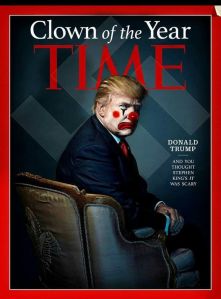
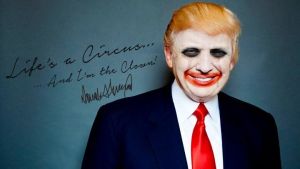





















 peej
peej Carissa
 bostonboomer
 dakinikat
 ecocatwoman
 mablue2
 Mama Lopez
 peggysue22
 quixote
 skydancingguestblogger
 Mona (aka Wonk the Vote)



 Sky Dancing
Recent Comments