How could I have slept until 10AM? I can’t believe it. I’ve been waking up really early ever since the time change, which was ages ago. This will be a quickie post, because I have to get ready to go somewhere this afternoon.
Before I get to the latest political news, I wanted to share this weird story I came across a few days ago in The Daily Mail. Please let me know if you think it’s for real or some kind of bizarre mass hypnosis.
A mysterious noise from the sky is continuing to baffle people all over the world – as well as giving those who hear it sleepless nights.
Sounding like a trumpet or a collective from a brass section of an orchestra, a selection of videos shot from the Canada to Ukraine, via the U.S., Germany and Belarus show strange goings on above us.
And the eerie sounds have been continuously heard at all different times and locations for almost a decade.
The first video posted on YouTube recording the unusual, unearthly sounds, was in 2008 when a user recorded the strange sounds in the sky from Homel, in Belarus.
That same year another anonymous user shared the ‘ear-deafening’ sounds that they insisted ‘were not a hoax,’ from a quiet neighbourhood believed to be in the U.S.
Kimberly Wookey from Terrace, British Columbia in Canada first captured the alien sound in June 2013, and since then she has managed to capture several recordings of the noise with her most recent being on May 7 this year.
There are several examples of recordings of the strange sounds at the Daily Mail link. I looked on YouTube, and dozens of these recordings have been posted. Of course the end-timers are going to think these are trumpets from heaven sounding the last days. Someone in New Jersey thinks it’s a UFO.
Is this going to be another crop-circles-type mystery/hoax? Anyway, I love strange stuff like this, so I thought I’d share and see what you think.
The State Department is sharing new details about the deadly fighting in Ramadi, Iraq, last Sunday, saying the city fell into ISIS hands after the militant group set off 30 suicide car bombs in the city center, 10 of which each were comparable in power to the Oklahoma City truck bomb of 1995.
The explosions took out “entire city blocks,” said a senior State Department official who spoke to reporters at the State Department Wednesday on condition that he not be named. The vehicle-borne improvised explosive devices, or VBIEDs, were able to gain access to the city center after an armored bulldozer plowed through T-wall barricades lining the city’s critical government buildings, the official said, adding that the same bulldozer was later used as a power VBIED, itself.
Soon after the bombs went off, the Iraqis deployed a reinforcing column into the city center, but they were forced to retreat after coming under heavy enemy fire, the official said. That retreat led to a larger exodus of Iraqi security forces and the civilian populations, leaving the streets looking “barren,” according to this official.
ABC also has video at the link. A little more:
The State Department and the Pentagon insist the fall of Ramadi does not closely resemble that of Mosul in 2014, when, after only a week of fighting, Islamic State forces were able to take over the entire city as ISF forces abandoned the posts, equipment and even their uniforms.
The State Department official argued that Ramadi has been fiercely contested for 18 months, as both sides controlled equal parts of the city. It wasn’t until the critical government center fell this weekend that ISIS was able to lay claim to the entire provincial capital.
But the official admitted that, in this case, the Iraqi forces did leave some U.S.-made weapons behind. The official suggested that if the enemy attempts to commandeer any of the bigger weapons, they would be killed in airstrikes.
The capture of Ramadi last weekend by Islamic State fighters is a significant setback for U.S. strategy in Iraq and shows that, nearly a year after the extremists overran Mosul, the United States still doesn’t have a viable plan for protecting the country’s Sunni areas.
The collapse of the Iraqi army in Ramadi, the capital of Anbar province, was in some ways a replay of the Mosul debacle in June 2014. The Shiite-dominated Iraqi military, though trained and retrained by the United States, appeared to lack the leadership or will to fight off a relatively small but ferocious onslaught of Sunni insurgents.
The Ramadi defeat exposed the sectarian tensions that underlie this war. Among the urgent questions: Are Shiite regular army troops ready to fight and die to protect Sunnis, or will their lines collapse in Sunni areas, as happened in Mosul and now Ramadi? If the tougher Iranian-backed Shiite militias are sent instead to do the job, will the Sunni population see them as a Shiite occupation army — setting the stage for a generation of sectarian revenge killing?
Gee, do you think maybe Bush and Cheney might have made a mistake when they attacked Iraq based on questionable intelligence?
Charles Pierce sees a replay of much tragic events in the more distant past:
It goes back to the “Bloody Shirt” campaigns in the decades after the Civil War. However, at least in those campaigns, the people waving the bloody shirt were doing so at people who actively had committed treason against the government of the United States and were attempting (with too much success) to win at the polls what they’d lost on the battlefield. More recent uses of the techniques sadly have been designed to cover the ass of bellicose mistakes, and worse, all over the world. Which means the “bloody shirt” begins to slide toward the Dolchstosslegendeof post-WWI Germany. And that never is a good thing.
In our current situation, we are seeing the beginnings of the kind of rhetoric that poisoned our politics for decades after the collapse of South Vietnam. In fact, there was a lot of that going around in 2006, when it became plain that the Iraq invasion had been sold on moonshine by a cabal of geopolitical fantasts and Dick Cheney….
The only way for the people who shook their moneymakers for the war in 2002 to justify their continued place in our politics is to use ISIL to replace the aluminum tubes and hope that enough people don’t notice what a grotesque fast shuffle this is. That will clear the way for the candidates on the Republican side — Rubio, Graham, Jeb (!), and, most recently, Chris Christie — who want to revive the old neocon hoo-rah while distancing themselves from its savage consequences. It looks very much like “Who lost Iraq?” may replace the disastrous decisions of the Avignon Presidency in this campaign, and that a good chunk of the Republican field will be perfectly happy to allow that to happen. For all the talk of the president’s fecklessness from the chickenhawk choir, what those candidates are about right now is the worst kind of cowardice.
Jesus. When will it ever end?
Talking Points Memo discusses a recent survey of voter attitudes.
Researchers from UC Berkeley and the University of Michigan dug up some surprising results after posing the question: How much do lawmakers really know about their voters’ political views?
“Pick an American state legislator at random, and chances are that he or she will have massive misperceptions about district views on big-ticket issues, typically missing the mark by 15 percentage points,” David Broockman and Christopher Skovron wrote in a study for the Scholarly Strategy Network originally published in 2013.
To investigate the question, the duo surveyed thousands of state legislators and compared their perceptions of voters to people’s actual views, derived from a large body of public opinion data.
Their conclusion: “legislators usually believe their constituents are more conservative than they actually are.”
On three issues — universal healthcare, same-sex marriage, and welfare — lawmakers’ assumptions about what their constituents believed were “15-20 percent more conservative, on average,” than the actual base of public support for such issues.
Most striking, both liberal and conservative lawmakers assume their voters are much further to the right than they actually are.
I’m not surprised, but it’s good to see intuition backed by empirical research.
In this today’s Washington Post, Dana Millbank belatedly latches onto a very old meme–The Republican field is a clown car–in order to promote one of the clowns.
Graham, a senator from South Carolina and one of umpteen Republicans running for president, can take a joke — which is why he appreciates the absurdity that is the GOP field. There are far too many candidates (so many that there are concerns they won’t all fit on a debate stage), and to gain attention they are juggling, tooting horns and blowing slide whistles like so many painted performers emerging from a clown car.
“I do bar mitzvahs, birthday parties, weddings, funerals — call me, I’ll come,” Graham told a crowd in New Hampshire last month. He said voters should ignore Hillary Clinton and “look to the 35 people running for president on the Republican side. And just shoot up among us until you get one of us out of the tree.”
But what if you are the joke? Just think, Graham could be the first obviously closeted gay man to win the nomination of the party that hates gays and wants them to be second class citizens.
Ted Cruz tried for his 15 minutes of fame by holding the first announcement. Marco Rubio drew thousands to Miami’s Freedom Tower. Mike Huckabee brought in aging crooner Tony Orlando but was easily eclipsed by Ben Carson, who had a musical extravaganza and a video putting the candidate in the company of Abraham Lincoln and Martin Luther King Jr.
Former New York governor George Pataki, perhaps the smallest of the GOP Lilliputians, announced on MSNBC’s “Morning Joe” last week that . . . he will make his announcement on May 28. Donald Trump announced over the weekend that he would make an announcement in June and that “the announcement is going to surprise a lot of people.”
It would probably surprise a lot of people if Trump said something that made sense.
Louisiana Gov. Bobby Jindal (R) on Monday formally launched a presidential exploratory committee, the clearest indication yet that he is gearing up for a White House run.
“For some time now, my wife Supriya and I have been thinking and praying about whether to run for the Presidency of our great nation,” Jindal said in a statement. “If I run, my candidacy will be based on the idea that the American people are ready to try a dramatically different direction. Not a course correction, but a dramatically different path.”
The Louisiana Republican has made frequent visits to key early voting states in recent months, testing a message centered on the need to “restore the American Dream,” which he says President Obama’s “weak leadership” has diminished. But despite his experience as governor and a compelling personal background as the American-born son of Indian immigrants, Jindal has struggled to make an impact in national polls of potential Republican candidates.
If Jindal does anything “dramatically different,” I’d be stunned. But he’ll just be peddling the usual Koch brothers gibberish to very small audiences.
What are the other clown car occupants up to?
Rick Sanatorum has been busy either grossly misinterpreting or blatantly lying about a book he supposedly read.
Last week, former Republican Sen. Rick Santorum called men who father children with multiple women “sexual predators.”
When making his argument to the socially-conservative Cornerstone organization in New Hampshire, Santorum cited statistics on marriage from Harvard professor Robert Putnam’s book, Our Kids.
“Another new statistic just came out in his book. A majority of children being born out of wedlock today in America are born in families where the father is in the home. But they’re not married,” said Santorum. “So they are born to cohabiting couples. So the majority of children born out of wedlock are born to cohabiting couples. And what does Putnam say about these? They stuck to them longitudinally, they never get married. Let me use that term, never, like one or two percent ever get married.
“And he compared it when he was growing up in the 1950s and when children were conceived out of wedlock, what happened in the 1950s,” added Santorum. “We all know what happened in the 1950s and here is the amazing thing, this is Putnam saying this, 80 plus percent of these marriages succeeded.
“And children were raised in stable homes. Now these fathers leave the home and not just father children with that particular women, they father a child with another women, and another and another. We have created predators, sexual predators particularly where, again, Putnam—low income America.”
Voters will spend the next year trying to figure out the different shades of the GOP presidential candidates.
Here’s what Putnam had to say about Santorum’s comments.
“I’m a progressive and I think the evidence is that first of all, there has been a collapse in the working family class family, black and white, and that’s bad for kids,” Putnam said responding to Santorum in a speech to promote his book last week.
Putnam said Santorum misinterpreted what he was saying and took advantage of “the fact I was trying to be open.”
“But there is a presidential candidate, who yesterday quoted me as saying therefore—he’s quoted me as saying all black men are sexual predators. I’m not going to say who it is but what I’m trying to say is, he’s a conservative and he took what I was saying and sort of so misinterpreted it that it’s nothing like—it’s just isn’t even in the universe of what I said. But that’s an example of how at least this one guy was in effect taking advantage of the fact that I was trying to be open. He says ‘isn’t it amazing that this liberal’, actually he said ‘this extreme leftist at Harvard acknowledges that blah, blah, blah.’”
We wouldn’t have a federal department to administer Pell Grants to students….
There wouldn’t be any oversight over states when they break civil rights laws….
There wouldn’t be a department to check on rampant inequality between low-income school districts and wealthy districts.
We would have inconsistent education data, as the quality of data would vary among the states….
There would be more gender discrimination within schools….
There would be no way to hold schools accountable for the funds they receive.
Of course for the GOP clowns, those are goals that should be wholeheartedly supported.
Jeb Bush stumbled out the block and has continued to stumble and stagger on his path to an as-yet unannounced presidential candidacy. Here’s the latest from Reuters, via Yahoo News: Jeb Bush sees no constitutional right to gay marriage.
(Reuters) – Republican Jeb Bush said in a weekend radio interview that he does not believe the Constitution grants a right to gay marriage, emphasizing his support for “traditional marriage.”
The Supreme Court is expected by the end of June to make a landmark ruling that could make gay marriage the law of the land or return the decision to individual states.
“It’s at the core of the Catholic faith and to imagine how we are going to succeed in our country unless we have committed family life, (a) committed child-centered family system, is hard to imagine,” Bush told the Christian Broadcasting Network show, “The Brody File, in an interview broadcast on Sunday.
“So, irrespective of the Supreme Court ruling because they are going to decide whatever they decide – I don’t know what they are going to do – we need to be stalwart supporters of traditional marriage,” said Bush, who converted to Catholicism 20 years ago….
Bush also said in the radio interview that Christian business owners should be able to refuse, “if it’s based on a religious belief,” to provide services to same-sex couples.
Jeb Bush has an odd conception of liberty. As governor of Florida, Bush strongly opposed same-sex marriage, preferring to force committed gay couples to live as legal strangers with no ability to formally adopt their own children. As his presidential campaign warms up, though, Bush has taken a selectively expansive view of liberty.According to Bush, anti-gay business owners should have a legal right to refuse service to same-sex couples seeking to celebrate their relationship.
Bush’s support for anti-gay “religious liberty” laws are no surprise—unless you happen to have believed that silly BuzzFeed report that he would be “2016’s gay-friendly Republican.” What is surprising is that Bush framed his endorsement of such laws in a way that beautifully illustrates exactly why the usual argument for such laws is so fatuous. Take a look at his comment:
A big country, a tolerant country, ought to be able to figure out the difference between discriminating against someone because of their sexual orientation and not forcing someone to participate in a wedding that they find goes against their moral beliefs. This should not be that complicated. Gosh, it is right now.
At bottom, Bush is arguing that the law should differentiate between identity and conduct. He believes the state may protect gays from discrimination because they’re gay (identity), but not because they’re celebrating a gay relationship (conduct). Unfortunately for Bush, this argument fails quite spectacularly in the wedding context, because homosexuality is an identity defined by its conduct. To be gay is to be attracted to, and maybe marry, someone of the same sex. There is no more fundamental way to discriminate against a gay person than to refuse to serve them based on the fact that they are marrying someone of the same sex.
Koch brothers favorite Scott Walker is having some not-so-funny (from his point of view) problems. He has been a target of corruption investigations for the past couple of years. Now this from The Milwaukee Journal-Sentinel: Records indicate Scott Walker was copied on letter promising loan to donor.
Madison — State records say that Gov. Scott Walker received a copy of a 2011 letter pledging a $500,000 taxpayer loan to a now-defunct Milwaukee construction company headed by a Walker donor, seemingly contradicting statements by the governor and his aides that he was not aware of the award.
A spokeswoman for Walker said that, in spite of the records, a copy of the letter from the Wisconsin Economic Development Corp. was never delivered to the governor’s office.
The Sept. 9, 2011, letter from Paul Jadin, WEDC’s chief executive officer at the time, was sent to William Minahan, owner of Building Committee Inc., a company that is now being sued by WEDC for defaulting on the unsecured loan without delivering the promised project and the jobs it was supposed to create.
Jadin said in his letter of intent that he was writing “on behalf of Governor Scott Walker” and noted “cc: Scott Walker, Governor” at the bottom.
Walker’s top cabinet appointee, then Administration Secretary Mike Huebsch, urged WEDC officials to provide the loan, and Walker’s then-chief of staff Keith Gilkes attended an initial meeting on it, according to records provided to the Milwaukee Journal Sentinel by the Walker administration.
“In closing Governor Walker and I are firmly committed to doing everything possible to expedite the processing and awarding of this incentive award,” Jadin wrote in the letter.
Gov. Scott Walker has cancelled a planned merger of two economic development agencies after a new audit said Walker’s job-creating entity failed to follow statutes or its own policies when making financial awards.
The audit released Friday also says the Wisconsin Economic Development Corp. failed to meet all statutory requirements related to program oversight and that staff “did not consistently comply with policies established by WEDC’s own governing board” which is chaired by Walker.
The audit comes as Walker had been calling for a merger of WEDC and WHEDA, the Wisconsin Housing and Economic Development Authority.
Within hours of the audit release, Walker issued a statement calling for that merger to be removed from the state budget along with a merger of two other state agencies.
“After hearing concerns from legislators, stakeholders, and the WHEDA and WEDC boards, we asked legislators to remove the proposed agency mergers from the state budget and we asked the bill authors to not move forward with the proposed separate legislation,” Walker said.
Walker also had proposed a merger of the Department of Financial Institutions and the Department of Safety and Professional Services into one regulatory agency. That merger is also cancelled, he said.
Wisconsin Democrats are gloating . . .
“While Scott Walker has completely abandoned Wisconsin to advance his presidential ambitions the continued incompetence and ineptitude at his Economic Disaster Corporation is bordering on criminal negligence at this point,” Democratic Party of Wisconsin Chair Mike Tate said in a statement.
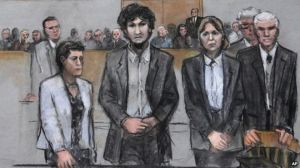
Yesterday the jury in the Boston Marathon bombing case sentenced Dzhokhar Tsarnaev to death for his role in the 2013 terrorist attack that killed three people and severely injured hundreds more.
BOSTON — Two years after the horrific bombing of this city’s famed marathon, a federal jury on Friday sentenced to death one of the young men responsible for the attack, turning away appeals for mercy from his attorneys and even some victims.
The jury of seven women and five men rendered its decision after deliberating for more than 14 hours. As the verdict was read, the bomber, 21-year-old Dzhokhar Tsarnaev, displayed no sign of emotion.
The outcome was a victory for prosecutors, who said the former college student worked in tandem with his older brother and carried out the attack in a “heinous, cruel and depraved manner.” Jurors rejected arguments that Tsarnaev had fallen under the sway of his brother, Tamerlan, and was remorseful over the suffering he caused.
Tsarnaev will be transferred to a federal prison, where he will remain until he is put to death by lethal injection. His attorneys did not comment after the verdict, but they are expected to appeal the sentence.
I was very disappointed in this decision. I strongly resent the Feds coming into Massachusetts, where we don’t have the death penalty and only 18% of citizens supported it for Tsarnaev, and forcing us to accept this barbaric practice against the public will. It also makes me feel sick at heart that the victims will now have to deal with years–probably decades–of appeals of the sentence. Tsarnaev should have been put away for life and left to fade into obscurity.
Tsarnaev showed no emotion as his death sentence was read.
An eerie quiet settled over the federal courthouse in Boston today as victims and relatives of those killed in the Boston Marathon bombing heard a jury ordered Dzhkohar Tsarnaev to be put to death.
Liz Norden, who wanted Tsarnaev to get the death penalty for detonating the bomb that left two of her sons amputees and their bodies forever burned and scarred, cried quietly when the jury decided that the 21-year-old should die for his crimes.
Bill and Denise Richard, who strongly advocated against capital punishment for Dzhokhar Tsarnaev, sat stone faced as the verdict was read, even though it was their 8-year-old son Martin who was the youngest victim killed in the horrific attack….
Boston bombing victim Martin Richard.
Inside Courtroom 9 the jurors, seven women and five men, stood as the verdict slip was read, as did Tsarnaev. One male juror removed his eyeglasses and wiped his eyes with a tissue and leaned his body into the rail of the jury box as if to prop himself up. Two female jurors, their cheeks flushed red, sipped from water bottles. Another woman had her arms crossed in front of her.
Tsarnaev never looked toward the jury box, not even when it became clear that those men and women decided he should be put to death. One of his defense attorneys, Miriam Conrad, covered her mouth with her hand. Once the verdict was read, police in court including Watertown Police Chief Ed Deveau and Boston Police Commissioner Bill Evans, who is personal friends with the Richard family, exchanged glances.
Throughout it all, the mood in the courtroom was heavy and subdued. The judge’s clerk Paul Lyness admonished those assembled inside before it began that “any outbursts” would be treated as contempt of court. There were none.
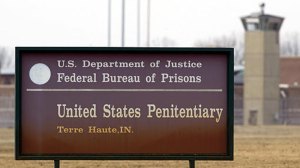
Tsarnaev will most like await his appeals at a Federal prison in Terre Haute, Indiana.
According to an official at the Federal Bureau of Prisons, Terre Haute is the only prison that has the special confinement unit that houses federal death row inmates. While the BOP could not go as far as to say that Terre Haute is the only prison where a federal inmate could be put to death, every federal execution has taken place at the facility since 2001.
Timothy McVeigh, Juan Raul Garza and Louis Jones Jr. were the last three inmates to be strapped to the table in the western Indiana prison and have a lethal drug cocktail run through their veins.
Tsarnaev may now face that same fate.
Larry A. Mackey, the attorney who tried both of the Oklahoma City bombing cases and delivered the prosecution’s closing argument in McVeigh’s, told The Indianapolis Star it’s “highly, highly unlikely” Tsarnaev will win his appeals.
“The judge has been very careful in protecting the defendant’s rights,” said Mackey, who has been following the case closely since it went to trial in March.
Sometime in the next 60 days, Mackey said a formal sentencing hearing will be held, and Tsarnaev will return to court with his council for the judge to impose the jury’s decision to put him to death.
Following the hearing, Tsarnaev will be transported to Terre Haute’s special confinement unit where he’ll wait out the exhaustion of his appeals, said Mackey.
The 1,400-inmate, all-male U.S. Penitentiary at Terre Haute, Ind., is the likely landing spot for the 21-year-old Tsarnaev, who would be housed at the prison’s “special confinement unit” with the other 50-plus inmates on federal death row.
Since the federal death penalty was reinstated in 1988, 74 federal convicts have been sentenced to die for their crimes, but just three have actually been executed and another 10 have been taken off death row, according to the Death Penalty Information Center. Sampson, who has since had his death sentenced overturned, first went to Terre Haute following his 2003 conviction.
All three who have been put to death — Oklahoma City bomber Timothy McVeigh, and Texans Juan Raul Garza and Louis Jones Jr. — were executed at Terre Haute’s in-house chamber.
Robert Nigh, who represented McVeigh, described the Indiana lock-up as a place where inmates “certainly had access to other inmates, commissary, reasonable opportunity for recreation, hygiene.”
The sight — and smells — of the prison’s “death house” still stick with him. “That was surreal,” he said. “When you walked into it, my recollection is (seeing) stark white walls, and it smelled and felt like a hospital or a clinic. It felt like a place where you go to get medical care. It had that feel to it. And it’s designed for the exact opposite.”
Though US Penitentiary Terre Haute has been open since 1940, Tsarnaev would likely be held in the Communications Management Units, a special unit opened in 2006 for terrorism-related offenses.
Because of the prison’s reputation for housing some of the country’s biggest security threats, some have called it “Guantanamo North.”
Mail must be screened, copied, and evaluated before being delivered to inmates. All conversations must be in English.
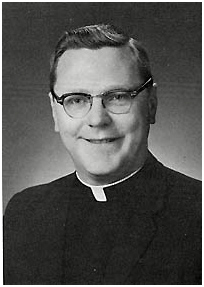
Sister Rita Clare Gerardot
According to Sister Rita Clare Gerardot, “a spiritual adviser to death-row inmates at Terre Haute,”
“They are in a small cell by themselves. All their meals are pushed through a slot. There is no recreation, but they can go out of their cells three times a week into cages,” Gerardot told The Tribune-Star, a newspaper in Terre Haute.
Inmates can speak to one another from the front of their cells, according to Gerardot, and have limited time to use a phone, e-mail, or a library.
“Truthfully, I don’t know how they keep their sanity. They have to be persons of great strength of will to get up every day, and know they have no choices,” Gerardot said.
Tsarnaev will likely wish he had died in the Watertown shootout like his older brother Tamerlan. And as the Boston Globe notes this morning “everything could have been different” for this young man.
Dzhokhar Tsarnaev could have been graduating from UMass Dartmouth this weekend. Martin Richard, Lingzi Lu, Krystle Campbell, and Sean Collier could still be alive.
But everything changed when Tsarnaev, along with his older brother, detonated a pair of bombs near the finish line of the 2013 Boston Marathon.
A 19-year-old sophomore at UMass Dartmouth at the time of the bombing, Tsarnaev was sentenced to death on Friday—while a commencement ceremony for the Class of 2015 was underway. He convicted in April on 17 capital charges and sentenced to death for six of them.
According to a UMass Dartmouth transcript introduced in court during the trial, Tsarnaev was an Engineering undergraduate with a mechanical engineering major during the Fall 2011 semester, his first in college. In the Spring 2013 semester, he was classified as a Arts & Sciences undergraduate with no declared major. The commencement ceremony for undergraduates in the College of Engineering was held Friday at the university’s Vietnam Veterans Peace Memorial Amphitheater. The ceremony for undergraduates in the College of Arts and Sciences is scheduled for Saturday.
Tsarnaev may never have graduated, even had he and his brother not chosen to perpetrate one of the worst terrorsist acts on U.S. soil. At the time of his arrest, he had a cumulative GPA of 1.094.
But perhaps he could have been among those students celebrating a new a beginning this weekend instead of facing a death sentence.
And everything could have been different.
Sister Catherine Ann Cesnik in 1970
We’ve been hearing a lot about corruption at the Baltimore Police Department lately. Yesterday I read a fascinating story about a cold case that shows the corruption there has a long history. If you’re interested in true crime stories and corruption in the Catholic Church, I highly recommend this piece by Laura Bassett at The Huffington Post,
It’s the story of the murder of a nun who had tried to help girls who were being sexually abused by at least one priest at a Baltimore Catholic school in the late 1960s. Here’s the introduction. I hope it grabs you and you decide to read the entire long article.
On a frigid day in November 1969, Father Joseph Maskell, the chaplain of Archbishop Keough High School in Baltimore, called a student into his office and suggested they go for a drive. When the final bell rang at 2:40 p.m., Jean Hargadon Wehner, a 16-year-old junior at the all-girls Catholic school, followed the priest to the parking lot and climbed into the passenger seat of his light blue Buick Roadmaster.
It was not unusual for Maskell to give students rides home or take them to doctor’s appointments during the school day. The burly, charismatic priest, then 30 years old, had been the chief spiritual and psychological counselor at Keough for two years and was well-known in the community. Annual tuition at Keough was just $200, which attracted working-class families in deeply Catholic southwest Baltimore who couldn’t afford to send their daughters to fancier private schools. Many Keough parents had attended Maskell’s Sunday masses. He’d baptized their babies, and they trusted him implicitly.
This time, though, Maskell didn’t bring Wehner home. He navigated his car past the Catholic hospital and industrial buildings that surrounded Keough’s campus and drove toward the outskirts of the city. Eventually, he stopped at a garbage dump, far from any homes or businesses. Maskell stepped out of the car, and the blonde, freckled teenager followed him across a vast expanse of dirt toward a dark green dumpster.
It was then that she saw the body crumpled on the ground.
Father A. Joseph Maskell
The week prior, Sister Cathy Cesnik, a popular young nun who taught English and drama at Keough, had vanished while on a Friday-night shopping trip. Students, parents and the local media buzzed about the 26-year-old’s disappearance. People from all over Baltimore County helped the police comb local parks and wooded areas for any sign of her.
Wehner immediately recognized the lifeless body as her teacher. “I knew it was her,” she recalled recently. “She wasn’t that far gone that you couldn’t tell it was her.”
Cesnik was still clad in her aqua-colored coat, and maggots were crawling on her face. Wehner tried to brush them off with her bare hands. “Help me get these off of her!” she cried, turning to Maskell in a panic. Instead, she says, the priest leaned down behind her and whispered in her ear: “You see what happens when you say bad things about people?”
Maskell, Wehner understood, was threatening her. She decided not to tell anyone. “He terrified me to the point that I would never open my mouth,” she recalled.
Now, decades later, a group of women who attended Keogh back in those days are working together with a journalist and a former Baltimore police office to find out who killed Sister Cathy.
The Amtrak crash in Philadelphia is the top story this morning, as more details come out. Yesterday we learned that the train was going 106 mph when it derailed on a curve. We now know the identity of the engineer, and he claims he doesn’t remember anything about what happened.
The engineer who was at the controls when an Amtrak train derailed in Philadelphia on Tuesday, killing seven people, does not remember what happened when the speeding train slammed into a curve and jumped off the tracks, his attorney said in an interview Wednesday.
“He remembers driving the train, he remembers going to that area generally, has absolutely no recollection of the incident or anything unusual,” attorney Robert Goggin, who said he represents Amtrak engineer Brandon Bostian, 32, of Forest Hills, Queens, told ABC’s “Nightline.”
“The next thing he recalls is being thrown around, coming to, finding his bag, getting his cell phone and dialing 911,” Goggin told the news program. Goggin said Bostian was injured in the crash and had 14 staples placed in his head and suffered a knee injury. “What he looked was exhausted,” Goggin told ABC.
Bostian was released from the hospital Wednesday. Philadelphia police said Wednesday night that he had been interviewed and had given a blood sample. Goggin said he also turned over his cell phone.
The train was traveling at 106 mph as it entered a curve where the speed limit is just 50 mph, Robert Sumwalt, a member of the National Transportation Safety Board, said Wednesday. The entire train — a locomotive and seven passenger cars — derailed immediately, he said. There were approximately 243 people on board.
Seven years ago, Congress gave Amtrak and freight and commuter railroads until the end of this year to install the technology, called positive train control, on their trains and tracks. But few, if any, railroads are expected to meet the deadline. Now lawmakers are proposing to give railroads another five to seven years to get the task done.
The technology uses GPS, wireless radio and computers to monitor train position. It can automatically brake to prevent derailments due to excessive speed, collisions with other trains, trains entering track where maintenance is being done or going the wrong way because of a switching mistake. It’s all aimed at preventing human error, which is responsible for about 40 percent of train accidents.
A preliminary review of the Amtrak train’s event data recorder, or “black box,” shows it was traveling at 106 mph in an 80 mph zone just before it entered a curve where the speed limit is 50 mph, National Transportation Safety Board member Robert Sumwalt said Wednesday. The train’s engineer applied maximum braking power seconds before the crash, but it was too late.
“We feel that had such a system been installed in this section of track, this accident would not have occurred,” Sumwalt told reporters….
Not counting Tuesday’s derailment, the NTSB has investigated 29 passenger and freight train accidents that officials say could have been prevented by positive train control since 2004. Sixty-eight people died and more than 1,100 were injured in those crashes. The board has been urging installation of the technology, or its precursors, for 45 years.
You read that right. The technology has been available in some form for 45 years and still hasn’t been installed! Why? You guessed it, I’m sure. It’s incredibly expensive, and Congress doesn’t want to use taxpayer money to help pay for it. In fact, a bill was has been approved by the Senate transportation committee that would give the railroads until 2020 to finish the installation.
At least three of the bill’s key sponsors — Sens. John Thune, R-S.D., Roy Blunt, R-Mo., and Claire McCaskill, D-Mo. — have each received more than $100,000 in contributions to their campaigns and political committees from the rail industry over the course of their careers in Congress, according to the political money-tracking website OpenSecrets.org.
The three senators said in statements or through their aides that reports by government agencies show railroads need more time. One of the hurdles is getting all the railroads to agree on systems that will work on everyone’s tracks despite differing policies and operations. Such interoperability is necessary because freight railroads frequently operate on each other’s tracks. Commuter railroads and Amtrak also often operate on freight rail tracks.
Amtrak has been one of the more aggressive railroads in installing the technology. Three years ago, Amtrak announced it expected to finish installing positive train control throughout its busy Northeast Corridor by the end of 2012. While positive train control is in operation in much of the corridor between New York and Boston and on some other Amtrak lines in the Midwest, other portions still lack the technology.
How did the Republican Congress respond to a terrible train crash that killed at least 7 people and injured 200? The House wants to cut funding for Amtrak.
House Republicans voted Wednesday to chop about a fifth of Amtrak’s budget, less than a day after a deadly train crash that Democrats pointed to as a prime example of the dangers of shortchanging the nation’s transportation needs.
They also rebuffed Democrats’ attempts to provide money for an advanced speed-control technology that federal investigators later said would have prevented the crash.
“Based on what we know right now, we feel that had such a system been installed in this section of track, this accident would not have occurred,” National Transportation Safety Board member Robert Sumwalt told reporters Wednesday evening. Sumwalt, who is leading the crash probe, spoke hours after the House Appropriations Committee voted down a Democratic amendment that would have offered $825 million for the technology known as positive train control.
The amendment was part of hours of action on a GOP-backed $55 billion transportation and housing bill that Democrats attacked as an example of badly misplaced priorities. New York Rep. Steve Israel directly tied the crash to Congress’ spending decisions, saying people expect lawmakers to look out for their safety — and “last night, we failed them.”
“It’s not just our trains,” Israel said during a contentious markup Wednesday, which occurred as the wreckage from the seven-fatality derailment in Philadelphia was dominating the news channels. “It is our bridges that are failing. It is our highways that are congested and riddled with potholes. It is our runways, our airports. … We are divesting from America.”
Republicans said the cuts are necessary to stay under the spending caps that President Barack Obama and Congress agreed to four years ago.
Imagine if Republicans didn’t block all efforts to improve the country’s infrastructure? Former PA Gov. Ed Rendell had a few choice words for the House Republicans.
Rendell told MSNBC’s Chris Hayes that the House Appropriations Committee debate over transportation funding was “pathetic.”
“Here, less than 12 hours after seven people died, these SOBs, and that’s all I can call them, these SOBs didn’t even have the decency to table the vote,” he said.
Hayes, who said he was playing devil’s advocate, pressed Rendell, asking why the accident should influence a vote on the budget.
Rendell said that Republicans’ “policy is terrible.”
“This country used to have the world’s best infrastructure,” he continued.
Rendell then recalled testifying about transportation funding in Congress while he was governor of Pennsylvania.
“Senator Shelby said, ‘Well governor, you’re asking us to subsidize Amtrak.’ I said, ‘Senator, there isn’t a rail system in the world that isn’t subsidized,'” Rendell said. “What are these guys smoking?”
We don’t know yet what caused Tuesday night’s train derailment in Philadelphia, which killed at least seven people and injured scores more. On Wednesday, the National Transportation Safety Board said that the train was travelling at more than a hundred miles an hour, on a sharp turn where the speed limit was just fifty miles an hour. But even if human error was responsible for what happened, the crash also highlights the fact that some stretches of the track that Amtrak uses are unsuitable for high-speed travel, and they are also not equipped with the modern technology necessary to enable automatic override systems, which can slow down speeding trains. (According to Reuters and the Times, the train that derailed did have an automatic safety system installed, but it didn’t work on the track where the derailment took place.)
One thing we do know for sure is that, for decades now, the United States has been allowing its public infrastructure to decay. In 2013, the American Society of Civil Engineers issued a report saying that it would take roughly $3.6 trillion worth of repairs and retrofitting merely to return the nation’s roads, railways, and airports to a safe and durable state. For example, about one in nine bridges in the U.S. were structurally deficient, according to the Federal Highway Administration.
And that’s just transportation infrastructure. Many of America’s schools, sewage systems, and parks could do with an upgrade, too. A couple of years ago, a survey by the World Economic Forum ranked the United States twenty-fifth globally in overall quality of infrastructure, behind such nations as Spain, Oman, and South Korea. That’s hardly surprising. In my neighborhood in Brooklyn, where townhouses are now selling for millions of dollars, the sewers, which were built more than a century ago, sometimes back up after a heavy rainstorm.
It’s no mystery why much of our public infrastructure is overloaded and crumbling. America is a growing country, and investment in infrastructure has failed to keep up with expanding needs. According to the Congressional Budget Office, in the nineteen-fifties and sixties we spent close to five per cent of G.D.P. on new transport and water projects, and on maintaining existing systems. European nations still spend about that much today, while China and other rapidly developing Asian countries spend close to twice as much. In the United States, however, spending on infrastructure is only about half of what it used to be, relative to G.D.P.
This situation is a direct product of politics. As entitlement spending has grown and pressure to cut the federal budget has increased, infrastructure spending has been tightened. The squeeze was relaxed for a few years as a result of President Obama’s stimulus program, but it’s now back in effect. Take the federal Highway Trust Fund, which historically has paid for about a third of public-transportation projects around the country. It is almost always operating in the red, largely because the gasoline tax that finances the fund hasn’t been raised since 1993. Over the next ten years, it is facing a financial shortfall of about a hundred and seventy billion dollars, according to the Congressional Budget Office, but Republicans in Congress are blocking efforts to raise more revenues.
I’m not sure why Cassidy threw in the part about “entitlement spending.” He’s a Brit. Does he know that Social Security is not part of the Federal budget? If the government spent money on infrastructure, it would create jobs and more people would be paying income taxes as well as paying into Social Security and Medicare. Increasing the cap on Social Security taxes so that wealthier people paid their fair share would help too.
But I digress. He’s right that we should be improving our infrastructure. Other countries manage to build and support fantastic high-speed trains.
We’re all feeling discouraged by what Republicans have done and are trying to do to our country. But we can’t allow them to achieve their destructive goals. Let’s make every effort to elect a Democratic president and Democratic Congress next year. Don’t let the bastards get you down!
So . . . what stories are you following today? Please share your thoughts and links on any topic in the comment thread and enjoy your Thursday.
Did you like this post? Please share it with your friends:
Still reeling from last month’s devastating earthquake, Nepal was hammered again Tuesday by a magnitude 7.3 temblor that caused dozens more deaths, unleashed fresh landslides and brought down unsteady buildings.
By late afternoon, Nepal’s Home Affairs Ministry said at least 42 people were killed and more than 1,117 injured in the largest aftershock yet recorded from the 7.8 quake on April 25. Officials warned that the toll could rise.
The epicenter was about 47 miles northeast of the capital, Katmandu, near the Chinese border, according to the U.S. Geological Survey. The April 25 quake, which killed more than 8,150 people, was centered in the mountains west of Katmandu.
The tremor struck just before 1 p.m. local time, sending residents of the capital scurrying into the open air for safety, and was followed by a series of smaller tremors that rattled nerves even further.
Within hours, new makeshift tents had begun popping up in parts of Katmandu as families that had survived the earlier quake and returned to their homes in recent days decided again they were safer sleeping outdoors.
The Hindu is publishing live updates from Reuters. They report multiple aftershocks. What a terrible tragedy! Obviously this is a developing story, and we’ll hear more throughout the day and in coming days.
Records obtained by The Baltimore Sun show that city police often disregard or are oblivious to injuries and illnesses among people they apprehend — in fact, such cases occur by the thousands.
From June 2012 through April 2015, correctional officers at the Baltimore City Detention Center have refused to admit nearly 2,600 detainees who were in police custody, according to state records obtained through a Maryland Public Information Act request.
In those records, intake officers in Central Booking noted a wide variety of injuries, including fractured bones, facial trauma and hypertension. Of the detainees denied entry, 123 had visible head injuries, the third most common medical problem cited by jail officials, records show.
The jail records redacted the names of detainees, but a Sun investigation found similar problems among Baltimore residents and others who have made allegations of police brutality.e
Salahudeen Abdul-Aziz, who was awarded $170,000 by a jury in 2011, testified that he was arrested and transported to the Western District after being beaten by police and left with a broken nose, facial fracture and other injuries. Hours later, he went to Central Booking and then to Bon Secours Hospital, according to court records.
Abdul-Aziz said last week that jailers at Central Booking “wouldn’t let me in the door as soon as they saw my face. … I thought I was gonna die that day. Freddie Gray wasn’t so lucky.”
Read the rest at the Baltimore Sun link.
The Washington Post, which initially published leaks favorable to the Baltimore PD, published an editorial in response the the Sun article: Too much black and blue in Baltimore.
TWO OR three times a day on average, suspects in the custody of the Baltimore police are turned away by the city jail because they are deemed too battered, beaten, bruised or otherwise injured or sick to be processed and admitted. The police are forced to head instead for a hospital emergency room to seek treatment for suspects suffering from head injuries, broken bones, hypertension and an array of other afflictions.
The frequency of such occurrences was detailed over the weekend by the Baltimore Sun, which obtained records from the city’s detention center under the Maryland Public Information Act. According to those records, the jail has turned away nearly 2,600 ailing detainees since June 2012 — about 2 percent of all bookings.
That staggering figure suggests the Baltimore police are heedless, at best, of the physical welfare of suspects in their custody. It also may help explain how Freddie Gray could have pleaded for medical care at least five times after he was arrested last month before the officers who detained him bothered to summon a paramedic — by which time it was too late….
The police understand — and after 2,600 reaffirmations in three years, they should be acutely aware — that they are obliged to seek medical attention for suspects who are sick or injured before the jail will admit them. Yet somehow that obligation doesn’t seem institutionally ingrained in cops on the beat….
The Justice Department’s civil rights investigation of the city police, announced last week by Attorney General Loretta E. Lynch, should take account of these injured detainees, including the causes and circumstances of their injuries and whether police are adequately trained and instructed in assessing them. And it should examine whether African American suspects are more frequently hurt and denied prompt medical care than other detainees.
Journalists are still reacting to Seymour Hersh’s poorly sourced accusations that the Obama administration conspired with Pakistan to stage a fake raid on Osama bin Laden’s compound and then lied about it. Here are two I found this morning:
When a journalist writes a tell-all story about a classified operation, and he suspects the story will catalyze anti-American anger, provide fuel for terrorist groups, and cause severe friction with foreign governments, the act of publication is morally fraught. When the story is based on obscenely thin sourcing and careens into conspiracy theories, the decision to publish becomes indefensible.
Seymour Hersh has had a long and distinguished history as one of America’s finest investigative journalists. In recent years, he has gone a bit kooky. In 2011, for instance, he suggested that Stanley McChrystal, the former top commander in Afghanistan, and the leadership of the US Joint Special Operations Forces were “all members of, or at least supporters of, Knights of Malta.” His latest story, in which he claims that the entire story of Bin Laden’s killing is an elaborate cover-up for a joint Pakistani-American operation, may be his kookiest.
As many have already pointed out, Hersh’s version offers a combination of the inconsistent and the inexplicable. Why, for instance, would the Pakistanis help plan an elaborate raid, complete with a recall of Bin Laden’s Pakistani guards—rather than just hand Bin Laden over directly—if they always intended to claim he’d been killed in a drone strike hundreds of miles away? Worse, the key contentions rely on the exclusive word of one unnamed source who was a) retired, and b) on Hersh’s own account, only “knowledgeable about the initial intelligence about bin Laden’s presence in Abbottabad.”
To be sure, there are scraps of Hersh’s hodgepodge narrative that may turn out to be true. That a CIA “walk-in” may have contributed to the intel leading to Bin Laden’s whereabouts, for instance, matches a tidbit that NBC has confirmed recently. And Hersh’s insistence that someone highly placed in the Pakistani intelligence services knew of Bin Laden’s presence has been pretty widely believed for a while. But leaping from these plausible and relatively minor details to the rest of the fantastic tale Hersh spins simply boggles the mind.
It’s unsurprising then that The New Yorker passed on the story (as it, along with the The Washington Post, have reportedly done with the last few of Hersh’s flights of fantasy.)
The London Review of Books, on the other hand, lacked the same degree of restraint. This is hardly surprising given the editorial leadership’s apparent lack of interest in fact-checking. As LRB senior editor Christian Lorentzen wrote in a 2012 piece suitably titled Short Cuts,” “the facts are the burden of the reporter…nobody at the paper fact-checks full time; that’s an American thing… I miss New York sometimes, but I don’t miss its schizophrenic obsession with facts, or the puritan hysteria that attends the discovery that a memoir should have been called a novel.” The LRB, it seems, takes pride in its sloppiness. Perhaps they have an editorial opening for Stephen Glass?
As a former fact-checker, I find the LRB’s approach part puzzling and part offensive. As a citizen who would like to form judgements and opinions on the basis of actual information, I’m horrified.
Hersh leads the reader into a Wonderland of his own, thinly sourced retelling of the raid on Bin Laden’s complex in Abbottabad, Pakistan. According to Hersh, who cites American sources, “bin Laden had been a prisoner of the [Pakistani Inter-Services Intelligence agency] at the Abbottabad compound since 2006” and his ISI captors eased the way for the American SEAL team to skip into Pakistan on their helicopters, kill the al Qaeda leader, and then skip out.
It’s a messy omelet of a piece that offers little of substance for readers or journalists who may want to verify its many claims. The Hersh piece can’t be refuted because there’s not enough solid material to refute. Like the government officials who spun the original flawed Abbottabad stories, he simply wants the reader to trust him.
Hersh’s piece quarrels with almost every aspect of the official story, asserting that much of it is cover designed to protect the Pakistanis who sold bin Laden out to the United States for military aid….
Hersh may very well be onto something—what did the Pakistanis know, when did they know it, and how much did they help? And that debate appears to be starting in earnest already, with NBC News quickly building off Hersh’s article. But Hersh’s potentially valid question on that subject is almost lost in the broad sweep of rolling back so many other stories and quibbling with effectively every known detail of one of the most thoroughly leaked secret operations in history.
By re-exploring the bin Laden operation, Hersh has thrust himself into the phenomenological territories that Cold War spymaster James Jesus Angleton called a “wilderness of mirrors.” In this clandestine world, truths are constructed, obliterated and bent to serve their masters. Adversaries who would deceive abound in this place, and without a reliable map, a compass, a sense of direction and maybe even a pedometer, even the most intrepid voyager (or journalist) can find himself lost. I’ll volunteer to join a search party for Hersh—somebody I’ve long admired—if only somebody can tell me precisely where he is.
Another harsh indictment. I expect “progressive” conspiracy theorists like Glenn Greenwald and Marcy Wheeler will attempt to keep this story alive, but it doesn’t seem to be getting much traction in either the mainstream media or the sane alternative media.
The Sky Dancing banner headline uses a snippet from a work by artist Tashi Mannox called 'Rainbow Study'. The work is described as a" study of typical Tibetan rainbow clouds, that feature in Thanka painting, temple decoration and silk brocades". dakinikat was immediately drawn to the image when trying to find stylized Tibetan Clouds to represent Sky Dancing. It is probably because Tashi's practice is similar to her own. His updated take on the clouds that fill the collection of traditional thankas is quite special.
You can find his work at his website by clicking on his logo below. He is also a calligraphy artist that uses important vajrayana syllables. We encourage you to visit his on line studio.































 peej
peej Carissa
 bostonboomer
 dakinikat
 ecocatwoman
 jjlo
jjlo mablue2
 Mama Lopez
 peggysue22
 quixote
 skydancingguestblogger
 Mona (aka Wonk the Vote)





Recent Comments