
Lazy Saturday Reads: South Carolina in the Spotlight
Posted: February 27, 2016 Filed under: morning reads, U.S. Politics 40 Comments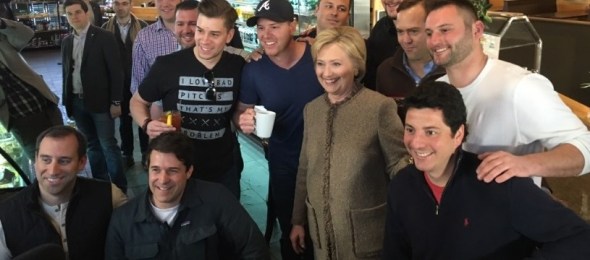
Hillary Clinton invited to bachelor party in SC
Good Morning!!
Today should be a big day for Hillary Clinton. She is expected to win the South Carolina Democratic primary by a large margin. According to Nate Silver’s FiveThirtyEight, she has “a greater than 99% chance of winning” the state’s “first in the South” contest.
I’m totally psyched for for this. I plan to be on the internet most of the day following developments in SC. We can use this post as a live blog until the thread gets too long. We will put up new threads if necessary. It should be a fun day for Hillary supporters. So enjoy yourselves, Sky Dancers!
The Washington Post: In South Carolina, will Clinton’s expected victory shift momentum? (I think the momentum shifted in Nevada, but the media needs to keep their narrative going.)
The Democratic presidential contest has moved to South Carolina, where voters began casting their ballots Saturday in a primary that serves as two starkly different milestones for Hillary Clinton and Bernie Sanders.
Clinton is looking to her expected victory here to prove her strong support among African American voters — and to cement her status as the presumptive front-runner heading toward Super Tuesday three days later, when six of 11 Democratic contests will take place in Southern states with large populations of black voters….
Clinton began a barnstorming tour of South Carolina on Tuesday. She and her husband, former president Bill Clinton, crisscrossed the state on separate itineraries, hitting a total of about a dozen events over three days, speaking to predominantly African American audiences of a few hundred in cities and small towns. Each drew on decades of experience with the powerful church- and civic-based black voting turnout machine.
You probably won’t be surprised to learn that this article is mostly dominated by Sanders ass-kissing. If you want to read that stuff, you can head over to the WaPo link.
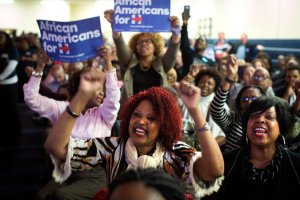
Supporters cheer Hillary at SC rally.
Post writer Anne Gearan reports from SC: What happens when Hillary Clinton crashes a bachelor party? She’s in the photos.
Joe Schreck and his 10 groomsmen were toasting Schreck ahead of his wedding with a round of Bloody Marys when Clinton and her entourage swooped into Saffron, a cafe and bar in Charleston, S.C.
They asked her for a photo — all 11 of them. When Clinton realized she was in the middle of a pre-wedding party, she exclaimed: “He’s getting married today! That’s pretty exciting.”
A day before the South Carolina primary, Hillary Clinton stumbled upon a pre-wedding party at Saffron Cafe and Bakery in Charleston, S.C. (Melina Mara/The Washington Post)
The campaign trail has taken Hillary Clinton through coffee shops and bakeries, diners and ice cream parlors, stands at state fairs where they fry things that shouldn’t be fried. And, Friday, it took her to a bachelor party.Joe Schreck and his 10 groomsmen were toasting Schreck ahead of his wedding with a round of Bloody Marys when Clinton and her entourage swooped into Saffron, a cafe and bar in Charleston, S.C.
They asked her for a photo — all 11 of them. When Clinton realized she was in the middle of a pre-wedding party, she exclaimed: “He’s getting married today! That’s pretty exciting.”
Clinton’s personal photographer asked the men to pose, arranging them to Clinton’s left and right. The photographer, Barb Kinney, playfully suggested that a few of them kneel around Clinton — just as they would do later around the bride. This happened.
“I love having men at my feet,” Clinton said, laughing, as Kinney and the men all took photos.
“This is exciting,” she said.
“This is cool,” one man agreed.
Shreck was asked what his future bride would think about all this, and he said “She’ll love it!”

Jackie DeBose, center right, with her friends at Clinton field office
The New York Times: For Black Women in South Carolina, It’s Clinton’s Turn.
COLUMBIA, S.C. — Jackie DeBose woke up early on Sunday, well before sunrise, grabbed her rhinestone-bedazzled Obama hat and her vintage “Hillary for President” button, loaded her suitcase in the trunk of her Lexus and headed to pick up three friends for a road trip to South Carolina.
The next day, still weary from an 11-hour drive, the four retirees from Ohio and Virginia walked into the old Kiki’s Chicken and Waffles restaurant that serves as the Clinton campaign’s field office here.
“It’s a very important state, and I didn’t want her to lose, so I said, ‘If we don’t do our part, who is going to do it?’ ” Mrs. DeBose said, holding a flip phone issued by the Clinton campaign in one hand and call list in the other.
The four, all black women in their late 60s or early 70s, counted themselves among Mrs. Clinton’s most ardent supporters eight years ago. But when Barack Obama emerged as a leading candidate during the 2008 primaries, Mrs. DeBose and her friends had to make an agonizing choice between supporting a candidate who could become the first female president, or the one who might become the first black one….
They ended up voting for Barack Obama, but this time they are determined to help put the first woman in the White House.

Voting booths in SC
Polls will be open from 7 a.m. to 7 p.m. EST and anyone still in line at 7 p.m. will still be allowed to vote, the state’s election commission says. South Carolina has 53 Democratic delegates up for grabs, with an additional six unpledged Superdelegates who are party officials who can commit to whomever they want.
South Carolina operates under an open primary system, which means people can participate in the primary even if they’re not registered Democrats. People who already voted in the GOP primary, however, cannot participate.
The primary comes a week after Clinton won Nevada’s Democratic caucuses 53 percent to 47 percent, where she performed well among black voters. More than three-quarters of black Democratic voters in Nevada caucused for Clinton, signaling she would also come out strong in South Carolina.
In 2008, 55 percent of South Carolina Democratic primary voters were black and then-Sen. Barack Obama wound up winning that primary. But this time around, polls show Clinton will almost certainly prevail. A CBS News Battleground Tracker Poll released earlier this month showed Clinton with a 19-percentage-point lead ahead of Sanders, 59 percent to 40 percent.
I wonder if Bernie Sanders will congratulate Hillary if she wins tonight? He failed to do that in Nevada.
After the SC primary the candidates will move on to Super Tuesday states, which will be voting in just a couple of days. Nate Silver has a useful article on what Bernie Sanders would have to do to catch up with Clinton in the all-important race for delegates.

Jane and Bernie Sanders with top surrogate and Obama hater Cornell West
Bernie Sanders Doesn’t Need Momentum — He Needs To Win These States.
The media narrative of the Democratic presidential race is that Bernie Sanders has lost momentum to Hillary Clinton. After nearly beating Clinton in Iowa and then crushing her in New Hampshire, Sanders had a setback on Saturday, the story goes, losing Nevada to Clinton by 5 percentage points. And this weekend, Sanders is about to lose South Carolina and lose it badly.
All of this is true insofar as it goes. But it doesn’t do nearly enough to account for the demographic differences between the states. Considering the state’s demographics, Sanders’s 5-point loss in Nevada was probablymore impressive than his photo-finish in Iowa. It was possibly even a more impressive result than his 22-point romp in New Hampshire. Meanwhile, a big loss in South Carolina would be relatively easy to forgive.
That doesn’t mean Sanders is in great shape, however. Based on the polling so far, Sanders is coming up short of where he needs to be in most Super Tuesday (March 1) states, along with major industrial states like Ohio andPennsylvania where he’ll need to run neck and neck with Clinton later on.
These conclusions come from a set of state-by-state targets we’ve calculated for Sanders and Clinton, which are based on some simple demographic factors in each state. As has been clear for a long while, Sanders performs better in whiter and more liberal states. But the abundance of new polling from Super Tuesday states, along with the Nevada result, gives us the data to establish more accurate benchmarks than the ones we set before. (See last week’s article “Bernie Sanders’s Path To The Nomination” for our previous estimates.) In particular, although Sanders might not have won the Hispanic vote in Nevada, he’s clearly made up ground among Hispanic voters. African-Americans, in contrast, remain overwhelmingly in Clinton’s camp. There may also be an urban/rural divide in the Democratic vote, with Sanders performing better in more rural areas.
Click on the link to check out the numbers.
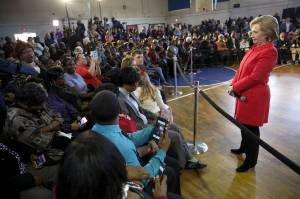
Hillary Clinton during a forum at Denmark-Olar Elementary School in Denmark, S.C., February 12, 2016. PHOTO: REUTERS
In Other News:
NYT: Inside the Republican Party’s Desperate Mission to Stop Donald Trump.
Politico: 8 times Chris Christie suggested Donald Trump shouldn’t be president.
NYT: Conservative Group to Air Ads Featuring Ex-Students Saying Trump University Deceived Them.
WSJ: IRS Commissioner Says Donald Trump Audit Scenario ‘Rare.’
Jonathan Bernstein at Bloomberg View: Trump’s Debate Was a Disaster. If Voters Notice.
Candace Kirby at Medium: Why Are the Media Afraid to Ask Bernie Sanders the Uncomfortable Questions?
Eric Boehlert at Media Matters: Speech Transcripts: The Press Finds A New Hoop That Only Clinton Must Jump Through.
Excellent summary of the case against Sanders at DailyKos: #RevealTheDeal; At Long Last Senator Sanders, Will You Reveal the Deal?
What stories are you following today?
Live Blog/Open Thread: GOP Debate #10
Posted: February 25, 2016 Filed under: U.S. Politics | Tags: CNN GOP Debate, live blog 125 Comments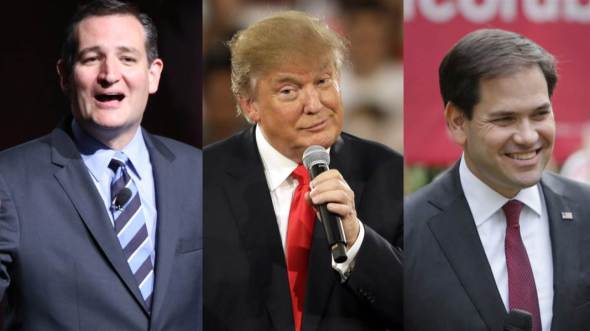
Yes, another Republican debate. How many more are there going to be? As I wrote this morning, I don’t know how long I’ll last, but I’ll try to watch at least some of it. Here’s a fresh thread to document the atrocities. You can also free free to post about anything else you desire. This is an open thread.
The debate will be on CNN, beginning at 8:30 ET. A preview from the Washington Post:
Front-runner Trump is the focus of tonight’s Republican debate in Houston.
The four Republican candidates trailing Donald Trump will face him in a debate in Houston on Thursday evening in what may be their last best chance to stop the billionaire businessman before he runs away with the GOP presidential nomination — and disrupts their party…
It is the last debate before the Super Tuesday primaries next week, when 11 states and 595 Republican delegates will be at stake. Trump has already won three of the first four GOP contests. If he can win most or all of those 11, he will have a commanding advantage in the Republican race.
The other candidates onstage will include two men who have the best shot at defeating Trump — but who for months have been more concerned with fighting each other in Trump’s shadow. On Thursday, Sens. Marco Rubio (Fla.) and Ted Cruz (Tex.) will have a chance to suspend their fight for second place and attack Trump directly.
In the days leading to the debate, Rubio already signaled that he may take on Trump more forcefully than he has in the past. In remarks at rallies and fundraisers, Rubio has criticized Trump’s calls for higher tariffs on China — saying it would lead to a trade war that would make everything more expensive — and for saying he would be “sort of a neutral guy” in mediations between Israel and Palestinians.
Rubio also reportedly told donors said that Trump was effectively fooling Republican voters. He reportedly called “Trump University,” a failed for-profit venture that had resulted in at least two fraud lawsuits against the mogul, a “scam.” One attendee said Rubio described a President Trump as the proverbial dog who caught the car, with no idea of what to do next.
The big news for Republicans today is that David Duke has endorsed Donald Trump.
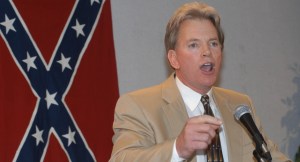
David Duke, a white nationalist and former Klu Klux Klan grand wizard, told his audience Wednesday that voting for anyone besides Donald Trump “is really treason to your heritage.”
“Voting for these people, voting against Donald Trump at this point, is really treason to your heritage,” Duke said on the David Duke Radio Program. BuzzFeed News first reported the comments.“I’m not saying I endorse everything about Trump. In fact, I haven’t formally endorsed him. But I do support his candidacy, and I support voting for him as a strategic action. I hope he does everything we hope he will do.”
The former Louisiana representative told listeners to start volunteering for Trump.
“And I am telling you that it is your job now to get active. Get off your duff. Get off your rear end that’s getting fatter and fatter for many of you everyday on your chairs. When this show’s over, go out, call the Republican Party, but call Donald Trump’s headquarters, volunteer,” he said. “They’re screaming for volunteers. Go in there, you’re gonna meet people who are going to have the same kind of mind-set that you have.”
Wow. Will they wear their white hoods when they go out to canvass?
Will the moderators ask about this story tonight?

CNN: Multiple deaths reported in Kansas workplace shooting.
Authorities are working reports of at least four different crime scenes in connection with a workplace shooting Thursday afternoon at Excel Industries in Hesston, Kansas, said Harvey County Sheriff T. Walton.
“There could be as many as three or four others (dead), and possibly up to 20 people that have been injured,” Walton said.
The suspected shooter, an employee at Excel, was killed.
The sheriff told reporters that authorities first received a report of a man having been shot while driving. Second, a person was reported shot in the leg. Third, a report came in about a shooting in the parking lot of Excel. Finally, an active shooter was reported inside the workplace, Walton said.
A couple more links:
CNN: Rubio prepares for contested convention.
NPR: Here Are 5 Texas-Sized Things To Watch When Republicans Debate Tonight.
See you in the comment thread!
Thursday Reads: Political Parasites
Posted: February 25, 2016 Filed under: Barack Obama, morning reads, Republican politics, U.S. Politics | Tags: 2016 Democratic nomination fight, 2016 Republican nomination race, Bernie Sanders, Donald Trump, Hillary Clinton, political parasites 40 Comments![gazette-du-bon-ton-by-gose-1914-art-deco-pochoir.-il-a-ete-prime-[2]-58970-p](https://skydancingblog.com/wp-content/uploads/2016/02/gazette-du-bon-ton-by-gose-1914-art-deco-pochoir-il-a-ete-prime-2-58970-p.jpg?w=590&h=786)
Good Morning!!
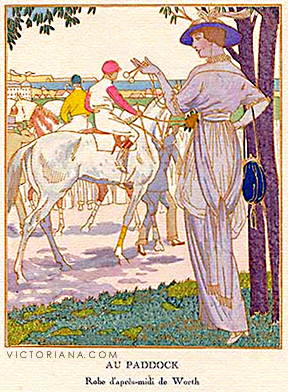
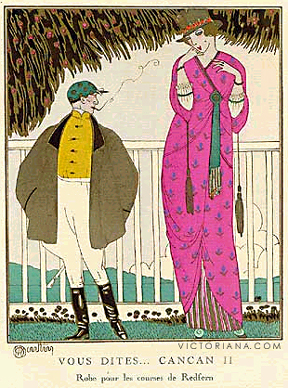
I’m illustrating this post with drawings from a vintage French fashion magazine. You can read about it at Abe Books: Gazette du Bon Ton: A Journal of Good Taste.
There’s another Republican debate tonight, this time in Houston. I honestly don’t think I can stand to watch it, but I’ll keep an eye on today’s thread and put up another one tonight if necessary. The debate is on CNN, so you shouldn’t have any trouble streaming it on-line if you want to watch from your computer or other device. The freak show starts at 8:30PM ET.

Reuters: Trump versus Rubio and Cruz at Houston Republican debate.
At a CNN-hosted debate at the University of Houston, [Donald] Trump’s rivals will have one of their last best chances to try to derail the blunt-spoken political outsider before the Super Tuesday contests.
Whether they can pull it off is an open question. On stage with Trump will be U.S. Senator Marco Rubio of Florida, U.S. Senator Ted Cruz of Texas, Ohio Governor John Kasich and retired neurosurgeon Ben Carson. None have been able to slow Trump’s momentum in previous debates.
“Trump is on cruise control,” said Eric Fehrnstrom, a former senior adviser to 2012 Republican nominee Mitt Romney. He said Trump should ignore his opponents and focus on the key planks in his platform – a border wall to keep out illegal immigrants, a stronger military, defeating Islamic State and fair trade.
“It’s getting late in the game for everyone else. People who are expecting a sudden shift in the direction of the race are deluding themselves. Trump is Goliath, and we’ve seen enough of the other candidates to know there are no Davids in this field,” Fehrnstrom said.
Rubio, 44, has an added incentive to change the makeup of the race. He is scrambling to attract the financial donors who supported one-time establishment favorite Jeb Bush, who dropped out of the race after his disappointing finish in South Carolina on Saturday….
Cruz, 45, enters the debate under pressure. He must do well in his home state of Texas on Super Tuesday. Recently, he has been accused by his rivals of using negative tactics, including one that led to the resignation of his spokesman, Rick Tyler.
Mitt Romney has inserted himself into the GOP race with a highly ironic attack on Donald Trump. The Boston Globe reports:
Mitt Romney, whose 2012 presidential campaign was bedeviled over his own reluctance to publicly release his personal income tax returns, aggressively criticized Donald Trump on Wednesday for not releasing his returns….
“I think we have good reason to believe that there’s a bombshell in Donald Trump’s taxes,” Romney said on Fox News. “I think there is something there. Either he is not anywhere near as wealthy as he says he is, or he hasn’t been paying the kind of taxes we would expect him to pay, or perhaps he hasn’t been giving money to the vets or the disabled like he has been telling us he’s been doing.”
Trump quickly responded, ridiculing Romney — whom he endorsed in 2012 in a gold-studded event at Trump Tower in Las Vegas — and calling him a loser.
“Mitt Romney, who totally blew an election that should have been won and whose tax returns made him look like a fool, is now playing tough guy,” Trump wrote on Twitter. Then, he added: “When Mitt Romney asked me for my endorsement last time around, he was so awkward and goofy that we all should have known he could not win!”
In 2012, Republican candidates like Newt Gingrich and Herman Cain were running vanity campaigns–basically running for president in order to sell books.
That also seemed to be the case this year with Ben Carson. He even suspended his campaign for time to go to book signings. But it turns out that Carson’s campaign may be even a worse “scam”–one that Carson himself may not have been aware of until recently. From The Atlantic:
Carson has taken in incredible amounts of money during the race. His campaign has raised more than any other Republican presidential rival, though they’ve raised more when super PACs are included. But he’s also spent more than any of them, so that despite his prolific fundraising, he has barely $4 million in cash on hand.
That’s because Team Carson has been plowing a huge portion of the money it raises back into fundraising, using costly direct-mail and telemarketing tactics. Pretty much every campaign uses those tools, but the extent to which Carson was using it raised eyebrows around politics. First, many of the companies being paid millions and millions of dollars are run by top campaign officials or their friends and relations, meaning those people are making a mint. Second, many of the contributions are coming from small-dollar donors. If that money is being given by well-meaning grassroots conservatives for a campaign that’s designed not to win but to produce revenue for venders, isn’t it just a grift?
These questions have been circling since last summer. If they’re right, the most sympathetic interpretation is that Carson, like his donors, was being taken for a ride by his aides, and wasn’t in on the scam. Carson seemed to suggest as much on Tuesday, implying he was taken advantage of by aides who treated the campaign as an ATM.
Read more at the link.

I’m wondering if Bernie Sanders will use his higher visibility from his campaign–which is basically a vanity campaign at this point–to get a big book contract and increase his speaking fees. It turns out Sanders has done something similar in the past. From The Center for Public Integrity:
Sanders turned a fiery, hourslong filibuster against extending the Bush tax cuts into a book. During the 2012 election cycle, his campaign gave a copy to donors of at least $50.
What he did was use campaign funds to purchase a lot of the books and then “gave” them to donors who contributed at least $50.00 That’s a pretty good profit on a paperback book that sold for around $10.00. I don’t think this is illegal, but it seems a little bit questionable for a man who calls himself a socialist (he isn’t one). Here’s a graphic posted on Twitter.
https://twitter.com/SDzzz/status/702771840859549696
From US News: Sanders’s 8.5 Hour Tax Cut Filibuster Gets a Book.
It wasn’t exactly Washington’s version of The King’s Speech, but independent Vermont Sen. Bernie Sanders’s 8½-hour blast in December at President Obama’s deal with Republicans to extend the Bush tax cuts is getting star treatment. Nation Books is printing it in its entirety in The Speech: A Historic Filibuster on Corporate Greed and the Decline of Our Middle Class. The senator’s passionate address, which runs over 255 pages in the book, was a rare oratorical tour de force: It attracted so many online viewers it crashed the Senate television website. Some say Obama was so miffed by the speech that he held an impromptu press conference with former President Clinton to divert attention.
So he used the speech to undermine President Obama twice–by giving the speech against the Obama’s wishes and using it to run Senate during the president’s reelection campaign. By the way, Sanders’ book “The Speech” was published by Nation Books, the publishing arm of The Nation magazine which has endorsed Sanders in the 2016 race.
![gazette-du-bon-ton-by-barbier-1912-art-deco-pochoir.-la-belle-aux-moineaux-[2]-59024-p](https://skydancingblog.com/wp-content/uploads/2016/02/gazette-du-bon-ton-by-barbier-1912-art-deco-pochoir-la-belle-aux-moineaux-2-59024-p.jpg?w=225&h=300)
At Politico, Jack Shafer has an interesting piece on Trump and Sanders as “political parasites.”
Think of the Republican Party as a host organism that has only now discovered the parasite it acquired eight months ago. The parasite, of course, is Donald J. Trump—no more a Republican than I—who has inserted himself into the party and appears to be on his way to winning its presidential nomination. Feeding on the Republican Party’s primary and caucus process, the Trump parasite has progressed from egg to larva and has now commandeered many of the Republican Party’s metabolic functions. But it’s been managed growth, as the smart-thinking parasite likes to keep its zombie host alive long enough to develop into the next stage and lay its own eggs and begin the process anew.
Trump isn’t the only political parasite on the hustings this season. Bernie Sanders, who never ran as a Democrat before this election, has likewise attempted to colonize the gastrointestinal tract of a major party in hopes that it will eventually deposit him at the White House. True to his parasitical nature, Sanders loves the idea of the party but has little interest in actually supporting it. He has raised only $1,000 for the Democratic Party’s fundraising alliance, while Hillary Clinton, who is many things but assuredly not a parasite, has raised $26.9 million.
Trump has similarly stiffed his party’s fundraising operations, canceling a scheduled appearance at a December Republican National Committee fundraising event, and Twitter-shouting his fury at the RNC for allegedly using his name in a fundraising solicitation without his consent. “Totally unauthorized, do not pay,” Trump tweeted. The true parasite never supports the host!
The life cycles of the Trump and Sanders parasites are nowhere near as gruesome as the life cycles of the Guinea worm and the parasitoid wasp, but they are as striking as anything we witness in nature. Viewing Trump and Sanders with an ideological microscope, it’s apparent that neither has much affinity for the parties they’ve joined. Their object and their genius has been to seize as much control as they can of the major parties from the various “establishments” and wage their outsider third-party candidacies from inside. Suitably camouflaged, neither Trump nor Sanders is seen by the average voter for political freeloaders they are.
I’m not a big fan of Schafer’s but that makes a lot of sense to me. Are both parties being hollowed out from within?
![gazette-du-bon-ton-by-fabius-1914-art-deco-pochoir.-sophonisbe-[2]-59150-p](https://skydancingblog.com/wp-content/uploads/2016/02/gazette-du-bon-ton-by-fabius-1914-art-deco-pochoir-sophonisbe-2-59150-p.jpg?w=225&h=300)
If the polls in upcoming primary and caucus states are anything close to correct, Sanders has no chance to get the Democratic nomination. But he is still out there trying to tear down the party and attacking Hillary Clinton–the likely nominee–in the most vicious ways he can think of. It is really starting to bother me a great deal, and I’m glad that the party seems to be coalescing around the potential first woman president.
I’ll end this post with another powerful essay from Sady Doyle: America loves women like Hillary Clinton–as long as they’re not asking for a promotion.
It’s hard to remember these days, but just a few years ago, everybody loved Hillary Rodham Clinton. When she stepped down as US secretary of state in January 2013 after four years in office, her approval rating stood at what the Wall Street Journal described as an “eye-popping”69%. That made her not only the most popular politician in the country,but the second-most popular secretary of state since 1948.
The 2012 “Texts from Hillary” meme, which featured a sunglasses-clad Clinton scrolling through her Blackberry aboard a military flight to Libya, had given rise to a flood of think pieces hailing her “badass cool.” The Washington Post wanted president Barack Obama to give vice president Joe Biden the boot and replace him with Clinton. Taking stock of Clinton’s approval ratings, Nate Silver noted in a 2012 piece for the New York Times that she currently held “remarkably high numbers for a politician in an era when many public officials are distrusted or disliked.”
![gazette-du-bon-ton-by-barbier-1914-deco-pochoir.-la-fontaine-de-coquillages-[2]-59020-p](https://skydancingblog.com/wp-content/uploads/2016/02/gazette-du-bon-ton-by-barbier-1914-deco-pochoir-la-fontaine-de-coquillages-2-59020-p.jpg?w=225&h=300)
How times have changed. “The FBI And 67 Percent of Americans Distrust Hillary Clinton,” booms a recent headline in the Huffington Post. Clinton’s favorability ratings currently hover around 40.8%. Bob Woodward complains that “there is something unrelaxed about the way she is communicating.” “Hillary’s personality repels me,” Walker Bragman writes in Salon.How can we reconcile the “unlikable” Democratic presidential candidate of today with the adored politician of recent history? It’s simple: Public opinion of Clinton has followed a fixed pattern throughout her career. Her public approval plummets whenever she applies for a new position. Then it soars when she gets the job. The wild difference between the way we talk about Clinton when she campaigns and the way we talk about her when she’s in office can’t be explained as ordinary political mud-slinging. Rather, the predictable swings of public opinion reveal Americans’ continued prejudice against women caught in the act of asking for power.
I hope you’ll go over to the Quartz link and read the whole thing.
So . . . what stories are you following today?
Tuesday Reads: Why Can’t We All Just Get Along?
Posted: February 23, 2016 Filed under: morning reads, U.S. Politics | Tags: Bernie Sanders, Donald Trump, Hillary Clinton, Marco Rubio, Nevada Caucuses, Ted Cruz 44 Comments
The World of Peace and Harmony, Prinsa S., Kathmandu, Nepal
Age:13
Good Morning!!
Today the Republicans will caucus in Nevada, and Donald Trump will probably win. The Republican leadership is slowly moving through the stages of grief as they come to terms with the likelihood that the clowniest clown in the clown car will be at the top of their ticket in November.
Politico: GOP wakes up to Trump nightmare.
Establishment Republicans are reckoning with something they thought would never happen: That it might soon be too late to stop Donald Trump.
With the controversial businessman the clear front-runner heading into Nevada and next week’s Super Tuesday contests, there’s an emerging consensus that the odds of dislodging him are growing longer by the day. Whispered fears that Trump could become the Republican nominee have given way to a din of resigned conventional wisdom – with top party officials and strategists openly wondering what the path to defeating him will be….

”World Peace from Nagasaki Megami Bridge: Tamako and Maria” by 47 children of 175 members of Club Kids Peace in Tomachi Elementary School.
Lately they are telling themselves that if only the weaker candidates would drop out maybe Rubio or Cruz could win.
The biggest hurdle confronting the mogul’s four rivals is that they continue to divide support among themselves. In each of the three contests that have been held so for, the anti-Trump field has fractured, making it impossible for any single contender to surpass him. A similar dynamic could play out again in Nevada, with Trump failing to win a majority of support but still earning more than his opponents.
While the field has winnowed somewhat in recent days, the compressed nature of this year’s Republican primary calendar means there is precious little time for the anti-Trump field to consolidate. Should Trump notch his third consecutive win on Tuesday, some foresee him steamrolling through Super Tuesday a week later, when a quarter of the party’s delegates are awarded. A batch of newly released polls show him with sizable leads in several of those states, including Massachusetts and Georgia.
“Either Ted Cruz or Marco Rubio would have a shot at the nomination, but I don’t see how they can stop Donald Trump while both of them are splitting votes,” said Al Cardenas, a former Florida Republican Party and American Conservative Union chairman who had supported Jeb Bush. “I don’t see either senator, both of whom have strong-willed backers, dropping out any time soon. Maybe after March 15, but will that be too late to stop Trump?”
It should be funny to see the GOP panicking, but I dread having to watch the repulsive spectacle that the presidential election would be if Trump were one of the candidates. The primary race has already been way beyond disgusting.

If We Could Just Join Hands
Washington Post: GOP candidates make intense 11th-hour arguments in Nevada.
Front-runner Donald Trump delivered a broadside against competitor Ted Cruz, telling thousands in Las Vegas he thinks the Texas senator “is sick.”
“There’s something wrong with this guy,” said Trump.
For his part, Cruz spent significant time Monday seeking to explain the ouster of his spokesman for tweeting a story that falsely accused White House hopeful Marco Rubio of insulting the Bible. And when the candidates weren’t directing their fire at each other, they used scattered appearances on the eve of Tuesday’s caucuses to assail Democratic candidate Hillary Clinton.
So raucous was this day that Trump stopped short at one point in his talk to bemoan the very delegate-selection he was in Nevada to tap.
“Forget the word caucus,” he told a crowd of some 5,000. “Just go out and vote, OK?” At another point, he said, “What the hell is caucus?”
This is the kind of idiocy that we have to look forward to this fall.

Prize-winning poster by middle school student Daniel Mendoza
Ted Cruz tried to steal some of Trump’s thunder by promising to deport 12 million undocumented immigrants. The Dallas Morning News:
Ted Cruz said…that he would use federal immigration officers to round up and deport all 12 million people in the country illegally — a markedly tougher stance that he has struck in the past.
“Yes, we should deport them,” Cruz told Fox host Bill O’Reilly. “That’s what ICE exists for. We have law enforcement that looks for people who are violating the laws, that apprehends them and deports them.”
The toughening stance comes after a disappointing, if narrow, third place finish in South Carolina on Saturday, with immigration hardliner Donald Trump strengthening his grip on the race.
“There’s no change here,” Cruz spokeswoman Catherine Frazier said late Monday by email. “Cruz has been very clear: people who are here illegally should be deported. That is the law today. Period. They broke the law, they face the consequence. ICE exists for that purpose and they should continue to do their job. And on top of that any law enforcement that encounters those here illegally should follow the law and deport them.”
Marco Rubio is still the GOP “establishment’s” chosen candidate, but it’s difficult to see how he has much chance against Trump.

Here’s Paul Waldman at The Week: Donald Trump is about to do terrible things to Marco Rubio.
As bullies go, Donald Trump is unusually skilled.
When Trump decides to go after you, he considers carefully both your weak points and the audience for his attack. So when he decided to pummel Jeb Bush — apparently for his own amusement, as much as out of any real political concerns — he hit upon the idea that Bush was “low energy,” something Bush had a hard time countering without sounding like a whiny grade-schooler saying, “Am not!” More than anything else it was a dominance display, a way of showing voters he could push Jeb around and there was nothing Jeb could do about it. With a primary electorate primed by years of watching their candidates fetishize manliness and aggression, the attack touched a nerve.
And now with the Republican race effectively narrowed to three candidates, the one Trump hasn’t bothered to go after too often — Marco Rubio — must prepare for the mockery and rumor-mongering that will surely be coming his way from the frontrunner. Whether he can withstand it could go a long way toward determining how this race turns out.
Until now, Trump has been relatively soft on Rubio. But with the increasing possibility that Rubio could be the greatest threat to Trump winning the nomination, he’s almost certain to go after him. If the past is any guide, Trump will throw a bunch of different attacks Rubio’s way until he happens upon one that seems to resonate; then he’ll stick with it as long as it works. Trump is already dabbling in Rubio birtherism (though he doesn’t seem quite committed to it), but eventually he’ll find a line of personal criticism with just the right note of cruelty and derision….
Rubio may have avoided Trump’s wrath up until now, but that won’t last. The only question is what brand of contempt Trump will heap on him. It might be some kind of attack based on Rubio’s ethnicity, or it might be the same kind of you’re-a-girly-man insults he used on Bush. That could be effective, since Rubio does look like he didn’t graduate high school all that long ago. He could go after Rubio’s occasionally shaky finances, which Trump surely looks on with utter contempt, since as far as he’s concerned, not being rich makes you a loser.
To be honest, the insanity is really getting to me today. I can barely stand to read about these clowns anymore, much less actually watch them spew their hateful nonsense on TV. That’s why I’ve illustrated this post with art by children and adults about world peace.

Our world our future, Tongbram Mahesh Singh
A couple more links on Nevada:
Time: What to Watch at the Nevada Caucuses.
LA Times: Four big questions await answers Tuesday in Nevada’s Republican caucuses.
On the Democratic side, Senator Bernie Sanders is starting to look really desperate. Yesterday, instead of campaigning in South Carolina, where the primary is this Saturday, he came to Boston and then held a rally at another university–U. Mass Amherst. The appearance in Boston was billed as a “press conference,” but Sanders didn’t take questions. He just gave a variation of his stump speech with some more mean-spirited than usual attacks on Hillary Clinton thrown in. NBC News reports:
BOSTON—Just two days after losing to former Secretary of State Hillary Clinton in the Nevada caucuses, Senator Bernie Sanders launched a broadside against his rival, aggressively emphasizing differences between himself and Clinton on issues of campaign finance and trade policy.
“What I intend to do over the next number of weeks is kind of contrast my record to Secretary Clinton’s” Sanders began as he addressed the press at Boston’s International Association of Ironworkers, Local 7.
Keeping true to his word, the Vermont senator — who boasts of having never run a negative campaign — dove into a litany of contrast points he sees between himself and Clinton, launching some of the most direct swipes Sanders has taken at his competitor during this campaign season.
“I am delighted that Secretary Clinton month after month seems to be adopting more and more of the positions that we have advocated, that’s good,” he said.
“And in fact, she is beginning to use a lot of the language and phraseology that we have used,” Sanders added, joking that he saw a TV ad and thought it was him speaking despite Clinton’s photo being pictured in the spot.
Sanders hit Clinton hardest on her use of a Super PAC— the pro-Clinton Priorities USA – and used the group to tie her to Wall Street and big donor influences.
Nothing new there–just the same tired old smears and innuendo.

The headline in The Boston Globe this morning is kind of pathetic if you know anything about where most of the delegates are going to be won.
Bernie Sanders’ path to the nomination runs squarely through Massachusetts.
The Democratic primary could be effectively decided within the next two weeks, if Hillary Clinton’s campaign gets the outcome they’re looking for. With more than 1,000 delegates up for grabs, early March will be do-or-die for Bernie Sanders’ campaign….
“On Tuesday, March 1, we’re going to make history here in Massachusetts,” Sanders told a crowd Monday at UMass Amherst. “This great state is going to lead us forward to a political revolution.”
If Sanders’ political revolution is going anywhere on Super Tuesday, it will have to be in states like Massachusetts, where he has a demographic advantage [meaning lots of white liberals]….
As of Monday night, Clinton leads Sanders in pledged delegates 52 to 51, after votes were cast in Iowa, New Hampshire, and Nevada. Clinton is expected to trounce in South Carolina, where she has the strong support of black voters. Polls also show strong leads for the former secretary of state in Alabama, Arkansas, Georgia, Texas, and Virginia—all of which vote March 1.
But even if Sanders wins in states with lots of white people–like Massachusetts, Wisconsin, Minnesota, and Colorado–there no way he will win enough delegates to compete with Clinton. I just don’t see a path to the nomination for him when he’s polling so badly with people of color.’

Poster by Lianwei H. Chengdu, Sichuan, China age 17
I actually think it’s time for Clinton supporters to begin showing empathy and compassion for Sanders supporters–especially the young ones who really don’t understand how politics works. They are going to have broken hearts soon, and we need to help bind their wounds and make them feel welcome in the party. I don’t think we should start telling Bernie to quit–let him go on as long as he wants and let his followers vote for him.
More stories to check out:
Pew Research Center: Majority of Public Wants Senate to Act on Obama’s Court Nominee.
New York Times: Seas are Rising at Fastest Rate in Last 28 Centuries.
Washington Post: ‘Slaps on the wrist’ for white men who watched friend throw black man onto train tracks.
Politico: Spike Lee backs Sanders in radio ad.
Politico: Ben Carson: Obama was ‘raised white.’
Gawker: Hot Mic Captures Trump Chatting With Morning Joe Hosts: “You Had Me Almost As a Legendary Figure.”
Media Matters: 8 Things Trump And Morning Joe Hosts Discussed When Cameras Were Off.
Digby: When is MSNBC going to do something about this?
Mass Politics Profs: Warren Won’t Endorse Sanders.
AP: Gun maker seeks dismissal of lawsuit over Newtown shooting. (Thanks to the bill Sanders voted for.)
Politico: Bernie’s Spring Break Blues. “When Bernie Sanders will need college students the most, they’ll be watching Netflix and partying.”
So . . . what stories are you following today?
Sunday Morning Open Thread
Posted: February 21, 2016 Filed under: just because, U.S. Politics 15 Comments
Good Morning!!
Here a very quick open thread to use until JJ puts up one of her brilliant Sunday posts. I’m still fired up about Hillary’s great win last night. I don’t care what the corporate media says, or what Bernie Sanders says, or what Tad Devine and Jeff Weaver say. I believe in Hillary Clinton.
Hillary has been tested and her strength has been honed through years of dealing with the worst the right wing noise machine could spew at her. She will not let us down. She is going to be the first woman President of the United States, and she will do the job well.
I can’t wait to vote for Hillary on March 1!!
Here are a few headlines to check out this morning.
Washington Post: Clinton defeats Sanders in Nevada; black voter support appears decisive.
New York Times: Hillary Clinton Beats Bernie Sanders in Nevada Caucuses.
Huffington Post: Civil Rights Legend Says Sanders Supporters Yelled ‘English Only’ At Her.
Vox: Nevada caucus results 2016: a clear win for Hillary Clinton.
Jamie Bouie: Hillary Clinton’s Path Is Clear. Barring a catastrophe, her nomination is inevitable.
Huffington Post: Exclusive: Mitt Romney To Endorse Marco Rubio. (That will be his death warrant.)
CNN: Trump predicts he’ll face Clinton, break turnout records.
Politico: GOP elders want poorly performing candidates to quit
What are you hearing and reading?

 peej
peej Carissa
 bostonboomer
 dakinikat
 ecocatwoman
 jjlo
jjlo mablue2
 Mama Lopez
 peggysue22
 quixote
 skydancingguestblogger
 Mona (aka Wonk the Vote)





Recent Comments