Posted: July 1, 2017 | Author: bostonboomer | Filed under: morning reads, U.S. Politics |
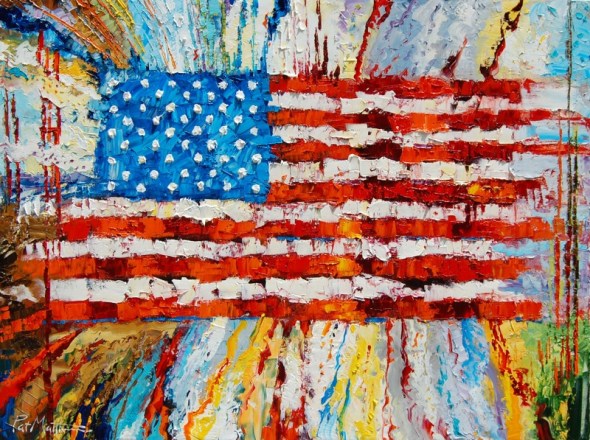
Fourth of July by Pat Mathews
Good Afternoon!!
It has taken me a long time to get started this morning, because there is a massive amount of news–despite the fact that we are entering a longer-than-usual long weekend.
The fallout from the feud between Trump and NBC’s Morning Joe co-hosts is still coming. But before I get to that, here’s the latest scoop from Benjamin Wittes’s Lawfare blog. This is a follow-up to the Wall Street Journal’s stories about a Trump supporter who attempted to work with Russian hackers to release personal email that Hillary Clinton had deleted from her private server. (Sadly, I can’t read the full articles because of the WSJ paywall.)
The Time I Got Recruited to Collude with the Russians, by Matt Tait
I read the Wall Street Journal’s article yesterday on attempts by a GOP operative to recover missing Hillary Clinton emails with more than usual interest. I was involved in the events that reporter Shane Harris described, and I was an unnamed source for the initial story. What’s more, I was named in, and provided the documents to Harris that formed the basis of, this evening’s follow-up story, which reported that “A longtime Republican activist who led an operation hoping to obtain Hillary Clinton emails from hackers listed senior members of the Trump campaign, including some who now serve as top aides in the White House, in a recruitment document for his effort”:
Officials identified in the document include Steve Bannon, now chief strategist for President Donald Trump; Kellyanne Conway, former campaign manager and now White House counselor; Sam Clovis, a policy adviser to the Trump campaign and now a senior adviser at the Agriculture Department; and retired Lt. Gen. Mike Flynn, who was a campaign adviser and briefly was national security adviser in the Trump administration.
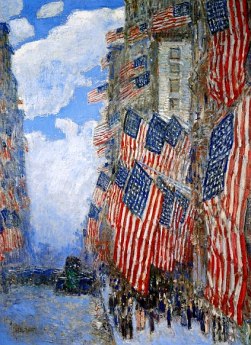
The Fourth of July 1916, by Childe Hassam
I’m writing this piece in the spirit of Benjamin Wittes’s account of his interactions with James Comey immediately following the New York Times story for which he acted as a source. The goal is to provide a fuller accounting of experiences which were thoroughly bizarre and which I did not fully understand until I read the Journal’s account of the episode yesterday. Indeed, I still do not fully understand the events I am going to describe, both what they reflected then or what they mean in retrospect. But I can lay out what happened, facts from which readers and investigators can draw their own conclusions.
You’ll have to go to Lawfare to read the whole thing, but here’s another excerpt:
My role in these events began last spring, when I spent a great deal of time studying the series of Freedom of Information disclosures by the State Department of Hillary Clinton’s emails, and posting the parts I found most interesting—especially those relevant to computer security—on my public Twitter account. I was doing this not because I am some particular foe of Clinton’s—I’m not—but because like everyone else, I assumed she was likely to become the next President of the United States, and I believed her emails might provide some insight into key cybersecurity and national security issues once she was elected in November.
A while later, on June 14, the Washington Post reported on a hack of the DNC ostensibly by Russian intelligence. When material from this hack began appearing online, courtesy of the “Guccifer 2” online persona, I turned my attention to looking at these stolen documents. This time, my purpose was to try and understand who broke into the DNC, and why.
A few weeks later, right around the time the DNC emails were dumped by Wikileaks—and curiously, around the same time Trump called for the Russians to get Hillary Clinton’s missing emails—I was contacted out the blue by a man named Peter Smith, who had seen my work going through these emails. Smith implied that he was a well-connected Republican political operative.
Tait says that he tried to warn Smith that he might be helping the Russian government interfere with the U.S. election, but Smith didn’t seem to care. I doubt the Trump crime family cared either. It turns out that Smith, who is now deceased, was heavily involved in GOP ratfucking operations for decades, including the efforts to bring down Bill Clinton. The author of this article is on Twitter as @pwnallthethings. Now go read the rest.
On the Morning Joe front, you’ve probably heard by now that Jared Kushner is the one who transmitted Trump’s threat about a negative story in the Wall Street Journal to Joe Scarborough. Gabe Sherman wrote about it yesterday and New York Magazine: What Really Happened Between Donald Trump, the Hosts of Morning Joe, and the National Enquirer.

NYC in Fourth of July Independence Day, by Ylli Haruni
This morning in a Washington Post op-ed, Morning Joe co-hosts Joe Scarborough and Mika Brzezinski disclosed that White House officials offered to spike an Enquirer story about their romance if the pair apologized to Trump for the show’s critical coverage. In recent months, Scarborough and Brzezinski have questioned Trump’s mental state and fitness for office. They elaborated on the op-ed on MSNBC this morning. Morning Joe regular Donny Deutsch said it was “blackmail” for Trump to use a hit-piece in the Enquirer to extract an apology from media critics. Trump then tweeted a quasi-confirmation of the behind-the-scenes conversations, saying that Scarborough called to enlist his help to kill the story. Scarborough called Trump’s version a “lie,” tweeting that he never spoke to the president.
According to three sources familiar with the private conversations, what happened was this: After the inauguration, Morning Joe’s coverage of Trump turned sharply negative. “This presidency is fake and failed,” Brzezinski said on March 6, for example. Around this time, Scarborough and Brzezinski found out the Enquirer was preparing a story about their affair. While Scarborough and Brzezinski’s relationship had been gossiped about in media circles for some time, it was not yet public, and the tabloid was going to report that they had left their spouses to be together.
In mid-April, Scarborough texted with Trump son-in-law Jared Kushner about the pending Enquirer story. Kushner told Scarborough that he would need to personally apologize to Trump in exchange for getting Enquirerowner David Pecker to stop the story. (A spokesperson for Kushner declined to comment.) Scarborough says he refused, and the Enquirer published the story in print on June 5, headlined “Morning Joe Sleazy Cheating Scandal!”

Fireworks painting, by Michael Creese
The Morning Joe co-hosts decided to talk about the episode a day after Trump inaccurately tweeted that Brzezinski attended a New Year’s Eve party at Mar-a-Lago “bleeding badly from a face-lift.” (A photo from that evening backs up Scarborough and Brzezinski’s denial of this.) While the Enquirer denies that Trump encouraged Pecker to investigate the MSNBC hosts, Trump himself has pushed the story publicly. Last August, he tweeted, “Some day, when things calm down, I’ll tell the real story of@JoeNBC and his very insecure long-time girlfriend, @morningmika. Two clowns!”
And get this, Kushner is also tight with the National Enquirer and he once tried to buy the supermarket tabloid!
Three years ago, Kushner and his brother-in-law, Joe Meyer, tried with Enquirer publisher David Pecker to buy the tabloid’s owner, American Media Inc., people familiar with that bid said. The deal ultimately fell through because of weak advertising revenue at the time, said the people, who asked not to be identified because the matter was private.
During last year’s campaign, the Enquirer, more typically associated with stories on badly behaving celebrities and reports of extraterrestrials, endorsed Trump and headlined alleged scandals in attacks on his opponents. Trump’s praise for the Enquirer — saying at one point that it deserved journalism’s Pulitzer Prize — was frequent and he welcomed Pecker’s support.
Can anyone doubt that Trump either planted and/or applauded those Enquirer stories during the campaign?
This morning Trump was apparently still obsessing about Joe and Mika and he posted another tweet.
The Guardian: ‘Dumb as a rock Mika’: Donald Trump back on attack against Morning Joe hosts.

Fourth of July 1819 Philadelphia, by John Lewis Krimmel
Donald Trump aimed a series of tweets at familiar targets on Saturday, complaining about the media and so-called voter fraud but saving his most direct fire for MSNBC hosts Mika Brzezinski and Joe Scarborough, the subjects of a fierce controversy over online bullying, sexism and accusations of White House blackmail.
The president sent his tweets from his golf club in Bedminster, New Jersey, where he was spending the Fourth of July holiday. He began with best wishes to Canada on its national holiday but ended – at least for the time being – with another attack on the hosts of Morning Joe.
“Crazy Joe Scarborough and dumb as a rock Mika are not bad people, but their low rated show is dominated by their NBC bosses,” Trump wrote. “Too bad!”
Jonathan Chait pulls together the latest Trump Russia news in two pieces at New York Magazine. Excerpts:
From Yesterday, Stop Assuming Trump Is Innocent of Russian Collusion.
One of the oddities of the investigation into Donald Trump’s relations with Russia is the degree to which he has largely enjoyed a presumption of innocence in the court of public opinion. David Brooks, who has hardly taken a sympathetic line on the administration, wrote recently, “it is striking how little evidence there is that any underlying crime occurred — that there was any actual collusion between the Donald Trump campaign and the Russians.” Mike Allen observed, “if Trump had kept Comey and stopped obsessing about his investigation, his legal troubles might have blown over: No evidence of collusion has emerged.”

The Boston Tea Party
That line of defense is likely to disappear now that The Wall Street Journalhas reported that Peter Smith, a Republican opposition researcher who said he was working for Michael Flynn, colluded with Russian hackers to try to obtain stolen emails from Hillary Clinton. The Journal reports that Smith referred to conversations with Flynn in emails with associates, and that U.S. intelligence has evidence of “Russian hackers discussing how to obtain emails from Mrs. Clinton’s server and then transmit them to Mr. Flynn via an intermediary.” The Trump defense does not inspire a lot of confidence. “A Trump campaign official said that Mr. Smith didn’t work for the campaign,” reports the Journal, “and that if Mr. Flynn coordinated with him in any way, it would have been in his capacity as a private individual.” Obtaining hacked information from Russia for the campaign as a campaign staffer versus doing it as a private individual is a distinction without much difference.
Of course, the notion that there was no evidence of collusion before the Journal report has always been based on a tight definition of what constitutes evidence. It requires assuming that Trump’s on-camera request for Russia to hack Clinton’s emails during the campaign was a joke and that his confidante Roger Stone obtained advance knowledge of the timing of the WikiLeaks publication without any contact from Russia.
And this morning, a summary of what we now know from the WSJ and the Lawfare article I quoted from a the beginning of this post: Now We Have a Roadmap to the Trump Campaign’s Collusion with Russia.
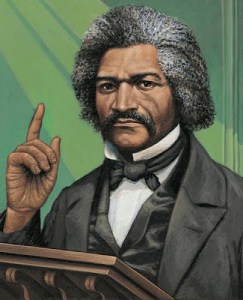
Frederick Douglass Speaking
I’ll end with a thoughtful piece from the New Yorker by David Remnick: American Dignity on the Fourth of July. “Reading Frederick Douglass’s Independence Day address from 1852 may ease the despair caused by listening to the President.”
More than three-quarters of a century after the delegates of the Second Continental Congress voted to quit the Kingdom of Great Britain and declared that “all men are created equal,” Frederick Douglass stepped up to the lectern at Corinthian Hall, in Rochester, New York, and, in an Independence Day address to the Ladies of the Rochester Anti-Slavery Sewing Society, made manifest the darkest ironies embedded in American history and in the national self-regard.
“What, to the American slave, is your 4th of July?” Douglass asked:
I answer; a day that reveals to him, more than all other days in the year, the gross injustice and cruelty to which he is the constant victim. To him, your celebration is a sham; your boasted liberty, an unholy license; your national greatness, swelling vanity; your sounds of rejoicing are empty and heartless; your denunciations of tyrants, brass fronted impudence; your shouts of liberty and equality, hollow mockery; your prayers and hymns, your sermons and thanksgivings, with all your religious parade, and solemnity, are, to him, mere bombast, fraud, deception, impiety, and hypocrisy—a thin veil to cover up crimes which would disgrace a nation of savages. There is not a nation on the earth guilty of practices, more shocking and bloody, than are the people of these United States, at this very hour.
The dissection of American reality, in all its complexity, is essential to political progress, and yet it rarely goes unpunished. One reason that the Republican right and its attendant media loathed Barack Obama is that his public rhetoric, while far more buoyant with post-civil-rights-era uplift than Douglass’s, was also an affront to reactionary pieties. Even as Obama tried to win votes, he did not paper over the duality of the American condition: its idealism and its injustices; its heroism in the fight against Fascism and its bloody misadventures before and after. His idea of a patriotic song was “America the Beautiful”—not in its sentimental ballpark versions but the way that Ray Charles sang it, as a blues, capturing the “fullness of the American experience, the view from the bottom as well as the top.”
Now we have a president who embodies many of the evils the “founding fathers” sought to protect America from. I have to believe we can defeat him and move past him as the nation did with slavery. But as with slavery, those evil impulses are still president the the human character and we must be eternally vigilant in opposing them and always aware that, though we’ve made progress, we have not yet overcome the results of the founding of our country on the backs of human beings who were labeled “different.”
I’ll have more links in the comments. Please share your own recommended reads and enjoy the Fourth of July weekend.
Did you like this post? Please share it with your friends:
Posted: June 30, 2017 | Author: dakinikat | Filed under: Climate Change, Environmental Protection, Environmentalists, Health care reform, morning reads, religious extremists, Republican Tax Fetishists, Trump, U.S. Economy, U.S. Politics |
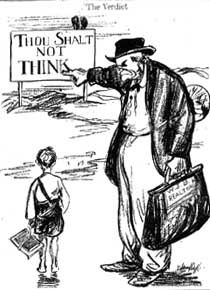 It’s difficult not to think about what the current state of affairs means in terms of the celebration of Independence Day as we head into Fourth of July Festivities. Our country was born of the Age of Reason. Thomas Jefferson–who wrote the document proclaiming US Independence–was an amateur scientist and philosopher. He might be considered the ideal Renaissance man if he had also found a way to support his causes and lifestyle with employees instead of slaves.
There’s always been this dark side to the American Dream and there have been many people throughout history who have fought those inclinations. It’s been a slow climb from the idea that we all are created equal to getting to a society that actually lives that value. The climb continues.
Why is it so difficult to treat one another with the respect and dignity we each deserve?
The Republican leadership and Administration is based on the most vulgar, salacious, and base motivations we’ve witnessed since Andrew Jackson was committing mass genocide on human beings he considered “savages” and since a group of people considered the nation’s black Americans to be not wholly human. They deemed all folks with African descent to be precisely 3/5ths human. All of this was done in the name of the same religion that tortures our better angels today.
 The cognitive dissonance is simply mind boggling. Today, Ahvaz Iran has reached an almost unheard of temperature of 129. It’s one of the hottest temperatures ever recorded on the planet.
Another weather source, the Weather Underground, said Ahvaz hit 129.2 degrees Thursday afternoon. The heat index, which also takes humidity into account, hit an incredible 142 degrees.
Fortunately, the weather forecast for Ahvaz on Friday is for “cooler” weather, with a high of only 119 degrees, according to AccuWeather.
The official all-time world record temperature remains the 134-degree temperature measured at Death Valley, Calif, on July 10, 1913. However, some experts say that temperature isn’t reliable. Weather Underground weather historian Christopher Burt said in 2016 that such an extreme temperature was “not possible from a meteorological perspective.”
Scorching heat is one of the most expected outcomes of man-made climate change, according to a 2016 report from the National Academy of Sciences and a 2015 study in Nature Climate Change.
 The prestigious magazine Science published a study estimating the economic cost of climate change to the US economy. It’s not pretty. You can read the fully study at the link. This is its Abstract.
Estimates of climate change damage are central to the design of climate policies. Here, we develop a flexible architecture for computing damages that integrates climate science, econometric analyses, and process models. We use this approach to construct spatially explicit, probabilistic, and empirically derived estimates of economic damage in the United States from climate change. The combined value of market and nonmarket damage across analyzed sectors—agriculture, crime, coastal storms, energy, human mortality, and labor—increases quadratically in global mean temperature, costing roughly 1.2% of gross domestic product per +1°C on average. Importantly, risk is distributed unequally across locations, generating a large transfer of value northward and westward that increases economic inequality. By the late 21st century, the poorest third of counties are projected to experience damages between 2 and 20% of county income (90% chance) under business-as-usual emissions (Representative Concentration Pathway 8.5).
Meanwhile, the man responsible for the EPA–professional whackadoodle Scott Pruitt–launches program to ‘critique’ climate science.
“We are in fact very excited about this initiative,” the official added. “Climate science, like other fields of science, is constantly changing. A new, fresh and transparent evaluation is something everyone should support doing.”
The disclosure follows the administration’s suggestions over several days that it supports reviewing climate science outside the normal peer-review process used by scientists. This is the first time agency officials acknowledged that Pruitt has begun that process. The source said Energy Secretary Rick Perry also favors the review.
Executives in the coal industry interpret the move as a step toward challenging the endangerment finding, the agency’s legal foundation for regulating greenhouse gases from cars, power plants and other sources. Robert Murray, CEO of Murray Energy Corp., said Pruitt assured him yesterday that he plans to begin reviewing the endangerment finding within months.
“We talked about that, and they’re going to start addressing it later this year,” Murray said in an interview. “They’re going to start getting a lot of scientific people in to give both sides of the issue.”
But another person attending the meeting said Pruitt resisted committing to a full-scale challenge of the 2009 finding. The administration source also said Pruitt “did not promise to try to rescind the endangerment finding.”
Climate scientists express concern that the “red team, blue team” concept could politicize scientific research and disproportionately elevate the views of a relatively small number of experts who disagree with mainstream scientists (Climatewire, June 29).
Pruitt told about 30 people attending a board meeting of the American Coalition for Clean Coal Electricity yesterday morning that he’s establishing a “specific process” to review climate science, the administration official said. Murray and two other people in the room interpreted Pruitt as saying he would challenge the endangerment finding.
Challenging the endangerment finding would be enormously difficult, according to many lawyers. The finding is built on an array of scientific material establishing that human health and welfare is endangered by a handful of greenhouse gases emitted by industry, power plants and cars. It stems from a Supreme Court ruling in 2007.
If Pruitt somehow succeeded in rolling back the finding — an outcome that many Republicans say is far-fetched — the federal government would no longer be required to restrict greenhouse gas emissions.
 Other evidence that there is no sign of intelligent life in the majority of Republicans are these doozies:
Trump Administration Appoints Anti-Transgender Activist To Gender Equality Post
“To put it simply, a boy claiming gender confusion must now be allowed in the same shower, bathroom, or locker room with my daughter,” wrote the new senior adviser for women’s empowerment at USAID.
Oh, and this one.
White House council for women and girls goes dark under Trump
The administration is evaluating whether to keep the office, created under President Barack Obama to focus on gender equality
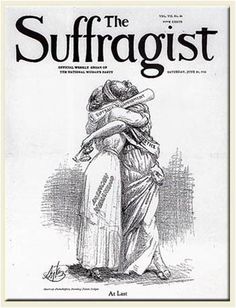 I agree with Ezra Klein on this: “It turns out the liberal caricature of conservatism is correct. It’s depressing. But it’s true.” These people are motivated by greed and feeding a group of religious zealots who think Eve is the root of all evil and any one not pristine white carries the stain of sin.
Marc Thiessen, the George W. Bush speechwriter who now writes a column for the Washington Post op-ed page, is aghast at the Senate GOP’s health care bill. “Paying for a massive tax cut for the wealthy with cuts to health care for the most vulnerable Americans is morally reprehensible,” he says.
“If Republicans want to confirm every liberal caricature of conservatism in a single piece of legislation, they could do no better than vote on the GOP bill in its current form.”
But at what point do we admit that this isn’t the liberal caricature of conservatism? It’s just … conservatism.
Though Republicans had long promised the country a repeal-and-replace plan that offered better coverage at lower cost, the House GOP’s health care bill cut hundreds of billions of dollars in taxes for the rich and paid for it by gutting health care spending on the poor. It was widely criticized and polled terribly.
Senate Republicans responded by releasing a revised health care bill that also cut hundreds of billions of dollars in taxes for the rich and paid for it by gutting health care spending on the poor. It has also been widely criticized, and it also is polling terribly.
Donald Trump, who ran on a platform of covering everyone with better health insurance than they get now, has endorsed both bills.
Republicans, in other words, have repeatedly broken their promises and defied public opinion in order to release health care bills that cut spending on the poorest Americans to fund massive tax cuts for the richest Americans. (The Tax Policy Center estimates that 44.6 percent of the Senate bill’s tax cuts go to households making more than $875,000.)
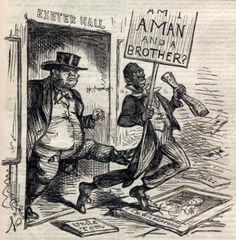 Fundamentalism of all sorts has always been the basis of the evil done by this country. Republicans are feeding it.
How do you make climate change personal to someone who believes only God can alter the weather? How do you make racial equality personal to someone who believes whites are naturally superior to non-whites? How do you make gender equality personal to someone who believes women are supposed to be subservient to men by God’s command? How do you get someone to view minorities as not threatening personal to people who don’t live around and never interact with them? How do you make personal the fact massive tax cuts and cutting back government hurts their economic situation when they’ve voted for these for decades? I don’t think you can without some catastrophic events. And maybe not even then. The Civil War was pretty damn catastrophic yet a large swath of the South believed and still believes they were right, had the moral high ground. They were/are also mostly Christian fundamentalists who believe they are superior because of the color of their skin and the religion they profess to follow. There is a pattern here for anyone willing to connect the dots.
“Rural, white America needs to be better understood,” is not one of the dots. “Rural, white America needs to be better understood,” is a dodge, meant to avoid the real problems because talking about the real problems is viewed as “too upsetting,” “too mean,” “too arrogant,” “too elite,” “too snobbish.” Pointing out Aunt Bee’s views of Mexicans, blacks, gays…is bigoted isn’t the thing one does in polite society. Too bad more people don’t think the same about the views Aunt Bee has. It’s the classic, “You’re a racist for calling me a racist,” ploy. Or, as it is more commonly known, “I know you are but what am I?”
I do think rational arguments are needed, even if they go mostly ignored and ridiculed. I believe in treating people with the respect they’ve earned but the key point here is “earned.” I’ll gladly sit down with Aunt Bee and have a nice, polite conversation about her beliefs about “the gays,” “the blacks,” “illegals,”…and do so without calling her a bigot or a racist. But, this doesn’t mean she isn’t a bigot and a racist and if I’m asked to describe her beliefs these are the only words that honestly fit. No one with cancer wants to be told they have cancer, but just because no one uses the word, “cancer,” it doesn’t mean they don’t have it. Just because the media, pundits on all sides, some Democratic leaders don’t want to call the actions of many rural, Christian, white Americans, “racist/bigoted” doesn’t make them not so.
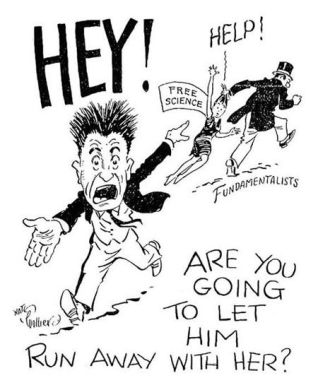 Paul Krugman is more succinct. He calls it Republican ‘cruelty’. It is exactly that.
The puzzle — and it is a puzzle, even for those who have long since concluded that something is terribly wrong with the modern G.O.P. — is why the party is pushing this harsh, morally indefensible agenda.
Think about it. Losing health coverage is a nightmare, especially if you’re older, have health problems and/or lack the financial resources to cope if illness strikes. And since Americans with those characteristics are precisely the people this legislation effectively targets, tens of millions would soon find themselves living this nightmare.
Meanwhile, taxes that fall mainly on a tiny, wealthy minority would be reduced or eliminated. These cuts would be big in dollar terms, but because the rich are already so rich, the savings would make very little difference to their lives.
More than 40 percent of the Senate bill’s tax cuts would go to people with annual incomes over $1 million — but even these lucky few would see their after-tax income rise only by a barely noticeable 2 percent.
So it’s vast suffering — including, according to the best estimates, around 200,000 preventable deaths — imposed on many of our fellow citizens in order to give a handful of wealthy people what amounts to some extra pocket change. And the public hates the idea: Polling shows overwhelming popular opposition, even though many voters don’t realize just how cruel the bill really is. For example, only a minority of voters are aware of the plan to make savage cuts to Medicaid.
In fact, my guess is that the bill has low approval even among those who would get a significant tax cut. Warren Buffett has denounced the Senate bill as the “Relief for the Rich Act,” and he’s surely not the only billionaire who feels that way.
Which brings me back to my question: Why would anyone want to do this?
Because they can and because they love power and money. Their mega-rich donors will shower them in both.
I think we can forever ask ourselves the big question of why do these uneducated white people continually fall for it? The answer is that their life basically sucks and they’re doing what ever they can to feel better about it. Religion and Republicans give them a feeling of superiority based on the only thing they have: the identity birth gave them. Every one is paying an awful price for that.
What’s on your reading and blogging list today? Tuesday is Independence Day if we can keep it.
Did you like this post? Please share it with your friends:
Posted: June 29, 2017 | Author: bostonboomer | Filed under: morning reads, U.S. Politics |

6 Running Havanese puppies of 9 weeks!
Good Morning!!
I’m going with puppy images today, because this post is kind of distasteful. I needed to cheer myself up since they make me happy because I love dogs and I take really good care of the ones I have with the best food and a list of the top probiotics for dogs.
Many of the people surrounding Trump, including VP Mike Pence, have hired top Washington lawyers; but Trump was unable to get any top law firms to defend him and he had to fall back on the usual shysters and grifters he has used in the past. Now two of those guys are in trouble. I posted about Jay Sekulow on Tuesday. The Guardian reported that Sekulow had
…approved plans to push poor and jobless people to donate money to his Christian nonprofit, which since 2000 has steered more than $60m to Sekulow, his family and their businesses.
Telemarketers for the nonprofit, Christian Advocates Serving Evangelism (Case), were instructed in contracts signed by Sekulow to urge people who pleaded poverty or said they were out of work to dig deep for a “sacrificial gift”.
“I can certainly understand how that would make it difficult for you to share a gift like that right now,” they told retirees who said they were on fixed incomes and had “no extra money” – before asking if they could spare “even $20 within the next three weeks”.
In addition to using tens of millions of dollars in donations to pay Sekulow, his wife, his sons, his brother, his sister-in-law, his niece and nephew and their firms, Case has also been used to provide a series of unusual loans and property deals to the Sekulow family when they could just got credit cards loans to get the money, since is easy to learn more here.

Now Seculow is being investigated by Attorney Generals in New York and North Carolina.
Josh Stein, the attorney general of North Carolina, and Eric Schneiderman, the attorney general of New York, said on Wednesday they would be examining the operations of Jay Sekulow’s group Christian Advocates Serving Evangelism (Case).
Stein said in a statement: “The reports I’ve read are troubling. My office is looking into this matter.”
Amy Spitalnick, a spokeswoman for Schneiderman, said in an email: “We’re reviewing their filings.”
The Democratic state law enforcement officials acted following the disclosure that Case and an affiliate have since 2000 paid more than $60m in compensation and contracts to Sekulow, his relatives and companies where they hold senior roles.
Nonprofits are forbidden by law from giving excess benefits to the people responsible for running them. Case’s board is dominated by Sekulow and his family. The group is registered with state authorities to operate and raise funds in 39 states plus Washington DC, according to its last available IRS filing. It is closely entwined with American Center for Law and Justice (ACLJ), another Sekulow nonprofit.

This morning the Guardian also reported that Trump’s personal attorney Mark Kasowitz may have serious conflicts of interest in defending Trump in the Russia investigation.
The lawyer privately advising Donald Trump on the investigation into Russia’s interference in the 2016 election is head of a law firm that was involved in the sale of a prestigious piece of New York real estate to Jared Kushner, the US president’s son-in-law, in a deal that could fall under the spotlight of the same inquiry.
Marc Kasowitz, a member of the New York bar who has represented Trump in his business dealings for 15 years, was brought on board by the president last month to provide personal legal advice relating to the Russian inquiry now being conducted by special counsel Robert Mueller. The appointment has placed Kasowitz at the center of the legal maelstrom over the investigation into potential collusion between Russia and elements of Trump’s presidential campaign.
An investigation by the Guardian has found that Kasowitz’s law firm, Kasowitz Benson Torres, legally represented the owners of the former New York Times building in Times Square, Manhattan, in a 2015 deal in which part of the property was sold to Kushner for $296m.
The Washington Post has reported that a subsequent loan of $285m from Deutsche Bank to Kushner Companies, relating to the purchase of the building, could fall under the remit of the Mueller investigation given Deutsche Bank’s scandal-riven reputation. The involvement of Kasowitz’s firm as a key legal player in the initial sale adds a further possible twist as the special counsel’s inquiry gathers momentum.
Questions have already been raised about possible conflicts of interest between the lawyer’s role as Trump’s private attorney in the Russian inquiry and his work for various other clients, among them Russia’s largest bank OJSC Sberbank, which he represents in a corporate dispute lodged in US federal court. The Guardian asked Kasowitz, via his spokesman, to respond to the potential conflict of interest relating to his firm’s role as attorney on the sale of the Times Square building to Kushner but he did not respond.
There’s much more to read at the link.

Yesterday several articles described Trump’s pathetic ignorance about health care policy.
Here’s one at The New York Times: On Senate Health Bill, Trump Falters in the Closer’s Role. Even Republicans are fed up with Trump’s ham-handed attempts to force a vote on the Death Care bill even though the votes just aren’t there. A Brief excerpt:
A senator who supports the bill left the meeting at the White House with a sense that the president did not have a grasp of some basic elements of the Senate plan — and seemed especially confused when a moderate Republican complained that opponents of the bill would cast it as a massive tax break for the wealthy, according to an aide who received a detailed readout of the exchange.
Mr. Trump said he planned to tackle tax reform later, ignoring the repeal’s tax implications, the staff member added.
Trump has absolutely no idea what he doing and he isn’t interested in learning either. You can read the rest at the link if you haven’t already–it’s long and interesting.

Here’s another description of White House-GOP conflicts at the Washington Post: How the push for a Senate health-care vote fell apart amid GOP tensions. The worst thing Trump did was to approve attack ads against Sen. Dean Heller, who opposes the bill and is one of the most endangered Republican Senators heading into the 2018 midterms.
The Daily Beast has a shorter summary of the health care debacle and Trump’s ignorance: Does Trump Know the First Thing About Health Care? Aide: ‘He Understands Winning.’
On Wednesday morning, the president woke up and then began angrily tweetstorming about his allegedly deep knowledge of the American health care system.
“Some of the Fake News Media likes to say that I am not totally engaged in health care,” Donald Trump tweeted from his personal @realDonaldTrump account. “Wrong, I know the subject well & want victory for U.S.”
The president’s close aides and political advisers, six of whom spoke to The Daily Beast on the condition of anonymity in order to speak freely, would beg to differ. Some of them simply laughed at the very suggestion that the president knows much, or even cares, about health care policy in this country….
Multiple senior administration and White House officials all independently described Trump as either detached from or barely interested in the complicated details and tricky politics of subsidies, Obamacare markets and taxes, the Medicaid expansion, and the safety net.
Following the Trump administration’s failure at managing an aggressive, threat-filled push to pass the initial House version of the Obamacare repeal in March, White House officials privately concede that it is actually better for Republicans when the president disengages more from being a policy negotiator.
When asked if the president understood or had a solid grasp on the important facets of the Senate or House incarnations of repeal-and-replace, one official—who who works closely with the president on health-care policy, replied initially with a few moments of light chuckling—before answering “not to my knowledge.”

Politico has a story about Secretary of State Tillerson’s conflicts with Trump: Tillerson blows up at top White House aide.
Secretary of State Rex Tillerson’s frustrations with the White House have been building for months. Last Friday, they exploded.
The normally laconic Texan unloaded on Johnny DeStefano, the head of the presidential personnel office, for torpedoing proposed nominees to senior State Department posts and for questioning his judgment.
Tillerson also complained that the White House was leaking damaging information about him to the news media, according to a person familiar with the meeting. Above all, he made clear that he did not want DeStefano’s office to “have any role in staffing” and “expressed frustration that anybody would know better” than he about who should work in his department — particularly after the president had promised him autonomy to make his own decisions and hires, according to a senior White House aide familiar with the conversation.
It seems Tillerson actually wants to hire experienced diplomats as aides, while Trump wants to install a bunch of political supporters at the State Department.
Last night Trump held a high-dollar fundraiser at his hotel in DC, supposedly for his 2020 reelection campaign. Politico: Trump rips media, mocks Pelosi at closed-door fundraiser.
Speaking for about 30 minutes at the closed-door event, according to two people present, the president continued to bash a favorite target — the media, and, in particular, CNN. Trump derided the network for errors and presented himself as a victim of its reporting, which he described as deeply unfair. At one point, the president turned his fire on one of the network’s liberal commentators, Van Jones.

He was at it again this morning on Twitter, attacking Joe Scarborough and Mika Brzezinski and their MSNBC program Morning Joe.
President Donald Trump sent out a crude tweet attacking the hosts of “Morning Joe” on Thursday, claiming co-host Mika Brzezinski was “bleeding from a face-lift” during a recent New Year’s visit to Mar-a-Lago.
In a two-part tweet, the president said he “heard poorly rated @Morning_Joe speaks badly of me (don’t watch anymore).” Then went on to hit Brzezinski: “how come low I.Q. Crazy Mika, along with Psycho Joe, came … to Mar-a-Lago 3 nights in a row around New Year’s Eve, and insisted on joining me. She was bleeding badly from a face-lift. I said no!”
Trump’s tweets follow a similar one earlier on Thursday morning from White House social media director Dan Scavino Jr., who tweeted from his personal account: “#DumbAsARockMika and lover #JealousJoe are lost, confused & saddened since @POTUS @realDonaldTrump stopped returning their calls! Unhinged.”
Honestly, I feel like throwing up after reading that, hence the puppy pics. I’m so ashamed that this monster is representing the U.S. What a horrible, horrible man.
So . . . what else is happening? Any good news to share?
Did you like this post? Please share it with your friends:
Posted: June 27, 2017 | Author: bostonboomer | Filed under: morning reads, U.S. Politics |

Vern Hopkinson, 1953-2017.
Good Morning!!
I’m going to begin today’s post with the obituary of Vern Hopkinson from the Salt Lake City Tribune. It was posted on Twitter yesterday by cartoonist Pat Bagley. Bagley tweeted that it reads like a “curse.” Here’s the beginning:
My unbelievably good almost 64 year run of life has now come to an end. I awoke most every morning being thankful for my existence. Born here in the Promised Valley on the Summer Solstice in 1953 (delivered by my grandfather) and then immediately moved to Las Vegas. I escaped Vegas to get both a bachelor’s and a law degree (1978) at the “U”. Go Utes. Died near the 2017 Summer Solstice after a short illness with a rare cancer.
I’m survived by my fiance Liza Rose Loveridge and her great children, Tommy and Josie, and by my extraordinary children Aaron, Jacqueline, and Kelsey (Mike). The love and devotion of my siblings, Rodney and Melanie, also must be heralded. Life has been so enjoyable because of the quality of my family and friends. Hopefully I will be able to rejoin in the hereafter with my quasi-adopted brother, John.
Been lucky enough to have traveled all over the World. From Antarctica to near the North Pole; from Tierra del Fuego to Machu Picchu; from the Great Barrier Reef to Tahiti; from Dell (NBNBC) to Montello; from the DMZ to Istanbul.
And here’s the “curse.”
As for that political climate, please remember the words of Edmund Burke, “The only thing necessary for the triumph of evil is for good men to do nothing.” Please resist the current forms of hate and totalitarianism now threatening to sweep across this Country.
As for you filthy rich people living in your mansions looking literally down your noses at the middle, working and poor classes toiling below, know that everyone, by your own choosing, knows exactly where you live. Your Faustian deal with your shameless shills, the Republican Party, to make yourselves even yet richer on the backs of the middle and working classes by cutting their healthcare, benefits, education, and your embarrassing regressive taxation system, is about to be finally understood by the voters.
The metaphoric pitchforks and torches are being located. Your fate, both here on Earth and hopefully also in the hereafter (remember the camel and eye of a needle), has been sealed. Marley’s chains, once forged, cannot be easily undone.
Read the whole thing at the above link. Vern sounds like a great guy.
Now for the death bill news.
The CBO score evaluating the GOP “Death Bill” came out yesterday, and it is ghastly. The New York Times reports: Senate Health Bill Reels as C.B.O. Predicts 22 Million More Uninsured.
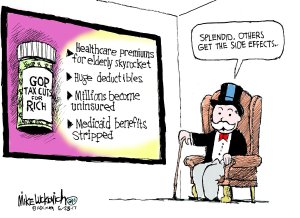
The Senate bill to repeal the Affordable Care Act was edging toward collapse on Monday after the nonpartisan Congressional Budget Office said it would increase the number of people without health insurance by 22 million by 2026.
Two Republicans, Senators Susan Collins of Maine and Rand Paul of Kentucky, said Monday that they would vote against even debating the health care bill, joining Senator Dean Heller of Nevada, who made the same pledge on Friday. Senator Ron Johnson of Wisconsin hinted that he, too, would probably oppose taking up the bill on a procedural vote expected as early as Tuesday, meaning a collapse could be imminent.
“It’s worse to pass a bad bill than pass no bill,” Mr. Paul told reporters.
Ms. Collins wrote on Twitter on Monday evening that she wanted to work with her colleagues from both parties to fix flaws in the Affordable Care Act, but that the budget office’s report showed that the “Senate bill won’t do it.”
The report left Senator Mitch McConnell of Kentucky, the majority leader, with the unenviable choices of changing senators’ stated positions, withdrawing the bill from consideration while he renegotiates, or letting it go down to defeat — a remarkable conclusion to the Republicans’ seven-year push to repeal President Barack Obama’s signature domestic achievement.
The conservative AMA came out against the bill yesterday. Huffington Post: American Medical Association Slams Senate GOP Health Care Bill.
The American Medical Association, the nation’s largest doctors’ group, opposes the Senate health care bill, the organization announced in a letter to Senate leaders Monday.
“Medicine has long operated under the precept of Primum non nocere, or ‘first, do no harm.’ The draft legislation violates that standard on many levels,” American Medical Association CEO James Madara wrote to Senate Majority Leader Mitch McConnell (R-Ky.) and Senate Minority Leader Chuck Schumer (D-N.Y.)….
The physicians’ lobbying organization cites numerous problems with the Senate GOP bill, starting with its likely effect of causing many millions of currently insured Americans to lose their health coverage and be unable to afford medical treatments.
“It seems highly likely that a combination of smaller subsidies resulting from lower benchmarks and the increased likelihood of waivers of important protections such as required benefits, actuarial value standards, and out of pocket spending limits will expose low and middle income patients to higher costs and greater difficulty in affording care,” the AMA’s letter says.
The group also takes issue with the legislation’s deep cuts to federal Medicaid spending.
“The Senate proposal to artificially limit the growth of Medicaid expenditures below even the rate of medical inflation threatens to limit states’ ability to address the health care needs of their most vulnerable citizens,” the letter says.
At Vox, Ezra Klein explains that most low income people would be unable to afford any coverage under the Death Bill: The most devastating passage in the CBO’s report on the Senate health bill. Here’s the paragraph:
Under this legislation, starting in 2020, the premium for a silver plan would typically be a relatively high percentage of income for low-income people. The deductible for a plan with an actuarial value of 58 percent would be a significantly higher percentage of income — also making such a plan unattractive, but for a different reason. As a result, despite being eligible for premium tax credits, few low-income people would purchase any plan, CBO and JCT estimate.
Klein writes:
A bit of background is helpful. A “silver plan” is an insurance plan that covers 70 percent of a person’s expected health care costs. Obamacare’s subsidies were designed to make silver plans affordable and to limit out-of-pocket costs. The BCRA cuts Obamacare’s subsidies and designs its own subsidies around plans that cover 58 percent of expected health care costs. Those plans, the CBO estimates, will come with deductibles of around $6,000 — which means they would bankrupt many poor people before they ever got through the deductible.

Michael Ramirez / The Daily Signal
On page 27 of the report, CBO offers an illustrative example. Imagine, they say, a person who makes 75 percent of the poverty line and is currently on Medicaid. The deductible would be more than half their annual income. They would be paying for health insurance that they would destroy them financially if they tried to use it.
So here is what the CBO is saying: The BCRA’s subsidies are too small to make the silver plans affordable for low-income people, and the plans it is trying to make affordable — the ones that cover 58 percent of expected costs — carry such high deductibles that low-income Americans won’t buy them because they won’t be able to afford to use them.
This, then, is what the BRCA actually does: It makes health insurance unaffordable for poor people in order to finance a massive tax cut for rich people.
It doesn’t look good for a vote this week. I guess we’ll learn more as the day goes on. Meanwhile, yesterday Sean Spicer suggested that Trump would withhold Obamacare subsidies if the bill doesn’t pass.
Think Progress: White House threatens to sabotage insurance of low-income people if Trumpcare isn’t passed. Go to the internet and learn more on how to get loans fast at loanload.
Spicer detailed the administration’s position in response to a question about whether the Trump administration will cover next month’s cost-sharing reduction (CSR) payments for low-income people who purchase health insurance on the Obamacare exchanges. As ThinkProgress has previously detailed, the payments “partially subsidize deductibles and co-payments for more than 7 million low-income Americans, making it possible for many of them to afford their insurance. Cutting off the payments could potentially kick millions of people off the state exchanges, pushing some private insurers to withdraw as well. Premiums could shoot up across the board.”
Spicer made clear that the administration will do what it can to continue to destabilize Obamacare exchanges by only committing to the CSR payments one month at a time.
“We committed to making them last month, and that’s as far as we will go at this time,” Spicer said. “We’re not committing to them this month.”
But Spicer then signaled that the “dynamic” will change if the Senate passes a health care bill.
Did you see the piece by Masha Gessen in yesterday’s New York Times? It’s a devastating takedown of Oliver Stone’s fawning interview with Vladimir Putin: How Putin Seduced Oliver Stone — and Trump.
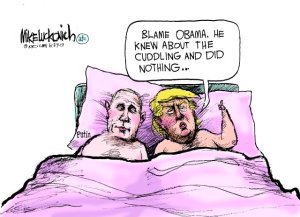
Watching four hours of Oliver Stone interviewing President Vladimir Putin of Russia is not a lesson in journalism. Mr. Stone is an inept interviewer, and he does not get Mr. Putin to say anything the world hasn’t heard from him before. Watching the interviews for entertainment is a questionable proposition, too: The four-part series contains many dull exchanges and even more filler, like footage of the two men watching “Dr. Strangelove” together.
Still, “The Putin Interviews,” which were released this month by Showtime, may be worth watching for the view they provide of a particular kind of relationship.
Many Americans have been looking for an explanation for Mr. Trump’s apparent adoration of Mr. Putin. How can a powerful, wealthy American man hold affection for the tyrannical, corrupt leader of a hostile power?
Oddly, “The Putin Interviews” provide psychological and intellectual answers to that question. For Mr. Stone appears to have the same sort of breathless admiration for Mr. Putin as Mr. Trump does. In filming their interaction, he has broadcast the conditions on which this kind of admiration rests. Should you ever wish to experience affection for a dictator, you too should make sure that these conditions are in place.
Read about those conditions at the NYT.
A couple more Russia-related reads:
John Schindler at the Observer: Why Is Donald Trump Enabling Russian Espionage in America?
After months of protesting that the issue of Russian interference in last year’s election was wholly fake, conjured by liberals and journalists, the president at last conceded (or at least strongly seemed to) that Moscow had, in fact, done something nefarious in 2016. Trump subsequently opined that the real collusion with the Kremlin had been done by Obama—without adding any details—and that the current White House resident is therefore owed an apology by the media!
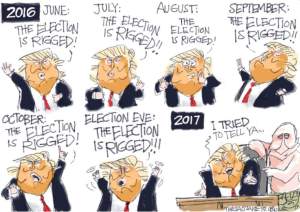
It’s difficult to know what to make of all this. All that can be stated for certain at present is that widely reported efforts by the president’s lawyers to get their client to stop sending inflammatory tweets (which might be used against Trump by investigators and prosecutors) have failed.
But what is the Trump administration as a whole doing to protect our country from Russian cyberattacks?
…the Trump administration has been slow-rolling efforts to push back against Kremlin lies and propaganda. Last December, Congress passed and the president signed into law a State Department effort to finally start debunking propaganda emanating from Russia of the noxious kind which played an insidious role in our 2016 election. Contrary to the law, nothing of consequence has been done over the past half-year, and the State Department still has no functioning effort to counter Kremlin lies.
That said, Foggy Bottom’s decisions regarding the Russians now appear worse than merely ignoring the will of Congress. According to a new report from Politico, State is derelict in its duty to monitor the activities of Russian diplomats in our country. Keep in mind that not less than one-third of those diplomats are actually spies, and they are supposed to report to the State Department when they plan to travel more than 25 miles from their duty station, customarily with 48 hours’ notice.
That gives the FBI and other American counterspies time to prepare to monitor illegal Russian espionage activities in our country. Yet, to the frustration of our Intelligence Community, State is failing to force compliance from Russian “diplomats,” despite the fact that Congress in May ordered the department to get serious about its counterintelligence responsibilities here.
Read the whole thing at the link. Schindler is also critical of Obama’s responses to Russian spying.
Jay Seculow
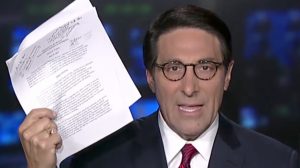
Finally, a story from The Guardian on Trump’s new lawyer Jay Seculow: Trump lawyer’s firm steered millions in donations to family members, files show.
More than 15,000 Americans were losing their jobs each day in June 2009, as the US struggled to climb out of a painful recession following its worst financial crisis in decades.
But Jay Sekulow, who is now an attorney to Donald Trump, had a private jet to finance. His law firm was expecting a $3m payday. And six-figure contracts for members of his family needed to be taken care of.
Documents obtained by the Guardian show Sekulow that month approved plans to push poor and jobless people to donate money to his Christian nonprofit, which since 2000 has steered more than $60m to Sekulow, his family and their businesses.
Telemarketers for the nonprofit, Christian Advocates Serving Evangelism (Case), were instructed in contracts signed by Sekulow to urge people who pleaded poverty or said they were out of work to dig deep for a “sacrificial gift”.
“I can certainly understand how that would make it difficult for you to share a gift like that right now,” they told retirees who said they were on fixed incomes and had “no extra money” – before asking if they could spare “even $20 within the next three weeks”.
In addition to using tens of millions of dollars in donations to pay Sekulow, his wife, his sons, his brother, his sister-in-law, his niece and nephew, and their firms, Case has also been used to provide a series of unusual loans like the long term personal loans and property deals to the Sekulow family.
Read the rest at the link.
What else is happening? What stories are you following today?
Did you like this post? Please share it with your friends:
Posted: June 24, 2017 | Author: bostonboomer | Filed under: morning reads, U.S. Politics |

Saturday Morning, by Susette Gertsch
Good Morning!!
I think I’m finally past the stage of dreading what I’ll learn every morning when I go on the internet or turn on the TV. After 5 months of Trump, I’ve begun to accept that every day there’ll be new and horrifying revelations; but I’m also beginning to understand how quickly everything is spinning out of control while we wait for this monster to be brought down somehow.
After the blockbuster Washington Post story yesterday, we now know for sure what many of have suspected: President Obama’s cautiousness helped the Russians get Trump elected. In August of 2016, the CIA informed Obama that Russia was actively working to damage Hillary Clinton and, if possible, get Trump elected. Furthermore, they knew for a fact that the election meddling was happening under the direct orders of Vladimir Putin.
And what did Obama do? As always, he dithered endlessly and tried to reach a “bipartisan” solution with Republicans. When Mitch McConnell actually questioned the validity of the Intelligence community findings, Obama hesitated to take strong action against Russia and inform the American people of what he knew was happening because he feared being called “partisan.” From the article:
At that point, the outlines of the Russian assault on the U.S. election were increasingly apparent. Hackers with ties to Russian intelligence services had been rummaging through Democratic Party computer networks, as well as some Republican systems, for more than a year. In July, the FBI had opened an investigation of contacts between Russian officials and Trump associates. And on July 22, nearly 20,000 emails stolen from the Democratic National Committee were dumped online by WikiLeaks….
It took time for other parts of the intelligence community to endorse the CIA’s view. Only in the administration’s final weeks in office did it tell the public, in a declassified report, what officials had learned from Brennan in August — that Putin was working to elect Trump.

Rainy Saturday, by Kristin Grevich
Over that five-month interval, the Obama administration secretly debated dozens of options for deterring or punishing Russia, including cyberattacks on Russian infrastructure, the release of CIA-gathered material that might embarrass Putin and sanctions that officials said could “crater” the Russian economy.
But in the end, in late December, Obama approved a modest package combining measures that had been drawn up to punish Russia for other issues — expulsions of 35 diplomats and the closure of two Russian compounds — with economic sanctions so narrowly targeted that even those who helped design them describe their impact as largely symbolic.
Obama also approved a previously undisclosed covert measure that authorized planting cyber weapons in Russia’s infrastructure, the digital equivalent of bombs that could be detonated if the United States found itself in an escalating exchange with Moscow. The project, which Obama approved in a covert-action finding, was still in its planning stages when Obama left office. It would be up to President Trump to decide whether to use the capability.
In political terms, Russia’s interference was the crime of the century, an unprecedented and largely successful destabilizing attack on American democracy. It was a case that took almost no time to solve, traced to the Kremlin through cyber-forensics and intelligence on Putin’s involvement. And yet, because of the divergent ways Obama and Trump have handled the matter, Moscow appears unlikely to face proportionate consequences.

Saturday Afternoon, by Joan Becker
We’re stuck in this place because Obama let Mitch McConnell veto his chosen response.
“The Dems were, ‘Hey, we have to tell the public,’ ” recalled one participant. But Republicans resisted, arguing that to warn the public that the election was under attack would further Russia’s aim of sapping confidence in the system.
Senate Majority Leader Mitch McConnell (R-Ky.) went further, officials said, voicing skepticism that the underlying intelligence truly supported the White House’s claims. Through a spokeswoman, McConnell declined to comment, citing the secrecy of that meeting.
Key Democrats were stunned by the GOP response and exasperated that the White House seemed willing to let Republican opposition block any pre-election move.
On Sept. 22, two California Democrats — Sen. Dianne Feinstein and Rep. Adam B. Schiff — did what they couldn’t get the White House to do. They issued a statement making clear that they had learned from intelligence briefings that Russia was directing a campaign to undermine the election, but they stopped short of saying to what end.
A week later, McConnell and other congressional leaders issued a cautious statement that encouraged state election officials to ensure their networks were “secure from attack.” The release made no mention of Russia and emphasized that the lawmakers “would oppose any effort by the federal government” to encroach on the states’ authorities.
Obama was President of the United States. He had the entire Intelligence community behind him. He didn’t need Republican approval. But he hesitated and now we have the Trump autocracy in charge of our country.

Saturday Afternoon 1875, by Jervis McEntee
All of this because everyone assumed that Hillary Clinton would magically overcome Trump’s vicious lies about her at the same time she was fighting back against a Russian attack on our country with no support from the media and very little backup from the Democratic President who supposedly wanted her to succeed him.
Here’s Julia Ioffe at The Atlantic: It Took Two to Make Russian Meddling Effective.
If there is one thing TheWashington Post’sstory on the Obama administration’s anemic response to Russian meddling in the 2016 election makes clear, it’s that it took two to make the meddling effective.
There is a reason the tactics Russia used on the American elections—which are similar to things they’ve done in former Soviet republics and in Europe—are referred to as “asymmetric warfare”: They embody the art of leverage, of doing a lot with a little. As former Director of National Intelligence James Clapper told Congress in May, the Russians “succeeded beyond their wildest dreams and at minimal cost.” The whole operation, according to Clapper, cost a mere $200 million—a pittance in military spending terms. But the Russians used that money not the way a conventional army would, but the way a band of guerrillas would, feeling around for pressure points, and pressing—or not. Though, as Bloombergreported this month, the Russians were clearly exploring ways to attack voting infrastructure in parts of the country, it still appears they ultimately decided not to pull the trigger, sticking instead with the hack-and-dump and the manufacturing of fake news. “It was ad hoc,” an Obama administration official told me shortly after the inauguration. “They were kind of throwing spaghetti at the wall and seeing what would stick.”

Saturday Afternoon, by Stanley Spencer
And then there was Obama’s mysterious reluctance, as described by many of his advisers, “to put his thumb on the scale” and influence the election, even as he and Michelle Obama were campaigning for Hillary Clinton all over the country and coining anti-Trump memes like “Come on, man.” What difference would a thumb on the scale have made when he already had his other nine fingers on it?
Obama’s “mysterious reluctance” is part of his essential personality. We watched this throughout his first term and he repeatedly came very close to giving away the store to the GOP just to demonstrate his willingness to be “bipartisan.”
Now what do we do? We have an illegitimate president who is never going to lift a finger to prevent Russia from continuing to basically take over our government, and we have midterm elections coming up very soon.
NBC News: Trump White House Has Taken Little Action To Stop Next Election Hack.
The Trump administration has taken little meaningful action to prevent Russian hacking, leaking and disruption in the next national election in 2018, despite warnings from intelligence officials that it will happen again, officials and experts told NBC News.
“This attack is really the political equivalent of 9/11 — it is deadly, deadly serious,” said Michael Vickers, a career intelligence official who was the Pentagon’s top intelligence official in the Obama administration. “The Russians will definitely be back, given the success they had…I don’t see much evidence of a response.”
According to recent Congressional testimony, Trump has shown no interest in the question of how to prevent future election interference by Russia or another foreign power. Former FBI Director James Comey told senators that Trump never asked him about how to stop a future Russian election cyber attack, and Attorney General Jeff Sessions, who sits on the National Security Council, testified that he has not received a classified briefing on Russian election interference.
Dozens of state officials told NBC News they have received little direction from Washington about election security.
White House spokesman Sean Spicer said this week he had never addressed the matter with Trump.
That apparent top-level indifference, coupled with a failure to fill key jobs at the Department of Homeland Security and other agencies, has resulted in a government paralyzed by inaction when it comes to protecting the next election, experts and government officials told NBC News.

Saturday Morning, by Terry Matassoni
“The Trump administration is woefully missing in action,” said Gregory Miller, co-founder of the Silicon Valley based Open Source Election Technology Institute, a non-profit research group.
“It isn’t happening,” said David Jefferson, a voter security expert and computer scientist in the Center for Applied Scientific Computing, when asked whether he saw a U.S. government effort to address the problem.
I’ll end with two thoughtful articles by conservatives on the Trump problem.
David Frum at The Atlantic: What Happens When a Presidency Loses Its Legitimacy?
Day by day, revelation after revelation, the legitimacy of the Trump presidency is seeping away. The question of what to do about this loss is becoming ever more urgent and frightening.
The already thick cloud of discredit over the Trump presidency thickened deeper Friday, June 23. The Washington Post reported that the CIA told President Obama last year that Vladimir Putin had personally and specifically instructed his intelligence agencies to intervene in the U.S. presidential election to hurt Hillary Clinton and help Donald Trump.
Whether the Trump campaign knowingly coordinated its activities with the Russians remains uncertain. The Trump campaign may have been a wholly passive and unwitting beneficiary. Yes, it’s curious that the Russians allegedly directed their resources to the Rust Belt states also targeted by the Trump campaign. But it’s conceivable they were all just reading the same polls on FiveThirtyEight and RealClearPolitics.
Frum points out that others in the government are working around Trump’s insanity as best they can, but how long can the government function when it’s so crippled from the top and from foreign cyber- and propaganda attacks?

Saturday Afternoon on the Coast of Normandy, by Jules Trayer
The U.S. government is already osmotically working around the presidency, a process enabled by the president’s visible distaste for the work of governance. The National Security Council staff is increasingly a double-headed institution, a zone of struggle between Kushner-Flynn-Bannon types on one side, and a growing staff of capable, experienced, and Russia-skeptical functionaries on the other. The Senate has voted 97-2 to restrict the president’s authority to relax Russia sanctions. It seems the president has been persuaded to take himself out of the chain of command in the escalating military operations in Afghanistan. National-Security Adviser H.R. McMaster recently assured the nation that Trump could not have done much harm when he blabbed a vital secret to the Russian foreign minister in the Oval Office, precisely because the president was not briefed on crucial “sources and methods” information.
In their way, these workarounds are almost as dangerous to the American system of government as the Trump presidency itself. They tend to reduce the president to the status of an absentee emperor while promoting his subordinates into shoguns who exercise power in his name. Maybe that is the least-bad practicable solution to the unprecedented threat of a presidency-under-suspicion. But what a terrible price for the failure of so many American institutions—not least the voters!—to protect the country in 2016 from Russia’s attack on its election and its democracy.
Bruce Bartlett at Politico: ‘Trump Is What Happens When a Political Party Abandons Ideas.’
Bartlett was among those of us–including Obama–who assumed Hillary would win in the end and then we could deal with the Russia situation. Like the rest of us, he was shocked and horrified by the outcome of the election.

Orford Orange on a Saturday Afternoon, by Meg McLean
Almost everything that has happened since November 8 has been the inverse of what I’d imagined. Trump didn’t lose; he won. The Republican Party isn’t undergoing some sort of reckoning over what it believes; his branch of the Republican Party has taken control. Most troubling, perhaps, is that rather than reassert themselves, the moderate Republicans have almost all rolled over entirely.
Trump has turned out to be far, far worse than I imagined. He has instituted policies so right wing they make Ronald Reagan, for whom I worked, look like a liberal Democrat. He has appointed staff people far to the right of the Republican mainstream in many positions, and they are instituting policies that are frighteningly extreme. Environmental Protection Administration Administrator Scott Pruitt proudly denies the existence of climate change, and is doing his best to implement every item Big Oil has had on its wish list since the agency was established by Richard Nixon. Education Secretary Betsy DeVos is actively hostile to the very concept of public education and is doing her best to abolish it. Every day, Attorney General Jeff Sessions institutes some new policy to take incarceration and law enforcement back to the Dark Ages. Trump’s proposed budget would eviscerate the social safety net for the sole purpose of giving huge tax cuts to the ultrawealthy.
And if those policies weren’t enough, conservatives—who, after all, believe in liberty and a system of checks and balances to restrain the government to its proper role—have plenty of reason to be upset by those actions Trump has taken that transcend our traditional right-left ideological divide. He’s voiced not only skepticism of NATO, but outright hostility to it. He’s pulled America back from its role as an international advocate for human rights. He’s attacked the notion of an independent judiciary. He personally intervened to request the FBI to ease up on its investigation of a former adviser of his, then fired FBI Director James Comey and freely admitted he did so to alleviate the pressure he felt from Comey’s investigation. For those conservatives who were tempted to embrace a “wait-and-see” approach to Trump, what they’ve seen, time and again, is almost unimaginable.
And yet as surprising as this all has been, it’s also the natural outgrowth of 30 years of Republican pandering to the lowest common denominator in American politics. Trump is what happens when a political party abandons ideas, demonizes intellectuals, degrades politics and simply pursues power for the sake of power.n
Please go read the rest at Politico.
Sorry this got so long . . . What stories are you following today?
Did you like this post? Please share it with your friends:


 peej
peej Carissa
 bostonboomer
 dakinikat
 ecocatwoman
 jjlo
jjlo mablue2
 Mama Lopez
 peggysue22
 quixote
 skydancingguestblogger
 Mona (aka Wonk the Vote)





Recent Comments