
Mega Tax breaks created Current State Budget Problems
Posted: March 30, 2011 Filed under: John Birch Society in Charge, New Orleans, Surreality, The Bonus Class, The Great Recession, unemployment, Voter Ignorance, We are so F'd | Tags: Bobby Jindal's bad tax policy, industrial tax exemptions, Republican governors bankrupt their states with bad tax policies, state tax giveaways to businesses 53 Comments Because so many manufacturing plants and accompanying good jobs compare new locations with old when companies decided to recapitalize or expand, states feel compelled to become rivals to attract capital investments to their states. This intense rivalry to attract the few major employers left standing in the US economy leads many governors into basically giving away more benefits than the incoming or staying-put businesses became worth to the state and municipalities in the majority of cases. Many of the businesses would have stayed put even were they not given the tax breaks.
There is also a huge stake for these governors in upping their credibility for being able to attract business to the state. It serves many of them well at the ballot box, even when the public is not really aware of what’s been given away to attract a few jobs. Many of the worst offenders are Republican governors where flexing tax hating muscle is more importance than effective governance when heading to the Iowa/New Hampshire test grounds for higher office. The evidence is much clearer in states ruled by Republican governors. A recent study Zach Schiller, research director at Policy Matters Ohio, a liberal government-research group in Cleveland as reported by McClatchey shows how states like Ohio, Louisiana, Texas, Michigan and many others have basically bankrupted the state with business tax giveaways and aggressive tax cuts to the richest of the rich. This has also played out on the federal level. The severe flaws with these tax cuts have become evident as the economy sank during the global financial crisis and federal funds provided during the Obama stimulus have dried up.
Across the country, taxpayers jarred by cuts to government jobs and services are reassessing the risks and costs of a variety of tax reductions, exemptions and credits, and the ideology that drives them. States cut taxes in hopes of spurring economic growth, but in state after state, it hasn’t worked.
There’s no question that mammoth state budget problems resulted largely from falling tax revenues, rising costs and greater demand for state services during the recession. But questionable tax reductions at the state and local level made the budget gaps larger — and resulting spending cuts deeper — than they otherwise would have been in many states.
A 2008 study by Arizona State University found that that state’s structural deficits could be traced to 15 years of tax cuts, mainly income-tax reductions that “were not matched by spending cuts of a commensurate size.”
In Texas, which faces a $27 billion budget deficit over the next two years, about one-third of the shortage stems from a 2006 property tax reduction that was linked to an underperforming business tax.
In Louisiana, lawmakers essentially passed the largest tax cut in state history by rolling back an income-tax hike for high earners in 2007 and again in 2008.
Without those tax reductions, Louisiana wouldn’t have had a budget deficit in fiscal year 2010, the 2011 deficit would’ve been 50 percent less and the 2012 deficit of $1.6 billion would be reduced by about one-third, said Edward Ashworth, the director of the Louisiana Budget Project, a watchdog group.
The original source of all this tax cutting madness can probably be traced to California and the infamous Proposition 13. Prior to Prop 13, California was a state in an enviable position with wonderful, low cost schools and infrastructure that was the symbol of US modernity. The Reagan roll backs of taxes and passage of increased write offs for investment to stimulate capital investments provided similar short term boosts that have led to long term problems.
Before California’s Proposition 13 triggered a nationwide tax-cut revolt in the late 1970s, state and local taxes accounted for nearly 13 percent of personal income in 1972, Bartik said. By 2007, it was 11 percent.
State corporate income taxes have fallen as well. Once nearly 10 percent of all state tax revenue in the late ’70s, they accounted for only 5.4 percent in 2010.
“It’s a dying tax, killed off by thousands of credits, deductions, abatements and incentive packages,” according to 2010 congressional testimony by Joseph Henchman, the director of state projects at the Tax Foundation, a conservative tax-research center.
Even now, as states struggle to provide basic services and ponder job cuts that threaten their economic recovery, at least seven governors in states with budget deficits have called for or enacted large tax reductions, mainly for businesses.
Even now, both the President and members of both parties are talking corporate tax cuts when many households pay more in taxes to the IRS than the biggest of the multinationals. Here’s a article in Forbes from last year showing how GE and other major corporations that live off of federal contracts also manage to avoid federal tax obligations. Exxon-Mobile and Walmart are also tax avoiders. You can go read the details but I sought out this old article for this tidbit so you know why a lot of them can get away with paying so few taxes.
But it’s the tax benefit of overseas operations that is the biggest reason why multinationals end up with lower tax rates than the rest of us. It only makes sense that multinationals “put costs in high-tax countries and profits in low-tax countries,” says Scott Hodge, president of the Tax Foundation. Those low-tax countries are almost anywhere but the U.S. “When you add in state taxes, the U.S. has the highest tax burden among industrialized countries,” says Hodge. In contrast, China’s rate is just 25%; Ireland’s is 12.5%.
Corporations are getting smarter, not just about doing more business in low-tax countries, but in moving their more valuable assets there as well. That means setting up overseas subsidiaries, then transferring to them ownership of long-lived, often intangible but highly profitable assets, like patents and software.
The President is correct in that if we lowered the overall tax rate on corporations, these companies would be less likely to relocate overseas to a certain extent. This would have to be coupled with closing the loopholes that allow them to avoid many taxes. Right now, the loopholes make the effective corporate tax rate different from the published. This would be a gargantuan task as each congressman and senator has a business they protect with all their might. Even Democrats in Louisiana protect the oil and gas industry, as an example.
The odd thing about the problems with the state and all these tax giveaways to businesses is that their tax rates are a minor decision variable so giving them tax breaks doesn’t provide business much benefit but hurts the state. When I worked as a consultant to the Department of Economic Development in Nebraska back in the 80s, I found that what a lot of corporations actually looked for in business site were good schools, good recreational facilities, and just basically a great place to live. Omaha frequently lost out to many bids because it was considered a pretty boring place to live with few recreational opportunities. The weather was frequently one reason no one wanted to move there. It had no major sports teams for one. So, why are these governors gutting school budgets and public works programs when the same things that benefit the people in the state attract businesses to the area? I will never understand that one.
Many of the new tea party governors are cutting taxes like never before assuming that just giving away tax breaks will appease any potential business leaders and possible attract some new ones. This faith-based tax policy is based more on ideology than any actual data that shows tax breaks do any of that.
Business tax reductions may be overrated as an economic stimulus because they’re so low on the totem pole of expenses. For most businesses, the cost of labor is probably 15 times the cost of all state and local taxes, said Bartik of the Upjohn Institute.
In his own research, Bartik found that a 10 percent across-the-board cut in state and local business taxes might boost employment by 2 percent, but it could take up to 20 years.
“Most studies indicate you might get 30 percent of the effect after five years and maybe 60 percent after 10 years,” Bartik said. “It takes a while because investment decisions are quite lagged and take place gradually.”
Compounding Ohio’s budget woes are 128 state tax exemptions, credits and deductions that drain more than $7 billion a year in would-be revenue. These loopholes make Ohio miss out on one of every four dollars it would otherwise collect in taxes, said Schiller of Policy Matters Ohio.
In Missouri, business and individual tax credits cost the state $521.5 million in fiscal year 2010, compared with $103 million in 1998, according to a state report.
Louisiana’s 441 individual and corporate tax breaks cost the state $7.1 billion last year. That nearly matches the $7.7 billion that all state and local taxes brought in.
Some of the breaks provide sales-tax exemptions on groceries, prescription drugs and residential utilities that saved Louisiana taxpayers $717 million last year. But another allows Louisiana companies to keep 1 percent of the state sales taxes they collect — about $34 million statewide — just for filing their tax returns on time.
I’ve seen Louisiana go down hill pretty rapidly over the last few years. Roads are in disrepair. The students at the UNO business school actually clean their own classrooms and the building twice a week because the two janitors assigned to the huge 4 story building just can’t keep up with the duty. The unemployment system is a mess with waits of months to get a claim processed and a forced move to the phone and the computer or a 3 hour wait on the phone to actually talk to a person. I wouldn’t recommend any one locate here because just simply getting to a state employee these days is impossible. They’ve adopted the phone tree hell realm model of business. It’s worse than getting customer service from a large bank.
Still, conservative tax cut fanatics still spin their tales of being overtaxed and how the burden is driving business out of the country. Really, it’s not the taxes. Businesses are going overseas because that’s where the money is now. The ASEAN region is seeing a huge increase in middle class consumers. Not so where in the US where wages are stagnant at best. Historical data is showing that these state tax cuts are not only not bringing businesses to the states, but they are driving people away. As I found in my work, companies cannot attract and maintain good employees in states with bad schools, bad roads, horrible crime rates, and lack of basic services and recreation. That’s not what you hear from conservative “experts’ who ignore data to follow their tax cutting muse.
Hodge, a conservative, said that closing loopholes and exemptions was less harmful to the economy than tax increases were. The Tax Foundation supports scaling back or closing tax loopholes, while lowering tax rates across the board.
“My argument to state lawmakers is that lower rates for everybody are better than tax incentives for some,” Hodge said.
That incentive-free philosophy was behind Michigan Gov. Rick Snyder’s call for a flat 6 percent corporate income tax to replace the current business tax system. But Snyder’s flat tax amounts to a $1.5 billion tax cut for businesses, paid for in part by education cuts, personal income tax increases and taxing public and private pensions.
“We think that’s the way to rebuild our state, and to get it on a path toward economic prosperity,” Snyder’s top economic development official, Michael Finney, said during a recent trip to Washington.
History suggests otherwise, however. After the nation recovered from the 1990-91 recession, 43 states made sizable tax cuts from 1994 to 2001 as the economy surged. Twenty-eight states, in fact, reduced their unemployment insurance payroll taxes after 1995.
But states that cut taxes the most ended up with the largest budget shortfalls and higher job losses when the economy slowed again in 2001, according to research by the Center on Budget and Policy Priorities.
These are some truly startling conclusions that show just how far we’ve come from using data, economics, and basic accounting to make decisions at even the state level. When governors are ruling multiple important states based on political ideology and faith based economy policies, the country is in real trouble. Some of these folks–like Scott Walker–seem to be true-believers. Bobby Jindal is more of an opportunist than a true believer. His presidential ambitions have led him to make decisions he knows will hurt the state. He’s done nothing but pursue an agenda that will serve his ambitions. I imagine that Rick Perry probably falls into that category too.
It is absolutely necessary that people know that there are direct effects of bad tax policy. It is not only evident in schools, roads, and basic goods in services, it is also evident in the types of people that start leaving your state. Most of the states with these problems are also having population shifts that make them look more like developing nations that countries with mature economies. The more they have tried to set up the rules in favor of businesses doing what they want, the more they lose the types of workers and residents that appreciate and demand good government services. I’ve said this many times, but I had no problem paying my high tax bill in Minnesota because I could see the money put to good use daily in my world class roads, schools, and recreational facilities. I begrudge giving Bobby Jindal a dime because I figure it will only go to enrich people that don’t need anything from me to begin with.
This is a situation that more people need to learn about and discuss. Please take the time to review some of the startling statistics in the McClatchy article. Each state usually has a non-profit group, like Policy Matters Ohio or Louisiana Budget Project, that closely follows these actions. I’d recommend you find the group for your state and become informed. I know most of you aren’t my neighbors, but the LBP has a great report up on how Jindal has basically turned my state into a business subsidy haven that has shown to be the most inefficient in the country. Here you can see directly how these tax give-aways are not producing good results.
According to the most recent report from the Louisiana Board of Commerce and Industry, Industrial Tax Exemptions awarded in 2010 are estimated to cost Louisiana over $946 million over the next ten years. In 2009, Louisiana awarded exemptions worth $745 million and in 2008, over $614 million. That means that over a three-year time span, more than $2.3 billion in potential revenue has been lost in return for the creation of 7,256 potential new jobs.
The most recent report, dated August 2010, identified 592 companies and corporations across the state that qualified for the exemption. These companies employ over 206,128 jobs and created 2,537 new jobs. Louisiana consistently awards these ten-year property tax breaks for dozens of multi-national industrial giants that have little need for state subsidies.
You might at least be interested to see the companies on the list. Most of them are from the oil industry which is of course in a period of incredible profitability and can’t relocate to Orlando or Atlanta even if they wanted to. They are here for our oil. Anyway, I hope this information stimulates a good discussion.
Thank you Sir May I have Another?
Posted: February 16, 2011 Filed under: Team Obama, the blogosphere, The Bonus Class, The Great Recession, The Media SUCKS, the villagers | Tags: David Plouffe, Ken Baer, White House teleconference 20 Comments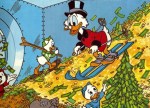
Oh, the economic hardships of giving up those charitable deductions!
White House minions Ken Baer and David Plouffe tried the hard sell on a few liberal and progressive bloggers in a teleconference on Monday Night according to Susie Madrak at C&L. Yes, it was yet another access blogger telethon where the White House tries to sell the progressive blogs with all the readership on the way to “Tote dat barge! Lift dat bale!” for the reelection effort and this stinker of a White House Budget. After all, the Republican we have in the White House now will be marginally less evil than the Republican we could get in the White House then if every one doesn’t just bend over and ask for more.
Although the minions said the budget asked for “shared sacrifice’, Plouffe had a difficult time coming up with concrete examples on how the very rich in the country would be doing their share of the sacrificing. The only examples they could provide were less deductions for mortgages and no deductions for charitable giving. I’m sure all the folks relying on charitable giving aren’t thinking the sacrifice part of the deal goes to their rich donors. Do they really think honest liberals will agree with this let alone try to sell it to others?
A conference call with Congressional Budget Office spokesman Ken Baer and White House adviser David Plouffe tonight was probably aimed at growing indignation in the blogosphere over the proposed Obama budget, which features your proverbial draconian cuts to just about every social program — except Social Security and Medicare.
It’s good that the administration is engaging in these calls because we get to hear more details about their budget instead of the usual MSM drone, but I’m not sure that bloggers are happy with the overall conversation since once we got into the details of arguing different cuts, it looked as though we were buying into the White House frame that the cuts were urgently needed in the first place, and many of us don’t believe that’s true.
The audio of the call is in our media player–above. What do you think?
Baer’s opening remarks focused on “shared sacrifice.”
My question: “When you’re talking about shared sacrifice, clearly, the working and middle class is getting a disproportionate slam everywhere they turn with this budget, and you’re talking about a few, what sound like token items to the rest of us out here, and I wonder how you rationalize that during this severe economic recession.”
Baer said people got that impression from the stories that were released early, without looking at the big-budget picture. (Click here.)
David Dayen at FDL was also on the call. His post draws similar conclusions. There’s an insane explanation of why the White House version of draconian cuts is better because of the timing of undesirable cuts. It seems straight out of newspeak world. It appears that the White House is still very confused about basic economics and multipliers. They appear to believe that March is an unsafe time for cuts but by October, recessionary budget cuts will be hunky dory.
Didn’t the mess they made of the first opportunity to get a stimulus right teach them anything? Do they really think they can finesse every economic variable to acquiesce to a hope and dream speech at a particular point in time? After all, they’ve done such a bang up job with the labor market already that we still have record rates of long term unemployed and full on market exits. How do you get a president re-elected when the lowest unrealistic unemployment rate you can offer up is around 7.5%? Even the Gipper was getting nervous about a re-election attempt with rates that high. Reagan’s administration switched to massive recapitalization of the military ala Keynesian stimulus to buy a re-election boost.
WTF do these people think we’re smoking over here in our pajama wearing hippy dreamland? The only thing I can figure is that this delay buys enough time to get through an election cycle so that the first wave hits but not the tsunami of recessionary anti-stimulus as the impact multiplies through out the economy. This way, Obamas gets to still happy talk some of the people all of the time about how things are getting better without looking like a complete liar. He also fights off conservative angst about deficit improvement before the next recession takes hold and makes everything much, much worse.
My question was this: Where does the Administration think demand will come from to reverse a three-year demand shortfall if you cut budgets in the immediate term at a time when 14 million people are unemployed, if state budgets show the same contraction, if trade remains in imbalance and if corporations are sitting on $2 trillion in cash? In other words, do you think economy can generate its own demand right now? I added this for Plouffe to give it a political angle: The budget predicts 8.2% unemployment at the end of 2012. No President has ever run for re-election with unemployment over 7.8% since 1948. Do you think it’s worth cutting budgets over the next two years and reducing aggregate demand at a time when 14 million Americans are unemployed, if the political benefit appears to be facing re-election with the highest unemployment in recorded history?
So here was the answer. Plouffe said that the employment estimates, they hope are conservative. (Actually, one criticism of the budget I heard yesterday was that the projections were pretty aggressive and above what CBO projects for the next few years.) He said that there is a lot of positive trajectory in terms of job growth, though not nearly enough, he stressed. He said that the President has said repeatedly that we cannot jeopardize the recovery with the budget, and that it does not have negative effects on the economy in terms of hiring and growth.
I don’t know how he can say that. Simple math indicates that taking $90 billion out of the economy, which this does in the first fiscal year starting in October, would have negative effects. The positive trajectory on job growth, reflected by two consecutive months of reductions in the topline unemployment rate by 0.4%, have not carried with it actual hiring growth, and could be attributed to noise in the data and rejiggering of population statistics. So when you’re talking about actual job growth, not many economists see it yet. And sucking money out of the economy when states are contracting and businesses aren’t spending will necessarily reduce that hiring.
This is when Ken Baer stepped in. And his answer was baffling. He said that the President’s budget covered Fiscal Year 2012, which was “a bit away,” and that the budget was constructed so that the cuts wouldn’t go into effect until a little later. Republican cuts from the current budget year will start March 5 if they get their way, and there’s a risk there.
I haven’t seen a complete list of invitees, but my guess is that there wasn’t an economist among them. Yup, it’s a tough life when you join the league of uncommon bloggers.
Monday Reads
Posted: January 31, 2011 Filed under: Corporate Crime, Egypt, Foreign Affairs, Global Financial Crisis, income inequality, John Birch Society in Charge, morning reads, SOTU, The Bonus Class, The Great Recession, U.S. Economy, U.S. Politics | Tags: Bennett, Corporate Welfare Recipients Koch brothers, GDP growth, Hatch, Innovation, median incomes flat, Public cost cutting leads to death, Snowe, Tea party targets Lugar, The Great Stagnation, Uncloak the Koch brothers 75 Comments Good Morning!
I thought I’d start the day off with some new topics given we’ve spent the weekend following world events unfold. One of the major complaints of the Egyptian people is their high unemployment rate. It’s basically the same as ours. They also have seen rising food and energy prices. Our overall price inflation is well under control at the moment, but there are world events that have made food and energy prices more volatile than usual. The Egyptians have experienced GDP growth rates that are twice ours, but like our country, the income improvements have advantaged the very few instead of the many for many of the same reasons. One of the guys that skedaddled on that airplane was the big telecom industry captain. We have many huge corporations–like GE–that exist on no bid government contracts that they never lose, even when they’ve been found endlessly maleficent.
I thought I’d start with Tyler Cohen who has been riffing on themes relevant to his for sell on line pamphlet The Great Stagnation. His NYT article this weekend buried one of the themes of the SOTU. It’s called ‘Innovation Is Doing Little for Incomes’.
The income numbers for Americans reflect this slowdown in growth. From 1947 to 1973 — a period of just 26 years — inflation-adjusted median income in the United States more than doubled. But in the 31 years from 1973 to 2004, it rose only 22 percent. And, over the last decade, it actually declined.
Most well-off countries have experienced income growth slowdowns since the early 1970s, so it would seem that a single cause is transcending national borders: the reaching of a technological plateau. The numbers suggest that for almost 40 years, we’ve had near-universal dissemination of the major innovations stemming from the Industrial Revolution, many of which combined efficient machines with potent fossil fuels. Today, no huge improvement for the automobile or airplane is in sight, and the major struggle is to limit their pollution, not to vastly improve their capabilities.
Although America produces plenty of innovations, most are not geared toward significantly raising the average standard of living. It seems that we are coming up with ideas that benefit relatively small numbers of people, compared with the broad-based advances of earlier decades, when the modern world was put into place. If pre-1973 growth rates had continued, for example, median family income in the United States would now be more than $90,000, as opposed to its current range of around $50,000.
You can find more discussion at Marginal Revolution. The Economist weighed in on the booklet tonight.
improvements in rich world living standards may, for the moment at least, come from the capture of policy low-hanging fruit. In other words, the rich world should focus on getting rid of blatantly foolish and costly policies. Moving from taxes on goods, like income, to bads, like traffic congestion, would be a good start. Not spending so much on medical treatments with dubious benefits would be another possibility. Cutting out policy foolishness like agriculture subsidies and the mortgage-interest deduction would be another positive step. Amid rapid growth, really silly policy choices could be tolerated, since surpluses continued to rise. As growth rates slow, the failure to cut out bad policies will mean continued stagnation or declines in living standards for some.And it’s a little amusing to focus on the implications of the spread of cheap-to-free internet amusement. As Mr Cowen notes, the availability of good, free internet entertainment has allowed a lot of people hit hard by falling incomes or recession-induced joblessness to maintain relatively high levels of utility (though this available substitute has also made it easier to cut down on physical consumption, with nasty effects on GDP).
Paul Krugman agrees here. Robert Reich struck a similar chord on stalled incomes in his response to the SOTU. Reich focuses on one of our topics. That would be the important list of what the president didn’t say.
What the President should have done is talk frankly about the central structural flaw in the U.S. economy – the dwindling share of its gains going to the vast middle class, and the almost unprecedented concentration of income and wealth at top – in sharp contrast to the Eisenhower and Kennedy years.
Although the economy is more than twice as large as it was thirty years ago, the median wage has barely budged. Most of the gains from growth have gone to the richest Americans, whose portion of total income soared from around 9 percent in the late 1970s to 23.5 percent in 2007. Americans kept spending anyway by using their homes as ATMs but the bursting of the housing bubble put an end to that – leaving them without enough purchasing power to reboot the economy. So the central challenge is put more money into the pockets of average Americans.
This narrative would be politically risky (opening Mr. Obama to the charge of being a “class warrior”) but at least honest. And it would allow him to connect the dots – explaining why his new health-care law is critical to reducing medical costs for most working families, why tax reform requires cutting taxes on the middle class while raising them on the rich, why the Bush tax cuts shouldn’t be extended for the wealthy, why deficit reduction must not sacrifice education and infrastructure (both important to rebuilding middle-class prosperity) and why any cuts in Social Security or Medicare must be on the backs of the wealthy rather than average working families.
I still can’t believe we have a President that doesn’t run a counter narrative to the Republican Voodoo economic fantasy. I guess it’s left to those of us in the blogosphere to hammer home traditional democratic values. So, speaking of some of the worst of the worst, there’s a movement afoot to UnCloak the Kochs. Those John Birch Society Billionaires that want to bring down social security have been taking up some virtual ink in left blogistan. Here’s something from the New York Observer: ‘7 Ways the Koch Bros. benefit from Corporate Welfare’.
Now that we’ve heard about their charitable giving, David’s 240-foot mega-yacht and role as patrons of the Tea Party movement, it’s time to ask a more serious question: How libertarian are they?
The short answer…not very.
Charles and David Koch, the secretive billionaire brothers who own Koch Industries, the largest private oil company in America, have spent millions bankrolling free-market think tanks and pro-business politicians in order, as David Koch has put it, “to minimize the role of government, to maximize the role of private economy and to maximize personal freedoms.” But a closer look at their dealings reveals that for the past 35 years the brothers have never shied away from using government subsidies to maximize their own profits, even while endeavoring to limit government spending on anything else.
These guys are a veritable bankroll for so-called think tanks that spout more tank than think. Some one should let them know that their businesses are hardly shining examples of a free market. These guys are card carrying members of the crony capitalist set.
In 1977, Charles Koch founded the Cato Institute, an influential libertarian think tank, with the aim of injecting free-market ideas into the mainstream. The Kochs would go on to establish and fund a vast network of overlapping think tanks, institutes, foundations, media outlets, and lobby groups that would vilify centralized government and promote laissez-faire capitalism as the only route to economic prosperity. The Mercatus Center, Americans for Prosperity, Reason Magazine, the Federalist Society and the Heritage Foundation are just a few of the right-wing organizations that run on Koch cash today.
David Dayen has a post up at FDL about protests organized to protest these bloated trust fund babies and their plutocratic friends. These guys are manufacturers of stupidity like climate change denial. Common Cause organized the protest.
After a litany of speakers – including Jim Hightower, Rick Jacobs of the Courage Campaign, and Common Cause President and former Illinois Congressman Bob Edgar, the entire group of protesters moved to the setup across the street from the resort. Police helicopters buzzed overhead. After a while, the police agreed to shut down Bob Hope Drive, and the protesters streamed across the street and directly in front of the resort, just a few inches away from the phalanx of riot cops. The usual protest chanting and raising of banners ensued. More cops were brought in, traipsing over the flower beds. And 25 protesters were taken away in a paddy wagon. The protests were generally peaceful, and the police professional.
The protesters generally decried the Koch Brothers’ influence over American democracy, in particular their use of the Citizens United ruling to spend corporate money in elections. Koch Industries’ funding of climate denialism and other conservative causes was on the minds of the protesters as well.
You can read some of the dirty deeds that pay others to do dirt cheap in the NYT article on the Tea Party targets. Here’s the list of who is in their ‘surveyor’ marks for the 2012 Senate elections. Evidently, Indiana Senator Richard Lugar is one of the guys they’re after. Here’s some more making their unclean, impure list.
In Maine, there is already one candidate running on a Tea Party platform against Senator Olympia J. Snowe. Supporters there are seeking others to run, declaring that they, too, will back the person they view as the strongest candidate to avoid splitting their vote. In Utah, the same people who ousted Senator Robert F. Bennett at the state’s Republican convention last spring are now looking at a challenge to Senator Orrin G. Hatch.
The early moves suggest that the pattern of the last elections, in which primaries were more fiercely contested than the general election in several states, may be repeated.
They also show how much the Tea Party has changed the definition of who qualifies as a conservative. While Ms. Snowe is widely considered a moderate Republican, Mr. Hatch is not. Mr. Lugar, similarly, defines himself as a conservative. He argues that he has consistently won praise from small-business groups, supported a balanced budget amendment and pushed for a reduction in farm subsidies and the closing of agricultural extension offices as part of an effort to reduce unnecessary spending — all initiatives that fall under the smaller government rubric of the Tea Party.
Guess that means there’s more bat shit crazy folks waiting in the wing to mangle and destroy American history and the constitution. Do you suppose we’ll see any more “I am not a witch” ads?
So, last week I posted something sent to me from BostonBoomer about the rise in violent attacks in prisons due to cost cutting measures and outsourcing to private firms. BB’s found another more horrible link. CNN reports the death of a correctional officer in Washington who had made a complaint to her union steward that she feared for her safety.
Jayme Biendl, 34, was discovered late Saturday night after workers at the Monroe Correctional Complex noticed her keys and radio were missing, according to a statement from the Washington State Department of Corrections. Staff at the prison immediately went to where she worked and found her unresponsive, it said.
Emergency responders declared Biendl dead at the scene shortly before 11 p.m. PT, the department said.
She had been strangled, according to Chad Lewis, a department spokesman.
So, it’s monday morning, I spent all weekend rewriting an article on Venture Capital. As long as you don’t have anything to say about that, because I’ve frankly reached my fill on the subject , I’d like to know …
What’s on you reading and blogging list today?
Tuesday Reads: The Anniversary of FDR’s Second Bill of Rights
Posted: January 11, 2011 Filed under: Anti-War, Barack Obama, Civil Liberties, Civil Rights, Equity Markets, Federal Budget, financial institutions, Global Financial Crisis, John Birch Society in Charge, New Orleans, Regulation, Social Security, Stock Market, The Great Recession, U.S. Economy, U.S. Politics | Tags: David Stockman, druggie bath salts, extremist political rhetoric, FDR, financial regulation, gold standard, Governexoricist Jindal, military spending, naked short selling, occupation of Iraq and Iran, right wing currency tropes, Second Bill of Rights, short selling, violence related to cross hairs map 125 Comments Good Morning!!

History Reads
Ever so often, we need to be reminded of history. I read a tweet yesterday by one of our long time news anchors down here in New Orleans.
normanrobinson1 norman robinson
Wondering if we as Americans really value what we have and whether we really care about leaving a future for the generations to follow.
This started me thinking about what future was left to me by the generations directly before me. Of course, we’re living in a world mostly free of NAZIs and Fascists because of the greatest generation. We’re living in a world where the Jim Crow Laws of Separate-But-Equal were torn down by the generation after that with the sacrifice of the heroic leaders of the civil rights movement. I have the right to vote because of my grandmother’s generation and her mother’s generation and what they did for us. I’ve also had consistent access to family planning and birth control because the first women of the baby boom generation and several generations of women before them worked hard for it. Stonewall made a tremendous difference in the lives of GLBTs. Then, there are programs like Social Security and institutions like the United Nations that came from the vision and leadership of FDR and the people who served in his cabinets like Francis Perkins, Henry Wallace, Cordell Hull and many others. They cared enough to build us quite a legacy.
Today is the 67th anniversary of a speech that was to convey that vision of a post-war America. The Second Bill of Rights was part of a State of the Union speech. I’m bringing this up for two reasons. First, because it clearly provides a road map–even today–for “what Americans really value”. I say that because poll after poll shows that the majority of American’s agree with these values even though our government doesn’t seem to reflect that at the moment. For that reason, I share with you today, the words of a leader with a vision and a gift for elocution.
From the FDR American Heritage Center Museum’s Website:
On January 11, 1944, in the midst of World War II, President Roosevelt spoke forcefully and eloquently about the greater meaning and higher purpose of American security in a post-war America. The principles and ideas conveyed by FDR’s words matter as much now as they did over sixty years ago, and the Franklin D. Roosevelt American Heritage Center is proud to reprint a selection of FDR’s vision for the security and economic liberty of the American people in war and peace.
The second reason I want to share this is that we’re coming close to President Obama’s third State of the Union Address. It is scheduled for January 25th. My guess is that FDR’s Second Bill of Rights and the vision he elucidated will officially die on that day. I am not expecting any thing close to the utterance of ‘Necessitous men are not free men’ or “People who are hungry and out of a job are the stuff of which dictatorships are made”.
Despite the obvious parallels between right now and the Great Depression–the high unemployment rates, the incredible number of foreclosures, and the breadth of necessitous men and women and children–I’m expectting many of the vestiges of FDR’s vision that prevent future calamities to be assaulted during Obama’s third State of the Union Address. Look closely at the list I put up top because so much of what was handed us has been trickling away.
As Norman Robinson contemplated via tweet, do we really value what we have today? Will we witness the destruction of what was handed to us and hand our children and grandchildren broken infrastructure, no hope for upward mobility, and useless institutions drained of funds by the greedy? Will any shell of what was envisioned for us in both the first bill of rights and the second remain? Frankly, I am expecting an ‘austerity’ speech that endorses the findings of the cat food commission. I also expect we will hear nothing of overreaching intrusion by the Patriot Act into our internet and cell phones. We are expected to diligently watch Football and bail out billionaires while everything else trickles up and away.
Our Dismal Job Market
Posted: January 7, 2011 Filed under: Barack Obama, Breaking News, financial institutions, Global Financial Crisis, jobs, Team Obama, The Great Recession, The Media SUCKS, the villagers, U.S. Economy, U.S. Politics, We are so F'd | Tags: Gene Sperling, labor force participation rate, long term unemployment, rigid wages, Sticky wages, unemployment 11 Comments Economists–well at least NeoKeynesian economists that look at data–frequently use words like “rigid” and “sticky” to describe the jobs market. Rigid is a good word. It means “deficient in or devoid of flexibility”. The Labor Markets are the biggest empirical hurdles to jump if you want to buy into some variant of supply-side economics or NeoClassical economics.
Wages and quantities of labor used to adjust very slowly. They appear to be dismally slow these days. Part of this is obviously due to outsourcing. The substitution of foreign (e.g. outside of our borders; legal status really doesn’t matter for purposes of macro growth) for US-based workers seems to have made the NeoKeynesian assumptions of sticky and rigid wages even more so.
What’s very interesting about today’s BLS report on jobs is that the unemployment rate inched down but the fundamentals in the job market don’t appear to be changing much. Plus, the unemployment rate inched down based on the way it’s calculated by more than anything else. It’s not really fooling people that know economics or finance, but will the public at large embrace the nuance? A huge portion of the populace is simply leaving the job market.
Felix Salmon explains some of the nuances in his Reuters Blog today called “No good news for the long-term unemployed”. He focuses on some of the buried numbers rather than the top number. Yes, he has a nifty graph you should check that out too.
The December jobs report turns recent history on its head. We’ve been used to healthy increases in employment making no dent in the unemployment rate, but this time a mediocre jobs figure—just 103,000 new jobs were created—coincides with a gratifyingly large fall in unemployment, to 9.4% from 9.8%. For those keeping track at home, that’s employment up by 103,000 and unemployment down by a whopping 556,000.
There’s no doubt that the headline payrolls number is a disappointment. The economy just doesn’t seem to be creating jobs: we need to see 150,000 new jobs a month just to keep pace with population growth. But is there some good news, at least, on the unemployment front?
I’m not sure. While unemployment is down from both December 2009 and December 2010, it’s down only for those who have been out of work for less than 26 weeks. The ranks of the long-term unemployed are still rising
Well, it’s not so ‘whopping’ in context–as we’ll see in a moment–but let’s look at some other things. The underlying numbers appear to be a total disconnect–and Salmon’s analysis is not unique among economists’ take on the situation–with the assessment of the President who just appointed lawyer Gene Sperling to do an economist’s job. President Obama also continued his rhetoric on substanial job creation being just around the corner and how the trend is just so much rosier under his leadership. Does any one outside of his circle actually believe this?
Now, read this Bloomberg article and notice the part at the end that I highlighted.
Obama said Sperling has been an “extraordinary asset” over the past two years as a senior adviser to Treasury Secretary Timothy Geithner, helping to pass a small-business jobs bill and a tax-cut compromise.
Obama said one of the reasons he selected Sperling is that “he’s done this before,” a reference to Sperling’s 1996-2000 leadership of the NEC during the Bill Clinton administration.
Obama also named Jason Furman as principal deputy director of the NEC, and nominated Katharine Abraham to the Council of Economic Advisers. He also nominated Heather Higginbottom as deputy director of the Office of Management and Budget.
Obama spoke on the same day that government data showed that the U.S. added 130,000 jobs in December and the unemployment rate dropped to 9.4%. Read MarketWatch’s story about jobs report.
Obama trumpeted 12 straight months of private-sector job creation and said, “the trend is clear.” But he said there’s a lot of work to do to get more people back in the labor force, and pledged to forge ahead with more job-creation efforts.
Sperling was also deputy NEC director during Clinton’s first term, which was marked by standoffs that resulted in government shutdowns. Sperling helped negotiate a balanced budget agreement in 1997 and was an advocate for the repeal of the Glass-Steagall law that separated commercial and investment banking.

 peej
peej Carissa
 bostonboomer
 dakinikat
 ecocatwoman
 mablue2
 Mama Lopez
 peggysue22
 quixote
 skydancingguestblogger
 Mona (aka Wonk the Vote)



 Sky Dancing
Recent Comments