
Our Dismal Job Market
Posted: January 7, 2011 Filed under: Barack Obama, Breaking News, financial institutions, Global Financial Crisis, jobs, Team Obama, The Great Recession, The Media SUCKS, the villagers, U.S. Economy, U.S. Politics, We are so F'd | Tags: Gene Sperling, labor force participation rate, long term unemployment, rigid wages, Sticky wages, unemployment 11 Comments Economists–well at least NeoKeynesian economists that look at data–frequently use words like “rigid” and “sticky” to describe the jobs market. Rigid is a good word. It means “deficient in or devoid of flexibility”. The Labor Markets are the biggest empirical hurdles to jump if you want to buy into some variant of supply-side economics or NeoClassical economics.
Wages and quantities of labor used to adjust very slowly. They appear to be dismally slow these days. Part of this is obviously due to outsourcing. The substitution of foreign (e.g. outside of our borders; legal status really doesn’t matter for purposes of macro growth) for US-based workers seems to have made the NeoKeynesian assumptions of sticky and rigid wages even more so.
What’s very interesting about today’s BLS report on jobs is that the unemployment rate inched down but the fundamentals in the job market don’t appear to be changing much. Plus, the unemployment rate inched down based on the way it’s calculated by more than anything else. It’s not really fooling people that know economics or finance, but will the public at large embrace the nuance? A huge portion of the populace is simply leaving the job market.
Felix Salmon explains some of the nuances in his Reuters Blog today called “No good news for the long-term unemployed”. He focuses on some of the buried numbers rather than the top number. Yes, he has a nifty graph you should check that out too.
The December jobs report turns recent history on its head. We’ve been used to healthy increases in employment making no dent in the unemployment rate, but this time a mediocre jobs figure—just 103,000 new jobs were created—coincides with a gratifyingly large fall in unemployment, to 9.4% from 9.8%. For those keeping track at home, that’s employment up by 103,000 and unemployment down by a whopping 556,000.
There’s no doubt that the headline payrolls number is a disappointment. The economy just doesn’t seem to be creating jobs: we need to see 150,000 new jobs a month just to keep pace with population growth. But is there some good news, at least, on the unemployment front?
I’m not sure. While unemployment is down from both December 2009 and December 2010, it’s down only for those who have been out of work for less than 26 weeks. The ranks of the long-term unemployed are still rising
Well, it’s not so ‘whopping’ in context–as we’ll see in a moment–but let’s look at some other things. The underlying numbers appear to be a total disconnect–and Salmon’s analysis is not unique among economists’ take on the situation–with the assessment of the President who just appointed lawyer Gene Sperling to do an economist’s job. President Obama also continued his rhetoric on substanial job creation being just around the corner and how the trend is just so much rosier under his leadership. Does any one outside of his circle actually believe this?
Now, read this Bloomberg article and notice the part at the end that I highlighted.
Obama said Sperling has been an “extraordinary asset” over the past two years as a senior adviser to Treasury Secretary Timothy Geithner, helping to pass a small-business jobs bill and a tax-cut compromise.
Obama said one of the reasons he selected Sperling is that “he’s done this before,” a reference to Sperling’s 1996-2000 leadership of the NEC during the Bill Clinton administration.
Obama also named Jason Furman as principal deputy director of the NEC, and nominated Katharine Abraham to the Council of Economic Advisers. He also nominated Heather Higginbottom as deputy director of the Office of Management and Budget.
Obama spoke on the same day that government data showed that the U.S. added 130,000 jobs in December and the unemployment rate dropped to 9.4%. Read MarketWatch’s story about jobs report.
Obama trumpeted 12 straight months of private-sector job creation and said, “the trend is clear.” But he said there’s a lot of work to do to get more people back in the labor force, and pledged to forge ahead with more job-creation efforts.
Sperling was also deputy NEC director during Clinton’s first term, which was marked by standoffs that resulted in government shutdowns. Sperling helped negotiate a balanced budget agreement in 1997 and was an advocate for the repeal of the Glass-Steagall law that separated commercial and investment banking.
Economist Heidi Shierholz: “There’s never been a pool of missing workers this large”
Posted: January 7, 2011 Filed under: jobs, Stock Market, Team Obama, The Great Recession, the villagers, U.S. Economy, U.S. Politics | Tags: Heidi Shierholz, Huffington Post, jobs, Lila Shapiro, Stock Market, Team Obama, The Great Recession, the villagers, U.S. Economy, U.S. Politics, unemployment, Wall Street Journal 16 Comments
Economics isn’t my area of expertise, but I can read, and the top story at Huffpo right now is pretty disturbing. Author Lila Shapiro spoke to some economists, including Heidi Shierholz, about the December jobs report, which came out today.
Although the unemployment rate fell to 9.4 percent from 9.8 percent in December, bringing the total number of officially unemployed Americans to 14.5 million, only 103,000 jobs were added in December according to the Labor Department’s BLS report — a number significantly lower than expected. (The Wall Street Journal reported that many Wall Street analysts were predicting “at or above 200,000” new jobs.)
The news gets worse: less than half of the drop in unemployment rate can be attributed to new job creation — the other half came from 260,000 Americans who have dropped out of the labor force altogether.
This brings the percentage of Americans who are either employed or actively looking for work down to 64.3 percent, what economist Heidi Shierholz calls “a stunning new low for the recession.”
[….]
“We have now added jobs every single month for a year,” Schierholz said. “So you would think that there would be labor force growth, these missing workers starting to come back in. Not only is that not happening, it’s actually starting to go in the other direction. There’s never been a pool of missing workers this large. It’s not clear to me when they’ll come back.”
That can’t be good, no matter what the White House and CNN try to get us to swallow.
At the Wall Street Journal the reaction to the jobs report doesn’t make things sound much better. One headline reads: Markets Whipsawed After Jobs Report. Here’s the gist:
Investors hoped that the jobs report would confirm expectations that a robust recovery was finally filtering through to long-stagnated labor markets. But after traders positioned aggressively this week on lofty expectations of a strong payrolls figure, the disappointing data had a relatively muted impact.
[….]
The Labor Department reported that the U.S. economy created 103,000 new positions last month, far below market consensus expectations for a 150,000 gain. In November, the economy added 39,000 jobs. The unemployment rate fell sharply to 9.4% from 9.7%.
Sustainable job creation has been elusive in an economy that is still recovering from the 2008 financial crisis. As a result of the troubled job market, analysts think the Federal Reserve is likely to continue full steam ahead with its controversial $600 billion plan to reinflate the economy.
Dakinikat can give us her expert take on this, but as a layperson, I think it’s obvious that the country is on the wrong track and some one needs to light a fire under the President and his incompetent economic advisers.
HEY VILLAGERS! WE NEED JOBS!!!
Lawyers and Bankers and Thugs, Oh My!
Posted: January 6, 2011 Filed under: Barack Obama, Team Obama, We are so F'd, WE TOLD THEM SO | Tags: Chamber of Commercie Lobby, Chief of Staff, Corporate Cronyism, The Chicago Way, William Daley 41 CommentsIf you need any proof that the Obama Presidency, Part Deux isn’t going to get any better, this is it. When is  the last time you read that the U.S. Chamber of Commerce liked anything a Democratic politician did?
President Barack Obama chose former commerce secretary William Daley as his new chief of staff Thursday, bringing a renowned powerbroker on the wavelength of big business into his retooled administration.
…
The former commerce secretary is an imposing figure steeped in the ways of Washington. As well as his tenure as Clinton’s commerce secretary, he helped to negotiate congressional ratification of the North America Free Trade Agreement (NAFTA).
…
“This is a strong appointment. Bill Daley is a man of stature and extraordinary experience in government, business, trade negotiations, and global affairs,” said US Chamber of Commerce President and CEO Thomas Donohue.
“He’s an accomplished manager and strong leader. We look forward to working with him to accelerate our recovery, grow the economy, create jobs, and tackle America’s global challenges.”
Yup. We continue on the Yellow Brick Road to the Chicago Way. Want some more information on this appointment?
Thursday Reads
Posted: January 6, 2011 Filed under: Barack Obama, morning reads, psychology, Team Obama, U.S. Economy, U.S. Politics | Tags: "professional left", 2010 Census, Barack Obama, BP oil spill, child pornography, Daryl Bem, dying birds and animals, Emptywheel, ESP, Howard Dean, John P. Wheeler III, memeorandum, murder, Pentagon, political advertising, Poverty, psychology, Robert Gibbs, senior citizens. social programs, smear campaigns 48 Comments
Out of Town News, Harvard Square
Good Morning!!
Gee, it’s great to be back in Beantown, even though my house looks like it was hit by a tornado. I already had books stacked all over the place because of my book selling project. I brought more books with me from Indiana, and I haven’t completely unpacked and put my stuff away. I’ll be cleaning up for a couple of days. At least I got everything out of the car today and went to the grocery store. Driving 1,000 miles in two days makes me really spacey though, so if I don’t make sense in this post, please try to make allowances.
You’ve probably heard already that Robert Gibbs plans to leave the White House in February to be an “outside political adviser” to Obama’s 2012 campaign. It’s the top story on Memeorandum right now.
“Robert, on the podium, has been extraordinary,” Mr. Obama said, declining to answer questions about who he intends to hire for any position. “Off the podium, he has been one of my closet advisers. He is going to continue to have my ear for as long as I’m in this job.”
Mr. Gibbs will remain part of the president’s inner circle of political advisers, along with David Axelrod, a senior adviser, and Jim Messina, a deputy chief of staff, who also are leaving the White House to focus on the president’s re-election effort. Mr. Gibbs will defend Mr. Obama on television – and will expand his presence on Twitter and other Internet platforms – as well as beginning to define the field of 2012 Republican presidential candidates.
“Stepping back will take some adjusting,” Mr. Gibbs said in an interview Wednesday morning. “But at the same time, I have a feeling that I will keep myself quite busy, not just with speaking, but continuing to help the president.”
He said he has no intention of establishing a political consulting or lobbying business, but he intends to work from the same downtown Washington office where David Plouffe has spent the last two years.
When I first heard this news, my first thought was about the role that Gibbs played in 2004, when he resigned from the Kerry Campaign and joined an “independent” group that produced the infamous attack ad that showed a photo of Osama bin Laden while the announcer described Howard Dean’s supposed deficiencies in foreign policy. It sounds like Gibbs will be more out front in 2012, but I’m betting he’ll still play the attack dog role–smearing opponents and generally saying the things Obama doesn’t dare say himself.
According the NYT story,
The leading potential replacements for press secretary include Jay Carney, a spokesman for Vice President Joseph R. Biden Jr., along with Bill Burton and Josh Earnest, who work as deputies to Mr. Gibbs. Other candidates also could be considered, an administration official said.
Emptywheel says Robert Gibbs will now become part of the group he derided as press secretary: “the professional left.”
Back when Gibbs was attacking the Professional Left, he made a distinction between the Progressives outside of DC and those inside DC squawking on the cable programs.
But if Gibbs is going to stay in DC, hanging out on Twitter, and appearing on the speaking circuit, doesn’t that make him a card-carrying member of the Professional Left?
Except the bit about him being so conservative, of course.
LOL
Out in the land of real Americans, 1 of 6 of us lives in poverty–including many senior citizens.
US Financial Regulation and Arbitrage
Posted: January 5, 2011 Filed under: Bailout Blues, commercial banking, Corporate Crime, Equity Markets, financial institutions, Global Financial Crisis, investment banking, Team Obama, U.S. Economy | Tags: Federal Reserve Bank, financial regulation, Obama Financial Reform, OCC, Regulatory Arbitrage, SEC 17 CommentsThere is no doubt that we have had a major world wide financial collapse drastically affecting many innocent people in terms of livelihood and life long savings. It is fair to say that if the regulators had done their job, the country would have not had the hard landing that was experienced in 2008. The 2010 Financial Reform Bill kicked the can down to the Regulators for implementation and the bankers still have influence. This article takes a look at who the regulators were and how they did or did not do their job. The Obama people in the regulator domain are identified along with examples of Bush regulator failures. Hopefully this will give insight into what is being done to preclude another crisis
The financial industry has a gaggle of regulators, each with its politically protected turf.
From Wikopedia: Financial regulation is a form of regulation or supervision, which subjects financial institutions to certain requirements, restrictions and guidelines, aiming to maintain the integrity of the financial system.
Regulation is an unnecessarily a complex subject. It is important to understand that in some cases financial entities can choose their regulator. Some regulators were much more lenient and in many cases banks switched to them, hence the term Regulatory Arbitrage. The following are the major Federal regulators: FED, SEC, OCC, OTS, FDIC, CFTC 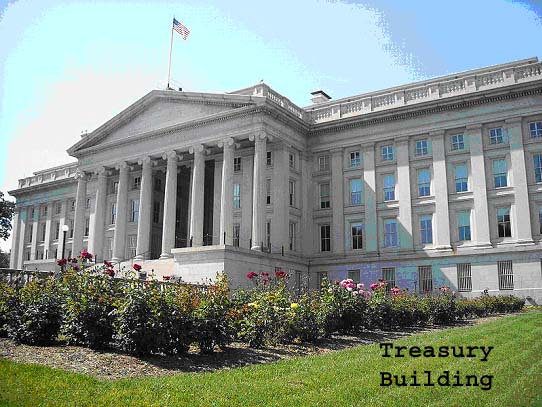 and FINRA described below. Except for the FED, most of these organizations have direct or indirect ties to the Treasury organization.
FED – Federal Reserve System
From Wikopedia: Its duties today, according to official Federal Reserve documentation, are to conduct the nation’s monetary policy, supervise and regulate banking institutions, maintain the stability of the financial system and provide financial services to depository institutions, the U.S. government, and foreign official institutions.Current chairman is Ben Bernanke, the former chairman was Alan Greenspan. Much more on Mr Greenspan later.
SEC – Securities and Exchange Commission
From Wikopedia: It holds primary responsibility for enforcing the federal securities laws and regulating the securities industry, the nation’s stock and options exchanges, and other electronic securities markets in the United States. Mary Schapiro is the current Chair. Predesessors were; Christopher Cox – 2005-2009, William H. Donaldson – 2003-2005, Harvey Pitt – 2001-03
OCC – Office of Comptroller of the Currency
From Wikopedia: US federal agency established by the National Currency Act of 1863 and serves to charter, regulate, and supervise all national banks and the federal branches and agencies of foreign banks in the United States. Current Acting Chairman is John Walsh. Previous Chairman were John C. Dugan – (2005 – 2010) John D. Hawke, Jr. – (1998–2004)
OTS – Office of Thrift Supervision ( recently folded into OCC)
From Wikopedia: United States federal agency under the Department of the Treasury. It was created in 1989 as a renamed version of another federal agency (that was faulted for its role in the Savings and loan crisis). Like other US federal bank regulators, it is paid by the banks it regulates. The OTS was initially seen as an aggressive regulator, but was later lax. Declining revenues and staff led the OTS to market itself to companies as a lax regulator in order to get revenue.
FDIC – Federal Deposit Insurance Corporation
From Wikopedia: United States government corporation created by the Glass-Steagall Act of 1933. It provides deposit insurance, which guarantees the safety of deposits in member banks, currently up to $250,000 per depositor per bank. The FDIC insures deposits at 7,895 institutions. The FDIC also examines and supervises certain financial institutions for safety and soundness, performs certain consumer-protection functions, and manages banks in receiverships (failed banks).
Sheila Bair is the current chairman of the FDIC and is viewed as a serious regulator with the right incentives for all concerned.
CFTC – Commodity Futures Trading Commission
From Wikopedia: The stated mission of the CFTC is to protect market users and the public from fraud, manipulation, and abusive practices related to the sale of commodity and financial futures and options, and to foster open, competitive, and financially sound futures and option markets.
CFTC is considered to be the primary regulator for Credit Default Swaps in the Dodd Frank regulation scheme.
FINRA – Financial Industry Regulatory Authority
From Wikopedia: In the United States, the Financial Industry Regulatory Authority, Inc., or FINRA, is a private corporation that acts as a self-regulatory organization (SRO). FINRA is the successor to the National Association of Securities Dealers, Inc. (NASD). Though sometimes mistaken for a government agency, it is a non-governmental organization that performs financial regulation of member brokerage firms and exchange markets.
Previously run by Mary Shapiro, FINRA has been critisized as being a ineffective regulator. Most notable was their (and SEC) allowing Bernie Madow to continue for 10 years to operate despite being warned by a whistle blower. When testifying before congress, the whistle blower (Harry Markopolos) said SEC was incompetent, FINRA was corrupt.
It must be said that Financial Regulation in the United States is done by committee of political bureauocrats. It is important to be aware of the fact that many of them are funded by fee’s assessed to the agencies they regulate. So opportunity for Regulatory Capture and Regulatory Arbitrage is prevalent in these agencies. The clear example is Office of Thrift Supervision bowing to their clients. The opposite example is that of Sheila Bair who tries to do the right thing for her clients despite critisizm.

 peej
peej Carissa
 bostonboomer
 dakinikat
 ecocatwoman
 mablue2
 Mama Lopez
 peggysue22
 quixote
 skydancingguestblogger
 Mona (aka Wonk the Vote)



 Sky Dancing
Recent Comments