
Monday Reads
Posted: May 16, 2011 Filed under: 2012 presidential campaign, Economy, Federal Budget and Budget deficit, fundamentalist Christians, Global Financial Crisis, income inequality, Medicare, religion, religious extremists, Republican politics, Republican presidential politics, Team Obama, The Bonus Class, The Great Recession, U.S. Economy, U.S. Politics | Tags: Debt Ceiling, End Times, evangelical Christians, Harold Campaign, Mark Thoma, Newt Gingrich, Rapture, the plutocracy, Timothy Giethner 52 Comments Good Morning!
Are you reading for the end of the world next Saturday? Nope, it’s not 2012 yet and we’re not talking about the Mayan Prophecy. Harold Campaign has convinced a group of evangelicals that the date is May 21, 2011. I wonder if any of them would like me to take care of their left behind pets for all their money? You can read more about the man and his end of days wishes at Salon.
The self-appointed harbingers are not tied to any particular church — they claim organized religion has been corrupted by the devil — but rather to Internet- and radio-based ministries. And their lone mission is to tell anyone and everyone that the end of days is May 21. That’s when, they insist, God’s true believers will be lifted into heaven and saved, during a biblical event widely referred to as the Rapture.
The finer points of Christian eschatology have long been the subject of dispute (not to mention the inspiration for movies and books, like the blockbuster “Left Behind” series). Though mainstream churches reject the the notion that doomsday can be predicted by any man, fringe scholars continue to work feverishly pinpointing the moment of the final, divine revelation. And one such man — 89-year-old radio host Harold Camping — has been at the game for decades.
In the early ’90s, Camping published a book titled “1994?,” which claimed judgment day would arrive in September of that year. When confronted with such a staggering anticlimax — the world, after all, kept on spinning — Camping chose not to be discouraged, but to learn from his mistakes. (He hadn’t considered the Book of Jeremiah, he says.) A civil engineer by trade, Camping went back to the drawing board and continued to crunch the numbers, before arriving at the adamant determination that Rapture would come on May 21, 2011. He began to spread the word through his broadcasting network, Family Radio, in 2009, and quickly built up a fervid following.
I guess it takes all kinds. That’s what my mother used to tell me when she was alive, anyway. Speaking of that, MoJo has a great list of Newtisms that will take you a trip back in time with Gingrich’s greatest tongue trips. Here’s some of his earliest hits.
1978 In an address to College Republicans before he was elected to the House, Gingrich says: “I think one of the great problems we have in the Republican party is that we don’t encourage you to be nasty. We encourage you to be neat, obedient, and loyal and faithful and all those Boy Scout words.” He added, “Richard Nixon…Gerald Ford…They have done a terrible job, a pathetic job. In my lifetime, in my lifetime—I was born in 1943—we have not had a competent national Republican leader. Not ever.”
1980 On the House floor, Gingrich states, “The reality is that this country is in greater danger than at any time since 1939.”
1980 Gingrich says: “We need a military four times the size of our present defense system.” (See 1984.)
1983 A major milestone: Gingrich cites former British Prime Minister Neville Chamberlain on the House floor: “If in fact we are to follow the Chamberlain liberal Democratic line of withdrawal from the planet,” he explains, “we would truly have tyranny everywhere, and we in America could experience the joys of Soviet-style brutality and murdering of women and children.”
What is it that Republicans put in their formula that turns out people like this? Newt was on Meet the Press yesterday where he mouthed off on a number of subject’s including Paul Ryan’s Medicare pogrome. This is the National Review’s take so read with caution.
Newt Gingrich’s appearance on “Meet the Press” today could leave some wondering which party’s nomination he is running for. The former speaker had some harsh words for Paul Ryan’s (and by extension, nearly every House Republican’s) plan to reform Medicare, calling it “radical.”
“I don’t think right-wing social engineering is any more desirable than left-wing social engineering,” he said when asked about Ryan’s plan to transition to a “premium support” model for Medicare. “I don’t think imposing radical change from the right or the left is a very good way for a free society to operate.”
As far as an alternative, Gingrich trotted out the same appeal employed by Obama/Reid/Pelosi — for a “national conversation” on how to “improve” Medicare, and promised to eliminate ‘waste, fraud and abuse,’ etc.
“I think what you want to have is a system where people voluntarily migrate to better outcomes, better solutions, better options,” Gingrich said. Ryan’s plan was simply “too big a jump.”
He even went so far as to compare it the Obama health-care plan.”I’m against Obamacare, which is imposing radical change, and I would be against a conservative imposing radical change.”
I have to say that having Trump, Gingrich, Santorum and Paul all debating each other on one stage would probably be highly entertaining. They could have a contest for who would make the craziest old uncle.
The White House is out on the road trying to head off problems with the national debt ceiling. Timothy Geithner says that the economy will double-dip if the Republicans don’t raise the ceiling.
In a heavily-anticipated response to Sen. Michael Bennet, D-Colo., who asked Geithner to document the economic and fiscal impacts of failing to lift the statutory debt limit, the Treasury secretary detailed a chain reaction that would cripple the economy, costing jobs and income.
“A default would inflict catastrophic far-reaching damage on our nation’s economy, significantly reducing growth and increasing unemployment,” said Geithner in the letter to Bennet which was dated May 13. “Even a short-term default could cause irrevocable damage to the economy.”
Geithner has imposed an August deadline for Congress to lift the $14.3 trillion debt ceiling, but lawmakers are still negotiating over Republican demands to tie the move to spending cuts. And a portion of the GOP still remains skeptical about the need to act by the deadline at all, arguing that the consequences have been overstates.
Economist Mark Thoma has a better explanation of how the refusal to increase the debt ceiling would impact the economy on CBS Money Watch. This explanation is much more precise.
If politicians fail to reach a deal to increase the debt ceiling, there would be a large fall in federal spending. The decline in federal purchases of private sector goods and services would reduce aggregate demand, and this could slow or even reverse the recovery (it could also threaten the delivery of critical services that some people depend upon). In addition, the failure to pay wages to federal workers would disrupt household finances and cause a further decline in demand, as would the failure of the government to pay its bills for the goods and services it has already purchased from the private sector (and it could even threaten some households and businesses with bankruptcy should the problem persist). There may be some room for the Treasury to use accounting tricks to avoid the worst problems, at least for a time, but it is not at all clear how well this would work to insulate the economy from problems and eventually this strategy will come to an end.
That’s potentially bad enough, but it’s far from the end of the problems that could occur. Failure to raise the debt ceiling could also undermine faith in the safety of US Treasury bills. If we default on bond payments, or appear willing to do so even if it doesn’t actually occur and investors lose faith in US Treasury Bills, they will begin demanding higher interest rates to cover the increased perception of risk. This could be very costly. We depend upon the rest of the world to finance our debt at extremely low interest rates. If the willingness of other countries to do this diminishes, then the cost of financing our debt would rise substantially. And that’s not all. In addition to increased debt servicing costs, an increase in interest rates would also choke off business investment potentially lowering economic growth, and the consumption of durable goods by households would fall as well. Rising interest rates would also be bad for the housing recovery (such as it is). Thus, failure to reach an agreement could be very costly.
The Economist‘s Blog on American Politics: Democracy in America has an interesting post right now on ‘The Road to 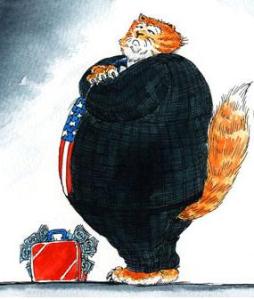 Plutocracy’. It’s an interesting read with a lot of quotes from other pundits.
THE word “plutocracy” is in the air these days. Some say the era of the de facto rule of the mighty top 10%, or top 1%, or whatever insidious sliver of the income distribution is thought to constitute the moneyed power elite, is upon us, or nearly so. I’m not so sure. I am sold on the proposition that there’s something deeply whacked about the American financial system, and that whatever that’s whacked about it is significantly responsible for the top 1% pulling so far away from the rest of the income distribution. This needs to be fixed, whatever its other consequences. It’s not clear to me, however, what exactly is whacked. I don’t know whether to sign up for Tyler Cowen’s “going short on volatility” story, Daron Acemoglu’s “financial-sector lobbying and campaign contributions ‘bought’ an enriching (and destabilising) regulatory structure” story, or some other story. No doubt the truth is in some subtle combination of stories. In any case, accounts such as Mr Acemoglu’s, according to which big players in certain sectors over time manage to rig the regulatory climate to their advantage, are quite compelling for reasons both theoretical and empirical
Newsweek has an interesting article up on why the megarich manage to have such a sweet tax deal. Even if we raise their income taxes, it really doesn’t hit them where it counts. Here’s why.
It drives economist Bruce Bartlett crazy every time he hears another bazillionaire announce he’s in favor of paying higher taxes. Most recently it was Mark Zuckerberg who got Bartlett’s blood boiling when the Facebook founder declared himself “cool” with paying more in federal taxes, joining such tycoons as Bill Gates, Warren Buffett, Ted Turner, and even a stray hedge-fund manager or two.
Bartlett, a former member of the Reagan White House, isn’t against the wealthy paying higher taxes. He’s that rare conservative who thinks higher taxes need to be part of the deficit debate. His beef? It’s a hollow gesture to say the federal government should raise the tax rate on the country’s top wage earners when the likes of Zuckerberg have most of their wealth tied up in stock. Many of the super-rich see virtually all their income as capital gains, and capital gains are taxed at a much lower rate—15 percent—than ordinary income. When Warren Buffett talks about paying a lower tax rate than his secretary, that’s because she sees most of her pay through a paycheck, while the bulk of his compensation comes in the form of capital gains and dividends. In 2006, for instance, Buffett paid 17.7 percent in taxes on the $46 million he booked that year, while his secretary lost 30 percent of her $60,000 salary to the government.
“It’s easy to say ‘Raise taxes’ when you know you’re not going to have to pay those taxes,” Bartlett says. “What I don’t hear is ‘Let’s raise the capital-gains tax.’” Instead the focus has been on the federal tax rate paid by those with an annual income of $250,000 or more—the top 3 percent of earners. Bartlett argues that while raising taxes on the country’s richest individuals would go a long way in easing the debt crisis, it makes no sense to treat the professional making a few hundred thousand dollars a year the same as the Richie Rich set. Maybe it’s hard to muster sympathy for an executive pulling down $1 million a year. But ours is a tax system where a person in the top tax bracket (those earning more than $374,000 in 2010) pays a tax rate of 35 percent on the upper portions of his or her income (37.9 percent if you include Medicare), whereas a hedge-fund manager or mogul earning 10 or 100 times that amount pays less than half that tax rate.
Well, now I’m thinking we’re all just so f’ked that I might as well stop while I’m ahead. What’s on your reading and blogging list today?
Some Alternative Takes on the Killing of Osama bin Laden
Posted: May 7, 2011 Filed under: Foreign Affairs, Hillary Clinton, Middle East, Pakistan, Psychopaths in charge, Team Obama, The Media SUCKS, U.S. Economy, U.S. Military, U.S. Politics | Tags: Barack Obama, drug trade, George W. Bush, Joseph Cannon, Mark Weisbrot, Noam Chomsky, Osama Bin Laden death, Robert Baer, Tom Englehardt, War on Terror 22 Comments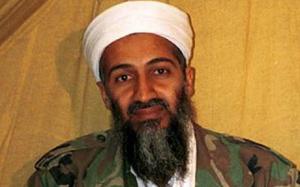
First of all, I think Joseph Cannon has it right. There is no way Obama sent just two helicopters into Pakistan to kill Public Enemy No. 1. The Pakistanis knew what was happening and cooperated–either willingly or unwillingly. Either the Pakistan government, military, and intelligence services wanted plausible deniability or the U.S. pressured them into going along with the assassination. I don’t believe for one minute that Obama wanted to take bin Laden alive. Here’s Cannon’s take:
Allow me to suggest one possible scenario. Let us suppose the Bin Laden daughter Safia was correct when she said that her father was captured and then executed. (Frankly, I think that’s a fairly good bet.) Both the body and the post-mortum photos would provide evidence of the execution. A close-range shot leaves powder burns and other evidence.
This hypothesis would also explain the changing stories about whether Obama and Clinton watched the operation on video in real time. (I feel certain that they did.) I suspect that they realized belatedly that they would need plausible deniability if the truth of the execution ever came out: “I am shocked, shocked to learn about this. At the time, I had no idea…”
After reading Cannon’s piece, I think it makes sense that Obama and the rest of his team did see the kill shots, but they’ll never admit it. I also think Cannon makes a lot of sense when he brings in the question of Al Qaeda and the drug trade.
The connection between the ISI and Al Qaeda primarily involved drugs. That’s the factor which everyone keeps forgetting about. Yet it is key.
It should also not be forgotten that the ISI has strong links to the CIA. America was perhaps the primary market for Afghanistan’s poppy product, and thus it was necessary for the Bin Laden network to maintain ties with powerful people in this country.
I haven’t yet formulated a proper theory about all of this. But it seems to me that the answer to the mysteries surrounding the life and death of Osama Bin Laden may revolve around the drug connection.
Via Truthdig, former CIA agent Robert Baer basically agrees with Joseph Cannon. In this radio interview, Baer says that the Pakistan government must have known where bin Laden was and it is highly unlikely that they weren’t involved in the operation. He says the chances of a foreigner living in a heavily secured compound in that area filled with military and security people is zero. Baer also says if the U.S. had done this, there would have been a much sharper reaction from Pakistan–they would have closed the U.S. embassy and thrown all Americans out of the country. According to Baer, those Black Hawk helicopters are extremely slow and they would have been seen for hours flying in from Afghanistan, and if Obama had sent two helicopters in alone, he would be extremely daring, but utterly foolish. No president has ever forgotten what happened to Jimmy Carter after his failed attempt to rescue the hostages in Iran.
There’s a lot more, you can listen to the interview if you’re interested. But the bottom line, as far as I’m concerned, is that our government thinks we’re stupid. They think we’ll believe whatever outrageous propaganda they feed us.
Next up, Noam Chomsky’s reactions. Like me, Chomsky thinks bin Laden should have been brought back here and put on trial.
It’s increasingly clear that the operation was a planned assassination, multiply violating elementary norms of international law. There appears to have been no attempt to apprehend the unarmed victim, as presumably could have been done by 80 commandos facing virtually no opposition—except, they claim, from his wife, who lunged towards them. In societies that profess some respect for law, suspects are apprehended and brought to fair trial. I stress “suspects.” In April 2002, the head of the FBI, Robert Mueller, informed the press that after the most intensive investigation in history, the FBI could say no more than that it “believed” that the plot was hatched in Afghanistan, though implemented in the UAE and Germany. What they only believed in April 2002, they obviously didn’t know 8 months earlier, when Washington dismissed tentative offers by the Taliban (how serious, we do not know, because they were instantly dismissed) to extradite bin Laden if they were presented with evidence—which, as we soon learned, Washington didn’t have. Thus Obama was simply lying when he said, in his White House statement, that “we quickly learned that the 9/11 attacks were carried out by al Qaeda.”
That’s why I love Chomsky. He comes right out and says exactly what he really thinks. Here’s a little more:
We might ask ourselves how we would be reacting if Iraqi commandos landed at George W. Bush’s compound, assassinated him, and dumped his body in the Atlantic. Uncontroversially, his crimes vastly exceed bin Laden’s, and he is not a “suspect” but uncontroversially the “decider” who gave the orders to commit the “supreme international crime differing only from other war crimes in that it contains within itself the accumulated evil of the whole” (quoting the Nuremberg Tribunal) for which Nazi criminals were hanged: the hundreds of thousands of deaths, millions of refugees, destruction of much of the country, the bitter sectarian conflict that has now spread to the rest of the region.
I know you’ll want to read the whole thing–it’s not very long, but it’s powerful.
Tom Englehardt, of the American Empire Project and TomDispatch.com argues that Osama bin Laden achieved his goals–he wanted to destroy the U.S. economy and generally have an impact on American society and culture.
Unfortunately, in every way that matters for Americans, it’s an illusion that Osama bin Laden is dead. In every way that matters, he will fight on, barring a major Obama administration policy shift in Afghanistan, and it’s we who will ensure that he remains on the battlefield that George W. Bush’s administration once so grandiosely labeled the Global War on Terror.
[….]
Consider it an insult to irony, but the world bin Laden really changed forever wasn’t in the Greater Middle East. It was here. Cheer his death, bury him at sea, don’t release any photos, and he’ll still carry on as a ghost as long as Washington continues to fight its deadly, disastrous wars in his old neighborhood.
Let’s face it. We no long live in anything resembling freedom. The Constitution is on life support. Our economy is wrecked, and we may never get back to where we were. We’re living in the last days of a dying empire. And the American empire wasn’t much to write home about anyway–certainly it can’t compare to the one Rome built.
Economist Mark Weisbrot, writing in the Guardian expands on bin Laden’s goals and his vision of what he wanted to happen to the U.S.
Bin Laden, who – like Saddam Hussein and other infamous mass murderers – was supported by the United Stated government for years before he turned against it, changed the world with the most destructive terrorist act ever committed on US soil. But the reasons that he was able to do that have as much to do with US foreign policy at that particular juncture as with his own strategy and goals.
Bin Laden’s goal was not, as some think, simply to bring down the US empire. That is a goal shared by most of the world, who – fortunately for us – would not use terrorist violence to further this outcome. His specific goal was to transform the struggle between the United States and popular aspirations in the Muslim world into a war against Islam, or at least create the impression for many millions of people that this was the case. As we look around the world 10 years after the attack, we can see that he had considerable success in this goal. The United States is occupying Afghanistan and Iraq, bombing Pakistan and Libya, and threatening Iran – all Muslim countries. To a huge part of the Muslim world, it looks like the United States is carrying out a modern-day crusade against them, despite President Obama’s assertions to contrary Sunday night.
George W. Bush happily obliged by inventing the “War on Terror.” And his successor, Barack Obama is now willingly carrying the torch. We should pull U.S. troops out of Afghanistan and Iraq, since the bogey man is dead. But that won’t happen.
Weisbrot says that the WOT made al Qaeda stronger and bin Laden probably knew that would happen:
Could bin Laden have known that the US response to 9/11 would have made his movement even stronger, even if he lost his base in Afghanistan? I would say it is likely. While it was not predictable that President Bush would necessarily invade Iraq – although it was a strong possibility – it was foreseeable that the US government would seize on 9/11 to create a new overarching theme for its interventions throughout the world.
The administration and the media are already searching for a new bogey man, and working hard to gin up as much outrage as possible among gullible Americans. The latest effort is the release of bin Laden’s home movies. But we only get video–no sound. Why doesn’t our government allow us to hear what’s going on in videos? Are they afraid bin Laden’s words will influence us? And why do they keep calling bin Laden’s home a “lair?” Is that supposed to make us see him and his family as animals?
Finally, what are we to make of the video below–Osama bin Laden watching himself on television? Are we supposed see him as narcissistic and self-involved? Are we expected to compare this aging man watching himself on TV with our glorious hero President who would supposedly never do such a thing?
How very appropriate that the video begins with a Coors Beer ad. It fits right in with the sports motif that is building around the killing of the bogey man: USA! USA! and all that….
Obama’s Political Leanings (pssssttttt … he’s no liberal)
Posted: April 26, 2011 Filed under: 2012 presidential campaign, abortion rights, Barack Obama, Democratic Politics, Domestic Policy, Environment, Environmental Protection, Reproductive Rights, Republican politics, Republican presidential politics, right wing hate grouups, Surreality, Team Obama, The DNC, The Media SUCKS, the villagers, U.S. Economy, U.S. Politics, Voter Ignorance, We are so F'd, WE TOLD THEM SO, Women's Rights | Tags: Ezra Klein, Obama, Right Wing, Rockefeller Republicans 7 Comments
Time to trot out the Unity Pony
I’m having an interesting day reading all the links out there and discussions on several Ezra Klein blog posts. Some one should’ve noticed Obama’s hero-worship of Reagan during the primaries about three years ago. Some one should’ve read his books that were gleeful about past Republican policy initiatives. But no, we were too busy discussing other things to notice how far to the right Barrack Obama really is.
Here’s one of Klein’s posts that’s getting netplay now: The shocking truth about the birthplace of Obama’s policies. Some people just have not been paying attention at all.
President Obama, if you look closely at his positions, is a moderate Republican from the early 1990s. And the Republican Party he’s facing has abandoned many of its best ideas in its effort to oppose him.
If you put aside the emergency measures required by the financial crisis, three major policy ideas have dominated American politics in recent years: a health-care plan that uses an individual mandate and tax subsidies to achieve near-universal coverage; a cap-and-trade plan that attempts to raise the prices of environmental pollutants to better account for their costs; and bringing tax rates up from their Bush-era lows as part of a bid to reduce the deficit. In each case, the position that Obama and the Democrats have staked out is the very position that moderate Republicans staked out in the early ’90s — and often, well into the 2000s.
I’ve been saying for years–literally–that the Obama Health Care Plan was more conservative than Nixon’s and basically was grabbed from Lincoln Chaffe’s Heritage Plan in the 1990s which was later called Dolecare and then later morphed into Romneycare. That’s just Klein’s first example. He also provides evidence on cap and trade which was supported by George H.W. Bush and Newt Gingrich when it was applied to ‘acid rain’ instead of ‘global warming’. He then moves to tax policies. Obama’s obvious proclivities to voodoo economics even showed up in the first stimulus which was top heavy with tax cuts and not big enough on job creation measures. Klein doesn’t even touch the increasing military budgets and interventions, the GLBT and women’s rights issues that get bargained away, FISA, Gitmo, etc., etc., etc. …
Here’s Mark Thoma’s take on the Klein piece and a follow-up by Andrew Samick. Samick considers Obama to be a Rockefeller Republican of all things. I’d say Obama’s even more to the right than that because that’s pretty much the side of the Republican party that raised me. Rockefeller Republicans love Planned Parenthood among other things. Warren Buffet is a great example. Hell, Charlton Heston loved Planned Parenthood. I even heard him speak on population control issues in Omaha, Nebraska in the mid 1970s sponsored by–gasp!–Planned Parenthood. The most interesting part is Thoma’s ending question. Why are we moving so far to the right now?
What’s left unexplained is why movements to the right by both parties — and these aren’t marginal moves — haven’t alienated the middle of the road, swing voters that seem to make a difference in elections. I don’t think I have a good answer for why. In the present case, there is some voter remorse — Obama is far more conservative than many thought — but I don’t think that explains the larger trend.
The original Ezra Klein piece is here: ‘Obama revealed: A moderate Republican’. Believe me, the conversation has gone viral with folks like The National Review (Be forewarned if you go there, it’s a putrid thread.) on line taking the bait. Booman even twists himself into a world class logic pretzel trying to say this is good news because it means Obama’s policies are “mainstream”. Joseph Romm at The Grist discusses the climate policy even further.
In the climate bill debate of the past two years, Obama and the Democrats embraced Republican ideas in an effort to minimize or avoid the partisanship inherent in other approaches that had been explicitly rejected by Republicans, including a tax and a massive ramp up in clean energy funding, as I’ve argued.
But Klein makes an effective case that it simply didn’t matter how reasonable or centrist or business-friendly a strategy environmentalists and progressive politicians pursued (or might have pursued). The Republicans simply were committed to stopping Obama from appearing bipartisan.
The Dems keeps getting suckered by Republicans the way Charlie Brown keeps getting suckered by Lucy. But the difference is that the GOP’s strategy wasn’t even a secret.
Ah, here’s the deal. Romm ties back to Thoma’s question. Why all this goose stepping to the right? Easy. It was the Republican strategy of say not to everything. They had to go further right to say no. Now, we’re in policy measures that are from John Birch Society land. Finally, the Democratic Congress said no more compromises when Planned Parenthood went on the chopping block. They also decided to get what they could get done before Boehner took over the house. We saw a few last minute Democratic Policies get passed but it was only due to the folks in Congress. Obama just went along because, hell, a win is a win, right?
Senate minority leader Mitch McConnell told The New York Times in March 2010, “It was absolutely critical that everybody be together because if the proponents of the bill were able to say it was bipartisan, it tended to convey to the public that this is O.K., they must have figured it out.” Why? As McConnell blurted out right before the 2010 midterm elections, “The single most important thing we want to achieve is for President Obama to be a one-term president.”
Obama kept proposing “conservative” policy at the onset. The Republicans announced they would sabotage it from the get go. This is something we complained about and pointed out here and elseblog for years. Obama’s opening policy moves were always a compromise position for real Democrats. He never was worried about putting policy out there with a real Democratic stamp on it because issues aren’t important to him. This President desperately wanted to pass anything with his name on it that would be called success. I frequently argued he wanted to makes sure there was a Health Plan that went through just to show he could do it when the Clintons couldn’t do it. He threw the Democratic plans over board almost immediately including the wildly popular single payer option. Dumping women’s access to private insurance with access to abortion was his final compromise maneuver to pass the silly thing. He’s thrown policies to the wind that have been basic Democratic Platform staples every chance he’s been in office. The Republicans were never going to act satisfied and were going to keep goosestepping further right. It was their announced strategy. He was more than willing to go right along with them because his proclivities are rightish anyway and he just wants the win.
So, my big question is why didn’t these folks see this coming all along like we did? Then a follow-up, what good does all this discovery now do three years too late?
Of course, if you read the Republican blogs, they’re still screaming Obama’s a socialist and Klein’s a fool. If you hit the partisan Democrats, the pretzel logic maneuvers are as obvious as Booman’s trying to find the sunny side up.
I’ll I can say is we told them so. Follow that up by a we are so f’d.
They ALL Suck
Posted: April 19, 2011 Filed under: 2012 presidential campaign, Barack Obama, Democratic Politics, Elections, John Birch Society in Charge, Populism, Republican presidential politics, Surreality, Team Obama, The Bonus Class, U.S. Economy, U.S. Politics, Voter Ignorance, We are so F'd | Tags: poltical campaigns, Presidential campaign, presidential polls 23 Comments
We have gone through the Mirror to a new perverse American Wonderland.
The true lessons from the last two elections have been pretty clear. Voting for “throwing the bums out” just brings worse bums into play. Also, voting for relative unknowns hoping that will change the direction of the country because of their ‘outsider’ status doesn’t work either. Sooner or later, they all become part of the problem. The current crop of new faces is a pretty good indication that voters should be using better criteria than change, hope, not part of the DC establishment, and talks a good talk. I wake up feeling like Alice who went through the looking glass into some perverse alternate reality. The problem is that there really seems like there’s no way back.
The displeasure is obvious in the polls. For the last two elections, folks voted for ‘outsiders’ and got even more dysfunctional government. This latest crop of newbie politicians seems to come in with a ready-made interest group on their coattails. The interest of the general populace isn’t even in the equation any more. We’re worried about unemployment, paying for expensive basics like food, health care, and gas at the pump while the current crop of elected officials just keep inventing surreal crises that simply feed their base’s interests and their donor’s pockets.
Right now, the majority of voters are screaming none of the above. Congress and the White House are hopelessly out of touch with the priorities of the electorate. When the public says its concerned about the economy, it doesn’t mean they are obsessed with the Standard & Poor’s downgrade of US debt instruments. I told you that after they got their tax cuts for billionaires through, raters would do that during the debt ceiling fight, right?
The Tea Party and the White House seemed to be in cahoots–despite seemingly being at odds with each other– to funnel what’s left of US wealth into the Wall Street Gambling Casino by either giving tax breaks to businesses who flee the country for higher stakes or rich people that buy ‘financial innovations’ that create risk and volatility in markets . This all happens along with funneling federal projects straight to them through no-bid government contracts and privatization schemes. These things also enrich market parasites like brokerage firms and insurance companies. I don’t get why people don’t connect these charades with the dismal economy and vote their interests. Maybe it’s because there’s really no one to vote FOR any more. There are only folks to vote against. Angry people do not make good decisions as a general rule.
President Obama has gotten no bounce from his reelection campaign announcement, with his job approval rating dropping by 7 percentage points since January, his personal popularity at a career low and 57 percent of Americans disapproving of his handling of the economy. Yet he leads the potential GOP field.
There are chances for the Republicans in next year’s elections, with former Massachusetts Gov. Mitt Romney and former Arkansas Gov. Mike Huckabee, in particular, nipping close to Obama in the latest ABC News-Washington Post poll. Economic pessimism, its highest in two years amid soaring gas prices, raises serious political peril for the president. But he benefits from two factors: personal approval that, while down, still exceeds his job rating, and substantial doubts about the opposing party’s lineup.
Forty-three percent of Republicans and Republican-leaning independents say they’re satisfied with the choice of candidates for the GOP nomination for president next year, compared with 65 percent satisfaction with the field at exactly this point four years ago. Nearly as many leaning-Republicans are dissatisfied with the field as are satisfied, and far more have no opinion of their potential candidates: 17 percent now vs. 3 percent at this point in 2007.
If those three are my choices, I’d rather opt out of the election and the country. This is dismal! No one is really satisfied with the presidential line-up. I don’t know about you but my choices at the local level have been abysmal for years. If there’s one candidate that really looks like they could actually make a change, a group of anti-abortion nuts, businesses, or other niche interest group comes out of the woodwork to tank them. Our political system is like the proverbial septic tank letting the worst float to the top.
Obviously, money drives races any more. It’s unlikely we can get that changed unless every state starts a ballot initiative for some kind of campaign finance reform. Politicians are like crack addicts that are unlikely to go to rehab and more likely to sound like Charlie Sheen and his ‘winning’ chimera. The problem is that now we have narrow interests funneling money into advertisements–ala swiftboating–that look like the message come from grass roots movements but are they really are the same old, same old that bring the same old, same old to Washington. It’s only a new face. It is not a new person or an agenda of real change.
I’m still amazed to find any one that doesn’t see the astroturf in the Tea Party with the now obvious funding of the Koch Brothers and the like. I’m sure that the investigation into all those ‘little’ donors to OFA will turn out finding yet another, perverse form of bundling. As Caro from Make Them Accountable believes, it’ll probably show that a bunch of Goldman Sachs people bought prepaid debit cards and had a hey-day. The media is so corporate any more that they won’t focus on the jobs crisis, they’re running with the political pack to funnel more public assets to their stockholders. Only the farthest reaches of Internatlandia appear to still be on the good side of the New American Looking Glass.
What a mess! I’m beginning to think we’re just on the verge of the collapse of the empire and there’s not much we can do about. The last ten years have been all about the wrong things. Just today, the UK Guardian released information on the relationship between big Oil and the Blair government’s decision to invade Iraq. I’m just assuming that there’s a Dubya/Cheney set of meetings and memos there too. More proof to support our well-founded skepticism of any motive but obscene profit-seeking from the already powerful and wealthy. We know that entire Iraq debacle was as contrived as ignoring the policies that would create jobs and growth and actually do something about the federal debt and deficit. The emphasis recently on tax cuts has simply exacerbated all the problems but is still held up as the panacea. The arm waving and speeches are just distractions from the real agenda. Sadly, some folks still want to believe that those fresh faces really are more than just masks.
It’s like we’ve all gone through the mirror to some evil wonderland. Help, we’ve fallen through and we can’t get up or out!

 peej
peej Carissa
 bostonboomer
 dakinikat
 ecocatwoman
 mablue2
 Mama Lopez
 peggysue22
 quixote
 skydancingguestblogger
 Mona (aka Wonk the Vote)



 Sky Dancing
Recent Comments