
Today’s Deadline Passes With No Progress: Now What?
Posted: July 24, 2011 Filed under: Democratic Politics, Economy, legislation, Medicare, Republican politics, Social Security, Surreality, the villagers, U.S. Economy, U.S. Politics, voodoo economics, We are so F'd | Tags: Asian markets, Barack Obama, Catfood Commission II, Federal debt ceiling, Grover Norquist, Harry Reid, John Boehner, kabuki, markets, Mitch McConnell, Nancy Pelosi, Super Congress, the dollar, Wall Street 19 Comments
Late last night I wrote a post summarizing what happened yesterday in seemingly endless debt ceiling kabuki dance that is being staged for our benefit by people who are supposed to be serving us but instead answer to Wall Street, Big Oil, Big Pharma, and the rest of the filthy rich.
Last night John Boehner told House Republicans that they needed to show some progress today in order to calm the Asian markets. After weeks of assuming the politicians in Washington would work something out in order to keep the US from defaulting on its debts, the banksters were suddenly realizing there is a good chance the feckless “leaders” will just go ahead and let it happen.
Apparently both Democrats and Republicans see this debt ceiling debacle as a golden opportunity to strip Americans of what is left of their social safety net. The only disagreement seems to be that Democrats want to include a pretense of raising some revenue along with all the cuts to social programs and Republicans want no new revenue sources, apparently because they see an opportunity to bring Grover Norquist’s dream to fruition:
Norquist favors dramatically reducing the size of the government. He has been noted for his widely quoted quip: “I don’t want to abolish government. I simply want to reduce it to the size where I can drag it into the bathroom and drown it in the bathtub.”
He has also stated, “Cutting the government in half in one generation is both an ambitious and reasonable goal. If we work hard we will accomplish this and more by 2025. Then the conservative movement can set a new goal. I have a recommendation: To cut government in half again by 2050”. The Americans for Tax Reform mission statement is “The government’s power to control one’s life derives from its power to tax. We believe that power should be minimized.”
So what was accomplished in today’s kabuki performance? Did the Republicans meet Boehner’s goal of sending a calming signal to Asian markets before their Monday opening. No, of course not.
From The New York Times: Deadline Passes as Debt Ceiling Talks Languish
House Speaker John A. Boehner and the Senate majority leader, Harry Reid, were preparing separate backup plans to raise the nation’s debt ceiling on Sunday, after the leaders were unable to end an increasingly grim standoff over the federal budget.
The dueling plans emerged as lawmakers appeared to miss a self-imposed deadline of 4 p.m. Eastern time to cut a deal before markets open in Asia. And at about 6 p.m., President Obama began meeting with Mr. Reid and the House Democratic leader, Nancy Pelosi, in the Oval Office to discuss the Reid proposal.
Not surprisingly, nothing new seems to have emerged from the talks at the White House. But here’s Harry Reid’s supposed “plan.”
Mr. Reid, the Senate’s top Democrat, was trying Sunday to cobble together a plan to raise the government’s debt limit by $2.4 trillion through the 2012 election, with spending cuts of about $2.5 trillion. He would seek to avoid cuts to entitlement programs, but it was unclear how those savings would be achieved.
Notably, the plan does not currently contain any new or increased taxes, an approach that many in his caucus would probably balk at.
For his part, John Boehner is still blabbing on about the Republicans ridiculous “cut, cap, and balance” plan.
Speaker John Boehner (R-Ohio) told his colleagues in a Sunday afternoon conference call that a debt deal with Obama is not the way forward. He said on the call that a plan that “reflects the principles” of the conservative “Cut, Cap and Balance” proposal that the Senate rejected will serve as the model for any legislation coming out of the House. The speaker, though, did acknowledge that the plan itself is a non-starter.
“So the question becomes – if it’s not the Cut, Cap and Balance Act itself – what can we pass that will protect our country from what the president is trying to orchestrate,” Boehner said, according to a source familiar with the call.
Boehner and Majority Leader Eric Cantor (R-Va.), according to several sources on the call, implored his colleagues to “stick together” to enact a budget deal that they can support. Boehner said an agreement “will require some of you to make sacrifices.” He told his colleagues that they shouldn’t worry about winning the battles, but rather the war, according to a source on the call.
I found this piece at Huffpo helpful, although I’ve never heard of the author, Mohamed el-Erian. CEO and co-CIO, Pacific Investment Management Company. Perhaps Daknikat has? Here’s what he had to say after the supposed deadline passed without any progress.
Friday’s stunning and very public quarrel between the president and the Speaker of the House of Representatives was the catalyst for a weekend of frantic negotiations on how to increase America’s debt ceiling, maintain the country’s sacred AAA rating, and avoid a near-term default. Meanwhile, administration officials and members of Congress took to the airwaves on Sunday trying, but largely failing, to strike the balance between statesmanship and another round of the Washington blame game.
It was hoped that all this would serve as a prelude to a political compromise announced just before the opening of Asian markets. This did not materialize. But while another self-imposed deadline has been missed, it is likely that the nation’s leadership will stumble into a short-term compromise over the next few days — one that raises the debt ceiling and avoids a debt default but, importantly, leaves the AAA rating extremely vulnerable and does little to lift the damaging clouds hanging over the US economy.
It will come down to the wire; and when the stopgap compromise is reached, many in Washington will declare victory and, in the process, claim credit for averting a national disaster. Yet the resolution will likely be temporary, and the damage will be real and long-lasting — both of which render an already worrisome situation even more difficult going forward. Indeed, by illustrating so vividly to the whole world what is ailing America, the weekend’s political theatrics should make us all worry even more about the world’s largest economy.
It’s an interesting article. Obviously our “leaders” have already done immense damage to our struggling economy, not just with their wrongheaded policies, but also with their childish game-playing.
Boehner’s plan right now seems to be to insist on a short-term temporary increase in the debt limit of about $1 trillion
accompanied by spending cuts of at least as much, tying the remainder of the debt-ceiling increase Obama has requested to further cuts in the future. The White House says Obama would veto such a measure.
The markets responded quickly:
U.S. stock futures fell, indicating the Standard & Poor’s 500 Index will slump after rallying within 1.4 percent of a three-year high, as failure to raise the federal debt limit intensified concern of a default.
The contract on the S&P 500 Index expiring in September declined 1.2 percent to 1,325.50 at 7:01 a.m. in Tokyo. The U.S. dollar fell against the euro, yen and Swiss franc.
[….]
The dollar weakened to $1.4390 per euro as of 6:01 a.m. in Tokyo from $1.4360 in New York at the end of last week. The greenback fell to 78.35 yen, and touched a four-month low of 78.12 yen, from 78.54 on July 22. It fetched 81.17 Swiss centimes from 81.92 last week after reaching a record low 80.33 on July 18. The yen traded at 112.75 per euro from 112.77.
I don’t pretend to understand all that gibberish, but I know it isn’t good.
The Wall Street Journal says the markets are “bracing for volatility as debt ceiling debate drags on.”
What really scares me is what is going on behind all the “partisan” kabuki. Let’s face it, Democrats are no more our friends than Republicans at this point. We simply can’t trust any of them. I wrote a few days ago about the Catfood Commission II clause that is included in the so-called McConnell plan–the fallback plan that Harry Reid is on board with. Apparently Boehner has also latched onto this idea, and the sequel to the Catfood Commission will also be included in whatever legislation the Republicans come up with.
Ryan Grim has a piece in Huffpo today about Catfood Commission II, which he characterizes as a “Super Congress.”
Debt ceiling negotiators think they’ve hit on a solution to address the debt ceiling impasse and the public’s unwillingness to let go of benefits such as Medicare and Social Security that have been earned over a lifetime of work: Create a new Congress.
This “Super Congress,” composed of members of both chambers and both parties, isn’t mentioned anywhere in the Constitution, but would be granted extraordinary new powers. Under a plan put forth by Senate Minority Leader Mitch McConnell (R-Ky.) and his counterpart Majority Leader Harry Reid (D-Nev.), legislation to lift the debt ceiling would be accompanied by the creation of a 12-member panel made up of 12 lawmakers — six from each chamber and six from each party.
Legislation approved by the Super Congress — which some on Capitol Hill are calling the “super committee” — would then be fast-tracked through both chambers, where it couldn’t be amended by simple, regular lawmakers, who’d have the ability only to cast an up or down vote. With the weight of both leaderships behind it, a product originated by the Super Congress would have a strong chance of moving through the little Congress and quickly becoming law. A Super Congress would be less accountable than the system that exists today, and would find it easier to strip the public of popular benefits. Negotiators are currently considering cutting the mortgage deduction and tax credits for retirement savings, for instance, extremely popular policies that would be difficult to slice up using the traditional legislative process.
So basically, no matter what legislation Congress ends up passing to raise the debt ceiling, this “Super Congress” will be included. We certainly can’t expect any disagreement on this from Obama who, as Grim describes it “has shown himself to be a fan of the commission approach to cutting social programs and entitlements.”
We are so utterly f&cked.
Tuesday Reads: Debt Ceiling Chicken, Roberts vs. Roe, Rove on Obama, NewsCorp, and Casey Anthony Rumors
Posted: July 19, 2011 Filed under: abortion rights, Barack Obama, John Birch Society in Charge, just because, morning reads, Psychopaths in charge, Republican politics, Surreality, The Media SUCKS, U.S. Economy, U.S. Politics, unemployment, voodoo economics, We are so F'd | Tags: abortion, armageddon, balanced budget amendment, Barack Obama, Casey Anthony, Federal debt ceiling, Harry Reid, James Murdoch, John Boehner, Justice John Roberts, Karl Rove, media, NewsCorp scandal, Roe v. Wade, Rubert Murdoch, Sean Hoare, U.S. Supreme Court, veto warning, whistleblowers 30 Comments
Good Morning!! I know we’re all sick and tired of the debt limit battle, but there is going to be a vote today in the House–on a stupid bill that includes a balanced budget amendment to the Constitution. What a joke! And with only about two weeks to go until armageddon.
Anyway, let’s get the depressing news out of the way first. From Politico: Debt ceiling debate turns ‘scary’
Washington’s frayed nerves showed through Monday amid tough talk on the right, a White House veto threat, canceled weekend passes and the top Senate Democrat likening default to a “very, very scary” outcome even for those “who believe government should be small enough to drown in a bathtub.”
“What will it take,” asked an agitated Majority Leader Harry Reid (D-Nev.), “for my Republican colleagues to wake up to the fact that they’re playing a game of political chicken with the entire global economy?”
House Speaker John Boehner confirmed a POLITICO report that he had met again privately with President Barack Obama at the White House on Sunday to try to get debt talks back on track. But ignoring Obama’s veto warning, Boehner will press ahead Tuesday with House votes on a revised debt ceiling bill that shows no sign of compromise on the spending and tax policy differences behind the crisis.
Indeed, with the Aug. 2 deadline exactly two weeks away, the House GOP is doubling down its bet with 10-year statutory spending caps intended to wring $5.8 trillion in unspecified savings from the government during the next decade — more than twice the $2.4 trillion debt ceiling increase that is allowed. And in his haste to act, Boehner will bring the so-called Cut, Cap and Balance bill to the floor under exactly the type of procedure he has said he abhors: limited debate and with no real review by any legislative committee.
Yes, the psychopaths and John Birchers are in charge, and there’s nothing we can do but wait and hope.
The Nation has a good article about the ongoing war on women by Amanda Marcotte and Jesse Taylor: How States Could Ban Abortion With Roe Still Standing
The Supreme Court granting states the power to ban abortion with Roe still standing seemed outlandish even just a few years ago, but the appointment of John Roberts to Chief Justice shifted the equation. Roberts specializes in decisions that reverse the spirit of precedent while leaving intact the letter of it, like when he squashed large chunks of Brown v the Board of Education while claiming to uphold it. To make it legal to ban abortion in the states, all the court needs is a law that eliminates legal abortion while dodging the logic of Roe v Wade.
Many state legislatures appear to be doing just that, writing legislation which Nancy Northup, the president of the Center for Reproductive Rights, describes as “part of an ongoing effort around the country to choke off women’s access to abortion by any means necessary – either by forcing doctors out of practice, banning procedures outright or demeaning women.”
How would the Roberts Court invalidate Roe without actually overturning it?
Until recently, Roe has been considered an insurmountable obstacle to states that wish to ban abortion. The conservative side of the Roberts bench, however, will likely view the Roe decision as a seesaw with women’s rights on one side and the state interest in the fetus on the other. Currently, most of the weight is on the woman’s side for three months, some weight moves over to the state’s side for the next three months, and then most of the weight moves to the state’s side for the last trimester.
Roberts has two options for reshaping Roe: the first is to claim the state’s interest in fetal life starts even sooner, using bogus science to claim we know more about the fetus than we did 1992, when Planned Parenthood v Casey was decided. The second option is to change the court interpretation of individual state rights and compelling state interest, while leaving Roe’s framework technically in place. The court could, for instance, define the state’s interests more broadly, allowing it to regulate differently within the (technically) still-operative Roe framework. This would allow a state like Kansas to claim to still have legal abortion while burying would-be abortion providers under so much red tape they couldn’t keep a clinic open. It would also allow states like South Dakota to create so many hoops for women to jump through to get abortion that women simply wouldn’t be able to do it. The right to choose would theoretically exist, but only to the extent states deign to recognize it.
Yikes!
This struck me funny–Karl Rove isn’t all that impressed with Obama’s fund-raising.
According to CBS radio’s Mark Knoller, who also serves as the unofficial White House press corps statistics king, the president attended 31 fundraisers in nine states during the last three months. That is more than a fundraising reception or dinner every three days.
Rove doesn’t think Obama can keep up that pace.
Thirty-one fundraisers in a quarter is a big strain on any president’s schedule. Mr. Obama can’t keep that pace up and not just because he’s got a day job. There are also just so many cities capable of producing $1 million and only so many times you can hold a million dollar fundraiser in them.
Here’s the funny part:
Even though at least $35 million (almost half the total Obama/DNC haul) can be credited to just 244 well-connected “bundlers,” Team Obama made a big thing of their 260,000 new small dollar donors. But that means only 292,000 donors from his last campaign have renewed their support for the re-elect so far. That’s just 6.6 percent of the 3.95 million people who donated to the ’08 Obama effort, only a quarter to a third of what most reelect campaigns could expect from renewal efforts at this point.
Perhaps there really is donor fatigue among the legions of stalwarts who put Mr. Obama in the White House the first time.
Yeah, I’d say there’s probably quite a bit of “donor fatigue” among the unemployed and underemployed masses.
British police are still insisting that the death of News of the World whistleblower Sean Hoare is not suspicious; but no one trusts the police because they were apparently taking bribes from Murdoch employees to help in stalking celebrities and other NOTW targets.
We’re being prepared to find out he died of an overdose by being reminded that Hoare had drug and alcohol problems. But so far we don’t have a cause of death. I say he was suicided. Even if he died of natural causes, no one will believe it.
Some people are beginning to question whether Rupert Murdoch can keep control of NewsCorp in the face of this growing scandal.
Independent directors of New York-based News Corp. have begun questioning the company’s response to the crisis and whether a leadership change is needed, said two people with direct knowledge of the situation who wouldn’t speak publicly. Rebekah Brooks, the former News International chief who Murdoch backed until last week, was arrested yesterday in London.
“The shell of invulnerability that Rupert Murdoch had around him has been cracked,” said James Post, a professor at Boston University’s School of Management who has written about governance and business ethics. “His credibility and the company’s credibility are hemorrhaging.”
Murdoch’s son James is also in big trouble and may not survive the investigation.
Finally, despite the threats of the media and the public alike to boycott Casey Anthony and consign her to oblivion, lots of people are still obsession about her. The latest frenzy is the media’s efforts to find out where Anthony has disappeared to. I thought that’s what everyone wanted her to do?
The Orlando Sentinel asks: Where in the World is Casey Anthony? My answer is “who cares?” But it seems lots of people still do. News crews and helicopters attempted to follow the SUV that Anthony got into after she walked out of jail, but
Anthony’s exact location was lost when the SUV stopped at the parking garage of the building where fellow defense team member Cheney Mason works.
Droves of journalists and spectators waited for hours at nearby Orlando Executive Airport, where many guessed Anthony would board a private plane and head out of town.
But there was no clear sign of Anthony boarding a plane and no flight manifests immediately available that would indicate who was on board the handful of flights that departed the airport early Sunday.
The secrecy surrounding Anthony’s whereabouts continued to fuel the rumor mill Monday as the media and public tried to figure out where the 25-year-old is holing up and when she’ll resurface.
The latest rumor is that Anthony is staying at Geraldo Rivera’s residence in Puerto Rico, but Rivera denies it.
Defense attorney Cheney Mason says that Anthony is “safe” and that hundreds of people have offered to help her.
Whatever. I really thought ignoring her was a good idea, but I guess it isn’t going to happen.
That’s all I’ve got for today. What are you reading and blogging about?
Breaking … WSJ Discovers Lack of Demand is behind Weak U.S. Economy
Posted: July 18, 2011 Filed under: Barack Obama, Domestic Policy, Economy, Surreality, The Great Recession, U.S. Economy, U.S. Politics, unemployment, voodoo economics | Tags: consumer demand, economics, Economists, economy, Federal spending cuts, government stimulus, jobs, Keynes, unemployment, Wall Street Journal 16 Comments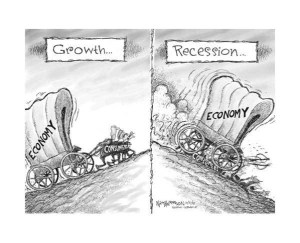
Via Andrew Leonard at Salon, the Wall Street Journal today reported the results of a survey they conducted with 53 economists:
In the survey, conducted July 8-13 and released Monday, 53 economists—not all of whom answer every question—were asked the main reason employers aren’t hiring more readily. Of the 51 who responded to the question, 31 cited lack of demand (65%) and 14 (27%) cited uncertainty about government policy. The others said hiring overseas was more appealing.
Only the conservative WSJ, the President, and Congresss could be surprised by these results. I’m not sure who these 53 economists were, but I think they must have been rather conservative, because the survey found that most did not think the government should do anything more to stimulate the economy.
Despite their forecasts for slow growth and an elevated unemployment rate, the economists aren’t in favor of further action either by the Fed or the federal government. Forty-one economists in the WSJ survey said the central bank shouldn’t pursue another round of bond-buying aimed at reducing interest rates, and thirty-eight said another round of fiscal stimulus shouldn’t be a part of any deficit-reduction package.
Economists added that they hope that as conditions begin to improve, albeit slowly, consumers will become more optimistic. “For whatever reasons, in addition to discrete headwinds, I think we’ve taken a hit to animal spirits and as those headwinds fade sentiment will revive,” said Stephen Stanley of Pierpont Securities. “Optimism can be self-sustaining, but pessimism can also provide a persistent drag.”
If any of the economists the WSJ talked to mentioned the possibility that the government itself could create jobs and thus stimulate demand–as FDR did the last time things were this bad, the WSJ did not report it.
Andrew Leonard crows:
what could be more obvious, even in the absence of rigorous training in economics? In the absence of demand, businesses will refrain from ramping up production and adding staff — no matter what employers think about the future regulatory climate. To prime this pump, to rev up this engine, to get the “delicate machine” working properly, the first focus for economic policymakers should be figuring out ways to boost demand.
Wouldn’t the best way to do that be to create jobs? Even Andrew Leonard doesn’t mention that. It seems ass-backwards to me to talk about getting consumers to spend more in order to get companies to start hiring. How can consumers spend more when many of them are unemployed? Maybe Dakinikat can explain this to me.
Anyway, it’s pretty amazing that the WSJ is admitting we have a demand problem. Now if only they could convince President Obama…
Thursday Reads
Posted: July 14, 2011 Filed under: Democratic Politics, fundamentalist Christians, morning reads, Republican politics, Republican presidential politics, Surreality, the villagers, U.S. Economy, U.S. Politics, voodoo economics, We are so F'd | Tags: Barack Obama, Eric Cantor, Freedom from Religion Foundation, John Boehner, liquor licenses, Mark Dayton, Minnesota government shutdown, Mitch McConnell, Mumbai attacks, Rick Perry Tim Pawlenty 40 Comments
Good Morning!! The big news is still the deadlocked debt ceiling talks. There will be another meeting of the squabbling children tomorrow afternoon. Frankly, I’m hoping for some serious fireworks.
Meanwhile, Eric Cantor is grabbing points with the Tea Party, but everyone else is laughing at him. Check this out from Joe Klein (yes, he’s an idiot, but the Villagers listen to him):
David Rogers over at Politico, who has been doing this–extremely well–for about as long as I have, has word that the President of the United States monstered down on Representative Eric Cantor in Wednesday’s deficit ceiling squabble. This is so refreshing on so many levels. Cantor has been using this crisis to undermine his leader John Boehner, by playing the Tea Party/Grover Norquist recalcitrance card. The boy badly needed someone to get up in his face and Barack Obama, of all people, apparently did, telling Cantor, in no uncertain terms, that he’d veto any short term deficit ceiling fix or, indeed, any plan that did not include revenue increases. Then Obama walked out, or the meeting ended, depending on whom you talk to.
So what we have now is the Republican party in, yes, disarray–a word used to describe Democrats almost exclusively, back in the day before the crazies took over the GOP store. You have Cantor and the House Teasies opposing any revenue increases, including a tax loophole closing plan that Ronald Reagan and Edmund Burke would have smiled upon. You have Boehner, struck dumb apparently, after his attempt at bipartisan statesmanship with the President was greeted by tossed shoes and catcalls from the Teasies. You have Mitch McConnell, well, I’m speechless about Mitch McConnell…
Here’s this Kentucky dude whose every action, before Tuesday, painted him as one of the most cynical operators we’ve seen on Capitol Hill since Pitchfork Ben Tillman–and now, suddenly, he’s gone all rational on us, chiding his Republican forces (that means you, Eric) about leading the party to the electoral slaughterhouse if they don’t take this debt ceiling business seriously. He has proposed to place the responsibility for raising the debt ceiling solely on the President and let Obama run with that. This is looking more likely today than it did yesterday.
Jonathan Allen at Politico suggests that Cantor is overreaching.
As he has surged to the forefront of debt-limit negotiations and faced round-the-clock scrutiny on cable and radio talk shows, a fundamental question about House Majority Leader Eric Cantor’s high-stakes political maneuvering is being discussed in the halls of power.
Is he building street cred with House Republicans or overplaying his hand?
The answer may be both. Cantor’s allies note that he’s been put in the spotlight by assignment — from Speaker John Boehner and President Barack Obama — not by choice. And they say he has gained political capital within the GOP conference.
Cantor has a lot riding on the outcome of the debt-limit negotiations. He’ll share in the public blame if they fall apart and the economy tanks, and he’ll face recriminations from his conservative base in the House if he cuts too soft a deal with the president.
At The New Republic, Jonathan Chait explains why “The Republican Crazy Is Not An Act.” Please don’t miss it.
John Boehner says working with the White House over the debt ceiling has been like “dealing with Jello,” whatever that means.
“Dealing with them the last couple months has been like dealing with Jell-o,” Boehner said. “Some days it’s firmer than others. Sometimes it’s like they’ve left it out over night.”
Boehner explained that talks broke down over the weekend because, he said, the president backed off entitlement reforms so much from Friday to Saturday, “It was Jell-o; it was damn near liquid.”
“By Saturday, they’d spent the previous day and a half just going backwards” on reforming entitlement programs such as Social Security, Medicare and Medicaid.
“The only thing they’ve been firm on is these damn tax increases,” the Speaker said.
I have no idea what he’s trying to say. Maybe he’s been spending too much time in the tanning salon.
The Villagers will keep on bickering, but real people are suffering out in the real world. There has been another terrible attack in Mumbai.
The blasts that rocked Mumbai killing 18 people and injuring 131 was a “coordinated terror attack” but officials have not singled out a group behind them, India’s home minister said Thursday….Three bomb blasts rocked India’s largest city in congested areas during the evening rush hour Wednesday.
The attackers used ammonium nitrate with a timer mechanism based on forensic evidence collected from the blast sites…
In Minnesota, the state government shut down two weeks ago because of lack of funds, and it is causing bars to shut down because they can’t renew their licenses.
By Wednesday, hundreds of bars, restaurants and liquor stores across Minnesota already had been stopped from buying new inventory due to expired permits the state has not renewed.
MillerCoors, the second largest brewer in the United States, failed to get its license to sell 39 brands in Minnesota renewed before a government shutdown over a budget impasse began with the new fiscal year on July 1.
“Without that brand label registration, their distribution and sales aren’t allowed to continue,” Doug Neville, a state public safety department spokesman, said on Wednesday.
The stalemate, the longest of the nation’s six state government shutdowns since 2002, began July 1 after Democratic Governor Mark Dayton and Republican legislative leaders failed to resolve an impasse about how to address a $5 billion budget deficit. Republicans want spending cuts alone, and Dayton is pushing for taxes to preserve services.
Dayton yesterday traveled to Rochester, which is home of the Mayo Clinic, and Albert Lea, about 10 miles (16 kilometers) from the Iowa border, to meet with people with disabilities and senior citizens to “discuss what is at stake in the state budget,” according to an e-mail from his office.
Meanwhile, legislative Republicans sent out an e-mail with charts showing the impact of the shutdown on areas including schools and parks in those two cities. It didn’t mention a booze drought.
Although businesses can sell alcohol with city liquor licenses, they can’t purchase new product without the state buyer’s card, Neville said in a telephone interview from St. Paul. Cards for 300 of 10,000 businesses have expired since the shutdown began July 1, and that will increase to 424 by the end of the month, Neville said.
Walter Shapiro writes that the whole thing is really Tim Pawlenty’s fault.
In addition to irrational politics and the state’s tradition of moralism, Pawlenty shares in the blame for Minnesota’s budgetary woes. And the GOP presidential candidate knows his financial stewardship is on the line: Late in the evening of June 30—just minutes before the Minnesota government officially shut down because of a budgetary impasse—Pawlenty held a hastily scheduled press conference at the Minneapolis-St. Paul Airport to try to shield himself from political attack over the shut-down. “Both in Washington, D.C., and in St. Paul, the Democrats continue their thirst for more spending and more taxes,” Pawlenty said in a boilerplate critique of his successor. “That’s not the right direction for Minnesota, and it’s not the right direction for our country.”
What the rhetorical onslaught was designed to hide was that, in truth, Pawlenty—like many governors in both parties juggling the books in the midst of the severe downturn—practiced budgetary legerdemain to avoid a statutorily forbidden deficit before he left office in January. Of course, it was hypocritical for Governor Pawlenty to eagerly bank $2.3 billion in federal stimulus money while Politician Pawlenty was denouncing Barack Obama for spending it. But, for all the partisan talking points over Pawlenty’s budgetary record, it strains credulity to believe that conservative GOP voters will blame him because Republicans in the Minnesota legislature held the line against a Democratic governor. In fact, Dayton may have caused more political mischief for Pawlenty with a recent unsuccessful proposal to help end the budgetary wars. Instead of his proposed 2 percent income-tax surcharge on millionaires, Dayton suggested that he could also accept a dollar-a-pack increase in the state cigarette tax. His purported inspiration: Pawlenty’s 2005 acceptance of a 75-cent-a-pack wholesale tax increase under the transparent guise of a Health Impact Fee. Undoubtedly relishing every moment, Dayton declared, “Governor Pawlenty even agreed to a cigarette tax increase. So there’s precedent for that.”
But, beyond the narrow implications for Pawlenty’s political fate, the broader national message from Minnesota is how easy it is for both parties to step off the cliff, heedless of the consequences. Already, there is talk that the government shutdown could last for months.
Will other states follow suit?
Finally, The Freedom From Religion Foundation (FFRF) is suing Texas Governor Rick Perry over a religious rally he is planning to hold in Houston in early August.
Perry proclaimed August 6 as a “Day of Prayer and Fasting for our Nation to seek God’s guidance” and invited governors from across the nation to join his Christian prayer summit at Reliant Stadium.
“Given the trials that beset our nation and world, from the global economic downturn to natural disasters, the lingering danger of terrorism and continued debasement of our culture, I believe it is time to convene the leaders from each of our United States in a day of prayer and fasting, like that described in the book of Joel,” Perry said in June.
The legal complaint asks the federal court to declare unconstitutional Perry’s organization, promotion and participation in the event because it violates the Establishment Clause of the First Amendment.
It says Perry’s active participation in the event violates the U.S. Constitution by “giving the appearance that the government prefers evangelical Christian religious beliefs over other religious beliefs and non-beliefs, including by aligning and partnering with the American Family Association, a virulent, discriminatory and evangelical Christian organization known for its intolerance.”
That should be a fun story to follow.
So… what are you reading and blogging about today?
Late Night: Moody’s Reviewing Downgrade of U.S. Credit Rating; Obama Slaps Down Eric Cantor.
Posted: July 13, 2011 Filed under: Republican politics, Surreality, U.S. Economy, U.S. Politics | Tags: arm-twisting, Barack Obama, bipartisanship, Eric Cantor, Federal debt ceiling, Moody's, The Chicago Way, U.S. Credit rating 11 Comments
Eric Cantor
The U.S., rated Aaa since 1917, was put on review for the first time since 1995 on concern the debt threshold will not be raised in time to prevent a missed payment of interest or principal on outstanding bonds and notes even though the risk remains low, Moody’s said in a statement yesterday. The rating would likely be reduced to the Aa range and there is no assurance that Moody’s would return its top rating even if a default is quickly cured.
President Barack Obama is considering summoning congressional leaders to Camp David this weekend to work on a plan to raise the debt ceiling after yesterday’s negotiations on a deficit-cutting plan of at least $2 trillion stalled, according to two people familiar with the matter. A failure to raise the debt limit that causes a default may lead to slower economic growth and another financial crisis.
“It’s obviously very serious in so many different ways,” said James Caron, head of U.S. interest-rate strategy at Morgan Stanley in New York, one of 20 primary dealers that trade bonds with the Federal Reserve. “Most people still believe there will be some type of an agreement struck to avoid all this stuff, and that’s what the market’s banking on.”
Meanwhile, according to the NYT, Fed Chairman Ben Bernanke
warned on Wednesday of a “huge financial calamity” if President Obama and the Republicans cannot agree on a budget deal that allows the federal debt ceiling to be increased. Moody’s, the ratings agency, threatened a credit downgrade, citing a “rising possibility” that no deal would be reached before the government’s borrowing authority hits its limit on Aug. 2.
The one piece of good news is that President Obama may be finally waking up to the reality that Republicans are totally insane and there is no point in negotiating with them.
the latest bipartisan negotiating session on Wednesday evening ended in heightened tension, if not outright discord. Republicans said Mr. Obama had abruptly walked out in an agitated state; Democrats described the president as having summed up with an impassioned case for action before bringing the meeting to a close and leaving.
Politico has a better description of what happened–basically, Obama told lit into Eric Cantor and brought him up short for once.
When Cantor said the two sides were too far apart to get a deal that could pass the House by the Treasury Department’s Aug. 2 deadline — and that he would consider moving a short-term debt-limit increase alongside smaller spending cuts — Obama began to lecture him.
“Eric, don’t call my bluff,” the president said, warning Cantor that he would take his case “to the American people.” He told Cantor that no other president — not Ronald Reagan, the president said — would sit through such negotiations.
That’s Cantor’s version. Democratic sources said that
“Cantor’s account of tonight’s meeting is completely overblown. For someone who knows how to walk out of a meeting, you’d think he’d know it when he saw it,” a Democratic aide said. “Cantor rudely interrupted the president three times to advocate for short-term debt ceiling increases while the president was wrapping the meeting. This is just more juvenile behavior from him and Boehner needs to rein him in, and let the grown-ups get to work.”
Now here’s the kicker:
“Obama lit him up. Cantor sat in stunned silence,” said an official in the meeting. “It was incredible. If the public saw Obama he would win in a landslide.”
Maybe Obama really does have some balls guts? Maybe it just took a snot-nosed squirrely creep like Cantor to get a rise out of him. It does seem that for once Obama has managed to force the Republicans into a corner by offering cuts in Medicare and Social Security and then threatening not to write checks in August.
Stay tuned. There will be more discussions at the White House tomorrow afternoon. Maybe it’s time for Obama to do the the Chicago way. The heck with bipartisanship–time for some major arm-twisting. Just raise the frickin’ debt ceiling and be done with it.

 peej
peej Carissa
 bostonboomer
 dakinikat
 ecocatwoman
 mablue2
 Mama Lopez
 peggysue22
 quixote
 skydancingguestblogger
 Mona (aka Wonk the Vote)



 Sky Dancing
Recent Comments