
It’s Saturday!
Posted: October 22, 2011 Filed under: #Occupy and We are the 99 percent!, Barack Obama, Congress, Democratic Politics, morning reads, Republican politics, Social Security, U.S. Economy, U.S. Politics, unemployment | Tags: Bain Capital, Barack Obama, Black Swan, DNC, Eric Cantor, Human Rights, interest on student loans, Mitt Romney, Muammar Gaddafi, Paul Ryan, Paul Volker, Pell Grants, Regulations, student loans, Volker rule, Wall Street donors, war crimes, Wharton School, World Bank 33 Comments
Happy Saturday Sky Dancers!! It’s a beautiful fall day here in Indiana, but I’m looking forward to getting back to Boston. I’ll be taking off in a couple of days and I hope to be home by Tuesday or Wednesday. My mom is going along for the ride so she can hang out with her youngest grandsons for awhile. It will be fun, because she’ll be there over Halloween. But enough about my boring life–let’s get to the news.
This story is a couple of days old, but still worth reading. Via BDBlue at Corrente, Which GOP candidate do you think has raised the most money from Wall Street?
Despite frosty relations with the titans of Wall Street, President Obama has still managed to raise far more money this year from the financial and banking sector than Mitt Romney or any other Republican presidential candidate, according to new fundraising data.
Obama’s key advantage over the GOP field is the ability to collect bigger checks because he raises money for both his own campaign committee and for the Democratic National Committee, which will aid in his reelection effort.
As a result, Obama has brought in more money from employees of banks, hedge funds and other financial service companies than all of the GOP candidates combined, according to a Washington Post analysis of contribution data. The numbers show that Obama retains a persistent reservoir of support among Democratic financiers who have backed him since he was an underdog presidential candidate four years ago.
And get this–Obama has raised nearly twice as much as Romney from the Mittster’s old firm, Bain Capital! So don’t believe all those stories in the media about the Wall Street titans switching to Mitt.
Here’s another “breaking news” story from Forbes: US Businesses Not Being Strangled By Regulation And Taxation, World Bank Says. Gee, no kidding? But the Republicans say that’s the main cause of our economic problems, don’t they?
The World Bank uses indicators such as time spent to set up a business to getting credit, among other things, in benchmarking the 183 countries it ranks in “Doing Business”. The report measures and tracks changes in the regulations applied to domestic companies in 11 areas in their life cycle–such as investors rights, taxation, cross border transactions, legality and enforcement of contracts and bankruptcy law. A fundamental premise of doing business is that economic activity requires good rules that are transparent and accessible to all, not just big business. Such regulations should be efficient, the World Bank states, striking a balance between safeguarding some important aspects of the business environment and avoiding distortions that impose unreasonable costs on businesses. “Where business regulation is burdensome and competition limited, success depends more on whom you know than on what you can do. But where regulations are relatively easy to comply with and accessible to all who need to use them, anyone with talent and a good idea should be able to start and grow a business (legally),” the World Bank said.
Where does the supposed regulation and taxation crippled U.S. stand in the rankings? It is number four, trailing behind New Zealand (3), Hong Kong (2) and Singapore (1).
What it looks like from the research desks at one of the most powerful and elite multilateral institutions on the planet is a U.S. that does not have the government in its way, but a U.S. whose government is more out of the way than it is in every other major economy on earth, including mainland China.
Wow, I wonder if Congressman Paul Ryan reads Forbes? Naaaah… probably too far left for him. And speaking of Ryan, he appeared at a town hall meeting in Muskego, WI yesterday and made a complete ass of himself as usual. From Think Progress:
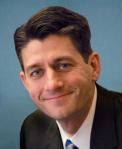
During a town hall today, House Budget Committee Chairman Paul Ryan (R-WI) was asked by Matthew Lowe, a student, why the GOP wants to cut Pell Grants. Ryan responded by saying that the program is “unsustainable,” before telling Lowe that he should be working three jobs and taking out student loans to pay for college, instead of using Pell Grants:
LOWE: I come from a very middle-class family and under President Obama, I get $5,500 per year to pay for school, which doesn’t come close to covering all of the funding, but it helps ease the burden. Under your plan, you cut it by 15 percent. I was just curious why you would cut a grant that goes directly to the middle- and lower-class people that need it the most.
RYAN: ‘Cause Pell Grants have become unsustainable. It’s all borrowed money…Look, I worked three jobs to pay off my student loans after college. I didn’t get grants, I got loans, and we need to have a system of viable student loans to be able to do this.
That’s funny. I read that Ryan used his father’s Social Security survivor benefits to put himself through college. I’d like to see some documentation on those three jobs he claims he worked while attending classes, writing papers, and studying for exams. Besides, I’ll bet the unemployment rate for college-age kids wasn’t at depression levels back then.
And speaking of paying for college, here’s an interesting piece at Truthout by Ellen Brown: Can the Fed Prevent the Next Crisis by Eliminating Interest on Student Loan Debt?
Among the demands of the Wall Street protesters is student debt forgiveness – a debt “jubilee.” Occupy Philly has a “Student Loan Jubilee Working Group,” and other groups are studying the issue. Commentators say debt forgiveness is impossible. Who would foot the bill? But there is one deep pocket that could pull it off – the Federal Reserve. In its first quantitative easing program (QE1), the Fed removed $1.3 trillion in toxic assets from the books of Wall Street banks. For QE4, it could remove $1 trillion in toxic debt from the backs of millions of students.
The economy would only be the better for it, as was shown by the GI Bill, which provided virtually free higher education for returning veterans, along with low-interest loans for housing and business. The GI Bill had a sevenfold return. It was one of the best investments Congress ever made.
There are arguments against a complete student debt write-off, including that it would reward private universities that are already charging too much and it would unfairly exclude other forms of debt from relief. But the point here is that it could be done and it (or some similar form of consumer “jubilee”) would represent a significant stimulus to the economy.
According to Brown, student loan debt is “the next Black Swan.”
Here’s another stupid Republican story for you. Eric Cantor was scheduled to give a speech yesterday at the elite Wharton School of Business at the University of Pennsylvania. Cantor was to speak on what Republicans plan to do about income inequality. The school was so excited that they opened the talk to the public. In addition, there was to be a protest by several groups, including Occupy Philly.
Guess what Cantor did? He wimped out and cancelled. ROFLOL! From the LA Times:
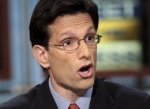
Cantor was scheduled to speak on income inequity at a lecture hosted by the Wharton business school. The Virginia Republican’s office said he called off the speech after learning that protesters planned to rally outside and attendance would not be limited to students and others affiliated with the school.
Ron Ozio, director of media relations at University of Pennsylvania, said the business school “deeply regrets” that the event was canceled.
“The university community was looking forward to hearing Majority Leader Cantor’s comments on important public issues, and we hope there will be another opportunity for him to speak on campus,” Ozio said in a statement. “The Wharton speaker series is typically open to the general public, and that is how the event with Majority Leader Cantor was billed. We very much regret if there was any misunderstanding with the Majority Leader’s office on the staging of his presentation.”
This is pretty disgusting: Libyans line up to see Gaddafi’s body on display; groups call for probe into death
International human rights groups called Friday for an investigation into the death of former Libyan leader Moammar Gaddafi as gory new videos showed him being spat at and punched by revolutionaries and as skepticism mounted about official claims that he was shot in crossfire after being captured.
The new cellphone videos cast a shadow over the revolutionaries even as they were celebrating the end of their eight-month struggle to wrest control of the country. NATO had backed the rebels in the name of shielding pro-democracy civilians from Gaddafi’s brutality.
“The government version certainly does not fit with the reality we have seen on the ground,” said Peter Bouckaert of Human Rights Watch, who has been investigating the capture of Gaddafi in his home town of Sirte. Amnesty International warned that the killing could be a war crime.
Why do I suspect the U.S. Government gave the go-ahead for Gaddafi to be executed, just like Osama bin Laden? You might want to read Joseph Cannon’s take on this one.
Finally, late last night the Volker Rule was number 1 in Google’s top stories. From the NYT:
When Paul Volcker called for new rules in 2009 to curb risk-taking by banks, and thus avoid making taxpayers liable in the future for the kind of reckless speculation that caused the financial crisis and resulting bailout, he outlined his proposal in a three-page letter to the president.
Last year, when the Dodd-Frank Wall Street Reform and Consumer Protection Act went to Congress, the Volcker Rule that it contained took up 10 pages.
Last week, when the proposed regulations for the Volcker Rule finally emerged for public comment, the text had swelled to 298 pages and was accompanied by more than 1,300 questions about 400 topics.
Wall Street firms have spent countless millions of dollars trying to water down the original Volcker proposal and have succeeded in inserting numerous exemptions. Now they’re claiming it’s too complex to understand and too costly to adopt.
Gee, what a surprise. I wonder how many of those millions were taxpayer dollars?
So…what are you reading and blogging about today?
Tuesday Reads: Obama’s Deficit-Reduction Plan, Backsliding Obots, Rev. Wright, and Dr. Doom
Posted: September 20, 2011 Filed under: American Jobs Act, Barack Obama, Democratic Politics, Domestic Policy, Global Financial Crisis, income inequality, Medicaid, Medicare, morning reads, Social Security, U.S. Economy, U.S. Politics | Tags: Booman, Chris Hedges, class warfare, digby, Ezra Klein, Greg Sargent, Jon Walker, Jonathan Cohn, Martin Luther King, Maya Angelou, Nouriel Roubini, Rev. Jeremiah Wright 45 Comments
Good Morning!! Let’s see what’s happening in the news today.
Well, of course the Obama apologists are claiming that he has suddenly grown a backbone of steel and become the liberal messiah they all dreamed of in 2008. I already told you about Ezra Klein’s delusional column last night. The other usual suspects are also getting leg tingles, and former Obots are starting to backslide.
Greg Sargent has put on his rose-colored glasses and taken a few swigs of LSD-laced Koolaid:
This has to be the clearest sign yet that Obama has taken a very sharp populist turn as he seeks to frame the contrast between the parties heading into 2012. During his remarks this morning, Obama directly responded to Republicans accusing him of “class warfare,” but rather than simply deny the charge, he made the critical point that the act of protecting tax cuts for the rich is itself class warfare, in effect positioning himself as the defender of the middle class against GOP class warriors on behalf of the wealthy.
Wow! I’ll bet it never occurred to anyone that income inequality equals class warfare until Obama figured it out. Amaaaazzzzing!!
A senior administration official tells me that parts of Obama’s “class warfare” broadside were ad-libbed. Here’s the key chunk — and it’s a script that could have been written by just about any card-carrying member of the “professional left:”
Warren Buffett’s secretary shouldn’t pay a higher tax rate than Warren Buffett. There’s no justification for it. It is wrong that in the United States of America, a teacher or a nurse or a construction worker who earns $50,000 should pay higher tax rates than somebody pulling in $50 million…
We’re already hearing the usual defenders of these kinds of loopholes saying, “this is just class warfare.” I reject the idea that asking a hedge fund manager to pay the same tax rate as a plumber or a teacher is class warfare. I think it’s just the right thing to do. I believe the American middle class, who’ve been pressured relentlesly for decades, believe it’s time that they were fought for as hard as the lobbyists and some lawmakers have fought to protect special treatment for billionaires and big corporations.
Nobody wants to punish success in America … All I’m saying is, that those who have done well, including me, should pay our fair share in taxes to contribute to the nation that made our success possible.
Holy sh*t!! Obama ad libbed? Hope ‘n’ change! Change we can believe in! I guess it’s just me, but I thought that speech sounded kind of weak and defensive. But what do I know?
Booman has an even better rationalization for Obama’s behavior than Beltway Bob Ezra Klein. According to the ever-gullable Booman,
…the president has a lot more credibility now when he takes his ideas to the public and says the the Republicans aren’t interested in compromise. You have to try and fail to get a compromise before that argument has any resonance. It’s not so much 11-Dimensional chess as basic common sense. Everyone’s poll numbers suffered during the summer, but no one’s standing was weakened more the Republicans’. That’s not an accident.
So Obama must have planned this. The man is brilliant!!
Digby says Obama is in campaign mode and that’s why he’s trying to sound strong and determined.
My first thought is that it appears the administration has finally decided that there’s nothing to be gained with exclusively delivering post-partisan pablum. It certainly sounds as though he’s thrown down the gauntlet. Unfortunately, the President appears to want to have two fights going into this election, one over job creation and one over whose plan to cut the deficit is better, which I think is a confusing waste of time. (Focus like a laser beam on jobs and tell the Republicans they’ll have to go through you to get to the safety net and I think people would instinctively understand that he’s on their side.) But that isn’t this president’s style and perhaps it wouldn’t be believable if he did it. So, this is at least a change of tactics, more confrontational in tone, which is his best hope for reelection since it turns out people aren’t really all that impressed that he’s the most reasonable guy in the room if it appears that he gets punk’d every time.
Digby things the proposed Medicare cuts are a loser politically, though–especially for Congress members running for reelection.
Jon Walker at FDL was “pleasantly surprised” that Obama didn’t call for Social Security cuts or “any specific major cuts to Medicare benefits,” but he hasn’t gone back on the Koolaid.
This is a positive development. Having President Obama publicly call for major cuts in Medicare benefits or change in age eligibility would have been terrible for our senior citizens and a total political disaster for the Democratic party. But it is important to remember: simply because the president did not put such cuts on the table doesn’t mean he took these cuts off the table.
President Obama has already privately signaled that in theory he would be willing to support major cuts to Medicare. And he’s hinted he’d be willing to cut Social Security benefits. They were both earlier put the table for a theoretical deal and this speech didn’t take them off the table. There was no veto threat to protect Medicare and Social Security benefits.
Actually, there do seem to be specific proposed cuts to Medicare. Jonathan Cohn breaks down the detail of the President’s deficit reduction proposal in a very technical piece that you can read if you’re interested. According to Cohn,
President Obama’s new deficit reduction plan includes about $320 billion in cuts to government health care programs. Most of the cuts from Medicare and that is sure to get a lot of people’s attention, if not now then in the presidential campaign.
But these reductions are less severe, and less worrisome, than some of the proposals Obama indicated he was willing to support over the summer, while he was negotiating with House Speaker John Boehner. In particular, Obama did not call for increasing the Medicare eligibility age from 65 to 67, as folks like me feared he would.
In fact, the cuts Obama has in mind are more or less consistent with the kind of cuts that you find in the Affordable Care Act: They are reductions designed to change the way Medicare pays for treatment and services, ideally (although not always) in ways that will actually improve the efficiency or quality of care. To the extent they would force individual seniors to pay more, it’d be in the form of higher premiums from wealthy seniors or higher co-pays for treatments likely to be unnecessary or wasteful.
For a reminder of who Obama really is, I’ll turn to Glenn Ford at the Black Agenda Report. His post was written a few days ago–before today’s speech–but I still think he has Obama’s number.
The GOP can count on Obama to offer up Social Security on the alter of austerity, as he has done consistently since January, 2009, while still president-elect. Back in April, he proposed $4 trillion in cuts over 12 years – nearly as draconian as his hand-picked committee – with the focus on the safety net. “By 2025,” warned the apocalyptic and grossly misleading president, “the amount of taxes we currently pay will only be enough to finance our health care programs, Social Security, and the interest we owe on our debt.”
Obama promises that his grab-bag, mostly supply-side and wholly inadequate jobs scheme will largely be “paid for” by cuts that include “modest adjustments [hah!] to health care programs like Medicare and Medicaid.”
Social Security stands to be mortally wounded at Obama’s hand. His second round of cuts in the payroll tax further undermine, not just the program’s trust fund, but its status as a free-standing entity outside of the usual congressional process. Congress will, theoretically, make up the temporary shortfall in payroll taxes through appropriations. But that puts Social Security in the middle of the budget deficit debate, where it does not belong and from which it has been purposely shielded since its origins in President Franklin Roosevelt’s New Deal. Through rhetoric and calculated action, Obama has for the past two and a half years been in league with Republicans in falsely conflating Social Security and the federal debt. He is now positioned to knock the program from its protective pedestal.
The Social Security cuts are already taken care of as long as the GOP goes along with extending the payroll tax holiday. The more money Obama can suck out of the Social Security trust fund, the more likely he can “reform” the Social Security into a welfare program or Wall Street ATM.
If Obama succeeds, Social Security will become just another “entitlement” to be mangled in a grand bargain with the GOP, like Medicare and Medicaid. Obama wants to be remembered as the president who brought the Republicans and the right wing of the Democratic Party into harmonious consensus – over the dead carcass of the New Deal. That’s what he means by “Go big!”
Chris Hedges has another excellent article up at Truthdig. It’s an interview with Obama’s former pastor and spiritual adviser: “The Rev. Jeremiah Wright Recalls Obama’s Fall From Grace.” I know not everyone will agree with Hedges’ point of view, but I mostly do. As outlandish as Wright was made to seem in the media, I couldn’t fault much of what I heard him say about America and racism. It’s a lengthy article, but I hope you’ll take a look at it.
One of the things Wright discussed with Hedges was the Martin Luther King Memorial in Washington DC. Wright himself raised $200,000 for the project.
“I think it’s a wonderful thing that the country would recognize someone as important as Dr. King,” Wright said when I reached him by phone in Chicago, “and recognize him in a way that raises his likeness in the Mall along with the presidents. He’s not a president like Abraham Lincoln or George Washington. But to have him ranked among them in terms of this nation paying attention to the importance of his work, that’s a good thing.”
“I read Maya Angelou’s piece about the way the quote was put on the monument,” Wright said in referring to the editing of a quote by King on the north face of the 30-foot-tall granite statue. The inscription quote reads: “I was a drum major for justice, peace and righteousness.” But these are not King’s words. They are paraphrased from a sermon he gave in which he said: “If you want to say that I was a drum major, say that I was a drum major for justice. Say that I was a drum major for peace. I was a drum major for righteousness. And all of the other shallow things will not matter.” Angelou said the mangled inscription made King sound “arrogant.”
“I read the explanation as to why we couldn’t include the whole quote,” said Wright, who helped raise $200,000 for the monument. “Kids a hundred years from now, like our pastor who was born three years after King was killed, they’re going to see that and will not get the context. They will not hear the whole speech, and that will be their take-away, which is not a good thing. My bigger problems, however, have to do with all the emphasis on ’63 and ‘I Have a Dream.’ They have swept under the rug the radical justice message that King ended his career repeating over and over and over again, starting with the media coverage of the April 4, 1967, ‘A Time to Break Silence’ message at the Riverside Church [in New York City]. King had a huge emphasis on capitalism, militarism and racism, the three-headed giant. There is no mention of that, no mention of that King, and absolutely no mention of the importance of his work with the poor. After all, he’s at the garbage collectors strike in Memphis, Tenn., when he is assassinated. The whole emphasis on the poor sent him to Memphis. But that gets swept away. It bothers me that we think more about a monument than a movement. He had a movement trying to address poverty. It was for jobs, not I Have a Dream, not Black and White Together, but that gets lost.”
He’s right. The powers that be have worked for years to minimize King’s work to end the Vietnam war as well as his determination to wipe out poverty. It’s interesting that this is the second time King has been misquoted on Obama’s watch.
This post is already too long, so I’ll end with an article by Dr. Doom (Nouriel Roubini): Eight drastic policy measures necessary to prevent global economic collapse. None of them will be popular. The first recommendation is that
we must accept that austerity measures, necessary to avoid a fiscal train wreck, have recessionary effects on output. So, if countries in the Eurozone’s periphery such as Greece or Portugal are forced to undertake fiscal austerity, countries able to provide short-term stimulus should do so and postpone their own austerity efforts. These countries include the United States, the United Kingdom, Germany, the core of the Eurozone, and Japan. Infrastructure banks that finance needed public infrastructure should be created as well.
Read the rest and weep. Our current “leaders” aren’t likely to pay any attention.
So sorry if I depressed you with that one. What are you reading and blogging about today?
Beltway Bob Rationalizes Obama’s Blunders, while Michael Tomasky Sees a “Scared President”
Posted: September 19, 2011 Filed under: Medicaid, Medicare, Social Security, Team Obama, U.S. Economy, U.S. Politics, voodoo economics | Tags: "grand bargain", Bagdad Bob, Barack Obama, Beltway Bob, Confidence men, deficit reduction speech, Ezra Klein, John Boehner, Medicaid, medicare, Michael Tomasky, Ron Suskind, Social Security, Tea Party 25 Comments
Beltway Bob
Okay, I realize that is a silly title, but after reading Beltway Bob’s Ezra Klein’s latest post and then reading the transcript of Barack Obama’s Rose Garden speech from this morning, I was feeling a little bit punchy.
Dakinikat recently called Ezra Klein “Beltway Bob,” or the Bagdad Bob of the Beltway. That’s a perfect name for Klein, who is apparently way too young to remember anything about politics before about 1990. The guy is naive beyond belief. Lately he seems to see his role as explaining away all of Obama’s blunders, usually by arguing that the President is just too good and moral for the rough and tumble of politics.
This morning, Klein set out to explicate the “deficit reduction plan” that Obama announced in his speech this morning. Specifically, Klein wanted to explain “why the White House changed course.”
President Obama’s deficit-reduction plan (pdf)
is most interesting for what’s not in it. It does not cut Social Security by “chaining” the program’s cost-of-living increases. It does not raise the eligibility age for Medicare from 65 to 67. Nor does it include any other major concessions to Republicans. Rather, the major compromise it makes is with political reality — a reality that the White House would prefer not to have had to acknowledge.Since the election, the Obama administration’s working theory has been that the first-best outcome is striking a deal with Speaker John Boehner and, if that fails, the second-best outcome is showing that they genuinely, honestly wanted to strike a deal with Speaker John Boehner.
That was the thinking that led the White House to reward the GOP’s debt-ceiling brinksmanship by offering Boehner a “grand bargain” that cut Social Security, raised the Medicare age, and included less new revenue than even the bipartisan Gang of Six had called for. It was also a theory that happened to fit Obama’s brand as a postpartisan uniter and his personal preferences for campaigning on achievements rather than against his opponents. But though it came close to happening, the “grand bargain” ultimately fell apart. Twice.
The collapse of that deal taught them two things: Boehner doesn’t have the internal support in his caucus to strike a grand bargain with them, and the American people don’t give points for effort.
Very likely you’re asking yourself, “What the heck does that mean?” I certainly was when I first read it. Is this guy trying to tell us that no one in the White House understood until recently that Boehner had a bunch of looney-tunes tea party reps to deal with? Is he really trying to convince us that–after all those years in Illinois politics and his admittedly short time in national politics–that Obama and/or his advisers actually did not understand that voters expect results, not “just words?”
The answer is “yes.” Beltway Bob does expect you to believe that. The rest of his column is devoted to explaining in great detail that Obama and his advisers actually believed that voters would be thrilled if he made nice with Republicans even if it meant selling out every Democratic ideal–that if the President “looked like a nice guy,” the voters–especially Independents, I guess–would rush to the polls to reelect him.
But now, according to Beltway Bob, the White House staff and the President understand that they made a huge mistake: “the second-best outcome isn’t necessarily looking like the most reasonable guy in the room. It’s looking like the strongest leader in the room.” So that’s why Obama threatened to veto any plan that cuts Medicare or Medicaid and he has for now supposedly taken Social Security off the table. It’s all so sad, according to Beltway Bob–poor Barack has had to go back on all his ideals (those ideals apparently being that he wanted to a great compromiser, while caring nothing about the effects of his compromises) and accept “politics as usual.” Boo-hoo-hoo.
Rather than emphasizing his willingness to meet Boehner’s bottom lines, which was the communications strategy during the debt ceiling showdown, he’s emphasizing his unwillingness to bend on his bottom lines.
That isn’t how the White House would prefer to govern. It’s not how they would prefer to campaign. It is, let’s admit it, politics-as-usual. It’s the triumph of the old way of doing things, an admission that Washington proved too hard to change. But it’s also the only option they have left.
Ezra Beltway Bob can’t seem to recall the hundreds of times that Obama has vowed to draw lines in the sand and then quickly backtracked–not to mention all the Campaign promises he went back on. But why on earth should anyone with a functioning memory believe this hogwash?
Frankly, IMHO, if Obama has in fact taken Social Security, Medicare, and Medicaid changes off the table–which I strongly doubt–it’s probably because he’s scared silly that Americans are finally seeing through his lies.
If you read the transcript of Obama’s speech, you’ll see that he sounds defensive, hesitant, scared of his own shadow. This morning he called for the wealthy to pay at least 20% of their income in taxes. We are supposed to buy that that is a tax increase. Yet under Bush, the wealthiest Americans were supposed to pay 35%, already an unconscionably low rate–why not make them pay that much at least?

Michael Tomasky
Because our President is a scaredy cat, that’s why! I think the change–if it’s real–has everything to do with the news that has come out about Ron Suskind’s new book Company Men, which will be released tomorrow. The news reports about the book make Obama sound like a weak, passive, detached executive who lets his underlings push him around. Michael Tomasky at the Daily Beast calls him “The Scared President.”
Tomasky notes that he was persuaded by what Suskind wrote about the Bush administration in a previous book.
I’m on record as taking Suskind at his word in such matters. In early 2004, when Suskind and Bush Treasury Secretary Paul O’Neill produced The Price of Loyalty, I reviewed it for The New York Times and found it persuasive.That book was the first to confirm what everyone knew anyway: that the Bush White House was run according to politics, not policy. Confidence Men also confirms what we knew about Obama’s White House: that the president appointed the wrong economic team from the start, failed to crack down on the banks, and was Solomonic to a fault when formulating responses to the financial crisis (oh, and news flash: Larry Summers is hard to work with!).
That would be interesting without being shocking. But the indictment goes one mortifying step deeper: Geithner and Summers and Rahm Emanuel, and perhaps others, sometimes ignored Obama, refused to carry out his orders, and, in Summers’s case, mocked him, saying at one point to then-Budget Director Peter Orszag that “there’s no adult in charge” in the White House. And while I don’t yet know whether Suskind emphasizes this point, let’s carry the critique one step further: They did so, as far as we know, without suffering any consequences at all.
No matter how much the White House tries to deny the details that have come out on Suskind’s book, the overall takeaway is that Obama is weak and indecisive. And that is the impression that most Americans have about him already, so why should they disbelieve it? Tomasky:
That’s the problem the book reveals. Adam Moss and Frank Rich of New York magazine did get an early copy and read it, and in an online dialogue posted over the weekend, they home in on what Rich calls Obama’s “intellectual blind spot.” Obama even recognized it himself, telling Suskind he was too inclined to look for “the perfect technical answer” to problems; Rich quotes Suskind as writing that Obama always favored policies that were “respectfully acknowledging opponents’ positions, even those with thin evidence behind them, that then get stitched together into some pragmatic conclusion—but hollow.”
That sounds awfully apt to me. Obama was afraid to be the president. He listened to a dozen viewpoints and tried to come up with something that made everyone happy. Unfortunately, “everyone” included people on his team who were looking out for the banks more than for the public (or for their own boss), and it included people on Capitol Hill whose clear agenda was Obama’s political destruction. It’s the central—and depending on how the next election turns out, possibly decisive—paradox of this president: In trying way too hard to look presidential in the sense of “statesmanlike,” he has repeatedly ended up looking unpresidential in the sense of not being a leader.
Obama wasn’t ready to be President in 2008, and he still isn’t. Tomasky claims to have hopes that Obama can turn it around, but I think it’s just too late. There have been too many lies, too many betrayals of campaign promises, too many sellouts to Wall Street and the Republicans, and too many reversals of supposed lines in the sand.
Perhaps if Obama were capable of followingJames Carville’s advice and fired most of his staff and stood up to Wall Street and the Republicans, as Tomasky hopes. But Obama simply can’t do it. He’s too weak and inexperienced.
Whether you look at Obama through the eyes of Beltway Bob and conclude that this President is just too good and holy for “politics as usual” or through the eyes of Tomasky and conclude that Obama is scared of his own advisers and of Republicans in Congress, this man is simply not qualified for the office he holds. Obama must go. There is no other realistic solution to the country’s problems.
Rick Perry’s Slip is Showing
Posted: September 10, 2011 Filed under: Social Security | Tags: Insurance, Ponzi Schemes, Risk Management, Risk mitigation, Social Security 9 Comments I’m getting more than a little tired of right wingers who think they can redefine words, rewrite history, and basically lie through their teeth free from accountability. I agree with Paul Krugman who once said that if reactionaries–not conservatives because conservatives conserve institutions not destroy them–wanted to say the earth wasn’t round that the press would merely print up the headline saying there are differing opinions on the shape of the earth. The Republican Party is continuing to produce flat earthers. Rick Perry and Michelle Bachmann both appear to live in a world where they feel free to create their own facts and know that very few people will actually call them out on it. Today, I’m going to correct one of Governor Goodhair’s egregious and pejorative lies.
Perry stuck to a metaphor outlined in his “book” that couldn’t be more wrong during what Republicans called a debate on Monday. I rather thought it more like the Mad Hatter’s Tea Party but we won’t revisit that. I’ve done series of articles explaining Social Security in the past–link to first in series here— so I don’t want to revisit the entire system. The legacy debt, the growing number of retirees, increased life spans, and the shrinking US workforce are all issues but not issues that are insurmountable compared to the benefits derived from the program. What I want to do is tell you why the social security system is not a “Ponzi Scheme” with out reverting to the magical thinking typical of libertarians used in this article printed earlier this week by a rag called Reason that doesn’t seem to know what that word means.
It’s amazing to me that such a popular and successful program is still victim to right wing muddled and nonfactual information. Social Security is basically longevity insurance and was never designed to replace pensions or even private retirement savings. All three–albeit pensions are hard to come by these days–are an important part of being able to get through old age. Social Security works because the majority of people are placed into the system. This is important for two big economic reasons. The first is that any risk management (e.g. insurance) program is most cost effective with a huge risk pool. That’s basic insurance theory 101 or spread the risk around common sense theory.
The reason private insurance is so expensive is that unless the company is able to sort out all the ” bad” risks or charge exorbitantly for it, they will leave the social costs of the event of that “bad” risk to society (e.g. taxpayers). This is generally what corporations try to do these days. They won’t cover the overall risk. They cherry pick the low probably events or low probability people. Corporations are interested only in profits. They like to privatize profits and force risks and costs onto other folks if they can get away with it.
The second thing is that you get economies of scale (i.e. the process becomes cheapest) when you have a standard contract that’s applied in a standard way to the risk pool. Having a public insurance program–this would work for a health insurance or flood/hazard insurance–basically lets a country handle its risk in the most cost effective and efficient way. It takes care of the basic risk problem that would create social costs should the risk not be covered and the event occurs. A for profit scheme usually covers only people and things with minimal risk. A basic public offering lets the private sector create specialized programs to fill in gaps without leaving lots of people exposed to the worst risk.
I realize that not a lot of people know a lot about risk and insurance theory because it takes lots of math skills. Economic decisions under risk, information asymmetry, and moral hazard are probably the toughest areas to study other than derivatives which are another form of risk and return management in an advanced degree program. Hence, most people without advanced degrees don’t even get a whiff of the real stuff. I’m just hoping to give enough of the intuitive stuff here without going into all the models and theorems.
So, any insurance or risk management contract is very different from a Ponzi Scheme. Their pricing is generally based on the level of risk, the chance it will happen to the entity in question, and the potential amount of the loss. Also, once the event happens, everyone gets paid that experiences the event. How you pay for the plan doesn’t make something a Ponzi Scheme. Ponzi Schemes are fraudulent by definition and aren’t designed to pay anyone but the originator. They are also not anything resembling a risk management tool. They are an investment scheme set up to benefit the originators at the cost of new suckers. They are also voluntary. They prey on people who tend to not know or care to know about the details of a financial scheme and sucker them in by offering them high profits on small initial payments.
Here’s some information on Ponzi Schemes from the FBI. You can read about Bernie Madoff at the site as well as read up on typical red flags for Ponzi schemes. It’s not rocket science, really.
A Ponzi scheme is an investment fraud that involves the payment of purported returns to existing investors from funds contributed by new investors. Ponzi scheme organizers often solicit new investors by promising to invest funds in opportunities claimed to generate high returns with little or no risk. In many Ponzi schemes, the fraudsters focus on attracting new money to make promised payments to earlier-stage investors and to use for personal expenses, instead of engaging in any legitimate investment activity.
Social Security Trust funds are invested in Treasury Bills. Information on the funds holding is readily available and audited continually by all kinds of interested parties. Our FICA taxes do not disappear into a rabbit hole. Also, Social Security has a history of paying benefits to whoever has paid into it, so it has no features at all qualifying it as a Ponzi Scheme. The deal is that Wall Street wants its hands on that money and the fees resulting from investing it. Also, libertarians just think that people should be left to the wolves if they’re not clever enough to cover their asses. Unfortunately, they forget that social costs that implies. We have a right to protect our country from acts of reckless individuals. That includes corporations that ruin our public resources and individuals whose actions eventually cause costly problems. Damage done to society is sourced in more things than wars and bar fights. There are many ways to rob a bank.
So, here’s a Bloomberg article that’s a little more germane to the conversation at hand.
“Ponzi schemes are, by definition, fraud,” said Mitchell Zuckoff, author of “Ponzi’s Scheme: The True Story of a Financial Legend.”
“Social Security is above board,” he added. “We can argue about whether it’s a good system. But you can’t call it a fraud.”
…
Zuckoff says there’s a big difference between tricking innocents into making doomed investments and a social insurance program that has benefitted millions of Americans. In December 2010, 54 million Americans received either retirement or disability payments under the Social Security program.
The Wall Street Journal does a pretty good job of disabusing Governor Goodhair of his absurd notions of Ponzi schemes if he’d every bother to read it. I was glad to see that Mittens went after him. Even Ronald Reagan understood the importance of this form of public insurance.
Strictly speaking, the metaphor is misleading. A Ponzi scheme, named after Boston conman Charles Ponzi, is a fraudulent investment operation. In its essential design it’s a con. Investors don’t earn interest and instead are paid off by other dupes. Because these schemes require an ever-increasing number of new participants to pay off earlier investors, they inevitably collapse.
Social Security isn’t an individual investment plan. It’s a government insurance plan that offers seniors a predictable income. Retirees do indeed depend on future workers to pay their Social Security benefits, though unlike a Ponzi scheme, nobody pretends otherwise. The notion of this kind of inter-generational transfer is baked into the policy.
And unlike regular investments, participants in Social Security don’t own their accounts (although many conservatives would like to see such a change). If you die before you become eligible, your estate doesn’t get the money. If you live longer than average, you get more.
The deal is that fixing the program wouldn’t be difficult. The idea that people should have a minimum amount of insurance against events in their life isn’t radical at all. None of this is much different from telling people that drive that they have to have a minimum amount of coverage so that if they hurt some one in an accident they cause, they need to be able to cover the potential damage to the other parties. Again, when you spread the risk among a huge number of people and make the coverage and the claim procedures standard, the costs and the management become efficient. Also, it’s not really any kind of ‘socialism’ because these are financial contracts. It’s not like the government is usurping any kind of private property or factor of production. There’s actually state offered housing liability insurance in Louisiana for people that can’t get coverage from private companies. There’s lots of examples–like FEMA flood insurance–besides social security or medicare. Like all insurance programs and policies, they just need to be updated ever so often and people need to be reminded that this is basic, vanilla, minimal coverage and its unlikely to be the be-all and end-all to most people’s overall needs. It just exists to cover society from the worst risks that could eventually create extremely high social costs and havoc when the event occurs and the people impacted aren’t adequately covered.
Breaking: Nancy Pelosi’s “Super Committee” Picks Announced
Posted: August 11, 2011 Filed under: Democratic Politics, Medicaid, Medicare, Social Security, U.S. Economy, U.S. Politics | Tags: Chris Van Hollen, gridlock, James Clyburn, Nancy Pelosi, Super Committee, Xavier Becerra 18 Comments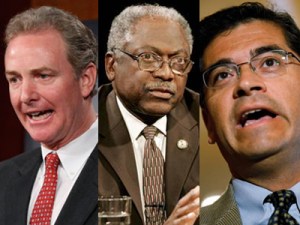
Could this be good news? Nancy Pelosi has picked Reps. James Clyburn (South Carolina), Xavier Becerra (California), and Chris Van Hollen (Maryland), according to Politico, all of whom she expects to fight against cuts in Social Security, Medicare, and Medicaid, as well as promoting revenue increases.
This is just from an e-mail so far. I’ll post links as soon as I have them.
Nancy Pelosi’s statement on her appointments:
“The Joint Select Committee has a golden opportunity to take its discussions to the higher ground of America’s greatness and its values. It must meet the aspirations of the American people for success and keep America number one.
“The thrust of the committee must be to grow an American prosperity enjoyed by all Americans. It must:
– Focus on economic growth and job creation that reduces the deficit;– Make decisions regarding investments, cuts and revenues and their timing to stimulate growth while reducing the deficit; and
– Increase demand by offering recommendations that ensure that wages grow with productivity and reduce America’s families’ dependence on credit.“The work of the Congress must go beyond the deliberations of the committee. Without waiting for the committee to complete its work, we should pass legislation for sustainable job creation. Congress should send to the President the long delayed highway and FAA bills, which generate hundreds of thousands of American jobs; and Congress should approve a national Infrastructure Bank to create jobs and improve our competitiveness.
“We must achieve a ‘grand bargain’ that reduces the deficit by addressing our entire budget, while strengthening Medicare, Medicaid and Social Security. Our entire Caucus will work closely with these three appointees toward this goal, which is the goal of the American people.
“Because the work of this committee will affect all Americans, I called last week for its deliberations to be transparent; the committee should conduct its proceedings in the open.”
Some background on the three picks from the National Journal:
Van Hollen is the ranking Democrat on the House Budget Committee. Clyburn – the highest ranking African-American member of the House — is the assistant Democratic leader. Both men served as Pelosi’s choices for spots on the bipartisan budget working group this year headed by Vice President Joe Biden.
Becerra is the highest ranking Latino lawmaker in the House. He is also the Democratic Caucus’ vice chairman and a member of the Ways and Means Committee. He served on the special White House deficit-reduction commission co-chaired by former Sen. Alan Simpson, R-Wyo., and former White House chief of staff Erskine Bowles, eventually voting against its recommendations.
Van Hollen voted for the debt deal, and Becerra voted against it. Clyburn didn’t like the debt deal, but said it could have been worse. Sounds like he voted with Obama.
As a member of the bipartisan deficit discussion group, convened by Vice President Joe Biden, that laid the groundwork for the debt limit deal, Clyburn — the third ranking Democrat in the House — publicly backed certain entitlement benefit cuts. Specifically, he said negotiators should at least consider further means-testing of Social Security or reduce benefits across the board by reducing Cost of Living Adjustments.
[….]
Van Hollen is the Dems’ top budget guy in the House. He’s one of the party’s chief antagonists of the GOP budget, which calls for phasing out Medicare, and was also a member of the Biden working group. Publicly, he’s been an advocate of approaches to deficit reduction that pair about one dollar of tax increases with about three dollars of spending cuts. He recently cited the Bowles-Simpson framework as a counterpoint to the Republican plan.
Beutler says Beccera “will likely be progressives’ main ally on the Super Committee.”
According to the National Journal article,
If the panel finds itself deadlocked along partisan lines, then across-the-board spending cuts would be triggered of about $1.2 trillion with half of those cuts coming from defense, and the rest from discretionary spending. Entitlements would remain largely untouched if the cuts are triggered by inaction.
Interesting. I didn’t know that. So maybe the goal for Reid and Pelosi is to make sure there is gridlock.
I’ll put any further updates in the comments. Let us know what you think.

 peej
peej Carissa
 bostonboomer
 dakinikat
 ecocatwoman
 mablue2
 Mama Lopez
 peggysue22
 quixote
 skydancingguestblogger
 Mona (aka Wonk the Vote)



 Sky Dancing
Recent Comments