
Monday Reads
Posted: February 7, 2011 Filed under: 2012 presidential campaign, Barack Obama, morning reads, psychology | Tags: AOL Buys HuffPo, Bill OReilly interviews obama, financial contagion, Krugman on High Food Prices, Neuroscience and buddhism, Obama speech Chamber of Commerce 31 Comments Good Morning!!!
Breaking NEWS update:
Rep. Jane Harman of California to resign
Democrat Jane Harman, who represents a Los Angeles-area district, is expected to leave Congress to lead the Woodrow Wilson International Center for Scholars, a congressional source says.
U.S. Rep. Jane Harman (D-Venice), a leading congressional voice on anti-terrorism issues, plans to resign from Congress to head up the Woodrow Wilson International Center for Scholars, a senior congressional source confirmed Monday, setting up a special election to choose her successor in a coastal district that stretches from Venice into the South Bay.
There’s plenty of news to share today so grab a big mug of whatever it is that you drink and join in!!
First, some big news in business and the blogosphere. AOL Is Buying The Huffington Post.
The two companies completed the sale Sunday evening and announced the deal just after midnight on Monday. AOL will pay $315 million, $300 million of it in cash and the rest in stock. It will be the company’s largest acquisition since it was separated from Time Warner in 2009.
The deal will allow AOL to greatly expand its news gathering and original content creation, areas that its chief executive, Tim Armstrong, views as vital to reversing a decade-long decline.
Arianna Huffington, the cable talk show pundit, author and doyenne of the political left, will take control of all of AOL’s editorial content as president and editor in chief of a newly created Huffington Post Media Group. The arrangement will give her oversight not only of AOL’s national, local and financial news operations, but also of the company’s other media enterprises like MapQuest and Moviefone.
I’m not sure if any of you caught the O’Reilly interview of Obama, but President Obama is insisting that he’s not moving to the center. The one thing I keep hearing about this interview is that O’Reilly couldn’t stop interrupting the President. I can only imagine how large that studio had to be to contain those big heads.
President Obama on Sunday dismissed the notion that his administration in recent weeks has pivoted toward the political center to raise his approval ratings as the 2012 campaign nears.
After ushering through Congress measures to throw a lifeline to troubled U.S. corporations, stimulate the economy and dramatically overhaul the nation’s healthcare system, Obama has since cut a deal with congressional Republicans on taxes and called for a freeze on most federal spending.
But when pressed Sunday during a live interview with Fox’s Bill O’Reilly on what political analysts say is a clear sprint toward the center, Obama dismissed the notion with a “no.”
“I haven’t — I didn’t move to… I’m the same guy,” he said.
When O’Reilly said the president’s critics call him “a big government liberal,” Obama replied that he inherited a nation on the brink of an economic crisis. That situation required his administration to take a number of “extraordinary steps” to avoid a severe economic depression, Obama said.
I wrote on the role of speculation in high food prices a few days ago . Paul Krugman believes it’s a supply problem and wrote about it Sunday on the NYT. He also considers climate change to be a factor. You may want to check it out.
Overall grain production is down — and it’s down substantially more when you take account of a growing world population. Wheat production (this time not per capita) is way down.
You might ask why a production shortfall of 5 percent leads to a doubling of prices. Part of the answer is that some kinds of demand are growing faster than population — in particular, China is becoming a growing importer of feed to meet the demand for meat. But the main point is that the demand for grain is highly price-inelastic: it takes big price rises to induce people to consume less, yet collectively that’s what they must do given the shortfall in production.
Why is production down? Most of the decline in world wheat production, and about half of the total decline in grain production, has taken place in the former Soviet Union — mainly Russia, Ukraine, and Kazakhstan. And we know what that’s about: an incredible, unprecedented heat wave.
Here‘s a wonky link to VOXEU that discusses financial contagion. It’s pretty interesting. The article deals with contagion in the market for European Sovereign bonds but you can extrapolate the basic intuition to other assets. Here’s one surprising insight. It seems that many stocks that performed well during the financial crisis were frequently the one’s most likely to be subjected to ‘fire sales’ later on. That’s a tidbit worth remembering.
First, the fire sale discount is most pronounced for stocks which performed best during the crisis. Figure 2 illustrates this aspect by depicting the relative performance of non-exposed and exposed stocks as a function of the stocks overall return from July 2007 to July 2008. Most of the return shortfall of exposed stocks is concentrated among the stocks with the highest returns. This somewhat counterintuitive result can be explained by fund discretion about which asset positions to liquidate. Faced with funding constraints and investor redemption requests, distressed equity funds liquidated the best performing stocks rather than stocks with recent large capital losses. Thus, fire sales were more pronounced for stocks among the 10% best performing stocks. For these stocks we find average fire sale discounts above 75%.
President Obama addresses the US Chamber of Commerce today. You can watch it on CSpan.
Picking up on the themes expressed in his State of the Union Address, President Obama will reaffirm his commitment to invest in rebuilding the nation’s infrastructure during a speech at the U.S. Chamber of Commerce today.
During that address before Congress, the President identified innovation, education, and infrastructure as the keys to stimulate the economy by increasing job growth and entrepreneurial opportunities.
Here’s a post for our BostonBoomer from Psychology today. Okay, it’s also for me. It’s called Buddhism and Neuroscience: Neuroscience finds a friend in Buddhism. Here’s an interesting scientific view of a practice we Buddhists do to realize that there is no “soul”.
When a Buddhist applies the idea of constant change to the self and the soul, he gains an insight that other religions lack. What we call a mind (or a self, or a soul) is actually something that changes so much and is so uncertain, that our terms for it do not find meaning. The Buddhist word for self is anatta and it means ‘no self.’ It is used to refer to oneself, while cleverly reminding the user of the word that there is such thing.
Within this framework, one is immediately struck by the disconnect between perception and religious teaching. All is endlessly changing, but I feel unified and unchanged from moment to moment, year to year. The way things feel becomes suspect, just as it does in modern neuroscience. Broadly, both Buddhism and neuroscience converge on similar points of view: the way it feels to be you isn’t how it is, that even our language about ourselves is to be distrusted (witness the tortured negation of anatta), and there is no permanent, constant soul in the background.
Despite saying there is no self, Buddhism does posit an immaterial thing that survives the brain’s death. Through life there is a consciousness, always changing like the world, one mental state rising like a wave to crash on the beach, then another and another. After a person’s death, the consciousness re-incarnates. This isn’t much of a trick, since even during a Buddhist life, each moment can be considered a re-incarnation from the moment before. The waves still lap, the beach shifted. If you’re good, they might lap at a higher organism. If you’re not, well, insects clearly have consciousness and someone’s waves need to supply it.
So how does Buddhism do? Pretty well. Buddhism lays out the concept that there is no mind the way we tend to consider them (as we consider our self). In broad strokes, neuroscience and neurology agree.
Kinda cool hmm?
So, what’s on you reading and blogging list today?
Thursday Reads
Posted: January 13, 2011 Filed under: Barack Obama, Crime, morning reads, psychology, Second Amendment, U.S. Politics | Tags: delusions, Jerad Lee Loughner, misogyny, murders, paranoid schizophrenia, Sarah Palin, Sharron Angle 37 Comments
Good Morning!!
I’m going to focus this post on news and opinions relating to Jared Lee Loughner, the Arizona mass murderer. The news media is so focused on this story, it’s hard to find much else.
First, let me say that it has become abundantly clear that Loughner suffers from paranoid schizophrenia–a least I’m going to assume that unless someone comes up with a better explanation for his symptoms. I immediately suspected it when I first read descriptions of his behavior by people who knew him, but the more I read about him the more clear it becomes that Loughner suffers from this terrible illness.
Schizophrenia is characterized by a broad range of unusual behaviors that cause profound disruption in the lives of the patients suffering from the condition and in the lives of the people around them. Some common symptoms of schizophrenia are delusions, hallucinations (usually auditory), disorganized thought and speech, social withdrawal, and emotional unresponsiveness (flat affect).
Based on news reports, Loughner appears to be suffering from all of these symptoms. He was apparently experiencing delusions of persecution and delusions of control (e.g., his belief that the government was using mind control on him).
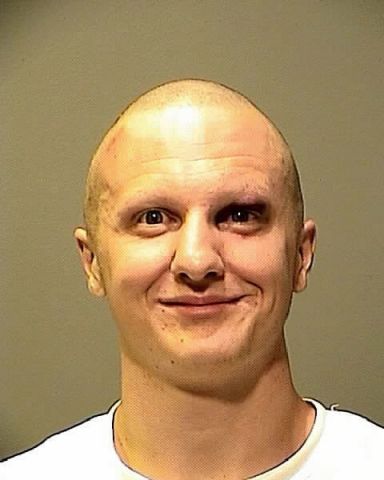
What Loughner did was driven by his delusions and his disorganized thought processes. Despite the repulsive campaign rhetoric used by tea party politicians like Sarah Palin and Sharron Angle, it really isn’t accurate to blame their words for Loughner’s crimes. That doesn’t mean we shouldn’t try to shame politicians into speaking and behaving more civilly, but the real outrage is that this young man was able to buy a gun and ammunition. Loughner was a walking time bomb, and he lived in a state that allows people to buy guns easily and to carry concealed weapons without a permit!
Let’s condemn conservative politicians for helping to make guns far too easily available to troubled people and liberals for refusing to stand up to the gun nuts.
If you read this Wall Street Journal article, you’ll see examples of Loughner’s disordered thinking and communication. The WSJ writers found a collection of postings by Loughner to an on-line gaming forum. He talked about his inability to get a job and his failure with women, and sometimes his comments became bizarre and disturbing.
Look at these examples from the article:
On April 24, Mr. Loughner titled a new online thread: “Would you hit a Handy Cap Child/ Adult?” He wrote: “This is a very interesting question….There are mental retarded children. They’re possessing teachers that are typing for money. This will never stop….The drug addicts need to be weeded out to be more intelligent. The Principle of this is that them c— educators need to stop being pigs.”
Later that day, he posted a rant titled “Why Rape,” which said women in college enjoyed being raped. “There are Rape victims that are under the influence of a substance. The drinking is leading them to rape. The loneliness will bring you to depression. Being alone for a very long time will inevitably lead you to rape.”
[….]
On May 9 at 2:00 a.m., he asked: “Does anyone have aggression 24/7?” By noon, when others suggested he try smoking marijuana, he said: “No weed. No drugs. It’s not like I can’t see my brain.”
[….]
On June 3 at 12:14 a.m. Mr. Loughner described one confrontation with Mr. McGahee [his college math instructor], writing to his fellow gamers that he had asked the teacher: “Are you just getting a pay check for brainwashing?” as well as questioning if the class was a “scam” and asking, “can you tell me how to Deny math?” He wrote that the teacher told him it was a stupid question and he should “GET OUT OF MY CLASS!”
The next day, after he had to see a school counselor, he wrote: “Told her about brainwashing a child and how that can change the view of mathematics.”
This young man was extremely confused and delusional. It would be impossible for his parents not to have known that he was very ill. We may learn that they tried to get help for him; unfortunately it is not easy to get help for people with psychological disorders. People suffering from schizophrenia resist getting treatment–they don’t realize how sick they are. Furthermore, it is extremely difficult to force someone into treatment. Ironically, Arizona makes committing someone against their will easier than most other states, the state has also cut so much on mental health facilities and workers that services aren’t readily available.
Our mental health system is even more broken than the rest of our health care system. People who talk about “falling through the cracks” are clueless. Our mental health system is nothing but cracks.
More Loughner articles:
Mark Ames, author of Going Postal: Is the Giffords Shooting a New Kind of American Murder?
I studied countless rampage massacres for my book Going Postal, and this is the first instance I can think of in which the shooter—in this case, 22-year-old Jared Lee Loughner—carried out anything like a hybrid assassination-rampage: first, a planned, targeted assassination of a high-profile political figure, followed immediately by a seemingly indiscriminate shooting rampage. The first part of this hybrid assassination-rampage left a U.S. Congresswoman, Gabby Giffords, in critical condition with a serious head wound; the second part, the rampage, left six dead and another 13 wounded.
These two types of murders have little in common. In America, at least, the assassin is concerned about only one thing: taking out his target. While others may get shot in the confusion, political assassins never, to my knowledge, stick around after accomplishing their primary task just so they can keep murdering others indiscriminately.
[….]
In rampage shootings, on the other hand, media reports often describe the rampage murderer “shooting at random” before the bullet-in-the-head finale. But closer study of these shootings reveals that the attackers often have specific targets in mind—usually bullying supervisors or fellow workers. Sometimes, in the bloodiest cases, the shooter takes aim at the entire “company” or school, making everyone in it an intended target. In many of these cases, the shooters turn out to have been victims themselves of bullying, harassment, and social or financial ruin.
Judging from early reports, Loughner looks to be a pastiche of these two classic profiles.
Why psychiatrists can’t predict mass murderers
Let’s assume that we’ve identified a set of characteristics often exhibited by mass murderers. What does that buy us? It enables us to answer the question, “Given that someone is a mass murderer, what characteristics is he likely to exhibit?” That’s an interesting question, but it’s not the one we want to answer. Rather, the question we really want to answer is, “Given that someone exhibits this profile of characteristics, how likely is he to commit mass murder?” Answering this question is extremely difficult because the predictors are invariably far more common than the event we hope to predict, and mass murder is very rare. Although mass murderers often do exhibit bizarre behavior, most people who exhibit bizarre behavior do not commit mass murder.
Media reports about Jared Loughner, the alleged Tucson killer, illustrate this difficulty. His abnormal behavior, however unusual, is still far more common than the crimes of which he is accused.
Loughner pulled over hours before shooting
Hours before Saturday’s shooting, suspected gunman Jared Lee Loughner was stopped by an Arizona Game and Fish officer for running a red light.
Agency spokesman Jim Paxson confirmed Wednesday that an officer made the stop about 7:30 a.m. Saturday on an Interstate 10 access road several miles from the shopping center where congresswoman Gabrielle Giffords and 18 other people were gunned down.
Loughner, who was described by the officer as “very forthcoming,” and “very polite, very subdued,” was driving an older-model charcoal gray Chevrolet Nova, which has since been seen parked outside the Loughner family home.
Police Release Documents Detailing Contact With Ariz. Gunman Prior to Deadly Rampage
The Pima County Sheriff’s Department released reports on Wednesday detailing contacts with Arizona gunman Jared Loughner and his family prior to Saturday’s shooting — contacts that ranged from petty nuisance complaints to a drug arrest.
[….]
The reports detail all personal contact Pima County deputies had with Loughner beginning on Sept. 23, 2004, when he was the victim of a reported assault.
Loughner was later arrested as a juvenile for possession of alcohol on May 15, 2006, and on Sept. 10, 2007, he also received a citation for possession of drug paraphernalia, according to the police reports.
The police reports do not appear to indicate a violent history. Instead, they reflect a man seemingly prone to destructive tendencies.
Read more at the link.
Records show fear of Loughner, lack of mental health intervention
Pima Community College in Tucson has released records of its campus police contacts with student Jared Loughner, showing the increasing fear that he stirred in his classmates and teachers.
A thread running through the documents is the difficulty of police finding a context in which to intervene: Until they found a violation of the student code of conduct, or a state law, police officers wrote in the reports that they weren’t sure what else they could do, even when a fellow student said she thought Loughner had brought a knife to class.
The records show no indication that the college took steps to get Loughner any mental health counseling.
Loughner also seemed not to understand the seriousness of the fears. When police spoke with him, Loughner said his free speech rights were being violated, and seemed to have trouble understanding why he had been called out of class.
Here’s a really interesting article by a researcher on why some people act heroically in situations like the Arizona shootings.
Rohit Deshpande, a professor at Harvard Business School, has delved into the science of heroism to find out what causes someone to spring into action despite the danger to help or save someone else.
In his research, Deshpande focused on how hotel workers took extreme risks to protect guests during the deadly terrorist attacks in Mumbai, India, in 2008.
After several desperate hours of explosions and gunfire, members of the kitchen staff locked arms and formed a cordon around guests as the attackers machine-gunned them down.
In another display of heroism, hotel operators stayed at their phones to call rooms with vital information.
[….]
He found heroism had nothing to do with age, gender or religion. It started with personality.
“It seems that they have a much more highly developed moral compass,” he said. “They have this instinct for doing something good for other people. We find this across a whole series of situations.
I’m going to end with an article by Joan Walsh of Salon on why Sarah Palin is too narcissistic and lacking in empathy to ever be elected president.
Good grief! Has Joan Walsh paid any attention to current President Barack Obama’s behavior or George W. Bush’s for that matter? Narcissism and lack of empathy have seemingly become de rigueur for holders of the office these days!
Sooooo…. What are you reading this morning?
Wing Nut Scramble (Live Blogging a Shooter Tragedy)
Posted: January 8, 2011 Filed under: Crime, Live, psychology, U.S. Politics | Tags: bans on automatic weapons, campaign violence, gun control, Jared Loughner, mentally ill with access to automatic weapons, right wing violent rhetoric and images, Tea party Rhetoric 72 Comments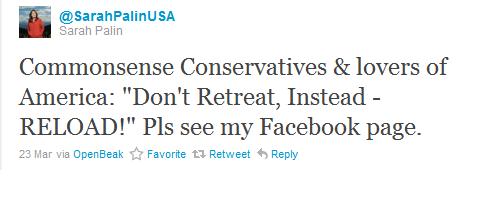 You don’t have to have a doctorate in psychology to figure out that the latest spree shooter had serious mental illness problems. What’s odd to me is the sudden scramble–typical in these situations–by ideologues ready to label his mental illness as a symptom of political ideology. No where is this more rampant than the number of right wingers that are taking one mention of one book–The Communist Manifesto–as an indication that suspected shooter Jared Loughner was a leftie. That’s pretty interesting given that
 WAPO is reporting that he’s a veteran. Loughner tried to enlist in the military but was rejected. (See update below.) They’re screaming ‘leftie’ while simultaneously scrubbing their sites of items like the Palin Tweet and the Palin Map of Congressional Critterz’ Districts–including that of shooting victim Congress Woman Gifford–with rifle sight images over the top. Is this kind of after-the-fact scrubbing a mea culpa of sorts? They’re sure acting like they own it.
Giffords has been a target of violent threats for some time now. The threats have come from the right wing and the majority have occurred since the HCR vote last summer. Folks that say that this shooter’s acts–no matter how linked to his personal mental hell–can’t be put into the context of encouraging and enabling violence haven’t been paying attention. Violent imagery and rhetoric is a loaded gun. It’s the same denial that comes from anti-abortion supporters and their disconnect from the shooting of Dr. Gun. You encourage it. You own a role in it. It’s not the root cause of mental illness, but it establishes violence as a potentially heroic act. Most psychotic people are crazy but not stupid. They can feel the heroic myth. Many seek a way to go down with it.
But it’s worth noting that Giffords — who in 2006 became the youngest woman ever elected to Congress, at 36 — has, for more than a year, been the target of violence-tinged rhetoric from political opponents and of threats that appear to have come from right-wing activists.
Asked by the New York Post whether his daughter had any enemies, Giffords’s father replied: “The whole tea party.”
In August 2009, an attendee at a Giffords town-hall meeting dropped a handgun, leading Giffords’ staff to call the police. “We have never felt the need before to notify law enforcement when we hold these events,” her spokesman said at the time.
After Giffords voted in favor of the health-care overhaul in March, she said that vandals had broken the glass door of her Tucson office. “The rhetoric is incredibly heated, not just the calls but the emails, the slurs,” she told MSNBC at the time. “Things have really gotten spun up.”
Ben Smith has a brief thread up on the foot prints left in social media by alleged shooter Jared Loughner. Some of them are bizarre rants about currency and the gold standard that are worthy of a Glenn Beck or Ron Paul fan. There’s also some crazed references to correct English grammar and mind control. Who knows which flake in the vast American Breakfast Bowl of ideology some of this stuff comes from?
Thursday Reads
Posted: January 6, 2011 Filed under: Barack Obama, morning reads, psychology, Team Obama, U.S. Economy, U.S. Politics | Tags: "professional left", 2010 Census, Barack Obama, BP oil spill, child pornography, Daryl Bem, dying birds and animals, Emptywheel, ESP, Howard Dean, John P. Wheeler III, memeorandum, murder, Pentagon, political advertising, Poverty, psychology, Robert Gibbs, senior citizens. social programs, smear campaigns 48 Comments
Out of Town News, Harvard Square
Good Morning!!
Gee, it’s great to be back in Beantown, even though my house looks like it was hit by a tornado. I already had books stacked all over the place because of my book selling project. I brought more books with me from Indiana, and I haven’t completely unpacked and put my stuff away. I’ll be cleaning up for a couple of days. At least I got everything out of the car today and went to the grocery store. Driving 1,000 miles in two days makes me really spacey though, so if I don’t make sense in this post, please try to make allowances.
You’ve probably heard already that Robert Gibbs plans to leave the White House in February to be an “outside political adviser” to Obama’s 2012 campaign. It’s the top story on Memeorandum right now.
“Robert, on the podium, has been extraordinary,” Mr. Obama said, declining to answer questions about who he intends to hire for any position. “Off the podium, he has been one of my closet advisers. He is going to continue to have my ear for as long as I’m in this job.”
Mr. Gibbs will remain part of the president’s inner circle of political advisers, along with David Axelrod, a senior adviser, and Jim Messina, a deputy chief of staff, who also are leaving the White House to focus on the president’s re-election effort. Mr. Gibbs will defend Mr. Obama on television – and will expand his presence on Twitter and other Internet platforms – as well as beginning to define the field of 2012 Republican presidential candidates.
“Stepping back will take some adjusting,” Mr. Gibbs said in an interview Wednesday morning. “But at the same time, I have a feeling that I will keep myself quite busy, not just with speaking, but continuing to help the president.”
He said he has no intention of establishing a political consulting or lobbying business, but he intends to work from the same downtown Washington office where David Plouffe has spent the last two years.
When I first heard this news, my first thought was about the role that Gibbs played in 2004, when he resigned from the Kerry Campaign and joined an “independent” group that produced the infamous attack ad that showed a photo of Osama bin Laden while the announcer described Howard Dean’s supposed deficiencies in foreign policy. It sounds like Gibbs will be more out front in 2012, but I’m betting he’ll still play the attack dog role–smearing opponents and generally saying the things Obama doesn’t dare say himself.
According the NYT story,
The leading potential replacements for press secretary include Jay Carney, a spokesman for Vice President Joseph R. Biden Jr., along with Bill Burton and Josh Earnest, who work as deputies to Mr. Gibbs. Other candidates also could be considered, an administration official said.
Emptywheel says Robert Gibbs will now become part of the group he derided as press secretary: “the professional left.”
Back when Gibbs was attacking the Professional Left, he made a distinction between the Progressives outside of DC and those inside DC squawking on the cable programs.
But if Gibbs is going to stay in DC, hanging out on Twitter, and appearing on the speaking circuit, doesn’t that make him a card-carrying member of the Professional Left?
Except the bit about him being so conservative, of course.
LOL
Out in the land of real Americans, 1 of 6 of us lives in poverty–including many senior citizens.
Psychopaths in Charge
Posted: January 2, 2011 Filed under: Civil Liberties, Corporate Crime, financial institutions, Global Financial Crisis, Human Rights, income inequality, investment banking, psychology, torture, U.S. Economy, U.S. Politics | Tags: Alan Simpson, American Psycho, antisocial personality disorder, Bernie Madoff, Brett Easton Ellis, CEOs, investment bankers, John Ensign, Mark Sanford, politicians, psychopaths, sociopaths 73 Comments
In 1991, Brett Easton Ellis published a brilliant satirical novel called American Psycho. The book is narrated by a young man, Patrick Bateman, a graduate of Harvard and Harvard Business School, who is now a fabulously wealthy Wall Street investment banker with a pricey apartment on Manhattan’s Upper west side. In other words, he’s a typical ’80s yuppie, benefiting from the “Reagan Revolution.”
Bateman is utterly materialistic and narcissistic, obsessed with things like getting a reservation at the most trendy, expensive restaurant of the moment and having a more perfectly designed and printed business card than any of the other yuppies he works with. He is engaged to another yuppie named Evelyn, but he doesn’t really have any feelings for her. She is just another status symbol for him to show off to his Wall Street colleagues.
As the book progresses, it becomes clear that Bateman is filled with narcissistic rage. He begins torturing and murdering people–a homeless man, his secretary, a business associate, and more. The crimes become successively more violent and horrifying. In conversations with coworkers, he tells anecdotes about serial killers and even confesses his own crimes, but no one takes him seriously. These other numb, detached young men simply assume Bateman is joking and laugh at his bizarre, inappropriate remarks.
Toward the end of the book, there are hints that Bateman’s descriptions of violent murders could be hallucinations or fantasies–or they might have really happened. The interpretation is left to the reader.
Ellis told an interviewer that he wrote American Psycho at a time in his life when he was living an isolated, consumerist lifestyle, somewhat like Bateman’s:
He did not come out of me sitting down and wanting to write a grand sweeping indictment of yuppie culture. It initiated because my own isolation and alienation at a point in my life. I was living like Patrick Bateman. I was slipping into a consumerist kind of void that was supposed to give me confidence and make me feel good about myself but just made me feel worse and worse and worse about myself. That is where the tension of “American Psycho” came from. It wasn’t that I was going to make up this serial killer on Wall Street. High concept. Fantastic. It came from a much more personal place…
American Psycho was not well received by reviewers–before or after publication. In fact, the original publisher, Simon & Schuster, cancelled their contract with Ellis based on “aesthetic differences.” The book was never released in hardcover, but was eventually published in a quality paperback edition by Vintage Books. After its publication, Ellis was on the receiving end of a flood of hate mail and even death threats.
Today, Ellis points out, the blood and gore that was so shocking in his 1991 book is all around us.
You see it in “Saw” movies or in “Hostel” or anywhere. The gore is mainstream. The stuff you see now wass unimaginable in 1991 and that’s one reason why it caught on. The availability of that kind of subject matter was limited. It was limited to maybe certain graphic novels or transgressive fiction or certain out-there horror films but it wasn’t part of the mainstream. the accessibility of it was unique. This is how we’re rolling now.
What I took from the novel when I first read it was that it was a perfect representation of the societal effects of Reaganism. In the ’80s, American culture became more materialistic, superficial, and value-free than ever before. Reaganism taught that “greed is good.” Becoming wealthy became the highest goal for many Americans. At the same time, anyone who was poor, sick, or disabled was reviled. Reagan made Social Darwinism fashionable again.
Under Reagan, we closed hospitals for the mentally ill and threw them into the streets to beg and to wander our cities muttering as they listened to the voices in their heads. The need for low-cost housing and maintaining public infrastructure was ridiculed, and poor families with children began to wander our city streets homeless, sleeping in their cars or in public parks. Meanwhile the rich continued to get richer, greedier, and more callous toward people who had less than they did.
What other result could we have expected than the America we live in today? We live in a country in which so many people are cold, callous, and calculating, seeking to amass as much money as possible at the expense of ordinary taxpayers. Investment bankers like Ellis’s Patrick Bateman are treated like gods, shielded from any negative effects of their own lying, cheating, and stealing.
Today the message I take from American Psycho is even more troubling to me than when I first read the novel years ago. I see Bateman’s serial murders as symbolic of the damage out-of-control capitalism is doing to us as a people. I look at our political leaders and see empty, cold, callous people with no core values except how to get the most money and power for themselves, and screw the rest of us. They are serial murderers too, only they manage to distance themselves from those they murder in their wars and through their pro-corporate, anti-human policies.
The America we live in today is much like the surreal world that Brett Easton Ellis created in American Psycho, except that we now have even more electronic gadgets, more stuff to do on the internet, more “reality” TV shows where we can ridicule fat people or people with obsessive-compulsive disorder, or people trying to sing and dance. We have books and movies so violent that people become desensitized to depictions of blood and gore that seemed shocking in 1991. We are in decline in every way–our health, our incomes, our infrastructure, our rights, our values, our privacy. And the rich are richer and the poor are poorer now than at the end of the Ronald Reagan era.
I know I’m not the only one here who thinks we are being ruled by psychopaths–whether we’re talking about government officials or the heads of corporations. I really believe that, and I don’t mean it as hyperbole. I think the richest among us are the most likely to be detached and callous, because they don’t even have to see the poor and suffering people they are hurting with their greed. Their wealth insulates them from the daily struggles of the vast majority of Americans.
I think this is a subject that is worth talking about. Do you need to be at least a subclinical psychopath to be willing to do the kinds of immoral things government officials, corporate CEOs, and investment bankers do? Like lying in order to enter illegal wars so you can steal oil from other countries and murder hundreds of thousands of their citizens? Like sending young Americans to die for oil and a dying empire? Like taking jobs away from Americans and replacing them with slave labor in third world countries? Like throwing people out of their homes illegally? Like testing drugs on babies and children? Like polluting the water, air, and food with chemicals and refusing to clean up your messes?
I think you have to be a very sick person to do those things. And how is it different from what a serial killer does? First, government officials and corporate CEOs kill and maim and destroy people in far greater numbers and with more powerful weapons than a serial killer. Second, government officials and corporate CEOs don’t need to get close to the blood and death. They get other people to do their killing so they don’t have to see or hear their victims suffer.
So what exactly is a psychopath? Robert Hare, now emeritus professor of psychology at the University of British Columbia developed a checklist used by professionals to identify people with psychopathic tendencies.
People who are psychopathic prey ruthlessly on others using charm, deceit, violence or other methods that allow them to get with they want. The symptoms of psychopathy include: lack of a conscience or sense of guilt, lack of empathy, egocentricity, pathological lying, repeated violations of social norms, disregard for the law, shallow emotions, and a history of victimizing others.
Hare’s checklist (the PCL-R) is used in combination with a semi-structured clinical interview (an interview with set questions that allows the interviewer to follow up with his or her own questions when appropriate) and a detailed review of medical and psychiatric records. The following are the 20 traits for the evaluator to watch for:
•glib and superficial charm
•grandiose (exaggeratedly high) estimation of self
•need for stimulation
•pathological lying
•cunning and manipulativeness
•lack of remorse or guilt
•shallow affect (superficial emotional responsiveness)
•callousness and lack of empathy
•parasitic lifestyle
•poor behavioral controls
•sexual promiscuity
•early behavior problems
•lack of realistic long-term goals
•impulsivity
•irresponsibility
•failure to accept responsibility for own actions
•many short-term marital relationships
•juvenile delinquency
•revocation of conditional release
•criminal versatility
Not all of these characteristics would have to be met for someone to be diagnosed as a psychopath.
Each of the twenty items is given a score of 0, 1, or 2, based on how well it applies to the subject being tested. A prototypical psychopath would receive a maximum score of 40, while someone with absolutely no psychopathic traits or tendencies would receive a score of zero. A score of 30 or above qualifies a person for a diagnosis of psychopathy. People with no criminal backgrounds normally score around 5. Many non-psychopathic criminal offenders score around 22.
The checklist was originally designed for evaluating prison inmates, but not everyone with psychopathic characteristics becomes a criminal. I am arguing that many of them go into business or politics, am I’m far from the only one to suggest that. In fact Hare himself co-wrote a book called Snakes in Suits: When Psychopaths Go to Work. Other books that make similar arguments are The Sociopath Next Door, by Martha Stout, and The Psychopathy of Everyday Life: How Antisocial Personality Disorder Affects Us All, by Martin Kantor.
Just a bit about terminology. Psychopathy and Sociopathy are essential the same thing. Antisocial Personality Disorder is similar too, but could perhaps apply to people who wouldn’t score 30 on Hare’s checklist. I don’t know why the names of this disorder keep changing–it may just be because some psychiatrists see studying prison inmates as somewhat disreputable. Anyway, psychopathy is no longer listed in the Diagnostic and Statistical Manual of the American Psychiatric Association (latest version: DSM IV-TR). Instead, it is subsumed under “antisocial personality disorder.” Here is the DSM-IV-TR criteria for APD:
A. There is a pervasive pattern of disregard for and violation of the rights of others occurring since age 15 years, as indicated by three (or more) of the following:
1. failure to conform to social norms with respect to lawful behaviors as indicated by repeatedly performing acts that are grounds for arrest
2. deceitfulness, as indicated by repeated lying, use of aliases, or conning others for personal profit or pleasure
3. impulsivity or failure to plan ahead
4. irritability and aggressiveness, as indicated by repeated physical fights or assaults
5. reckless disregard for safety of self or others
6. consistent irresponsibility, as indicated by repeated failure to sustain consistent work behavior or honor financial obligations
7. lack of remorse, as indicated by being indifferent to or rationalizing having hurt, mistreated, or stolen from another.
B. The individual is at least age 18 years.
C. There is evidence of conduct disorder with onset before age 15 years.
D. The occurrence of antisocial behavior is not exclusively during the course of schizophrenia or a manic episode.
That official characteristics of APD are much less extreme than the ones on Hare’s checklist. I think it’s fairly obvious that many of our political and business leaders could meet at least three of those criteria. But can anyone argue that someone like Bernie Madoff could not be classified as a full-blown psychopath according to Hare’s criteria? What about Alan Simpson? What about someone like John Ensign or Mark Sanford? I believe I could make an argument for many more of our political and business leaders being either clinical or subclinical psychopaths.
There is some evidence that psychopathy is at least partly genetic, although most criminal psychopaths who have been studied had very abusive childhoods. There is also evidence for differences in the brains of psychopaths compared to typical brains.
I’m going to get into this topic in more detail in a future post. But for now, what do you think? Would it be useful for us to stop denying reality and accept that the psychopaths are in charge of our society?

 peej
peej Carissa
 bostonboomer
 dakinikat
 ecocatwoman
 mablue2
 Mama Lopez
 peggysue22
 quixote
 skydancingguestblogger
 Mona (aka Wonk the Vote)



 Sky Dancing
Recent Comments