
Monday Reads: Of Droogs, Unwinable Wars, and Civil Rights Protests
Posted: February 7, 2022 Filed under: Black Lives Matter, Black Women Lead, Capital Punishment aka Death Penalty, child sexual abuse, children, Civil Liberties, Civil Rights, corporate money, Criminal Justice System, Feminists, History, Human Rights, immigration, income inequality, misogyny, physical abuse, police brutality, racism, Rape Culture, white nationalists 22 Comments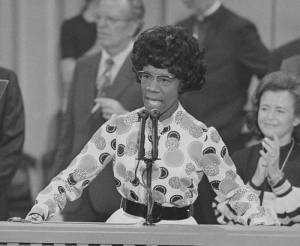
Good Day Sky Dancers!
Fifty years ago, Elton John released Tiny Dancer, and Clockwork Orange was playing in theatres. We were fighting what seemed like an endless war run by a lawless President. It was the year of the Easter Offensive when North Vietnamese forces overran South Vietnamese forces. It was probably the first true evidence of a war the US would not win.
Shirley Chisholm became the first woman and African American to seek the nomination for president of the United States from one of the two major political parties. The Equal Rights Amendment (ERA) passed Congress and got 35 of the 38 votes to become a Constitutional Amendment. In 1972, Native Americans occupied the Bureau of Indian Affairs. The protest came from tribal frustration with the government’s ‘Trail of Broken Treaties.’ It lasted six days.
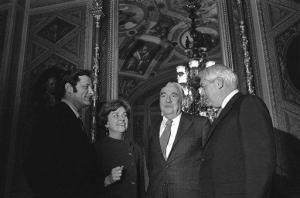
After the Senate voted passage of a constitutional amendment giving women equal rights, Sen. Birch Bayh, D-Ind., left, met with two supporters and one opponent, Wednesday, March 23, 1972 in the Capitol in Washington. Sen. Sam Ervin, D-N.C., second from right, one of eight senators who voted against the amendment. Others are Rep. Martha Griffiths, D-Mich., and Sen. Marlow Cook, R-Ky.
Furman v. Georgia was decided in 1972. The United States Supreme Court invalidated all death penalty schemes in the United States in a 5–4 decision. Each member of the majority wrote a separate opinion. The Civil Rights act of 1972 passed which led to Title IX.
A recipient institution that receives Department funds must operate its education program or activity in a nondiscriminatory manner free of discrimination based on sex, including sexual orientation and gender identity. Some key issue areas in which recipients have Title IX obligations are: recruitment, admissions, and counseling; financial assistance; athletics; sex-based harassment, which encompasses sexual assault and other forms of sexual violence; treatment of pregnant and parenting students; treatment of LGBTQI+ students; discipline; single-sex education; and employment. Also, no recipient or other person may intimidate, threaten, coerce, or discriminate against any individual for the purpose of interfering with any right or privilege secured by Title IX or its implementing regulations, or because the individual has made a report or complaint, testified, assisted, or participated or refused to participate in a proceeding under Title IX.
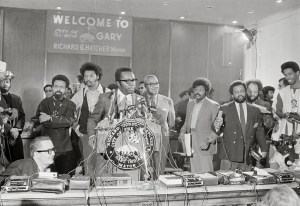
1972 was also the year of the Gary Declaration coming from a National Black Political Convention. Reverend Jesse Jackson was just one of many to attend the convention.
What Time Is It?
We come to Gary in an hour of great crisis and tremendous promise for Black America. While the white nation hovers on the brink of chaos, while its politicians offer no hope of real change, we stand on the edge of history and are faced with an amazing and frightening choice: We may choose in 1972 to slip back into the decadent white politics of American life, or we may press forward, moving relentlessly from Gary to the creation of our own Black life. The choice is large, but the time is very short.
Let there be no mistake. We come to Gary in a time of unrelieved crisis for our people. From every rural community in Alabama to the high-rise compounds of Chicago, we bring to this Convention the agonies of the masses of our people. From the sprawling Black cities of Watts and Nairobi in the West to the decay of Harlem and Roxbury in the East, the testimony we bear is the same. We are the witnesses to social disaster.
Our cities are crime-haunted dying grounds. Huge sectors of our youth — and countless others — face permanent unemployment. Those of us who work find our paychecks able to purchase less and less. Neither the courts nor the prisons contribute to anything resembling justice or reformation. The schools are unable — or unwilling — to educate our children for the real world of our struggles. Meanwhile, the officially approved epidemic of drugs threatens to wipe out the minds and strength of our best young warriors.
Economic, cultural, and spiritual depression stalk Black America, and the price for survival often appears to be more than we are able to pay. On every side, in every area of our lives, the American institutions in which we have placed our trust are unable to cope with the crises they have created by their single-minded dedication to profits for some and white supremacy above all.
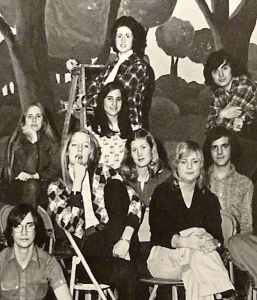
Me in 1973 with friends.
I was in high school feeling like we might actually get through this all and get to the dream of a more perfect Union. It was definitely a year of ups and downs. Fifty years ago seems like another lifetime. You’d think we’d see more progress on all of this.
We do have a Black Woman Vice President but no ERA and we had our first Black Man elected President who served two terms.. The Department of Interior is led by an Indigenous woman who has planned reforms that might bring more civil rights to our native peoples. Women’s sports are taken a lot more seriously but not one woman player earns what her male peers make.
Black Americans face a new wave of voter suppression and a Supreme Court ready to tear through laws meant to improve access to American Universities not unlike what the 1972 Civil Rights law sought to do on the basis of gender. We just got rid of a second long, unwinnable war but will we have another?
We also have Elton John on tour and Droogs. The Droogs are the white male Maga Men and hide under names like Oathkeepers, Proud Boys, and Patriot Front.
Some things don’t change and in this country, we know why. They don’t share power. They don’t want to. They’ll do anything to keep as much of it as possible. We have a White Male problem and it’s mostly got the face of an extreme patriarchal take of Christianity.
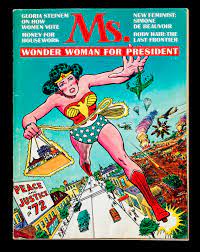
So that’s the perspective. This is the reality in 2022. This is from MS Magazine whose first stand-alone magazine was published in 1972. Excerpts from Elizabeth Hira’s “Americans Are Entitled to Government That Truly Reflects Them. Let’s Start With the Supreme Court” are going to show you exactly how far the rest of us still have to go. It’s in response to the audacity the Republican Party has to hold up Joe Biden’s promise to appoint the first black woman to the Supreme Court as some kind of affirmative action for a less-qualified person which is total Bull Shit.
This is the premise she completely proves. “Our current system has created conditions where, statistically, mostly white men win. That is its own kind of special privilege. Something must change.”
This is her conclusion. “American government in no way reflects America—perpetuating a system where male, white power makes decisions for the rest of us.”
These are her descriptive statistics.
Data shows these claims are not hyperbolic. A Supreme Court vacancy started this inquiry: There have been 115 Supreme Court justices. 108 have been white men. One is a woman of color, appointed in 2009. (Americans have had iPhones for longer than they’ve had a woman-of-color justice.)
One might be tempted to dismiss old history, except that the Supreme Court specifically cannot be looked at as a “snapshot in time” because the Court is built on precedent stretching back to the nation’s founding. Practically speaking, that means every decision prior to 1967 (when Justice Thurgood Marshall joined the Court) reflected what a group of exclusively white men decided for everyone else in America—often to the detriment of the unrepresented.
In a nation that is 51 percent female and 40 percent people of color, are white men simply more qualified to represent the rest of us than we are of representing ourselves? That sounds ridiculous because it is. And yet that is the implication when naysayers tell us that race and gender do not matter—that the “most qualified” people can “make the best choices” for all of us, and they all just happen to be white men.
What’s worse, those white men aren’t just making broad, general decisions—each and every branch of government acts in ways that directly impact people because of their race and gender, among other identities.
- When the Supreme Court considers affirmative action, it will be considering whether race matters for students who are already experiencing an increase in school segregation—what Jonathan Kozol once dubbed “Educational Apartheid.”
- When Congress is inevitably asked to pass a bill to protect abortion should the Court strike down Roe v. Wade, 73 percent of the Congress making that decision will be men—not people who could even potentially experience pregnancy.
- When recent voting rights bills failed, it was because two white Democrats and 48 Republicans (45 white and three non-white) collectively decided not to protect all American voters of color against targeted attacks on their access to the ballot.
- When Senator Kyrsten Sinema spoke to the Senate floor about why she could not take necessary steps to protect Americans of color, she did not have to look a single sitting Black woman senator in the eye. Because there are none.
The Supreme Court is not alone in underrepresenting women, people of color, and women of color. Of 50 states, 47 governors are white, 41 are men. Nearly 70 percent of state legislators are male.
The pattern holds federally, too: Today’s Congress is the most diverse ever—a laudable achievement. Except that today’s Congress is 77 percent white, and 73 percent male. (As an example of how clear it is that Congress was simply not designed for women, Congresswomen only got their own restroomin the U.S. House in 2011.)
In the executive branch, 97.8 percent of American presidents have been white men. There has never been a woman president.
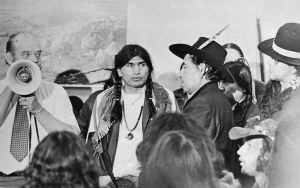
BIA Spokesperson at Trail of Broken Treaties Protest: 1972
John Crow of the Bureau of Indian Affairs answers questions from Native Americans on November 2, 1972 at 1951 Constitution Avenue NW in Washington, D.C on the first day of the Trail of Broken Treaties demonstrations.
The numbers don’t lie. I don’t even want to go into the number of American presidents that have been worse than mediocre including the previous guy. This is the kind of systemic discrimination perpetuated in this country’s primary decision-makers. It is no wonder 50 years later we are even losing the table scraps they’re stealing now.
I’m going to leave you with this one last analysis before telling you to go read the entire essay.
The first female major-party presidential nominee was dogged by questions of her “electability,” and recent data shows large donors gave Black women congressional candidates barely one-third of what they gave their other female counterparts. Some people don’t support women and candidates of color because they worry these candidates simply can’t win in a white male system of power—which perpetuates a white male system of power. To create equitable opportunities to run, we must change campaign finance structures. It’s a necessary precursor to getting a government that looks like everyone.
I’m trying to send money to Val Demings in her effort to take down Mark Rubio. Mark Rubio will never consider the interests of all of his constituency because he’s funded by white males with a vested interest in their monopolies on politics and the economy.
What’s on your reading and blogging list today?
Now Tom said, “Mom, wherever there’s a cop beating a guy
Wherever a hungry newborn baby cries
Where there’s a fight against the blood and hatred in the air
Look for me, Mom, I’ll be thereWherever somebody’s fighting for a place to stand
Or a decent job or a helping hand
Wherever somebody’s struggling to be free
Look in their eyes, Ma, and you’ll see me”
Yeah!
Like Tom Joad, I was born an Okie. I was born on the Cherokee strip one of those places on the Trail of Broken Treaties at the end of the Trail of Tears. “The Grapes of Wrath” was on many a book banning and burning list back in the day. Look for it again on a list near you.
Saturday Afternoon Reads: Bloody Sunday, March 7, 1965
Posted: March 7, 2015 Filed under: Barack Obama, Civil Liberties, Civil Rights, morning reads, police brutality, racism, U.S. Economy, U.S. Politics | Tags: Bloody Sunday, Selma to Montgomery March 7 Comments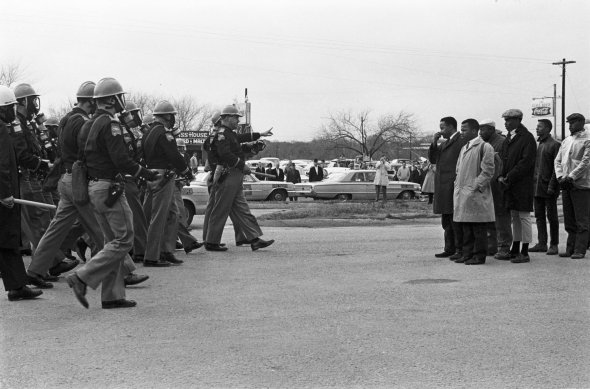
Two Minute Warning, photo by Spider Martin.
Selma “marchers facing a line of state troopers in Selma moments before police beat the protestors on March 7, 1965.
Courtesy Tracy Martin (NPR)
Good Afternoon!!
Today is the anniversary of Bloody Sunday, March 7, 1965 in Selma, Alabama. From USA Today, Bloody Sunday commemoration commences in Selma.
SELMA, Ala. — They have come from coast to coast to commemorate a solemn moment in civil rights history, but also to renew their commitment to a fight that many say isn’t finished.
Tens of thousands of Americans are gathering here on Saturday to mark the 50th anniversary of Bloody Sunday, when marchers attempting to walk from Selma to Montgomery to demand an end to discriminatory polling practices were viciously attacked by police.
It took two more attempts for marchers — led by John Lewis and Hosea Williams — to successfully complete their roughly 50-mile trip to Montgomery. But their determination — and the searing images of the violence during that first march — shook the nation’s collective conscience and helped usher in the landmark Voting Rights Act of 1965….
Participants began arriving Thursday for a five-day commemoration that will reach its apex today when President Obama will speak from the foot of the Edmund Pettus Bridge, where the marchers were bloodied by state troopers and sheriff’s posse armed with tear gas and clubs.
The photo at the top of the page is from NPR’s Code Switch blog: Photographer Helped Expose Brutality Of Selma’s ‘Bloody Sunday’. You can also listen to a brief report at that link. From the transcript:
This month Selma, Ala., will mark the 50th anniversary of “Bloody Sunday.” That’s the day police beat demonstrators attempting to march to Montgomery in support of voting rights. Some of the most iconic images of that day were captured by a white photographer — the late Spider Martin.
Spider Martin’s real introduction to the civil rights movement came on a late night at home in February 1965. He was 25, a photographer for The Birmingham News. He explains in a video from 1987 that he got the call because he was the youngest staff member and no one else wanted to go. That assignment would lead to his most famous work.
“About midnight I get this phone call from the chief photographer and he says ‘Spider, we need to get you to go down to Marion, Ala.’ Says there’s been a church burned and there’d been a black man who was protesting killed. He was shot with a shotgun. His name was Jimmie Lee Jackson.” ….
Jackson’s killing helped spur the Selma-to-Montgomery voting rights marches a few weeks later. Martin was in Selma for Bloody Sunday when state troopers attacked protesters. Holding a camera made him just as much a target. He recounted in an interview with Alabama Public Television, what happened when a police officer saw him.
“He walks over to me and, blow! Hits me right here in the back of the head,” he said. “I still got a dent in my head and I still have nerve damage there. I go down on my knees and I’m like seeing stars and there’s tear gas everywhere. And then he grabs me by the shirt and he looks straight in my eyes and he just dropped me and said, ‘scuse me. Thought you was a nigger.'”
Martin kept covering the marchers until they reached Montgomery two-and-a-half weeks later.
See more of Martin’s photographs of the Selma march at the NPR link and at ArtsRevive.com.
The New York Daily News has a wonderful gallery of photos of the events leading up to the Selma to Montgomery march, which began on March 21, and concluded on March 25, 1965. Here are two of the photos. Please click on the link to see more.
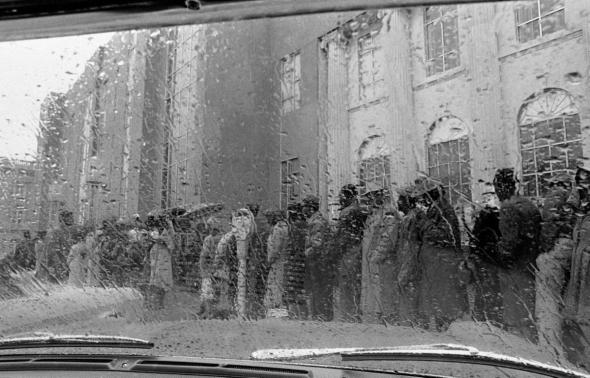
Feb. 7, 1965, African Americans stand in line to attempt to register to take a literacy test in order to register to vote in Selma, AL
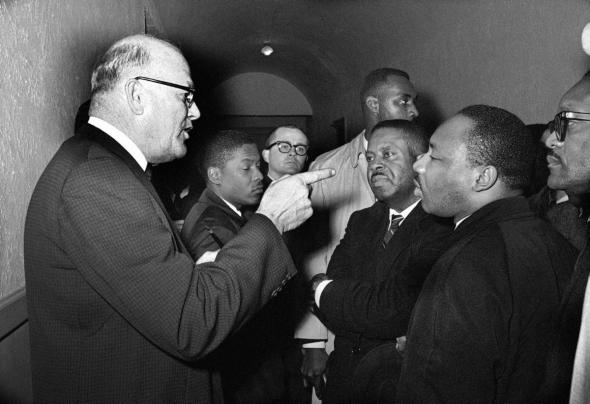
March 1, 1965, Registrar Carl Golson shakes finger in MLK’s face saying that voter registration in Lowndes Cty is none of his business.
At The Nation, The Almanac column has reprinted an article by George B. Leonard published 50 years ago on March 10: Midnight Plane to Alabama.
Fifty years ago today, Alabama State Troopers attacked voting-rights demonstrators on the Edmund Pettus Bridge in Selma. Events moved quickly after that, with President Lyndon Johnson delivering his “We Shall Overcome” address before Congress and calling for a voting-rights bill just over a week later. But in early May, The Nation circled back to that moment on the bridge, with an essay by the California writer George B. Leonard, who watched footage of the assault at home. Shocked and appalled by what he saw, Leonard (originally from the South) took a plane to Selma to be there for whatever would happen next.His essay, “Midnight Plane to Alabama,” appeared in The Nation of May 10, 1965.
The pictures were not particularly good. With the cameras rather far removed from the action and the skies partly overcast everything that happened took on the quality of an old newsreel. Yet this very quality, vague and half-silhouetted, gave the scene the vehemence and immediacy of a dream. The TV screen showed a column of Negroes striding along a highway. A force of Alabama state troopers blocked their way. As the Negroes drew to a halt, a toneless voice drawled an order from a loudspeaker. In the interests of “public safety” the marchers were being told to turn back. A few moments passed, measured out in silence, as some of the troopers covered their faces with gas masks. There was a lurching movement on the left side of the screen, a heavy phalanx of troopers charged straight into the column, bowling the marchers over. A shrill cry of terror, unlike any sound that had passed through a TV set, rose up as the troopers lumbered forward, stumbling sometimes on the fallen bodies. The scene cut to charging horses, their hoofs flashing over the fallen. Another quick cut, a cloud of tear gas billowed over the highway. Periodically the top of a helmeted head emerged from the cloud, followed by a club on the upswing. The club and the head would disappear into the cloud of gas and another club would bob up and down. Unhuman. No other word can describe the motions. The picture shifted quickly to a Negro church. The bleeding, broken and unconscious passed across the screen, some of them limping alone, others supported on either side, still others carried in arms or on stretchers. It was at this point that my wife, sobbing, turned and walked away, saying, “I can’t look any more.”
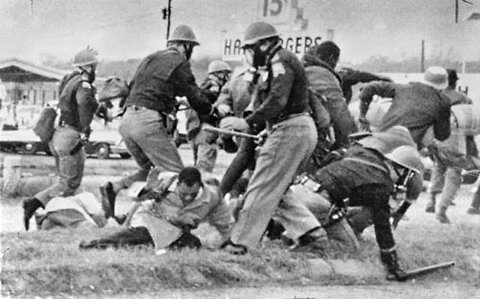
Alabama state troopers attack protesters in Selma, March 7, 1965
How far have we come in 50 years?
Just this week, the Department of Justice released a report that enumerates shocking civil rights violations by police and city officials in Ferguson, Missouri. Following the killing of black teenager Michael Brown by Ferguson police officer Darren Wilson, there were demonstrations during which Ferguson and St. Louis police and Missouri state troopers used military war surplus equipment and blatantly unconstitutional policies in their efforts to shut down the protests.

Riot police stand guard as demonstrators protest the shooting death of teenager Michael Brown in Ferguson, Missouri August 13, 2014. Credit: REUTERS/Mario Anzuoni
In the past year, we’ve seen incident after incident of black men and boys being shot and killed by police around the country.
America’s prisons are used as weapons in a virtual race war. African Americans are “incarcerated at U.S. prisons are at nearly six times the rate of whites.” and they are much more likely to be receive the death penalty.
Most concerning of all, the conservatives on the Supreme Court succeeded in greatly weakening the Voting Rights Act by invalidating the most important part of the law, which required nine states to get federal approval before they made any changes in voting laws. Following that decision, Republican states rushed to impose limits on voting that unfairly targeted minorities.
From NBC News: 50 Years Past Selma, Historic Town Makes Slow March Toward Change.
When thousands gather this weekend in Selma, Alabama, to mark the 50th anniversary of “Bloody Sunday,” some will likely conclude that the town that changed America has not seemed to make much progress of its own.
The majority of registered voters in Selma are now black — along with most of the city, whites having fled in the decades since their African-American neighbors gained access to the ballot box. More than half the businesses in Selma are black-owned.
But Selma is a poor city in one of the poorest states in the country. The typical resident earns about half the state’s median income of $43,000, and over 40 percent of its citizens live below the poverty line, more than twice the state average. According to the most recent data, 10 percent of Selma residents are unemployed — one of the highest rates in Alabama — compared to six percent statewide….
“The people who received less benefit from the movement are the ones who did the most,” said Andrew Young, a lieutenant of Martin Luther King Jr.’s who was among those marching on March 4, 1965. “That’s always bothered me.”
“The farmers who let us stay in their homes, who bonded us out of jail, are old guys now. They still own land but they can’t make a living on the land.”

Ferguson, MO, August 13, 2014. (Photo by Scott Olson/Getty Images)
From Mother Jones, 50 Years Ago Today, “Bloody Sunday” Catalyzed The Civil Rights Movement. Are We Backsliding? Please go read the article–there are more great photos. Here’s the final paragraph:
“It is perversely ironic to commemorate the past without demonstrating the courage of that past in the present,” NAACP president Cornell Brooks told The Atlantic‘s Russell Berman last week. “In other words we can’t really give gold medals to those who marched from Selma to Montgomery without giving a committee vote to the legislation that protects the right to vote today.”
One more relevant piece from Alternet dated December 15, 2014, How Runaway Economic Inequality and Racism Are Linked to Police Killings. A brief excerpt:
Why are white cops shooting unarmed black men?
On one level the story is simple: racism. Too many police officers fear people of color in the neighborhoods they patrol, and are likely to over-react with force during encounters. The local courts also engage in discrimination by failing to indict the killers, even when captured on video, as in the brutal police slaying of Eric Garner in Staten Island, NY. Both the policing and the court system obviously reflect the polarization of our communities, and our inability to escape the legacy of slavery, more than 150 years after emancipation.
But racism only accounts for part of the story. We also must understand how judicial racism and even police violence are deeply connected to the financialization of the economy and runaway inequality.
It is not by accident that America has become both the most unequal developed nation in the world, and the nation with the largest prison population. We’re number one in police killings, incarceration and inequality—not Russia, not China. Our national self-image so steeped in the idea of freedom has not caught up with these ugly realities.
Racism is has been with us for centuries, but something very new happened in America around 1980 that set the stage for these police killings. Something very big is transforming us into the first democratic police state in human history.
“Around 1980…” What happened in 1980? Ronald Reagan was elected. It was the beginning of the Republican “revolution” against freedom, modernity and an inclusive America.
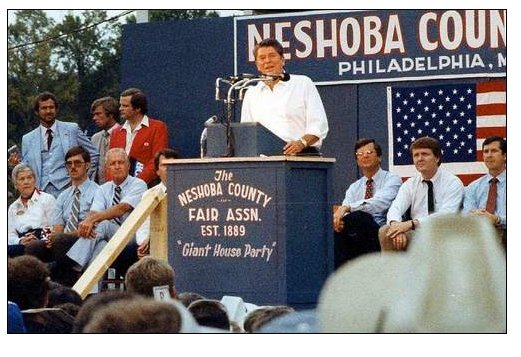
Ronald Reagan kicks off his 1980 presidential campaign in Philadelphia, Mississippi.
Do you recall where Reagan chose to begin his campaign for the presidency? Here’s a column by the late William Rasberry, published on the occasion of Reagan’s death, Reagan’s Race Legacy.
I might have let this period of national mourning pass without a sour note. But I was in Mississippi when I heard the news of his death, and it came just one day after a white Mississippi newspaper editor proudly handed me a copy of the Philadelphia, Miss., paper, the Neshoba Democrat.
Philadelphia, county seat of Mississippi’s Neshoba County, is famous for a couple of things. That is where three civil rights workers — Michael Schwerner, James Chaney and Andrew Goodman — were murdered in 1964. And that is where, in 1980, Republican presidential candidate Ronald Reagan chose to launch his election campaign, with a ringing endorsement of “states’ rights.”
It was bitter symbolism for black Americans (though surely not just for black Americans). Countless observers have noted that Reagan took the Republican Party from virtual irrelevance to the ascendancy it now enjoys. The essence of that transformation, we shouldn’t forget, is the party’s successful wooing of the race-exploiting Southern Democrats formerly known as Dixiecrats. And Reagan’s Philadelphia appearance was an important bouquet in that courtship.
I don’t accuse Reagan of racism, though while he served, I did note what seemed to be his indifference to the concerns of black Americans — issues ranging from civil rights enforcement and attacks on “welfare queens” to his refusal to act seriously against the apartheid regime in South Africa. He gets full credit from me for the good things he did — including presiding over the end of international communism. But he also legitimized, by his broad wink at it, racial indifference — and worse….in some ways, including racially, he left us a more divided nation, in part by making division seem legitimate.
That’s the legacy of Philadelphia.
Even Reagan probably would be amazed by what the Republican Party has become today, but he certainly enabled it.
You can watch coverage of today’s events in Selma on C-Span. President Obama and Representative John Lewis will appear at around 2:30PM.
From Reuters: Obama to make call to action in Selma anniversary visit.
U.S. President Barack Obama will call on Americans to carry forward the spirit of the Civil Rights Movement on Saturday during a visit to Selma, Alabama, to commemorate the 50th anniversary of a march that sparked the 1965 Voting Rights Act.
Obama, the first black U.S. president, will deliver remarks at the Edmund Pettus Bridge, where police and state troopers beat and used tear gas against peaceful marchers who were advocating against racial discrimination at the voting booth….
“Selma is not just about commemorating the past. It’s about honoring the legends who helped change this country through your actions today, in the here and now,” he told a town hall-style meeting.
“Selma is now. Selma is about the courage of ordinary people doing extraordinary things because they believe they can change the country, that they can shape our nation’s destiny. Selma is about each of us asking ourselves what we can do to make America better.” ….
Obama condemned the Missouri city of Ferguson on Friday for “oppressive and abusive” actions against black residents that were revealed in a U.S. Justice Department report accusing police and court officials of racial bias.
We have a very long way to go.
This is an open thread. Please share your thoughts on this post and other stories you’re following in the comment thread and have a terrific weekend.

 peej
peej Carissa
 bostonboomer
 dakinikat
 ecocatwoman
 mablue2
 Mama Lopez
 peggysue22
 quixote
 skydancingguestblogger
 Mona (aka Wonk the Vote)



 Sky Dancing
Recent Comments