
Frank Rizzo and a Militarized Police Force
Posted: January 2, 2012 Filed under: #Occupy and We are the 99 percent!, Anti-War, Civil Liberties, Injustice system, Patriot Act, U.S. Politics 8 CommentsWhile I grew into my young adulthood, Frank Rizzo was the Police Commissioner and then later served as mayor of Philadelphia, Pa.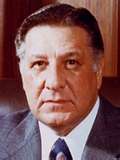 Rizzo died in 1991 but I suspect somewhere in the Great Unknown, the man wails with disappointment, bemoaning the fact he lived before his time. Rizzo once said that if necessary he would roll tanks down Market Street to preserve the peace.
My parents loved Rizzo’s blustery, make-my-day style. I thought he was nuts. As it turns out? The man was a visionary.
One of the overlooked or rarely mentioned contributions of the Occupy Wall Street Movement has been the public eyeballing of today’s military style, domestic police force. Many were surprised, even appalled by the military-style uniforms, the aggressive force, the ‘shock and awe’ approach of smoke and sound cannons caught on video.
Let me start off by saying I enjoy safe environments, appreciate the fact that children walk our streets without the fear of immediate abduction, that little old ladies are not routinely bashed over the head for their social security checks or that drug cartels have yet to murder mayors and judges in turf wars [eg., Mexico].
Crime is down in America. That’s a good thing.
 But the push for overkill security measures from our national police forces, fueled by the residual shock of 9/11, defense contractors recognizing small but reliable profit centers and Federal grants under the Homeland Security Department has shot into hyper-drive. This transformation has occurred not simply in urban settings, where drug-related crime is often a legitimate concern, the source of violence against innocent citizens and police alike. No, the rise of military-style SWAT teams has come to small town America. And numerous Federal Agencies.
Why should we, ordinary citizens, be concerned? Surely, there is a parallel between the military and police—the hierarchal structure, the use of weaponry and force. However, the main difference is a soldier is expected to kill the enemy, break the place up in times of war. In contrast, police departments are expected to protect the peace and citizenry, as well as respect our Constitutional rights. Situations quickly grow hairy when these roles [soldier/policeman] begin to morph into one another.
A case in point, actually several cases were laid bare by Radley Balko, who as early as 2007 testified before Congress, warning of the growing number of SWAT Teams in America and/or the militarization of our police departments. This did not happen overnight. In fact the swing to military-style policing has been growing steadily since the 1980’s when Congressional legislation made military surplus available to police departments.
Here are a few examples that Balko has described:
Dress cops up as soldiers, give them military equipment, train them in military tactics, tell them they’re fighting a “war,” and the consequences are predictable. These policies have taken a toll. Among the victims of increasingly aggressive and militaristic police tactics: Cheye Calvo, the mayor of Berwyn Heights, Md., whose dogs were killed when Prince George’s County police
mistakenly raided his home; 92-year-old Katherine Johnston, who was gunned down by narcotics cops in Atlanta in 2006; 11-year-old Alberto Sepulveda, who was killed by Modesto, Calif. police, during a drug raid 2000; 80-year-old Isaac Singletary, who was shot by undercover narcotics police in 2007 who were attempting to sell drugs from his yard; Jonathan Ayers, a Georgia pastor shot as he tried to flee a gang of narcotics cops who jumped him at a gas station in 2009; Clayton Helriggle, a 23-year-old college student killed during a marijuana raid in Ohio in 2002; and Alberta Spruill, who died of a heart attack after police deployed a flash grenade during a mistaken raid on her Harlem apartment in 2003.
As well as:
. . . paramilitary creep has also spread well beyond the drug war. In recent years, SWAT teams have been used to break up neighborhood poker games, including one at an American Legion Hall in Dallas. In 2006, Virginia optometrist Sal Culosi was killed when the Fairfax County Police Department sent a SWAT team to arrest him for gambling on football games. SWAT teams are also now used to arrest people suspected of downloading child pornography. Last year, an Austin, Texas, SWAT team broke down a man’s door because he was suspected of stealing koi fish from a botanical garden.
Btw, the case of child pornography? Turned out the man raided had a password-free wifi connection. It was his next-door neighbor who was into kiddie porn.
On SWAT teams employed specifically by Federal Agencies:
In 2007, a federal SWAT team raided the studio of an Atlanta DJ suspected of violating copyright law. And in June, the Department of Education’s Office of Inspector General sent its SWAT team into the home of Kenneth Wright in Stockton, Calif., rousing him and his three young daughters from their beds at gunpoint. Initial reports indicated the raid was because Wright’s estranged wife had defaulted on her student loans. The Department of Education issued a press release stating that the investigation was related to embezzlement and fraud — though why embezzlement and fraud necessitate a SWAT team isn’t clear, not to mention that the woman hadn’t lived at the house that was raided for more than a year. Ignoring these details, however, still leaves the question of why the Department of Education needs a SWAT team in the first place.
The Department of the Interior also has one [SWAT team], as does the Consumer Products Safety Commission. Last August, gun-toting federal marshals raided the Gibson Guitar factory in Nashville, Tenn. The reason? The company is under investigation for importing wood that wasn’t properly treated.
In 2006, a group of Tibetan monks inadvertently overstayed their visas while touring the U.S. on a peace mission. Naturally, immigration officials sent a SWAT Team to apprehend them.
Concerned yet?
According to Andrew Becker and GW Schulz from the Center for Investigative Reporting, Federal funds deluged America after 9/11 with little oversight. And so, a place like Fargo, ND though an unlikely target for jihadist terrorism, has received 34 billion dollars over the last decade, resulting in a wild spending spree.
In recent years, they [Fargo’s PD] have bought bomb-detection robots, digital communications equipment and Kevlar helmets, like those used by soldiers in foreign wars. For local siege situations requiring real firepower, police there can use a new $256,643 armored truck, complete with a rotating turret. Until that day, however, the menacing truck is mostly used for training runs and appearances at the annual Fargo picnic, where it’s been displayed near a children’s bounce house.
And,
No one can say exactly what has been purchased in total across the country or how it’s being used, because the Federal government doesn’t keep close track. State and local governments don’t maintain uniform records. But a review of records from 41 states obtained through open-government requests, and interviews with more than two-dozen current and former police officials and terrorism experts, shows police departments around the U.S. have transformed into small army-like forces.
 Last month, I wrote a post for Sky Dancing on the growing popularity of drones for domestic applications, Eyes in the Sky. Yes, it is true police departments have routinely employed helicopters for apprehension purposes but a drone can be kept in the air for 20+ hours, employ cameras to spy on citizens in their own homes. There’s been no public discussion or debate on using drones in American airspace. For good reason, I would argue. The public identifies the drone to our recent wars in the Middle East, an effective killing machine. On its face, remote aircraft application takes the issue of surveillance to another level, one that many citizens would reject.
Perhaps more disturbing is the fact that with all the money spent on military weaponry and hardware over the last decade+, it’s reported that local municipalities have pinched costs when it comes to basic training, the how to’s, the when and wherefores for their personnel. Basic safety and procedural training protects not only the innocent citizen bystander but police officers as well.
 The tragedy we witnessed in Oakland during the Occupy protests where Scott Olsen, an Iraqi vet, was nearly killed was a preventable action. The pepper-spraying and crackdown of peaceful protestors in NYC and elsewhere by overzealous police is a chilling development, as is the routine use of stun guns on the elderly, on children, even pregnant women, and/or the multiple shooting of family pets in warrantless house raids [an alarming number of which have been mistakes]. These are steps too far, steps we will surely regret as a society. This is particularly true at a moment when authoritative incursions are being made on our basic civil rights, eg., the recent sign off on indefinite detention; the kill order on and ultimate assassination of Anwar al-Awlaki, a bad guy but an American citizen nonetheless; a continuing war against whistleblowers; the veil of secrecy in an ever-expanding state of war and surveillance; the deliberate fear-mongering and scapegoating used by our politicians; the disturbing rise and spread of corporatism, etc.
The slide into tyranny is an easy hop, skip and jump from where we find ourselves right now. We’re deluding ourselves by pretending our democratic principles cannot be/have not been eroded. This should not be a partisan issue because all parties have been responsible and all parties will be injured if the trend continues.
Frank Rizzo may be smiling in the afterlife. But Benjamin Franklin leans over his shoulder, reminding us all:
‘Those who sacrifice liberty for security deserve neither. ‘
Sorry, Frank. Ben was the far wiser man.
They call it Riding the Gravy Train
Posted: December 27, 2011 Filed under: #Occupy and We are the 99 percent!, Politics as Usual, U.S. Politics, We are so F'd | Tags: Cantor corrupt, Congressional corruption, insider trading by congress 13 CommentsIt recently came to every one’s attention that many members of congress are dealing with legislation while owning stocks that will soar depending on the results of that legislation. We’ve even found out that Eric Cantor bet against the country while stalling legislation designed to increase the US debt level.
In academic studies from the Journal of Financial and Qualitative Analysis, statistically significant results demonstrate that both Republican and Democratic politicians are outperforming the market, with the Democrats enjoying a whopping 9 percent annual outperformance. Senators were the biggest winners, displaying Houdini-like magic and beating the S&P by 12 percent annually. These results are not due to luck or financial acumen, but are rather the result of trades based on non-public information that these politicians are privy to in closed-door sessions. For the rest of us hard-working and investing Americans, this type of advantage is called insider trading.
Obviously, behavior that is criminal for everyday Americans should not be okay for lawmakers who have the power to gin up laws that affect companies while simultaneously keeping an eye on their own spreadsheets and brokerage accounts. Sadly, however, this is in fact the case.
Congressional immorality seems to extend beyond this insider debacle. Recent reports have revealed that Countrywide provided special VIP loans with publically unavailable discounted interest rates to representatives. There was even a rumor this past month concerning student loans given to congressional family members that are later forgiven. Further research by Snoops.com and others revealed that these forgiven student loans are just for a limited group of staff members who work for our elected officials. Well, there you go; finally some moral fiber. It leaves those of us struggling to get our retirement portfolios on track to wonder if there is a way to pick up one of these staff member positions, or better yet become a lawmaker to get to the real juice.
Largely insulated from the country’s economic downturn since 2008, members of Congress — many of them among the “1 percenters” denounced by Occupy Wall Street protesters — have gotten much richer even as most of the country has become much poorer in the last six years, according to an analysis by The New York Times based on data from the Center for Responsive Politics, a nonprofit research group.
Congress has never been a place for paupers. From plantation owners in the pre-Civil War era to industrialists in the early 1900s to ex-Wall Street financiers and Internet executives today, it has long been populated with the rich, including scions of families like the Guggenheims, Hearsts, Kennedys and Rockefellers.
But rarely has the divide appeared so wide, or the public contrast so stark, between lawmakers and those they represent.
The wealth gap may go largely unnoticed in good times. “But with the American public feeling all this economic pain, people just resent it more,” said Alan J. Ziobrowski, a professor at Georgia State who studied lawmakers’ stock investments.
There is broad debate about just why the wealth gap appears to be growing. For starters, the prohibitive costs of political campaigning may discourage the less affluent from even considering a candidacy. Beyond that, loose ethics controls, shrewd stock picks, profitable land deals, favorable tax laws, inheritances and even marriages to wealthy spouses are all cited as possible explanations for the rising fortunes on Capitol Hill.
What is clear is that members of Congress are getting richer compared not only with the average American worker, but also with other very rich Americans.
The founders of this country came very much from the landed gentry and bourgeois merchant class that had a great deal at stake in the revolution. Their businesses were severely restricted by government monopolies granted to royal favorites. They were forced to pay the costs to garret troops and were taxed on items to support favored businesses. Yes, most of those patriots were exceptionally educated and wealthy by the standards of colonial America. It wasn’t until much later that representatives found that they could use their offices and the legislation to their advantage. We’ve had many scandals involving graft and congress. We have not, however, seen congress become a systematic path to wealth until recently. There is terrible injustice in this.
Between 1984 and 2009, the median net worth of a member of the House more than doubled, according to the analysis of financial disclosures, from $280,000 to $725,000 in inflation-adjusted 2009 dollars, excluding home equity.
Over the same period, the wealth of an American family has declined slightly, with the comparable median figure sliding from $20,600 to $20,500, according to the Panel Study of Income Dynamics from the University of Michigan.
The comparisons exclude home equity because it is not included in congressional reporting, and 1984 was chosen because it is the earliest year for which consistent wealth statistics are available.
The growing disparity between the representatives and the represented means that there is a greater distance between the economic experience of Americans and those of lawmakers.
There are things that could be done to stop this. The problem, however, is tha the foxes are in charge of the hen house. There is legislation proposed to stop insider trading by congress. Creepy Eric Cantor is blocking this. There is legislation to separate the political class from their corporate donor teats. Bernie Saunders has proposed a constitutional amendment to remove the power of SuperPacs in his “Saving American Democracy Amendment”.
Something really needs to be done about this
Greed is Good Redux
Posted: December 20, 2011 Filed under: #Occupy and We are the 99 percent!, The Bonus Class | Tags: Banksters, one perecent 17 CommentsThe real life Gordon Gekko set went to an investor’s conference in Gotham City to defend wealth this month. I dare you to find much difference between some of the quotes I read in this Bloomberg article and the Greed is Good speech. Remember most of these are guys are bankers. These aren’t guys that make cars, produce wheat, or build houses. These are functionaries of overhead and gambling. They still don’t seem to get that people don’t hate rich people that come by their money without manipulation of laws, favorable tax treatment, and government subsidies and bailouts. It’s people that get wealthy by gaming the system, raiding the US treasury, and extracting huge salaries for running failed casino operations that are the targets of anger these days. I guess all that money doesn’t guarantee you’ll actually be able to use your brain or your common sense to solve a problem.
Here’s a pretty good example of some whining that deserves no sympathy.
The organization assisted John A. Allison IV, a director of BB&T Corp. (BBT), the ninth-largest U.S. bank, and Staples Inc. co- founder Thomas Stemberg with media appearances this month.
“It still feels lonely, but the chorus is definitely increased,” Allison, 63, a former CEO of the Winston-Salem, North Carolina-based bank and now a professor at Wake Forest University’s business school, said in an interview.
At a lunch in New York, Stemberg and Allison shared their disdain for Section 953(b) of the Dodd-Frank Act, which requires public companies to disclose the ratio between the compensation of their CEOs and employee medians, according to Allison. The rule, still being fine-tuned by the Securities and Exchange Commission, is “incredibly wasteful” because it takes up time and resources, he said. Stemberg called the rule “insane” in an e-mail to Bloomberg News.
“Instead of an attack on the 1 percent, let’s call it an attack on the very productive,” Allison said. “This attack is destructive.”
Oh, wait. There’s more.
Asked if he were willing to pay more taxes in a Nov. 30 interview with Bloomberg Television, Blackstone Group LP (BX) CEO Stephen Schwarzman spoke about lower-income U.S. families who pay no income tax.
“You have to have skin in the game,” said Schwarzman, 64. “I’m not saying how much people should do. But we should all be part of the system.”
Some of Schwarzman’s capital gains at Blackstone, the world’s largest private-equity firm, are taxed at 15 percent, not the 35 percent top marginal income-tax rate. Attacking the banking system is a mistake because it contributes to “a healthier economy,” he said in the interview.
Paulson, the New York hedge-fund manager who became a billionaire by betting against the U.S. housing market, has also said the rich benefit society.
“The top 1 percent of New Yorkers pay over 40 percent of all income taxes,” Paulson & Co. said in an e-mailed statement on Oct. 11, the day Occupy Wall Street protesters left a mock tax-refund check at its president’s Upper East Side townhouse.
 I’ll quote just one more and then you can read the others on your own.
Tom Golisano, billionaire founder of payroll processer Paychex Inc. (PAYX) and a former New York gubernatorial candidate, said in an interview this month that while there are examples of excess, it’s “ridiculous” to blame everyone who is rich.
“If I hear a politician use the term ‘paying your fair share’ one more time, I’m going to vomit,” said Golisano, who turned 70 last month, celebrating the birthday with girlfriend Monica Seles, the former tennis star who won nine Grand Slam singles titles.
There’s an entire rogue’s list of the persecuted 1 percent there along with some eye popping quotes. I can’t decide if I should close with a reference to the Julio-Claudian period in Rome or the Bourbon monarchy in France. Do these guys really think their contributions to civilization are all that? Since when did destroying the savings and home values of most of the country become something to brag about?
Pitchforks or Guillotines?
Thursday Reads: Defense Authorization Bill, Ron Wyden, the Filthy Rich, and Bird Crashes
Posted: December 15, 2011 Filed under: #Occupy and We are the 99 percent!, 2012 presidential campaign, Banksters, Barack Obama, Civil Liberties, George W. Bush, income inequality, indefinite detention, Medicare, morning reads, net-neutrality, Psychopaths in charge, Republican presidential politics, U.S. Economy, U.S. Military, U.S. Politics, We are so F'd, WE TOLD THEM SO | Tags: ACLU, Afghanistan War, AUMF, Carl Levin, CEO salaries, defense authorization bill, Diane Feinstein, Emptywheel, Harry Truman, Human Rights Watch, indefinite detention, Iraq War, John McCain, Newt Gingrich, taxes, terrorism 71 Comments
Good Morning!!
So far I haven’t been locked up in Guantanamo or debtors’ prison. I hope the rest of you Sky Dancers still have your freedom too, such as it is.
Yesterday the U.S. House of Representatives passed the Defense Authorization bill, which includes language permitting indefinite detention by the military of “al Qaeda members” without specific charges or trials. You can read the bill here.
Our craven and cowardly President had promised to veto this bill, but today the White House reneged on that promise, and Obama is set to sign it once it passes the Senate tomorrow or Friday.
The White House backed down from its veto threat of the defense authorization bill Wednesday, saying that the bill’s updated language would not constrain the Obama administration’s counterterrorism efforts.
While the White House acknowledged it still has some concerns, press secretary Jay Carney said President Obama’s advisers wouldn’t recommend a veto, a threat that had been hanging over the Pentagon policy bill for the past month.
Obama and his crew don’t care about the fifth amendment, habeas corpus and all that jazz–just that the president is the one who decides who is an “al Qaeda member” and therefore will be whisked away to indefinite detention. Wanna bet there are suddenly going to be a lot of “al Qaeda members” in the Occupy movement? From Anti-War.com:
As revealed in the Senate deliberations last week, the Obama administration itself requested the principal authors of the provision – John McCain and Carl Levin – to include language authorizing due-process-free military custody for American citizens. The initial threat of veto was apparently nothing more than political theater on the part of the White House.
According to The Hill, the following changes satisfied the White House concerns:
The bill deleted the word “requirement” from the section on the military detention of terror suspects, which was among the most contentious parts of the bill.
The national security waiver allowing the executive branch to move terror suspects from military to civilian courts was placed in the president’s hands rather than the Defense secretary’s, a change Levin said Obama had asked for.
The conference bill was based on the Senate language, which was not as harsh as the House bill when it came to trying terror suspects in civilian courts.
The administration called the provision in the bill that establishes the authority for military detentions unnecessary because the executive branch already was given this authority following Sept. 11.
Carney’s statement said if the administration finds parts of the law “negatively impact our counterterrorism professionals and undercut our commitment to the rule of law,” it expects the bill’s authors will correct those problems.
Oh well, then no worries… Except that lots of people who care about the Constitution aren’t so happy about it. Here’s a statement from Laura Murphy of the ACLU:
“The president should more carefully consider the consequences of allowing this bill to become law,” Laura W. Murphy, director of the ACLU Washington Legislative Office. “If President Obama signs this bill, it will damage both his legacy and American’s reputation for upholding the rule of law. The last time Congress passed indefinite detention legislation was during the McCarthy era and President Truman had the courage to veto that bill. We hope that the president will consider the long view of history before codifying indefinite detention without charge or trial.”
Unfortunately, Barack Obama is no Harry Truman.
Here’s a statement from Human Rights Watch:
“By signing this defense spending bill, President Obama will go down in history as the president who enshrined indefinite detention without trial in US law,” said Kenneth Roth, executive director of Human Rights Watch. “In the past, Obama has lauded the importance of being on the right side of history, but today he is definitely on the wrong side.”
The far-reaching detainee provisions would codify indefinite detention without trial into US law for the first time since the McCarthy era when Congress in 1950 overrode the veto of then-President Harry Truman and passed the Internal Security Act. The bill would also bar the transfer of detainees currently held at Guantanamo into the US for any reason, including for trial. In addition, it would extend restrictions, imposed last year, on the transfer of detainees from Guantanamo to home or third countries – even those cleared for release by the administration.
There are currently 171 detainees at Guantanamo, many of whom have been imprisoned for nearly 10 years. As one of his first acts in office, Obama signed an executive order for the closure of Guantanamo within one year. Instead of moving quickly to close the prison and end the use of the discredited military commissions, he supported modifications to the Military Commissions Act.
“It is a sad moment when a president who has prided himself on his knowledge of and belief in constitutional principles succumbs to the politics of the moment to sign a bill that poses so great a threat to basic constitutional rights,” Roth said.
The bill also requires the US military take custody of certain terrorism suspects even inside the United States, cases that previously have been handled by federal, state and local law enforcement authorities. During debate over the bill, several senior administration officials, including the secretary of defense, attorney general, director of national intelligence, director of the FBI, and director of the CIA, all raised objections that this provision interfered with the administration’s ability to effectively fight terrorism. In the last 10 years over 400 people have been prosecuted in US federal courts for terrorism related offenses. Meanwhile during that same period, only six cases have been prosecuted in the military commissions.
“President Obama cannot even justify this serious threat to basic rights on the basis of security,” Roth said. “The law replaces an effective system of civilian-court prosecutions with a system that has generated the kind of global outrage that would delight recruiters of terrorists.”
The bill also reauthorizes the AUMF that Bush used to get us into Iraq. Emptywheel has a lengthy post in which she wonders: Feinstein’s “Fix” on AUMF Language Actually Authorize Killing American Citizens? You probably should read the whole thing, but here’s the summation:
…by affirming all purportedly existing statutory authority, DiFi’s “fix” not only reaffirmed the AUMF covering a war Obama ended today, but also affirmed the Executive Branch’s authority to use deadly force when ostensibly trying to detain people it claimed present a “significant threat of death or serious physical injury.” It affirms language that allows “deadly force” in the name of attempted detention.
In any case, it’s one or the other (or both). Either the AUMF language became acceptable to Obama because it included American citizens in the Afghan AUMF and/or it became acceptable because it affirmed the Executive Branch’s authority to use deadly force in the guise of apprehending someone whom the Executive Branch says represents a “significant threat.”
My guess is the correct answer to this “either/or” question is “both.”
So DiFi’s fix, which had the support of many Senators trying to protect civil liberties, probably made the matter worse.
In its more general capitulation on the veto, the Administration stated that the existing bill protects the Administration’s authority to “incapacitate dangerous terrorists.” “Incapacitate dangerous terrorists,” “use of deadly force” with those who present a “significant threat of death or serious physical injury.” No matter how you describe Presidential authority to kill Americans with no due process, the status quo appears undiminished.
Finally Al Jazeera asks: Is the principle of indefinite detention without trial now an accepted and permanent part of American life? I wonder if Michelle Obama is still proud to be an American today?
There is some other news, of course. For one thing, it seems as if Rep. Ron Wyden of Oregon must have more energy I can imagine having. As of today he managed to get the decisions on rural post office closings postponed until next May; he joined with Rep. Paul Ryan (!) to propose a medicare overhaul; and he and Darrel Isa (!) have proposed an alternative to the entertainment industry bill that would effectively shut down social networking on the internet. Check out those links if you’re interested.
One of my favorite economists, Robert Reich, has an analysis of Newt’s Tax Plan, and Why His Polls Rise the More Outrageous He Becomes.
Newt’s plan increases the federal budget deficit by about $850 billion – in a single year!
….
Most of this explosion of debt in Newt’s plan occurs because he slashes taxes. But not just anyone’s taxes. The lion’s share of Newt’s tax cuts benefit the very, very rich.
That’s because he lowers their marginal income tax rate to 15 percent – down from the current 35 percent, which was Bush’s temporary tax cut; down from 39 percent under Bill Clinton; down from at least 70 percent in the first three decades after World War II. Newt also gets rid of taxes on unearned income – the kind of income that the super-rich thrive on – capital-gains, dividends, and interest.
Under Newt’s plan, each of the roughly 130,000 taxpayers in the top .1 percent – the richest one-tenth of one percent – reaps an average tax cut of $1.9 million per year. Add what they’d otherwise have to pay if the Bush tax cut expired on schedule, and each of them saves $2.3 million a year.
To put it another way, under Newt’s plan, the total tax bill of the top one-tenth of one percent drops from around 38 percent of their income to around 10 percent.
What about low-income households? They get an average tax cut of $63 per year.
Oh, I almost forgot: Newt also slashes corporate taxes.
Wow!
Dakinikat clued me in to this post at Naked Capitalism: “Let Them Eat Pink Slips” CEO Pay Shot Up in 2010, which links to this article in the Guardian.
Chief executive pay has roared back after two years of stagnation and decline. America’s top bosses enjoyed pay hikes of between 27 and 40% last year, according to the largest survey of US CEO pay. The dramatic bounceback comes as the latest government figures show wages for the majority of Americans are failing to keep up with inflation.
America’s highest paid executive took home more than $145.2m, and as stock prices recovered across the board, the median value of bosses’ profits on stock options rose 70% in 2010, from $950,400 to $1.3m. The news comes against the backdrop of an Occupy Wall Street movement that has focused Washington’s attention on the pay packages of America’s highest paid.
The Guardian’s exclusive first look at the CEO pay survey from corporate governance group GMI Ratings will further fuel debate about America’s widening income gap. The survey, the most extensive in the US, covered 2,647 companies, and offers a comprehensive assessment of all the data now available relating to 2010 pay.
And these oligarchs couldn’t care less if we like it or not. They own the White House and the Congress and we don’t.
I’ll end with a bizarre and very sad story out of Utah:
Thousands of migratory birds were killed or injured after apparently mistaking a Wal-Mart parking lot, football fields and other snow-covered areas of southern Utah for bodies of water and plummeting to the ground in what one state wildlife expert called the worst mass bird crash she’d ever seen.
Crews went to work cleaning up the dead birds and rescuing the injured survivors after the creatures crash-landed in the St. George area Monday night.
By midday Wednesday, volunteers had helped rescue more than 3,000 birds, releasing them into a nearby pond. There’s no count on how many died, although officials estimate it’s upwards of 1,500.
“They’re just everywhere,” said Teresa Griffin, wildlife program manager for the Utah Division of Wildlife Resource’s southern region. “It’s been nonstop. All our employees are driving around picking them up, and we’ve got so many people coming to our office and dropping them off.”
Those are my recommendations for today. What are you reading and blogging about?
Have We Died and Gone to Heaven?
Posted: December 14, 2011 Filed under: #Occupy and We are the 99 percent!, Banksters, Congress, Corporate Crime, corruption, Democratic Politics, legislation | Tags: 2011: days of revolt, Financial Crisis, Rule of Law 5 Comments
Just read a heads-up from OpEd News that Tammy Baldwin [WI] has proposed H.Con Res. 85 for consideration to prevent any Wall Street settlement[s] and/or immunity against criminal or civil charges, where fraud [aka criminal activity] is indicated, requiring investigation and subsequent prosecution by Federal and state authorities.
Halleluiah!
This is in addition to the investigations that Attorney Generals Eric Schneiderman [NY], Beau Biden [DE], Martha Coakley [MA], Catherine Cortez Masto [NV] and Karmala D. Harris [CA] are pursuing in the mortgage foreclosure crisis, namely robosigning, origination and securities fraud, as well as NY District Court Judge Jed Rakoff, who notably [and bravely] refused to sign off on a ‘deal’ between the SEC and Citigroup in another case involving securities fraud.
Forty-eight representatives have signed to co-sponsor the proposed bill. I think it’s safe to say that the Occupy Wall St. Movement has had an impact, voicing the concerns and anger of the 99%, the ordinary citizen, all of us, who would be thrown into the clink for breaking the law. Particularly for brazen theft. Yet bank CEOs and managers, mortgage servicers, realtors, accountants, lawyers and variety of regulators and auditors have been routinely given a pass [get out of jail card[.
Dare I say our lawmakers are finally listening? Let’s hope so because unless the Rule of Law is re-established unequivocally there can be no faith in the system. The Law applies to all or it is invalidated, applying to none.
Thumbs up to Congresswoman Baldwin [who is running for the Wisconsin Senate seat in 2012] and her colleagues listed below. If one of these gentlemen or gentlewomen represent your district, an appreciative email might be in order. If your representative’s name does not appear you may want to send a questioning email or pick up the phone–just to say ‘hello’ and btw why aren’t you supporting The Rule of Law?
Those of us not in the streets, still have our voices.
Let them be heard.
Rep. Earl Blumenauer [OR]
Rep. Michael Capuano [MA]
Rep. Andre Carson [IN]
Rep. David Cicilline [RI]
Rep. Steve Cohen [TN]
Rep. John Conyers [MI]
Rep. Elijah Cummings [MD]
Rep. Danny Davis [IL]
Rep. Peter DeFazio [OR]
Rep. Keith Ellison[MN]
Rep. Bob Filner[CA]
Rep. Marcia Fudge [OH]
Rep. Raul Grijalva [AZ]
Rep. Luis Gutierrez [AZ]
Rep. Janice Hahn [CA]
Rep. Alcee Hastings [FL]
Rep. Brian Higgins [NY]
Rep. Rep. Maurice Hinchey [NY]
Rep. Rush Holt [NJ]
Rep. Michael Honda [CA]
Rep. Jay Inslee [WA]
Rep. Jesse Jackson [IL]
Rep. Henry Johnson [GA]
Rep. Marcy Kaptur [OH]
Rep. Dennis Kucinich [OH]
Rep. James Langevin [RI]
Rep. John Larson [CT]
Rep. Barbara Lee [CA]
Rep. Edward Markey [MA]
Rep. Doris Matsui [CA]
Rep. James McDermott [WA]
Rep. James McGovern [MA]
Rep. Gwen Moore [WI]
Rep. Grace Napolitano [CA]
Del. Eleanor Norton [DC]
Rep. John Olver [MA]
Rep. Mike Quigley [IL]
Rep. Bobby Rush [IL]
Rep. Loretta Sanchez [CA]
Rep. Janice Schakowsky [IL]
Rep. Louise Slaughter [NY]
Rep. Fortney Stark [CA]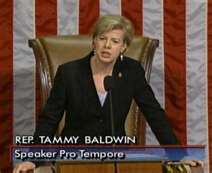
Rep. Michael Thompson [CA]
Rep. John Tierney [MA]
Rep. Edolphus Towns [NY]
Rep. Niki Tsongas [MA]
Rep. Maxine Waters [CA]
Rep. Lynn Woolsy [CA]
UPDATE: Just received an email indicating that cosponsors now number 50 [don’t have the additional names].

 peej
peej Carissa
 bostonboomer
 dakinikat
 ecocatwoman
 mablue2
 Mama Lopez
 peggysue22
 quixote
 skydancingguestblogger
 Mona (aka Wonk the Vote)



 Sky Dancing
Recent Comments