Posted: March 1, 2022 | Author: bostonboomer | Filed under: morning reads | Tags: Joe Biden, Russia, State of the Union Address March 1 2002, Ukraine, Vladimir Putin |
Good Morning!!
So much is happening in the Ukraine story right now. Whatever I post this morning is likely to change rapidly. But before I get to the Ukraine news and analysis, I want to call attention to the State of the Union Address tonight. We can probably use this post as a live thread, but if necessary we’ll put up a new thread for the speech.
Eugene Robinson at The Washington Post: Opinion: Biden’s State of the Union address should build on his record.
“My fellow Americans, the state of the union is … better. Much, much better.”
I doubt President Biden will use those exact words in his first State of the Union address on Tuesday night — not with inflation still in the headlines — but they encapsulate the truth. Biden has not solved all the problems of the nation or the world in his first year in the White House. But he has done a heck of a lot.
Recall where we were on the day Joe Biden took the oath of office.
The nation was gripped by the covid-19 pandemic, and there was no workable process or plan to get everyone vaccinated. The economy was in crisis; restaurants and hotels were shuttered, and airports were like ghost towns. Schools were closed. Two weeks earlier, a shocking and unprecedented violent assault on the U.S. Capitol was waged by insurrectionists bent on overturning the presidential election and keeping Biden’s predecessor in power. That defeated incumbent, bitter because the putsch had failed, lacked the respect for tradition and country to attend Biden’s inauguration.
Look where we are now.
Some 65 percent of the U.S. population is fully vaccinated, and nearly 44 percent has also had a booster shot. Covid-19 cases, hospitalizations and deaths are in free fall. During Biden’s first year, the economy added a record 6.6 million jobs and the unemployment rate fell to 4 percent. Schools are open and functioning normally. Mask mandates are being lifted. Our political discourse has returned to Democrats and Republicans shouting at each other across a yawning divide, but they are once again fighting with words, not cudgels and bear spray.
NBC News: Biden’s State of the Union address to focus on Ukraine, U.S. economy.
President Joe Biden will come before Congress on Tuesday seeking to sell his domestic and foreign policy agenda to an American public that has given him persistently low approval ratings as he faces the intensifying conflict in Ukraine.
A key focus of the prime-time address before Congress will be the U.S. response to Russia’s invasion of Ukraine, with Biden planning to highlight the united efforts by the U.S. allies and the impact sanctions have already had on Russia’s economy, administration officials said.
On domestic issues, Biden plans to talk extensively about efforts he has taken to improve the U.S. economy and control the pandemic, while pressing Congress to revive his stalled domestic policy agenda.
The speech comes at a pivotal moment for Biden, both at home and abroad. Among recent presidents, only his immediate predecessor, Donald Trump, came before Congress with a lower approval rating, with voters giving Biden low marks on everything from his leadership style to his handling of the economy.
The address may mark Biden’s last opportunity to make the case for his domestic policy agenda before a Congress controlled by his own party, with many Democrats facing a tough fight in the midterms.
The president’s team has been reworking his remarks in recent days to more heavily emphasize the response to Russia’s invasion of Ukraine. White House press secretary Jen Psaki, in an interview with MSNBC this week, compared the moment to the remarks before Congress by President Barack Obama during the financial crisis or the one President George W. Bush gave after the Sept. 11 attacks.
Here’s where things stand In Ukraine right now:
The Russians have unleashed an all-out attack on Ukraine’s second largest city Kharkiv.
Michael Schwirtz at The New York Times: An explosion rocks Kharkiv a day after shelling in a residential neighborhood.
A large explosion struck central Kharkiv, Ukraine’s second largest city, on Tuesday, directly in front of the city’s administrative building, creating a huge fireball that appeared in a video to engulf several cars driving through an area called Freedom Square.
The cause of the blast and number of casualties were not immediately clear, though the city’s mayor said there were dead and wounded. CCTV footage of the attack captured what appeared to be a rocket striking directly in front of the building. Video of the aftermath showed a large crater in the middle of the city’s cobble-stoned central square.
USA Today: ‘Nobody will forget’: Zelenskyy calls attack on Kharkiv ‘a war crime’ as 40-mile convoy rolls toward Kyiv: Live updates.
Residential areas in Kharkiv, Ukraine’s second-largest city, were being pounded by Russian shells while a massive 40-mile convoy of Russian tanks and vehicles rolled toward the capital of Kyiv on Tuesday as the war entered its sixth day.
At least 11 people were killed and 35 wounded in the rocket strikes on Kharkiv, Interior Ministry adviser Anton Herashchenko said. He said the rubble was still being cleared and the death toll was expected to rise.
Ukrainian President Volodymyr Zelenskyy called the attack on the city’s main square “frank, undisguised terror. Nobody will forgive. Nobody will forget. This attack on Kharkiv is a war crime.”
Kharkiv Mayor Ihor Terekhov said Tuesday that his government remained under control but said the city is surrounded by Russian troops.
The Washington Post: Russian invasion escalates as massive convoy threatens Kyiv, Kharkiv ‘surrounded.’
DNIPRO, Ukraine — Russian forces, frustrated by the tenacious defense of major cities by Ukrainian soldiers and ad hoc civilian militias, gathered menacing strength Tuesday, as a projectile appeared to strike near Kharkiv’s administration building and a convoy of tanks, troop carriers and artillery more than 40 miles long threatened Kyiv.
Kharkiv remains under Ukrainian control but is “surrounded” by Russian troops, Kharkiv Mayor Ihor Terekhov told The Washington Post. In Kyiv, residents are bracing for an all-out assault as the Russian force, under the command of a president whose country has quickly become an international political and economic pariah, is apparently preparing to encircle the capital. A senior U.S. defense official said the Kremlin seems ready to adopt the same siege tactics that are beginning to strangle Kharkiv.
There, thousands are without power and heat in freezing temperatures, local officials said, and residents braced for more shelling Tuesday. Suspected cluster munitions struck residential parts of Kharkiv on Monday, raising fears that Russia could use tactics similar to those employed in Chechnya and Syria, where it has been accused of war crimes. Ukrainian President Volodymyr Zelensky said the attack on Kharkiv was “terror against the city.”
Five hours of talks between Russian and Ukrainian delegations Monday near the Belarusian border failed to yield a breakthrough, with the two sides agreeing only to continue discussions in coming days. Top Russian officials hardened their rhetoric Tuesday, denying attacks on civilian areas, and Defense Minister Sergei Shoigu said the war would continue until Moscow’s goals are met.
The Washington Post: Dozens wounded in shelling of Kharkiv as Russia strikes buildings with suspected cluster munitions.
MUKACHEVO, Ukraine — Ukrainian officials say at least 11 people were killed and more were wounded in the eastern city of Kharkiv on Monday morning after Russia launched rocket strikes, targeting Ukraine’s second-largest city with some of the heaviest shelling since the invasion began Thursday.
Suspected cluster munitions struck buildings in residential parts of the city, raising fears that as Russia escalates attacks in urban areas it could use tactics similar to those it used in Chechnya and Syria, where it has been accused of widespread wartime abuses.
The bombardments came as Russian and Ukrainian delegations held talks Monday for the first time. They met by Ukraine’s border with Belarus, a key Russian ally.
Oleh Synehubov, head of the Kharkiv Regional State Administration, said Monday that “dozens are dying” and that at least 11 people were confirmed dead. He called the attacks, in three areas of the predominantly Russian-speaking city that had been considered more friendly to Russia, “a war crime.”
“The Russian enemy is shelling entire residential areas of Kharkiv, where there is no critical infrastructure, where there are no positions of the Armed Forces of Ukraine that the Russians could aim at,” he said in a message on Telegram.
The Washington Post: Satellite images show 40-mile convoy of Russian forces bearing down on Kyiv.
A massive convoy of Russian ground forces is wending its way closer to Kyiv, drawing within 20 miles of the center of the Ukrainian capital Monday, satellite images showed.
The line of Russian military vehicles stretched along the road for roughly 40 miles, far longer than initial estimates, according to the U.S. firm Maxar Technologies, which captured the photos Monday morning local time. The convoy includes armored vehicles, tanks and towed artillery, Maxar said, and it appears to be making steady progress along the war-scarred roads leading to Kyiv.
On Sunday, Maxar released images that showed the same group of Russian forces roughly 40 miles from the capital. The company’s analysts estimated then that the convoy was about three miles long but revised their assessment dramatically upward one day later, noting that cloud cover interfered with initial projections.
The convoy cuts a menacing figure through the countryside near Kyiv, but Ukrainian troops remained defiant Monday after weathering the most intense shelling since the invasion began, in the eastern city of Kharkiv.
The images come amid questions over whether Russian forces will use siege tactics against Kyiv, encircling the city, cutting off supplies and escape routes, and then moving in.
Russia is attempting to surround Kyiv, a senior U.S. defense official told The Washington Post on Monday, adding that Moscow has used siege tactics elsewhere in Ukraine, including in the northern city of Chernihiv and Kharkiv in the northeast. The official spoke on the condition of anonymity to discuss sensitive intelligence.
The possibility of such an attack on the capital city of nearly 3 million people adds to concerns that the death toll could increase significantly in the coming days. House lawmakers briefed Monday by senior Biden administration officials were told Ukraine has suffered 1,500 civilian and military casualties, according to two people in the briefing. It was unclear whether the count referred only to fatalities or included injuries. “It’s likely going to be very significant loss of life,” said Rep. Victoria Spartz (R-Ind.), who was born and raised in Ukraine.
So that’s the latest on the war front.
Ukraine Analysis
From the Politico piece:
[Fiona] Hill spent many years studying history, and in our conversation, she repeatedly traced how long arcs and trends of European history are converging on Ukraine right now. We are already, she said, in the middle of a third World War, whether we’ve fully grasped it or not.
“Sadly, we are treading back through old historical patterns that we said that we would never permit to happen again,” Hill told me.
Those old historical patterns include Western businesses who fail to see how they help build a tyrant’s war chest, admirers enamored of an autocrat’s “strength” and politicians’ tendency to point fingers inward for political gain instead of working together for their nation’s security.
But at the same time, Hill says it’s not too late to turn Putin back, and it’s a job not just for the Ukrainians or for NATO — it’s a job that ordinary Westerners and companies can assist in important ways once they grasp what’s at stake.
“Ukraine has become the front line in a struggle, not just between democracies and autocracies but in a struggle for maintaining a rules-based system in which the things that countries want are not taken by force,” Hill said. “Every country in the world should be paying close attention to this.”
There’s lots of danger ahead, she warned. Putin is increasingly operating emotionally and likely to use all the weapons at his disposal, including nuclear ones. It’s important not to have any illusions — but equally important not to lose hope.
“Every time you think, ’No, he wouldn’t, would he?’ Well, yes, he would,” Hill said. “And he wants us to know that, of course. It’s not that we should be intimidated and scared…. We have to prepare for those contingencies and figure out what is it that we’re going to do to head them off.”
Read the full interview at Politico. Also check out this piece by Mattathias Schwartz at Insider: ‘Putin might do the unthinkable’: Former intelligence chief warns that the conflict in Ukraine has increased the risk of nuclear war.
https://twitter.com/RosaLSmothers/status/1497419029174235136?s=20&t=6pSIVOzL5MTjh_V6rei73g
One more from CNN: US intelligence agencies make understanding Vladimir Putin’s state of mind a top priority.
Did you like this post? Please share it with your friends:
Posted: February 26, 2022 | Author: bostonboomer | Filed under: morning reads | Tags: caturday, Kazakhstan, Russia, Russian antiwar protests, Ukraine, Ukrainian cats, Vladimir Putin, Volodymyr Zelensky |

Mariia Pryimachenko, Wild Cat
Good Morning!!
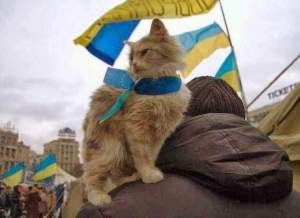
NOTE: Today’s cat paintings are by Ukrainian artists.
Putin’s attack on Ukraine is not going as smoothly as he probably hoped. In fact he looks isolated by most of the world and is even getting negative feedback from the Russian people and from close neighbor and ally Kazakhstan.
Peter Alexander at NBC News: One of Russia’s closest allies denies request for troops.
Kazakhstan, one of Russia’s closest allies and a southern neighbor, is denying a request for its troops to join the offensive in Ukraine, officials said Friday.
Additionally, the former Soviet republic said it is not recognizing the Russia-created breakaway republics upheld by Russia’s president, Vladimir Putin, as a pretext for its aggression in Ukraine.
Despite ceasefire accords covering the disputed land, Putin on Monday declared Russia’s recognition of Luhansk People’s Republic (LNR) and the Donetsk People’s Republic (DNR) as independent states.
The surprising development from a traditional ally of Russia has the support of the United States.
“We welcome Kazakhstan’s announcement that they will not recognize the LPR and DPR,” the National Security Council said in a statement. “We also welcome Kazakhstan’s refusal to send its forces to join Putin’s war in Ukraine.”
At home in Russia, Putin is struggling to put down popular antiwar protests.
The Economist: Russians greet Vladimir Putin’s war in Ukraine with dismay, not enthusiasm.
As the sun set over the Kremlin on the first day of Russia’s war against Ukraine, Moscow felt tense. Black cars with tinted windows, flashing lights and police escorts zipped around the city centre. Police vans pushed ordinary cars to the side of the road. It was as though Moscow itself was coming under attack.

Rimma and her cat, by Gubsky Igor
And the “attack” did come, a couple of hours later as several thousand people, mostly young, poured onto the streets holding signs condemning the war their president had unleashed against their brothers and sisters in Ukraine. They chanted, “Net voine” (“No to war”). The same words were splashed with paint on the glass doors of the Russian state Duma, the parliament that had almost unanimously supported the invasion.
The protesters’ faces were crestfallen, gripped by dismay and grief. And they were met with brutality. Helmeted riot police pushed them to the ground and bundled them into vans. Gregory Yudin, a sociologist and left-wing philosopher, was beaten and taken to a police cell before finally being transferred to hospital. On February 24th some 1,700 people were arrested, half of them in Moscow. But anti-war protests also rolled through the country from Siberia to St Petersburg, where more people were detained the following day….
Journalists, artists, celebrities, rockstars and bloggers have been speaking out. “Fear and pain,” wrote Ivan Urgant, a popular host on state-owned television, on his Instagram. Monetochka (“Little coin”), a pop star, published a photo of her own face, weeping, with a sign: “So ashamed!” So far there have been no resignations among senior officials, but neither has there been any enthusiasm for war. Sergei Utkin, a security expert who had previously peddled the Kremlin’s line on foreign policy, wrote on Twitter, “My country is committing a horrible crime in Ukraine that can have no justification…We all bear a part of responsibility. There is no good way out of that.”
A petition against the war has gathered 500,000 signatures in a single day, and is growing. Novaya Gazeta, Russia’s main pro-opposition newspaper, came out in two languages, Russian and Ukrainian. Its editor, Dmitry Muratov, the most recent winner of the Nobel Peace Prize, wrote that Mr Putin “is spinning a nuclear button around his finger like some expensive car key chain…But we can never recognise Ukraine as an enemy. And never will.”
In Kyiv, former comedian and now Ukraine’s president Volodymyr Zelensky is turning out to be an inspirational leader.
CNN: Zelensky refuses US offer to evacuate, saying ‘I need ammunition, not a ride.’
Jeff Stein at Spy Talk: Zelensky Prepares to Go Down with the Ship.
An American businessman with close ties to Volodymyr Zelensky says the Ukrainian president was “calm and businesslike” when they talked yesterday, even as Russian troops pressed on toward Kyiv and the volume of rocket attacks on the capital soared.
“He seemed reluctant to leave the country,” said the businessman, who has extensive projects in the country and asked not to be identified because of the fraught security situation.
“U.S. officials were urging him to leave. He feared he’d never be able to come back.”
Zelensky’s position hardened Friday when he posted a defiant video in which he said he and his government were “defending our independence” from the Russian invasion.
“We are all here,” he said, surrounded by senior advisers and his prime minister.
“Our troops are here, citizens are here. All of us are here protecting the independence of our country.
“And it will continue to be this way.”
On Thursday evening he told European Union leaders “this might be the last time you see me alive,” according to Axios.
Reports on the progress of Putin’s attack:
The New York Times: Russia’s Assault in Ukraine Slows After an Aggressive Start.

The Fat Cat, by Olena Kamenetska-Ostapchuk
On the first day of President Vladimir V. Putin’s invasion of Ukraine, his generals and troops followed a textbook strategy for land invasions. They attacked the country’s military installations and air defense systems with missiles launched from the air, sea and land, seeking to take ownership of the skies, and sped forces to Kyiv, the capital, with the goal of decapitating the government of the democratically elected president, Volodymyr Zelensky.
But then, things slowed. It is one thing to cross the border of another country with tanks and artillery, protected by warplanes above, Pentagon officials and analysts say. It is another thing entirely to lay siege to cities and an army populated by people willing to put their lives on the line to protect what they view as their sovereign right to self-determination.
Within a day of entering Ukraine, Russian forces lost some momentum, senior American and British officials said, as Ukrainian fighters mounted a resistance. No population centers had been taken, a senior Defense Department official told reporters at the Pentagon on Friday. Nor had Russia yet managed to achieve air superiority over Ukraine, partly because the Ukrainians are using mobile systems and partly because Russian missiles have hit old air defense sites, which could show a flaw in Russia’s intelligence. The Ukrainian air defense and missile defense systems were degraded, he said, but the country’s air force was still flying planes and denying air access to Russia.
In addition, officials said, Russia was conducting most of its initial operations during the day, suggesting that its ability to fight at night — a hallmark of the American military — was less effective.
Read the rest at the NYT.
From CNN this morning: Battle moves into Kyiv as Ukrainians fight to keep control of their capital.
More Ukraine/Putin stories to check out:
The Economist on Biden’s sanctions: America has targeted Russia’s technological fabric.
Michael D. Weiss at Time: Even If Russia Wins, It Won’t Do So Easily.
Jason Stanley at The Guardian: The antisemitism animating Putin’s claim to ‘denazify’ Ukraine.
Max Seddon at Financial Times: Vladimir Putin, Russia’s resentful leader, takes the world to war.
Douglas McGrath at Air Mail with a terrific piece on the GOP worship of Trump and Putin: The View from Here. Ukraine is attacked and Trumpists swoon over Vlad the Invader. With global and U.S. democracy in peril, the G.O.P. is M.I.A.
Eric Wemple at The Washington Post: Opinion: How did Tucker Carlson turn into a Putin apologist?
I’ll add more news links in the comment thread. I hope you all have a nice weekend!
Did you like this post? Please share it with your friends:
Posted: February 24, 2022 | Author: bostonboomer | Filed under: morning reads | Tags: Act of War, GOP, Joe Biden, NATO, Russia attacks Ukraine, Ukraine, Ukrainian artists, United Nations, Vladimir Putin |

Tenderness, by Ivan Marchuk
Good Morning!!
The images in this post are by famous Ukrainian artists. You can read more about them at this Odessa Journal link.
Well it really happened last night. Russia attacked multiple Ukrainian cities. There is a massive amount of reporting and commentary; I can only offer a sampling.
Politico: Battles flare across Ukraine after Putin declares war.
After his declaration of war just before 6 a.m. Moscow-time, the Ukrainian government reported airstrikes at military facilities in the cities of Kyiv, Kharkiv and Dnipro, as well as artillery fire on the border. The authorities in Kyiv reported a pincer movement attack on its troops from Belarus to the north, potentially attempting an encirclement of Kyiv, and from Crimea to the south. Russia insisted it was destroying military bases and airfields, not civilian targets.
Ukraine warned that Moscow was turning to propaganda tricks by suggesting that Russian troops were not meeting resistance and by exhorting Ukrainians to lay down their weapons. Kyiv insisted that its troops were locked in heavy fighting, had shot down seven warplanes, destroyed dozens of armored vehicles and killed dozens of enemy soldiers. Fighting has drawn very close to Kyiv and Kharkiv.
Adviser to the Ukrainian presidential office Oleksiy Arestovych vowed that the Russian forces would not reach the capital. “Fierce battles will be waiting for them there, we will stop them,” he was quoted as saying by local media.
In a sign of the desperate straits Ukraine is facing against a stronger adversary, however, Ukrainian President Volodymyr Zelenskiy called for a general mobilization. The country also put out an appeal for blood donors as news began to filter in of dozens of Ukrainian casualties across the country.

By Kateryna Primachenko
U.S. President Joe Biden vowed a united response against the Russian attack by Washington and its allies, while U.N. Secretary-General António Guterres said: “President Putin, in the name of humanity, bring your troops back to Russia. This conflict must stop now.” Later on Thursday, the EU is set to agree a sanctions package intended to weaken Putin’s ability to wage war, though there was no immediate sign that it would touch all-important energy revenues.
Earlier on Thursday, Zelenskiy imposed martial law and said he had contacted Biden to co-ordinate an international response. “Today we need calm from each of you. Stay at home if possible. We are working, the army is working, the whole security apparatus of Ukraine is working.” Foreign Minister Dmytro Kuleba called for “devastating” sanctions on Russia and for weapons’ deliveries to the Ukrainian military.
Vitaly Klitschko, mayor of Kyiv and former heavyweight boxing champion, told people to have an emergency suitcase ready in case they needed to get to shelNAter.
At Just Security, Maria Popova and Oxana Shevel argue: Russia’s New Assault On Ukraine Is Not Entirely – Maybe Not Even Largely — About NATO.
In his Feb. 15 Just Security article “Ukraine: Unleashing the Rhetorical Dogs of War,” Barry Posen argued that NATO and Ukraine should have cut a deal with Russia because the Ukrainian military would surely be defeated by Russia without direct U.S./Western military participation and U.S. offers of equipment were only encouraging a potential Ukrainian insurgency against Russian occupation that would be as bloody as it would be futile. The prescription depends entirely on Posen’s assumption that to satisfy Russia, all Ukraine would have had to do would be “to swallow the bitter pill of accepting armed neutrality between NATO and Russia, rather than NATO membership.”
This assumption contradicts events of recent months and the historical record. While Vladimir Putin has claimed that his goal is keeping Ukraine out of NATO, he also insisted that he was just conducting military exercises. Instead, he is invading Ukraine again. He likewise insisted in 2014 that he wasn’t capturing Crimea, despite the presence of his unidentified “Little Green Men” and his subsequent annexation of the peninsula, or that he was not fighting in Ukraine’s Donbas area in the east all these years, despite all evidence to the contrary. There is no reason to take Putin at his word. His Feb. 21 diatribe conferring Russian recognition of independence for the two eastern Ukrainian regions of Donetsk and Luhansk and his order for Russian troops to move in as ostensible “peacekeepers” shows clearly his disdain for diplomatic resolutions.
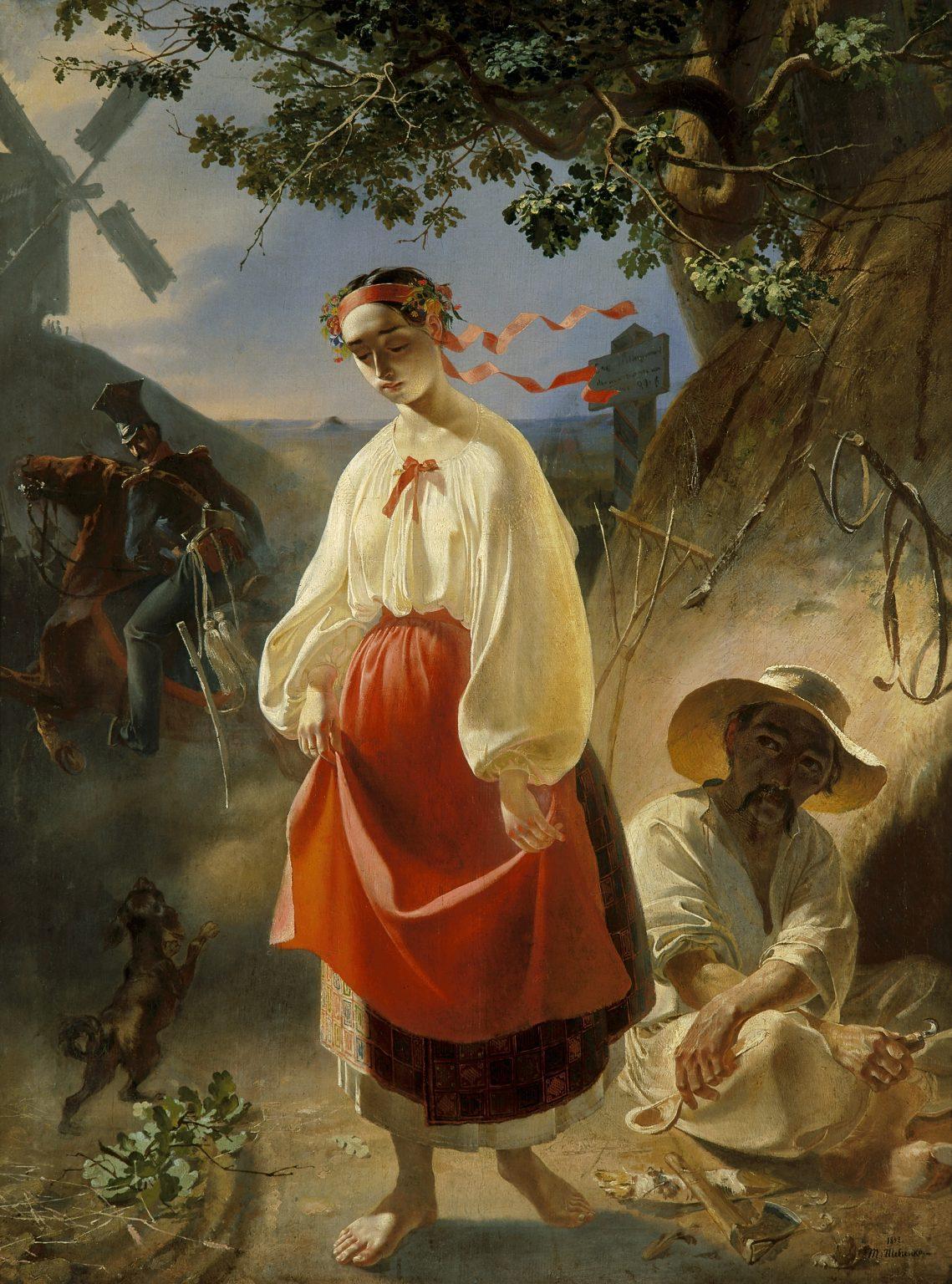
Katerina, by Taras Grigorievich Shevchenko, 1842
Moreover, this is not even primarily about NATO.
NATO’s eastward expansion may have played a role in straining the relationship between Russia and the West, but mainly because, for Russia, seeing former satellites eagerly abandon it for the greener pastures of Euro-Atlantic integration stung. However, Putin’s rhetoric and actions over almost two decades reveal that his goals extend beyond imposing neutrality on Ukraine or even staving off further NATO expansion. The larger objective is to re-establish Russian political and cultural dominance over a nation that Putin sees as one with Russia, and then follow up by undoing the European rules-based order and security architecture established in the aftermath of World War II. Given these goals, Ukrainian neutrality is a woefully insufficient concession for Putin.
Read much more at the link.
AP News: The Latest: UN chief warns Russian actions could devastate.
UNITED NATIONS — U.N. Secretary-General Antonio Guterres says Russia’s attack on Ukraine — as he appealed for President Vladimir Putin to stop his troops — was “the saddest moment” of his five-year tenure.
The U.N. chief opened the emergency Security Council meeting late Wednesday by urgently appealing to Putin: “In the name of humanity, bring your troops back to Russia.”
But during the meeting, Putin announced that he was launching a “special military operation” in eastern Ukraine.
Guterres later urged the Russian president to withdraw his troops and added: “In the name of humanity do not allow to start in Europe what could be the worst war since the beginning of the century, with consequences not only devastating for Ukraine, not only tragic for the Russian Federation, but with an impact we cannot even foresee in relation to the consequences for the global economy.”
A war would cause deaths and displacement and people will lose hope in the future, Guterres said, adding Russia’s actions would harm the global economy.
“What is clear for me is that this war doesn’t make any sense,” Guterres said, stressing that it violates the U.N. Charter and will cause a level of suffering if it doesn’t stop that Europe hasn’t know since at least the 1990s Balkans crisis.
CNN: Biden to impose additional sanctions on Russia now that Ukraine assault is underway.
President Joe Biden, vowing the world will “hold Russia accountable” for the attack underway in Ukraine, will spell out a set of sanctions on Thursday once meant to deter such an assault.
Set to address the nation Thursday afternoon, Biden is expected to unveil new measures that could cut off Russia from advanced technology, announce new restrictions on large financial institutions and slap sanctions on additional members of the inner circle of Russian President Vladimir Putin.

Victor Sidorenko, Expiration Levitation Series
The planned sanctions, the latest US reprisals against Moscow this week, had been reserved as Biden hoped to maintain some leverage in dissuading Putin from a full-scale invasion. But so far, Western threats of economic punishment, as well as Biden’s strategy of revealing what the US knew about Putin’s buildup of forces to try to make the Russian leader second-guess himself, have proven ineffective.
After months of predictions and warnings, Russian forces began their attack on Ukraine Thursday morning local time, with reports of troops crossing the border to the north and south, explosions in multiple cities including the capital Kyiv, and warnings from Putin of future bloodshed unless Ukrainian forces lay down their arms.
Biden’s sanctions are now meant to punish Putin’s actions, rather than prevent them, by going after Russia’s economy, its military capabilities and those closest to the Russian President. How much they can alter Putin’s decision-making going forward, however, remains an open question.
Before he speaks, Biden is planning to confer with the leaders from the Group of 7 industrialized nations about which sanctions they plan to impose, hoping to coordinate a response that projects unity among Western allies. US and European officials spoke by phone overnight into Thursday to coordinate their responses.
Gideon Rachman at Financial Times: Putin’s war will shake the world.
The phoney war is over. The real war has begun. For several weeks, the US and British governments have believed that Vladimir Putin was intent on a full-scale invasion of Ukraine. That is now happening.
The precise targets of the Russian military are still emerging. But it is already clear that this is not a limited attack, confined to the disputed regions of eastern Ukraine. Explosions have been heard in the Ukrainian capital, Kyiv. And there are reports of Russian troops crossing the border from Belarus — which is the shortest and most direct route to Kyiv.
Western security services, which have accurately predicted the course of events up until now, believe that Putin intends to overthrow the Ukrainian government and install a puppet regime in its place. This “decapitation” strategy will take in not only the central government, but also regional and local governments. Lists have been drawn up of Ukrainian officials who will be arrested or killed.

By Kateryna Bilokur
The military tactics that Russia uses are likely to be extremely brutal — “the kind of thing we saw in Syria and Chechnya”, according to one US official. The deployment of Russian artillery and its air force would mean heavy military and civilian casualties on the Ukrainian side. Some western sources have spoken of 50,000 deaths within a week.
The Ukrainian military is determined to fight back. But it is likely to find itself heavily outgunned. The Russian goal may be to surround Kyiv and force the collapse or resignation of the Ukrainian government, led by Volodymyr Zelensky.
The Russians will not want to get involved in urban warfare, if they can avoid it. They are also determined to keep the west out of this conflict. In his speech, announcing the invasion, Putin warned outsiders tempted to interfere that there would be “consequences you have never encountered in your history” — a thinly veiled reference to nuclear war.
This is a terrifying article that concludes by asking whether Western states could end up getting involved.
Western governments are also actively debating how to help a Ukrainian insurgency — if and when it emerges — to fight a Russian occupation. Supporters of this plan of action believe that it will be both a moral duty and a strategic imperative to allow Ukrainians to continue the fight. Others worry that supporting an insurgency could turn Ukraine into a new Syria on the borders of Europe.
This is interesting from Anton Troianovski at The New York Times: Many Russians Feel a Deep Unease Over Going to War.
MOSCOW — Waiting for her friends on Moscow’s primly landscaped Boulevard Ring earlier this week, Svetlana Kozakova admitted that she’d had a sleepless night. She kept checking the news on her phone after President Vladimir V. Putin’s aggrieved speech to the nation on Monday that all but threatened Ukraine with war.
“Things are going to be very, very uncertain,” she said, “and, most likely, very sad.”
For months, Russians of all political stripes tuned out American warnings that their country could soon invade Ukraine, dismissing them as an outlandish concoction in the West’s disinformation war with the Kremlin. But this week, after several television appearances by Mr. Putin stunned and scared some longtime observers, that sense of casual disregard turned to a deep unease.

You’re My Space, by Evgeniya Gapchinskaya, 2019
Early Thursday morning, any remaining skepticism that their country would invade was put to rest, when Mr. Putin declared a “special military operation” in Ukraine.
Pollsters said that most Russians probably supported Mr. Putin’s formal recognition of the Russian-backed territories in eastern Ukraine this week, especially because they had no choice in the matter and because no significant political force inside the country has advocated against it.
War is a different matter altogether, though; in recent days, Russia has not seen any of the jubilation that accompanied the annexation of Crimea in 2014.
Going to war is one of Russians’ greatest fears, according to the Levada Center, an independent pollster. And after Mr. Putin’s angry speech and his cryptic televised meeting with his Security Council on Monday, Russians realized that possibility was lurching closer toward becoming reality.
Read the rest at the NYT.
At Mother Jones, David Corn asks why Republicans are rooting for Putin: Is It Amnesia or Hypocrisy That Fuels the GOP’s Crazy Response to Putin?
In the midst of an international crisis created by Russia that could potentially trigger a war in Europe, Republicans and right-wingers on and off Fox News have pledged allegiance to…Vladimir Putin. At the least, they are siding with the Russian autocrat and trash-talking President Joe Biden’s effort to block his aggression. But there’s nothing surprising about the ongoing romance between conservatives and the democracy-crushing thug-leader of Russia, who has invaded Ukraine and violated international law. Anyone shocked by this has forgotten one of the key facts of the 21st century: Putin waged war on the United States, and Donald Trump and his party aided, abetted, and benefitted from that attack.
In recent days, as Putin has threatened a conflagration, top conservatives and GOP officials have practically pinned “I’m-with-Vlad buttons” onto their lapels. One example: Mike Pompeo, Trump’s final secretary of state and before that his CIA director, had only praise for the corrupt Russian autocrat, describing him as “talented” and “savvy.” Donald Trump, speaking to a conservative podcaster on Tuesday, hailed Putin’s moves in Ukraine as “genius.” Referring to Putin’s invasion of eastern Ukraine, Trump said, “Putin declares a big portion of…of Ukraine. Putin declares it as independent. Oh, that’s wonderful…I said, ‘How smart is that?’ And he’s gonna go in and be a peacekeeper…Here’s a guy who’s very savvy.” Later in the interview, Trump continued to gush: “I knew Putin very well. I got along with him great. He liked me. I liked him. I mean, you know, he’s a tough cookie, got a lot of the great charm and a lot of pride. But the way he—and he loves his country, you know? He loves his country.”
No condemnation. No call for opposing Putin’s illegal and provocative maneuvers. Just one big bear hug from Trump for the tyrant. Putin may spread repression by force but he sure “loves his country.” (Remember, Trump’s crush on Putin stretches back to 2013 when he tweeted: “Do you think Putin will be going to The Miss Universe Pageant in November in Moscow—if so, will he become my new best friend?”)

Eve, by Ivan Marchuk
Conservatives have also boosted Putin by pooh-poohing the invasion of Ukraine as no big deal. In his usual too-clever-by-half way, Tucker Carlson on Tuesday night dismissed outrage over Putin’s aggression:
What is this really about? Why do I hate Putin so much? Has Putin ever called me a racist? Has he threatened to get me fired for disagreeing with him? Has he shipped every middle-class job in my town to Russia? Did he manufacture a worldwide pandemic that wrecked my business and kept me indoors for two years? Is he teaching my children to embrace racial discrimination? Is he making fentanyl? Is he trying to snuff out Christianity? Does he eat dogs?
It seemed as if Carlson was quasi-defending Putin because the Russian leader does not advocate critical race theory and is not the leader of China. He ridiculed concerns over Putin’s threat to world peace and stability and asserted Americans are being “trained to hate” the Russian leader. In other words, there’s no reason to fret about Putin’s militarism—and if you do worry, you’re just a brainwashed sheep.
Read the rest at Mother Jones.
So here we are. I have no idea what’s coming, but I’m very worried. After four years of Trump, and two years of a deadly pandemic, we don’t need any more calamities.
I’ll try to post updates in the comment thread today. I have difficulty looking at the computer screen for very long these days, but I’ll do my best. I hope you all will post comments and links too. Take care everyone!
Did you like this post? Please share it with your friends:
Posted: February 22, 2022 | Author: bostonboomer | Filed under: morning reads | Tags: Germany, Joe Biden, NATO, Nordstream 2, Russia, Ukraine, Vladimir Putin |
Good Morning!!
Yesterday, Vladimir Putin finally ordered Russian troops to invade Ukraine, while trying to put the blame on the U.S., NATO, and the Ukraine government. Putin claimed the troops were for “peacekeeping” purposes, to protect ethnic Russians in two parts of Eastern Ukraine.
At first the Biden administration debated whether to call this an “invasion,” but as of this morning that has changed. Newsweek: Biden Administration Backtracks, Is Now Calling Russia’s Attack on Ukraine an Invasion.
President Joe Biden‘s administration has called Russian troops entering Ukraine an “invasion” for the first time on Tuesday morning after members of Congress from both parties used the term and called for tough sanctions.
The Biden administration had not previously referred to the Russian military action in eastern Ukraine as an “invasion” but White House officials have said a further response will be forthcoming and is likely to include more sanctions.
Deputy National Security Adviser Jon Finer called Russian military action in eastern Ukraine an “invasion” in remarks to CNN on Tuesday.
Russian President Vladimir Putin signed decrees on Monday recognizing the self-proclaimed Donetsk People’s Republic (DNR) and Luhansk People’s Republic (LNR) in Ukraine’s east as independent states and ordered Russian troops into those regions.
“We think this is, yes, the beginning of an invasion, Russia’s latest invasion into Ukraine,” Finer said.
“I think ‘latest’ is important here,” Finer said.
“An invasion is an invasion, and that is what is underway, but Russia has been invading Ukraine since 2014,” he said.
Russia annexed the Crimean peninsula from Ukraine in 2014. There has also been a Russian presence in Donetsk and Luhansk since 2014.
Follow the latest developments at CNN: Live Updates: The latest on the Ukraine-Russia crisis. or at The New York Times Ukraine live updates.
Western nations have begun sanctioning Russia for it’s illegal aggression:
The New York Times: Germany puts a stop to Nord Stream 2, a key Russian natural gas pipeline.
Chancellor Olaf Scholz said on Tuesday that Germany would halt certification of the Nord Stream 2 natural gas pipeline that would link his country with Russia, one of the strongest moves yet by the West to punish the Kremlin for recognizing two separatist regions in Ukraine.
The German leader’s announcement came hours after President Vladimir V. Putin of Russia ordered armed forces to the separatist regions, the so-called Donetsk and Luhansk People’s Republics.
Germany’s allies in Europe and the United States had been pressing Mr. Scholz for weeks to state publicly that the $11 billion pipeline, which was completed late last year and runs from Russia’s coast to northern Germany under the Baltic Sea, would be at risk of being blocked in the event of a Russian move against Ukraine.
“The situation today is fundamentally different,” Mr. Scholz told reporters in Berlin. “That is why we must re-evaluate this situation, in view of the latest developments. By the way, that includes Nord Stream 2.”
CBS News: U.S. imposes sanctions after Putin recognizes breakaway Ukraine regions.
President Biden signed an executive order Monday imposing sanctions that target two Russia-backed breakaway republics in eastern Ukraine in a swift response to Russian President Vladimir Putin’s decision to recognize the regions as independent.
The order bars “new investment, trade and financing by U.S. persons to, from, or in” the so-called Donetsk People’s Republic and Luhansk People’s Republic, located in Ukraine’s eastern Donbas region, White House press secretary Jen Psaki said in a statement.
The order also provides authority to impose sanctions on “any person determined to operate in those areas of Ukraine,” Psaki said, adding the administration will later “announce additional measures related to today’s blatant violation of Russia’s international commitments.”
CNBC: UK announces first tranche of Russia sanctions, targets banks and wealthy individuals.
David Ignatius at The Washington Post: Opinion: Surprising cracks, if small ones, appear in Kremlin support for Putin on Ukraine.
President Vladimir Putin presented a theatrical justification for war with Ukraine on Monday, but initial Russian military actions along the border were limited — and there seemed to be a few small cracks in Kremlin support for Putin’s obsession with regaining Russian dominion in Kyiv.
Putin appeared to be setting the stage on Monday for an all-out invasion. Under the dome of a grand state chamber in the Kremlin, he signed documents recognizing two Russian-backed enclaves in eastern Ukraine as independent “republics.” He then ordered some of the 150,000 Russian combat troops surrounding Ukraine to enter the breakaway regions in a “peacekeeping” operation.
Putin may hope to provoke an armed response from Ukraine that would provide a pretext for a larger assault. But the initial “peacekeeping” move into Donetsk and Luhansk was limited, and a senior Biden administration official was careful to avoid describing it as an invasion, noting that Russian forces have been operating covertly in the two enclaves for nearly eight years….
The day’s events began with a televised command performance of Putin’s security council in the ornate Kremlin chamber. Putin asked each of his ministers for their recommendation about recognizing Donetsk and Luhansk. Many responses were dutifully on script, but there were several surprises.
Foreign Minister Sergei Lavrov said Russia’s demands for security guarantees were “not an ultimatum,” and he seemed ready to meet Thursday with U.S. Secretary of State Antony Blinken for more talks. Lavrov also conceded NATO’s unity, advising Putin that at this past weekend’s Munich Security Conference, “every Western representative declared their absolute commitment to a unified approach,” which “confirmed that we need to negotiate with Washington.” [….]
But the big surprise came when Putin quizzed Sergei Naryshkin, head of the SVR, Russia’s foreign intelligence service. Naryshkin advised that threatening to recognize Donetsk and Luhansk would be useful leverage for implementing the 2015 Minsk agreements to settle the conflict in the eastern region. Russia has claimed to support Minsk, but Monday’s recognition of the two breakaway enclaves as independent will probably derail any chance for the agreement. In response to Naryshkin’s answers, Putin got antsy.
Read more at the WaPo.
The New York Times on Biden’s strategy: Wooing Allies, Publicizing Putin’s Plans: Inside Biden’s Race to Prevent War.
In a series of top-secret meetings last October, President Biden’s national security team presented grim intelligence that would soon trigger a fierce effort to prevent what could become the largest armed conflict in Europe since World War II.
Vladimir V. Putin, the Russian president, was preparing to invade Ukraine, top intelligence and military officials told Mr. Biden. Gathering each morning in the Oval Office for the global threat assessment known as the President’s Daily Brief, they described satellite images of Russian forces methodically advancing toward Ukraine’s border.
Not only did the United States have images of troops moving into position, it also had the Russian military’s plans for a campaign against Ukraine — elements of which had already begun. At one of the morning meetings, Mr. Biden dispatched William J. Burns, the C.I.A. director, to Moscow with a message for Mr. Putin:
We know what you’re planning to do.
Stopping him would be a challenge. Many of America’s closest allies were skeptical that Mr. Putin — a master of disinformation — would actually invade. The use of U.S. military force against Russia was off the table, so the allies would have to threaten Mr. Putin with economic pain so severe it would also have consequences in Europe and the United States. And it was far from certain that Republicans in Congress would back whatever the administration did….
The White House acknowledged from the start that its campaign to stop Mr. Putin might not actually prevent Russia from invading Ukraine. But at the very least, White House officials say, Mr. Biden exposed Mr. Putin and his true intentions, which helped unite, at least for now, the at-times fractious NATO alliance.
Over the course of three and a half months, Mr. Biden made three critical decisions about how to handle Russia’s provocations, according to interviews with more than a dozen senior administration officials and others who requested anonymity to discuss confidential meetings. Early on, the president approved a recommendation to share intelligence far more broadly with allies than was typical, officials said. The idea was to avoid disagreements about tough economic sanctions by ensuring that everyone knew what the United States knew about Mr. Putin’s actions.
Mr. Biden also gave the green light for an unprecedented public information campaign against Mr. Putin. With the support of his top intelligence officials — and with a promise to protect the intelligence agencies’ “sources and methods” — the president allowed a wave of public releases aimed at preventing Mr. Putin from employing his usual denials to divide his adversaries.
Read more details at the NYT link.
So that’s where things stand this morning. I’m sure there will be more developments throughout the day today. What are your thoughts on this? What other stories are you following?
Did you like this post? Please share it with your friends:
Posted: February 19, 2022 | Author: bostonboomer | Filed under: morning reads | Tags: caturday, Donald Trump, Fiona Hill, January 6 insurrection, Joe Biden, Kamala Harris, Oath Keepers, Stuart Rhodes, Ukraine, Vladimir Putin, Why Cats Paint |
Good Morning and Happy Caturday!!
 Today’s images are from the book Why Cats Paint: A Theory of Feline Aesthetics, by Heather Busch and Burton Silver. It’s a delightfully tongue-in-cheek discussion of “cat artists” that is really fun to read. Here’s some commentary on the book at Goodreads.
Today’s news is full of Ukraine stories. It’s looking as if Putin really plans to go through with an invasion. Here’s the latest:
CNN: Biden says he’s now convinced Putin has decided to invade Ukraine, but leaves door open for diplomacy.
President Joe Biden on Friday said he is now convinced Russian President Vladimir Putin has made the decision to invade Ukraine, but emphasized that room for diplomacy remains.
“As of this moment, I am convinced he’s made the decision,” Biden said during remarks at the White House.
The President also said the US believes Russian forces intend to attack Ukraine “in the coming week” or sooner, and that an attack will target the Ukrainian capital of Kyiv.
US Defense Secretary Lloyd Austin on Saturday said Russia was “moving into the right positions to conduct an attack,” echoing Biden’s assertion that Putin had made up his mind on invading.
“They’re uncoiling and now poised to strike,” Austin said, speaking from Vilnius, Lithuania. Austin said the US would pursue a diplomatic solution “until the very last minute, until it’s not possible.”
Biden plans to spend the weekend monitoring the ongoing Ukraine crisis from the White House as he meets with his national security team and remains in close contact with world leaders, multiple officials say. Biden had considered traveling to Delaware, as he typically does, but decided to remain in Washington.
Vice President Kamala Harris is in Germany today for the Munich Security Conference. Reuters: West puts up united front as Russia begins nuclear exercises.
MUNICH, Feb 19 (Reuters) – Russia must not attempt to move Ukraine’s borders by force, Western leaders warned on Saturday, saying they would be ready to respond even if Russia created a pretext for an invasion by accusing Ukraine of aggression.
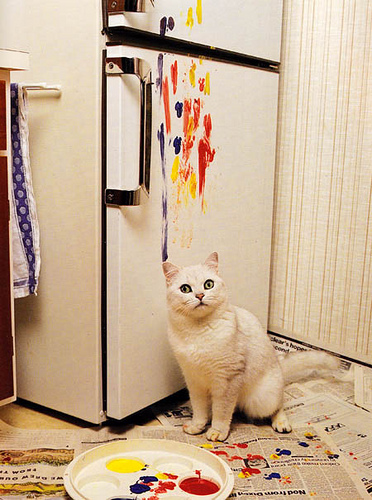
Charlie the peripheral realist
U.S. Vice President Kamala Harris said the United States would reinforce NATO’s eastern flank to act as a further deterrent to any Russian military action in addition to the threat of sanctions.
“National borders should not be changed by force,” Harris said at the Munich Security Conference.
“We have prepared economic measures that will be swift, severe, and united,” she said. “We will target Russia’s financial institutions and key industries.”
Western leaders were meeting in Munich amid reports of explosions just inside Russian territory to Ukraine’s east and in the parts of eastern Ukraine that are controlled by Moscow-backed rebels.
But most also added that diplomacy had not yet run its course.
“History has not yet been written: there is an exit that the Russian government can choose at any time,” said German Foreign Minister Annalena Baerbock after a meeting of Western foreign ministers.
“Our common message to them is very clear: Don’t make this fatal mistake. Withdraw your troops … Let’s talk.”
But she warned against being misled by misinformation coming from separatist regions , saying Ukraine had done nothing to give the separatist leaders a reason for the evacuations they ordered on Friday.
Read more about the Munich meeting at The Washington Post: Harris, Blinken navigate Munich Security Conference as Europe holds its breath.
NBC News: Russian-backed separatists in Ukraine call to mobilize as Putin oversees nuclear drill.
Pro-Russian separatist leaders in eastern Ukraine ordered a full military mobilization Saturday, amid a spike in violence that has heightened fears that Moscow is planning to use an escalation in the conflictas a pretext to invade.
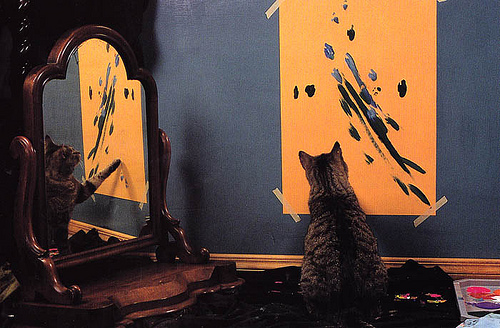
Pepper’s self-portrait
The announcements came ahead of planned large-scale drills involving Russian nuclear forces, overseen by President Vladimir Putin, offering a timely reminder of the country’s nuclear might, as Europe faces its gravest security crisis since the Cold War. Ballistic and cruise missiles were launched from land, air and sea the Kremlin said in a statement Saturday.
In eastern Ukraine, where the Moscow-supported separatists have been fighting government forces since 2014, Denis Pushilin, the head of the self-proclaimed “Donetsk People’s Republic,” urged reservists to show up at military enlistment offices in a video released on the chat app Telegram on Saturday.
In neighboring Luhansk, Leonid Pasechnik, leader of the self-proclaimed “Luhansk People’s Republic,” also signed a decree calling for “full combat readiness.”
The separatists control an enclave about the size of New Jersey, where it’s population of around 2 million speak Russian use the Russian ruble and hundreds of thousands have Russian passports.
Their statements came as the evacuation of civilians from the rebel-held territories in those regions to neighboring Russia continued.
The New York Times interviewed Russia expert Fiona Hill about Putin’s motives: Explaining Putin’s Decades-Long Obsession With Ukraine. Here’s the beginning of the interview:
How would you evaluate the administration’s handling of this crisis so far? What’s worked and what hasn’t?
I think they’re handling it as well as they can be, given the circumstances. Writ large, what the administration is doing right now is certainly what I would recommend doing. But I don’t know whether we can say if it’s going to work or not. The real test is going to be over a long period of time. I don’t think this is going to be a short, sharp crisis.
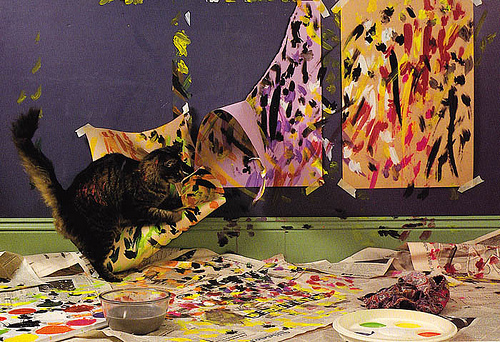
Tiger the spontaneous reductionist
What do you mean?
Putin’s been trying to get a grip on Ukraine for years now. They cut off the gas to Ukraine in 2006. He’s been in power for 22 years, and the whole of that time, he’s had Ukraine in the cross hairs one way or another, and it’s intensified over time. Putin wants to be the person who, on his watch, in his presidency, pulls Ukraine back into Russia’s orbit. And he could be president until 2036, in terms of what’s possible for him.
Is this fundamentally ideological for him, or geopolitical?
It’s about him personally — his legacy, his view of himself, his view of Russian history. Putin clearly sees himself as a protagonist in Russian history, and is putting himself in the place of previous Russian leaders who’ve tried to gather in what he sees as the Russian land. Ukraine is the outlier, the one that got away that he’s got to bring back.
Head over to the NYT to read the rest.
Back in the USA, we continue to learn more about Donald Trump’s many crimes.
The Washington Post: National Archives confirms classified material was in boxes at Trump’s Mar-a-Lago residence.
The National Archives and Records Administration confirmed in a letter Friday that it found items marked classified in boxes of White House records that former president Donald Trump took with him to his Mar-a-Lago residence.
In a letter to Rep. Carolyn B. Maloney (D-N.Y.), U.S. Archivist David S. Ferriero wrote that officials had “identified items marked as classified national security information within the boxes” at Mar-a-Lago and had been in touch with the Justice Department over the matter.
The Washington Post reported last week that some of the Mar-a-Lago documents were marked as classified, including some at the “top secret” level — a revelation that seemed likely to intensify the legal pressure that Trump or his staffers could face.
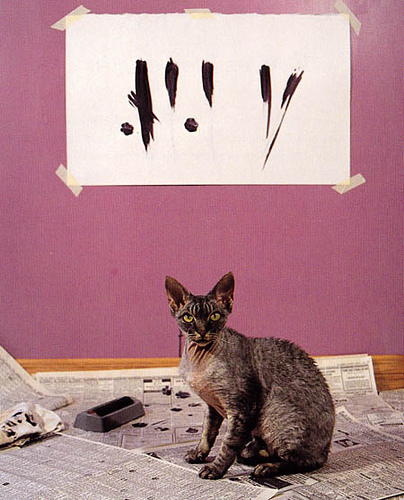
Princess, the Elemental Fragmentist
Ferriero’s letter, though, provides the first official confirmation of classified material being in the boxes, and it is likely to reignite calls that the Justice Department investigate to see how the information got out of secure facilities, and who might have seen it.
It remains unclear how many classified documents were in the 15 boxes of materials, or what the Justice Department might do. An FBI spokeswoman declined to comment, and a spokesman for the Justice Department did not immediately return a message.
Ferriero wrote that the National Archives was conducting an inventory of the boxes’ content and expected to complete that process by Feb. 25. He wrote that the agency also had “asked the representatives of former President Trump to continue to search for any additional Presidential records that have not been transferred to NARA, as required by the Presidential Records Act.”
CNN: Judge says Trump could be culpable for January 6 and says lawsuits against the former President can proceed.
Civil lawsuits seeking to hold Donald Trump accountable for the January 6, 2021, insurrection can move forward in court, a federal judge said Friday in a ruling outlining how the former President could conceivably be responsible for inciting the attack on the US Capitol.
Trump’s statements to his supporters before the riot “is the essence of civil conspiracy,” Judge Amit Mehta wrote in a 112-page opinion, because Trump spoke about himself and rallygoers working “towards a common goal” of fighting and walking down Pennsylvania Avenue.
“The President’s January 6 Rally Speech can reasonably be viewed as a call for collective action,” Mehta said.
Democratic members of the House and police officers who defended the US Capitol on January 6 sued Trump last year, claiming he prompted his supporters to attack. Friday, Mehta wrote that the three lawsuits could move to the evidence-gathering phase and toward a trial — a major loss in court for Trump.
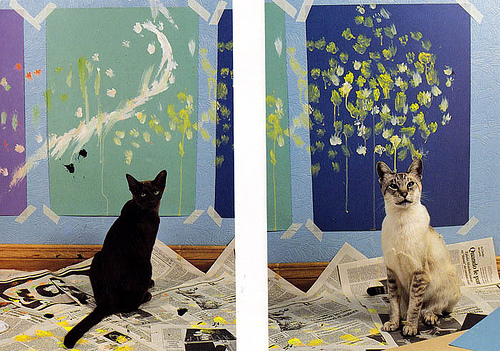
Lulu and Wong Wong
“To deny a President immunity from civil damages is no small step. The court well understands the gravity of its decision. But the alleged facts of this case are without precedent,” Mehta wrote.
“After all, the President’s actions here do not relate to his duties of faithfully executing the laws, conducting foreign affairs, commanding the armed forces, or managing the Executive Branch,” Mehta added. “They entirely concern his efforts to remain in office for a second term. These are unofficial acts, so the separation-of-powers concerns that justify the President’s broad immunity are not present here.”
While he homed in on Trump’s legal liability, the judge ruled in favor of three close allies to Trump who also spoke at the rally on January 6 — his attorney Rudy Giuliani, his son Donald Trump Jr. and Republican Rep. Mo Brooks, saying he would dismiss the claims against them.
Philip Bump offers an analysis of Mehta’s decision at The Washington Post: The president, the extremists and the conspiracy to storm the Capitol.
There were three things that jumped out at me from D.C. District Judge Amit Mehta’s decision that lawsuits targeting former president Donald Trump and two extremist organizations could move forward.
That is, three things beyond this remarkable paragraph:
“ … the court concludes that the Complaints establish a plausible §1985(1) conspiracy involving President Trump. That civil conspiracy included the Proud Boys, the Oath Keepers, [Proud Boys leader Enrique] Tarrio, and others who entered the Capitol on January 6th with the intent to disrupt the Certification of the Electoral College vote through force, intimidation, or threats.”
Before moving forward, it’s very important to qualify those sentences in two ways. The first is that Mehta is not saying that this conspiracy was proved; rather, that it was not implausible that it might be. It’s the difference between going to trial and reaching a verdict. The second important qualifier is that Mehta is describing only a civil conspiracy, in keeping with the nature of the lawsuits (brought by several members of Congress) that he was considering.

Misty goes off the wall
A civil conspiracy, Mehta writes, does not require that conspirators “entered into any express or formal agreement, or that they directly, by words spoken or in writing, stated between themselves what their object or purpose was to be, or the details thereof, or the means by which the object or purpose was to be accomplished.” They don’t need to know all the details of any plan or all of those participating in affecting it. They need only have come “to a mutual understanding to try to accomplish a common and unlawful plan … [the] general scope of which were known to each person who is to be held responsible for its consequences.”
The evidence at hand, Mehta concluded, suggests that such a conspiracy may have been in place between Trump and members of those right-wing extremist groups.
Read the rest at the WaPo. It’s very interesting.
One more January 6 story at Law and Crime: Stuart Rhodes is still locked up.
‘Clear and Convincing Danger’: Federal Judge Refuses to Let Oath Keepers Founder Stewart Rhodes Out of Jail Pending Seditious Conspiracy Trial.
Stewart Rhodes, the founder of the Oath Keepers militia group accused of seditious conspiracy in connection with the Jan. 6 attack on the U.S. Capitol, is a “clear and convincing danger” who must stay behind bars pending trial, a second federal judge has ruled.
Rhodes, 56, has been in custody since his arrest in January, after a U.S. Magistrate Judge in Texas deemed him to be a “credible threat” to the public. Prosecutors say Rhodes has weapons caches and unregistered cars stashed in multiple locations, and that he saw Jan. 6—when hundreds, and possibly thousands, of Donald Trump supporters overran police at the U.S. Capitol to block Congress from certifying Joe Biden‘s win in the 2020 presidential election—as “an initial skirmish or battle in a larger war.”

Smokey at work
Prosecutors say Rhodes and other Oath Keepers planned to bring years of military experience and a variety of weapons to support the pro-Trump mob, going so far as to prepare for ferrying a trove of firearms and other weapons across the Potomac.
“My observation at this point [is] if the conduct alleged is true, the danger that it poses cannot be [overstated],” U.S. District Judge Amit Mehta said at the start of Rhodes’ bond hearing Friday, signaling his intention to keep Rhodes in behind bars.
Mehta said that the government hadn’t convinced him that Rhodes is a flight risk, but they won on their arguments that he posed a risk of future dangerousness to the general public.
Prosecutors say Rhodes and other Oath Keepers planned to bring years of military experience and a variety of weapons to support the pro-Trump mob, going so far as to prepare for ferrying a trove of firearms and other weapons across the Potomac.
“My observation at this point [is] if the conduct alleged is true, the danger that it poses cannot be [overstated],” U.S. District Judge Amit Mehta said at the start of Rhodes’ bond hearing Friday, signaling his intention to keep Rhodes in behind bars.
Judge Mehta was busy yesterday.
So . . . what else is happening? What stories are you following today?
Did you like this post? Please share it with your friends:




 peej
peej Carissa
 bostonboomer
 dakinikat
 ecocatwoman
 mablue2
 Mama Lopez
 peggysue22
 quixote
 skydancingguestblogger
 Mona (aka Wonk the Vote)



 Sky Dancing
Recent Comments