
Friday Reads
Posted: January 25, 2013 Filed under: morning reads, U.S. Politics, War on Women, Women's Healthcare | Tags: abortion rights, Bobby "Crazy" Jindal, dung balls, dung beetles, Filibuster Reform, Mary Jo White, rape, Reid, Republicans, SEC, wimp 46 Comments
Good
Morning!
I really don’t intend this to be a post about Republican crazy but we’re going to start out with that subject. Let’s hope this post morphs into something else by the time I’m done.
Apparently it took a female Republican to come up with the most vicious way to punish women who had the audacity to get themselves raped.
Wednesday, state representative Cathrynn Brown of New Mexico introduced a bill whose sheer audacity makes Todd Akins look as harmless as an ill-informed teenager groping his way through puberty.
The proposed legislation, House Bill 206, would make it illegal for a woman to have an abortion after being raped because the fetus is evidence of the crime. A women who does choose to have an abortion would be charged with the third-degree felony of “tampering with evidence,” which carries up to a three year prison sentence in New Mexico.
As the bill states:
“Tampering with evidence shall include procuring or facilitating an abortion, or compelling or coercing another to obtain an abortion, of a fetus that is the result of criminal sexual penetration or incest with the intent to destroy evidence of the crime.
In other words, Brown just said to rape victims: give birth to this baby or you’ll go to jail.
Crazy Louisiana Governor Bobby Jindal says the “GOP is a populist party’ and is the party of the middle class. Whoa, something in that exorcism must be causing him to have some kind of flash back. Here’s Tiger Beat on the Potomac:
“We must quit ‘big,’” he said. “We are not the party of big business, big banks, big Wall Street bailouts, big corporate loopholes or big anything. We must not be the party that simply protects the well off so they can keep their toys … We are the party whose ideas will help the middle class, and help more folks join the middle class.”
He called repeatedly for a reorienting of the party’s focus from the Beltway to state capitols.
“We believe in planting the seeds of growth in the fertile soil of your economy, where you live, where you work, invest, and dream, not in the barren concrete of Washington,” he said. “If it’s worth doing, block grant it to the states. If it’s something you don’t trust the states to do, then maybe Washington shouldn’t do it at all. We believe solving problems closer to home should always be our first, not last, option.”
Well, he did explain one of the ways he’s made everything worse down here along with that call out to states being able to do what ever they want which sounds remarkably like returning reinstating Jim Crow and expanding Jane Crow.
The Louisiana governor suggested “re-thinking nearly every social program in Washington” in a speech to members of the Republican National Committee gathered here.
“If any rational human being were to create our government anew, today, from a blank piece of paper – we would have about one fourth of the buildings we have in Washington and about half of the government workers,” he said, according to a copy of the speech obtained in advance by POLITICO. “We would replace most of its bureaucracy with a handful of good websites.”
I’ve been caught in one of his website hells as well as the result of his passion for getting rid of every service that a government more efficiently provides. Things have been replaced by endless phone trees and decidedly unhelpful websites. It ain’t pretty or compassionate. It’s more like being thrown into Somalia.
So, here’s a good time to talk about some interesting facts about Dung Beetles. This is from the National Geographic which should send out a crew to figure out if there’s any sign of intelligent life in Republican held state houses through out the country. Dung Beetles evidently have a keener sense of the right way to go than Republicans as they navigate via the Milky Way.
Talk about star power—a new study shows that dung beetles navigate via the Milky Way, the first known species to do so in the animal kingdom.
The tiny insects can orient themselves to the bright stripe of light generated by our galaxy, and move in a line relative to it, according to recent experiments in South Africa.
“This is a complicated navigational feat—it’s quite impressive for an animal that size,” said
study co-author Eric Warrant, a biologist at the University of Lund in Sweden.
Speaking of moving balls of dung around, Senate Majority Leader Harry Reid has wimped out on Filibuster reform.Senate Majority Leader Harry Reid and Senate Minority Leader Mitch McConnell have come to a deal on filibuster reform. The deal is this: The filibuster will not be reformed. But the way the Senate moves to consider new legislation and most nominees will be. Here’s an explanation from Beltway Bob errrr Ezra Klein.
What will be reform
ed is how the Senate moves to consider new legislation, the process by which all nominees — except Cabinet-level appointments and Supreme Court nominations — are considered, and the number of times the filibuster can be used against a conference report. You can read the full text of the compromise, which was sent out to Senate offices this morning, here (pdf).
But even those reforms don’t go as far as they might. Take the changes to the motion to proceed, by which the Senate moves to consider a new bill. Reid seemed genuinely outraged over the way the process has bogged down in recent years.
“What the Republicans have done is turn the motion to proceed on its head,” he argued. “It was originally set up to allow somebody to take a look at a piece of legislation. What the Republicans have done is they simply don’t allow me to get on the bill. I want to go to it on a Monday, they make me file cloture, that takes till Tuesday. Then it takes two days for the cloture vote to ‘ripen,’ so now it’s Thursday, and even if I get 60 votes, they still have 30 hours to twiddle their thumbs, pick their nose, do whatever they want. So, I’m not on the bill by the weekend, and in reality, that means next Monday or Tuesday.”
But the deal Reid struck with McConnell doesn’t end the filibuster against the motion to proceed. Rather, it creates two new pathways for moving to a new bill. In one, the majority leader can, with the agreement of the minority leader and seven senators from each party, sidestep the filibuster when moving to a new bill. In the other, the majority leader can short-circuit the filibuster against moving to a new bill so long as he allows the minority party to offer two germane amendments. Note that in all cases, the minority can still filibuster the bill itself.
Mary Jo White has been appointed to head the Securities and Exchange Commission (SEC) by President Barack Obama.
Currently the head of litigation at Debevoise & Plimpton, a private law firm, Ms White will add a female voice to Mr Obama’s second-term team, which is so far dominated by men. More importantly, the former federal prosecutor for the Southern District of New York has experience policing Wall Street, which fell under her jurisdiction. Mr Obama has slammed bankers for their role in the financial crisis and ensuing recession. The choice of Ms White seems to signal his resolve in getting tough with the banks.The appointment is not without controversy. Ms White has benefited from the revolving door between public service and private practice. In the aftermath of the crisis, financial firms sought the assistance of former regulators with strong ties to the government. In a scathing article on Bloomberg‘s website, Jonathan Weil notes that Ms White participated in the defence of many people and institutions at the heart of the financial collapse. In October 2008 she was cited in a critical report by the SEC’s inspector general for receiving “relevant information” that was not publicly available. Some will ask whether she is truly a poacher turned gamekeeper or simply setting herself up for another lucrative turn through the revolving door.Mr Obama, for one, is convinced he is getting the “tough-as-nails prosecutor”. By putting Ms White at the SEC, he has suggested that the agency’s priority is enforcement. But a bigger challenge may come from the sprawling Dodd-Frank legislation, and its many gaps and contradictions. Much of the next chairman’s time should be devoted to rethinking how America’s capital markets are structured, and deciding how that vision will be translated into the numerous rules the SEC is required to write under Dodd-Frank’s sloppy mandates. Ms White, in other words, has a big job ahead of her.
Well, today’s post sorta took an interesting turn didn’t it? It went from crazy Republicans to wimpy Democrats with one little mention of the only smart and honest shit pusher in between. Well, at least the pictures are fun to look at.
What’s on your blogging and reading list today?
Thursday Reads: The Amazing Stupidity of Ron Johnson, and Other News
Posted: January 24, 2013 Filed under: morning reads, U.S. Politics | Tags: Benghazi, Beyonce, Hillary Clinton, Senator Ron Johnson, stupid Republicans, Susan Rice 44 Comments
Good Morning!!
It sure was fun watching Hillary take on the blithering idiots of the GOP yesterday. She made them look silly and childish. As Charles Pierce wrote yesterday,
the appearance of Secretary Of State Hillary Clinton before the Senate Foreign Relations Committee this morning proved on very salient point: at its upper echelons which, at the moment, praise be, consist of only its congressional delegations, the Republican party has become something extraordinarily unserious. If its domestic policies, laid out clearly in the last election, were fairly well rejected, its notions in the area of foreign policy reside in a spot somewhere between threadbare and obsolete. They are lingering in a fairly brutal hangover between having gone all in on the Bush administrations’s grandiose schemes for imperial reconstruction and having yielded the real power in the party to people with all the gravitas of your drunk uncle who watches Fox all day and sends chain e-mails to the family.
There were so many stupid Republicans competing to be the most obnoxious questioners in the hearings, but I’d have to say that Wisconsin Tea Party Senator Ron Johnson made the biggest ass of himself. Hillary managed to keep her cool through more than five hours of questioning, but she lost her patience briefly with Johnson after he repeatedly argued that the State Department could have easily found out what actually happened in Benghazi by calling people who had been in the consulate and simply asking them (!). Dakinikat posted the video yesterday, but here’s Hillary’s so-called “eruption.”
“Senator, when you’re in these positions, the last thing you want to do is interfere with any other process going on,” Clinton said, adding that the State Department was waiting for the FBI to finish conducting interviews.
“I realize that’s a good excuse,” Johnson responded.
“Well, no, it’s the fact,” Clinton said. “Even today, there are questions being raised. We have no doubt they were terrorists, they were militants, they attacked us, they killed our people. But what was going on, and why they were doing what they were doing, is still, is still unknown.”
Clinton forcefully insisted neither UN Ambassador Susan Rice nor the Obama Administration misled the public. “With all due respect, the fact is we had four dead Americans,” she said. “Was it because of a protest, or was it because of guys out for a walk one night who decided they’d go kill some Americans? What difference, at this point, does it make? It our job to figure out what happened and do everything we can to prevent it from ever happening again, senator. Now, honestly, I will do my best to answer your questions about this. The fact is that people were trying, in real time, to get to the best information.”
I actually thought that was pretty mild, considering the idiocy of Johnson’s remarks. Joan Walsh had a great summary of Hillary’s day: Hillary faces down the angry men. On the Johnson interchange she writes:
On a morning in which senators vied for the worst moment, Tea Party darling Ron Johnson of Wisconsin stood out. “A very simple phone call to these individuals I think would have ascertained, immediately, that there was no protest prior to this…it was an assault,” he told Clinton condescendingly. The fact that Johnson could envision “a very simple phone call” in the wake of the Benghazi carnage – has he even seen photos of the devastated compound? – shows that he’s a very simple man when it comes to foreign policy. Johnson’s entire point was to ask, again, about Rice “purposely misleading” the Sunday shows five days after the attack.
After his humiliating beatdown by Clinton, Johnson made a bigger ass of himself by claiming to McKay Coppins of Buzzfeed that Hillary Clinton Planned To Get Emotional To Evade Questions
“I’m not sure she had rehearsed for that type of question,” Johnson told BuzzFeed Wednesday afternoon, after the Senate Foreign Relations Committee hearing. “I think she just decided before she was going to describe emotionally the four dead Americans, the heroes, and use that as her trump card to get out of the questions. It was a good way of getting out of really having to respond to me.”
He said it was clear, at other points during the hearing, that Clinton was working off a set of talking points, but that his questions “got under her skin” because “they’re just so common sense.”
“I just don’t think she had an answer to that,” he said. “Maybe it embarrassed her. Maybe she hadn’t thought of it that way.”He went on to criticize Clinton for ostensibly taking “full responsibility” for the State Department’s handling of the attacks, but then continuing to avoid questions with “theatrics.”
“She allowed politics to trump getting to the facts,” he said.
Yeah, like Hillary needed to get “emotional” to avoid answering questions about Susan Rice! And get this, Johnson told Politico that Hillary probably never even thought to make those phone calls to people who had escaped the Beghazi carnage.
“Whether she actually never thought of calling them or she was kind of feeling a little guilty that she didn’t, I think the secretary of state had the responsibility to,” the Wisconsin senator said.
This guy doesn’t even realize what a fool he made of himself! BTW, Johnson is the same moron who offered to “mansplain” the federal budget to Tammy Baldwin after she was elected to the Senate in 2012. Johnson has been in Congress for all of two years, while Baldwin served in the U.S. House of Representatives for 14 years and before that was a Wisconsin state representative. Oh, and she graduated from Smith College with a double major in math and government. Johnson worked in his father-in-law’s business until his first run for office in 2010.
In other greatest hits, Johnson believes he knows more about climate change than scientists who have spent years studying it. He said women who can’t afford birth control should just go on-line and google “what if I can’t afford birth control?” He claimed that the great recession ended before Obama took office in 2009.
In April 2012, Johnson became an object of ridicule after Roll Call published an article about his “frustration with his legislative staff.”
Freshman GOP Sen. Ron Johnson (Wis.) is looking to purge nearly his entire Washington, D.C.-based legislative team, according to multiple Republican sources familiar with the situation.
Johnson’s frustration with his legislative staff has been one of the worst-kept secrets in Washington for months, those close to Republican Conference politics said.
But the situation in Johnson’s office has escalated in recent weeks. The top brass of the Senate Republican Steering Committee — the Conference’s conservative hub — have connected at least one Johnson legislative aide with another GOP Senate office, and sources indicated they may be helping others find jobs before they are asked to permanently clear their desks.
Johnson denied the charges, but
While top Republican sources expressed exasperation at the internal turmoil in Johnson’s office, they also noted that the Wisconsin freshman has not been diligent in building relationships with other Senators within the Conference and has alienated himself by not reaching out more frequently to colleagues.
“He’s an interesting case study of someone who has talked more than he has listened, lectured more than he has developed relationships with his colleagues, and now he’s having a tough time because of that behavior in advancing his policy goals,” one senior GOP aide said. “It’s kind of like watching a temper tantrum by a 2-year-old in the middle of the grocery store.”
“The Senate is still about relationships, and he doesn’t seem to get that,” the aide continued.
Bwwwwwaaaaaaahahahahahahaha!!!!!
How stupid is Ron Johnson? He’s so stupid that some of his constituents started a website called “Our Dumb Senator” to keep track of his ongoing stupidity.
Now look what I’ve done. I’ve wasted most of this post the stupid Senator from Wisconsin–can you believe this guy actually beat Russ Feingold?!
In other news, it’s now confirmed that Beyonce didn’t really sing the National Anthem at the Inauguration.
An inaugural official confirmed to CNN on Wednesday that Beyonce lip-synced the National Anthem during Monday’s Inauguration Day ceremony.
“She did not sing live,” the official, who asked to remain anonymous, told CNN, adding that the singer made the decision herself to go with a pre-recording the night before Monday’s ceremony.
“Because she didn’t have time to rehearse with the Marine Band, she decided to use her recording with the Marine Band,” the official added. “It was all Beyonce.”
Ho hum, just like American Bandstand back in the day. I guess if Obama didn’t care no one else should. I’m not a Beyonce fan, frankly, and I didn’t really care for her rendition of the song. I’ve heard much better. So shoot me.
I have some more interesting reads for you that I’m just going to throw out link dump style. First, some articles about Carmen Ortiz, the U.S. Attorney from Boston who drove cyber activist Aaron Swartz to suicide. The consensus seems to be that Ortiz’s career is over.
Who What Why: Carmen Ortiz’s Sordid Rap Sheet
Scott Horton at Harpers: Carmen Ortiz Strikes Out
Blue Mass Group: Not how the news was supposed to go for Carmen Ortiz
A few more links:
HuffPo: Mississippi’s GOP Governor Says No American Lacks Health Care
Amy Davidson at The New Yorker: ISOLATED VICTIMS, FROM WILLIAMSBURG TO NOTRE DAME
Andrew Marantz at The New Yorker on the Animal Planet’s “Puppy Bowl” on Super Bowl Sunday
Alex Pareene: The brilliantly stupid new plan to raise the debt ceiling without raising it
Jonathan Chait: Boehner: Let’s Destroy Math Instead of the Economy
LA Times: Carbs were key in wolves’ evolution into dogs
Now it’s your turn. What are you reading and blogging about today?
Tuesday Late Morning Reads
Posted: January 22, 2013 Filed under: Barack Obama, morning reads, U.S. Politics 78 Comments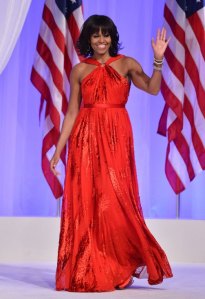
Good Morning Everyone!!
I know it was “just words,” but I still have a good feeling the day after President Obama’s second inauguration. We already discussed to Obama’s surprisingly liberal-sounding speech yesterday. I’ll have more reactions for you today, but first let’s talk about what Michelle Obama wore last night. It was Jason Wu and Jimmy Choo!
By the time the president took the stage at the Commander-in-Chief’s Ball to greet the audience and to introduce the first lady—“I have a date”—the Twitterverse was hyperventilating over which designer she would choose. (According to CNN, the first lady had narrowed it down to two designers from a pool of 15.)
But when she emerged in a beautiful red draped dress by Jason Wu, she still managed to shock. Wu is the designer she catapulted to fame in 2009, when she wore a one-shouldered dress of his design to the first inaugural balls. Immediately after that, Wu, who emigrated from Taiwan at age 9, was on the map. So wouldn’t it have been nice for the first lady to pay it forward—and to select another, lesser-known American designer to wear on the big night?
Even the first lady’s wardrobe is controversial for some people.
But according to David Yermack, professor of finance at the Stern School of Business at New York University and the author of the 2010 Harvard Business Review study on The Michelle Obama Effect, the first lady doesn’t owe it to anyone to change designers. “She has a big impact [on sales],” he says, “but I don’t think anybody’s entitled to it. If she picks the best designer and it’s the same person twice in a row, more power to that person.”
And after Monday night, Wu is that person. Still, the designer says he’s changed since the 2009 inauguration. “I’ve just refined my skills and grown my business,” he told The Daily Beast earlier this month, noting that the Jason Wu woman in the last four years has become “a little sexier, a little more provocative, and a lot more womanly.” That was certainly evident in Obama’s fire-engine red dress.
Now some reactions to the Inaugural Address. Yesterday, James Fallows posted his preliminary reaction, calling Obama’s speech “startling.”
This was the most sustainedly “progressive” statement Barack Obama has made in his decade on the national stage.
I was expecting an anodyne tone-poem about healing national wounds, surmounting partisanship, and so on. As has often been the case, Obama confounded expectations — mine, at least. Four years ago, when people were expecting a barn-burner, the newly inaugurated president Obama gave a deliberately downbeat, sober-toned presentation about the long challenges ahead. Now — well, it’s almost as if he has won re-election and knows he will never have to run again and hears the clock ticking on his last chance to use the power of the presidency on the causes he cares about. If anyone were wondering whether Obama wanted to lower expectations for his second term … no, he apparently does not.
Of course Obama established the second half of the speech, about voting rights and climate change and “not a nation of takers” and “Seneca Falls to Selma to Stonewall” [!] etc, with careful allusions through the first half of the speech to to our founding faiths — and why doing things “together,” the dominant word of the speech, has always been the American way.
Later last night, Fallows offered a more detailed analysis: The Two Most Powerful Allusions in Obama’s Speech Today. The first allusion that impressed Fallows was “the lash and the sword.” The relevant quotes with Fallows’ comments:
Today we continue a never-ending journey to bridge the meaning of [our founding] words with the realities of our time. [Note: this preceding sentence is the one-sentence summary of the speech as a whole.] For history tells us that while these truths may be self-evident, they’ve never been self-executing; that while freedom is a gift from God, it must be secured by His people here on Earth. The patriots of 1776 did not fight to replace the tyranny of a king with the privileges of a few or the rule of a mob. They gave to us a republic, a government of, and by, and for the people, entrusting each generation to keep safe our founding creed.
And for more than two hundred years, we have.
Through blood drawn by lash and blood drawn by sword, we learned that no union founded on the principles of liberty and equality could survive half-slave and half-free. We made ourselves anew, and vowed to move forward together….
Fondly do we hope, fervently do we pray, that this mighty scourge of war may speedily pass away. Yet, if God wills that it continue until all the wealth piled by the bondsman’s two hundred and fifty years of unrequited toil shall be sunk, and until every drop of blood drawn with the lash shall be paid by another drawn with the sword, as was said three thousand years ago, so still it must be said “the judgments of the Lord are true and righteous altogether.”
Fallows notes that these passages refer to Abraham Lincoln’s second Inaugural Address in 1865 and Lincoln’s “House Divided” speech from the campaign of 1858.
The second allusion that impressed Fallows was the one that strongly affected many Sky Dancers: Seneca Falls, Selma, and Stonewall.
We, the people, declare today that the most evident of truths — that all of us are created equal — is the star that guides us still; just as it guided our forebears through Seneca Falls, and Selma, and Stonewall; just as it guided all those men and women, sung and unsung, who left footprints along this great Mall, to hear a preacher say that we cannot walk alone; to hear a King proclaim that our individual freedom is inextricably bound to the freedom of every soul on Earth.
Read more analysis from Fallows at the above link. More reads below the fold.
Monday Reads
Posted: January 21, 2013 Filed under: morning reads | Tags: Barrack Obama, Martin Luther King, Obama inauguration 68 Comments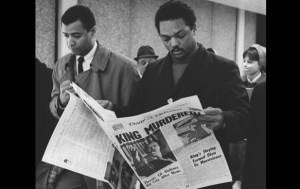 Good Morning!Today is the day we remember Martin Luther King and it’s the day for the formal inauguration ceremony for President Barack Obama.
John Nichols–writing at The Nation–believes that “This President Can—and Must—Claim a Mandate to Govern“.
With his second inauguration, Barack Obama will become the first president since Dwight Eisenhower to renew his tenure after having won more than 51 percent of the vote in two consecutive elections.
More importantly, in a political sense, he will be the first Democrat since Franklin Delano Roosevelt to have won mandates from the majority of the American people in two consecutive elections.
This is the perspective that Americans should bring to the inaugural festivities. We should expect a great deal from Barack Obama. Despite four years of battering by Fox and Limbaugh and the Tea Party and Mitch McConnell, he has been re-elected with a higher percentage of the popular vote than John Kennedy in 1960, Richard Nixon in 1968, Jimmy Carter in 1976, Ronald Reagan in 1980, Bill Clinton in 1992 or 1996 or George Bush in 2000 or 2004.
Obama’s mandate extends beyond himself. His party has increased its Senate majority and Democrats earned 1.4 million more votes in House races than Republicans. Gerrymandering and money kept Republican control of the House, but that opposition party is in such disarray that the president really does have an opening to make something of his mandate.
Obama must seize that opportunity as an essential part of making the case for bold executive orders and a bold legislative agenda that will bring not just the hope but the change he promised in what now seems like a very distant 2008 campaign. The president has in the transition period since the 2012 election displayed a willingness to push harder, to go bigger, and it has yielded significant progress not just on gun-safety issues but in the long struggle against the Republican austerity agenda that makes a diety of deregulating away consumer and environmental protections, tearing the social safety net and cutting taxes for wealthy campaign donors.
To consolidate that progress, and to assure that his second term will be as visionary and activist as his 2012 campaign promised, Obama must, like FDR, use every opportunity to give voice to the agenda- not just in his inaugural address but in his February 12 (Lincoln’s Birthday) State of the Union address.
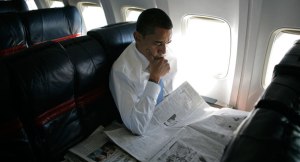
Many things have become political footballs these days. The bodies, abuse, and rape of women. The idea that taxpayer money should be used to support religious indoctrination or profiting from educating our children. Even Science, so much at the center of a lot things we were proud of in the 20th century,has become political. Are there any dangers in this? Dr. Puneet Opal presents his case at The Atlantic.
Over the past few years, and particularly in the past few months, there seems to be a growing gulf between U.S Republicans and science. Indeed, by some polls only 6 percent of scientists are Republican, and in the recent U.S. Presidential election, 68 science Nobel Prize winners endorsed the Democratic nominee Barack Obama over the Republican candidate Mitt Romney.
As a scientist myself, this provokes the question: What are the reasons for this apparent tilt?
Some of this unease might be because of the feeling that the Republicans might cut federal science spending. The notion is certainly not helped by news-making rhetoric of some Republicans against evolution in favor of creationism; unsubstantiated claims that immunization aimed at preventing future cervical cancer cause mental retardation in young girls; and unscientific views of how the female body can prevent pregnancies under conditions of rape.
These comments might represent heartfelt beliefs of the leaders in question; however, some might simply be statements designed to placate the anti-science sections of their base, as part of the political calculus.
A recent opinion in the leading science journal Nature, written by Daniel Sarewitz, a co-director of the Consortium for Science Policy and Outcomes at Arizona State University, suggests that this polarization of scientists away from the Republicans is bad news. Surprisingly — as he tells it — most of the bad news is the potential impact on scientists. Why? Because scientists, he believes — once perceived by Republicans to be a Democratic interest group — will lose bipartisan support for federal science funding. In other words, they will be threatened with funding cuts. Moreover, when they attempt to give their expert knowledge for policy decisions, conservatives will choose to ignore the evidence, claiming a liberal bias.
The comments of Sarewitz might be considered paranoid thinking on the part of a policy wonk, but he backs up his statement by suggesting a precedent: the social sciences, he feels, have already received this treatment at the hands of conservatives in government by making pointed fingers at their funding. Therefore he says that a sufficient number of scientists must be seen to also support Republicans for the sake of being bipartisan. To be fair to Republicans, no politician has actually targeted science funding in this vindictive manner. But this assessment only goes to show how science is quickly becoming a political football.
I would argue that this sort of thinking might well be bad for scientists, but is simply dangerous for the country. As professionals, scientists should not be put into a subservient place by politicians and ideologues. They should never be felt that their advice might well be attached to carrots or sticks.
Democratic Economists outnumber Republicans by 2.5 to 1. No wonder many Republicans home school their children and use specious textbooks.
The President was sworn in quietly on Sunday on the day mandated by the Constitution.
With only his family beside him, Barack Hussein Obama was sworn into office for a second term on Sunday in advance of Monday’s public pomp, facing a bitterly divided government at home and persistent threats abroad that inhibit his effort to redefine America’s use of power.
It was a brief and intimate moment in the White House, held because of a quirk of the calendar that placed the constitutionally mandated start of the new term on a Sunday.
But the low-key event seemed to capture tempered expectations after four years of economic troubles and near-constant partisan confrontation. And it presaged a formal inauguration on Monday that will be less of a spectacle than the first one, when the nation’s first black president embodied hope and change for many Americans at a time of financial struggle and war.
For Monday’s festivities, with the traditional parade, balls and not least the re-enacted swearing-in outside the Capitol, there will be fewer parties and fewer people swarming the National Mall; organizers expect less than half the 1.8 million people who flocked to the city last time.
Once the parties end, Mr. Obama’s second-term challenges are formidable, not least given his ambitious priorities of addressing the national debt, illegal immigration and gun violence.
The economy, while recovering steadily, remains fragile. The unemployment rate is as high as it was in January 2009, though it is down from the 10 percent peak reached late that year, and there is no consensus with Republicans about additional stimulus measures — or virtually anything else.
And as the terrorist attack in Algeria last week illustrated, Mr. Obama continues to confront threats around the globe, both from state actors like Iran and North Korea and from Qaeda-inspired extremists seeking to exploit power vacuums in the Mideast and across Africa and Asia.
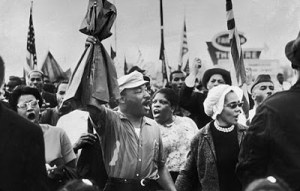
It’s been 50 years since Dr. Martin Luther King delivered his “I’ve Got a Dream” Speech.
The speech he delivered the next day — Aug. 28, 1963 — rocked the nation, as King challenged America to live up to the ideas of justice and equality it professed to cherish.
Fifty years later, the “I Have A Dream” speech is still widely regarded as the most powerful and significant speech of the 20th Century.
As the nation celebrates King’s birthday today, the speech itself is being remembered and celebrated in Detroit — which got the first glimpse of the speech — and across the nation.
King speechwriter Clarence B. Jones, who was one of those advisers on the speech, will be the featured speaker at a program today in Ann Arbor and two programs open to the public in Detroit on Tuesday.
Jones, scholar in residence at the Martin Luther King Jr. Research & Education Institute at Stanford University, helped draft parts of the speech and was on stage with King when he delivered it in Washington.
Jones believes the riveting crescendo of the speech was God-given.
He said he remembers gospel singer Mahalia Jackson, also on stage, telling King, “Tell them about the dream, Martin. Tell them about the dream,” said Jones during a recent telephone conversation. “He pushed the written text aside and started speaking from the heart. It was like he had become possessed, like someone had taken over his body. It was electrifying.”
It wasn’t just what he was saying, but the powerful delivery that stirred the nation’s moral conscience, Jones said.
“The speech tapped into the very core values of who we were supposed to be as a country,” Jones said. “He was speaking prophetically about what America could be if it lived out the principles of the Declaration of Independence. Everybody who heard it, black or white, segregationists or integrationists, everybody knew he was speaking the truth.”
It’s hard to think about what life was like for those black Americans living in the Jim Crow South before the work of people like Dr. King and Miss Rosa Parks. Here’s Dr King Speaking about the Bus Boycott in Selma in 1955. You can find a collection of historical videos on the struggle for racial equality here.
It’s good that we have a day to reflect on all of those things–both good and bad–that make up American History. Have a wonderful holiday!
Friday Reads: Dismal Scientist Edition
Posted: January 18, 2013 Filed under: morning reads | Tags: Debt, deficit, economics, Economists 46 CommentsGood Morning!
I’ve got a few reads for you from economists on some of today’s economic policy questions. I always complain that we never hear from economists and always hear from politicians, journalists, and lawyers. So, here’s the take on the austerity fetish in the beltway from an economists’ perspective.
Economist Dean Baker thinks there’s a cut Social Security on the Horizon.
According to inside Washington gossip, Congress and the president are going to do exactly what voters elected them to do; they are going to cut Social Security by 3 percent. You don’t remember anyone running on that platform? Yeah, well, they probably forgot to mention it.
Of course some people may have heard Vice President Joe Biden when he told an audience in Virginia that there would be no cuts to Social Security if President Obama got reelected. Biden said: “I guarantee you, flat guarantee you, there will be no changes in Social Security. I flat guarantee you.”
But that’s the way things work in Washington. You can’t expect the politicians who run for office to share their policy agenda with voters. After all, we might not like it. That’s why they say things like they will fight for the middle class and make the rich pay their fair share. These ideas have lots of appeal among voters. Cutting Social Security doesn’t.
While the politics of cutting Social Security are bad, it also doesn’t make much sense as policy. In Washington, the gang who couldn’t see an $8 trillion housing bubble until its collapse sank the economy, has now decided that deficit reduction has to be the preeminent goal.
They don’t care that we are still down more than 9 million jobs from our growth trend; deficit reduction must take priority. These whiz kids apparently also don’t care that the cuts that have already been made are slowing growth and costing us jobs.
Meanwhile, economist Paul Krugman shows–once again–that the deficit isn’t really that big of problem and is dwindling. Oh, just a reminder, Social Security has nothing to do with the Federal Budget, debt or deficit other than than the trust fund is invested in US Treasuries.
Recently the nonpartisan Center on Budget and Policy Priorities took Congressional Budget Office projections for the next decade and updated them to take account of two major deficit-reduction actions: the spending cuts agreed to in 2011, amounting to almost $1.5 trillion over the next decade; and the roughly $600 billion in tax increases on the affluent agreed to at the beginning of this year. What the center finds is a budget outlook that, as I said, isn’t great but isn’t terrible: It projects that the ratio of debt to G.D.P., the standard measure of America’s debt position, will be only modestly higher in 2022 than it is now.
The center calls for another $1.4 trillion in deficit reduction, which would completely stabilize the debt ratio; President Obama has called for roughly the same amount. Even without such actions, however, the budget outlook for the next 10 years doesn’t look at all alarming.
Now, projections that run further into the future do suggest trouble, as an aging population and rising health care costs continue to push federal spending higher. But here’s a question you almost never see seriously addressed: Why, exactly, should we believe that it’s necessary, or even possible, to decide right now how we will eventually address the budget issues of the 2030s?
Consider, for example, the case of Social Security. There was a case for paying down debt before the baby boomers began to retire, making it easier to pay full benefits later. But George W. Bush squandered the Clinton surplus on tax cuts and wars, and that window has closed. At this point, “reform” proposals are all about things like raising the retirement age or changing the inflation adjustment, moves that would gradually reduce benefits relative to current law. What problem is this supposed to solve?
Well, it’s probable (although not certain) that, within two or three decades, the Social Security trust fund will be exhausted, leaving the system unable to pay the full benefits specified by current law. So the plan is to avoid cuts in future benefits by committing right now to … cuts in future benefits. Huh?
In today’s Wall Street Journal, Alan Blinder points out that running into the debt ceiling would provoke a severe fiscal contraction.
“At current rates of spending and taxation, federal receipts cover less than 74% of federal outlays. So if the government hits the debt ceiling at full speed, total outlays—which includes everything from Social Security benefits to soldiers’ pay to interest on the national debt—will have to be trimmed by more than 26% immediately. That amounts to more than 6% of GDP, far more than the fiscal cliff we just avoided,” Blinder writes.
The fiscal cliff, by contrast, would have erased 4.5 percent of GDP.
Any sustained captivity below the debt ceiling, in other words, means that the economy will enter a severe recession. This recession will be made far worse because the so-called automatic stabilizers that kick in when the economy slumps—think unemployment insurance—will not be able to function because of the budget constraint. So unemployment will grow while unemployment insurance contracts. This will not only pose a hardship on the people out of work, it will mean that the spending power of the American consumer will shrink rapidly.
Where the fiscal cliff might have led to a recession, this is downward spiral toward depression. The shrinking economy will shrink the government’s tax revenues. And since the budget deficit cannot increase, the spiral will go unchecked. Falling taxes will trigger falling spending. “Downward spiral” may be too mild. Economic black hole better fits the bill.
“In short, the consequences of hitting the debt ceiling are too awful to contemplate—worse even than going over the fiscal cliff. A sane Congress wouldn’t even think about it,” Blinder writes. He’s absolutely correct.
Blinder goes on to propose a plan to avoid a crises based on the assumption that Congress is sane. Let’s hope that assumption is correct.
Meanwhile, the House Republicans are discussing another short term fix to the debt ceiling.
House Republicans are discussing a short-term debt ceiling increase to buy time for broader deficit reduction negotiations with Democrats, Rep. Paul Ryan (R-Wis.) told reporters Thursday.
“We’re discussing the possible virtue of a short-term debt limit extension so that we have a better chance of getting the Senate and the White House involved in discussions in March,” Ryan told reporters gathered at the pricey Kingsmill resort in Williamsburg, where the House GOP is holding its annual retreat.
“All of those things are the kinds of things we’re discussing,” said Ryan, the party’s budget chief and 2012 vice presidential candidate.
A small hike in the $16.4 trillion debt ceiling would give the government more time to make payments on its responsibilities as lawmakers and the White House haggle over federal spending. A GOP leadership aide said there was no consensus on the size of a debt limit hike, and that it would have to be coupled with entitlement reforms or spending cuts.
Treasury Secretary Timothy Geithner has told Speaker John Boehner (R-Ohio) that the nation hit its borrowing limit at the end of 2012 and will run out of ways to avoid a first-ever default sometime between mid-February and early March. $85 billion in across-the-board 2013 cuts to defense and domestic spending are set to begin taking effect in March, and the government will run out of funding a month later.
Formulating a good metaphor for Obama’s second term is itself a task for intuitive creative thought that entails rethinking what he will propose in his second term. A good metaphor might embody the idea of an “inclusive economy.” The word “inclusive” resonates strongly: Americans do not want more government per se; rather, they want the government to get more people involved in the market economy. Opinion polls show that, above all, what Americans want are jobs – the beginning of inclusion.
The parallel to Chase’s book today is the 2012 bestseller Why Nations Fail by the economist Daron Acemoglu and the political scientist James Robinson. Acemoglu and Robinson argue that in the broad sweep of history, political orders that include everyone in the economic process are more likely to succeed in the long term.
The time seems ripe for that idea, and it fits with the triumph of inclusiveness symbolized by Obama himself. But another step in metaphor-building is needed to encapsulate the idea of economic inclusion.
The biggest successes of Obama’s first term concerned economic inclusion. The Affordable Care Act (“Obamacare”) is providing more people with access to health care – and bringing more people to privately-issued insurance – than ever before in the United States. The Dodd-Frank financial reforms created the Consumer Financial Protection Bureau, so that privately issued financial products would serve the public better, and created incentives for derivatives to be traded on public markets. And he signed the JOBS Act, proposed by his Republican opponents, which aims to create crowdfunding Web sites that allow small investors to participate in start-up ventures.
We have not reached the pinnacle of economic inclusion. There are hundreds of other possibilities, including improved investor education and financial advice, more flexible mortgages, better kinds of securitization, more insurance for a broader array of life’s risks, and better management of career risks. Much more progress toward comprehensive public futures and derivatives markets would help, as would policies to encourage the emerging world to participate more in the US economy. (Indeed, the inclusion metaphor is essentially global in spirit; had Obama used it in the past, his economic policies might have been less protectionist.)
The right metaphor would spin some of these ideas, or others like them, into a vision for America’s future that, like the New Deal, would gain coherence as it is transformed into reality. On January 29, Obama will give the first State of the Union address of his new term. He should be thinking about how to express – vividly and compellingly – the principles that have guided his choices so far, and that set a path for America’s future.

 peej
peej Carissa
 bostonboomer
 dakinikat
 ecocatwoman
 mablue2
 Mama Lopez
 peggysue22
 quixote
 skydancingguestblogger
 Mona (aka Wonk the Vote)



 Sky Dancing
Recent Comments