Yesterday the House Oversight Committee held a hearing on the January 6 Capitol insurrection. Democrats tried to address the facts, and Republicans attempted to sell blatant lies and fantasies about what happened that day. Fromthe Associated Press:
Republicans sought to rewrite the history of the Jan. 6 insurrection during a rancorous congressional hearing Wednesday, painting the Trump supporters who attacked the building as mostly peaceful patriots and downplaying repeatedly the violence of the day.
Democrats, meanwhile, clashed with Donald Trump’s former Pentagon chief about the unprepared government response to a riot that began when hundreds of Trump loyalists bent on overturning the election broke through police barriers, smashed windows and laid siege to the building.
The colliding lines of questioning, and a failure to settle on a universally agreed-upon set of facts, underscored the challenges Congress faces as it sets out to investigate the violence and government missteps. The House Oversight Committee hearing unfolded just after Republicans in the chamber voted to remove Rep. Liz Cheney from her leadership post for rebuking Trump for his false claims of election fraud and his role in inciting the attack.
Former acting Defense Secretary Christopher Miller and former acting Attorney General Jeffrey Rosen, testifying publicly for the first time about Jan. 6, defended their agencies’ responses to the chaos. But the hearing almost immediately devolved into partisan bickering about how that day unfolded, with at least one Republican brazenly stating there wasn’t an insurrection at all….
Some fantastical claims by Republicans:
Rep. Andy Biggs of Arizona played video footage of violence outside the federal courthouse in Portland last summer. Rep. Andrew Clyde of Georgia said that while “there were some rioters” on Jan. 6, it was a “bold-faced lie” to call it an insurrection and likened it in some ways to a “normal tourist visit.”
Apres le Dejunier, Berthe Morisot
In ways that fundamentally rewrote the facts of the day and the investigations that resulted, Rep. Paul Gosar of Arizona said the Justice Department was “harassing peaceful patriots.” He described Ashli Babbit, a California woman who was fatally shot by an officer during the insurrection after climbing through the broken part of a door, as having been “executed,” even though prosecutors have said the officer won’t be prosecuted because the shooting did not break the law.
“It was Trump supporters who lost their lives that day, not Trump supporters who were taking the lives of others,” said Rep. Jody Hice of Georgia, downplaying the violent tactics used by loyalists to the president, including spraying officers with pepper and bear spray.
Rep. Paul Gosar (R-AZ) on Wednesday delivered a rant in which he declared that Capitol police “executed” pro-Trump rioter Ashli Babbitt.
During a hearing on the January 6th Capitol riots before the House Oversight Committee, Gosar angrily charged that opponents of former President Donald Trump were using “propaganda” to make the MAGA rioters seem worse than they really were.
He also accused Capitol police of using unnecessary force when one of them fatally shot Babbitt, who during the riots was trying to breach a set of doors that were just outside the House chamber where lawmakers were hiding in shelter on January 6th after the breach of the Capitol building.
A U.S. Capitol rioter from Texas who said that he brought a rope with him to Congress on Jan. 6 threatened days later to lynch a Black police officer that he believed fatally shot Ashli Babbitt, federal prosecutors wrote in a legal brief on Monday. The startling allegation surfaced in court papers against 34-year-old Garret Miller, whom prosecutors want to keep behind bars pending trial.
Drinking tea in the garden by Edit B. Toth
Babbitt was fatally shot when she and the other rioters tried to break into the Speaker’s Lobby, where lawmakers had taken cover.
According to prosecutors, Miller referred to Babbitt as his “sister in battle” and began to see himself as her avenger.
“He became consumed with her death and circulated photographs on Facebook of an African-American police officer that he believed was responsible for her death,” Assistant U.S. Attorney Elizabeth C. Kelley wrote in a 16-page legal brief on Monday. “Miller threatened to kill that officer, stating that he wanted to ‘hug his neck with a nice rope’ and that ‘he will swing.’ He also said that the officer deserved to die and that ‘it’s huntin season.’”
“His fixation with hunting down and hanging a USCP officer is extremely concerning,” prosecutors added of Miller.
Now facing a 12-count indictment, Miller has been charged with assaulting police officers, threatening to assassinate Rep. Alexandria Ocasio-Cortez (D-N.Y.), and several charges related to U.S. Capitol insurrection. Prosecutors say that Miller’s remarks were especially chilling in light of what authorities found in his house.
During a House Oversight Committee hearing on the Jan. 6 riot, Rep. Andrew Clyde, R-Ga., said the House floor was not breached and that the supporters of former President Donald Trump who stormed the Capitol behaved “in an orderly fashion.” [….]
“As one of the members who stayed in the Capitol, and on the House floor, who with other Republican colleagues helped barricade the door until almost 3 p.m. from the mob who tried to enter, I can tell you the House floor was never breached and it was not an insurrection. This is the truth,” Clyde claimed….
“There was an undisciplined mob. There were some rioters, and some who committed acts of vandalism. But let me be clear, there was no insurrection and to call it an insurrection in my opinion, is a bold faced lie. Watching the TV footage of those who entered the Capitol, and walk through Statuary Hall showed people in an orderly fashion staying between the stanchions and ropes taking videos and pictures, you know,” he continued.
“If you didn’t know that TV footage was a video from January the sixth, you would actually think it was a normal tourist visit,” Clyde said.
Surrounded by rioters who had dragged him down the U.S. Capitol steps, beaten him and Tasered him, D.C. police officer Michael Fanone screamed in pain.
“I got one!” one of the rioters yelled triumphantly.
As the crowd pushed in, grabbing at his head, Fanone screamed again and then pleaded for help. “I got kids!” he yelled.
The intense scene plays out in body-camera footage of the attack broadcast by CNN on Wednesday evening, casting new light on Fanone’s struggle to escape a clash he later described as “the most brutal, savage hand-to-hand combat of my entire life.” Fanone suffered a mild heart attack and a concussion in the melee.
EXCLUSIVE: @CNN has obtained bodycam video showing the attack on DC Metropolitan Police Officer Michael Fanone during the Jan. 6 insurrection.
More @CNN EXCLUSIVE bodycam video shows DC Metropolitan Police Officer Michael Fanone's perspective inside a Capitol tunnel during the Jan. 6 insurrection.
Watch what happened before Fanone was confronted by rioters on the Capitol steps, then pulled into the crowd and attacked: pic.twitter.com/Z2iH2VlBmR
Yesterday Republicans also excommunicated far right conservative Liz Cheney for telling the truth about what happened on January 6, including Trump’s culpability for the riot.
The ongoing battle between truth and lies, and the continued fallout from the January 6 insurrection, played out Wednesday on Capitol Hill with critical oversight hearings and a landmark vote among the House Republicans to oust Liz Cheney from their leadership ranks.
The extraordinary day saw Cheney removed by voice vote in a 20-minute session that featured her fellow lawmakers booing her remarks about former President Donald Trump’s falsehoods about election fraud and then having members mock her on social media.
A House Oversight Committee hearing about “unexplained delays and unanswered questions” from January 6, featured Republican lawmakers attempt to deny basic facts about the insurrection and saw former acting Defense Secretary Christopher Miller and former acting Attorney General Jeffrey Rosen resisting efforts to shed more light on Trump’s response to the riot. The Senate also held a hearing on domestic extremism that shed light on homegrown threats….
At the garden table, Auguste Macke
Rosen revealed that he met with Trump on January 3, just three days before the insurrection. He said they didn’t talk about the security planning for January 6, but he repeatedly refused to answer questions from House Oversight Committee Democrats about what he discussed with Trump at that meeting.
“I cannot tell you, consistent with my obligations today, about private conversations with the President, one way or the other,” Rosen said, later saying he “tried to be as forthcoming as I can” but that there are “ground rules” set by the Justice Department that he must “abide by.” Rosen did not elaborate on the alleged “ground rules” and passed on opportunities to shed more light on the insurrection.
This left Democrats stunned, including Rep. Gerry Connolly of Virginia, who pointed out that nobody invoked executive privilege before the hearing, and Rep. Kweisi Mfume of Maryland, who asked Rosen if Trump ever talked to him about overturning the results of the 2020 election.
Since then, we’ve seen a shift in tone from Republicans who were there that day. I’ve argued that the GOP is taking advantage of Trump’s social media silencing to work undistracted on making the next election easier to overturn.
But it’s becoming clear to me that it’s worse than that. Some members of Congress are getting bolder in their defense of Trump’s actions before and after the election. They aren’t just denying that Trump incited a mob as they rewrite election laws: They’re denying that the mob was ever a threat at all, justifying the violence of that day.
A hearing on Wednesday in the House Oversight and Reform Committee was meant to get some answers to the many questions about what was going on inside the Trump administration on Jan. 6 as the mob tried to stop the count of electoral votes. Unfortunately, the star witnesses of the day, former acting Defense Secretary Chris Miller and former acting Attorney General Jeffrey Rosen, were less informative than hoped. Miller in particular walked back his written testimony during his opening statement, refusing to say Trump had incited the protesters that day.
That wasn’t the worst rewrite of history at the hearing, though. That dubious honor goes to Republicans on the panel. In their telling, what happened on Jan. 6 was just some Trump supporters taking an unscheduled walk through the halls of Congress and the Capitol Police overreacting.
This isn’t a flip question. It’s one prompted by the last four months of grappling with the fallout of the bloody insurrection on Capitol Hill, and by the last four years of grappling with the fallout of installing a fascist in the White House.
Lunch in the Garden, Henri Lebasque
So, for real: what does the GOP stand for? Apart from trying to seize back power, what does it want to do?
The answer, as Liz Cheney has learned, is to pander to the ego of a single Florida resident who has no obvious or coherent political purpose.
This might just explain why the party has been struggling so hard to respond to the last four months of the most tenuous Democratic control in Washington.
The Biden team has not commanded the nation’s capital from a position of strength because of LBJ-like powers of persuasion, Democratic unity or structural majorities. They have succeeded because Republicans sorely lack – as George HW Bush used to put it – the vision thing….
There was a time, not so long ago, when the GOP stood for small government, or big business, or at least big churches, or sometimes the little guy. They were for standing up to foreign enemies and domestic taxes….
After four years of Donald Trump, that is no longer the world we’re living in. To be fair, three decades’ worth of upheaval – the colossal failures of the war on terror, the financial crisis, a historic pandemic, the climate crisis and a technological revolution – may have made matters worse.
But here we are nonetheless at a point where the Grand Old Party has shrunk into a small old cult of personality, willing to twist and turn to the whims of its sociopathic former leader.
Consistency meant nothing inside the cult. More billions of spending on a nonsensical border wall? The deficit hawks said no problem. More bullying business leaders by presidential tweet? The capitalist caucus said bring it on. More cozying up to the leaders of Russia, China and even North Korea? The defense hawks thought that sounded fine. Paying off porn stars with campaign dollars? The party of family values barely blushed.
Each one of these big and small sellouts brought the party to the point where it fired Liz Cheney from the House leadership on Tuesday for stating the obvious: Trump lost the election last year and stoked an insurrection to save face.
If Wednesday’s House hearing on “unanswered questions” about the Jan. 6 attack on the U.S. Capitol was good for anything, it showed why an independent commission is needed to investigate what happened that day.
Tea in the Garden, Henri Matisse, 1919
It was the first time that former acting Defense Secretary Christopher Miller and former acting Attorney General Jeffrey Rosen testified about the decisions and actions they took. Metropolitan Police Chief Robert Contee also testified, but his actions are under far less scrutiny because his police officers responded immediately and essentially saved the day. He had also already testified about these matters in the Senate.
Despite this opportunity to question Miller and Rosen (and the important questions they could have been asked), members of the House Oversight Committee elicited little new information. Instead, precious time was wasted with grandstanding and aggressive posturing on both sides. Whether it’s Democrats admonishing the witnesses before they have a chance to speak or, worse yet, Republicans flooding the zone with disinformation, it’s increasingly clear that Congress is not up to the task of investigating the events of that day.
That’s a shame, because when it comes to Jan. 6, there are essentially two security failures that demand accountability (not to mention the role played by former President Donald Trump): the failure to prepare and understand the signals of what was coming and a failure to quickly get federal forces to respond once it was underway. The Department of Justice and the FBI bear some responsibility for the first failure, which left the U.S. government flat-footed when the attack began. The Defense Department, which Miller oversaw, was responsible for fielding requests for support from the D.C. National Guard and then authorizing its deployment, and so, is at the center of responsibility for the second failure.
Click the link to read the rest.
Is there any way to get past the GOP lies and obfuscation? Is an independent investigation possible? I hope so.
As always, this is an open thread.
Did you like this post? Please share it with your friends:
There’s good news and bad news on the pandemic front. We may be “turning the corner” in the U.S., but the situation in India is out of control and getting worse.
On some recent days, entire states, including Wisconsin and West Virginia, have reported zero new coronavirus deaths — a brief but promising respite from the onslaught of the past year.
And in New York and Chicago, officials encouraged by the recent progress have confidently vowed to fully reopen in the coming weeks, conjuring images of a vibrant summer of concerts, sporting events and packed restaurants revving cities back to life.
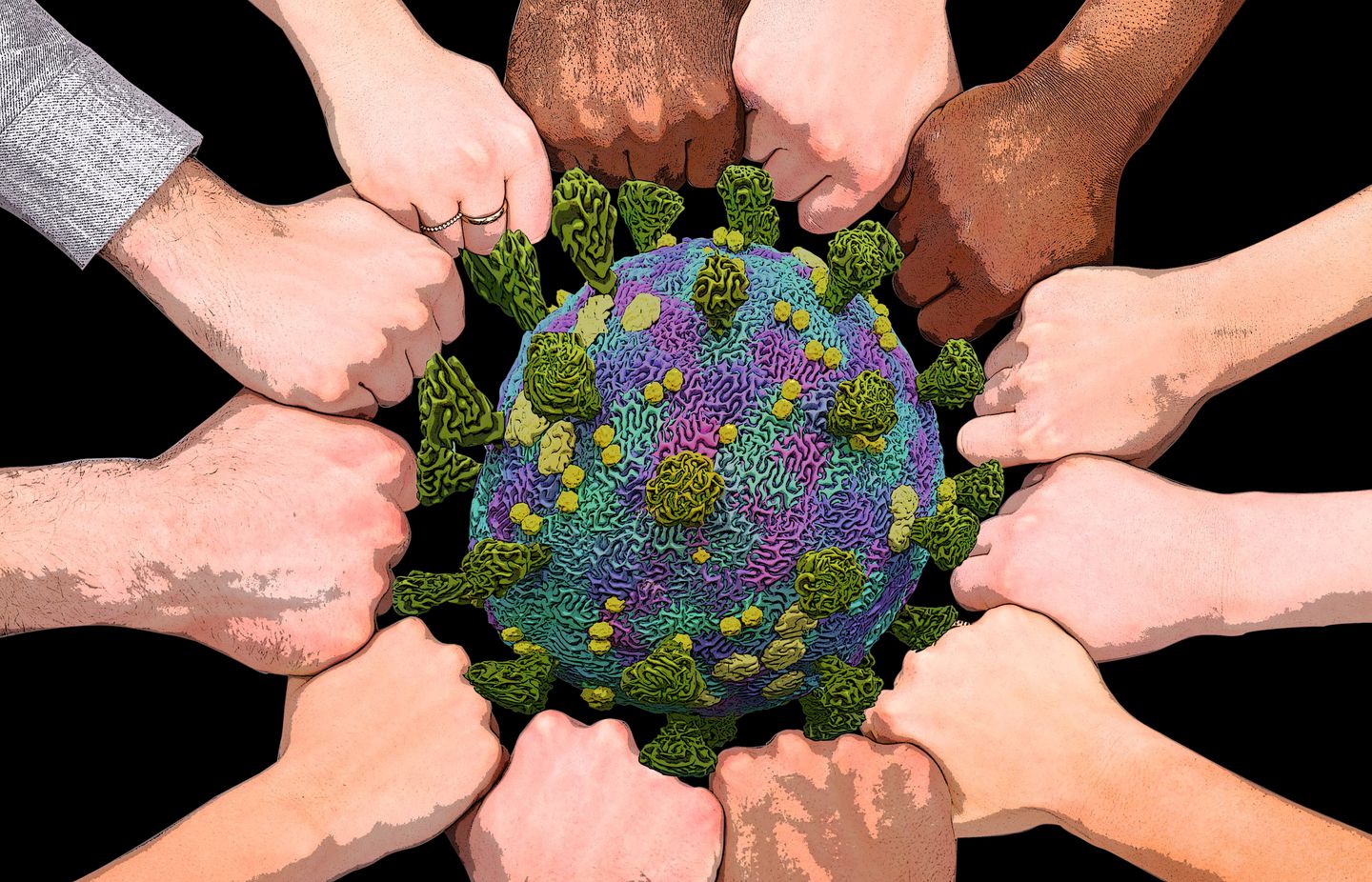
Americans have entered a new, hopeful phase of the pandemic. Buoyed by a sense that the coronavirus is waning, in part because of vaccinations, more people are shrugging off masks, venturing into restaurants and returning to their prepandemic routines. Mayors, governors and other local officials — once the bearers of grim news about the virus’s toll and strict rules for businesses — have joined in the newfound optimism, rapidly loosening restrictions.
Public health experts remain cautious, but said that while they still expect significant local and regional surges in the coming weeks, they do not think they will be as widespread or reach past peaks.
“We’re clearly turning the corner,” said Michael Osterholm, director of the Center for Infectious Disease Research and Policy at the University of Minnesota.
Across the country, the outlook for the pandemic has indeed improved, putting the United States in its best position against the virus yet. The nation is recording about 49,000 new cases a day, the lowest number since early October, and hospitalizations have plateaued at around 40,000, a similar level as the early fall. Nationwide, deaths are hovering around 700 a day, down from a peak of more than 3,000 in January.
Coronavirus infections could be driven to low levels and the pandemic at least temporarily throttled in the United States by July if the vast majority of people get vaccinated and continue with precautions against viral transmission, according to a strikingly optimistic paper released Wednesday by the Centers for Disease Control and Prevention.
The report comes as administration officials and leaders in many states are sounding more confident that the country can return to a degree of normalcy relatively soon. President Biden on Tuesday announced a new vaccination goal, saying he wants 70 percent of adults to have had at least one dose by July 4.
CDC Director Rochelle Walensky said Wednesday the modeling results give Americans a road map out of the pandemic — so long as they continue to get vaccinated and maintain certain mitigation strategies until a “critical mass of people” get the shots.
“The results remind us that we have the path out of this, and models, once projecting really grim news, now offer reasons to be quite hopeful for what the summer may bring,” she said.
The CDC report is not a prediction or forecast. Rather, it is a set of four scenarios based on modeling of the pandemic, using different assumptions about vaccination rates, vaccine efficacy and precautions against transmission.
Read about the possible scenarios at the WaPo.
Interesting proposal by the Biden administration
BREAKING NEWS – US says it supports #TRIPSwaiver to help ensure global equitable access to COVID-19 vaccines.
Epidemiologists believe that India’s surge could hit 500,000 cases a day in the coming weeks before retreating. That would represent a ruinous burden for a health-care system reeling from too many patients and a shortage of crucial supplies such as oxygen.
Last month, the United States advised its citizens to leave India, and the State Department on Thursday authorized the voluntary departure of non-emergency personnel.
Infections in India hit another grim daily record on Thursday as demand for medical oxygen jumped sevenfold and the government denied reports that it was slow in distributing life-saving supplies from abroad.
The number of new confirmed cases breached 400,000 for the second time since the devastating surge began last month. The 412,262 new cases pushed India’s official tally to more than 21 million. The Health Ministry also reported 3,980 deaths in the last 24 hours, bringing the total to 230,168. Experts believe both figures are an undercount.
Eleven COVID-19 patients died when pressure in an oxygen line dropped suddenly in a government medical college hospital in Chengalpet in southern India on Wednesday night, possibly because of a faulty valve, The Times of India newspaper reported.
Hospital authorities said they repaired the pipeline last week, but the consumption of oxygen had doubled since then, the newspaper said.
Read more details at the AP.
In Nepal, a situation is unfolding that looks chillingly familiar.
Covid-19 cases are skyrocketing, hospitals are overwhelmed, and the country's Prime Minister is pleading for help from other nations. https://t.co/4QDfG6kTAb
Hopes that India’s rampaging second wave of COVID-19 is peaking were set back on Thursday as record daily infections and deaths were reported and as the virus spread from cities to villages that were poorly equipped to cope.
Government modelling had forecast a peak by Wednesday in infections that have overwhelmed the healthcare system, with hospitals running out of beds and medical oxygen….
“This temporarily halts speculations of a peak,” Rijo M John, a professor at the Indian Institute of Management in the southern state of Kerala, said on Twitter.
While the capital New Delhi and several other cities have been hardest hit so far, limited public healthcare, including a dearth of testing facilities, means the threat is grave in rural areas that are home to nearly 70% of the 1.3 billion population.
In the town of Susner in Madhya Pradesh state, patients were being treated outdoors under trees, on blankets on the ground.
Delhi — People are dying in record numbers amid the surge in coronavirus infections in India. CBS News correspondent Chris Livesay found that even the capital city’s hospitals are desperately short on beds, forcing them to turn away people battling symptoms of COVID-19.
The constellation of forces that led to India’s coronavirus crisis is not unique; it’s the default in most of the world. Photograph by Rebecca Conway, Getty
CBS News watched as one woman showed up breathless at the Moolchand Hospital in Delhi, desperate for oxygen and a bed. The facility has some of the best resources in New Delhi, but there was no space left, so they sent her away.
Dr. Nabeel Rahman runs the emergency room at Moolchand, which has been converted into extra space for an ICU that, still, is absolutely crushed with patients. He told CBS News that his team had resorted to purchasing its own oxygen supplies privately, at massively inflated prices, amid a desperate national shortage.
The patients in the expanded ICU are extremely sick, but they’re also extremely lucky: In a country that’s losing the battle against COVID-19, they’re lucky to have oxygen, lucky to have access to doctors and lucky to have beds in a hospital that’s well over capacity.
Someone tell the Supreme Court about this:
Many of India’s coronavirus victims caught the disease during huge religious gatherings, which were promoted by the Hindu nationalist party of Prime Minister Narendra Modi as it campaigned for recent state elections.
A few years ago, as Narendra Modi came into power, I worked on an investigative report about India hiding its malaria deaths. In traveling from tribal Odisha to the Indian national health ministry in New Delhi, my colleague and I watched thousands of cases disappear: some malaria deaths, first noted in handwritten local health ledgers, never appeared in central government reports; other malaria deaths were magically transformed into deaths of heart attack or fever. The discrepancy was massive: India reported 561 malaria deaths that year. Experts predicted the actual number was as high as 200,000.
Now, with Covid ravaging the country, desperate Indians have taken to Twitter to ask for oxygen cylinders or beg hospitals for an open bed. The crisis has been exacerbated by the government’s concealment of critical information. Between India’s long history of hiding and undercounting illness deaths and its much more recent history of restraining and suppressing the press, Modi’s administration has made it impossible to find accurate information about the virus’s hold in the country. Blocking that information will only hurt millions within the country. It will also stymie global efforts to stop the Covid-19 pandemic, and new variants of the virus, at India’s border.
Narenda Modi and Trump hugging
Epidemiologists in India and abroad currently estimate that the country’s official reported Covid-19 death toll – around 222,000 at time of publication – only accounts for a fraction of the real number. The director of the US-based Institute of Health Metrics and Evaluation has estimated that India is only detecting three to four percent of actual cases. Other experts point to total excess deaths in cities such as Mumbai as proof that there could be 60% to 70% more deaths from Covid-19 than the government is admitting to.
There are various reasons India could be cooking the books on Covid deaths. For one, the utter failure of the public health system makes it difficult to account for the millions of bodies passing through hospitals, clinics and those dying in their own home. Despite having become one of the largest economies in the world, India has always spent a dismal portion of its GDP on healthcare, with an investment somewhere around 3%, compared to Brazil (9%) or the US (17%).
But systemic failure is only one part of the puzzle. The reigning party of the Indian government touted its success in curbing the virus very early in the pandemic, and has never let go of that narrative. As bodies burned in funeral pyres across Uttar Pradesh in April, Yogi Adityanath – the state’s chief minister and a key Modi lackey – claimed that everything was under control and repeatedly refused to announce new lockdown measures, even as he himself contracted Covid-19.
That sounds a lot like Trump, doesn’t it?
More stories to check out today:
The Washington Post: Opinion: Liz Cheney: The GOP is at a turning point. History is watching us.
Trump is gone from the national stage, but the misinformation he promoted is still with us. Thanks to the Trumpists, we may never achieve herd immunity in the U.S.
Even as we accelerate vaccinations, an immovable force stands in the way of achieving community immunity: Millions of Americans who are simply saying “No way.”
As of mid-April, both Florida and Michigan were hot spots for the more severe B.1.1.7 Covid-19 variant that originated in the U.K. and that is now the dominant strain nationwide. This variant is also sending younger, previously healthy people into our hospitals. With the coronavirus mutating to become more contagious and possibly more lethal, vaccination is more important than ever.
Yet, vaccine refusal — not reluctance, not “maybe later,” but flat-out rejection — could prevent us from reaching the threshold when epidemiologists say we can safely and responsibly fully reopen all aspects of society. Recent surveys like this one from CNN put that number at around one in four people. In rural, overwhelmingly white places like rural western Michigan, these are the folks who stagger into the Emergency Room, sick and struggling to breathe, yet still tell nurses and doctors that neither Covid-19, masks and vaccines are real.
Davidson and Ashby write that Black and Hispanic Americans have responded to efforts to educate people about vaccine safety and efficacy.
But though Black and Hispanic Americans are now increasingly rolling up their sleeves, one group continues to refuse vaccinations: White, evangelical and rural Americans.
We heard one rural Michigan patient call vaccines a form of government control. Another repeated the unfounded claim that Covid-19 was a Chinese bioweapons plot. One patient refused to get vaccinated despite getting Covid-19 twice, a rare reinfection. Rural white people scoffed at vaccines, citing microchips and infertility, or Fox News disinformation slandering health experts for lying about vaccine efficacy data and calling vaccines a tool for social control. We heard patients accuse hospital workers of being highly paid actors maintaining the pandemic charade.
Vaccines have struck conservative Republican leaders with a kind of stubborn anosognosia, an inability to line themselves up with reality.
Paul Wonner, Model Drinking Coffee, 1964
The answer, say the authors must come from community leaders.
In Michigan, GOP legislative leaders are undermining vaccinations in word and in deed, including holding millions of dollars in federal vaccination funds hostage. The conservative base, however, says it would rather listen to doctors than politicians anyway. If the only information — or misinformation — about the pandemic is from Fox News and OANN, then the antidote is information from a source who understands the science, the medicine and most importantly, the community.
In the case of rural conservative communities, that source would be rural conservative family physicians who go to the same churches, fish the same stretch of river and volunteer every Friday night at local high school football games. These are the doctors who care for every stage of a family’s life. Births, broken arms, deliveries, disease management and deaths. They aren’t just trusted, they’re family —minus the birthright of blood. Most importantly, they know how vaccines and medicine work.
For years, scientists and doctors have treated vaccine skepticism as a knowledge problem. If patients were hesitant to get vaccinated, the thinking went, they simply needed more information.
But as public health officials now work to convince Americans to get Covid-19 vaccines as quickly as possible, new social science research suggests that a set of deeply held beliefs is at the heart of many people’s resistance, complicating efforts to bring the coronavirus pandemic under control….
About a third of American adults are still resisting vaccines. Polling shows that Republicans make up a substantial part of that group. Given how deeply the country is divided by politics, it is perhaps not surprising that they have dug in, particularly with a Democrat in the White House. But political polarization is only part of the story.
In recent years, epidemiologists have teamed up with social psychologists to look more deeply into the “why” behind vaccine hesitancy. They wanted to find out whether there was anything that vaccine skeptics had in common, in order to better understand how to persuade them.
They borrowed a concept from social psychology — the idea that a small set of moral intuitions forms the foundations upon which complex moral worldviews are constructed — and applied it to their study of vaccine skepticism.
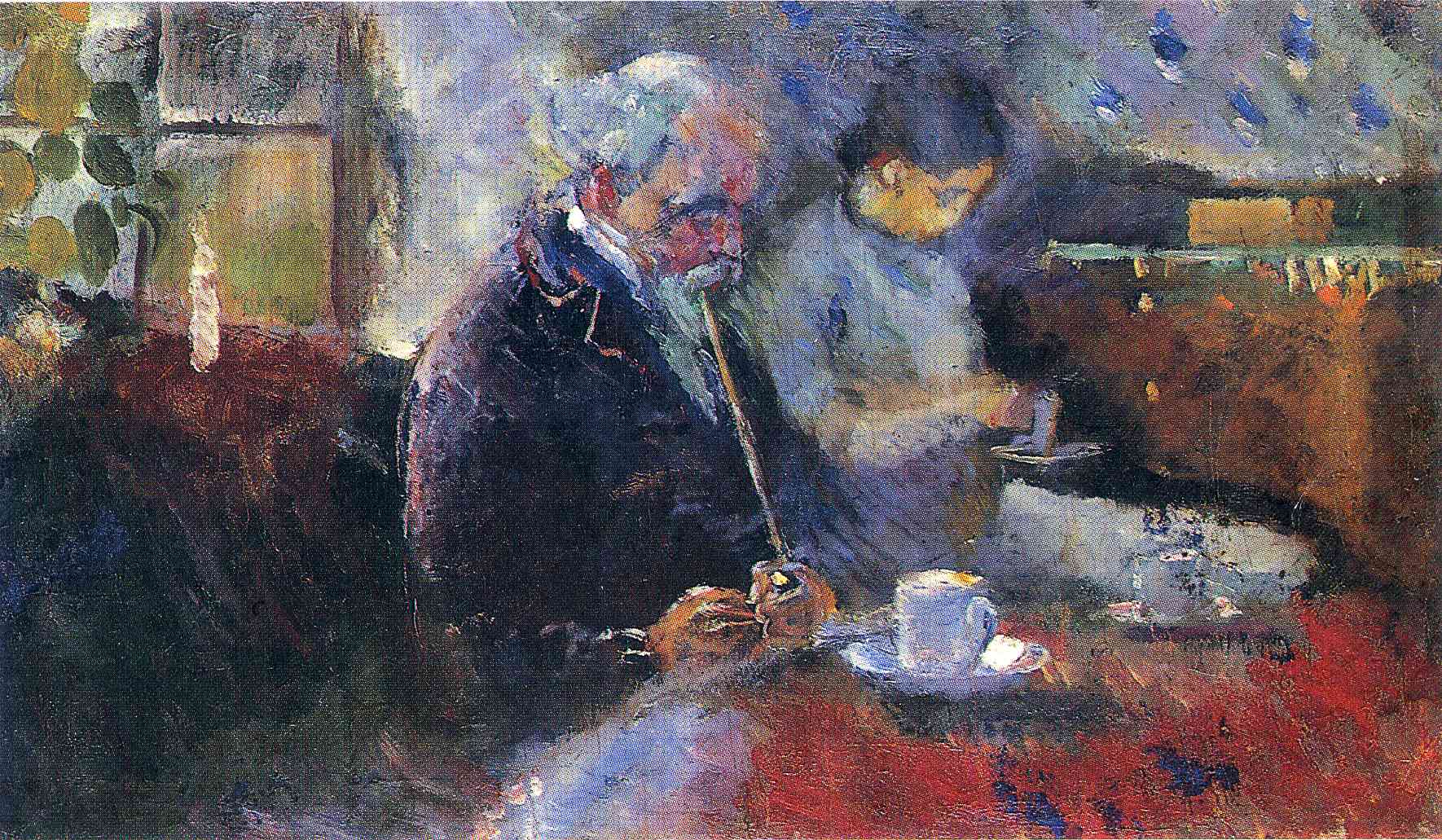
Edvard Munch, At The Coffee Table, 1883, Munch Museum, Oslo
What they discovered was a clear set of psychological traits offering a new lens through which to understand skepticism — and potentially new tools for public health officials scrambling to try to persuade people to get vaccinated.
Dr. Omer and a team of scientists found that skeptics were much more likely than nonskeptics to have a highly developed sensitivity for liberty — the rights of individuals — and to have less deference to those in positions of power.
Skeptics were also twice as likely to care a lot about the “purity” of their bodies and their minds. They disapprove of things they consider disgusting, and the mind-set defies neat categorization: It could be religious — halal or kosher — or entirely secular, like people who care deeply about toxins in foods or in the environment….
“At the root are these moral intuitions — these gut feelings — and they are very strong,” said Jeff Huntsinger, a social psychologist at Loyola University Chicago who studies emotion and decision-making and collaborated with Dr. Omer’s team. “It’s very hard to override them with facts and information. You can’t reason with them in that way.”
These qualities tend to predominate among conservatives but they are present among liberals too. They are also present among people with no politics at all.
What are they thinking, these vaccine-hesitant, vaccine-resistant, and COVID-apathetic? I wanted to know. So I posted an invitation on Twitter for anybody who wasn’t planning to get vaccinated to email me and explain why. In the past few days, I spoke or corresponded with more than a dozen such people. I told them that I was staunchly pro-vaccine, but this wouldn’t be a takedown piece. I wanted to produce an ethnography of a position I didn’t really understand.
The people I spoke with were all under 50. A few of them self-identified as Republican, and none of them claimed the modern Democratic Party as their political home. Most said they weren’t against all vaccines; they were just a “no” on thisvaccine. They were COVID-19 no-vaxxers, not overall anti-vaxxers.
Pierre Bonnard, Coffee, 1907
Many people I spoke with said they trusted their immune system to protect them. “Nobody ever looks at it from the perspective of a guy who’s like me,” Bradley Baca, a 39-year-old truck driver in Colorado, told me. “As an essential worker, my life was never going to change in the pandemic, and I knew I was going to get COVID no matter what. Now I think I’ve got the antibodies, so why would I take a risk on the vaccine?”
Some had already recovered from COVID-19 and considered the vaccine unnecessary. “In December 2020 I tested positive and experienced many symptoms,” said Derek Perrin, a 31-year-old service technician in Connecticut. “Since I have already survived one recorded bout with this virus, I see no reason to take a vaccine that has only been approved for emergency use. I trust my immune system more than this current experiment.”
Others were worried that the vaccines might have long-term side effects. “As a Black American descendant of slavery, I am bottom caste, in terms of finances,” Georgette Russell, a 40-year-old resident of New Jersey, told me. “The fact that there is no way to sue the government or the pharmaceutical company if I have any adverse reactions is highly problematic to me.”
Many people said they had read up on the risk of COVID-19 to people under 50 and felt that the pandemic didn’t pose a particularly grave threat. “The chances of me dying from a car accident are higher than my dying of COVID,” said Michael Searle, a 36-year-old who owns a consulting firm in Austin, Texas. “But it’s not like I don’t get in my car.”
And many others said that perceived liberal overreach had pushed them to the right. “Before March 2020, I was a solid progressive Democrat,” Jenin Younes, a 37-year-old attorney, said. “I am so disturbed by the Democrats’ failure to recognize the importance of civil liberties. I’ll vote for anyone who takes a strong stand for civil liberties and doesn’t permit the erosion of our fundamental rights that we are seeing now.” Baca, the Colorado truck driver, also told me he didn’t vote much before the pandemic, but the perception of liberal overreach had a strong politicizing effect. “When COVID hit, I saw rights being taken away. So in 2020, I voted for the first time in my life, and I voted all the way Republican down the ballot.”
Thompson’s interpretation of his findings:
My view of the vaccines begins with my view of the pandemic. I really don’t want to get COVID-19. Not only do I want to avoid an illness with uncertain long-term implications, but I also don’t want to pass it along to somebody in a high-risk category, such as my grandmother or an immunocompromised stranger. For more than a year, I radically changed my life to avoid infection. So I was thrilled to hear that the vaccines were effective at blocking severe illness and transmission. I eagerly signed up to take both my shots, even after reading all about the side effects.
Henri Matisse, Coffee, 1916, Detroit Institute of Arts
The under-50 no-vaxxers’ deep story has a very different starting place. It begins like this:
“The coronavirus is a wildly overrated threat. Yes, it’s appropriate and good to protect old and vulnerable people. But I’m not old or vulnerable. If I get it, I’ll be fine. In fact, maybe I have gotten it, and I am fine. I don’t know why I should consider this disease more dangerous than driving a car, a risky thing I do every day without a moment’s worry. Liberals, Democrats, and public-health elites have been so wrong so often, we’d be better off doing the opposite of almost everything they say.”
Just as my COVID-19 story shapes my vaccine eagerness, this group’s COVID-19 story shapes their vaccine skepticism. Again and again, I heard variations on this theme:
“I don’t need some novel pharmaceutical product to give me permission to do the things I’m already doing. This isn’t even an FDA-approved vaccine; it’s authorized for an emergency. Well, I don’t consider COVID-19 a personal emergency. So why would I sign up to be an early guinea pig for a therapy that I don’t need, whose long-term effects we don’t understand? I’d rather bet on my immune system than on Big Pharma.”
For both yes-vaxxers like me and the no-vaxxers I spoke with, feelings about the vaccine are intertwined with feelings about the pandemic.
There’s much more at The Atlantic link.
So maybe my notion that vaccine refusal/hesitancy comes from Trump propaganda is wrong? I still think that’s a significant element of the problem. But clearly there are other psychological and sociological explanations. Is there a solution?
Ker-Xavier Roussel Reading the Newspaper, 1893, Private Collection Édouard Vuillard
Happy World Press Freedom Day Sky Dancers!
A Free Press is enshrined in our Constitution here in the United States. It’s always been a hallmark of open, democratic societies. So, how is the press doing in this day of increasing right-wing authoritarianism?
The world of journalism faces “drastic losses”, the UN has warned, as it highlights the importance of ‘information as a public good’ on World Press Freedom day.
The intergovernmental organisation says the current coronavirus crisis has forced closures and job cuts within the industry, while other media outlets are facing “political capture”.
The result is more “creeping news deserts” in countries where journalists are unable to get accurate information out to the public.
You may read country descriptions based on the Press Freedom Index on the challenges faced by journalists.
A grim reminder: Turkey is still one of the world's biggest jailers of journalists. Since 2016, at least 180 media outlets have been shut down in Turkey and scores of journalists have been imprisoned.#FreeTurkeyMedia#PostForThePresspic.twitter.com/BJ81Sy4gtb
We may be going back towards normalcy with the White House recognizing the role of a free press today. You may remember that we spent the last four years hearing how the press was the enemy of the people unless it presented stories that flattered and backed-up the delusional rantings of the previous guy. It is also high time the Saudis pay for killing one of our journalists. This is just one of the atrocities the previous guy ignored.
Will Biden stand up to the Saudis for the Prince’s murder of Jamal Khashoggi? This is from NBC.
The Biden administration earlier this year released a U.S. intelligence report implicating the crown prince in the 2018 murder of Saudi journalist Jamal Khashoggi but spared him any direct punishment. The prince denies any involvement.
On World Press Freedom Day – Remember those who've lost their lives, been jailed, been beaten and been threatened for trying to get the word out. #PostForThePress Justice for Jamal Khashoggi.#JamalKhashoggi@POTUS Free jailed reporters across the Globe.@RSF_enpic.twitter.com/bvC1zq8cPK
We have impeached judges before. Is this the decade of taking out the trash dumped in our justice system? Perhaps we could at least develop and enforce standards of ethical behavior for judges?
A lot of hand-wringing has accompanied Supreme Court Justice Amy Coney Barrett’s$2 million book deal (including from those of us who wish we had a $2 million book deal). While there’s always reason to worry when big piles of money land on the court, and Coney Barrett has wasted little time monetizing her new job, some larger points are getting lost in all of this.
After all, Coney Barrett isn’t the first justice to reel in a big book deal. Justice Sonia Sotomayor collected an advance of more than $3 million for her memoir, and Justice Clarence Thomas got $1.5 million for his. Justice Neil Gorsuch was paid $225,000 for a book about the Constitution. Here’s the rub: Federal ethics guidelines mandate that justices can’t accept more than about $30,000 annually in outside pay. However, book income — which can reliably bring in much larger sums than the relatively modest pay justices receive for teaching gigs — is exempt from the guidelines.
When these deals arise, concerns are often voiced about justices being compromised by pocketing money from publishers who might have free speech and other issues affecting them before the court. But books are only a small part of a bigger problem: The Supreme Court’s conflicts of interest and financial disclosure rules remain ragged and outdated.
Unlike every other member of state and federal judiciaries, the court’s nine justices aren’t subject to an ethical code of conduct. That mirrors the latitude given the presidency, which also isn’t beholden to most guidelines circumscribing financial and professional practices of people in lower-ranking government jobs. Former President Donald Trump’s tenure, marked by flagrant financial conflicts of interest, is a reminder of how ineffective self-regulating ethics are when someone isn’t really interested in self-regulation.
Woman with a newspaper, Richard Diebenkorn
The danger of right-wing propaganda to our Democracy has been an ongoing issue in the last several centuries. It has always skirted the First Amendment in terms of substance and motivation. We depend on an educated populace to search out the truth among many sources. The role it has played in putting public health issues into the realm of political cosplay is beyond the pale. Derek Thomas writes this for The Atlantic: “Millions Are Saying No to the Vaccines. What Are They Thinking? Feelings about the vaccine are intertwined with feelings about the pandemic.” It’s also intertwined with politics and right-wing news media falsehoods.
What are they thinking, these vaccine-hesitant, vaccine-resistant, and COVID-apathetic? I wanted to know. So I posted an invitation on Twitter for anybody who wasn’t planning to get vaccinated to email me and explain why. In the past few days, I spoke or corresponded with more than a dozen such people. I told them that I was staunchly pro-vaccine, but this wouldn’t be a takedown piece. I wanted to produce an ethnography of a position I didn’t really understand.
The people I spoke with were all under 50. A few of them self-identified as Republican, and none of them claimed the modern Democratic Party as their political home. Most said they weren’t against all vaccines; they were just a “no” on thisvaccine. They were COVID-19 no-vaxxers, not overall anti-vaxxers.
Many people I spoke with said they trusted their immune system to protect them. “Nobody ever looks at it from the perspective of a guy who’s like me,” Bradley Baca, a 39-year-old truck driver in Colorado, told me. “As an essential worker, my life was never going to change in the pandemic, and I knew I was going to get COVID no matter what. Now I think I’ve got the antibodies, so why would I take a risk on the vaccine?”
Some had already recovered from COVID-19 and considered the vaccine unnecessary. “In December 2020 I tested positive and experienced many symptoms,” said Derek Perrin, a 31-year-old service technician in Connecticut. “Since I have already survived one recorded bout with this virus, I see no reason to take a vaccine that has only been approved for emergency use. I trust my immune system more than this current experiment.”
Others were worried that the vaccines might have long-term side effects. “As a Black American descendant of slavery, I am bottom caste, in terms of finances,” Georgette Russell, a 40-year-old resident of New Jersey, told me. “The fact that there is no way to sue the government or the pharmaceutical company if I have any adverse reactions is highly problematic to me.”
Many people said they had read up on the risk of COVID-19 to people under 50 and felt that the pandemic didn’t pose a particularly grave threat. “The chances of me dying from a car accident are higher than my dying of COVID,” said Michael Searle, a 36-year-old who owns a consulting firm in Austin, Texas. “But it’s not like I don’t get in my car.”
And many others said that perceived liberal overreach had pushed them to the right. “Before March 2020, I was a solid progressive Democrat,” Jenin Younes, a 37-year-old attorney, said. “I am so disturbed by the Democrats’ failure to recognize the importance of civil liberties. I’ll vote for anyone who takes a strong stand for civil liberties and doesn’t permit the erosion of our fundamental rights that we are seeing now.” Baca, the Colorado truck driver, also told me he didn’t vote much before the pandemic, but the perception of liberal overreach had a strong politicizing effect. “When COVID hit, I saw rights being taken away. So in 2020, I voted for the first time in my life, and I voted all the way Republican down the ballot.”
In many ways, the 2020 election was basically like every recent Americanpresidentialelection: The Republican candidate won the white vote (54 percent to 44 percent, per CES), and the Democratic candidate won the overwhelming majority of the Black (90 percent to 8 percent), Asian American (66 percent to 31 percent) and Hispanic (64 percent to 33 percent) vote. Like in 2016, there was a huge difference among non-Hispanic white voters by education, as those with at least a four-year college degree favored Biden (55 percent to 42 percent), while those without degrees (63 to 35) favored Trump. (There wasn’t a huge education split among voters of color.)1
Othersurveystell the same general story: Trump won white voters overall by a margin in the double digits and won whites without four-year degrees by even more; Trump lost among whites with at least a four-year college degree, lost by a big margin with Asian American and Latino voters and lost by an enormous margin among African Americans.
So the main reason that Trump nearly won a second term was not his increased support among Latinos, who are only about 10 percent of American voters and are a group he lost by more than 20 points. Trump’s main strength was his huge advantage among non-Hispanic white voters without college degrees, who are about 45 percent of American voters. His second biggest bloc of support was among non-Hispanic white Americans with degrees, who are about 30 percent of all voters. According to the CES, over 80 percent of Trump’s voters were non-Hispanic white voters, with or without a college degree. In contrast, around 70 percent of nonwhite voters supported Biden, and they made up close to 40 percent of his supporters. So it is very much still the case that the Republicans are an overwhelmingly white party and that the Democratic coalition is much more racially diverse.
Speaker One: "Don't amplify!"
Speaker Two: "I hear you, but sometimes we have to!"
The story began when Chalmette State Representative Raymond Garofalo proposed a bill where-in he wanted to ban “critical race theory” from being taught, a complex subject that conservatives have been using as a talking point recently to score political points. He said that he, in fact, wanted to “teach the good, the bad, and the ugly” about slavery. To which Hilferty replied, “There’s nothing good about slavery” to laughter.
Garofalo corrected himself, saying that, “You’re right. I didn’t mean to imply that. I don’t believe that, and I know that’s the case. But I’m using the term, ‘the good, bad, and ugly as a generic way of saying that you can teach any facts, factually based on anything.”
Both Hilferty and Garofalo have spoken directly to the media about the incident. Garofalo has tried to clarify his words, explain the terminology “good, bad, and ugly” was meant “generically,” and Hilferty claimed he was, “…talking about the good in slavery.”
Whether Garofalo meant that there were good aspects to slavery or whether he was speaking “generically,” Huckaby repeatedly came to his defense, and to the defense of slavery itself. The above was not her only post related to slavery and Garofalo. She also wrote in another post, “Slavery goes all they [sic] way back to biblical times, and if you’ve read your Bible, you would know that many of the slaves loved their masters, and their masters loved them, and took very good care of them, and their families.”
In addition, she indicated that, “Stephanie (Hilferty) has been indoctrinated by leftis [sic] marxisum [sic] education.”
So, hmm, I’m a communist troll in her eyes. So bet it! At this point, I’ll take any moniker that doesn’t include what she’s all about.
Anyway, you’ll have a good week! What’s on your reading and blogging list today?
Did you like this post? Please share it with your friends:
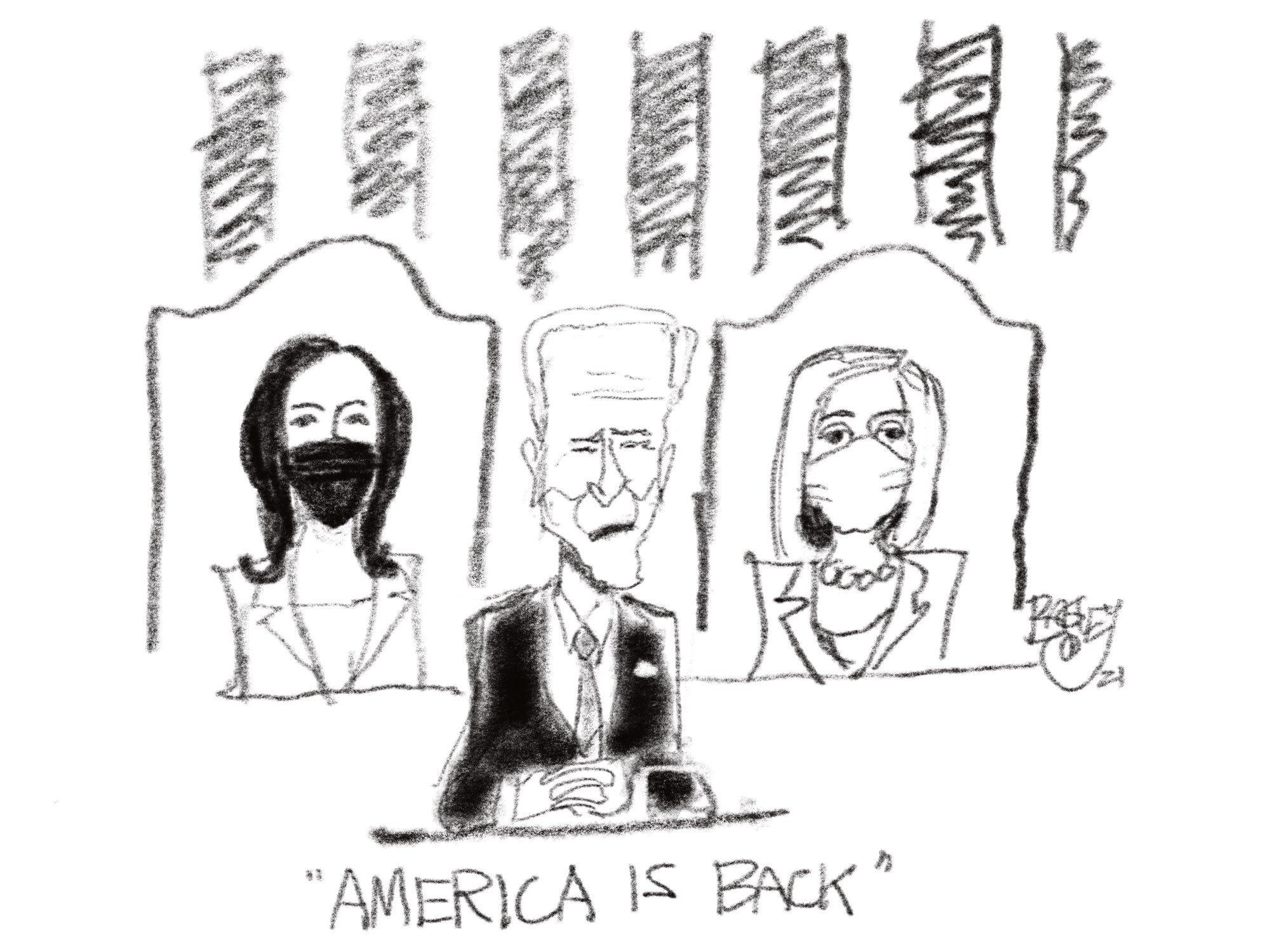
Last night President Biden gave his first speech to a joint session of Congress. For the first time, two women sat behind the president, Vice President Kamala Harris and Speaker of the House Nancy Pelosi. A couple of reactions to the speech:
There were two moments during President Biden’s address to the nation on Wednesday in which he obviously, if only indirectly, referred to the man who preceded him in his position.
The first came near the beginning.
“America is rising anew,” Biden said, “choosing hope over fear, truth over lies, and light over darkness.”
Only the second of those three pairings is immediately and obviously about Donald Trump; the former president’s indifference to accuracy is unparalleled. But by stringing the three together, Biden was similarly positioning Trump as the target of the other pejoratives. America under Trump, he’s saying, was a place of fear, dishonesty and darkness. That tracks with Biden’s past rhetoric and, frankly, Trump’s own: Biden warned the country last autumn that a dark winter was coming because of the pandemic (and Trump’s leadership failures), and Trump himself made fear a central part of his reelection bid.\But now, Biden argued on Wednesday night, all of that was swept aside.
“After 100 days of rescue and renewal, America is ready for takeoff, in my view,” he said. “We’re working again, dreaming again, discovering again and leading the world again. We have shown each other and the world that there’s no quit in America.”
From there, Biden turned his attention to an exhaustive list of policy priorities, one that, in its own way, differentiated his speech from any of Trump’s. Not only were his proposals robust and detailed in a way that was never Trump’s style, they were also progressive in a way that no Republican’s would be. It was an obvious difference and, of course, the most important one in terms of governance.
But it was also a reminder that Biden always ran on being a president who just sort of quietly went about presidenting, a promise that he has fulfilled in spades.
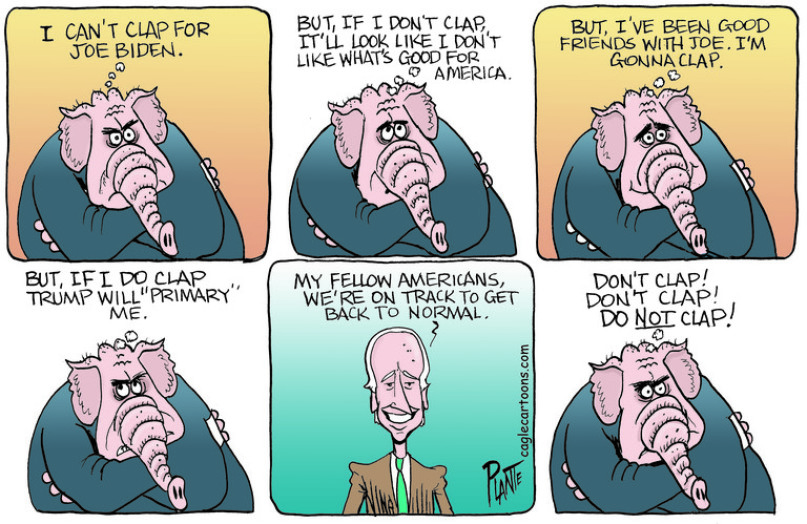
President Joe Biden’s address to a joint session Congress was the most ambitious ideological statement made by any Democratic president in decades—couched in language that made it sound as if he wasn’t making an ideological argument at all.
Make no mistake that he was. He called for trillions in new spending in a robust expansion of government’s role in multiple arenas of American life in ways that would have been impossible to contemplate in Barack Obama’s presidency. He plunged into subjects—racial and class inequities, immigration, gun violence—that were rubbed raw until bleeding in Donald Trump’s.
Usually these issues are framed with a question: Which side are you on? Though rarely described as gifted orator, Biden’s speech was a remarkable performance in part because it didn’t soar and largely didn’t even try to. In plain-spoken language, he depicted a breathtakingly large agenda as plain common sense. Instead of imploring partisans to take sides, he projected bewilderment that any practical-minded person of any persuasion could be opposed.
Under a pose of guilelessness, Biden’s speech was in fact infused with political guile. The agenda he promoted to expand both free pre-school and community college, to subsidize the shift to a low-carbon economy, to fund a massive way of new public works construction by taxing the very wealthy, represented years of pent-up demand by progressives. But much of the money would be spent in ways designed to break up the Trump coalition, which was powered heavily by middle- and lower-middle class whites who do not have college degrees with contempt for many parts of the progressive agenda.
Referring to his infrastructure proposal, Biden argued: “Nearly 90 percent of the infrastructure jobs created in the American Jobs Plan do not require a college degree. Seventy-five percent don’t require an associate’s degree. The American Jobs Plan is a blue-collar blueprint to build America.”
The bet is that material gains—i.e., a recovery that produces lots of working class jobs, and allows families to more easily educate their children—can trump the cultural grievances that sent many of these people into the conservative movement over the past two generations, beginning with George Wallace’s hardhat supporters and later becoming a flood of “Reagan Democrats.”
About half of Americans who watched President Joe Biden’s address to Congress had a very positive reaction to the speech, and 71% said they walked away feeling more optimistic about the country’s direction, according to a CNN Poll conducted by SSRS.
By a wide margin, speech-watchers said that Biden’s policy proposals would move the country in the right direction (73%) rather than the wrong direction (27%). In a survey conducted before the speech, the same people were a bit less bullish that Biden would lead in the right direction (67% right direction, 33% wrong direction), and that movement came from the independents and Republicans who watched the speech. Among Republicans, the share saying Biden’s policies would move the country in the right direction grew from 13% pre-speech to 27% post-speech, while among independents, that percentage rose from 61% to 73%.
That perception carries through to the major issues covered in the speech. More than 8 in 10 said Biden’s proposals on the coronavirus pandemic would move in the right direction (86%), and 74% said the same about racial injustice. Around 7 in 10 said the President’s policies on the economy (72%), gun laws (70%) and taxes (70%) were steps in the right direction. Slightly fewer said the same about immigration (65%).
And Biden’s focus on those issues appeared to hit the right mark for speech-watchers. Overall, 68% said Biden has had the right priorities so far as president, while 32% said he has not paid enough attention to the most important problems.
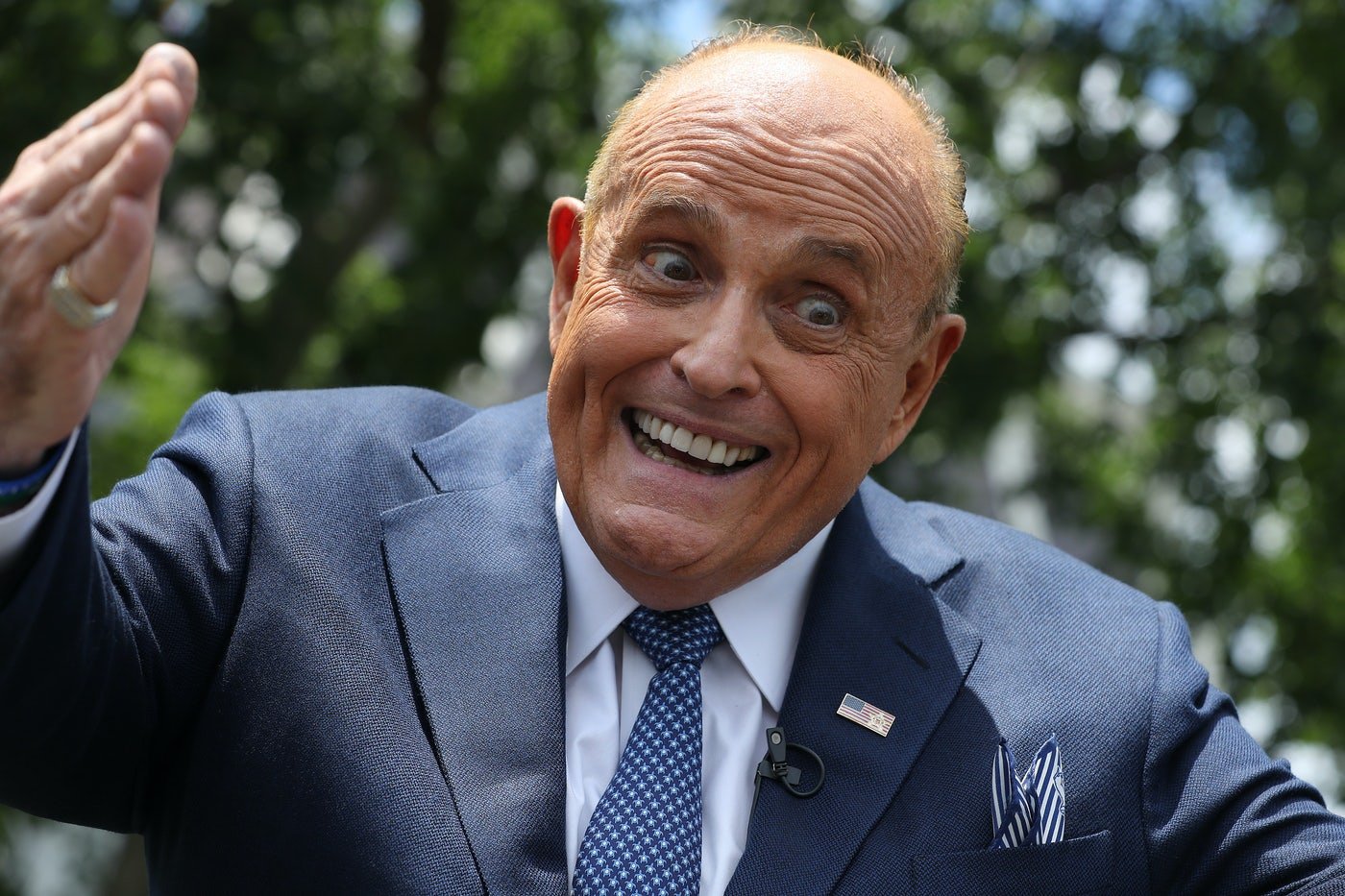
Federal investigators searched Rudy Giuliani’s home and office in Manhattan on Wednesday, executing search warrants as part of an investigation into his business dealings in Ukraine, reports The New York Times.
The former New York City mayor and personal lawyer to former President Donald Trump is being investigated over possible illegal lobbying on behalf of Ukrainian officials and his efforts to dig up dirt on Trump’s political rivals. “Executing a search warrant is an extraordinary move for prosecutors to take against a lawyer, let alone a lawyer for a former president,” writes the Times. “While the warrants are not an explicit accusation of wrongdoing against Mr. Giuliani, it shows that the investigation has entered an aggressive new phase.”
Experts agreed the search represented very serious stakes for Giuliani. Former U.S. attorney Harry Litman wrote that “this means that a magistrate judge has found probable cause to believe that [Giuliani’s actions in Ukraine] were criminal.” As the Times writes, “to obtain a search warrant, investigators need to persuade a judge they have sufficient reason to believe that a crime was committed and that the search would turn up evidence of the crime.”
Federal prosecutor and legal analyst Shanlon Wu called the search an “extraordinary step,” and wrote that “no amount of hot air and ranting is going to help Rudy Giuliani now.”
Litman continued: “I don’t know offhand the percentage of people whose [apartments] are searched by warrant who are then indicted … but it’s high, and given Giuliani’s profile, it has to be higher [because] they would be more careful and get lots of approvals.”
The search warrant was reportedly a long time coming, and politics may have slowed it down. The process was delayed for the presidential election so as not to sway voters, and Trump appointees at the DOJ reportedly managed to temporarily block the warrant while Trump was still in office.
I spoke with Preet Bharara, who served as the U.S. Attorney for the district from 2009 to 2017 — and whose podcast, Stay Tuned, was recently acquired by Vox Media — about Giuliani’s predicament and where the investigation might go next.
How significant is this move by the Feds from your perspective? How much legal danger does Giuliani face here? I think it’s extremely significant. I’m not one to say that when routine subpoenas are issued or interviews are conducted, but here you have a very prominent person — not just the former lawyer to the president of the United States but also the former U.S. Attorney of the office that’s involved in the investigation. The fact that you execute a warrant on someone’s residence does not necessarily mean there will be a charge, but given the circumstances, given the identity of Mr. Giuliani, given what you have to show to get a judge to authorize the warrant and the search — that’s a sign that he’s in deep trouble. We saw this play out with respect to Michael Cohen and to Paul Manafort. Very prominent targets, very sensitive cases. Both of those men were charged.
The two people you just cited also both went to prison. Is that where this could be going?
I used to head that office, and there are search warrants that get executed on people’s premises and their offices, and no charges follow. That happens, and Giuliani is presumed to be innocent. But what’s likely is that there has already been substantial investigation. The reporting was that they tried to execute these searches when Trump was in office, and they were stymied by higher-ups in the Justice Department. Bear in mind, they’re probably far along, given what showing they have to make of probable cause to do these searches in the first place. They likely already have a lot of Rudy Giuliani’s communications. You don’t need to have his devices in your possession to have email records; those are obtained from third parties, and they probably have all of that. It’s anyone’s guess what the charges will be and when they will come. But in my experience, when you do something like this, that you know will have a reputational effect on the subject, you’re usually thinking there’s a good likelihood of a charge.
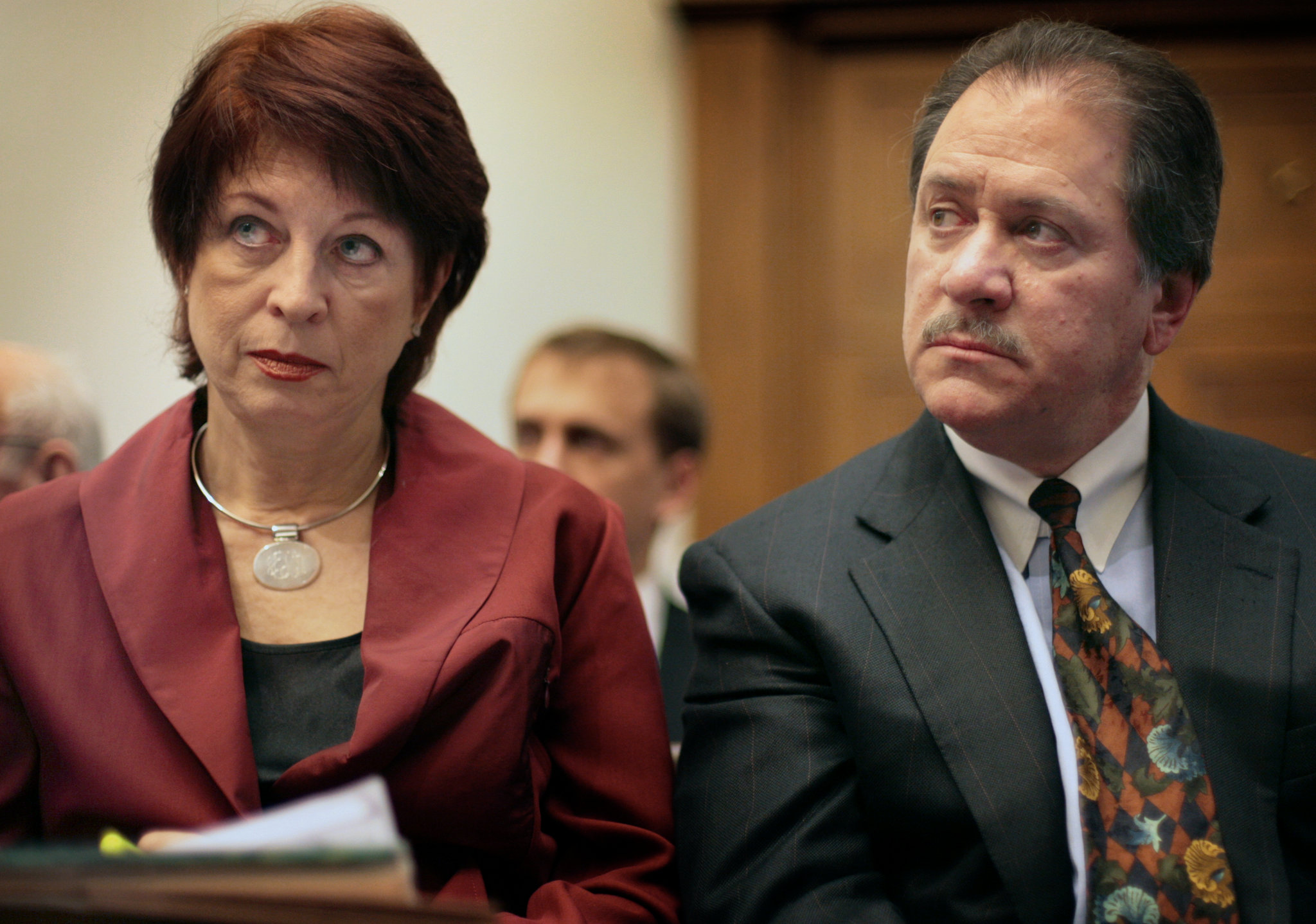
It hasn’t been as widely reported, but it’s also significant that the Feds searched the home of another Trump-associated attorney, Victoria Toensing. Nicholas Reimann at Forbes: Feds Search Giuliani’s, Toensing’s Properties As Part Of Ukraine Investigation.
Federal investigators searched Rudy Giuliani’s Manhattan apartment on Wednesday and later searched the home of attorney Victoria Toensing as part of a probe into whether Giuliani acted on behalf of Ukrainian oligarchs to illegally lobby the Trump Administration, according to multiplereports, with investigators said to have seized electronic devices.
Hold the phone — FBI now at Victoria Toensing's house. Lawyer, wife and partner of Joseph DiGenova, same circles as Rudy and Trump. This has the hallmarks of a bigger day at DOJ. And she's probably not expecting it, unlike Rudy
F.B.I. agents also executed a search warrant on Wednesday morning at the Washington-area home of Victoria Toensing, a lawyer close to Mr. Giuliani who had dealings with several Ukrainians involved in the hunt for information on the Bidens, according to people with knowledge of that warrant. The warrant was for her cellphone.
Ms. Toensing, a former Justice Department official, has also represented Dmitry Firtash, a Ukrainian oligarch under indictment in the United States whose help Mr. Giuliani sought.
The Sky Dancing banner headline uses a snippet from a work by artist Tashi Mannox called 'Rainbow Study'. The work is described as a" study of typical Tibetan rainbow clouds, that feature in Thanka painting, temple decoration and silk brocades". dakinikat was immediately drawn to the image when trying to find stylized Tibetan Clouds to represent Sky Dancing. It is probably because Tashi's practice is similar to her own. His updated take on the clouds that fill the collection of traditional thankas is quite special.
You can find his work at his website by clicking on his logo below. He is also a calligraphy artist that uses important vajrayana syllables. We encourage you to visit his on line studio.









 Public health experts remain cautious, but said that while they still expect significant local and regional surges in the coming weeks, they do not think they will be as widespread or reach past peaks.











 Make no mistake that he was. He called for trillions in new spending in a robust expansion of government’s role in multiple arenas of American life in ways that would have been impossible to contemplate in Barack Obama’s presidency. He plunged into subjects—racial and class inequities, immigration, gun violence—that were rubbed raw until bleeding in Donald Trump’s.
 By a wide margin, speech-watchers said that Biden’s policy proposals would move the country in the right direction (73%) rather than the wrong direction (27%). In a survey conducted before the speech, the same people were a bit less bullish that Biden would lead in the right direction (67% right direction, 33% wrong direction), and that movement came from the independents and Republicans who watched the speech. Among Republicans, the share saying Biden’s policies would move the country in the right direction grew from 13% pre-speech to 27% post-speech, while among independents, that percentage rose from 61% to 73%.
 Experts agreed the search represented very serious stakes for Giuliani. Former U.S. attorney Harry Litman
  How significant is this move by the Feds from your perspective? How much legal danger does Giuliani face here?
 F.B.I. agents also executed a search warrant on Wednesday morning at the Washington-area home of Victoria Toensing, a lawyer close to Mr. Giuliani who had dealings with several Ukrainians involved in the hunt for information on the Bidens, according to people with knowledge of that warrant. The warrant was for her cellphone.
 peej
peej Carissa
 bostonboomer
 dakinikat
 ecocatwoman
 jjlo
jjlo mablue2
 Mama Lopez
 peggysue22
 quixote
 skydancingguestblogger
 Mona (aka Wonk the Vote)





Recent Comments