Posted: January 6, 2022 | Author: bostonboomer | Filed under: morning reads | Tags: Capitol insurrection, Donald Trump, January 6 anniversary, Joe Biden, Mike Pence, Stephanie Grisham, U.S. democracy |
Good Morning!!
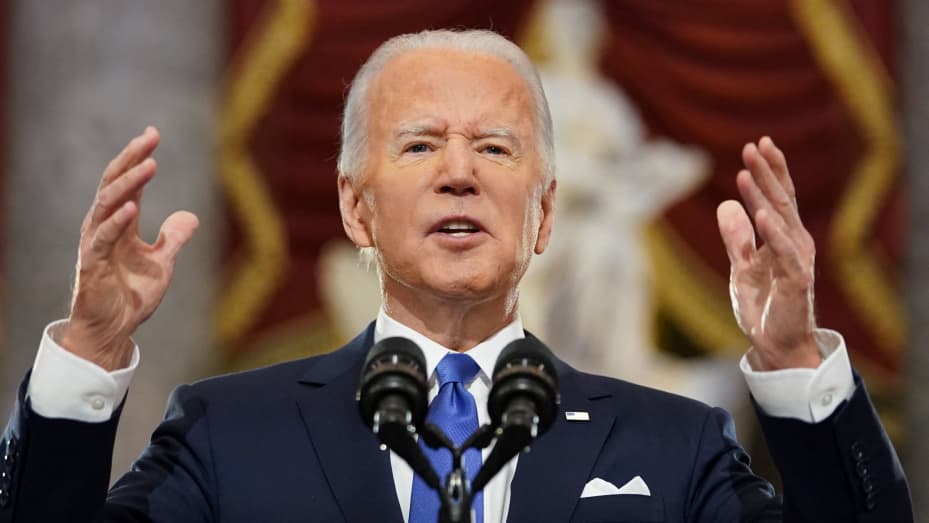 President Joe Biden today specifically held his predecessor responsible for the violent attack on the U.S. Capitol one year ago today. Without naming him, Biden called Trump a liar who cares more about his own “bruised ego” than about our democracy or the Consitution.
The Washington Post provides excerpts: On Jan. 6 anniversary, Biden calls out Trump for ‘web of lies’ about 2020 election.
In a searing speech, Biden marked the first anniversary of the insurrection at the U.S. Capitol by painting in vivid detail the violence of that day — and, without naming Trump, by squarely blaming the former president for spreading “a web of lies” about the 2020 election.
“One year ago today, in this sacred place, democracy was attacked, simply attacked,” Biden said. “The will of the people was under assault. The Constitution, our Constitution, faced the gravest of threats.”
Throughout the speech, Biden did not mention Trump by name but constantly referred to him as the former president.
“For the first time in our history, a president had not just lost an election: He tried to prevent the peaceful transfer of power as a violent mob breached the Capitol,” Biden said. “But they failed.”
Biden said Americans must ensure such an attack never happens again.
“Here is the truth: The former president of the United States of America has created and spread a web of lies about the 2020 election,” Biden said. “He’s done so because he values power over principle … because he sees his own interest as more important than his country’s interest and America’s interest, and because his bruised ego matters more to him than our democracy or our Constitution. He can’t accept he lost.”
More excerpts from the speech at the WaPo: ‘I will allow no one to place a dagger at the throat of democracy,’ Biden says.
In his remarks at the Capitol Thursday morning, Biden vowed to defend American democracy and said that Jan. 6 represents not its end but rather a rebirth of “liberty and fair play.”
“You can’t love your country only when you win,” Biden said. “You can’t obey the law only when it’s convenient. You can’t be patriotic when you embrace and enable lies.”\Those who stormed the Capitol and those who called on them to do so, Biden said, “held a dagger at the throat of … American democracy.”
“They didn’t come here out of patriotism or principle. They came here in rage — not in service of America, but rather in service of one man,” Biden said.
He added: “I did not seek this fight brought to this Capitol one year ago today. But I will not shrink from it, either. I will stand in this breach. I will defend this nation, and I will allow no one to place a dagger at the throat of democracy.”
Trump has already responded to Biden’s speech. I won’t quote from his childish statement, but you can read it at The Independent.
More on this Biden’s speech from The Boston Globe: ‘We the people endured.’ Biden, Harris mark a year since violent insurrection.
President Joe Biden on Thursday delivered what he declared was the “God’s truth” marking the first anniversary of the U.S. Capitol insurrection, the violent attack by Donald Trump’s supporters that has fundamentally changed Congress and raised global concerns about the future of American democracy.
Biden’s criticism was particularly blistering of then-President Trump and his violent supporters.
“For the first time in our history, a president not just lost an election, he tried to prevent the peaceful transfer of power as a violent mob breached the Capitol,” Biden said. “But they failed.”
“I will stand in this breach,” he declared, his voice rising.
“Democracy was attacked,” Biden said at the Capitol. “We the people endure. We the people prevailed.”
The president and congressional Democrats started the day in Statuary Hall, one of several spots where rioters swarmed a year ago and interrupted the electoral count. Biden drew a contrast between the truth of what happened and the false narratives that have sprung up about the Capitol assault, including the continued refusal by many Republicans to affirm that Biden won the 2020 election.
“You and I and the whole world saw with our own eyes,” Biden said.
He asked those listening to close their eyes and recall what they saw that day, as he described the harrowing, violent scene, the mob attacking police, threatening the House speaker, erecting gallows threatening to hang the vice president — all while then-President Trump sat at the White House watching it on TV.
“Here is the God’s truth about Jan. 6, 2021,” Biden said. “They were looking to subvert the Constitution.”
“We must be absolutely clear about what is true and what is a lie. Here’s the truth,” he said. “The former president of the United States of America has spread a web of lies about the 2020 election.”
From Jonathan Karl, author of Betrayal, a book on the last days of the Trump administration: Beyond the riot, Jan. 6 was a dangerously close call. How Trump’s plot nearly succeeded: ANALYSIS.
Two weeks after the Jan. 6 insurrection , Donald Trump walked out of the White House and Joe Biden became the 46th president of the United States. Trump had attempted to use the full power of the presidency and his position as the leader of the Republican Party to stay in power, but he failed. Democracy succeeded. Joe Biden became president, on schedule and without incident, at noon on Jan. 20, 2021.
But this was a close call. Attempts by Trump and his followers to overturn the results of the 2020 election — multi-dimensional efforts of which the assault on the Capitol building was only one element — came dangerously close to succeeding.
Consider, for example, Donald Trump’s demand that Vice President Mike Pence act to nullify Biden’s victory on Jan. 6. Trump wanted Pence to use his power as the presiding officer during the joint session of Congress that day to toss out Biden’s electoral votes in states Trump had contested. On its face, the idea of giving one person the power to overturn the votes of millions of Americans was absurd. And outside of a few fringe lawyers advising Trump, constitutional scholars agreed that Pence had no authority to do what Trump was demanding.
But what if Pence had followed Trump’s order? What would have happened if he had brought the gavel down during the joint session on Jan. 6 and thrown out Biden’s electoral votes in the states Trump had contested? What if he had declared Trump the winner of those states?
J. Michael Luttig, a former federal appellate judge popular among conservatives, had advised Pence he would be violating the Constitution if he followed Trump’s order, and Luttig tells ABC News that if Pence had attempted to do it, he would have “plunged the country into a constitutional crisis of the highest order.”
While it may be clear that Pence did not have the authority to unilaterally reject electoral votes, it is unclear who would have had the authority to overrule him. Some have suggested the matter would simply have had to be resolved by the Supreme Court, but it is unclear the justices would have agreed to decide such a case because the Constitution arguably leaves it up to Congress to decide its own rules for counting contested electoral votes.
“It would have presented America, and the three branches of our government in particular, with what each branch would have viewed as seemingly irresolvable constitutional issues,” Luttig said.
Luttig believes the Supreme Court would have ultimately taken up the issue, but, he says, with no explicit constitutional authority to do so, it’s not certain the justices would have agreed to resolve the dispute.
“Had the Supreme Court refused to decide these issues,” Luttig told ABC News, “the country and our democracy would have spiraled into a chaos from which neither would have soon recovered, literally jeopardizing our national security. The legitimacy of our democracy would have been forever drawn into doubt and its luster could never have been restored.”
Read the rest at ABC News.
Yesterday former Trump family insider Stephanie Grisham appeared before the January 6 committee. This morning she was on CNN’s New Day talking about Trump and the gang.
From The Daily Beast: Trump Enjoyed Riot So Much He Rewound TV to Watch It Twice, Ex-Aide Says.
Donald Trump had such a good time watching the Capitol riot unfold on live TV that he rewound the coverage to watch it twice, according to his former press secretary Stephanie Grisham. Speaking to CNN from Washington, D.C. on the first anniversary of the riot, Grisham recalled that Trump was in the White House dining room as the insurrection unfolded. “He was in the dining room gleefully watching on his TV as he often did, [saying] ‘Look at all the people fighting for me,’ hitting rewind, watching it again, that’s all that I know,” said the former press secretary. Grisham also repeated her claim that former first lady Melania Trump did nothing to persuade her husband to call off his supporters from their attack on the Capitol and lawmakers inside, and announced that a group of unnamed ex-Trump administration officials plan to meet next week to talk about a plan to stop Trump in his quest to “manipulate people and divide our country.”
More from Grishom’s CNN appearance:
Mike Pence insiders are also speaking to the January 6 committee. Axios: Scoop: Mike Pence’s team helping Jan. 6 committee.
People in and around former Vice President Mike Pence’s office have been particularly cooperative as the Jan. 6 select committee focuses on what former President Trump was doing during the more than three hours the Capitol was under attack, sources familiar with the testimony tell Axios.
Why it matters: At the one-year mark of the insurrection, the committee is piecing together a definitive timeline of how Trump resisted pleas from his own advisers, allies, family members and lawmakers to halt the violence down Pennsylvania Avenue.
- The committee is ramping up its closed-door work with the goal of holding public hearings as early as this spring.
Some Pence-world witnesses have testified without a subpoena, according to one source with direct knowledge of the closed-door hearings.
- Both Pence’s former chief of staff Marc Short, and former press secretary Alyssa Farah, who later served as White House communications director, are among those cooperating with the committee.
- Keith Kellogg also has given a deposition.
- One source familiar with their involvement said Short, who was subpoenaed by the committee, would not have cooperated without the approval of Pence.
What we’re hearing: Some of the most helpful information has come from second- and third-tier administration staff who were not directly involved but were at the White House on Jan. 6 and had access to top administration officials, sources tell Axios.
- They’ve been integral to helping piece together exactly what happened that day, one committee aide said.
- Many of those officials met solely with the committee’s Republican members, Reps. Liz Cheney (R-Wyo.) and Adam Kinzinger (R-Ill.), two sources with direct knowledge said.
- Some also have testified together with their former colleagues.
What they’re saying: Farah, who spoke with the committee on several occasions last year, told Axios:
- “From the two I was in, you could see how much information they already had.
- “Those who are refusing to cooperate likely are doing so out of complete fealty to Donald Trump and not wanting to piss him off.
- “But, secondarily, because they’re realizing the committee has quite a bit more information than they realized. And their involvement is known to a much greater degree than they realized.”
From CNN: Cheney said the January 6 committee ‘looks forward to’ cooperation from Mike Pence and his team.
This could be an interesting day. I haven’t been watching a lot of TV lately, but I may do so today. There is a lot going on.
What are your thoughts on the anniversary of January 6?
Did you like this post? Please share it with your friends:
Posted: December 16, 2021 | Author: bostonboomer | Filed under: just because, morning reads | Tags: bell hooks, coronavirus pandemic, Covid-19, feminism, January 6 investigation, Omicron variant |
Good Morning!!
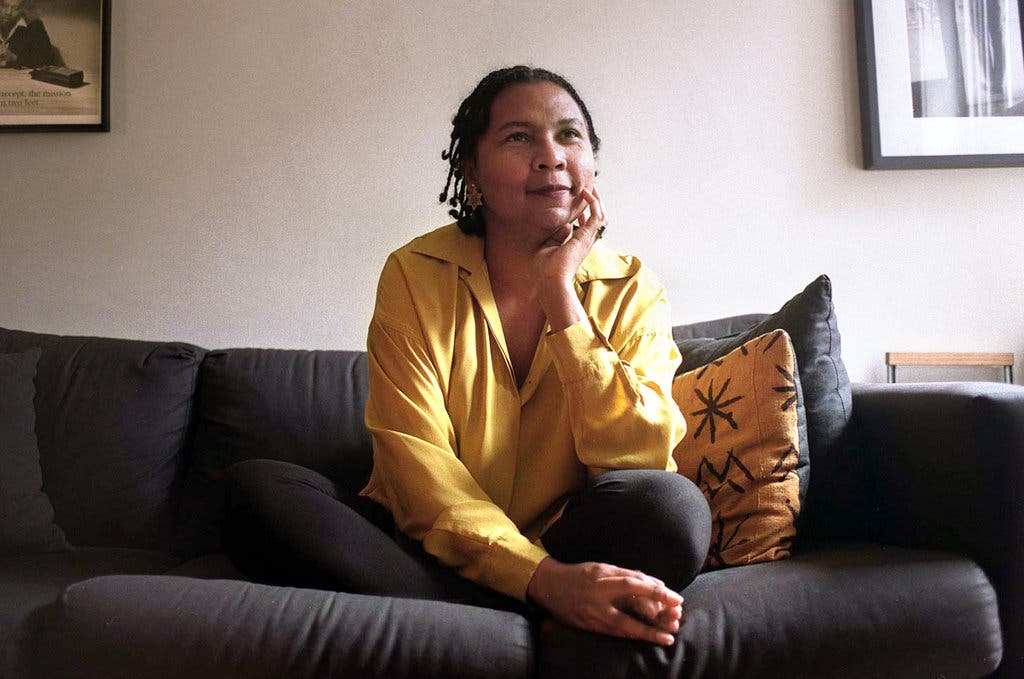
Yesterday we lost bell hooks (born Gloria Watkins), feminist theorist, poet, and activist.
I’m ashamed to admit that I’ve never read her work, but I was impressed by what I read about hooks this morning. Dakinikat was inspired by her, so perhaps she will share her thoughts today and/or tomorrow.
Lucy Knight at The Guardian: bell hooks, author and activist, dies aged 69.
Gloria Jean Watkins, better known by her pen name bell hooks, has died aged 69.
Her niece Ebony Motley tweeted: “The family of @bellhooks is sad to announce the passing of our sister, aunt, great aunt and great great aunt.”
She also attached a statement, which said that “the family of Gloria Jean Watkins is deeply saddened at the passing of our beloved sister on December 15, 2021. The family honored her request to transition at home with family and friends by her side.”
The author, professor and activist was born in Hopkinsville, Kentucky in 1952, and published more than 30 books in her lifetime, covering topics including race, feminism, capitalism and intersectionality.
She adopted her maternal great-grandmother’s name as a pen name, since she so admired her, but used lowercase letters to distinguish herself from her family member. hooks’ first major work, Ain’t I a Woman?, was published in 1981, and became widely recognised as an important feminist text. It was named one of the 20 most influential women’s books in the last 20 years by Publishers Weekly in 1992.
She went on to write Feminist Theory: From Margin to Center in 1984, All About Love: New Visions in 2000 and We Real Cool: Black Men and Masculinity in 2004, continuing to draw on themes of feminism, race, love and gender.
Since 2004, she taught at Berea College in Kentucky, a liberal arts college that offers free tuition.
In 2016 hooks wrote in the Guardian that Beyoncé’s album Lemonade was “capitalist money-making at its best”, but criticised the notion of “freedom” depicted in the lyrics. “To truly be free,” wrote hooks, “we must choose beyond simply surviving adversity, we must dare to create lives of sustained optimal wellbeing and joy.”
“I want my work to be about healing,” she said in 2018 when she was inducted into the Kentucky Writers’ Hall of Fame. “I am a fortunate writer because every day of my life practically I get a letter, a phone call from someone who tells me how my work has transformed their life.”
 From The Literary Hub:
hooks’s first published work of theory, Ain’t I A Woman: Black Women and Feminism, was published when she was 29 but written when she was an undergraduate, launching a four-decade-long career of writing and teaching, with a focus on classroom accessibility. hooks’s extensive body of scholarship and poetry—that remains and will continue to remain relevant—was consistent in its generosity, emphasizing the importance of loving communities to challenging systemic inequalities. Hooks believed a “militant commitment to feminism” was not at all at odds with joy and humor; in fact, that love “is the necessary foundation enabling us to survive the wars, the hardships, the sickness, and the dying with our spirits intact.” As she told The New York Times in 2015,
“We cannot have a meaningful revolution without humor. Every time we see the left or any group trying to move forward politically in a radical way, when they’re humorless, they fail. Humor is essential to the integrative balance that we need to deal with diversity and difference and the building of community. For example, I love to be in conversation with Cornel West. We always go high and we go low, and we always bring the joyful humor in. The last talk he and I gave together, many people were upset because we were silly together. But I consider it a high holy calling that we can be humorous together. How many times do we see an African-American man and an African-American woman talking together, critiquing one another, and yet having delicious, humorous delight? It’s a miracle.”
hooks’s family said contributions and memorials can be made to the Christian County Literacy Council, which promotes reading for children, or the Museums of Historic Hopkinsville Christian County, where a biographical exhibit is on display.
From the New Yorker piece:
I came to her work in the mid-nineties, during a fertile era of Black cultural studies, when it felt like your typical alternative weekly or independent magazine was as rigorous as an academic monograph. For hooks, writing in the public sphere was just an application of her mind to a more immediate concern, whether her subject was Madonna, Spike Lee, or, in one memorably withering piece, Larry Clark’s “Kids.” She was writing at a time when the serious study of culture—mining for subtexts, sifting for clues—was still a scrappy undertaking. As an Asian American reader, I was enamored with how critics like hooks drew on their own backgrounds and friendships, not to flatten their lives into something relatably universal but to remind us how we all index a vast, often contradictory array of tastes and experiences. Her criticism suggested a pulsing, tireless brain trying to make sense of how a work of art made her feel. She modelled an intellect: following the distant echoes of white supremacy and Black resistance over time and pinpointing their legacies in the works of Quentin Tarantino or Forest Whitaker’s “Waiting to Exhale.”
Yet her work—books such as “Reel to Real” or “Art on My Mind,” which have survived decades of rereadings and underlinings—also modelled how to simply live and breathe in the world. She was zealous in her praise—especially when it came to Julie Dash’s “Daughters of the Dust,” a film referenced countless times in her work—and she never lost grasp of how it feels to be awestruck while standing before a stirring work of art. She couldn’t deny the excitement as the lights dim and we prepare to surrender to the performance. But she made demands on the world. She believed criticism came from a place of love, a desire for things worthy of losing ourselves to….
This has been a particularly trying time for critics who came of age in the eighties and nineties, as giants like hooks, Greg Tate, and Dave Hickey have passed. hooks was a brilliant, tough critic—no doubt her death will inspire many revisitations of works like “Ain’t I a Woman,” “Black Looks,” or “Outlaw Culture.” Yet she was also a dazzling memoirist and poet. In 1982, she published a poem titled “in the matter of the egyptians” in Hambone, a journal she worked on with her then partner, Nathaniel Mackey. It reads:
ancestral bodies
buried in sand
sun treasured flowers
press in a memory book
they pass through loss
and come to this still tenderness
swept clean by scarce winds
surfacing in the watery passage
beyond death
I enjoyed reading this piece from 2019 by Min Jin Lee in The New York Times: In Praise of bell hooks.
In 1987, I was a sophomore at Yale. I’d been in the United States for 11 years, and although I was a history major, I wanted to read novels again. I signed up for “Introduction to African-American Literature,” which was taught by Gloria Watkins, an assistant professor in the English department, and she was such a wonderful teacher that I signed up for her other class, “Black Women and Their Fiction.”
 Gloria — as we were allowed to address her in the classroom — had a slight figure with elegant wrists that peeked out of her tunic sweater sleeves. She was soft-spoken with a faint Southern accent, which I attributed to her birthplace, Hopkinsville, Ky. She was in her mid-30s then but looked much younger. Large, horn-rimmed glasses framed the open gaze of her genuinely curious mind. You knew her classes were special. The temperature in the room seemed to change in her presence because everything felt so intense and crackling like the way the air can feel heavy before a long-awaited rain. It wasn’t just school then. No, I think, we were falling in love with thinking and imagining again….
I was 19 when I took hooks’s classes, and I was just becoming a young feminist myself. I had begun my study of feminism with Mary Wollstonecraft, Charlotte Perkins Gilman, Susan B. Anthony, Elizabeth Cady Stanton, Virginia Woolf, Betty Friedan and Gloria Steinem, among other white women, and perhaps, because I was foreign-born — rightly or wrongly — I had not expected that people like me would be included in their vision of feminist liberation. Women and men of Asian ethnicities are so often neglected, excluded and marginalized in the Western academy, so as a college student I’d no doubt internalized my alleged insignificance. bell hooks changed my limited perception.
Her book of theory taught me to ask for more from art, literature, media, politics and history — and for me, a Korean girl who had been born in a divided nation once led by kings, colonizers, then a succession of presidents who were more or less dictators, and for millenniums, that had enforced rigid class systems with slaves and serfs until the early 20th century, and where women of all classes were deeply oppressed and brutalized, I needed to see that the movement had a space for me.
What else is in the news? January 6 and the never ending pandemic.
January 6: Could it be that the investigation is really heating up?
David Rohde at The New Yorker: Is There a Smoking Gun in the January 6th Investigation?
William Saletan at Slate: The Chilling Lesson of Mark Meadows’ Text Messages.
The New York Times: Meadows and the Band of Loyalists: How They Fought to Keep Trump in Power.https://www.nytimes.com/2021/12/15/us/politics/trump-meadows-republicans-congress-jan-6.html
Kyle Cheney at Politico: The Jan. 6 puzzle piece that’s going largely ignored.
Kyle Cheney at Politico: Jan. 6 investigators mull whether Trump violated obstruction law.
CNN: Jim Jordan sent one of the texts revealed by January 6 committee.
The Washington Post: Role as Trump’s gatekeeper puts Meadows in legal jeopardy — and at odds with Trump.
Georgia Public Radio: Exclusive: More Georgia Secretary of State’s office officials interviewed by Jan. 6 committee.
The never ending pandemic
CNBC: Omicron symptoms could seem like a cold — but don’t underestimate this variant, experts warn.
AP via KTLA: U.S. faces a double coronavirus surge as omicron variant advances.
Ian Bogost at The Atlantic: I’m Starting to Give Up on Post-pandemic Life.
Yasmin Tayag at The Atlantic: Don’t Be Surprised When You Get Omicron.
Ed Yong at The Atlantic: America Is Not Ready for Omicron. The new variant poses a far graver threat at the collective level than the individual one—the kind of test that the U.S. has repeatedly failed.
Have courage and enjoy the present moment. There’s no telling what will happen next.
Did you like this post? Please share it with your friends:
Posted: November 23, 2021 | Author: bostonboomer | Filed under: morning reads | Tags: abortion, Bob Dylan, CIA, Darrell Brooks Jr., Jefferson Morley, JFK assassination, National Archives and Records Administration, Roe v Wade, SCOTUS, Waukesha parade |

Le Petit Dejeuner, by Jacque Denier
Good Morning!!
Yesterday was the 58th anniversary of the assassination of President John F. Kennedy. After all this time, the CIA is still concealing their records of that awful day. Joe Biden went along with their excuses last month. This is from Jefferson Morley, a journalist who has published three books about the CIA and the JFK assassination and has another coming out next year on the CIA and Watergate.
Politico: What Biden is keeping secret in the JFK files.
President Joe Biden has once again delayed the public release of thousands of government secrets that might shed light on the 1963 assassination of President John F. Kennedy.
“Temporary continued postponement is necessary to protect against identifiable harm to the military defense, intelligence operations, law enforcement, or the conduct of foreign relations that is of such gravity that it outweighs the public interest in immediate disclosure,” Biden wrote in a presidential memorandum late Friday.
He also said that the National Archives and Records Administration, the custodian of the records, needs more time to conduct a declassification review due to delays caused by the coronavirus pandemic.
The decision, which follows a delay ordered by President Donald Trump in 2017, means scholars and the public will have to wait even longer to see what remains buried in government archives about one of the greatest political mysteries of the 20th century. And the review process for the remaining documents means Biden can hold the release further if the CIA or other agencies can convince him they reveal sensitive sources or methods.
Fifty-eight years later? As Biden likes to say, “C’mon man!”
Public opinion polls have long indicated most Americans do not believe the official conclusion by the Warren Commission that the assassination was the work of a single gunman, Lee Harvey Oswald, a former Marine who once defected to the Soviet Union and who was shot to death by a nightclub owner Jack Ruby while in police custody.
A special House committee in 1978 concluded “on the basis of the evidence available to it, that President John F. Kennedy was probably assassinated as a result of a conspiracy.”

By Antonella Lucarella Masetti
But longtime researchers almost uniformly agree that what is still being shielded from public view won’t blow open the case.
“Do I believe the CIA has a file that shows former CIA Director Allen Dulles presided over the assassination? No. But I’m afraid there are people who will believe things like that no matter what is in the files,” said David Kaiser, a former history professor at the Naval War College and author of “The Road to Dallas.”
His book argued that Kennedy’s murder cannot be fully understood without also studying two major U.S. intelligence and law enforcement campaigns of the era: Attorney General Robert Kennedy’s war on organized crime and the CIA’s failed efforts to kill communist dictator Fidel Castro in Cuba (with the Mafia’s help).
Still, Kaiser and other experts believe national security agencies are still hiding information that shows how officials actively stonewalled a full accounting by Congress and the courts and might illuminate shadowy spy world figures who could have been involved in a plot to kill the president.
Yesterday, Morley posted this interesting piece at Literary Hub: What Bob Dylan Does—Or Doesn’t—Know About the Assassination of JFK. Jefferson Morley Revisits the Nobel Laureate’s Recent No. 1, “Murder Most Foul.”
Also yesterday, Michael Bechloss posted Jack Kennedy’s final words from a speech he intended to give on the night of November 22, 1963. These words are relevant to our situation today.
We now have more information about the man who drove through a parade In Waukesha, Wisconsin on Sunday, leaving 5 dead so far and many more injured. He had been let out of jail on a very low bond after a “domestic violence” incident in which he drove over the mother of his child in a gas station, where he followed her after they had a fight. Police say he “intentionally” drove into the parade.
Milwaukee Journal-Sentinel: Darrell Brooks is the suspect in the Waukesha Christmas Parade incident. The Milwaukee man has been charged with crimes 10 times since 1999.
The driver who plowed through a Christmas parade in downtown Waukesha, killing five people and injuring nearly 50, did so intentionally and is expected to face first-degree homicide counts and other charges, police said Monday.
The suspect, Darrell Brooks Jr., 39, recently had been released from custody in a strikingly similar case, in which he was accused of driving over a woman during a domestic dispute, sending her to the hospital and leaving tire marks on her pant leg.
The Milwaukee County District Attorney’s Office, which is prosecuting that case, said Monday it was launching an internal review of a prosecutor’s “inappropriately low” $1,000 bail recommendation. The bail amount was signed off on by a court commissioner.

Woman Reading, Henri Matisse
The horrific scene Sunday evening tore at the heart of the Waukesha community and rippled outward from the Norman Rockwell-style parade that has been a six-decade tradition. At least 18 children were among the injured, 10 of whom remained in Children’s Wisconsin’s intensive care unit….
Investigators learned Brooks was involved in a “domestic disturbance” before he drove into the parade route, the chief said. There was a report of a knife being involved, but police were unable to confirm that as of Monday afternoon, he added.
Thompson said a police chase did not lead to the driver’s actions but Thompson said he would not be providing more details about the suspect’s motivations at this point. The chief said there was no sign the event was an act of domestic terrorism. Waukesha prosecutors expect to file formal charges Tuesday.
Courts never seem to take “domestic” violence seriously, and so often that attitude leads to death and destruction. Read about the victims of the tragic incident in this Journal Sentinel article: What we know so far about the five victims of the Waukesha Christmas Parade.
On December 1 the Supreme Court will hear arguments about the Mississippi abortion law that could end Roe v. Wade.
William Saletan at Slate: Republicans Will Be Sorry If the Supreme Court Overturns Roe.
Next week, the Supreme Court will hear arguments in a case that could overturn Roe v. Wade. The suit, Dobbs v. Jackson Women’s Health Organization, involves a Mississippi law that bans most abortions after 15 weeks of pregnancy, about two months earlier than states can currently prohibit abortions under Roe. The statute’s defenders have suggested that a 15-week ban would enjoy wide public backing. In an amicus brief, for instance, 44 senators and 184 members of the House assured the justices that “two-thirds or more of Americans support limiting abortion after twelve weeks’ gestation.” And some scholars have argued in op-eds that a “moderate ruling,” upholding the Mississippi law and setting a 15-week limit, could establish a “new equilibrium.”
Don’t count on it. Many Americans would support a law like Mississippi’s, but they’re not a majority. If the court uses this case to overturn Roe, it’s likely to trigger a voter backlash next year.
The Mississippi case has been overshadowed in recent months by Texas’ law banning abortion after six weeks….most Americans think a six-week limit is too severe. They reject it even when they’re told that by six-to-eight weeks “a fetal heartbeat is detectable.” [….]

Woman Reading, by Rada Vucinic
Saletan cites multiple polls to show that the majority of Americans would not support a ban on abortion.
….In Economist/YouGov polls, the Texas law loses by about 13 points, but respondents are almost evenly divided on the Mississippi law, with support and opposition in the low 40s. In A Yahoo! News/YouGov poll, respondents opposed the Texas law, 50 percent to 33 percent, but they tilted in favor of the Mississippi law, 39 percent to 33 percent. A Marquette University Law School poll found almost the same gap, with respondents in favor of upholding a 15-week ban, 40 percent to 34 percent.
If you look closely at these numbers, however, you’ll see something missing. While more than 50 percent of Americans say abortion should be illegal at three months, only about 40 percent endorse Mississippi’s ban at 15 weeks—which is later than three months. A crucial segment of the public, about 10 percent to 15 percent, flinches when the question stops being hypothetical and gets real. Why?
The simplest explanation is that many Americans are uncomfortable with banning abortion, even when they are personally opposed to it. They don’t like the procedure, but they don’t like the government getting involved, either. Two weeks ago, in a Washington Post-ABC News poll, 75 percent of voters said abortion decisions should be “left to the woman and her doctor” rather than “regulated by law.” In a Data for Progress survey, 66 percent of likely voters chose a pro-choice statement—“The government should not interfere in personal matters like reproductive rights”—while 26 percent chose the pro-life alternative: “The government should be able to make decisions about reproductive rights, especially when it involves protecting the sanctity of human life.” In a Navigator poll, 33 percent of voters identified themselves as pro-life, but 60 percent identified themselves as pro-choice.
If abortion is banned, writes Saletan, there will be a serious backlash and the “political energy” on the issue “will shift to the left.”
Could we really be headed back to the way it was when I was a young woman? Reuters: In Supreme Court abortion case, the past could be the future.
OXFORD, Miss., Nov 23 (Reuters) – Just months before she was set to start law school in the summer of 1973, Barbara Phillips was shocked to learn she was pregnant.
Then 24, she wanted an abortion. The U.S. Supreme Court had legalized abortion nationwide months earlier with its landmark Roe v. Wade ruling recognizing a woman’s constitutional right to terminate a pregnancy. But abortions were not legally available at the time in Mississippi, where she lived in the small town of Port Gibson.
Phillips, a Black woman enmeshed in the civil rights movement, could feel her dream of becoming a lawyer slipping away.

Kenne Gregoire, Book
“It was devastating. I was desperate,” Phillips said, sitting on the patio of her cozy one-story house in Oxford, a college town about 160 miles (260 km) north of Jackson, Mississippi’s capital.
At the time of the Roe ruling, 46 of the 50 U.S. states had some sort of criminal prohibitions on abortion. Access often was limited to wealthy and well-connected women, who tended to be white.
With a feminist group’s help, Phillips located a doctor in New York willing to provide an abortion. New York before Roe was the only state that let out-of-state women obtain abortions. She flew there for the procedure.
Now 72, Phillips does not regret her abortion. She went on to attend Northwestern law school in Chicago and realize her goal of becoming a civil rights lawyer, with a long career. Years later, she had a son when she felt the time was right.
“I was determined to decide for myself what I wanted to do with my life and my body,” Phillips said.
More interesting stories to check out:
The New York Times: Four Black Men Wrongly Charged With Rape Are Exonerated 72 Years Later.
Politico: Rep. Louie Gohmert announces he’s running for Texas AG.
CNN: New January 6 committee subpoenas issued for 5 Trump allies including Roger Stone and Alex Jones.
Margaret Carlson at The Daily Beast: John Kennedy Went From a Democrat to the GOP’s Discount Joe McCarthy.
Robert Mann at The Washington Post: Opinion: Our Foghorn Leghorn Republican senator little resembles his former Democratic self, but in Louisiana we know the type.
CNN: Private SCOTUS files that could reveal what happened in Bush v. Gore remain locked up.
Science Alert.com: The Most Common Pain Relief Drug in The World Induces Risky Behavior, Study Finds. [Tylenol? Really?]
Have a nice Tuesday, Sky Dancers!!
Did you like this post? Please share it with your friends:
Posted: November 19, 2021 | Author: bostonboomer | Filed under: morning reads, U.S. Politics | Tags: Build Back Better Act, Joseph McCarthy, Kevin McCarthy, Louis De Joy, Project Veritas, Ron Bloom, Saule Omarova, Sen. John Kennedy, USPS |
Happy Friday!!
Today is a busy news day, even though it’s the Friday before Thanksgiving week.
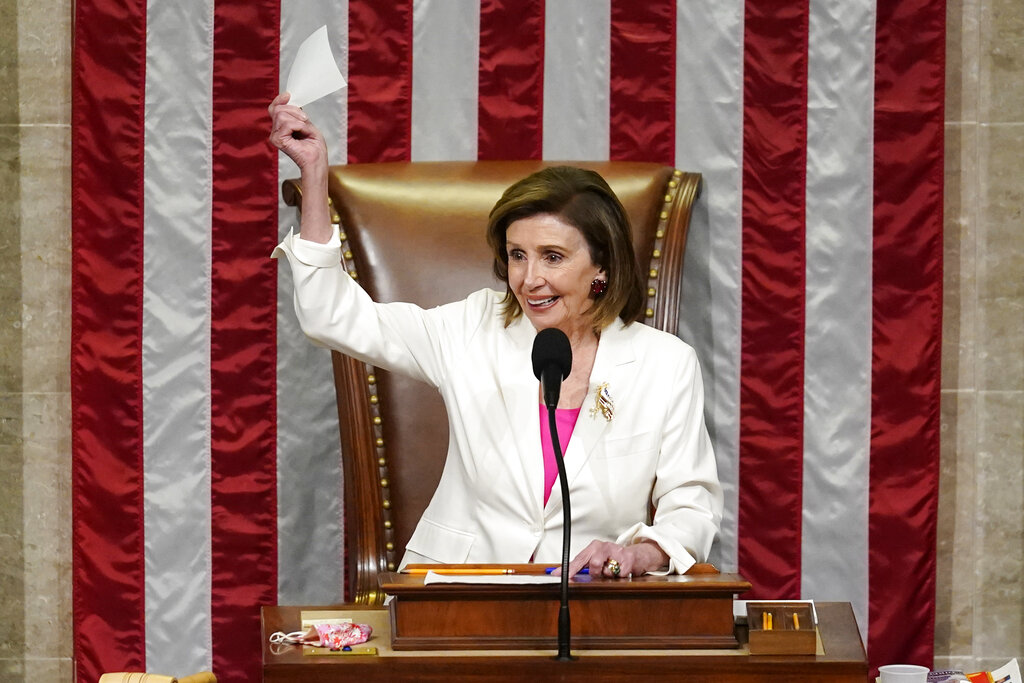
Speaker of the House Nancy Pelosi, D-Calif., presides over House passage of President Joe Biden’s expansive social and environment bill, at the Capitol in Washington, Friday, Nov. 19, 2021. (AP Photo/J. Scott Applewhite)
The breaking news: The House passed the Build Back Better bill this morning. CNBC: House passes $1.75 trillion Biden plan that funds universal pre-K, Medicare expansion and renewable energy credits.
The House of Representatives on Friday passed the largest expansion of the social safety net in decades, a $1.75 trillion bill that funds universal pre-K, Medicare expansion, renewable energy credits, affordable housing, a year of expanded Child Tax Credits and major Obamacare subsidies.
The final vote was 220-213, and only one Democrat, Jared Golden of Maine voted against the bill.
Now that it has cleared the House, President Joe Biden’s Build Back Better Act goes to the Senate, where it is likely to be revised in the coming weeks. Senate Majority Leader Chuck Schumer said he aims to have the chamber pass the bill before Christmas. The House will need to vote on it again if the bill is altered.
If the measure is signed into law, the bill will profoundly change how many Americans live, especially families with children, the elderly and low income Americans.
What’s in the current version of the bill:
- Universal preschool for all 3- and 4-year olds. In addition to helping millions of children prepare better for school, the benefit would enable parents of young children to return to the work force earlier.
- Capping childcare costs at 7% of income for parents earning up to 250% of a state’s median income.
- 4 weeks of federal paid parental, sick or caregiver leave.
- A year of expanded Child Tax Credits. During the past year, these credits have raised households with more than 3 million children out of poverty, and cut overall child poverty in America by 25%.
- Extended pandemic-era Affordable Care Act subsidies. So far this year, these subsidies have increased ACA enrollment by more than 2 million.
- New hearing benefits for Medicare beneficiaries, including coverage for a new hearing aid every five years.
- A $35 per-month limit on the cost of insulin under Medicare, and a cap on out-of-pocket prescription drug costs at $2,000 per year.
- $500 billion to combat climate change, largely through clean energy tax credits. This represents the largest ever federal investment in clean energy.
- Raising the State and Local Tax deduction limit from $10,000 to $80,000.
The bill represents a major victory for House Speaker Nancy Pelosi, D-Calif., who pulled together a divided caucus with conflicting interests and united it behind a sprawling, 2,000-plus-page bill, passing it with a thin majority.
The vote was supposed to be last night, but a deranged Kevin McCarthy decided to make a last ditch effort to prevent it from going forward. The New York Times: Kevin McCarthy Speaks for More Than Eight Hours to Delay a House Vote.
House Minority Leader Kevin McCarthy of California early Friday concluded a marathon speech in opposition to the Democrats’ social policy bill, after talking for eight hours and 32 minutes, surpassing the length of one by Representative Nancy Pelosi in 2018 that held the record for the longest continuous House speech in modern history.
“Personally I didn’t think I could go this long,” Mr. McCarthy said toward the end of his monologue as some of the people behind him struggled to keep their eyes open. Finally, after 5 a.m., he finished. “With that, Madam Speaker, I yield back,” he said.
Mr. McCarthy, the top Republican in the House, railed against President Biden and his agenda in an effort to delay the passage of the Democrats’ $1.85 trillion social policy and climate change bill.
The debate over the bill had been scheduled to last 20 minutes before Mr. McCarthy took over after 8 p.m. to deliver an at times rambling speech stuffed with Republican talking points against the legislation and punctuated with riffs about history.
“I know some of you are mad at me, think I spoke too long,” he said at one point. “But I’ve had enough. America has had enough.”
Shortly after midnight Friday, when Mr. McCarthy showed no sign of yielding control of the House floor, Democratic leaders sent lawmakers home, with plans to return at 8 a.m. to finish debate and vote on the sprawling package.
The horror! The notion of the government helping regular Americans instead of enriching the already super-rich was just too much for McCarthy and the rest of the Trumpist goons.
The Daily Beast: Democrats Finally Unite—to Mock Kevin McCarthy All Night as He Breaks Stupid Record.
Curiously, McCarthy stopped talking shortly after surpassing the eight hour, seven minute record set by Nancy Pelosi in 2018—yielding after eight hours and 32 minutes.
Starting at 8:38 p.m., McCarthy took full advantage of the “Magic Minute”—in which leaders from both parties are allowed to speak for as long as they want with it only counting as one minute against the time allocated for debate—and delivered a stemwinder of half-truths, outright lies, aggrieved arguments, unrelated tangents, and recycled rhetoric….
As McCarthy began his lecture on the floor Thursday, the Democratic heckling started almost immediately. McCarthy told members he had “all night,” to which Democrats responded, “So do we!”
And both sides really did.
When McCarthy baselessly claimed the bill would cost $5 trillion, Democrats started yelling out increasingly large numbers. “$6 trillion!” one shouted, before another topped him with “$7 trillion!”—with more Democrats joining in with even more farcical projections.
When McCarthy said, “If I sound angry, I am,” Democrats chimed in with a prolonged “awww” sound, like they were watching a baby do something cute.
Read more at the link. Democrats mocked McCarthy on Twitter too. Read more at Mediaite: House Democrats Roast Kevin McCarthy on Twitter for Marathon Speech: ‘Please Saw Me in Half and Put Me Out of My Misery.’
Biden appears to be working up to getting rid of Postmaster General Louis DeJoy. The Washington Post: Biden expected to replace Ron Bloom, USPS board chair and key DeJoy ally, on postal board.
President Biden is expected to announce Friday that he will not renominate Ron Bloom, the chair the U.S. Postal Service board and a key ally of Postmaster General Louis DeJoy, when his term expires next month, according to three people with knowledge of the situation.
The move casts doubt on DeJoy’s future at the agency, the people said, who spoke on the condition of anonymity to discuss private conversations.
The decision potentially gives liberals on the panel another crucial vote to oust the postmaster general, who can only be removed by the board of governors. The nine-member board currently comprises four Democrats, four Republicans and one independent, though Biden has only appointed three members.
Bloom, a Democrat, has backed DeJoy as the agency permanently slowed mail delivery standards and raised prices.
Biden’s decision reflects the White House’s continued antipathy toward DeJoy, who is widely viewed as a loyalist to former president Donald Trump.
Read the rest at the WaPo.
Yesterday, Dakinikat posted a video of Louisiana Senator John Kennedy going full Joseph McCarthy on a Biden appointee.
At The Guardian, David Smith writes: ‘Professor or comrade?’ Republicans go full red scare on Soviet-born Biden pick.
Saule Omarova, 55, was nominated in September to be America’s next comptroller of the currency. If confirmed, she would be the first woman and person of colour in the role in its 158-year-history.
Omarova was born in Kazakhstan when it was part of the Soviet Union and moved to the US in 1991. For John Kennedy of Louisiana, a member of the Senate banking committee, this was like a red rag to a bull.
Questioning whether Omarova was still a member of communist youth organisations, Kennedy said: “I don’t mean any disrespect: I don’t know whether to call you professor or comrade.”
The remark prompted gasps in the hearing room on Capitol Hill.
Omarova replied, slowly and firmly: “Senator, I’m not a communist. I do not subscribe to that ideology. I could not choose where I was born.
“I do not remember joining any Facebook group that subscribes to that ideology. I would never knowingly join any such group. There is no record of me actually participating in any Marxist or communist discussions of any kind.”
Omarova then told how her family suffered under the communist regime.
“I grew up without knowing half of my family. My grandmother herself escaped death twice under the Stalin regime. This is what’s seared in my mind. That’s who I am. I remember that history. I came to this country. I’m proud to be an American and this is why I’m here today, Senator.”
Omarova has worked mainly as a lawyer and most recently as a law professor at Cornell University. She has testified often as an expert witness on financial regulation and even worked briefly in the administration of George W Bush.
Kennedy wasn’t the only one to attack Omarova.
…in a letter to Omarova after she was nominated, Senator Pat Toomey of Pennsylvania requested a copy of a graduation paper she wrote about Karl Marx when she was an undergraduate at Moscow State University – “in the original Russian” .
At Thursday’s hearing, Toomey noted that Omarova has written several academic papers that propose sweeping changes to the banking system.
“Taken in totality, her ideas do amount to a socialist manifesto for American financial services,” he said.
A judge is trying to muzzle the NYT in the Project Veritas case. The New York Times: Judge Tries to Block New York Times’s Coverage of Project Veritas.
A New York trial court judge ordered The New York Times on Thursday to temporarily refrain from publishing or seeking out certain documents related to the conservative group Project Veritas, an unusual instance of a court blocking coverage by a major news organization.
The order raised immediate concerns among First Amendment advocates, who called it a violation of basic constitutional protections for journalists, a viewpoint echoed by The Times. Project Veritas issued a statement in support of the order, arguing that it did not amount to a significant imposition on the newspaper’s rights.
The judge’s order is part of a pending libel lawsuit filed by Project Veritas against The Times in 2020. That suit accuses the newspaper of defaming Project Veritas in its reporting on a video produced by the group that made unverified claims of voter fraud in Minnesota.
Led by the provocateur James O’Keefe, Project Veritas often conducts sting operations — including the use of fake identities and hidden cameras — aimed at embarrassing Democratic campaigns, labor organizations, news outlets and other entities. It is the subject of a Justice Department investigation into its possible involvement in the reported theft of a diary that apparently belonged to President Biden’s daughter, Ashley.
Theodore J. Boutrous Jr., a lawyer who represents media outlets including CNN, called the court’s order “ridiculous.”
“Even though it’s temporary, the Supreme Court has said even the most modest, minute-by-minute deprivations of these First Amendment rights cannot be tolerated,” Mr. Boutrous said. “To go further and suggest a limit on news gathering, I’ve never heard of such a thing.”
Read the rest at the NYT. See also The Washington Post: Court bars New York Times from publishing Project Veritas memos in move called ‘unconstitutional.’
More stories to check out today:
Will Bunch at The Philadelphia Inquirer: The impeachment of President Biden and other American nightmares coming in 2023.
The Daily Beast: Europe Locking Back Down With COVID Winter Surge Coming for Us All.
The Washington Post: Prominent scientist who said lab-leak theory of covid-19 origin should be probed now believes evidence points to Wuhan market.
The Chicago Tribune: Man spotted with AR-15 outside Kyle Rittenhouse trial confirms he is a fired Ferguson police officer.
Politico Magazine: The Bonnie and Clyde of MAGA World. For a decade, Dustin Stockton and Jennifer Lawrence had surfed the wave of populist-right politics like few other people in America. Then came Jan. 6.
CNN: Trump’s ire grows as DeSantis’ popularity with Republicans takes off.
The Washington Post: ‘No one tells me what to do’: Sinema praises infrastructure, questions spending and inflation in wide-ranging interview.
What stories are you following today?
Did you like this post? Please share it with your friends:
Posted: November 13, 2021 | Author: bostonboomer | Filed under: morning reads | Tags: coronavirus pandemic, Department of Justice, Donald Trump, Fulton County DA Fani Willis, Georgia, January 6 Committee, Jeffrey Clark, Mark Meadows, Merrick Garland, Steve Bannon, violent threats against public officials |

Reading Sociology, by Kurt Solmssen
Good Morning!!
I know this isn’t breaking news to any Sky Dancers, but it’s still the best news in a long time. Steve Bannon has been indicted for contempt of Congress. More good news: it appears that Merrick Garland actually is taking the insurrection seriously. From the DOJ statement issued yesterday:
Stephen K. Bannon was indicted today by a federal grand jury on two counts of contempt of Congress stemming from his failure to comply with a subpoena issued by the House Select Committee investigating the Jan. 6 breach of the U.S. Capitol.
Bannon, 67, is charged with one contempt count involving his refusal to appear for a deposition and another involving his refusal to produce documents, despite a subpoena from the House Select Committee to Investigate the January 6 Attack on the U.S. Capitol. An arraignment date has not yet been set in the U.S. District Court for the District of Columbia.
“Since my first day in office, I have promised Justice Department employees that together we would show the American people by word and deed that the department adheres to the rule of law, follows the facts and the law and pursues equal justice under the law,” said Attorney General Merrick B. Garland. “Today’s charges reflect the department’s steadfast commitment to these principles.”
Katie Benner and Luke Broadwater at The New York Times: Bannon Indicted on Contempt Charges Over House’s Capitol Riot Inquiry.
A Justice Department spokesman said Mr. Bannon was expected to turn himself in to authorities on Monday, and make his first appearance in Federal District Court in Washington later that day.
A lawyer for Mr. Bannon did not immediately respond to a request for comment.
The politically and legally complex case was widely seen as a litmus test for whether the Justice Department would take an aggressive stance against one of Mr. Trump’s top allies as the House seeks to develop a fuller picture of the actions of the former president and his aides and advisers before and during the attack on the Capitol.
At a time of deep political polarization, the Biden Justice Department now finds itself prosecuting a top adviser to the previous president of another party in relation to an extraordinary attack by Mr. Trump’s supporters on a fundamental element of democracy, the peaceful transfer of power….
After the referral from the House in Mr. Bannon’s case, F.B.I. agents in the Washington field office investigated the matter. Career prosecutors in the public integrity unit of the U.S. attorney’s office in Washington determined that it would be appropriate to charge Mr. Bannon with two counts of contempt, and a person familiar with the deliberations said they received the full support of Attorney General Merrick B. Garland.

White cat at an open window’, 1855 – Jacobus van Looy
The indictment of Bannon serves as a warning to other Trump goons who have refused to testify before the House January 6 committee.
The charges against Mr. Bannon come as the committee is considering criminal contempt referrals against two other allies of Mr. Trump who have refused to comply with its subpoenas: Mr. Meadows and Jeffrey Clark, a Justice Department official who participated in Mr. Trump’s effort to overturn the results of the 2020 election.
“Steve Bannon’s indictment should send a clear message to anyone who thinks they can ignore the select committee or try to stonewall our investigation: No one is above the law,” the leaders of the panel, Representative Bennie Thompson, Democrat of Mississippi, and Representative Liz Cheney, Republican of Wyoming, said in a statement. “We will not hesitate to use the tools at our disposal to get the information we need.”
Earlier they had released another blistering statement after Mr. Meadows failed to appear to answer questions at a scheduled deposition. Mr. Meadows’s lawyer, George J. Terwilliger III, informed the committee that his client felt “duty bound” to follow Mr. Trump’s instructions to defy the committee, citing executive privilege.
“Mr. Meadows’s actions today — choosing to defy the law — will force the select committee to consider pursuing contempt or other proceedings to enforce the subpoena,” Mr. Thompson and Ms. Cheney said.
They said Mr. Meadows refused to answer even basic questions, such as whether he was using a private cellphone to communicate on Jan. 6, and the location of his text messages from that day.
Aaron Blake at The Washington Post: The big warning signal Stephen Bannon’s indictment sends.
For more than two years, the Democratic-controlled House struggled to obtain crucial testimony from Trump White House counsel Donald McGahn in its Russia investigation. When he declined to submit to a subpoena, they fought it out in court. By the time an agreement was reached for McGahn to testify this year, Donald Trump was no longer in the White House, and the Russia issue had faded in both import and memories. McGahn said frequently in his testimony that he no longer fully recalled important episodes….
This time, though, the House and its select committee investigating the Jan. 6 attack on the U.S. Capitol by a pro-Trump mob took a very different tack. And it resulted in both a legally and practically significant result.
Rather than try to get a court to make former White House adviser Stephen K. Bannon testify, the Jan. 6 committee instead moved quickly to recommend he be held in contempt of Congress. That put the decision into the hands of the Justice Department, which would need to decide whether to file criminal charges. But it would at least be quicker.
On Friday, this approach — an extraordinary gambit necessitated by an extraordinary effort to stymie investigators for most of the past five years — led to an extraordinary outcome: Bannon has been indicted by a federal grand jury, making him the first person charged with contempt of Congress since 1983.

Black cat on the front porch, by Bonnie Mason
While an indictment is significant — it’s actually the second time Bannon has been indicted in fewer than 15 months, with the first earning a preemptive Trump pardon — the move is less punitive than it is precedent-setting.
Other witnesses, including former Trump White House chief of staff Mark Meadows, who are also resisting cooperation with the inquiry, now have to contend with the prospect of potential criminal charges….an indictment is a bell that can’t be un-rung. Those like Meadows might defy the subpoenas in the hope of some kind of accommodation — perhaps allowing them to withhold a certain part of their testimony or documents that have been requested. Bannon’s indictment serves notice that the Jan. 6 committee can threaten to play hardball, with plenty to back it up….
Bannon and Meadows are among the first against whom this could even be deployed. Theirs were among the first batch of subpoenas, along with White House communications aide Dan Scavino and national security aide Kashyap Patel. In other words, plenty of others will now have very important decisions to make. Another big one will be Trump DOJ official Jeffrey Clark, who spearheaded the effort to get his department to legitimize Trump’s false stolen-election claims.
Fulton County District Attorney Fani Willis is likely to impanel a special grand jury to support her probe of former President Donald Trump, a move that could aid prosecutors in what’s expected to be a complicated and drawn-out investigative process.
A person with direct knowledge of the discussions confirmed the development to The Atlanta Journal-Constitution, saying the move could be imminent.
Some legal observers viewed the news, first reported by the New York Times, as a sign that the probe is entering a new phase.
“My interpretation is that she’s gotten as far as she can interviewing witnesses and dealing with people who are cooperating by producing documents voluntarily,” former Gwinnett County DA Danny Porter said of Willis. “She needs the muscle. She needs the subpoena power.”

Deborah Dewit, Birdwatching
Special grand juries are rarely used but could be a valuable tool for Willis as she takes the unprecedented step of investigating the conduct of a former president while he was in office.
Her probe, launched in February, is centered on the Jan. 2 phone call Trump placed to Secretary of State Brad Raffensperger, in which he urged the Republican to “find” the votes to reverse Joe Biden’s win in Georgia last November. The veteran prosecutor previously told Gov. Brian Kemp, Raffensperger and other state officials that her office would be probing potential violations of Georgia law prohibiting criminal solicitation to commit election fraud, intentional interference with the performance of election duties, conspiracy and racketeering, among others.
The investigation could also include Trump attorney Rudy Giuliani, who promoted lies about election fraud in a state legislative hearing; and U.S. Sen. Lindsey Graham of South Carolina, who was accused by Raffensperger of urging him to toss mail-in ballots in certain counties. Both men have denied wrongdoing.
In other news, another Congressional committee is investigating efforts by the Trump administration to downplay the coronavirus pandemic. The Washington Post: Messonnier, Birx detail political interference in last year’s coronavirus response.
The Trump administration repeatedly interfered with efforts by the Centers for Disease Control and Prevention last year to issue warnings and guidance about the evolving coronavirus pandemic, six current and former health officials told congressional investigators in recent interviews.
One of those officials, former CDC senior health expert Nancy Messonnier, warned in a Feb. 25, 2020, news briefing that the virus’s spread in the United States was inevitable — a statement that prompted anger from President Donald Trump and led to the agency’s media appearances being curtailed, according to interview excerpts and other documents released Friday by the House select subcommittee on the pandemic.
The new information, including statements from former White House coronavirus coordinator Deborah Birx, confirms prior reporting and offers additional detail on how the pandemic response unfolded at the highest levels of government.
“Our intention was certainly to get the public’s attention about the likelihood … that it was going to spread and that we thought that there was a high risk that it would be disruptive,” Messonnier told the panel in an Oct. 8 interview. But her public warning led to private reprimands, including from then-Health and Human Services Secretary Alex Azar, she said….
Anne Schuchat, who served as the CDC’s No. 2 official before retiring this year, also depicted chaotic efforts to control the government’s messages in those early months, telling the panel that Trump officials scrambled to schedule a briefing several hours after Messonnier’s public warning, even though “there was nothing new to report.”

Cat’s Siesta, Ksenia Yarovaya
Schuchat joined Trump and other officials for a briefing the very next day,where Trump insisted that the pandemic’s spreadto the United States was not “inevitable,” even as Schuchat tried to warn Americans to prepare for “more cases.” [….]
Other officials detailed why the CDC held no news briefings between March 9 and May 29, 2020, in the earliest days of the pandemic, effectively muzzling the scientific agency as the coronavirus spread rapidly across the United States.
Kate Galatas, a senior CDC communications official, told the panel that the White House repeatedly blocked the agency’s media requests, including a planned April 2020 briefing that she said would have addressed the importance of wearing face coverings to contain the virus’s spread.
Read the rest at the WaPo.
I’ll end with this article at The New York Times addresses the alarming number of violent threats against public figures we are seeing in U.S.: Menace Enters the Republican Mainstream.
At a conservative rally in western Idaho last month, a young man stepped up to a microphone to ask when he could start killing Democrats.
“When do we get to use the guns?” he said as the audience applauded. “How many elections are they going to steal before we kill these people?” The local state representative, a Republican, later called it a “fair” question.
In Ohio, the leading candidate in the Republican primary for Senate blasted out a video urging Republicans to resist the “tyranny” of a federal government that pushed them to wear masks and take F.D.A.-authorized vaccines.
“When the Gestapo show up at your front door,” the candidate, Josh Mandel, a grandson of Holocaust survivors, said in the video in September, “you know what to do.”
And in Congress, violent threats against lawmakers are on track to double this year. Republicans who break party ranks and defy former President Donald J. Trump have come to expect insults, invective and death threats — often stoked by their own colleagues and conservative activists, who have denounced them as traitors.
From congressional offices to community meeting rooms, threats of violence are becoming commonplace among a significant segment of the Republican Party. Ten months after rioters attacked the United States Capitol on Jan. 6, and after four years of a president who often spoke in violent terms about his adversaries, right-wing Republicans are talking more openly and frequently about the use of force as justifiable in opposition to those who dislodged him from power.
Click the link to read the rest.
What do you think? What stories are you following today?
Did you like this post? Please share it with your friends:


 peej
peej Carissa
 bostonboomer
 dakinikat
 ecocatwoman
 mablue2
 Mama Lopez
 peggysue22
 quixote
 skydancingguestblogger
 Mona (aka Wonk the Vote)



 Sky Dancing
Recent Comments