
Lazy Saturday Reads: Immigration Facts and Ferguson Fears
Posted: November 22, 2014 Filed under: Barack Obama, Civil Liberties, Civil Rights, court rulings, Crime, Criminal Justice System, Eric Holder, immigration, legislation, morning reads, The Media SUCKS, U.S. Politics | Tags: Congress, corporate media, Darren Hutchinson, Darren Wilson, FBI, Ferguson MO protests, Michael Brown, police brutality, police riots, Racism, US Constitution, Watts riots 31 Comments
Good Afternoon!!
President Obama’s executive action on immigration tops the news today. Ferguson is a close second. I’ll be focusing mostly on those two stories in this post.
Immigration
Before I get started, I want to point you to a new post by Darren Hutchinson of Dissenting Justice. It will give you some reality-based ammunition to deal with crazy wingnut friends, relatives, and Facebook and Twitter followers.
FACTS: President Obama’s Immigration Policies Are Absolutely LEGAL.
ATTENTION: Before you can argue that the government has violated a law, you must actually READ the law.
FACT: Congress has the exclusive power to pass laws regarding immigration (U.S. Const. Article I, Section 8, Cl. 4).FACT: Executive Power of the US is vested in the President, which means the President, not Congress, executes the immigration laws (U.S. Const. Article II, Sect. 1, Cl. 1)….
FACT: Consistent with the Constitution, the INA gives the Executive Branch (President, Homeland Security, Attorney General, and Secretary of State) the power to enforce immigration laws (8 U.S.C. Sect. 1103-1104)….
FACT: The Executive Can “Cancel” the Removal of Certain Deportable Individuals.
The INA allows the Attorney General to cancel removal (deportation) or adjust the status of certain categories of undocumented individuals. The statute explicitly spells out the criteria for doing so. Thus, the statute provides an “intelligible criteria” for the Attorney General to follow. (8 U.S.C. Section 1229b(a)-(b))….The Executive Can Give Temporary Protected Status to Certain Deportable Individuals. The INA also allows the Attorney General to grant “Temporary Protected Status” (TPS) to deportable individuals from certain countries that the Attorney General has placed on a TPS list. As required by Supreme Court doctrine, the INA gives SPECIFIC guidelines – or an intelligible principle – for the Attorney General to follow when determining whether to give TPS designation to a country. The statutory factors include serious conditions in the individual’s home country, like armed conflict; natural disasters; a request for temporary protected status by the country; or “extraordinary and temporary conditions” that preclude the safe return of the individual, so long as TPS does not conflict with the interests of the US.
(8 U.S.C. Sections 1254a-i)
Those are the highlights. There’s more at the link. I plan to save Hutchinson’s post for future reference. I’m thinking of printing it out in case I get in a political argument with my brother over Thanksgiving dinner.

Obama has been vilified from day one by people who obviously have never read the Constitution or any U.S. laws dealing with their various political hobby horses, and I’m sick and tired of it.
You all know I not a fan of Obama when he ran for president in 2008, and I still think he’s a conservative technocrat who is far to willing to support privatization of public services. But he is the President of the United States now. I support his efforts to reform immigration laws. He’s only taking executive action because Congress is full of stupid and irrational people who are too lazy or stubborn to cooperate with him. Sadly, the DC media is largely made up of wealthy, privileged people who got their jobs because through nepotism and/or because they attended elite universities and are too lazy or stupid to provide accurate information to the public. Therefore, people who don’t focus on politics like we do get false information from TV news or “journalists” who do not understand what journalism is.
Rant over.
A few more links on the immigration story:
Washington Post Wonkblog, Flow chart: Who qualifies for Obama’s immigration offer?
The president’s executive action would delay deportation for the undocumented mother of a child born in the U.S. on Thursday — but not an undocumented mother who gave birth here one day later. Similarly, the president has offered deferrals to children brought to this country by their parents before their 16th birthday — but not a few weeks after.
Such deadlines serve a purpose: They’re meant to discourage new immigrants from coming in the future, or to dissuade women already here from giving birth with the goal of securing deferrals. But they also show that the president’s action falls far short of a comprehensive solution. It offers, instead, a fragmented answer that will leave many immigrants disappointed.
Check out the flow chart at the link for details.

Greg Sargent at The Washington Post, Bringing perspective to Obama’s move on deportations.
Now that President Obama has announced his executive action to temporarily shield millions from deportation, confirming the administration’s view that this move is well within his authority, the battle now shifts to a political fight over the policy itself, and over whether it violates “political norms.” Is this action so provocative an affront to Congress that it sets a precedent for future GOP presidents to use discretion to selectively enforce laws liberals like?
Embedded in the legal opinion that the Office of Legal Counsel released to justify the move is an important nugget that should, in theory, help take the steam out of the idea that this move is a flagrant violation of political norms.
Obama’s action temporarily shields from deportation the parents of children who are U.S. citizens and legal residents, and also expands the program (Deferred Action for Childhood Arrivals) to protect people brought here illegally as children. But it excludes parents of DACA recipients.
The reason for this offered by the OLC memo is that protecting parents of legal residents is in line with Congressional intent, as expressed in statute, while protecting DACA parents isn’t:
[T]he parents of DACA recipients are differently situated from the parents of U.S. citizens and LPRs [Legal Permanent Residents] under the family-related provisions of the immigration law. Many provisions of the INA [Immigration and Nationality Act] reflect Congress’ general concern about separating individuals who are legally entitled to live in the United States and their immediate family members….But the immigration laws do not express comparable concern for uniting persons who lack lawful status (or prospective lawful status in the United States with their families…Extending deferred action to the parents of DACA recipients would therefore expand family-based immigration relief in a manner that deviates in important respects from the immigration system Congress has enacted.
This legal opinion probably precludes any future expansion of this program to cover parents of DACA recipients. And it underscores two things: First, that the proposal is heavily focused on providing relief from humanitarian hardship endured by U.S. citizens and permanent residents, a longtime intention of Congress, as expressed in statute. Second, it shows that the proposal’s legal rationale is tightly circumscribed to reflect that Congressional intent.
Follow me below the fold for much more . . .
Read the rest of this entry »
Friday Reads: For Whom the Wheels of Justice Roll
Posted: September 5, 2014 Filed under: Gulf Oil Spill, Injustice system, legislation, morning reads 32 CommentsGood Morning!
Is it just me or is there like a maximum amount of weirdness going on right now? I’m going to start with some local ongoing trauma. BP Oil has ruined so much of the ecosystem down here–much of it still dying and unclean–that it’s hard to believe that any one could stand up in front of judge and say something to the effect of it wasn’t as bad as an “apocalypse”. Everything the oil and gas and chemical industries do down here creates complete havoc with life, the ecosystem, the locals, and a unique way of life. Unfortunately, our politicians own their souls to the company store and the money enriches a small group of the greedy. This recent lawsuit was righteous but the comments by BP lawyers are worth exposing. Oysters are going extinct. There are a lot of health problems. The wildlife continues to wash up on the beach, dead and extremely malformed. Family businesses are devastated and not recovering. I guess if you don’t have to live with the aftermath, it doesn’t exist for you.
News of this morning’s federal court decision against BP broke as I was aboard a 40-foot oyster boat in the Louisiana delta, just off the coast of Empire, a suburb of New Orleans.
The reaction: stunned silence. Then a bit of optimism.
“This is huge,” said John Tesvich, chair of the Louisiana Oyster Task Force, his industry’s main lobby group in the state. “They are going to have to pay a lot more.” Standing on his boat, the “Croatian Pride,” en route to survey oyster farms, he added: “We want to see justice. We hope that this money goes to helping cure some of the environmental issues in this state.”
On Thursday, a federal judge in New Orleans found that the 2010 Gulf of Mexico disaster—in which the Deepwater Horizon oil rig exploded, killing 11 people and spilling millions of barrels of oil into the Gulf—was caused by BP’s “willful misconduct” and “gross negligence.”
Tesvich says he’s seen a drastic decline in his company’s oyster production since then—company profits down 15 to 20 percent and oyster yields slashed by 30 percent. He says he’s suspicious that this new decision will force the kind of action from local politicians needed to clean up the Gulf once-and-for-all. The politicians in Louisiana, he says, “haven’t been the best environmental stewards.”
BP’s own reaction to the news has been fast and pointed. “BP strongly disagrees with the decision,” the company said in a statement on Thursday, published to its website. “BP believes that an impartial view of the record does not support the erroneous conclusion reached by the District Court.”
The company said it would immediately appeal the decision.
“It’s clear that the apocalypse forecast did not come to pass,” said a BP official.With the fourth anniversary of the busted well’s final sealing coming up in a couple weeks, BP has been pushing back aggressively against the company’s critics. On Wednesday night—just hours before the court’s ruling—Geoff Morrell, the company’s vice president of US communications, spoke in New Orleans at the Society of Environmental Journalists conference, and blamed the media and activists for BP’s rough ride.
The company’s efforts to clean up the spill have been obscured, he said, by the ill-intentioned efforts of “opportunistic” environmentalists, shoddy science, and the sloppy work of environmental journalists (much to the chagrin of his audience, hundreds of environmental journalists).
“It’s clear that the apocalypse forecast did not come to pass,” he said. “The environmental impacts of the spill were not as far-reaching or long-lasting as many predicted.”
Back in 2010, BP’s then-CEO Tony Hayward lamented—a month after the explosion—that he wanted his “life back.” He didn’t find much sympathy at the time. Within a couple months, he resigned out of the spotlight (with a $930,000 petroleum parachute). But his flub didn’t retire so easily, and it became emblematic of BP’s astonishing capacity for tone-deafness, something Morrell seemed intent on continuing Wednesday.
Morrell said that while “impolitic” remarks had been made by BP officials in the past, the spill’s aftermath has been “tough on all of us.”
 We’re not holding our breath that if and when the money gets here, it will be used to restore the gulf, clean up the mess, and help the people and animals whose lives have been devastated. Why you ask? Bobby Jindal has been fighting to keep the social costs created by this dirty and reckless industry away from those liable. He’s also got an interesting connection to the law firm that represents BP. His brother works there.
This is about yet two more examples of how Gov. Bobby Jindal conveniently manages to look the other way instead of being up front when confronted with issues that most might believe could present a conflict of interest
When Jindal signed SB 469 into law on Friday he not only killed the pending lawsuit against 97 oil, gas and pipeline companies by the Southeast Louisiana Flood Protection Authority-East (SLFPA-E) but he also placed in extreme jeopardy the claims by dozens of South Louisiana municipalities and parish governments from the disastrous 2010 BP Deepwater Horizon spill that killed 11 men and discharged 5 million barrels of oil into the Gulf of Mexico, spoiling beaches and killing fish and wildlife.
By now, most people who have followed the bill authored by Sen. Bret Allain (R-Franklin) but inspired by Sen. Robert Adley (R-Benton) know that big oil poured money and thousands of lobbying man hours into efforts to pass the bill with its accompanying amendment that makes the prohibition against such lawsuits retroactive to ensure that the SLPFA-E effort was thwarted.
Most followers of the legislature and of the lawsuit also know that up to 70 legal scholars, along with Attorney General Buddy Caldwell, strongly advised Jindal to veto the law because of the threat to the pending BP litigation.
Altogether, the 144 current legislators received more than $5 million and Jindal himself received more than $1 million from oil and gas interests. Allain received $30,000 from the oil lobby and Adley an eye-popping $600,000.
So, when BP lobbyists began swarming around the Capitol like blow flies buzzing around a bloated carcass, the assumption was that BP somehow had a stake in the passage of SB 469 and that infamous amendment making the bill retroactive.
John Barry, a former SLFPA-E who was given the Jindal Teague Treatment but who stuck around to pursue the lawsuit, said, “During the last few days of the session, we were very well aware that the BP lobbyists were extraordinarily active. They were all over the place. We all assumed there was definitely something it in for them.”
Something in it for them indeed.
Russel Honore said it another way, observing wryly that the Exxon flag still flies over the State Capitol.
Blogger Lamar White, Jr. observed that former Gov. Edwin Edwards spent eight years in a federal prison for accepting payments from hopeful casino operators for his assistance in obtaining licenses—all after he left office. New Orleans Mayor Ray Nagin was similarly convicted of using his position to steer business to a family-owned company and taking free vacations meals and cell phones from people attempting to score contracts or incentives from the city.
So what is the difference between what they did and the ton of contributions received by Adley and Jindal? To paraphrase my favorite playwright Billy Wayne Shakespeare, a payoff by any other name smells just as rank.
And while big oil money flowed like liquor at the State Capitol (figuratively of course; it’s illegal to make or accept campaign contributions during the legislative session), what many may not know is that Jindal may have had an ulterior motive when he signed the bill into law against sound legal advice not to do so, thus protecting the interests of big oil over the welfare of Louisiana citizens who have seen frightening erosion of the state’s shoreline and freshwater marshes.
The Washington, D.C., law firm Gibson, Dunn & Crutcher is one of the firms that represented BP in negotiating a $4.5 billion settlement that ended criminal charges against the company. Included in that settlement amount was a $1.26 billion criminal fine to be paid over five years.
An associate of Gibson, Dunn & Crutcher who has defended clients in government audit cases and in several whistleblower cases is one Nikesh Jindal.
He also is assigned to the division handling the BP case.
Nikesh Jindal is the younger brother of Gov. Piyush, aka Bobby Jindal.
Still, the US District Court found BP “grossly negligent”. Eleven people were killed. Oil gushed into the Gulf destroying the economy, wildlife, and the delicate ecosystem. “Gross negligence” can mean a lot of dollars. Halliburton and  Transocean have been cleared of gross negligence but they’re still paying fines. BP could be paying out billions of dollars.
BP Plc acted with gross negligence in setting off the biggest offshore oil spill in U.S. history, a federal judge ruled, handing down a long-awaited decision that may force the energy company to pay billions of dollars more for the 2010 Gulf of Mexico disaster.
U.S. District Judge Carl Barbier held a trial without a jury over who was at fault for the catastrophe, which killed 11 people and spewed oil for almost three months into waters that touch the shores of five states.
“BP has long maintained that it was merely negligent,” said David Uhlmann, former head of the Justice Department’s environmental crimes division. He said Barbier “soundly rejected” BP’s arguments that others were equally responsible, holding “that its employees took risks that led to the largest environmental disaster in U.S. history.”
The case also included Transocean Ltd. (RIG) and Halliburton Co. (HAL), though the judge didn’t find them as responsible for the spill as BP. Barbier wrote in his decision today in New Orleans federal court that BP was “reckless,” while Transocean and Halliburton were negligent. He apportioned fault at 67 percent for BP, 30 percent for Transocean and 3 percent for Halliburton.
U.K.-based BP, which may face fines of as much as $18 billion, closed down 5.9% to 455 pence in London trading.
“The court’s findings will ensure that the company is held fully accountable for its recklessness,” U.S. Attorney General Eric Holder said. “This decision will serve as a strong deterrent to anyone tempted to sacrifice safety and the environment in the pursuit of profit.”
Quite a few politicians are also having a day in court and it’s not turning out well for them. Former New Orleans Ray Nagin has declared indigency and asked for a public defender to handle his appeal. The former first lady and Governor of Virginia were stunned to be found guilty a multiple accounts of grifting. Robert McConnell was found guilty of 11 of 14 counts of public corruption. His wife is going down for eight counts. The reaction in the courtroom by the first couple and their cronies was melodramatic. It took the jury 3 days to reach a decision. Will Texas Governor Rick Perry be next for an orange suit in Federal Facility?
A federal jury on Thursday found former Virginia governor Robert F. McDonnell and his wife, Maureen, guilty of public corruption — sending an emphatic message that they believed the couple sold the office once occupied by Patrick Henry and Thomas Jefferson to a free-spending Richmond businessman for golf outings, lavish vacations and $120,000 in sweetheart loans.
After three days of deliberations, the seven men and five women who heard weeks of gripping testimony about the McDonnells’ alleged misdeeds unanimously found that the couple conspired to lend the prestige of the governor’s office to Jonnie R. Williams Sr. in a nefarious exchange for his largesse.
The verdict means that Robert McDonnell, the first governor in Virginia history to be charged with a crime, now holds an even more unwanted distinction — the first to be convicted of one.
He and his wife face decades in federal prison, although their actual sentences will likely fall well short of that. U.S. District Judge James R. Spencer set a sentencing hearing for Jan. 6.
The former governor, a onetime Republican rising star considered for the 2012 vice presidential nomination, was convicted of all 11 corruption-related counts brought against him. In a small victory, he was acquitted of lying on loan documents.
The former first lady was convicted of eight corruption-related charges and an additional count of obstruction of justice. She, too, was acquitted of falsifying a bank record.
The verdict was read aloud in front of a courtroom packed with reporters and supporters of the former first couple. When the clerk announced that the former governor had been found “guilty” of the first of 14 counts the couple faced, Robert McDonnell, 60, closed his eyes tightly, shaking in his seat as he began to weep.
 I guess the “bitch” made me do it isn’t an effective defense after al
Judges and juries were busy all over the country.
A Federal Court granted an injunction restoring early voting in Ohio. Republican governors have been busy trying to cut down access to voting in fear of turnout by minorities and single ladies who still hate rule by neoconfederate overseers.
I have now had a chance to give an initial read the 71-page federal district court opinion in Ohio State Conference of the NAACP v. Husted. This is a significant case, which could potentially make it to the Supreme Court. It expands voting rights in a broad way, and makes it difficult for a state like Ohio to cut back on any expansions of voting rights that it puts in place. The big question is where the stopping point is in a decision like this, and how to justify calling it unconstitutional for a state like Ohio to make a modest cutback in early voting while allowing many other states to offer no early voting at all.
Here are my preliminary thoughts.
1. This is the latest in a series of cases challenging Ohio cutbacks in early voting. The challenges are before the same federal district court judge in Ohio, Peter Economus, as earlier challenges, including a challenge which led to the restoration of early voting during the 2012 election. Judge Economus tangled with Ohio SOS Husted before, leading to potential calls for Husted to be cited for contempt. It is therefore no surprise that Judge Economus sided against Husted again in this latest challenge.
2. The theory in the earlier Ohio early voting case (Obama for America v. Husted) is different than the theory in the current case. In the last case, the question was whether Ohio could cut back on early voting for all voters EXCEPT for certain military and overseas voters in the period just before the election. The district court, affirmed by the Sixth Circuit, said that these special rules for just a subset of voters violated equal protection. (I had thought the Supreme Court might get involved in this case, but the Court did not.)
3. This case does not raise issues of different voting rules for different classes of voters. In fact, the dispute here arises from the issue of uniformity. The Ohio legislature cut back from 35 to 28 days of early voting, in the process eliminating “Golden Week,” a week where new (or reregistering voters) could register to vote and vote early during the same period. In conjunction with rules establishing uniformity of early voting times established by SOS Husted, the new early voting times eliminated night voting as well as Sunday voting before election day. That day was used by some African-American churches for a “Souls to the Polls” voter drive event. All Ohio voters remain able to vote by mail without excuse, for the 30 days before the election. The NAACP and others argued that the cutbacks in early voting and the elimination of Golden Week violated both equal protection guarantees of the U.S. Constitution and Section 2 of the Voting Rights Act.
4. The judge found as a matter of fact (crediting expert reports of the plaintiffs’ especially that of U. Florida’s Dan Smith) that the cutbacks in early voting would disproportionately fall on African-Americans. The judge found that early voters, especially in the larger population areas of the state, included a large portion of the state’s share of African-American voters. The judge also found that African-American voters were distrustful of absentee balloting as an alternative to in person voting, and that absentee balloting was more burdensome (filling out the materials, postage, mailing, etc.)
You can follow the links to the additional analysis on the case. It could be headed to the White Male/Uncle Thomas Overseers at SCOTUS shortly.
A Federal Appeals court has withdrawn the decision defunding the AHCA. 
In July, two Republican judges on the United States Court of Appeals for the District of Columbia Circuit handed down a decision defunding much of the Affordable Care Act (ACA). This effort to implement Sen. Ted Cruz’s (R-TX) top policy priority from the bench waswithdrawn on Thursday by the DC Circuit, and the case will be reheard by the full court — a panel that will most likely include 13 judges. In practical terms, this means that July’s judgment cutting off subsidies to consumers who buy insurance plans in federally-operated health exchanges is no more. It has ceased to be. It is, in fact, an ex-judgment.
The reason why this matters is because the plaintiffs in this lawsuit, known as Halbig v. Burwell, are hustling to try to convince the GOP-dominated Supreme Court to hear this case, where they no doubt believe that they have a greater chance of succeeding than in the DC Circuit, as a majority of the active judges in the DC Circuit are Democrats. The Supreme Court takes only a tiny fraction of the cases brought to their attention by parties who lost in a lower court — a study of the Court’s 2005 term, for example, found that the justicesgranted a full argument to only 78 of the 8,517 petitions seeking the high Court’s review that term. The justices, however, are particularly likely to hear cases where two federal appeals courts disagree about the same question of law.
Two hours after the divided DC Circuit panel released its opinion attempted to defund Obamacare, a unanimous panel of the Fourth Circuit upheld the health subsidies that are at issue in Halbig. Thus, so long as both decisions remained in effect, Supreme Court review was very likely. Now that the full DC Circuit has vacated the two Republican judges’ July judgement, Supreme Court review is much less likely.
Although it is possible that the full DC Circuit could agree with the two judges who voted to cut off health subsidies to millions of Americans, this outcome is unlikely. The plaintiffs’ arguments in this case are weak and are unlikely to move judges who do not have a partisan stake in undermining the Affordable Care Act.
The litigants seeking to undermine Obamacare through this lawsuit — Oklahoma Attorney General Scott Pruitt (R), who filed a brief supporting the plaintiffs in this case, admitted in aWall Street Journal op-ed that the purpose of this lawsuit is to cause “the structure of the ACA” to “crumble” — waged a two front effort trying to convince the full DC Circuit not to vacate their two GOP colleagues’ decision.
Meanwhile marriage equality took a few more steps forward and one step back. Guess whose state provided the step back?
Proponents of equal marriage rights have had a lot to celebrate over the last year, with a series of victories nationwide in state and federal district courts. And while those successes matter a great deal, and have advanced the cause of civil rights at a pace few thought possible, the legal fights at the federal appellate level are just as important, if not more so.It makes rulings like these so striking.A U.S. appeals court on Thursday struck down gay marriage bans in both Wisconsin and Indiana, adding to a rush of major victories for the marriage equality movement in the last year alone.Now that a three-judge panel in Chicago’s 7th Circuit Court of Appeals has ruled unanimously that both Midwestern marriage bans were unconstitutional, a total of 21 states recognize marriage for same-sex couples.In his ruling, which is available online here (pdf), Judge Richard Posner, a Reagan appointee, wrote. “The discrimination against same-sex couples is irrational, and therefore unconstitutional even if the discrimination is not subjected to heightened scrutiny, which is why we can largely elide the more complex analysis found in more closely balanced equal-protection cases.”The ruling, a key breakthrough for supporters of same-sex marriage, does not come as too big of a surprise. Just last week, the attorneys arguing against marriage equality faced a barrage of very toughquestions, which they struggled badly to answer.Indeed, as Chris Geidner reported, Posner referred to arguments from Indiana Solicitor General Thomas Fisher, whose job it was to defend the anti-gay laws, as “pathetic,” “ridiculous,” and “absurd.”Naturally, then, the 7th Circuit concluded today, “The challenged laws discriminate against a minority defined by an immutable characteristic, and the only rationale that the states put forth with any conviction – that same-sex couples and their children don’t need marriage because same-sex couples can’t produce children, intended or unintended – is so full of holes that it cannot be taken seriously.”Ouch.
Eric Holder held a presser in St Louis today to discuss the investigation of the Ferguson Police and other investigations. I’m hoping this helps them. I still distrust the NOPD and don’t believe anything they say so if the people of Ferguson feel like I do, it will be a pancea waiting for proof.
Attorney General Eric Holder on Thursday opened a broader civil rights investigation of the practices and procedures of the Ferguson Police Departmentin the wake of the Aug. 9 shooting death of Michael Brown, 18, by Ferguson police Officer Darren Wilson.
The Civil Rights Division will investigate whether Ferguson police have engaged in a pattern of civil rights violations, Holder said.
The attorney general also announced that the Justice Department has begun what he called a partnership with the St. Louis County Police Department to assess the county department’s response to the demonstrations that followed the shooting.
The investigation of Ferguson police will include the department’s use of force, traffic stops, searches and arrests, Holder said, adding that Ferguson officials welcomed the inquiry and pledged their cooperation. Justice Department officials said there is no timeline on the length of the investigation, and that it would depend on the cooperation of local authorities.
The goal, Holder said, is to reach an agreement with the department that would establish new tactics to eliminate bias and increase community confidence in the department.
Holder pledged a “fair, thorough investigation” that would result in “lasting, positive change.”
So, that’s some of the news from the justice front. What’s on your reading and blogging list today?
Monday Reads
Posted: July 30, 2012 Filed under: 2012 presidential campaign, Gun Control, legislation, Mitt Romney, morning reads | Tags: Bill Clinton, Dick Cheney, Florida voter purge 35 Comments Good Morning!
There’s nothing too exciting going on right now so I’m going to link to a few interesting things that showed up the last few days. I suppose every one’s focused on the Olympics and the last of their summer vacations.
Four reasons: An astonishing number of people work at low-wage jobs. Plus, many more households are headed now by a single parent, making it difficult for them to earn a living income from the jobs that are typically available. The near disappearance of cash assistance for low-income mothers and children — i.e., welfare — in much of the country plays a contributing role, too. And persistent issues of race and gender mean higher poverty among minorities and families headed by single mothers.
The first thing needed if we’re to get people out of poverty is more jobs that pay decent wages. There aren’t enough of these in our current economy. The need for good jobs extends far beyond the current crisis; we’ll need a full-employment policy and a bigger investment in 21st-century education and skill development strategies if we’re to have any hope of breaking out of the current economic malaise.
This isn’t a problem specific to the current moment. We’ve been drowning in a flood of low-wage jobs for the last 40 years. Most of the income of people in poverty comes from work. According to the most recent data available from the Census Bureau, 104 million people — a third of the population — have annual incomes below twice the poverty line, less than $38,000 for a family of three. They struggle to make ends meet every month.
Half the jobs in the nation pay less than $34,000 a year, according to the Economic Policy Institute. A quarter pay below the poverty line for a family of four, less than $23,000 annually. Families that can send another adult to work have done better, but single mothers (and fathers) don’t have that option. Poverty among families with children headed by single mothers exceeds 40 percent.
Wages for those who work on jobs in the bottom half have been stuck since 1973, increasing just 7 percent.
GOP strategists within and outside the Romney campaign insist that the former Massachusetts governor still has plenty of time to acquaint the American people with his softer side, and that, given all the problems the country faces, personality will not be the deciding factor this election year.
Those assumptions show in Romney’s advertising. The standard playbook for challengers is to launch their campaigns with a round of biographical ads. Romney’s first spots after securing the nomination focused on what he would do on “Day One” of his presidency.
“Personal qualities are taking a back seat,” Newhouse said. “What voters are asking us is, ‘What’s he going to do? How is he going to be different? How is he going to lead us out of this mess?’ ”
Sounding a bit like a sympathetic psychotherapist, a recent Republican National Committee ad acknowledged Americans’ affection for Obama and offered them permission to move on.
“He tried. You tried,” the announcer said. “It’s okay to make a change.”
Meanwhile, the Obama campaign has tried to take advantage of a void that Romney has created by his failure thus far to fill in the picture of himself.
It has pounded him with ads that depict him as heartless, privileged and secretive. In an exercise of jujitsu, Obama’s attacks focus on the very aspect of Romney’s résumé that he has highlighted as his greatest strength: his business career.
“Who has owned the Mitt Romney biography? It’s been the Obama campaign that has defined Mitt Romney,” said Steve Schmidt, a veteran Republican strategist who helped run GOP nominee John McCain’s campaign in 2008. “A lot of criticism people make is that Mitt Romney hasn’t revealed a lot of himself in terms of who he is.”
Two Democratic lawmakers on Monday will announce new legislation to regulate the online and mail-order sale of ammunition.
Sen. Frank Lautenberg (N.J.) and Rep. Carolyn McCarthy (N.Y.) said the new law would make the sale of ammunition “safer for law-abiding Americans who are sick and tired of the ease with which criminals can now anonymously stockpile for mass murder,” in a statement released Saturday.
The lawmakers cite the recent movie massacre in Aurora, Colo. for spurring their bill.
“The shooter who killed 12 and injured 58 in an Aurora, Colorado movie theater this month had purchased over 6,000 rounds of ammunition anonymously on the Internet shortly before going on his killing spree, according to law enforcement officials,” the statement reads. “The shooter used a civilian version of the military’s M-16 rifle with a 100-round drum magazine, a shotgun and two .40-caliber semi-automatic handguns commonly used by police officers.”
Lautenberg and McCarthy, who will unveil their new proposal at New York’s City Hall say they intend to “make it harder for criminals to anonymously stockpile ammunition through the Internet.”
Lautenberg and McCarthy are two high profile advocates of gun control legislation, but they face an uphill struggle in Congress.
Senate Majority Leader Harry Reid (D-Nev.) said last week that he does not intend to bring gun control legislation to the floor and President Obama has been reluctant to press lawmakers to act on the issue in an election year.
Democratic senators though have offered an amendment to the cybersecurity bill that would limit the purchase of high capacity magazines by some consumers. Sen. Charles Schumer (D-N.Y.) defended it last Thursday as a “reasonable” gun control measure.
A quick recap of the purge story thus far: The Florida secretary of state, who oversees elections and is appointed by the governor, initially drafted a list of some 180,000 potential illegal voters based on the state driver’s license database. Some legal immigrants can get driver’s licenses in the state, including those on student or work visas and those in the process of naturalization; the state sought to match those names with the names of voters.
The secretary’s office whittled that list down to about 2,600 names that it considered most suspect and sent those to the respective county supervisors to check. Right away, problems began to crop up. In Broward County, for example, one of the voters who got a letter telling him he’d have to prove his citizenship to continue voting was 91-year-old Bill Internicola, a Brooklyn-born World War II veteran living in a retirement community who’d been voting in Florida for 18 years. But the effort also did turn up more than 100 noncitizens who’d been illegally registered to vote.
The secretary of state’s office maintains that it always realized the driver’s license list was insufficient for the purpose of vetting voter registrations. Instead, it began asking the feds for access to a database — the Systematic Alien Verification for Entitlements system, known as SAVE — used to check the eligibility of applicants for federal benefits. When the Department of Justice sued Florida to stop the initial purge effort, Florida sued back to force the Department of Homeland Security to let it use the SAVE database.
Earlier this month, a resolution was reached when Homeland Security agreed to give the secretary of state’s office access to the SAVE database. At the moment, the secretary’s office is working with Homeland Security on the terms of the agreement, with hopes of signing a memorandum in the coming days, according to Chris Cate, the spokesman for Secretary of State Ken Detzner.
“We’re going to use the SAVE database to verify information we’ve received indicating someone is a noncitizen,” Cate said. “If we receive information that someone on the voter rolls is a noncitizen, we’ll use the SAVE database to validate whether or not that’s true, and then we’ll provide that information to the [county election] supervisors to complete the statutory removal process.”
Cate said a new list of potential noncitizen voters would be created from the most current information contained in the driver’s license database. The main problem with the initial driver’s license list, he said, was that it captured people who had become naturalized citizens since they last renewed their licenses. But running the names through the SAVE database, which is updated through the last 72 hours, will keep those people from being purged, he said.
For now, though, this process is still hypothetical, and the purge is in limbo.
Evidently the Big Dawg will play a big role at the DNC convention in September. I guess all is forgiven.
President Bill Clinton will play a prominent role at the Democratic National convention this summer, several Obama campaign and party officials say.
The former president will formally nominate President Barack Obama for re-election. And he will use a prime-time speech to argue that Obama has the strongest economic vision for the country’s future, the officials say.
Clinton will speak on Sept. 5. That means both Obama and Vice President Joe Biden will speak on Sept. 6, the final night of the convention, before a crowd of about 70,000 people at an outdoor stadium in Charlotte, N.C.
Interestingly enough, Dubya will be a no show at the RNC convention. Here’s some one I wish we could have arrested and hear less from. Dick Cheney calls Palin’s pick as VP a “mistake”. Ya think?
Cheney would not comment on what he told Romney and Myers, but he was harsh in his assessment of McCain’s decision to pick Palin.
“That one,” Cheney said, “I don’t think was well handled.”
“The test to get on that small list has to be, ‘Is this person capable of being president of the United States?’”
Cheney believes Sarah Palin failed that test.
“I like Governor Palin. I’ve met her. I know her. She – attractive candidate. But based on her background, she’d only been governor for, what, two years. I don’t think she passed that test…of being ready to take over. And I think that was a mistake.”
Okay, that’s about all the political news I can stomach for the day.
We went over a million views on the WordPress counter yesterday in case you missed the mention yesterday. What’s on your reading and blogging list?
Saturday Morning Reads
Posted: June 16, 2012 Filed under: Austerity, Barack Obama, executive orders, immigration, legislation, Mitt Romney, morning reads, U.S. Economy, U.S. Politics | Tags: Affordable Care Act, Angela Merkel, Daily Caller, Egypt, eurozone crisis, Germany, Goodfellas, Greece, Henry Hill, Neil Munro, respect for the office of President, Ruth Bader Ginsburg, SCOTUS, the Euro, Tucker Carlson, White House press corps, wingnuts, wise guys, world economy 24 Comments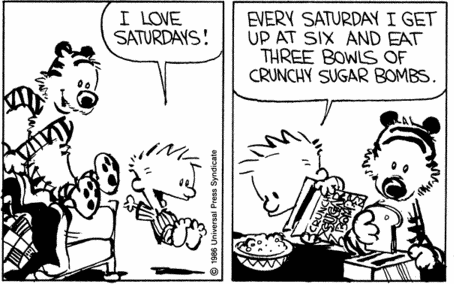
Good Morning!!
Yesterday was a pretty busy news day for a Friday. So if you’ve had your sugar bombs and coffee, let me fill you in on the latest before you head outside to enjoy a beautiful June day. The weather folks are saying this will be a nice weekend around the country.
Yesterday the President announced an executive order telling the Department of Homeland Security not to deport children who were brought to the U.S. illegally and have grown up here and gone to school here. These are the young people who would be eligible to stay here and have a path to citizenship under the “Dream Act” if Republicans in Congress would stop blocking the legislation.
In a move that seemed to be aimed at Hispanics whose enthusiasm for voting in the November 6 election could be crucial to Obama’s re-election chances, the president acted to potentially protect 800,000 people from deportation proceedings for at least two years.
Obama, who previously was reluctant to impose such an order even as Republicans in Congress blocked immigration reform bills he supported, called his action “the right thing to do.”
His announcement was on the 30th anniversary of a Supreme Court decision that said children of illegal-immigrant parents were entitled to public education in the United States.
Right wingers–including Mitt Romney–are of course calling the move “political,” but so what? I’ve said it before and I’ll say it again. Politicians make political decisions. Duh! But if they’re doing the right thing, I don’t care what their motivation is. The LA Times published some basic information for people who want to know what this change means to them.
During the President’s announcement of the policy change at a press availability in the Rose Garden, a wingnut blogger from The Daily Caller, rudely broke into Obama’s speech with an offensive question. David Graham at the Atlantic:
An extremely unusual occurrence happened today as President Obama spoke at the White House. The president was offering a statement on his executive order suspending deportations for certain illegal immigrants brought here as children….when a reporter started heckling him and shouting questions.
The reporter has been identified as Neil Munro of the Daily Caller, a conservative online news outlet run by Tucker Carlson….
Interrupting the president mid-speech is considered a serious breach of etiquette, and Obama’s reaction shows how peeved (and probably taken aback) he was. Munro, and the Daily Caller, have immediately come in for harsh criticism by a wide range of journalists, including conservative ones. The problem isn’t that Munro was asking tough questions; it’s that he interrupted the commander-in-chief to ask them and in doing so guaranteed that none of the assembled press would be able to ask any serious questions — since it’s fairly clear that Munro’s query was intended as provocation.
I have video of the confrontation, but youtube seems to be down at the moment. I’ll put it up again later if I can. Munro yelled “Why do you favor foreigners over Americans?” Then when Obama responded, he proceed to argue and then yell while Obama was speaking. Pretty unprofessional for a so-called “journalist.”
Even Bill O’Reilly condemned the wingnut hack’s behavior, along with Fox News talkers Shep Smith and Chris Wallace.
At CNN, Dean Obeidallah says this type of behavior by wingnuts is part of an overall effort to “delegitimize” Obama’s presidency.
A reporter from a right-wing media outlet heckled President Obama — not once, but twice — on Friday as he was unveiling a new immigration policy. If this shocks you, you haven’t been paying attention. This is simply the latest page from the right’s playbook to delegitimize Barack Obama’s presidency.
Some may dismiss it as an isolated incident, but it’s not. It goes much deeper. Believe me, I know hecklers — I’m a stand-up comedian. If someone heckles me once, it can be a mistake: too many drinks, overcome by emotion, etc. But when you heckle twice, you have an agenda.
BTW, Munro is an Irish immigrant. So what is his problem?
A quick perusal of Munro’s Twitter feed reveals he does not hide his contempt for President Obama. His tweets range from claims that Obama is using NASCAR and country music to attract “white non-college voters,” to slams of Michelle Obama, to allegations that Obama is racially discriminating against blacks in his White House hiring practices.
But this is all not about Munro — he is just a small cog in the right’s campaign to diminish the legitimacy of Obama’s presidency. I’m not talking about people disagreeing with policies. I mean specifically the campaign to paint Barack Obama as less than American — as an “other”–as someone whose presidency is not entitled to the same respect as that of the presidents who came before him.
OK, maybe I’m spending too much time on this, but I guess I’m a bit old fashioned. I believe in respecting the office of the President. I think it’s very important for the White House press corps to behave respectfully, while at the same time asking tough questions. In this case, Munro’s behavior led to the press conference being cut off before more responsible reporters could ask questions.
I have some other news for you, and I’ll give it to you quickly so you can get out an enjoy your day.
The send-off for Mitt Romney’s bus tour of “small-town America” was overshadowed by Obama’s announcement.
After weeks of gaining momentum amid a spate of bad economic news that has shaken Obama’s reelection campaign, Romney was faced with a classic demonstration of how the White House can use its power to reset the agenda.
For hours, Romney tried to ignore the news. Finally, after a rally here with a ragtime band playing “Yankee Doodle Dandy” in a town-square gazebo, Romney made a statement that struck a radically different tone from the hard-line approach he took on illegal immigration during the Republican primaries.
“I believe the status of young people who come here through no fault of their own is an important matter to be considered and should be solved on a long-term basis so they know what their future would be in this country,” he told reporters outside of his campaign bus.
“I think the action that the president took today makes it more difficult to reach that long-term solution, because an executive order is of course just a short-term matter. It could be reversed by subsequent presidents. I’d like to see legislation that deals with this issue.”
But he made no commitment to supporting any particular option.
Of course not. Just more meaningless huffing and puffing from an old stuffed suit.
Ruth Bader Ginsburg expects “sharp disagreement” in the Supreme Court over the Affordable Care Act.
The LA Times reports: Egypt revolution losing steam as military asserts power
Germany could be in trouble if Greece opts out of the Euro.
Why can’t the Euro nations agree on a plan? In Germany, the situation is being compared to Titanic, one of the greatest disasters in history.
Since Euro Zone is like the Titanic heading for an iceberg called Greece, there’s plenty of concern on the first-class deck called Germany. If Greece goes down, it can take even Europe’s biggest economy with it.
“I believe Europe is right in a crossroads right now,” Gerhard Hofmann, director of the German Cooperative Bank Group, told CBS News.
How the shock waves will hit the U.S. if it happens.
The NYT says Obama is “looking to Merkel” for aid and comfort.
A collapse of the euro could derail America’s fragile recovery and doom Mr. Obama’s re-election hopes. So the president finds himself in the strange position of having forged a relationship with Ms. Merkel that is perhaps the best he has with any foreign leader, but that has not yet resulted in the chancellor’s agreeing to what Mr. Obama thinks must be done in Europe: an American-style bailout and fiscal stimulus.
Mr. Obama and Ms. Merkel will meet again Monday at a Group of 20 summit meeting in Mexico, with the stakes for Europe even higher than they were last month. With Greece holding elections on Sunday that could precipitate its exit from the European currency union — the nightmare feared by the financial markets — Mr. Obama may be running out of time to make his case.
And there is no indication Ms. Merkel is any more inclined to heed his advice. In a speech to the German Parliament on Thursday, she said the world should not expect Berlin to be Europe’s savior, rejecting calls to create euro bonds to share the debt burden of the Mediterranean countries.
Boy is she ever stubborn. And she seems determined to bring the entire world economy crashing down. Mitt Romney must love her.
A new study suggests that Gay Men Have Evolutionary Benefit For Their Families.
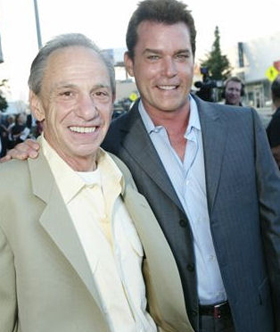
Henry Hill with Goodfellas star Ray Liotta
Finally, Henry Hill has died. He was the “wise guy” who was the inspiration for Martin Scorcese’s “Goodfellas.” Hill was only 69, and died from health problems related to smoking.
Henry Hill, the infamous mob informant whose life of crime was chronicled in the film classic “GoodFellas,” was the first to admit that he did “a lot of bad things back then.”
“I shot at people. I busted a lot of heads, and I buried a lot of bodies,” he told the London-based Daily Telegraph in 2010. “You can try to justify it by saying they deserved it, that they had it coming, but some just got whacked for absolutely no reason at all.”
….
Henry Hill, the infamous mob informant whose life of crime was chronicled in the film classic “GoodFellas,” was the first to admit that he did “a lot of bad things back then.”
“I shot at people. I busted a lot of heads, and I buried a lot of bodies,” he told the London-based Daily Telegraph in 2010. “You can try to justify it by saying they deserved it, that they had it coming, but some just got whacked for absolutely no reason at all.”
RIP, Henry.
Have a fabulous Saturday, and if you’re reading anything interesting today, please share!
Thursday Reads
Posted: May 10, 2012 Filed under: 2012 presidential campaign, Barack Obama, Civil Rights, Democratic Politics, GLBT Rights, legislation, Mitt Romney, morning reads, Republican politics, Team Obama, torture, U.S. Politics, War on Women | Tags: CIA torture tapes, civil unions, Joe Biden, Log Cabin Republcans, Pregnant Workers Fairness Act, racial profling, Reince Priebus, RNC, rural post offices, same-sex marriage, Sheriff Joe Arpaio, waterboarding 43 Comments
Good Morning!!
Yesterday was a great day. President Obama took a clear stance on a very important issue, saying that same sex couples should have the same marriage rights and privileges as every other American. But this really is not about marriage or about LGBT rights. It’s about equal rights for every citizen of this country. The President’s action is a big step in the right direction.
The New York Times has the behind the scenes skinny on how Obama decided to take his stand yesterday.
Before President Obama left the White House on Tuesday morning to fly to an event in Albany, several aides intercepted him in the Oval Office. Within minutes it was decided: the president would endorse same-sex marriage on Wednesday, completing a wrenching personal transformation on the issue.
As described by several aides, that quick decision and his subsequent announcement in a hastily scheduled network television interview were thrust on the White House by 48 hours of frenzied will-he-or-won’t-he speculation after Vice President Joseph R. Biden Jr. all but forced the president’s hand by embracing the idea of same-sex unions in a Sunday talk show interview.
Obama had intended to state his position on the issue before this summer’s Democratic Convention, but Joe Biden’s statement of his support for same-sex marriage last weekend accelerated the decision-making process.
Initially Mr. Obama and his aides expected that the moment would be Monday, when the president was scheduled to be on “The View,” the ABC daytime talk show, which is popular with women….
Yet the pressure had become too great to wait until then, his aides told him; on Monday, the White House press secretary, Jay Carney, was pummeled with questions from skeptical reporters about Mr. Obama’s stance. After the Tuesday morning meeting, Dan Pfeiffer, the president’s communications director, contacted ABC and offered a wide-ranging interview with the president for the following day.
Meanwhile, Mitt Romney announced that he continues to oppose same-sex marriage and he also opposes civil unions that resemble marriage. Appearing on a local Fox station in Colorado, Romney
“Well, when these issues were raised in my state of Massachusetts, I indicated my view, which is I do not favor marriage between people of the same gender, and I do not favor civil unions if they are identical to marriage other than by name,” Romney told KDVR. “My view is the domestic partnership benefits, hospital visitation rights, and the like are appropriate but that the others are not.”
RNC Chairman Reince Priebus responded to Obama’s announcement by suggesting that same-sex marriage would be an issue in the presidential race.
“While President Obama has played politics on this issue, the Republican Party and our presumptive nominee Mitt Romney have been clear,” Priebus said. “We support maintaining marriage between one man and one woman and would oppose any attempts to change that.”
IMO, it would be huge mistake for Romney to focus on social issues in the campaign, his campaign knows it. Just look what happened when Rick Santorum did it. But Romney should be forced to clarify his stance on this issue. Buzzfeed offered five questions to help him do so. Check it out.
Oddly, Log Cabin Republicans were enraged by President Obama’s announcement. Here is the press release the group released yesterday:
“That the president has chosen today, when LGBT Americans are mourning the passage of Amendment One, to finally speak up for marriage equality is offensive and callous,” said R. Clarke Cooper, Log Cabin Republicans Executive Director. “Log Cabin Republicans appreciate that President Obama has finally come in line with leaders like Vice President Dick Cheney on this issue, but LGBT Americans are right to be angry that this calculated announcement comes too late to be of any use to the people of North Carolina, or any of the other states that have addressed this issue on his watch. This administration has manipulated LGBT families for political gain as much as anybody, and after his campaign’s ridiculous contortions to deny support for marriage equality this week he does not deserve praise for an announcement that comes a day late and a dollar short.”
Addicting Info responded to the Log Cabin Republican release:
Here’s the official White House list of stuff the Obama administration has done for the LGBT community. It is not remotely comprehensive. Obama has done more for the LGBT community in three years than every single previous president combined. If that’s “manipulating” the LGBT community, what do the Log Cabin Dummies consider “full-throated support?” Should he divorce Michelle and marry Joe Biden?
As for the claim of “political gain;” what gain would that be? Will moderates suddenly sit up and say, “YES! The hell with the economy! I was only interested in gay rights!”? Will conservatives suddenly feel that their institutional bigotry is misplaced and they should embrace the LGBT community as fellow humans instead of condemning them to burn for eternity as “unnatural?” Will the GOP decide that perhaps gay-baiting is not the way to go and focus on the issues? Hell, gay Republicans can’t even muster any support for Obama. They’re outraged! They’re offended! Not at their own party whose official platform is virulently anti-gay but at that goddamned Obama for not supporting them sooner! Obama gets nothing from supporting gay marriage and only hands the right another cudgel to attack him with.
{{Loud, extended applause}}
Can you stand some more good news? Think Progress reports that on Tuesday,
Congress took up legislation that could significantly impact women’s health — and no, it doesn’t limit contraception or force anything into their vaginas.
The Pregnant Workers Fairness Act aims to protect pregnant women in the workplace from common discrimination — not being allowed to carry a water bottle, for example — that threatens their health and stops them from being productive employees, or from working altogether.
Introduced by Reps. Jerrold Nadler (D-NY), Carolyn Maloney (D-NY), Jackie Speier (D-CA), Susan Davis (D-CA) and George Miller (D-CA), the bill would “ensure that pregnant women are not forced out of jobs unnecessarily or denied reasonable job modifications that would allow them to continue working,”
The Republicans will fight it, and let’s hope lots of pregnant women hear about a new front in the War on Women and punish them in the voting booth.
And here’s just a little more good news from Reuters: U.S. drops plan to close rural post offices.
The U.S. Postal Service said on Wednesday that it is abandoning for now its plan to close thousands of post offices in rural locations and instead will shorten their hours of operation.
The change represents a victory for U.S. lawmakers and rural communities who created a backlash against the cash-strapped agency last summer when it began considering more than 3,600 post offices for closure this year.
Rather than shuttering offices starting next week, when a self-imposed moratorium on closings was set to end, the plan is to cut the operating hours of 13,000 locations with little traffic to between two and six hours a day.
It’s good news/bad news situation, with hours being cut at rural post offices; but it’s a step in the right direction.
And even more good news–can you believe it? The Justice Department announced yesterday that it plans to sue Sheriff Joe Arpaio of Arizona for civil rights violations.
The U.S. Justice Department has been seeking an agreement requiring Arpaio’s office to train officers in how to make constitutional traffic stops, collect data on people arrested in traffic stops and reach out to Latinos to assure them that the department is there to also protect them.
Arpaio has denied the racial profiling allegations and has claimed that allowing a court monitor would mean that every policy decision would have to be cleared through an observer and would nullify his authority.
Justice Department officials told a lawyer for Arpaio on April 3 that the lawman’s refusal of a court-appointed monitor was a deal-breaker that would end settlement negotiations and result in a federal lawsuit.
I hate to ruin the upbeat mood, but I felt I had to include this article from the BBC: ‘Vomiting and screaming’ in destroyed waterboarding tapes. It’s an interview with Jose Rodriguez, head of the CIA Counterterrorism Ceneter, and the man who destroyed the torture tapes. Read it if you can stand it. I think every American needs to know what was done in our name.
What are you reading and blogging about today?

 peej
peej Carissa
 bostonboomer
 dakinikat
 ecocatwoman
 mablue2
 Mama Lopez
 peggysue22
 quixote
 skydancingguestblogger
 Mona (aka Wonk the Vote)



 Sky Dancing
Recent Comments