
Friday Reads
Posted: March 6, 2015 Filed under: Keystone XL pipeline, morning reads 21 CommentsGood Morning!
 I’m going to get a bit wonky today about issues surrounding the oil and gas industry. I’ve been concerned about several things and I thought I’d just wrap them all up into a nice little post for you this morning. First, another bomb train went off yesterday. It derailed then blew up near Galena, Illinois which is, thankfully, mostly farmland.
Earlier today, yet another massive train carrying crude oil derailed and caught on fire, this time in northern Illinois near the Mississippi River. One-hundred-and-three of the the train’s 105 cars were carrying crude oil—from where was not immediately clear—eight of which derailed. Two of the derailed cars have caught on fire, according to BNSF Railway which owns the train, sending plumes of smoke and fire into the sky above Galena, Illinois, a town of just over 3,300.
The image of smoldering oil train cars is now a familiar sight: Incidences of exploding oil trains have been rapidly rising in North America thanks to the fracking boom in North Dakota’s Bakken oil fields (Bakken oil is potentially more flammable than normal crude) and the slow transition away from old, unsafe rail cars. Oil-by-rail carloads are up 4000 percent from last year in the United States and this is the the third derailment in North America in the three weeks, including a massive explosion in West Virginia on February 16 that injured one person and spilled oil into the nearby Kanawha River. In fact, a Department of Transportation report predictedtrains carrying crude and ethanol would derail an average of 10 times per year in the next two decades. This is bad news for people who live near railways and the ecosystems in which they reside.
People living within a mile radius of today’s derailment have begun evacuating, and authorities are monitoring the Mississippi River for leakage.
This is getting to be a fairly common event. What doesn’t make sense is why oil production and shipping is going up with some of these other things going on. I was intrigued by an article in Forbes and have since done some poking around about it various markets related to the oil and gas business. It really doesn’t look good. Here’s the article I saw in Forbes that got me started down this path. We’re producing–and not using–so much oil that the U.S. is running out of places to store it all. Canada seems to be pumping it out at such levels that there’s really no way to deal with it all. Store baby Store?
Oil storage tanks are filling up. There’s a concern, highlighted by this AP story yesterday, that sometime in April U.S. storage could hit “tank tops.” With too much oil and not enough places to put it, the natural market response would be for the price of crude to plummet, maybe even down into the $20 range, deepening the nightmare for America’s frackers and possibly catalyzing a round of defaults and bankruptcies.
At first glance the reasons for the buildup in oil storage seems obvious. America’s oil companies are simply fracking out too much light, sweet crude, right? They are. But that’s not the cause of the glut at the storage hub in Cushing, Okla. A report out this week from the Energy Aspects consultancy explains that the issue is more complicated than that. Blame Canada.
Energy Aspects says that it’s not the American frackers at all. Rather the culprit is barrels of heavy Canadian crude backing up there on their way to Houston.
In November, pipeline company Enbridge started up its $3 billion Flanagan South pipeline. The line originates in Pontiac, Michigan and carries about 550,000 bpd of oil across Illinois, Missouri, Kansas and down to Cushing.
Flanagan South was a watershed project because it accomplishes what Keystone XL was supposed to — creates the first high-volume, direct connection between the heavy oil fields of western Canada and America’s refining megaplex on the Gulf Coast. The only material difference between the two: Keystone would go right over the U.S.-Canada border (and thus require State Dept. approvals), while Flanagan picks up oil that a separate pipeline brings in to Pontiac.
When this heavy oil gets to Cushing, customers paying to send their oil on the line (called “shippers”) have the option of storing it for a time at the hub, or sending it on down to the Gulf via the newly completed Seaway Twin pipeline, owned by Enbridge and Enterprise Products Partners.
If prices were higher for the heavy Canadian crude, those shippers might prefer to send it straight down Seaway. But because of the “contango” situation in the oil markets now — where the price of oil for delivery six months from now is higher than the current spot price — these shippers would rather store it and wait.
Prices are coming down incredibly and that has a lot of ramifications. However, production is not going down at all in response. That almost appears to violate the Law of Supply. What’s going on?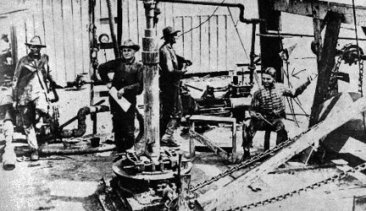
Drillers have been shutting down rigs at a record pace. But oil production isn’t slowing yet. In fact, the U.S. is pumping more crude now than at any time in 40 years. Why? We explore the conundrum in our animated explainer: Why Cheap Oil Doesn’t Stop the Drilling.
The primary reason is that the new rigs that use fracking are more efficient and are not the rigs being taken off line. Also, shale production is cheaper than traditional rigs so they’re still producing profitably at the current prices. However, there are beginning to be some spill over problems and it’s showing up in financial markets. States like Louisiana that are dependent on oil jobs and revenues are beginning to feel the pinch. Investors and banks that have been investing in boom towns that have gone hand-in-hand with the shale oil business are now looking quite risky. The commercial mortgage business and those pesky mortgage backed bond markets are once again looking very shaky. Will Shale town property loans be the next thing to crash the real estate market?
While loans in small, energy-dependent cities make up a fraction of the roughly $600 billion commercial-mortgage bond market, some CMBS deals issued in the past five years have a relatively high exposure to such debt, the Nomura analysts said.
The boom in oil production coincided with the resurgence of the commercial-mortgage backed securities market, where property owners can finance just about any building that produces rental income. Bond sales linked to everything from skyscrapers to strip malls are surging amid a recovery in real estate values after issuance froze for more than a year in the wake of the financial crisis.
Concern among investors is mounting that lenders are lowering their standards amid the rush to sell new bonds, making it easier for borrowers to fund potentially unstable projects. Looser underwriting standards in the CMBS market are enabling landlords with subpar properties to pile on large amounts of debt, Moody’s Investors Service said in a January report.
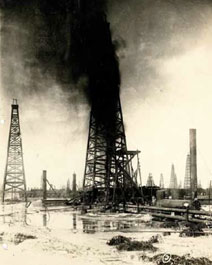 Moody’s already flagged some of the holdings almost a year ago.
Moody’s flagged the potential dangers of inflated apartment rents in North Dakota to commercial-mortgage bond buyers in a March 2014 report.
“Valuations could implicitly assume that rents are sustainable or neglect to address the high level of volatility associated with rapid growth in small towns,” Moody’s analysts led by Tad Philipp wrote in the report.
Even in big cities with diverse economies, the 45 percent drop in oil prices during the past eight months is sapping demand for real estate. In Houston, Shorenstein Properties took a 28-story office tower off the market in December after receiving bids.
The pullback may signal a shift in fortunes for U.S. oil and gas centers such as Houston and Austin, Texas. As recently as October they were named the most attractive markets for buying and developing real estate in 2015 in a survey by PricewaterhouseCoopers and the Urban Land Institute.
I cannot for the life of me figure out why we keep getting on this merry go round. There are so many external costs dumped to taxpayers by this industry that it would behoove us to completely downsize it out of existence.
The average cost of a gallon of gasoline in the U.S. right now is $2.47. If that cost took into account the environmental and human health costs of burning the gasoline, however, it would more than double, according to a new study.
The study, published this week in the journal Climatic Change, created models for the “social cost of atmospheric release,” a method of determining the costs of emissions beyond their market value. According to the study, accounting for the social costs of burning gasoline would add an average of $3.80 per gallon to the pump price, raising the price to $6.27. Diesel has an even higher social cost of $4.80 per gallon.
The study also measured the social costs of other fossil fuels not used at the pump. Coal, for example, would jump from 10 cents per kilowatt hour to 42 cents per kilowatt hour, the study found. And natural gas, which has emerged in recent years as a cheap source of fuel, would see its price rise from 7 cents per kWh to 17 cents per kWh.
In all, according to the study, the environmental costs of producing electricity in the U.S. total $330-970 billion every year.
Right now, the Environmental Protection Agency and other government agencies use theSocial Cost of Carbon to measure the monetary impact of carbon emissions on human health and the environment. But there is no similar measure for fossil fuels in general.
Drew Shindell, professor of climate sciences at Duke’s Nicholas School of the Environment and author of the study, told ThinkProgress that he was interested in putting a price on the health and environmental impacts of pollutants other than carbon because he wasn’t satisfied with the current methods available for comparing sources of energy. People would discuss whether natural gas was more environmentally-friendly than coal, and come to a conclusion using metrics that only took into account the energy source’s global warming potential. But that ignored the fact that burning coal produces copious amounts of other air pollutants besides CO2, including sulfur dioxide, nitrogen oxides and particulates, and that natural gas produces air pollutants too, though to a lesser extent.
So Shindell worked to develop a way that would take both climate considerations and health and environmental considerations into account when looking at different forms of energy.
“I wanted to do something that would treat both air quality and climate consistently,” he said. “It’s easy to get misleading answers on what’s better for society when you’re only looking at a portion of puzzle.”
Multiple studies have confirmed air pollution’s toll on human health. A study last monthfound that air pollution in India is cutting three years off the lives of some of the country’s residents, and a more wide-reaching report from the World Health Organization last year found that air pollution is responsible for seven million deaths around the world every year. Shindell said he knew about air pollution’s effect on health, but he was still surprised at just how high the social cost of burning fossil fuels was, according to the study.
So, in all of the midst of all of this is a very interesting financial move made by ExxonMobil. They’re floating tons of bonds at these currently low interest rates with these dropping oil prices. What are they going to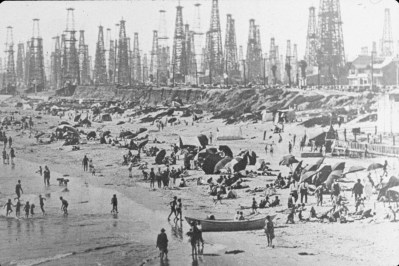 do with the proceeds?
Exxon Mobil Corp. is making a splash with its move to sell $8 billion of debt in a bond offering, the most sizable deal in the energy industry since oil prices began their staggering nosedive.
Bloomberg reports that ExxonMobil held a seven-part sale of both fixed- and floating-rate notes. “Exxon holds top triple-A credit ratings from Moody’s Investors Service and Standard & Poor’s, making it one of only three U.S. corporations — Johnson & Johnson and Microsoft Corp. are the others — that stand on nearly equal footing with governments in debt markets,” the article notes. Because of this status, ExxonMobil had no lack of buyers. A top corporate name combined with higher yields than bonds from sovereign debt make Exxon’s securities a hot commodity.
The sale of securities, the largest portion of which were 10-year, 2.709 percent notes that sold for $1.75 billion, was likely a move to improve Exxon’s financial security. With oil prices still crippled, the move could help the company maintain a war chest for future acquisitions.
Rumors have arisen that the Texas-based company is using the bond sale to prepare for the purchase of BP PLC, the London-based oil giant which some have speculated is susceptible to a takeover.
According to the Dallas Business Journal, Exxon officials have noted in recent months that they remain alert to the values of acquisition possibilities. Given BP’s weakened status in the aftermath of the Deepwater Horizon disaster in 2010, it could be a viable target for other major oil companies.
Can you say Global Monopoly?
None of this should make any of us comfortable. It’s time for us to move beyond energies and machinery that require this deadly, dirty, and toxic resource. It’s ruining our health and environment. It’s caused many a modern war. There have been oil and gas industry booms, busts, and disasters for as long as I can remember during my lifetime. I just can’t figure out why we aren’t working harder to get rid of it all.
What’s on your reading and blogging list today? This is an open thread. I’ve just gotten carried away speculating how long the oil and gas company are going to have a hold on us all.
There Will Be Blood
Posted: February 23, 2012 Filed under: alternative energy, energy, Environment, First Nation, health hazard, Keystone XL pipeline, Northern Gateway pipeline, Regulation, tar sand oil, toxic waste, US & Canada, Water 22 CommentsIf you listen to the GOP, you’d be convinced that the WH, Democrats in general and crazed environmentalists specifically had nixed the Keystone Pipeline out of sheer orneriness or a deep-seated hatred of good ‘ole American Capitalism. Rick Santorum and his Prince of Darkness tour would no doubt smell brimstone in the midst of any pipeline dissent.
Well, surprise, surprise. The push back is not limited to protestors in the United States. Our northern neighbors in Canada have as many if not 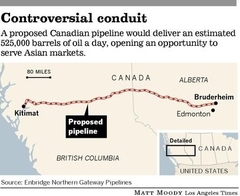 more objections to the Petro State ripping through their country, poisoning watersheds, destroying wildlife and property, causing disease and health problems among citizens, all in the name of King Oil and the desire to wring every last drop out of the planet.
The Hell with Consequences!
First Nation, the indigenous population of Canada, has already predicted:
There will be blood!
Why the outcry? Enbridge, Inc. and the conservative government in Canada is pressing forward with their own pipeline project, Northern Gateway, which would carry 500,000+ barrels a day 731 miles from a town near Edmonton, westward through the Rocky Mountains to a port on the British Columbia [BC] coast. Over 60 indigenous organizations have expressed their opposition, refusing to be moved by the promise of revenue, jobs and an increase in their quality of life because their lives are deeply attached to the natural resources of BC, most importantly the integrity of the salmon trade that depends on the streams and tributaries of the Fraser and Skeena Rivers. In addition, the proposed port on the coast, which would host over 200 oil tankers a year, could expose the Great Bear rainforest to irreparable damage.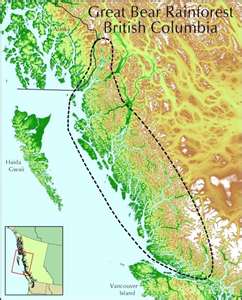
Think Valdez!
Interestingly enough, First Nation opposition is the most serious threat to the Harper government’s enthusiastic endorsement of the pipeline. Unlike other indigenous groups, First Nation never signed treaties with the Canadian government and consequently never relinquished their lands to the Federal government. On the other hand, the government and oil companies have nearly unlimited funds to fight this battle in court.
According to the LA Times report Tribal Chief Jackie Thomas has said:
“It’s going to be a war. The only question is, who’s going to draw the first blood.”
And here’s a chilling factoid: Enbridge is the same company responsible for the leak of 800,000+ gallons [the EPA now reports over 1 million gallons] of tar sand oil into the Kalamazoo River, Michigan. Presumably, the oil company has spent $700 million in reclamation procedures. The area is still a gigantic mess.

Kalamazoo River Spill
Added to the environmental risks [the cost of which is usually ignored] the Northern Pipeline is likely to boost the price of oil for Canadian consumers because like the Keystone proposal, the oil would be exported, not available domestically. The video below is instructive in a grim way.
Why are we having these bitter disputes?
Because we desperately need new energy sources. And there’s tons of money on the line. More importantly, we need an Energy Policy/Strategy, where the pros and cons of transitional sources are seriously considered–the trade-offs, the costs, what we as a culture are willing to put up with or risk until renewable, clean sources are developed and brought online. That’s a plan that would look at what we need today, five years down the road, 10, 20, 30 years. You set benchmarks. You invest in, encourage and unleash innovation, while focusing on increased efficiency from power plants–the traditional US coal power plant is only 35% efficient, meaning we’re wasting most of the energy we’re producing–to autos to buildings to everything else.
Where is that policy? Nada.
The Department of Defense’s push towards alternative energy is not a sign of the US military becoming rabid tree huggers. As the world’s largest institutional energy consumer, the DOD knows the score: the days of cheap fossil fuel are over and our dependence on foreign and unfriendly suppliers is a serious security issue. The Department’s commitment to this reality can be seen in proposed budget expenditures: $3 billion by 2015; $10 billion by 2030.
As GreenTech Media reported, this sort of shift has historical parallels:
Military spending in support of energy is not new. Winston Churchill’s decision in 1911 to move the British Navy, then the world’s then most dominant military force, from coal to oil changed the world’s energy marketplace. The emerging trend in DoD spending on renewables is an equally historic marker.
Neither American or Canadian energy needs should come down to an either/or contest: shut off the electricity or rip the environment apart, robbing people, wildlife, the very planet of their health, sustainability and future. We cannot poison our watersheds, jeopardize our aquifers or damage fertile farmlands for the sake of profits or our unwillingness to conserve and efficiently utilize what we have. King Oil has ruled long enough. The damage they’re willing to exact is unacceptable, even obscene.
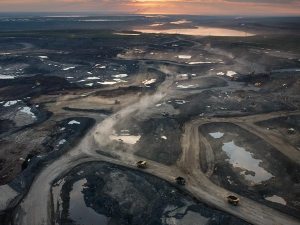
Alberta Tar Oil Sands, Aerial Satellite Shot
First Nation peoples of British Columbia know this and are willing to fight tooth and nail to preserve what’s left of their way of life and cultural traditions. To save the irreplaceable.

Great Bear Rainforest
There may very well be blood. It’s a worthy fight.

 peej
peej Carissa
 bostonboomer
 dakinikat
 ecocatwoman
 mablue2
 Mama Lopez
 peggysue22
 quixote
 skydancingguestblogger
 Mona (aka Wonk the Vote)



 Sky Dancing
Recent Comments