Zhou Wenjiu, Woman with Cat, between the 10th century and the 11th century,
Yesterday, Dakinikat posted in a comment about Justice Samuel Alito’s latest scandal–an upside down American flag flew outside his house for several days after the January 6 insurrection.
The upside down flag was used by MAGA gangsters to represent “stop the steal.” A number of insurrectionists carried it during the attacks on the Capitol.
I’m going to provide more detail and reactions to this story in this post. This is a huge story and I think it shows that Alito and his wife Martha Ann are as bad or worse than Clarence and Ginni Thomas. I hope the Chinese cat art will help you stay calm.
After the 2020 presidential election, as some Trump supporters falsely claimed that President Biden had stolen the office, many of them displayed a startling symbol outside their homes, on their cars and in online posts: an upside-down American flag.
One of the homes flying an inverted flag during that time was the residence of Supreme Court Justice Samuel A. Alito Jr., in Alexandria, Va., according to photographs and interviews with neighbors.
The upside-down flag was aloft on Jan. 17, 2021, the images showed. President Donald J. Trump’s supporters, including some brandishing the same symbol, had rioted at the Capitol a little over a week before. Mr. Biden’s inauguration was three days away. Alarmed neighbors snapped photographs, some of which were recently obtained by The New York Times. Word of the flag filtered back to the court, people who worked there said in interviews.
While the flag was up, the court was still contending with whether to hear a 2020 election case, with Justice Alito on the losing end of that decision. In coming weeks, the justices will rule on two climactic cases involving the storming of the Capitol on Jan. 6, including whether Mr. Trump has immunity for his actions. Their decisions will shape how accountable he can be held for trying to overturn the last presidential election and his chances for re-election in the upcoming one.
Alito reacted to the story by throwing his wife under the bus.
“I had no involvement whatsoever in the flying of the flag,” Justice Alito said in an emailed statement to The Times. “It was briefly placed by Mrs. Alito in response to a neighbor’s use of objectionable and personally insulting language on yard signs.”
Judicial experts said in interviews that the flag was a clear violation of ethics rules, which seek to avoid even the appearance of bias, and could sow doubt about Justice Alito’s impartiality in cases related to the election and the Capitol riot.
The mere impression of political opinion can be a problem, the ethics experts said. “It might be his spouse or someone else living in his home, but he shouldn’t have it in his yard as his message to the world,” said Amanda Frost, a law professor at the University of Virginia.
This is “the equivalent of putting a ‘Stop the Steal’ sign in your yard, which is a problem if you’re deciding election-related cases,” she said.
Interviews show that the justice’s wife, Martha-Ann Alito, had been in a dispute with another family on the block over an anti-Trump sign on their lawn, but given the timing and the starkness of the symbol, neighbors interpreted the inverted flag as a political statement by the couple.
By Qi Baishi, 1864-1957
Neighbors said that the flag had been flying for several days before the photograph was taken. That’s not a brief time in my book.
The longstanding ethics code for the lower courts, as well as the recent one adopted by the Supreme Court, stresses the need for judges to remain independent and avoid political statements or opinions on matters that could come before them.
“You always want to be proactive about the appearance of impartiality,” Jeremy Fogel, a former federal judge and the director of the Berkeley Judicial Institute, said in an interview. “The best practice would be to make sure that nothing like that is in front of your house.”
The court has also repeatedly warned its own employees against public displays of partisan views, according to guidelines circulated to the staff and reviewed by The Times. Displaying signs or bumper stickers is not permitted, according to the court’s internal rule book and a 2022 memo reiterating the ban on political activity.
The revelation is almost certain to prompt calls for Alito, a member of the court’s conservative wing, to recuse himself from several high-profile cases pending before the court this year involving the election and subsequent attack on the US Capitol, including the blockbuster question of whether Trump may claim immunity from federal election subversion charges….
“I had no involvement whatsoever in the flying of the flag,” Alito said in an emailed statement to the Times. “It was briefly placed by Mrs. Alito in response to a neighbor’s use of objectionable and personally insulting language on yard signs.”
The upside-down flag became a symbol of the “Stop the Steal” movement in the weeks and months following the election, in which Trump’s supporters falsely claimed that Biden’s win was illegitimate due to widespread fraud. The inverted flag was widely seen during the January 6, 2021, attack on the US Capitol….
The story will heap further scrutiny on the high court at a time when it is already facing considerable blowback. Justice Clarence Thomas has been the subject of significant criticism and calls for recusal in election-related cases after his wife, conservative activist Virginia “Ginni” Thomas, acknowledged she attended Trump’s rally before the Capitol attack and supported White House efforts to discredit the election results.
By Xu Beihong, 1952
Last fall, in response to a series of revelations about travel accepted by Thomas and Alito, the Supreme Court adopted a code of conduct for the first time. That code guides the justices to “refrain from political activity.”
“Two scenarios are plausible and neither one of them is attractive: Either the gesture was trivial pettiness and ought to be beneath the dignity of the court or it is was intended as meaningful symbolism in which case it is a real problem,” said James Sample, a Hofstra Law School professor who has studied judicial ethics.
Combined with the earlier Thomas revelations, Sample said, “The scenarios amplify the need for Congress to impose meaningful ethics enforcement on a court that steadfastly refuses to police itself.”
This is interesting. Yesterday, a number of people posted on Twitter about remarks that Sydney Powell made about the role Alito was expected to play in the efforts to stop Congress from certifying the Electoral College votes on January 6, 2001.
Attorney Sidney Powell said the January 6 riot at the Capitol could have caused a delay which would have allowed Supreme Court Justice Samuel Alito time to stop the certification of Joe Biden‘s election victory—but that chance was lost when Nancy Pelosi reconvened Congress to complete the process.
Powell, an attorney who has filed numerous lawsuits in a failed bid to overturn former President Donald Trump‘s 2020 election loss, made the comments during an appearance on the conservative Stew Peters Show on Friday.
She said that as a pro-Trump mob stormed the Capitol that day, her team was seeking an emergency injunction to prevent the certification of Biden’s win.
“We were filing a 12th Amendment constitutional challenge to the process that the Congress was about to use under the Electoral Act provisions that simply don’t jive with the 12th Amendment to the United States Constitution,” she said. “And Justice Alito was our circuit justice for that.”
She added: “Louie Gohmert was the plaintiff in our lawsuit, and we were suing the vice president to follow the 12th Amendment as opposed to the Electoral College Act.”
We have known for some time now that the current Supreme Court is not comprised of “conservatives” and “liberals,” or even “jurists” and “reactionaries.” It has split into those who care about the future of the court and the country, and those who do not.
Because the group that cares is much larger than the one that doesn’t, its members could have at any time done many things to signal to the latter group —and we can go ahead and name them, Clarence Thomas and Samuel Alito—that accepting lavish, undisclosed giftsand vacations from billionaire donors who have interests before the court was a rolling, public-confidence-and-democracy-threatening disaster. They said nothing, even as this sordid conduct degraded the nation’s highest court, for many of the reasons powerful individuals often say nothing: To protect the institution at large; to preserve the long-tarnished myth of a collegial court; and because, when there is nothing to be done about it anyhow, what’s the point?
Su Hanchen, Children Playing on a Winter Day, 12th century, National Palace Museum, Taipei, Taiwan
We can certainly quibble (and Alito’s defenders surely will) about whether an upside-down flag really represents “Stop the Steal,” as Kantor’s experts affirm, or some other message of peace and goodwill. We can and will debate over Alito’s claim that his wife hoisted the flag because one of the neighbors hurt their feelings (so, #feminism). But the saddest and most arresting part of this endless downward spiral for the seven jurists who should know better, and the two who do not, is not that they don’t care about what they are doing to the court—it’s how pitifully, shabbily small these ride-or-die political battles really are.
Every one of the Supreme Court’s nine justices is well aware of the recusal statute that binds federal judges and the ethics code that, even in 2021, they purported to consult and follow. Even then, before SCOTUS produced its own totally voluntary, never-say-never ethical guidelines in 2023, internal policy and external law required them to refrain from acting like thin-skinned partisan nuts, and to recuse themselves from relevant cases when they failed to adhere to this standard.
This is a low bar to clear. And yet, in statements to the New York Timesand Fox News’ Shannon Bream, Alito implied that he and his wife, Martha-Ann, simply had no choice but to disrespect the stars and stripes by vulgarly violating the U.S. Flag Code because it was necessary to own a liberal neighbor. The justice told Bream that this neighbor put up a “Fuck Trump” sign—where children might see it!—and then another sign “personally” blaming Martha-Ann for Jan. 6. Finally, “a male in the home” called Martha-Ann “the c-word” while she was on a walk with her husband. All this led her to join countless “Stop the Steal” enthusiasts in hanging her American flag upside down.
On Alito’s ridiculous excuse:
None of the Alitos’ explanations so far even attempt to explain why Martha-Ann landed on this gesture, out of all the possibilities, to further upset and provoke her progressive neighbors. Readers are also left to guess at the true origin of the conflict; are we really supposed to think that the neighbors picked this fight unprovoked, and the Alitos are completely blameless? The justice’s defenders are scrambling to muddy the waters with some alternate explanation, but the truth is crystal clear, and unrefuted by the Alitos themselves: That flag was hung upside down to piss off some libs. At best, Martha-Ann Alito was trolling her neighbor by professing a militant belief that Biden stole the election; at worst, she held that belief sincerely.
Let’s be clear that everything these neighbors stand accused of doing is obviously protected speech under the First Amendment. There is no allegation of genuine harassment or true threats; these people just wanted to express displeasure toward a very public figure and his somewhat public wife. And though Alito seems to believe that he and his wife were within their rights to fight back against an irritating neighbor, the staff who work under Alito at SCOTUS would have no such luxury. The Times piece lays out the strictures on court employees that ban political signs and bumper stickers, “partisan political activity,” and even “nonpartisan political activity” that “could reflect adversely on the dignity or impartiality of the court.” [….]
Xu Beihong, Cat, 1941
So when Alito throws his wife under the bus—the flag was “briefly placed by Mrs. Alito in response to a neighbor’s use of objectionable and personally insulting language on yard signs”—he’s issuing another justification: He gets to break the rules because she was in a fight with the neighbors. He gets to break the rules because the seat on the plane was otherwise unoccupied. He gets to break the rules because the rules are always trying to trip him up and catch him out.
The justice’s perpetual victimhood mentality, which shines through in his opinions and interviews and myriadgrievance-laden speeches, has now literally reached his own front yard. The Alitos are not here fighting some vitally important civic-minded battle about the nature of freedom or democracy. No. This is, as Alito concedes, just payback because of a lawn sign and a bad word. Presumably, fourth-period detention and a note home to the neighbors’ parents were not an option.
Legal experts are lamenting the lack of an enforceable judicial ethics code, with some calling for Supreme Court Justice Samuel Alito’s recusal, following a New York Times report that a symbol of the “Stop the Steal” movement to reject the 2020 election was flown outside Alito’s home in the wake of the Jan. 6 insurrection at the U.S. Capitol.
Ten leading legal experts told Salon Friday that the conduct — the flying of an upside-down flag, a known symbol of the movement to overturn the results of the 2020 presidential election, at a justice’s home — appears to violate the Supreme Court’s own ethics code, adopted last last year, by creating an appearance of bias.
Those experts said it’s far past time for the nine justices who enjoy lifetime appointments to hold themselves to the highest ethical standards. But, they noted, the Supreme Court has shown itself reluctant to do so.
“The situation is out of control,” Richard Painter, a former White House ethics lawyer under President George W. Bush who worked with Justice Alito on his 2006 Senate confirmation, told Salon. “This is after the insurrection, so it’s really him weighing in, getting involved publicly in a dispute over the insurrection.”
The U.S. Flag Code says the flag should only be displayed upside-down as a “signal of distress in instances of extreme danger to life or property.” Movements including the Tea Party and “Stop the Steal” have used upside-down flags as a symbol of protest and despair….
“I don’t know why we have a Supreme Court justice flying a flag upside down, weighing in on an election, why his wife would be doing that,” Painter, a law professor at the University of Minnesota, said. “His wife is well aware of the impartiality obligations of a federal judge.”
Painter said he was not convinced by Alito attributing the up-side down flag to his wife, particularly when it was flown on their joint property. “When the house is used this way, I’d be shocked that she would do that without talking about it with him first.”
By Xu Beihong, 1952
Alito should recuse himself from January 6-related cases.
Painter, who has called for an inspector general for the Supreme Court, said the Times report also raises “serious questions about whether he can impartially adjudicate any case related to Jan. 6.” He also suggested that special counsel Jack Smith should file a motion for Alito’s recusal in the pending Trump v. United States case, in which the Supreme Court will weigh in on presidential immunity from criminal prosecution….
“A more blatant revelation of bias in a pending case is hard to imagine,” Washington & Lee University School of Law professor Jim Moliterno told Salon. “It was literally waving a banner that said, ‘I favor election-deniers.’”
“Who can possibly think he will decide this case in a neutral manner?” Professor Leslie Levin, a University of Connecticut School of Law professor, told Salon. “Of course, Justice Alito’s political leanings were already well-known. But the flag flying incident indicates he has strong views about the facts underlying this case. His decision seems pre-ordained.”
There’s much more from legal exports at the Salon link.
CAPE CANAVERAL, Fla. (AP) — The sun produced its biggest flare in nearly two decades Tuesday, just days after severe solar storms pummeled Earth and created dazzling northern lights in unaccustomed places.
“Not done yet!” the National Oceanic and Atmospheric Administration announced in an update.
It’s the biggest flare of this 11-year solar cycle, which is approaching its peak, according to NOAA. The good news is that Earth should be out of the line of fire this time because the flare erupted on a part of the sun rotating away from Earth.
NASA’s Solar Dynamics Observatory captured the bright flash of the X-ray flare. It was the strongest since 2005, rated on the scale for these flares as X8.7.
Bryan Brasher at NOAA’s Space Weather Prediction Center in Boulder, Colorado said it may turn out to have been even stronger when scientists gather data from other sources.
It follows nearly a week of flares and mass ejections of coronal plasma that threatened to disrupt power and communications on Earth and in orbit. An ejection associated with Tuesday’s flare appeared to have been directed away from our planet, although analysis is ongoing, Brasher noted.
I’m glad it’s not going to affect us, because last time my cell phone malfunctioned and I spent hours texting with tech support trying to get it working again.
Trump Biden debate in 2020
The big news this morning is that President Biden challenged Trump to two debates and Trump accepted. The first debate is now scheduled for June 27. The second one is planned for some time in September, if Trump doesn’t chicken out. The debates will not be under the control of the debate commission, and Biden’s preference is for no live audience.
President Biden and former president Donald Trump agreed Wednesday to a June 27 debate on CNN, hours after Biden announced he would bypass the decades-old tradition of three fall meetings organized by the bipartisan Commission on Presidential Debates.
After Biden publicly embraced a CNN proposal in a social media post, a Trump adviser, who was not authorized to speak publicly, said the presumptive Republican nominee would accept that event. CNN also announced plans for the event.
“I am Ready and Willing to Debate Crooked Joe at the two proposed times in June and September,” Trump wrote earlier Wednesday on Truth Social. “I would strongly recommend more than two debates and, for excitement purposes, a very large venue, although Biden is supposedly afraid of crowds.”
“Just tell me when, I’ll be there,” he continued, before referencing a tag line from professional boxing. “’Let’s get ready to Rumble!!!”
The publicagreement follows private back-channel discussions about possible meetings. The officials with the Biden and Trump campaigns have had informal conversations on debates in recent weeks, focused on meetings that would not involve the commission, according to two people familiar with the discussions who spoke on the condition of anonymity to discuss private events.
The Biden proposal, outlined in a video message and letter to the commission, called for direct negotiations between the Trump and Biden campaigns over the rules, moderators and network hosts for the one-on-one encounters. He proposed a separate vice-presidential debate in July, after the Republican nominating convention and before the Democratic nominating convention.
“Donald Trump lost two debates to me in 2020, and since then he hasn’t shown up for a debate. Now he is acting like he wants to debate me again. Well, make my day, pal. I’ll even do it twice,” Biden said in the video released Wednesday that referenced the weekly break in Trump’s New York criminal trial. “So let’s pick the dates, Donald. I hear you’re free on Wednesdays.” [….]
On the proposed ground rules:
Biden campaign chair Jen O’Malley Dillon cited the commission’s proposed schedule and past struggles to keep candidates from violating the debate rules in the letter explaining the decision.
Trump and Biden in 2020
“The Commission’s model of building huge spectacles with large audiences at great expense simply isn’t necessary or conducive to good debates,” she wrote. “The debates should be conducted for the benefit of the American voters, watching on television and at home — not as entertainment for an in-person audience with raucous or disruptive partisans and donors, who consume valuable debate time with noisy spectacles of approval or jeering.” [….]
The Biden proposal will be the subject of extensive negotiations between the two camps over the coming weeks, with Biden advisers now expecting proposals to come in from networks. Biden’s team has requested that only broadcast networks that hosted Republican primary debates in 2016 and Democratic primary debates in 2020 be eligible to host the first debate. Only four networks — CNN, ABC News, Telemundo and CBS News — hosted debates for both parties during those cycles.
Biden proposed that the moderator should be selected by the broadcast host from its “regular personnel,” with firm time limits for answers, equal speaking time, alternative turns to speak and microphones that are active only during each candidate’s turn. The first debate would take place after the June 15 conclusion of the Group of Seven summit in Italy and the conclusion of Trump’s criminal trial in New York. The September debate would take place before the start of early voting.
Yesterday, Michael Cohen finished his direct testimony in the hush money case, and the defense began cross examining him.
NEW YORK — Donald Trump’s criminal trial finally progressed Tuesday to a confrontation that has been brewing for weeks: the face-off between the former president’s defense team and his former fixer, Michael Cohen.
But after a few initial crackles, it lacked the pop that many had expected.
Todd Blanche with Trump in court
Cohen is the prosecution’s star witness, and during a day-and-a-half of direct examination, he provided critical details about Trump’s knowledge of the cover-up at the heart of the case. So when Trump’s lead attorney, Todd Blanche, stood up after lunch to begin cross-examining him, everyone was waiting to see the Trump team’s strategy for depicting Cohen as a liar with a vendetta.
Blanche’s first question — in which he quoted an off-color insult from Cohen — got the courtroom’s attention. But over several hours, Cohen largely maintained his cool while Blanche attempted to provoke him. And in questions ranging from Cohen’s book profits to what Cohen said during the Robert Mueller investigation, it wasn’t clear if Blanche managed to dent Cohen’s credibility in the hush money case.
Even Trump himself appeared to doze off while his own lawyer was questioning his nemesis.
The cross-examination will continue Thursday (after a scheduled day off on Wednesday), but for now, Cohen seems mostly unscathed.
More on Blanche’s questioning of Cohen:
He began by making it personal: “On April 23, you went on TikTok and called me a ‘crying little shit,’ didn’t you?” Blanche asked Cohen, raising his voice to deliver “shit.”
Prosecutors objected — but not before Cohen blurted out: “That sounds like something I would say.”
Blanche wasn’t done. Moments later, he confronted Cohen with more of his expletive-laden TikTok commentary, including calling Trump a “dictator douchebag” and saying Trump leaves the courtroom to go to “right into that little cage, which is where he belongs, in a fucking cage, like an animal.”
“I recall saying that,” Cohen replied.
But if Blanche’s strategy was to rankle Cohen into displaying some of the ire and petulance he has broadcast on social media and on his podcast, it didn’t work. Cohen maintained a largely placid demeanor, calling Blanche “sir,” and declining to offer colorful descriptions of the events Blanche questioned him about.
When Blanche tried to depict Cohen as a blabbermouth who has frustrated the Manhattan district attorney’s office by repeatedly going on TV to talk about the case against Trump, Cohen said he didn’t recall many requests by prosecutors to keep quiet and insisted they had only occasionally asked him, “please don’t talk about the case.”
“That’s it? They just call you and say that?” Blanche said incredulously.
“Actually, they call my attorney,” Cohen replied.
Trump has been inviting MAGA politicians like Tommy Tuberville and JD Vance to accompany him to court this week. Then they hold press conferences outside the courthouse and attack the judge and prosecution. Yesterday, Trump brought the Speaker of the House, Mike Johnson. This man is second in line for the presidency and he’s being led around by nose by Trump. How humiliating.
The US House was in session on Tuesday with vital business to complete but its speaker, Mike Johnson, was 200 miles north, attending another day in the criminal trial of Donald Trump, the former president and presumptive Republican presidential nominee charged over hush-money payments to an adult film star who claimed an affair.
“President Trump is innocent of these charges,” Johnson said outside court in Manhattan, where Trump faces the first 34 of 88 criminal counts….
Mike Johnson holding forth outside the courthouse in Manhattan
Trump has used his trial as a loyalty test for supporters and vice-presidential hopefuls, both at the courthouse and on social media and TV. On Tuesday, Johnson was joined by the governor of North Dakota, Doug Burgum, the Florida representatives Byron Donalds and Cory Mills, and Vivek Ramaswamy, a biotech entrepreneur who ran for the Republican presidential nomination.
Before proceedings began, as Johnson and other supporters stood behind him, Trump spoke to reporters.
“I do have a lot of surrogates and they are speaking very beautifully,” he said. “They come from all over Washington, and they’re highly respected and they think this is the biggest scam they’ve ever seen.”
Regarding such surrogates’ ability to comment on the trial unencumbered by a gag order over which Trump has been fined and threatened with incarceration, Trump told reporters: “You ask me questions that I’m not allowed to answer.” [….]
One of Johnson’s former Republican colleagues, the anti-Trump conservative Liz Cheney, jibed: “Have to admit I’m surprised that Speaker Johnson wants to be in the ‘I cheated on my wife with a porn star’ club. I guess he’s not that concerned with teaching morality to our young people after all.” [….]
Back on Capitol Hill, the House was due to consider final passage of the Federal Aviation Authority Reauthorization Act. House Democrats were also set to face a series of messaging bills, proposed legislation designed not to pass but to ensnare the other party in difficult political choices.
Mr Johnson said he was speaking out in defence of his “friend,” the former president, and decried the “sham” trial.
“I wanted to be here myself, to call out what is a travesty of justice,” Mr Johnson told reporters. “President Trump is a friend and I wanted to be here to support him.” [….]
Mr Johnson criticized the charge that Mr Trump falsified his business records.
“I think everybody knows he is not the bookkeeper for his company,” he said. “President Trump is innocent of these charges, and again, anyone with common sense can understand what is happening here.”
Mr Johnson is just the latest Republican-elected official to head to New York to show their support for the former president. Senators Rick Scott of Florida, JD Vance of Ohio and Senator Tommy Tuberville are among the many who have made the pilgrimage to the Manhattan courthouse.
The Democratic National Committee mocked the showing.
“Trump’s pathetic band of MAGA extremists seemingly have nothing better to do than echo Trump’s lies and nod approvingly in the background – because they certainly aren’t doing their day jobs of serving their constituents or running a functional political operation,” spokesman Alex Floyd said. “If deploying this motley crew of cranks and conspiracy theorists was the Trump campaign’s ham-handed attempt to divert attention from their candidate’s disappearance from the campaign trail, they’re in for a stormy six months ahead.”
In recent days, several high-profile Republican political figures have traveled to the Manhattan Criminal Court, where Donald Trump is on trial. Outside the courthouse, they addressed the media and attacked key witnesses, the jury, and even the judge’s daughter.
The comments by Trump’s Republican allies are nearly identical to attacks that Trump has made previously in interviews and social media posts. But Judge Juan Merchan has ruled that, in so doing, Trump violated the gag order he imposed to preserve the integrity of the trial. Merchan has already fined Trump for violating the gag order 10times and has warned that future violations could result in incarceration.
Tommy Tuberville holds forth in Manhattan
Merchan’s order prohibits Trump from “directing others to make public statements about known or reasonably foreseeable witnesses.” The order also prohibits Trump from directing others to attack the jury, the court staff, or family members.
Asked on Tuesday if he directed the Republicans to speak about the trial on his behalf, Trump described them as his “surrogates” and praised them for “speaking very beautifully.” Trump has also entered the courthouse flanked by his surrogates, effectively giving them his imprimatur. If Trump directed his surrogates to speak, their comments could constitute criminal contempt of the gag order by Trump….
On Monday, Senator J.D. Vance (R-OH), Congresswoman Nicole Malliotakis (R-NY), and Senator Tommy Tuberville (R-AL) addressed the media in front of the courthouse. On Tuesday, House Speaker Mike Johnson (R-LA), North Dakota Governor Doug Burgum (R), Congressman Byron Donalds (R-FL), former presidential candidate Vivek Ramaswamy (R), and Congressman Cory Mills (R-FL) did the same. Tuesday’s group, in an apparent show of solidarity, wore Trump’s signature blue suit and red tie.
Many of Trump’s surrogates appear to be speaking from a common script.
Read more at the link above. I’m not sure the judge can do anything about this. Trump is slime.
On a recent Tuesday morning, a visibly frustrated Donald Trump sat through a tense hearing in the first-ever criminal trial of a former American president. During a break, he let rip on his social media platform.
New York Justice Juan Merchan, Trump declared on Truth Social, is a “highly conflicted” overseer of a “kangaroo court.” Trump supporters swiftly replied to his post with a blitz of attacks on Merchan. The comments soon turned ugly. Some called for Merchan and other judges hearing cases against Trump to be killed.
“Treason is a hangable offense,” one wrote.
“They should all be executed,” added another.
The April 23 post by Trump and the menacing responses from his followers illustrate the incendiary impact of his angry and incessant broadsides against the judges handling the criminal and civil suits against him. As his presidential campaign intensifies, Trump has baselessly cast the judges and prosecutors in his trials as corrupt puppets of the Biden administration, bent on torpedoing his White House bid.
The rhetoric is inspiring widespread calls for violence. In a review of commenters’ posts on three pro-Trump websites, including the former president’s own Truth Social platform, Reuters documented more than 150 posts since March 1 that called for physical violence against the judges handling three of his highest-profile cases – two state judges in Manhattan and one in Georgia overseeing a criminal case in which Trump is accused of illegally seeking to overturn the state’s 2020 election results.
Those posts were part of a larger pool of hundreds identified by Reuters that used hostile, menacing and, in some cases, racist or sexualized language to attack the judges, but stopped short of explicitly calling for violence against them.
Experts on extremism say the constant repetition of threatening or menacing language can normalize the idea of violence – and increase the risk of someone carrying it out. Mitch Silber, a former New York City Police Department director of intelligence analysis, compared the Trump supporters now calling for violence against judges to the U.S. Capitol rioters who believed they were following Trump’s “marching orders” on Jan. 6, 2021.
“This is just the 2023-2024 iteration of that phenomenon,” Silber said. “Articulating these ideas is the first step along the pathway of mobilizing to violence.”
Stormy Daniels leaving the Trump trial wearing bulletproof vest
Attorney Clark Brewster appeared on CNN’s “Anderson Cooper 360” on Monday, where he revealed how the adult film star wore a bulletproof vest underneath her clothes “every day” until she got to the Manhattan courthouse where the trial is taking place.
“She was concerned about the security coming into New York,” Brewster told host Anderson Cooper and the show’s panelists.
Offering some insight into Daniels’ headspace during the trial, Brewster said, “I can tell you that before she came on Sunday, I mean, she cried herself to sleep.”
“She was paralyzed with fear, not of taking the stand or telling her story, but what some nut might do to her,” he continued. “And I’m genuinely concerned about it as well.”
No matter what happens with Donald Trump’s other criminal cases, we’ll always have New York, where he’s been walloped with two sets of civil penalties and is currently sleeping through his hush-money/election interference criminal trial.
Unfortunately, despite four indictments, it looks like New York is the only trial that will take place before the 2024 election. With more than a little help from his friends, Trump’s delay tactics have been remarkably successful, and he probably won’t see the inside of another criminal courtroom any time soon.
Last week, Trump appointee Judge Aileen Cannon issued a bizarre order that indefinitely delayed Trump’s trial for his mishandling of classified national security documents. It’s the culmination of months of foot-dragging on Cannon’s part, and it’s one that legal experts agree looks equal parts deliberate and incompetent.
Cannon’s May 7 order set 14 pretrial deadlines, vacated the May 20, 2024, trial date that had been tentatively set, and just didn’t bother to set a new one. Her reasoning? Setting a trial date would be “imprudent and inconsistent with the Court’s duty to fully and fairly consider the various pending pre-trial motions before the Court, critical CIPA [Classified Information Procedures Act] issues, and additional pretrial and trial preparations necessary to present this case to a jury.”
That sounds plausible until you remember that Cannon herself is solely responsible for delays in addressing pretrial issues. It’s the judicial equivalent of running around in a hot dog costume declaring that “we’re all trying to find the guy who did this.” Her behavior is so obviously favorable to the former president that one Republican close to Trump told Rolling Stone Cannon is his “favorite member of the Trump campaign,” while another Trump adviser called her “a godsend.”
On the January 6th case:
In addition to Cannon, Trump is getting help from the US Supreme Court, which agreed to hear his absurd immunity claim in the January 6 election interference case — one that Trump’s own lawyer admitted would allow a president to order assassinations of political opponents.
In December 2023, special prosecutor Jack Smith asked the Supreme Court to take the question on an expedited basis but they declined. This meant that the DC Circuit Court of Appeals had to hear the appeal first.
The DC Circuit ruled against Trump on February 6, 2024, and the Supreme Court agreed to hear the case on February 22. Apparently, the Supreme Court didn’t see the issue as particularly pressing and set oral arguments for April 25. During oral arguments, the Court’s conservative wing signaled they didn’t necessarily buy the entirety of Trump’s immunity argument but, as Liz Dye wrote, they “seemed to think the question of whether the president has to obey the laws of this land is a major head scratcher.”
The Georgia case is also “on hold indefinitely”:
The calendar also doesn’t favor the prosecution in the Georgia case, where Trump is charged with racketeering, false statements, forgery, witness tampering, and election fraud. However, where the classified documents and January 6 cases have dragged on with the assistance of Trump appointees, the roadblocks in the Georgia case are mainly the fault of the prosecutor, Fani Willis.
Willis hired her boyfriend, Nathan Wade, as a special prosecutor on the case, and when one of Trump’s co-defendants found out, he moved to dismiss the indictment and disqualify Willis. After a hearing in February, the presiding judge ruled the following month that Willis would not be disqualified. But Trump and eight of his co-defendants asked the Georgia Court of Appeals to allow them to appeal the decision, and last week, the appellate court agreed to hear the case.
No dates for briefing or oral argument have been set. The appellate court has roughly six months to hear and decide the case, which means a decision could come as late as November. Also, the trial court judge will probably refrain from setting a trial date until this is decided.
Unless the Georgia appellate courts move with unusual swiftness, Willis’s misstep here handed Trump the considerable gift of delaying the trial past the election.
At least it does appear that we’ll get a verdict in the New York case, but all this is very dispiriting.
That’s all I have for you today. I hope you find something of interest here.
Did you like this post? Please share it with your friends:
I don’t know if anyone is reading this. I’ve had quite a disturbing day so far. My phone suddenly stopped working and I was unable to make or receive calls. I spent a couple of hours messaging back and forth with tech support, and they finally got things working. Somehow I got thrown off the network and couldn’t get back on. But the guy finally figured it out and I can phone and text again. Fortunately, I got a very kind and patient representative who hung in there with me all that time.
Dakinikat wondered if the problem could have something to do with the solar storm that made the northern lights visible all the way down South. I guess it’s possible. The phone was working yesterday until around 1PM. I didn’t realize there was a problem until later though. Anyway, enough of my boring life.
Almost 15 years ago, I was in bad shape. I was divorced, broke, drinking too much, and living in a dated walk-up next to a noisy bar. (It was only minutes from my young daughter, it had a nice view of the bay here in Newport, and I could afford it.) The local veterinary hospital was a few doors down; they always kept one or two adoptable animals in the window. One day, a gorgeous black cat, with a little white tuxedo patch and big gold-green eyes, showed up in a small cage. I stared at her for a while. She stared back patiently.
Tom NIchols with Carla
I wasn’t taking very good care of myself at that moment, so I decided I couldn’t take care of a cat. I walked on. For weeks, the cat sat there. For weeks, we stared at each other. One day, as I was deep in my cups, I took a walk with a friend and co-worker who also happened to be my next-door neighbor. “You look at that damn cat every day,” he said. “Just go in and get it.”
So I did.
The cat was called “RC” and she was a stray, but her preexisting spaying and good health showed that she’d once had a home. Now she was the queen of the animal clinic: Because of her gentle temperament, the staff would let her out of the cage after hours, and she would sit on their desks while they did their paperwork.
I picked her up. She looked at me as if to say: Yeah, I recognize you. You’re the doofus who stared at me for weeks. I signed the papers and took her home. She was fluffy and black-haired, so I decided I would name her after Carla Tortelli from the show Cheers; thus, she became Carla T. Nichols. She explored the apartment quietly for a day or two, and then, one afternoon, I found her on my bed, stretched out on her back, paws up, purring. Yep, she was saying. This will do.
I was still deeply depressed, but every night, Carla would come and flake out over my keyboard as I struggled to work. That’s enough of that,she seemed to say. And then we would go into the living room, where I would sit in a chair and Carla would sit on the armrest. (We’ve now both seen almost every episode of Law & Order.) Slowly, she added routine to my life, but mostly, we had lots of hours of doing nothing—the quiet time that can feel sort of desolate if you’re alone, but like healing if you have the right company.
Soon, I started to see daylight. I met a woman named Lynn. I laid off the booze. I got help of various kinds.
Lynn started to come to the apartment more often, but Carla gave her a full examination before bestowing approval: That cat was not going to let some newcomer waltz in and wreck the careful feline therapy she’d been providing. Finally, Carla climbed on the pillows one morning and curled up around Lynn’s head. Okay, she was saying. Lynn can stay.
That was the beginning of the turnaround. I hope you’ll go read the rest. It’s a wonderful description of what can happen when you welcome a special animal into your life.
Former President Donald Trump used a dubious accounting maneuver to claim improper tax breaks from his troubled Chicago tower, according to an IRS inquiry uncovered by ProPublica and The New York Times. Losing a yearslong audit battle over the claim could mean a tax bill of more than $100 million.
The 92-story, glass-sheathed skyscraper along the Chicago River is the tallest and, at least for now, the last major construction project by Trump. Through a combination of cost overruns and the bad luck of opening in the teeth of the Great Recession, it was also a vast money loser.
But when Trump sought to reap tax benefits from his losses, the IRS has argued, he went too far and in effect wrote off the same losses twice.
The first write-off came on Trump’s tax return for 2008. With sales lagging far behind projections, he claimed that his investment in the condo-hotel tower met the tax code definition of “worthless,” because his debt on the project meant he would never see a profit. That move resulted in Trump reporting losses as high as $651 million for the year, ProPublica and the Times found.
Emile Munier, A small child reading to a cat
There is no indication the IRS challenged that initial claim, though that lack of scrutiny surprised tax experts consulted for this article. But in 2010, Trump and his tax advisers sought to extract further benefits from the Chicago project, executing a maneuver that would draw years of inquiry from the IRS. First, he shifted the company that owned the tower into a new partnership. Because he controlled both companies, it was like moving coins from one pocket to another. Then he used the shift as justification to declare $168 million in additional losses over the next decade.
The issues around Trump’s case were novel enough that, during his presidency, the IRS undertook a high-level legal review before pursuing it. ProPublica and the Times, in consultation with tax experts, calculated that the revision sought by the IRS would create a new tax bill of more than $100 million, plus interest and potential penalties….
The reporting by ProPublica and the Times about the Chicago tower reveals a second component of Trump’s quarrel with the IRS. This account was pieced together from a collection of public documents, including filings from the New York attorney general’s suit against Trump in 2022, a passing reference to the audit in a congressional report that same year and an obscure 2019 IRS memorandum that explored the legitimacy of the accounting maneuver. The memorandum did not identify Trump, but the documents, along with tax records previously obtained by the Times and additional reporting, indicated that the former president was the focus of the inquiry.
A sex discrimination lawsuit against Donald Trump’s campaign has triggered new accusations that Trump’s lawyers have intentionally covered up settlement payments to women, in violation of federal law.
On Friday, watchdog group Citizens for Responsibility and Ethics in Washington (CREW) filed a complaint with the Federal Election Commission, demanding an investigation into the alleged cover-up. The complaint cites new allegations from 2016 Trump campaign aide A.J. Delgado, which she lodged in a sworn court declaration earlier this week as part of her ongoing discrimination suit against Trump’s political operation.
Delgado’s filing presented evidence of top Trump attorney Marc Kasowitz openly admitting that the campaign wanted to use a law firm to cover up a potential settlement payout in 2017. The arrangement, as Delgado described it, appears specifically designed to evade the consequences of federal disclosure laws that require campaigns to publicly report the identities of payment recipients.
“In other words, the payment would be routed through a middleman, to hide the fact that the Campaign had settled, from the public and the FEC,” Delgado stated. “I thus have direct, personal experience with the Defendant-Campaign hiding settlement payments to women, routing them through a ‘middleman law firm,’ which to the public would only appear as payments ‘for legal services.’”
Delgado also claimed to have “information and reason to believe” that other campaign payments have hidden settlements with women “who raised complaints of gender discrimination, pregnancy discrimination, and sexual harassment.” Those payments, she said, are related to the $4.1 million that flowed to Kasowitz’s law firm over a two-month period immediately following the November 2020 election, as well as millions in mysterious legal reimbursements to the campaign’s compliance firm, Red Curve Solutions, which The Daily Beast first reported earlier this month, prompting a federal complaint.
The declaration is particularly significant in that it captures a direct admission of the campaign’s actual intentions behind this middleman arrangement—to keep the existence of a settlement from the public, and, by doing so, from the FEC itself.
A new Washington Post report that Trump made explicit policy promises to a roomful of Big Oil executives—while urging them to raise $1 billion for his campaign—is a powerful story in part because it wrecks what’s left of that mystique. In case you didn’t already know this, it shows yet again that if Trump has employed that aforementioned knowledge of elite corruption and self-dealing to any ends in his public career, it’s chiefly to benefit himself.
James Pelham, little girl reading with her cat
That counter narrative is a story that Democrats have a big opportunity to tell—if they seize on this news effectively. How might they do that?
For starters, the revelations seem to cry out for more scrutiny from Congress. Democratic Senator Sheldon Whitehouse of Rhode Island, who has been presiding over hearings into the oil industry as chair of the Budget Committee, says it’s “highly likely” that the committee will examine the new revelations.
“This is practically an invitation to ask more questions,” Whitehouse told me, describing this as a “natural extension of the investigation already underway.”
There’s plenty to explore. As the Postreports, an oil company executive at the gathering, held at Trump’s Mar-a-Lago resort last month, complained about environmental regulations under the Biden administration. Then this happened:
Trump’s response stunned several of the executives in the room overlooking the ocean: You all are wealthy enough, he said, that you should raise $1 billion to return me to the White House. At the dinner, he vowed to immediately reverse dozens of President Biden’s environmental rules and policies and stop new ones from being enacted, according to people with knowledge of the meeting, who spoke on the condition of anonymity to describe a private conversation.
Giving $1 billion would be a “deal,” Trump said, because of the taxation and regulation they would avoid thanks to him, according to the people.
Obviously industries have long donated to politicians in both parties in hopes of governance that takes their interests into account, and they explicitly lobby for this as well. But in this case, Trump may have made detailed, concrete promises while simultaneously soliciting a precise amount in campaign contributions.
For instance, the Post reports, Trump vowed to scrap Biden’s ban on permits for new liquefied natural gas exports “on the first day.” He also promised to overturn new tailpipe emission limits designed to encourage the transition to electric vehicles, and he dangled more leases for drilling in the Gulf of Mexico, “a priority that several of the executives raised.”
“The phrase that instantly came to mind as I was reading the story was ‘quid pro quo,’” Whitehouse told me. He also pointed to a new Politico report that oil industry officials are drawing up executive orders for Trump to sign as president. “Put those things together and it starts to look mighty damn corrupt,” Whitehouse said.
FAIRHOPE, Alabama — Supreme Court Justice Clarence Thomas told attendees at a judicial conference Friday that he and his wife have faced “nastiness” and “lies” over the last several years and decried Washington, D.C., as a “hideous place.”
Thomas spoke at a conference attended by judges, attorneys and other court personnel in the 11th Circuit Judicial Conference, which hears federal cases from Alabama, Florida and Georgia. He made the comments pushing back on his critics in response to a question about working in a world that seems meanspirited.
Jan Steen, Children want to teach a cat reading
“I think there’s challenges to that. We’re in a world and we — certainly my wife and I the last two or three years it’s been — just the nastiness and the lies, it’s just incredible,” Thomas said.
“But you have some choices. You don’t get to prevent people from doing horrible things or saying horrible things. But one you have to understand and accept the fact that they can’t change you unless you permit that,” Thomas said.
Thomas has faced criticisms that he accepted luxury trips from a GOP donor without reporting them. Thomas last year maintained that he didn’t have to report the trips paid for by one of “our dearest friends.” His wife, conservative activist Ginni Thomas has faced criticism for using her Facebook page to amplify unsubstantiated claims of corruption by President Joe Biden, a Democrat.
He did not discuss the content of the criticisms directly, but said that “reckless” people in Washington will “bomb your reputation.”
“They don’t bomb you necessarily, but they bomb your reputation or your good name or your honor. And that’s not a crime. But they can do as much harm that way,” Thomas said.
His reputation is already shot to hell. Why doesn’t he just resign and get out of Washington if he hates it so much?
Less than six months out from the presidential contest, leading Republicans, including several of Donald J. Trump’s potential running mates, have refused to commit to accepting the results of the election, signaling that the party may again challenge the outcome if its candidate loses.
In a series of recent interviews, Republican officials and candidates have dodged the question, responded with nonanswers or offered clear falsehoods rather than commit to a notion that was once so uncontroversial that it was rarely discussed before an election.
The evasive answers show how the former president’s refusal to concede his defeat after the 2020 election has ruptured a tenet of American democracy — that candidates are bound by the outcome. Mr. Trump’s fellow Republicans are now emulating his hedging well in advance of any voting.
For his part, Mr. Trump has said he will abide by a fair election but has also suggested that he already considers the election unfair. Mr. Trump frequently refers to the federal and state charges he is facing as “election interference.” He has refused to rule out the possibility of another riot from his supporters if he loses again.
“If we don’t win, you know, it depends,” Mr. Trump said last month when asked by Time magazine about the prospect of political violence. “It always depends on the fairness of an election.”
The authors go on to list several prominent Republicans who have refused to say if they will accept the election results. Read the rest at the NYT.
I’m going to end there. I’m really stressed out by my phone issue and a think I need a nap. Take care everyone.
Did you like this post? Please share it with your friends:
A woman sewing blue denim pants, by “Master of the Blue Jeans.”
I’m going to begin today with a story that has nothing to do with politics or current events–just because I think it’s interesting. Did you know that people wore blue jeans way back in the 16th century? I didn’t. An art exhibit will soon open in Paris that will focus on a mysterious artist, known only as “Master of the Blue Jeans.”
An exhibition centered on the “Master of the Blue Jeans” is opening in Paris this month—and the work on display is not that of Levi Strauss, founder of the eponymous clothing company, but rather a 17th-century Italian painter.
The upcoming show at Galerie Canesso features two paintings by the mysterious artist, who was active in northern Italy in the 1600s and is known only by his “master” moniker. The painter’s oil canvases depict early iterations of the stiff blue fabric beloved today, as worn by Italian peasants. According to a statement, the pieces have proved to be important artifacts in garment history, “pushing back [blue jeans’] provenance by centuries.”
Speaking with Artnet’s Vittoria Benzine, Maurizio Canesso, an art collector and the gallery’s founder, says, “People are still not very familiar with the true history of blue jeans, as they confuse it with the material made by Levi Strauss.”
In truth, Canesso argues, when the American businessman behind Levi’s jeans started selling denim work pants in the late 1800s, he merely added metal rivets and structure to a fabric that already boasted a storied European past.
“Jeans come from Genoa, while denim comes from the French city of Nîmes,” says Canesso. Blue jeans were made with perpendicular stitches in northwest Italy, while denim was woven in chevron patterns in southern France. But the key component of the fabric’s history is its coloration.
“Until the 11th century, no one could wear blue fabric because they didn’t know how to make blue color adhere,” Canesso says. “Only in the year 1000 did this begin to happen using woad leaves, and at a very high cost. The genius of the Genoese was to find the indigo stone in India and make this an industrial and therefore low-cost process.”
The ten denim-themed paintings attributed to the master were previously thought to be the work of several different artists. But in 2004, curator Gerlinde Gruber reattributed the group of artworks to a single unnamed painter then dubbed the Master of the Blue Jeans. By 2010, Canesso had acquired all of the master’s works, and he presented them in an exhibition at his Paris gallery that same year.
“Unfortunately, we have no new theories about who the Master of the Blue Jeans was,” Véronique Damian, an art historian at Galerie Canesso, tells the Observer’s Vanessa Thorpe. Evidence indicates the artist spent the bulk of his career in Italy’s northern region of Lombardy, though he may trained elsewhere.
I’m including some of the artist’s work in this post, just because.
In the more painful world of politics, Trump had a bad day in New York yesterday, and he got some bad news in India; but he got some gifts from judges in Florida and Georgia.
As I’m sure you’re aware, Stormy Daniels testified in Trump’s hush money case yesterday.
Stormy Daniels, the adult-film actress at the center of Donald Trump’s hush money trial, testified Tuesday about a disturbing sexual encounter she says she had with him, leading to angry, profane muttering from the former president that alarmed the judge.
New York Supreme Court Justice Juan Merchan called Trump’s lawyer Todd Blancheto a sidebar during a midday break to say that Trumpwas “cursing audibly” and possibly intimidating Daniels, who had begun testifying, according to a trial transcript.
Beggar Boy with a Piece of Pie (wearing a denim jacket)
“I understand that your client is upset at this point,” Merchan said to the defense attorney,according to the transcript,“but he is cursing audibly and he is shaking his headvisually and that’s contemptuous. It has the potential to intimidate the witness and the jury can see that.”
Blanche assured the judge he would speak to Trump.
“I am speaking to you here at the bench because I don’t want to embarrass him,” Merchan said. “You need to speak to him. I won’t tolerate that.”
The exchange punctuated a day of rage — sometimes whispered from the defense table, sometimes declared loudly by Daniels from the witness stand.
It was one of several surreal moments on the 13th day of the first criminal trial of a former U.S. president, including descriptions by Daniels of their alleged sexual encounter in 2006 that were so detailed that defense attorneys demanded a mistrial.
While Merchan rejected their request, Daniels at times seemed to be describing nonconsensual sex that could be considered highly prejudicial for the jury, which in turn could give Trump — the presumptive Republican presidential nominee — solid grounds to appeal if he is found guilty.
It sounds like the sex actually was nonconsensual though. Daniels’ description of what happened sounds very much like a date rape situation in which she was taken advantage of by a much older and more powerful man. She was 27. He was 60. He was much taller and stronger. She was invited for dinner, but there was no dinner. When she was ready to leave, she went to the bathroom. When she came back, he was on the bed in boxers. She tried to leave, but he blocked the door. This description is from Harry Litman on Twitter:
thought time to go. when opened the bathroom door, Trump had come in and was on the bed, in boxer shirts and a t-shirt. she was startled. felt like room spun in full motion. blood leaves my hands and feet. “ohmygod — what did I miss to get here?” she laughed nervously
The next thing I knew I was on the bed. opposite side of bed. missionary position. objection – sustained
I blacked out. but I was not drugged in any way, no alcohol. didn’t feel threatened physically “There was an imbalance of power for sure. but I was not threatened verbally or physically”
Had sex with him on the bed. Merchan sustaining objections to details. Staring at ceiling didn’t know how I got there. sustained. stricken touch his skin? objection sustained. he wasn’t wearing a condom. concerning to her but didn’t say anything.
sex was brief. remembers getting dressed. sitting on edge of bed, noticed completely dark outside. hard to get shoes on, hands shaking so hard. DJT: “oh it’s great, let’s get together again honey bunch.” I just wanted to leave. DVD she signed was on nightstand.
DJT: “We have to get together again soon” “we were so fantastic together. talked about the show” I just left as fast as I could. Didn’t express any concern about Melania. or mention her. didn’t have dinner. took cab back to hotel.
I felt ashamed I didn’t stop the sex so I didn’t tell many people about it. Remembered some additional details later. Merchan very stern about level of detail — wants to keep it spare.
It’s pretty clear from Daniels’ description that she was traumatized. I doubt if the judge understands that, but maybe some jurors will. Just because she is a porn actress doesn’t mean she can’t be raped. Her description is also reminiscent of E. Jean Carroll’s experience–Trump lifted her up against the wall and grabbed her genitals before she realized what was happening. It’s also reminisce of his own description in the Access Hollywood tape–how he can grab women “by the pussy. If you’re a star they let you do it.”
Daniels matters for reasons outside of the courtroom and the specifics of this hush-money trial. Daniels’ story is yet another reminder of what may prove to be Trump’s electoral downfall: His bottomless misogyny.
On the witness stand, Daniels reportedly spoke quickly and was apparently quite nervous. Initially, her story of meeting Trump sounded funny. She painted him as a pathetic older man trying — and failing — to impress the younger woman. When he first asked her to dinner, she replied “no,” but with an expletive. Her publicist eventually talked her into it, hoping Daniels could leverage the connection into a spot on “The Apprentice.” In his hotel room, she described him wearing “silk or satin” pajamas and asked him to put on real clothes. He allegedly used the “don’t even sleep in the same room” line when she asked about his wife, Melania, who had recently had a baby. Daniels described Trump as “pompous” and “arrogant.” She recounted how she jokingly spanked him with a magazine, hoping to tease him into being less of a jerk.
Then the tone of her story changed, as she described how they came to have sex. Trump waited until she was in the bathroom, Daniels said, and then he stripped down to boxer shorts and a T-shirt. “The room spun in slow motion,” she recalled on the witness stand. When she made for the door, “he was bigger and blocking the way,” she said of Trump. She denied it was sexual assault, however, because “I was not threatened either verbally or physically.” [….]
Whether or not Trump’s sexual encounter with Daniels was consensual in the legal sense, she describes it as unwanted.
“I didn’t say anything at all,” she told the court repeatedly. Claiming that she “blacked out” during the encounter, afterward, Daniels said, “my hands were shaking so hard” and “I felt ashamed that I didn’t stop it and that I didn’t say ‘No.'”
Another painting by Master of the Blue Jeans
A person doesn’t have to be threatened in order for sex to be nonconsensual. Back to Marcotte’s piece:
Since the release of the “Access Hollywood” video in 2016, in which Trump can be heard bragging about sexual assault, the Beltway media has repeatedly tried to move on from the story of Trump’s legion of issues with women. Indeed, when Carroll’s accusations first came out in 2019, the press barely paid any mind. But the story of his rampant misogyny has never fully gone away. There was the Women’s March that overshadowed his 2017 inauguration. Then the over two dozen women who stepped forward with stories of being subject to the sexual harassment and assault Trump himself described so vividly. Trump, of course, is more responsible than any other person on the planet for the overturn of Roe v. Wade and the stampede of Republican state legislators banning abortion. He promised to stack the Supreme Court with anti-choice justices, and his three appointees provided the votes necessary in Dobbs v. Jackson Women’s Health, which ended the legal right to abortion. While Trump has tried to make moderate-sounding noises on this issue, he keeps inadvertently revealing his anti-choice radicalism. In a recent Time interview, for instance, he indicated that he’s fine if states “monitor women’s pregnancies so they can know if they’ve gotten an abortion.”
On the stand, Daniels provided ugly details about how Trump treated her, and about how Trump treats, and views, women. These insights are notable, but they’re not new. In 2016, leaked audio of Trump making grotesque and sexist comments about women to Access Hollywood host Billy Bush almost derailed his presidential campaign. Last year, Trump was held liable for sexual assaulting and then repeatedly defaming advice columnist E. Jean Carroll.
But Daniels’s testimony is a reminder that contempt and mistreatment of women is a core theme of Trump’s life and politics. Both the press and Democratic opponents have struggled to make this issue central to 2024, even though abortion rights and women’s health care are the key issues of the campaign. It’s unclear whether the trial will spark more reporting and discussion of Trump’s treatment of and attitudes about women. But it should….
Daniels’s testimony is intended to establish the background facts of the payment. It also, though, paints Trump as a liar, a bully, and a sexual manipulator. Daniels said while she was in Trump’s hotel room, she went to the bathroom, and when he came out he was in his boxer shorts, a moment Daniels describes as “like a jump scare.” She said, “the room spun in slow motion” and she realized “I’ve put myself in this bad situation.”
Daniels is careful to emphasize that Trump did not physically coerce her. He did, however, according to Daniels, suggest that if she cooperated with him he could help her career through his connections and a possible appearance on the Celebrity Apprentice reality show, where Trump was the star. She eventually agreed to have sex even though Trump did not use a condom — she was adamant about using condoms in her adult film shoots.
By Master of the Blue Jeans.
She testified that during sex she stared at the ceiling and tried to think of something else, and afterwards she had trouble dressing because her hands were shaking. She said, “I felt ashamed that I didn’t stop it and that I didn’t say no.”
Daniels kept in touch with Trump for some time because he was still offering her the chance to appear on Celebrity Apprentice, which would have been a huge mainstream boost to her career. She met with Trump once more in Los Angeles, at which point “he kept trying to make sexual advances, putting his hand on my leg, scooting closer.” She rebuffed him, and in a later phone call he admitted he was not going to put her on his television show. At that point she ceased communicating with him.
Again, Daniels has not accused Trump of sexual harassment or violence, and she says their encounter was consensual. Her testimony makes clear, though, that Trump was pressuring her for sex in return for business opportunities — a variation on the ugly tradition of the Hollywood casting couch. We don’t know if Trump ever had any intention of keeping his promises or of helping Daniels. But whether he did or not, his actions as she describes them were sleazy at best, and she found the experience painful and traumatic enough to leave her literally shaking.
The encounter doesn’t sound consensual to me. As I said above, it sounds like date rape.
The judge presiding over Donald Trump’s criminal case in Florida — on charges that he hoarded classified secrets at his Mar-a-Lago estate after his presidency — has indefinitely postponed the trial, once scheduled for May 20.
The date had been widely expected to move amid a tangle of pretrial conflicts between special counsel Jack Smith and Trump’s attorneys. Smith had urged Judge Aileen Cannon to reschedule the trial to begin on July 8, but an order from the judge on Tuesday afternoon suggested that she is unlikely to even decide on a new trial date before late July.
Cannon, a Trump appointee who took the bench in late 2020, indicated in the order that, before setting a new trial date, she intends to resolve the backlog of other issues in the case that have piled up on her plate. Smith’s defenders have criticized Cannon for what they see as a plodding pace in resolving pretrial matters, and tensions between the special counsel and the judge have flared in recent months over a series of puzzling rulings that threatened to derail the case.
“[F]inalization of a trial date at this juncture — before resolution of the myriad and interconnected pre-trial and [classified evidence] issues … would be imprudent and inconsistent with the Court’s duty to fully and fairly consider the various pending pre-trial motions,” Cannon wrote in the five-page order.
That reshuffling further clouds the picture for Smith, who is also awaiting a Supreme Court ruling on presidential immunity that could determine whether his other case against Trump — charges in Washington D.C. for attempting to subvert the 2020 election — can move forward this year….
Trump has sought to delay all of his criminal cases until after this year’s election. If he wins, he could shut down the two federal cases brought by Smith, and the state cases in New York and Georgia also might have to be frozen.
The Georgia Court of Appeals on Wednesday decided to hear an appeal of a judge’s ruling allowing District Attorney Fani Willis to remain at the helm of Fulton County’s election interference case against former President Donald Trump.
The court’s decision almost certainly means a significant delay of a trial here for Trump and his 14 co-defendants and signals that Willis’ leadership role isn’t guaranteed. It is unclear how long the appeals court will take to decide the issue but they are not known for moving swiftly.
Farmers wearing jeans, 1930s
“There’s no way this case gets to trial this year,” said Atlanta defense attorney Andrew Fleischman, who is closing following the case. “I would expect the appeals court to issue its opinion some time next year.”
On March 29, Superior Court Judge Scott McAfee issued a “certificate of immediate review,” which allowed the defendants to appeal his ruling to the Georgia Court of Appeals before a trial begins.
Under Appeals Court rules, such a pretrial — or interlocutory — appeal is typically assigned to a three-judge screening panel. And all it takes is for one of those judges to decide whether the court accepts the appeal. The court’s order one-page order did not divulge which judge voted to grant the application.
In his order granting the pre-trial review, McAfee said he will continue working on the case, resolving pending motions, while the appeals court takes up the removal issue.
The bad news for Trump is that he is losing a significant percentage of Republican voters in the primaries, which are still going on. Niki Haley is still getting votes. Adam Wren and Madison Fernandez at Politico: Unexpected warning signs for Trump in busy Indiana primary.
In 2016, Indiana put Donald Trump on the doorstep of the GOP presidential nomination. But eight years later, the state he called “Importantville” delivered his campaign some flashing red warning signs as Nikki Haley cleaned up in the suburbs.
By virtue of its late-in-the-nominating-calendar primary, the Hoosier state has always occupied a unique and occasionally powerful perch to make or break candidacies: Sen. Ted Cruz and then-Ohio Gov. John Kasich dropped out immediately after Trump’s victory that year. But the barn-red state also often acts as a pace car for Republicans nationally.
And in a primary that saw a record-breaking $98 million splash across the state, according to AdImpact, Tuesday was no exception.
A zombie Haley candidacy continued to punch above its weight in the Trumpiest of states: The former South Carolina governor is on track to break 20 percent for the first time since she dropped out of the race two months ago.
Read more at the link.
I don’t know if you’ve been following the reporting about New York Times editor Joe Kahn and his pathetic explanations for why his paper seems to be rooting for another Trump presidency.
Joe Kahn, after two years in charge of the New York Times newsroom, has learned nothing.
He had an extraordinary opportunity, upon taking over from Dean Baquet, to right the ship: to recognize that the Times was not warning sufficiently of the threat to democracy presented by a second Trump presidency.
But to Kahn, democracy is a partisan issue and he’s not taking sides. He made that clear in an interview with obsequious former employee Ben Smith, now the editor of Semafor.
Kahn accused those of us asking the Times to do better of wanting it to be a house organ of the Democratic party:
To say that the threats of democracy are so great that the media is going to abandon its central role as a source of impartial information to help people vote — that’s essentially saying that the news media should become a propaganda arm for a single candidate, because we prefer that candidate’s agenda.
But critics like me aren’t asking the Times to abandon its independence. We’re asking the Times to recognize that it isn’t living up to its own standards of truth-telling and independence when it obfuscates the stakes of the 2024 election, covers up for Trump’s derangement, and goes out of its way to make Biden look weak.
And to the extent that Kahn has changed anything in the Times newsroom since Baquet left, it’s to double down on a form of objectivity that favors the comfortable-white-male perspective and considers anything else little more than hysteria.
Throwing Baquet under the bus, Kahn called the summer of the Black Lives Matter protests “an extreme moment” during which the Times lost its way.
“I think we’ve learned from it. I think we found our footing after that,” he said.
I translate that to mean that the old guard has reasserted total control over the rabble.
Read the rest at Press Watch.
I’ll wrap this up with a couple of creepy stories about Robert Kennedy Jr.
In 2010, Robert F. Kennedy Jr. was experiencing memory loss and mental fogginess so severe that a friend grew concerned he might have a brain tumor. Mr. Kennedy said he consulted several of the country’s top neurologists, many of whom had either treated or spoken to his uncle, Senator Edward M. Kennedy, before his death the previous year of brain cancer.
Several doctors noticed a dark spot on the younger Mr. Kennedy’s brain scans and concluded that he had a tumor, he said in a 2012 deposition reviewed by The New York Times. Mr. Kennedy was immediately scheduled for a procedure at Duke University Medical Center by the same surgeon who had operated on his uncle, he said.
While packing for the trip, he said, he received a call from a doctor at NewYork-Presbyterian Hospital who had a different opinion: Mr. Kennedy, he believed, had a dead parasite in his head.
The doctor believed that the abnormality seen on his scans “was caused by a worm that got into my brain and ate a portion of it and then died,” Mr. Kennedy said in the deposition.
Gross. Maybe that explains some of his weird ideas?
A right-wing social media influencer hired by Robert F. Kennedy Jr.’s presidential campaign who previously said Jan. 6 was “Democrat misdirection” appears to have himself been on the restricted grounds of the U.S. Capitol during the attack.
Marilyn Monroe in blue jeans
NBC News first reported that Kennedy’s campaign hired Zach Henry’s firm, Total Virality, for “influencer engagement” in March. Henry had worked as deputy communications director for Republican Vivek Ramaswamy’s presidential campaign, as well as for Blake Masters during his Senate run in Arizona.
Henry, as NBC News reported, had posted that Jan. 6 was “no MAGA insurrection Just more Democrat misdirection” and appears to have embraced conspiracy theories about the Capitol attack, including posting that “antifa” was behind it, which is false.
But photos and videos uncovered by NBC News and online “sedition hunters,” who have aided the FBI in hundreds of cases against Capitol rioters, appear to show Henry among the mob outside the Capitol on Jan. 6, 2021, beyond the previously established police lines, although it is unclear whether any of the barricades and “restricted” signs remained by the time he arrived.
There is no indication that Henry entered the Capitol or that he engaged in assaults on police officers or in destruction of property. Federal prosecutors have almost entirely focused their resources on Jan. 6 participants who either went inside the building or committed violence or destruction outside it, so there is little chance that Henry would be charged; the few nonviolent Jan. 6 defendants who were charged solely for going on restricted Capitol grounds were generally charged with misdemeanors.
But Henry’s presence on Capitol grounds would be significant given his previous social media posts about Jan. 6 and his new position on Kennedy’s campaign as Kennedy runs for president as an independent against former President Donald Trump.
That’s it for me today. What stories have you been following?
Did you like this post? Please share it with your friends:
The Supreme Court hears arguments on Trump’s immunity claim, John Buss, @repeat1968.
Good Day, Sky Dancers!
I got the cutest picture of the granddaughters today. The girls were smiling and looking at each other with adoration. Both were pretty in pink. All I can think of is what kind of country they may inherit.
I watched and listened to trials and hearings that were so surreal that I was pretty sure we’d entered the Evil Spock Timeline. I remember when the Supreme Court protected everyone’s rights. Now, rights are confined to those who brought the men there and paid for their holidays. It was like watching a Skeleton Dance. Not one TV Lawyer could find anything constitutional about the show they put on yesterday. We all laughed at him when he said,‘ I Could … Shoot Somebody, And I Wouldn’t Lose Any Voters’ Evidently, he can do worse than that, and the Supreme Court would make up something to cover his farty, diapered ass.
For three long years, Supreme Court watchers mollified themselves (and others) with vague promises that when the rubber hit the road, even the ultraconservative Federalist Society justices of the Roberts court would put democracy before party whenever they were finally confronted with the legal effort to hold Donald Trump accountable for Jan. 6. There were promising signs: They had, after all, refused to wade into the Trumpian efforts to set aside the election results in 2020. They had, after all, hewed to a kind of sanity in batting away Trumpist claims about presidential records (with the lone exception of Clarence Thomas, too long marinated in the Ginni-scented Kool-Aid to be capable of surprising us, but he was just one vote). We promised ourselves that there would be cool heads and grand bargains and that even though the court might sometimes help Trump in small ways, it would privilege the country in the end. We kept thinking that at least for Justices Brett Kavanaugh and Neil Gorsuch and Chief Justice John Roberts, the voice of reasoned never-Trumpers might still penetrate the Fox News fog. We told ourselves that at least six justices, and maybe even seven, of the most MAGA-friendly court in history would still want to ensure that this November’s elections would not be the last in history. Political hacks they may be, but they were not lawless ones.
For three long years, Supreme Court watchers mollified themselves (and others) with vague promises that when the rubber hit the road, even the ultraconservative Federalist Society justices of the Roberts court would put democracy before party whenever they were finally confronted with the legal effort to hold Donald Trump accountable for Jan. 6. There were promising signs: They had, after all, refused to wade into the Trumpian efforts to set aside the election results in 2020. They had, after all, hewed to a kind of sanity in batting away Trumpist claims about presidential records (with the lone exception of Clarence Thomas, too long marinated in the Ginni-scented Kool-Aid to be capable of surprising us, but he was just one vote). We promised ourselves that there would be cool heads and grand bargains and that even though the court might sometimes help Trump in small ways, it would privilege the country in the end. We kept thinking that at least for Justices Brett Kavanaugh and Neil Gorsuch and Chief Justice John Roberts, the voice of reasoned never-Trumpers might still penetrate the Fox News fog. We told ourselves that at least six justices, and maybe even seven, of the most MAGA-friendly court in history would still want to ensure that this November’s elections would not be the last in history. Political hacks they may be, but they were not lawless ones.
On Thursday, during oral arguments in Trump v. United States, the Republican-appointed justices shattered those illusions. This was the case we had been waiting for, and all was made clear—brutally so. These justices donned the attitude of cynical partisans, repeatedly lending legitimacy to the former president’s outrageous claims of immunity from criminal prosecution. To at least five of the conservatives, the real threat to democracy wasn’t Trump’s attempt to overturn the election—but the Justice Department’s efforts to prosecute him for the act. These justices fear that it is Trump’s prosecution for election subversion that will “destabilize” democracy, requiring them to read a brand-new principle of presidential immunity into a Constitution that guarantees nothing of the sort. They evinced virtually no concern for our ability to continue holding free and fair elections that culminate in a peaceful transfer of power. They instead offered endless solicitude for the former president who fought that transfer of power.
However the court disposes of Trump v. U.S., the result will almost certainly be precisely what the former president craves: more delays, more hearings, more appeals—more of everything but justice. This was not a legitimate claim from the start, but a wild attempt by Trump’s attorneys to use his former role as chief executive of the United States to shield himself from the consequences of trying to turn the presidency into a dictatorship. After so much speculation that these reasonable, rational jurists would surely dispose of this ridiculous case quickly and easily, Thursday delivered a morass of bad-faith hand-wringing on the right about the apparently unbearable possibility that a president might no longer be allowed to wield his powers of office in pursuit of illegal ends. Just as bad, we heard a constant minimization of Jan. 6, for the second week in a row, as if the insurrection were ancient history, and history that has since been dramatically overblown, presumably for Democrats’ partisan aims.
All this with the husband of an insurrectionist sitting on the bench. I heard Nicole Wallace give the best explanation of anything I’ve heard on why these men act out their grievances in court decisions last night. Two of the guys that sit on the bench are sex pests and were publicly shown to be so. Alito is just perpetually mad at everything but mostly at being branded a bigot because he has issues with women and gay people. His hateful take on religion basically focuses on controlling the objects of his hatred. Protecting his religious practice means he should get away with whatever. Nicole Wallace argued that they love Trump because they are all angry and aggrieved. They identify with Trump because they feel they’re in a similar situation. Civil rights are all about not letting white boys be white boys. They all want absolute immunity. We have to rely on Amy and John to be reasonable. Amy’s line of questions actually gave me a bit of hope.
It’s a weird timeline for me to quote Bill Kristol and Andrew Egger. This is from the Bulwark. “ Trump Melts Institutions, SCOTUS Edition. The Supreme Court’s no-win situation and the healthy liberalism we need.”
… reading the tea leaves of oral arguments is always an exercise in guesswork. Hopefully SCOTUS won’t be long in unveiling their opinion on the matter.
But one other thing is worth saying: It’s completely understandable that so many people’s first instinct was to roll their eyes at the Court’s apparent interest in using this case to trace out the complex contours of any newly explicit presidential right to official-act immunity—given the remarkable hubris of Trump’s bringing those arguments in the first place.
After all, here’s a guy who, during his second impeachment, explicitly arguedthat prosecuting an ex-president was the role of the criminal courts: “a president who left office is not in any way above the law,” his lawyers argued, “as the Constitution states he or she is like any other citizen and can be tried in a court of law.”
Now Trump articulates just the opposite position: No act that is “official” in form—which, his lawyers have had to admit during arguments, would include such acts as ordering the military to carry out a coup—can be criminally prosecuted after he leaves office unless he was first convicted in an impeachment trial for that conduct. How any president enjoying such expansive power could ever be impeached by a Congress he could apparently order murdered without consequence remains unclear.
It’s a ridiculous exercise, a transparent stalling tactic. For Team Trump, just getting the argument in front of SCOTUS was a victory in and of itself, further diminishing the odds of a jury getting to rule on Trump’s stolen-election charges before the November election. “Literally popping champagne right now,” one lawyer close to Trump told Rolling Stonewhen the court announced it would consider the immunity claim in February. This week, RS quoted another Trump source that it hardly matters what the court does now: “We already pulled off the heist.”
At the same time, no matter how transparent Trump’s run-out-the-clock motivations in bringing the petition to the Court, it’s true that the claims of presidential immunity at hand have never been litigated. The justices are highly unlikely to endorse Trump’s theory that every presidential act that is official “in form” is exempt from prosecution—but are some presidential acts immune? What is the line between a president acting in his capacity as president and acting in his capacity as a candidate or private citizen? And could it be true—as Trump’s lawyers have argued—that opening up too broad a swath of presidential actions to post-presidency prosecution could hamper a president’s ability to run the country effectively?
Evidently, Kavanaugh’s love of beer causes him to be delusional and totally out of it.
Kavanaugh: President Ford's pardon of Nixon, very controversial in the moment…. Now looked upon as one of the better decisions in presidential history I think by most people. pic.twitter.com/YaB0Px4v25
The notion that Donald Trump’s supporters believe that he should be able to overthrow the government and get away with it sounds like hyperbole, an absurd and uncharitable caricature of conservative thought. Except that is exactly what Trump’s attorney D. John Sauer argued before the Supreme Court yesterday, taking the position that former presidents have “absolute immunity” for so-called official acts they take in office.
“How about if a president orders the military to stage a coup?” Justice Elena Kagan asked Sauer. “I think it would depend on the circumstances whether it was an official act,” Sauer said after a brief exchange. “If it were an official act … he would have to be impeached and convicted.”
The Democratic appointees on the bench sought to illustrate the inherent absurdity of this argument with other scenarios as well—Kagan got Sauer to admit that the president could share nuclear secrets, while Justice Sonia Sotomayor presented a scenario in which a president orders the military to assassinate a political rival. Sauer said that might qualify as an official act too. It was the only way to maintain the logic of his argument, which is that Trump is above the law
This Mike Luchovich cartoon is brutal and true. I am shifting to the other SCOTUS shit show this week. CNN has “Takeaways from the Supreme Court’s oral arguments over emergency abortions.” Again, thank goodness my youngest daughter is in Denver. Who knows what her outcome may have been? Dr. Daughter is getting more colleagues in Washington State because of Idaho. Pregnant women are gestational containers there. This analysis was provided by Tierney Sneed and John Fritze.
The dispute, stemming from the Justice Department’s marquee response to the high court’s reversal of Roe v. Wade in 2022, turns on whether federal mandates for hospital emergency room care override abortion bans that do not exempt situations where a woman’s health is in danger but her life is not yet threatened.
To prevail, the Biden administration will need the votes of two members of the court’s conservative bloc, and with Justice Brett Kavanaugh signaling sympathies toward Idaho, the case will likely come down to the votes of Chief Justice John Roberts and Amy Coney Barrett. The two justices had tough questions for both sides of the case.
The court’s far-right wing, perhaps in an attempt to keep those two justices on their side, framed the case as a federal overreach into state power. The court’s liberals, meanwhile, focused on the grisly details of medical emergencies faced by pregnant woman that were not covered by the limited life-of-the-woman exemption in Idaho’s ban.
Follow the link to the list of take-aways. While that craziness was going on in the District, we continued to be treated to the life and times of Tabloid targets and publishers. Every time I tune into anything dealing with Trump, I feel like someone slipped me the brown acid.
How can one malevolent man be so universally dangerous and disruptive? Especially one so incredibly stupid! Can we have a debate on who is more genuinely evil? A to or Trump? Thomas is a stooge. Kavanaugh is a wingman. Gorsuch certainly is in the running for evil, but not the way Alito does it. Robarts is out of his league and likely to go down in shame as history judges him the least effective Chief Justice ever
So, back to Pecker and the man who has to pay for sex coming and going. There’s been a whole of objecting accompanied by “sustained.”
recross: Trump cares about his family and so was worried about these types of stories, right? objection sustained End of Pecker testimony
JUST NOW: During his cross of Pecker, Trump's defense attorney, Emil Bove, has been repeatedly referring to Trump as "President Trump" when referencing periods of time when Trump was not in office.
The DA's office keeps objecting and Judge Merchan keeps sustaining those…
— Norm Eisen (#TryingTrump out now!) (@NormEisen) April 26, 2024
More will be coming once the print journalists get their stories in. I wish I could be Pollyanna and play the glad game, but I can only come up with the bad news. We get to see this continually, which is also the thing I’m glad about. I m feel like a total masochist every time I turn the TV on or read a magazine article, but just think how awful it would be if we didn’t know about this. I’m not sure what will become of Donald, but I’m certain that we still have time to make certain he doesn’t get back into the White House. We have time to stop the MAGAdons that want to clone that agenda into every state and the U.S. Congress. We’ll see and read nothing else but propaganda if we don’t stop them now.
What’s on your reading and blogging list today?
Guess who John Prine wrote this about?
Did you like this post? Please share it with your friends:
The Sky Dancing banner headline uses a snippet from a work by artist Tashi Mannox called 'Rainbow Study'. The work is described as a" study of typical Tibetan rainbow clouds, that feature in Thanka painting, temple decoration and silk brocades". dakinikat was immediately drawn to the image when trying to find stylized Tibetan Clouds to represent Sky Dancing. It is probably because Tashi's practice is similar to her own. His updated take on the clouds that fill the collection of traditional thankas is quite special.
You can find his work at his website by clicking on his logo below. He is also a calligraphy artist that uses important vajrayana syllables. We encourage you to visit his on line studio.



 Before I get going on today’s political news, I want to share this story that caught my eye while I was surfing around.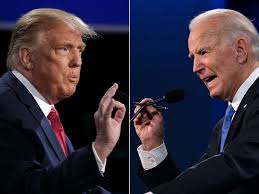

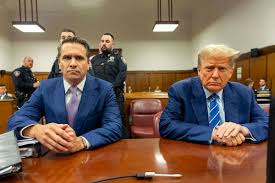
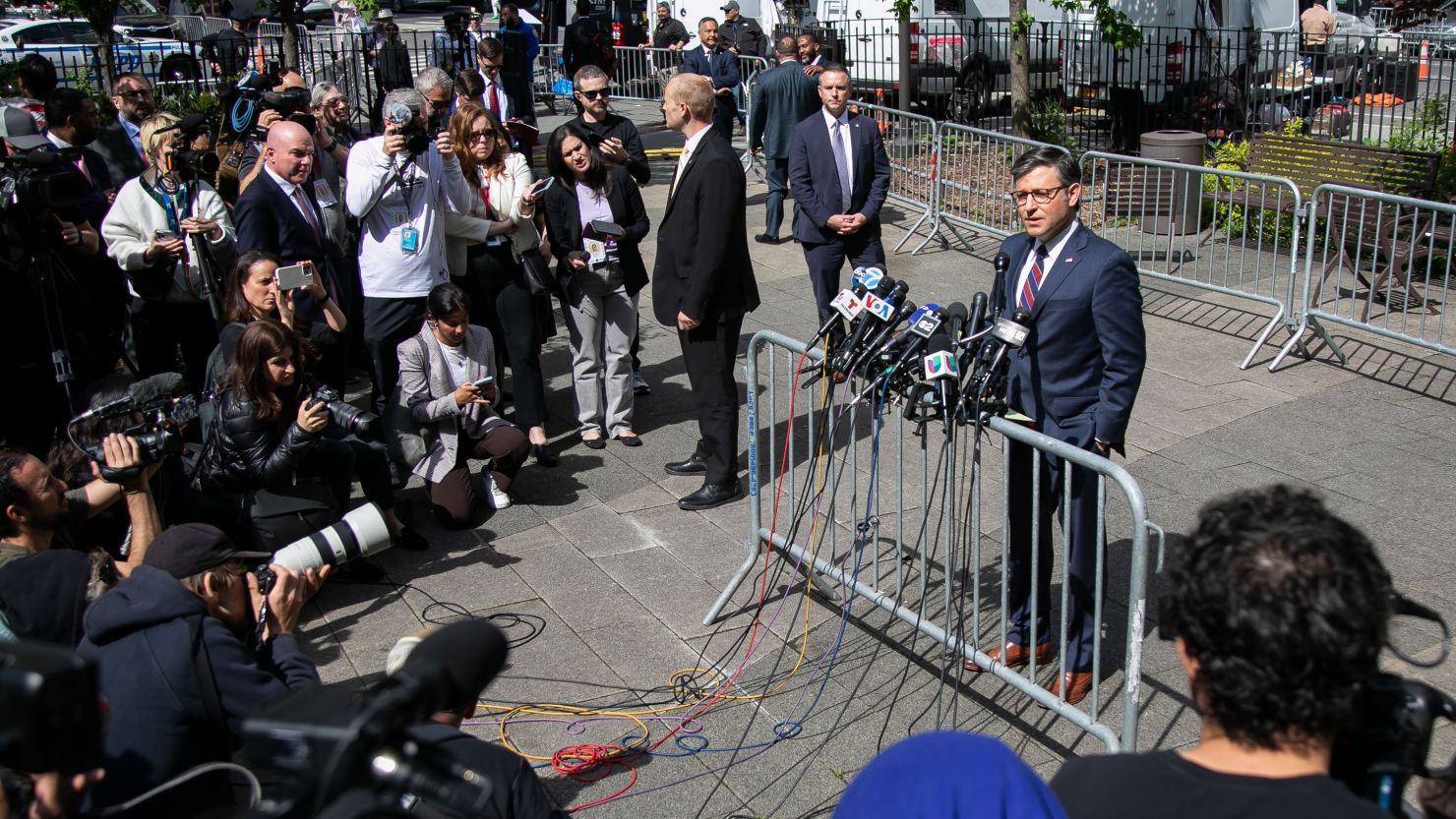

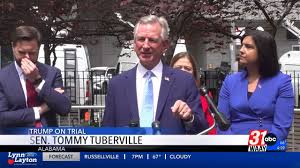
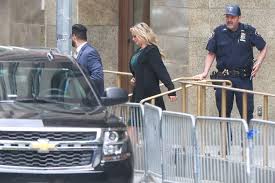









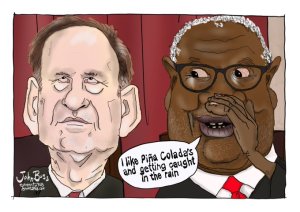
 All this with the husband of an insurrectionist sitting on the bench. I heard Nicole Wallace give the best explanation of anything I’ve heard on why these men act out their grievances in court decisions last night. Two of the guys that sit on the bench are sex pests and were publicly shown to be so. Alito is just perpetually mad at everything but mostly at
 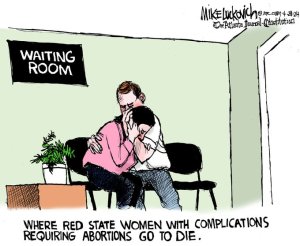 This Mike Luchovich cartoon is brutal and true. I am shifting to the other SCOTUS shit show this week.
 peej
peej Carissa
 bostonboomer
 dakinikat
 ecocatwoman
 jjlo
jjlo mablue2
 Mama Lopez
 peggysue22
 quixote
 skydancingguestblogger
 Mona (aka Wonk the Vote)





Recent Comments