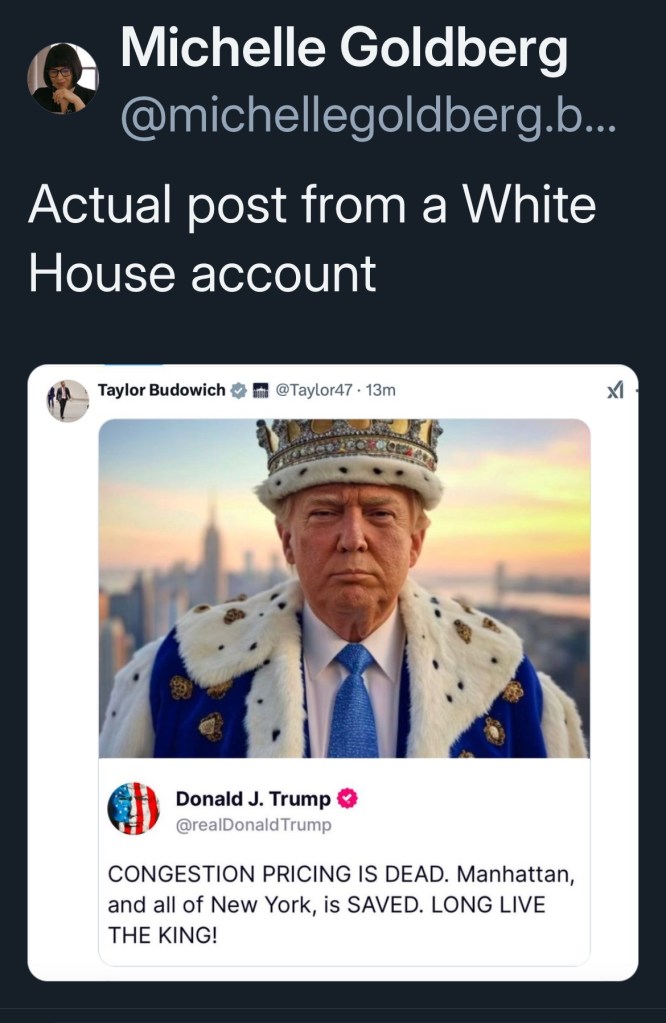
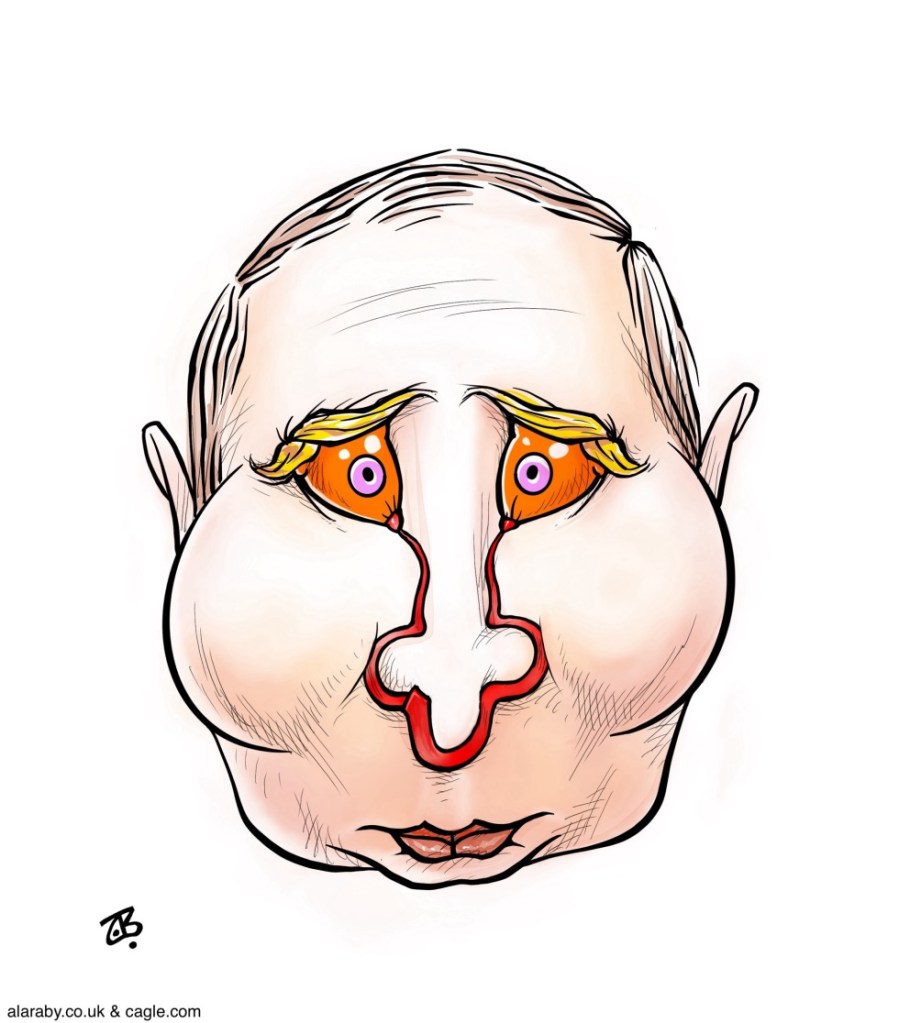
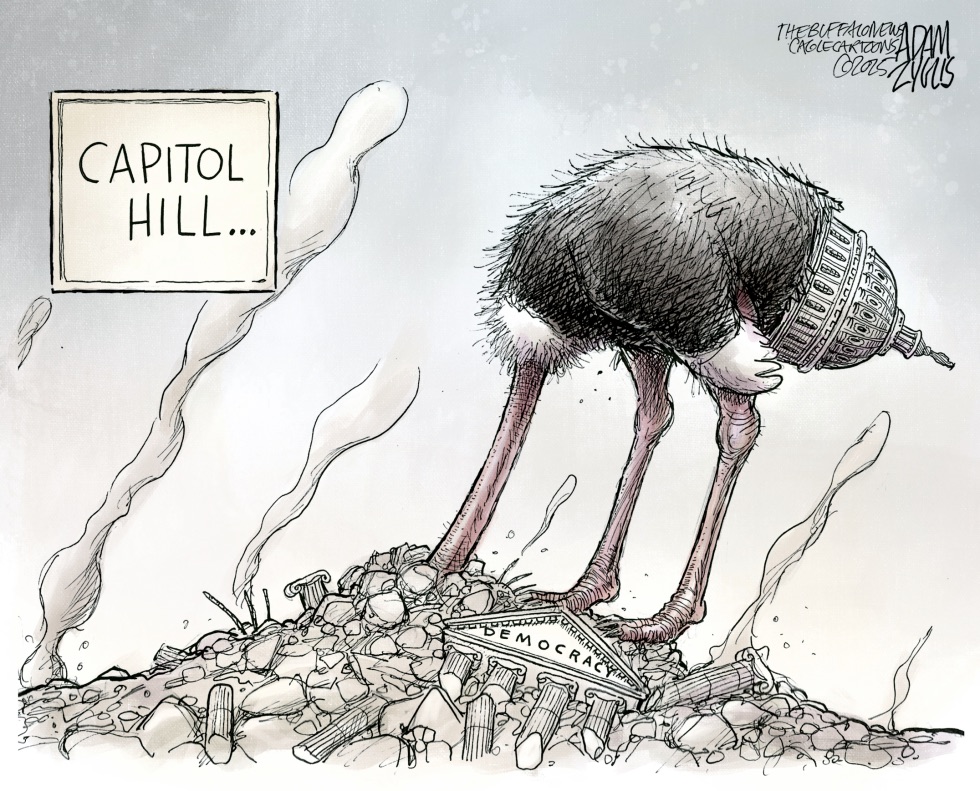
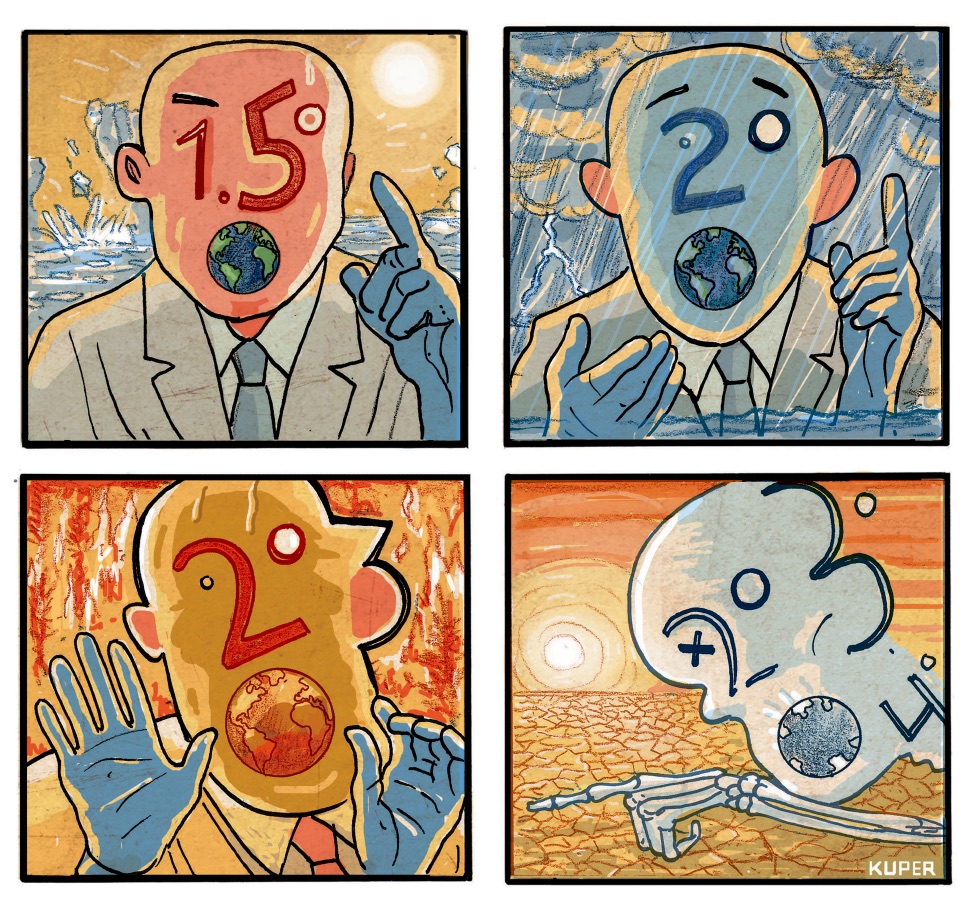
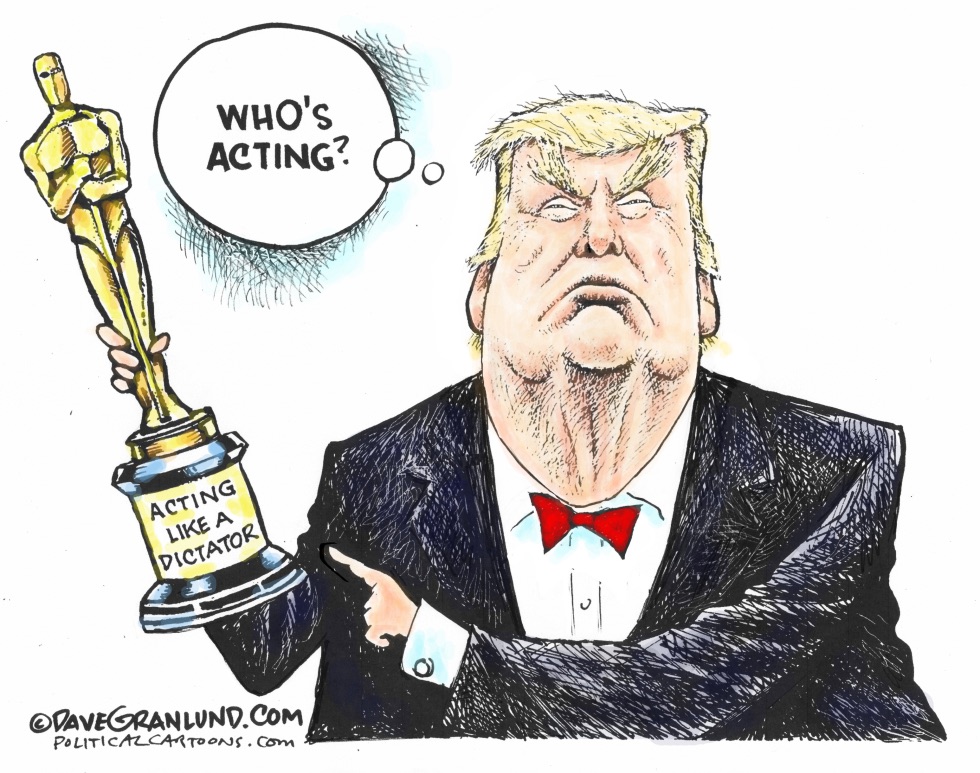
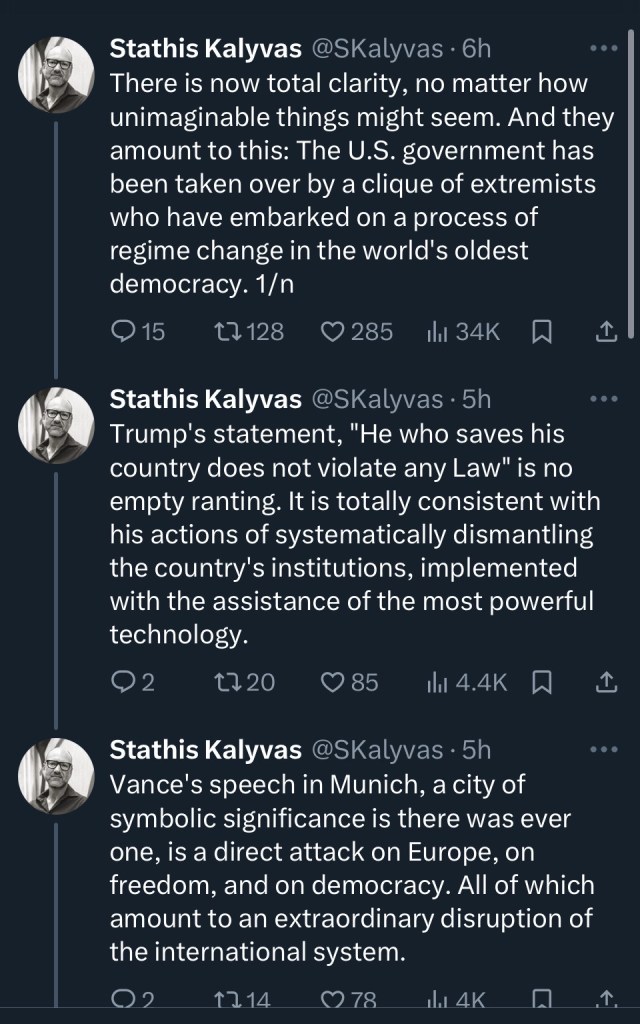
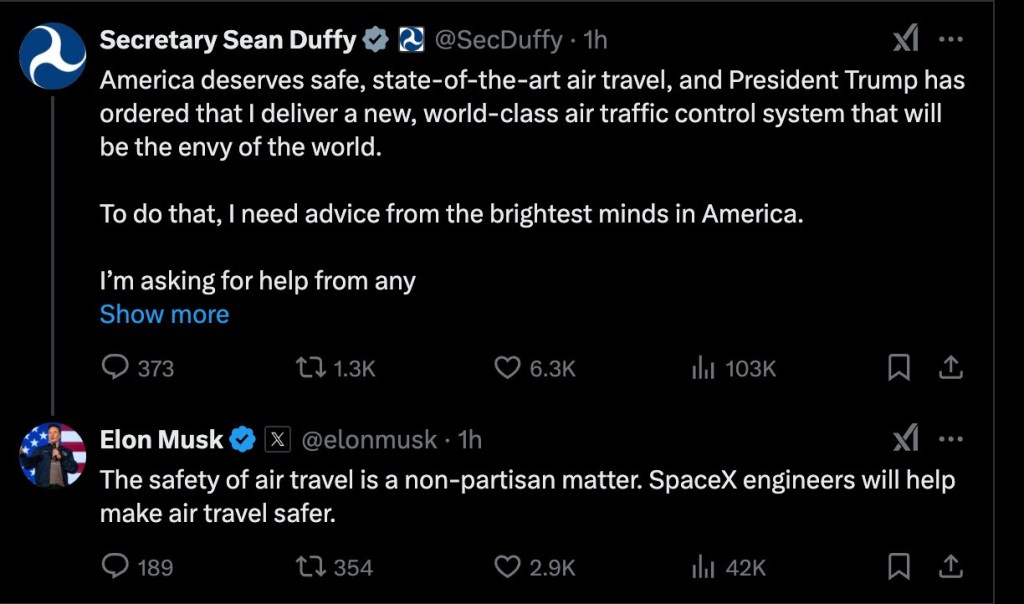
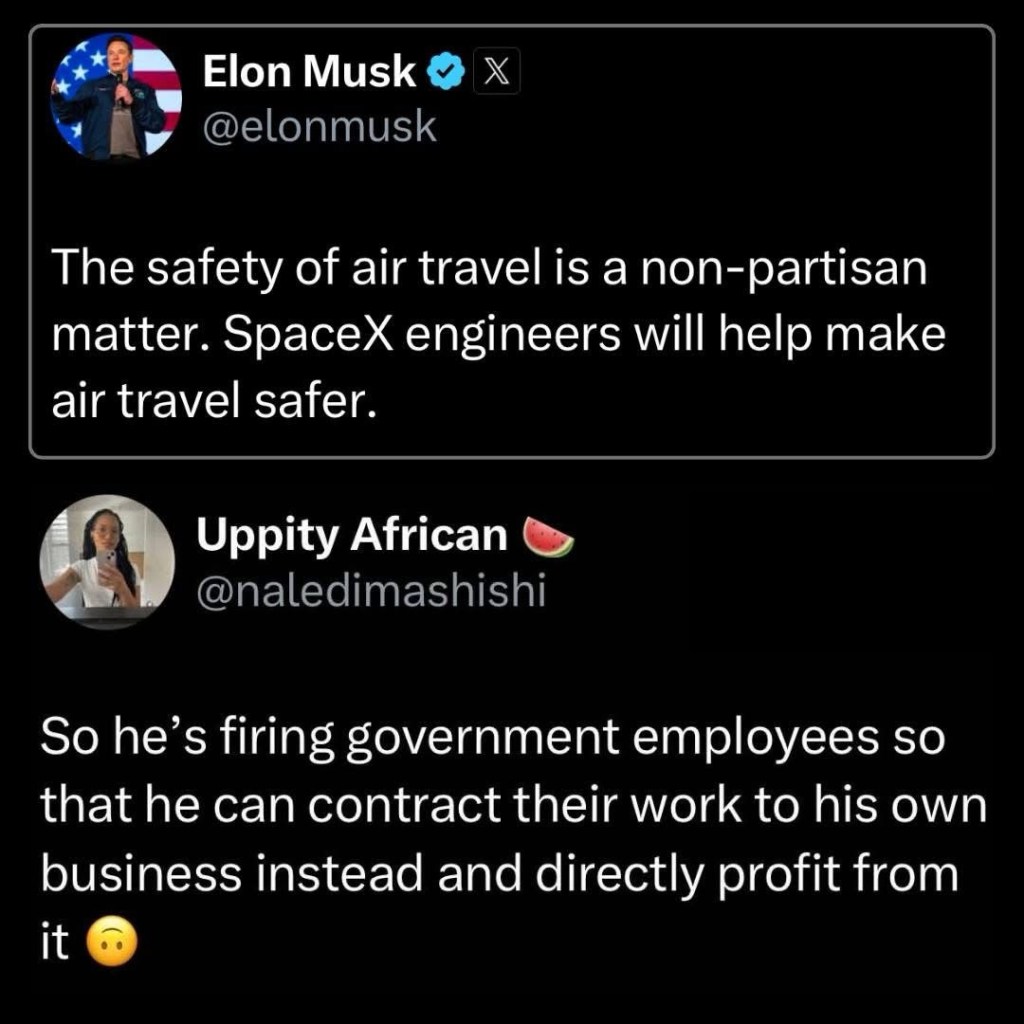
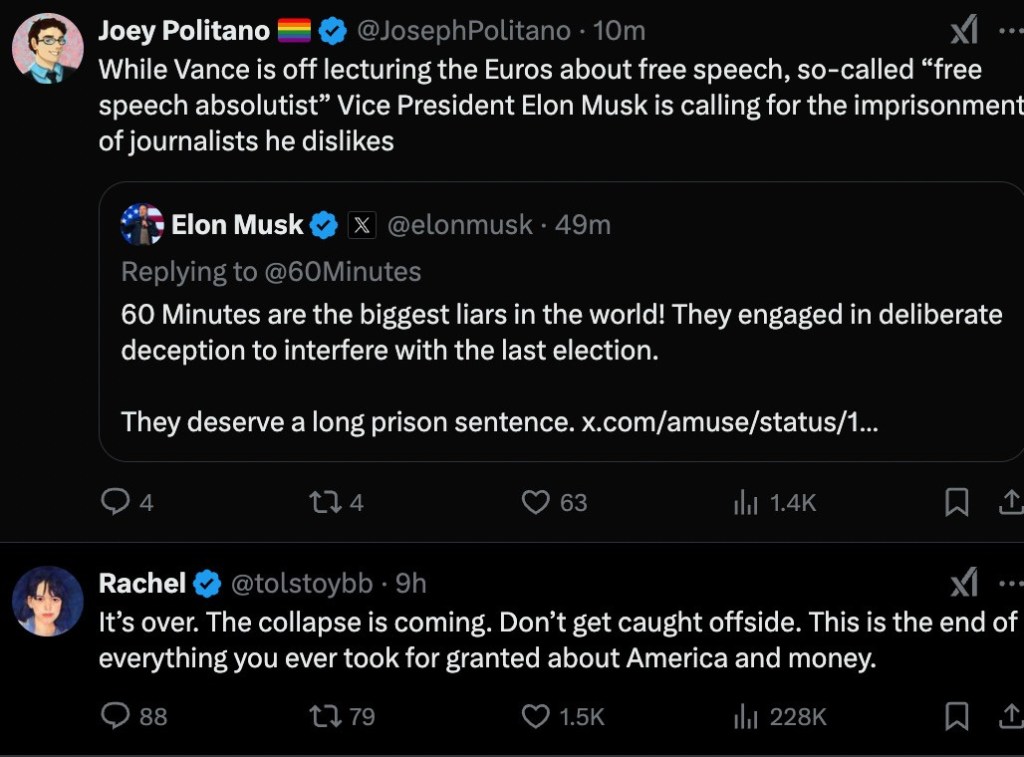
Today is the second full day of Trump 2.0, and the whirlwind of activity is already exhausting. Trump is trying to reverse everything Joe Biden accomplished over the past 4 years. He has issued hundreds of pardons to the January 6 rioters and other criminals. He is beginning to enact the policies laid out in “Project 2025.” And he has begun his campaign of revenge and retribution against anyone he perceives as criticizing him or opposing his wishes. I can’t possibly touch on everything that has happened, so I’ll just share commentary on two stories that I think are important: Trump’s pardons of the January 6 criminals and Elon Musk’s public performance of the Nazi salute.
First, in one fell swoop, Trump has destroyed the hard work of hundreds of prosecutors, judges, investigators, and members of the public who worked tirelessly to track down the criminals who attacked and trashed the Capitol and threatened the lives of legislators, law enforcement officers, and Trump’s own Vice President on January 6, 2021. We were assured by VP J.D. Vance, and multiple Republican politicians that Trump would only free non-violent offenders from that day, but it was all a lie. He released them all back into society where they can do whatever they want–no paroles, no supervision of any kind. In my opinion, Trump sees these criminals as his defenders. They can now organize and act as his private army.
In one of the first acts of his second administration, President Donald Trump pardoned nearly all of the January 6 criminals and new details reveal the spur-of-the-moment decision to release 1,500 people charged.
“Trump just said: ‘F*** it: Release ‘em all,’” an adviser familiar with the discussions told the Axios.
On the campaign trail, Trump flirted with pardoning who he describes as the “J6 hostages,” and on Monday decided to issue pardons to most of the people charged in connection to the riot and effort to overturn the 2020 election. That ended their prison sentence and allowed those convicted to walk out of prison.
In one of the first acts of his second administration, President Donald Trump pardoned nearly all of the January 6 criminals and new details reveal the spur-of-the-moment decision to release 1,500 people charged.
“Trump just said: ‘F*** it: Release ‘em all,’” an adviser familiar with the discussions told the Axios.
On the campaign trail, Trump flirted with pardoning who he describes as the “J6 hostages,” and on Monday decided to issue pardons to most of the people charged in connection to the riot and effort to overturn the 2020 election. That ended their prison sentence and allowed those convicted to walk out of prison.
Trump’s pardons were made in defiance of JD Vance’s advice that convicts who committed violence during the Capitol attack shouldn’t be granted clemency. He told Fox News last week: “If you committed violence that day, obviously you shouldn’t be pardoned.”
The president’s move also came as a surprise to some Republicans, who have said they don’t agree with his move.
“Well, I think I agree with the vice president,” Sen. Mitch McConnell told Semafor. “No one should excuse violence. And particularly violence against police officers.”
But Trump not only excuses violence that he perceives as supportive of him; he also celebrates it. Again and again, he has said that the January 5 attack was a “day of love.”
Donald Trump spent the four years after the January 6 insurrection attempting to rewrite the violence and chaos he inspired as his supporters stormed the US Capitol.
On the first day of his second term as president, he took the rewriting to its final step by issuing pardons and reducing sentences for those involved in the insurrection, including the leaders of far-right militias and those who battled with police that day.
If the criminal charges were meant to deter future acts of political violence, the pardons of more than 1,500 people do the opposite, experts said.
“This is going beyond rewriting what January 6 was,” said Robert Pape, the director of the Chicago Project on Security and Threats at the University of Chicago who has studied January 6 defendants. “This is about legitimating future January 6ths.”
A procession of Proud Boys marched in Washington on Monday, carrying a banner that congratulated Trump on his victory, a visible representation of the welcome the far right is receiving from the new administration, and their former national chairperson, Enrique Tarrio, received a full pardon. Stewart Rhodes, the founder of the rightwing Oath Keepers militia group, had his sentence commuted.
“This will have powerful future consequences for normalizing political violence, because many of those he has granted clemency to are an ongoing threat for political violence in the future,” Pape said.
Even those who didn’t themselves participate in violence on January 6 may have played a part in violence. Pape’s research shows that nearly 500 people convicted of low-level non-violent misdemeanors were “knowing and willing participants in the violent aspects of the Capitol siege, and that without the participation of this vast group, the siege would likely have never happened or been quickly ended by the police”….
Trump also directed the justice department to drop the charges in ongoing cases, ending the years of work by the department to find and prosecute the Capitol rioters. Trump named Ed Martin, a conservative lawyer who was involved in the Stop the Steal movement and supported January 6 causes the interim US attorney for Washington DC, putting him in charge of the January 6 prosecutions, NBC News reported.
This also undercuts Attorney General nominee Pam Bondi, who said she planned to evaluate these releases case by case. A bit more from The Guardian:
Perhaps the most visible face of the rioters, Jacob Chansley, known as the “QAnon shaman”, wrote on Twitter/X that he had just received the news from his lawyer that he was pardoned. “NOW I AM GONNA BUY SOME MOTHA FU*KIN GUNS!!! I LOVE THIS COUNTRY!!! GOD BLESS AMERICA!!!!
Jacob Chansley, the QAnon Shaman
Several of those who have publicly discussed their cases have books scheduled to be released about their involvement on January 6 or intend to do speaking engagements about it. Others have started organizations to support those who were involved in the January 6 attack.
Those involved and their supporters were also looking for ways to seek retribution for what they believed was a system rigged against them for their political views.
They could bring civil lawsuits against the government seeking redress or reparations for the charges or time spent in prison, using the language in Trump’s pardon as proof they were overcharged. The pardons call the charges a “grave national injustice that has been perpetrated upon the American people over the last four years”.
I hope your blood is boiling after Donald Trump’s pardon of approximately 1,500 terrorists who attacked our Capitol on Jan. 6. And yes, Trump’s own hand-picked FBI Director testified before Congress that Jan. 6 was an “act of domestic terrorism.” So those people Trump has now pardoned—which includes those in the video below you can see brutally attacking police officers—are terrorists. This is akin to Bin Laden pardoning those involved in the 9/11 terrorist attack.
Overall, the pardons covered more than 600 rioters who had been charged with assaulting, resisting or impeding law enforcement officers at the Capitol. Approximately, 175 of these Trump allies used deadly or dangerous weapons in the attack–including toxic sprays, baseball bats, two-by-fours, crutches, hockey sticks and broken wooden table legs.
Those Trump pardoned include people like Julian Khater, who pled guilty to “assaulting law enforcement officers with pepper spray,” including Officer Brian Sicknick, who died the following day. And Ronald Colton McAbee, a former sheriff’s deputy who was sentenced to nearly six years in prison for assaulting police officers. As DOJ detailed, McAbee held down a police officer who had been “knocked to the ground, kicked, and stripped of his baton by other rioters” enabling the crowd to viciously beat him. As a result, “the officer sustained physical injuries, including a head laceration, concussion, elbow injury, bruising, and bodily abrasions.”
Daniel Joseph “DJ” Rodriguez who used a stun gun on Metropolitan Police Officer Michael Fanone and was sentenced to 12.5 years for his bevy of crimes. And David Dempsey who prosecutors called “one of the most violent” Jan. 6 attackers—who assaulted and injured numerous police officers by spraying then with pepper spray and hitting them with various items including a metal crutch, chairs and a long wooden pole. He pled guilty and was sentenced to two decades in prison.
Then there are the leaders of the militant groups the Oath Keepers and Proud Boys who had been convicted of “Seditious Conspiracy”—which is almost as serious as Treason. As DOJ noted, the Oath Keepers leaders “plotted to oppose by force the lawful transfer of presidential power” and then came to Washington, D.C. on Jan. 6 “with paramilitary gear and supplies including firearms, tactical vests with plates, helmets, and radio equipment.” Yet Trump freed them from prison despite their sentences of nearly 20 years.
These are violent and dangerous people—including many with military experience and tactical planning skills–who Trump pardoned and released from jail. Why? Trump—like any other aspiring dictators—wants to make a public showing that if you commit crimes and violence on his behalf, he will have your back.
However, there is also an even more sinister reason for Trump’s pardons of the most violent attackers. Trump wants to incentivize others in MAGA to do the same in the future—with the implicit promise being “I will pardon you like I did the Jan. 6 terrorists.”
That is not just my view. That what authoritarian expert Ruth Ben-Ghiat explained to me last year when I interviewed her about Trump’s praise of the Jan. 6 attackers and vow to pardon them. She first shared that Trump—like other fascist leaders—is trying “to change the perception of violence. To get people to see that violence is not negative.” Trump is thereby conditioning his supporters to believe that. “Violence is sometimes morally necessary and even righteous, and even patriotic.”
As to Trump’s promise of pardons, Ben-Ghiat explained, “All authoritarians use pardons because why do you want people sitting in jail–the worst people in the world–who are for you the best people and could serve your goals?”
We’ll find out if it worked for Trump when and if people publicly protest his decisions and actions.
President Donald Trump defended his decision to free all of roughly 1,600 Jan. 6 riot defendants on Tuesday as the leaders of two extremist groups who played outsize roles in the Capitol attack walked out of federal prisons after serving a fraction of their sentences for seditious conspiracy. Trump called the conspirators’ sentences “ridiculous and excessive,” saying he pardoned “people that were treated unbelievably poorly.”
But counterterrorism experts say the pardons could further embolden fringe groups and hamper the Justice Department’s fight against political violence.
Former Proud Boys Chairman Enrique Tarrio
Proud Boys leader Enrique Tarrio was headed home to Miami from a Louisiana prison and expected to address the media Tuesday at the airport, his lawyer said, freed from the longest sentence in the riot — 22 years — for mobilizing his right-wing group as an “army” to keep Trump in power as Congress met to confirm the 2020 election.
Oath Keepers founder Stewart Rhodes, who was sentenced to 18 years, was released shortly after midnight in Cumberland, Maryland, his lawyer said, and emerged later Tuesday outside the D.C. jail to await release of those held on Jan. 6 charges. Rhodes was found guilty of urging Trump to use paramilitary groups to hold the White House and bringing armed followers to Washington ready for “civil war.”
Extremism researchers raised concerns over the message their freedom sends to armed militia-style groups or others with violent anti-government views. If those convicted of plotting such violence against the government walked free with support from the nation’s commander in chief,would others be energized to take up more action?
“Those groups of course are going to see the return of battle-hardened leaders, who in addition to having a kind of real-life legitimacy due to having actually fought the government, will also have a strong sense of victimhood and martyrdom, which will further radicalize and fuel recruitment platforms,” said Jacob Ware, a Council on Foreign Relations research fellow. “This move is going to make combating terrorism far more difficult, not just over the next four years as groups feel like they have an ally in the White House, but beyond that as well.”
Ware called the pardons “a pretty catastrophic moment for domestic counterterrorism.”
The Proud Boys and especially the Oath Keepers “have been relatively dormant for several years now,” hit very hard and deterred by the seditious conspiracy cases, he said.
“In the past when individuals were acquitted of this crime, recognized as among the most serious in a democracy, it incontrovertibly breathed new life into far-right violent extremism in the United States,” said Bruce Hoffman, a veteran counterterrorism and homeland security fellow at the Council on Foreign Relations.
In 1988 a jury in Fort Smith, Arkansas, acquitted 14 white supremacists of seditious conspiracy, revitalizing an anti-government militia movement that spurred the Alfred P. Murrah Federal Building bombing in Oklahoma City five years later, Hoffman said.
I guess we’ll find out soon enough if these predictions are accurate.
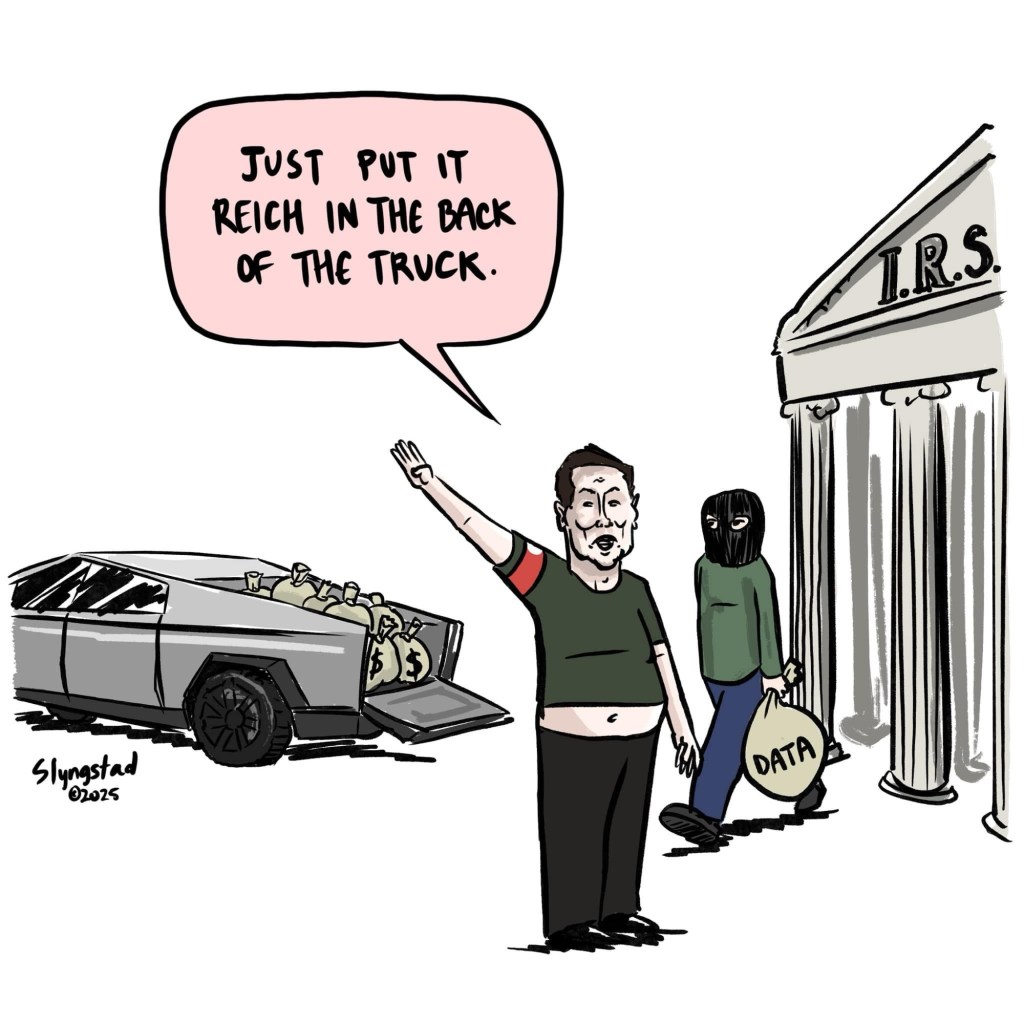
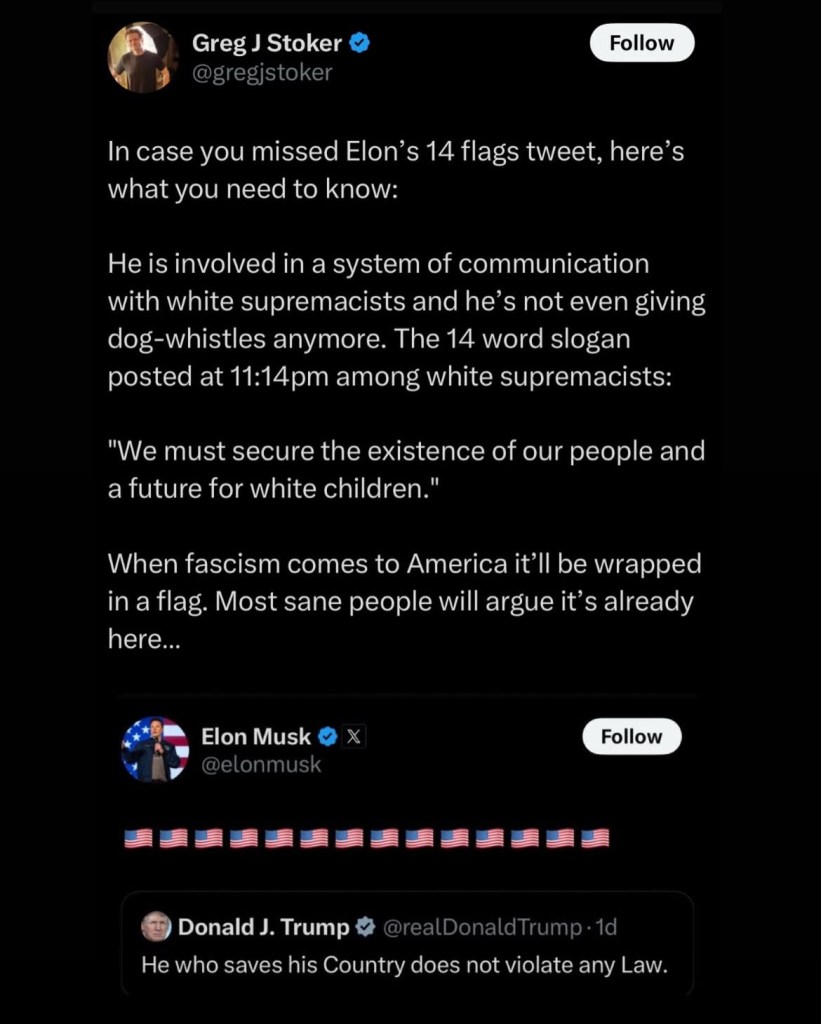
I’m sure you’ve seen the Nazi salute that Elon Musk performed during a speech at Trump’s inaugural “parade.” Personally, I don’t think there’s any doubt that the salute was genuine and intended to shock, but some observers are trying to minimize it.
“I just want to say thank you for making it happen,” the owner of SpaceX, X and Tesla, the richest person on earth and a major Trump donor and adviser, told Trump supporters at the Capital One Arena in Washington.
Musk then slapped his right hand into his chest, fingers splayed, before shooting out his right arm on an upwards diagonal, fingers together and palm facing down.
The Anti-Defamation League (ADL), which campaigns against antisemitism, defines the Nazi salute as “raising an outstretched right arm with the palm down”.
As the crowd roared, Musk turned and saluted again, his arm and hand slightly lower.
“My heart goes out to you,” Musk said, striking himself on the chest again. “It is thanks to you that the future of civilization is assured. Thanks to you. We’re gonna have safe cities, finally safe cities. Secure borders, sensible spending. Basic stuff. And we’re gonna take ‘Doge’ to Mars.” [….]
Social media users expressed shock at Musk’s gesture. Ruth Ben-Ghiat, a history professor at New York University, said: “Historian of fascism here. It was a Nazi salute and a very belligerent one too.”
Musk did not immediately comment, though he did repost footage of his remarks that included the second salute and endorsed memes seeking to turn footage of his salutes into jokes.
One X user wrote: “Can we please retire the calling people a Nazi thing?”
Musk wrote: “Yeah exactly” and added a “yawning” emoji.
Nonetheless, Haaretz, an Israeli newspaper, described Musk delivering “a Roman salute, a fascist salute most commonly associated with Nazi Germany”.
The ADL, meanwhile, says that in Germany between 1933 and 1945, the Nazi salute “was often accompanied by chanting or shouting ‘Heil Hitler’ or ‘Sieg Heil.’ Since world war two, neo-Nazis and other white supremacists have continued to use the salute, making it the most common white supremacist hand sign in the world.”
There were angry reactions across Europe to Elon Musk’s apparent use of a salute banned for its Nazi links in Germany, where some condemned it as malicious provocation or an outreach of solidarity to far-right groups.
Michel Friedman, a prominent German-French publicist and former deputy chair of the Central Council of Jews in Germany, described Musk’s actions – at an event after Donald Trump’s swearing in as US president – as a disgrace and said Musk had shown that a “dangerous point for the entire free world” had been reached.
Friedman, who descends from a family of Polish Jews, hardly any of whom survived the Holocaust, told the daily Tagesspiegel he had been shocked when watching the inauguration live on television, adding that as far as he was concerned Musk had unambiguously performed the Nazi “Heil Hitler” salute, despite attempts to downplay it.
“I thought to myself, the breaking of taboos is reaching a point that is dangerous for the entire free world. The brutalisation, the dehumanisation, Auschwitz, all of that is Hitler. A mass murderer, a warmonger, a person for whom people were nothing more than numbers – fair game, not worth mentioning,” Friedman said.
Charlotte Knobloch, the president of the Jewish community in Munich and Upper Bavaria, described the gesture as “highly disconcerting”. But she said it was not as significant as Musk’s recent attempts to meddle in German politics, where he has endorsed the far-right Alternative für Deutschland ahead of next month’s federal election.
“Far more worrying are Elon Musk’s political positions, his offensive interference in the German parliamentary election campaign and his support for a party whose anti-democratic aims should be under no illusions,” she said in a statement.
Right-wing extremists are celebrating Elon Musk’s straight-arm gesture during a speech Monday, although his intention wasn’t totally clear and some hate watchdogs are saying not to read too much into it….
Many social media users noticed that the gesture looked like a Nazi salute. Musk has only fanned the flames of suspicion by not explicitly denying those claims in a dozen posts since, though he did make light of the criticism and lashed out at people making that interpretation.
“The ‘everyone is Hitler’ attack is sooo tired,” Musk posted on X several hours after he left the stage.
Critics and fans alike of the Tesla CEO and world’s richest man were quick to react to the gesture.
“The White Flame will rise again,” a chapter of the white nationalist group White Lives Matter posted on Telegram.
“Maybe woke really is dead,” white nationalist Keith Woods posted on X.
“Did Elon Musk just Heil Hitler …” right-wing commentator Evan Kilgore posted on X. “We are so back.”
Some expert commentary:
Kurt Braddock, a professor of communication at American University who studies extremism, radicalization and terrorism, said the gesture was a fascist salute and “people shouldn’t doubt what they saw.”
“I know what I saw, I know what the response to it was among elements of the extreme right including neo-Nazis, Braddock said. “And none of it is a laughing matter.”
1934: German dictator Adolf Hitler (1889-1945) giving the Nazi salute from his car whilst at the Nazi Party Congress. (Photo by Hulton Archive/Getty Images)
Efraim Zuroff, the retired head of the Simon Wiesenthal Center’s Jerusalem office and formerly the organization’s top Nazi hunter, said he also saw it as Nazi salute, and that it happened at U.S. presidential inauguration celebration made it especially shocking to see.
“It’s totally improper, and it raises all sorts of questions regarding his motivations, or his ignorance,” he said in a telephone interview from Israel. “This is America, the leader of the free world, the people who sacrificed 200,000 soldiers who died to defend Europe. He has to explain himself.”
In Europe where the fascist salute is associated with the hate, death and destruction of World War II, Musk’s arm gesture elicited outrage.
An Italian communist youth organization on Tuesday hung an effigy of Musk upside down in Milan’s Piazzale Loreto, where Mussolini’s body was hung upside down after he was executed during the final days of World War II. The organization, Cambiare Rotta (Change Course), noted in a Facebook post that a photo of the effigy had been removed by the social media company.
“We are correctly a little afraid, because that image is scary,’’ author Filippo Ceccarelli told Italian La7 private television.
Known as the Roman salute in Italy, the straight-arm greeting officially adopted in 1925 by the dictator Benito Mussolini’s fascist regime is banned in Italy though it is rarely prosecuted.
Donald Trump was inaugurated for his second term on Monday before the world’s richest people. Elon Musk, Jeff Bezos, and Mark Zuckerberg were among those seated closest to Trump as he demonized the most vulnerable members of our society, rewrote the history of his criminal prosecutions, and pledged to roll back Joe Biden’s efforts to address climate change.
They smiled. They laughed. They thumbs-upped. They loved it.
By the end of Inauguration Day, Trump had signed an executive order attempting to abolish “birthright citizenship,” cut off all asylum claims at the southern border, signed an order prohibiting federal recognition of transgender Americans, once again ended America’s commitment to reducing greenhouse gas emissions, and issued pardons to 1,500 Jan. 6 defendants, including the seditionist leader of the Proud Boys.
Not so long ago, some of the ultra-wealthy and big corporations would feign disgust with Trump. They paid lip service to social justice movements and pledged to make paltry efforts to reduce their climate impact. That’s all over now. America’s oligarchs are done pretending — there is too much money to be made and power to be amassed together. They’ll get to keep their Trump tax cuts, and can expect to receive more. The government investigations of their businesses and regulatory scrutiny will end. All they have to do is act like — or freely admit — they support Trump and his policies. Pay up, show respect, get paid, and whatever else you want.
In the days leading up to Trump’s second inauguration, pockets of deep-blue Washington were transformed into a mecca of MAGA glitz and boozy, Trumpified access-peddling. In downtown D.C., Trump’s Sunday and Monday afternoon pageantries were quickly followed with rows of richly dressed MAGA fans and ticket-holders standing out in the cold, waiting to get into the evening’s selections of this exclusive party, sponsored by that corporate colossus, all to toast the dawn of yet another four years of reality-TV-style authoritarian decay.
Just a few short years ago, corporate America was so mad about the Jan. 6 insurrection, when Trump whipped up his supporters and they attacked the U.S. Capitol to try to block Joe Biden from becoming president. Meta, Facebook’s parent company, said it was “appalled by the violence at the Capitol,” and Zuckerberg, its CEO, declared on Jan. 7, 2021 that the company would block Trump from posting after its platform was used “to incite violent insurrection against a democratically elected government.”
Zuckerberg’s concerns about the health of our democracy appear to have subsided. On Jan. 7 this year, he announced Facebook would end its fact-checking program. He also went on Joe Rogan’s podcast to talk about how the “corporate world is pretty culturally neutered” and society has become “emasculated.” Meta, like many big corporations, made a large donation ($1 million) to Trump’s inaugural committee….
Due to cold weather, Trump’s coronation was moved inside, into the Capitol building his supporters ransacked four years ago. Holding the ceremony in the small Capitol rotunda gave it an exclusive, cozy feel and kept out the riff-raff: No commoners could watch Trump’s swearing-in live in-person — not even Republican governors, who were relegated to an overflow room. Only the elite of the elite and the best Trump supporters. Musk. Zuckerberg. Bezos. Google CEO Sundar Pichai sat with them. Apple CEO Tim Cook was there. Former Presidents Barack Obama, Bill Clinton, George W. Bush were seated in front of UFC’s Dana White. Rogan, conservative pundit Tucker Carlson, and Turning Point USA chief Charlie Kirk were there, too….
Musk — who leads Tesla, SpaceX, and X (formerly Twitter) — came out as a MAGA fanatic this summer and leaned in, spending $153 million to boost Trump’s presidential campaign via his Super PAC. He amplified Trump’s campaign against migrants and undocumented immigrants, running ads decrying the “HISTORIC BORDER INVASION” and “illegal immigrants getting handouts.” [….]
Bezos, Amazon’s founder and chairman, has his own space business, Blue Origin, and Amazon provides cloud services to the government. The world’s second-richest man started cozying up to Trump not long before the election, when he killed The Washington Post’s planned endorsement of Vice President Kamala Harris. Bezos, who’s owned the paper since 2013, wrote in a Post op-ed that “no quid pro quo of any kind” was to blame for his decision. After Trump won, Amazon donated $1 million to Trump’s inaugural fund. The company, which is spending $40 million to license a documentary and a limited series about First Lady Melania Trump, recently deleted its public commitments to protecting the rights of Black and LGBTQ+ people from its website. The Post’s editorial board separately endorsed most of Trump’s Cabinet and Cabinet-level nominees….
Zuckerberg, the third-richest man in the world, was seen as a Trump enemy — specifically because he funded election infrastructure during the 2020 contest, after the start of the Covid-19 pandemic. Trump literally threatened to jail him for life. Following Trump’s win, Zuckerberg flew to Trump’s Mar-a-Lago club to suck up to the incoming commander in chief. Shortly before Trump’s inauguration, Meta announced it is ending its diversity, equity and inclusion programs, and changedits policies to allow users to attack LGBTQ+ people as “mentally ill,” women as “crazy,” and Mexican immigrants as “trash.”
If corporate America used to toss liberals some cultural wins here and there, instead of improving anyone’s material conditions, the ultra-wealthy are done bothering with that charade now.
There is no reason for America’s oligarchs to hide anymore, no penalty to pay. What matters, financially-speaking, is getting close to Trump.
We are turning into post Soviet Russia. I wonder if it is going to be possible to fight this? We can only hope.
Did you like this post? Please share it with your friends:
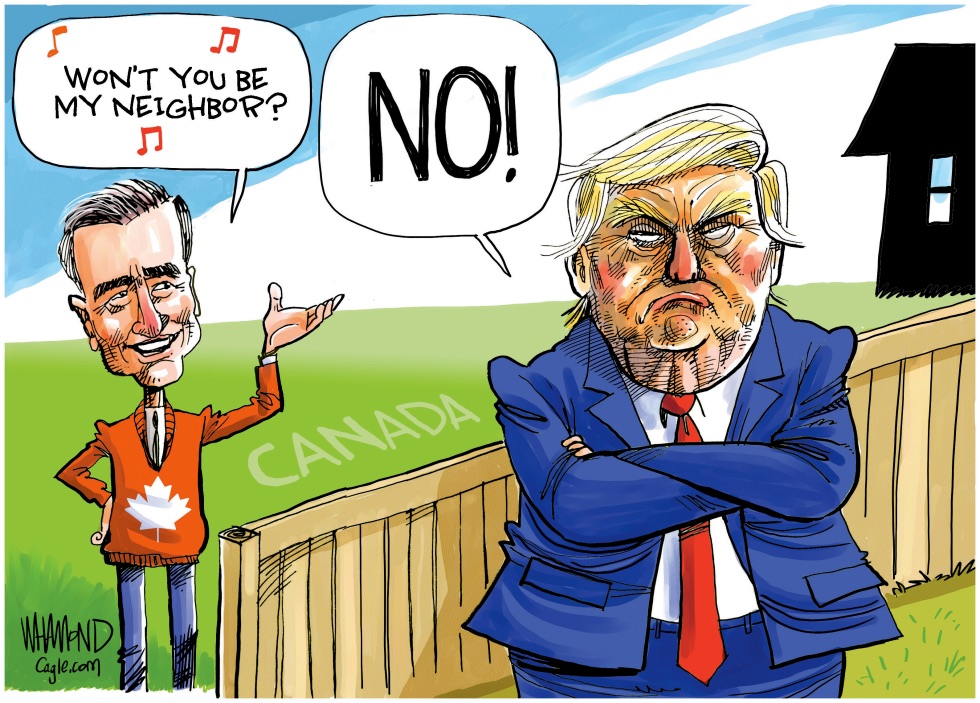
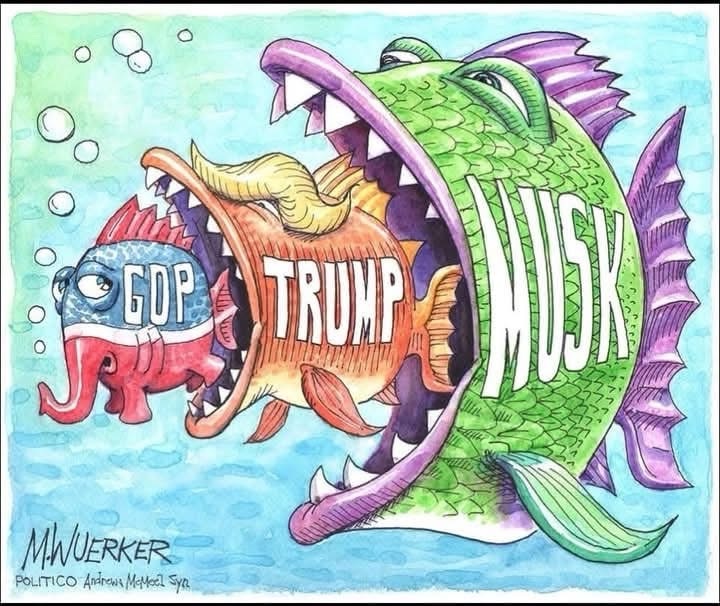
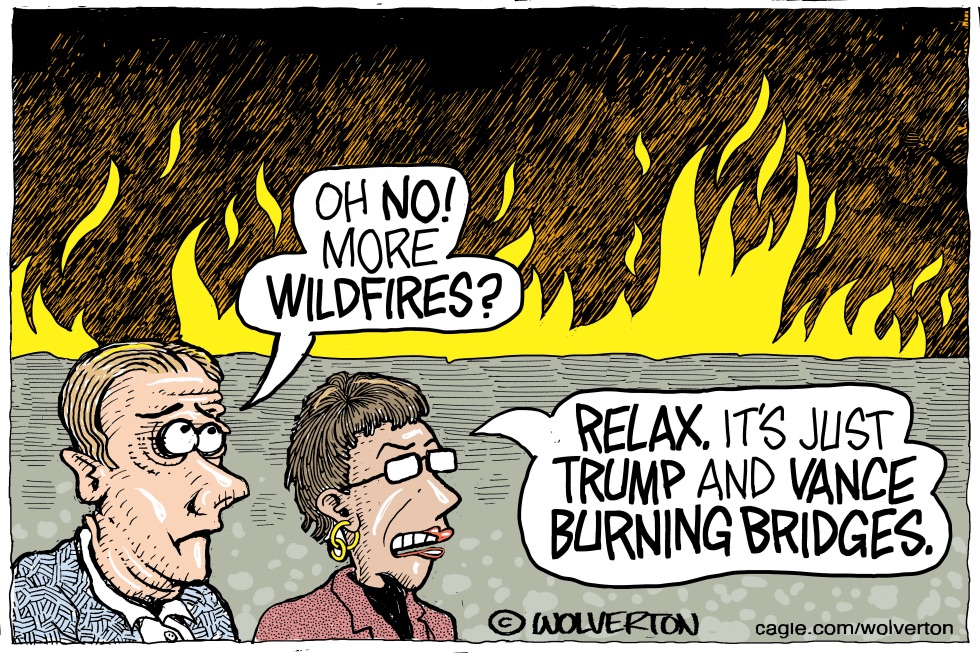
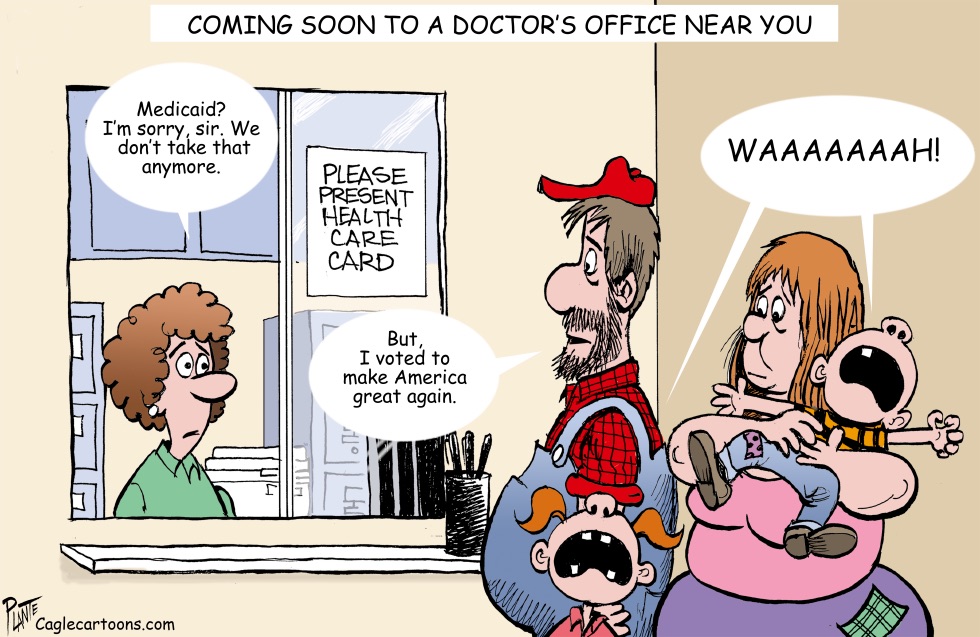
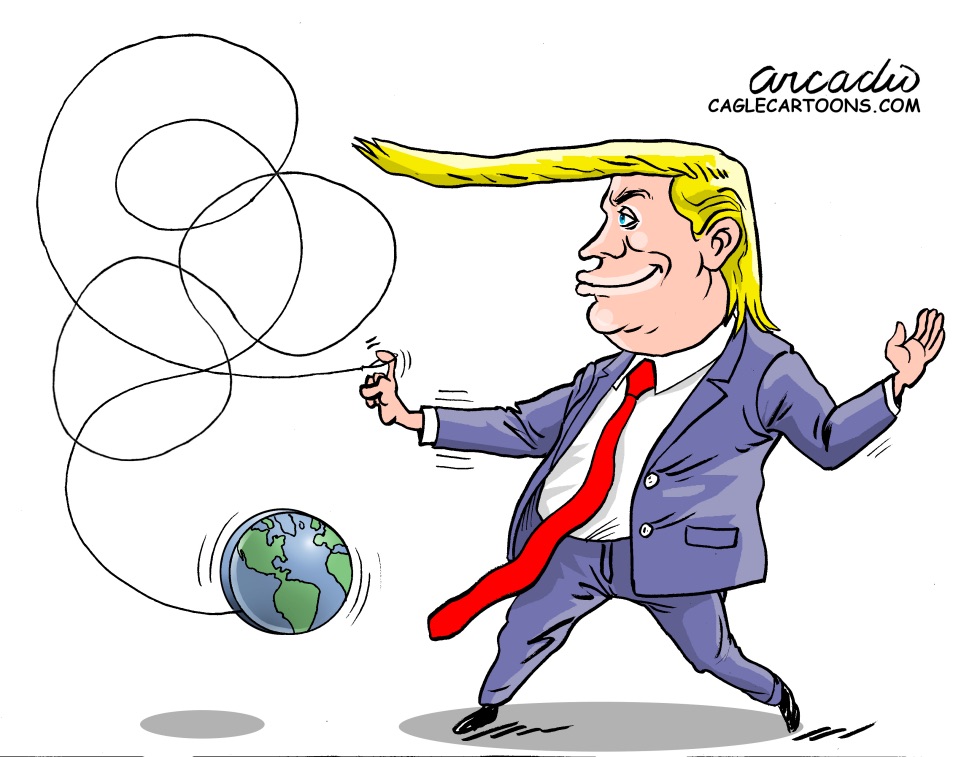
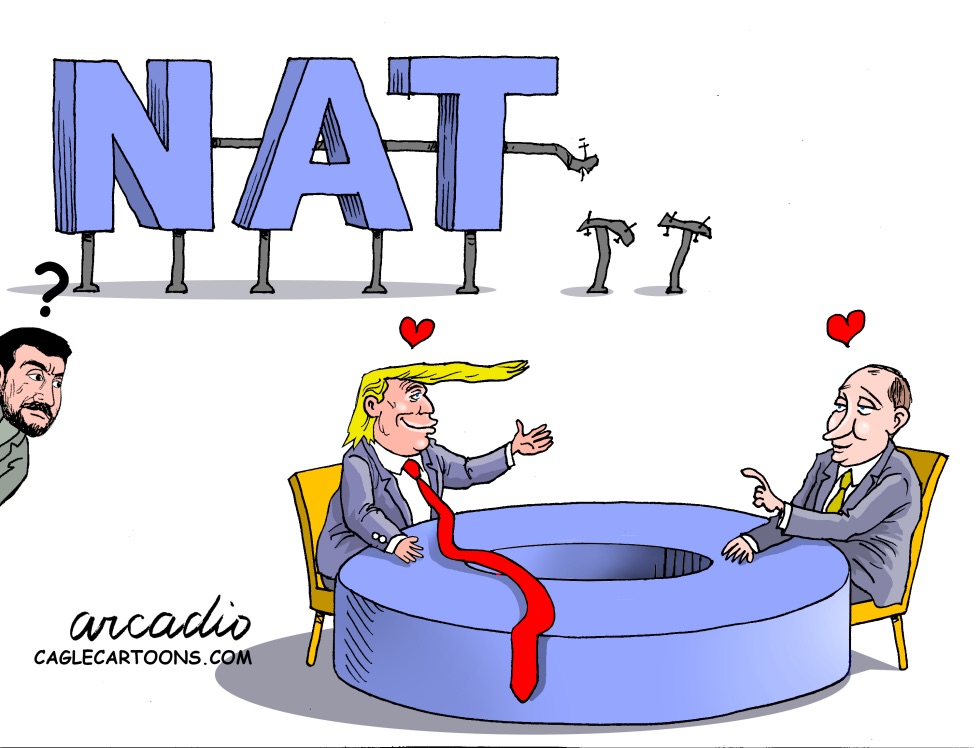
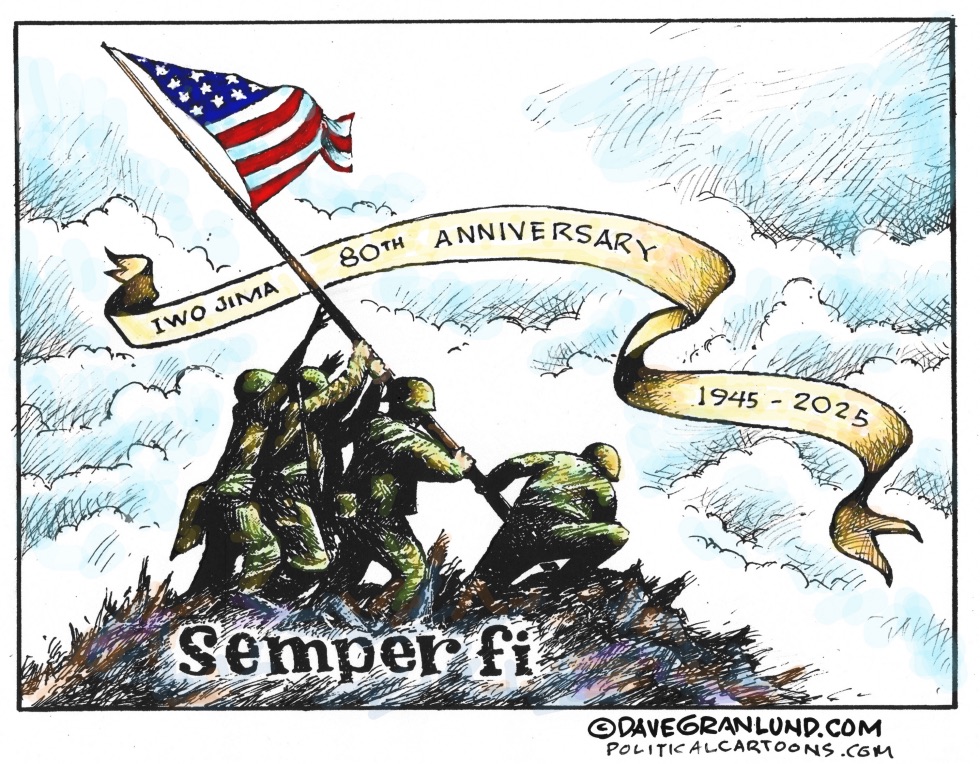
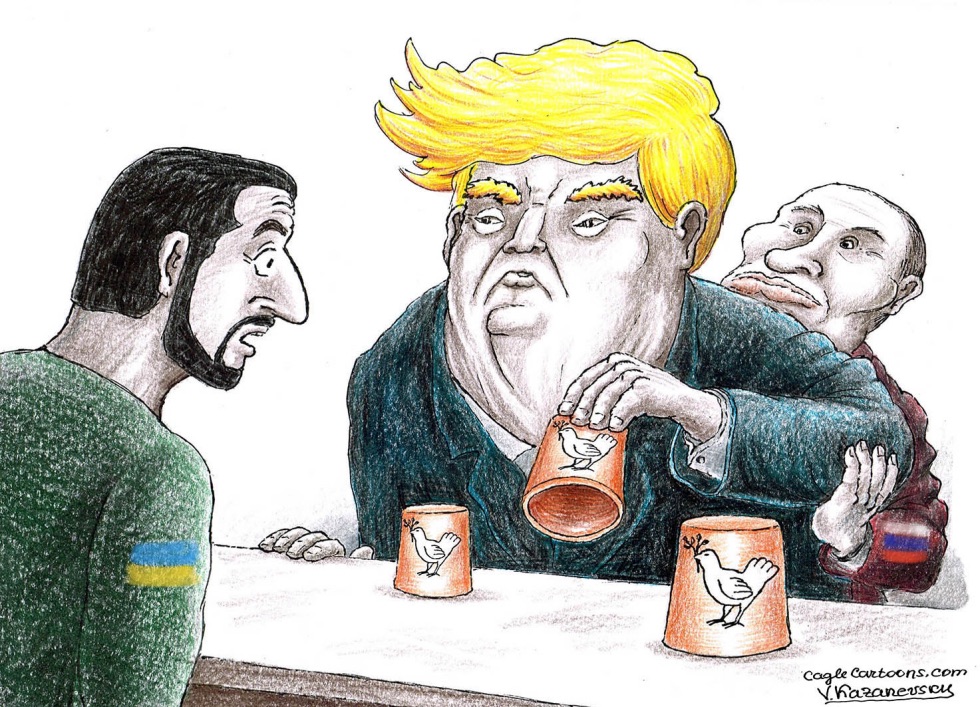
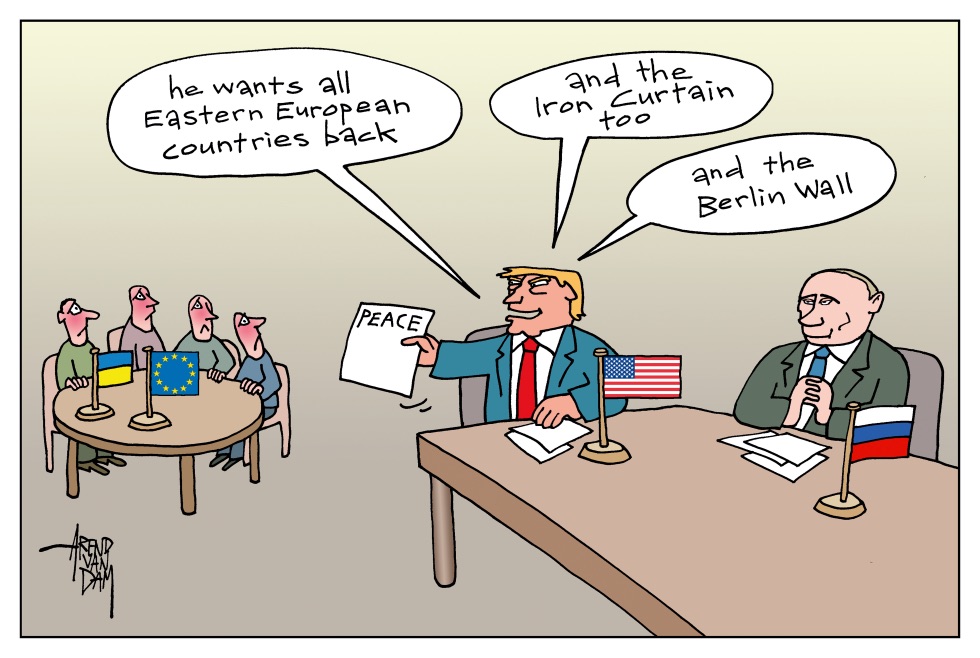
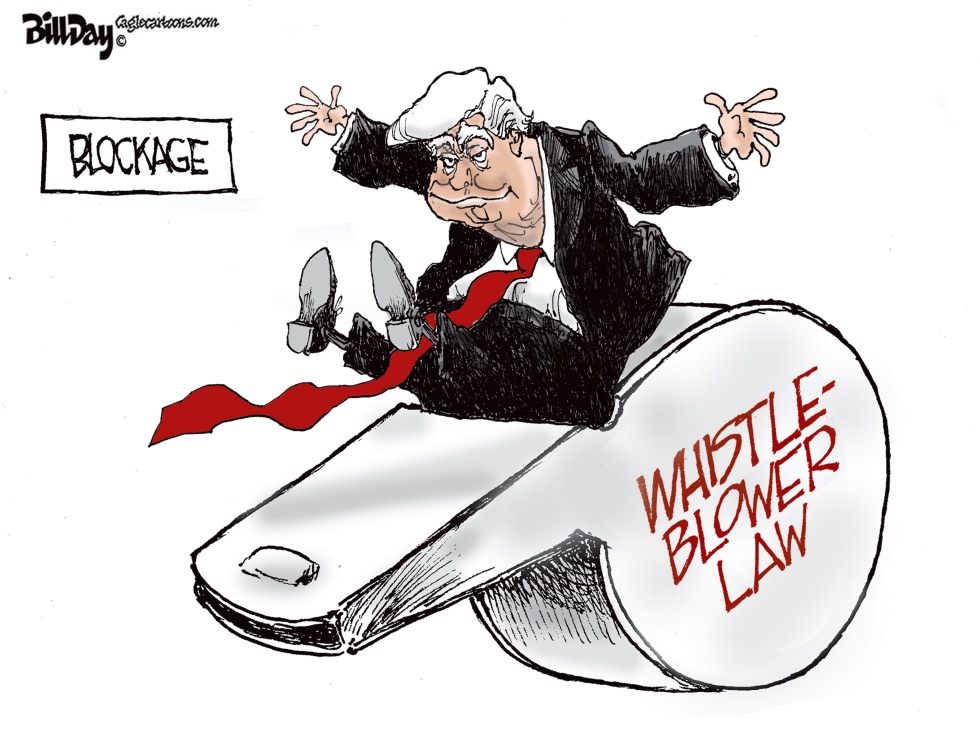
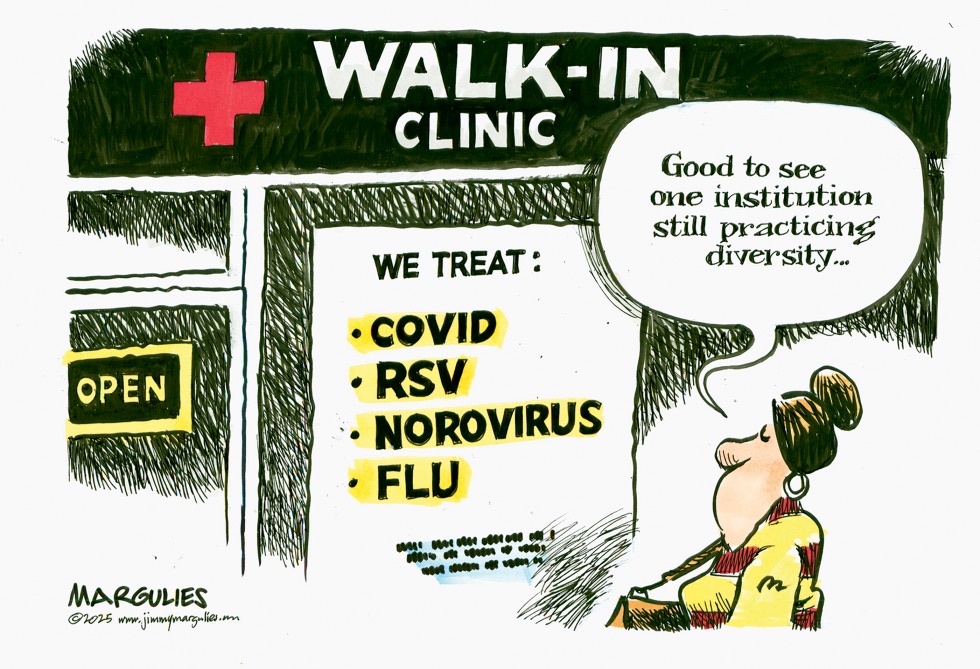
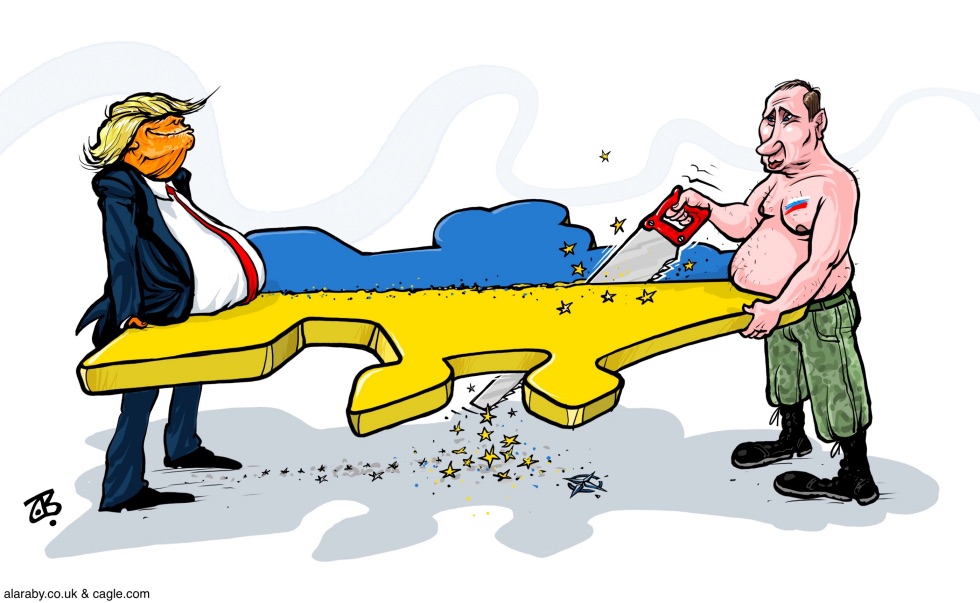
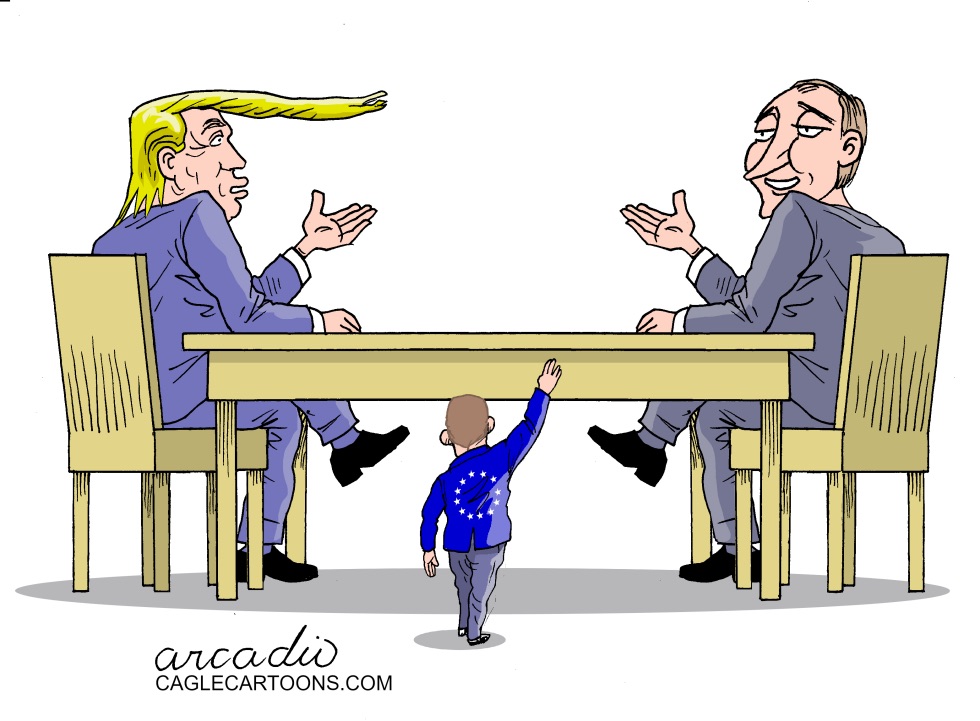
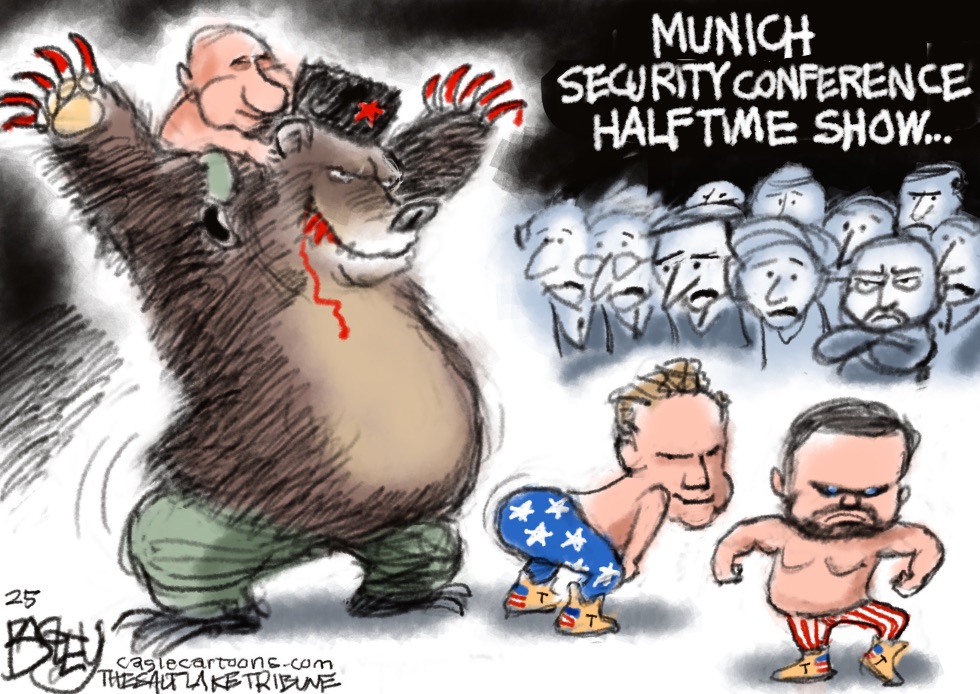
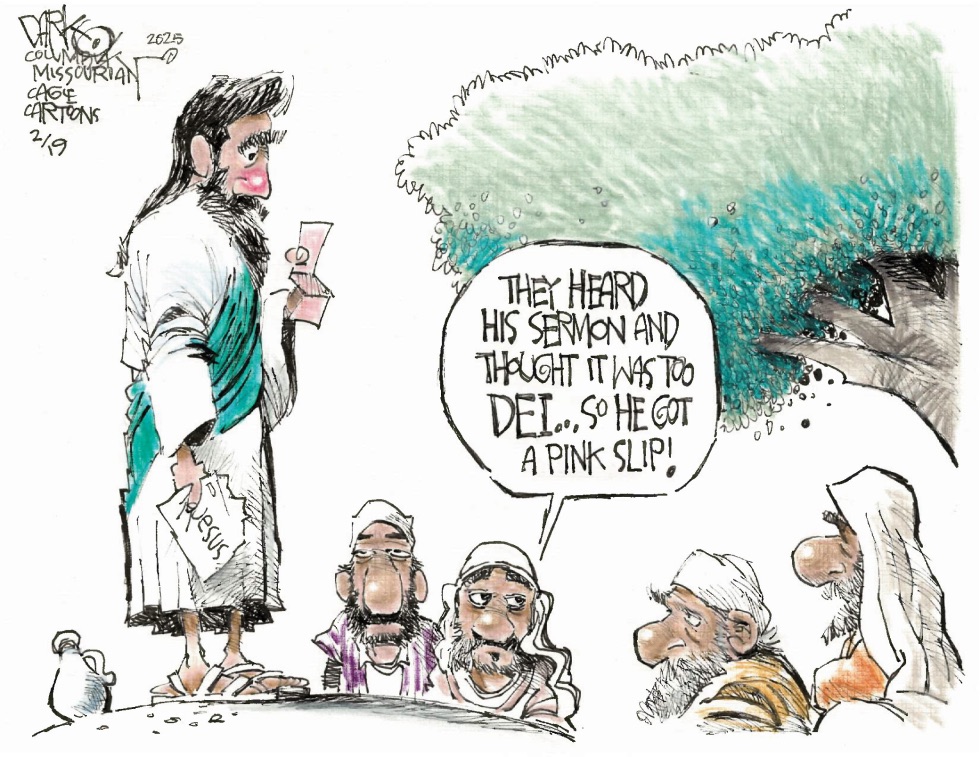
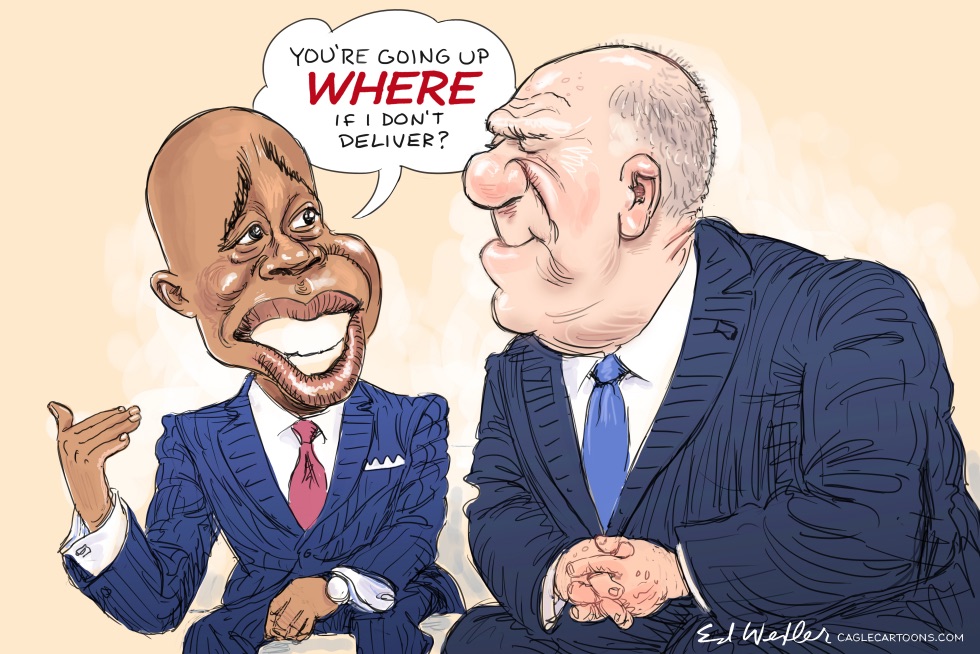
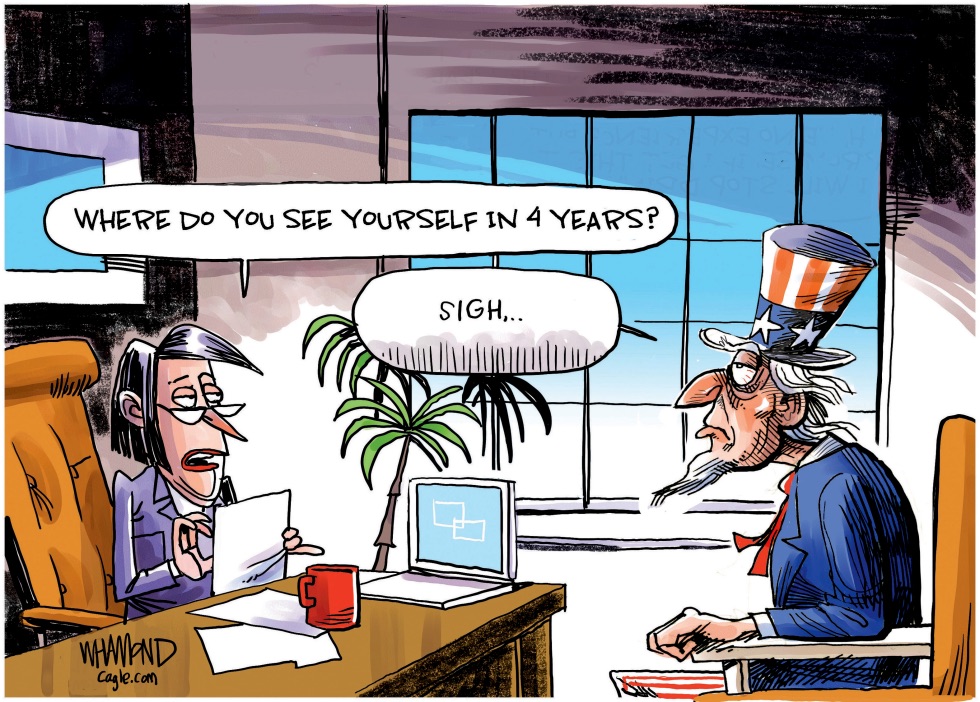
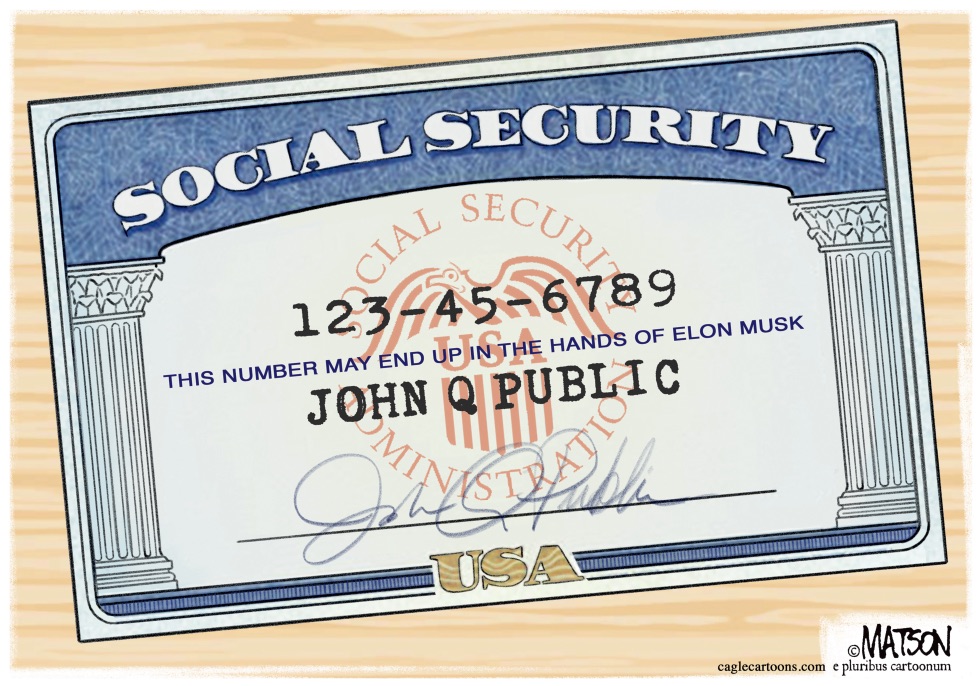
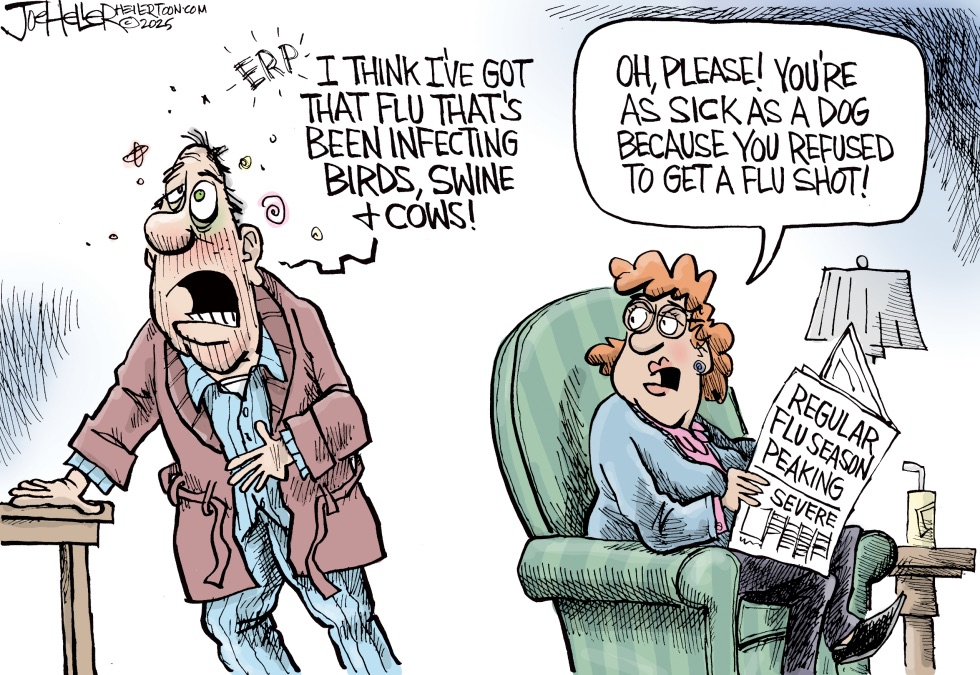
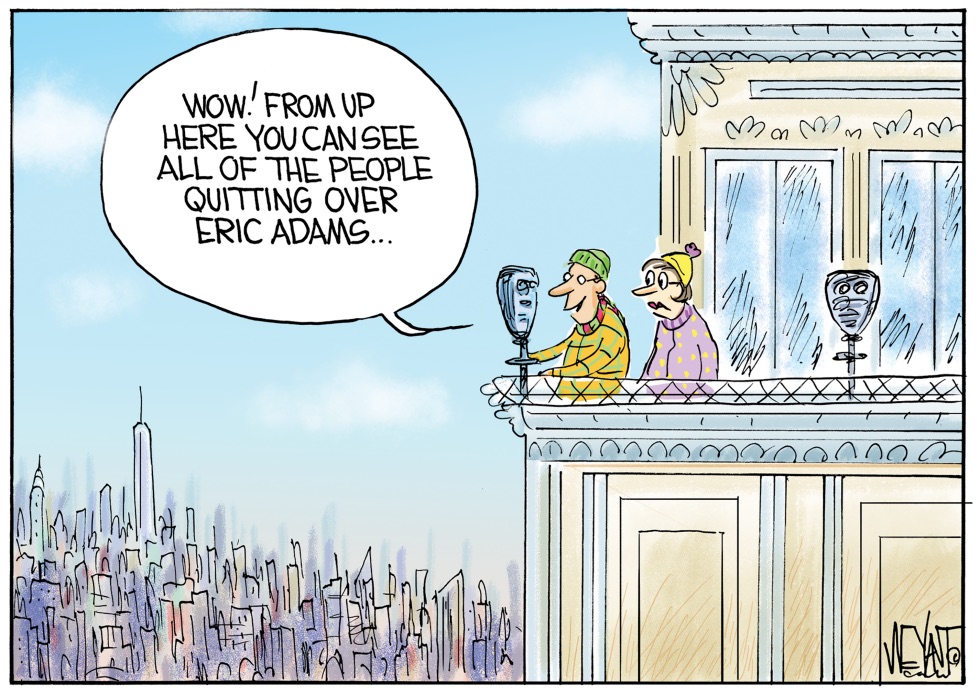
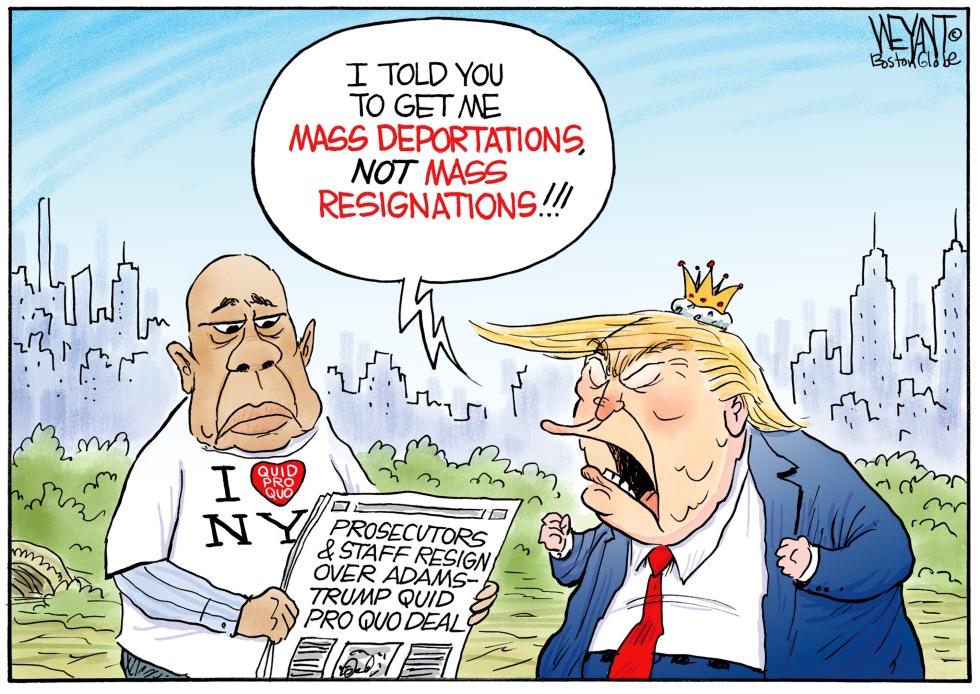
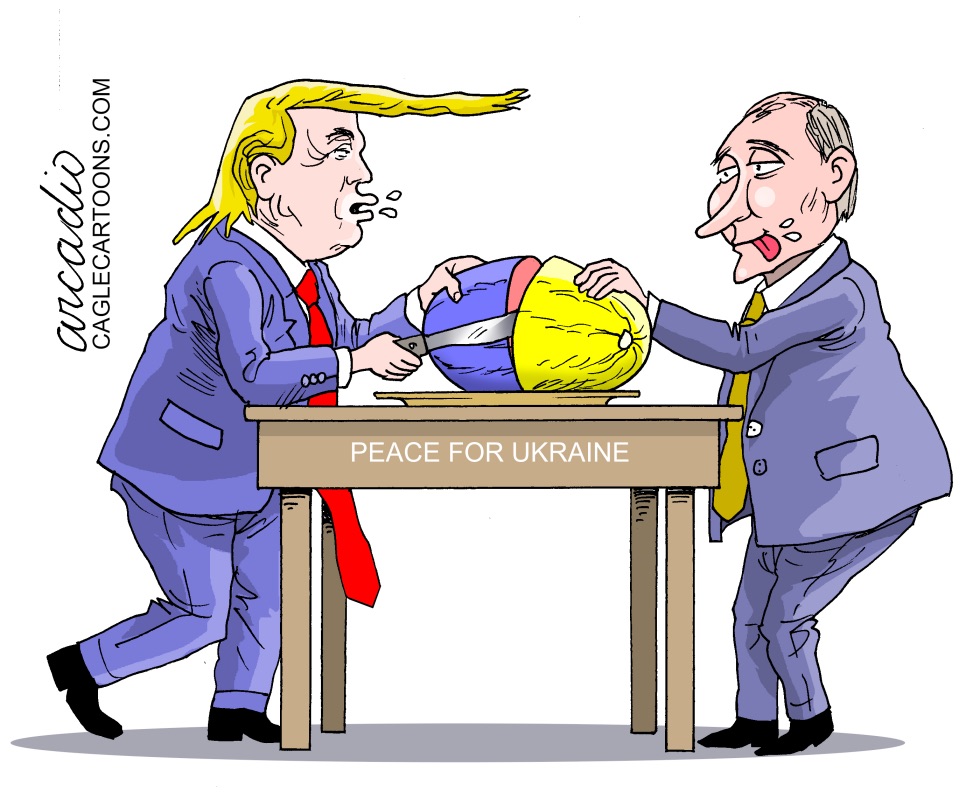
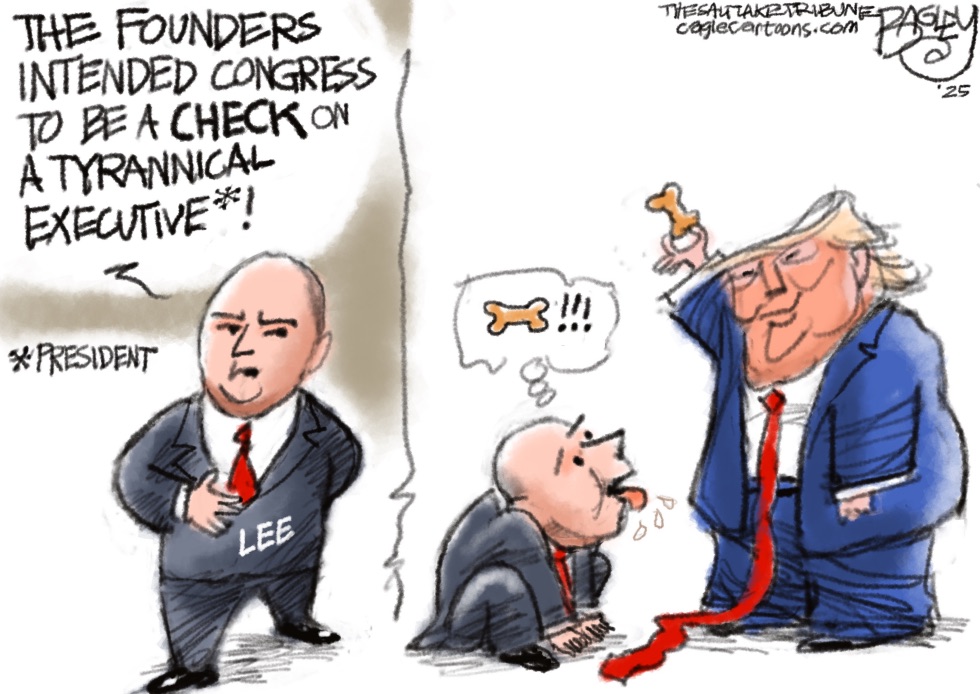
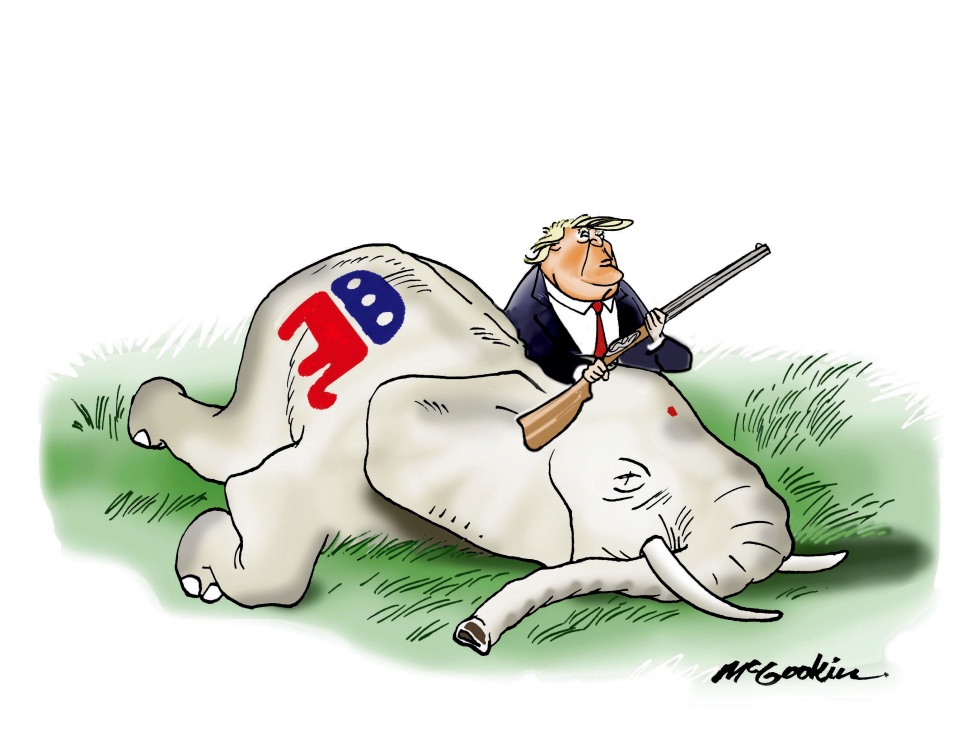
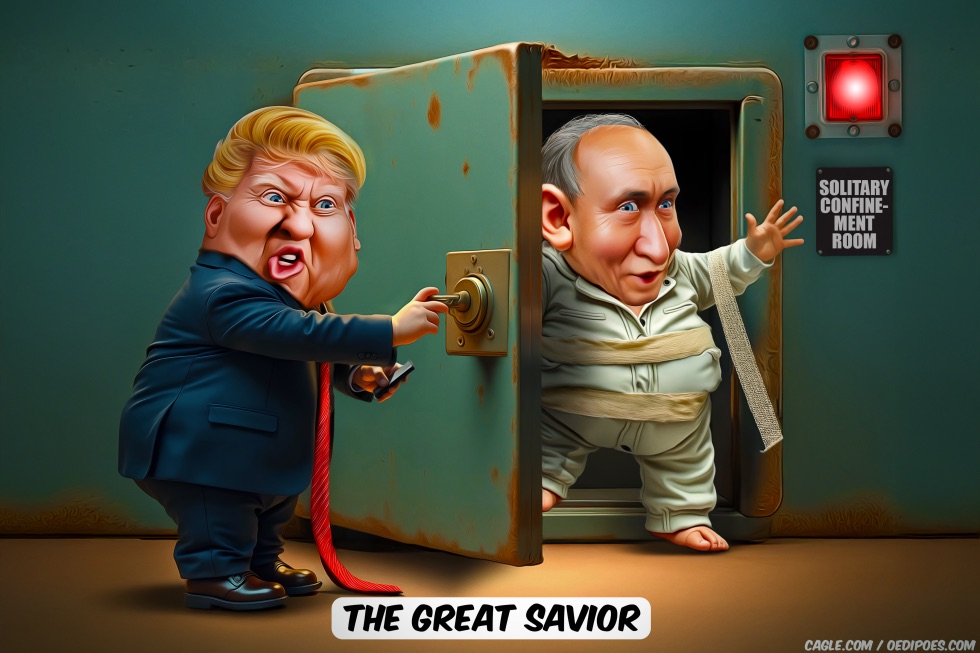
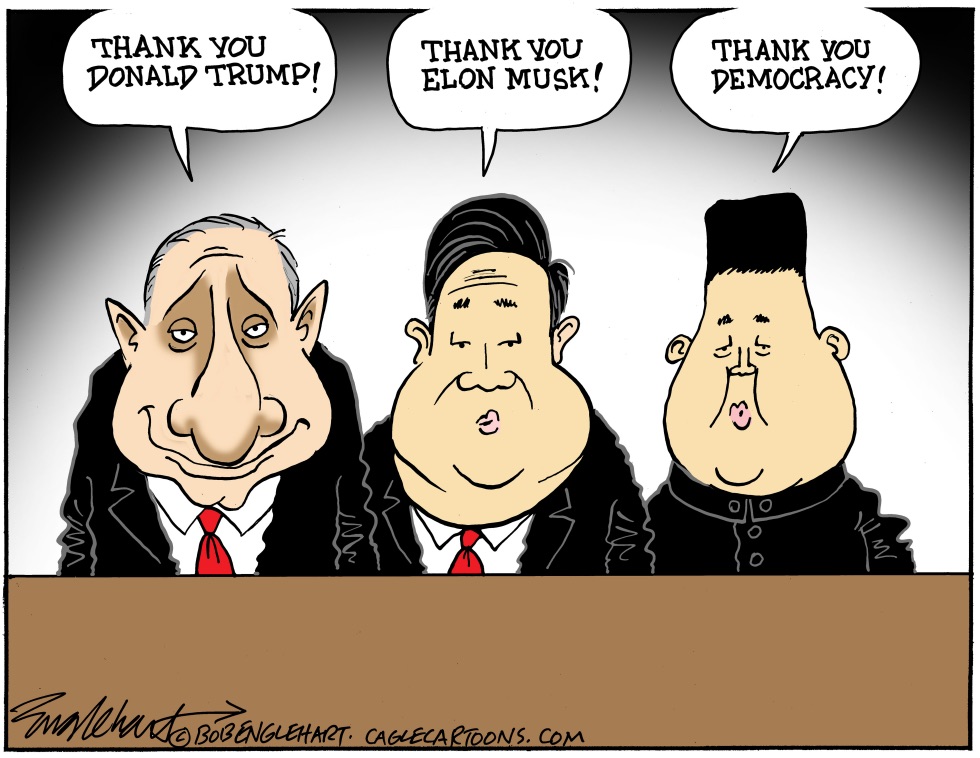
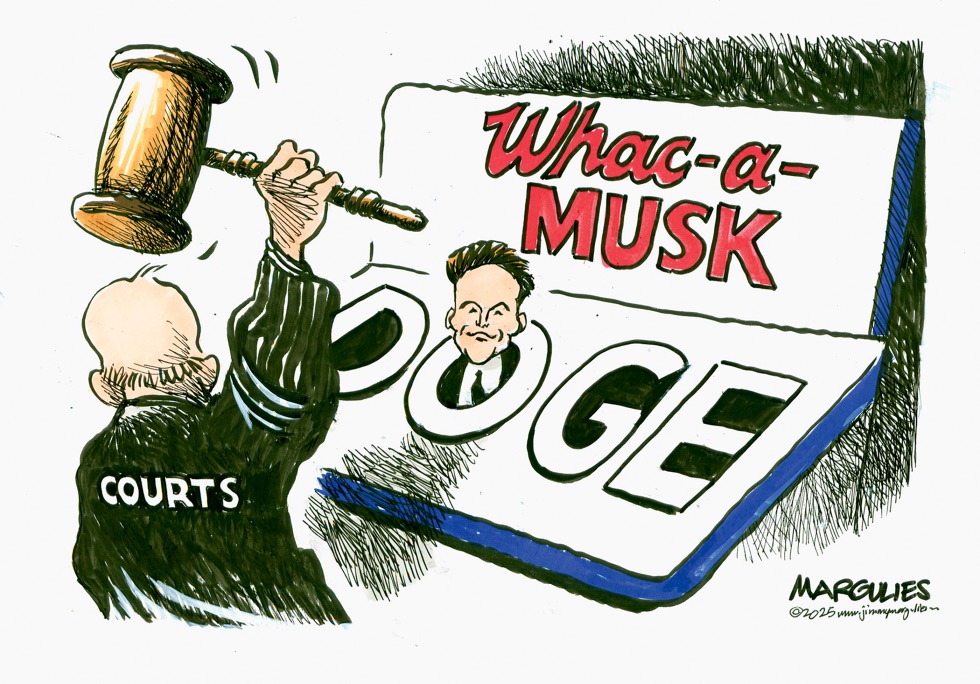
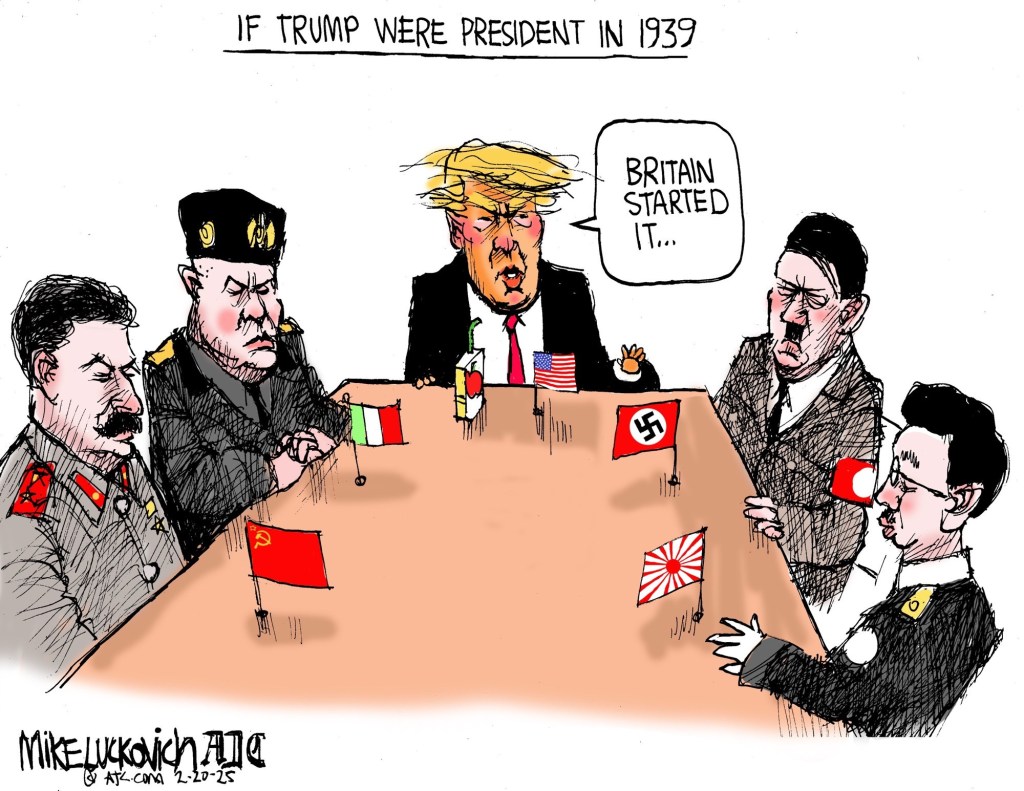
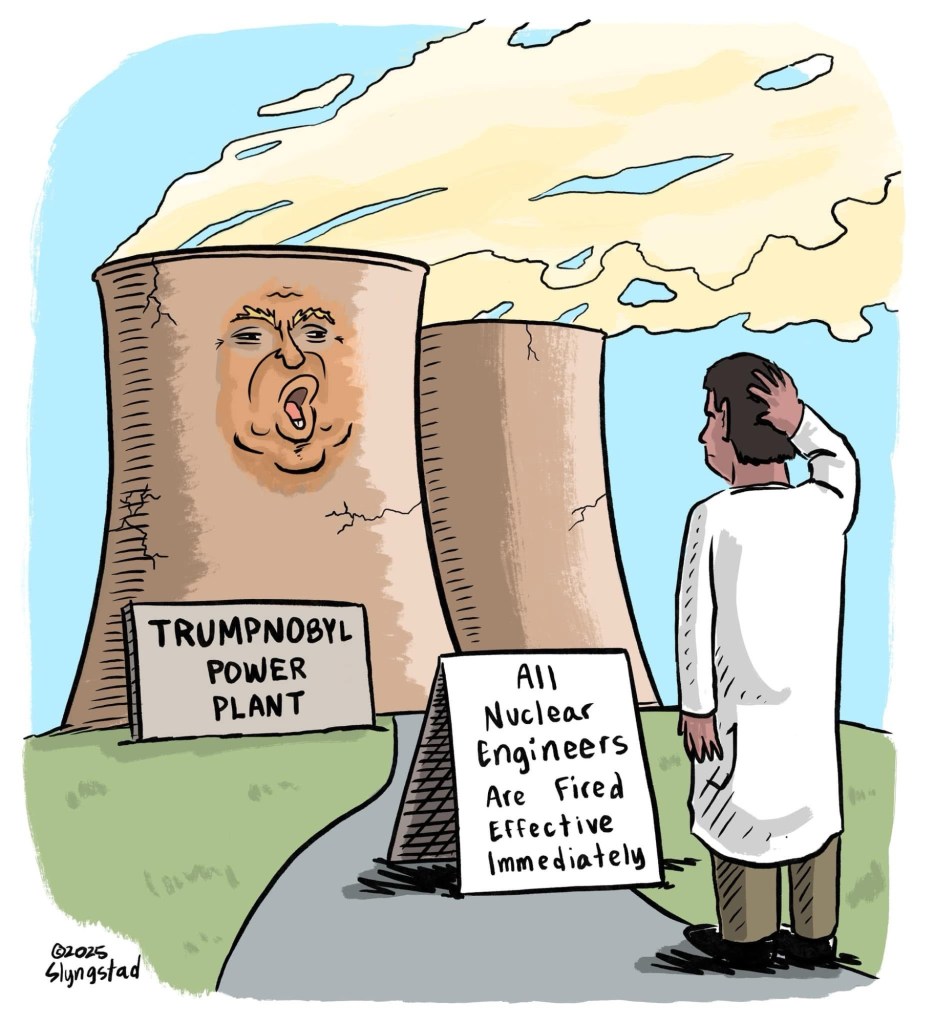
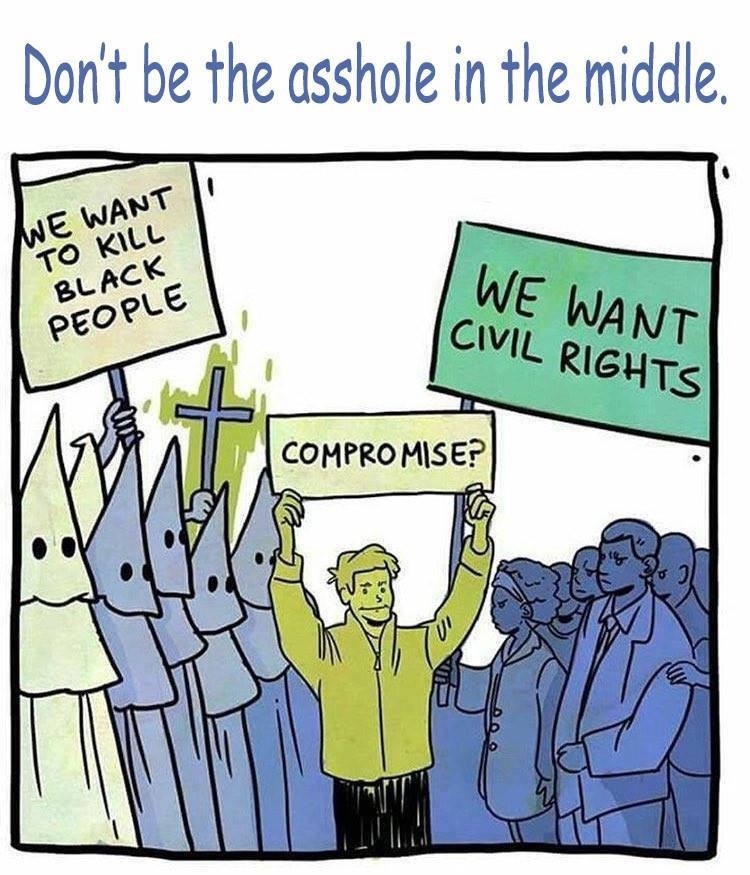
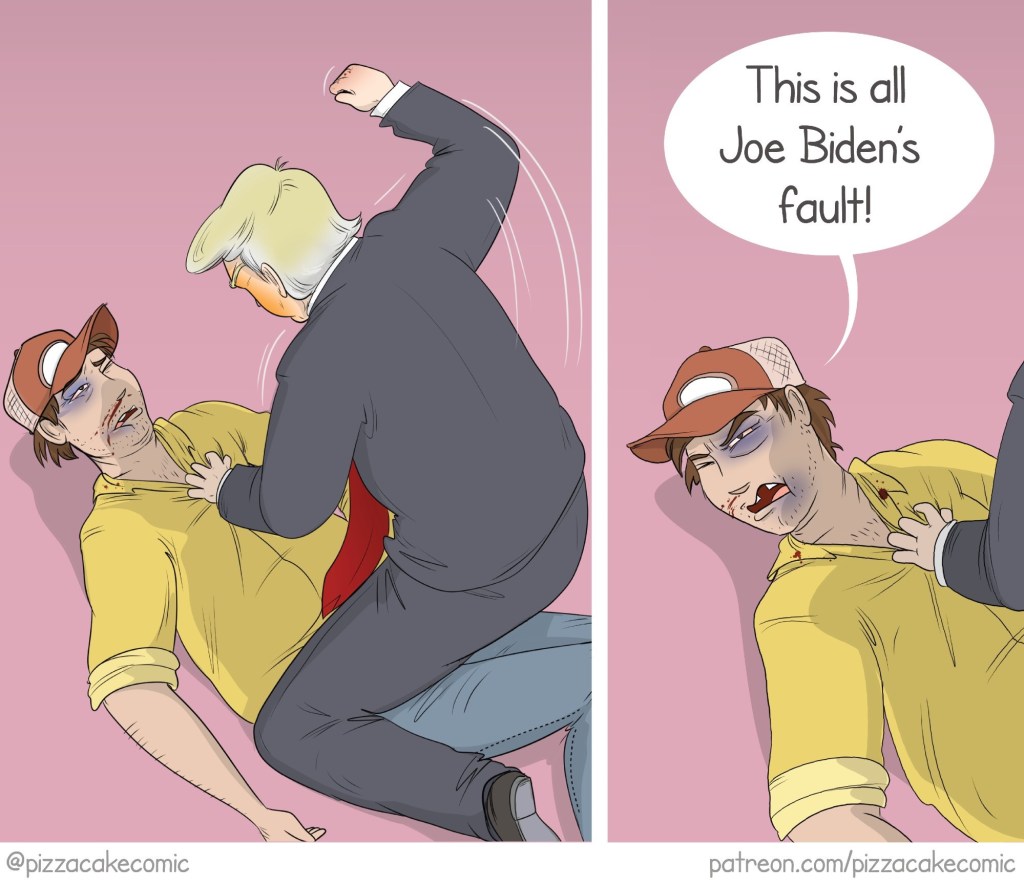
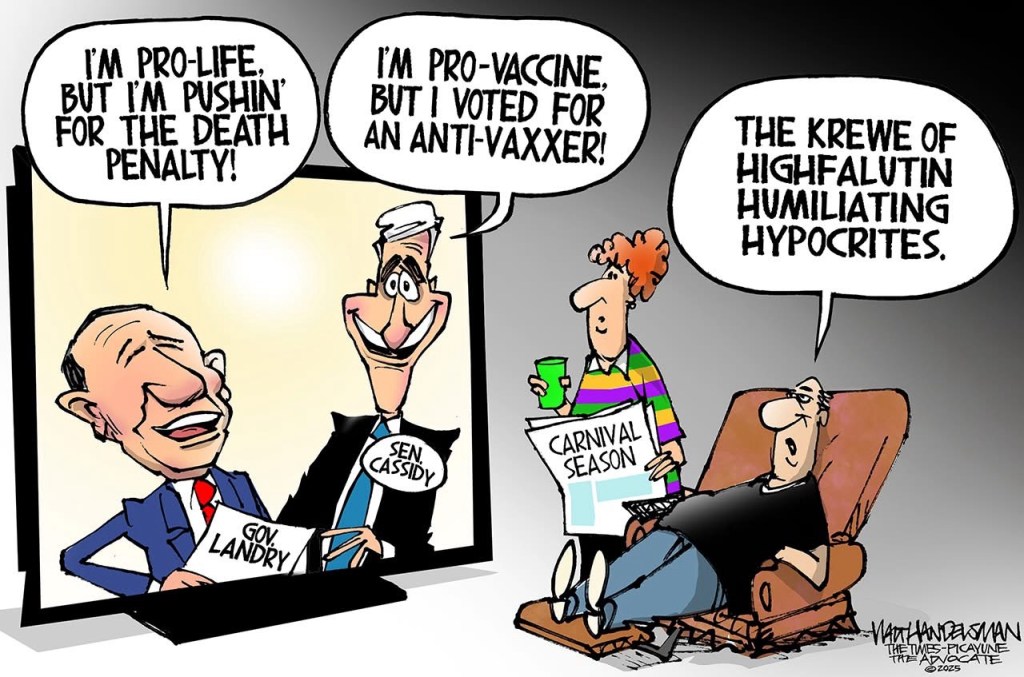
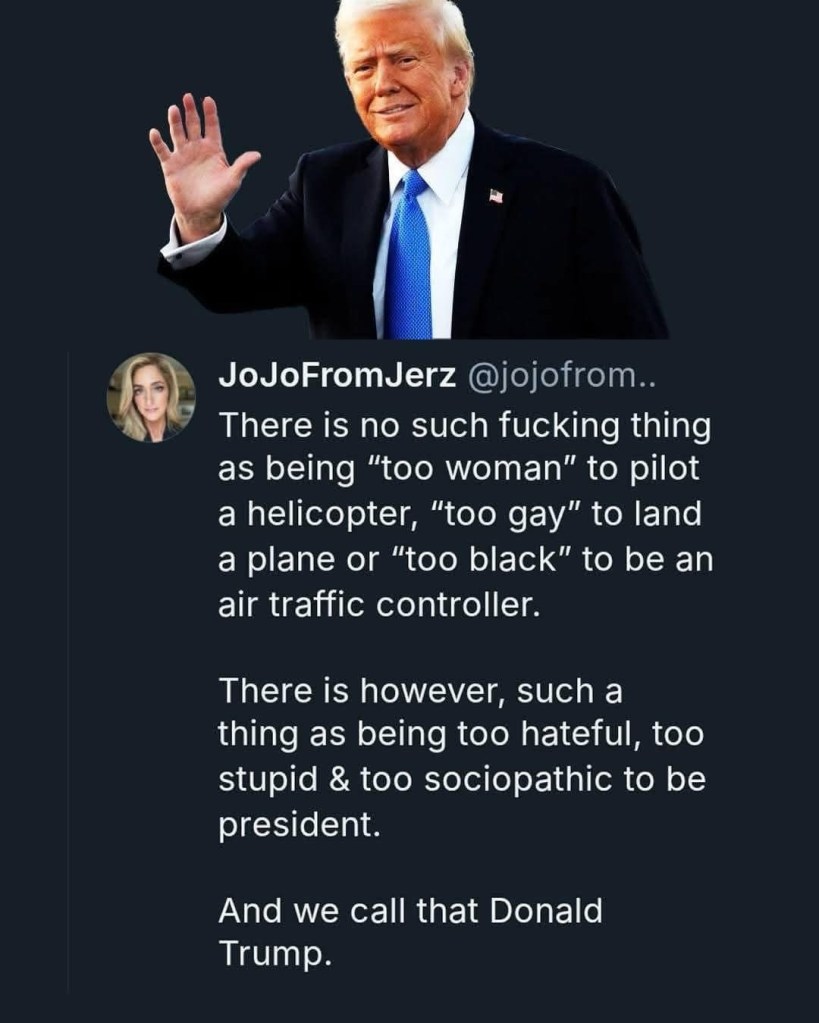
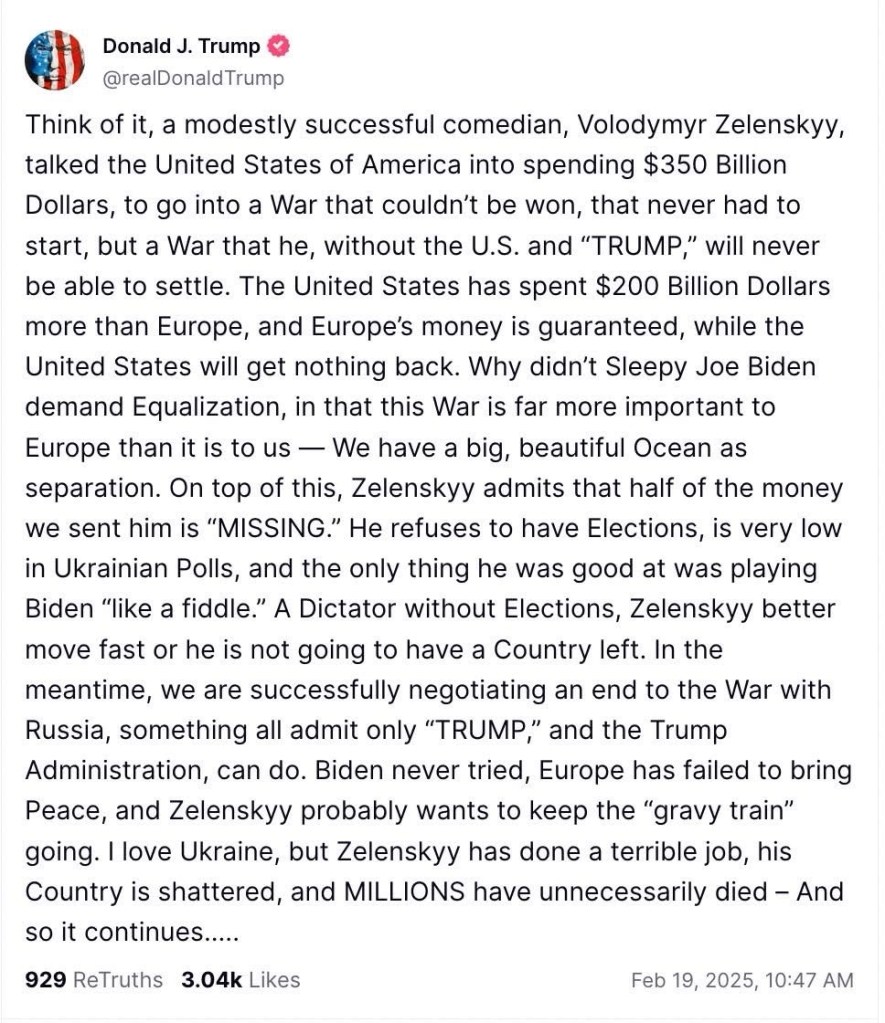
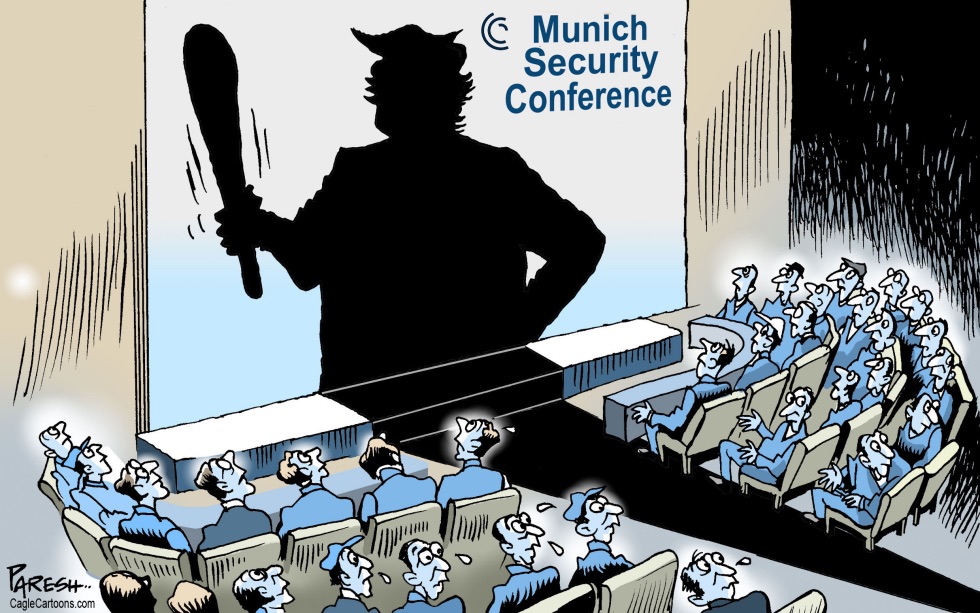
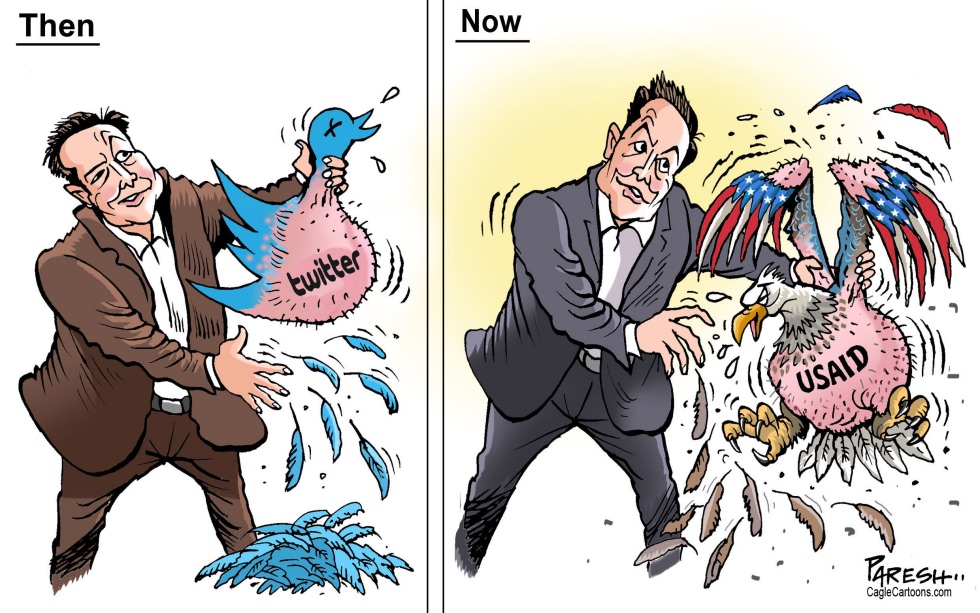
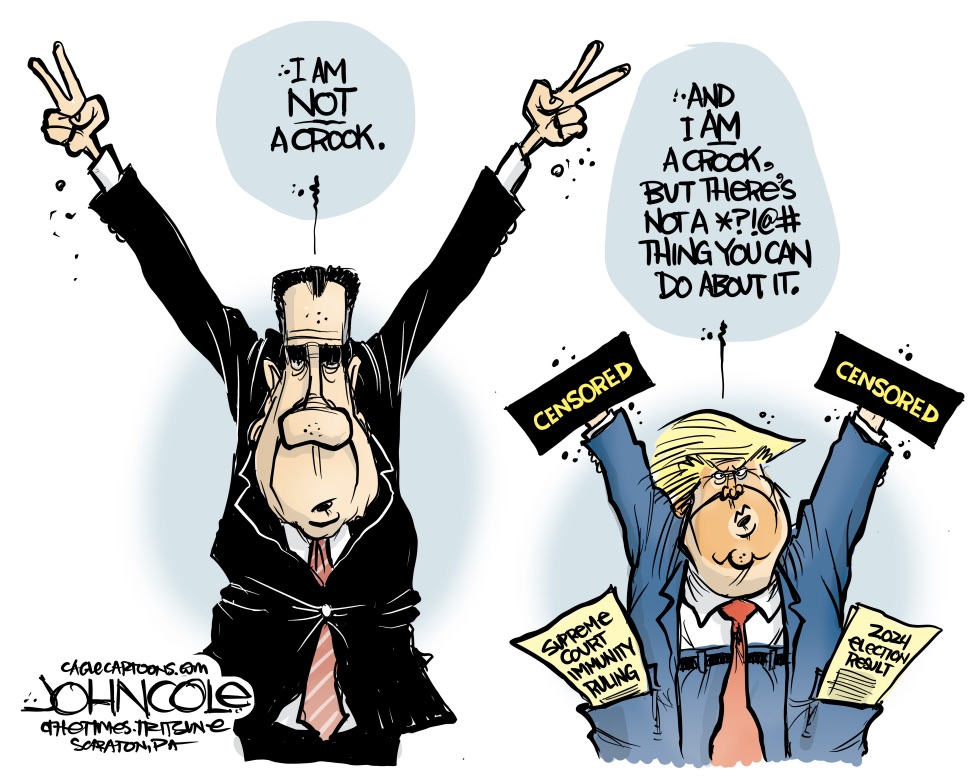
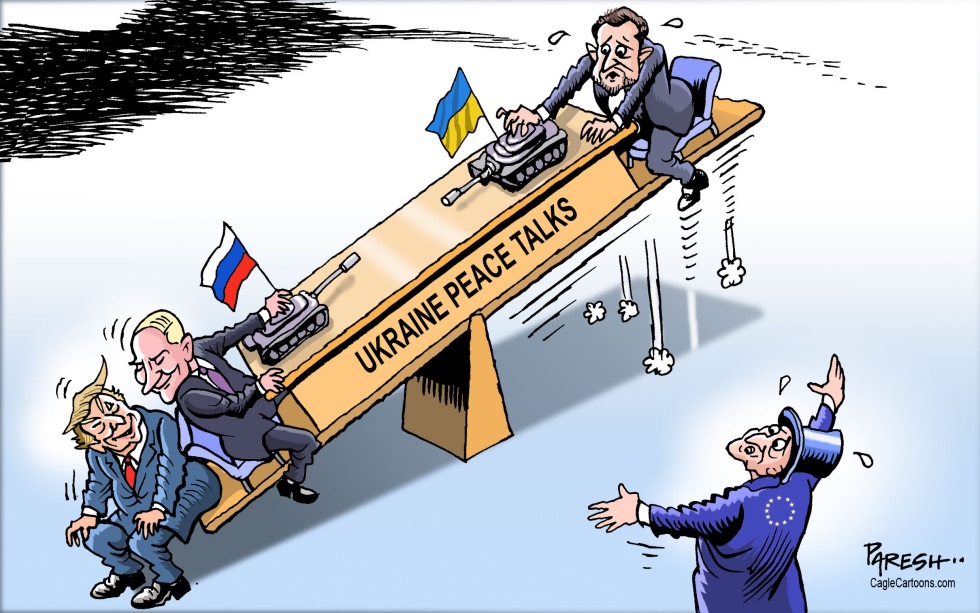
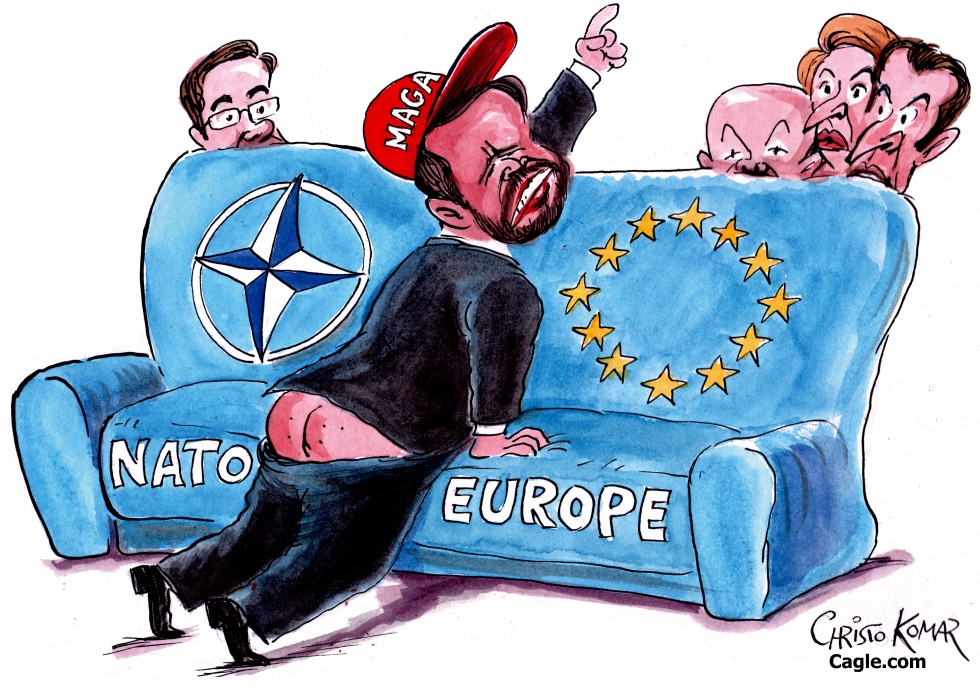
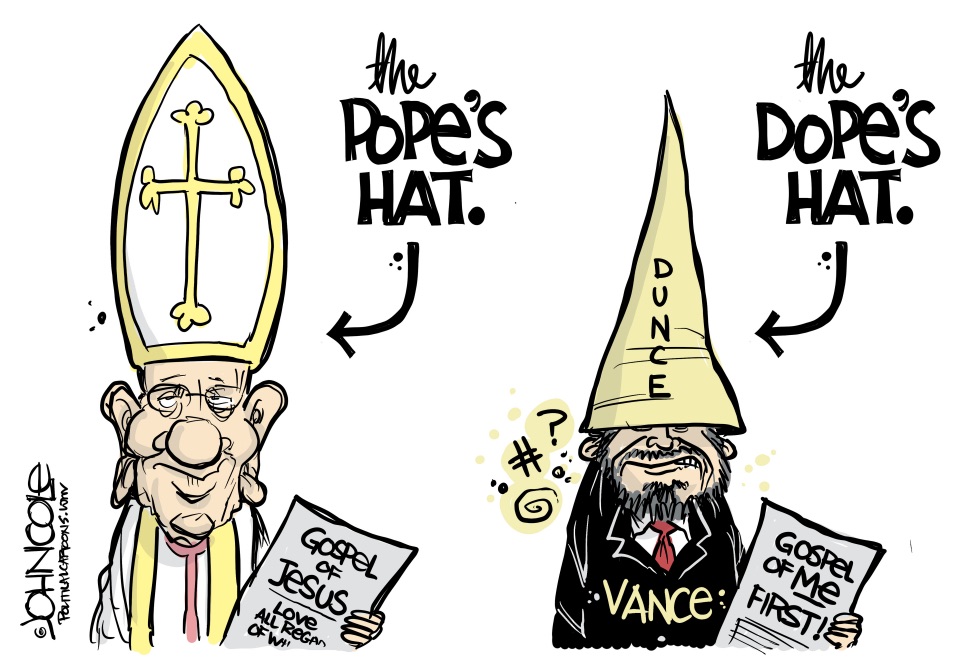
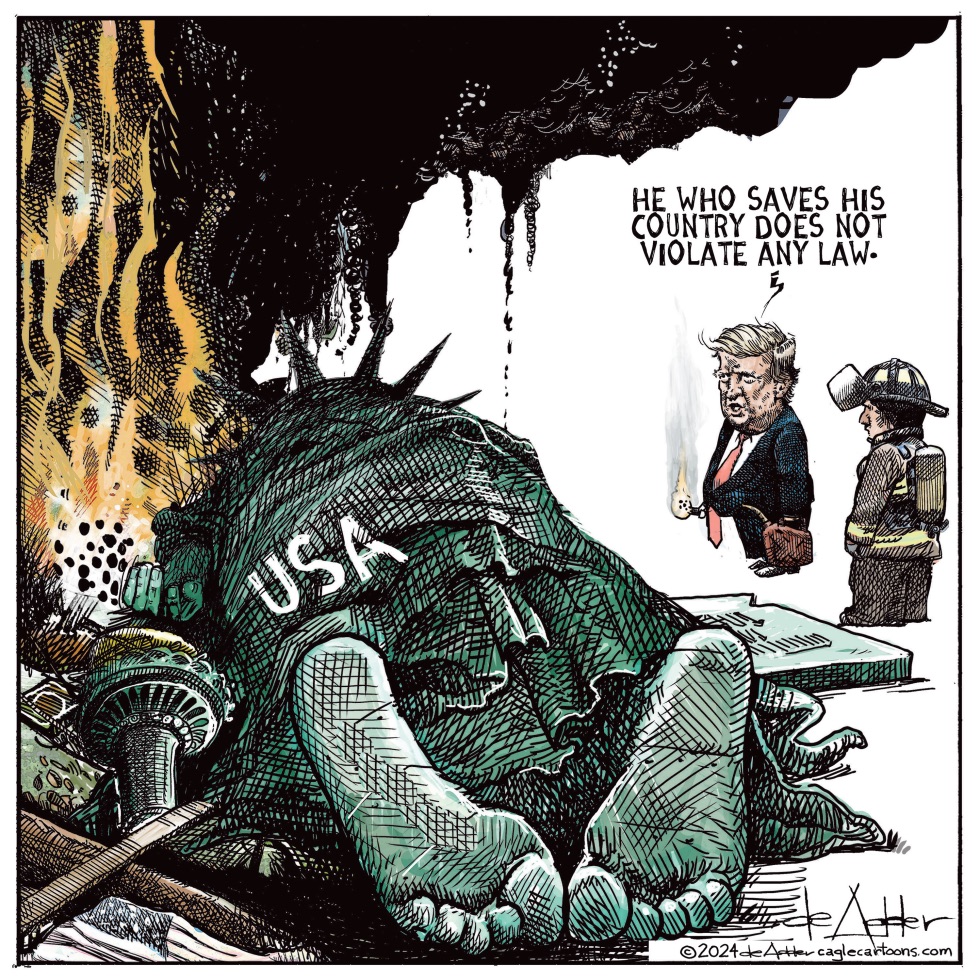
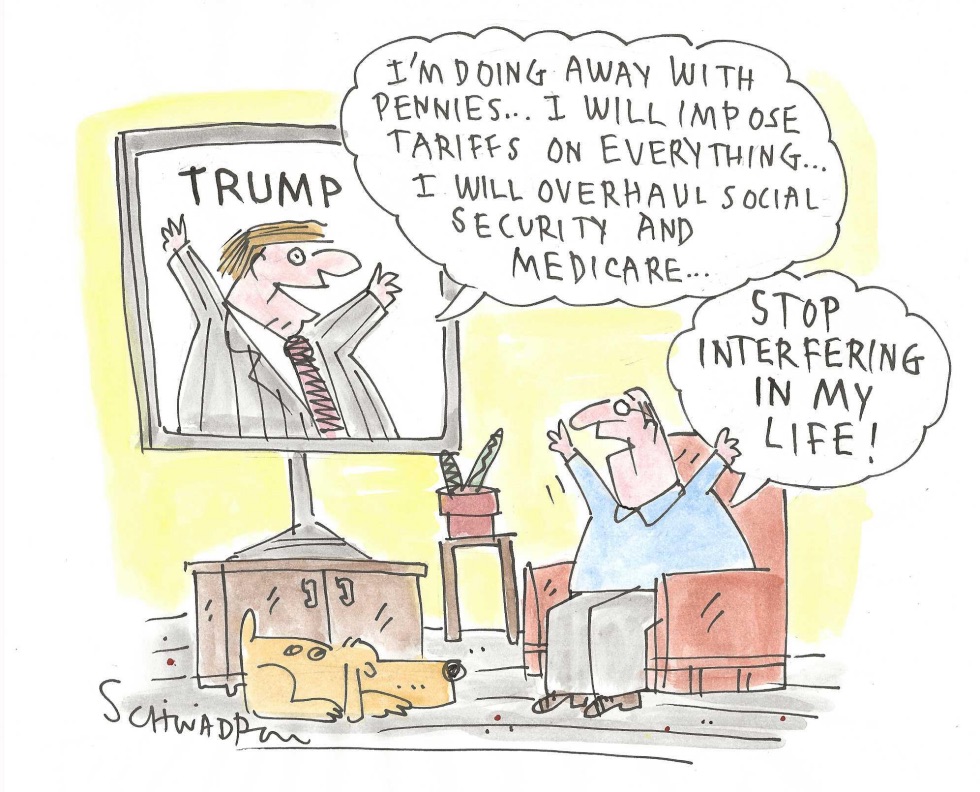
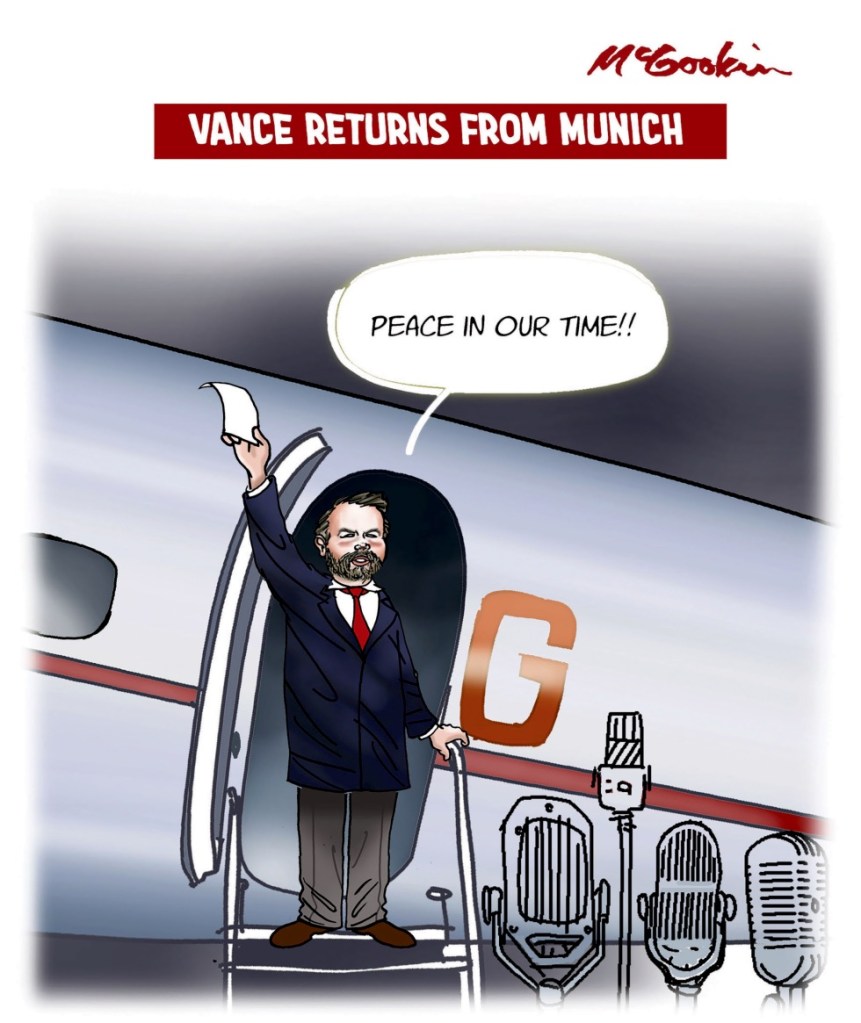
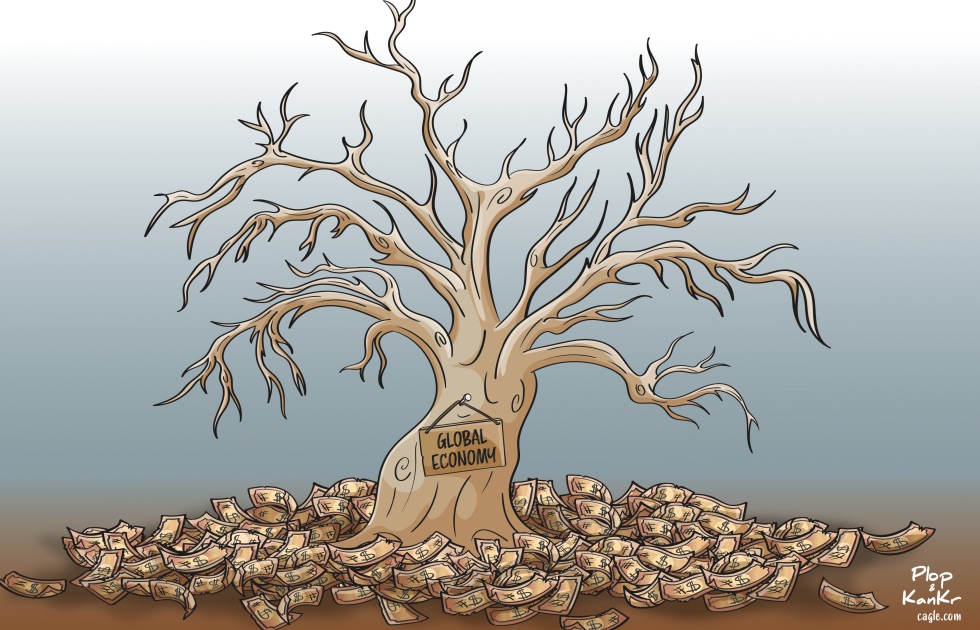
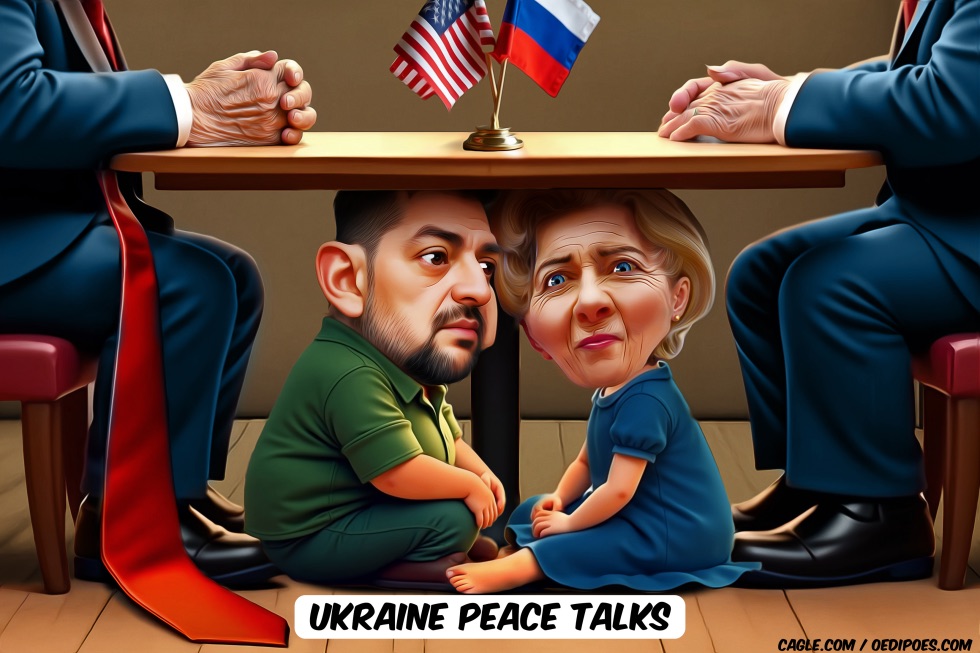
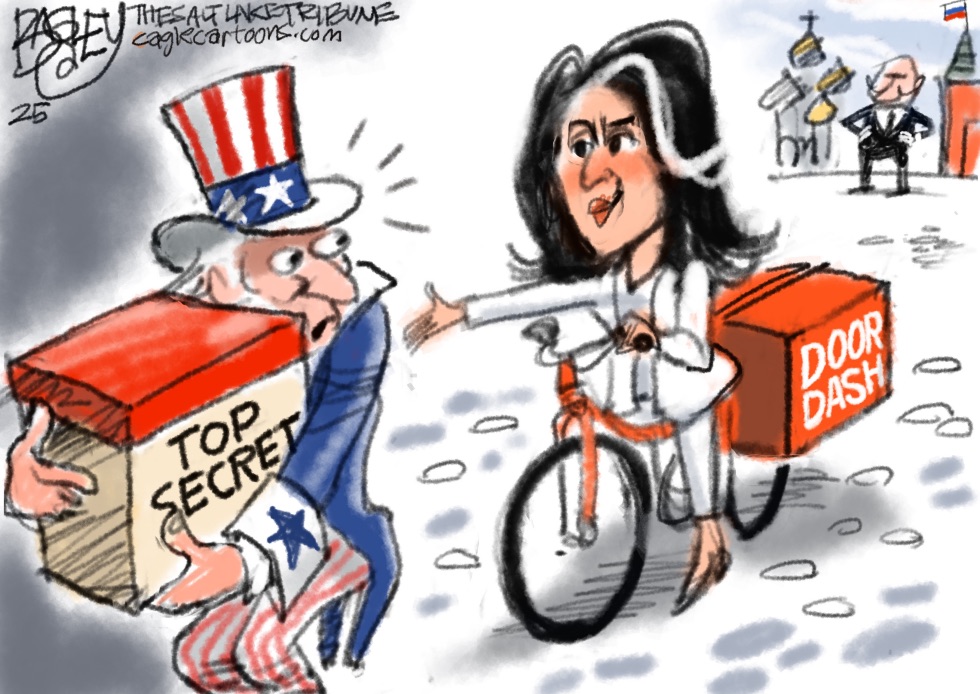
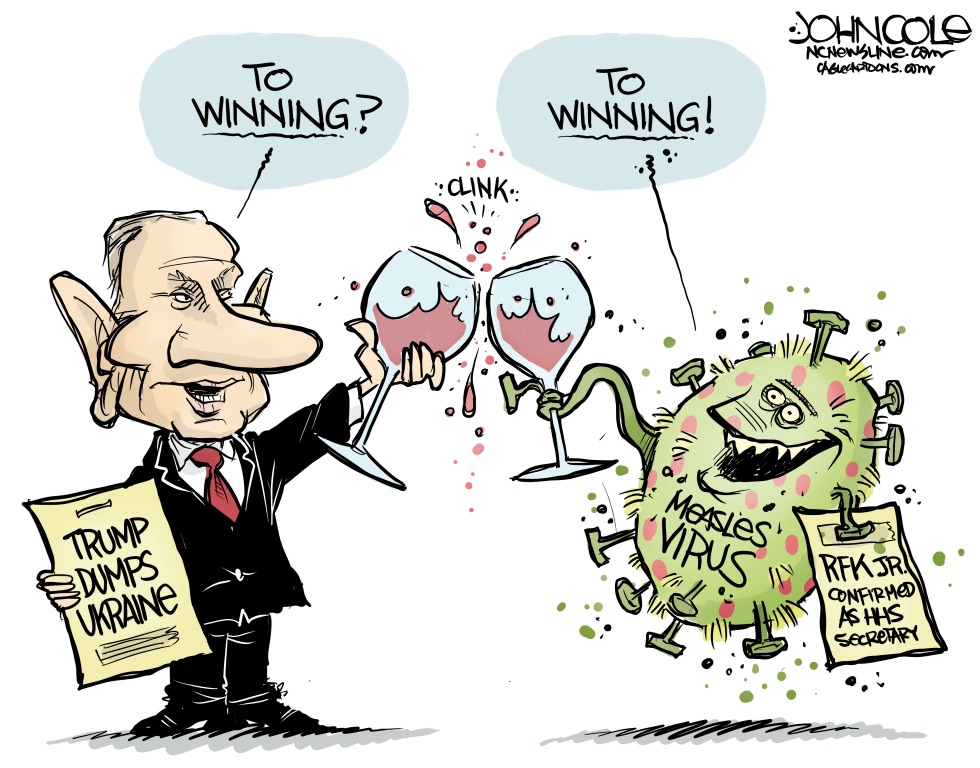
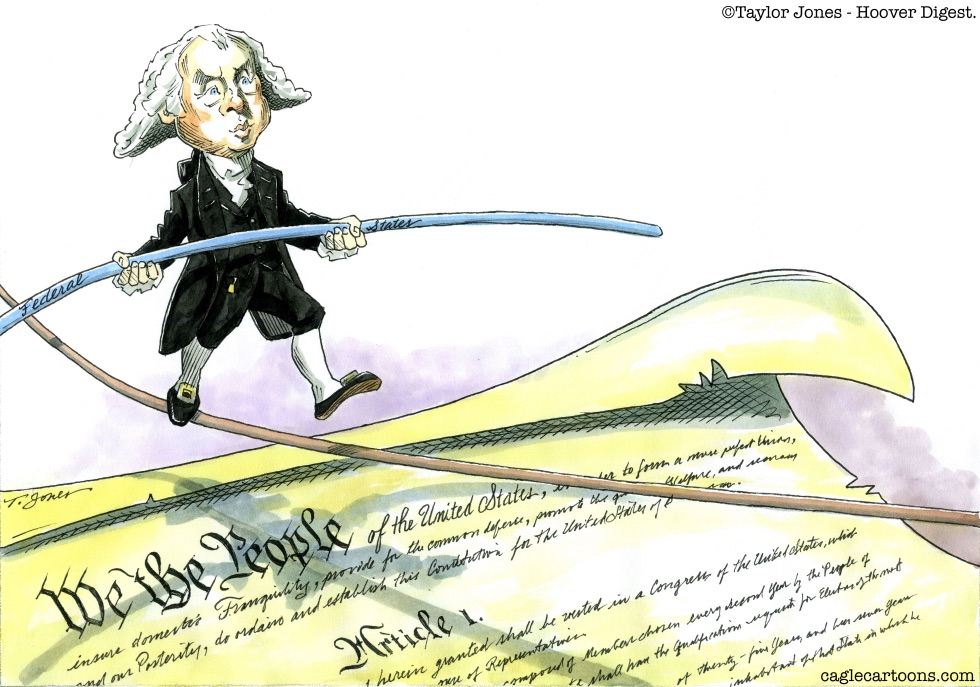
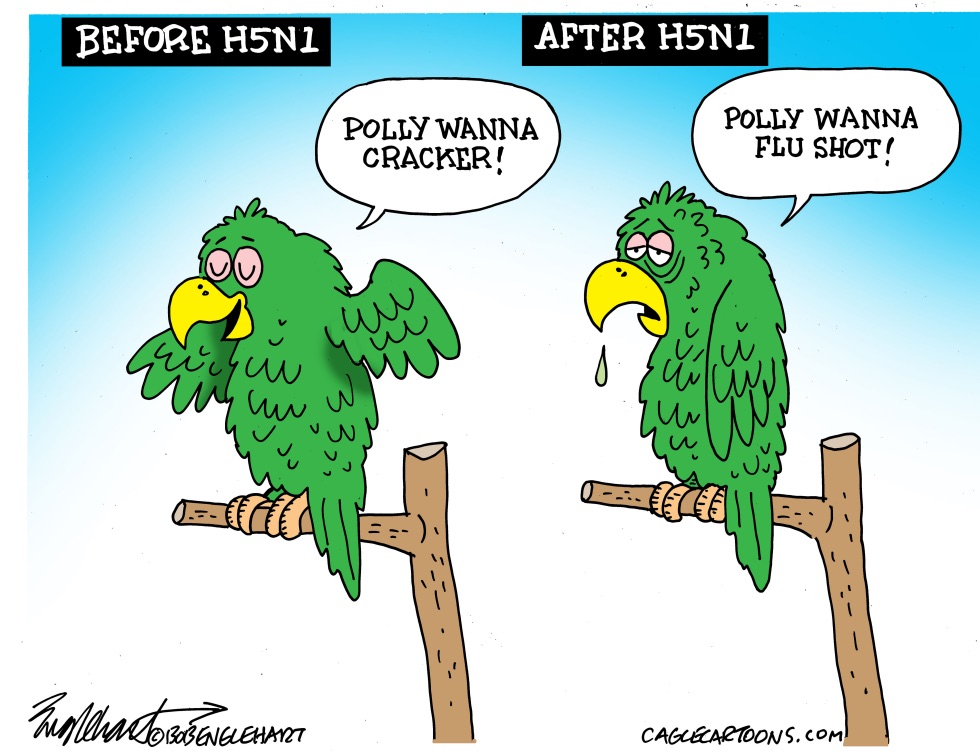
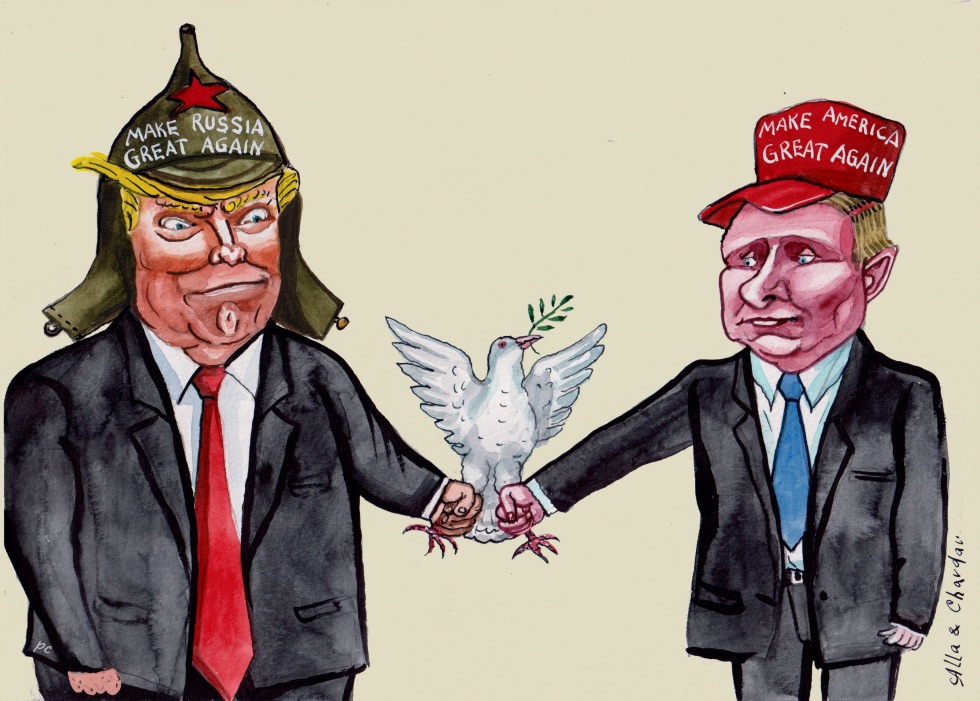
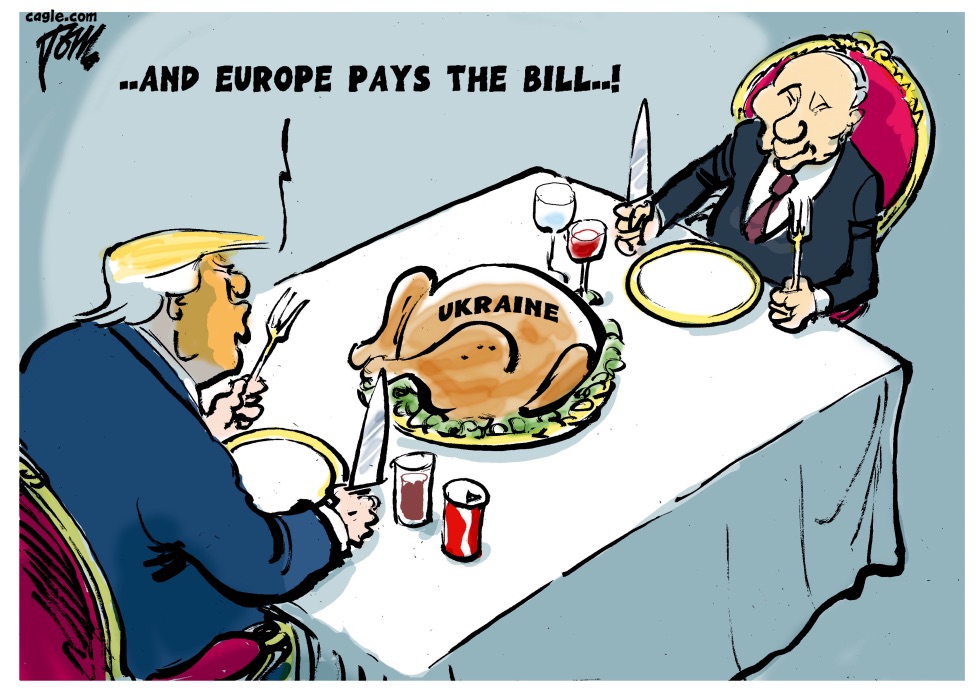
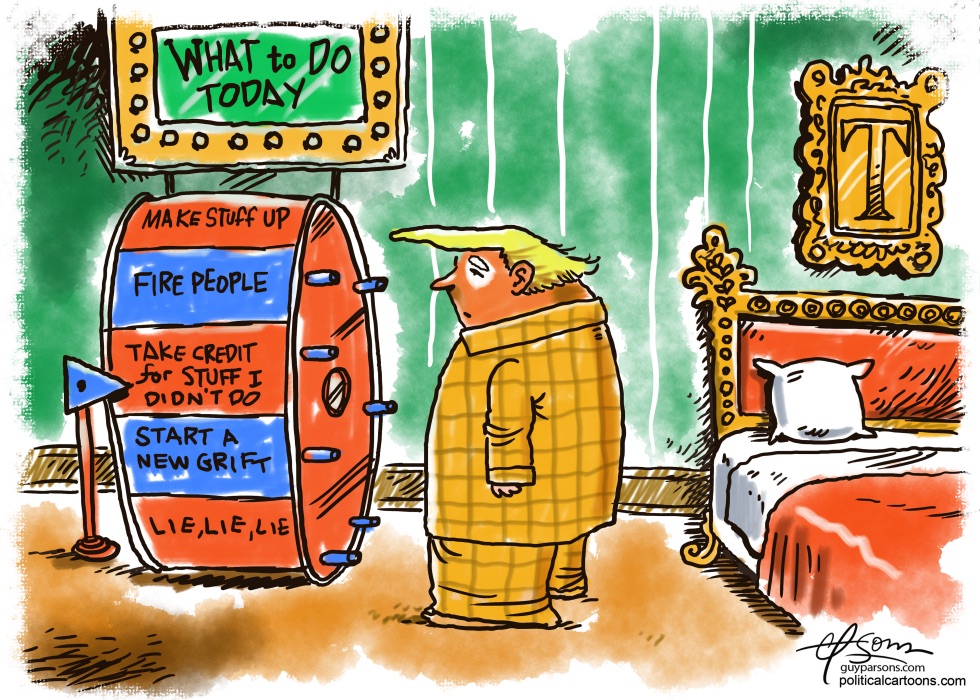
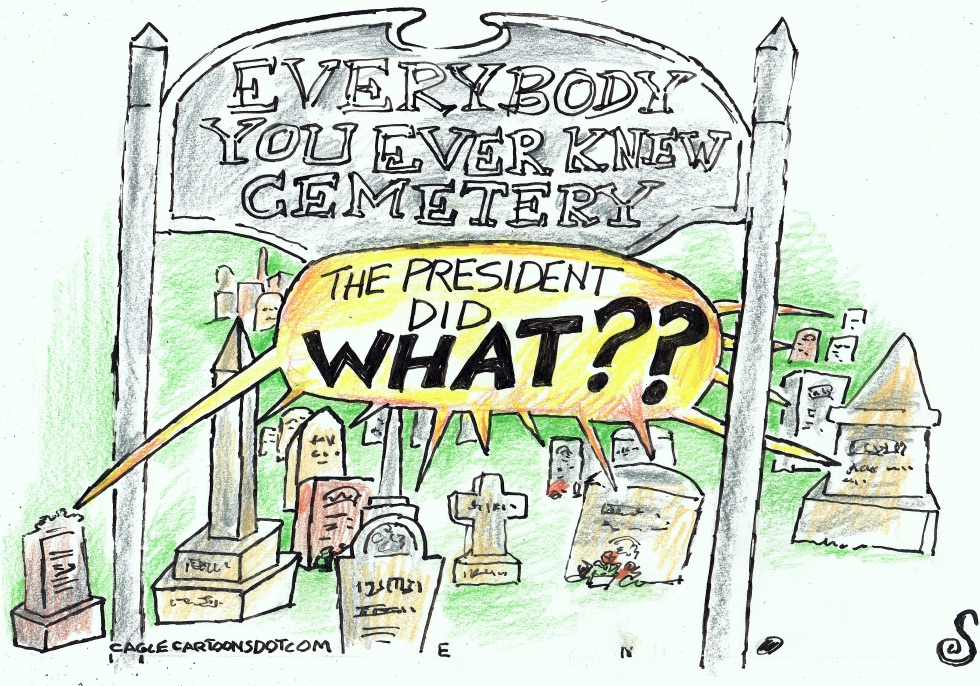
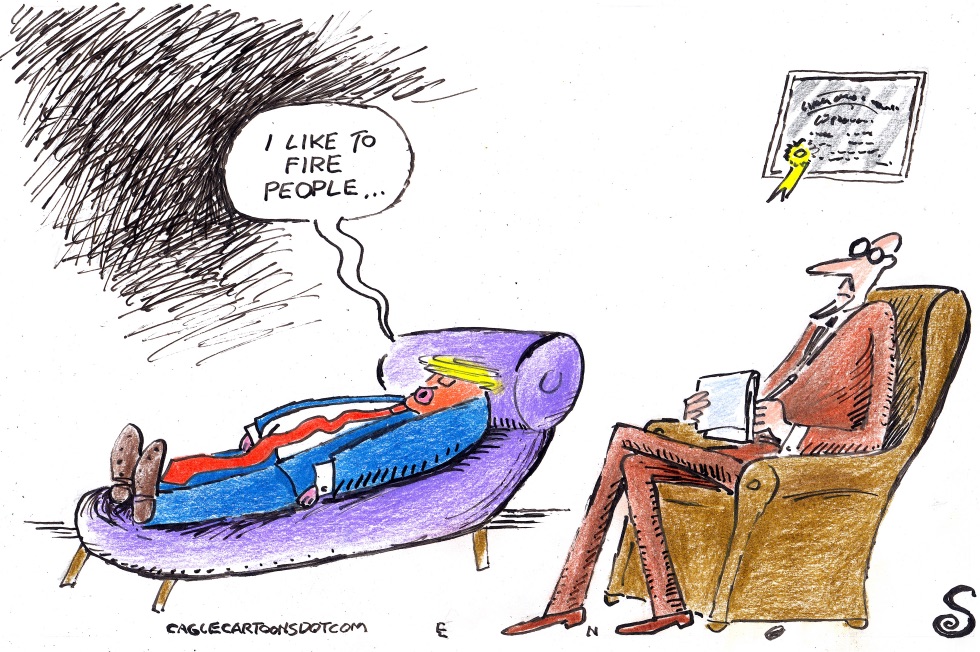
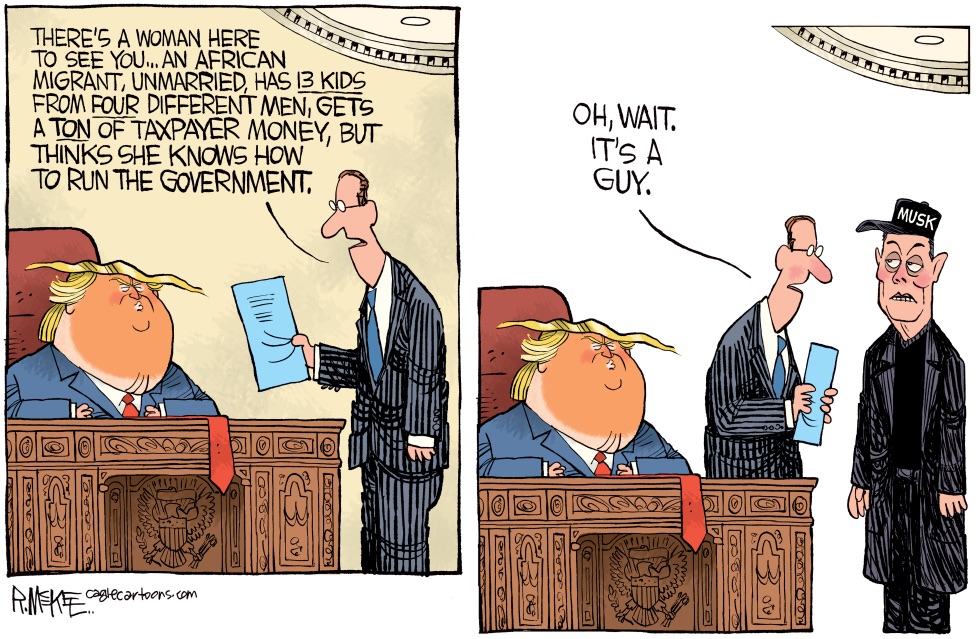
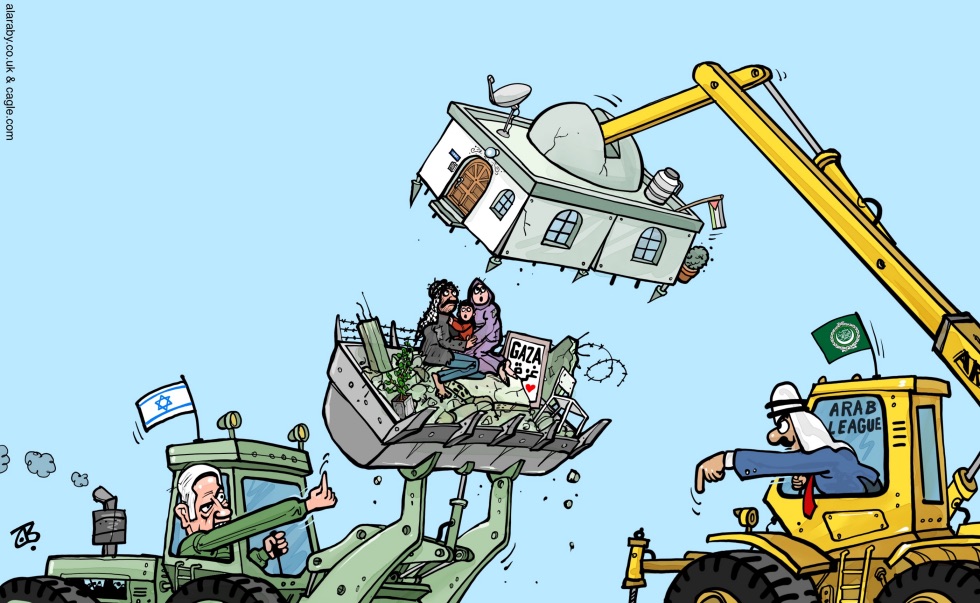
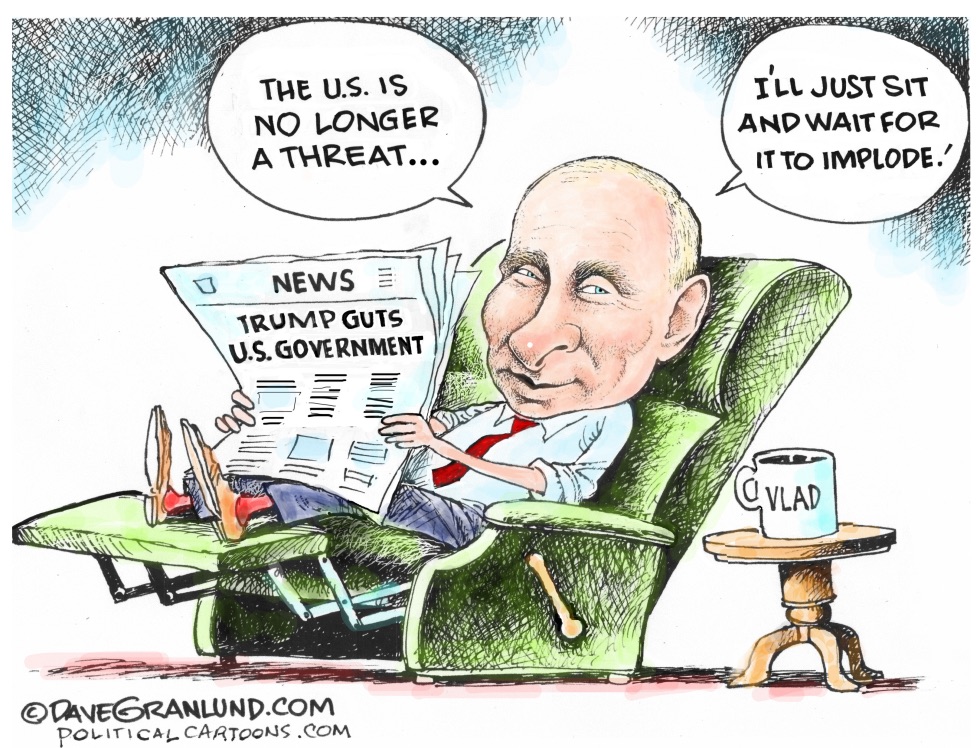
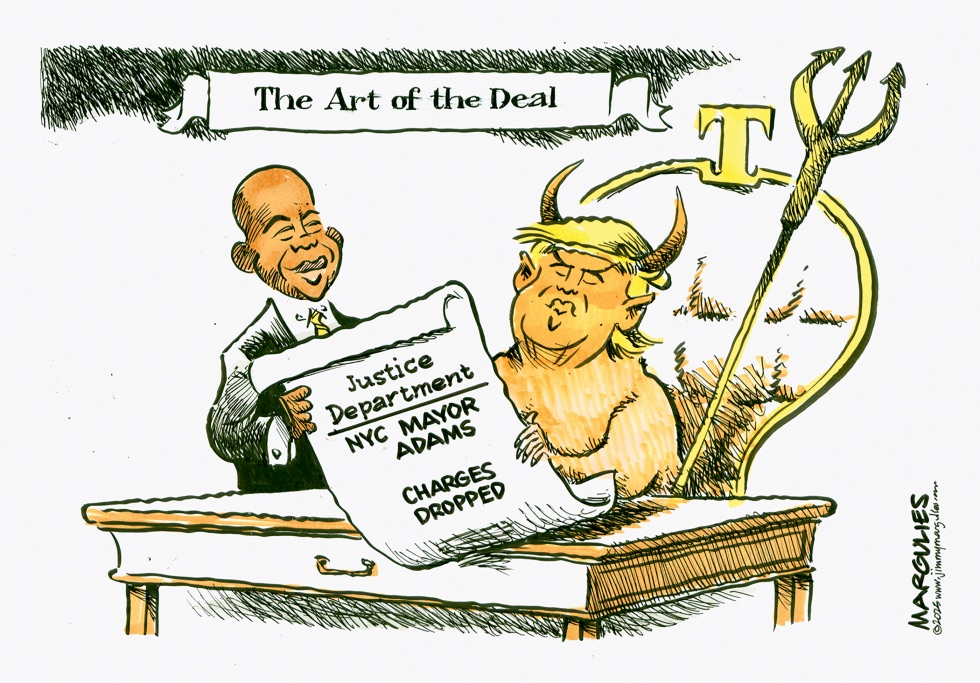
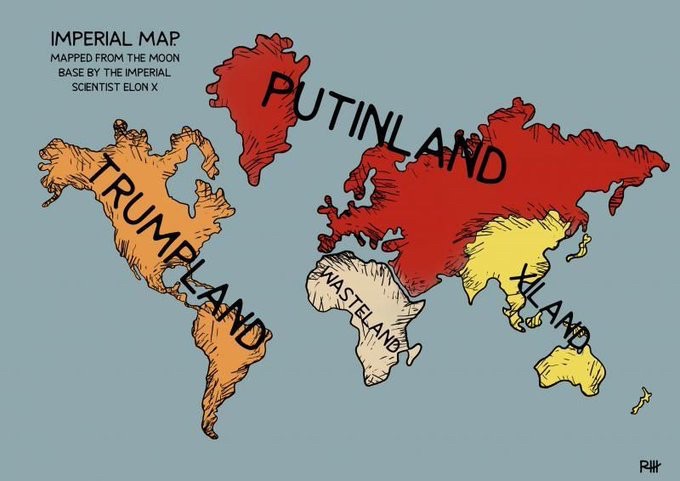
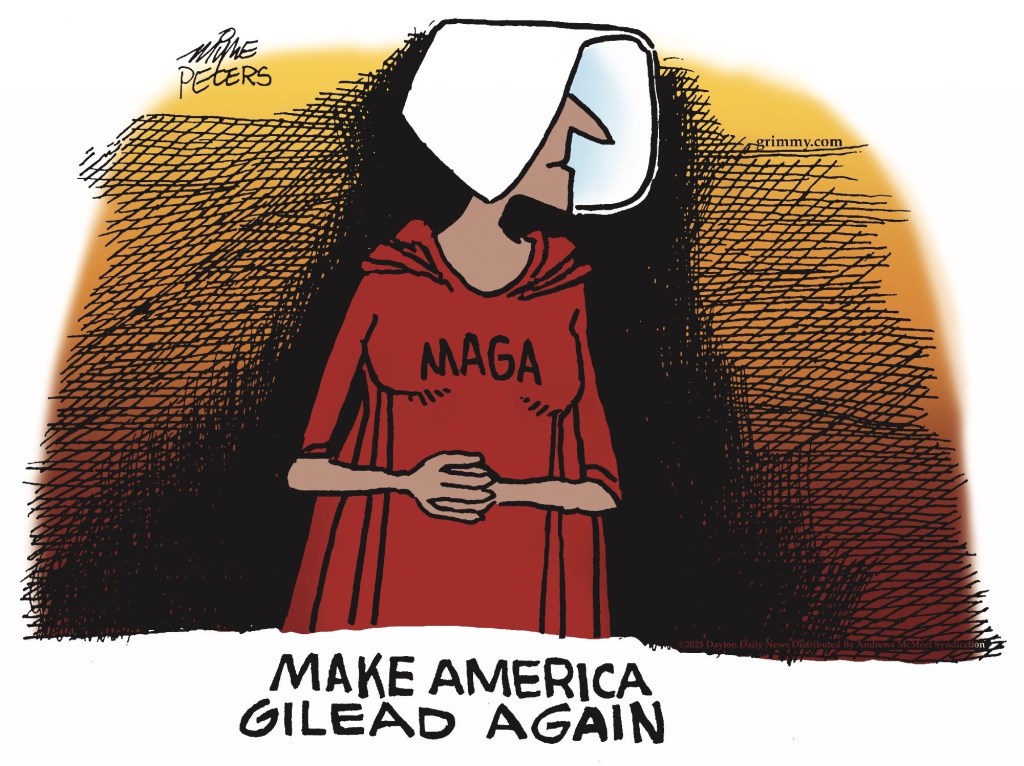
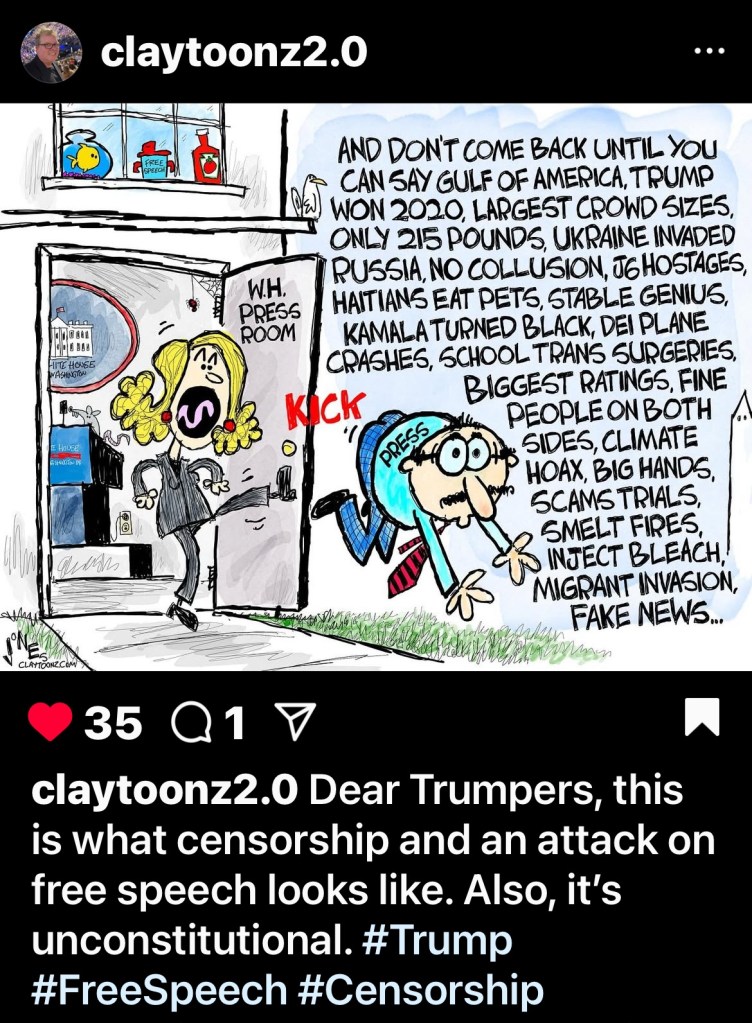
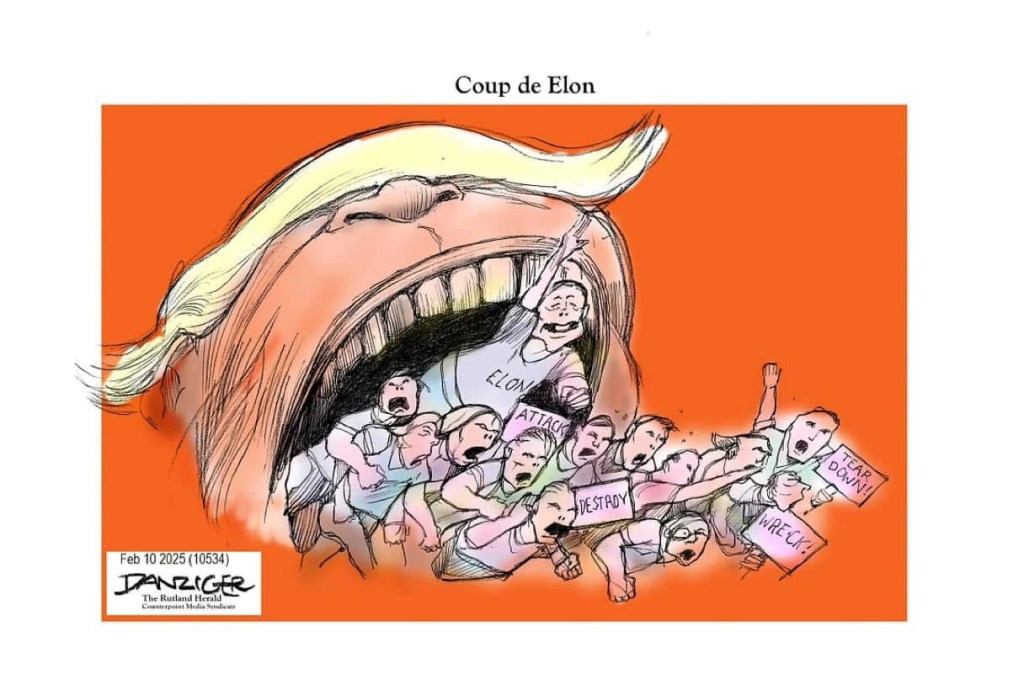
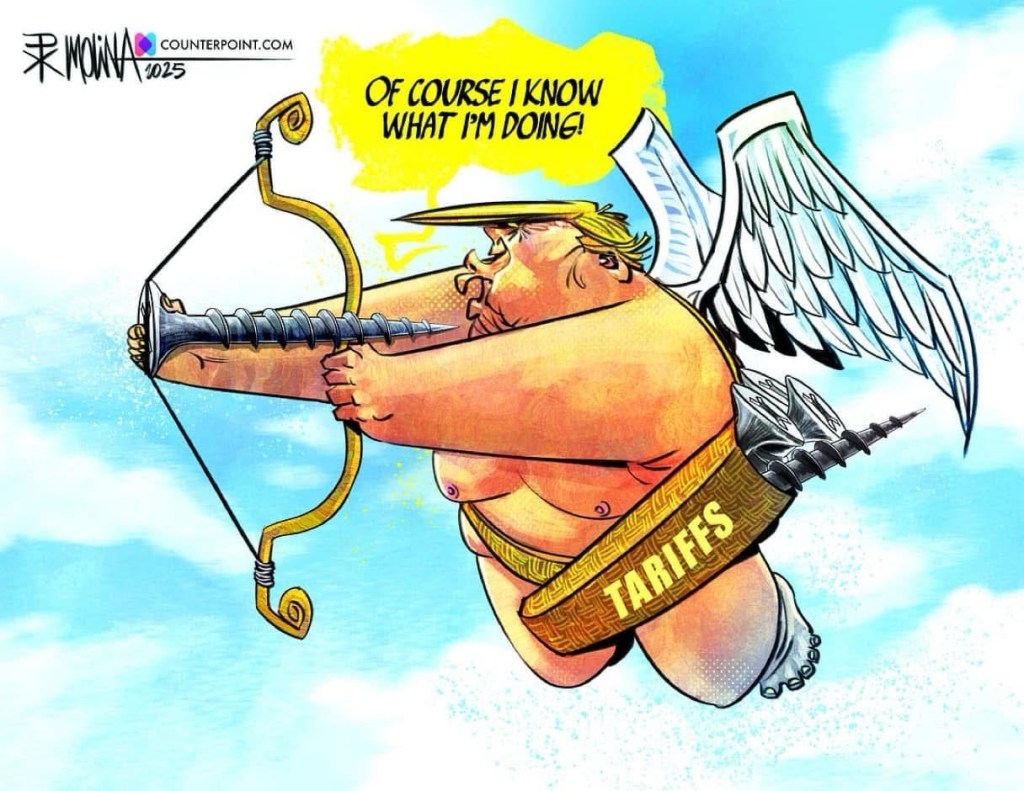
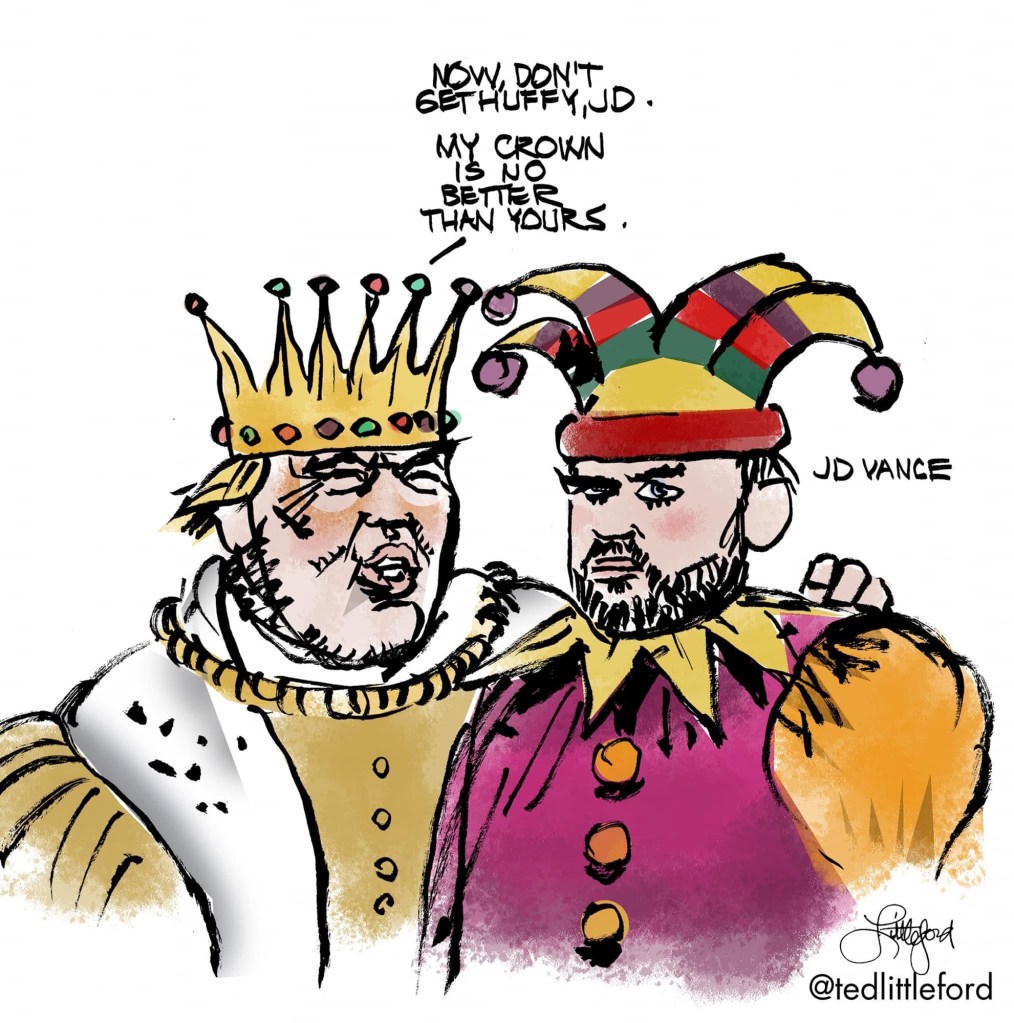
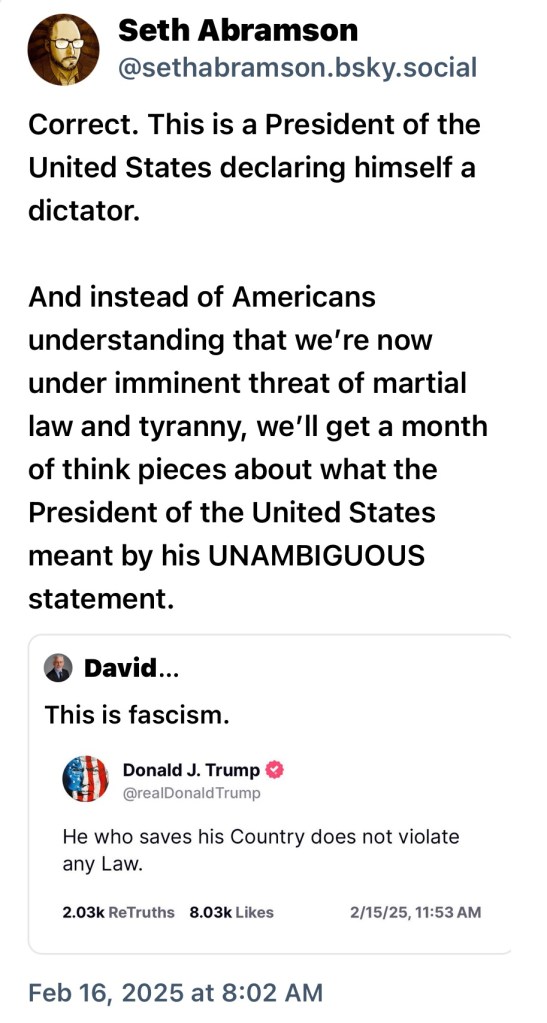
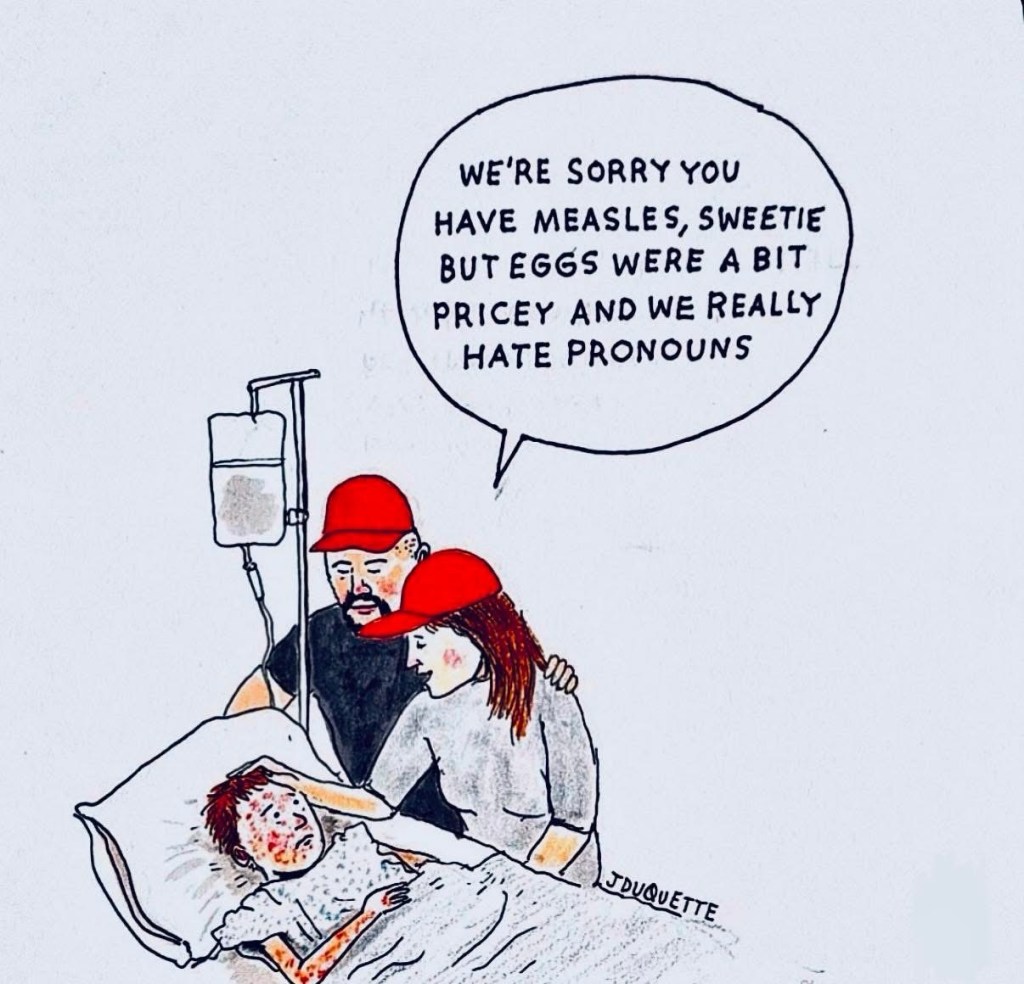
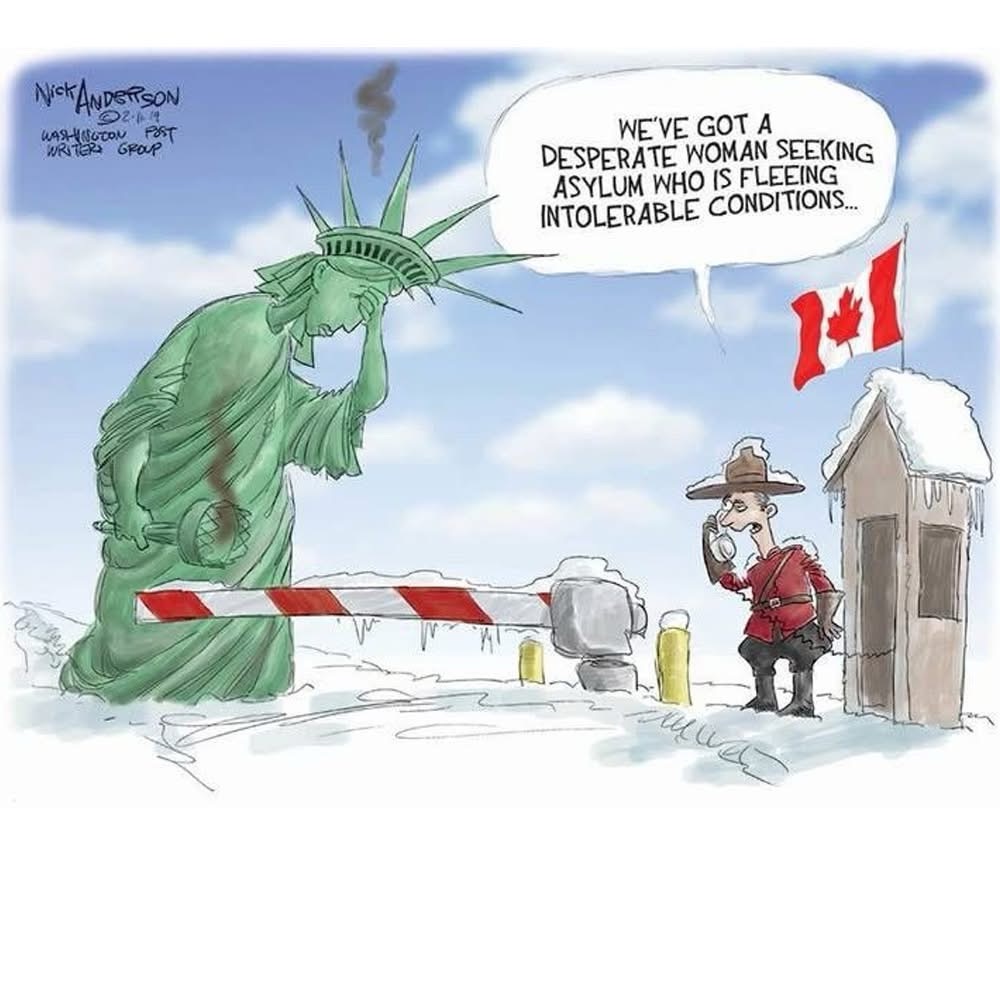
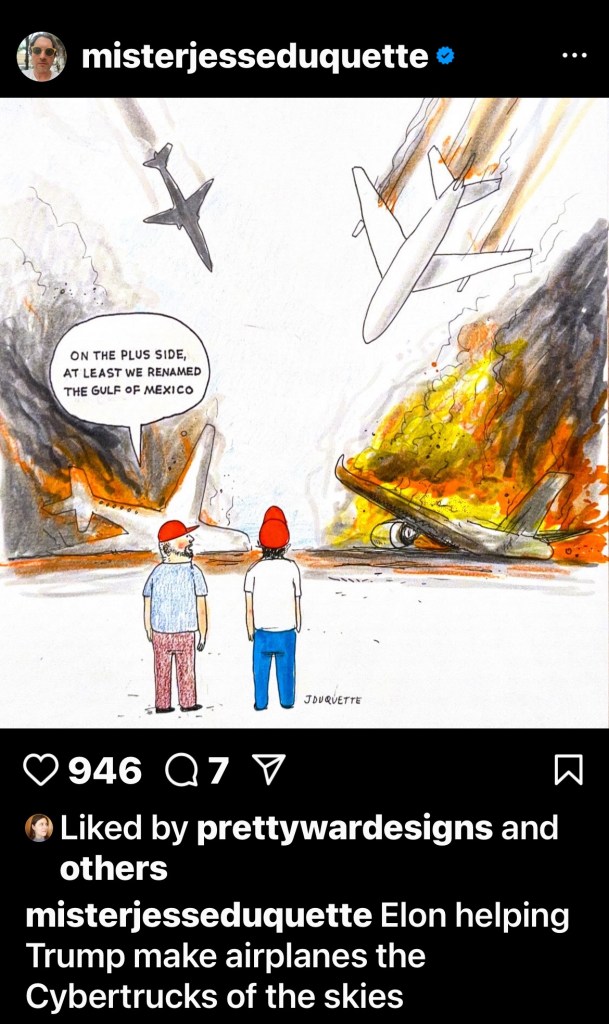
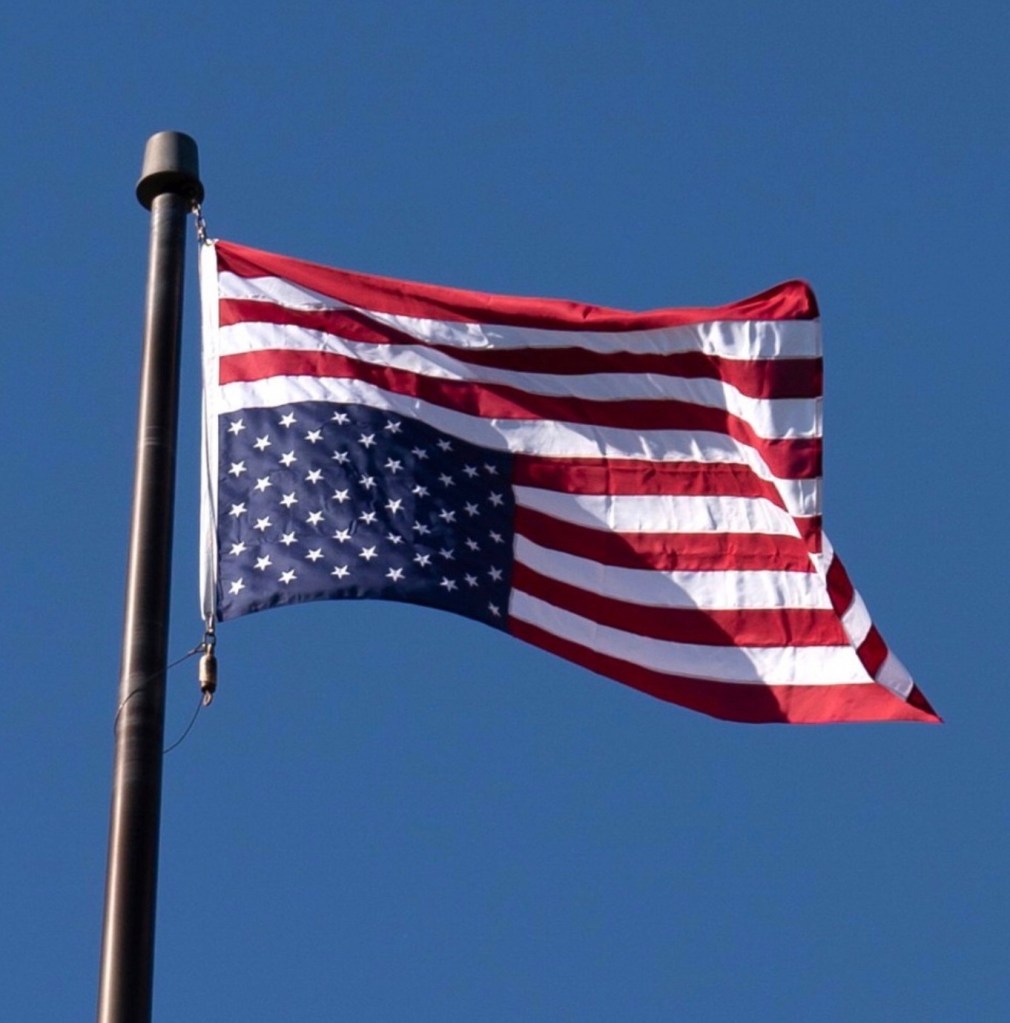
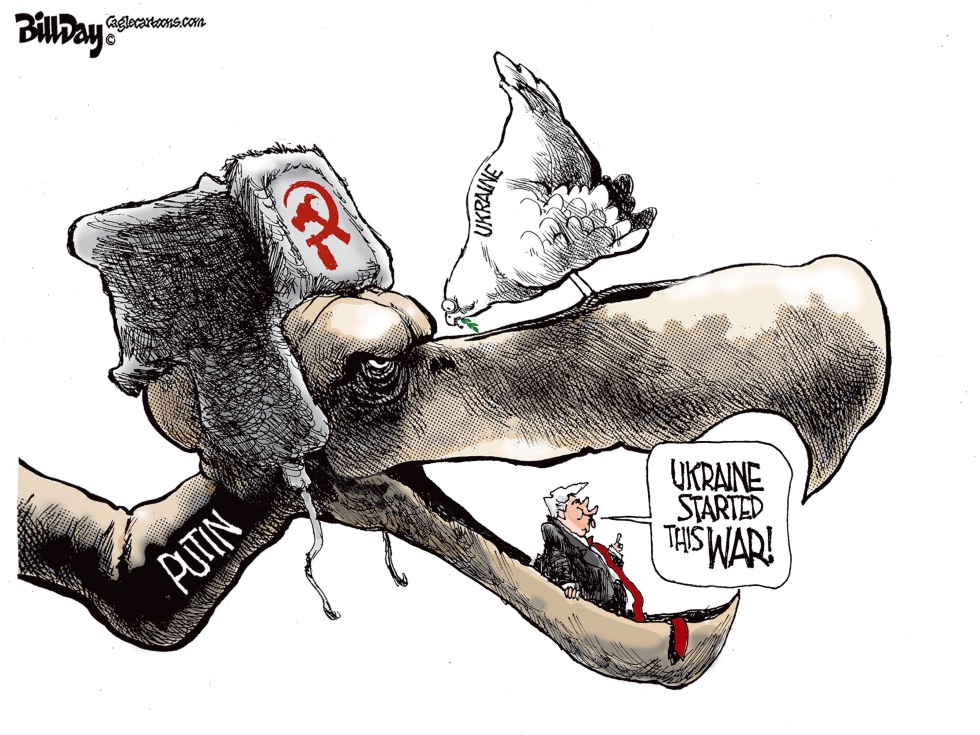
Here’s some cartoons. Commentary on the first day.
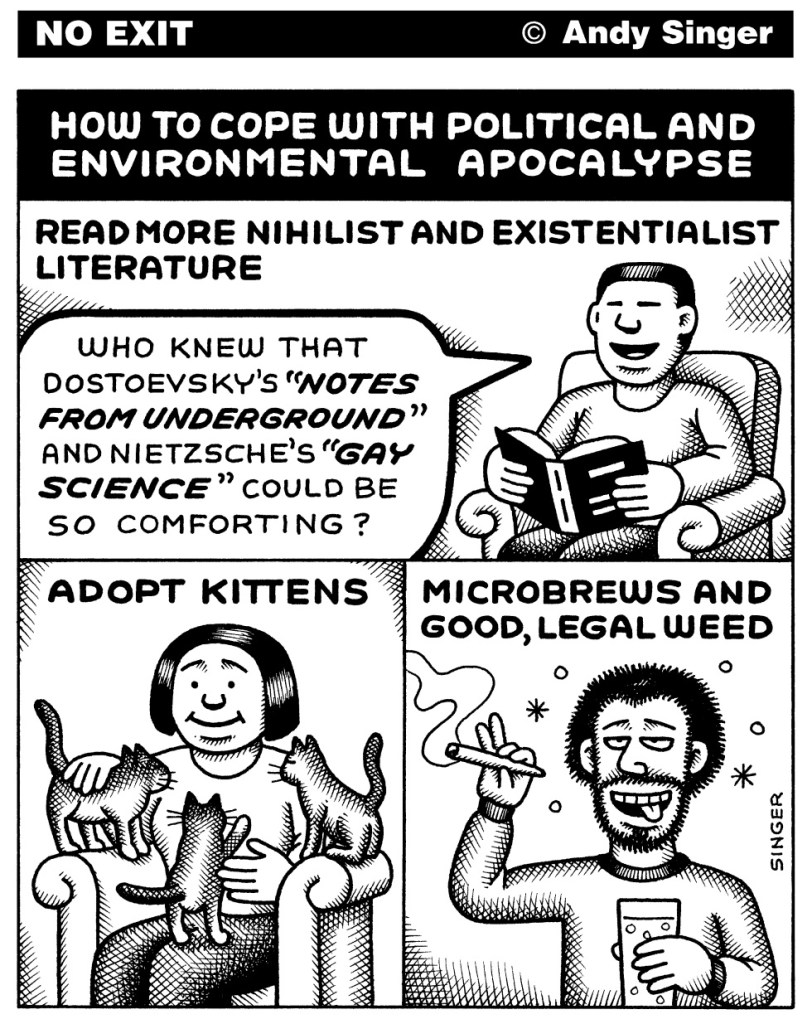
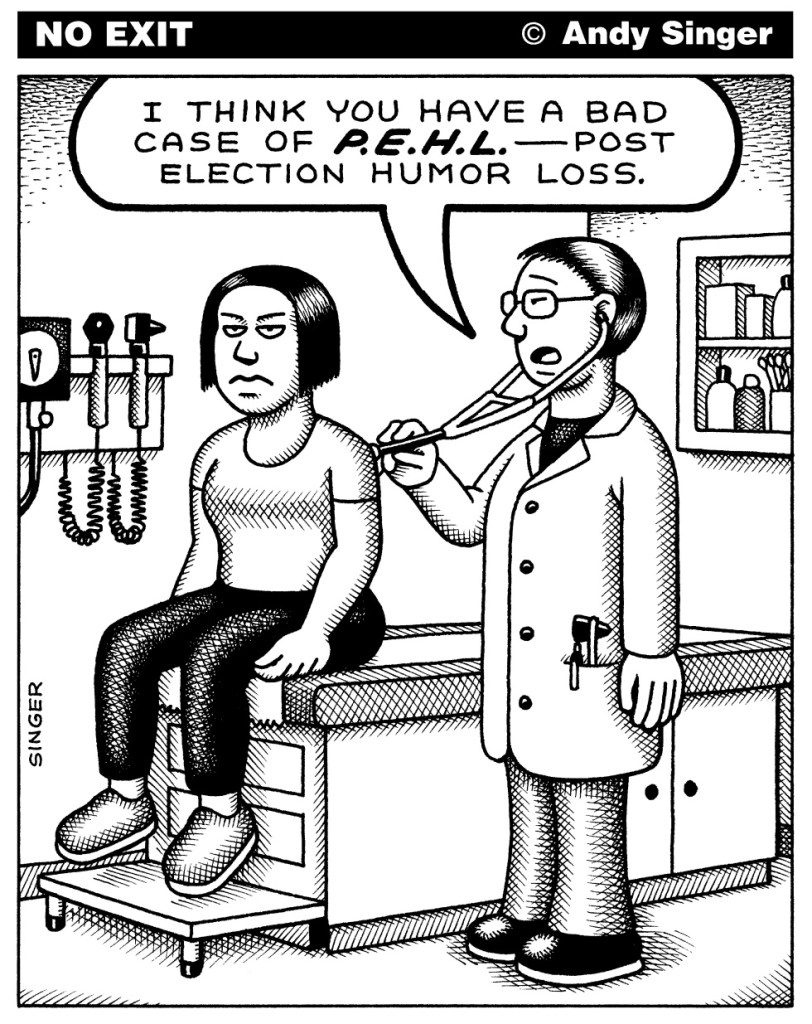
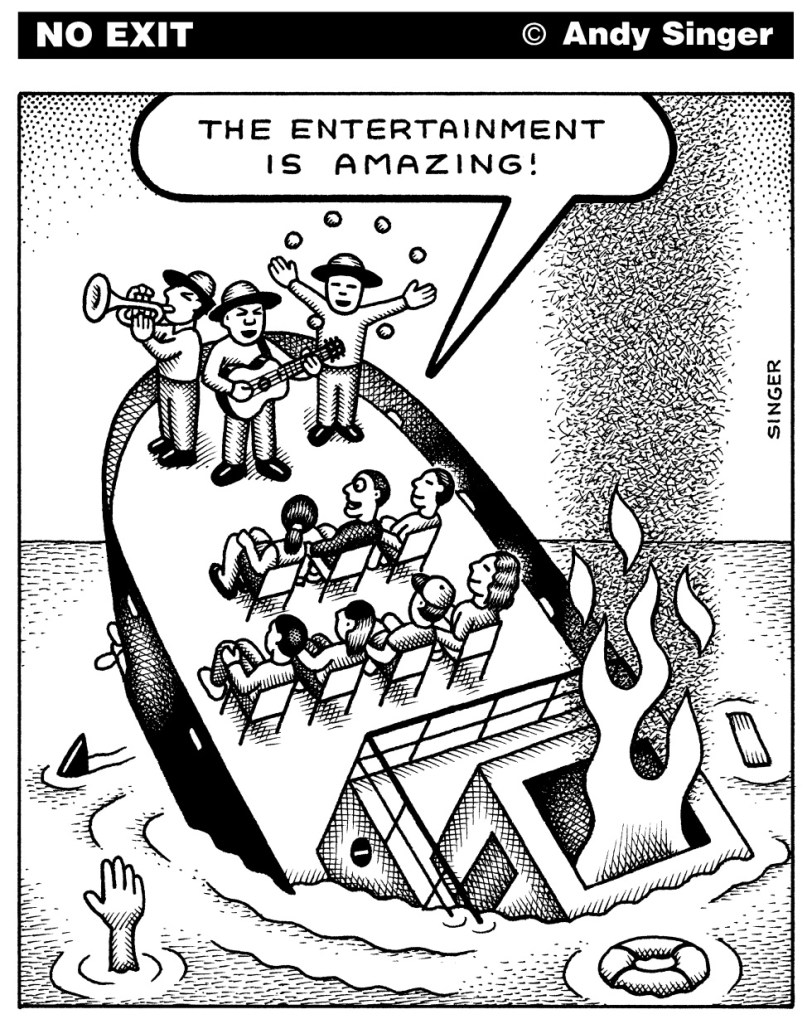
A few more on other topics:
And some observations along the way:
Want to know what executive orders Trump signed yesterday? Don’t want to go to the news media or White House website to read about it? I made a video of what I saw last night:
I’ve tried to think of something to use as a sign off. And I think I’ve found it.
Whatever we had, this democracy that was growing and changing with time is gone. You can use the song as a metaphor for so many other feelings and emotions.
We are struggling.
The Child is Gone.
Did you like this post? Please share it with your friends:
We are getting some snow here in Greater Boston. It doesn’t look like it will amount to much, but it’s pretty to look at. I miss having big snowstorms. It seems as if climate change has destroyed us New Englanders’ identity as tough people who handle deep snow and frigid cold with aplomb.
In the winter of 2014-2015, Boston got an unbelievable snow total of 110 inches, with 64.8 inches coming in February. On January 26-27, a blizzard dropped more than 34 inches of snow. Now we’ve gone through several mild winters with very little snow. Personally, I miss the old days of giant snowstorms. And I know I’m not alone.
Ben Popp, executive director of the American Birkebeiner Ski Foundation….
MEGHNA CHAKRABARTI: This is On Point. I’m Meghna Chakrabarti, and sure snow can be a pain in the butt, I know. But for folks who grew up with long winters, snow also carries memory with it of ethereal beauty, hard slogs, and hard times overcome of crystalline joy. I grew up in a place with a pretty temperate, very rainy winter.
So when I moved to New England and experienced my first big blanket of snow, I was left with only one feeling: pure magic. Now though, for listeners who shared those stories with us that you just heard, they were from upstate New York, Utah, Colorado, Wisconsin, New Hampshire, Washington State, Maine, Iowa, Ohio, the Dakotas and more.
For all of them, winter is very different. Because the magic feels like it’s fading away….
(LISTENER MONTAGE)
I’m standing in my front yard and there is a tiny bit of ice that used to be snow that’s melted in the shade, and we’ve had almost no snow.
It’s February 2nd and I live in Western New York and there is no snow today. The ground is bare. I can see grass. This is completely different from what I experienced when I was growing up.
I have a four-year-old golden, who’s only ever played in a few inches of snow. Has no idea what it’s like to run and fly and bound through endless puffy snow.
This year’s snow amount is quite depressing.
I think our snow drought is contributing to our overall drought that we’ve been experiencing in eastern Iowa over the last five years or so.
This year for the very first time, when I go outside, sometimes I occasionally find flies or mosquitoes or bees, and so to me, seeing insects that are typically not around during the winter months. It tells me there’s clear change happening.
I miss the snow. I miss watching it fall. I miss how it muffles the noise and just makes things so peaceful and quiet.
I really miss having snow for Christmas and for the kids to play sled and built snow forts.
When my kids were growing up, they were outside all the time. Now our young grandchildren can’t really go outside so much and all the time. Because it’s a mud pit instead of a snow mound. So it’s hard.
The roads in town are as oddly bare as the trails here and one local businesses’ electronics door front sign captures our community’s collective sentiment. It keeps flashing “Pray for snow.”
CHAKRABARTI: It is true. Snowfall is becoming less reliable and snowpacks are shrinking. Winter snowpack in many parts of the continental U.S. have shrunk by 10% to 20% per decade over the last 40 years. That’s according to a study published last month in Nature. There is some annual variation, but overall winter and its signature precipitation are changing.
Snow has a way of creating a shared identity, a sense of wonder, a sense of fun for people who live in those cold places. It binds communities together. So what do we lose when that snow melts away?
Climate change is not only changing the way we live; it is change how we see ourselves. Read the discussion at the WBUR link. If you live in a place that used to get lots of snow, I think you’ll find it interesting.
It was the hottest year ever recorded for the world’s lands and oceans in 2024, US government scientists have confirmed, providing yet another measure of how the climate crisis is pushing humanity into temperatures we have previously never experienced.
Last year was the hottest in global temperature records stretching back to 1850, the National Oceanic and Atmospheric Administration (Noaa announced, with the worldwide average 1.46C (2.6F) warmer than the era prior to humans burning huge volumes of planet-heating fossil fuels.
This new record, 0.1C (0.18F) hotter than the previous high mark set in 2023, means that all of the 10 hottest years since 1850 have occurred in the past decade. The data supports separate figures released by European Union scientists this week that also show a record 2024, albeit those figures showed 2024 was 1.6C (2.8F) hotter than pre-industrial times, the first measure beyond the internationally-agreed threshold of keeping long-term temperatures below a 1.5C (2.7F) rise.
Nasa, which also released its temperature data on Friday, concurs that 2024 was a record year, being 1.47C (2.6F) hotter than the pre-industrial era. “All the groups agree, regardless of how they put the data together, there’s no question,” said Gavin Schmidt, a senior climate scientist at Nasa. “The long-term trends are very clear.”
Schmidt said the levels of global heating are pushing humanity beyond its historical experience of the Earth’s climate. “To put that in perspective, temperatures during the warm periods on Earth three million years ago – when sea levels were dozens of feet higher than today – were only around 3C warmer than pre-industrial levels,” he said. “We are halfway to Pliocene-level warmth in just 150 years.”
Last year saw a record hot year for the United States, Europe and Africa, as well as another record year for the Arctic, which is warming up at three times the rate of the global average.
The year was marked by severe events worsened by the climate crisis, with temperatures so hot in Mexico that howler monkeys fell from trees, a double-whammy of hurricanes that flattened swathes of the US south-east, devastating floods in Spain and record low water levels in the Amazon river. Southern Africa got just half of its normal rain levels.
Now in 2025 we are seeing an unbelievable climate disaster in Los Angeles. I heard this morning that the burned area in LA is now larger than the city of Boston.
California’s Palisades Fire, the largest of the deadly wildfires that ignited this week in the Los Angeles area, has devastated communities and upended thousands of lives, forcing people to flee homes that were lost to the blaze. The inferno has scorched dozens of square miles, and maps from CBS News show how its size compares to those of major U.S. cities.
Here’s a look at how the Palisades Fire compares to the size of 13 cities across the U.S.
The maps show comparisons to Baltimore, Boston, Chicago, Dallas, Denver, Detroit, Miami, Minneapolis, New York City, Philadelphia, Pittsburgh, Sacramento, and San Francisco.
Check out the comparisons to cities you are familiar with.
An exceptional mix of environmental conditions has created an ongoing firestorm without known historical precedent across southern California this week.
The ingredients for these infernos in the Los Angeles area, near-hurricane strength winds and drought, foretell an emerging era of compound events – simultaneous types of historic weather conditions, happening at unusual times of the year, resulting in situations that overwhelm our ability to respond.
On Wednesday, Joe Biden pledged the assistance of the Department of Defense to reinforce state and local firefighting capabilities, a rare step that highlighted the extent to which the fast-moving fires have taxed response efforts.
As of Wednesday evening, the Palisades and Eaton fires have each burned more than 10,000 acres and remain completely uncontained. About one in three homes and businesses across the vast southern California megacity were deliberately without power in a coordinated effort by the region’s major utilities to contain the risk of new fire starts due to downed power lines.
The Palisades fire now ranks as the most destructive in Los Angeles history with hundredsof homes and other structures destroyed and damage so extensive that it exhausted municipal water supplies. In Pacific Palisades, wealthy homeowners fled by foot after abandoning their cars in gridlocked neighborhoods. In Pasadena, quickly advancing fire prompted evacuations as far into the urban grid as the famous Rose Parade route.
Early estimates of the wildfires’ combined economic impact are in the tens of billions of dollars and could place the fires as the most damaging in US history – exceeding the 2018 Camp fire in Paradise, California.
Fire crews have been facing a second night of fierce winds in rugged terrain amid drought and atmospheric conditions that are exceedingly rare for southern California at any time of the year, let alone January, in what is typically the middle of the rainy season – weeks later (or earlier) in the calendar year than other historical major wildfires have occurred.
Analysis:
The next few days will be a harrowing test. Lingering bursts of strong, dry winds into early next week will maintain the potential for additional fires of similar magnitude to form. In a worst-case scenario, the uncontained Palisades and Eaton fires will continue to spread further into the urban Los Angeles metro, while new fires simultaneously and rapidly grow out of control – overtaking additional neighborhoods and limiting evacuation routes more quickly than firefighters can react. In conditions like these, containing a wind-driven blaze is nearly impossible.
These fires are a watershed moment, not just for residents of LA, but emblematic of a new era of complex, compound climate disaster. Conditions for a January firestorm in Los Angeles have never existed in all of known history, until they now do.
The short answer is that the greenhouse gases humans continue to emit are fueling the climate crisis and making big fires more common in California.
As the atmosphere warms, hotter air evaporates water and can intensify drought more quickly.
Melting Arctic ice creates changes in the jet stream’s behavior that make wind-driven large wildfires in California more likely. Recent studies have found that Santa Ana wind events could get less frequent but perhaps more intense in the winter months due to the climate crisis.
The more complicated answer is that these fires are an especially acute example of something climate scientists have been warning about for decades: compound climate disasters that, when they occur simultaneously, produce much more damage than they would individually. As the climate crisis escalates, the interdependent atmospheric, oceanic and ecological systems that constrain human civilization will lead to compounding and regime-shifting changes that are difficult to predict in advance. That idea formed a guiding theme of the Biden administration’s 2023 national climate assessment.
Apocalyptic flames and smoke are raging through southern California in the worst fire in Los Angeles county’s history. At least seven people have died. Thousands of structures have been destroyed. Hundreds of thousands of people have fled their homes. The private forecaster AccuWeather estimates initial damage and economic loss at more than $50bn and has the potential to be the costliest wildfire disaster in American history. The impacts of the disruption and loss faced by community members is incalculable.
These powerful interests are ignoring what is fanning wildfire flames – fossil fuel-driven climate change – and trying to deflect attention elsewhere. This is not surprising. Denying science and promoting false narratives squarely falls within the playbook of the fossil fuel industry and its proponents. Take for example, Trump calling the climate crisis a hoax and once again threatening to withdraw the US from the Paris agreement.
Oil, gas and coal companies have been lying to us for decades. A 2015 investigation by Inside Climate News revealed that ExxonMobil’s own scientists knew as early as the 1970s that burning fossil fuels would cause global warming and increase the likelihood of extreme weather events. Instead of pivoting toward cleaner energy solutions, Exxon and other major players funded misinformation campaigns to sow doubt about climate science, delaying action and worsening the crisis.
California is part of a growing number of states and local governments challenging these lies through litigation. The legal suits against six oil companies and the American Petroleum Institute accuse them of deceiving the public regarding the connection between fossil fuels and climate crisis and profiting from that deception. The aim of the litigation is to redirect those profits into funds to address the damage of climate crisis on California. The litigation is still underway.
The science is clear. Wildfires are getting worse due to climate crisis as a result of increased temperatures and drier conditions in southern California. While more work needs to be done to determine the specific role fossil fuels played in the Los Angeles fires, we do know that emissions from the world’s 88 largest fossil fuel companies are responsible for 37% of the cumulative area burned by forest fires in the western US and south-western Canada between 1986 and 2021.
Ethically, the responsibility is undeniable. By continuing to expand production, fossil fuel companies are prioritizing shortterm profits over longterm planetary survival. As academic Naomi Oreskes points out in her book Merchants of Doubt, this is not mere negligence – it is a calculated decision to disregard human and environmental well-being.
As Los Angeles burned for days on end, horrifying the nation, scientists made an announcement on Friday that could help explain the deadly conflagration: 2024 was the hottest year in recorded history.
With temperatures rising around the globe and the oceans unusually warm, scientists are warning that the world has entered a dangerous new era of chaotic floods, storms and fires made worse by human-caused climate change.
The firestorms ravaging the country’s second-largest city are just the latest spasm of extreme weather that is growing more furious as well as more unpredictable. Wildfires are highly unusual in Southern California in January, which is supposed to be the rainy season. The same is true for cyclones in Appalachia, where Hurricanes Helene and Milton shocked the country when they tore through mountain communities in October.
Wildfires are burning hotter and moving faster. Storms are getting bigger and carrying more moisture. And soaring temperatures worldwide are leading to heat waves and drought, which can be devastating on their own and leave communities vulnerable to dangers like mudslides when heavy rains return.
“We’re in a new era now,” said former Vice President Al Gore, who has warned of the threats of global warming for decades. “These climate related extreme events are increasing, both in frequency and intensity, quite rapidly.”
The fires currently raging in greater Los Angeles are already among the most destructive in U.S. history. By Friday, the blazes had consumed more than 36,000 acres and destroyed thousands of buildings. As of Saturday, at least 11 people were dead, and losses could top $100 billion, according to AccuWeather.
Trump holds forth at his Mar-a-Lago press conference.
Trump isn’t in office yet, but he is already dominating the news. It’s difficult to believe, but I think he is actually getting crazier.
Trump 2.0 is going to be chaos to the nth degree. I have no doubt that it will make his first term look sane by comparison. He is aging noticeably–he’s approaching 80–and his dementia is getting worse.
As we all know, this time there won’t be sane handlers trying to hold back his worst inclinations; he will be surrounded by MAGA loyalists who will do whatever he wants. It’s going to be awful, and getting through what’s coming is going to be tough.
Again, he’s not even waiting until he’s sworn in to begin causing trouble. Yesterday he held a “press conference” during which he came off as truly psychotic. In case you missed it (I couldn’t bear to watch), here are some media write-ups.
David E. Sanger at The New York Times: Dripping Faucets and Seizing Greenland: Trump Is Back and Chaos Ensues.
There was talk of the rising number of beached whales in Massachusetts, the victim, the president-elect said, of those windmills that have been erected off the coast. They “are driving the whales crazy, obviously.”
There was a vow to rename the Gulf of Mexico, by presidential decree, to the “Gulf of America.” And then there was Donald J. Trump’s refusal to rule out using military force to seize the 51-mile Panama Canal on national security grounds, along with the 836,000 square miles of Greenland, the world’s largest island.
Mr. Trump’s family and supporters like to say “We are so back!” and they are, without doubt. Yet as the man who will be president again spun out threats and angry denouncements of the Biden administration and personal grievances for more than an hour on Tuesday in the living room of his Mar-a-Lago club, something else was back: the chaotic stream-of-consciousness presidency.
Mr. Trump has returned to our daily national cognizance, even though one could argue he never really left. Tuesday’s news conference was a reminder of what that was like, and what the next four years may have in store.
He waxed on about a favorite complaint during his first term: Shower heads and sink faucets that don’t deliver water, a symbol of a regulatory state gone mad. “It goes drip, drip, drip,” he said. “People just take longer showers, or run their dishwasher again,” and “they end up using more water.”
Then he moved on to the prospect of a military clash with Denmark. After refusing to rule out the prospect of coercing a NATO ally with the use of force if it remained reluctant to turn over property the president-elect coveted, Mr. Trump suggested that Denmark had a dubious claim on Greenland anyway.
Don Jr. and his buddies in Greenland yesterday
“People really don’t even know if Denmark has any legal right to it, but if they do, they should give it up, because we need it for national security,” he said.
As for Panama, he insisted the United States had to defend against an urgent national security threat from China, though the situation around the canal was little changed from the last time Mr. Trump sat in the Oval Office.
“It might be that you’ll have to do something,” he said with signature vagueness, when asked about his suggestion that the only solution to this problem may be military force.
There was a lot of déjà vu in Tuesday’s news conference, recalling scenes from his first presidency. The conspiracy theories, the made-up facts, the burning grievances — all despite the fact that he has pulled off one of the most remarkable political comebacks in history. The vague references to “people” whom he never names. The flat declaration that American national security was threatened now, without defining how the strategic environment has changed in a way that could prompt him to violate the sovereignty of independent nations.
But there were also several differences in this version of Mr. Trump that are easy to overlook in a man who can move, in an instant, from the failures of American plumbing to the need to revive the territory-grabbing spirit of President William McKinley.
President Trump has created a massive gulf in America.
No, I am not talking about the half baked promise “to be changing the name of the Gulf of Mexico to the Gulf of America” that Trump announced in his news conference on Tuesday. The gulf that our country actually is going to have is the one between our current reality and the one we will be experiencing when Trump takes office on Jan. 20.
This news conference, which was the first since Trump’s re-election was certified by Congress, was a wild one — even by Trumpian standards. In a little over an hour behind a podium at his Mar-a-Lago beach club, the president-elect, along with promising to rename an ocean basin, threatened potential military force against Panama and Denmark. He also suggested he might use “economic force” to make Canada the 51st State.
“They should be a state,” Trump said of one of America’s closest neighbors and allies.
And, if Hamas doesn’t release the remaining hostages taken in the October 7th attack before Trump’s inauguration, Trump vowed that would also result in a massive show of force.
“If they’re not back by the time I get into office, all hell will break out in the Middle East,” Trump said. “It will not be good for Hamas and it will not be good frankly for anyone. All hell will break out.”
Trump’s feverish foreign policy visions were mixed up with his other weird obsessions and blatant lies. He ranted about President Joe Biden’s efforts to promote electric power and suggested heat generated this way will make you “itch.” As he vowed to make “major pardons” for some of his supporters who attacked the Capitol during the January 6 insurrection, Trump reiterated some of his preferred, debunked conspiracy theories about that day including that, the FBI is concealing the identity of the unknown pipe bomber and that, somehow, the Middle Eastern terrorist group Hezbollah might have played a role in the violence.
“We have to find out about Hezbollah. We have to find out about who exactly was in that whole thing because people that did some bad things were not prosecuted,” Trump said….
The whole thing was objectively bizarre and it’s difficult to track how much of Trump’s comments were bluster or how many of these wild ideas are even remotely feasible. Can you even effectively rename an ocean? Does he really intend to try to essentially annex Canada? Would he really consider using military force to take over Greenland or the Panama Canal? Would the military stand for that? Would Congress?
President-elect Donald J. Trump’s attention returned Tuesday to an idea that has fascinated him for years: acquiring Greenland for the United States. In a news conference on Tuesday, he refused to rule out using military or economic force to take the territory from Denmark, a U.S. ally.
“We need Greenland for national security purposes,” he said, arguing that Denmark should give it up to “protect the free world.” He threatened to impose tariffs on Denmark if it did not.
Earlier in the day, Mr. Trump wrote on social media that the potential American acquisition of the Arctic territory “is a deal that must happen” and uploaded photos of his eldest son, Donald Trump Jr., who was visiting Greenland….
Greenland
After the news conference, Denmark sharply rebuked the proposal, saying that the world’s largest island is not for sale, and the prime minister of Greenland, Mute B. Egede, rejected Mr. Trump’s designs on the territory. “Greenland belongs to the people of Greenland,” Mr. Egede said. “Our future and fight for independence is our business.” [….]
Greenland’s vast ice sheets and glaciers are quickly retreating as the Earth warms through accelerating climate change. That melting of ice could allow drilling for oil and mining for minerals such as copper, lithium, nickel and cobalt. Those mineral resources are essential to rapidly growing industries that make wind turbines, transmission lines, batteries and electric vehicles.
Because of higher temperatures, an estimated 11,000 square miles of Greenland’s ice sheets and glaciers have already melted in the past three decades, an area roughly the size of Massachusetts….
The melting ice in the Arctic is also opening up a new strategic asset in geopolitics: shorter and more efficient shipping routes. Navigating through the Arctic Sea from Western Europe to East Asia, for example, is about 40 percent shorter compared to sailing through the Suez Canal. Ship traffic in the Arctic has already surged 37 percent over the past decade, according to a recent Arctic Council report.
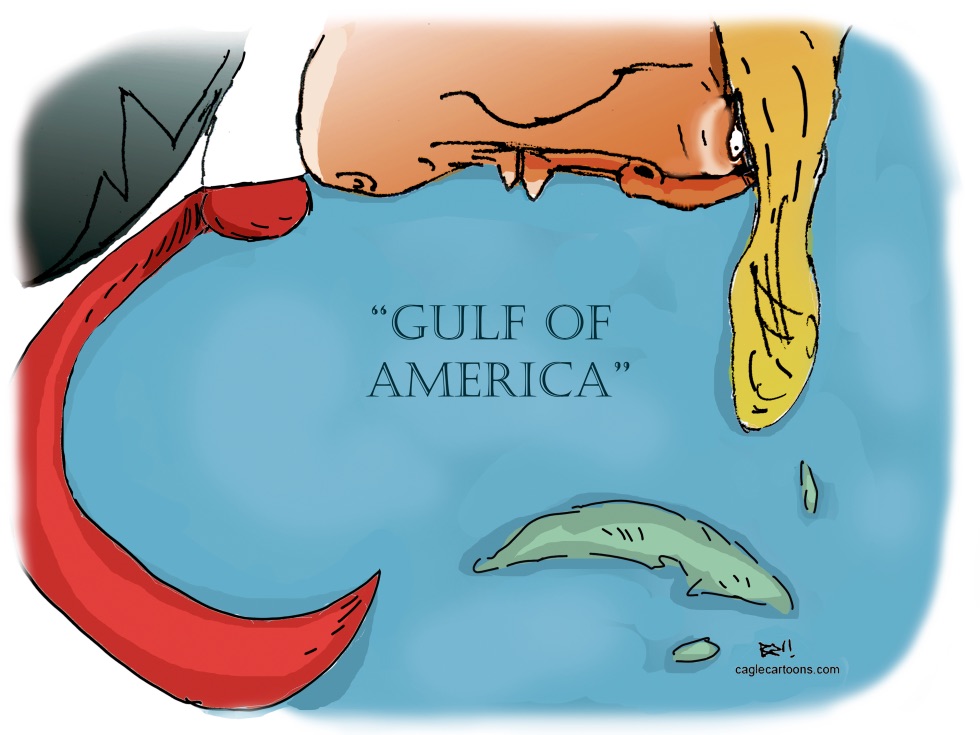
Donald Trump on Tuesday said the United States would change the name of the Gulf of Mexico to the Gulf of America, and the president-elect seemed to tie the prospective renaming to his long-standing grievances with Mexico’s handling of immigration, drug trafficking and trade.
“We’re going to be changing the name of the Gulf of Mexico to the Gulf of America,” Trump said at a news conference at his Mar-a-Lago Club in Palm Beach, Florida. “ … What a beautiful name, and it’s appropriate.”
The president-elect subsequently decried the Mexican government for allowing migrants to “pour” into the United States, saying Mexico “can stop them and we’re going to put very serious tariffs on Mexico and Canada because Canada, they come through Canada, too.”
Trump provided no additional details about how he planned to implement the name change, but the comments sparked immediate questions about whether a president has the authority to rename an international body of water and prompted at least one Republican member of Congress to draft legislation.
That member of Congress was Marjorie Taylor Greene.
Here’s what we know about what Trump can and cannot do to rename the gulf….
The Gulf of Mexico is a 218,000-square-mile oceanic basin connected to the Caribbean Sea and the Atlantic Ocean through the Florida Straits and the Yucatán Channel. It spans from the eastern coast of Mexico and the southeastern coast of the United States to the western end of Cuba….
There are existing mechanisms to rename places recognized by the federal government. However, if the federal name change becomes official, that does not mean that other nations will recognize it.
The U.S. Board on Geographic Names is a federal interagency organization that is responsible for maintaining uniform geographic name usage throughout the federal government. The board operates under the interior secretary. The board’s Foreign Names Committee is responsible for standardizing foreign place names. The committee is composed of representatives from federal agencies, including several appointees specializing in geography and cartography. Members are appointed every two years.
While the BGN does not create names for geographical features, it approves or rejects names proposed by others based on its established policies. A recent example of the board’s work includes approval of replacement names for all features that included the word “squaw,” which is used as a derogatory slur toward NativeAmerican women. The name changes were made after an order by Interior Secretary Deb Haaland in 2021. Haaland is the first Native person to serve as a Cabinet secretary.
Trump probably doesn’t know that Mexico and Canada, along with the U.S., are each parts of “America.”–that is, the continent of North America. Of course changing the name is ridiculous and idiotic, but so is Trump.
During the “press conference,” Trump also said that the changes Mark Zuckerberg is making to his social media platforms are in response to his (Trump’s) threats to imprison the the billionaire social media owner.
Meta CEO Mark Zuckerberg announced a series of major changes to the company’s moderation policies and practices Tuesday, citing a shifting political and social landscape and a desire to embrace free speech.
Zuckerberg said Meta will end its fact-checking program with trusted partners and replace it with a community-driven system similar to X’s Community Notes.
The company is also changing its content moderation policies around political topics and undoing changes that reduced the amount of political content in user feeds, Zuckerberg said.
The changes will affect Facebook and Instagram, two of the largest social media platforms in the world, each boasting billions of users, as well as Threads.
“We’re going to get back to our roots and focus on reducing mistakes, simplifying our policies and restoring free expression on our platforms,” Zuckerberg said in a video. “More specifically, here’s what we’re going to do. First, we’re going to get rid of fact-checkers and replace them with community notes similar to X, starting in the U.S.”
Zuckerberg pointed to the election as a major influence on the company’s decision and criticized “governments and legacy media” for, he alleged, pushing “to censor more and more.”
“The recent elections also feel like a cultural tipping point towards, once again, prioritizing speech,” he said. “So we’re going to get back to our roots and focus on reducing mistakes, simplifying our policies and restoring free expression on our platforms.”
These two sections outlining speech (written or visual) are new additions:
We do allow allegations of mental illness or abnormality when based on gender or sexual orientation, given political and religious discourse about transgenderism and homosexuality and common non-serious usage of words like “weird.”
We do allow content arguing for gender-based limitations of military, law enforcement, and teaching jobs. We also allow the same content based on sexual orientation, when the content is based on religious beliefs.
Another section that specifically banned making dehumanizing references to transgender or non-binary people as “it” or referring to women “as household objects or property or objects in general” has been removed entirely.
The opening statement about what the policies are “designed to allow room for” that previously listed only health or positive support groups has changed too (new additions marked in bold):
People sometimes use sex- or gender-exclusive language when discussing access to spaces often limited by sex or gender, such as access to bathrooms, specific schools, specific military, law enforcement, or teaching roles, and health or support groups. Other times, they call for exclusion or use insulting language in the context of discussing political or religious topics, such as when discussing transgender rights, immigration, or homosexuality. Finally, sometimes people curse at a gender in the context of a romantic break-up. Our policies are designed to allow room for these types of speech.
The section that specifically banned targeting people or groups “with claims that they have or spread the novel coronavirus” has also been removed.
Meta on Tuesday announced sweeping changes to how it moderates content that will roll out in the coming months, including doing away with professional fact checking. But the company also quietly updated its hateful conduct policy, adding new types of content users can post on the platform, effective immediately.
Users are now allowed to, for example, refer to “women as household objects or property” or “transgender or non-binary people as ‘it,’” according to a section of the policy prohibiting such speech that was crossed out. A new section of the policy notes Meta will allow “allegations of mental illness or abnormality when based on gender or sexual orientation, given political and religious discourse about transgenderism and homosexuality.”
Previously, such comments would have been subject to removal under the policy. The changes to Meta’s hateful conduct policy were first reported by Wired.
Meta had hinted in its announcement about its content moderation policy changes Tuesday morning that it would get rid of restrictions on certain topics, such as immigration and gender identity, and allow more political discussions. But the updated policy shows just how quickly Meta is moving to enact CEO Mark Zuckerberg’s vision for “free expression.”
Meta on Tuesday also announced it would do away with its network of independent fact checkers in the United States and will instead rely on user-generated “community notes” to add context to posts. It also said it would adjust its automated systems that scan for policy violations, which it says have resulted in “too much content being censored that shouldn’t have been.” The systems will now be focused only on extreme violations such as child sexual exploitation and terrorism.
Basically, it’s open season on women and LBGTQ+ people.
Please take care of yourselves today and every day for the next 4 years.
Did you like this post? Please share it with your friends:
10 people were killed and 30 injured after a vehicle drove into a crowd on New Orleans’ Canal and Bourbon Street
The suspect in the New Orleans truck crash that killed 10 people and injured 30 revelers in New Orleans on New Year’s Day was killed after a firefight with police, law enforcement officials told the AP.
The officials were not authorized to discuss details of the investigation publicly and spoke to AP on condition of anonymity.
The suspect rammed a vehicle at high speed into a crowd of pedestrians in New Orleans’ bustling French Quarter district at 3:15 a.m. Wednesday along Bourbon Street, known worldwide as one of the largest destinations for New Year’s Eve parties, and with crowds in the city ballooning in anticipation for the Sugar Bowl college football playoff game at the nearby Superdome later in the day.
At a news conference, New Orleans Mayor LaToya Cantrell described the killings as a “terrorist attack” and the city’s police chief said the act was clearly intentional. But an assistant FBI agent in charge declared that it was “not a terrorist event.” The news conference ended before authorities could reconcile the two characterizations.
Alethea Duncan, an assistant special agent in charge of the FBI’s New Orleans field office, said officials were investigating the discovery of at least one suspected improvised explosive device at the scene.
Police Commissioner Anne Kirkpatrick said police officers would work to ensure safety at the Sugar Bowl, indicating that the game would go on as scheduled.
“He was hell-bent on creating the carnage and the damage that he did,” Kirkpatrick said. “It was very intentional behavior. This man was trying to run over as many people as he could.”
Two police officers who were shot after the driver emerged from the truck are in stable condition, she said.
Officials in New Orleans were assessing the damage in the city’s French Quarter on Wednesday morning after an attack left at least 10 people dead and at least 35 injured, including two police officers.
A man drove a pickup truck at high speed into the crowds on Bourbon Street around 3:15 a.m. before crashing and opening fire, according to police officials. The attacker died in a shootout with the police.
“He was hellbent on creating the carnage and the damage that he did,” the New Orleans police superintendent, Anne Kirkpatrick, said.
The F.B.I. said it was investigating the attack as an act of terrorism, and officials urged the public to stay away from the area.
Security personnel investigate the scene on Bourbon Street after a vehicle drove into a crowd on New Orleans’ Canal and Bourbon Street. Wednesday, Jan. 1. 2024. (AP Photo/Gerald Herbert)
At least 10 people were killed and dozens more were hurt in the early hours of New Year’s Day after a man drove a pickup truck into crowds in the French Quarter of New Orleans and then opened fire. Officials called it an attack, and the F.B.I. said it was investigating it as a potential act of terrorism….
Here’s what we know so far about what happened.
The man sped a truck into crowds on Bourbon Street around 3:15 a.m. After crashing, he opened fire, officials said. At least 10 people were killed and about 35 were injured.
Investigators said they later found what appeared to be improvised explosive devices in the truck and were trying to determine whether the devices were viable. It is not clear if any such devices were detonated….
The carnage occurred in the area of the intersection of Canal and Bourbon Streets in the city’s historic French Quarter, one of its most crowded areas and the heart of its tourism industry.
Officials asked the public on Wednesday morning to stay away from a half-mile stretch of Bourbon Street as the F.B.I. investigated….
Officials have not yet released the man’s name. He crashed the truck and died after a shootout with police officers, according to the F.B.I.
The attack on New Year’s Day targeted New Orleans’ most recognizable tourist destination.
The French Quarter is the historic colonial heart of the city and the center of its tourism industry, one of New Orleans’s leading economic engines. The six-by-13 block area on the curving bank of the Mississippi River is known for its colorful buildings and ornate balconies. Vibrant festivals and parties along famed Bourbon Street, where the attack took place, attract revelers from across the United States and abroad.
“You’re talking about one of the most iconic cities, and one of the most recognizable streets in the world,” Oliver Thomas, a New Orleans city councilman, said on Wednesday after the attack.
“So when you think about it, this isn’t really a message and a shot at New Orleans. This is at America. It’s the world and the environment we live in right now.”
Mr. Thomas said that New Orleans often hosts more people per capita than some of the largest cities in the world and that it was crucial that the city not shut down.
The city’s annual Mardi Gras, with its marching bands and beads flung from floats and balconies, is perhaps the most popular and celebrated event on the calendar, but New Orleans hosts more than 135 festivals each year, according to city figures, and attracted more than 18 million visitors in 2018.
Hours before the attack, the annual Allstate New Year’s Eve Parade moved through the French Quarter, attracting huge crowds. The parade is a buildup to one of the city’s largest annual sporting events — the Sugar Bowl — which falls on Jan. 1 this year and has now been overshadowed by the violence.
Emergency services attend the scene after a vehicle drove into a crowd on New Orleans’ Canal and Bourbon Street, Wednesday, Jan. 1, 2025. (AP Photo/Gerald Herbert)
The suspect’s gun was described as a “long gun” and had a suppressive device attached.
In a statement, the FBI confirmed its lead role in the investigation.
“This morning, an individual drove a car into a crowd of people on Bourbon Street in New Orleans, killing a number of people and injuring dozens of others. The subject then engaged with local law enforcement and is now deceased. The FBI is the lead investigative agency, and we are working with our partners to investigate this as an act of terrorism.”
After plowing through the crowd, the suspect crashed his vehicle and shot two responding officers. The officers fired back and struck the suspect.
An improvised explosive device was also discovered at the scene, prompting the FBI to take over the investigation.
“We are working on confirming if this is a viable device or not,” FBI Special Agent Alicia Duncan said.
Moreno said the suspect was able to drive down Bourbon Street because the bollards were down for repairs.
I’m going to post this as is. I made a mistake, and WordPress has changed the post to “block mode.” There isn’t a way to indent news articles, so I hope this makes sense. We will have some updates in the comment thread.
Take care everyone. Somehow, we will make it through 2025 together. I love you all.
Did you like this post? Please share it with your friends:
The Sky Dancing banner headline uses a snippet from a work by artist Tashi Mannox called 'Rainbow Study'. The work is described as a" study of typical Tibetan rainbow clouds, that feature in Thanka painting, temple decoration and silk brocades". dakinikat was immediately drawn to the image when trying to find stylized Tibetan Clouds to represent Sky Dancing. It is probably because Tashi's practice is similar to her own. His updated take on the clouds that fill the collection of traditional thankas is quite special.
You can find his work at his website by clicking on his logo below. He is also a calligraphy artist that uses important vajrayana syllables. We encourage you to visit his on line studio.
Recent Comments