
I’m mad as hell and I’m not going to take it any more
Posted: March 28, 2011 Filed under: abortion rights, John Birch Society in Charge, Reproductive Rights, Women's Rights | Tags: Montana misogyny, R-Kalispell, Rep. Keith Regier 20 Comments Have you noticed that the rhetoric from a lot of Republican men on women is just over-the-top misogynistic these days? Just what I needed for bedtime reading(via tweet from facebook/FDL friend Suzanne TwoTon) or why I’m glad I don’t live in Montana if this what the men are like:
Some comments a Kalispell legislator made last week about the value of pregnant cattle in relation to a bill about pregnant women have caused a stir.
When speaking before the Senate Judiciary Committee about HB 167 (which would criminalize the death of an unborn child), Rep. Keith Regier, R-Kalispell, noted the value of a cow increases if the cow is pregnant.
That comment didn’t go over well with two women from Planned Parenthood of Montana and the state chapter of the National Abortion Rights Action League.
Lindsay Love and Julianna Crowley complained about Regier’s comments.
“Putting women in the same category as animals is inherently disrespectful,” the women said in a letter. “The comparison to livestock is even more degrading because farm animals are property and are managed as commodities for farms and corporations.”
The women said that Regier’s “antics are just one more example of the misogyny and anti-women rhetoric that floods the hallways of the Montana Legislature this session.”
Maybe it’s just the roid rage from what they’ve been pushing into my IV drip, but I doubt it. I wonder if they shoot lame men the way they shoot lame horses too.
An Ounce of Prevention
Posted: March 21, 2011 Filed under: John Birch Society in Charge | Tags: Republican Budget Cuts 32 CommentsBen Franklin was one of the most interesting, brilliant, and free spirited founders of the United States. His Poor Richard’s 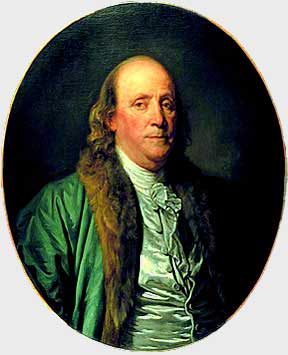 Almanac printed quips of advice. He actually got started as a young writer by writing advice columns for his brother’s newspaper. He was our country’s first “Dear Abby”. How many of us haven’t grown up hearing “An ounce of prevention is worth a pound of cure?” My consulting firm–The Minerva Group–spent most of the 1980s teaching businesses and public organizations how to build quality in rather than rely on faulty inspection to sort out mishaps. One of the biggest reasons this is important is cost savings. If you’re in manufacturing, mistakes turn into expensive scrap. If you’re in services, you waste human energy and frequently irritate customers. When I consulted for the Air Force during the first Gulf War I was frequently reminded by the Colonels I worked with that their mistakes could cost lives. Why is it the Republicans have forgotten this lesson in the rush to be stingier than thou?
Suzy Khimm writes for Mother Jones. Her latest article called “Death by a Single GOP Cut” illustrates the medical and public health implications of underfunding immunizations among other initiatives.
In the past year, California has experienced the worst whooping cough outbreak in more than 50 years, an epidemic that has killed 10 infants and resulted in 6,400 reported cases. But even as the state’s public health officials have struggled to curb the disease, Republicans in Congress have proposed slashing millions in federal funding for immunization programs. Public health advocates warn that these cuts threaten efforts across the country to prevent and contain infectious and sometimes fatal diseases. And they add that lower vaccination rates could eventually result in more outbreaks that endanger public health at a major cost to taxpayers.
The House GOP’s 2011 budget would chop $156 million from the Centers for Disease Control’s funding for immunization and respiratory diseases. The GOP reductions are likely to hit the CDC’s support for state and local immunization programs, the agency’s ability to evaluate which vaccines are working, and its work to educate the public about recommended vaccines for children, teenagers, and other susceptible populations. The CDC especially focuses on serving lower-income families who receive vaccines at state and local health offices and community health clinics, rather than a private doctor’s office.
There’s another old saying that goes like this: “Pennywise and Pound foolish”. Ezra Klein borrowed that one to quip on more GOP cost cutting antics.
There are three categories of spending in which cuts lead to more, rather than less, spending down the line, says Alice Rivlin, former director of both the Congressional Budget Office and the Office of Management and Budget. Inspection, enforcement and maintenance. The GOP is trying to cut all three.
There’s a war on common sense going on in this country. It’s based in some fairly crazy ideology that appears to appreciation inefficiency and cost run ups rather than pooling a country’s resources to achieve a good outcome. Klein’s post is just full of examples where eliminating government programs will lead to bad outcomes. Just think about all the outbreaks of e coli or food poisoning just out there waiting to happen because some company would rather cut corners than do reliable inspections, buy or fix equipment, or hire people that are trained and know what they’re doing? The best example of the lunacy is the proposed cuts to the agency responsible for tsunami monitoring Republicans suggested days before a tsunami hit both California and Hawaii. Early warning systems and method of prevention save lives and a lot of money.
Let’s face it. Many elected officials would rather gamble with our lives and our safety than admit that government can do some good things. They’d rather privatize everything let us all beware when we’re forced into using the product or service. I have no idea where this insanity comes from but I’d like it to stop now. I don’t mind paying taxes when it goes to a good cause. What I object of to paying for are sweetheart, no bid deals to big corporations that mark up everything to achieve obscene profits and donate huge sums to politicians to get them to overlook their abusive practices. One of these days we’ll go back to appreciating public goods like education, interstate highways, and immunization programs. I would’ve thought that the levee failure during Hurricane Katrina would have provided some lessons on what happens when you underfund the maintenance and construction of projects in the public interest. This is just more hard core libertarian nonsense that needs to return the pages of Atlas Shrugged and other bad fiction like studies produced by the Cato Institute and Reason Magazine.
Tuesday Reads
Posted: March 15, 2011 Filed under: John Birch Society in Charge, morning reads, Reproductive Rights, Republican presidential politics, right wing hate grouups | Tags: abortion rights, Corporate SCOTUS, Glenn Beck, Kansas Republicans, no looting in Japan, The Roberts Court, Wisconsin Republicans 72 CommentsBeware t he Ides of March!!
Well, things remain in flux. First, Senate Republicans in Wisconsin are still holding the 14 Democrats hostage to their policies and contempt.
Senate Majority Leader Scott Fitzgerald wrote this afternoon in an email to his caucus that Senate Dems remain in contempt of the Senate and will not be allowed to vote in committees despite returning from their out-of-state boycott of the budget repair bill vote.
“They are free to attend hearings, listen to testimony, debate legislation, introduce amendments, and cast votes to signal their support/opposition, but those votes will not count, and will not be recorded,” wrote Fitzgerald, R-Juneau.
Republicans in Kansas are also suggesting some pretty bizarre things.
A legislator said Monday it might be a good idea to control illegal immigration the way the feral hog population has been controlled — with hunters shooting from helicopters.
State Rep. Virgil Peck, R-Tyro, said he was just joking, but that his comment did reflect frustration with the problem of illegal immigration.
Peck made his comment came during a discussion by the House Appropriations Committee on state spending for controlling feral swine.
After one of the committee members talked about a program that uses hunters in helicopters to shoot wild swine, Peck suggested that may be a way to control illegal immigration.
Then, Glenn Beck decided to take Pat Robertson’s place in talking about earthquakes, god, and endtimes.
Discussing the devastation in Japan on his radio program this morning, Glenn Beck lamented that we “can’t see the connections here.”
Beck said that he’s “not saying God is, you know, causing earthquakes,” then clarified that he is “not not saying that, either,” then added: “Whether you call it Gaia, or whether you call it Jesus, there’s a message being sent and that is, ‘hey, you know that stuff we’re doing? Not really working out real well.’ Maybe we should stop doing some of it.”
Think that’s outrageous? Check out this one from a GOP House member from New Hampshire that at least retired after this comment.
Rep. Martin Harty, a Barrington Republican, has resigned his House seat in the wake of fire he drew for remarks on mental illness and population control.
Harty, who turns 92 this month, came into spotlight last week after telling a voter during a phone call that he thought the best treatment for the mentally ill would be a one-way trip to Siberia.
He also said population growth and mental illness could be controlled with eugenics, a form of genetic engineering commonly associated with Hitler’s Germany.
Kinda makes you wonder what’s wrong with some people in this country doesn’t it? If this is coming from the country’s decision makers and opinion leaders, I think we’re in a heckuva lotta trouble. Then there’s this bit of news on the Supreme Court coming from a study co-authored by conservative Court of Appeals Judge Richard Posner.
… the Roberts Court places a huge thumb on the scale in favor of corporate interests. According to the study, the Roberts Court rules in favor of business interests 61 percent of the time, a 15 point spike from the five years before when Chief Justice Roberts joined the Court.
While the Chamber of Commerce has recently tried to downplay the favorable treatment it receives from the Supreme Court, its own top lawyer admitted a few years after Roberts joined the Court that the justices give his client special treatment:
Carter G. Phillips, who often represents the chamber and has argued more Supreme Court cases than any active lawyer in private practice, reflected on its influence. “I know from personal experience that the chamber’s support carries significant weight with the justices,” he wrote. “Except for the solicitor general representing the United States, no single entity has more influence on what cases the Supreme Court decides and how it decides them than the National Chamber Litigation Center.”
Phillips’ confession, and the Posner study’s conclusion, corroborates other data showing the Roberts Court’s favoritism towards corporate interests.
Women are definitely on the losing end of Republican Government overreach. Here’s the latest example from Iowa.
Life can’t get much worse for Christine Taylor. Last month, after an upsetting phone conversation with her estranged husband, Ms. Taylor became light-headed and fell down a flight of stairs in her home. Paramedics rushed to the scene and ultimately declared her healthy. However, since she was pregnant with her third child at the time, Taylor thought it would be best to be seen at the local ER to make sure her fetus was unharmed.
That’s when things got really bad and really crazy. Alone, distraught, and frightened, Taylor confided in the nurse treating her that she hadn’t always been sure she’d wanted this baby, now that she was single and unemployed. She’d considered both adoption and abortion before ultimately deciding to keep the child. The nurse then summoned a doctor, who questioned her further about her thoughts on ending the pregnancy. Next thing Taylor knew, she was being arrested for attempted feticide. Apparently the nurse and doctor thought that Taylor threw herself down the stairs on purpose.
According to Iowa state law, attempted feticide is an trying “to intentionally terminate a human pregnancy, with the knowledge and voluntary consent of the pregnant person, after the end of the second trimester of the pregnancy.” At least 37 states have similar laws. Taylor spent two days in jail before being released. That’s right, a pregnant woman was jailed for admitting to thinking about an abortion at some point early in her pregnancy and then having the audacity to fall down some stairs a couple of months later. Please tell me you find this as horrifying as I do.
With that bit of news, I’d like to recommend something Bostonboomer found yesterday by Chris Hedges: Power Concedes Nothing Without a Demand.
The liberal class is discovering what happens when you tolerate the intolerant. Let hate speech pollute the airways. Let corporations buy up your courts and state and federal legislative bodies. Let the Christian religion be manipulated by charlatans to demonize Muslims, gays and intellectuals, discredit science and become a source of personal enrichment. Let unions wither under corporate assault. Let social services and public education be stripped of funding. Let Wall Street loot the national treasury with impunity. Let sleazy con artists use lies and deception to carry out unethical sting operations on tottering liberal institutions, and you roll out the welcome mat for fascism.
Well, there are some places in the world where people see themselves as altogether in one big struggle against the bad things that happen. The Japanese are certainly providing some good examples of resilience and human strength in the face of some horrendous disasters. In the UK, The Telegraph asks: ‘Why is there no looting in Japan?’
The landscape of parts of Japan looks like the aftermath of World War Two; no industrialised country since then has suffered such a death toll. The one tiny, tiny consolation is the extent to which it shows how humanity can rally round in times of adversity, with heroic British rescue teams joining colleagues from the US and elsewhere to fly out.
And solidarity seems especially strong in Japan itself. Perhaps even more impressive than Japan’s technological power is its social strength, with supermarkets cutting prices and vending machine owners giving out free drinks as people work together to survive. Most noticeably of all, there has been no looting, and I’m not the only one curious about this.
This is quite unusual among human cultures, and it’s unlikely it would be the case in Britain. During the 2007 floods in the West Country abandoned cars were broken into and free packs of bottled water were stolen. There was looting in Chile after the earthquake last year – so much so that troops were sent in; in New Orleans, Hurricane Katrina saw looting on a shocking scale.
Why do some cultures react to disaster by reverting to everyone for himself, but others – especially the Japanese – display altruism even in adversity?
We might ask ourselves the same question. Why is it that some folks display altruism even in adversity?
What’s on your reading and blogging list today?
Are Republicans the new Confederate Holdouts?
Posted: March 8, 2011 Filed under: Democratic Politics, John Birch Society in Charge, Republican presidential politics, U.S. Economy, U.S. Politics | Tags: Blue State-Red State politics and economics, government spending priorities 25 Comments That’s a pretty interesting header for what is essentially a discussion among economics/finance bloggers over the ongoing disconnect between revenues and government spending, isn’t it? There’s no doubt that Nixon’s southern strategy and Reagan’s appeal to social reactionaries ushered in the current mixture that represents the Republican Party. This has basically become the new base of the Republican party since establishment Republicans and their business base couldn’t get a critical mass of voters back in the day. We’ve seen it lead to policy measures that would dismantle everything from civil rights to basic collective bargaining and workplace rights recently.
Economist Karl Smith believes that eventually this Republican coalition will fail. He wrote on this at Modelled Behavior in a post called ‘Starving the Moral Beast’ which is quite worth a read and a discussion. So far, it has elicited responses from Mark Thoma at Economist’s View and Matt Yglesias at Think Progress.
All I keep thinking is the old Keynesian wisdom of “in the long run, we are all dead”. So much for any optimism on my part. Here’s some tidbits from Smith.
If we want to build a model of what the government spends money on we would be best to start this way: ask people what social obligations do they believe “society” has. Look around for the cheapest – though not necessarily most efficient – programs that could credibly – though not necessarily effectively– address those obligations. Sum the cost of those programs. That will be government spending.
Contrary to Jonah Goldberg and others who see Canada and the United States as examples of two clashing ideologies, they are actually examples of two different ethic distributions. The United States is not Canada because there is ethnic strife between Southern Blacks and Southern Whites. That strife reduces the sense of moral obligation on the part of the white majority and so reduces government spending.
I want to be very clear that I don’t say this to paint those against social spending as racists. From where I sit I am betting that most of the intellectuals lined up against expanding the welfare state are naively unaware that their support rests upon racial strife. Otherwise they would realize that as America integrates they are doomed. They are fighting as if they believe they have a chance of winning. Given the strong secular trend in racial harmony, they do not.
I point this out also to show why the major Republican strategy for limiting government was doomed from the start and why I am also not particularly worried about Americas fiscal future per se.
Again, Smith argues that the Republicans will be on the losing end of the argument because they are increasingly outnumbered by the very people they want to suppress. Eventually, they will have to increase taxes and fund the part of the beast they’ve so tried to starve.
In the 1980s some conservatives believed that the might not be able to cut government but they could cut taxes and thereby starve the beast. Rising deficits would force the hand of future governments. Spending would have to be cut in order to bring the budget into balance.
Much of the handwringing about fiscal irresponsibility is a sense of alarm not only on the right, but throughout much of the political center, that these spending cuts are not actually materializing.
But, by what theory of government did you ever believe they would? Governments don’t look at how much money they have and then decide what they want to buy. They decide what they want to buy and then they look for ways to find the revenue.
Divorcing the two – through sustained deficits – was only going to lead to ever increasing levels of debt. This is what we got. At no point was the beast ever starved. The peace dividend lowered government spending growth somewhat, but that was undone by the war on terror. Otherwise spending hummed along, as it always will, with the government buying things the public thinks it ought to buy.
Yet, if this is causing upset stomachs among many of my fellow bloggers it calms mine. Its quite clear how this will end. Racial strife will continue to abate. The public will coalesce around the welfare state and taxes will be raised to meet the cost.
Ygliesias–from which I borrowed the Jesusland graphic–argues the semantics of the Canada-US sociopolitical distributions. For some reason, I don’t think either of them have spent much time in central Canada where there are many fairly moderate to conservative folks.
And on both sides of the border there are differences between the big cities and the rural areas. But Québec is quite different from Anglophone Canada and in the USA “the south is different.” The interesting thing is that not only do Québécois people speak French, they also have unusually left-wing views on economic policy. Meanwhile, white southerners have more rightwing views on economic policy than do other North American white Anglophones. If you redrew the borders, you’d get very different political outcomes.
Thoma takes on the crux of the argument which is the essential problem of funding our government. I’ve always found it odd that Republicans say deficits don’t matter when the spending is for war, tax cuts for business and the wealthy, or distributing grants to religious groups but scream when the spending is used for your basic public goods. I think he has a good point when he discusses how the relatively different political groups place value on various government activities. This turns the entire framework into your basic supply/demand model with price sensitivity being determined by the degree to which you value or shun providing revenues or selecting a program.
I agree with a lot of what is said here, but I am not as sure that the decisions about how much to spend and how to pay for it can be separated in this way. What society wants to do — e.g. the social services it believes it should provide — is partly a function of what we collectively think we can afford. Ultimately, I think, just as price is determined by both supply and demand, decisions about the level of government services and how to pay for those services are made jointly, not sequentially. The decisions cannot be completely separated. Part of the worry about health care, for example, and hence part of the opposition is a worry that we cannot afford it.
However, I probably shouldn’t push this too hard, it’s not a pure joint decision either, and for some social obligations have little to do with their cost. In addition, in many cases those who benefit from social programs and those who pay are not the same which sets up a social conflict and a political dynamic that can lead to deficits. But I do think that the costs matter when we make decisions about what services we think government should provide. The big difference across people, I think, is the assessment of the net benefits of some of these programs, and the differences are on both the cost and benefit sides of the equation. For example, the racial divide affects the assessment of benefits, and libertarians see taxes as an assault on liberty and hence very costly.
I still think that the Clinton/Gore administration provided some of the results that many Americans found palatable. Republicans tend to defund functions they hate, place vapid politicos in charge of the projects they loathe, then point to the miserable results when the inevitable blow ups occur as ‘typical government’. The hated the lean mean working model of Clinton/Gore. Think Heckuva -job-Brownie at FEMA compared to the pared down and efficient Clinton/Gore FEMA. The other main issue that I can see is the large number of Federal contractors that just disrupt the process trying to get no bid contracts to privatize essential government services. The privatization schemes have cost us dearly at many levels. I think this war on Public Workers is part of the effort to grab more lucrative government work as much as it is to starve the beast or shrink government. As every one here as said, we’ve only seen selective ‘shrinking’ .
Having spent my life in that big red blob in the middle, I get a front row seat to some of the craziest of the crazies who scream government overreach or states rights when it affronts their personal practices while applauding government overreach in other things. Think how many Republicans want to stick their noses squarely in people’s sex lives and health because they value a particular religious belief over science. I’m less hopeful than Smith that this will all work itself out in the long run because the fault lines seem pretty large from my vantage point. One of these days the middle class will figure out that they really do get their tax dollars worth. Now they should just make the corporations and the rich pay for theirs too.
There does seem to be a populist contagion afoot in the world. A lot of it is push back from the proposed policies that force big changes on either side of the aisle. There is also this sense that there’s a lot of wealth out there and only a small few seem to be able to grab hold of it. The democracy bug in the MENA area is as inspiring to me as the Wisconsin, Ohio, and Indiana protests. Perhaps, the little guys have had enough of being pushed around.
I guess we will see.
Wrong! Wrong! Very Wrong!
Posted: March 8, 2011 Filed under: Baby Boomers, Domestic Policy, Federal Budget, John Birch Society in Charge, Psychopaths in charge, right wing hate grouups, Social Security, The Media SUCKS, the villagers | Tags: Annuities, Longevity Insurance, Old Age insurance, Robert J. Samuleson, Social Security 22 CommentsI almost never read Robert J. Samuelson because he is basically one of those people that seems to read a few things  then moves himself to expert status. He’s one of many writers who seems to derive a livelihood by achieving intellectual dilletante status. I couldn’t get pass this headline at his WAPO column: ‘Why Social Security is welfare’. Why journalistic poseurs are allowed column space to promote so much wrong information is beyond me.
We don’t call Social Security “welfare” because it’s a pejorative term, and politicians don’t want to offend. So their rhetoric classifies Social Security as something else when it isn’t. Here is how I define a welfare program: First, it taxes one group to support another group, meaning it’s pay-as-you-go and not a contributory scheme where people’s own savings pay their later benefits. And second, Congress can constantly alter benefits, reflecting changing needs, economic conditions and politics. Social Security qualifies on both counts.
Samuelson is obviously confused. I wonder if he feels this way about every annuity investment sold by every insurance broker and bank in the country? Social Security is a benefit that every worker pays for that is basically an insurance annuity set up to pay you back when you hit the stated conditions of the contract. It has elements of insurance in it that is comparable to the government-sponsored flood insurance plan. It has elements of a life annuity which is a similar contract that you can buy from any insurance broker. You pay now and it pays you benefits in the future, again, when you meet the conditions of the annuity. It’s a form of longevity insurance.
Additionally, it is not means tested which means that receiving the annuity has nothing to do with your income. It has to do with you joining the plan and paying the premiums as you work or as your parents or spouse works. It is not a transfer payment which is the traditional form ‘welfare’ or safety net program. Transfer payments go to a beneficiary simply upon meeting certain criteria without ever having paid into the program directly. Usually, transfer payments are means-tested which means they pay only to low income citizens. Transfer payments direct payments or services to people that don’t involve any exchange of goods and services for the benefit. They are a one-way transfer of benefits and their main purpose is for income redistribution. Social Security does not fall under this category at all. If you or a qualifying family member don’t contribute to the program, you will not get your benefits. Your benefits are also eventually based on what you contributed and not what your income says you need. This is a huge difference.
You can read two other economics/finance writers who explain this in similar ways. First, Economics professor Mark Thoma on Economist’s View explains the bad logic involved with this argument. He also explains why Social Security is an insurance annuity and not a transfer payment in a similar way.
Social Security is no different, it is an insurance program against economic risk as I explain in this Op-Ed piece. Some people will live long lives and collect more than they contribute in premiums, some will die young and collect less. Some children will lose their parents and collect more than their parents paid into the system, others will not. But this does not make it welfare.
Is gambling welfare? Gambling transfers income from one person to another. Does that make it welfare? Loaning money transfers income when the loan is paid back with interest. Are people who receive interest income on welfare?
There is an important distinction between needing insurance ex-ante and needing it ex-post. Insurance does redistribute income ex-post, but that doesn’t imply that it was a bad deal ex-ante (i.e., when people start their work lives).
Angry Bear has made the same argument. (Both of these quotes are pretty old btw since Samuleson keeps rehashing this canard over and over and over.) There is an example there of the basic insurance problem taught in finance classes in risk theory. It shows why people basically buy insurance. It also discusses the benefits of having insurance provided by the government when the private sector fails to provide the service. Flood insurance and Longevity insurance make sure that people who have experienced those conditions do not become a burden on society and get shoved into the welfare system. They pay premiums on each pay check–just as each of us do–to make sure that we don’t either outlive our incomes and wealth.
What does all of this have to do with Social Security? Those who are hard-working, fortunate, and not too profligate will have a large nest egg at retirement and Social Security will account for only a small portion of their retirement portfolio. This is tantamount to paying for insurance and then not needing it. This happens all the time — every year someone fails to get sick or injured and, while surely happy in their good health, would have been better off not buying insurance. That’s the nature of insurance: if you don’t need it, then you’ll always wish you hadn’t purchased it. Only in the context of retirement insurance is this considered a crisis.
On the other hand, those with bad luck or insufficient income will not have a nest egg at retirement. Because of Social Security, instead of facing the risk of zero income at retirement, they are guaranteed income sufficient to subsist.
This is precisely like the insurance example I worked through above: people with good outcomes will wish they hadn’t paid into the insurance fund; those with bad outcomes will be glad they did. Ex-ante, everyone benefits from the insurance. Overall, society is better off because risk is reduced; because people are risk-averse, the gains are quite large.
Additionally, Samuelson tries to force the Social Security program back into the federal deficit column when it is and was designed as a stand alone program. He also uses the current downturn–with its high and sustained rate of unemployment and hence, people NOT paying into social security at the moment–as an excuse to call the trust fund insolvent. This is another canard.
Contrary to the Obama administration’s posture, Social Security does affect our larger budget problem. Annual benefits already exceed payroll taxes. The gap will grow. The trust fund holds Treasury bonds; when these are redeemed, the needed cash can be raised only by borrowing, taxing or cutting other programs. The connection between Social Security and the rest of the budget is brutally direct. The arcane accounting of the trust fund obscures what’s happening. Just as important, how we treat Social Security will affect how we treat Medicare and, to a lesser extent, Medicaid.
Dean Baker also calls Samuelson “inaccurate and misleading”. (h/t BostonBoomer)
It seems that for some reason he has a hard time understanding the idea of a pension. This shouldn’t be that hard, many people have them.
The basic principle is that you pay money in during your working years and then you get money back after you retiree. Social Security is a pension that is run through the government. Therefore Samuelson wants to call it “welfare.”
It is not clear exactly what his logic is. The federal government runs a flood insurance program. Are the payments made to flood victims under this program “welfare?” How about the people who buy government bonds. Are they getting “welfare” when they get the interest on their bonds? If there is any logic to Mr. Samuelson’s singling out Social Security as a source of welfare, he didn’t waste any space sharing it with readers.
There are a few other points that deserve comment. He claims that the trillions of dollars of surplus built up by the trust fund over the last three decades were an “accident.” Actually, this surplus was predicted by the projections available at the time. If anyone did not expect a large surplus to arise from the tax increases and benefit cuts put in place in 1983 then their judgement and arithmetic skills have to be seriously questioned.
In terms of the program and the deficit, under the law it can only spend money that came from its designated tax or the interest on the bonds held by the trust fund. It has no legal authority to spend one dime beyond this sum. In that sense it cannot contribute to the deficit. Mr. Samuelson apparently wants to use Social Security taxes to pay for defense and other spending.
Social Security coffers will see increased funding as long as people have jobs that pay more. Judging the cash inflows at a time when unemployment is unusually high and sustained is analysis aimed at pushing a political agenda. It’s not a realistic view of the future stream of revenues. The pot will replenish at a rate better than today simply by getting rid of the high unemployment rate and getting people into jobs with incomes that actually improve. Consistently increasing the cap level by the rate of inflation would also provide an additional and reasonable source of funds.
I’ve written more than a few posts explaining the basics of social security. It gets old when you have to repeat the same arguments to the same boneheads–like Samuelson–over and over. I really don’t understand why some news outlets just seem to tolerate deliberate misinformation as ‘opinion’. I certainly hope that some one with a similar sized readership will challenge Samuelson on his facts. He plays fast and loose with them all the time.

 peej
peej Carissa
 bostonboomer
 dakinikat
 ecocatwoman
 mablue2
 Mama Lopez
 peggysue22
 quixote
 skydancingguestblogger
 Mona (aka Wonk the Vote)



 Sky Dancing
Recent Comments