
Barney Frank on Morning Joe
Posted: April 28, 2011 Filed under: Democratic Politics, Domestic Policy, Foreign Affairs, Health care reform, Iran, Libya, U.S. Economy, U.S. Military, U.S. Politics | Tags: Congressman Barney Frank, Morning Joe 9 Comments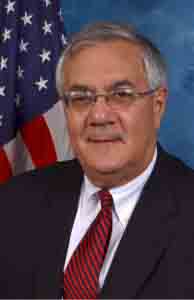
Barney Frank was on Morning Joe Tuesday. The interview was wide ranging and involved serious discussion of issues. Because of his seniority as the former chairman of the House Finance Committee and current ranking member, he can bring insight to the discussion. When he speaks, I make it a point to listen. He provides framing of subject in a manner that is understandable by the public. Also, we gain insight into what a major leader of the House is thinking.
Key issues discussed were:
- federal debt is a result of past mistakes by both parties
- NATO is a mechanism for Europe to outsource their military costs to the US
- we need a new model of medical care which involves more than Medicare
- clarifying end of life care considerations
- the need to re-evaluate the utility of NATO
- putting a missile shield in Poland to protect them from Iran is not our problem
- problems of Libya are more germane to countries within spitting distance of Libya while NATO wants us to step up with more
- Less defense spending could leave more money for health programs.
The Morning Joe, Barney Frank segment can be viewed here. The first part of the segment is information to set up for the discussion with Barney which starts at 4 minutes. The video is about 17 minutes which enables a good discussion. Joe basically conducts the interview and generally lets Barney make his points. He typically interrupts the conversation only for agreement or clarity.
Where is the ‘supposed’ liberal media bias?
Posted: February 1, 2011 Filed under: Health care reform, SCOTUS, The Media SUCKS, U.S. Politics | Tags: constitutionality of health care reform, Dole Care, employer and individual mandate, healthcare, Hillary Care, Obama Care, Romney Care 12 Comments I’m getting tired of all the sturm and drang over that stupid HRC law. The law’s been out there for some time–all 900ish pages of it–and yet, very few media outlets really tell people what’s in it and what’s not in it. Don’t even get me started on where the damned thing came from.
It’s disingenuous to just call it ‘Obama care’ when it was developed by the Heritage Foundation and carried by John Chafee in 1993-1994 in response to “HillaryCare”. I know it well because I was working for UHC and we had a VP on Hillary’s Task Force. Meetings were held at our HQ and many of us attended. I was on the Pharmaceutical Benefits Management side of the House. UHC wanted to make sure that forced insurance was in there to offset the cost savings from continual use of pre-existing conditions to deny coverage or make it so expensive that no one could afford it. Cherry picking the healthy and huge pools of insured are what makes insurance profitable.
Those of us at certain levels were well aware of the contents of both plans and the issues. I’ve linked to Paul Starr, “What Happened to Health Care Reform?” The American Prospect no. 20 (Winter 1995): 20-31 above and I’m going to quote some things that should sound familiar. The only difference is the current Republican complaints about the HCR were the Republican talking points back then until Bob Dole got interested in running for President. William Kristol--definitely not the liberal press–carried a lot of water and eventually help to tank both plans. It was a part of the narrative to remove Bill Clinton from office. The Heritage Foundation has changed its tune and conveniently remembers only the later part of the Republican Debate when it was decided this would be a good issue to skewer Clinton.
What’s really disingenuous is the hoopla over the individual mandate. This was originally the cornerstone of the Chaffee Republican plan because that was the insurance industry’s bribe to stop its cherry picking. It’s also part and parcel of the only state that adopted the Heritage Institute’s plan handed originally to John Chafee. Current disingenuous Republican Presidential candidate Mitt Romney made the infamous Dole Care a state level Romney Care. We’ve got plenty of people here that live in MA that can tell you there’s an individual/employer mandate in there and it wasn’t a Democratic Party idea.
In 1993, 23 Republican senators, including then-Minority Leader Robert Dole, cosponsored a bill introduced by Senator John Chafee that sought to achieve universal coverage through a mandate that is, a mandate on individuals to buy insurance. Nearly every major health care interest group had endorsed substantial reforms–grandiose ones, in fact. The American Medical Association (AMA) and Health Insurance Association of America (HIAA), the two great, historic bastions of opposition to compulsory health insurance, both went on record in support of an employer mandate and universal coverage. Even the U.S. Chamber of Commerce endorsed an employer mandate, as did many large corporations. Other groups came out variously for reform options that ran along a spectrum from Canadian-style, single-payer programs on the left to managed competition and medical savings accounts and radical changes in tax policy on the right. Under the circumstances, it was easy to believe the country was ready for substantial reform and that a market-oriented, consumer-choice approach to universal coverage, positioned in the center, could become a platform for consensus.
The fight over the mandate was well known at the time. It became a point of nitpicking late in the debate. The Republicans begin to look for ways to find exceptions for different business interests whose support they desired in upcoming elections. If this sounds familiar, it’s because it’s the same thing that went on last summer and a lot of the same disingenuous players played the game. Only then, the discussion was not happening in Democratic circles or being blamed on Democrats because it was not part of the Democratic proposal. The bickering became part and parcel of a strategy undermining the Clintons and the Clinton presidency which was going full throttle via the infamous White Water snipe hunt. Basically, in 1994, health care reform became a political football to destroy Democratic Presidents. Dole saw this as a way to further weaken the President and weasel his way into the office. They’re just replaying that same game plan now. Here’s the narrative on 1994.
The opponents of reform were organizing their forces, concentrating first on groups with ideological affinities. After an internal insurrection, the Chamber of Commerce reversed its endorsement of a mandate; other business organizations likewise “defected,” as one business representative put it to me at the time. The AMA qualified its endorsement of a mandate limiting it to firms with over 100 employees and thereby excluding most private doctors, the majority of whom do not cover their own employees. Senator Dole and other Republicans abandoned the Chafee bill and the individual mandate. Dole then cosponsored a bill with Packwood and within weeks abandoned that, too, saying that this the second bill he offered had “too much government.”
If you want to actually look at the 1993 Republican Health Reform plan, there’s a summary of it at Kaiser Health News. You may not remember, but there were two democratic a co-sponsors of the Chaffe Bill: Senators Bob Kerrey (NE) and David Boren (AZ). The House equivalent had no Democratic co-sponsors. The site states: “It bears similarity to the Democratic bill passed by the Senate Dec. 24, 2009, the Patient Protection and Affordable Care Act”. Kaiser is THAT Kaiser of the health care industry. I dare you to read those points and not walk away fully knowing that the current HCR is that old Republican bill.
Another good source for a discussion of the players and motivations can be found in a pdf version the articleCongress and Healthcare Reform: Divisions and Alliances published by Health Progress. The Love Boat’s purser Gopher turned Iowa Congressman, Fred Grandy, was a part of that effort. Also part of the effort was Big Pharma Whore Congressman John Breaux (D-LA).
A group of conservative Democrats and moderate Republicans supports the Managed Competition Act of 1993 (HR 3222, S 1579). This legislation was originally put forward by the Conservative Democratic Forum, which boasts 60-plus members. Bill cosponsors are Rep. Jim Cooper, DTX, and Rep. Fred Grandy, R-IA, in the House and Sen. John Breaux, D-LA, and Sen. Dave Durenberger, R-MN, in the Senate, giving this legislation bipartisan clout. The House version is supported by 31 Democrats and 26 Republicans. Cooper is the member of Congress whose name is most closely linked to this bill. A relative newcomer to health policymaking, this 39-yearold junior member of Congress is not the chairperson on any subcommittees, yet has become a major power broker in the health reform debate. Cooper is running for the Tennessee Senate seat vacated by Vice President AJ Gore. His cosponsor, Grandy, another newcomer, is widely praised by Capitol Hill staff for his intellectual ability to pick up the nuances of health policy. The Cooper-Grandy legislation closely models the managed competition plan espoused by the Jackson Hole Group. It differs from the Clinton plan in several key ways. First, it does not mandate universal coverage but rather establishes a voluntary system of health alliances to improve the access to healthcare for the small business employee and individuals in particular. Only employers with 100 or fewer workers are required to provide insurance through the alliance. To control costs, the plan relies more on competition and insurance market reform than on price controls, and employers’ tax deductions for health insurance premiums would be capped at the level of the lowest-cost insurance plan in the region.
While both the president’s proposal and the Cooper-Grandy proposal build on the managed competition model, their fundamental differences must be negotiated if the president hopes to attract support from this bipartisan, centrist group in Congress. Clinton has clearly stated that improving access is not enough; healthcare coverage must be universal. Yet the Cooper-Grandy group is not comfortable with President Clinton’s mandate on employers, much larger mandatory alliances, and premium limits.
This particular article has a really good narrative of all the competing interests and issues. Later, that same Heritage Foundation plan was resurrected by Republican Governor Romney and morphed into so-called Romneycare in MA. The stupid thing was written by a libertarian/conservative think tank and was later enacted in MA by a Republican Governor before Senator Max Baucus got a hold of another rewrite from an Insurance Lobbyist. File this under WakeTF up. I know. O just wanted his name on some “big f’ing deal” that enriched the FIRE lobby who are major investors in his presidency.
So, why am I rehashing all of this now besides wanting to see that people realize the astounding parallels and hypocrisy? First, news outlets are reporting the Mitt Romney is not offering any apologies for the Individual Mandate he supported in the MA law. Remember, this man is a Republican and plans to challenge Obama for the presidency in 2012. He’s basically running on the same damn health care platform that Obama will run on. Why is there no direct statement of this in major media outlets? Romney is even on a “No Apology” tour right now with a campaign that hearkens back to those silly “No Apology” Jeans from the worst of the CDS days. Some one should point out the hypocrisy of the statements given on ABC’s Sunday News show.
On the kick off to his “No Apology” book tour Mitt Romney is on message – refusing to apologize for the Massachusetts health care law that, like President Obama’s federal legislation, requires citizens to buy health insurance.
“I’m not apologizing for it, I’m indicating that we went in one direction and there are other possible directions. I’d like to see states pursue their own ideas, see which ideas work best,” Romney told me.
That stand seems to reject the advice of Karl Rove and others who say that Romney can’t get the GOP nomination in 2012 unless he finds a way to distance himself from “Romneycare”, but Romney did concede that his Massachusetts plan is imperfect.
As for “Obamacare”? It’s a “very bad piece of legislation,” Romney said, siding with the federal judge who ruled it unconstitutional and wrote in his decision that “it is difficult to imagine that a nation which began…as the result of opposition to a British mandate giving the East India Company a monopoly and imposing a nominal tax on all tea sold in America would have set out to create a government with the power to force people to buy tea in the first place.”
“That was the whole idea of our federal democracy, we’d have people be able to try different ideas state to state but what we did not do was say that the federal government can make its choice and impose it on all of the states. That is one of the reasons why this bill is unconstitutional,” Romney said.
“The right thing for the president to do now with these decisions saying this bill is unconstitutional, with the house taking action to repeal it, with the senate considering doing so, he should press the pause button and say ‘You know what, let’s hold back on this ‘Obamacare,’” he said.
I know we have multiple commenters and two front pagers that are either currently in MA or have lived in MA so they can regale you with more of the details on that plan. I can only speak to the 1993-1994 federal attempts because both my husband and I–as health insurance executives for two separate companies–had front row seats to the conversation.
The absolute amnesia feigned by the press, Republican Politicians, and the Heritage Foundation is immoral. You also have to know that I am no fan of the current law precisely because it is part and parcel that early Heritage Foundation plan handed to John Chafee. Also, I was registered in Minneapolis at the time as an Independent Republican. Shortly thereafter, I registered as a Democrat in Louisiana. I saw Hillary’s Task Force in action and I saw the Republican misdirect that was clearly aimed at unseating President Clinton.
I’m watching Republicans gain steam over that Judge in Florida whose written decision that is weirdly propaganda-like as if it was the be all and end all of decisions. The level of misinformation to the public is deplorable. So far, there have been FOUR rulings on the HCR. Two have upheld HCR completely. One found the individual mandate to be unconstitutional but upheld the rest of the bill. The last one was the only one that ruled the entire law was unconstitutional. This is also part of the short memory of the American press and a lot of the American People. Remember, the individual mandate came from the Republican side of the aisle and was enacted into law in MA as part of state health care there.
What finally set me off was reading the analysis done at The Washington Monthly by Steven Benen cited above. He did an analysis of which papers dedicated ink to each of the four rulings. He concludes that the media largely ignored the two rulings that completely upheld the HCRA while making a very big deal of the writings of the activist conservative judges. You know me. I’m a complete fan of data based analysis. He has actually gone through WAPO, NYT, AP, and Politco headlines on the rulings and counted the number of words dedicated to each decision.
Now, I will explain why I found the focus on Vinson’s ruling to be particularly spurious. The focus should be on the oddity of the ruling and not the end finding. It is worrisome that it is not. Republicans should be howling about judicial overreach. Kevin Drum of Mojo points to an Orin Kerr at the Volkoh conspiracy has covered the idea of a political jurist and Vinson–in this decision–is clearly out on a political limb with his h/t to the libertarian propaganda channel Reason TV.
The Orin Kerr post he links to makes this point explicitly: district court judges aren’t supposed to decide cases on first principles, as Judge Vinson appears to have done. They’re required to obey precedent from higher courts. And unless the Supreme Court changes its mind, precedent is pretty clearly on the side of PPACA’s individual mandate being constitutional, whether you like it or not:
So, is this what the entire Health Care Debate–starting in 1993–has come down to? Is it simply cheering and posturing for Team Red or Team Blue? Is this why the press doesn’t seem able to cover this ruling in context of the other rulings and in terms of the bigger issue? Vinson has clearly overstepped his boundaries. Where are the cries of judicial activism? Where is the respect for the process designed and protected by The Constitution?
This seems like the same thing we see over and over. The folks that scream loudest on the TV news about the constitution and judicial activism only appear to care about it in the context of abortion and the second amendment. The corporate press now engages their political fantasy leagues rather than dealing with the contents of the law and the merits of the case. Is it a matter of just having cut their costs to the point where they can only cover one thing at a time? Or, is it deeper than that?
If there every was a liberal bias in media, I would argue that Benen’s evidence (Team Blue) and Kerr’s critique (Team Red) clearly show that a fair and competent press has completely gone the way of the DoDo bird. Please follow the links. I think you’ll find the reads interesting.
Second Court Strikes Down HCR (breaking)
Posted: January 31, 2011 Filed under: Health care reform | Tags: constitutionality, Florida District Court, Health Care Reform Act, Judge Vinson 21 Comments
A Florida District Court has struck down all of the HCR law.
This is developing story as the ruling has just been released and it’s a long one (78 pages). A Federal judge in Florida has ruled the entire health care reform law unconstitutional because of the provision that mandates that all Americans must buy Insurance. He hasn’t stopped implementation, however.
It looks like he’s relying on some section of the Commerce Clause in the Constitution, but there are some truly bizarre things in this ruling. You may recall that a Virginia judge ruled that portion of the law unconstitutional without throwing out the entire thing.
Vinson basically says that Congress cannot require people to buy a product. He then goes into page after page of what looks like a libertarian view of American History. It’s very strange.
Dahlialithwick Dahlia Lithwick
J Vinson strikes down whole healthcare reform law — finds not severable http://slate.me/ggZk4d
From the David Weigel article at Slate:
The money graf, in which Vinson strikes down the entire law — which, because of the mess in the Senate and House, lacked severability:
Because the individual mandate is unconstitutional and not severable, the entire Act must be declared void. This has been a difficult decision to reach, and I am aware that it will have indeterminable implications. At a time when there is virtually unanimous agreement that health care reform is needed in this country, it is hard to invalidate and strike down a statute titled “The Patient Protection and Affordable Care Act.”
From Bloomberg.com: Obama Health-Care Reform Act Unconstitutional, Judge Says in 26-State Suit
Vinson’s ruling may be appealed to the U.S. Court of Appeals in Atlanta. A federal appeals court in Richmond, Virginia, is already slated in May to hear challenges to two conflicting federal court rulings in that state, one of which upheld the legislation while the other invalidated part of it. The U.S. Supreme Court may ultimately be asked to consider the issue.
The 955-page law bars insurers from denying coverage to people who are sick and from imposing lifetime limits on costs. It also includes pilot projects to test ideas like incentives for better results and bundled payments to medical teams for patient care.
In an Oct. 14 decision letting the case to proceed, Vinson narrowed the issues to whether the act exceeded the constitutional powers of Congress by requiring all Americans over the age of 18 to obtain coverage and expanding eligibility for Medicaid, the federal-state program offering care for the indigent.
The case is State of Florida v. U.S. Department of Health and Human Services, 10-cv-00091, U.S. District Court, Northern District of Florida (Pensacola).
Vinson has suggested strongly that he too will rule the individual mandate oversteps constitutional limits on federal authority. He may also move to invalidate the entire law, by granting the plaintiff states’ request for an injunction to halt its implementation.
“The power that the individual mandate seeks to harness is simply without prior precedent,” Vinson wrote in an earlier opinion in October.
Late Saturday Night Drifts
Posted: January 23, 2011 Filed under: Big Pharma, Health care reform, Team Obama | Tags: Big Pharma, medicine, oligiopolies, Public Health 12 Comments Some where in another world (Minneapolis to be precise), I did work for a managed pharmacy benefits plan that was owned by United Health Care but was sold off to SmithKline Beecham (now GlaxoSmithKline). This was during the “Hillarycare” debates. I know a lot about this because one of our VPs was on her panel and one of the hearings was held there. I honestly thought that the DOJ would call the merger thing off because it was an appalling example of a vertical monopoly. That didn’t happen.
During the mid nineties, Big Pharma wanted their hands on the ability to call the plan formularies for defined benefit plans and stack them with their drugs. All of them were scrambling to buy managed drug plans from Insurance Companies at the time. Managed pharmacy benefit plans basically meant a windfall for any drug listed on the formulary. Big Pharma had a plan and I was privy to the business deal which was to just tweak some chemical formula enough to call something a new drug, get it subject to a new patent, stick it on a formulary, and watch the profits roll in.
Don’t even get me started on how erectile dysfunction drugs made their way to formularies. The race for profits is frequently a race to a place with nonexistent ethics. So, based on the short amount of time I witnessed that situation, I took my fees and ran to New Orleans. I couldn’t say much then because I was at a level where I was silenced by the merger negotiations and the SEC.
So, why do I mention that now? Because, this doesn’t surprise me at all. Drug development is a business model and any one who thinks otherwise is sadly mistaken and most likely sadly at the bottom of the food chain and uninformed. Important drugs are not discovered because there is basically no money in it and there will never be any corporate money invested in it.
Public Health is part and parcel of the Public Interest. The parable of Erectile Dysfunction Drugs may have a different ending if this policy actually sees the light of day. Fortunately, it’s not completely up to the whims of creationists who hate science. This move recognizes that the profit motive doesn’t always drive the correct priorities for society. It only drives the correct money flows for something in high demand at particular time. Rich people with a flaccid penis and a fear of wrinkles are driving the market. So, what about Public Health?
The Obama administration has become so concerned about the slowing pace of new drugs coming out of the pharmaceutical industry that officials have decided to start a billion-dollar government drug development center to help create medicines.
The new effort comes as many large drug makers, unable to find enough new drugs, are paring back research. Promising discoveries in illnesses like depression and Parkinson’s that once would have led to clinical trials are instead going unexplored because companies have neither the will nor the resources to undertake the effort.
The initial financing of the government’s new drug center is relatively small compared with the $45.8 billion that the industry estimates it invested in research in 2009. The cost of bringing a single drug to market can exceed $1 billion, according to some estimates, and drug companies have typically spent twice as much on marketing as on research, a business model that is increasingly suspect.
The National Institutes of Health has traditionally focused on basic research, such as describing the structure of proteins, leaving industry to create drugs using those compounds. But the drug industry’s research productivity has been declining for 15 years, “and it certainly doesn’t show any signs of turning upward,” said Dr. Francis S. Collins, director of the institutes.
There’s another idea worth considering. There are many drugs that are in the public domain. There are many folks on medicare and medicaid plans. There are also veterans. Why not have the government offer to help start up small firms around the country that will produce those drugs at a minimal cost and reasonable profit with big time orders from all these government plans? The idea is just to save money on drugs going to those covered by public health programs and create manufacturing jobs in places that need them. Many old drugs are just as effective as their minimally tweaked but patented counterparts that are advertised and marketed into a high profit set up per the nifty Big Pharma Business model. Why pay for maximum profits to a market filled with a few greedy oligopolies when you can promote some nice little business all over Main Streets of American instead and Public Health instead and stir up a few jobs in the process?
Let the competition for government contracts really begin!
So, it’s an Open Thread, but that’s an article and a policy worth some discussion.
Saturday Reads: On the Bright Side of the Dark Side
Posted: January 1, 2011 Filed under: Civil Liberties, Environmental Protection, Health care reform, Hillary Clinton: Her Campaign for All of Us, Iraq, U.S. Politics, Women's Rights | Tags: 2011, Airport security, Aldous Huxley, Baby boomers, Brazil, Chris Hedges, Dilma Rousseff, Ellis Island, Jon Huntsman, No Profit Left Behind, Orwell, Rabindranath Tagore, Scott sisters, TSA 11 Comments
Pakistanis watch the New Year fireworks in Karachi on January 1, 2011. (RIZWAN TABASSUM/AFP/Getty Images)
Good evening and a Happy 2011, Sky Dancers.
Here are my Saturday offerings for the New Year. There’s a lot of doom and gloom in the headlines, so I tried to mix in a few stories and thoughts of my own to put things into a more motivating and thoughtful perspective.
From McClatchy: “2011 looks grim for progress on women’s rights in Iraq… BAGHDAD — When Iraqi Prime Minister Nouri al Maliki introduced what he called a national partnership government two weeks ago, he included allies and adversaries, Arabs and Kurds, Shiite Muslims and Sunnis. One group, however, was woefully underrepresented. Only one woman was named to Maliki’s 42-member cabinet, sparking an outcry in a country that once was a beacon for women’s rights in the Arab world and adding to an ongoing struggle over the identity of the new Iraq.“
From further down in the article: “After Maliki announced his lineup, Alaa Talabani, a female lawmaker from the northern Kurdistan region, delivered a rousing condemnation of the selection process to a packed legislative chamber. ‘The Iraqi women feel today, more than any other day, that democracy in Iraq has been slaughtered by discrimination, just as it was slaughtered by sectarianism before,’ Talabani said, her voice quaking with emotion.”
“…slaughtered by discrimination, just as it was slaughtered by sectarianism.” That is a powerful statement.
It reminds me of this Hillary quote: “To expand freedom to more people, we cannot accept that freedom does not belong to all people. We cannot allow oppression defined and justified by religion or tribe to replace that of ideology.” –Secretary of State Hillary Clinton, in Berlin for the 20th anniversary of the wall’s collapse
The words of both Alaa Talabani and Hillary Clinton above make me think of dry drunks and switching addictions. It is as if there is a certain quotient of oppression junkies out there who just go from one form of subjugating others to the next.
Which brings me to my next link. From Chris Hedges’, a few days ago, at truth-out… “2011: A Brave New Dystopia… The two greatest visions of a future dystopia were George Orwell’s ‘1984’ and Aldous Huxley’s ‘Brave New World.’ The debate, between those who watched our descent towards corporate totalitarianism, was who was right. Would we be, as Orwell wrote, dominated by a repressive surveillance and security state that used crude and violent forms of control? Or would we be, as Huxley envisioned, entranced by entertainment and spectacle, captivated by technology and seduced by profligate consumption to embrace our own oppression? It turns out Orwell and Huxley were both right. Huxley saw the first stage of our enslavement. Orwell saw the second.”
My apologies if another frontpager or commenter has already spotlighted Hedges’ piece and I missed it, but I think this is important enough a read to merit a repeat linking.
Speaking of our impending total enslavement, Derek Kravitz at the Washington Post reports that “As frustration grows, airports consider ditching TSA… Some of the nation’s biggest airports are responding to recent public outrage over security screening by weighing whether they should hire private firms such as Covenant to replace the Transportation Security Administration. Sixteen airports, including San Francisco and Kansas City International Airport, have made the switch since 2002. One Orlando airport has approved the change but needs to select a contractor, and several others are seriously considering it. The Metropolitan Washington Airports Authority, which governs Dulles International and Reagan National airports, is studying the option, spokeswoman Tara Hamilton said. For airports, the change isn’t about money. At issue, airport managers and security experts say, is the unwieldy size and bureaucracy of the federal aviation security system. Private firms may be able to do the job more efficiently and with a personal touch, they argue.”
No Profit Left Behind strikes again.
Oh, and it strikes here too — from Alan Johnson at the Columbus-Dispatch — “Kasich emphasizes ‘business’: Governor-elect wants to ‘exploit’ resources, picks EPA, DNR chiefs… Kasich, a former Republican congressman who will take office Jan. 10, emphasized that he doesn’t plan to empower business at ‘the cost of environmental degradation.’ But in the next breath, he said he wants to ‘exploit the wonders of our state.'”
Exploit? Way to thread the business vs. environment needle ever so delicately. Teddy R. has got to be rolling in his grave when he sees today’s Republican party.
Moving along and keeping with the theme from Chris Hedges’ piece, this headline from Raw Story: “Judge warns of ‘Orwellian state’ in warrantless GPS tracking case… Police in Delaware may soon be unable to use global positioning systems (GPS) to keep tabs on a suspect unless they have a court-signed warrant, thanks to a recent ruling by a superior court judge who cited famed author George Orwell in her decision. In striking down evidence obtained through warrantless GPS tracking, Delaware Judge Jan R. Jurden wrote that ‘an Orwellian state is now technologically feasible,’ adding that ‘without adequate judicial preservation of privacy, there is nothing to protect our citizens from being tracked 24/7.’ The ruling goes against a federal appeals court’s decision last summer that allowed warrantless tracking by GPS.”
Sounds like this judge in Delaware just may be looking out for us. So a little silver lining there.
In other uplifting reads… the Gray Lady has a very sentimental editorial today called “A Year Anew.”
From the link:“By now, of course, 2010 feels like a completely familiar, totally used-up year. But why does 2011 still sound like an annum out of science fiction? It’s not as though 2011 is a remoter outpost in the hinterland of the future than, say, 1971 was. Yet here we are in the second decade of the 21st century, living in the very future we tried to imagine when we were young so many years ago. Surely we must have colonies throughout the solar system by now. Surely hunger is no more, and peace is planet-wide. The coming of the new year reminds us, again, that we live, as we always have, somewhere on a sliding scale between utopia and dystopia and that we continuously carry our burdens and opportunities with us. 2011 is merely a new entry in our ancient custom of chronological bookkeeping, an arbitrary starting point for our annual trip around the sun. But it is also so much more. Who can live without fresh intentions, new purposes? Who does not welcome a chance to start over, if only on a new page of the calendar? Life goes on, but it goes on so much better with hope and renewal and recommitment. Last night was a night for banishing regrets. Today is for wondering how to live without new ones, how to do right by ourselves and one another.”
It’s probably nothing more than a neat little moment of synchronicity, but while reading the above, I couldn’t help but picture someone on the NYT editorial board reading Hedges’ column, getting depressed and a little drunk, and then deciding to respond with this editorial.
Next up from today’s Gray Lady, Bob Herbert has an op-ed on the suspension of the Scott sisters’ prison terms — “For Two Sisters, the End of an Ordeal… What is likely to get lost in the story of the Scott sisters finally being freed is just how hideous and how outlandish their experience really was. How can it be possible for individuals with no prior criminal record to be sentenced to two consecutive life terms for a crime in which no one was hurt and $11 was taken? Who had it in for them, and why was that allowed to happen? The Scott sisters may go free, but they will never receive justice.”
Those are good questions, but I doubt we will ever find any answers to them.
I saw a bunch of new year’s stories on Baby Boomers. I’m just going to link to a few of them without excerpting:
“Boomers Hit New Self-Absorption Milestone: Age 65” (NYT)
“Baby Boomers Expected to Drain Medicare” (ABC)
“Baby Boomers helped democratize art” (USA Today)
With so many of the headlines being so hostile toward boomers, like the NYT and ABC ones, I was glad to see that last one from USA Today. I think all the demonization along generational lines is such a waste.
I have a couple more quick links before I wrap this up.
Over in Brazil, some exciting news. President Dilma Rousseff is sworn in! From Newsday: “Brazil’s first female president vows to end poverty.”
Newsweek has an interesting piece — “The Manchurian Candidate: When Barack Obama posted Jon Huntsman to Beijing, it looked like a crafty way to sideline a 2012 rival. Don’t bet on it.”
I hope commenter Pilgrim catches this one! I know she’s a Huntsman fan.
From Raw Story — “Kucinich: GOP’s anti-health reform push may fuel Medicare-for-all drive.”
Here’s hoping against Hope on that one.
And on that note, your historical trivia for January 1st. On this day in 1892… The Ellis Island Immigrant Station in New York opened.
I’d like to close with this verse from Tagore on this New Years…
MIND WITHOUT FEAR
(Gitanjali, Verse 35)
Where the mind is without fear and the head is held high;
Where knowledge is free;
Where the world has not been broken up
into fragments by narrow domestic walls;
Where words come out from the depth of truth;
Where tireless striving stretches its arms towards perfection;
Where the clear stream of reason has not lost its way
into the dreary desert sand of dead habit;
Where the mind is led forward by thee into ever-widening
thought and action-
Into that heaven of freedom, my Father, let my country awake
–Rabindranath Tagore
Hope you are having a peaceful entry into the new year. Drop a note and let us know what you’re reading and thinking about in the comments if you get a chance.

 peej
peej Carissa
 bostonboomer
 dakinikat
 ecocatwoman
 mablue2
 Mama Lopez
 peggysue22
 quixote
 skydancingguestblogger
 Mona (aka Wonk the Vote)



 Sky Dancing
Recent Comments