
The LIBOR Scandal: It’s not just for the Brits any more
Posted: July 14, 2012 Filed under: Global Financial Crisis | Tags: LIBOR, the Fed, Timothy Geithner 28 Comments I’ve been trying to figure out a way to describe how serious the LIBOR scandal is without resorting to esoteric finance and economics models. LIBOR–the London Interbank Offered Rate–is the rate at which many international banks lend money to other banks. As such, it’s the underlying rate for prime rates around the globe. It is akin to our Fed Funds rate. It’s a rate watched by central banks closely and can be targeted by them. It is not directly under their control but monetary policy can influence it. Many, many loans are attached to the LIBOR rate and changes in the LIBOR rate. As such, it allocates loanable funds to many many projects around the world. It directly allocates funds to projects which–when missed–can lower the economic welfare of many countries. Here’s just a small bit that will give you an idea of how important the rate is from footnoted entries at Wiki.
Libor rates are calculated for ten different currencies and 15 borrowing periods ranging from overnight to one year and are published daily after 11 am (London time) by Thomson Reuters.[4] Many financial institutions, mortgage lenders and credit card agencies set their own rates relative to it. At least $350 trillion in derivatives and other financial products are tied to the Libor.[5]
Companies will use LIBOR as a base rate for discounting when evaluating capital projects. This means if the rate is too high or too low, it can impact the decision to build a factory, buy a machine, or expand a project. Let’s just say that nearly every financial and economic decision that’s evaluated based on opportunity costs or discounting uses a rate that’s base on the FED funds rate or LIBOR. It’s probably the most important interest rate in the world.
I’ve promised to write on this before. I usually have some time on Saturdays for this kind of analysis and that usually means that it may get passed over too. Last week, there were many discussions on this and most of them had some good explanations of LIBOR basics. Still, you have to really understand financial and economic decision making to really grok how big of a deal the LIBOR rigging scandal is and will be for some time. You also have to understand how much our sophisticated markets depend on trust and effective regulation. Financial markets can be opaque. They are subject to adverse selection, principal-agent issues, information asymmetry and moral hazard. They are also the electricity that runs the real sector. You don’t build a car factory or a levee with out funding from some source sold in a financial market. That’s why you evaluate that decision using cash flow discounting. For every speculator that won the bet on which way the rate would move, there was one that lost that bet too. So, gaming the rate is like fixing the spread on every MLB game including the World Series games.
Over and over, we’ve seen that the financial markets–and the folks that participate in them–are not worthy of trust. We’ve also had some indication that our regulation over them has not been effective. There are many reasons for that. Purposeful deregulation, underfunding, and ideological appointments as well as regulator capture have all played a role.
Now, we now that we have trust issues with our regulators in larger ways than we thought possible. Once again, Timothy Geithner is playing a central role in the questions of what did the NY FED know about the LIBOR gaming and when did they know it? Major newspapers are reporting that the NY Fed was aware of this as early as 2007. This is as scandalous as the rate gaming itself.
Federal regulators had evidence that major banks could be manipulating one of the world’s most important interest rates a year before the practice came to an end, according to documents released by the Federal Reserve Bank of New York on Friday.
As early as 2007, the officials at the New York Fed suspected that this key rate, which serves as the basis for the interest rates that consumers pay on many loans, did not accurately reflect market forces, the documents show. Then, in April 2008, the New York Fed was explicitly warned by an employee of the British bank Barclays that it was participating in a ruse to “fit in with the rest of the crowd,” referring to other major banks.
The documents, released in response to congressional inquiries, add to the mounting questions about whether federal regulators were aggressive enough in addressing irregularities at the heart of the global financial system.
The new disclosures show that the New York Fed shared its concerns about the London-based Libor rate with British regulators. But the Fed offered no evidence that it had taken additional steps, including exercising its own authority as the regulator of some of the largest U.S. financial firms, to address the rigging of the rate.
“The New York Fed helped to identify problems related to LIBOR and press the relevant authorities in the UK to reform this London-based rate,” the Fed said in a statement. The Fed declined to say what other steps it might have taken and is still exploring whether there are more details it can release.
The manipulation by Barclays did not end until some point in 2009, offering the freshest evidence of how regulators struggled to oversee the largest banks during the global financial crisis.
Again, this is appalling. It implies that sitting Secretary of the Treasury Timothy Geithner knew about this. It appears that Geithner made the BOE aware of the situation by memo. How much farther the interaction goes is unknown at this point.
The Federal Reserve and the U.S. government knew back in 2008 that Barclays was filing false reports about Libor, the interest rate that international banks charge one another for short-term loans, according to documents released Friday. The documents show that a staffer at the U.K.-based bank told the New York Federal Reserve—which was then run by current Treasury Secretary Timothy Geithner—more than four years ago about the false reports before the admission was circulated through the federal government.
Barclays has been fined about $450 million for its role in fixing the rate. The Libor (London Interbank Offered Rate) scandal has swept through the banking world, with other institutions, including Citigroup, JPMorgan Chase, the Royal Bank of Scotland and Deutsche Bank, all acknowledging that they are being investigated.
The House Financial Services Committee will get a private tutorial next week on the LIBOR scandal a day before Federal Reserve Chairman Ben Bernanke is expected to be pressed by lawmakers about the central bank’s role in overseeing Wall Street giants being investigated for possibly manipulating the benchmark interest rate.
Reps. Spencer Bachus and Barney Frank, the committee’s top Republican and Democrat, have set up a July 17 briefing for staff with the Congressional Research Service, according to a memo obtained by POLITICO that was circulated Friday to members of the Financial Services Committee.
Bernanke will testify before the committee on July 18 in a regularly scheduled hearing on monetary policy.
Some liberal lawmakers have privately been agitating for a separate hearing focused solely on the rate setting scandal instead of simply being given an opportunity to quiz officials when they come before the committee for other business.
According to a Democratic lawmaker, Rep. Maxine Waters (D-Calif.) had started to circulate a letter demanding a hearing on LIBOR but she was encouraged not to send it to Bachus and Frank.
The decision to at least temporarily forego a hearing comes as allegations of international banks manipulating the LIBOR benchmark interest rate hit Washington, D.C., this week. A newly released memo revealed that Treasury Secretary Timothy Geithner had expressed concerns about the problem as far back as 2008 during his tenure as president of the New York Federal Reserve.
The memo, sent to the head of Bank of England, Mervyn King, Geithner had made recommendations on ways to “improve the integrity and transparency of the rate-setting process.”
The big question is did the FED investigate or look into the role of its member banks in the rigging scam? This scandal hopefully will allow us to look at the huge money center banks again and their monopoly power over so many markets. I’ll be following this closely.
Many Saw It Coming
Posted: May 19, 2012 Filed under: financial institutions, Global Financial Crisis | Tags: James Kenneth Galbraith 19 CommentsOne of the weirdest memes I’ve heard recently is that no economist or person with a finance background could have seen the global financial crisis coming. That’s quickly followed by no one knew it would be so deep and so hard to escape. Then, there’s the entire weirdness surrounding the tropes that just cutting taxes and balancing budgets will solve all the problems.
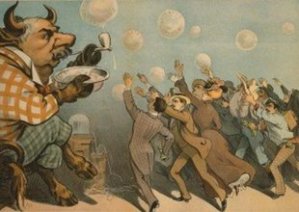 I read this Galbraith article over at Truthdig and wanted to share it because it just says all that many of us economists saw coming, see happening, and shake our heads at now. I personally expected the subprime credit markets to blow up sometime in 2005. I was watching the subprime contagion spread into the major banks by 2006. I heard from Social Workers what kinds of crap was being pushed on to their clients. You can ask my colleagues. I was vocal about it. The only people that seem flummoxed are those that were taken in by Fama and his Chicago acolytes. They are also the ones spreading the worst nastiness now. It does not surprise me that Paul Ryan is one of their groupies. They’ve been perpetually wrong on things.
I don’t have a lot of time to do a big analysis of this. I also think that Saturday is the last day you want to read it. Anyway, go read the article. It’s excellent.
The most important common ground was over the depth and severity of the financial crisis. We placed it in a different league from all other financial events since the early thirties, including the debt crises of the eighties and the Asian and Russian crises of the late nineties. One of us called it “epochal” and “history-making.” And so it has turned out. What distinguishes this crisis from the others are three facts taken together: (a) it emerges from the United States, that is, from the center, and not the periphery, of the global system; (b) it reflects the collapse of a bubble in an economy driven by repetitive bubbles; and (c) the bubble has been vectored into the financial structure in a uniquely complex and intractable way, via securitization.
Bubbles are endemic to capitalism, but in most of history they are not the major story. In the nineteenth century, agricultural price deflation was a larger problem. In the twentieth, industrialization and technology set the direction. It was only in the information technology bubble of the late nineties that financial considerations including the rise of venture capital and the influx of capital to the United States following the Asian and Russian crises—came to dominate the direction of the economy as a whole. The result was capricious and unstable—vast investments in (for instance) dark broadband, followed by a financial collapse—but it was not without redeeming social merits. The economy prospered, achieving full employment without inflation. And much of the broadband survived for later use.
The same will not be said for the sequential bubbles of the Bush years, in housing and now commodities. The housing bubble—deliberately fostered by the authorities that should have been regulating it, including Alan Greenspan and Ben Bernanke—pushed the long-standing American model of support for homeownership beyond its breaking point. It involved a vast victimization of a vulnerable population. The unraveling will have social effects extending far beyond that population, to the large class of Americans with good credit and standard mortgages, whose home values are nevertheless being wiped out. Meanwhile, abandoned houses quickly become uninhabitable, so that, unlike broadband, the capital created in the bubble is actually destroyed, to a considerable degree, in the slump.
We’re still seeing overheated securitized assets. We’re seeing more canaries in the mine again. Think JP Morgan’s big hedge. We never have the right minds in the District dealing with the problem. This has been the case for all of this century. There’s a lot of bad thing bubbling in the financial markets right now. Now is the time to bring in the people that knew better. Not the same old suspects.
Occupy 2.0
Posted: March 21, 2012 Filed under: #Occupy and We are the 99 percent!, 2012 elections, Action Memo, Anti-War, Austerity, Banksters, Civil Liberties, corporate greed, corporatism, corruption, Economy, Global Financial Crisis, income inequality, social justice, U.S. Economy, U.S. Politics 12 CommentsUntil this past weekend, the Occupy Movement was flying under the radar, percolating beyond public view. But members returned to Zucotti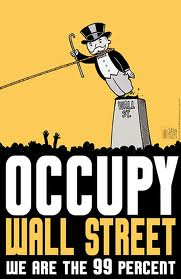 Park on St. Pat’s Day to celebrate the Movement’s six-month anniversary. From on the ground reports, the demonstration was peaceful. Until the NYPD arrived. Then there was trouble—a number of arrests and one woman reportedly had a seizure after she was thrown to the ground and handcuffed. Several participants said it took 17 minutes for the police to react, after which an ambulance was called.
For naysayers, the Occupy Wall St. Movement [OWS], their members and reasons for being were summarily dismissed before they began. Who is the leader of this motley group? journalists and pundits asked repeatedly. What do these people want?
Surprisingly, there is a leader or so I’ve read, someone well known to Occupy organizers but deliberately kept out of public view. As far as what they want? The answer seemed perfectly clear to me at the start because I think it’s what most Americans want or if they don’t want it, they expect it: an end to the gross inequality in the country, for which Wall St. and Government collusion holds the lion’s share of responsibility and an end to ‘bought’ elections, where the 1% and corporate interests routinely choose our leaders, shape policy and control the message, known in polite circles as ‘perception management.’
All of this transcends parties, btw. We’re talking Republican and Democratic parties alike, regardless of how many times we enter the ‘lesser than two evils’ spin.
You don’t need to be a psychic to ‘get’ the OWS message. You don’t even need to be a member of Occupy. All that’s needed is a modicum of alertness, a shaking-off of the trance-inducing distraction and deflection of pundits, media hounds and political operators.
So, what has OWS managed to accomplish, thus far? According to the critics—not a damn thing. But is that really the case?
Last summer, the headlines were ripe with talk of deficits, crushing debt and woe is me. We need a Grand Bargain, wisemen crooned [translation: we need to cut public services]. Somehow, we always have money for foreign adventures, national security, weapons and surveillance equipment. For instance, how many drones will be in American skies by 2020? Hummm. Try 30,000. That’s the Federal Aviation Administration’s rough estimate. The ever popular ‘shop ‘til you drop’ hee-haw isn’t working either, even with the news that ‘average’ Americans are flocking back to restaurant dining. Despite a stumbling economy there is money for weapons and drones and assorted homeland security gear. When it comes to education, infrastructure, home mortgage write downs, decent healthcare, aide to our poor, disabled and elderly? We’re just stone-broke and need to be put on an austerity diet. See Paul Ryan’s reiteration on social program slashes and numbers that don’t add up. It’s a nice set piece that will contrast with the soon-to-come kinder and gentler Democratic version.
One could call the dialogue change a bizarre coincidence but public conversation pivoted after Occupy came on the scene. We went from Oooooo, we need to slash Medicare, Medicaid and refigure Social Security to why is Wall St. getting bailed out on the backs of the taxpayer? Why do we have a system where the profits go to the top income bracket, while risk is carried by Main Street? Why have the wages of middle-class workers[if they’re fortunate enough to still have a job] barely kept pace with inflation, while the top 1% has had a 275% increase in income?
Uncomfortable questions, the sort that make politicians squirm.
OWS has also focused attention on home foreclosures, working with foreclosed families to save their homes. The Movement rallied the public in a Change Your Bank Day strategy that is estimated to cost TBTFs a $185 billion in transfers to community banks and credit unions. Religious organizations have joined the effort. According to Think Progress, The New Bottom Line, a coalition of faith groups has pledged to remove $1 billion from the major banks this year alone. OWS also pushed against the ATM fee-increase proposal; the banks pulled back. In late February, Occupy the SEC submitted a 300+ page document, urging regulators to resist the financial sector’s desire to water down the Volker Rule, part of the Dodd-Frank Wall St. reform. The group that put the document together was comprised of former Wall St. workers. OWS members also stood with private landowners, Tea Party members and environmentalists protesting the Keystone XL pipeline, a project that the President has expressed a new-found love for.
Not too shabby for six months activism. Yet still the critics howl. Where is the direction, what are the goals?
The Movement is young and still developing but you cannot fault it for sitting on its hands. More importantly, the Occupy spirit is global in nature because many activists are ‘graduates without a future’—young, educated and fed up. Paul Mason documented this facet of the worldwide

Arundhati Roy
social/political movements in his book, “Why It’s Kicking Off Everywhere,” and Arundhati Roy wrote this in a recent essay: “Capitalism, A Ghost Story”:
As Gush-Up concentrates wealth on to the tip of a shining pin on which our billionaires pirouette, tidal waves of money crash through the institutions of democracy—the courts, Parliament as well as the media, seriously compromising their ability to function in the ways they are meant to. The noisier the carnival around elections, the less sure we are that democracy really exists.
Sound familiar? The neoliberal model, the gross inequality that rewards the few at the expense of the many has circled the globe, creating universal discontent and misery.
So, what’s coming up for 2012? What will Occupy 2.0 look like?
I’d suggest checking the OWS page here for an updated list of scheduled actions. OWS plans to be in Chicago in mid-May to protest the NATO Summit although the city is throwing up barriers to prevent demonstrations. Somehow, I don’t think the protest will be stopped.
May 1 will be a National Action, the day traditionally known as International Worker’s Day. This year OWS is calling for a General Strike across the country. From the Occupy site:
We are calling on everyone who supports the cause of economic justice and true democracy to take part: No Work, No School, No Housework, No Shopping, No Banking – and most importantly, TAKE THE STREETS!
This Saturday, March 24, a Disrupt Dirty Power protest has been called in NYC to jumpstart a month-long action until Earth Day, April 22. More information here.
Sunday, March 25, Occupy Town Square IV will focus on public parks and other public spaces in NYC. More info here.
If you’re interested in local actions in particular states, towns, cities or countries, info can be found at the Occupy Together site here.
And if you want to eliminate the idea of ‘a failed movement’ from your brain. Check out the participation map here. The scope is massive.
The essay I mentioned by Arundhati Roy is well worth a read—highly informative, even shocking about vulture capitalism’s impact on India. Be prepared, it’s long. As Roy moves into her concluding paragraphs, she writes this:
Capitalism is in crisis. Trickledown failed. Now Gush-Up is in trouble too. The international financial meltdown is closing in. India’s growth rate has plummeted to 6.9 per cent. Foreign investment is pulling out. Major international corporations are sitting on huge piles of money, not sure where to invest it, not sure how the financial crisis will play out. This is a major, structural crack in the juggernaut of global capital.
Capitalism’s real “grave-diggers” may end up being its own delusional Cardinals, who have turned ideology into faith. Despite their strategic brilliance, they seem to have trouble grasping a simple fact: Capitalism is destroying the planet. The two old tricks that dug it out of past crises—War and Shopping—simply will not work.
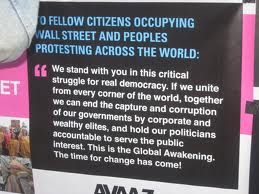
Disaster capitalism has certainly lived up to its name, be it continuous war, environmental degradation or exploding poverty. What is Occupy about? Speaking for myself, Occupy is about a break of faith with a global economic system that serves no one but an elite minority, where infinite money and power is the only morality. The movement is a massive rejection of the ongoing mantra: there’s no other way. Occupy challenges that static position, calls on us to envision something else, something better than the consensus mind. It dares us to shake off the old and embrace a sense of possibility. It demands we wake up, now.
Friday Reads
Posted: March 9, 2012 Filed under: Economy, Global Financial Crisis, House of Representatives, investment banking, Mitt Romney, morning reads, Regulation, religious extremists, Rush Limbaugh | Tags: Dennis Kucinich, Dump Rush, FED, SEC 36 Comments Good Morning!
Well, we’ve always known Pat Robertson was a little off. Reconcile all his throw back ideas about women and the GLBT community with his views on decriminalizing marijuana, I dare you!!
“I really believe we should treat marijuana the way we treat beverage alcohol,” Mr. Robertson said in an interview on Wednesday. “I’ve never used marijuana and I don’t intend to, but it’s just one of those things that I think: this war on drugs just hasn’t succeeded.”
Mr. Robertson’s remarks echoed statements he made last week on “The 700 Club,” the signature program of his Christian Broadcasting Network, and other comments he made in 2010. While those earlier remarks were largely dismissed by his followers, Mr. Robertson has now apparently fully embraced the idea of legalizing marijuana, arguing that it is a way to bring down soaring rates of incarceration and reduce the social and financial costs.
“I believe in working with the hearts of people, and not locking them up,” he said.
Rush has lost at least 50 advertisers after his horrendous, personal attacks on a university student exercising her first amendment rights. Just what kind of advertisers does the big blowhard have left? Well, he’s picked up an online dating service for married people interested in extramarital relations. There’s your family values for you!!!
Advertisers learned something about Rush Limbaugh’s demographic this week.
“Here we thought lots of pleasant, upstanding people were listening to and enjoying the rational things Rush had to say,” dozens of companies said. “Apparently not.”
It turns out that people who really, truly still enjoy Rush Limbaugh’s show are — how do I put this? — jerks.
At least that’s what the new advertisements moving into the vast empty lot of Rush Limbaugh, Inc., implies. “Ah,” you say, as a rat runs over your foot and several people offer payday loans and try to sell you watches from their trench coats. “This place seems to have gone downhill somewhat.”
So far, he’s picked up AshleyMadison.com, the site where you go to cheat on your wife, and another Web site that is explicitly for sugar-daddy matchmaking.
Republicans in the House have basically gone after finance regulators in a way that would basically change one of the major mandates of the Fed’s economic stabilization mandate and the SEC’s ability to police the markets for fraud. The FED suggestions are outrageous. They would completely stop the FED’s ability to stimulate the economy and would change the composition of the FED board from economists to the Bank’s District Presidents who are answerable to their member banks.
The bill, which will be formally introduced later this week by Congressman Brady, would eliminate the employment leg of the dual mandate, requiring the Federal Reserve to focus only on price stability.
The legislation would also restructure the Federal Open Market Committee (FOMC). The bill would give permanent seats on the committee to the twelve regional Federal Reserve bank presidents, who are chosen by regional Federal Reserve Bank directors. Those boards are composed of private citizens.
Yesterday, SEC chairman Mary Schapiro begged Congress to increase the agency’s funding, arguing that “the rapidly expanding size and complexity of the markets presents enormous oversight challenges.” Representative Barney Frank, ranking member of the House Financial Services Committee, offered a bill to provide that funding—and Republicans voted lockstep to trash it.
Republicans on the committee offered the perverse argument that since the SEC has repeatedly suffered oversight breakdowns in the past, it’s not entitled to additional funding. Representative Jo Ann Emerson, a Missouri Republican and member of the House Appropriations Committee, echoed this argument in the hearing with Schapiro yesterday:
“I think this body is reticent to throw more money at the SEC until ya’ll have proven that you have addressed the structural problems from within…in a comprehensive way,” [Emerson said]. “Since 2001, SEC’s budget has increased over 200 percent. Despite this tremendous growth in resources over the past decade, the SEC failed to detect Ponzi schemes such as Madoff and Stanford, the U.S. financial system nearly collapsed, and judges continue to question SEC settlements and regulations.”
Further starving a regulatory agency that’s already clearly unable to handle its massive mission is not a terribly convincing argument—one would have to truly believe the SEC is completely capable of policing Wall Street but simply suffering from “structural problems,” as Emerson asserts. (To give a sense of the very real funding problems, JPMorgan Chase—only one of the 35,000 entities the SEC is tasked with regulating—spends four times the entire SEC budget on information technology alone). But it’s the only argument Republicans have—the SEC is funded entirely by fees from the financial industry, so Republicans can’t carp about the deficit.
None of these folks seem to have any idea about what caused the financial crisis nor how much the underfunding and disabling of regulators and regulators have played into all these problems It’s really disheartening.
Meanwhile, Romney has told a university student that students going to cheap schools they could afford would be better than government student loans. BTW, where are there cheap schools now?
Mr. Romney was perfectly polite to the student. He didn’t talk about the dangers of liberal indoctrination on college campuses, as Rick Santorum might have. But his warning was clear: shop around and get a good price, because you’re on your own.
“It would be popular for me to stand up and say I’m going to give you government money to pay for your college, but I’m not going to promise that,” he said, to sustained applause from the crowd at a high-tech metals assembly factory here. “Don’t just go to one that has the highest price. Go to one that has a little lower price where you can get a good education. And hopefully you’ll find that. And don’t expect the government to forgive the debt that you take on.”
There wasn’t a word about the variety of government loan programs, which have made it possible for millions of students to get college degrees. There wasn’t a word urging colleges to hold down tuition increases, as President Obama has been doing, or a suggestion that the student consider a work-study program.
And there wasn’t a word about Pell Grants, in case the student’s family had a low enough income to qualify. That may be because Mr. Romney supports the House Republican budget, which would cut Pell Grants by 25 percent or more at a time when they are needed more than ever.
Instead, the advice was pretty brutal: if you can’t afford college, look around for a scholarship (good luck with that), try to graduate in less than four years, or join the military if you want a free education.
Robert Scheer writes about Dennis Kucinich who will leave Congress after his term finishes. His district was merged with Marcy Kaptur’s and she won on Tuesday. It’s an interest profile for a quirky politician.
Kucinich never competed in that way. He has been a national symbol of resistance to excessive government power and waste. He also has been a champion of social justice. His has been a rare voice, and one way or another it must continue to be heard. Simply put, when it came to the struggle for peace over war, Dennis was the conscience of the Congress. And he was always at the forefront in defending the rights of unionized workers who once formed the backbone of a solid middle class and who are now threatened with extinction.
Kucinich will surely be back for another turn in public life. As he put it in our Playboy interview:
“I appreciate Woody Allen’s humor because one of my safety valves is an appreciation for life’s absurdities. His message is that life isn’t a funeral march to the grave. It’s a polka.”
What’s on your reading and blogging list today?
Broken Windows And The Stealing Of Hearts
Posted: March 8, 2012 Filed under: Bailout Blues, Banksters, Corporate Crime, corruption, Department of Homeland Security, Domestic Policy, double-speak, Economy, Eric Holder, ethics, financial institutions, George W. Bush, Global Financial Crisis, indefinite detention, Injustice system, Patriot Act, The Bonus Class, The Great Recession, torture, U.S. Economy 21 Comments Yesterday I read an interesting essay by William Black over at New Economic Perspectives. In the essay, Black, who headed the forensic audit team during the S&L crisis, pulls forward the Broken Window Theory, a criminological model based on a simple and some have said simplistic idea. The theory was introduced by James Q. Wilson and received a fair amount of popularity during the 1990s, particularly in conservative circles.
Readers might remember Rudy Giuliani’s ‘war against graffiti,’ his zero-tolerance campaign in NYC. That effort, the elimination of the squeegee men and the crack down on street prostitution among other things were based on the broken window philosophy, which uses an abandoned building metaphor.
Imagine a building in any neighborhood [although Wilson focused exclusively on what he termed ‘blue-collar crime.’] The first broken window of our abandoned building if left unrepaired sends a clear message to antisocial types: no one cares about this building. So, it’s open season on all the other windows, on anything of value that’s been left behind. If the owner doesn’t care about the integrity of the building then the street tough is encouraged to vandalize and take whatever’s not nailed down.
The attitude feeds on itself or so the theory goes. Honest citizens are less likely to confront the petty thief, which only encourages others to act out in destructive, antisocial ways. Honest citizens begin to feel overwhelmed and outnumbered and stop safeguarding their own neighborhoods. What’s the point? they say. No one cares. Communities begin to self-destruct.
Now whether you buy into this crime theory or not, I think the metaphor holds when you consider what we’ve been witnessing in the degradation of our financial markets, our legal system, even the refusal to admit that ‘there’s trouble in River City.’
As Professor Black points out, if we were to take Wilson’s theory and apply it to the explosion of ‘white collar crime’ within our financial system, it would be a major step in restoring the integrity of our system and bolstering peer pressure against misconduct. As it stands now, Wall Street movers and shakers and their DC handmaidens have implemented business-as-usual policies that reward the thief and punish the whistleblower. As Black points out in the essay:
We have adopted executive and professional compensation systems that are exceptionally criminogenic. We have excused and ignored the endemic “earnings management” that is the inherent result of these compensation policies and the inherent degradation of professionalism that results from allowing CEOs to create a Gresham’s dynamic among appraisers, auditors, credit rating agencies, and stock analysts. The intellectual father of modern executive compensation, Michael Jensen, now warns about his Frankenstein creation. He argues that one of our problems is dishonesty about the results. Surveys indicate that the great bulk of CFOs claim that it is essential to manipulate earnings. Jensen explains that the manipulation inherently reduces shareholder value and insists that it be called “lying.” I have seen Mary Jo White, the former U.S. Attorney for the Southern District of New York, who now defends senior managers, lecture that there is “good” “earnings management.”
My husband had some unsettling experience in this area. Early in his career, he worked as a CPA [the two companies will remain nameless]. But in each case, he was ‘asked’ to clean up the numbers, make them look better than they were. He refused and found himself on the street, looking for employment elsewhere. I remember him saying at the time, ‘Look, I’m a numbers guy. I’ve never been good at fiction writing.’ This was back in the late 70s early 80s, so this attitude has been a long time in the making. Now, we’re seeing accounting fraud that is literally off the charts. Is it any wonder the country’s financial system is on life support?
We can see the destructive results of this careless, corrupt posturing all around us. Professor Black continued:
Fiduciary duties are critical means of preventing broken windows from occurring and making it likely that any broken windows in corporate governance will soon be remedied, yet we have steadily weakened fiduciary duties. For example, Delaware now allows the elimination of the fiduciary duty of care as long as the shareholders approve. Court decisions have increasingly weakened the fiduciary duties of loyalty and care. The Chamber of Commerce’s most recent priorities have been to weaken Sarbanes-Oxley and the Foreign Corrupt Practices Act. We have made it exceptionally difficult for shareholders who are victims of securities fraud to bring civil suits against the officers and entities that led or aided and abetted the securities fraud. The Private Securities Litigation Reform Act of 1995 (PSLRA) has achieved its true intended purpose – making it exceptionally difficult for shareholders who are the victims of securities fraud to bring even the most meritorious securities fraud action.
Reading this, I immediately sensed we could apply the metaphor just as easily to our legal predicament. Dak wrote to this yesterday—about the disheartening disrepair of our justice system, which was badly wounded during the Bush/Cheney years with the help of eager lawyers like John Yoo, stretching, reinterpreting, rewriting the parameters on the subjects of torture, indefinite detention, rendition, etc.
Not to be outdone, Eric Holder stood before Northwestern University’s Law School the other day and with the same twisted logic, explained away due process, otherwise known as ‘how to justify assassination.’ In this case, American citizens, those the President deems are a threat to the Nation, can be killed on native ground or foreign soil. Jonathon Turley, law professor at George Washington University and frequent legal commentator in the media, headed a recent blog post as follows: Holder Promises to Kill Citizens with Care.
Sorry, this does not make me feel better. What it does make me think is lawlessness simply breeds more lawlessness. The Broken Window theory writ large. As Turley explained:
The choice of a law school was a curious place for discussion of authoritarian powers. Obama has replaced the constitutional protections afforded to citizens with a “trust me” pledge that Holder repeated yesterday at Northwestern. The good news is that Holder promised not to hunt citizens for sport.
Holder proclaimed that “The president may use force abroad against a senior operational leader of a foreign terrorist organization with which the United States is at war — even if that individual happens to be a U.S. citizen.” The use of the word “abroad” is interesting since senior Administration officials have asserted that the President may kill an American anywhere and anytime, including the United States. Holder’s speech does not materially limit that claimed authority. He merely assures citizens that Obama will only kill those of us he finds abroad and a significant threat. Notably, Holder added “Our legal authority is not limited to the battlefields in Afghanistan.”
Turley went on to comment that Holder was vague, to say the least, when it came to the use of these ‘new’ governmental/executive powers, claiming that the powers-that-be will only kill citizens when:
“the consent of the nation involved or after a determination that the nation is unable or unwilling to deal effectively with a threat to the United States.”
And as far as ‘due process?” Holder declared that:
“a careful and thorough executive branch review of the facts in a case amounts to ‘due process.’”
Chilling! As Turley grimly noted in an earlier post, this is no longer the land of the free.
Seemingly unrelated was this report from the New York Times: the heart of Dublin’s 12th-century patron saint was stolen earlier this week from Christ’s Church Cathedral. The heart of Laurence O’Toole had been housed in a heart-shaped box, safely secured [or so church authorities believed] within an iron cage. The relic’s disappearance was preceded by a rash of reliquary robberies from churches, monasteries and convents around Ireland. According to the article:
The small cage hosting the heart-shaped box containing the relic was tucked away in an innocuous alcove at the side of a small altar. Visitors to the cathedral on Monday stared at the twisted bars and the empty space behind. The bars themselves were sundered evenly.
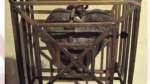
According to Dermot Dunne, dean of Christ Church, the box had lain undisturbed for centuries. He had no idea why someone would take it.
Whether it’s the heart of a saint or the heart of a Nation, the theft is a grievous insult. The crime betrays the public trust and our basic sense of decency. But the thieves of O’Tooles’s heart performed a curious act before exiting.
The Irish culprits lit candles at two of the Cathedral’s altars. Which means the perpetrators possessed, at the very least, an ironic sense of tradition.
The same cannot be said of our homegrown hooligans. Crass greed and the lust for unlimited power have their own dark tradition. As Americans, we do not expect vice to be confused with virtue. In the past, we could not imagine a blatant disrespect for the Rule of Law–crimes ignored, excused, then openly declared necessary for whatever raison du moment.
Not here, we told ourselves repeatedly. Not in the United States.
Perhaps, we should light candles of our own. A small devotion for the lost and dying.


 peej
peej Carissa
 bostonboomer
 dakinikat
 ecocatwoman
 mablue2
 Mama Lopez
 peggysue22
 quixote
 skydancingguestblogger
 Mona (aka Wonk the Vote)



 Sky Dancing
Recent Comments