
Was the Embassy Assault a Planned Attack?
Posted: September 12, 2012 Filed under: 2012 presidential campaign, Egypt, Israel, Libya | Tags: conspiracy, Likkud, NeoCons, psyops, Sam Bacile 82 CommentsWe’re beginning to hear more interesting news about how an obscure, bad, insulting–but expensive–film made its way to Egypt and how the seemingly related US embassy assault in Libya may have been a 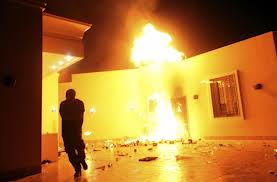 planned attack. Curiouser and curiouser sez Alice. Some are even suggesting this may be a false flag psyops on the part of Israeli and US neocons to prop up the miserably flailing Romney jerk-a-thon. I noted in my previous post how neocons are dying to start a war with Iran and have been so obvious that the Israeli opposition party leader Shaul Mofaz asked Bibi Netanyahu “Who are you trying to replace? The Administration in Washington or in Tehran?”
The Obama administration suspects that the fiery attack in Libya that killed the American ambassador and three other diplomats may have been planned rather than a spontaneous mob getting out of control, American officials said Wednesday.
Officials in Washington studying the events of the past 24 hours have focused on the differences between the protests at the American embassy in Cairo and the attack on the consulate in Benghazi, the Libyan city where Ambassador J. Christopher Stevens and the other Americans were killed.
The protesters in Cairo appeared to be a genuinely spontaneous unarmed mob angered by an anti-Islam video said to have been produced in the United States. By contrast, it appeared the attackers in Benghazi were armed with mortars and rocket-propelled grenades. Intelligence reports are inconclusive at this point, officials said, but indications suggest the possibility that an organized group had either been waiting for an opportunity to exploit like the protests over the video or perhaps even generated the protests as a cover for their attack.
Would they actually try to blame Al Quada for an operation that could have entirely different roots?
So, there are some interesting entrails found in the mystic and real search for Sam Bacile–an anagram for Cabal is Me–the figure supposedly behind the Terry Jones pushed, anti-Muslim movie that started a series of protests in Egypt and other Muslim countries. Jeffrey Goldberg of The Atlantic is leading a pack of journalists who are trying to determine his real identity and his real purpose.
As part of my search for more information about Sam Bacile, the alleged producer of the now-infamous anti-Muhammad film trailer “The Innocence of Muslims,” I just called a man named Steve Klein — a self-described militant Christian activist in Riverside, California (whose actual business, he said, is in selling “hard-to-place home insurance”), who has been described in multiple media accounts as a consultant to the film.
Klein told me that Bacile, the producer of the film, is not Israeli, and most likely not Jewish, as has been reported, and that the name is, in fact, a pseudonym. He said he did not know “Bacile”‘s real name. He said Bacile contacted him because he leads anti-Islam protests outside of mosques and schools, and because, he said, he is a Vietnam veteran and an expert on uncovering al Qaeda cells in California. “After 9/11 I went out to look for terror cells in California and found them, piece of cake. Sam found out about me. The Middle East Christian and Jewish communities trust me.”
Klein told me that Bacile, the producer of the film, is not Israeli, and most likely not Jewish, as has been reported, and that the name is, in fact, a pseudonym. He said he did not know “Bacile”‘s real name. He said Bacile contacted him because he leads anti-Islam protests outside of mosques and schools, and because, he said, he is a Vietnam veteran and an expert on uncovering al Qaeda cells in California. “After 9/11 I went out to look for terror cells in California and found them, piece of cake. Sam found out about me. The Middle East Christian and Jewish communities trust me.”
He said the man who identified himself as Bacile asked him to help make the anti-Muhammad film. When I asked him to describe Bacile, he said: “I don’t know that much about him. I met him, I spoke to him for an hour. He’s not Israeli, no. I can tell you this for sure, the State of Israel is not involved, Terry Jones (the radical Christian Quran-burning pastor) is not involved. His name is a pseudonym. All these Middle Eastern folks I work with have pseudonyms. I doubt he’s Jewish. I would suspect this is a disinformation campaign.”
Cannonfire even suggests that it may be a psyops campaign. Supposedly, the elusive Bacile is ‘hiding out’.
Bacile, a California real estate developer who identifies himself as an Israeli Jew, said he believes the movie will help his native land by exposing Islam’s flaws to the world. “Islam is a cancer, period,” he said repeatedly, his solemn voice thickly accented.
The two-hour movie, Innocence of Muslims, cost $5 million to make and was financed with the help of more than 100 Jewish donors, said Bacile, who wrote and directed it. The film claims Muhammad was a fraud. The14-minute trailer of the movie that reportedly set off the protests, posted on the website YouTube in an original English version and another dubbed into Egyptian Arabic, shows an amateur cast performing a wooden dialogue of insults disguised as revelations about Muhammad, whose obedient followers are presented as a cadre of goons. It depicts Muhammad as a feckless philanderer who approved of child sexual abuse, among other overtly insulting claims that have caused outrage.
Muslims find it offensive to depict Muhammad in any manner, let alone insult the prophet. A Danish newspaper’s 2005 publication of 12 caricatures of the prophet triggered riots in many Muslim countries.
Though Bacile was apologetic about the American who was killed as a result of the outrage over his film, he blamed lax embassy security and the perpetrators of the violence. “I feel the security system (at the embassies) is no good,” said Bacile. “America should do something to change it.”
A consultant on the film, Steve Klein, said the filmmaker is concerned for family members who live in Egypt. Bacile declined to confirm.
Again, the Bacile facade appears to be unravelling. Adrien Chen of gawker calls him a “ghost”. Perhaps “spook” is a better moniker.
If Bacile isn’t Jewish, perhaps he’s connected instead to the Copts, the Egyptian Christian sect. The film has been promoted by the conservative U.S.-based Coptic minister (and friend of Terry Jones) Maurice Sadek. Bacile says he speaks Arabic and has relatives in Egypt, according to Klein—even though “fewer than 100 Jewish people” live in Egypt, according to journalist Laura Rozen.
Why did Bacile pretend to be an Israeli Jew? Maybe he cooked up the persona and shadowy cabal of Jewish funders in an attempt to further inflame the situation. The only thing we know for sure about Bacile: He’s a terrible filmmaker.
Klein, by the way, was profiled by the Southern Poverty Law Center, which describes him as an “extremist” who has led anti-Muslim protests.
“In 1977, he founded Courageous Christians United, which now conducts ‘respectful confrontations’ outside of abortion clinics, Mormon temples and mosques,” the SPLC reports. “Klein also has ties to the Minuteman movement. In 2007, he sued the city of San Clemente for ordering him to stop leafleting cars with pamphlets opposing illegal immigration.”
I’ve just been pointed to this Right Wing Watch page by reader pdgrey.
Morris Sadek, an Egyptian-American anti-Muslim activist, managed in one week’s time to take an overlooked YouTube video featuring a lame attack on Islam and turn it into a flashpoint with violent extremists, with deadly consequences. As the New York Times reported last night, Sadek drew attention to the obscure video clip “in an Arabic-language blog post and an e-mail newsletter in English publicizing the latest publicity stunt of the Florida pastor Terry Jones, reviled in the Muslim world for burning copies of the Koran.” Within days the clip was making the rounds in Egypt, prompting denunciations from politicians and generating press coverage, and culminating in protests and a deadly attack in Libya.
Sadek, who has worked with Jones in the past, says he is fighting for the rights of his fellow Coptic Christians in Egypt. Unfortunately he seems much more focused on attacking Muslims than helping the Copts. Sadek pulled his Facebook profile around 1 pm today, but we were able to take a look beforehand. Here’s what we found.Sadek is a supporter of ACT! for America, which believes that President Obama has embraced the Muslim Brotherhood. The group rallied its supporters last month behind Michelle Bachmann’s anti-Muslim witch hunt against Huma Abedin and others. Here’s Sadek with ACT! For America president Brigitte Gabriel at one of the group’s 2010 events.Sadek is a man of many interests. He’s a member of these groups, among many others: Islam is of the Devil, Warriors of Christ, and OBAMA IS THE WORST PRESIDENT EVER! Agree?. Sadek is also a fan of the Republican Party, George Bush, Allen West (for president no less!), and number of other Islamophobic, conservative and/or Republican institutions and leaders.
Cannonfire and other folks in the film business cannot believe that $5 million was spent on the film. This begs the question “where did the money go”?
Though Bacile claims he spent $5 million on the movie — a figure that would put the film’s on par with the Toronto festival entrant Julianne Moore-starrer What Maisie Knew — the 13 minutes of footage available online look unprofessional. Furthermore, Bacile has virtually no footprint in the Hollywood community. The writer-director-producer has no agent listed on IMDBPro and no credits on any film or TV production.”
So, Joseph thinks this. I actually think this is a possibility. Read my previous post on the NEOCON and BIBI hakas. Romney has promised them a war. Obama seems unlikely to start another one given he just would up one and is trying to wind up a second one.
You would have to be a child not to understand what’s really going on here. This is the most obvious psyop conspiracy I’ve ever seen.
Neocons in America and Israel concocted this plot long ago. I would stake my life on it.
We can state with the certainty of a geometrical proof that Sam Bacile is a Mossad asset — a “sayan” — and that he did what he did under orders, not of his own initiative. The motive is transparent: Likudniks want the United States to attack Iran, and they know that Obama won’t do it. Romney will. He has made that point very clear. Thus, Israeli war hawks concocted a plan to make sure Romney gets into office.
The conspirators made this film for the express purpose of provoking a violent reaction, which would, in turn give the Republicans a political cudgel to wield against the president.
I do not doubt for a second the presence of provocateurs on the ground in Cairo and Libya. (How did they even know about the YouTube clip?) I also believe that this plan would have remained “on hold” if Romney had attained a comfortable lead.
I’m pretty sure that CIA had nothing to do with this. Only Israeli intelligence is so reckless.
So, the next question is this. Was Libya really an “Al Quada” thing or perhaps something else? Does some one want to see the change of the Guard back to the good ol’ days of Rommie, Wolfie, and Bolton? Was this an attempt at a September Surprise that is going terribly wrong? Are these all ‘actors’ of sorts wearing topaz bronze make up and hoping for either the “end days” or the Likkud vision of the Middle east?
A Crisis made worse by Religious Nuts and Political Dunces
Posted: September 12, 2012 Filed under: 2012 elections, Egypt, Libya | Tags: ambassador Chris Stevens, Benjamin Netanyahu, NeoCons, Religious whackos, right wing religious extremism, Terry Jones 93 CommentsWe’re all still trying to unravel the reasons and events unfolding in Cairo and Libya. The basics point to religious fundamentalism here and abroad fueled by irrational hate that’s being cynically exploited by politicians  riding religious zealotry and bigotry to headlines. We have a nexus of religions that hate and politicians that thrive on hate. It’s beyond disturbing.
First, we have a two religious extremists in the United States that produced and/or promoted a “movie” that shows a competitor religion in such an offensive light that it sets off the religious extremists in the other religion. Florida Christian whack job Terry Jones is well know for his adventures in Koran-burning.He’s been promoting a movie that vilifies Egyptian Muslims. You can see bits and pieces of it at The Atlantic and read about some of the highly offensive content.
The movie is called Innocence of Muslims, although some Egyptian media have reported its title as Mohammed Nabi al-Muslimin, or Mohammed, Prophet of the Muslims. If you’ve never heard of it, that’s because most of the few clips circulating online are dubbed in Arabic. The above clip, which is allegedly from the film (update: Kurt Werthmuller, a Coptic specialist at the Hudson Institute, says he’s confirmed the clip’s authenticity) is one of the only in English.* That’s also because it’s associated with Florida Pastor Terry Jones (yes, the asshole who burnt the Koran despite Defense Secretary Robert M. Gates’ pleas) and two Egyptians living in the U.S., according to Egyptian press accounts.* The Egyptians are allegedly Coptic, the Christian minority that makes up about a tenth of Egypt.
Obviously, there’s a lot to this story that’s still unclear. What we do know is that some members of Egypt’s sometimes-raucous, often rumor-heavy media have been playing highly offensive clips from the highly offensive film, stressing its U.S. and Coptic connections. In the clip below, controversial TV host Sheikh Khaled Abdallah (known for such statements as “Iran is more dangerous to us than the Jews” and that Tehran had engineered a deadly soccer riot in Port Said) hypes the film as an American-Coptic plot and introduces what he says is its opening scene.
As the fervor has built, both the Coptic Church and the U.S. embassy to Egypt issued formal condemnations of the film. The latter, made just this morning, began, “The Embassy of the United States in Cairo condemns the continuing efforts by misguided individuals to hurt the religious feelings of Muslims.” The statement also noted the September 11 anniversary, adding, “Respect for religious beliefs is a cornerstone of American democracy.”
I won’t print the descriptions of some of the most offensive things, you can go read it at the link. This is what set off the riots at the Cairo Embassy and has now led to the death of a US ambassador and 3 other diplomats in Libya.
Libya, J. Christopher Stevens, was killed along with three of his staff members in a fiery and furious attack on the American Consulate in Benghazi on Tuesday night by an armed mob angry over a short American-made video mocking Islam’s founding prophet, the White House and Libyan officials said on Wednesday.
President Obama strongly condemned the killings and ordered increased security at American diplomatic posts around the world. American defense officials said 50 Marines were en route to Libya to strengthen security at United States diplomatic facilities.
The death of Ambassador Stevens was the first of an American envoy abroad in more than two decades.
“These four Americans stood up for freedom and human dignity,” Mr. Obama said in a televised statement from the White House Rose Garden where he stood side-by-side with Secretary of State Hillary Rodham Clinton. “Make no mistake: we will work with the Libyan government to bring to justice the killers who attacked our people.”
Mr. Obama also offered praise for the Libyan government, noting that Libyan security forces fought back against the mob, helped protect American diplomats and took Mr. Stevens’s body to the hospital. “This attack will not break the bonds between the United States and Libya,” he said.
Enter the right wing kooks and we now see how extremely offensive and extremely connected to religious extremists that some of our own politicians can be. We’re seeing this from two sources of extremely unhelpful people. The first is Netanyahu who is under increasing criticism from the opposition in Israel for “wagging the dog” and being more interested in ‘regime change’ in the US than in Iran. (“Who are you trying to replace?” Shaul Mofaz asked Bibi Netanyahu. “The Administration in Washington or in Tehran?”) Netanyahu has invented a snub by Obama out of whole cloth and seems to be pressing the case for Romney who has pretty much guaranteed he’d join in a war against Iran and who knows else in the Middle east.
The Israeli newspaper Haaretz reported that the White House had declined the Israeli government’s request for a meeting on the sidelines of a U.N. confab later this month in New York City. The White House cited a scheduling problem, but denied reports that they had refused to meet with Netanyahu in New York.
“Contrary to reports in the press, there was never a request for Prime Minister Netanyahu to meet with President Obama in Washington, nor was a request for a meeting ever denied,” the White House said.
The US and Israeli right wing press has gone crazy-go-nuts over another complete fabrication about Obama’s love of Muslim countries and distaste for poor little Israel and its leader’s lust for all out war in the middle east. Read this analysis of NeoCon Benjamin Netanyahu at The New Yorker.
In his first term as Prime Minister, in the nineties, Netanyahu used to behave in such a high-handed way with White House officials that Bill Clinton left meetings with him bewildered and bemused, wondering who, in their relationship, was the leader of a superpower. But Netanyahu’s arrogance, in the guise of Churchillian prescience, has hardly receded over the years. Obama, in an attempt to cool the latest crisis, called Netanyahu last night and spent an hour talking with him.
Adding to the outrage is the fact that Netanyahu is performing not just for his allies on the Israeli right but for those he perceives as his allies on the American right, including those in the Jewish community. His performance is in the same neocon voice as the one adopted by the Romney campaign and in its opportunistic reaction to the attacks on the U.S. diplomatic outposts in Cairo and Benghazi, which left our Ambassador to Libya, Christopher Stevens, and three other consular employees dead. Unbelievably, the Republican National Committee chairman, Reince Priebus, took to Twitter and wrote, “Obama sympathizes with attackers in Egypt. Sad and pathetic.” Romney himself accused Obama of sympathizing with the attackers in Libya.
The neocon strategy, in both Israel and the U.S., is to paint Obama as naïve in the extreme. In this, Netanyahu and Romney are united—and profoundly cynical.
Meanwhile, enter our Republican whack jobs and the completely feckless and worthless bubble boy, Netanyahu fan boi, Mitt Romney. How can one person have so much money and be so clueless about so many things? This analysis is by Josh Marshall at TPM.
As noted, we have two simultaneous crises washing over Washington tonight from the Middle East. First, the US-Israel blow up, which I discussed below. Next, riots which escalated into full-scale attacks on US embassies in Cairo and Benghazi, triggered by another stunt by Quran-burning ‘pastor’ Terry Jones down in Florida.
A State Department officer was actually killed in the attack on the compound in Benghazi.
In the midst of this, the Romney campaign put out this statement …
“I’m outraged by the attacks on American diplomatic missions in Libya and Egypt and by the death of an American consulate worker in Benghazi. It’s disgraceful that the Obama administration’s first response was not to condemn attacks on our diplomatic missions, but to sympathize with those who waged the attacks.”So Romney jumps to politicize a genuine crisis in which a Foreign Service Officer has been killed. And the attack itself is based on a falsehood. The reference is to a statement released by the Embassy in Egypt which in fact came out before the attacks took place. The entire thing is based on a lie. Here’s our full story.
In a statement Tuesday night, Mitt Romney accused the Obama administration of sympathizing with the Libyan protesters who attacked a consulate in Benghazi, killing the U.S. ambassador and three other American diplomats.
“I’m outraged by the attacks on American diplomatic missions in Libya and Egypt and by the death of an American consulate worker in Benghazi,” Romney said. “It’s disgraceful that the Obama Administration’s first response was not to condemn attacks on our diplomatic missions, but to sympathize with those who waged the attacks.”
Romney’s remarks came before the White House confirmed Wednesday morning that U.S. ambassador to Libya, John Christopher Stevens, was among those killed in the Benghazi attack.
Romney foreign policy adviser Rich Williamson told Foreign Policy magazine Tuesday evening, before the deaths were reported, that the attacks were related to Obama’s “failure to be an effective leader for U.S. interests in the Middle East.”
Romney has often tried to sharpen the contrast between his foreign policy and Obama’s by arguing that the president is apologetic towards America’s enemies.
Obama spokesman Ben LaBolt responded a few hours later that it was Romney who was out of line. “We are shocked that, at a time when the United States of America is confronting the tragic death of one of our diplomatic officers in Libya, Governor Romney would choose to launch a political attack,” he said
I guess Romney doesn’t consider SOS Hillary Clinton to be a part of the Obama administration or something. This is the next paragraph in the WAPO article cited above.
Secretary of State Hillary Clinton condemned the attack “in the strongest terms,” adding that while the United States “deplores any intentional effort to denigrate the religious beliefs of others … there is never any justification for violent acts of this kind.” Wednesday morning, Obama released his own statement condemning “the outrageous attack.”
On the longer-term temperamental politics, this is a very vivid example of what people mean when they talk about “the 3 a.m. phone call.” In these next few hours let us look very carefully at the first-reaction quick responses, and then the considered second-take positions, by the two candidates.* One or the other of them will be in charge of U.S. response to similar inevitable-surprise episodes in the next four years.
His article also reviews some of the various media responses to Romney’s stupid comments. This one is on the Fox Propaganda Network.
Have just seen Jeffrey Goldberg’s report on an immediate response from the Romney camp. That is revealing and not encouraging. On the other hand, I am watching Fox & Friends right now to see how they are presenting things. They’ve just finished with a foreign-policy expert who urged Romney to stand down for a day or so. She says, “I am a hawk, but this is not the time to politicize the issue.”
Update-update. Here is the New York Times report on the Romney response Jeff Goldberg is referring to. Read this carefully. It is a “midnight phone call” rather than 3 am, but this tells me something:
Bracing for trouble before the start of the protests here and in Libya, the American Embassy released a statement shortly after noon that appeared to refer to Mr. Jones [the idiotic Koran-burning “pastor” Terry Jones]: “The United States Embassy in Cairo condemns the continuing efforts by misguided individuals to hurt the religious feelings of Muslims — as we condemn efforts to offend believers of all religions.” It later denounced the “unjustified breach of our embassy.”Apparently unaware of the timing of the first embassy statement, the Republican presidential candidate, Mitt Romney, put out a statement just before midnight Tuesday saying, “It’s disgraceful that the Obama administration’s first response was not to condemn attacks on our diplomatic missions, but to sympathize with those who waged the attacks.” Mr. Romney also said he was “outraged” at the attacks on the embassy and consulate.
I’m sure we’ll be hearing more about all of this for some time. I know two things. I’m rooting for the Israeli Opposition and our State Department. The last thing we need is for a bunch of lying war thumping neocons to start pushing lies again and drag us into the Religious Fantastic’s wet dream of the so-called ‘end times’. Pray that the cooler minds prevail and the others STFU. The last thing we need is shameless exploitation of religious bigotry by folks whose voting base is filled with folks who would like to rid the world of all religions but their own.
Friday Reads
Posted: August 3, 2012 Filed under: Mitt Romney, morning reads, Syria | Tags: Chavis Carter, Harry Reid, Jonesboro Police, Kofi Annan, Nobody likes Mitt Romney, Romney's taxes 53 CommentsGood Morning!
I want to start with something high-minded today since so much of the political news is the usual crazy season gutter stuff. Kofi Annan has quit his positions at the UN and has left some departing advice at the FT on what to do with disintegrating situation in Syria. As you may know, Syria has real chemical weapons. The regime is committing atrocities and coming apart at the seams. It’s a very disturbing situation. We may have to act just make sure that the very dangerous stockpiles don’t fall into terrorist hands or the hand of a rogue regime. This time, we should act, however, with more than a handful of lapdog allies and with clear support from the Arab League. Hopefully, our commitment would be limited.
Military means alone will not end the crisis. Similarly, a political agenda that is neither inclusive nor comprehensive will fail. The distribution of force and the divisions in Syrian society are such that only a serious negotiated political transition can hope to end the repressive rule of the past and avoid a future descent into a vengeful sectarian war.
For a challenge as great as this, only a united international community can compel both sides to engage in a peaceful political transition. But a political process is difficult, if not impossible, while all sides – within and without Syria – see opportunity to advance their narrow agendas by military means. International division means support for proxy agendas and the fuelling of violent competition on the ground.
This is why I have consistently sought to help the international community to work together to end this destructive dynamic and to focus the minds of the parties on the ground into engaging in a political process. Early in my mandate we won international backing for this, with Security Council resolutions, which authorised UN military observers to deploy in Syria. After a ceasefire on April 12, contrary to some claims, the government’s shelling of civilian communities stopped, demonstrating the impact this unity could have.
Sustained international support did not follow, however. The ceasefire quickly unravelled and the government, realising there would be no consequences if it returned to an overt military campaign, reverted to using heavy weapons on towns. In response I sought to re-energise the drive for unity in June by creating the international Action Group for Syria, establishing a framework for a transition to support Syrians’ efforts to move to a transitional governing body with full executive powers. Transition means a managed but full change of government – a change in who leads Syria and how.
On the Jane Velez Mitchell show Wednesday evening, Jonesboro Police Chief Michael Yates revealed more details about the ongoing investigation into the strange case of Chavis Carter, who allegedly shot himself in the temple while handcuffed in a police car. The chief, who said the situation was “bizarre” and “defies logic at first glance,” has reviewed the car’s dashboard camera and spoken to witnesses who say the officers were outside the car when Carter was shot:
YATES: There’s no indication of any projectiles coming from outside the vehicle. We’ve reviewed the dashcam video and as late as today managed to have some witnesses come forward that observed the incident from start to finish. And their statements tend to support that whatever transpired in the back of that police car transpired in the back with the officers in a different location.
In a private meeting with local black community leaders, Yates reportedly said the FBI is also involved in the investigation.
Here’s the police take on the alleged suicide.
Police said he committed suicide with a gun officers failed to find when they searched him. His family members said they believe he was killed by police who are attempting to cover it up.
Carter suffered a single, fatal gunshot wound to the head. He was detained on Saturday night following a traffic stop in Jonesboro, about 2 1/2 hours north of Little Rock, after officers said they found marijuana and empty baggies. Officers searched him twice, handcuffed him and placed him in the back of a police car, police said. Not long after, police said, he was found slumped over, with his head in his lap and a gunshot wound to the head.
“We’ve been asked to get involved,” Kim Brunell, a spokeswoman for the FBI’s Little Rock office, told The Huffington Post on Thursday. The bureau’s ballistics experts will join the probe, she said.
Police said Carter retrieved a gun that he’d concealed, raised it to his head and pulled the trigger. A clear case of suicide, they said. The handcuffs, they said, were “double locked.”
“Any given officer has missed something on a search, you know, be it drugs, be it knives, be it razor blades,” Sgt. Lyle Waterworth of the Jonesboro police told a local news station. “This instance, it happened to be a gun.”
Several calls to the Jonesboro Police Department were not returned. But Chief Michale Yates told Jane Velez Mitchell on HLN that the death is “definitely bizarre and defies logic at first glance.”
The police report shows that the young black man had $10 of pot on him at the time of arrest and that was about it.
By a 52% to 37% margin, more voters say they have an unfavorable than favorable view of Mitt Romney. The poll, conducted prior to Romney’s recent overseas trip, represents the sixth consecutive survey over the past nine months in which his image has been in negative territory. While Romney’s personal favorability improved substantially between March and June – as Republican voters rallied behind him after the primary season ended– his image has again slipped over the past month.
Barack Obama’s image remains, by comparison, more positive – 50% offer a favorable assessment of the president, 45% an unfavorable one. Even so, Obama’s personal ratings are lower than most presidential candidates in recent elections.
A review of final pre-election surveys of voters since 1988 finds that all candidates enjoyed considerably higher personal ratings going into the final days of their campaigns than does Mitt Romney currently. In fact, only three, Michael Dukakis in 1988, George H.W. Bush in 1992 and Bob Dole in 1996, were not rated favorably by a majority of voters.
Even Nate Silver’s analysis gives Obama a huge edge in the electoral college count.
Barack Obama’s standing in the FiveThirtyEight forecast reached its strongest position to date on Tuesday as a result of favorable polls in a set of swing states. The forecast model now gives Mr. Obama a 70.8 percent chance of winning the Electoral College, up from 69.0 percent on Monday and from 65.0 percent last Tuesday.
Three of the polls were conducted by Quinnipiac University in conjunction with The New York Times and CBS News. The polls gave Mr. Obama leads of 6 points in each of Ohio and Florida, and an 11-point lead in Pennsylvania.
In each state, the polls are at the high end of the range of numbers produced by other polling firms. As we frequently advise, no one set of polls — no matter how reputable the pollster — should be read as gospel. Differences in the numbers from survey firm to survey firm often reflect sampling error or methodological differences rather than any fundamental change in the condition of the race.
Nevertheless, Ohio and Pennsylvania polls are part of a consensus of polls showing Mr. Obama ahead in these states by varying margins. Mr. Obama has led 11 of the 13 polls in Ohio since May 1, and he has led all 11 polls conducted in Pennsylvania during this period.
The Florida polls have been more equivocal: Mr. Obama has held 10 leads, versus six for Mitt Romney.
There is a controversy because the Republican presidential nominee, Governor Mitt Romney, refuses to release his tax returns. As I said before, I was told by an extremely credible source that Romney has not paid taxes for ten years. People who make as much money as Mitt Romney have many tricks at their disposal to avoid paying taxes. We already know that Romney has exploited many of these loopholes, stashing his money in secret, overseas accounts in places like Switzerland and the Cayman Islands.
“Last weekend, Governor Romney promised that he would check his tax returns and let the American people know whether he ever paid a rate lower than 13.9 percent. One day later, his campaign raced to say he had no intention of putting out any further information.
“When it comes to answering the legitimate questions the American people have about whether he avoided paying his fair share in taxes or why he opened a Swiss bank account, Romney has shut up. But as a presidential candidate, it’s his obligation to put up, and release several years’ worth of tax returns just like nominees of both parties have done for decades.
“It’s clear Romney is hiding something, and the American people deserve to know what it is. Whatever Romney’s hiding probably speaks volumes about how he would approach issues that directly impact middle-class families, like tax reform and the economy. When you are running for president, you should be an open book.
“I understand Romney is concerned that many people, Democrats and Republicans, have been calling on him to release his tax returns. He has so far refused. There is only one thing he can do to clear this up, and that’s release his tax returns.”
Romney thinks that he doesn’t have to prove Reid wrong. What a patronizing ass!
Mitt Romney on Thursday said Senate Majority Leader Harry Reid (D-Nev.) needs to “put up or shut up” when it comes to charges the presumptive GOP nominee did not pay his taxes.
Romney also accused the White House of being behind the allegation.
“It’s time for Harry to put up or shut up,” Romney said on Sean Hannity’s radio show. “Harry’s going to have to describe who it is he spoke with because that’s totally and completely wrong. It’s untrue, dishonest and inaccurate. It’s wrong. So I’m looking forward to have Harry reveal his sources and we’ll probably find out it’s the White House.”
The reason Romney’s plan doesn’t work is very simple. The size of the tax cut he’s proposing for the rich is larger than all of the tax expenditures that go to the rich put together. As such, it is mathematically impossible for him to keep his promise to make sure the top one percent keeps paying the same or more.
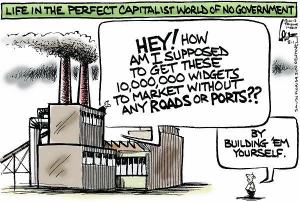
Romney is reintroducing the five elements of his tax plan: energy independence, skills development, trade that works for America, deficit reduction and championing small business. He has proposed reducing tax rates by 20 percent, eliminating the alternative minimum tax, ending the real estate tax and giving lower- and middle-income families a larger tax break for investment income — all the while keeping it revenue neutral.
A study by the Tax Policy Center estimated unspecified tax exemptions for individuals, deductions and credits would have to be slashed by as much as 66 percent to cover the $360 billion annual cost of the proposed Romney tax code. Campaign economic adviser Kevin Hassett disputed that analysis saying, “Governor Romney has a plan to reduce taxes of all Americans. That’s where the job creation will come from.”
Okay, that’s it for me today. What’s on your reading and blogging list?
Tuesday Reads: Romney’s Gaffe-tastic European Tour, #NBCfail, the War on Women, and More
Posted: July 31, 2012 Filed under: 2012 presidential campaign, abortion rights, Barack Obama, Foreign Affairs, George W. Bush, Israel, Mitt Romney, morning reads, Palestine, Reproductive Rights, Russia, The DNC, the GOP, U.S. Economy, U.S. Politics, War on Women, We are so F'd, Women's Healthcare | Tags: #NBCfail, Arizona, Bill Clinton, Bob Dylan, Dick Cheney, Ehud Barack, Elizabeth Warren, fetal pain myth, Jonah Lehrer, journalistic fraud, Olympics, Poland, The New Yorker, Virginia anti-abortion laws 30 Comments
Good Morning!!
Mitt Romney is going to wrap up his gaffe-tastic European vacation today, but the gaffes may not be over yet. I read in JJ’s late night post last night that he’s going to make a speech in which he attacks Russia and Putin and criticize Obama for making efforts to cooperate with Russia on some issues like controlling nukes. Whatever happened to Romney’s promise that he wasn’t going to criticize current U.S. policies while overseas?
After all of Romney’s pandering during his visit to Israel, Ehud Barak spoke highly of President Obama in an interview with CNN’s Wolf Blitzer yesterday.
Israel’s Deputy Prime Minister and Minister of Defense Ehud Barak said the Obama White House has been the most supportive administration throughout the two countries’ diplomatic relations on matters of Israeli security, in an interview to air Monday on “The Situation Room with Wolf Blitzer.”
Barak -also a former prime minister of Israel – said that though historically administrations from both political parties have supported the Jewish state President Obama’s support, security-wise, is unparalleled.
“I think that from my point of view as defense minister they are extremely good, extremely deep and profound. I can see long years, um, administrations of both sides of political aisle deeply supporting the state of Israeli and I believe that reflects a profound feeling among the American people,” said Barak. “But I should tell you honestly that this administration under President Obama is doing in regard to our security more than anything that I can remember in the past.”
I’d love to be a fly on the wall when Romney finds out about that.
As JJ also noted last night, NBC is not getting rave reviews on its delayed and edited coverage of the Olympic games. In just one of their #NBCfail updates the Independent reports that Bob Costas, whom I usually like, “made a series of jingoistic remarks, including a joke about Idi Amin when Uganda’s team appeared.” Of course the loudest complaints have been about NBC’s refusal to show any of the events live.
There was feverish anticipation for the debut of the USA men’s basketball “dream team”, who began their hugely hyped Olympic campaign yesterday afternoon. But you wouldn’t have known it by turning on a television in their home country.
While Kobe Bryant and other big names in US sport were completing a 98 to 71-point victory, viewers of American network NBC were forced to watch edited highlights of a women’s cycling race that had been completed several hours earlier.
It was the latest in a string of mistakes by the broadcaster, whose coverage is sparking ridicule from TV critics and outrage from the US public. For most of the weekend, the phrase “NBC Fail” was trending on Twitter.
Why would I bother to watch when the winners and losers have already been announce earlier in the day? I wouldn’t bother watching a delayed broadcast of a Red Sox game either, but sometimes I stay up till all hours watching them when they’re out on the West Coast.
In another update, The Independent reports that one of their reporters, Guy Adams, was suspended from Twitter after NBC complained of his many negative tweets about their coverage.
The NYT Media Decoder reports that another yuppie journalist has bitten the dust.
A publishing industry that is notoriously ill-equipped to root out fraud. A magazine whose famed fact-checking department is geared toward print, not the Web. And a lucrative lecture circuit that rewards snappy, semi-scientific pronouncements, smoothly delivered to a corporate audience.
All contributed to the rise of Jonah Lehrer, the 31-year-old author, speaker and staff writer for The New Yorker, who then executed one of the most bewildering recent journalistic frauds, one that on Monday cost him his prestigious post at the magazine and his status as one of the most promising, visible and well-paid writers in the business.
An article in Tablet magazine revealed that in his best-selling book, “Imagine: How Creativity Works,” Mr. Lehrer had fabricated quotes from Bob Dylan, one of the most closely studied musicians alive. Only last month, Mr. Lehrer had publicly apologized for taking some of his previous work from The Wall Street Journal, Wired and other publications and recycling it in blog posts for The New Yorker, acts of recycling that his editor called “a mistake.”
By Monday, when the Tablet article was published online, both The New Yorker and Mr. Lehrer’s publisher, Houghton Mifflin Harcourt, made it clear that they had lost patience with him.
Fabricating quotes from Bob Dylan? How stupid can you get? This guy must have a fear of success.
The War on Women continues apace. In Arizona a judge (a Clinton appointee yet) has ruled that the state’s restrictive abortion law can take effect.
U.S. District Judge James Teilborg said the statute may prompt a few pregnant women who are considering abortion to make the decision earlier. But he said the law is constitutional because it doesn’t prohibit any women from making the decision to end their pregnancies.
The judge also wrote that the state provided “substantial and well-documented” evidence that an unborn child has the capacity to feel pain during an abortion by at least 20 weeks.
Republican Gov. Jan Brewer signed the measure into law in April, making Arizona one of 10 states to enact types of 20-week bans.Arizona’s ban, set to take effect Thursday, prohibits abortions starting at 20 weeks of pregnancy except in medical emergencies. That is a change from the state’s current ban at viability, which is the ability to survive outside the womb and which generally is considered to be about 24 weeks. A normal pregnancy lasts about 40 weeks.
The New York-based Center for Reproductive Rights and another group filed a notice that they would be appealing Teilborg’s decision to the 9th U.S. Circuit Court of Appeals.
The law will result in more babies being born even though they have no chance of survival.
Under a new Arizona abortion law that takes effect Thursday, more babies with fatal fetal defects are expected to be carried to term, even though they will die within minutes, hours or days. But more will also be done to help their families get through the trauma of losing a child.
House Bill 2036 forbids doctors from aborting most fetuses with a gestational age of 20 weeks or older, even in situations where the doctor discovers the fetus has a fatal defect. The law also defines gestational age as beginning on the first day of the woman’s last period, meaning abortions are actually banned starting at 18 weeks of pregnancy — typically about the same time a doctor would perform ultrasounds where most abnormalities are detected.
Eight other states also ban abortions after 20 weeks, but Arizona is the only one with a law that actually pushes the ban back to 18 weeks into the pregnancy.
At Salon Irin Carmon spells out the “insanity” that “prevails in Arizona.
The Clinton-appointed district court judge in Arizona just did something, well, unprecedented. He upheld Arizona’s ban on abortions after 20 weeks, claiming it didn’t actually “ban” abortions before viability, it just “regulates” them down to the most grueling emergencies.
Worse, Teilborg even regurgitated the suspect science of “fetal pain,” a first in the federal courts, though his decision was based on the contorted “regulation” versus “ban” finding. The Supreme Court has repeatedly held that the state can only ban abortions after viability, regardless of the rationale, but Teilborg found that Arizona’s H.B. 2036 “does not impose a substantial obstacle to previability abortions,” because a woman can still get an abortion after 20 weeks if she’s about to die or suffer major physical impairment.
“It’s such a game of semantics, to the point of Alice in Wonderland,” ACLU staff attorney Alexa Kolbi-Molinas told Salon. “When the Supreme Court said you cannot ban any abortions prior to viability, regardless of whether there are any exceptions to that ban, that’s exactly what they meant.”
And Virginia’s abortion clinics are still struggling to meet the ridiculous requirements they have been given by the state’s General Assembly.
Rosemary Codding has tried for months to scrape together enough to pay for a costly renovation to her Falls Church clinic, where women get checkups, Pap smears and abortions.
Codding is still short of the up to $1 million it would take to update the 50-year-old building — it needs wider hallways, new ventilation systems and additional patient rooms — after Virginia enacted some of the nation’s toughest restrictions on abortion clinics.
The General Assembly voted last year to require the guidelines, which were quickly adopted by the state’s Board of Health. In a surprise move, the panel later exempted the state’s existing clinics, including Codding’s on busy Lee Highway.
But Attorney General Ken Cuccinelli II (R) refused to sign off on the board’s decision, arguing that it lacked the legal authority to exclude the operating clinics.
Bill Clinton will play a “key role” at the Democratic Convention.
Former President Bill Clinton will have a marquee role in this summer’s Democratic National Convention, where he will make a forceful case for President Barack Obama’s re-election and his economic vision for the country, several Obama campaign and Democratic party officials said Sunday.
The move gives the Obama campaign an opportunity to take advantage of the former president’s immense popularity and remind voters that a Democrat was in the White House the last time the American economy was thriving.
Obama personally asked Clinton to speak at the convention and place Obama’s name in nomination, and Clinton enthusiastically accepted, officials said. Clinton speaks regularly to Obama and to campaign officials about strategy.
In contrast, George W. Bush and Dick Cheney will not attend the Republican Convention. We still don’t know if Mitt the Twit will invite Sarah Palin.
Elizabeth Warren will also speak in prime time, but will not deliver the keynote speech.
Elizabeth Warren will not deliver the keynote speech at this year’s Democratic National Convention, but instead will speak immediately before former President Bill Clinton on what party officials hope will be an energetic penultimate night.
Warren and Clinton will speak in primetime on Wednesday, Sept. 5, and form a one-two punch aimed at crystallizing the choice between President Obama and Republican Mitt Romney in the general election, the Obama campaign said.
The Massachusetts Senate candidate will contrast the president’s economic plan with Romney’s, and outline the impact it will have on middle-class families across the country.
“At the president’s side, Elizabeth Warren helped level the playing field for all Americans and put in place safeguards to ensure that everyone, from Wall Street to Main Street, play by the same set of rules,” said Stephanie Cutter, a deputy Obama campaign manager.
That’s all I’ve got for today. What are you reading and blogging about?
Romney Campaign Graduates From Dog Whistles to Full-On George Wallace Style Race Baiting
Posted: July 25, 2012 Filed under: Foreign Affairs, Great Britain, Israel, U.S. Economy, U.S. Military, U.S. Politics | Tags: dog whistles, John Swaine, Mitt Romney, race baiting, Racism, Romney campaign, Telegraph UK 43 Comments
When I read this article in the Telegraph last night, I could hardly believe the evidence of my own eyes. JJ mentioned it this morning, but I think it is worthy of a separate post.
The Telegraph’s John Swaine writes (emphasis added):
As the Republican presidential challenger accused Barack Obama of appeasing America’s enemies in his first foreign policy speech of the US general election campaign, advisers told The Daily Telegraph that he would abandon Mr Obama’s “Left-wing” coolness towards London.
In remarks that may prompt accusations of racial insensitivity, one suggested that Mr Romney was better placed to understand the depth of ties between the two countries than Mr Obama, whose father was from Africa.
“We are part of an Anglo-Saxon heritage, and he feels that the special relationship is special,” the adviser said of Mr Romney, adding: “The White House didn’t fully appreciate the shared history we have”.
“Racial insensitivity?” That has to be the understatement of the century so far. I’ll call it what it is: racism. BTW, do you suppose Romney’s advisers know that Kenya was part of the British empire? There’s more:
Members of the former Massachusetts governor’s foreign policy advisory team claimed that as president, he would reverse Mr Obama’s priority of repairing strained overseas relationships while not spending so much time maintaining traditional alliances such as Britain and Israel.
“In contrast to President Obama, whose first instinct is to reach out to America’s adversaries, the Governor’s first impulse is to consult and co-ordinate and to move closer to our friends and allies overseas so they can rely on American constancy and strength,” one told the Telegraph.
“Obama is a Left-winger,” said another. “He doesn’t value the Nato alliance as much, he’s very comfortable with American decline and the traditional alliances don’t mean as much to him. He wouldn’t like singing ‘Land of Hope and Glory’.”
The two advisers said Mr Romney would seek to reinstate the Churchill bust displayed in the Oval Office by George W. Bush but returned to British diplomats by Mr Obama when he took office in 2009. One said Mr Romney viewed the move as “symbolically important” while the other said it was “just for starters”, adding: “He is naturally more Atlanticist”.
The Churchill bust was lent to George W. Bush during his term in office. President Obama returned it to the British Embassy, and put a bust of Abraham Lincoln in the oval office instead.
Mitt Romney has been going around for the past week calling President Obama’s policies (which Romney misrepresents) “foreign.”
Then yesterday, in a speech to the VFW, Romney said the following:
The President’s policies have made it harder to recover from the deepest recession in seventy years … exposed the military to cuts that no one can justify … compromised our national-security secrets … and in dealings with other nations, given trust where it is not earned, insult where it is not deserved, and apology where it is not due….
I am an unapologetic believer in the greatness of this country. I am not ashamed of American power. I take pride that throughout history our power has brought justice where there was tyranny, peace where there was conflict, and hope where there was affliction and despair. I do not view America as just one more point on the strategic map, one more power to be balanced.
He’s implying that those are Obama’s views. Romney then goes on to blame Obama for the “over the cliff” defense budget cuts that were forced by the Republican’s refusal to compromise during the fight over increasing the debt limit. Next he accuses Obama of leaking national security secrets. Toward the end of the speech Romney goes a step too far:
It is a mistake – and sometimes a tragic one – to think that firmness in American foreign policy can bring only tension or conflict. The surest path to danger is always weakness and indecision. In the end, it is resolve that moves events in our direction, and strength that keeps the peace.
I will not surrender America’s leadership in the world. We must have confidence in our cause, clarity in our purpose, and resolve in our might.
This is very simple: if you do not want America to be the strongest nation on earth, I am not your President. You have that President today.
And then last night we heard what Romney’s advisers told the Telegraph in advance of the candidate’s arrival in London.
Predictably, Romney is now denying the quotes in John Swaine’s Telegraph article. From the National Journal:
“It’s not true,’’ said campaign spokeswoman Amanda Henneberg. “If anyone said that, they weren’t reflecting the views of Governor Romney or anyone inside the campaign.”
The London paper quoted an unnamed adviser saying, “We are part of an Anglo-Saxon heritage, and [Romney] feels that the special relationship is special. The White House didn’t fully appreciate the shared history we have.’’
Asked to be specific about what wasn’t true – whether the quote was fabricated or whether the sentiment was inaccurate – the campaign did not immediately respond.
The Telegraph has told Think Progress that it stands by its story.
As an American, I find Romney campaign’s behavior deeply embarrassing, and I doubt if this will be the end of it. I expect Romney to find ways to undermine President Obama–and in the process–our country’s official policies–during his travels in Great Britain, Israel, Poland, and the Czech Republic. The U.S. media needs to call out Romney on his racist dog whistles–which have now become fully audible shrieks. This is a disgrace, and I do not believe that most Americans will go along with it. Romney is playing with fire.

 peej
peej Carissa
 bostonboomer
 dakinikat
 ecocatwoman
 jjlo
jjlo mablue2
 Mama Lopez
 peggysue22
 quixote
 skydancingguestblogger
 Mona (aka Wonk the Vote)



 Sky Dancing

Recent Comments