
Wikileaks and GMO/GM food, More cables, more fun!
Posted: December 28, 2010 Filed under: Economic Develpment, Farming, Food, Foreign Affairs, Wikileaks | Tags: Africa, cables, food, France, GM food, GMO, GMO food, monsanto, Spain, Wikileaks 24 CommentsRecently our own Grayslady posted an excellent article about Wikileaks, Monsanto and GMO Corn. She discussed a cable sent in late 2007 from our then Ambassador to France, Craig Stapleton, in which he discusses ways to force France and the EU to be more favorable towards the adoption of Monsanto’s GM BT enhanced, Roundup Ready corn. Other aspects of the information in that Wikileaks cable has been discussed in other places, for instance at Huffington Post by Jeffery Smith and at Truthout by Mike Ludwig.
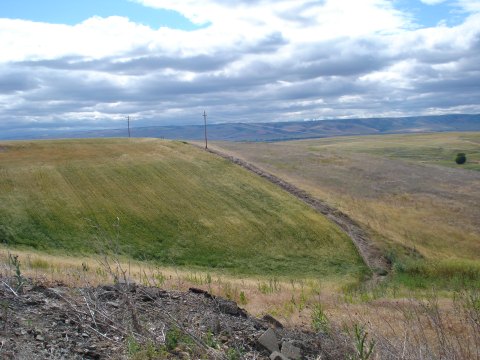
Wheat and Hay Fields near Pendleton, Oregon
What the cable suggested, in part, was publishing a ‘retaliation’ list of places, down to the actual fields, growing GMO foods in Europe in the hopes the fields and crops would be destroyed by activists, ’cause pain’ for officials and hopefully swing GMO acceptance in Europe around. The Ambassador went on to say that France was particularly culpable because scientists in France were attempting to change ‘knowledge’ by studying the effects of GMO products (even the ‘good’ GMO like BT enhanced products). These studies show that the effects of GMO food on those eating it may be more pronounced and drastic than the limited studies done by the FDA and USDA suggest (see for example the studies of Dr. Gilles-Eric Seralini, Professor Andrés Carrasco, and others). And for more, see this interview of Jeffery Smith on Democracy Now.
This is very interesting, because a cable sent in 26 October 2007 is the subject of French President Sarkozky’s first visit to the USA, and his meetings with American business leaders, including pushers of GM foods. The cable suggests that the President’s support of more restrictive rules on GM products in France might be politically based and therefore, changeable.
But Wait, There’s more! The cable to France, although receiving a lot of attention because it suggests undercutting the rightful government of our supposed allies and creating civil unrest and ‘pain’, is not the only released cable to mention GMOs and Monsanto’s needs across the world. Over at Eats, Shoots and Leaves there’s a good rundown by Richard Brenneman of some of the cables.
For example, in a cable from 9 April 2009 concerning, in part, African development, one of the points of intelligence to be gathered is the African governments’ and peoples’ reactions to growing and using GM crops. Brenneman rightly asks, why would this be a concern of our State Department, unless our government is actively pushing and supporting Monsanto and the company’s GM stable of crops?
I’m going to drop a final h/t to Rady Ananda at the Food Freedom blog. She wrote about GMO and Wikileaks several weeks ago, and has been right on top of things. She brings forth the case of the food crisis of 2007-08 which wraps up some of the things we at Sky Dancing discuss into a tidy bundle.
In a January 2008 meeting, US and Spain trade officials strategized how to increase acceptance of genetically modified foods in Europe, including inflating food prices on the commodities market, according to a leaked US diplomatic cable released by WikiLeaks.
Some of the participants thought raising food prices in Europe might lead to greater acceptance of biotech imports.
It seems Wall Street traders got the word. By June 2008, food prices had spiked so severely that ‘The Economist announced that the real price of food had reached its highest level since 1845, the year the magazine first calculated the number,’ reports Fred Kaufman in The Food Bubble: How Wall Street starved millions and got away with it.
The unprecedented high in food prices in 2008 caused an additional 250 million people to go hungry, pushing the global number to over a billion. 2008 is also the first year ‘since such statistics have been kept, that the proportion of the world’s population without enough to eat ratcheted upward,’ said Kaufman.
Remember back in 2007/08 when food prices, especially bread prices, suddenly shot up? I remember being astounded when the price of a bag of hot dogs went from 99 cents to 1.29$ overnight. I figured maybe it was the result of the rise in oil costs going on about then, and perhaps it was, in part. But after reading the article by Kaufman I’m not so sure. There was no crisis in food production at this time. It was simply a manufactured bubble. About that time there were terrible food riots in Mexico amongst 29 other countries, because the price of tortillas had gone up so much people couldn’t afford to buy them. I note that the Mexican government has recently taken steps to ensure this doesn’t happen again, by buying corn futures to guarantee a flat price.
So, I wonder, how are the big fat cats and the government diddling in our food today? Surely food, at least food, should be relatively safe from bubbles, like electricity, water, and sewage service? Oh wait, those are being commoditized too. Ahd I would like to point out, the price of the bag of hot dogs has not come back down, although the bubble burst… makes ya wonder, doesn’t it?
Note: I’m going to be in and out all today, so consider this something of an open thread. I’m really keen to know what everyone thinks of the Kaufman article. When I read it I was stunned by the lengths to which the greedy people of Wall Street will go to make money.
Saturday Night Turkey “Surprise” Treats
Posted: November 27, 2010 Filed under: Food, open thread | Tags: Cajun Thanksgiving leftovers, Emeril, Gumbo, Jambalaya, sweet potato 63 CommentsStill got leftover bird? 
*
Try some of these Cajun recipes then bring them on because we know you have them!!!
Turkey Jambalaya from Epicurious
Here’s some of my things to do with leftover sweet potatoes, if you got ’em!
Sweet Potato Biscuits
1 cup flour
2 tsp. baking powder
1 cup cooked, mashed sweet potatoes
1 tsp salt
1/2 cup sugar
3 tablespoons butter (soft)
1/3 cup milk
Sift the flour salt and baking powder in one bowl. Mix the sugar and sweet potatoes in a second bowl. Add the butter and beat the mixture until it’s smooth. Add the dry ingredients to the sweet potato mixture and add the milk. Blend well.
Roll out the dough on a floured board. Cut with a biscuit cutter. Place in a buttered baking pan. Bake at 400 degrees for 20 minutes. I serve this with some whipped honey butter.
Du Pain Patate (Sweet Potato Bread)
2 cups grated raw sweet potatoes
1/2 cup sugar
1/4 cup butter melted
1 tsp cloves.
1 tsp salt.
2 unbeaten eggs
1/2 cup flour
1/2 cup cane sugar syrup (yes, CANE SUGAR syrup … it’s a Cajun thing and we make it down here)
1 tsp nutmeg
1 tsp cinnamon
1 Tbsp. orange zest.
Put the grated raw potatoes in a bowl. Ad one egg at a time and beat it real well until it’s mixed and kind of fluffy. Add the orange rind. Mix it some more. Add the sugar and beat it. Add the syrup and the melted butter. Mix. Then Mix the spices, salt and flour together then add that to the rest of the mixture. And, right, mix it again.
Okay, this is the fun part. You’re going to transfer that to a well-greased iron skillet. Bake it at 300 to 325 for an hour. You can tell it’s done when the bread pulls away from the sides. Cool it about 10 minutes before you get it out of the skillet. This is going to make a really sticky type potato bread and if you put fresh cream on top, you’ll think you just about tasted the best thing ever. Remove it in wedges with a spatula while it’s still hot.
This one is a really old recipe from a friend’s family and I had to beg for it … enjoy!!!
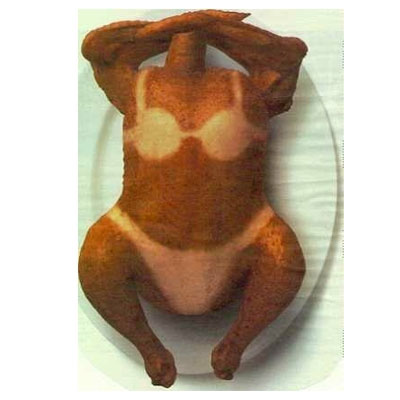
* (It’s a thanksgiving turkey that’s been through a TSA scan, that’s all!!!)
Wednesday Night Turkey Trot
Posted: November 24, 2010 Filed under: Festivities, Food | Tags: Turkey 21 CommentsSo, tis the night before thanksgiving and all through the house …
Let’s TALK TURKEY!!!
Turkey Nightmare:
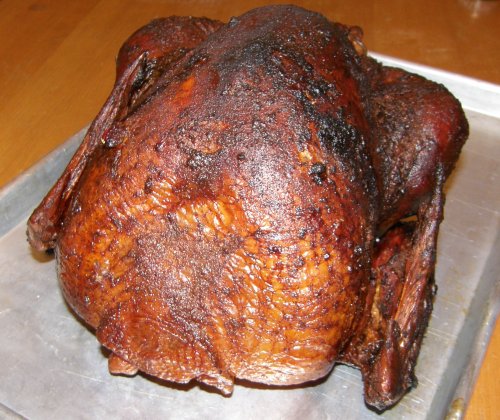
Turkey Porn:
Turkey Leftovers Recipe:
Ingredients
- 1/2 lb white beans, soaked overnight in water, drained
- 3 cups turkey stock
- 1 cloves garlic, minced
- 1 medium onions, chopped (divided)
- 1 Tbsp olive oil
- 1 jalapeño or serrano pepper, stem and most seeds removed, chopped (optional)
- 1 teaspoon ground cumin
- 1 teaspoon dried oregano
- Pinch of ground cloves
- 1/4 tsp cayenne pepper
- 2 4-ounce cans chopped green chilies
- 2 cups diced cooked turkey
- Salt to taste (about 1/2 teaspoon to 1 teaspoon)
Garnishes and extras
- 1 1/2 cups grated Monterey Jack cheese
- 1/3 cup (loose) chopped cilantro
- 1/4 cup chopped green onions
- 1 avocado, pitted, peeled, and chopped (or guacamole)
- Chopped tomatoes or salsa
- Corn tortilla chips and/or fresh warmed flour tortillas
Method
1 Combine beans, turkey stock, garlic and half the onions in a large soup pot and bring to a boil. Reduce heat and simmer until beans are very soft, 1 to 3 hours or more. (Depending on the type of white beans you are using. Cannelli beans are tender and tend to cook rather quickly. Navy beans take longer.) Add additional water (or watered-down stock), if necessary.
2 Heat olive oil in a skillet on medium heat, cook chopped jalapeno (if using) and remaining onions in oil until tender. Add green chilies and seasonings and mix thoroughly. Add to bean mixture. Add turkey and salt to taste, and simmer for 10 minutes or more (up to an hour) until the beans are thoroughly soft and the stew has thickened.
3 Serve topped with grated cheese. Garnish with cilantro, chopped fresh tomato, salsa, chopped green onions, and/or avocados. Serve with fresh warmed flour tortillas or tortilla chips.
Political Turkey:
It’s an open thread because I’ve been refereeing papers all day and I’m pooped!!!
Saturday Night Treats!
Posted: November 20, 2010 Filed under: Food, Treats | Tags: Boston, Durgin Park, Legal Seafoods, Union Oyster House, Yankee recipes 98 CommentsHi Everyone!!
Tonight I’m going to share some traditional New England recipes from some of Boston’s oldest restaurants. New England cooking is pretty basic, real comfort food. And of course, since we’re near the ocean, we eat lots of seafood.

I’ll start out with a couple of recipes from Boston’s oldest restaurant, the Union Oyster House. The building itself dates to sometime in the 1600’s; it became a restaurant in 1826.
The new owners installed the fabled semi-circular Oyster Bar — where the greats of Boston paused for refreshment. It was at the Oyster Bar that Daniel Webster, a constant customer, daily drank his tall tumbler of brandy and water with each half-dozen oysters, seldom having less than six plates.
The toothpick was first used in the United States at the Union Oyster House. Enterprising Charles Forster of Maine first imported the picks from South America. To promote his new business he hired Harvard boys to dine at the Union Oyster House and ask for toothpicks….
The Kennedy Clan has patronized the Union Oyster House for years. J.F.K. loved to feast in privacy in the upstairs dining room. His favorite booth “The Kennedy Booth” has since been dedicated in his memory.
Here are a couple of popular Union Oyster House recipes
Lobster Stew.
1 lb Cooked lobster meat
4 oz Unsalted butter
2 c Half-and-half
Chopped fresh chives
1. Cut lobster meat into 1/2 inch chunks.
2. Melt the butter, and stew the lobster meat in it until the lobster is heated through.
3. Place the mixture in a warmed casserole dish.
4. Heat the half-and-half until piping hot, almost scalded.
5. Pour it over the butter and lobster in the casserole.
6. Garnish with chopped chives and serve at once.
Union Oyster House Gingerbread
2 1/2 cups sifted all-purpose flour
1 1/2 teaspoons baking soda
1 teaspoon ground ginger
1 teaspoon cinnamon
1/2 teaspoon ground cloves
1/2 teaspoon salt
1/2 cup vegetable oil
1/2 cup sugar
1 large egg
1 cup unsulfured molasses
1 cup hot water (160 degrees F)
1. Heat oven to 350 degrees F. Grease and flour a 9-inch square baking pan, knocking out excess flour.
2. Into a bowl sift together flour, baking soda, spices, and salt.
3. In another bowl with an electric mixer beat together oil and sugar until combined and beat in egg and molasses until combined well. Gradually beat in flour mixture until combined and add water, beating until smooth.
4. Pour batter into pan and bake in middle of oven 30 minutes, or until a tester comes out clean. Cool gingerbread in pan on a rack 10 minutes. Run a thin knife around edge of pan and invert gingerbread onto rack to cool completely.
5. Serve gingerbread with whipped cream.
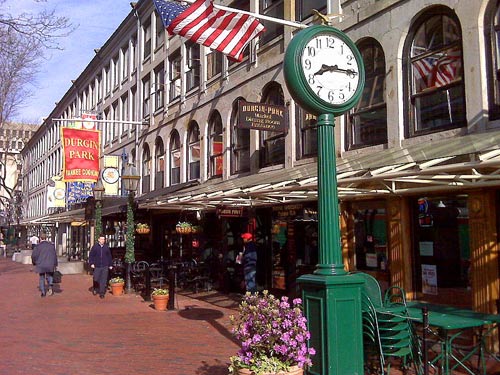
Durgin Park is almost as old as the Union Oyster House. A Boston landmark since 1827, it is located near Faneuil Hall in the old market district. There is a huge shopping area there now, but when I first lived in Boston none of that was built yet. I’m going to share a some really old Yankee recipes from Durgin Park.
Boston Baked Beans
1 lb dried navy beans
1/2 teaspoon baking soda
1/2 lb salt pork
1/2 medium onion (peeled and uncut)
4 tablespoons sugar
1/3 cup molasses
1 teaspoon dry mustard
1 teaspoon salt
1/4 teaspoon pepper
1. Soak beans overnight. In the morning, preheat oven to 325°F Place the baking soda in a Dutch oven and fill half way with water.
2. Bring to a boil, add the beans & boil for 10 minutes. Drain beans in a colander and run cold water through them. Set aside.
3. Dice the salt pork into 1-inch squares. Put half of the salt pork on the bottom of the bean pot, along with the onion. Put beans in the pot. Put the remaining salt pork on top of the beans.
4. Mix the sugar, molasses, mustard, salt and pepper with 3 cups of hot water and pour over the beans.
5. Cover pot with lid and place the pot into the preheated oven. Bake for 6 hours. Check pot periodically to make sure the amount of liquid is okay. Add water to the beans slowly as needed to keep them moist; DO NOT FLOOD THEM. Just “top them up.”

Indian Pudding
3 cups milk
1/4 cup black molasses
2 tablespoons sugar
2 tablespoons butter, melted
1/4 teaspoon salt
1/8 teaspoon baking powder
1 egg, beaten
1/2 cup yellow corn meal
Vanilla ice cream
1. Preheat the oven to 425 degrees.
2. Mix together 1-1/2 cups of the milk with the molasses, sugar, butter, salt, baking powder, egg, and cornmeal. Pour the mixture into a stone crock that has been well greased and bake until it boils.
3. Heat the remaining 1-1/2 cups of milk and stir it in.
4. Lower the oven temperature to 300 degrees and bake 5-7 hours.
5. Serve warm with a scoop of vanilla ice cream on top.
Legal Seafoods was orginally a just a fish market. The restaurant started up in 1950. It has lots of locations nowadays, but at first it was just a little restaurant in Inman Square Cambridge. Seating was communal, with everyone sitting at long wooden tables. There was sawdust on the floor to soak up spills. Here are a couple of my old Legal favorites.
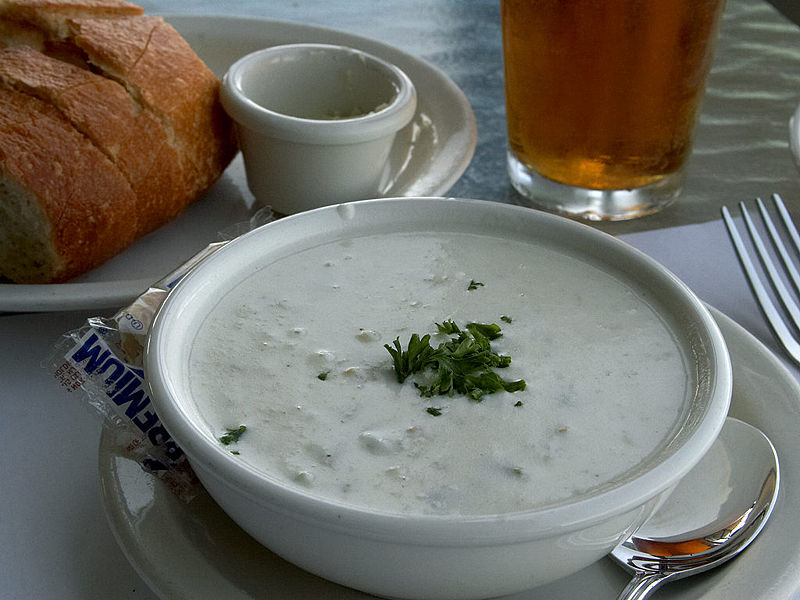
Legal Seafood Clam Chowder
4 quarts littleneck clams (about
1 2/3 cups cooked and chopped)
1 clove garlic, chopped
1 cup water
2 ounces salt pork, finely chopped
2 cups chopped onions
3 tablespoons flour
1 1/2 pounds potatoes, peeled, and diced
into 1/2-inch cubes
4 1/2 cups clam broth
3 cups fish stock
2 cups light cream
Oyster crackers
Clean the clams and place them in a large pot along with the garlic and water. Steam the clams just until opened, about 6 to 10 minutes, depending
upon their size. Drain and shell the clams, reserving the broth. Mince the clam flesh, and set aside.
Filter the clam broth either through coffee filters or cheesecloth and set aside.
In a large, heavy pot slowly render the salt pork. Remove the cracklings and set them aside. Slowly cook the onions in the fat for about 6 minutes, stirring frequently, or until cooked through but not browned. Stir in the flour and cook, stirring, for 3 minutes. Add the reserved clam broth and fish stock, and whisk to remove any flour lumps. Bring the liquid to a boil, add the potatoes, lower the heat, and simmer until the potatoes are cooked through, about 15 minutes.
Stir in the reserved clams, salt-pork cracklings and light cream. Heat the chowder until it is the temperature you prefer. Serve in large soup bowls with oyster crackers on the side.
Baked Scrod
3/4 cup oyster crackers
2 tsp unsalted butter
1 tsp fine-chopped onions
1 tsp minced fresh parsley
1/2 tsp dried thyme or Herbes de Provence
4 x (7 to 8 oz.) scrod fillets, each about 1 inch thick
1/4 cup real mayonnaise
2 tsp fresh-grated parmesan cheese
crumb mixture: In a food processor fitted with metal blade, process crackers.
You want a crumb somewhere between medium coarse and medium fine; set aside.
In a medium skillet, melt 1 tablespoon butter over medium heat.
Saute onions about 2 minutes, or until translucent.
Do not brown. Add remaining butter, and when melted remove from heat and stir in reserved crumbs, parsley and thyme or Herbes de Provence.
Mix well and refrigerate until ready to use.
(Crumbs will need some stirring before use as butter will have solidified mixture a bit.)
Scrod: Preheat oven to 425 F.
Lightly oil a baking dish just large enough to hold fillets in a single layer and place fillets in it.
Stir mayonnaise and parmesan cheese together well.
Spread 1/4 of mayonnaise mixture evenly over top of each fillet.
Sprinkle about 2 tablespoons crumb mixture over each and press tops lightly so crumbs adhere to mayonnaise.
Bake in center of oven 12 to 14 minutes, or until fillets are just cooked through and topping is golden brown.
Legal used to sell a T-shirt that said “I got scrod at Legal Seafoods.”
Finally, here is a variation on bread pudding that is very popular in New England.
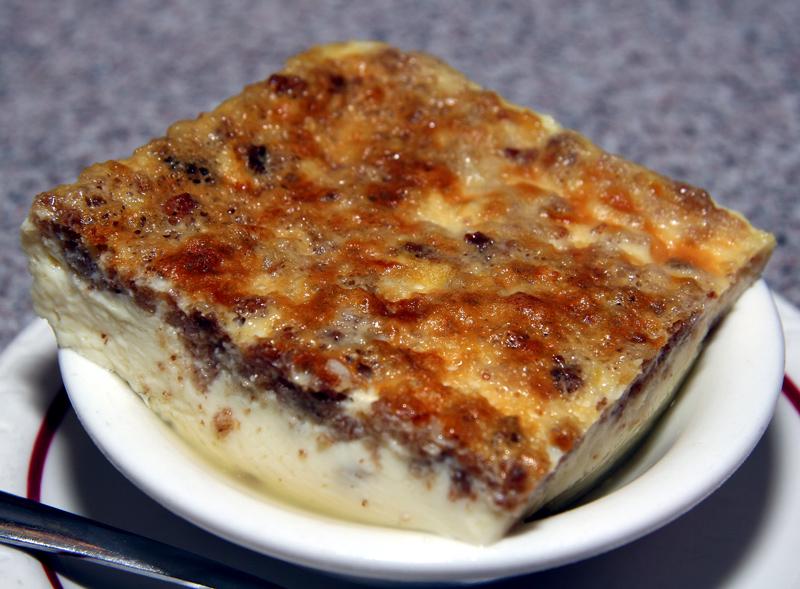
Grape Nuts Pudding
1 quart milk, scalded
1 cup Grape-Nuts cereal
4 large eggs
scant 1/2 cup sugar
1 tablespoon vanilla
Pinch of salt
1 tablespoon unsalted butter (approx.)
Whole nutmeg
Water
Heat oven to 350°. In a medium-size bowl, pour scalded milk over Grape-Nuts and let sit 5 minutes. In a second medium-size bowl, beat eggs, sugar, vanilla, and salt. Add egg mixture to milk and Grape-Nuts and stir well. Pour into a buttered 2-quart casserole dish. Generously grate nutmeg over the top. Place the casserole into a deep roasting pan. Place in the oven and pour water into the roasting pan, enough to reach halfway up the side of the casserole. Bake 45 to 60 minutes, until almost set in the center (very slight jiggle).
Grape Nuts are really popular in New England for some reason. People even put them on ice cream.
So that’s my offering of vintage Yankee New England recipes–all great for a chilly fall day. Enjoy! You are invited to share your own recipes in the comments.
S. 510, please call for the Tester-Hagen amendment
Posted: November 17, 2010 Filed under: Farming, Food, just because, legislation | Tags: farming, food safety, legislation, S 510 27 CommentsNote: I wanted to get this written up and posted yesterday, but family duties called me away and I spent all day at my parents’ house taking care of my sister.
Right now I am stressing about Senate Bill 510. The bill passed cloture today, and will come up for vote tomorrow or Friday, I believe. An important amendment, written by Senator Tester and Senator Hagen, would exempt small farms from many of the onerous provisions of this bill. Food experts, farm advocates, and consumer safety experts have debated the provisions of the bill over at Grist (see this article on if the bill will better provide food safety, this article on if the bill will harm small farmers, and this one on if we really have a food safety crisis), if you are interested in their arguments.
If S 510 passes without the Tester-Hagen amendment and then goes into reconciliation with the absolutely horrid (for small farms) House bill (HR 2749) which passed last year, I expect to be eventually regulated out of business. And I expect many, many other small farms to suffer the same fate. The law has no provisions in it to protect small farms; it simply urges the FDA and FEMA, yes, our food supply would come under FEMA, to consider small farms when making regulations. AHAHAHAHAHAHAHA. The Tester-Hagen amendment makes it law that they do so. The Bill is partly concerned with ‘terrorist’ scenarios, such as someone poisoning our food supply. If we were getting food from millions of small family farms, such a thing couldn’t occur. But the bill gives FEMA the power to intervene in cases of suspected terrorism, or food ‘adulteration’, however they end up defining it.
There’s some good parts in this bill. It does provide more oversight for Big Ag. I’m sure that’ll last until the regulations actually get written (cynical, cynical me). But as I see it, this bill and the House bill are just grandstanding so government people can say they ARE doing something about the supposed food safety crisis. If the USDA and the FDA had the funds to do the inspections they need and if our Senators and Representatives would seriously look into getting the lobbyists out of the regulatory mix, we’d not need these bills at all.
Anyway, I ask you to call or email your Senators and ask them, if they must vote for this bill, that they also vote for the Tester-Hagen amendment. It’s probable that every Dem Senator will vote for it, so let’s do what we can to make it more palatable to the small food producers that hope to feed us all.
More links of possible interest:
S510 may mean 10 years in prison for Farmers
Food Safety: The Worst of Both Bills
Frequently Asked Questions about S 510
I’m trying to look on the bright side. If the bill passes, is reconciled with the House bill and becomes the pile of ummhmmm I suspect it will, it can still be fought during the formation of regulations phase. Oh joy.

 peej
peej Carissa
 bostonboomer
 dakinikat
 ecocatwoman
 mablue2
 Mama Lopez
 peggysue22
 quixote
 skydancingguestblogger
 Mona (aka Wonk the Vote)



 Sky Dancing
Recent Comments