
Creating Fiscal Strife
Posted: November 29, 2012 Filed under: Catfood Commission, Economy, Federal Budget, Federal Budget and Budget deficit, George W. Bush, Global Financial Crisis, House of Representatives, Medicare, Politics as Usual, Republican politics, Republican Tax Fetishists, Super Committee, The Bonus Class, the GOP, U.S. Economy, U.S. Politics | Tags: fiscal cliff 15 Comments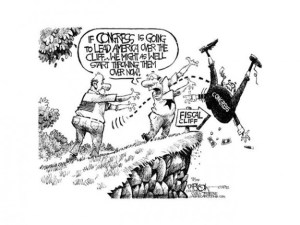 One of the things that drives me crazy as an economist and a citizen looking at this so-called “fiscal cliff” is that our fiscal strife has been created by the people least likely to suffer from its resolution. Congress gave the Bush administration authority to start a series of unfunded, reckless wars that have lasted well over a decade. Congress passed the Bush administration’s reckless tax cuts and generous loopholes that have benefited the few at the cost of the many. The Bush administration’s and Congress’ lack of oversight and deregulation of the financial services’ industry created a low-risk, gambling casino with the national investment and savings accounts and the debt markets. This led to a huge recession. These are the roots of our fiscal problems. But, the discussions around cleaning up messes in the District mostly surround Social Security which has nothing to do with the national debt and deficit and items that have become more necessary to average Americans since Congress and the Bush Administration broke the country with its bad policies.
Here’s some of the latest examples. Closing loopholes and unnecessary deductions for certain constituents is a good idea. However, which of these things are on the chopping block? Inkling its way up the priority list is the major middle and working class deduction and source of household wealth: the mortgage interest deduction. I have no problem with eliminating second mortgages, mortgages on boats, and mortgages on second properties. These benefit very few people and really serve little policy purpose. Capping the deduction–with an annual COLA adjustment to the median price and below-based mortgages is also fine. However, what are we likely to see?
As the Obama administration and lawmakers on Capitol Hill scramble to defuse automatic spending cuts and tax increases set to take effect Jan. 1, a herd of sacred cows — from Social Security and Medicare to deductions for charitable giving and mortgage interest — are in danger of losing their untouchable status.
Members of both parties have largely steered clear of detailed proposals so far. But plans put forth in the past year by President Obama and Mitt Romney to place limits on annual total tax deductions are likely to crimp the mortgage-interest deduction for certain taxpayers. Top congressional Republicans also have expressed openness to limiting total tax deductions as part of an overall budget deal. In addition, the presidentially appointed Simpson-Bowles fiscal commission suggested scaling back the mortgage-interest deduction as part of its own set of tax-related proposals.
Current law allows homeowners to deduct the interest paid on mortgage balances up to $1 million, including on second homes, as well as on $100,000 worth of home-equity loans. The deduction overwhelmingly benefits wealthier families, partly because they tend to have larger mortgages and pay more interest, and partly because most low- and middle-income Americans do not itemize deductions on their tax returns. It also tends to favor homeowners on the East and West Coasts, as well as those in large cities such as Chicago, where average home prices are higher.
Edward Kleinbard, a tax expert and law professor at the University of Southern California, said the mortgage-interest deduction represents the kind of government “extravagance” that the country no longer can justify, given its fiscal troubles.
“We simply cannot afford wasteful government subsidy programs anymore, and this is one of the most important examples of that,” Kleinbard said. “It’s very much a subsidy to those Americans who need it least.”
Mitch McConnell continues to service Grover Norquist and the Club for Growth. He’s back on his high horse for no tax increases for the wealthy. Ending tax cuts for the wealthy endlessly shown to have no ill-impact on the economy. There is also no real benefit to extending them.
Senate Republican Leader Mitch McConnell (Ky.) slammed the door Thursday morning on Democratic demands to raise tax rates on families earning more than $250,000 per year.
“We’re insisting on keeping tax rates where they are, first and foremost, to protect jobs and because we don’t think government needs the money in the first place,” McConnell said on the Senate floor.
“The problem, as I’ve said, is that Washington spends too much. But if more revenue is the price that Democrats want to exact, then we should at least agree to do it in a way that doesn’t cost jobs and disincentivize rates, as we all know raising rates would do,” he said.
McConnell’s comments came a day after Speaker John Boehner (R-Ohio) shot down a proposal by a senior GOP lawmaker, Oklahoma Rep. Tom Cole, to agree to extend tax rates only for families earning below $250,000 and resume the battle against higher tax rates on the wealthy next year.
Boehner said President Obama and Democrats should focus on finding ways to cut spending and reform entitlement programs.
The fate of the Bush-era tax rates — which will expire for all income levels in January — has dominated the debate over the slew of tax increases and spending cuts that are set to begin next year.
McConnell scolded the president Thursday for sticking fast to his campaign pledge to seek higher taxes on the rich, and made clear that raising tax rates on anyone is unacceptable.
The debate over Medicare is likely to be equally absurd. Medicare needs some reworking. Most of its problems comes from the pharmacy benefit which currently allows Big Pharma to price gouge participants and the taxpayers. But, you wouldn’t know that from the conversation. Republicans are playing games with Amercan’s health. They appear to be clinging to the Ryan’s voucher plan which would be disastrous for the majority of retired seniors.
The austerity crisis talks have hit a peculiar impasse. The problem isn’t, as most analysts expected, taxes, where Republicans seem increasingly resigned to new revenue. It’s Medicare. And the particular Medicare problem isn’t that Democrats are refusing the GOP’s proposed Medicare cuts. It’s that Republicans are refusing to name their Medicare cuts.
Politico quotes a “top Democratic official” who paints the picture simply: “Rob Nabors [the White House negotiator], has been saying: ‘This is what we want on revenues on the down payment. What’s your guys’ ask on the entitlement side?’ And they keep looking back at us and saying: ‘We want you to come up with that and pitch us.’ That’s not going to happen.”
That’s partly politics. If nothing else, Republicans are respectful of Medicare’s political potency. Recall that a core Republican message in both the 2010 and 2012 elections was that Democrats, through Obamacare, were cutting Medicare too much. Republicans, already concerned about their brand, don’t want to rebrand themselves as the party of Medicare cuts.
But it’s partly policy, too. The fact is that short of converting the program to a premium support system — a non-starter after they lost the 2012 election — Republicans simply don’t know what they want to do on Medicare.
Scour the various outlets for Democratic policy ideas and you’ll find plenty of proposed Medicare cuts. President Obama’s 2013 budget, for instance, includes hundreds of billions in Medicare cuts (see pages 33-37), and caps the program’s long-term growth at GDP+0.5 percent. More recently, the Center for American Progress released a 46-page proposal for cutting Medicare by almost $400 billion.
Republicans, meanwhile, have focused their energy on a long-term effort to convert Medicare to a premium-support model. Paul Ryan’s 2013 budget kept the Affordable Care Act’s Medicare cuts for the next 10 years and proposed to convert the program to a premium-support model in the future. Mitt Romney’s platform proposed reversing Obamacare’s Medicare cuts and offered a vague framework for converting the program to a premium-support model in the future.
If you dig deep into the Republican think tank world, you can find a few proposals that focus on the near-term.
The current fiscal ‘cliff’ framework appears to place a lot of burden on those least able to take it as well as those least responsible for creating the problems.
Cut through the fog, and here’s what to expect: Taxes will go up just shy of $1.2 trillion — the middle ground of what President Barack Obama wants and what Republicans say they could stomach. Entitlement programs, mainly Medicare, will be cut by no less than $400 billion — and perhaps a lot more, to get Republicans to swallow those tax hikes. There will be at least $1.2 trillion in spending cuts and “war savings.” And any final deal will come not by a group effort but in a private deal between two men: Obama and House Speaker John Boehner (R-Ohio). The two men had a 30-minute phone conversation Wednesday night — but the private lines of communications remain very much open.
No doubt, there will be lots of huffing and puffing before any deal can be had. And, no doubt, Obama and Congress could easily botch any or all three of the white-knuckle moments soon to hit this town: the automatic spending cuts and expiration of the Bush tax cuts, both of which kick in at the end of this year, and the federal debt limit that hits early next.
Go to the Politico story for a concept of what’s at stake and at issue.
Speaker John Boehner (R-Ohio) said Thursday there had been “no substantive progress” in fiscal-cliff negotiations in the two weeks since congressional leaders met with President Obama.
Boehner, addressing reporters after a meeting with Treasury Secretary Tim Geithner in the Capitol, called on the White House to “get serious” about the talks and warned of a “real danger” that Jan. 1 would come without a deal if President Obama did not offer up specific spending cuts he would be willing to accept.
“Despite claims that the president supports a balanced approach, the Democrats have yet to get serious about real spending cuts,” Boehner said. “Secondly, no substantive progress has been made in the talks between the White House and the House in the last two weeks.
“Listen, this is not a game,” he added. “Jobs are on the line. The American economy is on the line, and this is a moment for adult leadership.”
The Speaker criticized the president for holding “campaign-style rallies” instead of engaging in serious talks.
Monday Reads
Posted: November 19, 2012 Filed under: Federal Budget, Federal Budget and Budget deficit, Foreign Affairs, Gaza, Israel, morning reads, Myanmar | Tags: Ban Ki-moon, Benjamin Netanyahu, Daw Aung San Suu Kyi, Glenn Greenwald, Reporters without Borders, Robert Reich 47 CommentsGood Morning!
It’s really hard for me to focus on much other than the bombing that’s going on between Gaza and Israel at the moment. The carnage is getting to me.
An Israeli bomb pummeled a home deep into the ground here Sunday afternoon, killing 11 people, including nine in three generations of a single family, in the deadliest single strike since the cross-border conflict between Israel and the militant faction Hamas escalated on Wednesday.
The airstrike, along with several others that killed civilians across this coastal territory and hit two media offices here — one of them used by Western TV networks — further indicated that Israel was striking a wider range of targets.
Gaza health officials reported that the number of people injured here had nearly doubled to 600 by day’s end; the Palestinian death toll climbed to 70, including 20 children. Three Israelis have been killed and at least 79 wounded by continued rocket fire into southern Israel and as far north as Tel Aviv, as Israeli cities were paralyzed by an onslaught of relentless rocket fire out of Gaza for the fifth straight day.
In the Israeli strike on Sunday morning, it took emergency workers and a Caterpillar digger more than an hour to reveal the extent of the devastation under the two-story home of Jamal Dalu, a shop owner. Mr. Dalu was at a neighbor’s when the blast wiped out nearly his entire family: His sister, wife, two daughters, daughter-in-law and four grandchildren ages 2 to 6 all perished under the rubble, along with two neighbors, an 18-year-old and his grandmother.
At around 2 a.m. today, Israeli warplanes fired several missiles at the Al-Shawa Wa Hassri Tower, a building in the Gaza City neighborhood of Rimal that houses local and international media organizations. Around 15 reporters and photographers wearing vests with the word “TV Press” were on the building’s roof at the time, covering the Israeli air strikes.
Five missiles destroyed the 11th-floor offices used by Al-Quds TV. The station said six journalists were injured, four of them Al-Quds employees – Darwish Bulbul, Khadar Al-Zahar, Muhammad al-Akhras and Hazem al-Da’our. The other two were identified as Hussein Al-Madhoun, a freelance photographer working for the Ma’an news agency, and Ibrahim Labed, a reporter for the Palestinian news agency SAFA. Zahar’s condition was described as critical after one of his legs had to be amputated.
At around 7 a.m., three Al-Aqsa TV employees were seriously injured when two missiles were fired at the Al-Shourouk building, also known as the “journalists’ building.” A spokesperson for the Israel Defence Forces said on the @IDFSpokesperson Twitter account that the air strike had targeted a Hamas communication centre.
Among the local and international media whose offices were damaged by Israeli missiles were Sky News Arabia, the German TV station ARD, the Arab TV stations MBC and Abu Dhabi TV, Al-Arabiya, Reuters, Russia Today and the Ma’an news agency.
Information was also one of the victims of Israel’s Operation Cast Lead against the Gaza Strip in December 2008 and January 2009 (read the RWB report). At the time, Reporters Without Borders condemned Israel’s decision to declare the Gaza Strip a “closed military zone” and deny access to journalists working for international media. The IDF also targeted pro-Hamas media during Operation Cast Lead.
Meanwhile, Benjamin Netanyahu Says Israel Is ‘Prepared for a Significant Expansion’ of Conflict in Gaza.
On Sunday, Israel’s prime minister, Benjamin Netanyahu, indicated that he intended to take on additional targets. “We are exacting a heavy price from Hamas and the terrorist organizations and the Israel Defense Forces are prepared for a significant expansion of the operation,” he said, referring to the 75,000 reservists who have been put on call for what many believe is a planned ground invasion. Meanwhile, Israel’s Iron Dome defense system successfully deflected another Hamas rocket aimed at Tel Aviv.
The UN Secretary General is calling for a cease-fire. Ban Ki Moon is headed for Cairo. Glenn Greenwald–writing for the UK Guardian–has written that the US cannot pretend it’s being neutral.
Obama continues to defend Israel’s free hand in Gaza, causing commentators like Jeffrey Goldberg to gloat , not inaccurately: ” Barack Obama hasn’t turned against Israel. This is a big surprise to everyone who has not paid attention for the last four years” (indeed, there are few more compelling signs of how dumb and misleading US elections are than the fact that the only criticism of Obama on Israel heard over the last year in the two-party debate was the grievance that Obama evinces insufficient fealty – rather than excessive fealty – to the Israeli government). That the Netanyahu government knows that any attempt to condemn Israel at the UN would be instantly blocked by the US is a major factor enabling them to continue however they wish. And, of course, the bombs, planes and tanks they are using are subsidized, in substantial part, by the US taxpayer.
If one wants to defend US support for Israel on the merits – on the ground that this escalating Israeli aggression against a helpless population is just and warranted – then one should do so. As I wrote on Thursday , it’s very difficult to see how those who have cheered for Obama’s foreign policy could do anything but cheer for Israeli militarism, as they are grounded in the same premises.
I agree with Robert Reich who says we should stop obsessing over the Federal Budget Deficit.
The best way to generate jobs and growth is for the government to spend more, not less. And for taxes to stay low – or become even lower – on the middle class.
(Higher taxes on the rich won’t slow the economy because the rich will keep spending anyway. After all, being rich means spending whatever you want to spend. By the same token, higher taxes won’t reduce their incentive to save and invest because they’re already doing as much saving and investing as they want. Remember: they’re taking home a near record share of the nation’s total income and have a record share of total wealth.)
Why don’t our politicians and media get this? Because an entire deficit-cutting political industry has grown up in recent years – starting with Ross Perot’s third party in the 1992 election, extending through Peter Petersen’s Institute and other think-tanks funded by Wall Street and big business, embracing the eat-your-spinach deficit hawk crowd in the Democratic Party, and culminating in the Simpson-Bowles Commission that President Obama created in order to appease the hawks but which only legitimized them further.
Myanmar (Burma) has had some terrible human rights violations in its recent past. President Obama is visiting the tiny Southeastern Asian nation and will be urging the country’s power brokers to change their ways.
“You gave us hope,” Obama will say in a speech in Myanmar, according to excerpts of his remarks released by the White House during his visit to Bangkok, Thailand, the first
stop on a three-day trip to the region. “And we bore witness to your courage.”
In a daytime stop expected to last only six hours, Obama is set to meet with President Thein Sein in the former capital of Yangon. He’ll also visit opposition leader Aung San Suu Kyi, Myanmar’s most popular political figure, at her lakeside home where she spent more than 15 years confined under house arrest.
Obama eased sanctions on Myanmar this year after Thein Sein engaged with his political opponents and eased media restrictions since his party won a 2010 election that ended five decades of direct military rule in the country, formerly known as Burma. The visit also reflects a legacy-building goal for a president about to enter a second term, whose early efforts at engagement and democratization have yielded mixed results.
Obama will visit Nobel Peace Prize Winner Daw Aung Suu Kyi during his visit.
He made a point of not only scheduling a meeting at the government headquarters with President Thein Sein but also a personal pilgrimage to the home of the opposition leader Daw Aung San Suu Kyi, where she was confined under house arrest for most of two decades before her release two years ago. Amid the manicured lawn and well-tended garden outside the elegant two-story lakeside house, the president and the Nobel-winning dissident planned to stand side by side celebrating change that once seemed unimaginable.
While local leaders attribute the changes so far to internal factors and decisions, Mr. Obama was eager to claim a measure of credit. He has played nursemaid to the opening of Myanmar, formerly and still known by many as Burma, by sending the first American ambassador in 22 years, easing sanctions and meeting with Ms. Aung San Suu Kyi in Washington.
Later Monday he was to announce the return of the United States Agency for International Development along with $170 million for projects over the next two years, noting that in his inaugural address he had vowed to reach out to those “willing to unclench your fist.”
“So today, I have come to keep my promise and extend the hand of friendship,” read the text of prepared remarks to be delivered at the University of Yangon. He promised to “help rebuild an economy” and develop new institutions that can be sustained. “The flickers of progress that we have seen must not be extinguished — they must become a shining north star for all this nation’s people.”
So, this was a bit of a headline dump this morning, but I have to admit that my eyes have been fixed on what’s going on in the world right now. Hopefully, we can all stay up to date on these important headlines. I’m going to go light some candles and burn some incense and think peace. Hopefully, if enough of us do that, some of those world leaders will get the message.
What’s on your reading and blogging list today?
The Politics of Budget and Deficit
Posted: April 7, 2012 Filed under: Barack Obama, Economy, Federal Budget, Federal Budget and Budget deficit 7 CommentsThe economics of federal budgets and deficits is fairly straightforward. It is basically a matter of simple math that comes from the results of automatic and discretionary spending, tax policy,  and the current state of the economy. The last ten years have seen a combination of contradictory tax policy and spending priorities and a bad economy. We also face an aging population that will rely heavily on entitlement programs that have not been re-gauged since the Reagan years. The last serious attempts at deficit reduction occurred in the Clinton and Carter years. There were spending frenzies in the Reagan and Dubya Bush years. Tax policy was seriously crippled in the Dubya Bush years and was completely out of alignment with spending. The decade long wars we’ve endured were not only long and expensive, they were also the first wars that were not specifically funded with tax increases. Obama has inherited serious fiscal problems due to these wars, the bad economy, and capricious tax policy based on failed hypotheses.
Paul Ryan’s budget and its underlying assumptions go beyond capricious and fall into the category of scam. His budget–combined with evidence provided by recently written articles on the Obama 2011 budget negotiation– show that Republicans are only serious about crippling the Federal Government with voodoo tax policies. Obama appears to have fully embraced Republican policies that were offered up during the Clinton years. Obama is clearly the deficit hawk in the room. You wouldn’t know this, however, if you spend time in the economics illiteracy zone that is our press and media. All we ever get is spin on lies analyzed by folks with journalism and law degrees at best.
Paul Krugman sums up Ryan’s budget antics nicely. He also understands that many Republican defenders that position themselves as moderates are not moderate. They are only partisan.
These are people whose whole pose is one of standing between the extremes of both parties, and calling for a bipartisan solution. The problem they face is how to maintain this pose when the reality is that a quite moderate Democratic party — one that is content to leave tax rates on the rich far below those that prevailed for most of the past 70 years, that has embraced a Republican health care plan — faces a radical-reactionary GOP.
What these people need is reasonable Republicans. And if such creatures don’t exist, they have to invent them. Hence the elevation of Ryan — who is, in fact, a garden-variety GOP extremist, but with a mild-mannered style — to icon of fiscal responsibility and honest argument, despite the reality that his proposals are both fiscally irresponsible and quite dishonest.
The fact that a Republican presidential wannabe with degrees in business from Harvard (JD/MBA) actually embraces this budget scares me. That’s because every thing we see from Obama’s budget negotiations last year indicates he’s probably the biggest deficit hawk we’ve ever had in the White House and he over-compromises. Evidence indicates that Obama is more than willing to out-Republican the Republicans on the issue. Yet, the right wing noise machine ignores the ignoble Ryan’s budget assumptions and numbers and the actions of 2011 in Obama the negotiator. Republicans seem to easily drag him way into their policy zone while calling him a socialist at the same time. For any one with a background in economics and finance, this is like watching John Cena wrestle Pee Wee Herman while accusing Pee Wee of Droid Rage.
Obama was willing to make substantial cuts to the crown jewels of liberalism—Social Security, Medicare and Medicaid—and get little in return, in order to get a deficit-reduction deal with Republicans.
The details of the proposed deal should be very disturbing to anyone who believes in Democratic core values and protecting the American Dream. In addition to substantial cuts to Social Security, Medicare, Medicaid and the domestic budget, Obama was willing to reduce top-end tax rates, maintain current tax rates on investment income (the reason millionaires like Mitt Romney pay such low tax rates) and prevent the expiration of the Bush tax cuts in return for increasing tax revenues by $800 billion.
That amount is less than half the amount of new revenues recommended by the co-chairs of the Bowles-Simpson Deficit Reduction Commission, but, as it turns out, the $800 billion in “new revenues” was mostly a mirage. The $800 billion mentioned by the Republican Speaker of the House, John Boehner, would not have come from increasing taxes on anyone, especially not the rich, who would have had their taxes cut even below the Bush tax cut levels, but from nebulous plans to “overhaul the tax code,” which may or may not have ever gotten through Congress, and from projecting new revenues based on the largely disproven assumption that lower tax rates would boost the economy and produce more revenues (the laughable Laffer Curve). As one of the authors, Jonathan Chait, characterized it, “The Republican position was that its higher revenue, in other words, had to be imaginary, theoretical revenue.”
The “laughable Laffer Curve” should not underlie the negotiations or budget assumptions of any serious policy. Laffer developed a testable hypothesis of the basic underlying voodoo economics assumption that high marginal tax rates deter savings and investment and incentives to work. Here’s the basic theses: “When you cut the highest tax rates on the highest-income earners, government gets more money from them.” Laffer’s curve showed up in 1978 and was immediately pounced upon by Reagan Republicans. Decades of reality has now made that curve and hypothesis laughable. Here’s some short form evidence from Lane Kenworthy. I’m going to just highlight the latest results but you can go read the other examples at that last link.
Tax reform in the early 2000s reduced the top marginal rate by four percentage points, from 39% in 2002 to 35% in 2003. In this case the effective rate on the top 1% of households fell by exactly the same amount, from 24% in 2002 to 20% in 2003.
That’s a one to one change. That’s not going to bring increased revenues. Ryan’s budget numbers are still based on the idea that taking away taxes from the rich and benefits from the poor increases economic activity and tax receipts. Neither of these assumptions are based on anything more than wishful thinking and an obsession to kill all government services except a vast, powerful military. This explains the right wing behavior, but it does little to explain the behavior of the President who was willing to basically do the same thing. The “Grand Bargain” seems to play into this pretzel logic even though the President has been talking about upping the taxes of the richest of our rich. Talk is obviously cheap.
When they reached Daley’s office, the Republicans were handed a four-page document that made changes, typed in red, to an offer Boehner had made two days earlier, during a secret meeting at the Capitol.
A lot of red ink, the Republicans thought. But the major elements of a bargain seemed to be falling into place: $1.2 trillion in agency cuts, smaller cost-of-living increases for Social Security recipients, nearly $250 billion in Medicare savings achieved in part by raising the eligibility age. And $800 billion in new taxes.
In Boehner’s offer Friday night, the taxes came with strings attached. The Republicans wanted Obama to give up plans to raise the tax rate paid by the wealthiest Americans, now set at 35 percent. Instead, they wanted that rate to go down. They also wanted to preserve low rates for investment income — one of the biggest perks for the wealthy in the tax code — and establish a blanket exemption from U.S. taxes for corporate profits earned overseas.
Another key caveat: Much of the $800 billion would have to come from overhauling the tax code — not from higher tax rates. The Republicans believed lower rates and a simpler code would generate new revenue by discouraging cheating and spurring economic growth. If the White House would agree to count that money, the Republican leaders said, then they might have a deal.
That last condition was a problem. For years, Democrats have mocked the Republican argument that tax cuts pay for themselves by boosting the economy, an assertion for which evidence is scant. Many independent budget experts say the effect, if it exists, would be almost impossible to measure and useless in crafting a budget. Fiscal “snake oil,” some Democrats say.
So there were issues to work out that Sunday but also reason for optimism. In its counterproposal, the White House appeared to accept the $800 billion tax offer and a lower top rate. The administration rejected the exemption for overseas profits, but Geithner told the Republicans, they said, that he could get most of the way there.
Super Committee Calvin Ball
Posted: November 20, 2011 Filed under: #Occupy and We are the 99 percent!, Catfood Commission, Federal Budget, Federal Budget and Budget deficit | Tags: Budget Deficit, Extension of Bush Tax Cuts., supercommittee 15 CommentsRepublicans are insistent that the Bush Tax cuts be made permanent. With that stroke of lunacy, we have the imminent and predictable meltdown of the super committee. 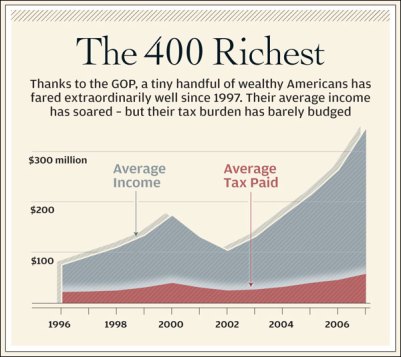 So, what happens when the minority party doesn’t get it’s way on everything? It either holds the economy hostage or changes the rule. Republicans in Congress are playing Calvin Ball to avoid the cuts that super committee failure is supposed to bring to the defense budget. They’re changing their own rules, yet again.
Plus, we’re getting another contradictory argument on taxes. Let the Bush tax cuts expire is “raising taxes”. Letting the payroll tax holiday expire is not raising taxes. How do these folks get through the day without a complete synaptic breakdown? Here’s some details from Reuters. The Murray quoted here is Senator Patty Murray from Washington State.
Murray said Republicans want to extend tax cuts that lowered individual rates — reductions that originated under former Republican President George W. Bush. Those tax cuts run out at the end of 2012.
Republicans have pushed for a permanent extension. Democrats want the tax cuts for the rich to expire.
“In Washington, there are folks who will not cut a dollar unless we raise taxes,” said Kyl, sparking an exasperated reaction from Kerry who noted that Congress has cut about $1 trillion from the budget without any tax hikes.
Republicans want Democrats to agree to do more to find long-term savings in the growing costs of government retirement and healthcare programs.
If no deal is reached by a simple majority of the super committee, automatic spending cuts would start in 2013 — two months after presidential and congressional elections.
Those cuts would be evenly divided between domestic and defense programs. Some Republican members of Congress already are talking about dismantling the automatic cuts to protect the Defense Department from deep reductions.
No serious discussion on deficits can occur without ending the Bush Tax cuts and seriously putting the Pentagon budget on the table. Representatives of the super committe were out full force on the Sunday Morning Talk Show. John Avlon at The Daily Beast points to the political posturing that’s likely still the root of the entire problem. No Republican is willing to compromise any more. Democrats and the President continue to grant many concessions on social programs that leave little left for continuing battle. No where is this more noticeable when the congress passed the old John Chaffee/Bob Dole Republican Health plan under the guise of ObamaCare. The contentious mandate originally came from the Republican side of the aisle from the American Heritage Institute. The twist of facts into partisan narratives has never been worse.
But pervasive hyperpartisan positional bargaining seems to have carried the day. Pessimism has clouded late-inning negotiations. Supercommittee Democrats have offered to put entitlement reforms on the table, but offered few specifics. Republicans have offered limited revenue increases, but tied those to the cutting the top tax rate to 28 percent from 35 percent and permanently extending the contentious Bush tax cuts. Distrust and brinksmanship pollutes the process.
Ironically, but perhaps appropriately, the dysfunctional debate seems to be based around what the term “fair and balanced” actually means.
For Democrats it means a 1-to-1 ratio of tax hikes to spending cuts. For bipartisan groups like the Gang of Six and Bowles Simpson, it means a 3-to-1 ratio. But for too many Republicans, “fair and balanced” means no tax revenues raised at all—a handful of loopholes closed as concessions, like $3 billion from private jets, and the rest collected from spending cuts. The basic dynamic of both sides being willing to slaughter sacred cows is missing despite an avalanche of “more bipartisan than thou” press releases.
The core problem comes from antitax pledges that have dislodged the basic nature of balance sheets in the collective conservative mind—it is all spending, no revenue. Fiscal responsibility has been replaced by fiscal conservatism. Reducing the deficits and debts is no longer the overriding goal, despite Tea Party rhetoric about generational theft or even the balanced-budget-amendment attempt this past week. Instead, keeping tax cuts in place is the one true grail—ignoring the overwhelming popularity of provisions like raising the top rate on people making more than a million dollars a year.
Sane people continue to ask what type of Svengali powers the insane Grover Norquist holds over Republicans? If you want to learn about “The Billionaire’s Best Friend”  who “hijacked the Republican party on behalf of the rich”, go no further than TIm Dickinson’s article in this month’s Rolling Stone. This man continues to hold sway over the Republican congress critterz despite overwhelming public polls that show even Republicans and Independent rank and file don’t support his agenda. Norquest comes from two Republican institutions. He was originally in the Chamber of Commerce which is one organization that has no problem seeing lies and half baked arguments printed in newspapers around the country. Ronald Reagan used him to push his tax reform measures. It’s been one power grab after another backed by nothing more than dogma and a huge budget since then.
Over the past 25 years, Norquist has received funding from many of America’s wealthiest corporations, including Philip Morris, Pfizer and Microsoft. To build a farm team of anti-tax conservatives, Norquist shrewdly took the pledge to state legislatures across the country, pressuring up-and- coming Republicans to make it a core issue before they’re called up to the big leagues. “We’re branding the whole party that way,” Norquist says. “The people who are going to be running for Congress in 10 or 20 years are coming out of state legislatures with a history with the pledge.”
Norquist also built the anti-tax pledge into the DNA of the GOP by hosting weekly Wednesday meetings that enable activist groups representing everyone from gun nuts to home-schoolers to mix with top business lobbyists and conservative officials. The meetings, which began shortly after Bill Clinton was elected, turned Norquist into the Republican Party’s foremost power broker – and gave him a forum to enforce the no-new-taxes pledge as the centerpiece of the GOP’s strategy. “The tax issue,” he says, “is the one thing everyone agrees on.”
Norquist cemented his influence by forging an early alliance with Karl Rove and setting himself up as a gatekeeper to George W. Bush’s inner circle. Then, after Obama was elected, this ultimate Washington insider positioned himself as a leader of the anti-establishment Tea Party, complete with financial support from the billionaire Koch brothers. “These Tea Party people, in effect, take their orders from him,” says Bruce Bartlett, an architect of the Reagan tax cuts. “He decides: This is a permissible tax action, or this is not a permissible tax action. And of course, anything that cuts taxes is per se OK.”
Today, GOP politicians who have signed Norquist’s anti-tax pledge include every top Republican running for president, 13 governors, 1,300 state lawmakers, 40 of the 47 Republicans in the Senate, and 236 of the 242 Republicans in the House. What’s more, the GOP’s Tea Party foot soldiers are marshaled by House Majority Leader Eric Cantor – a veteran of Norquist’s farm team, who first signed the pledge as an ambitious member of the Virginia legislature. Under Cantor’s leadership, Norquist’s anti-tax pledge was directly responsible for last summer’s debt-ceiling standoff that wrecked the nation’s credit rating by leading the nation to the brink of default. “Congress was willing to cause severe economic damage to the entire population,” marvels Paul O’Neill, Bush’s former Treasury secretary, “simply because they were slaves to an idiot’s idea of how the world works.”
Yup. Bush’s former Treasury secretary thinks Norquist has congress hostage to the point that they are “willing to cause severe economic damage to the entire population simply because they were slaves to an idiot’s idea of how the world works.” The result of the work of Norquist and the Republican party has been staggering income inequality.
“The Republican Party has totally abdicated its job in our democracy, which is to act as the guardian of fiscal discipline and responsibility,” says David Stockman, who served as budget director under Reagan. “They’re on an anti-tax jihad – one that benefits the prosperous classes.”
Notice here that I’m quoting Republicans that have had extensive experience in economics, finance, and policy. Funny thing is that the most of these folks aren’t really worried about tanking the economy. What they are worried about is this. If you haven’t read Cannonfire today, you should. First, Cannon points to this. MSNBC got a hold of a memo from a lobbying firm spelling out its plan to use any propaganda means necessary to destroy OWS. The lobbying firm is associated with the American Banker’s Association.
CLGC’s memo proposes that the ABA pay CLGC $850,000 to conduct “opposition research” on Occupy Wall Street in order to construct “negative narratives” about the protests and allied politicians. The memo also asserts that Democratic victories in 2012 would be detrimental for Wall Street and targets specific races in which it says Wall Street would benefit by electing Republicans instead.
According to the memo, if Democrats embrace OWS, “This would mean more than just short-term political discomfort for Wall Street. … It has the potential to have very long-lasting political, policy and financial impacts on the companies in the center of the bullseye.”
The memo also suggests that Democratic victories in 2012 should not be the ABA’s biggest concern. “… (T)he bigger concern,” the memo says, “should be that Republicans will no longer defend Wall Street companies.”
Two of the memo’s authors, partners Sam Geduldig and Jay Cranford, previously worked for House Speaker John Boehner, R-Ohio. Geduldig joined CLGC before Boehner became speaker; Cranford joined CLGC this year after serving as the speaker’s assistant for policy. A third partner, Steve Clark, is reportedly “tight” with Boehner, according to a story by Roll Call that CLGC features on its website.
Another interesting association is noted in the memo.
The CLGC memo raises another issue that it says should be of concern to the financial industry — that OWS might find common cause with the Tea Party. “Well-known Wall Street companies stand at the nexus of where OWS protestors and the Tea Party overlap on angered populism,” the memo says. “…This combination has the potential to be explosive later in the year when media reports cover the next round of bonuses and contrast it with stories of millions of Americans making do with less this holiday season.”
Yup, it’s the divide and conquer strategy again. Since Wall Street can’t make the case, it’s going to use proxies like the Tea Party to do its dirty work. This should be no problem given the astroturf leadership put in place by folks like Dick Armey and Matt Kibbe. These guys are longstanding Republican Beltway insiders. The interesting thing comes in some of the rumors coming out from the committee itself. Supposedly, Boehner had actually agreed to put revenues on the table and provide cover to Republicans that feared Norquist and the Tea Party. Some Democrats never really engaged, some republicans refused to even discuss anything that didn’t include making the Bush Tax cuts permanent for every one, and there was some feeling that the next election would give some indication of which way the wind blows.
A Democratic aide had this eulogy for the supercommittee: “The worm has turned a little bit. The national conversation now is about income inequality and about jobs, and it’s not really about cutting the size of government anymore or cutting spending. 2010 gave one answer to that question. But 2012 will give another, and we’ve got to see what it is.”
I still think economist Jeffrey Sachs has the best take on what the real role of Congress should be in an schizophrenic economy like ours. This is what OWS is trying to point out but is getting blasted for by concentrated efforts in corporate media to publish propaganda. (I have quoted this before, but I’m quoting Sachs again.)
The big political lie of the Super-Committee is that the deficit must be closed mainly by cutting government spending rather than by raising taxes on corporations and the super-rich. Both parties are complicit. The Republicans want to close the deficit entirely by cutting spending; Obama has brandished the formula of $3 of cuts for every $1 of tax revenues. On either approach, the poor and middle class would suffer grievously while the rich and powerful would win yet again (at least until the social pressures boil over).
The key to understanding the U.S. economy is to understand that we have two economies, not one. The economy of rich Americans is booming. Salaries are high. Profits are soaring. Luxury brands and upscale restaurants are packed. There is no recession.
The economy of the middle-class and poor is in crisis. Poverty and near-poverty are spreading. Unemployment is rampant. Household incomes have been falling sharply. Millions of discouraged workers have dropped out of the labor force entirely. The poor work at minimum wages to provide services for the rich.
Until we have some realization that laws put into place for the last 30 years have created markets that are distorted, functional only for a few, and not the least bit reflective of anything remotely “free market”, a portion of the public is going to be willing to vote for people that spread lies. This is why the credibility of any one associated with OWS must be destroyed. The minute a huge portion of us wake up to the lies–much like what happened after publication of the Pentagon Papers and the invasion of Cambodia after Nixonian promises of winding the Vietnam War down–we’re not going to get the policy we need to put things right again. We desperately need to put things right again.
Another Standoff
Posted: September 23, 2011 Filed under: Federal Budget, Federal Budget and Budget deficit, U.S. Politics | Tags: FEMA funding, government shutdown, Harry Reid, John Boehner 14 CommentsLet’s see. Selling out on tax cuts to millionaires was supposed to be the end all to all stand offs. Didn’t  happen. Putting together a likely unconstitutional supercongress was supposed to be the end all to all stand offs. Yeah. That really worked well, didn’t it?
Things in our federal government are so broke and so dysfunctional that the day-to-day business of governing is threatened on a quarterly basis. This is nuts. Republicans offered up a bandage approach in the House. Harry Reid’s gone Dirty Harry on them.
Washington lurched toward another potential government shutdown crisis Friday, as the House approved by a 219-203 vote a GOP-authored short-term funding measure designed to keep the government running through Nov. 18 and Democrats in the Senate immediately vowed to reject the bill.
“We expect a vote fairly quickly,” said Senate Majority Leader Harry Reid (D-Nev.) on Friday morning.
In an after-midnight roll call, House Republican leaders persuaded conservatives early Friday morning to support a stop-gap measure nearly identical to one they had rejected just 30 hours earlier. By a narrow margin, 213 Republicans supported the plan, along with six Democrats; 179 Democrats opposed it, joined by 24 Republicans.
The bill, which will keep federal agencies funded through Nov. 18, passed over staunch objections from House Democrats, who opposed a provision that would pair increased funding for disaster relief with a spending cut to a program that makes loans to car companies to encourage energy efficient car production.
But House Speaker John Boehner’s (R-Ohio) victory is likely to be short-lived. Reid said late Thursday that the measure could not pass his chamber, with a vote expected sometime Friday. A Senate defeat would leave Congress at a new standoff.
“It fails to provide the relief that our fellow Americans need as they struggle to rebuild their lives in the wake of floods, wildfires and hurricanes, and it will be rejected by the Senate,” Reid said of the House bill.
Without a resolution, the Federal Emergency Management Agency’s disaster relief fund will run out of money early next week and the rest of the government would be forced to shutdown Oct. 1.
What exactly did Agent Orange and the Rindettes offer up that made Harry mad?
On Wednesday night, House Republicans failed to pass a continuing resolution to keep the government funded beyond Sept. 30, as 48 Republicans cut ranks with their leadership and voted against the measure (as did all but six Democrats, who object to the bill’s level of disaster aid and cuts to a clean vehicle manufacturing program). House Speaker John Boehner (R-OH) was reportedly incensed at the members who abandoned him on the vote, deriding them as “know-it-alls who have all the right answers.”
But early this morning, the House was able to pass a CR, after Boehner and the Republican leadership added a $100 million cut to a Department of Energy clean-energy loan program. Other than that cut, the bill was exactly the same as the one the House defeated on Wednesday. But the additional cut was enough to entice 23 Republican members into flipping their votes.
Boehner has to be one of the worst Speakers in history. He couldn’t walk a dog through the house successfully. Here’s more on Reid’s response.
Democrats opposed the GOP bill en masse because it partially offsets $3.65 billion in funding for the Federal Emergency Management Agency (FEMA) with a $1.5 billion cut to a separate Department of Energy manufacturing loan program.
“The bill the House will vote on tonight is not an honest effort at compromise. It fails to provide the relief that our fellow Americans need as they struggle to rebuild their lives in the wake of floods, wildfires and hurricanes, and it will be rejected by the Senate,” Senate Majority Leader Harry Reid (D-Nev.) said in a statement Thursday night before the House vote.
“I was optimistic that my House Republican colleagues would learn from their failure yesterday and move towards the middle. Instead, they moved even further towards the Tea Party.”Reid said the Senate was ready to stay in session next week, potentially canceling its scheduled recess. The House bill would fund the government through Nov. 18.
By pushing ahead with a tweaked version of his original bill, Boehner is hoping to jam the Senate with time running out.
It hasn’t even been a year yet and we’ve already had three hostage taking situations. WTF is wrong with our country? We can’t even help our own people any more that have been devastated by flooding, tornadoes, wild fires and hurricanes with out turning in to a government is the problem moment?
update: Bohner lies in press conference.
“With FEMA expected to run out of disaster funding as soon as Monday, the only path to getting assistance into the hands of American families immediately is for the Senate to approve the House bill,” Boehner said in an official statement Friday morning.
Well, that’s not exactly true. The House legislation received only 36 votes in the Senate. As noted above, the Senate passed a stand-alone disaster bill last week, which the House could take up and pass instead of scattering to the four winds.
On the Senate floor just after the House bill was tabled, Reid and Senate Minority Leader Mitch McConnell (R-KY) reluctantly agreed to hold a Monday vote on compromise legislation to top-off FEMA’s disaster account, and keep the federal government funded. McConnell urged Reid to hold a Friday vote, but Reid asked for delay, with the expectation that cooler heads will prevail over the weekend. McConnell, Reid, Boehner and House Minority Leader Nancy Pelosi (D-CA) will negotiate through the weekend to break the gridlock.

 peej
peej Carissa
 bostonboomer
 dakinikat
 ecocatwoman
 mablue2
 Mama Lopez
 peggysue22
 quixote
 skydancingguestblogger
 Mona (aka Wonk the Vote)



 Sky Dancing
Recent Comments