
Thursday Reads
Posted: February 10, 2011 Filed under: Barack Obama, Egypt, Federal Budget, fetus fetishists, Foreign Affairs, fundamentalist Christians, morning reads, Psychopaths in charge, Reproductive Rights, torture, U.S. Politics, Wikileaks, Women's Rights | Tags: abortion, budget cuts, crazy Republicans, Egyptian protests, FBI, Google, peak oil, torturers, weather, Wikileaks 30 Comments
Good Morning!!
I’m going to start out with a feel-good story this morning. I can’t find a print story about it, but you can watch video at the Weather Channel website.
A mother was driving in icy weather in Iowa, and ended up crashing. The car rolled over a couple of times and the woman was stuck, unable to check on her two children, ages one and four. Avery, the four-year-old girl got out of the car and walked up the road to a house where she found help. All three are OK now. Isn’t that an amazing and wonderful story? Watch the video and you’ll start the day with a smile.
Have you heard that President Reagan Obama plans to cut billions from the program that provides energy assistance to poor people?
President Obama’s proposed 2012 budget will cut several billion dollars from the government’s energy assistance fund for poor people, officials briefed on the subject told National Journal.
It’s the biggest domestic spending cut disclosed so far, and one that will likely generate the most heat from the president’s traditional political allies. Such complaints might satisfy the White House, which has a vested interest in convincing Americans that it is serious about budget discipline.
One White House friend, Sen. Chuck Schumer, D-N.Y., said earlier today that a Republican proposal to cut home heating oil counted as an “extreme idea” that would “set the country backwards.” Schumer has not yet reacted to Obama’s proposed cut. On Wednesday, Sen. Jeanne Shaheen, D-N.H., declared: “The President’s reported proposal to drastically slash LIHEAP funds by more than half would have a severe impact on many of New Hampshire’s most vulnerable citizens and I strongly oppose it.” A spokesman for Rep. Ed Markey, D-Mass., declared similarly: “If these cuts are real, it would be a very disappointing development for millions of families still struggling through a harsh winter.”
In a letter to Obama, Sen. John Kerry, D-Mass., wrote, “We simply cannot afford to cut LIHEAP funding during one of the most brutal winters in history. Families across Massachusetts, and the country, depend on these monies to heat their homes and survive the season.”
No matter how bad you think this President is, he can always get worse. I don’t know how we’re going to survive his incompetent administration.
Here’s another bill to eliminate abortion for all practical purposes. This time it’s in Ohio.
Republican lawmakers in Ohio unveiled legislation Wednesday that would ban abortions of any fetus found to have a heartbeat, a move that could ban most abortions in the state.
Under legislation sponsored by State Representative Lynn Wachtmann, doctors would be forbidden from performing an abortion the moment a heartbeat is detected in the fetus. Fetuses generally develop a heartbeat within six weeks of conception, and in some pregnant women a heartbeat can be detected within 18 days.
The Youngstown Vindicator describes the bill as “the most restrictive abortion ban in the country” and potentially “a precedent for other states eyeing comparable restrictions.”
Robyn Marty at Alternet reports that the “heartbeat bill” amounts to an almost total ban on abortion.
Republicans are determined to turn women into forced breeders with no control over their own bodies. It’s an outrage.
Newly leaked cables from Wikileaks suggest that peak oil is a lot closer than most people think.
The documents, dated between 2007 and 2009, point to a phenomenon known to many as “peak oil,” or the point of production where you cannot continue producing more, leading to a decline in availability and a spike in prices.
But far from being a mad prophet of doom, the US cables’ source is not someone whose credibility is easily questioned.
His name is Dr. Sadad al-Husseini, the former head geologist in charge of exploration for the Saudi oil firm Aramco. He retired in 2004, but stayed in touch with US officials.
According to al-Husseini, Saudi Arabian reserves may be smaller than thought, even though the Saudis are on a growth cycle aimed at pumping out over 12 million barrels a day over the next several years. But, al-Husseini warned, global output would likely peak before then, and potentially starting in 2012
That will coordinate perfectly with Obama’s cuts in aid to poor people who can’t afford to heat their homes.
Dakinikat link to this story in comments yesterday, but it bears repeating. Cables released by Wikileaks show that Egyptian secret police were trained in torture methods by the FBI at Quantico.
Egypt’s secret police, long accused of torturing suspects and intimidating political opponents of President Hosni Mubarak, received training at the FBI’s facility in Quantico, Virginia, even as US diplomats compiled allegations of brutality against them, according to US State Department cables released by WikiLeaks.
Why am I not surprised?
In a 2007 report, Amnesty International accused the Egyptian government of turning the country into a “torture center” for war on terror suspects.
“We are now uncovering evidence of Egypt being a destination of choice for third-party or contracted-out torture in the ‘war on terror’,” Amnesty’s Kate Allen said at the time.
The Egyptian government acknowledged in 2005 that the US had transferred 60 to 70 detainees to Egypt since 2001.
Here is one of the cables linked in the story, posted by the Daily Telegraph.
I’ll end with some links to the latest news from Egypt.
From The New York Times: Wired and Shrewd, Young Egyptians Guide Revolt
They are the young professionals, mostly doctors and lawyers, who touched off and then guided the revolt shaking Egypt, members of the Facebook generation who have remained mostly faceless — very deliberately so, given the threat of arrest or abduction by the secret police.
Now, however, as the Egyptian government has sought to splinter their movement by claiming that officials were negotiating with some of its leaders, they have stepped forward publicly for the first time to describe their hidden role.
There were only about 15 of them, including Wael Ghonim, a Google executive who was detained for 12 days but emerged this week as the movement’s most potent spokesman.
From the Wall Street Journal: Rallies Fan Out as Regime Closes Ranks
Protest organizers say they aim to slowly extend the swath of real estate they control downtown, and to pull in the support of labor unions, which are historically Egypt’s most effective protesters.
Protesters set up camp outside the iron gate of the parliament building, and blocked the street; the occupation forced the relocation of a cabinet meeting from the Council of Ministers, on the same street, to the outskirts of Cairo, state television reported.
State television also showed footage of angry workers in the health, telecommunications and power sectors protesting at a number of locations across Cairo. Many were contract workers or part-timers demanding full-time work and benefits.
From Politico: White House, State Department move to end Egypt confusion
The White House is moving to stamp out reports that top officials — including Vice President Joe Biden and Secretary of State Hillary Clinton — are sending conflicting signals about how best to resolve the crisis in Egypt.
On Wednesday, the White House and the State Department staged a 50-minute conference call for reporters Wednesday to insist that the administration’s messages on the standoff between embattled President Hosni Mubarak and demonstrators demanding his ouster have been consistent both in public — and private.
Uh huh. That must be why there is so much “confusion.”
The Daily Telegraph: Egypt crisis: protesters reject smooth transition
On the 16th day of protests, street leaders were emboldened to take a more militant line against the regime than the opposition parties that have entered talks with Hosni Mubarak’s vice President Omar Suleiman.
Mr Suleiman, who held more talks on constitutional reforms yesterday, has increasingly emerged as the focus of popular anger. He enraged demonstrators yesterday by warning that the regime would not tolerate prolonged demonstrations, stating that the options were either “dialogue” or “coup”.
“He is threatening to impose martial law, which means everybody in the square will be smashed,” said Abdul-Rahman Samir, a Tahrir Square spokesman. “But what would he do with the rest of the 70 million Egyptians who will follow us afterward.”
Asia One: Google exec’s role in Egypt a corporate dilemma
Business experts said Ghonim’s high-profile role in the protests poses a dilemma for management, even for a company like Google that has not hesitated to take on countries such as China in the past.
“I’m sure Google is very nervous about having their employees publicly associated with politics,” said Charles Skuba, an international business professor at Georgetown University’s McDonough School of Business.
“It’s a slippery slope,” Skuba told AFP. “Whenever an employee of a company becomes publicly associated with a political situation there’s often more peril for the company than there is advantage.”
Google campaigned vigorously for the release of Ghonim, a 30-year-old Egyptian who is the company’s marketing chief for the Middle East and North Africa, after he went missing in Cairo on January 27.
Sooooo…What are you reading and blogging about today?
Just Don’t Take Mine
Posted: January 15, 2011 Filed under: Federal Budget, U.S. Economy | Tags: Federal Budget, Federal Debt, Federal Deficit, Federal Spending 13 CommentsI wrote a little on the disturbing level of economic illiteracy I see throughout the country yesterday. A CBS Poll came 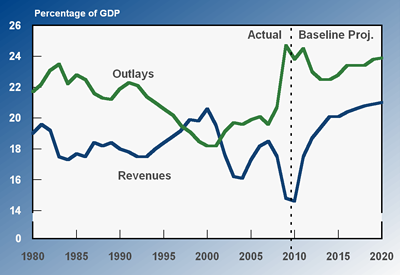 out on what Americans want done with Federal Spending and it just screams stupidity. The overwhelming majority of people want spending cuts in the Federal Budget, but they can’t name many things that they want cut. It seems like there’s this resounding chorus out there of give me my taxes back and do cuts on imaginary spending. Then, it’s just don’t cut anything I use or think is important. I’m going to cite this last paragraph in the article . It’s probably the most relevant. (There’s more discussion links on this at Memeorandum.)
Most Americans do not know exactly how the government spends its money. For example, when asked what percent of the budget goes to earmarks, 41 percent said they make up less than 20 percent of the budget, 13 percent said 20-50 percent, 4 percent said more than 50 percent and 42 percent didn’t know. Earmarks actually make up less than one percent of the budget.
I always hear students say they want to quit giving money away to other countries too. We give less than one half percent of our budget to other countries. The best place to look for budget information is the Congressional Budget Office website. That’s where I got the graph you see in the upper right hand corner. That’s a comparison of Federal Spending (green) and Federal Incomes (blue) since 1980. The gap between the two at any one point in time is the federal deficit for that year.You can distinctly see the period during the Clinton Budget Surpluses because that’s where the blue lines is above the green line. All other periods show more spending than revenues. The Reagan and Bush years were years of explosive spending growth. You can also see the huge gap that started around 2008 when the Great Recession took hold. Nearly each of the down turns recently has been due to huge tax breaks combined with bad economies.
A pie chart shown on a Examiner.com breaks down the expenditures by the funded Department. It also adds Social Security into the mix which is the number one federal outlay. (Ryan Witt’s chart analysis here. Read the comments and embrace the number of people that need to go back to school.) Social Security–however–is sustained at the moment by more revenues than outlays. The Department of Defense comes after that. It gets about 19% of the overall budget. Right now, because of the ‘cyclical’, mandatory spending that occurs due to our bad economy and our high unemployment, you can see that unemployment/welfare payments mandated by law come after that (16%), followed by Medicare which is also offset by payroll taxes at the moment (13%) then Medicaid/SCHIP funding (8%). The Department of Health and Human Services gets about 8%.
The next biggest expenditure is paying the interest on the National Debt. Thankfully, interest rates are low so that amounts to around 5% currently. You can compare this pie chart to the one below and see how lower interest rates combined with higher outlays really helped to push that percentage down.. The next most noticeable part is the Transportation department that gets about 2% of the budget. Most of the remaining major Departments like Homeland Security, Energy, Education, etc. get some where around 1-1 and 1/2%. Veteran’s Affairs gets a fairly noticeable slice too albeit not huge.
 I’ve also put a pie chart of Federal Outlays for 2009 to the left that is some what more general. Notice how huge the Treasury budget was because of TARP (now mostly paid back) and the other bailouts. There are several reasons that the budget deficit has been so bad the last few years. The primary reason is the bad economy because that forces revenues down and outlays up. The second reason is the Bush taxes cuts that were just extended and expanded for the next two years. We’re basically spending at relative levels right now that we’ve not seen since World War 2. We are of course funding two occupations/wars and a ‘war’ on Terror. Some people want to conveniently forget that. When the economy finally improves and we do actually shut down Iraq and Afghanistan, a lot of our budget headaches will go away.
Tuesday Reads: The Anniversary of FDR’s Second Bill of Rights
Posted: January 11, 2011 Filed under: Anti-War, Barack Obama, Civil Liberties, Civil Rights, Equity Markets, Federal Budget, financial institutions, Global Financial Crisis, John Birch Society in Charge, New Orleans, Regulation, Social Security, Stock Market, The Great Recession, U.S. Economy, U.S. Politics | Tags: David Stockman, druggie bath salts, extremist political rhetoric, FDR, financial regulation, gold standard, Governexoricist Jindal, military spending, naked short selling, occupation of Iraq and Iran, right wing currency tropes, Second Bill of Rights, short selling, violence related to cross hairs map 125 Comments Good Morning!!

History Reads
Ever so often, we need to be reminded of history. I read a tweet yesterday by one of our long time news anchors down here in New Orleans.
normanrobinson1 norman robinson
Wondering if we as Americans really value what we have and whether we really care about leaving a future for the generations to follow.
This started me thinking about what future was left to me by the generations directly before me. Of course, we’re living in a world mostly free of NAZIs and Fascists because of the greatest generation. We’re living in a world where the Jim Crow Laws of Separate-But-Equal were torn down by the generation after that with the sacrifice of the heroic leaders of the civil rights movement. I have the right to vote because of my grandmother’s generation and her mother’s generation and what they did for us. I’ve also had consistent access to family planning and birth control because the first women of the baby boom generation and several generations of women before them worked hard for it. Stonewall made a tremendous difference in the lives of GLBTs. Then, there are programs like Social Security and institutions like the United Nations that came from the vision and leadership of FDR and the people who served in his cabinets like Francis Perkins, Henry Wallace, Cordell Hull and many others. They cared enough to build us quite a legacy.
Today is the 67th anniversary of a speech that was to convey that vision of a post-war America. The Second Bill of Rights was part of a State of the Union speech. I’m bringing this up for two reasons. First, because it clearly provides a road map–even today–for “what Americans really value”. I say that because poll after poll shows that the majority of American’s agree with these values even though our government doesn’t seem to reflect that at the moment. For that reason, I share with you today, the words of a leader with a vision and a gift for elocution.
From the FDR American Heritage Center Museum’s Website:
On January 11, 1944, in the midst of World War II, President Roosevelt spoke forcefully and eloquently about the greater meaning and higher purpose of American security in a post-war America. The principles and ideas conveyed by FDR’s words matter as much now as they did over sixty years ago, and the Franklin D. Roosevelt American Heritage Center is proud to reprint a selection of FDR’s vision for the security and economic liberty of the American people in war and peace.
The second reason I want to share this is that we’re coming close to President Obama’s third State of the Union Address. It is scheduled for January 25th. My guess is that FDR’s Second Bill of Rights and the vision he elucidated will officially die on that day. I am not expecting any thing close to the utterance of ‘Necessitous men are not free men’ or “People who are hungry and out of a job are the stuff of which dictatorships are made”.
Despite the obvious parallels between right now and the Great Depression–the high unemployment rates, the incredible number of foreclosures, and the breadth of necessitous men and women and children–I’m expectting many of the vestiges of FDR’s vision that prevent future calamities to be assaulted during Obama’s third State of the Union Address. Look closely at the list I put up top because so much of what was handed us has been trickling away.
As Norman Robinson contemplated via tweet, do we really value what we have today? Will we witness the destruction of what was handed to us and hand our children and grandchildren broken infrastructure, no hope for upward mobility, and useless institutions drained of funds by the greedy? Will any shell of what was envisioned for us in both the first bill of rights and the second remain? Frankly, I am expecting an ‘austerity’ speech that endorses the findings of the cat food commission. I also expect we will hear nothing of overreaching intrusion by the Patriot Act into our internet and cell phones. We are expected to diligently watch Football and bail out billionaires while everything else trickles up and away.
Friday Reads: It’s Carnival Time
Posted: January 7, 2011 Filed under: Anti-War, Federal Budget, Festivities, Food, Foreign Affairs, morning reads, New Orleans, U.S. Politics, Wikileaks | Tags: 12th night, Defense Spending cuts, GOP plans infrastructure cuts, inhumane treatment of Bradley Manning, Julian Assange, King Cake, King's day, mardi gras, The UK Guardian, troop cuts, Wikileaks 62 Comments
Good Morning
You probably think you’re at the wrong blog!! I’ve had a few folks say the gray print and the gray background were hard to read and dreary. So, I spiffed up the front page a bit.
So, is this easier to read?
Welcome to the Carnival Season!
New Orleans has said so long to the holidays and used the Twelfth Night observance to kick off the Carnival season, which will be extra long this year.
Mayor Mitch Landrieu, accompanied by New Orleans clarinetist Pete Fountain, on Thursday served up slices of king cake at historic Gallier Hall, where the mayor greets parading royalty on Mardi Gras Day.Between Thursday and when Carnival celebrations wrap up March 8, about 100 parades will roll through area streets or float down waterways.
The Phunny Phorty Phellows rolled Thursday Night. They’re the first official parade of Mardi Gras. They rent one of the St. Charles Avenue street cars then ride and drink their way up and down St Charles Avenue to usher in the season! They’re a really old krewe that was resurrected in the 1980s. It’s one of the most fun and least commercial of the krewes and parades. You can see some pictures of them from last year if you follow the link.
Well, they’re off and dragging their knuckles through the Halls of Congress! Yes, Republicans are bringing greedy back. It’s so bad that the AFL-CIO and the Chamber of Commerce are joining up to fight them off. Yes, you read that right.
The U.S. Chamber of Commerce and the AFL-CIO — two powerful players that are often at each other’s throats — are considering teaming up for a campaign against the House GOP’s planned cuts to infrastructure spending, spokespeople for both groups tell me.
The two groups rarely agree on anything, and frequently target each other in the harshest of terms, but one thing they agree on is that they don’t want the House GOP to make good on its threat to subject highway and mass-transit programs to budget cuts. GOP leaders announced earlier this week that such cuts could not be taken off the table in the quest to slice up to $100 billion in spending.
The prospect of deep infrastructure cuts may now lead to the unlikely sight of the Chamber and the huge labor federation, both of which boast powerful and well-funded political operations, teaming up to campaign against the House GOP’s plans. The Chamber — a staunch ally of House Republicans that spent millions in the 2010 elections — has already been pushing back against cuts to highway spending because it could lead to more job losses in the construction industry.
MSNBC reports that protests are growing over the treatment of whistle blower Bradley Manning.

 peej
peej Carissa
 bostonboomer
 dakinikat
 ecocatwoman
 mablue2
 Mama Lopez
 peggysue22
 quixote
 skydancingguestblogger
 Mona (aka Wonk the Vote)



 Sky Dancing
Recent Comments