
Wonky Fed Post (hip waders advised)
Posted: April 29, 2011 Filed under: Economy | Tags: Ben Beranke, Brad Delong, Fedderal Reserve Bank, Mark Thoma, monetary policy, Monetary policy at the Zero Bound, Paul Krugman, quantitative easing 23 Comments The Fed’s been doing some pretty nontraditional things recently under Ben Bernanke. A lot of this was not unexpected given his record of academic research on the subject of the Fed trying to be more public about its actions and the role of Quantitative Easing in Japan’s lost decade recovery. I thought I’d put a few things up about both. I’m going to have to use some monetarist jibber jabber so please ask questions if the jargon is overwhelming! It’s easier to explain the jargon downthread than write a long run on post with explanations included.
The Roosevelt Institute held a Future of the Federal Reserve Event. Here’s video via RortyBomb of Joseph Stiglitz discussing QE2 among other Fed issues. I mentioned something yesterday down thread about the effectiveness of transmission of monetary policy through the traditional interest rate channel into the real economy and Stiglitz has a fairly succinct comment on that. There is some debate on how much the Fed can actually do much at this point–with zero bound interest rates–to get at unemployment and even the inflation coming from higher oil and food prices. We know it can happen, it’s just we don’t have empirical evidence under similar situations–other than from Japan–to know the degree to which stuff can happen right now. So it could be an infinitesimally positive effect even thought it’s a positive effect.
There’s been some discussion of this on economists’ blogs since the Bernanke Presser a few days ago. Mark Thoma tweeted this critique of both him and Brad Delong on the Bernanke Presser from a monetarist’s site from blogger economist Stephen Williamson. My first masters was in Monetary Economics so I’m well-steeped in monetarist theory.
In standard form, Mark Thoma’s heartgoes out to the unemployed, as mine does. However, Mark is much more certain than I am that the Fed can actually help these people out. Here is what Mark would have asked Ben about, if he could:
The main question I wanted to hear Bernanke answer is, given that inflation is expected to remain low, why isn’t the Fed doing more to help with the employment problem? Why not a third round of quantitative easing?
And:
In retrospect, more aggressive action by the Fed was warranted in every instance. Perhaps this time is different — I sure hope so — but the recovery has been far too slow to be tolerable. Green shoots require more than hope, they require the nourishment, and with fiscal policy out of the picture it’s up to the Fed to provide it.
Well, the answer to the question: “Why not a third round of quantitative easing?” should be: “Because it does not do anything.” (see here). In retrospect, the Fed could not have done any more than it did, even if you think that sticky wages and prices matter in a big way. Mark may think that the level of employment is intolerable, but the Fed has to tolerate it in the same way I have to tolerate the soggy weather outside.
I wanted to put this up before I linked to Krugman’s Op-Ed today which argues that Bernanke may be unduly influenced by inflationistas and Ron Paul, of all people called “The Intimidated Fed” and that he can do more. Because, I’m not so sure the FED can do much more or if it’s Ron Paul that’s the dragon needing slaying. First, I think it more like that Bernanke is being influenced by two Fed Presidents sitting on the Board of Governors right now than by Ron Paul. But, I’m not a DC or FED insider so it’s pure speculation on my part.
Some background: The Fed normally takes primary responsibility for short-term economic management, using its influence over interest rates to cool the economy when it’s running too hot, which raises the threat of inflation, and to heat it up when it’s running too cold, leading to high unemployment. And the Fed has more or less explicitly indicated what it considers a Goldilocks outcome, neither too hot nor too cold: inflation at 2 percent or a bit lower, unemployment at 5 percent or a bit higher.
But Goldilocks has left the building, and shows no sign of returning soon. The Fed’s latest forecasts, unveiled at that press conference, show low inflation and high unemployment for the foreseeable future.
True, the Fed expects inflation this year to run a bit above target, but Mr. Bernanke declared (and I agree) that we’re looking at a temporary bulge from higher raw material prices; measures of underlying inflation remain well below target, and the forecast sees inflation falling sharply next year and remaining low at least through 2013.
Meanwhile, as I’ve already pointed out, unemployment — although down from its 2009 peak — remains devastatingly high. And the Fed expects only slow improvement, with unemployment at the end of 2013 expected to still be around 7 percent.
It all adds up to a clear case for more action. Yet Mr. Bernanke indicated that he has done all he’s likely to do. Why?
Second, I’m not sure Bernanke (i.e. The FED) is in a very strong position to do much that can influence the real economy right now. The QE stuff really only shifts the FED portfolio around between long and short term debt which can influence yield curves, but, at the zero bound, there’s still a limited impact on real interest rates. You really can’t go lower than zero in nominal terms. Also, the FED’s bought all this crap from every one from Belgian cities to AIG to give them more liquidity and for the most part, that money’s not channeling back into the US economy in the forms of loans. Monetary policy is never very effective when an economy is in a liquidity trap (extremely low interest rates) and its transmission channel–the way the policy gets to the real economy where GDP lurks–morphs during various economic conditions. We’re not seeing anything resembling 20th century economic conditions.
Like We Need More Austerity …
Posted: April 28, 2011 Filed under: Economy, jobs | Tags: BEA, GDP growth, still feels like a recession, U.S. Economy 19 Comments
Too bad we can't buy some stock in soup kitchens ...
U.S. Economic Growth did exactly what most economists expected during the first quarter of 2011, it slowed substantially. There is some hope that the low rate was due to temporary factors like bad weather and political unrest in the MENA region that’s contributed to higher gas prices.
Of these various economic menaces, the most enduring is probably higher commodity prices, which reduce the amount of pocket money that households and businesses have available to spend on other purchases and, in the case of companies, hires. Gasoline prices have shown little sign of falling in recent weeks, and have nearly neutralized the 2011 payroll tax cuts that were intended as a stimulus.
“Consumers are spending more, but it’s getting soaked up in higher gas prices and higher food prices,” the chief economist at RDQ Economics, John Ryding, said. “That’s not leaving nearly as much left over for discretionary spending.”
Declines in government spending will continue to drag on the economy throughout the year, as strapped state and local governments cut back and the federal government tries to cut down on nonmilitary spending. Last quarter’s steep drop in military spending, which tends to be volatile, will probably reverse itself later in the year, economists said.
It’s pretty easy to tell who is experiencing the worst end of this lackluster recovery. Hint: It’s not the wealthiest Americans. But, if you had any doubts, Wal-Mart reports their shoppers are “running out of money”. Again, there’s low overall inflation but higher gas and food prices make up a large portion of the family budget for ordinary Americans.
Wal-Mart’s core shoppers are running out of money much faster than a year ago due to rising gasoline prices, and the retail giant is worried, CEO Mike Duke said Wednesday.
“We’re seeing core consumers under a lot of pressure,” Duke said at an event in New York. “There’s no doubt that rising fuel prices are having an impact.”
Wal-Mart shoppers, many of whom live paycheck to paycheck, typically shop in bulk at the beginning of the month when their paychecks come in.
Lately, they’re “running out of money” at a faster clip, he said.
“Purchases are really dropping off by the end of the month even more than last year,” Duke said. “This end-of-month [purchases] cycle is growing to be a concern.
This would explain the results of this Gallup Poll where “More than Half Still Say U.S. is in a Recession”. This amount of consumer depression in an economy driven by 70% household spending cannot bode well for future GDP growth. Businesses are expanding overseas and will not create any jobs or businesses here unless they see customers. This, in the Keynesia mold, calls for increased government spending. What we have been getting is decreases in taxes to people whose investments and job creation efforts are going outside of the country. It’s not hard to see why most citizens do not think we’re in any kind of recovery other than a technical one.
More than half of Americans (55%) describe the U.S. economy as being in a recession or depression, even as the Federal Open Market Committee (FOMC) reports that “the economic recovery is proceeding at a moderate pace.” Another 16% of Americans say the economy is “slowing down,” and 27% believe it is growing.
Meanwhile, every one within the D.C. beltway continue to eye the dwindling American safety net with greedy eyes. This has elicited comments from all over but none is perhaps more jaw-dropping than a pronouncement from Former Dubay Treasury Secretary Paul O’Neill who likened Republicans threatening to block the increase in the debt ceiling to Al Qaeda Terrorists. It does indeed seem that Republicans would like to bring on a great depression rather than find middle ground on spending and taxing priorities.
“The people who are threatening not to pass the debt ceiling are our version of al Qaeda terrorists. Really,” O’Neill, Treasury secretary in the Republican administration of George W. Bush, said Wednesday in an interview with Bloomberg Television’s InBusiness with Margaret Brennan.
“They’re really putting our whole society at risk by threatening to round up 50 percent of the members of the Congress, who are loony, who would put our credit at risk,” O’Neill said.
It’s as if our elected officials are deliberately sabotaging the country. The details in the National Income and Spending accounts are given here at the BEA. You can see that we’re not getting stimulus from either Federal Spending, Business Investments or Exports. (There’s a pretty much a wash when you look at Net Exports or you subtract Imports from Exports.)
Real exports of goods and services increased 4.9 percent in the first quarter, compared with an increase of 8.6 percent in the fourth. Real imports of goods and services increased 4.4 percent, in contrast to a decrease of 12.6 percent.
Real federal government consumption expenditures and gross investment decreased 7.9 percent in the first quarter, compared with a decrease of 0.3 percent in the fourth. National defense decreased 11.7 percent, compared with a decrease of 2.2 percent. Nondefense increased 0.1 percent, compared with an increase of 3.7 percent. Real state and local government consumption expenditures and gross investment decreased 3.3 percent, compared with a decrease of 2.6 percent.
The change in real private inventories added 0.93 percentage point to the first-quarter change in
real GDP after subtracting 3.42 percentage points from the fourth-quarter change. Private businesses
increased inventories $43.8 billion in the first quarter, following increases of $16.2 billion in the fourth
quarter and $121.4 billion in the third.
None of this is good news when coupled with the still high rates of unemployment. Despite all these tax cuts, the business sector is clearly not going anywhere. Here’s a link to some further analysis and nifty graphs from Econbrowser. This analysis is particularly germane to our conversation.
Inventory rebuilding and a gain in exports made positive contributions, but these were essentially undone by increases in imports and decreases in government spending. Perhaps the most disappointing detail was investment spending by businesses, which had been making solid contributions to growth the previous three quarters, but was essentially flat for Q1. Housing remains stuck at very low levels, but at least it’s no longer a significant factor dragging the level of GDP down.
But until housing and business investment start making a positive contribution, we’re likely to be disappointed by the employment and GDP reports.
It’s pretty obvious that fiscal policy in this country has gone to VooDoo land because we’re still in deep DooDoo. What we have here is fiscal policy malpractice. Too bad we can’t all join in a massive lawsuit and sue the Congress. Thanks a lot SCOTUS!!!
A First: Fed Chair Presser
Posted: April 27, 2011 Filed under: Economy, Federal Budget, Federal Budget and Budget deficit, financial institutions, Global Financial Crisis, jobs, U.S. Economy, unemployment | Tags: Ben Bernanke, FED, inflation, jobs, monetary policy, presser 10 Comments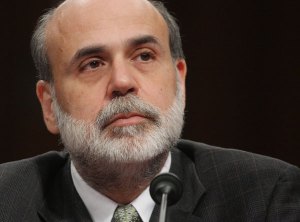 I’m watching Bernanke do a presser. Wow. (It’s a live blog … updates and explanations will be provided.) I can’t believe the press sent political reporters to this. What an amazing number of really rotten questions!!!
Some key points from the morning’s congressional testimony.
On Unemployment: We do see some grounds for optimism, including a decline to the unemployment rate, declines in the new unemployment insurance claims and improvements in firms’ reported hiring plans. But, even so, it could take quite a while for unemployment to come down to desired levels at current expected growth rates and, in particular, the FOMC projects unemployment still to be in the range of seven and-a-half to eight percent by the end of 2012. Until we see a sustained period of stronger job creation, we cannot consider the recovery to be truly established.
On Inflation: “I want to go back over this whole line of interventions, including today quantitative easing. And there have been a series of criticisms that have been made and negative predictions, and my view is that none of them have come true. And I think it is important for us to — to note that. And — and I know you’ve talked about this. I know you mentioned in your statement some of the points. But we were told, for instance, that it was going to be very inflationary. And I know it is your view as of now, and I think supported by the facts, that inflation is not now a problem, and we do not see inflation, certainly not one caused by any of what’s been done going forward. We were told this was going to be extraordinarily expensive, that it was going to cost a lot of money. I believe the answer is that on many of these things the federal government has made a profit by the — by the intervention.”
On Crude Oil: “The relative price of oil, again, is primarily due to global supply and demand. I think it’s important to note that the United States is consuming less oil today, importing less oil and producing more oil than it did before the crisis. That all the increase in demand from outside the United States, particularly in the emerging markets. And so there’s limited amount of what the Fed can do about oil prices alone. Again though, we want to be very sure that it doesn’t feed into overall inflation. We will make sure that doesn’t happen.”
On the Dollar: If the dollar was no longer reserve currency there would – it would on the margin probably mean that we would have to pay highest interest rates to finance the federal debt, and that would be a negative obviously. On other other hand, we might not suffer some of the capital inflows that contributed to the boom and the bust in the recent crisis. But again, I know there was also a countervailing argument in the Journal this morning as well. And I – I just don’t see at this point that there is a major shift away from the dollar.
On the Consumer: We understand the visibility of gas prices and food prices and we want to be sure that people’s expectations aren’t adversely affected. I think it’s important to note that, according for example, to the Michigan survey of consumers, that long term inflation expectations have been basically flat. I mean, they haven’t moved, notwithstanding ups and downs in gas prices, for example.
On the U.S. Fiscal Situation: While I understand these are difficult decisions and we certainly can’t solve it all in the current fiscal year, I do think we need to look forward and I know the House Budget Committee and others will be setting up a 10 year proposal. It’s very important and would be very constructive for Congress to lay out a plan that would be credible that will help bring us to sustainability over the next few years. In particular, one rule of thumb is cutting enough that the ratio of the debt to GDP stops rising. Because currently it’s rising relatively quickly. If we could stabilize that, I think that would do a lot to increase confidence in our government and in our fiscal policies.
Obviously, Bernanke needs to drill baby drill to get rid of inflation … so simple!!!
or this:
ezrakleinEzra Klein
Bottom line: Congress is embracing austerity. The Fed is going to start tapping the brakes. Sucks to be you, unemployed people. #fedpresser
Background information on the Fed Presser from NYT and David Leonhardt.
On Wednesday at 2:15 p.m., Ben Bernanke will do something that previous Federal Reserve chairmen considered a terrible idea. He will hold a news conference.
Mr. Bernanke spent much of his academic career arguing that the Fed should be less opaque, and, as chairman, he has put his ideas into action. Now it’s time for those of us in the media to hold up our end of bargain. In the spirit of democratic accountability, we should ask hard questions — and we shouldn’t let him get away with the evasions and half-answers that members of Congress too often allow Fed chairmen during their appearances on Capitol Hill.
One question more than any than other is crying out for an answer: Why has Mr. Bernanke decided to accept widespread unemployment for years on end, even though he believes he has the power to reduce it?
Here’s Paul Krugman’s take on the presser: Bernanke Wimps Out. He’s got the same questions I do about the inflation v. unemployment . (See my comments in the thread below.)
So Bernanke did get asked why, given low inflation and high unemployment, the Fed isn’t doing more. And his answer was disheartening.
As far as I can tell, his analytical framework isn’t too different from mine. The inflation rate to worry about is some underlying, inertial rate rather than the headline rate; the Fed likes the core personal consumer expenditures deflator; and this rate has actually been running below target, indicating that inflation isn’t a concern …
Fiscal Jabberwocky
Posted: April 24, 2011 Filed under: Barack Obama, Economic Develpment, Economy, Federal Budget, Federal Budget and Budget deficit, financial institutions, Global Financial Crisis, John Birch Society in Charge, legislation, Populism, Republican politics, U.S. Economy, U.S. Military, U.S. Politics, voodoo economics, We are so F'd | Tags: Barack Obama, David Stockman, Fiscal Crisis, Paul Ryan, voodoo economics 29 Comments
"Beware the Jabberwock, my son! The jaws that bite, the claws that catch!"
It’s not often I get to post pictures of mythical beasts for a few days in a row but here I go again. Plus, I’ve gotten another chance to use one of those wonderful Alice in Wonderland book illustrations. Too bad they’re attached to posts where the perverse wonderland rules. It seems to be a year for fictional monsters in Op-Eds and real ones in congress.
David Stockman, Budget Director for Ronald Reagan, has joined the ranks of Republican advisers calling shenanigans on the Boehner/Tea Party Republicans AND the dithering Obama Dems. He must be very financial and professionally secure. His op-ed in the New York Times draws blood on all sides. He starts out telling President Obama what is what then moves on to hammering that petulant ninny from Wisconsin, Paul Ryan. Go read it if only for the creative use of words like that in the heading above.
On the other side, Representative Ryan fails to recognize that we are not in an era of old-time enterprise capitalism in which the gospel of low tax rates and incentives to create wealth might have had relevance. A quasi-bankrupt nation saddled with rampant casino capitalism on Wall Street and a disemboweled, offshored economy on Main Street requires practical and equitable ways to pay its bills.
Ingratiating himself with the neo-cons, Mr. Ryan has put the $700 billion defense and security budget off limits; and caving to pusillanimous Republican politicians, he also exempts $17 trillion of Social Security and Medicare spending over the next decade. What is left, then, is $7 trillion in baseline spending for Medicaid and the social safety net — to which Mr. Ryan applies a meat cleaver, reducing outlays by $1.5 trillion, or 20 percent.
Trapped between the religion of low taxes and the reality of huge deficits, the Ryan plan appears to be an attack on the poor in order to coddle the rich. To the Democrats’ invitation to class war, the Republicans have seemingly sent an R.S.V.P.
Stockman call the entire situation “fiscal jabberwocky”. Good turn of phrase that. He then moves to skewering the FED and adds Chinese currency pegging into the villain mix. I guess there’s nothing like a good rant when you can get primetime ink. This seems to be an interesting foray into harsh policy critique for economists with a republican bent.
Stockman, like Bruce Barlett and even David Frum are yet more Republicans who are pointing out the current GOP leaders are no more serious about budget reform than the Democrats are. The main difference is the GOP has better slogans and marketing, and slides into full blow demagoguery more easily.
But in terms of actual strategies for intelligently addressing the issue? The most glaring truth is the lack of leadership on both sides of the aisle.
The Barry Ritholtz blog post on Stockman’s op ed does score some points on mentioning the leadership chasm, but, even more telling is the absolute adherence to fairy tales over reality in policy making these days. Is there an economist in the House? Joe Wiesenthal says that Stockman is suffering from “fatalistic populism”. Here’s Stockman’s ending barb to prove that point. It’s also the two sentences that offer up the policy solution.
So the Ryan plan worsens our trillion-dollar structural deficit and the Obama plan amounts to small potatoes, at best. Worse, we are about to descend into class war because the Obama plan picks on the rich when it should be pushing tax increases for all, while the Ryan plan attacks the poor when it should be addressing middle-class entitlements and defense.
I’ve said many times that the Bush tax cuts just need to expire. I’ve also said that since the Reagan years we’ve basically started chumming our economy by jumping into interventions wherever and whenever. Afghanistan and Iraq are two such adventures that need to be de-funded and ended. We also need to reign in the congressional and pentagon weapons fetish which is basically whipped into a frenzy by free spending lobbyists for companies like Halliburton, GE, and Boeing. I can only image what they all want the drone budget to look like. MENA appears to be filled with hives these days.
So many of our fiscal problems would go away if we would just put things back to the where they were 10 years ago. This includes putting Wall Street back in its box instead of letting it go completely gaga with nonstandard, unregulated financial innovations. We can’t afford Obama’s muddling policies that seem like voting present while Republicans go wild with his inability to stand any firm ground. I believe he got elected to undo the Dubya years. Instead, he’s put the Dubya policies on steroids. So, if most of us–that would be voters–are saying let’s take it all back to the Clinton years, what I’d like to know is who are the real conservatives and who are the real radicals?
CBO Analysis: Budget Deal Cuts 2011 Spending by $352 Million, not $39 Billion
Posted: April 14, 2011 Filed under: Barack Obama, Economy, U.S. Economy, U.S. Politics, Voter Ignorance, We are so F'd | Tags: Barack Obama, Congressional Budget Office, government shutdown, John Boehner, lying liars 15 Comments
Boehner and Obama agree to pacify the proles with lies
This is hilarious. From the National Journal:
A Congressional Budget Office analysis of the fiscal 2011 spending deal that Congress will vote on Thursday concludes that it would cut spending this year by less than one-one hundredth of what both Republicans or Democrats have claimed.
A comparison prepared by the CBO shows that the omnibus spending bill, advertised as containing some $38.5 billion in cuts, will only reduce federal outlays by $352 million below 2010 spending rates. The nonpartisan budget agency also projects that total outlays are actually some $3.3 billion more than in 2010, if emergency spending is included in the total.
The astonishing result, according to CBO, is the result of several factors: increases in spending included in the deal, especially at the Defense Department; decisions to draw over half of the savings from recissions, cuts to reserve funds, and mandatory-spending programs; and writing off cuts from funding that might never have been spent.
According to Fox News, Congress is in a uproar about it.
Liberal Democrats remain opposed to the plan because of its trims and because of policy points, like its restriction of abortion subsidies, but a rebellion is spreading among conservative members of the House and Senate.
The problem is that in heralding the deal, Obama, Boehner and Reid played up $39 billion in cuts, which were assumed to be for the current fiscal year. But those cuts include some gimmicky accounting and the savings obtained from not tapping reserve funds for programs like Medicaid.
When the CBO crunched the numbers on how the deal would affect the projected $1.65 trillion deficit for this year, the result was a reduction of .02 percent.
So I guess we could still be headed for a shutdown? The House will vote on the bill today.
The real danger zone for the deal would be around 70 Republican defections. That would cast doubt on whether there are enough moderate Democrats [i.e., DINOs] to fill the gap and get to the requisite 217 votes. It would also be nearly a third of the Republican caucus in opposition, a weak showing for the GOP ahead of the even bigger battle over Obama’s request for an increase to the government’s $14.3 trillion borrowing limit.
Bond buyers will be watching for major fractures here. If the House GOP is in a riot, watch U.S. debt prices start to climb.
We are so f’d.

 peej
peej Carissa
 bostonboomer
 dakinikat
 ecocatwoman
 mablue2
 Mama Lopez
 peggysue22
 quixote
 skydancingguestblogger
 Mona (aka Wonk the Vote)



 Sky Dancing
Recent Comments