The dismantling of the U.S. Government by Elon Musk and Donald Trump is beyond breathtaking. I put Musk’s name first because he appears to be the one who is issuing orders while Trump golfs or rants on social media. I couldn’t possibly discuss the damage in a blog post–there is just too much happening at once. We are watching a fascist takeover in real time. Meanwhile, the Democrats are doing nothing to stop it.
From what I can tell, Trump/Musk have already destroyed the Justice Department and the FBI. Musk has taken control of the Treasury’s computer system that controls all government’s payments, including Social Security. They are working to get rid of as many federal employees as they can, either by firing them or convincing them to quit. They are purging websites of important public information. Soon, Trump plans to install tariffs that will cause serious inflation and damage relationships with our closest allies Canada and Mexico.
One thing I know for sure: this country will never be the same. I only hope we can stop it from becoming a dictatorship. If the Democrats remain supine, it may not be possible.
I’ve long believed that the American media would be more clear-eyed about the rise and return of Donald Trump if it was happening overseas in a foreign country, where we’re used to foreign correspondents writing with more incisive authority. Having watched with growing alarm the developments of the last 24 and 36 hours in Washington, I thought I’d take a stab at just such a dispatch. Here’s a story that should be written this weekend:
February 1, 2025 By William Boot
WASHINGTON, D.C. — What started Thursday as a political purge of the internal security services accelerated Friday into a full-blown coup, as elite technical units aligned with media oligarch Elon Musk moved to seize key systems at the national treasury, block outside access to federal personnel records, and take offline governmental communication networks.
With rapidity that has stunned even longtime political observers, forces loyal to Musk’s junta have established him as the all-but undisputed unelected head of government in just a matter of days, unwinding the longtime democracy’s constitutional system and its proud nearly 250-year-old tradition of the rule of law. Having secured themselves in key ministries and in a building adjacent to the presidential office complex, Musk’s forces have begun issuing directives to civil service workers and forcing the resignation of officials deemed insufficiently loyal, like the head of the country’s aviation authority.
The G-7 country’s newly installed president, a mid-level oligarch named Donald Trump, appeared amid Musk’s moves to be increasingly merely a figurehead head of state. Trump is a convicted felon with a long record of family corruption and returned in power in late January after a four-year interlude promising retribution and retaliation against foreign opponents and a domestic “Deep State.” He had been charged with attempting to overthrow the peaceful transition of power that had previously removed him from office in 2021, but loyalist elements in the judiciary successfully blocked his prosecution and incarceration, easing his return to power.
Over the last two weeks, loyalist presidential factions and Musk-backed teams have launched sweeping, illegal Stalin-esque purges of the national police forces and prosecutors, as well as offices known as inspectors-general, who are typically responsible for investigating government corruption. While official numbers of the unprecedented ousters were kept secret, rumors swirled in the capital that the scores of career officials affected by the initial purges could rise into the thousands as political commissars continued to assess the backgrounds of members of the police forces.
The mentally declining and aging head of state, who has long embraced conspiracist thinking, spent much of the week railing in bizarre public remarks against the country’s oppressed racial and ethnic minorities, whom he blamed without evidence for causing a deadly plane crash across the river from the presidential mansion. Unfounded racist attacks on those minorities have been a key foundation of Trump’s unpredicted rise to political power from a career as a real estate magnate and reality TV host and date back to his first announcement that he would seek the presidency in 2015, when he railed against “rapists” being sent into the country from its southern neighbor.
In one of his first moves upon returning to the presidency, he mobilized far-right paramilitary security forces to begin raids at churches, schools, and workplaces to identify and remove racial minorities, including those who had long lived in harmony with the country’s white Christian majority. He also immediately moved to release from prison some 1,500 supporters who had participated in his unsuccessful 2021 insurrection, including members of violent far-right militias who promptly upon release swore fealty to him in any future civil unrest.
Underscoring his apparent disconnection from reality, reports surfaced that the president had ordered military forces to unleash an environmental catastrophe and flood regions of a separatist province known as California that is led by a high-profile political opponent. The order underscored how the military, which had resisted Trump’s unconstitutional power grabs in his first administration, was now led by a subservient defense minister, a favored TV personality with no experience in management who faced an embarrassing series of allegations about his drunken behavior in the workplace.
The conclusion:
Throughout the week’s fast-moving seizure of power—one that seems increasingly irreversible by the hour—neither loyalist nor opposition parliamentary leaders raised meaningful objection to the new regime or the unraveling of the country’s constitutional system of checks and balances. A few members of the geriatric legislature body offered scattered social media posts condemning the move, but parliament — where both houses are controlled by so-called “MAGA” members handpicked for their loyalty to the president — went home early for the weekend even as Musk’s forces spread through the capital streets.
It was unclear what role, if any, Musk’s forces would allow parliament to have in the new governmental structure by the time it returned to the national assembly known as Capitol Hill.
I hope you’ll read the whole piece at the Substack link.
This story (which Dakinikat posted yesterday) is huge. Now there are new and even more dangerous developments (see additional stories on this below.)
The highest-ranking career official at the Treasury Department left the agency after a clash with allies of billionaire Elon Musk over access to sensitive payment systems, according to three people with knowledge of the matter, who spoke on the condition of anonymity to describe private talks.
David A. Lebryk, who served in nonpolitical roles at Treasury for several decades, announced his retirement Friday in an email to colleagues that was obtained by The Washington Post. President Donald Trump named Lebryk acting secretary upon taking office last week. Lebryk had a dispute with Musk’s surrogates over access to the payment system the U.S. government uses to disburse trillions of dollars every year, the people said. The exact nature of the disagreement was not immediately clear, they said.
By Bettina Baldassari
Officials affiliated with Musk’s “Department of Government Efficiency” have been asking since after the election for access to the system, the people said — requests that were reiterated more recently, including after Trump’s inauguration. Tom Krause, a Silicon Valley executive who has now been detailed to Treasury, is among those involved, the people said. Krause did not respond to requests for comment….
When Scott Bessent was confirmed as treasury secretary on Monday, Lebryk ceased to be the acting agency head. Trump administration officials placed Lebryk on administrative leave before he announced he would step down, two of the people said.
Typically only a small number of career officials control Treasury’s payment systems. Run by the Bureau of the Fiscal Service, the sensitive systems control the flow of more than $6 trillion annually to households, businesses and more nationwide. Tens, if not hundreds, of millions of people across the country rely on the systems, which are responsible for distributing Social Security and Medicare benefits, salaries for federal personnel, payments to government contractors and grant recipients, and tax refunds, among tens of thousands of other functions.
The clash reflects an intensifying battle between Musk and the federal bureaucracy as the Trump administration nears the conclusion of its second week. Musk has sought to exert sweeping control over the inner workings of the U.S. government, installing longtime surrogates at several agencies, including the Office of Personnel Management, which essentially handles federal human resources, and the General Services Administration, which manages real estate. (Musk was seen on Thursday visiting the GSA, according to two other people familiar with his whereabouts, who also spoke on the condition of anonymity to describe internal matters. That visit was first reported by the New York Times.) His Department of Government Efficiency, originally conceived as a nongovernmental panel, has since replaced the U.S. Digital Service.
Aides to Elon Musk charged with running the U.S. government human resources agency have locked career civil servants out of computer systems that contain the personal data of millions of federal employees, according to two agency officials.
Musk, the billionaire Tesla CEO and X owner tasked by Trump to slash the size of the 2.2 million-strong civilian government workforce, has moved swiftly to install allies at the agency known as the Office of Personnel Management.
The two officials, who spoke to Reuters on condition of anonymity for fear of retaliation, said some senior career employees at OPM have had their access revoked to some of the department’s data systems.
The systems include a vast database called Enterprise Human Resources Integration, which contains dates of birth, Social Security numbers, appraisals, home addresses, pay grades and length of service of government workers, the officials said.
“We have no visibility into what they are doing with the computer and data systems,” one of the officials said. “That is creating great concern. There is no oversight. It creates real cybersecurity and hacking implications.”
Officials affected by the move can still log on and access functions such as email but can no longer see the massive datasets that cover every facet of the federal workforce.
President Donald Trump has granted Elon Musk unprecedented power to carry out his war on the “deep state.” The justification for this is supposed to be that the government is corrupted to its core precisely because it is stocked with unelected bureaucrats who are unaccountable to the people.
Musk, goes this story, will employ his fearsome tech wizardry to root them out, restoring not just efficiency to government but also the democratic accountability that “deep state” denizens have snuffed out—supposedly a major cause of many of our social ills.
The startling news that a top Treasury Department official is departing after a dispute with Musk shows how deeply wrong that story truly is—and why it’s actively dangerous. The Washington Postreports that David Lebryk, who has carried out senior nonpolitical roles at the department for decades, is leaving after officials on Musk’s Department of Government Efficiency, or DOGE, sought access to Treasury’s payment system:
Lebryk had a dispute with Musk’s surrogates over access to the payment system the U.S. government uses to disburse trillions of dollars every year, the people said. The exact nature of the disagreement was not immediately clear, they said.
The news raises a complicated question: WTF??? Why is Musk’s DOGE trying to access payment systems inside the Treasury Department? It’s not clear what relevance this would have to his ostensible role, which is to search for savings and inefficiencies in government, not to directly influence whether previously authorized government obligations are honored.
Cliffhanger, by Stefanie Roberti
Another question: Did Trump directly authorize Musk to do this, or did he not? Either answer is bad. If Trump did, he may be authorizing an unelected billionaire to exert unprecedented control over the internal workings of government payment systems. If he did not, then Musk may be going rogue to an even greater extent than we thought….
Former officials I spoke with were at a loss to explain why Musk would want such access. They noted that while we don’t yet know Musk’s motive, the move could potentially give DOGE the power to turn off all kinds of government payments in a targeted way. They said we now must establish if Musk is seeking to carry out what Trump tried via his federal funding freeze: Turn off government payments previously authorized by Congress. The White House rescinded the freeze after a national outcry, but Trump’s spokesperson vowed the hunt for spending to halt will continue. The former officials are asking: Is this Treasury power grab a way to execute that?
“Anybody who would have access to these systems is in a position to turn off funding selectively,” said Michael Linden, a former OMB official who is now director of Families Over Billionaires, a group fighting Trump’s tax cuts for the rich. “The only reason Musk wants to get himself in there must be because he wants to turn some things off.”
Read more at TNR. I got my Social Security check this month. Will I get one in March?
Remember how Elon Musk destroyed Twitter by ripping apart its infrastructure without understanding it? Now imagine that same playbook applied to the federal government. It’s happening, and the stakes are exponentially higher. When reviewing Kate Conger and Ryan Mac’s book “Character Limit” last fall, I highlighted two devastating patterns in Musk’s management: his authoritarian impulse to (sometimes literally) demolish systems without understanding them, and his tendency to replace existing, nuanced solutions with far worse alternatives (even when those older systems probably did require some level of reform). Those same patterns are now threatening the federal government’s basic functions.
Let’s be crystal clear about what’s happening: A private citizen with zero Constitutional authority is effectively seizing control of critical government functions. The Constitution explicitly requires Senate confirmation for anyone wielding significant federal power — a requirement Musk has simply ignored as he installs his loyalists throughout the government while demanding access to basically all of the levers of power, and pushing out anyone who stands in his way.
The parallel to Twitter is striking and terrifying. At Twitter, Musk’s “reform” strategy transformed a platform used by hundreds of millions for vital communication into his personal megaphone, hemorrhaging somewhere between 60-85% of its revenue in the process. But Twitter was just a private company. Now he’s applying the same destructive playbook to the federal government, where the stakes involve not just user experience or advertising dollars, but the basic functioning of American democracy.
The constitutional violations here dwarf the Twitter debacle. Where Musk merely broke a social media platform through incompetence last time, he’s now breaking the actual mechanisms of governance — and doing it with the same reckless playbook that turned Twitter into a ghost town. As Conger and Mac, who documented the Twitter disaster, point out, even the specific tactics are being recycled:
The email landed in employees’ inboxes with the subject line: “Fork in the Road.” The message in the email was stark: Accept a sweeping set of workplace changes or resign.
That was the note that millions of federal employees received around 5 p.m. on Tuesday. It echoed a similar message that thousands of workers at Twitter got from Elon Musk in late 2022 after he bought the company.
[….]
Mr. Musk, who also leads Tesla and SpaceX, has enlisted the help of a team of loyalists to assess agencies and make cuts, the same thing he did during the Twitter takeover.
Steve Davis, the head of Mr. Musk’s tunneling startup, The Boring Company, helped oversee cost-cutting at Twitter and now leads DOGE. Brian Bjelde, a longtime human resources executive at SpaceX who also helped during the Twitter takeover, is now an adviser to the Office of Personnel Management.
Michael Grimes, a top banker at Morgan Stanley who helped lead Mr. Musk’s Twitter acquisition, is expected to take a senior job at the Commerce Department.
One of Mr. Musk’s software engineers at Tesla, Thomas Shedd, was named the head of “Technology Transformation Services” at the General Services Administration, which helps manage federal agencies. Mr. Shedd promptly employed a Musk tactic: asking for proof of engineers’ technical chops.
Mr. Shedd asked for engineers to sign up for sessions in which they could share “a recent individual technical win,” according to an email sent to more than 700 employees on Tuesday night and viewed by The Times.
Elon Musk’s minions—from trusted sidekicks to random college students and former Musk company interns—have taken over the General Services Administration, a critical government agency that manages federal offices and technology. Already, the team is attempting to use White House security credentials to gain unusual access to GSA tech, deploying a suite of new AI software, and recreating the office in X’s image, according to leaked documents obtained by WIRED.
By Otar Imerlishvili
Some of the same people who helped Musk take over Twitter more than two years ago are now registered as official GSA employees. Nicole Hollander, who slept in Twitter HQ as an unofficial member of Musk’s transition team, has high-level agency access and an official government email address, according to documents viewed by WIRED. Hollander’s husband, Steve Davis, also slept in the office. He has now taken on a leading role in Musk’s Department of Government Efficiency (DOGE). Thomas Shedd, the recently installed director of the Technology Transformation Services within GSA, worked as a software engineer at Tesla for eight years. Edward Coristine, who previously interned at Neuralink, has been onboarded along with Ethan Shaotran, a Harvard senior who is developing his own OpenAI-backed scheduling assistant and participated in an xAI hackathon.
“I believe these people do not want to help the federal government provide services to the American people,” says a current GSA employee who asked not to be named, citing fears of retaliation. “They are acting like this is a takeover of a tech company.”
The team appears to be carrying out Musk’s agenda: slashing the federal government as quickly as possible. They’re currently targeting a 50 percent reduction in spending for every office managed by the GSA, according to documents obtained by WIRED.
There also appears to be an effort to use IT credentials from the Executive Office of the President to access GSA laptops and internal GSA infrastructure. Typically, access to agency systems requires workers to be employed at such agencies, sources say. While Musk’s team could be trying to obtain better laptops and equipment from GSA, sources fear that the mandate laid out in the DOGE executive order would grant the body broad access to GSA systems and data. That includes sensitive procurement data, data internal to all the systems and services GSA offers, and internal monitoring software to surveil GSA employees as part of normal auditing and security processes.
The access could give Musk’s proxies the ability to remote into laptops, listen in on meetings, read emails, among many other things, a former Biden official told WIRED on Friday.
At the direction of the Trump administration, the federal Department of Health and Human Services and its agencies are purging its websites of information and data on a broad array of topics — from adolescent health to LGBTQ+ rights to HIV.
Several webpages from Centers for Disease Control and Prevention with references to LGBTQ+ health were no longer available. A page from the HHS Office for Civil Rights outlining the rights of LGBTQ+ people in health care settings was also gone as of Friday. The website of the National Institutes of Health’s Office for Sexual & Gender Minority Research Office disappeared. (Most of these pages could still be viewed through the Internet Archive.)
Another order, signed by Trump, takes aim at “diversity, equity, and inclusion” across the federal government.
On Friday, however, many pages that did not seem related to “gender” or “diversity” had also been taken down, such as AtlasPlus, an interactive tool from CDC with surveillance data on HIV, viral hepatitis, STDs and TB. Also gone missing: a page with basic information about HIV testing. The CDC’s Social Vulnerability Index, a tool that assesses community resilience in the event of natural disaster was also taken down.
“The removal of HIV- and LGBTQ-related resources from the websites of the Centers for Disease Control and Prevention and other health agencies is deeply concerning and creates a dangerous gap in scientific information and data to monitor and respond to disease outbreaks,” the Infectious Disease Society of America said in a statement. “Access to this information is crucial for infectious diseases and HIV health care professionals who care for people with HIV and members of the LGBTQ community and is critical to efforts to end the HIV epidemic.”
One striking example of the vanishing information: The CDC pulled down the website that houses data collected by the nation’s largest monitoring program on health-related behaviors among high schoolers.
Pages related to the CDC’s Division of Adolescent and School Health, which administers the program, were also unavailable.
The Youth Risk Behavior Surveillance System tracks key metrics on nutrition, physical activity, tobacco and drug use, sexual behavior and other areas. The program was created 35 years ago and includes a national survey that researchers rely on to measure how behaviors influence health and design prevention measures.
“It’s the way the nation understands adolescent health,” says Stephen Russell, a sociologist at the University of Texas at Austin who studies adolescent health. “The disappearance of that data is stunning.”
This afternoon, FBI personnel braced for a retaliatory purge of the nation’s premiere law-enforcement agency, as President Donald Trump appeared ready to fire potentially hundreds of agents and officials who’d participated in investigations that led to criminal charges against him.
A team that investigated Trump’s mishandling of classified documents was expected to be fired, four people familiar with the matter said. Trump has long fumed about that investigation, which involved a raid on his Mar-a-Lago estate that turned up hundreds of classified documents he had taken after he left the White House four years ago.
David Sundberg, the head of the FBI’s Washington Field Office, is also being fired, these people added. Sundberg is a career FBI agent with more than two decades of experience, and he oversees some of the bureau’s most sensitive cases related to national security and counterintelligence. Current and former officials told me they are worried that those investigations could stall, at least temporarily, if a large number of agents are suddenly removed. A spokesperson at the Washington Field Office declined to comment.
By Marcella Cooper
Trump’s retribution is not limited to those who investigated him personally. Administration officials are reviewing records to identify FBI personnel who participated in investigations of the January 6 assault on the Capitol by his supporters, people familiar with the matter told me. That could potentially involve hundreds if not thousands of agents, including those who interviewed and investigated rioters who were later prosecuted. Shortly after taking office, Trump pardoned about 1,500 of the rioters and commuted others’ sentences.
There is no precedent for the mass termination of FBI personnel in this fashion. Current and former officials I spoke with had expected Trump to exact retribution for what he sees as unjust and even illegal efforts by the FBI and the Justice Department to investigate his conduct. But they were stunned by the scale of Trump’s anticipated purge, which is taking aim at senior leaders as well as working-level agents who do not set policy but follow the orders of their superiors.
This afternoon, some FBI personnel frantically traded messages and rumors about others believed to be on Trump’s list, including special agents who run field offices across the country and were also involved in investigations of the former president.
Trump’s efforts to root out his supposed enemies might not withstand a legal challenge. FBI agents do not choose the cases assigned to them, and they are protected by civil-service rules. The FBI Agents Association, a nonprofit organization that is not part of the U.S. government, said in a statement that the reports of Trump’s planned purge are “outrageous” and “fundamentally at odds with the law enforcement objectives outlined by President Trump and his support for FBI Agents.”
The mass firings could imperil the nomination of Kash Patel, whom Trump wants to run the FBI in his administration. Just yesterday, Patel had assured senators during his confirmation hearing that the very kinds of politically motivated firings that appear to be in motion would not happen.
This is a genuine emergency. Remember it only took Hitler about a year and a half to establish a dictatorship in Germany. Is anyone working to oppose Trump and Musk? It sure doesn’t seem like it.
Federal government workers have been left “shell-shocked” by the upheaval wreaked by Donald Trump’s return to the presidency amid signs that he is bent on exacting revenge on a bureaucracy he considers to be a “deep state” that previously thwarted and persecuted him.
Since being restored to the White House on 20 January, the president has gone on a revenge spree against high-profile figures who previously served him but earned his enmity by slighting or criticising him in public.
He has cancelled Secret Service protection for three senior national security officials in his first presidency – John Bolton, the former national security adviser; Mike Pompeo, who was CIA director and secretary of state; and Brian Hook, a former assistant secretary of state – even though all are assassination targets on an Iranian government hit list.
The same treatment has been meted out to Anthony Fauci, the infectious diseases expert who angered Trump after joining the White House taskforce tackling Covid-19 and who has also faced death threats.
Trump has also fired high-profile figures from government roles on his social media site and stripped 51 former intelligence officials of their security clearances for doubting reports about Hunter Biden’s laptop as possible Russian disinformation….
“The most common refrain I’m hearing from people who have left but are still talking to people on the inside is: ‘I knew it was going to be bad but I didn’t think it was going to be this bad,’” said Mark Bergman, a veteran Democratic lawyer who has been in contact with some of those who fear being targets of the retribution Trump repeatedly vowed on the campaign trail….
A bit more:
There are ominous signs that the spirit of retribution will continue – or get worse.
Last week, in tactics more redolent of totalitarian regimes the United States has historically been at odds with, federal workers were warned of “adverse consequences” if they failed to report their colleagues who refused to comply with the administration’s purge of diversity, equity and inclusion (DEI) programs, or tried to sustain the programs with coded language.
The Democrats are angry. Well, at least some of them.
For months, party activists have felt bitter about Kamala Harris’s election loss, and incensed at the leaders who first went along with Joe Biden’s decision to run again. They feel fresh outrage each time a new detail is revealed about the then-81-year-old’s enfeeblement and its concealment by the advisers in charge. But right now, what’s making these Democrats angriest is that many of their elected leaders don’t seem angry at all.
By Monika Seidenbusch
“I assumed that we would be prepared to meet the moment, and I was wrong,” Shannon Watts, the founder of the gun-control group Moms Demand Action, told me. “It’s like they’ve shown up to a knife fight with a cheese stick.”
For all the people in Watts’s camp, the party’s response to Donald Trump’s first 12 days in office has been maddening at best and demoralizing at worst. After Trump issued pardons or commutations for the January 6 rioters last week, including the ones who attacked police officers, no immediate chorus of anger came from what is supposed to be the next generation of Democratic talent, including Maryland Governor Wes Moore, California Governor Gavin Newsom, and former Transportation Secretary Pete Buttigieg. Michigan Governor Gretchen Whitmer, another 2028 hopeful, who is on tour selling a young-adult version of her autobiography, has told interviewers, “I am not out looking for fights. I am always looking to collaborate.”
After Trump threatened Colombia with tariffs, House Minority Leader Hakeem Jeffries attempted to reassure the confused and fearful rank and file with the reminder that “God is still on the throne,” which seemed a little like saying, “Jesus, take the wheel.” And people were baffled after the Democratic National Committee responded on X to Trump’s first week in office by channeling a quainter time in American politics and dusting off an Obama-era slogan to accuse him of being “focused on Wall Street—not Main Street.” “Get new material!” one person suggested in the replies, a succinct summary of the other 1,700 comments.
The limp messaging continued this week, after Trump’s administration on Monday issued a federal-funding freeze, including for cancer research and programs such as Meals on Wheels. The next day, Jeffries called for an emergency caucus meeting to hammer out a forceful “three-pronged counter-offensive.” But that emergency meeting would not actually take place until the following afternoon. (By the time lawmakers were dialing in, the White House had already rescinded the order.) Jeffries’s Senate counterpart, Minority Leader Chuck Schumer, scowling over his glasses, offered his own sleepy—and slightly unsettling—assessment of the moment: “I haven’t seen people so aroused in a very, very long time.”
Some Democrats say they are hopeful that a new chair of the DNC, who will be elected today, will give the now-rudderless party a bit of direction—a way to harness all that arousal. The committee leads the party’s fundraising apparatus and coordinates with its sister organizations on Senate and House campaigns. But a chair can’t do much if the party’s own lawmakers aren’t willing to swap out the mozzarella for something a little sharper.
Things are getting really bad and are likely to get worse. Where are the Democrats? Where are the protests in the streets? Is it too late to save democracy?
Did you like this post? Please share it with your friends:
In less than 2 weeks, Trump has thrown the entire U.S. government into chaos. It’s difficult not to feel defeated and despairing. The latest outrages: the so-called “president” is working to get rid of long-term, non-partisan government employees and he has illegally usurped the power of the purse, which the Constitution assigns to Congress only.
It’s particularly frustrating that Congressional Democrats have so far not risen to the occasion. I can only hope that after the latest horrors, they will finally wake up and fight back. They don’t have control of either the House or Senate, but they could be speaking out publicly and working together on messaging. Some individuals, such as Elizabeth Warren and Alexandria Ocasio-Cortez are doing that, but the Democrats need a coordinated strategy.
Today, Trump’s nominee for Secretary of Health and Human Services Robert F. Kennedy Jr. is appearing at a confirmation hearing. Read updates at The New York Times, The Washington Post, or The Guardian. From The Guardian (no paywall):
Ron Wyden, the top Democrat on the Senate finance committee, criticized Robert F Kennedy Jr for having “spent years pushing conflicting stories about vaccines”.
As he began his questioning, Wyden quoted some of Kennedy’s podcast interviews in which he claimed that “no vaccine is safe and effective” and that he regretted vaccinating his own children. But in his opening statement, Kennedy denied being anti-vaccine.
“Mr Kennedy, all of these things cannot be true,” Wyden said. “So, are you lying to Congress today when you say you are pro-vaccine, or did you lie on all of those podcasts? We have all of this on tape.”
Kennedy replied that his previous comment about vaccines’ safety had been truncated and had since been corrected, telling Wyden, “You know about this, Senator Wyden, so bringing this up right now is dishonest.”
Wyden retorted that Kennedy has “a history of trying to take vaccines away from people,” citing his signature on a 2021 petition calling for the Food and Drug Administration to block access to coronavirus vaccines. Kennedy suggested that the Centers for Disease Control and Prevention had mishandled the recommendation process for those vaccines.
More from Wyden:
Ron Wyden, the top Democrat on the Senate finance committee, also pressed Robert F Kennedy Jr on his role in a deadly measles outbreak that struck Samoa in 2019.
The measles outbreak in Samoa – which claimed the lives of 83 people, most of them young children – came just months after Kennedy visited the island nation.
Quoting Kennedy’s book that raised doubts about the potential lethality of measles, Wyden said, “The reality is measles are in fact deadly and highly contagious – something that you should’ve learned after your lies contributed to the deaths of 83 people, most of them children, in a measles outbreak in Samoa. So my question here is: Mr Kennedy, is measles deadly, yes or no?”
Kennedy replied that the death rate from measles has historically been quite low, and he again denied any role in the Samoa outbreak.
“I went there nothing to do with vaccines. I went there to introduce a medical and thematic system that would digitalize records in Samoa,” Kennedy said. “I never taught or gave any public statement about vaccines. You cannot find a single Samoan who will say, ‘I didn’t get a vaccine because of Bobby Kennedy.’”
He concluded, “I went in June of 2019. The measles outbreak started in August. So, clearly I had nothing to do with the measles.”
That final comment seemed curious given that reports have pointed to the timeline of Kennedy’s visit as potentially incriminating, considering the outbreak followed just a couple of months later.
Medieval Chaos, by Mario Ortiz Martinez
From Senator Michael Bennet:
Senator Michael Bennet, a Democrat of Colorado, said that he agreed with Robert F Kennedy Jr on some of his criticism of the US healthcare system, but he painted Kennedy as woefully unqualified to lead the department of health and human services.
“What is so disturbing to me is that out of 330 million Americans, we’re being asked to put somebody in this job who has spent 50 years of his life not honoring the tradition that he talked about at the beginning of this conversation, but peddling in half-truths, peddling in false statements, peddling in theories that create doubt about whether or not things we know are safe are unsafe,” Bennet said.
Bennet then launched into a series of damning, rapid-fire questions about Kennedy’s past comments on a range of healthcare topics, including the coronavirus pandemic and AIDS.
“Did you say that Covid-19 was a genetically engineered bioweapon that targets Black and white people, but spared Ashkenazi Jews and Chinese people?” Bennet said.
Kennedy replied, “I didn’t say it was deliberately targeted. I just quoted an NIH-funded and NIH-published study.”
More from Bennet:
Senator Michael Bennet, a Democrat of Colorado, continued his rapid-fire questioning of Robert F Kennedy with more quotes from Kennedy’s past writings and interviews.
Bennet asked, “Did you say that Lyme disease is highly likely a materially engineered bioweapon?”
Kennedy replied, “I probably did say that.”
Bennet asked, “Did you say that exposure to pesticides causes children to become transgender?”
Kennedy replied, “No, I never said that.”
Bennet challenged that claim, saying he would submit the record to the committee chair. He then asked, “Did you write in your book, and I quote, ‘it’s undeniable that African AIDS is an entirely different disease from Western AIDS’?”
Kennedy replied, “I’m not sure.”
Bennet concluded his questioning by reminding Kennedy of the importance of the job he is seeking, noting that Americans rely on the department of health and human services to provide accurate medical information.
“This matters. It doesn’t matter what you come here and say that isn’t true, that’s not reflective of what you really believe,” Bennet said. “Unlike other jobs that we’re confirming around this place, this is a job where it is life and death.”
Shortly after birth, newborns in the United States receive a few quick procedures: an Apgar test to check their vitals, a heel stick to probe for genetic disorders and various other conditions, and in most cases, a hepatitis B vaccine. Without that last one, kids are at risk of getting a brutal, and sometimes deadly, liver condition. Senator Bill Cassidy of Louisiana happens to know quite a lot about that. Before entering Congress in 2009, he was a physician who said he was so affected by an 18-year-old patient with liver failure from the virus that he spearheaded a campaign that vaccinated 36,000 kids against hepatitis B.
Cassidy, a Republican, will now play a major role in determining the fate of Robert F. Kennedy Jr., Donald Trump’s pick for health secretary, whose confirmation hearings begin today on Capitol Hill. Kennedy has said that the hepatitis B vaccine is given to children only because the pharmaceutical company Merck colluded with the government to get the shot recommended for kids, after the drug’s target market (“prostitutes and male homosexuals,” by Kennedy’s telling) weren’t interested in the shot. Kennedy will testify in front of the Senate Finance Committee, where Cassidy and 26 other senators will get the chance to grill him about his views. Though it might seem impossible for an anti-vaccine conspiracist to gain the support of a doctor who still touts the work he did vaccinating children, Cassidy has not indicated how he will vote. Similar to the Democratic senators who have come out forcefully against Kennedy, Cassidy, in an interview with Fox News earlier this month, said that RFK Jr. is “wrong” about vaccines. But he also said that he did agree with him on some things. (Cassidy’s office declined my request to interview the senator.)
Chaos, by Celes Orozco
That Kennedy even has a chance of winning confirmation is stunning in its own right. A longtime anti-vaxxer with a propensity for far-fetched conspiracy theories, RFK Jr. has insinuated that an attempt to assassinate members of Congress via anthrax-laced mail in 2001 may have been a “false flag” attack orchestrated by “someone in our government” to gin up interest in the government preparing for potential biological weapon threats. He has claimed that COVID was “targeted to attack Caucasians and Black people,” and that 5G is being used to “harvest our data and control our behavior.” He has suggested that the use of antidepressants might be linked to mass shootings. Each one of these theories is demonstrably false. The Republican Party has often found itself at war with mainstream science in recent years, but confirming RFK Jr. would be a remarkable anti-science advance. If Republican senators are willing to do so, is there any scientific belief they would place above the wishes of Donald Trump?
A number of Republicans have already signaled where they stand. In the lead-up to the confirmation hearings, some GOP senators have sought to sanewash RFK Jr., implying that his views really aren’t that extreme. They have reason to like some of what he’s selling: After the pandemic, many Republicans have grown so skeptical of the public-health establishment that Kennedy’s desire to blow it up can seem enticing. And parts of RFK Jr.’s “Make America healthy again” agenda do in fact adhere to sound scientific evidence. His views on how to tackle America’s epidemic of diet-related diseases are fairly well reasoned: Cassidy has said that he agrees with RFK Jr.’s desire to take action against ultra-processed foods. Kennedy appears to have won over the two other Republican doctors on the committee, Senators Roger Marshall of Kansas and John Barrasso of Wyoming. Marshall has been so enthusiastic about Kennedy’s focus on diet-related diseases that he has created a MAHA caucus in the Senate. Although Barrasso hasn’t formally made an endorsement, he has said that Kennedy would provide a “fresh set of eyes” at the Food and Drug Administration. (Spokespeople for Barrasso and Marshall did not respond to requests for comment.)
The immediate emergency we are dealing with is Trump’s illegal and unconstitutional executive order to freeze massive amounts of government payments already approved by Congress. This has literally thrown the country in chaos and will likely lead to a Constitutional crisis if the order is not reversed. For now, a federal judge has blocked the order.
Just a little over a week into his second term, President Donald Trump is taking steps to maximize his power, sparking chaos and what critics contend is a constitutional crisis as he challenges the separation of powers that have defined American government for more than 200 years.
The new administration’s most provocative move came this week, as it announced it would temporarily halt federal payments to ensure they complied with Trump’s orders barring diversity programs. The technical-sounding directive had enormous immediate impact before it was blocked by a federal judge, potentially pulling trillions of dollars from police departments, domestic violence shelters, nutrition services and disaster relief programs that rely on federal grants.
Though the Republican administration denied Medicaid was affected, it acknowledged the online portal allowing states to file for reimbursement from the program was shut down for part of Tuesday in what it insisted was an error.
Legal experts noted the president is explicitly forbidden from cutting off spending for programs that Congress has approved. The U.S. Constitution grants Congress the power to appropriate money and requires the executive to pay it out. A 50-year-old law known as the Impoundment Control Act makes that explicit by prohibiting the president from halting payments on grants or other programs approved by Congress.
“The thing that prevents the president from being an absolute monarch is Congress controls the power of the purse strings,” said Josh Chafetz, a law professor at Georgetown University, adding that even a temporary freeze violates the law. “It’s what guarantees there’s a check on the presidency.”
Democrats and other critics said the move was blatantly unconstitutional.
“What happened last night is the most direct assault on the authority of Congress, I believe, in the history of the United States,” Sen. Angus King, an independent from Maine, said Tuesday.
Buried within one of the dozens of executive orders that President Donald Trump issued in his first days in office is a section titled “Terminating the Green New Deal.” As presidential directives go, this one initially seemed like a joke. The Green New Deal exists mostly in the dreams of climate activists; it has never been fully enacted into law.
Chaos and Order by Scatts
The next line of Trump’s order, however, made clear he is quite serious: “All agencies shall immediately pause the disbursement of funds appropriated through the Inflation Reduction Act of 2022 or the Infrastructure Investment and Jobs Act.” The president is apparently using “the Green New Deal” as a shorthand for any federal spending on climate change. But the two laws he targets address much more than that: The $900 billion IRA not only funds clean-energy programs but also lowers prescription-drug prices, while the $1.2 trillion bipartisan infrastructure law represents the biggest investment in roads, bridges, airports, and public transportation in decades. And the government has spent only a portion of each.
In one sentence, Trump appears to have cut off hundreds of billions of dollars in spending that Congress has already approved, torching Joe Biden’s two most significant legislative accomplishments. The order stunned even some Republicans, many of whom supported the infrastructure law and have taken credit for its investments.
And Trump didn’t stop there. Yesterday, the White House ordered a pause on all federal grants and loans—a move that could put on hold an additional tens of billions of dollars already approved by Congress, touching many corners of American life. Democrats and government watchdogs see the directives as an opening salvo in a fight over the separation of powers, launched by a president bent on defying Congress’s will. “It’s an illegal executive order, and it’s stealing,” Representative Rosa DeLauro of Connecticut, the top Democrat on the House Appropriations Committee, told me, referring to the order targeting the IRA and infrastructure law.
Withholding money approved by Congress “undermines the entire architecture of the Constitution,” Democratic Senator Chris Van Hollen of Maryland told me. “It essentially makes the president into a king.” Last night, Senate Minority Leader Chuck Schumer said that Trump’s freeze on federal grants and loans “blatantly disobeys the law.”
The Constitution gives Congress the so-called power of the purse—that is, the House and the Senate decide how much money the government spends and where it goes. Since 1974, a federal law known as the Impoundment Control Act has prohibited the executive branch from spending less than the amount of money that Congress appropriates for a given program or purpose. During Trump’s first term, the nonpartisan Government Accountability Office found that the administration had violated that law by holding up aid to Ukraine—a move that became central to Trump’s 2019 impeachment.
In the wake of mass chaos and reports of Medicaid payment portals being shut down in states across the U.S., a federal judge on Tuesday evening temporarily paused a portion of the Trump administration directive to halt the disbursement of federal loans and grants.
U.S. District Judge Loren AliKhan ordered the Trump administration to not block any federal funds that were already locked in to be disbursed until Feb. 3, temporarily maintaining the status quo while the constitutionality of the Trump move is assessed in court.
The space between order and chaos, by Massimo Giannoni
After OMB Acting Director Matthew Vaeth issued the memo that sparked panic and confusion Monday announcing a supposed “temporary pause” on federal grants, loans and other financial assistance programs — a move that my colleague Josh Marshall and others have described as creating a wide-ranging constitutional crisis and a “unilateral government shutdown on steroids” — the OMB was forced to issue another directive by midday Tuesday claiming it had been misunderstood.
In the Tuesday memo, the OMB claimed that the 90-day pause, which was set to take effect 5:00 p.m. ET Tuesday, was meant to give agencies a window to bring federal spending in line with directives in Trump’s recent spate of executive orders, like those that gutted U.S. foreign aid programs and Trump’s sweeping agenda targeting anti-discrimination programs.
In the Tuesday memo, the OMB said that certain programs like Medicaid, food stamps, small business assistance, rental assistance and preschool programs like Head Start would be excluded from the funding freeze, as Trump seemingly attempts to swipe budget authority from Congress.
But that’s not exactly what happened. Reports surfaced from states around the country Tuesday afternoon that payment portals for Medicaid funding had already been shut down in certain states. Illinois Gov. JB Pritzker’s office was one of the first to announce that his state had been shut out of the program.
Read the rest at TPM.
Could this ha ve actually lit a fire under the somnolent Democrats?
Democrats on Capitol Hill are fuming about President Donald Trump’s Monday night announcement that he is freezing all federal grants and loans, a stunning action that appears as unconstitutional as it is harmful to millions of Americans.
They also seem to have been jolted awake in a way they haven’t been in months. For the first time since Trump’s win in November, there is a whiff of resistance back in the air.
“This is a 5 alarm f-ing fire,” Rep. Sean Casten (D-Ill.) said Tuesday on social media. “We work hard not to shut government down in Congress. Trump has decided he can do by fiat out of petulance and blind allegiance to the Project 2025 crowd. You either enable him or stand up to him in this moment. There is no other option.”
Sen. Angus King (I-Maine), who caucuses with Democrats, all but told his colleagues to step it up in their role as federal lawmakers or go home.
Sen. Chris Murphy (D-Conn.) had a more blunt take on the president’s claim he was only temporarily halting all federal grant spending: “Bullshit.”
“What happened last night is the most direct assault on the authority of Congress, I believe, in the history of the United States,” King said at a Tuesday media event. “If this stands, then Congress may as well adjourn. The implications of this is the executive can pick and choose which congressional enactments they will execute.”
Trump’s sweeping action, directed by the Office of Management and Budget, is so vaguely written that it’s not even clear which programs, if any, are exempted, meaning billions if not trillions in federal dollars will stop flowing to even the most vital of programs all over the country. Some already affected by the freeze include Head Start, critical medical research and even Medicaid, which has reportedly seen its portals go down in all 50 states.
Chaos and Order by Randell Henry
I’d like to see the Democrats show some fight. Press conferences are useless. They need speak out–get on TV! And find ways to educate people in their home districts
The most recent outrage is Trump’s effort to get rid of long-time government employees. This plan is being executed by Elon Musk and his pals.
Donald Trump and Elon Musk’s sweeping effort to purge and reshape the federal government is underway.
Federal employees have arrived at a “fork in the road,” the new administration proclaimed in a Tuesday night announcement. Their offer is that employees can choose to voluntarily resign effective September 30, but receive full pay and be exempt from return-to-office requirements before then. Or, employees can choose to stay — but they’ll be subject to higher expectations and no guarantee of job security.
All of that now seems intended to “encourage” many federal employees to quit — saving Trump and Musk the trouble of pushing out employees with legal protections against firing. However, the administration also begun the process of trying to rip away those protections for many positions. This would let them hire more political appointees who the president would unambiguously be able to fire at will.
And keep in mind that this has all unfolded in just nine days; there is likely much more to come. It’s rapidly becoming clear that this will be the most ambitious and extensive effort to radically remake the federal government in our lifetimes.
In part, this is Trump’s effort to get revenge on what he calls the “deep state,” prevent future investigations of himself, and sweep aside checks on his power. It’s also, in part, the fulfillment of long-held conservative ambitions about sweeping aside federal bureaucrats and reducing spending.
A bit more:
But Musk and others in what’s become known as the “tech right” have their own grand ambitions — to “disrupt” a federal workforce they view as bloated, incompetent, and ideologically unsympathetic to them — and build something better in its place.
So, Andreessen argued: “You need another FDR-like figure — but in reverse. You need somebody, and a team of people around them, who’s actually willing to come in and take the thing by the throat.” That, he said, “is a lot of what this administration plans to do.”
But it’s far from clear whether the ambitions of Trump and the tech right are truly in alignment beyond hostility to a common enemy. The tech right claims to want a government that can help the country achieve great things and a workforce that prizes merit and talent. Yet Trump’s chief concern is political loyalty, freedom from checks on his power, and the ability to better wield federal power against his enemies. Who is using who?
Elon Musk is only one week into his role in President Donald Trump’s new administration, but the US federal government is already rolling out the Twitter playbook to manage its spending and personnel. Just like Musk did when he took over the social media platform, Trump’s team is attempting to drastically reduce the number of government staffers and ensure those who remain are loyal to the president’s agenda.
On Tuesday, federal employees received an email that mirrors the “Fork in the Road” missive sent to Twitter (now X) staff shortly after Musk bought the company in 2022. The email asks federal workers to resign by February 6 if they do not wish to return to the office five days a week and commit to a culture of excellence. Those who choose to resign will continue to get pay and benefits until September, according to the memo.
“The federal workforce should be comprised of employees who are reliable, loyal, trustworthy, and who strive for excellence in their daily work,” reads the email, which was later published on the US Office of Personnel Management website. “Employees will be subject to enhanced standards of suitability and conduct as we move forward.”
The news comes as Musk’s minions take over the US Office of Personnel Management, which acts as a human resources department for the federal workforce. Elon Musk did not immediately respond to a request for comment from WIRED. The Office of Personnel Management also did not respond to a request for comment.
Musk and his advisors, including Trump’s newly appointed AI and crypto czar David Sacks, used a remarkably similar strategy at Twitter. About a week after the acquisition was complete, Musk laid off half the workforce. Sacks helped advise him on which teams and people would be cut.
About two weeks later, remaining employees received an email with the subject line “A Fork in the Road.” Musk said that they would need to be “extremely hardcore” in order to realize his vision for Twitter 2.0. This meant “working long hours at high intensity.” He noted that “only exceptional performance” would receive “a passing grade.” Employees were asked to opt into this vision via a web form. Anyone who failed to do so by the following day would receive three months severance, Musk said. Thousands of Twitter employees would later sue, arguing that they were not paid their full severance. Musk ultimately was able to get the suit dismissed.
“We are all shaking our heads in disbelief at how familiar this all feels,” says Yao Yue, a former principal engineer at Twitter. “Except, the federal government and its employees have specific laws in terms of spending, hiring, and firing.”
In this case, federal employees are being asked to send an email with the word “Resign” in the subject line in the next 10 days. “Purging the federal government of dedicated career civil servants will have vast, unintended consequences that will cause chaos for the Americans who depend on a functioning federal government,” Everett Kelley, national president of the American Federation of Government Employees, the largest union of federal workers, said in a statement. “This offer should not be viewed as voluntary. Between the flurry of anti-worker executive orders and policies, it is clear that the Trump administration’s goal is to turn the federal government into a toxic environment where workers cannot stay even if they want to.”
I’ll end there, because this post is far too long already. I’m sure there will be new outrages today. We have to preserve our sanity. Be sure to take breaks from the news and do things that help you relax and enjoy life just for today.
Did you like this post? Please share it with your friends:
Alexandr Klemens The White Cat’s Slumber in the Library
Everything is going to hell in a handbasket, as everyone here knows. Trump is issuing shock executive orders at an unbelievable pace. His goal is to overwhelm us and force us to give up in despair. Of course many of his orders are illegal and/or unconstitutional and many others are simply idiotic. We’re in for four years of this–if we still have elections in the future.
I was born right after World War II, in 1947. In the aftermath of the war, there were dramatic changes in U.S. culture. The culture continued to change in many positive ways during my lifetime–until recently.
Trump managed to put the Supreme Court under right wing control, and they proceeded to overturn Roe v. Wade, making women once again second-class citizens.
The court had already weakened many of the advances in Civil Rights that took place in of 1960s and 1970s, such as voting rights. Now they are poised to continue overturning more of the rights we have gained in recent years, including the right to same sex marriage. This was happening before Trump, but he has greatly speeded up the process.
I’ve been thinking about all this, because of a wonderful essay I read this morning by historian Heather Cox Richardson at “Letter from an American.”
She begins by describing events that took place after D-Day. U.S. troops were exhausted and were told to rest in the Ardennes region of Belgium. Then the Germans organized a massive offensive on the Ardennes that led to the Battle of the Bulge. The Germans told allied soldiers they had no choice but to surrender, but they refused.
“NUTS!”
That was the official answer Brigadier General Anthony C. McAuliffe delivered to the four German soldiers sent on December 22, 1944, to urge him to surrender the town of Bastogne in the Belgian Ardennes….
Members of his staff were more colorful when they had to explain to their German counterparts what McAuliffe’s slang meant. “Tell them to take a flying sh*t,” one said. Another explained: “You can go to hell.”
By the time of this exchange, British forces had already swung around to stop the Germans, Eisenhower had rushed reinforcements to the region, and the Allies were counterattacking. On December 26, General George S. Patton’s Third Army relieved Bastogne. The Allied counter offensive forced back the bulge the Germans had pushed into the Allied lines. By January 25, 1945, the Allies had restored the front to where it had been before the attack and the battle was over.
The Battle of the Bulge was the deadliest battle for U.S. forces in World War II. More than 700,000 soldiers fought for the Allies during the 41-day battle. The U.S. alone suffered some 75,000 casualties that took the lives of 19,000 men. The Germans lost 80,000 to 100,000 soldiers, too many for them ever to recover.
The Allied soldiers fighting in that bitter cold winter were fighting against fascism, a system of government that rejected the equality that defined democracy, instead maintaining that some men were better than others. German fascists under leader Adolf Hitler had taken that ideology to its logical end, insisting that an elite few must lead, taking a nation forward by directing the actions of the rest. They organized the people as if they were at war, ruthlessly suppressing all opposition and directing the economy so that business and politicians worked together to consolidate their power. Logically, that select group of leaders would elevate a single man, who would become an all-powerful dictator. To weld their followers into an efficient machine, fascists demonized opponents into an “other” that their followers could hate, dividing their population so they could control it.
In contrast to that system was democracy, based on the idea that all people should be treated equally before the law and should have a say in their government. That philosophy maintained that the government should work for ordinary people, rather than an elite few. President Franklin Delano Roosevelt inspired the American people to defend their democracy—however imperfectly they had constructed it in the years before the war—and when World War II was over, Americans and their allies tried to create a world that would forever secure democracy over fascism.
Winter Slumber, Shawn Braley
After we defeated the fascists, many dramatic changes took place:
The 47 allied nations who had joined together to fight fascism came together in 1945, along with other nations, to create the United Nations to enable countries to solve their differences without war. In 1949 the United States, along with Belgium, Canada, Denmark, France, Iceland, Italy, Luxembourg, the Netherlands, Norway, Portugal, and the U.K., created the North Atlantic Treaty Organization (NATO), a peacetime military alliance to stand firm against aggression, deterring it by declaring that an attack on one would be considered an attack on all.
At home, the government invested in ordinary Americans. In 1944, Congress passed the Servicemen’s Readjustment Act, more commonly known as the G.I. Bill, to fund higher education for some 7.8 million former military personnel. The law added to the American workforce some 450,000 engineers, 180,000 medical professionals, 360,000 teachers, 150,000 scientists, 243,000 accountants, 107,000 lawyers, and 36,000 clergymen.
In 1946 the Communicable Disease Center opened its doors as part of an initiative to stop the spread of malaria across the American South. Three years later, it had accomplished that goal and turned to others, combatting rabies and polio and, by 1960, influenza and tuberculosis, as well as smallpox, measles, and rubella. In the 1970s it was renamed the Center for Disease Control and took on the dangers of smoking and lead poisoning, and in the 1980s it became the Centers for Disease Control and took on AIDS and Lyme disease. In 1992, Congress added the words “and Prevention” to the organization’s title to show its inclusion of chronic diseases, workplace hazards, and so on.
More changes: investments in infrastructure such as the interstate highway system, efforts to end racial discrimination.
After the war, President Harry Truman desegregated the armed forces in 1948, and as Black and Brown Americans claimed their right to be treated equally, Congress expanded recognition of those rights with the Civil Rights Act of 1964 and the Voting Rights Act of 1965. Shortly after Congress passed the Voting Rights Act, President Lyndon B. Johnson signed Executive Order 11246, translating FDR’s 1941 measure into the needs of the peacetime country. “It is the policy of the Government of the United States to provide equal opportunity in Federal employment for all qualified persons, to prohibit discrimination in employment because of race, creed, color, or national origin, and to promote the full realization of equal employment opportunity through a positive, continuing program in each executive department and agency.”
This democratic government was popular, but as the memory of the dangers of fascism faded, opponents began to insist that such a government was leading the United States to communism. Tax cuts for the wealthy and corporations, along with the deregulation of business and cuts to the social safety net, began to concentrate wealth at the top of society. As wealth moved upward, lawmakers chipped away at the postwar government that defended democracy.
And now, since the inauguration of President Donald Trump on Monday, the dismantling of that system is happening all at once…
Richardon lists the horrors we’ve seen from Trump in recent days: read about them at the link above. But she is suggesting that we don’t have to give up; we can still fight fascism when things look the darkest, as they did in the Ardennes when they faced being overwhelmed by the Nazis.
January 25, 2025, marks eighty years since the end of the Battle of the Bulge.
The Germans never did take Bastogne.
I’ve quoted a great deal, but I still hope you’ll go read the whole essay.
The Republican-controlled Senate on Friday night confirmed Pete Hegseth as defense secretary by the narrowest of margins, with Vice President JD Vance casting a tie-breaking vote and delivering a victory for President Donald Trump.
The initial vote was 50-50, with three Republicans — Sens. Mitch McConnell of Kentucky, Lisa Murkowski of Alaska and Susan Collins of Maine — joining all 47 Democrats in voting no.
Vance then cast the 51st vote, putting Hegseth over the top and ending weeks of uncertainty over the fate of Trump’s controversial pick to lead the Pentagon.
It marked only the second time in history a vice president was needed to break a tie for a Cabinet level nominee. In 2017, then-Vice President Mike Pence broke a 50-50 tie to confirm Betsy DeVos as Education secretary in Trump’s first term….
McConnell’s vote was a stunning rebuke of Hegseth and Trump, whom the former Senate Republican leader has clashed with repeatedly over the years.
“Effective management of nearly 3 million military and civilian personnel, an annual budget of nearly $1 trillion, and alliances and partnerships around the world is a daily test with staggering consequences for the security of the American people and our global interests,” McConnell said in a scathing statement that suggested Hegseth had not shown he is up for the job.
“Mr. Hegseth has failed, as yet, to demonstrate that he will pass this test,” McConnell’s statement continued. “But as he assumes office, the consequences of failure are as high as they have ever been.”
Shortly after the vote began, Sen. Thom Tillis, R-N.C., who in recent days was still seeking answers from Hegseth, announced on X that he would vote in favor of him.
President Donald Trump fired multiple independent federal watchdogs, known as inspectors general, in a Friday night purge, removing a significant layer of accountability as he asserts his control over the federal government in his second term, according to two people with knowledge of the dismissals, granted anonymity to share details they were not authorized to speak about publicly.
One of the two people briefed on the dismissals said the number is at least a dozen and includes inspectors general at the departments of State, Agriculture, Interior, Transportation, Housing and Urban Development, Education, Labor and Defense, as well as the Small Business Administration, the U.S. Energy Corp., and the Environmental Protection Agency.
By Tatiana Rodionova
Together, those agencies make up large swaths of the federal government, with control over billions of dollars in taxpayer money and broad global reach.
The inspectors general at the Department of Justice, Office of Personnel Management, the Federal Communications Commission, the Export-Import Bank and the Department of Homeland Security remain in place, according to the person.
The inspectors general were dismissed via emails from the White House Presidential Personnel Office, with no notice sent to lawmakers on Capitol Hill, who have pledged bipartisan support for the watchdogs, in advance of the firings, the person said. The emails gave no substantive explanation for the dismissals, with at least one citing “changing priorities” for the move, the person added….
Hannibal Ware, the inspector general of the Small Business Administration and leader of a council that represents inspectors general across government, suggested that the removals may be invalid because they appear to violate federal law requiring a 30-day notification to Congress before any watchdogs can be removed.
Secretary of State Marco Rubio halted spending Friday on most existing foreign aid grants for 90 days. The order, which shocked State Department officials, appears to apply to funding for military assistance to Ukraine.
Rubio’s guidance, issued to all diplomatic and consular posts, requires department staffers to issue “stop-work orders” on nearly all “existing foreign assistance awards,” according to the document, which was obtained by POLITICO. It is effective immediately.
It appears to go further than President Donald Trump’s recent executive order, which instructed the department to pause foreign aid grants for 90 days pending review by the secretary. It had not been clear from the president’s order if it would affect already appropriated funds or Ukraine aid.
The new guidance means no further actions will be taken to disperse aid funding to programs already approved by the U.S. government, according to three current and two former officials familiar with the new guidance.
The order shocked some department officials for its sweeping mandate. “State just totally went nuclear on foreign assistance,” said another State Department official.
Still, the document leaves room for interpretation and does provide some exceptions. It specifies that foreign military financing for Egypt and Israel will continue and allows emergency food assistance and “legitimate expenses incurred prior to the date of this” guidance “under existing awards.” At points, it also says the decisions need to be “consistent with the terms of the relevant award.”
Scientists at the National Institutes of Health have been told the communications pause announced by the Trump Administration earlier this week includes a pause on all purchasing, including supplies for their ongoing studies, according to four sources inside the agency with knowledge of the purchasing hold.
The supply crunch follows a directive first issued on Tuesday by the acting director of the Department of Health and Human Services, which placed a moratorium on the release of any public communication until it had been reviewed by officials appointed or designated by the Trump Administration, according to an internal memo obtained by CNN. Part of this pause on public communication has been widely interpreted to include purchasing orders to outside suppliers. One source noted they had been told that essential requests can proceed and will be reviewed daily.
Researchers who have clinical trial participants staying at the NIH’s on-campus hospital, the Clinical Trial Center, said they weren’t able to order test tubes to draw blood as well as other key study components. If something doesn’t change, one researcher who was affected said his study will run out of key supplies by next week. If that happens, the research results would be compromised, and he would have to recruit new patients, he said.
CNN is not naming the scientists because they were not authorized to speak with the media.
While it’s unclear if the communications moratorium was intended to affect purchasing supplies for NIH research, outside experts said the motivation wasn’t all that important.
“It’s difficult to tell if what’s going on is rank incompetence or a willful attempt to throw sand in the gears, but it really could be either, neither reflects well on them,” said Dr. Peter Lurie, who is president and executive director of the Center for Science in the Public Interest. Dr. Lurie was previously an official at the US Food and Drug Administration.
The clinical center only has a few weeks of medication on hand, according to a source who had knowledge of the pharmaceutical supply but was not authorized to speak with reporters.
President Donald Trump made headlines today with a threat to do something he can’t accomplish on his own: attaching conditions to disaster aid for California. We’ll see if Congress goes along. Instead, I want to focus on an area where he does have power: deportations.
So why am I hearing about this now? A hallmark of the first Trump administration was the president taking something that was already happening and claiming it was the result of his revolutionary leadership. That seems to be what’s happening here.
So were mass deportations an empty threat? No — they just aren’t happening instantly. Throughout the campaign, experts cautioned that deportations on the scale Trump was promising — and his team wants to deliver — would require massive spending on ICE agents and detention facilities. Republicans in Congress are promising to deliver those resources. But none of that means they can do it right away.
Biden didn’t film his ICE raids and deportation flights for the media. That’s what Trump is doing. But so far, he isn’t deporting any more immigrants than Biden did.
Bearing Social Security numbers and employment authorization, workers who recently arrived from places like Haiti and Venezuela have been packing and sorting orders at Amazon; making car parts for Toyota and Honda; and working in hotels, restaurants and assisted-living facilities.
On Friday, they woke up to the news from the Trump administration that many of them could be abruptly detained and swiftly deported.
Many of them have a protected status that stretches for another year or two. Tens of thousands, who arrived more recently, likely do not.
This is going to be a big problem here in Massachusetts, where we have many of these immigrants with protected status.
Experts said that immigrants had every reason to worry because the memo turned hundreds of thousands of people who have been in the country lawfully into unauthorized immigrants.
“After they came in doing everything the government told them to do, they are in the same boat as someone who came here unlawfully,” said Lynden Melmed, former chief counsel at U.S. Citizenship and Immigration Services.
“Right now, even though you are holding valid documents that allow you to work and be in the U.S., this guidance makes you vulnerable to being picked up by immigration agents and arrested at any time,” said Mr. Melmed, a partner at the firm Berry Appleman & Leiden.
Former President Biden used executive authority to admit people with temporary statuses that do not automatically offer a path to permanent residence. But, crucially, the initiatives shielded beneficiaries from deportation for at least two years and allowed them to work legally
The memo issued late on Thursday by Benjamine C. Huffman, the acting homeland security secretary, directs immigration agents to identify for expedited removal the population of migrants who benefited from two specific Biden-era initiatives related to border management.
This policy will also affect Ukrainians and Afghans who have been allowed into the U.S. temporarily. Read more details at the NYT.
The blitzkrieg of executive actions that President Donald Trump signed on day one was fully intended to be disorienting in its scope of horrors, and it is delivering. They would end birthright citizenship in the United States, pull us out of the Paris climate agreement, facilitate the wholesale purging of insufficiently loyal government workers, and pardon hundreds of rioters who attacked the Capitol, including those who violently savaged cops. That’s only a very partial list.
But one executive order in particular is quietly drawing attention from immigration lawyers because of its unusually radical implications. It appears to declare that Trump’s authority to seal the Southern border and entirely nullify the right to seek asylum exists wholly independent of any statute and is rooted in his constitutional powers, all because we are allegedly coping with a migrant “invasion.” What determines whether we’re subject to an “invasion,” you ask? Trump declaring it to be so, that’s what.
This suggests that Trump and his team may be laying the groundwork to argue, to an unprecedented degree, that he is largely unbounded by Congress in executing key aspects of his immigration agenda. The justification of this on “invasion” grounds also suggests something else: The government will be corrupted deeply to produce outright propaganda designed to sustain the impression of that “invasion.”
Cats in the Snow, by Benben-Cai
The relevant provision is buried in this new executive order, which declares that Trump is closing the country to migrants on grounds that they constitute an “invasion across the southern border.” Critically, the order also says that migrants who are “engaged” in this invasion no longer can seek asylum protections—ones authorized under the Immigration and Nationality Act, or INA—until Trump issues “a finding that the invasion at the southern border has ceased.”
The sloppily written order doesn’t define precisely who constitutes a migrant engaged in this invasion. In other words, Trump appears essentially to be declaring an open-ended power to say that any and all migrants who enter unlawfully do constitute invaders. Trump can suspend the INA’s provisions mandating certain treatment of these migrants for as long as he says the “invasion” is underway.
The order gives several rationales for this. One is that migrants could be “potentially carrying communicable diseases.” That’s more radical than the Title 42 Covid-19 restrictions on entry—which Trump originally instituted and Joe Biden kept in place—as those relied on a governmentally declared public health emergency. This new order merely rests on the possibility of migrants carrying diseases. Putting aside history’s dark lessons about the consequences of casting migrants as bearers of disease, there’s no documented link between migrants and such diseases to begin with, as the Cato Institute’s Alex Nowrasteh details.
The order’s other rationale may be even more dangerous. It says that the Constitution gives Trump the authority—pursuant to conducting foreign affairs and protecting states from invasion—to take any actions he deems necessary to “achieve the objectives of this proclamation,” i.e., halt or reverse the “invasion” by migrants. That seems to apply to anyone who enters the country illegally after the signing of the order. Under it, Trump would not be bound by congressional statute in determining what to do with them, immigration lawyers tell me.
Read the rest at the link.
That’s about all I can stomach for today. I need to go back to taking care of myself as best I can. I hope you all are pacing yourselves and being kind to yourselves. I love you all.
Did you like this post? Please share it with your friends:
Today is the second full day of Trump 2.0, and the whirlwind of activity is already exhausting. Trump is trying to reverse everything Joe Biden accomplished over the past 4 years. He has issued hundreds of pardons to the January 6 rioters and other criminals. He is beginning to enact the policies laid out in “Project 2025.” And he has begun his campaign of revenge and retribution against anyone he perceives as criticizing him or opposing his wishes. I can’t possibly touch on everything that has happened, so I’ll just share commentary on two stories that I think are important: Trump’s pardons of the January 6 criminals and Elon Musk’s public performance of the Nazi salute.
First, in one fell swoop, Trump has destroyed the hard work of hundreds of prosecutors, judges, investigators, and members of the public who worked tirelessly to track down the criminals who attacked and trashed the Capitol and threatened the lives of legislators, law enforcement officers, and Trump’s own Vice President on January 6, 2021. We were assured by VP J.D. Vance, and multiple Republican politicians that Trump would only free non-violent offenders from that day, but it was all a lie. He released them all back into society where they can do whatever they want–no paroles, no supervision of any kind. In my opinion, Trump sees these criminals as his defenders. They can now organize and act as his private army.
In one of the first acts of his second administration, President Donald Trump pardoned nearly all of the January 6 criminals and new details reveal the spur-of-the-moment decision to release 1,500 people charged.
“Trump just said: ‘F*** it: Release ‘em all,’” an adviser familiar with the discussions told the Axios.
On the campaign trail, Trump flirted with pardoning who he describes as the “J6 hostages,” and on Monday decided to issue pardons to most of the people charged in connection to the riot and effort to overturn the 2020 election. That ended their prison sentence and allowed those convicted to walk out of prison.
In one of the first acts of his second administration, President Donald Trump pardoned nearly all of the January 6 criminals and new details reveal the spur-of-the-moment decision to release 1,500 people charged.
“Trump just said: ‘F*** it: Release ‘em all,’” an adviser familiar with the discussions told the Axios.
On the campaign trail, Trump flirted with pardoning who he describes as the “J6 hostages,” and on Monday decided to issue pardons to most of the people charged in connection to the riot and effort to overturn the 2020 election. That ended their prison sentence and allowed those convicted to walk out of prison.
Trump’s pardons were made in defiance of JD Vance’s advice that convicts who committed violence during the Capitol attack shouldn’t be granted clemency. He told Fox News last week: “If you committed violence that day, obviously you shouldn’t be pardoned.”
The president’s move also came as a surprise to some Republicans, who have said they don’t agree with his move.
“Well, I think I agree with the vice president,” Sen. Mitch McConnell told Semafor. “No one should excuse violence. And particularly violence against police officers.”
But Trump not only excuses violence that he perceives as supportive of him; he also celebrates it. Again and again, he has said that the January 5 attack was a “day of love.”
Donald Trump spent the four years after the January 6 insurrection attempting to rewrite the violence and chaos he inspired as his supporters stormed the US Capitol.
On the first day of his second term as president, he took the rewriting to its final step by issuing pardons and reducing sentences for those involved in the insurrection, including the leaders of far-right militias and those who battled with police that day.
If the criminal charges were meant to deter future acts of political violence, the pardons of more than 1,500 people do the opposite, experts said.
“This is going beyond rewriting what January 6 was,” said Robert Pape, the director of the Chicago Project on Security and Threats at the University of Chicago who has studied January 6 defendants. “This is about legitimating future January 6ths.”
A procession of Proud Boys marched in Washington on Monday, carrying a banner that congratulated Trump on his victory, a visible representation of the welcome the far right is receiving from the new administration, and their former national chairperson, Enrique Tarrio, received a full pardon. Stewart Rhodes, the founder of the rightwing Oath Keepers militia group, had his sentence commuted.
“This will have powerful future consequences for normalizing political violence, because many of those he has granted clemency to are an ongoing threat for political violence in the future,” Pape said.
Even those who didn’t themselves participate in violence on January 6 may have played a part in violence. Pape’s research shows that nearly 500 people convicted of low-level non-violent misdemeanors were “knowing and willing participants in the violent aspects of the Capitol siege, and that without the participation of this vast group, the siege would likely have never happened or been quickly ended by the police”….
Trump also directed the justice department to drop the charges in ongoing cases, ending the years of work by the department to find and prosecute the Capitol rioters. Trump named Ed Martin, a conservative lawyer who was involved in the Stop the Steal movement and supported January 6 causes the interim US attorney for Washington DC, putting him in charge of the January 6 prosecutions, NBC News reported.
This also undercuts Attorney General nominee Pam Bondi, who said she planned to evaluate these releases case by case. A bit more from The Guardian:
Perhaps the most visible face of the rioters, Jacob Chansley, known as the “QAnon shaman”, wrote on Twitter/X that he had just received the news from his lawyer that he was pardoned. “NOW I AM GONNA BUY SOME MOTHA FU*KIN GUNS!!! I LOVE THIS COUNTRY!!! GOD BLESS AMERICA!!!!
Jacob Chansley, the QAnon Shaman
Several of those who have publicly discussed their cases have books scheduled to be released about their involvement on January 6 or intend to do speaking engagements about it. Others have started organizations to support those who were involved in the January 6 attack.
Those involved and their supporters were also looking for ways to seek retribution for what they believed was a system rigged against them for their political views.
They could bring civil lawsuits against the government seeking redress or reparations for the charges or time spent in prison, using the language in Trump’s pardon as proof they were overcharged. The pardons call the charges a “grave national injustice that has been perpetrated upon the American people over the last four years”.
I hope your blood is boiling after Donald Trump’s pardon of approximately 1,500 terrorists who attacked our Capitol on Jan. 6. And yes, Trump’s own hand-picked FBI Director testified before Congress that Jan. 6 was an “act of domestic terrorism.” So those people Trump has now pardoned—which includes those in the video below you can see brutally attacking police officers—are terrorists. This is akin to Bin Laden pardoning those involved in the 9/11 terrorist attack.
Overall, the pardons covered more than 600 rioters who had been charged with assaulting, resisting or impeding law enforcement officers at the Capitol. Approximately, 175 of these Trump allies used deadly or dangerous weapons in the attack–including toxic sprays, baseball bats, two-by-fours, crutches, hockey sticks and broken wooden table legs.
Those Trump pardoned include people like Julian Khater, who pled guilty to “assaulting law enforcement officers with pepper spray,” including Officer Brian Sicknick, who died the following day. And Ronald Colton McAbee, a former sheriff’s deputy who was sentenced to nearly six years in prison for assaulting police officers. As DOJ detailed, McAbee held down a police officer who had been “knocked to the ground, kicked, and stripped of his baton by other rioters” enabling the crowd to viciously beat him. As a result, “the officer sustained physical injuries, including a head laceration, concussion, elbow injury, bruising, and bodily abrasions.”
Daniel Joseph “DJ” Rodriguez who used a stun gun on Metropolitan Police Officer Michael Fanone and was sentenced to 12.5 years for his bevy of crimes. And David Dempsey who prosecutors called “one of the most violent” Jan. 6 attackers—who assaulted and injured numerous police officers by spraying then with pepper spray and hitting them with various items including a metal crutch, chairs and a long wooden pole. He pled guilty and was sentenced to two decades in prison.
Then there are the leaders of the militant groups the Oath Keepers and Proud Boys who had been convicted of “Seditious Conspiracy”—which is almost as serious as Treason. As DOJ noted, the Oath Keepers leaders “plotted to oppose by force the lawful transfer of presidential power” and then came to Washington, D.C. on Jan. 6 “with paramilitary gear and supplies including firearms, tactical vests with plates, helmets, and radio equipment.” Yet Trump freed them from prison despite their sentences of nearly 20 years.
These are violent and dangerous people—including many with military experience and tactical planning skills–who Trump pardoned and released from jail. Why? Trump—like any other aspiring dictators—wants to make a public showing that if you commit crimes and violence on his behalf, he will have your back.
However, there is also an even more sinister reason for Trump’s pardons of the most violent attackers. Trump wants to incentivize others in MAGA to do the same in the future—with the implicit promise being “I will pardon you like I did the Jan. 6 terrorists.”
That is not just my view. That what authoritarian expert Ruth Ben-Ghiat explained to me last year when I interviewed her about Trump’s praise of the Jan. 6 attackers and vow to pardon them. She first shared that Trump—like other fascist leaders—is trying “to change the perception of violence. To get people to see that violence is not negative.” Trump is thereby conditioning his supporters to believe that. “Violence is sometimes morally necessary and even righteous, and even patriotic.”
As to Trump’s promise of pardons, Ben-Ghiat explained, “All authoritarians use pardons because why do you want people sitting in jail–the worst people in the world–who are for you the best people and could serve your goals?”
We’ll find out if it worked for Trump when and if people publicly protest his decisions and actions.
President Donald Trump defended his decision to free all of roughly 1,600 Jan. 6 riot defendants on Tuesday as the leaders of two extremist groups who played outsize roles in the Capitol attack walked out of federal prisons after serving a fraction of their sentences for seditious conspiracy. Trump called the conspirators’ sentences “ridiculous and excessive,” saying he pardoned “people that were treated unbelievably poorly.”
But counterterrorism experts say the pardons could further embolden fringe groups and hamper the Justice Department’s fight against political violence.
Former Proud Boys Chairman Enrique Tarrio
Proud Boys leader Enrique Tarrio was headed home to Miami from a Louisiana prison and expected to address the media Tuesday at the airport, his lawyer said, freed from the longest sentence in the riot — 22 years — for mobilizing his right-wing group as an “army” to keep Trump in power as Congress met to confirm the 2020 election.
Oath Keepers founder Stewart Rhodes, who was sentenced to 18 years, was released shortly after midnight in Cumberland, Maryland, his lawyer said, and emerged later Tuesday outside the D.C. jail to await release of those held on Jan. 6 charges. Rhodes was found guilty of urging Trump to use paramilitary groups to hold the White House and bringing armed followers to Washington ready for “civil war.”
Extremism researchers raised concerns over the message their freedom sends to armed militia-style groups or others with violent anti-government views. If those convicted of plotting such violence against the government walked free with support from the nation’s commander in chief,would others be energized to take up more action?
“Those groups of course are going to see the return of battle-hardened leaders, who in addition to having a kind of real-life legitimacy due to having actually fought the government, will also have a strong sense of victimhood and martyrdom, which will further radicalize and fuel recruitment platforms,” said Jacob Ware, a Council on Foreign Relations research fellow. “This move is going to make combating terrorism far more difficult, not just over the next four years as groups feel like they have an ally in the White House, but beyond that as well.”
Ware called the pardons “a pretty catastrophic moment for domestic counterterrorism.”
The Proud Boys and especially the Oath Keepers “have been relatively dormant for several years now,” hit very hard and deterred by the seditious conspiracy cases, he said.
“In the past when individuals were acquitted of this crime, recognized as among the most serious in a democracy, it incontrovertibly breathed new life into far-right violent extremism in the United States,” said Bruce Hoffman, a veteran counterterrorism and homeland security fellow at the Council on Foreign Relations.
In 1988 a jury in Fort Smith, Arkansas, acquitted 14 white supremacists of seditious conspiracy, revitalizing an anti-government militia movement that spurred the Alfred P. Murrah Federal Building bombing in Oklahoma City five years later, Hoffman said.
I guess we’ll find out soon enough if these predictions are accurate.
I’m sure you’ve seen the Nazi salute that Elon Musk performed during a speech at Trump’s inaugural “parade.” Personally, I don’t think there’s any doubt that the salute was genuine and intended to shock, but some observers are trying to minimize it.
“I just want to say thank you for making it happen,” the owner of SpaceX, X and Tesla, the richest person on earth and a major Trump donor and adviser, told Trump supporters at the Capital One Arena in Washington.
Musk then slapped his right hand into his chest, fingers splayed, before shooting out his right arm on an upwards diagonal, fingers together and palm facing down.
The Anti-Defamation League (ADL), which campaigns against antisemitism, defines the Nazi salute as “raising an outstretched right arm with the palm down”.
As the crowd roared, Musk turned and saluted again, his arm and hand slightly lower.
“My heart goes out to you,” Musk said, striking himself on the chest again. “It is thanks to you that the future of civilization is assured. Thanks to you. We’re gonna have safe cities, finally safe cities. Secure borders, sensible spending. Basic stuff. And we’re gonna take ‘Doge’ to Mars.” [….]
Social media users expressed shock at Musk’s gesture. Ruth Ben-Ghiat, a history professor at New York University, said: “Historian of fascism here. It was a Nazi salute and a very belligerent one too.”
Musk did not immediately comment, though he did repost footage of his remarks that included the second salute and endorsed memes seeking to turn footage of his salutes into jokes.
One X user wrote: “Can we please retire the calling people a Nazi thing?”
Musk wrote: “Yeah exactly” and added a “yawning” emoji.
Nonetheless, Haaretz, an Israeli newspaper, described Musk delivering “a Roman salute, a fascist salute most commonly associated with Nazi Germany”.
The ADL, meanwhile, says that in Germany between 1933 and 1945, the Nazi salute “was often accompanied by chanting or shouting ‘Heil Hitler’ or ‘Sieg Heil.’ Since world war two, neo-Nazis and other white supremacists have continued to use the salute, making it the most common white supremacist hand sign in the world.”
There were angry reactions across Europe to Elon Musk’s apparent use of a salute banned for its Nazi links in Germany, where some condemned it as malicious provocation or an outreach of solidarity to far-right groups.
Michel Friedman, a prominent German-French publicist and former deputy chair of the Central Council of Jews in Germany, described Musk’s actions – at an event after Donald Trump’s swearing in as US president – as a disgrace and said Musk had shown that a “dangerous point for the entire free world” had been reached.
Friedman, who descends from a family of Polish Jews, hardly any of whom survived the Holocaust, told the daily Tagesspiegel he had been shocked when watching the inauguration live on television, adding that as far as he was concerned Musk had unambiguously performed the Nazi “Heil Hitler” salute, despite attempts to downplay it.
“I thought to myself, the breaking of taboos is reaching a point that is dangerous for the entire free world. The brutalisation, the dehumanisation, Auschwitz, all of that is Hitler. A mass murderer, a warmonger, a person for whom people were nothing more than numbers – fair game, not worth mentioning,” Friedman said.
Charlotte Knobloch, the president of the Jewish community in Munich and Upper Bavaria, described the gesture as “highly disconcerting”. But she said it was not as significant as Musk’s recent attempts to meddle in German politics, where he has endorsed the far-right Alternative für Deutschland ahead of next month’s federal election.
“Far more worrying are Elon Musk’s political positions, his offensive interference in the German parliamentary election campaign and his support for a party whose anti-democratic aims should be under no illusions,” she said in a statement.
Right-wing extremists are celebrating Elon Musk’s straight-arm gesture during a speech Monday, although his intention wasn’t totally clear and some hate watchdogs are saying not to read too much into it….
Many social media users noticed that the gesture looked like a Nazi salute. Musk has only fanned the flames of suspicion by not explicitly denying those claims in a dozen posts since, though he did make light of the criticism and lashed out at people making that interpretation.
“The ‘everyone is Hitler’ attack is sooo tired,” Musk posted on X several hours after he left the stage.
Critics and fans alike of the Tesla CEO and world’s richest man were quick to react to the gesture.
“The White Flame will rise again,” a chapter of the white nationalist group White Lives Matter posted on Telegram.
“Maybe woke really is dead,” white nationalist Keith Woods posted on X.
“Did Elon Musk just Heil Hitler …” right-wing commentator Evan Kilgore posted on X. “We are so back.”
Some expert commentary:
Kurt Braddock, a professor of communication at American University who studies extremism, radicalization and terrorism, said the gesture was a fascist salute and “people shouldn’t doubt what they saw.”
“I know what I saw, I know what the response to it was among elements of the extreme right including neo-Nazis, Braddock said. “And none of it is a laughing matter.”
1934: German dictator Adolf Hitler (1889-1945) giving the Nazi salute from his car whilst at the Nazi Party Congress. (Photo by Hulton Archive/Getty Images)
Efraim Zuroff, the retired head of the Simon Wiesenthal Center’s Jerusalem office and formerly the organization’s top Nazi hunter, said he also saw it as Nazi salute, and that it happened at U.S. presidential inauguration celebration made it especially shocking to see.
“It’s totally improper, and it raises all sorts of questions regarding his motivations, or his ignorance,” he said in a telephone interview from Israel. “This is America, the leader of the free world, the people who sacrificed 200,000 soldiers who died to defend Europe. He has to explain himself.”
In Europe where the fascist salute is associated with the hate, death and destruction of World War II, Musk’s arm gesture elicited outrage.
An Italian communist youth organization on Tuesday hung an effigy of Musk upside down in Milan’s Piazzale Loreto, where Mussolini’s body was hung upside down after he was executed during the final days of World War II. The organization, Cambiare Rotta (Change Course), noted in a Facebook post that a photo of the effigy had been removed by the social media company.
“We are correctly a little afraid, because that image is scary,’’ author Filippo Ceccarelli told Italian La7 private television.
Known as the Roman salute in Italy, the straight-arm greeting officially adopted in 1925 by the dictator Benito Mussolini’s fascist regime is banned in Italy though it is rarely prosecuted.
Donald Trump was inaugurated for his second term on Monday before the world’s richest people. Elon Musk, Jeff Bezos, and Mark Zuckerberg were among those seated closest to Trump as he demonized the most vulnerable members of our society, rewrote the history of his criminal prosecutions, and pledged to roll back Joe Biden’s efforts to address climate change.
They smiled. They laughed. They thumbs-upped. They loved it.
By the end of Inauguration Day, Trump had signed an executive order attempting to abolish “birthright citizenship,” cut off all asylum claims at the southern border, signed an order prohibiting federal recognition of transgender Americans, once again ended America’s commitment to reducing greenhouse gas emissions, and issued pardons to 1,500 Jan. 6 defendants, including the seditionist leader of the Proud Boys.
Not so long ago, some of the ultra-wealthy and big corporations would feign disgust with Trump. They paid lip service to social justice movements and pledged to make paltry efforts to reduce their climate impact. That’s all over now. America’s oligarchs are done pretending — there is too much money to be made and power to be amassed together. They’ll get to keep their Trump tax cuts, and can expect to receive more. The government investigations of their businesses and regulatory scrutiny will end. All they have to do is act like — or freely admit — they support Trump and his policies. Pay up, show respect, get paid, and whatever else you want.
In the days leading up to Trump’s second inauguration, pockets of deep-blue Washington were transformed into a mecca of MAGA glitz and boozy, Trumpified access-peddling. In downtown D.C., Trump’s Sunday and Monday afternoon pageantries were quickly followed with rows of richly dressed MAGA fans and ticket-holders standing out in the cold, waiting to get into the evening’s selections of this exclusive party, sponsored by that corporate colossus, all to toast the dawn of yet another four years of reality-TV-style authoritarian decay.
Just a few short years ago, corporate America was so mad about the Jan. 6 insurrection, when Trump whipped up his supporters and they attacked the U.S. Capitol to try to block Joe Biden from becoming president. Meta, Facebook’s parent company, said it was “appalled by the violence at the Capitol,” and Zuckerberg, its CEO, declared on Jan. 7, 2021 that the company would block Trump from posting after its platform was used “to incite violent insurrection against a democratically elected government.”
Zuckerberg’s concerns about the health of our democracy appear to have subsided. On Jan. 7 this year, he announced Facebook would end its fact-checking program. He also went on Joe Rogan’s podcast to talk about how the “corporate world is pretty culturally neutered” and society has become “emasculated.” Meta, like many big corporations, made a large donation ($1 million) to Trump’s inaugural committee….
Due to cold weather, Trump’s coronation was moved inside, into the Capitol building his supporters ransacked four years ago. Holding the ceremony in the small Capitol rotunda gave it an exclusive, cozy feel and kept out the riff-raff: No commoners could watch Trump’s swearing-in live in-person — not even Republican governors, who were relegated to an overflow room. Only the elite of the elite and the best Trump supporters. Musk. Zuckerberg. Bezos. Google CEO Sundar Pichai sat with them. Apple CEO Tim Cook was there. Former Presidents Barack Obama, Bill Clinton, George W. Bush were seated in front of UFC’s Dana White. Rogan, conservative pundit Tucker Carlson, and Turning Point USA chief Charlie Kirk were there, too….
Musk — who leads Tesla, SpaceX, and X (formerly Twitter) — came out as a MAGA fanatic this summer and leaned in, spending $153 million to boost Trump’s presidential campaign via his Super PAC. He amplified Trump’s campaign against migrants and undocumented immigrants, running ads decrying the “HISTORIC BORDER INVASION” and “illegal immigrants getting handouts.” [….]
Bezos, Amazon’s founder and chairman, has his own space business, Blue Origin, and Amazon provides cloud services to the government. The world’s second-richest man started cozying up to Trump not long before the election, when he killed The Washington Post’s planned endorsement of Vice President Kamala Harris. Bezos, who’s owned the paper since 2013, wrote in a Post op-ed that “no quid pro quo of any kind” was to blame for his decision. After Trump won, Amazon donated $1 million to Trump’s inaugural fund. The company, which is spending $40 million to license a documentary and a limited series about First Lady Melania Trump, recently deleted its public commitments to protecting the rights of Black and LGBTQ+ people from its website. The Post’s editorial board separately endorsed most of Trump’s Cabinet and Cabinet-level nominees….
Zuckerberg, the third-richest man in the world, was seen as a Trump enemy — specifically because he funded election infrastructure during the 2020 contest, after the start of the Covid-19 pandemic. Trump literally threatened to jail him for life. Following Trump’s win, Zuckerberg flew to Trump’s Mar-a-Lago club to suck up to the incoming commander in chief. Shortly before Trump’s inauguration, Meta announced it is ending its diversity, equity and inclusion programs, and changedits policies to allow users to attack LGBTQ+ people as “mentally ill,” women as “crazy,” and Mexican immigrants as “trash.”
If corporate America used to toss liberals some cultural wins here and there, instead of improving anyone’s material conditions, the ultra-wealthy are done bothering with that charade now.
There is no reason for America’s oligarchs to hide anymore, no penalty to pay. What matters, financially-speaking, is getting close to Trump.
We are turning into post Soviet Russia. I wonder if it is going to be possible to fight this? We can only hope.
Did you like this post? Please share it with your friends:
Today is the final day before the Trump 2.0 begins. I have no idea what is going to happen, but I’m sure it will be ugly and deeply embarrassing to our country.
Our so-called “president” will be a convicted felon, a rapist, a grifter, a fraudster, a common criminal.
So far, I don’t see any sign that Democrats will put up a serious challenge to what is coming. I hope I’m wrong.
Tomorrow Trump will be sworn in, and the inauguration is going to be very odd. At the last minute, he decided to hold the ceremony indoors in the Capital rotunda and cancel the parade, supposedly because the weather will be “dangerously cold.” I’m sorry, but 20 degrees is not “dangerous” weather. The more likely reason for the change is that Trump feared a small turnout.
Donald Trump drastically scaled back plans for his inauguration as hotel occupancies stalled just days ahead of his return to the White House.
The president-elect was infamously touchy about the crowd size at his first inauguration in 2017, and hotel occupancy rates in Washington, D.C., are hovering just above 70 percent with three days until he takes the oath of office again and bitterly cold temperatures forecast for Monday, so Trump announced that he would instead move the ceremony indoors to the U.S. Capitol….
“It is my obligation to protect the People of our Country but, before we even begin, we have to think of the Inauguration itself,” Trump added. “The weather forecast for Washington, D.C., with the windchill factor, could take temperatures into severe record lows. There is an Arctic blast sweeping the Country. I don’t want to see people hurt, or injured, in any way. It is dangerous conditions for the tens of thousands of Law Enforcement, First Responders, Police K9s and even horses, and hundreds of thousands of supporters that will be outside for many hours on the 20th (In any event, if you decide to come, dress warmly!). Therefore, I have ordered the Inauguration Address, in addition to prayers and other speeches, to be delivered in the United States Capitol Rotunda, as was used by Ronald Reagan in 1985, also because of very cold weather.” [….]
“The various Dignitaries and Guests will be brought into the Capitol,” Trump posted. “This will be a very beautiful experience for all, and especially for the large TV audience! We will open Capital One Arena on Monday for LIVE viewing of this Historic event, and to host the Presidential Parade. I will join the crowd at Capital One [Arena], after my Swearing In. All other events will remain the same, including the Victory Rally at Capital One Arena, on Sunday at 3 P.M. (Doors open at 1 P.M.—Please arrive early!), and all three Inaugural Balls on Monday evening. Everyone will be safe, everyone will be happy, and we will, together, MAKE AMERICA GREAT AGAIN!”
Hotel bookings are way down ahead of Donald Trump’s inauguration next week, and applications for protest permits are also off pace compared to the last time he took office.
The president-elect’s first inauguration sparked furious protests that led to violence and arrests in January 2017. This year the National Park Service has fielded far fewer requests for permits and law enforcement officials don’t anticipate trouble managing any crowds that do converge to oppose the incoming president, reported the Washington Post….
Hotel occupancy rates for next Sunday hovered at about 70 percent as of last week, according to Smith Travel Research. That’s compared to 95 percent the night before Trump’s first inauguration eight years ago and 97.2 percent for Barack Obama’s first inauguration in 2009. That rate plunged to 78 percent for his second inauguration in 2013.
Trump’s inaugural committee has raised a record $170 million to go toward a parade, swearing-in ceremony, a “victory rally” at Capital One Arena on Sunday and a national prayer service Tuesday at Washington National Cathedral. Information about other events are “forthcoming,” according to the inauguration website.
John F. Kennedy inauguration
Now all that is scaled back. I suppose it will mean that Trump gets to keep all that money. The MAGATs who elected him spent big bucks to come to DC and see their cult leader’s big moment. Now they’ve lost all that money and all they have are their tickets to the inauguration as souvenirs, but Trump couldn’t care less about them. They’ve served their purpose and now they can be discarded.
at noon on January 20, 1961, as John F. Kennedy prepared to take the oath of office, the temperature hovered around 22°F. the wind-chill made it seem more like 7°F. did JFK whine that it was too chilly, and insist on going inside? no, he did not. he stood there in the cold, and ask not what your country’d the shit out of his inauguration. he fucking nailed it.
Jimmy Carter shrugged off the 28°F temps at his inauguration. same deal with Bill Clinton — the Big Dog wasn’t about to let 28°F temps spoil his day.
Little Donny Convict, however, is a dotard of a different stripe. the frail old fuck took one look at tomorrow’s forecast of 23°F temps and pulled the plug on the whole enchilada.
In a statement posted to his Truth Social social media platform, Trump said that he does not “want to see people hurt, or injured, in any way” amid the freezing temperatures.
“It is dangerous conditions for the tens of thousands of law enforcement, first responders, police K9s and even horses” as well as “hundreds of thousands” of supporters.
ohhhh, it’s too cold. oh, boo fucking hoo. cry me a river with this ‘dangerous conditions’ nonsense. maybe Florida Man should have holed up in his golf motel instead of running for president. he doesn’t seem up to the rigors of the job.
how fucking hilarious is it that this self-styled “tough guy” who sells AI-generated pics of himself tarted up as Superman falls to pieces and hide out the second the thermometer drops?
you want to talk about cold? yesterday, Kansas City Chiefs and Houston Texans played a football game. it was 25°F in Kansas City — but Arrowhead Stadium was packed to the rafters. no one complained about how dangerous the conditions were.
but sure, tell me again how Donny the Great Humanitarian cares about the safety of the cultists. it’s such a great story. but where was this concern a year ago, when he made the faithful wait for hours outside in -17°F temps in Iowa?
Jimmy Carter and Rosalynn Carter walk in the Inaugural parade.
But Trump will still surround himself with autocrats from around the world.
In a historic first, President-elect Donald Trump is bucking centuries of American tradition by welcoming an array of foreign leaders to his second inauguration.
The parade is about as far-right as they come, including many who — whether in policy or bombast — have been compared to Trump himself….
Below is a partial list of the Trump-like leaders coming to kiss the ring….
Trumplike European leaders
Nigel Farage — Brexit salesman. He is known for his anti-EU and anti-immigrant stances and accused of inciting xenophobia throughout his Brexit campaign.
Giorgia Meloni — Italy’s first female prime minister. Leader of the Brothers of Italy, a far-right party with post-fascist roots. Advocate for strict immigration controls and preservation of Italy’s ‘Christian’ identity. She’s alarmed critics for declaring herself a defender of “God, homeland and family,” echoing nationalist slogans from the past (think Mussolini).
Rewriting Nazi atrocities
Tino Chrupalla— Co-leader of Alternative for Germany Party (AfD). Known for nationalist and Eurosceptic stances. Advocate for ending Russian sanctions and Trump fanboy. In a televised debate, Chrupalla once drew outrage for questioning Germany’s responsibility for World War II atrocities.
Mateusz Morawiecki— Former Polish prime minister. Member of the right-wing Law and Justice Party (PiS). A staunch conservative who regularly deploys anti-LGBTQ and anti-EU rhetoric. Once claimed Poland shouldn’t be blamed for Nazi atrocities during World War II.
Persecuting ethnic minorities now en vogue
Tom Van Grieken — Leader of Belgium’s far-right Vlaams Belang Party, which advocates for Flemish independence and stringent immigration policies. Has labeled refugees “fortune seekers” and likened multiculturalism to “the destruction of Europe.”
André Ventura— Leader of Portugal’s right-wing populist Chega Party. Anti-migrant and anti-Roma, a minority community of asylum seekers fleeing persecution back in India. Controversially called Roma communities a “state-sponsored gang” and proposed DNA testing for welfare applicants to prove their identity.
Xenophobia in the House (Senate too)!
Éric Zemmour— French far-right commentator, author and politician. Anti-immigrant, Eurosceptic. He claims France’s decline is due to immigration and liberal policies in his book, The French Suicide. Sparked outrage for accusing Muslim asylum seekers of being focused on the “colonization” of France.
Santiago Abascal— Leader of Spain’s far-right Vox Party. A vocal critic of multiculturalism and immigration. Calls for building Trump-like walls along Spain’s borders to deter migrants. Calls Islam a “threat to European civilization.” Once claimed feminists were part of “gender totalitarianism” at a political rally.
Mixing religion and politics
Javier Milei — Newly elected president of Argentina. A Trump-like populist. Called Pope Francis a “communist” and “representative of the evil left.”
Election denier’s request to attend inauguration denied
Jair Bolsonaro — Former President of Brazil. Bombastic right-wing populist. Facing charges for allegedly trying to overturn Brazil’s 2022 election. He had his passport confiscated, and on Thursday, the Brazilian Supreme Court denied his request to travel to Washington for Trump’s second inaugural.
No Orban? No Putin?
What does Trump have planned for day 1? Reportedly, there will be ICE raids on undocumented immigrants in blue cities. According to the Wall Street Journal, Chicago will be first.
President-elect Donald Trump’s handpicked “border czar” Tom Homan said in an interview Saturday that the incoming administration is reconsidering whether to launch immigration raids in Chicago next week after preliminary details leaked out in news reports.
Homan, the former acting director of U.S. Immigration and Customs Enforcement, told The Washington Post that the new administration “hasn’t made a decision yet.”
1/20/1981 President Reagan being sworn in on Inaugural Day at the United States Capitol
“We’re looking at this leak and will make a decision based on this leak,” Homan said. “It’s unfortunate because anyone leaking law enforcement operations puts officers at greater risk.”
ICE has been planning a large operation in the Chicago area for next week that would start after Inauguration Day and would bring in additional officers to ramp up arrests, according to two current federal officials and a former official who spoke on the condition of anonymity to discuss internal law enforcement planning.
Homan said he did not know why Chicago “became a focus of attention” and said the incoming administration’s enforcement goals are much broader than one city.
“ICE will start arresting public safety threats and national security threats on day one,” he said. “We’ll be arresting people across the country, uninhibited by any prior administration guidelines. Why Chicago was mentioned specifically, I don’t know.”
“This is nationwide thing,” he added. “We’re not sweeping neighborhoods. We have a targeted enforcement plan.”
The seesawing reports of possible raids in Chicago can stir up fears that advance the administration’s broader enforcement goals, even if operations are postponed or shifted to other cities. Homan and other Trump aides say they want immigrants living in the United States illegally to once more fear arrest and choose to leave the country on their own, or “self-deport.”
Sources told the Herald on Saturday that the U.S. Immigration Customs and Enforcement will conduct its first raid under the Trump administration in Chicago on Tuesday. New York and Miami will follow soon after, according to multiple news reports.
Boston and other Massachusetts sanctuary cities are expected to be a top-five target for the Trump administration to conduct mass arrests of illegal immigrants, sources said, depending on how the rollout progresses.
Trump has promised tackling illegal immigration will be a top priority when he regains office on Monday, pledging to oversee the largest deportation effort in U.S. history.
“There’s going to be a big raid all across the country,” incoming border czar Tom Homan said on Fox News Friday night. “Chicago is just one of many places.”
“ICE is finally going to go out and do their job,” he added. “We’re going to take the handcuffs off ICE and let them go arrest criminal aliens. That’s what’s going to happen.”
National Guard members fear landing in the center of a political tussle between red state governors and blue state attorneys general over Donald Trump’s expected crackdown on undocumented immigrants.
The large-scale deportation effort could begin as soon as Monday with Republican governors vowing to deploy the Guard if Trump asks and officials in Democratic states readying quick legal pushback. Some of the 435,000 troops worry they’ll get pulled into a legally murky mission rooting out people in communities where they have day jobs such as sheriffs, cops or firefighters.
Bill Clinton taking the oath of office.
“Our North Star is how lawful is it?” said Rob Bonta, California’s attorney general, in an interview about the incoming president deploying the Guard. “If they are operating lawfully, there’s nothing for us to do, and the president is allowed to do that. If he’s acting unlawfully, as he did many times under Trump 1.0, we sued him over 120 times.”
Trump has said he would bring in the military to help with mass deportations, but he has not specified whether he means state-based National Guard members or active duty troops.
“I don’t want to be seen as a Gestapo,” said one former senior military official who is in close contact with current Guard members and was granted anonymity to speak about a legally precarious situation. “It’s important that everybody understands who they are and what they’re doing.”
But the confusion within the Guard hasn’t stopped Republican governors from pledging quick support to Trump’s immigration plans. Tennessee Gov. Bill Lee said earlier this month he would use the National Guard to assist with deportations if asked by the incoming U.S. administration….
But certain legal guardrails exist. Red states can activate the National Guard to help with immigration enforcement — possibly to assist federal agents — but blue states with control of their own Guard could simply refuse to go along.
Trump has a range of options. He could leave the National Guard under state control but give troops federal funding to tackle the deportation mission, although that would allow individual governors to retain authority over their troops. Trump also could call the Guard up to active-duty status, which would give him greater ability to control troops in blue states and order them across state lines.
Read more at the Politico link.
Trump will also have to deal with the TikTok situation right away.
“Sorry, TikTok isn’t available right now,” the message read.
Hours before a federal law banning TikTok from the United States took effect on Sunday, the Chinese-owned social media app went dark, and U.S. users could no longer access videos on the platform. Instead, the app greeted them with a message that said “a law banning TikTok has been enacted.”
“We are fortunate that President Trump has indicated that he will work with us on a solution,” the message said. “Please stay tuned!”
In addition, TikTok’s sister app, Lemon8, stopped working and showed U.S. users a message saying that it “isn’t available right now.” Both TikTok and Lemon8 are owned by ByteDance, a Chinese internet giant. CapCut, a popular video-editing app from ByteDance, was also unavailable.
Apple said it had removed TikTok and other ByteDance apps, including Lemon8, from its app store, and users said that Google’s U.S. app store had also removed TikTok. Searching for the apps on Apple’s app store on Sunday yielded a new message: “TikTok and other ByteDance apps are not available in the country or region you’re in.”
TikTok became unavailable after the Supreme Court decision on Friday upholding the law, which calls for ByteDance to sell the app by Sunday or otherwise face a ban. The law was passed overwhelmingly by Congress last year and signed by President Biden. TikTok, which has faced national security concerns for its Chinese ties, had believed it could win its legal challenge to the law, but failed.
The blackout capped a chaotic stretch for TikTok, which had made last-minute pleas to both the Biden administration and President-elect Donald J. Trump for a way out of the law. Until Saturday night, no one — including the U.S. government — was entirely sure what would happen to it when the law took effect. The United States has never blocked an app used by tens of millions of Americans essentially overnight.
Not too long ago, Donald Trump was a big fan of banning TikTok, the Chinese-owned social media app that went offline in the U.S. early Sunday under a controversial ban. On Friday, the Supreme Court upheld the law, passed by bipartisan majorities last April, largely due to concerns that the Chinese government used the platform to spy on Americans. President Joe Biden signed that law, but only four years after Trump, while still president, tried and failed to ban the app through executive order. TikTok allows “the Chinese Communist Party access to Americans’ personal and proprietary information — potentially allowing China to track the locations of Federal employees and contractors, build dossiers of personal information for blackmail, and conduct corporate espionage,” Trump said in the 2020 order.
Barak Obama being sworn in.
There’s good reason to believe Trump’s personal reasons weren’t so noble. For one thing, he’s racist against Chinese people and apparently believes COVID-19 was somehow their fault, instead of seeing them as the first victims of a mutated virus. However, while U.S. intelligence services are frustratingly tight-lipped about the specific evidence, both common sense and the testimony of more trustworthy politicians who have seen the intel — including Biden — suggest that the accusation of foreign spying is almost certainly true. Nor is this a “free speech” issue. The right to speak out, even online, has not changed. The government’s authority here is to determine what foreign companies are allowed to operate within our borders, a nearly ironclad power.
Trump, meanwhile, has changed his tune about TikTok, but not because he disbelieves the intelligence reports or because he is a free trade absolutist. (Hardly that, as his love of tariffs demonstrates.) No, it’s because he’s learned in the past four years that TikTok is a shockingly efficient disseminator of disinformation, which is Trump’s main stock-in-trade. “I’m now a big star on TikTok,” he bragged in September, vowing to protect the site from being banned. He’s also buddied up with the chief executive of the American division of TikTok, Shou Chew, inviting him to join the murder’s row of tech billionaires attending the inauguration.
“It’s been a great platform for him and his campaign to get his America first message out,” Mike Waltz, an incoming national security advisor to Trump, said Thursday. “We will put measures in place to keep TikTok from going dark.” Chew then took to TikTok to publicly credit Trump with working to save the platform.
On Sunday, Tik Tok rewarded Trump for his support with blatant propaganda. The app went dark, as expected, but when users tried to open it, they got this message: “We are fortunate that President Trump has indicated that he will work with us on a solution to reinstate TikTok once he takes office.”
TikTok is good for Trump, and for one simple reason: It is a maelstrom of disinformation so gargantuan that even Elon Musk-controlled Twitter fails to compete. It’s a train wreck of B.S., from people claiming sunscreen and vaccines don’t work to bizarre videos claiming demons infect everything to old-fashioned authoritarian lies. The company claims to stand for “free speech,” but the Chinese government censors information that doesn’t serve its political goals. The algorithm is hidden from public view, but it’s easy to see it favors divisive, emotionally manipulative and misleading information. It ratchets up culture war tensions and stokes arguments while undermining people’s mental ability to focus on developing solutions. Hundreds of millions of people willingly plug into an app that feeds them the demoralizing propaganda authoritarians have been trying to shove down our throats forever. It’s a fascist’s dream.
The Sky Dancing banner headline uses a snippet from a work by artist Tashi Mannox called 'Rainbow Study'. The work is described as a" study of typical Tibetan rainbow clouds, that feature in Thanka painting, temple decoration and silk brocades". dakinikat was immediately drawn to the image when trying to find stylized Tibetan Clouds to represent Sky Dancing. It is probably because Tashi's practice is similar to her own. His updated take on the clouds that fill the collection of traditional thankas is quite special.
You can find his work at his website by clicking on his logo below. He is also a calligraphy artist that uses important vajrayana syllables. We encourage you to visit his on line studio.








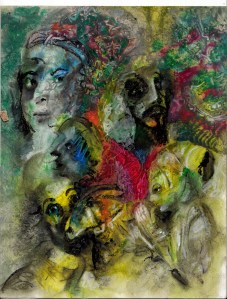










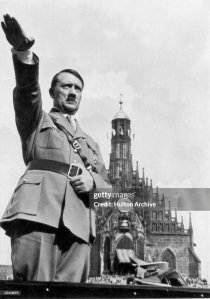


 peej
peej Carissa
 bostonboomer
 dakinikat
 ecocatwoman
 mablue2
 Mama Lopez
 peggysue22
 quixote
 skydancingguestblogger
 Mona (aka Wonk the Vote)



 Sky Dancing
Recent Comments